Celebrating Ten Years of NighthawkNYC.com!

Written & Photographed by Kenn Sava.

I started NighthawkNYC.com on July 15, 2015. During almost all of these past 10 years, the thought of reaching the Milestone of Ten Years was something that seemed as far away as Mars. Long-term isolation, sudden fainting spells that hospitalized me, heart problems, hearing damage, foot problems, the specter of going broke, and oh yeah, that little thing called the pandemic, the 2020s have been hard for me, as they have been for many of you, I’m sure.

So, as I sit here at 6:30 am on July 15, 2025, I’m partially here to see & celebrate this day I didn’t think I’d actually get this site to arrive. As the improbable started to become a real possibility it dawned on me that I HAD to write something to honor getting to this point, and ALL the work that has gone into getting it here, even though I’m supposed to be taking a break (which didn’t stop me from writing the two biggest pieces I’ve ever written!). My one-time neighbor, Joni Mitchell, from decades before my time here, says it best about being here this morning in her circa-1969 song “Chelsea Morning.” (We’ll keep it between us that I haven’t been to bed yet!)

“Woke up, it was a Chelsea morning
And the first thing that I heard
Was a song outside my window
And the traffic wrote the words”-*

Since Joni hasn’t shared how to get the traffic to write my words, I decided to use this occasion to reflect on where I’ve been, where I am, and to try and look a bit ahead.

Part 1-
A)- Where I’ve Been
Some Highlights, in my opinion anyway, from the past 10 Years…

“Oh, won’t you stay
We’ll put on the day
And we’ll wear it ’till the night comes.”-*

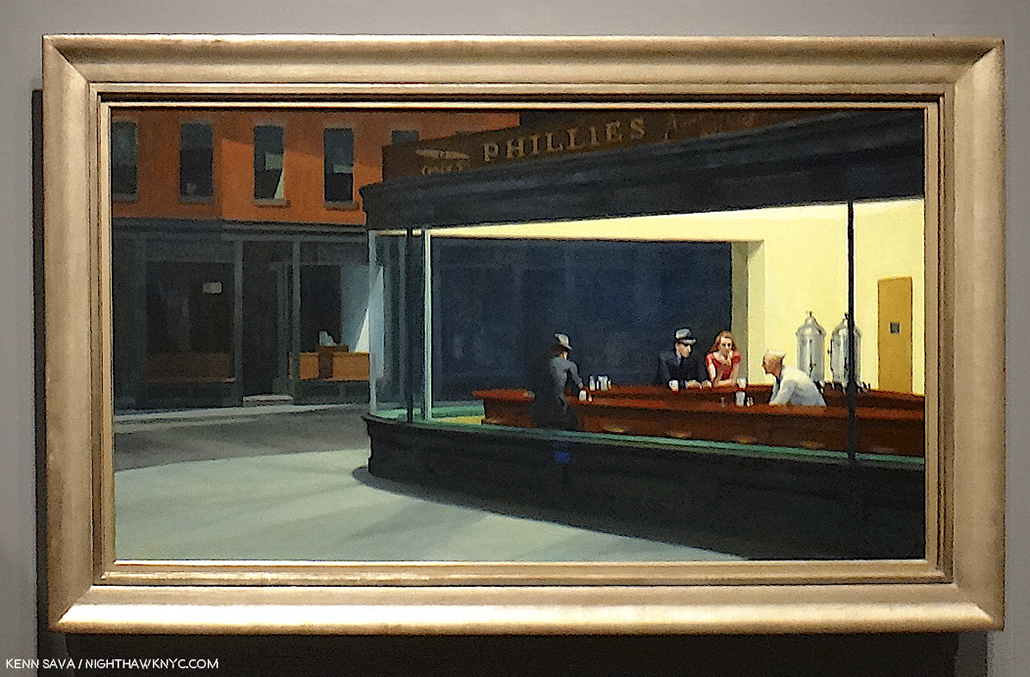
1)- “My Search For Edward Hopper’s Nighthawks Diner,” published July 29, 2019.  Decades in the making, it’s hands-down my most read, most discussed piece.

Update- On July 21, 2024, I finally found it! Meatpacking District, NYC. Kenn Sava, left, reenacting his Painted alter-ego, Logan, right. Photo by Nilo for NighthawkNYC.com. Continual Thanks to all involved & Kevin Callahan. Click any image for full size.

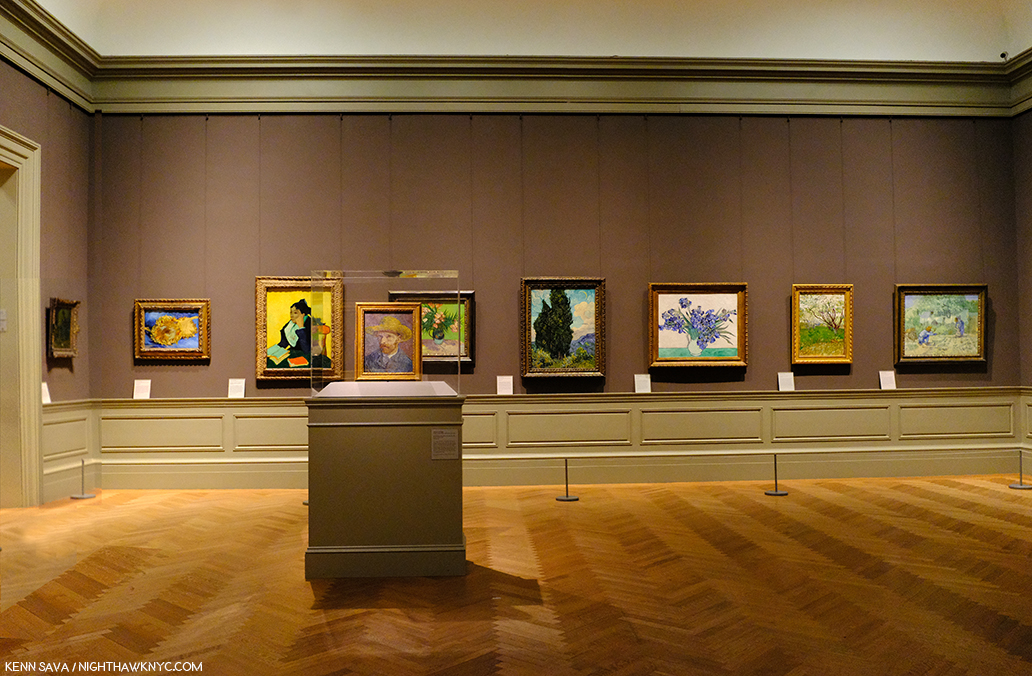
2)- “Vincent van Gogh: Home at Last,” published October 8, 2018. Preparing this piece on the reinstalled Van Gogh Masterpieces in the Permanent Collection of The Met suddenly took on an unexpected life of its own.

HOW great is it to be able to walk into a room and see THIS? For me, it’s one of the great joys of life in NYC. One part of the newly reinstalled Gallery 825 showing 9 of the 10 Van Goghs in this room. #10 is on the other side of the Self-Portrait with Straw Hat in the vitrine. This shot was available for literally one second over 3 visits and 3 hours I spent here. In the piece, you’ll see why.

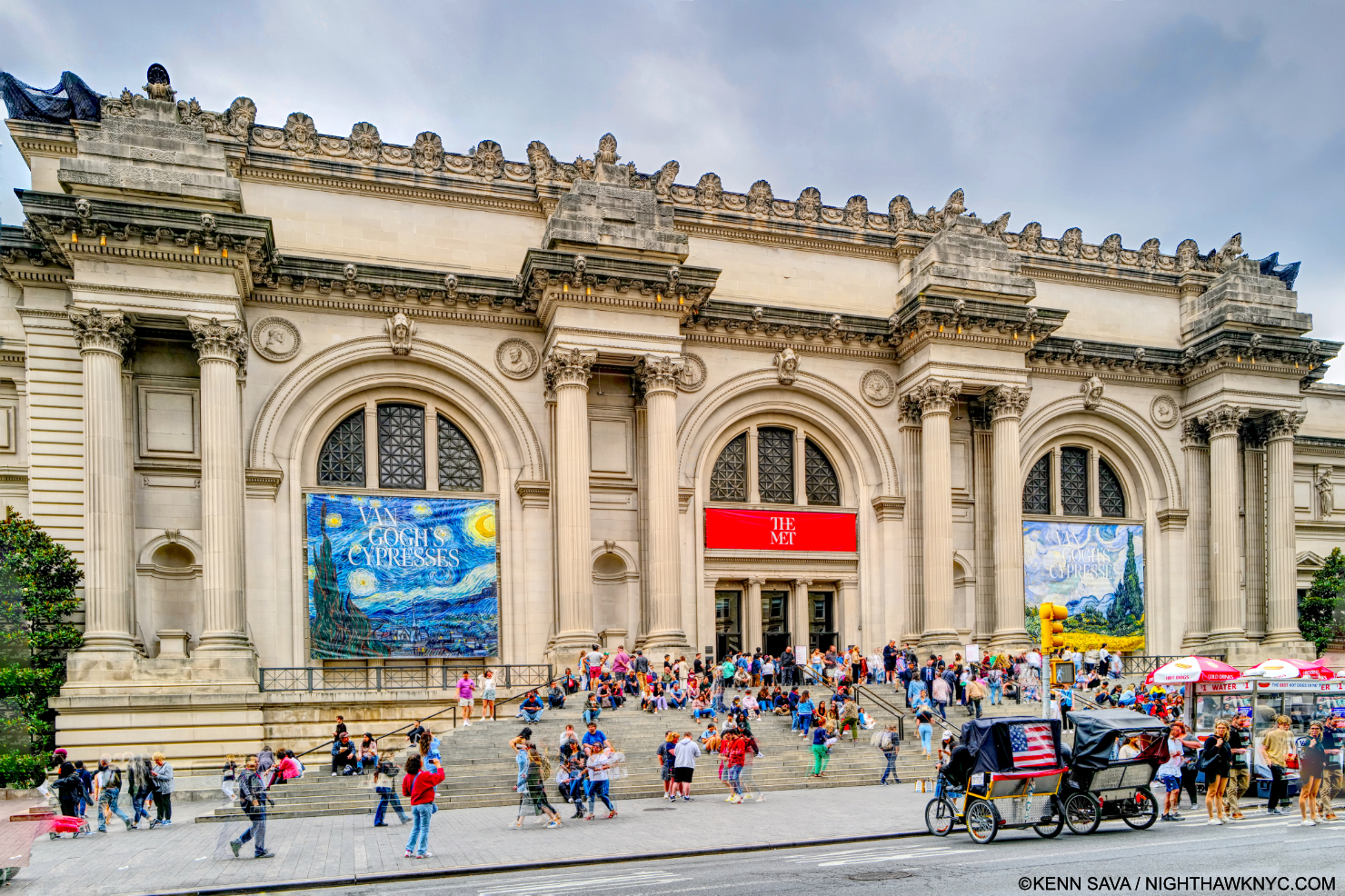
3)- “Van Gogh’s Cypresses: Art From Hell,” published November 10, 2023. With all due respect to The Met’s great curators, I saw their blockbuster Van Gogh’s Cypresses completely differently than they did, apparently.

Welcome to The Met! In all my years of going to The Museum, as I call it currently 1,900+ visits since 2002, I’ve never seen TWO banners (left & right) up devoted to the same show. And, as I was soon to find out, it’s not like there weren’t other terrific shows going on! Seen on June 2, 2023.

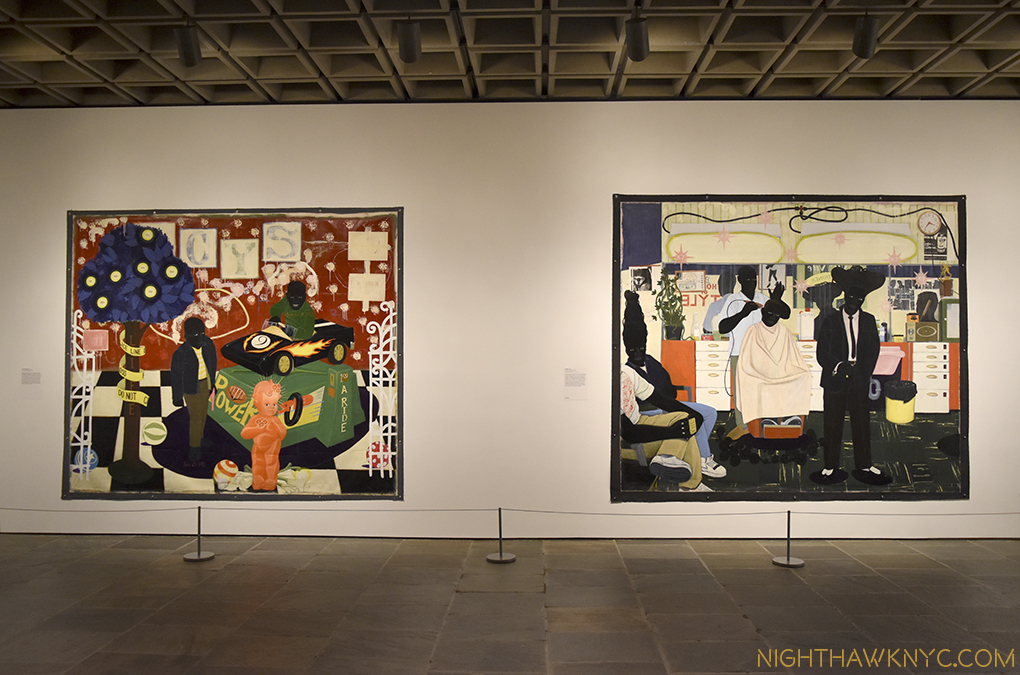
4)- “Kerry James Marshall: The Revolution Was NOT Televised,” published March 1, 2017. THE most everything Painting show I saw in NYC in the 2010s. Along with Hima af Klint: Paintings for the Future, the two most important Painting shows mounted here in the prior decade.

The finest moment, among many fine moments, in the all-too-short life of The Met Breuer. Installation view of Kerry James Marshall: Mastry. “De Style,” 1993, KJM’s barbershop, right, drips of life, fun, culture, individuality and style. On the left, his “The Lost Boys,” from the same year, a title borrowed from Peter Pan, is an homage to two children lost to gun violence, and all the boys who were “lost” to a variety of causes.

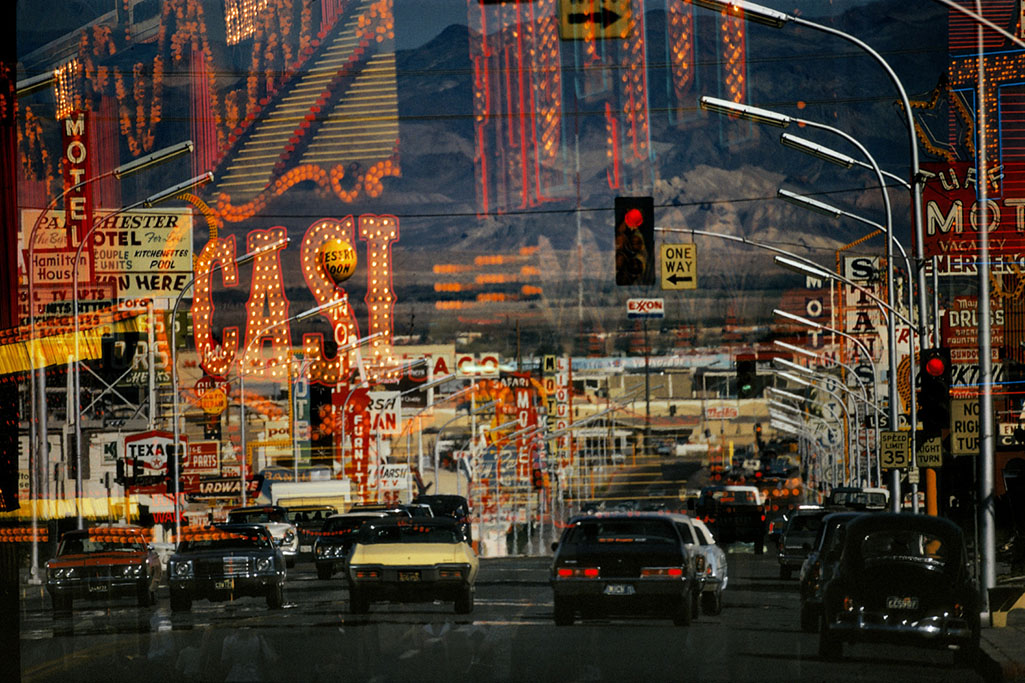
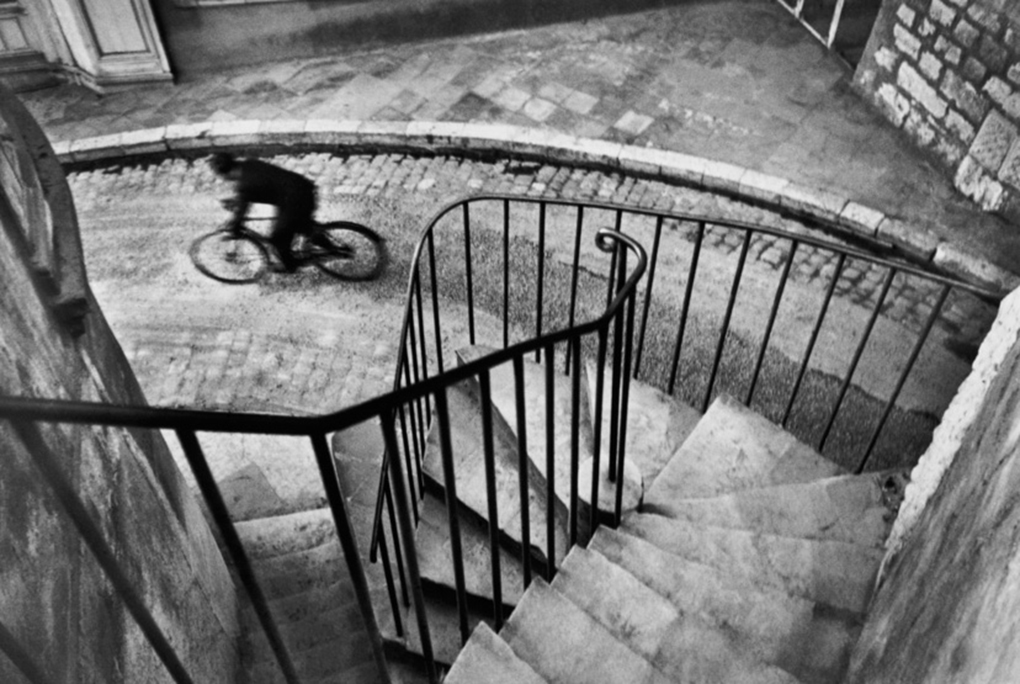
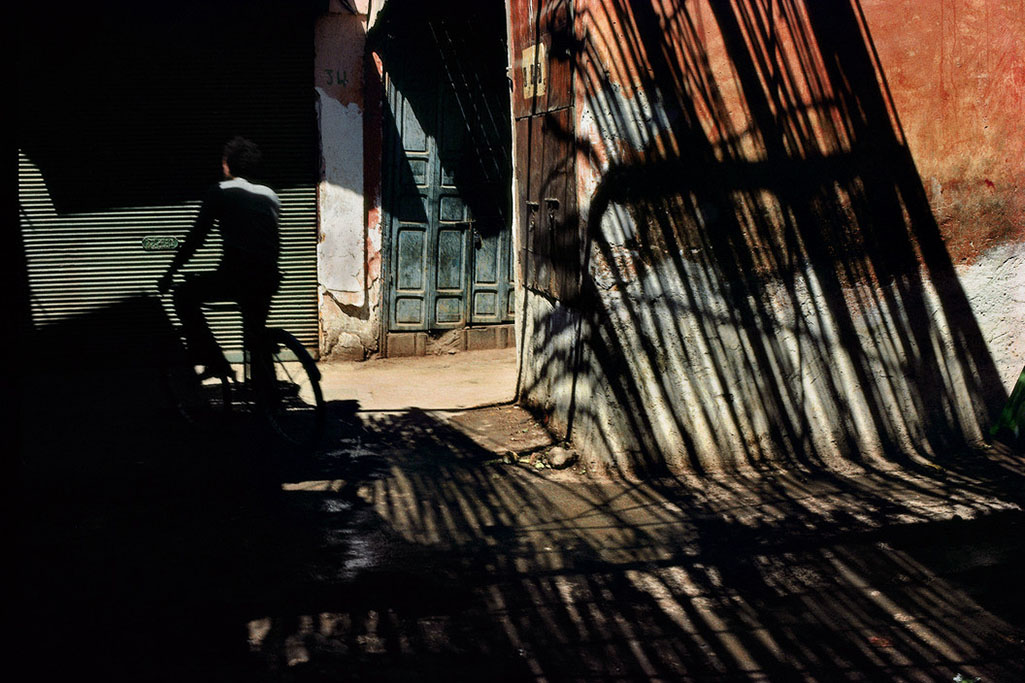
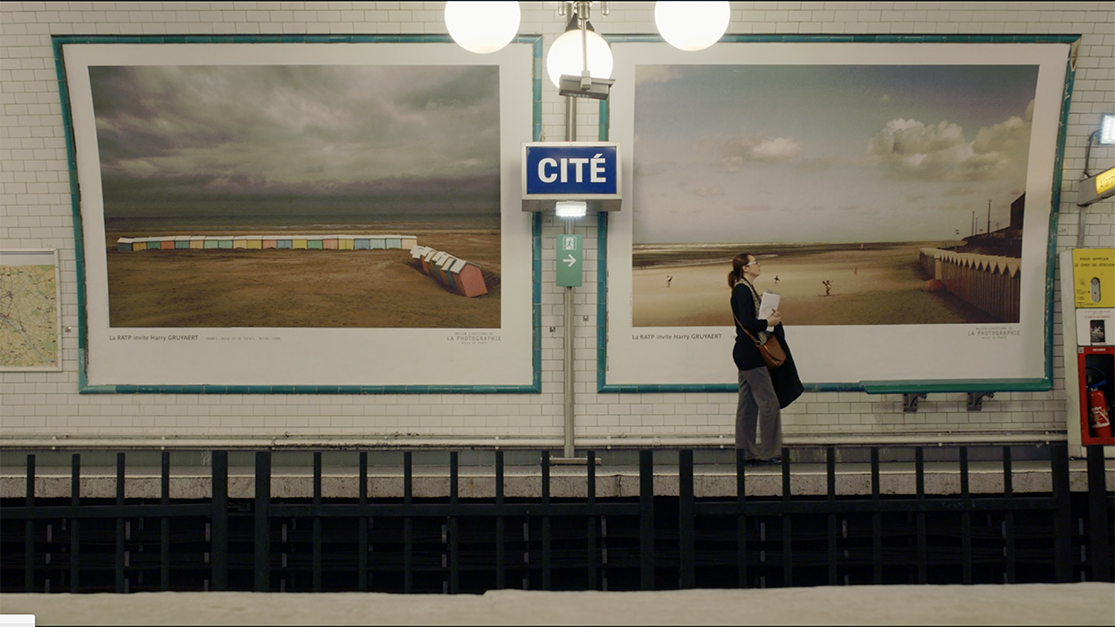
5)- “A Conversation with Photographer Harry Gruyaert,” Published September 22, 2018. Consistently among my most popular pieces, the renowned Belgian Photographer, and long-time Magnum Photos Member, discovered me through my “Saul Leiter: In My Room” piece and let his gallerist know he would be interested in speaking with me. A fan of his work, we spoke extensively via transatlantic phone. I discovered later how few interviews he has given.

Subsequently, I met Harry Gruyaert, far right, in 2020 at the opening of his first American show since 1990!

6)- “Rod Penner’s America: Small Town Nation,” published August 22, 2023. This piece, based on his most recent NYC show which continued to solidify Mr. Penner as one of the foremost Painters of small-town America working today, continued my coverage of the Texas-based Artist’s NYC shows, with my prior pieces linked at the bottom of it. At one point, I had written more about Rod Penner than anyone else had. Maybe I still have. Rod was also kind enough to do a Q&A with me in 2017.

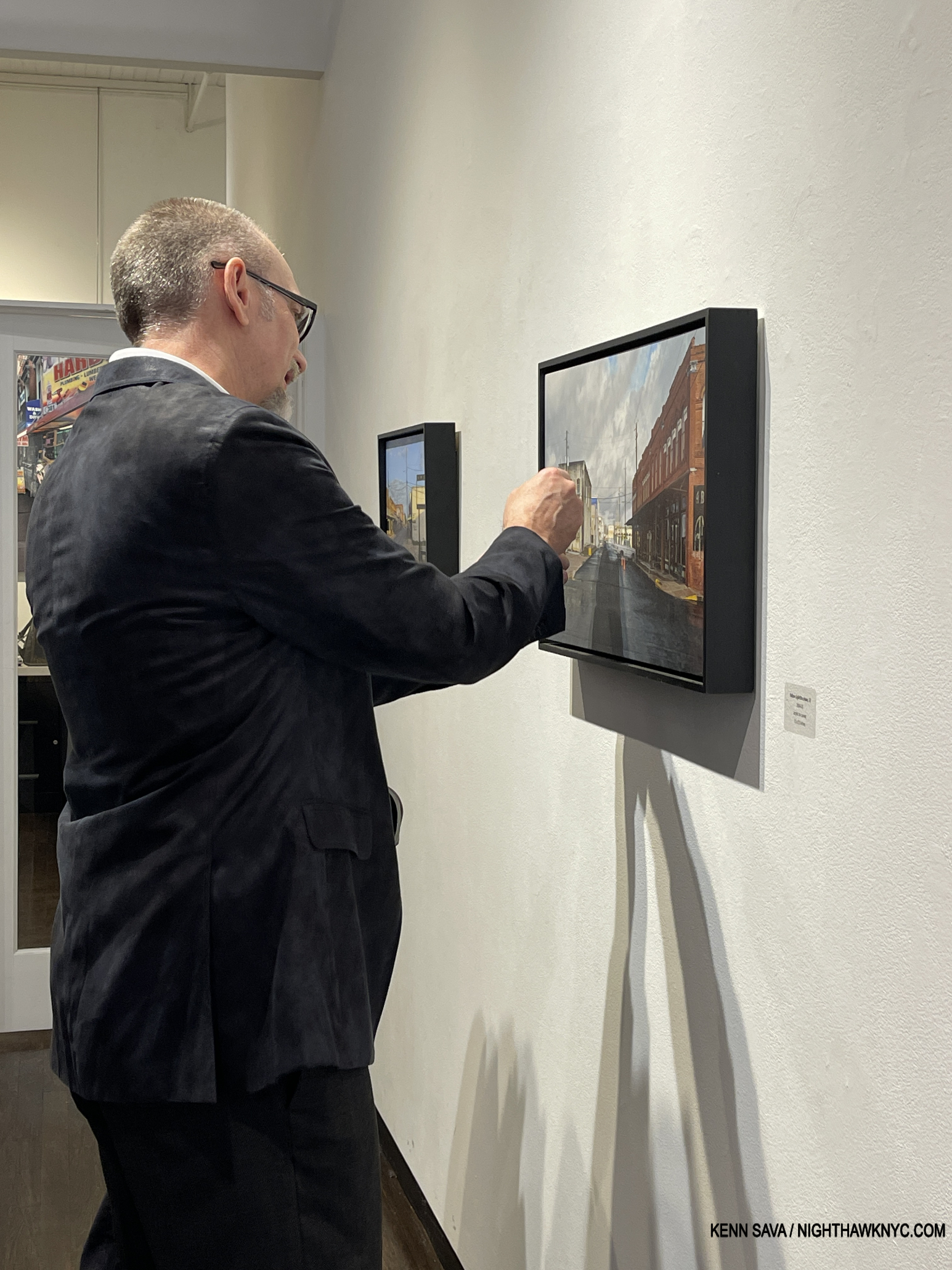
HOW does he do it? Rod Penner discussing one the very, very fine points of his Yellow Light/Brenham, TX, 2004-5, 15 x 25 inches, at his opening, March 18, 2023.

7)- “Henry Taylor: The Art of Empathy,” published March 8, 2024. Born of my unforgettable encounter with Mr. Taylor at the opening of his 2019 solo show.

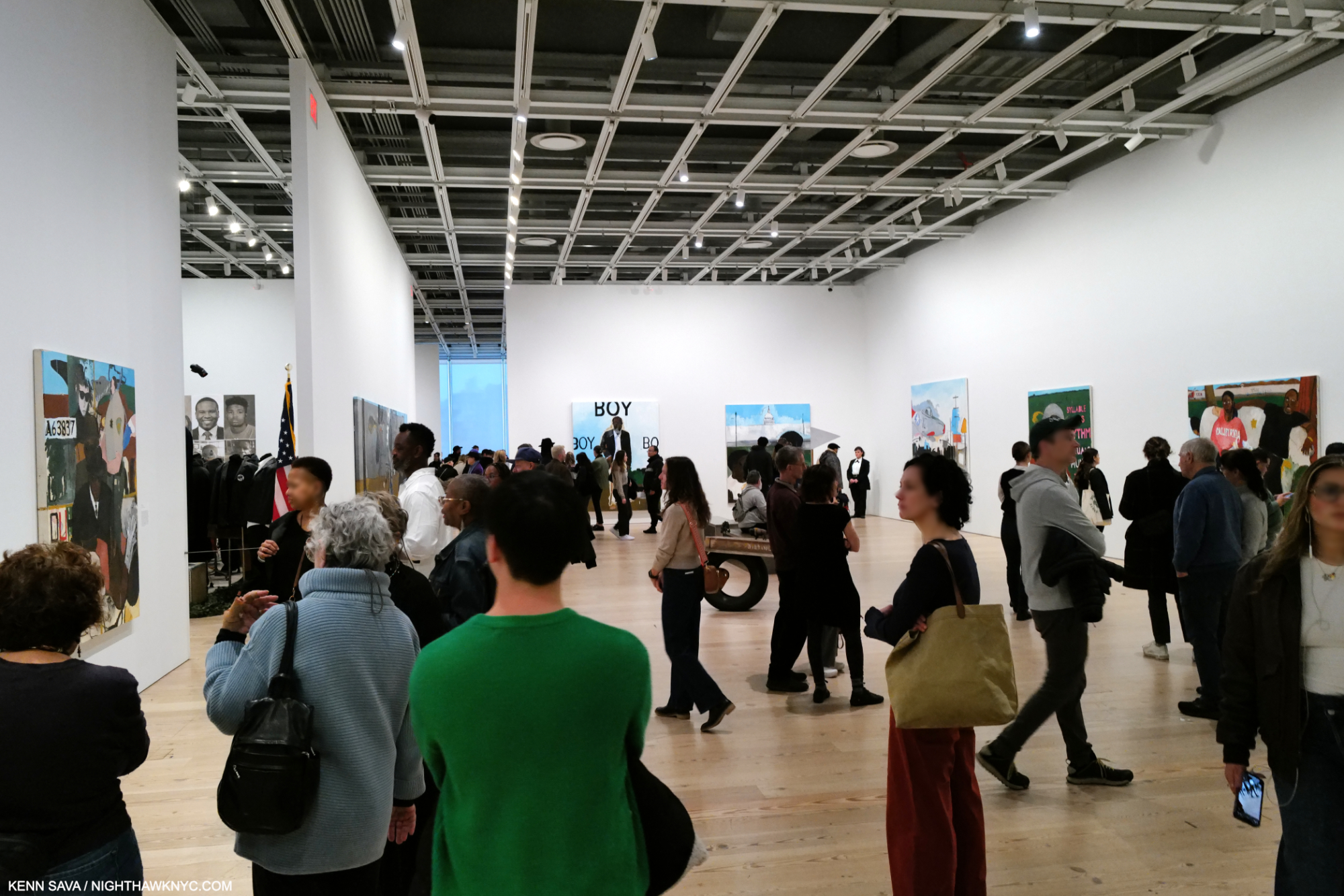
Installation view, an hour and a half before Henry Taylor: B Side closed for the last time, Whitney Museum, January 28, 2024.

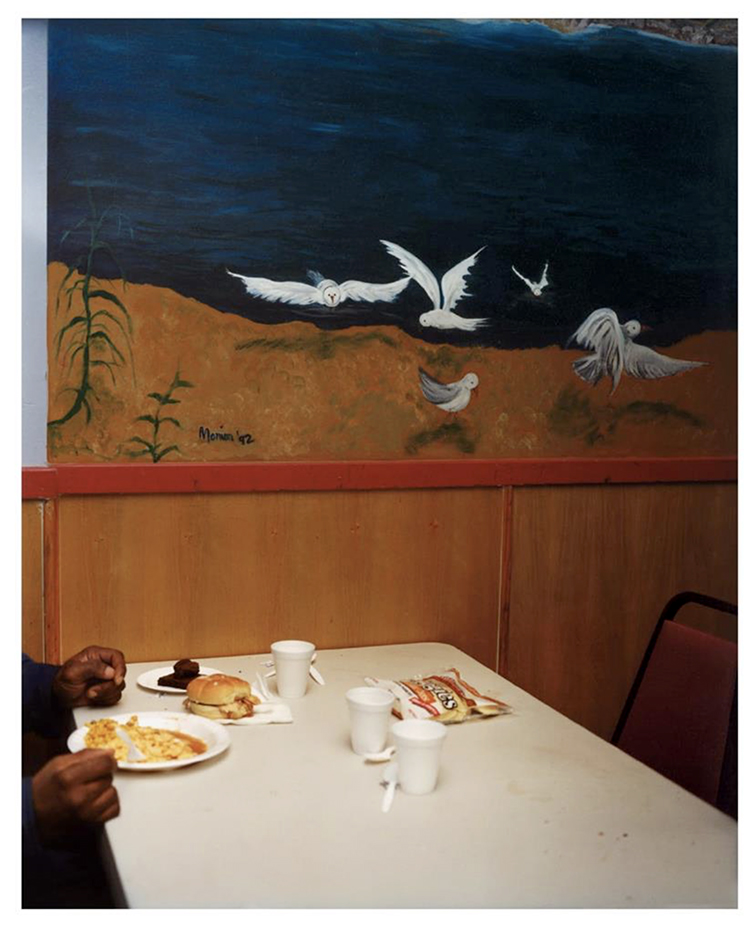
7)- “Gregory Halpern’s America,” published November 8, 2019. Perhaps my biggest discovery during my 8 3/4-year “deep dive” into Modern & Contemporary Photography, my look at all of Mr. Halpern’s books through Omaha Sketchbook (2019), includes a look at its NYC book release in 2019, later the same night of my encounter with Henry Taylor!

The very first work I saw by Gregory Halpern, “Untitled,” from his Buffalo series, seen at Aperture’s Booth at AIPAD: The Photography Show, April, 2017, I liked so much it’s been hanging on my wall since.

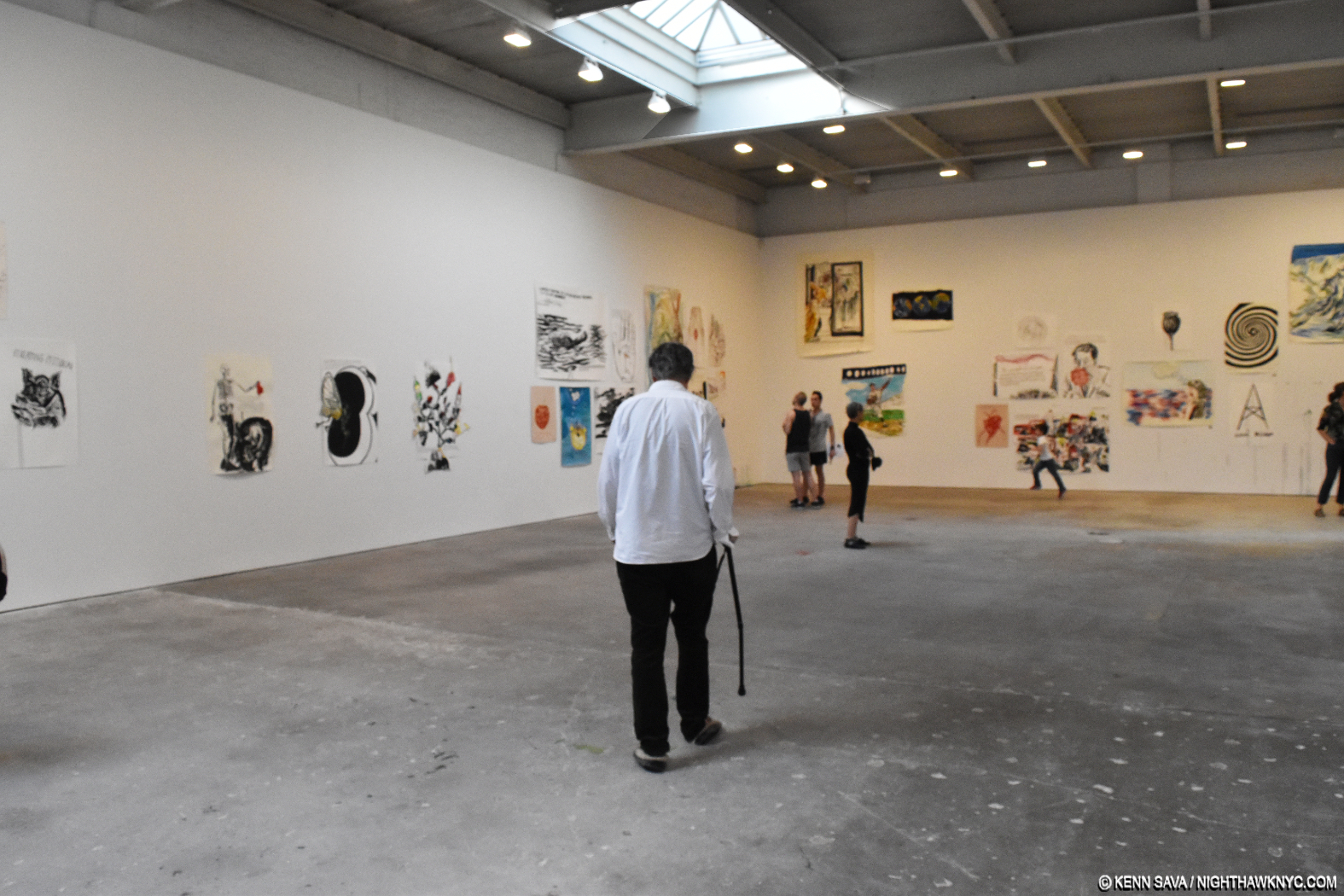
8)- “Raymond Pettibon: Artist Americanus,” published July 20, 2017. I was very fortunate to meet Mr. Pettibon and have him give me a tour of his Zwirner show, which I was thrilled about but also felt bad about because he was suffering from a quite damaged foot that caused him to sit the entire rest of the time he was at his opening. The show was also memorable as during its run I met Artist Caslon Bevington, whose work I’ve subsequently written about twice.

Playin’ hurt. The great Raymond Pettibon enters his show at the opening, April 29, 2017, with a cane. That small figure running in the distance is his son, Bo. Zwrner lent Raymond this space which he used to created the work you see on display. Quite a few paint splotches were to be found on the floor, leading me to think it must have been something to watch him creating these pieces.

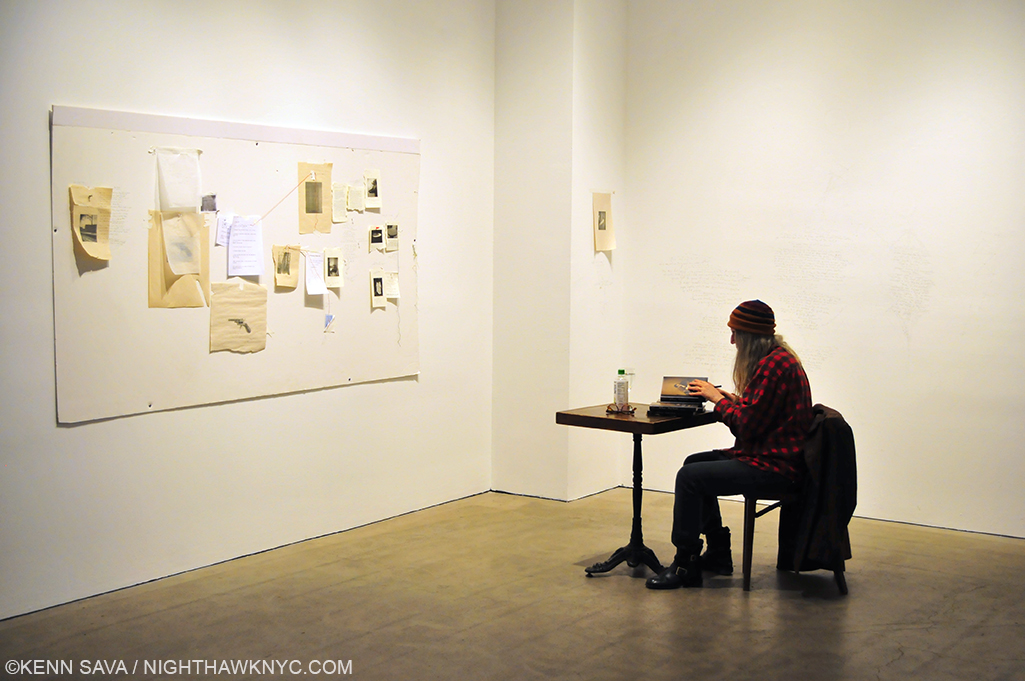
9)- “Table for One: Patti Smith’s 18 Stations,” published April 17, 2016. I made about a dozen trips to Patti’s extraordinary Photography show and was shocked to walk in on the show’s last day to find the legend, herself, seated at the famous table she sits at on the cover of M Train signing books alone. She looked up, and realizing I was about to take her picture, cooperated. I then spoke with her, and wound up meeting her daughter as well. As the show closed, I found myself in the gallery with her as she walked through it one last time, trying to imagne what was going through her mind at each stop. I eternally regret not buying one of her Photographs. One of the Top 5 most-read and most-discussed pieces I’ve written.

What becomes a Legend most? The one and only Patti Smith sits at her famous table.

B)- “Community Service”
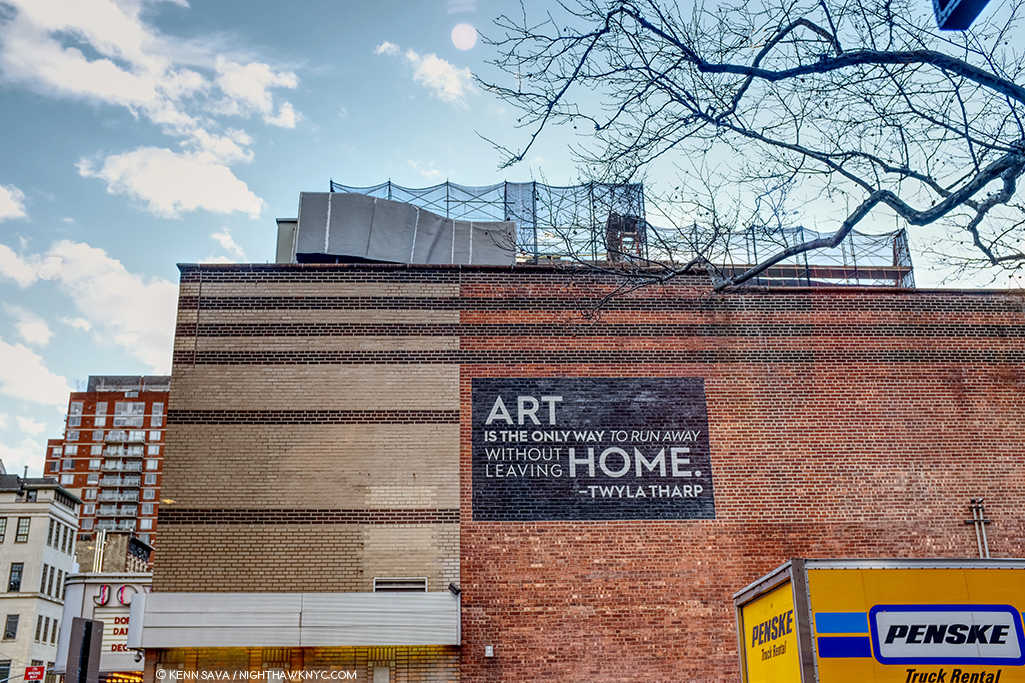
1)- “Art” With a Capital “A,” published February 26, 2020. I should have written it sooner.

Thanks, Twyla! I couldn’t have said it better. And so, this scene has appeared in my Banner, sans moving truck, a number of times over the years. A look at ALL 41 of my banners this past decade is here. The Joyce Theater, December, 2019, as seen continually staring me in the face from my favorite seat in my beloved Starbucks on West 19th Street, the best SB in NYC. Another loss during the pandemic.

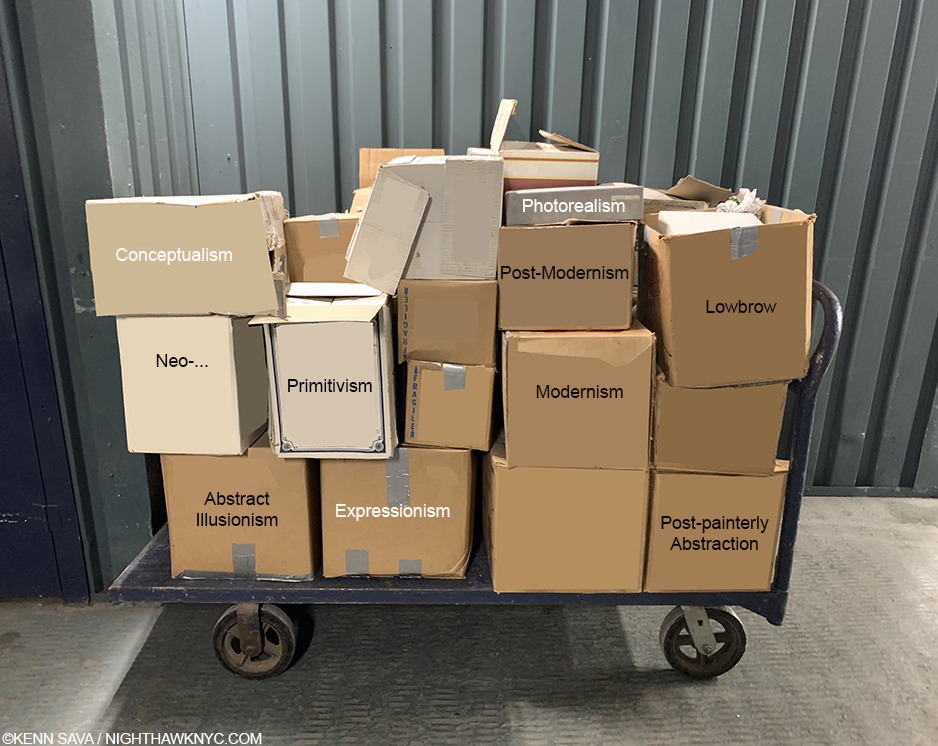
2)- “Death to Boxes!,” published on April 7, 2020. Another I should have written sooner. The problem has only gotten worse.

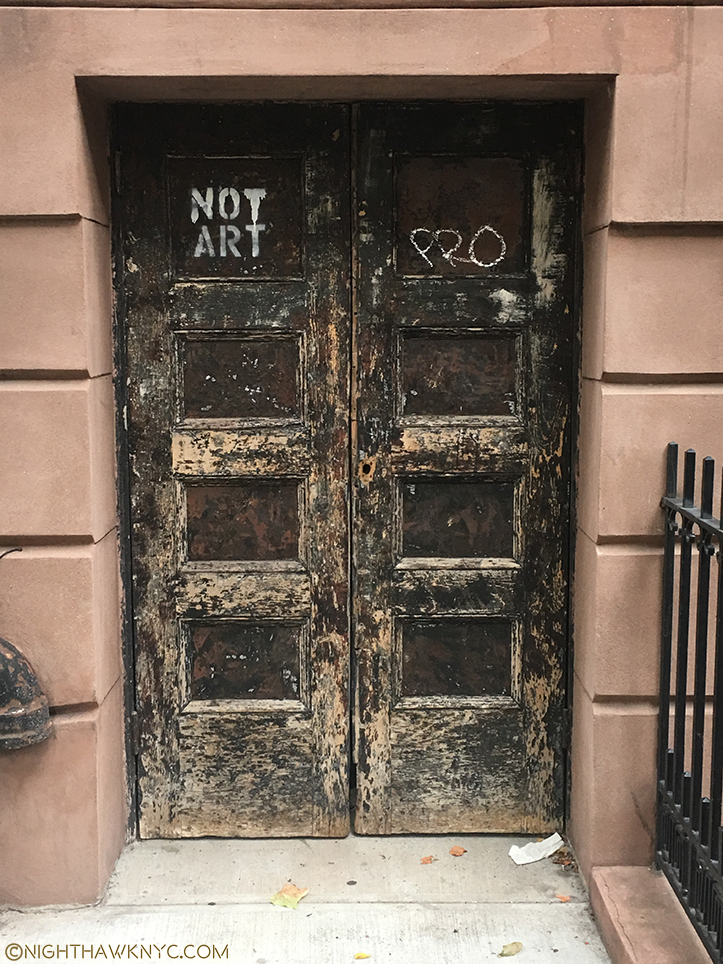
3)- “On Buying Art,” published on July 11, 2017. One I did write early on.

Knowing what not to buy is rarely THIS obvious.

C)- Milestones

“Oh, won’t you stay
We’ll put on the day
There’s a sun show every second”-*

1)- “Welcome to the Night,” published July 15, 2015. My very first piece!

The last time I stood in front of Nighthawks, with my Painted alter-ego, dead center. August 28, 2013, at Hopper Drawing at the old Whitney Museum. Fun fact– I “borrowed” its frame for the frame you see in my banner! Shhhh…Don’t tell anyone.

2)- “Cancer Saved My Life,” published February 7, 2017, on the 10th Anniversary of my cancer treatment. My passion to share what I’ve seen & learned in the Art world comes from surviving with a 20% chance of making it through Year 1 post-treatment without needing more treatment. I’m happy to say 8 Anniversaries have followed- 18 in all! Miraculous.

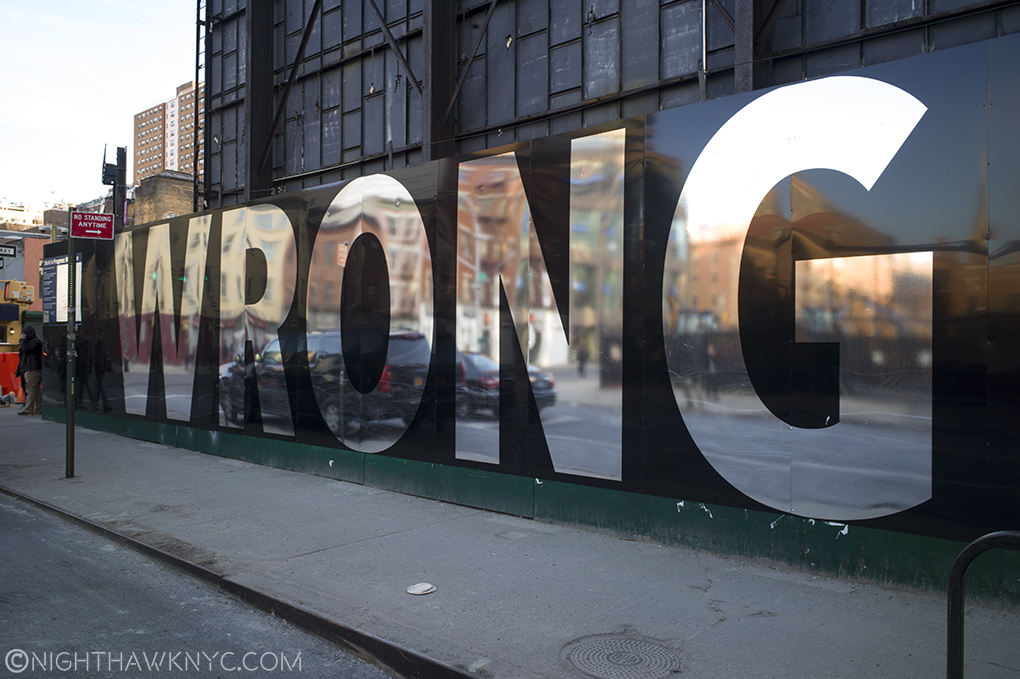
Every cancer patient’s worst nightmare. During my search for cancer treatment, after much research and agonizing, I settled on a treatment. My life was saved by a Doctor who patiently explained why it was the wrong choice for me moments before I was to begin it. Unfortunately, there wasn’t a sign this big to guide me.

3)- “Kenn Sava Named a Finalist…,” published November 25, 2023. I was, and am, honored to be named a Finalist for the 2023 Andy Warhol Foundation Arts Writers Award out of the 500 writers they said they considered.

D)- Journeys
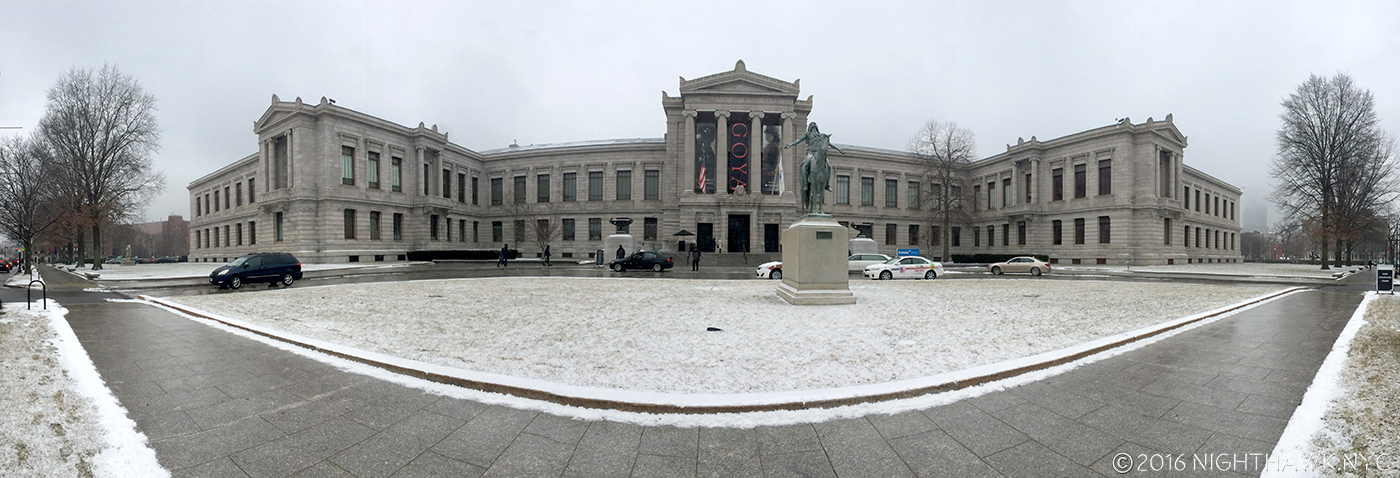
1)- Goya: In Boston & NYC, published January 20, 2016. In January, 2015, I made a day trip to the Museum of Fine Arts, Boston to see their exceptional Goya: Order and Disorder show. A few months later, I saw a show of his complete Los Caprichos at the National Arts Club, here.

The Museum of Fine Arts, Boston in January, 2015, the last time I went out of town to see an Art show. Of course, I was back in my own bed that night.

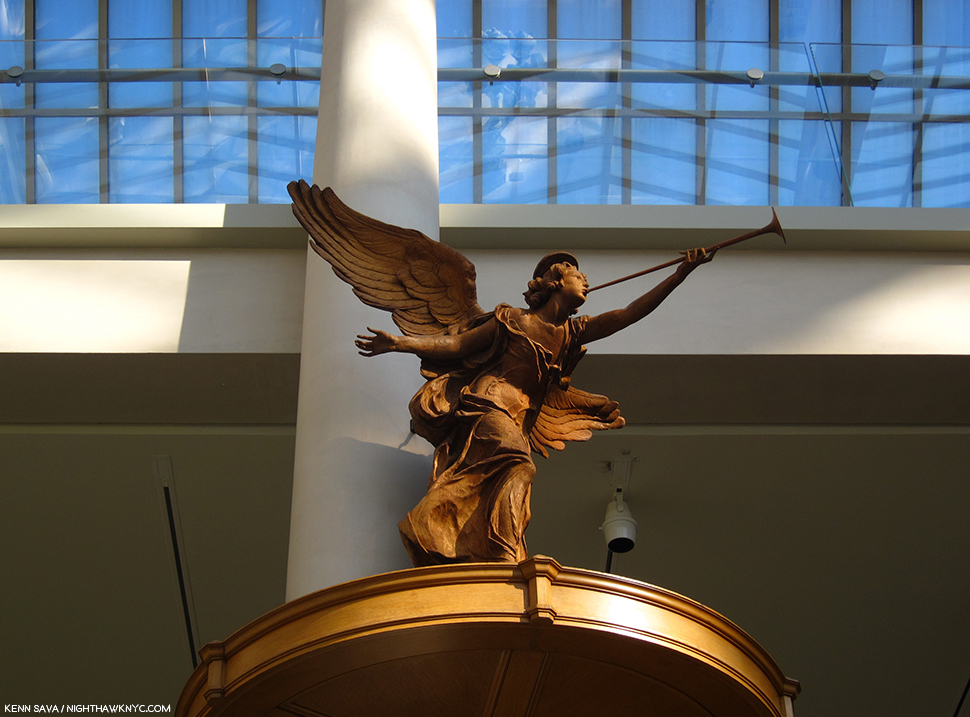
2)- “13 Year At The Metropolitan Museum,” a 2-part series, the first part published on July 26, 2015. Though I’m in Manhattan, The Met is not exactly nearby. Nonetheless, I’ve managed to get there over 1,900 times since August 1, 2002. Some thoughts on it from 2015.

Hark! A Met Angel Beckons me to the Light. To not hear her call is my loss.

3)- “The Met Breuer: Hail, and Farewell,” published on August 1, 2020. I was there on March 8, 2016,  the first Member’s Preview Day, and I was there the moment it closed for the final time on March 12, 2020. In between, I saw more great shows there than anywhere else, largely due to The Met’s terrific Contemporary Chairperson, Sheena Wagstaff, who I’ve also written about at length more than once.

March 12, 2020. I’m about to enter The Met Breuer for what I didn’t know would turn out to be the last time, on what would turn out to be its last day ever.

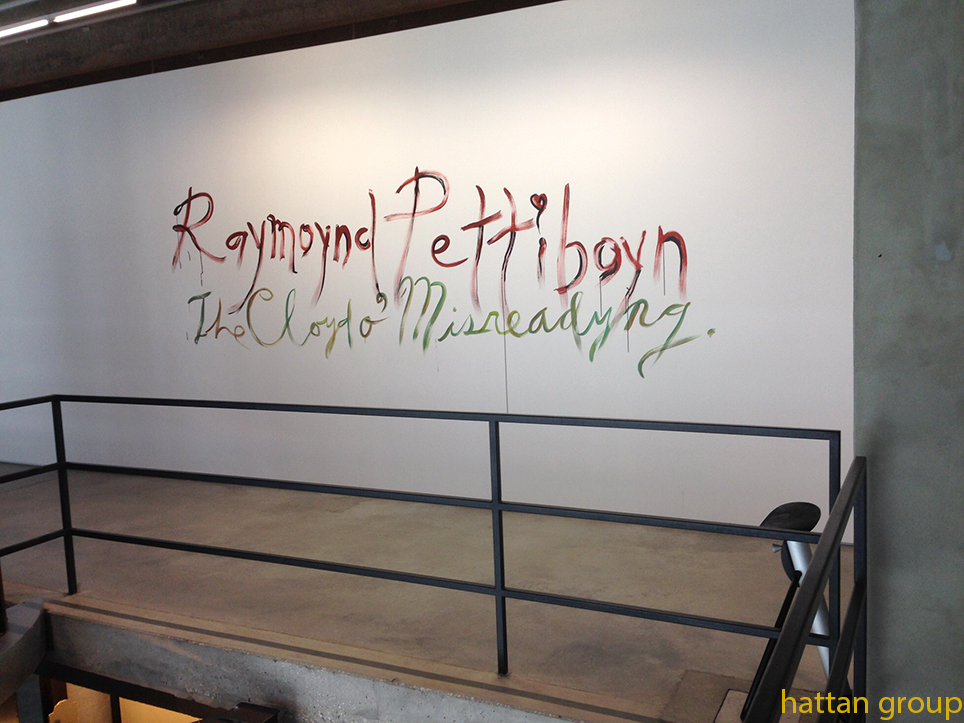
4)- “Exclusive! A Visit to Raymond Pettibon’s Moscow Show!,” published November 20, 2017. Lana Hattan was able to get an associate to go The Garage and shoot Raymond Pettibon’s 400-piece Moscow Retrospective, Raymond Pettiboyn: The Cloyd o’ Misreadyng,” for me! Though this was before the cessation of relations between the U.S. and Russia, I was unable to make it. Raymond Pettibon made it, though, and created another of his classic Hand-Painted Murals for the show. Given there have been very few large Raymond Pettibon shows since, I’m very thankful to the Hattan Group, who did a terrific job as you can see, for  doing this for me, and enabling me to write about the show for NighthawkNYC readers! It’s the only show I’ve written about without actually seeing in person! It’s something you can’t see anywhere else.

Live, from Moscow’s Garage! The show’s entrance features one of Raymond Pettibon’s famous hand-painted murals, around the corner from this sign. I hope the Russians are up on their “Pettibon English!” Photo by The Hattan Group for NighthawkNYC.com.

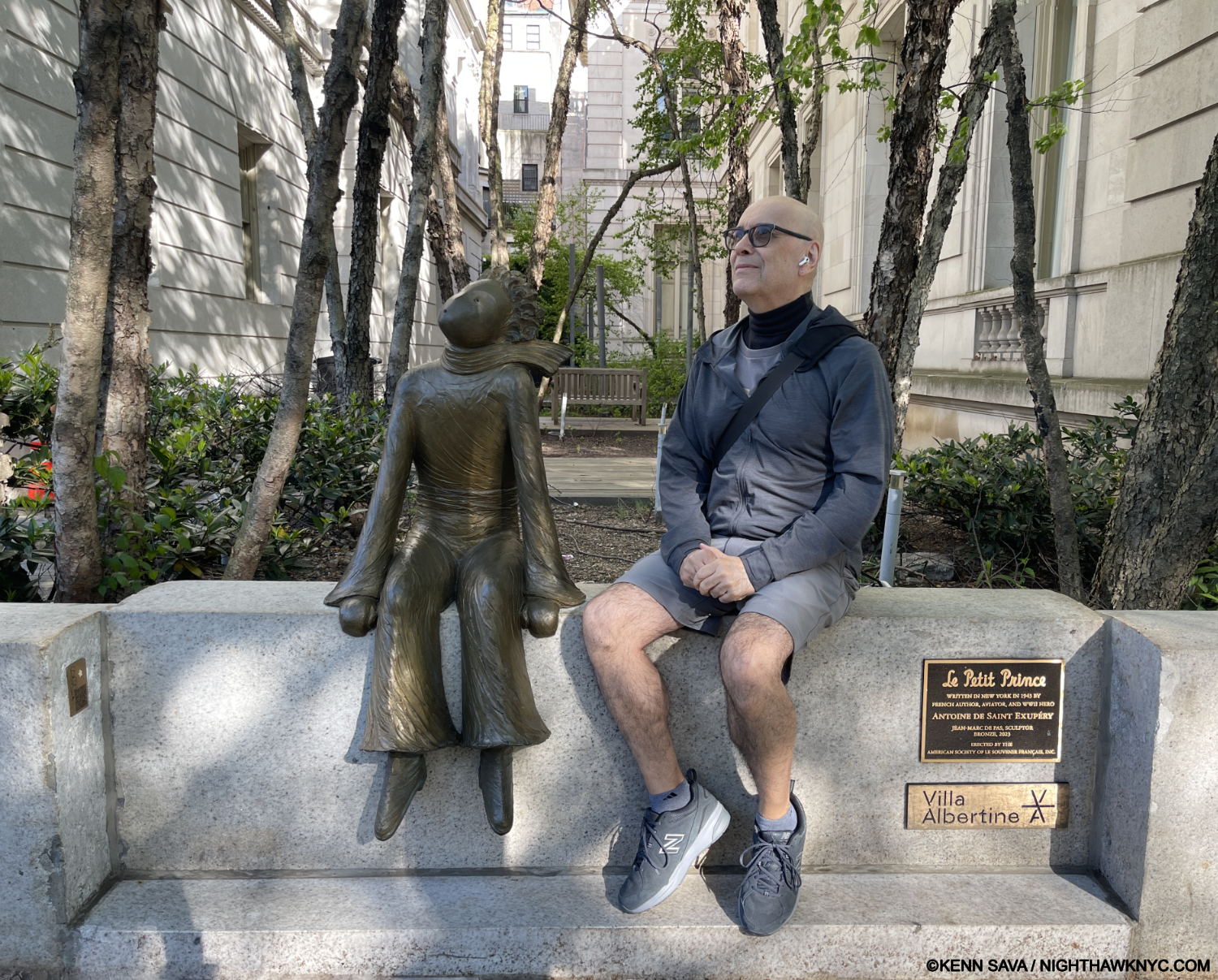
4)- “Antoine de Saint-Exupéry: Artist,” published on March 21, 2023. I’m self-taught at everything besides reading/writing and basic math thanks to a terrible school system and not being permitted to go college. As a result, I had never read The Little Prince, as hard as that is to believe, until Lana, whose favorite book it is, insisted I do. Of course, I immediately got hooked, like hundreds of millions of others have. We were lucky enough to attend the wonderful show of his work at the Morgan Library, and I returned there in 2023 for their show on the Art of Saint-Exupéry. The piece took on a life of its own after the French Ambassador to the U.S saw it and invited me to Washington, D.C. for a dinner he was hosting in honor of the 80th Anniversary of the publication of the book.

I join Saint-Ex’s most beloved creation in waiting for the return of his Asteroid. Hurry up, already! May 10, 2025. My thanks to the kind lady who took this.

E)- Epics
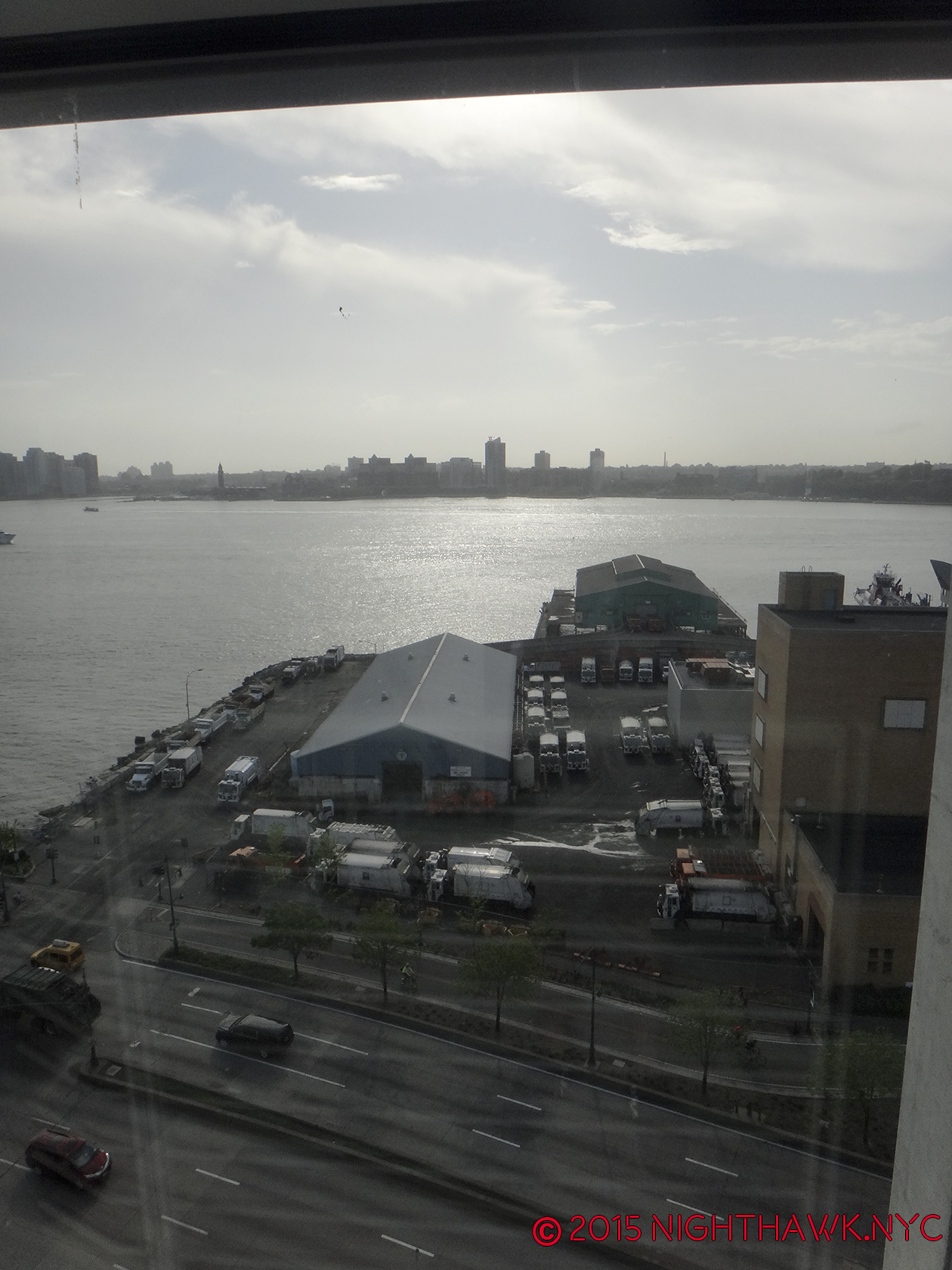
1)- “The New Whitney Museum: The Roofdeck of American Art,”  published August 1, 2016. I worked on my look at the “new” Whitney Museum for over a year after having been a voice against the expansion of the old building. Now that it’s 10 years old, nothing has changed anything I said about it.

Nothing has changed except the Department of Sanitation complex in front of the museum, seen here in 2015, has been replaced with a park.

2)- “This Summer In ‘The Era of Rauschenberg,'” published September 19, 2017. I spent my summer going to MoMA’s Robert Rauschenberg: Among Friends (24 times) and the 4 Rauschenberg satellite shows going on around town. The Rauschenberg Foundation was impressed to the point that they invited me down for a private tour of their entire facility, his former studio, which was beyond an amazing experience for this long-time fan.

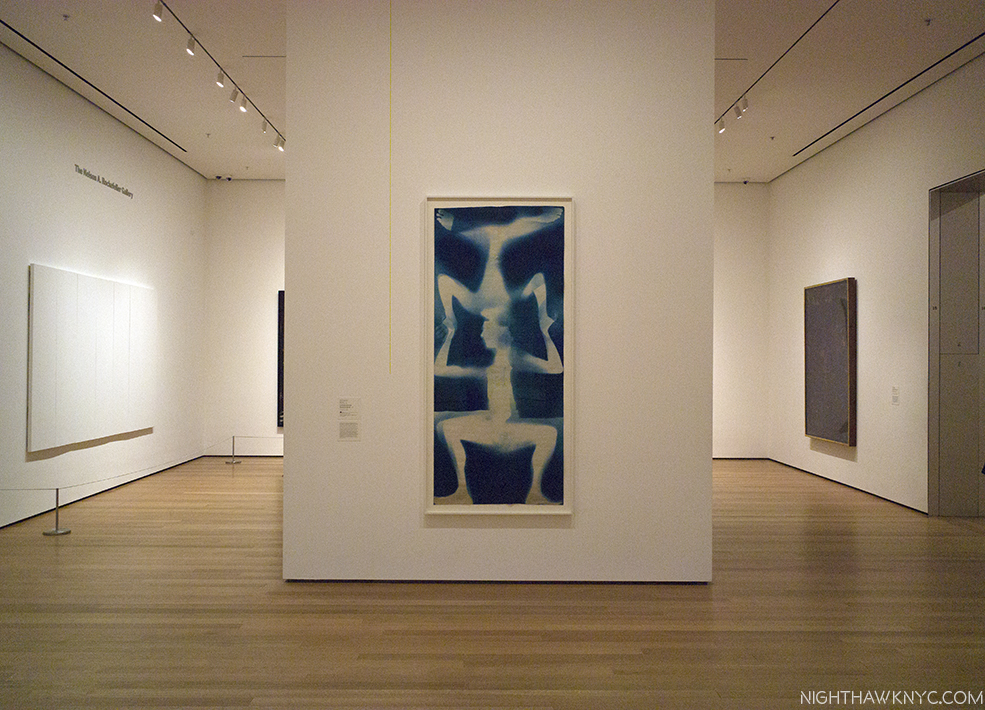
One nice note- The Rauschenberg Foundation informed Sue Weill, Aritst (and collaborator with him on Untitled (Double Rauschenberg), c.1950, Monoprint; Exposed blueprint paper, center)  & former Rauschenberg girlfriend, about my inclusion of her in this piece and others, and told me she was pleased to hear it. Partial installation view of the first gallery of Robert Rauschenberg: Among Friends. 

3)- “Richard Estes: Painter. With No Prefixes,” published May 22, 2022. I was surprised to see nothing else printed on the occasion of Richard Estes’s 90th Birthday, which I take as another reminder that the Art associated with  “photorealism” is still not of interest to almost all of the world’s museums. I agree with them on most of it. Yet, (see my piece on boxes, above), some Artists have been stuck in this box, or other boxes, without their consent. I don’t quite see Richard Estes work the way many others seem to. My 3-part series, built on decades of looking at his work, addresses just this.

Kenn Sava, Homage to Richard Estes, NYC, May 27, 2020. Richard Estes was one of the first Artists to influence how I see the world. i.e. he helped open my eyes to the world around me everywhere!

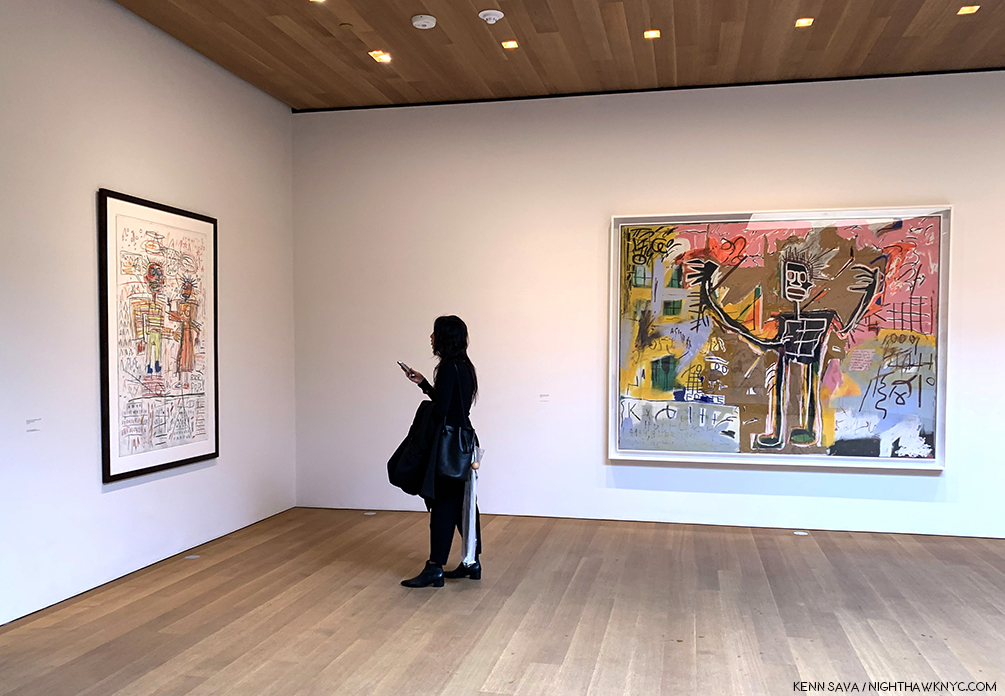
4)- “Jean-Michel Basquiat at the Brant Foundation,” published October 6, 2019. Basquiat has been THE most popular Contemporary Artist for the entire existence of NighthawkNYC, yet, I didn’t know much about his work going in. When my friend, Kitty, told me about the Brant Foundation show, I decided to go, try and get up to speed on his work, and see what it said to me. As I sit here now, I’ve written more about Basquiat than any other Artist! And, I’ve seen more Basquiat shows since 2012 than I have by any other Artist. Both of those facts shock me. They just happened, primarily out of my desire to give his work as in-depth a look as I could. Along the way, I saw virtually every book ever published on his Art, and met and spoke with both of his sisters. The Brant piece is the first piece I wrote on his work. All the others may be seen doing an Archive search for Jean-Michel Basquiat.

Lisa at the Brant Foundation Basquiat show studying Self-Portrait with Suzanne, 1982. There I was, standing outside in the rain for a solid hour, without my umbrella which had gotten left in the cab, without a ticket on the show’s last day, having failed to get a press pass. A staff member who had tried to help me circled back around and told me a visitor, Lisa, had an extra ticket, which she was kind enough to give to this total stranger. Thank you, Lisa. You set in motion what would become an epic journey of Artistic discovery. And oh, by the way, I subsequently paid $45 to get into Basquiat: King Pleasure, the show mounted by his sisters, even though I was going to write about it for free. Did The New York Times pay to get in, too?

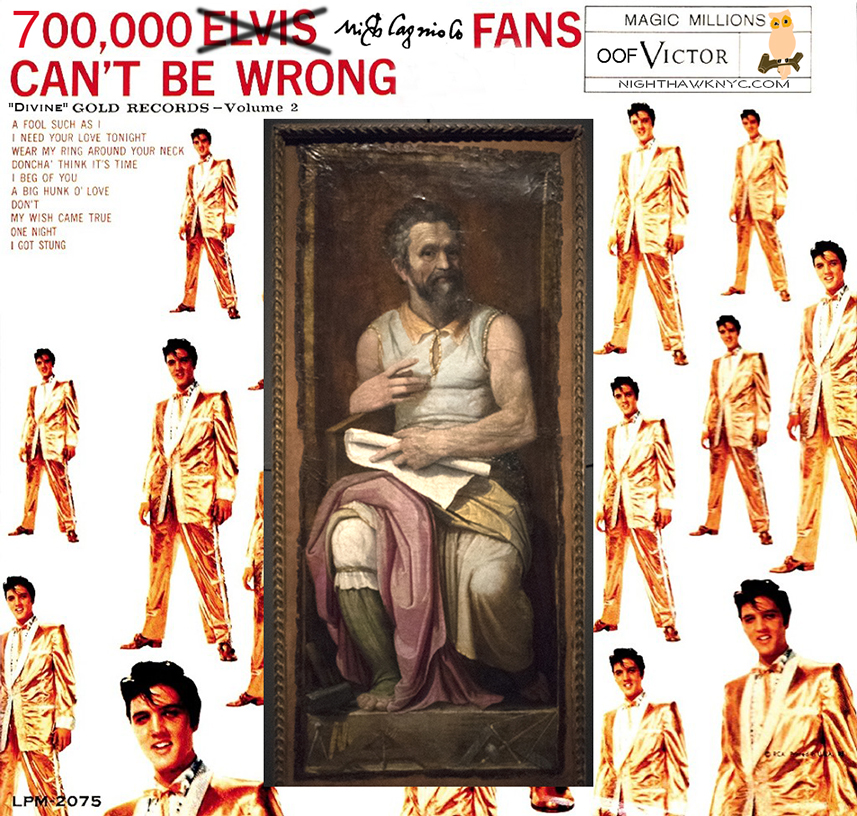
5)- “700.000 Michelangelo Fans Can’t Be Wrong“, published March 4, 2018. A labor of love born out of a dozen visits to The Met’s once-in-a-lifetime blockbuster that 700,000 saw. More an effort of trying to remember as much as possible of what I saw because I knew I’d never see it again.

Take that, Elvis, who’s 1959 album title, and cover, I just borrowed. Michelangelo was the “King” of a different kind of rock. Old school rock.

6)- “A Year Without Art,” published May 7, 2021. Never in my wildest dreams did I ever think I’d go an entire year without being able to see Art! Well? In 2020-1, it happened.

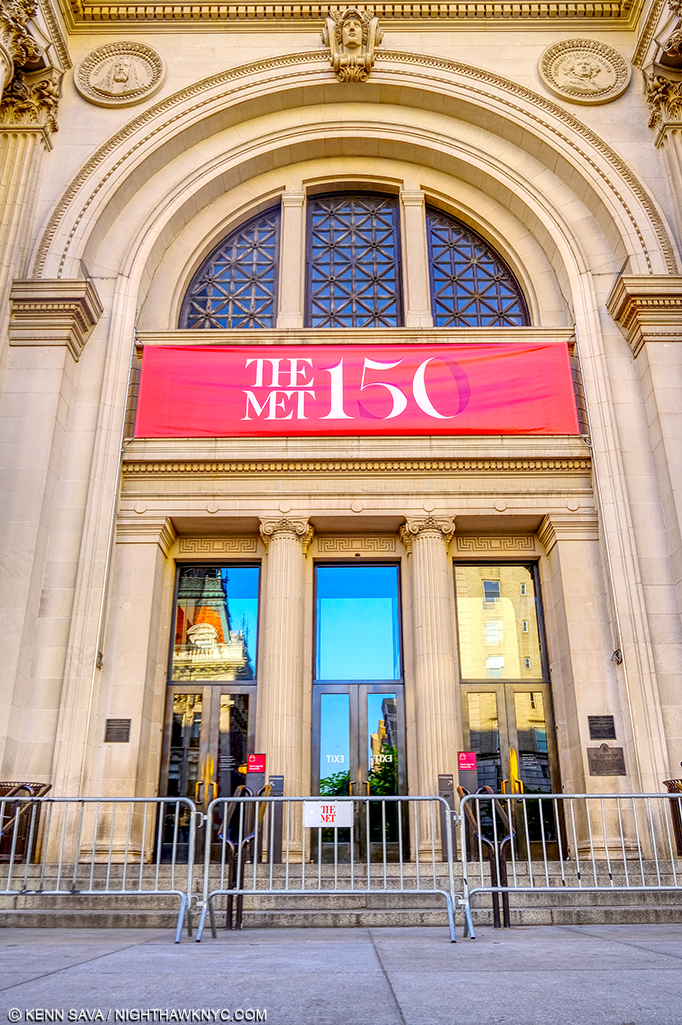
The Met’s famous main entrance, gated, during the 5 months it was closed, on May 21, 2020, unprecedented in my lifetime. Probably not the way they drew up celebrating their 150th Anniversary.

7)- The Photography Show, 2018, published April 23, 2018. I look back in disbelief at how much work I did around AIPAD, The Photography Show in 2018 and 2019. 4 part series on each…countless meetings with Photographers…endless looking all followed by months of work on the pieces. I didn’t make a dime doing it. I hope they appreciated it!

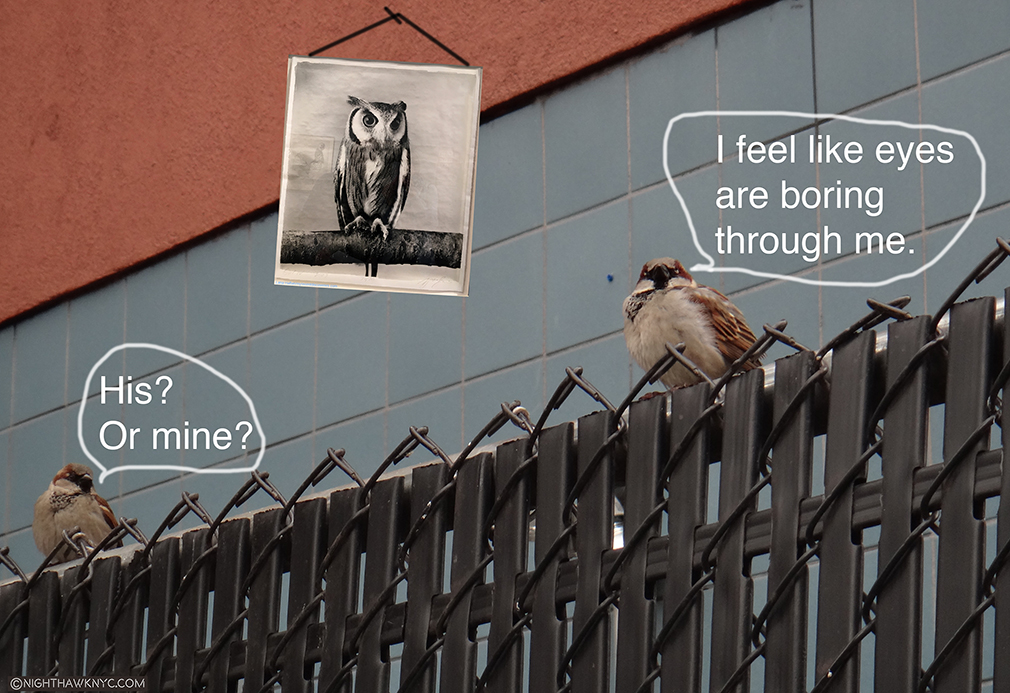
“On The Fence, # “The Wall Has Eyes” Edition. The Birdies, my fine feathered friends from their West 24th Street perch, that ran in my popular occasional featurette, “On The Fence,” for over a year. This one was included in my 2018 Photography Show series. I never replied to the reader who suggested I give up Art writing for “photo funnies”  as he called them- until now. I’m still thinking about it…All installments of “On The Fence” are here.

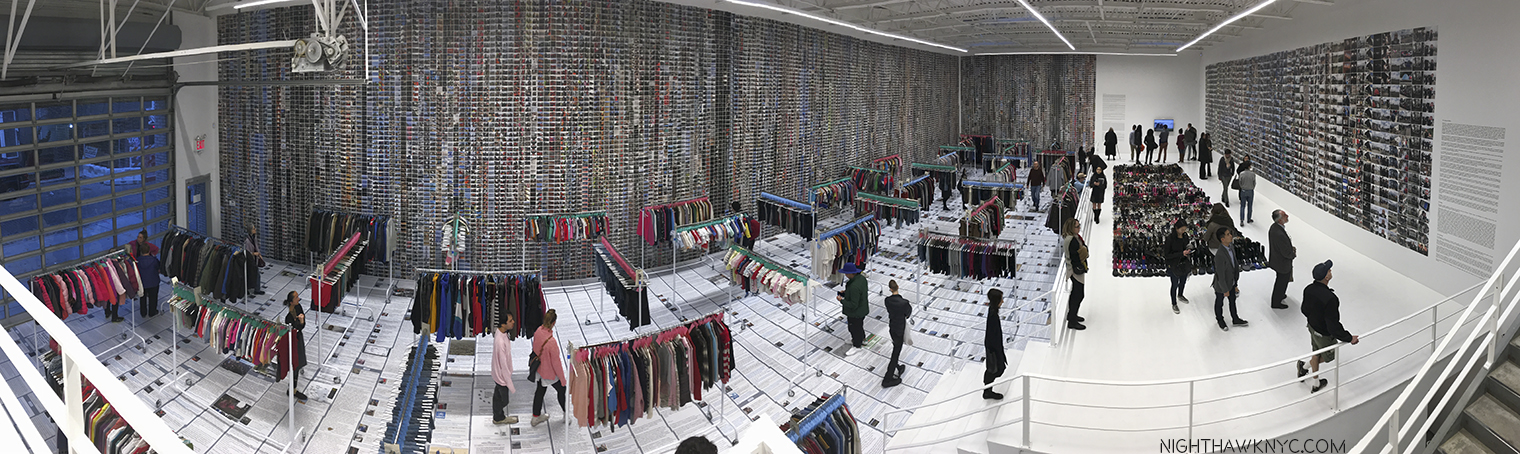
8)- “Ai Weiwei & The Value of One Refugee“, published January 7, 2017. The centerpiece of a group of 4 2016 Ai Weiwei shows, Ai Weiwei: Laundromat was a show unlike any other I saw this past decade, Ai & his team collected clothes, shoes and other artifacts left behind by refugees in the various camps he visited during the European Refugee Crisis and arranged them to compelling effect achieved in concert with countless Photos on the walls he took documenting what he saw and reproductions from media and social media accounts under foot. I wrote about all 4 of the shows, but Laundromat has lingered long in my memory. It was hard to visit the show and not think of Ai’s own experiences, which made him an almost ideal witness.

Birdseye view of almost the whole show.

9)- “Edward Hopper’s Impressions of New York,” the first of 3 pieces on the show published May 5, 2023. Wait. Who else has written multiple pieces that look at different aspects of one show? Maybe someone else has. I haven’t seen it. That’s exactly what I did for the blockbuster Edward Hopper’s New York at the Whitney, AND for MoMA’s Ed Ruscha/Now Then.

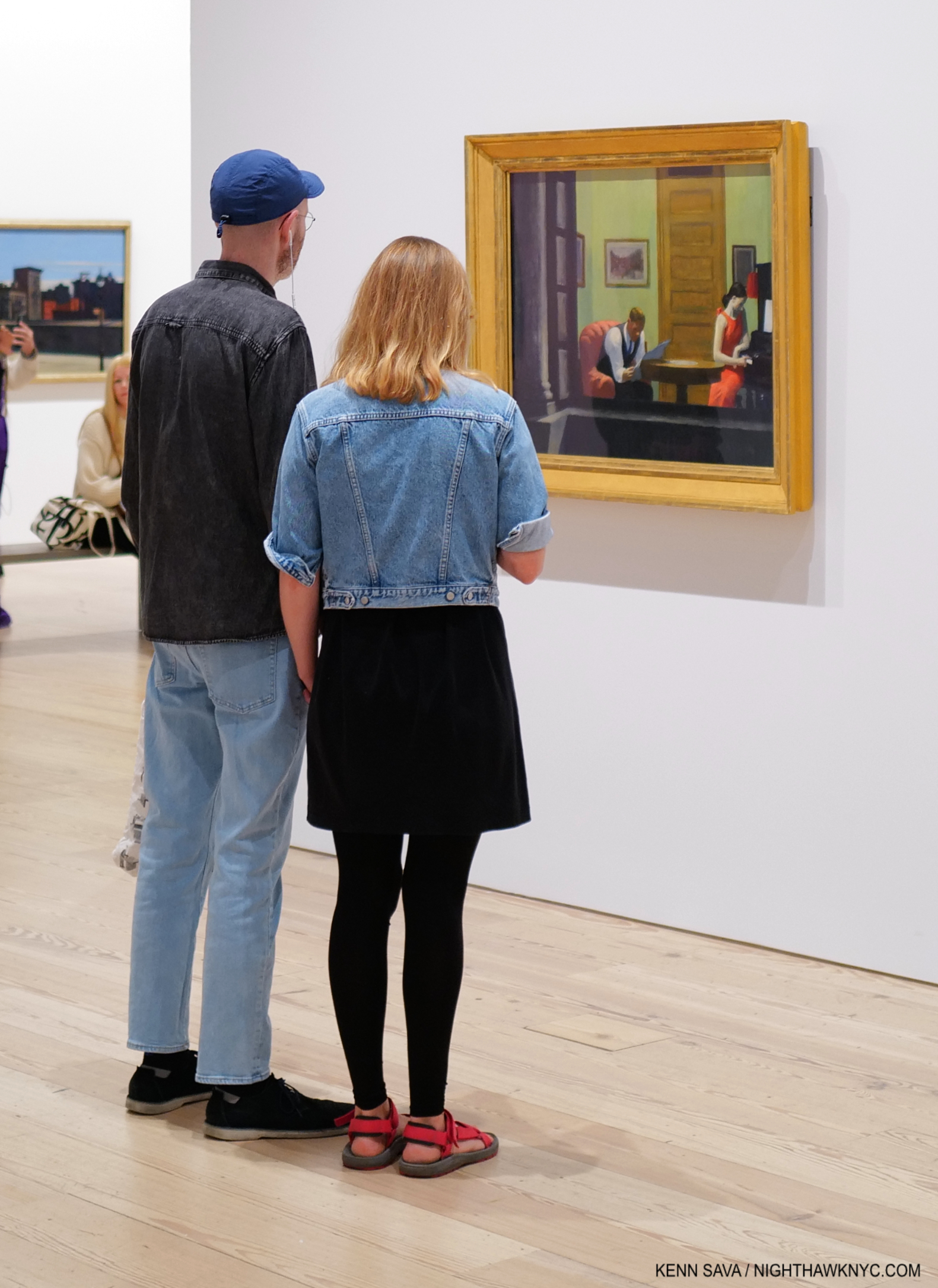
Edward Hopper’s New York, October 27, 2022.

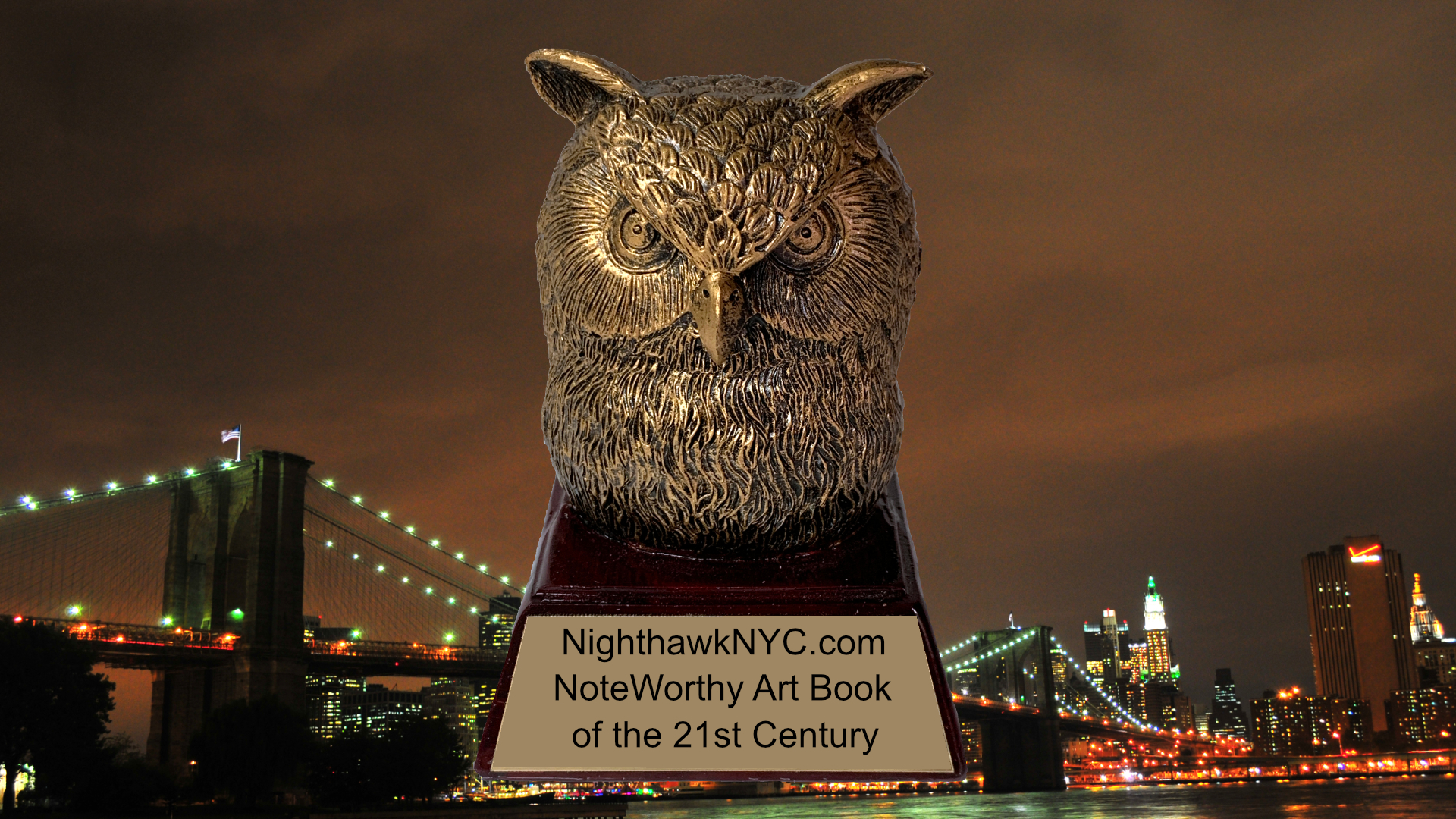
10)- “NoteWorthy Art Books of the 21st Century,” published June 10, 2025. This, and NW PhotoBooks, the two biggest pieces I’ve ever written, represent my sharing what I’ve seen and learned over the past 50 years I’ve spent looking at Art books, and almost a decade of intensively looking at PhotoBooks. Having begun them last September, right before I announced I was taking a break, they kept gnawing at me in a “You HAVE to finish these!” way. The Epics of Epics on this site, an immense amount of looking and consideration went into both pieces. Usually, I worked on up to 4 pieces at a time. I can’t imagine working on anything else in the 10 months it took to write these.
That makes me wonder- Has anyone else (any other single person) written a list of recommended 21st Century Art Books AND a list of 21st Century PhotoBooks?
The Introduction to both pieces is here.

The “Golden Oof,” named for my Avatar.

11)- “NoteWorthy PhotoBooks of the 21st Century,” published June 25, 2025. Marks the end of my “deep dive” into Modern & Contemporary Photography that I began in December, 2016- There I just said it.
[A moment of silence.]
What did I learn from all of that? I stand by what I said here in 2019.
This “Painting guy” is going back to focusing on Painting. You heard it first.

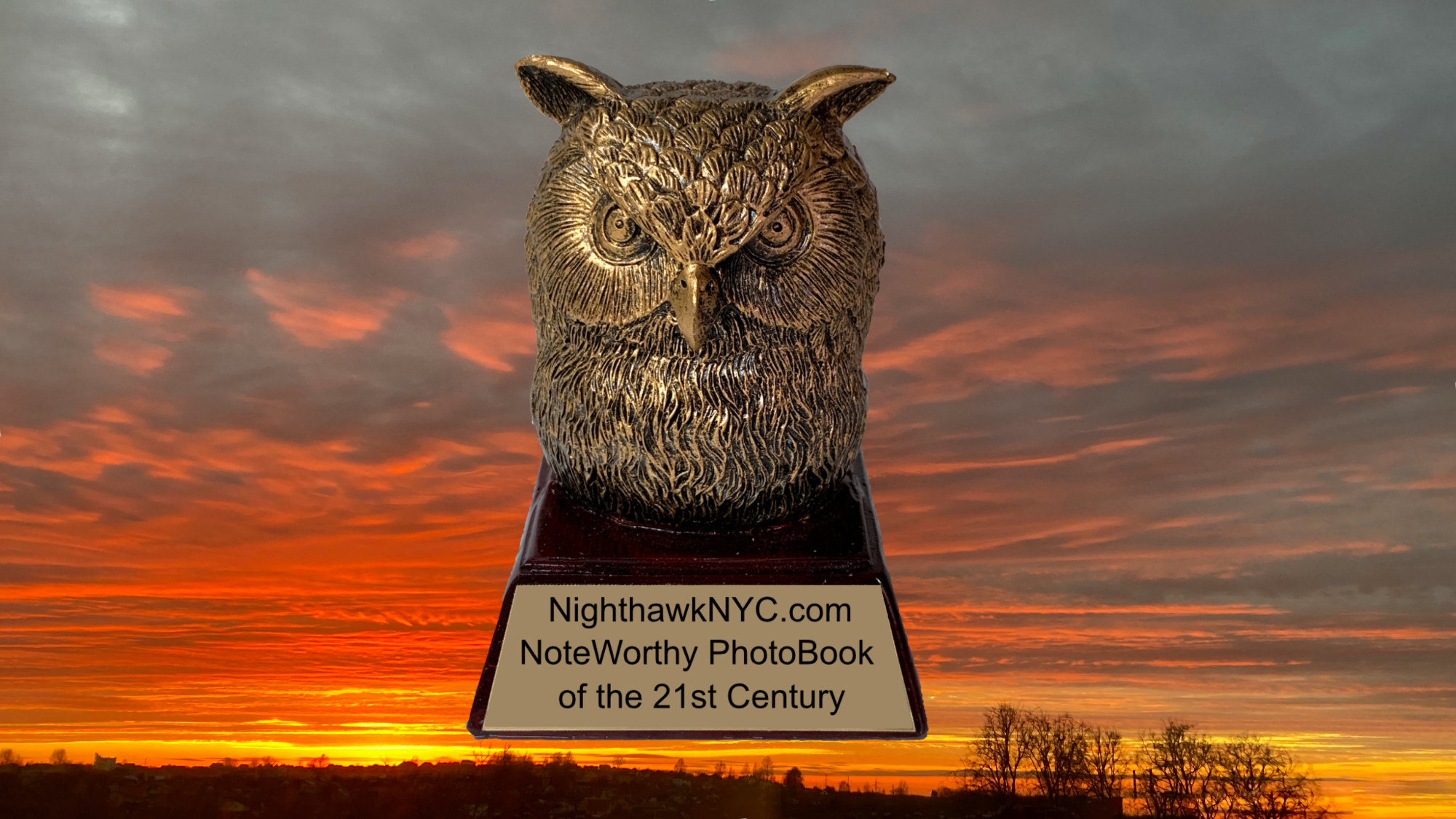
NoteWorthy Sunset Photo by Lana Hattan.

Part 2- Where I’m Going

“Oh, won’t you stay
We’ll put on the day
And we’ll talk in present tenses”-*

1)- NighthawkNYC/Kenn Sava’s Art writing
I’m sorry to say that nothing has changed since I announced I was taking a break in September, 2024. There remains no means of support for independent Art writing. Surviving remains my #1 to #10 priority. I continue to work on the site remaining up. If something changes? I’ll let you know. 

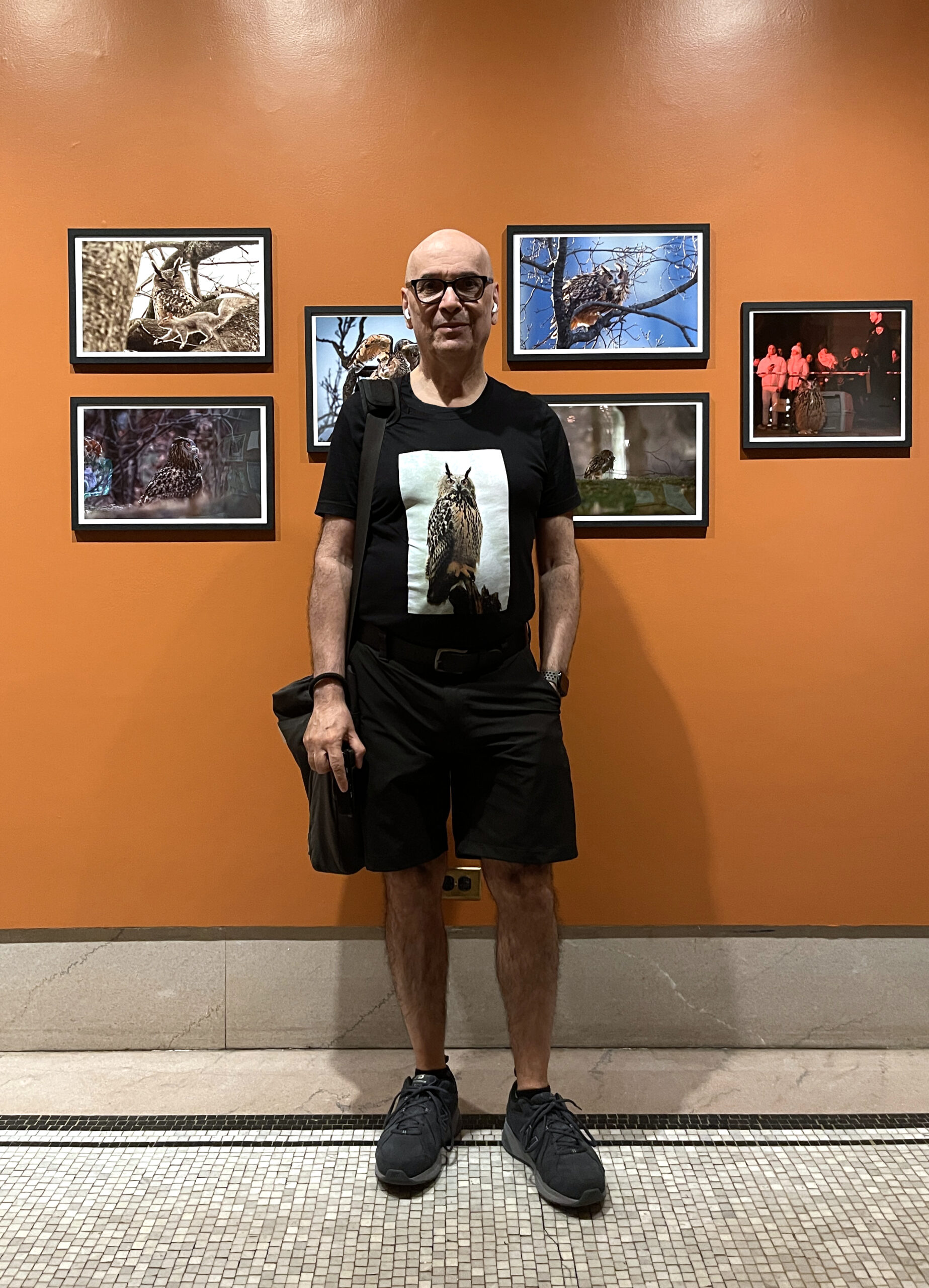
Flaco Lives! Kenn Sava at The Year of Flaco exhibition (in a Flaco T I had made last year), in front of a section of Photos of him early on in his freedom. The picture far right was taken right after he escaped from the Central Park Zoo. After never having been outside in his entire life, he suddenly found himself on Fifth Avenue & 60th Street! Maybe that’s why I’ve never seen a picture of him with his eyes so wide open. New York Historical, July 3, 2025. My piece on Flaco, written about a month and a half before his tragic demise, is here. My Thanks to Marybeth Ihle of the New York Historical.

2)- Kenn Sava, Producer
I’m hoping to re-release The Fuschia by Thomas Chapin, Peggy Stern, Drew Gress and Bobby Previte this year, and also finally release my solo album Strawberry Fields Forever.
Though I produced both projects, releasing and re-releasing them is not about me. Both were recorded in the mid-1990s, and, sadly, since then a number of the great Musicians who participated in them have passed away. I feel a sacred duty to them to get their work out there/back out there. Stay tuned. 

Coda- Before I “Go” Anywhere…
I started this site for one reason- To share what I’ve been lucky enough to see & experience in NYC and in Art & books with my fellow Art lovers around the world. I had a lot of passion, but no business plan.

While doing NighthawkNYC has been quite the financial hardship, I’m proud of the fact that readership has gone up each and every single year. Thank You to everyone who’s read one, or all, of my 350+ pieces here this past decade.

I especially want to Thank those of you who have made donations or bought pieces of my collections to help keep me going! For the rest of you, if you find, or have found, what I’ve done here since 2015 worthwhile, YOUR support is needed to keep this site up, and possibly, enable me to write more.

When the curtain closes
And the rainbow runs away
I will bring you incense
OWLS BY NIGHT (Caps mine ; ) )
By candlelight
By jewel-light
If only you will stay
Pretty baby, won’t you
Wake up, it’s a Chelsea morning”-*

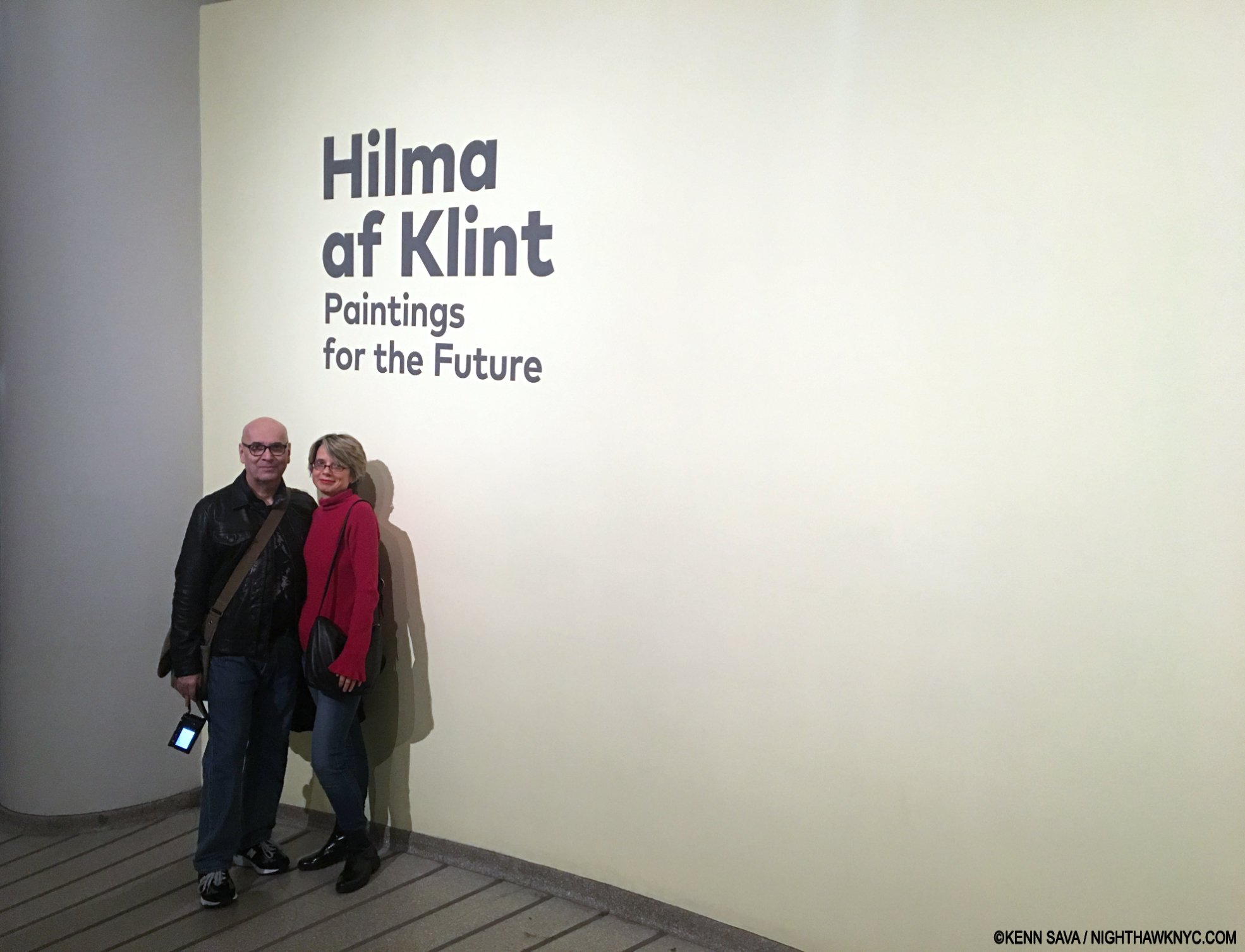
With Lana Hattan at Hilma af Klint: Paintings for the Future, the most recent show we’ve been able to see together at both of our favorite NYC building- The Guggenheim Museum. New Year’s Eve, December 31, 2018. My Undying Thanks to the woman who approached us and insisted she take our picture.

Finally, Thank You to Lana Hattan for pushing me to start writing about Art, and for your continual support through some thick and a lot of thin, every step of the way.
As I’ve said before, if you’ve found ANYTHING I’ve done here worthwhile, she’s the one who deserves your thanks.

As for me? I MADE IT TO 10 YEARS!
Kenn Sava.
July 15, 2025

P.S.- Feel free to drop me a line and let me know if I left out a piece you found particularly NoteWorthy.

For more- Check out my look back at “A Decade of NighthawkNYC.com Banners,” which have uncannily come full circle, here!

*- Soundtrack for this piece is “Chelsea Morning,” by Joni Mitchell, referencing her apartment 5 blocks from where I am writing this, and where I’ve written all of the 350+ pieces on NighthawkNYC. Joni moved here in 1967, before my time here, and proceeded to write a number of her early songs here. Just another of the Legends who’ve lived in my neighborhood, like Patti Smith. She performs it here in 1969-


NoteWorthy PhotoBooks of the 21st Century by Kenn Sava

This site is Free & Ad-Free!
If you find this piece worthwhile, please donate securely via PayPal so I can continue writing. You can also support me by buying Art & books! Details at the end. Thank you.

“Introduction to NoteWorthy Art & PhotoBooks of the 21st Century” is here.

Written & Photographed by Kenn Sava
(except for 5 Photos marked *)

PhotoBooks are THE Art publishing phenomenon of the 21st century. The explosion in their popularity has revolutionized the Art book business. Aided by the snowballing advances in technology that had given birth to digital Photography, the expansion of computer image processing capabilities, and innovations in printing followed (Of course, there are still Photographers who work with film.). Today, the ability to publish a book of photos is within the reach of even the most casual photographers, who can now take a batch of phone photos and have them made into a book for about $25.00. In the realm of Art Photography, another byproduct of all of this has been the explosion in the number of small, independent, PhotoBook publishers, including a number of Artist-owned houses. The end result is there’s been a veritable flood of new PhotoBooks from all over the world to the point that it’s virtually impossible for any one person to see all those published each year. Their number has seemed to grow with each passing year this century. Part of the reason for that is that PhotoBooks also provide a way for Photographers to show their work to the world, since very, very few have gallery representation
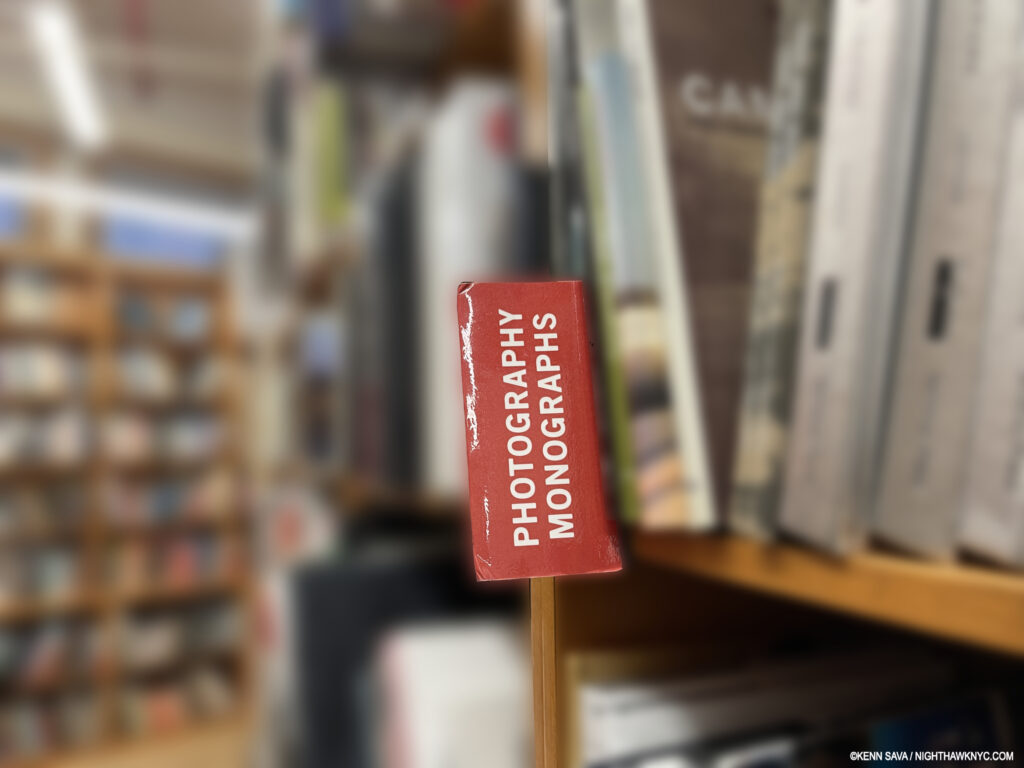
After I devoted 15,000 words(!) to NoteWorthy Art Books of the 21st Century, it’s time to put the focus on PhotoBooks released this century! I’m “only” employing the following 10,000 words on them. ; )

Though Art books remain one of my earliest passions that’s every bit as strong today as ever, a December, 2016 visit to William Eggleston: The Democratic Forest at Zwirner left me realizing I needed to get up to speed on what I call Modern & Contemporary Photography (i.e. the period since the publication of Robert Frank’s The Americans in 1958-9). I immediately dove in, beginning what I’ve been calling my “deep dive” into M&C Photography on these epages. I’ve spent the succeeding 8 1/2 years doing little else. I’ve seen every PhotoBook I could get my hands or eyes on (countless thousands) in bookstores, galleries, museums, libraries, numerous book shows, attended hundreds of Photography shows in galleries & museums, and numerous Photo conventions, and on and on, to even the few Photo eBooks that exist. I’ve shared much of what I’ve seen here on NHNYC. As I write in May, 2025, Photography (108 pieces) & PhotoBooks (48) make up a sizable percentage of the 350 pieces I’ve published on NHNYC.

This piece may, therefore, be seen as a summation of all I’ve seen and learned in that time, published here to share it with the world.
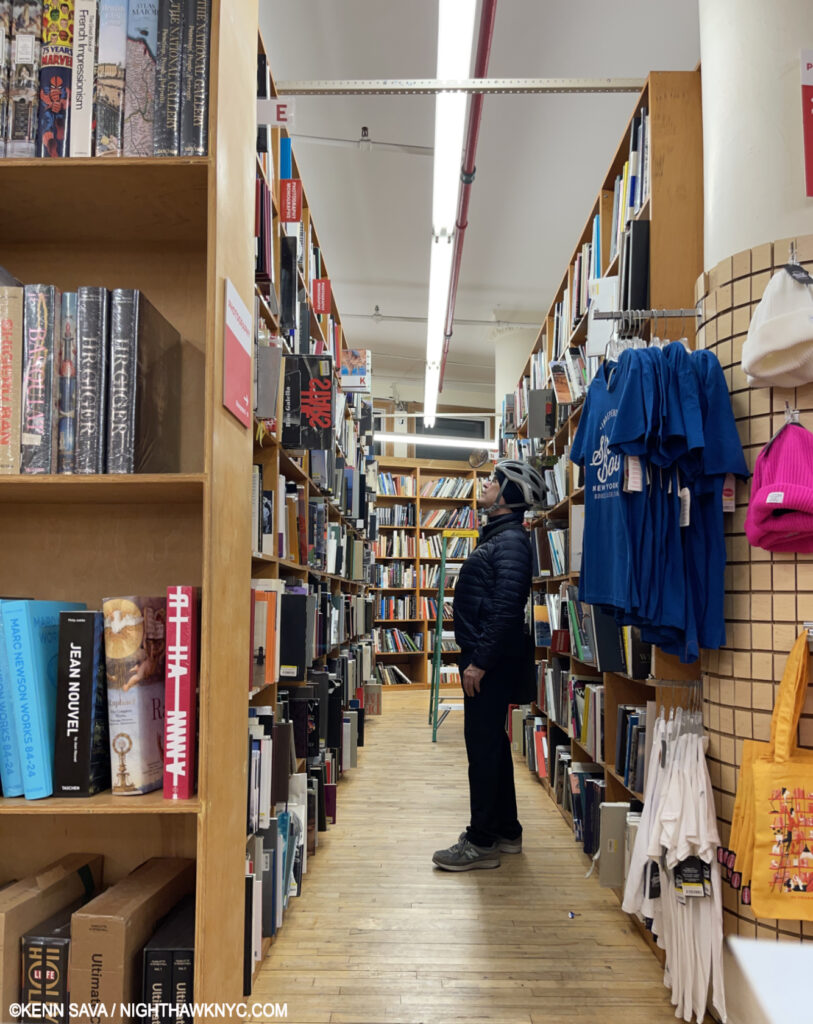
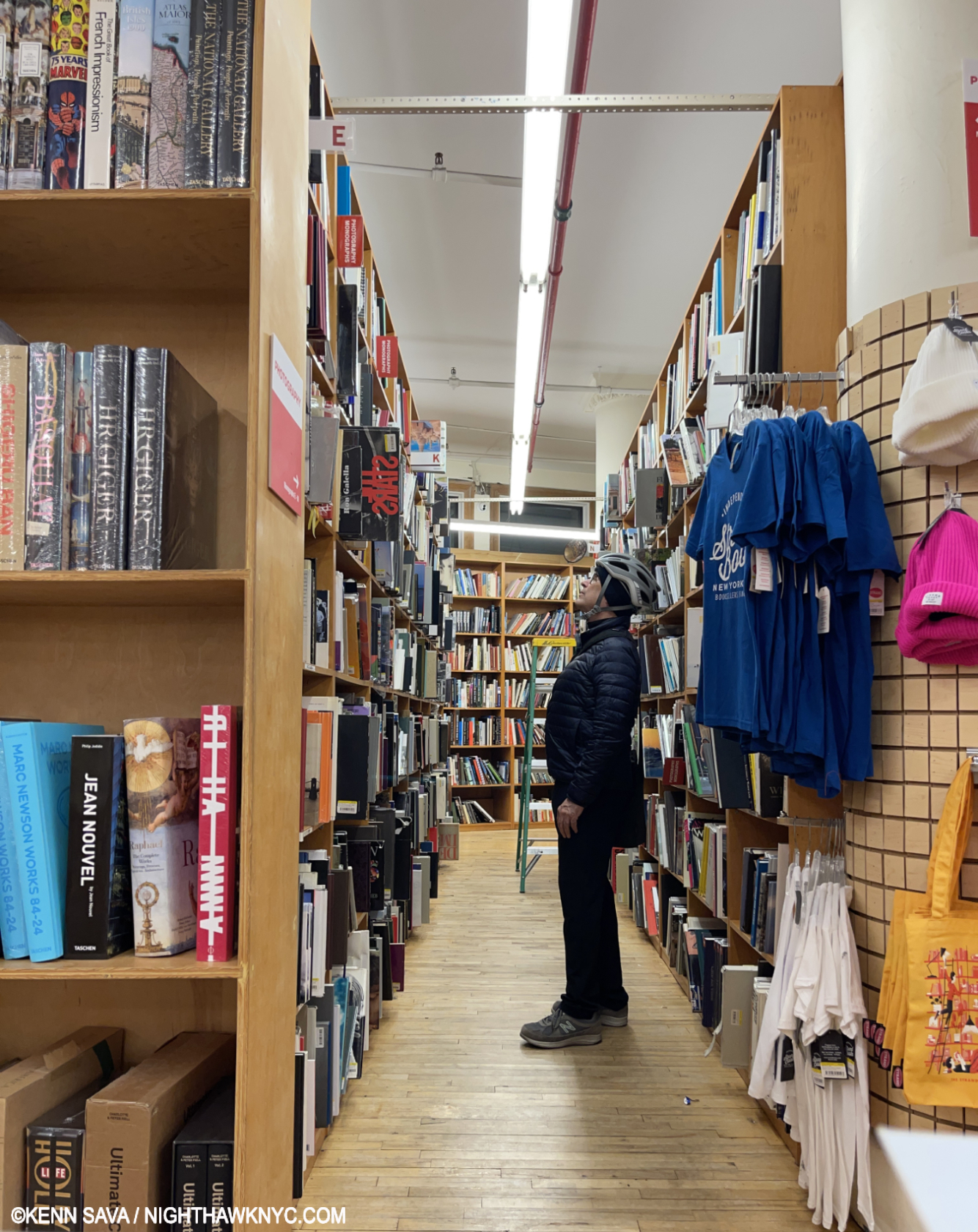
Another day, another bookstore. The author looking for the next PhotoBook on this list. March 5, 2025.

As I said in the Introduction, though my history with Art books is far longer than that of mine with PhotoBooks, my NoteWorthy PhotoBook lists actually predate my NoteWorthy Art Book lists by 2 years! An immense amount of research has gone into this list. Yet, there are NO ADS or affiliate links in this piece! Imagine THAT in 2025. If you find this piece worthwhile PLEASE DONATE securely via PayPal via the link up top so I can continue to write and to help keep this site up.

NoteWorthy PhotoBooks of the 21st Century
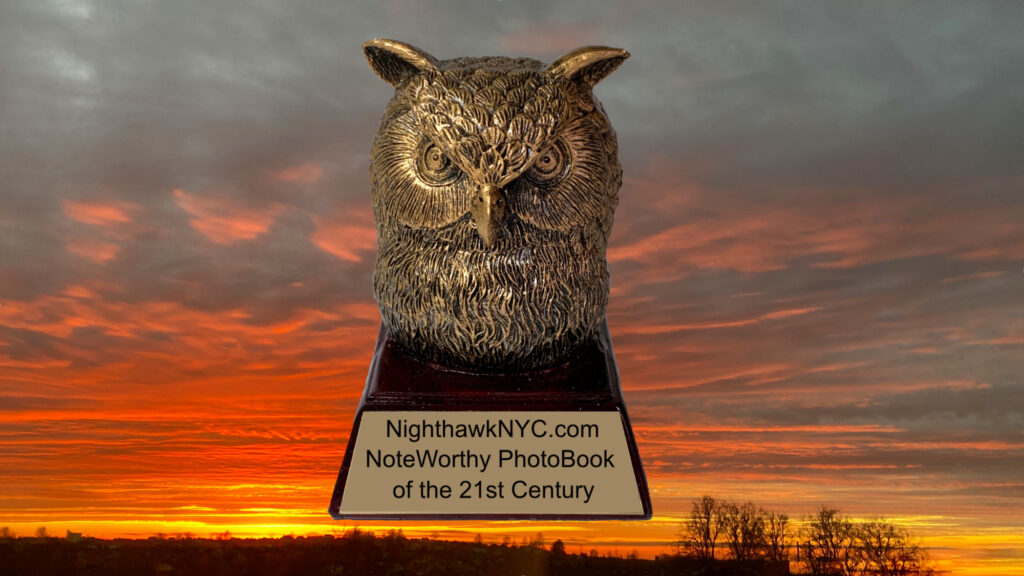
“Nature is the best Painter,” Lana Hattan. The “Golden Oof,” named for my Avatar, flies over an amazing fiery sunset by my Muse, Lana Hattan. Note- If you are listed below and would like a Golden Oof Statuette, contact me via the link at the end for info.

The books are listed in no in particular order. Books published before 2000 that were reissued in the 21st century are excluded from consideration as are books published in fewer than 200 copies because too few can see them.

Format= Artist, Title, Publisher, Year, Kenn’s comment
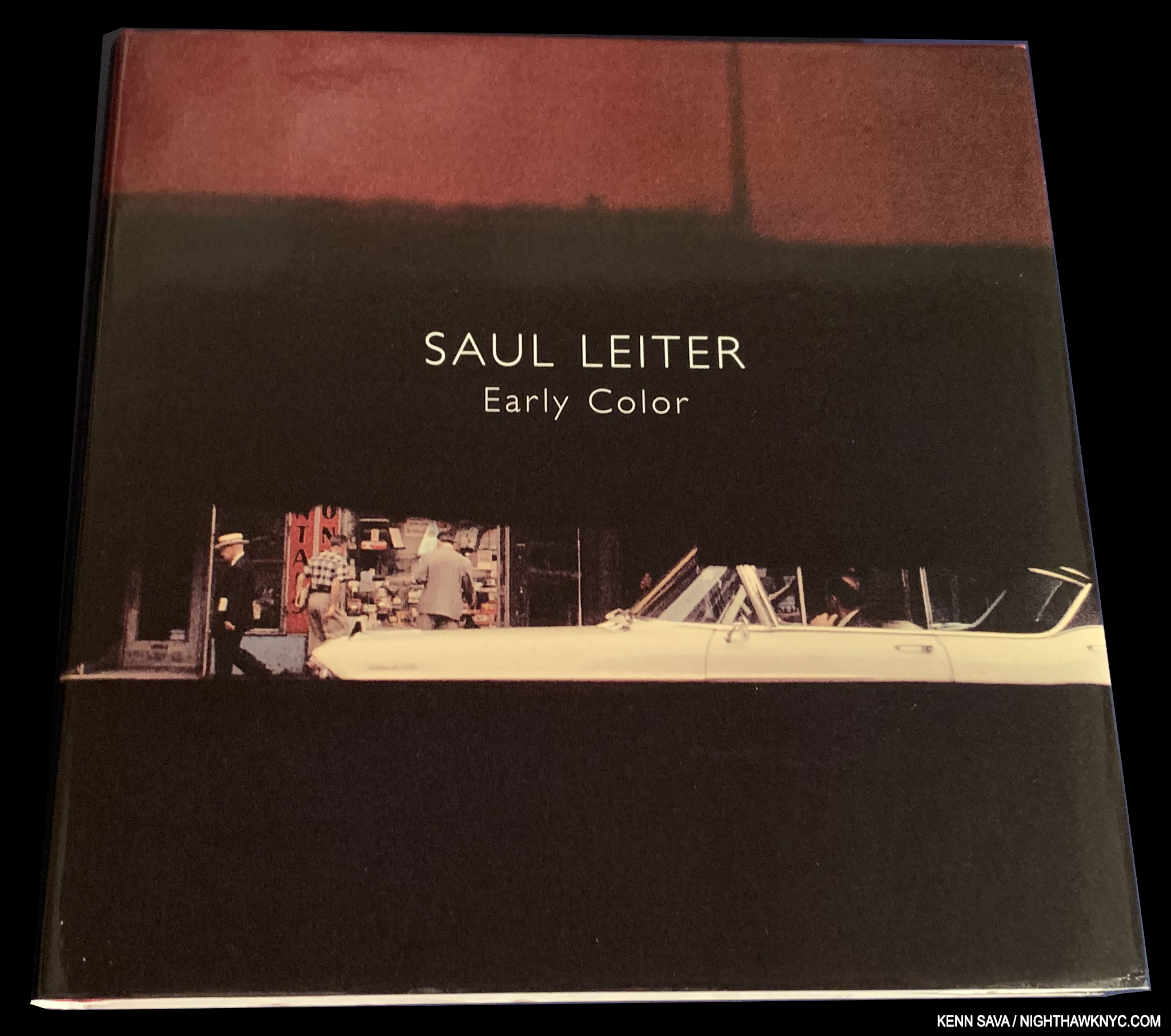
There’s no such thing as a “perfect book.” Early Color is as close as I’ve seen a PhotoBook come.

Saul Leiter, Early Color, Steidl, 2006
THE book that launched the “PhotoBook phenomenon,” it seems to me, is as close to “perfect” as I’ve seen a PhotoBook come-in all regards, from the minimal, yet wonderfully tasteful, design by Martin Harrison, to the state of the art Steidl printing, the superb Artist-overseen editing and sequencing, and oh yeah, it’s sublimely unique Photos in the most godsmack naturally beautiful colors imaginable. A book for the ages that I fully expect will be on it when whoever does this list for the entire century in the year 2100. Impossible (spelled VERY EXPENSIVE) to find now, my advice is to wait for another reprint, and assuming they haven’t changed it, buy it IMMEDIATELY because it won’t stay available for long!
My look at the Saul Leiter: In My Room show is here.
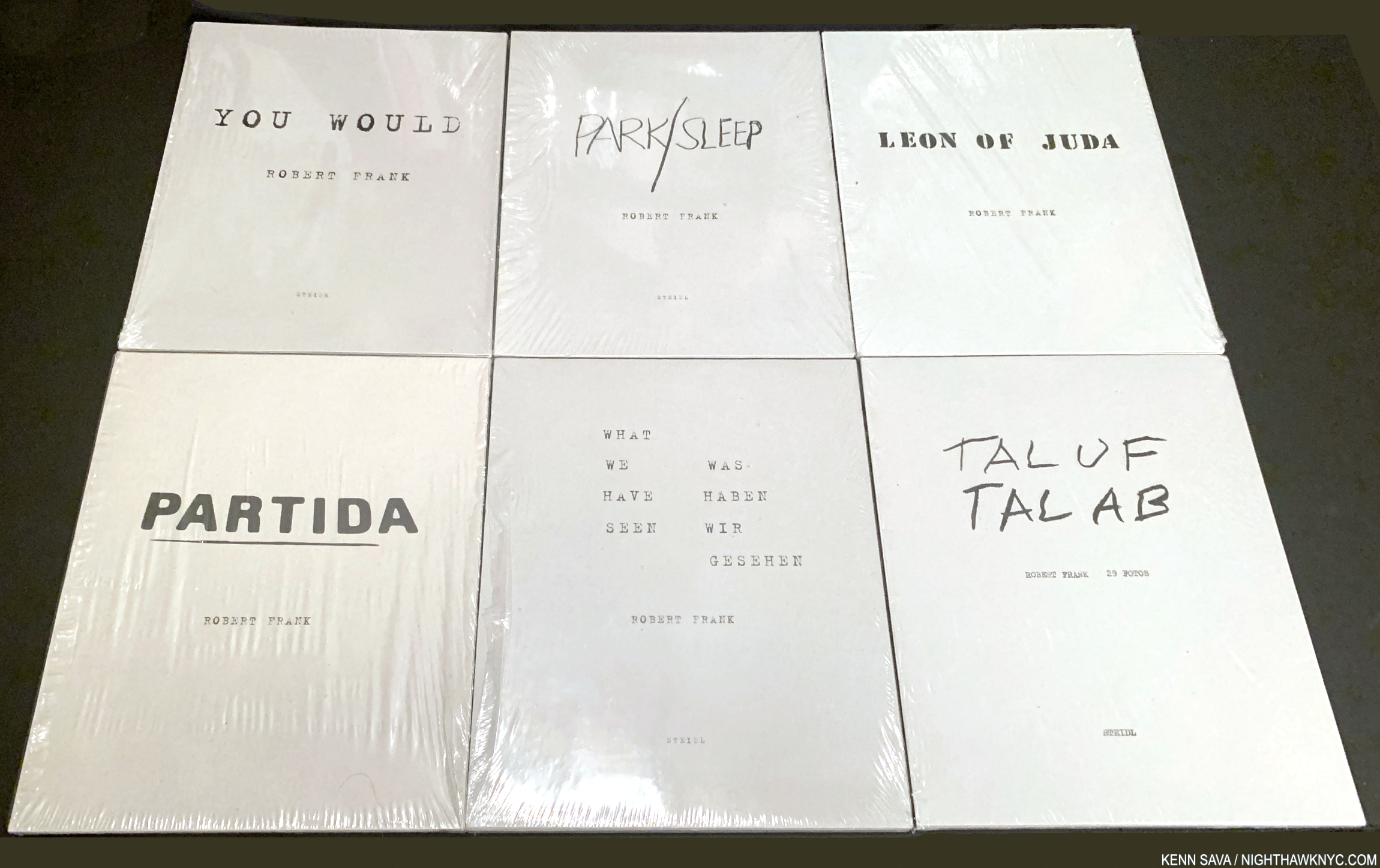
All six volumes of Robert Frank’s Visual Diary series. Steidl has announced they will be reissued as a set this year.

Robert Frank, Visual Diaries, Steidl, 6 volumes published between 2010-17, reissued as a set in 2025
The most overlooked PhotoBook series of the century to date gets a reissue in mid-2025 (too late for me to see it before publishing this list). One way or the other, this is an essential series. People think of The Americans when they think of Robert Frank. I get it. Many don’t realized he lived and worked for another 50 years, and continued to create great, ground-breaking, work that looks inside rather than out. Beyond that, he continued to explore new techniques that put him ahead of his time. Still.
Often called the most important Photographer of the past 50 years, and/or the most influential, he may well be both. The thing is, most of his post-Americans work remains relatively under-known compared to The Americans, and that leaves a lot of room for his influence to be all that much greater once it becomes better known. The Visual Diaries from the last part of the Artist’s life and career may not be the best place to start exploring his work after The Americans, but they show Mr. Frank was at the top of his game right up to the end.
My look at Robert Frank’s “other” PhotoBooks (besides The Americans), including these, is here. Interestingly, MoMA’s show on the “other” Robert Frank: Life Dances On just closed on January 11th. Previously, their bookstore featured both of my NoteWorthy PhotoBooks of 2023.  Hmmmm…Are MoMA and its store, NHNYC readers?
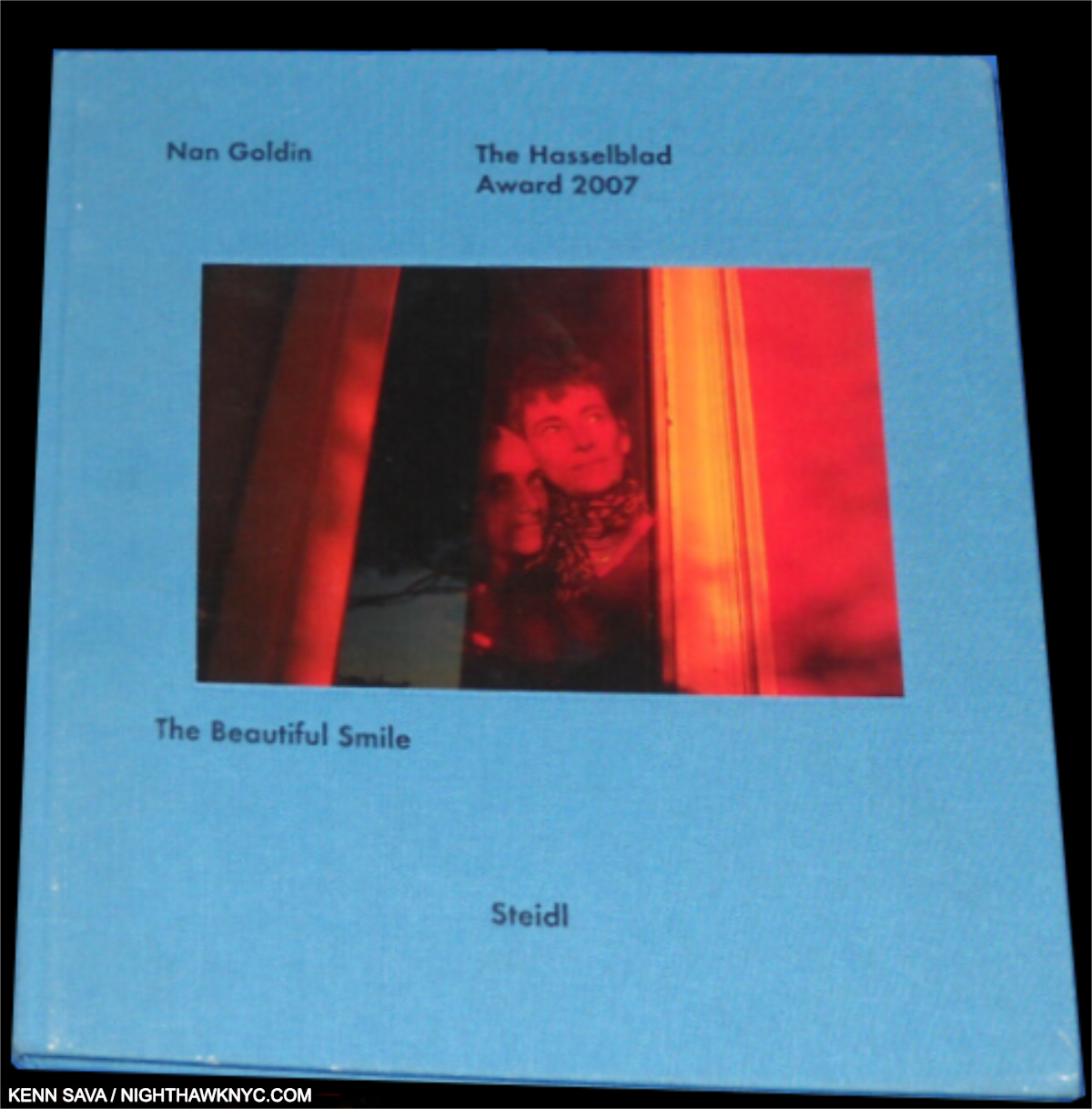
The 1st edition of The Beautiful Smile bore “The Hasselblad Award, 2007“as the title/subtitle on the cover. The 2nd did not. Both are now rare.

Nan Goldin, The Beautiful Smile, Steidl, 2008
Long out of print, even in the 2017 reprint, The Beautiful Smil is Nan’s favorite among her own books. I’m not going to argue with that. There’s no such thing as a “weak” Nan Goldin book (among those I’ve seen, which I believe is just about all of them, including catalogs), though, of course, The Ballad of Sexual Dependency is the place most choose to start. This is another great Nan book that not as many people seem to know about, possibly because it promptly sold out the 2 times it was issued. Hopefully, Steidl will reissue it again soon. My guess is that since they have been publishing Nan’s new books, and some of her other out of print Steidl titles have come back, The Beautiful Smile will one of these days, too.
My piece naming Nan’s most recent This Will Not End Well one of my NoteWorthy PhotoBooks of 2022 is here.
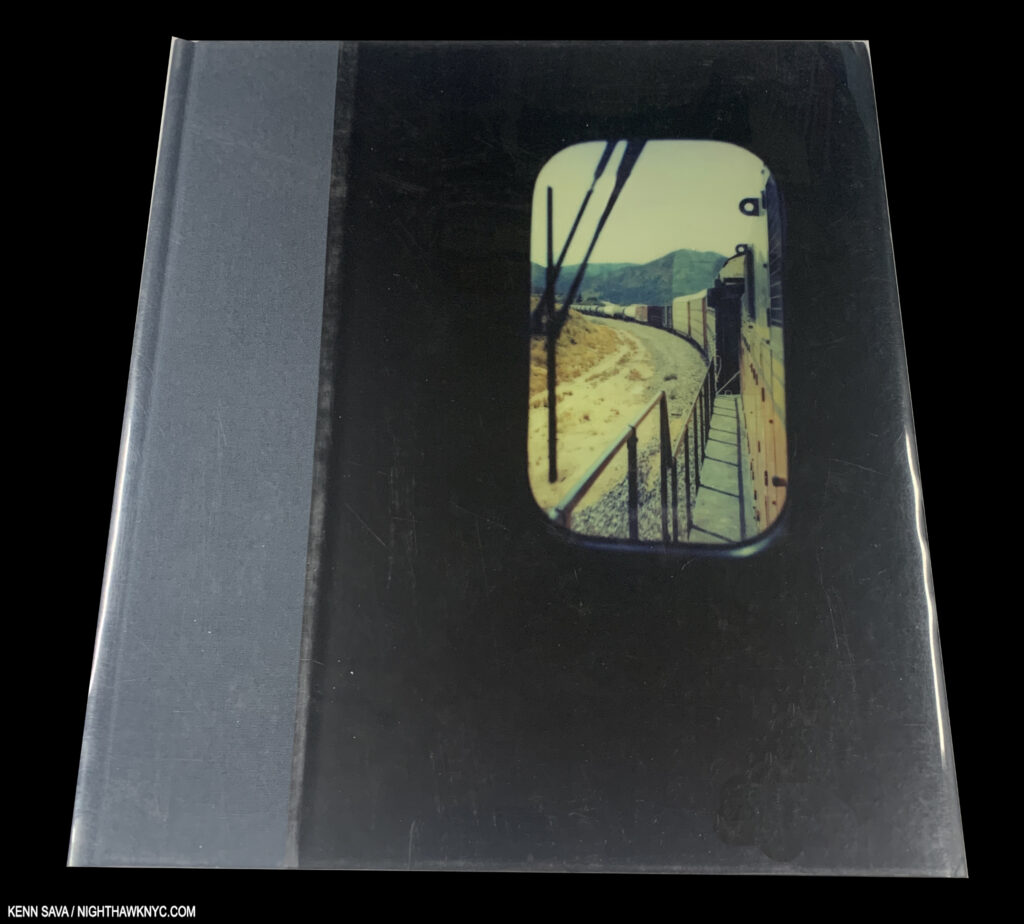
Mike (now Michael) Brodie, Tones of Dirt and Bones, Twin Palms, 2014
A sensation when it came out, it had the rawness of life lived- the hard way. Hopping trains sounds like something straight out of Kerouac and Neal Cassidy, but they weren’t packing cameras (as far as I know). Luckily, Mike Brodie was, and his resulting work has a rough poetry that makes it hard to compare it with anything of the time (maybe Jim Goldberg’s Raised by Wolves, 1995?).  Mr. Brodie promptly dropped out of the Photography world though he was becoming a “big name” at the time. He got married and went into engineering. Suddenly, nine years later, he released Polaroid Kid, 2023, and in February, 2025, Failing marks his return to Photography in a big way. Photography, and the PhotoBook, has missed him. 11 years later, Tones has lost none of its freshness or power.
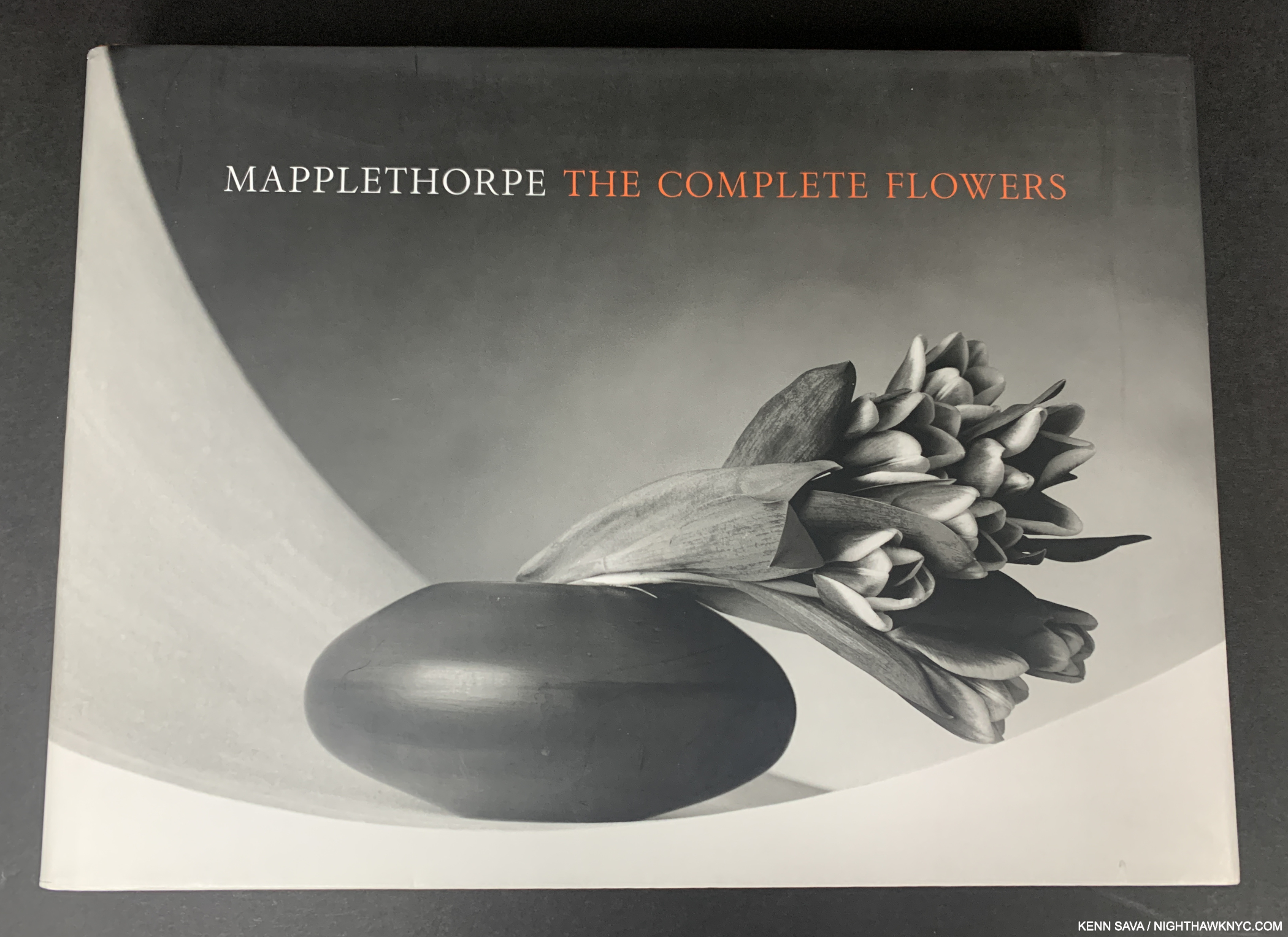
In spite of more recent editions, the tesNeues Mapplethorpe Complete Flowers remains my preferred edition. One of the most beautiful books on this list.

Robert Mapplethorpe, Robert Mapplethorpe: The Complete Flowers, texNeues, 2006
There are some who are not fans of some of Robert Mapplethorpe’s work, but everyone seems to agree on the beauty of his Flowers. Containing “all known examples” in color or black & white as the Artist shot them over 256 pages, this is a book sure to bring beauty any where it’s viewed.
NOTE– This is NOT the more recent Rober Mapplethorpe- Flora published by Phaidon in 2024! This is the large 15 1/2 by 11 3/4 inches, rectangular (landscape format), book published by tesNeues in 2006, still my preferred edition. Why? The format works better for the work, in my opinion.
I took pictures of images in my 2006 tesNeues Complete Flowers and then compared them side-by-side with a physical copy of the 2024 Flora. Unfortunately, the printing just doesn’t measure up to the older edition. In some cases, the larger sizes seem be the problem (perhaps they were working with smaller originals in some cases?), in other images that retain the same size across both books, details are fuzzy in the Phaidon. And this was comparing my iPhone pictures on an A17 iPad mini to the physical Flora! I expect the difference to be more pronounced with both books present. Also, though both books are large, I find the rectangular shape of the tesNeues more manageable. The powers that be running the Mapplethorpe Estate seem to be unsure about what format works best for these 278 or 279 Photographs- having published them in first, landscape, and then portrait. Their 2006 first attempt, though not ideal, works best for me.
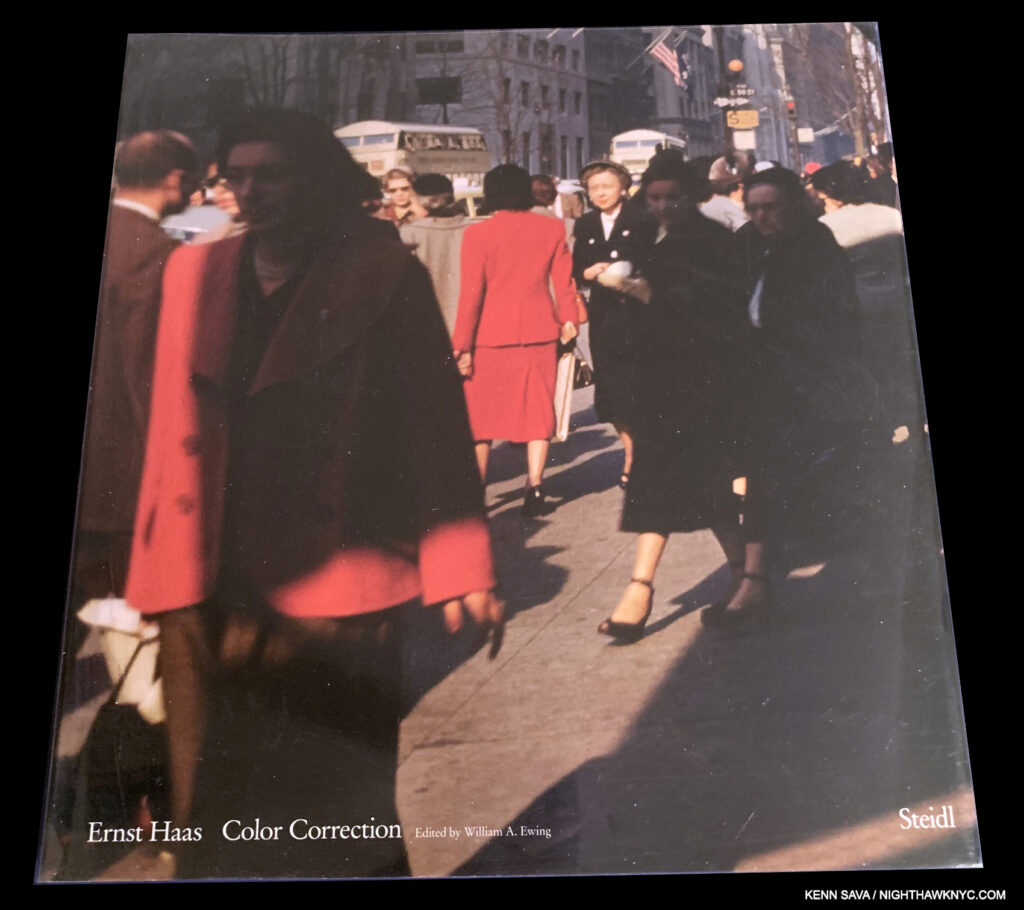
Ernst Haas, Color Correction, Steidl, 2011
An enormous shock, Color Correction, stood to “correct” the incomplete picture of Ernst Haas’ ground-breaking color work. Ground-breaking? It was Ernst Haas, and NOT William Eggleston who received the first one-woman or one-man solo show of color Photography at MoMA! Since that show, Mr. Haas’ more commercial work solidified an image of his work being technically excellent, but dry. Color Correction wears its edge on its sleeve, to marvellous effect. A case could be made that is the most essential PhotoBook on this list since Early Color, but for most mainstream Photography lovers or Photographers it may not be their cup of tea. It certainly is mine, and the esteem I hold it in is unmatched when I think of the few other PhotoBooks that I can compare it to, like Aaron Suskind: 100 (though black & white).
Out of print and now VERY expensive, the “Early Color rule” applies here as well- wait for another Steidl reprint. I heard rumors of just that, but then, out of nowhere, Ernst Haas: Abstract appeared last year from Prestel containing a recreation of a slideshow of personal work Mr. Haas created. I’m still betting Color Correction will eventually see another printing.
My piece naming Ernst Haas: New York in Color, 1952-62 (the period Saul Leiter owned), a NoteWorthy PhotoBook of 2020 is here.
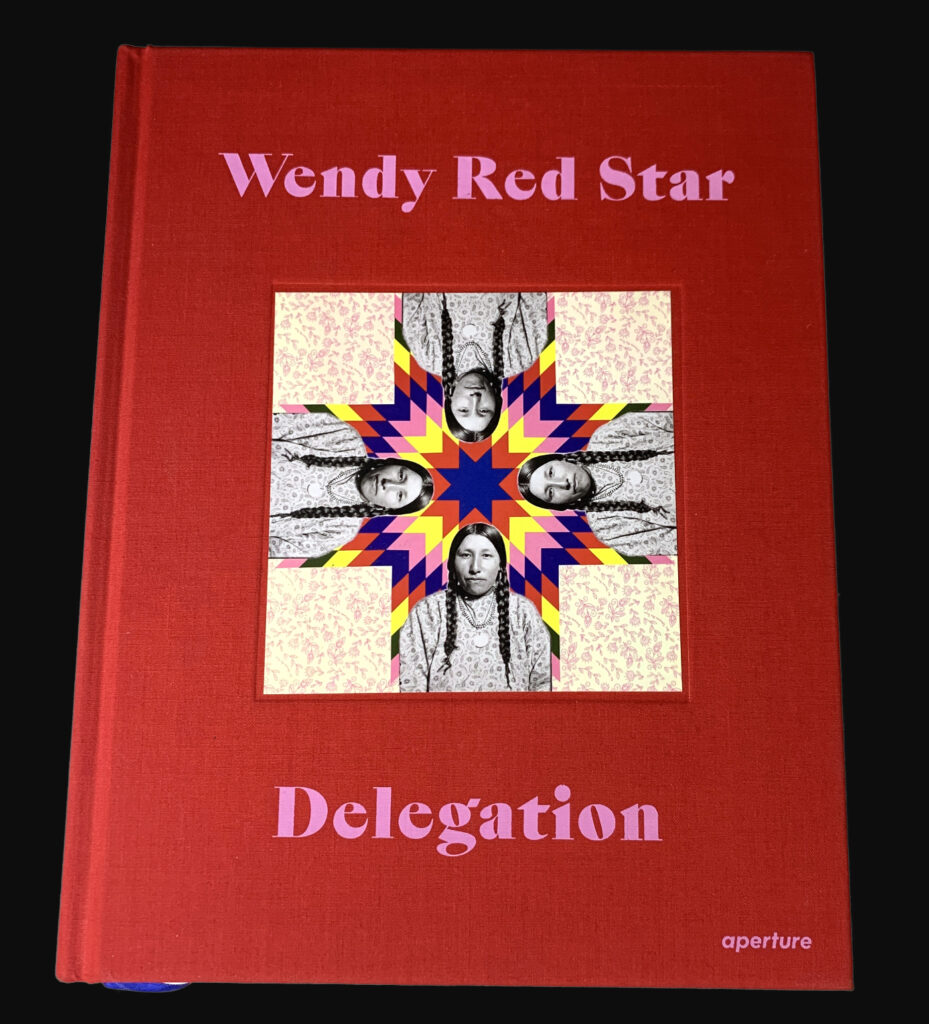
Wendy Red Star, Delegation, Aperture, 2022
“PhotoBook” is too small a category for Delegation because Wendy Red Star is much more than a Photographer (like some others on this list are). I think it’s a great thing that Aperture, the world-leading Photography crusader, decided to include the full scope of her work in what is a ground-breaking book. The first “PhotoBook” from a major Photography publisher on an Indigenous Artist/Photographer is something that is long overdue. Delegation is destined to be more than a landmark in that sense, it’s an eye-opening, no-holds-barred look at history from the side of those who haven’t been given a voice to write it thus far (like Kent Monkman, who I featured in NoteWorthy Art Books of the 21st Century).
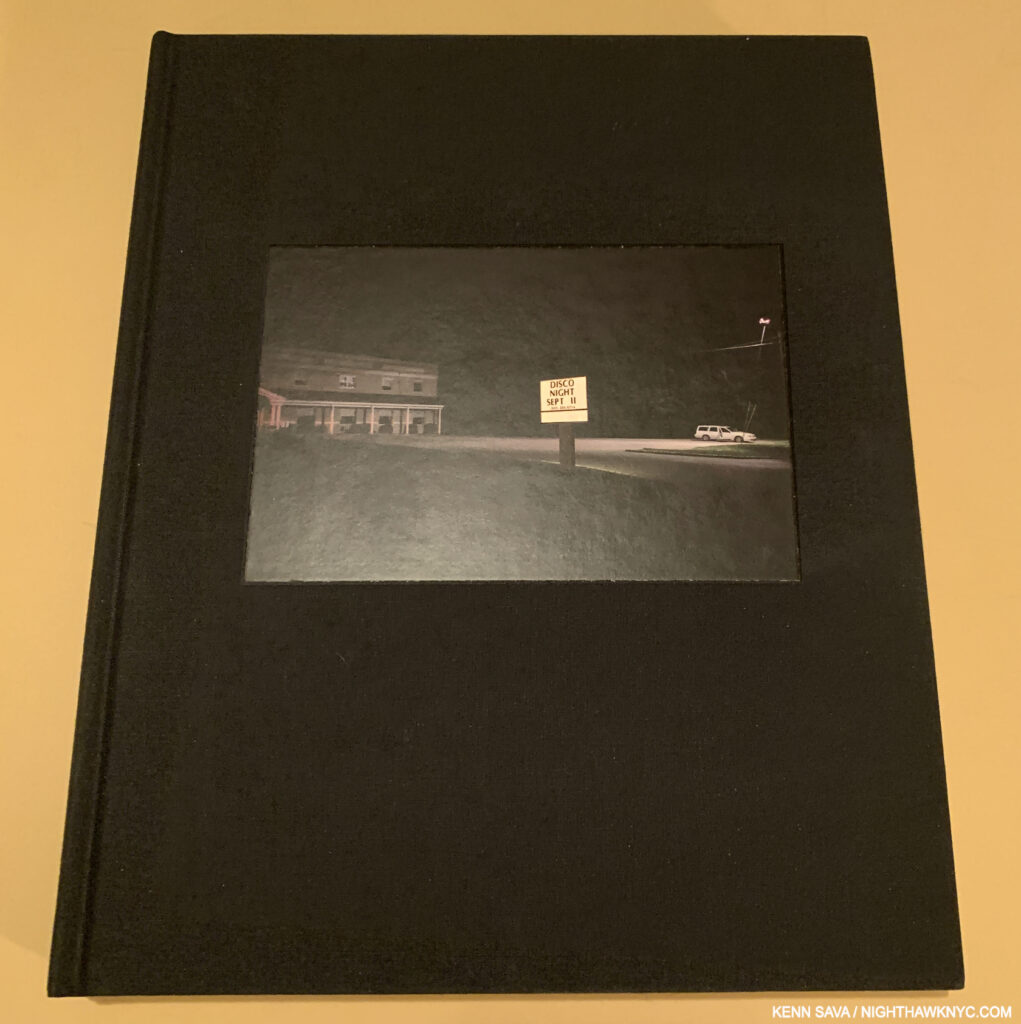
The classic cover Photo, with the sign that apparently gave the book its title,  sums up perfectly the dual threads of the images inside.

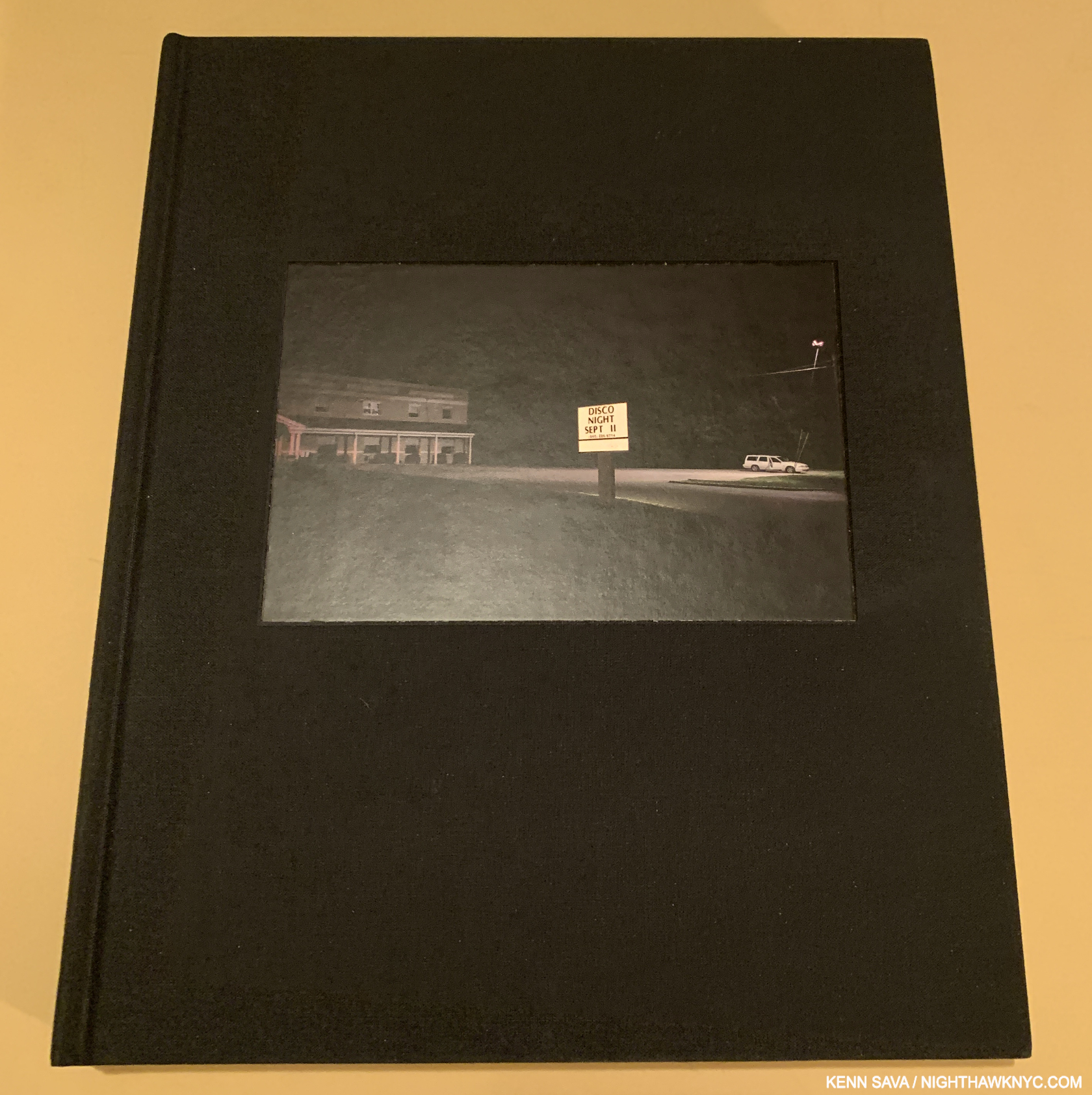
Peter van Agtmael, Disco Night Sept 11, Red Hood Editions, 2014
The first of Peter van Agtmael’s fine PhotoBooks, Disco Night Sept 11’s generous 276 pages revealed something we’ve come to know well about Mr. van Agtmaels’s work- a penchant for being in the right place for poignant and powerful Photos that cast a piercing eye on humanity in revealing, and sometimes, even decisive, momenta. An important witness to so much history this past decade, Disco Night juxtaposes scenes from the wars the U.S. fought in Iraq and Afghanistan from 2006 to 2013 with scenes from life at home. Each page brings unexpected, often chilling, moments that either just happened, or literally unfold before our eyes across numerous gatefolds. Accompanied by text that fills in some of the gaps, a decade on, Disco Night has lost none of its power. Today it stands as the most compelling record of this fractured era in U.S. history. Something Mr. van Agtmael has continued to document in a series of powerful PhotoBooks released this past decade.
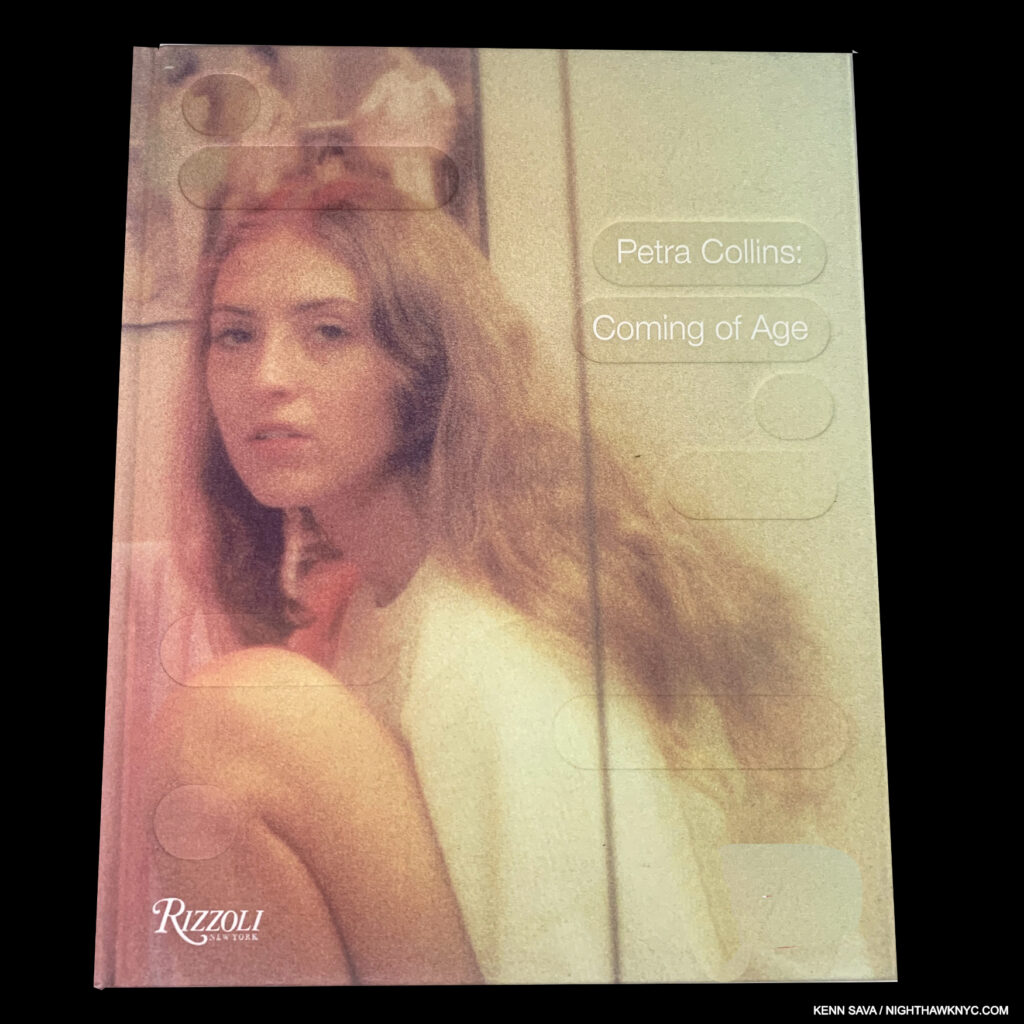
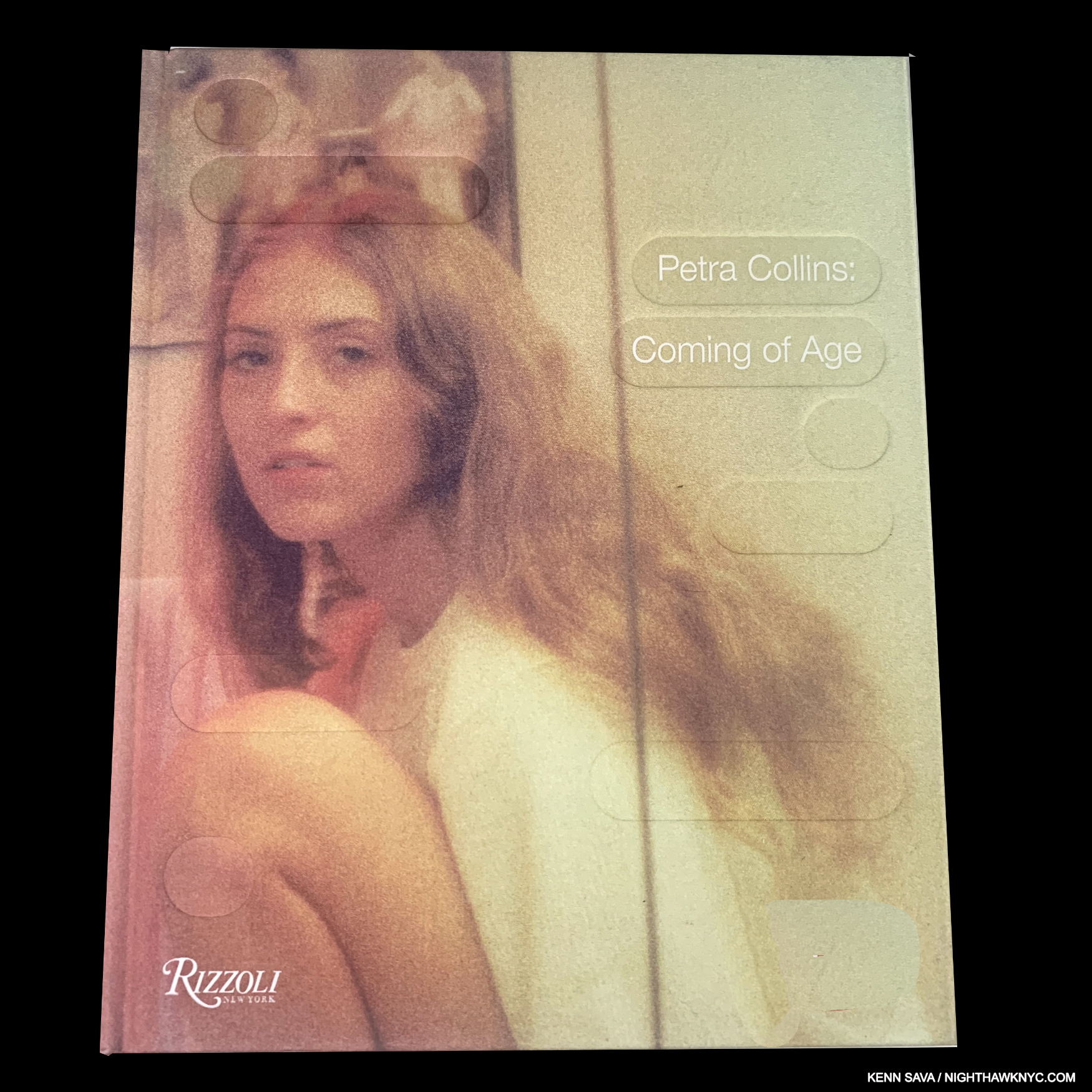
Petra Collins, Coming of Age, Rizzoli, 2017
I’ll long remember two incredibly long lines I’ve stood in: first, for the signing at the NYC book release of Petra Collins’ Coming of Age, and the second for her signing of Fairy Tales, her book with Alexa Demie. WOW! Both felt like we were camped there. (For Fairy Tales, though the store closed at 8pm. I was told they stayed open until 11pm to accommodate all those waiting! Unheard of.) When I finally got inside the actual store, I realized why. Petra was having a moment with each and every person in line! I was shocked. Who does that? In all my years of going to signings, I’d never seen an Artist do that. And not one single person was heard complaining about the wait.
Coming of Age seemed to launch a whole stream of PhotoBooks by new women Photographers that began to bring some balance to a male dominated field. While I admire her eye and skill as well as her originality, I was also taken by how comfortable she made, and continues to make, her subjects feel- that’s why I mentioned my standing in line experiences. I believe that leads to a good bit of the freshness of her work. I’m not one bit surprised Petra Collins has become as successful as she has. Frankly, I had a feeling it was going to happen the first time I opened Coming of Age.
My piece naming Coming of Age a Noteworthy PhotoBook of 2018 is here. My piece naming her second book, Miert Vage Te, Ha Lehetsz en is? or Why be u, when u can be me?, a NoteWorthy PhotoBook of 2019 is here. My look at the Music Video she directed for Olivia Rodrigo’s “Brutal” is here.
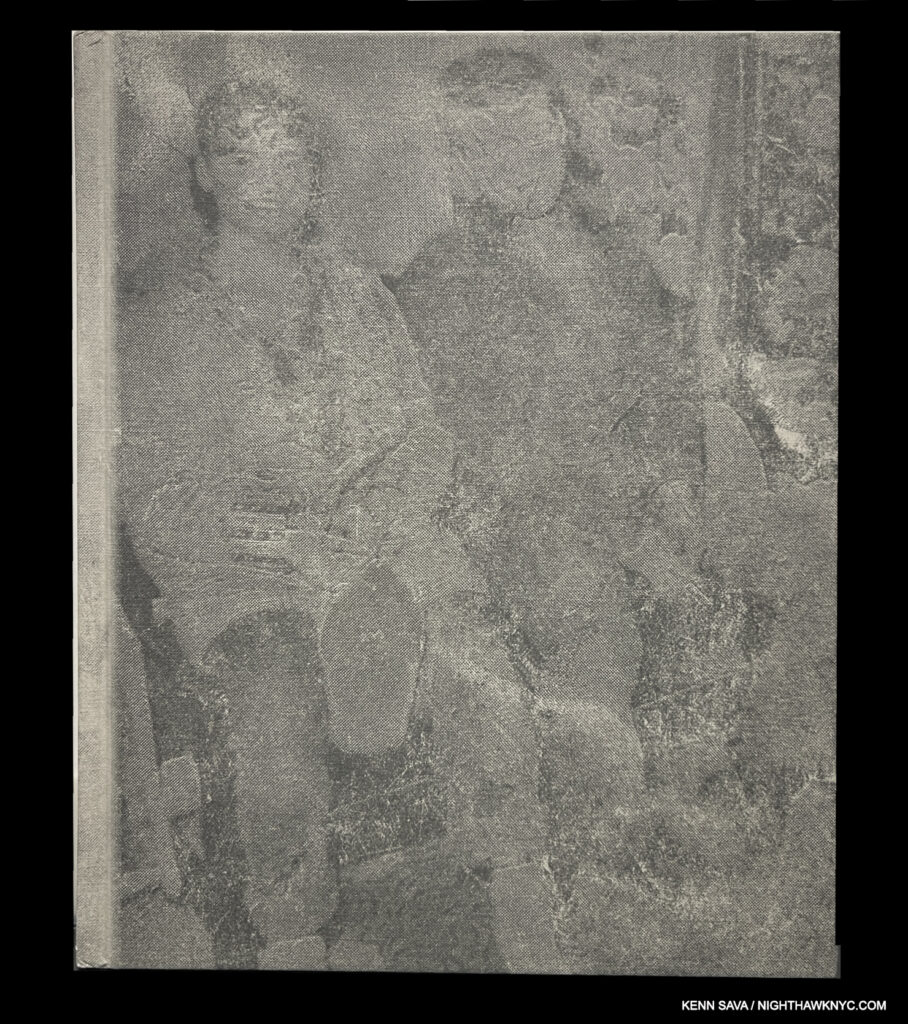

Christian Patterson, Redheaded Peckerwood, Mack Books, 2011
A sensation when it was released, Christian Patterson’s debut book still feels fresh, innovative and chilling. Its subjects, the teen murderers Charles Starkweather and Carol Ann Fugate, and their 1958 3-day murder spree has spawned a number of Films, including Badlands, 1973. For me it’s Peckerwood’s images that linger in the mind longest, like the wire photo of the duo on the cover. The viewer is often left to wonder what the connection is between the images and the “story,” or if there is one. This is compounded by the extraordinary depth of the Artist’s involvement in his project that he actually uncovered related materials that he presents here for the first time.
Calling Redheaded Peckerwood a “unique book” doesn’t sum it up. It’s a book that breaks any number of boxes, categories and boundaries, not the least of which is what the possibilities are for a PhotoBook. Mysterious and horrifyingly vivid, like Stanley Kubrick’s The Shining, or the work of David Lynch, much of the horror is in the mind. Designed by the Artist, Redheaded Peckerwood raised the bar quite high for PhotoBooks, and the Aritst’s subsequent work.
Copies of this very rare book currently change hands for $300., and up.
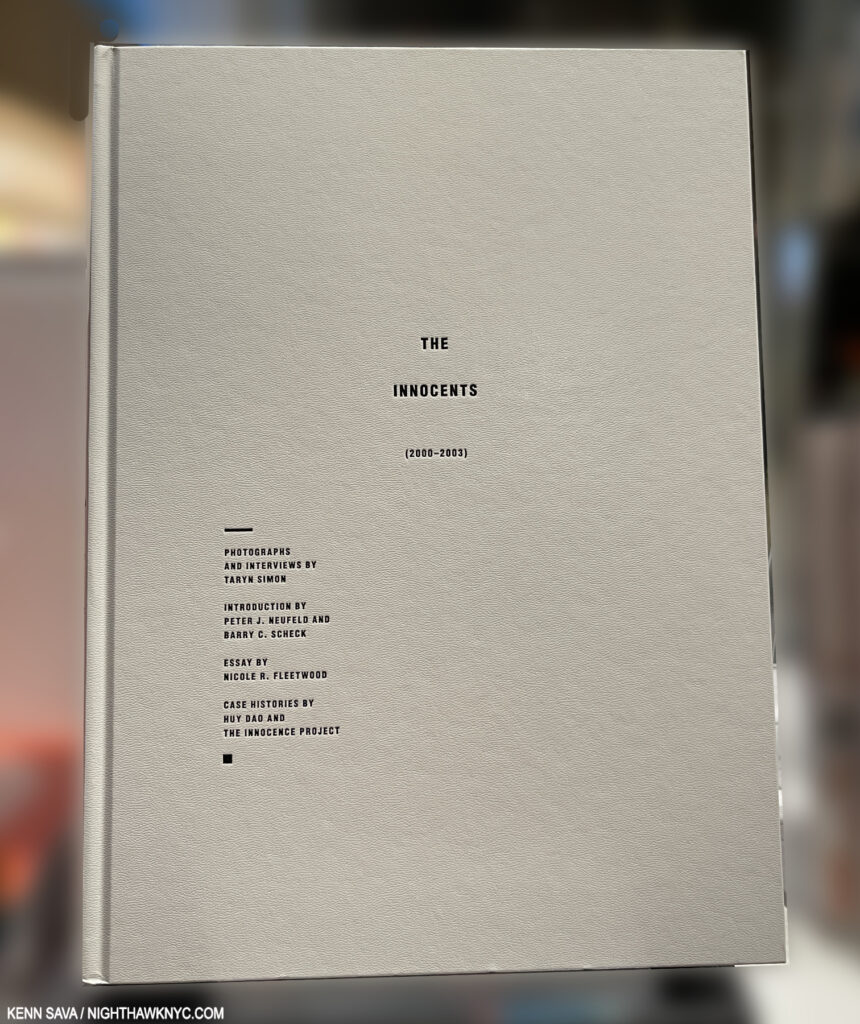
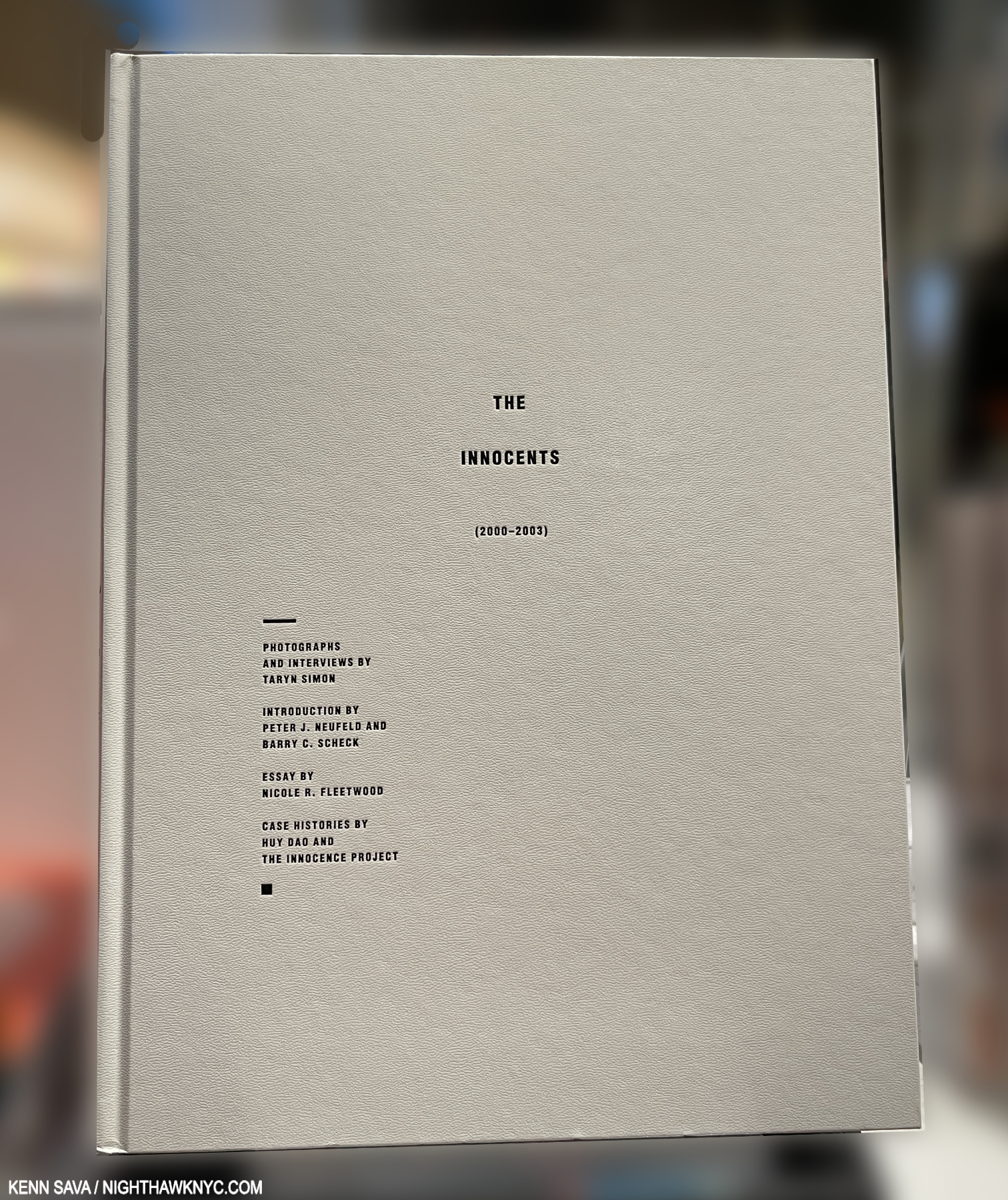
Taryn Simon, Taryn Simon: The Innocents – Revised & Expanded Edition, Museum of Modern Art, 2022
Taryn Simon has released a steady stream of important and challenging PhotoBooks, and this is one that strikes a bit of a dual nerve. Depicting people who served time for violent crimes they did not commit, it serves to bring attention to these victims (how many books have done that?), while also serving to put the viewer on her or his guard. “There, but by grace, go I.” Both editions are stunning and endlessly engrossing, that the 2022 edition is TRIPLE in size (at 440 pages, versus 148 page in the 1st edition) hints at just how big the problem is. The Innocents is a book that was crying out for someone to do (individual stories have been done). We can thank our lucky stars that someone was Taryn Simon, whose gifts with unifying diverse materials has been manifested time and again, never more powerfully, to my eyes, than in The Innocents.
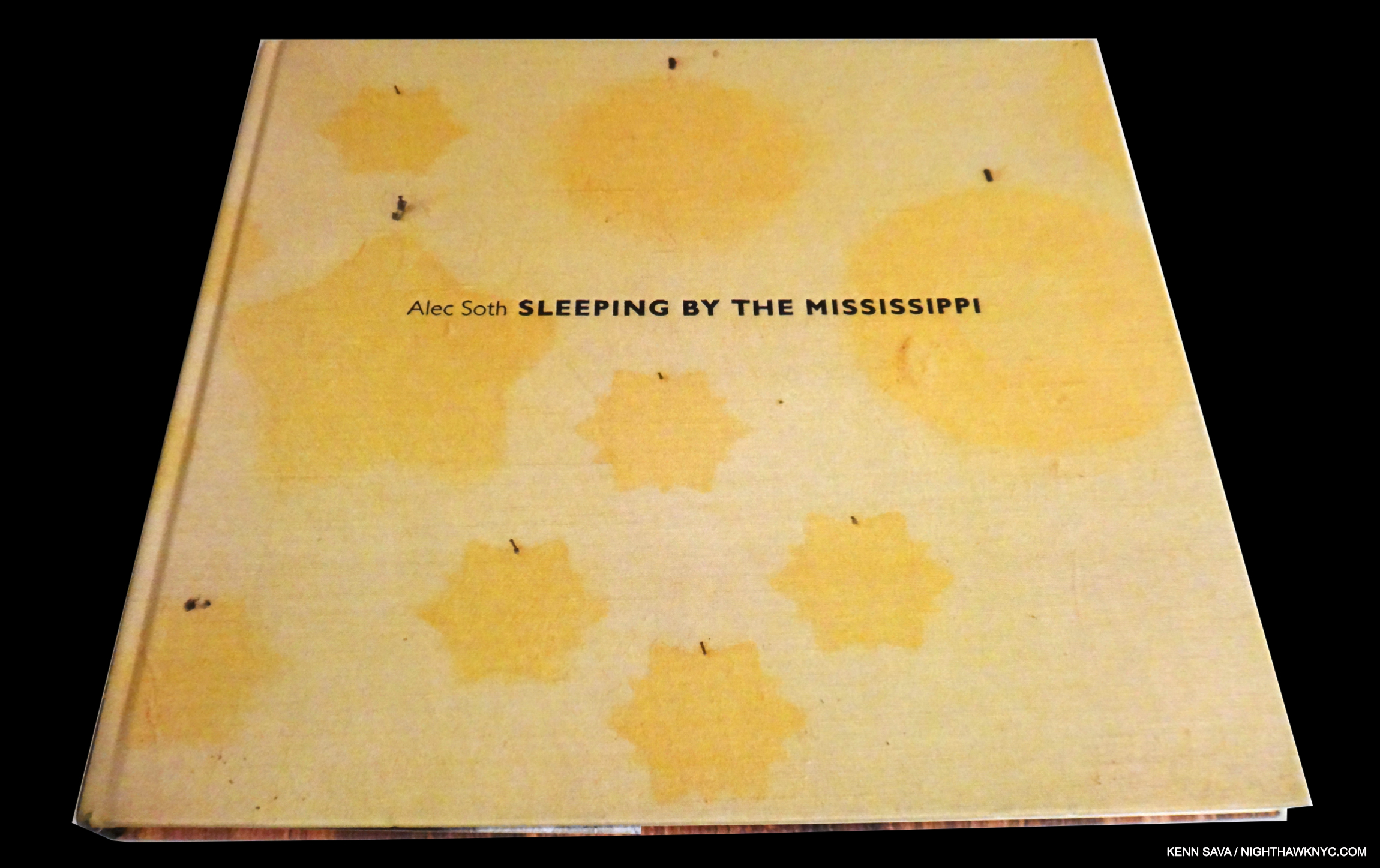
A copy of the 2004 Steidl first edition/first printing.

Alec Soth, Sleeping by the Mississippi, Steidl, 2004
The many comparisons to Robert Frank’s The Americans Sleeping by the Mississippi has gotten seem to me to sell Alec Soth’s book, and his accomplishment, short. Yes, they both are the product of road trips, and I have no doubt that Mr. Soth, a well-known PhotoBook aficionado, well knew The Americans at that point, but the freshness of both his approach and the resulting work speak for themselves, in my view. Mr. Soth’s essential book was out of print for a number of years after 3 Steidl printings until Mack Books printed a new edition, which is still available.
My look at Alec Soth’s show accompanying his 2022 book A Pound of Pictures is here.
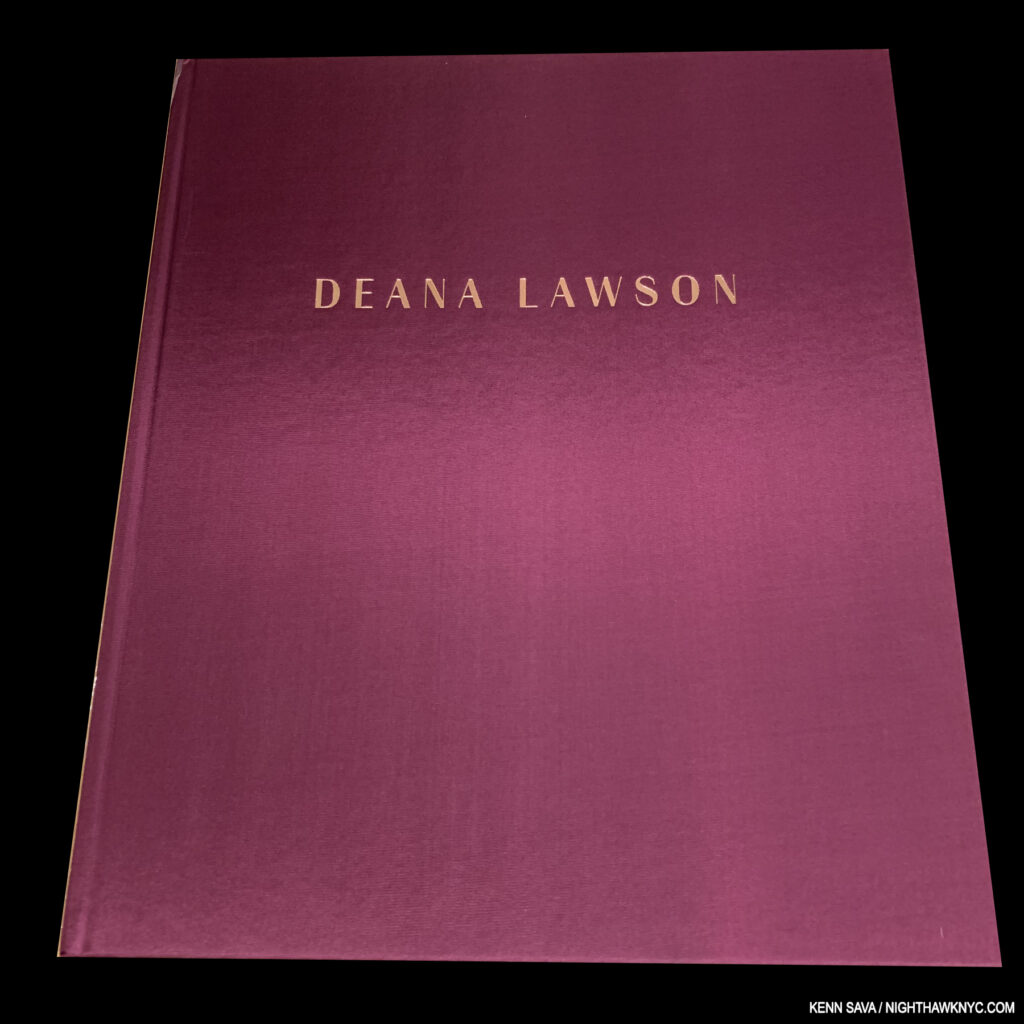
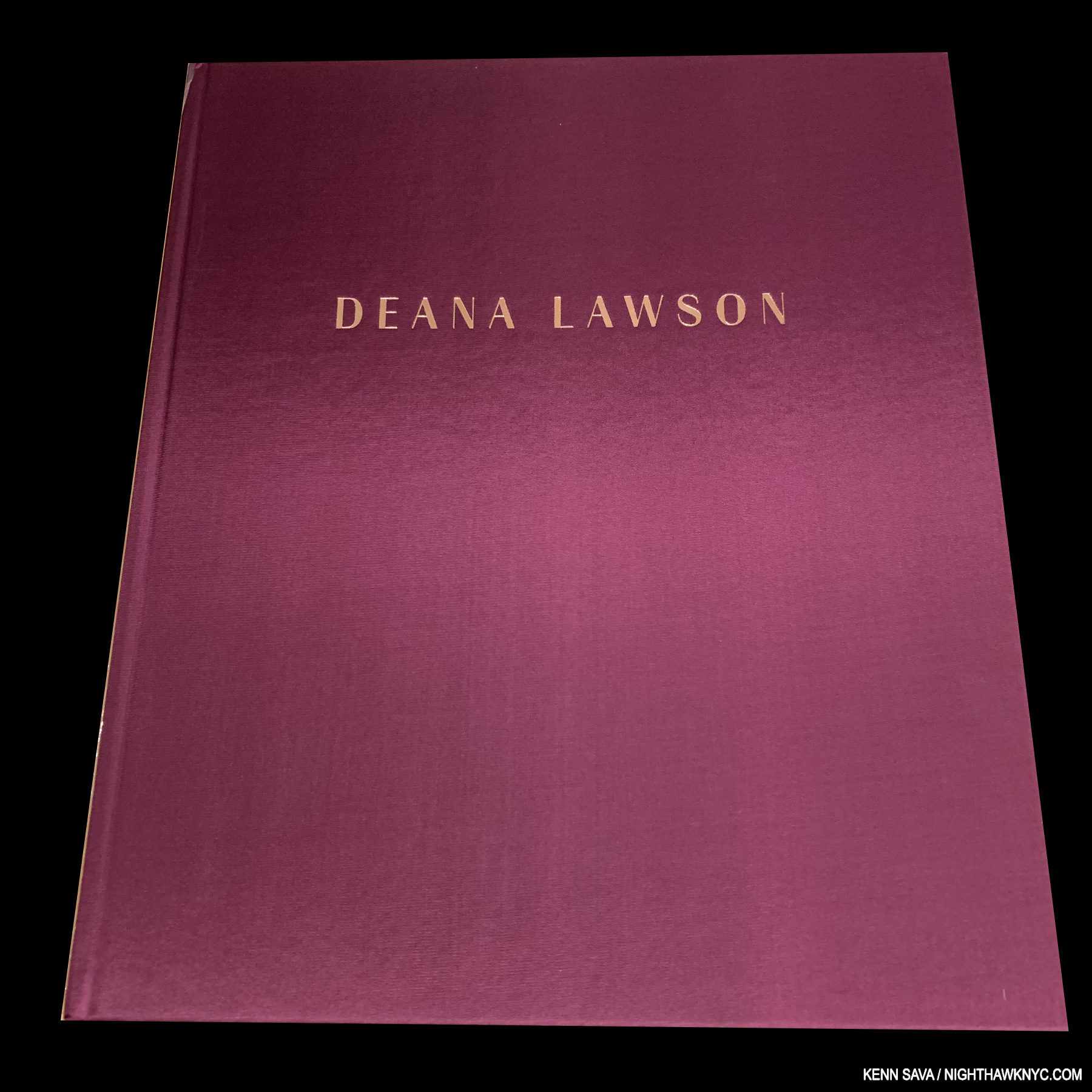
Deana Lawson, Deana Lawson: An Aperture Monograph, Aperture, 2018
It’s hard to imagine that Deana Lawson’s Aperture Monograph is just 6 years and 3 months old. It feels like she’s been an established fixture as a major Photographer for much longer. Her unique Portraits quickly became all the rage when this beautifully produced book came out, leading to almost immediate museum acceptance, building on her “starring” appearance in the 2017 Whitney Biennial in a large gallery where her work was shown alongside that of her friend, Henry Taylor, to unforgettable effect. Only one book of her work has been published since, that accompanying her 2021 show at the ICA/Boston. I wonder if publishers feel An Aperture Monograph is hard to top.
After the first printing sold out, Aperture has kept it in print since, so, right now, there is no reason to pay big prices for a copy.
My look at “Deana Lawson’s Rising Star,” as I called it in 2018, is here.
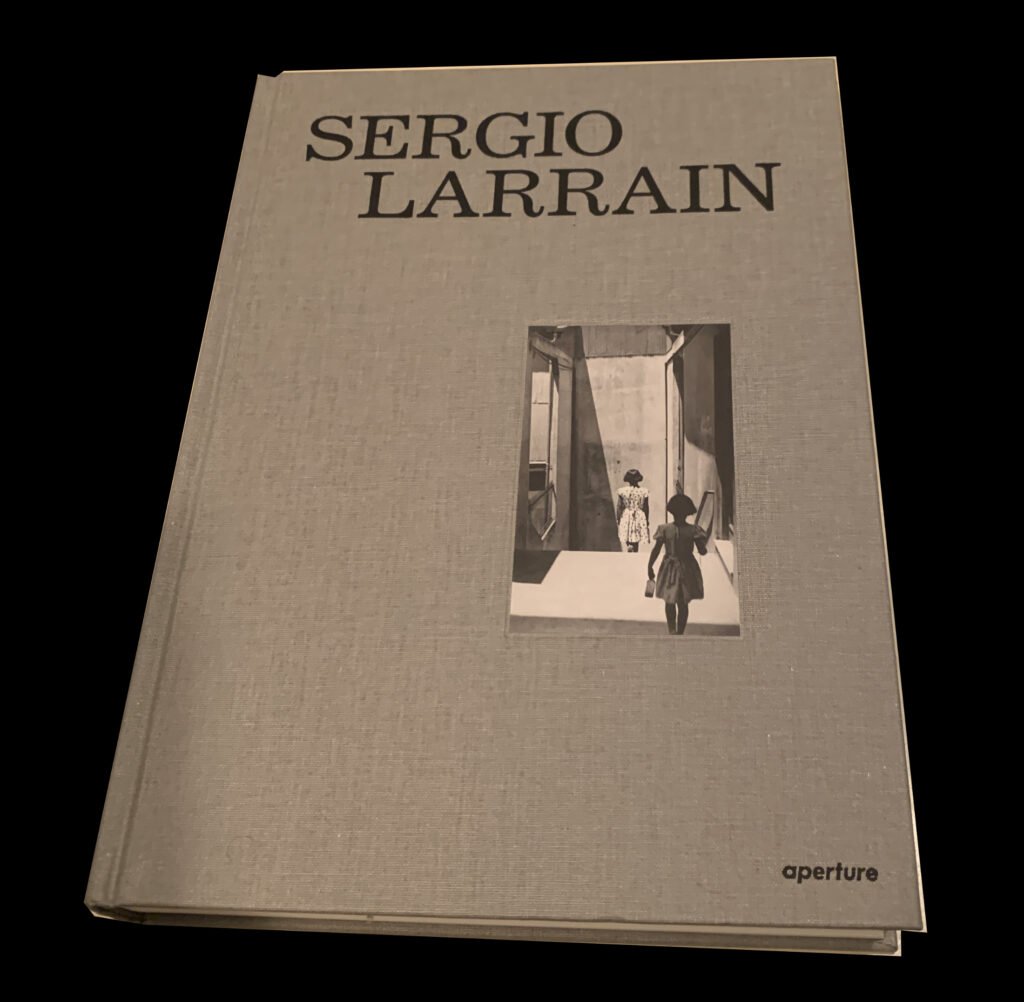
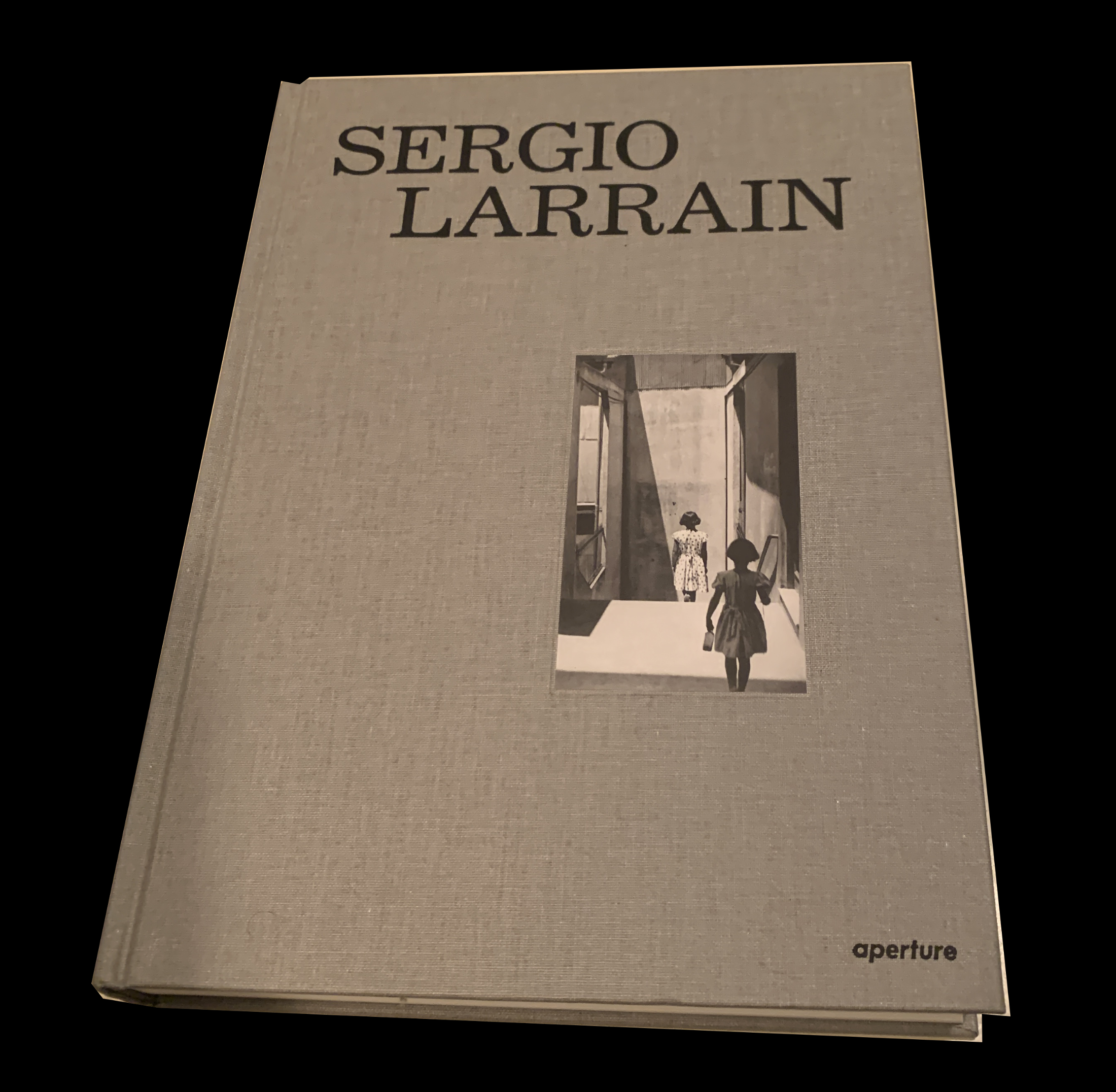
Published by at least 3 houses that I know of, this is the Aperture edition, the most readily available one in the U.S. Or, it was. The Aperture is in English, the language varies between the others, but so does the printing quality of the images.

Sergio Larrain, Sergio Larrain, Aperture, or Hatje Cantz or Aetelier EXB, 2014
The most comprehensive book to date (200 images) on the work of this most haunting Chilean Photographer. It seems to me that Mr. Larrain’s work is striking for his gift with perspective. His camera’s location provides a good deal of the interest in his images, as he continually finds just the right, often unexpected, angle. The remarkable thing abut this is that it somehow also manages to provide a good deal of poignancy to his images. Struck by this, I find myself ofter looking back at them and wondering how he was able to accomplish this in work that appears so charmingly straightforward, seemingly without guile or tricks. A testament to the “old days” of Photography before the kind of manipulation that has overrun Photography today. More than anything, though, it’s a testament to the skill of this overlooked Artist. An invaluable lesson for students, or anyone trying to get better (i.e. the rest of us).
Also excellent are his Londres 1959 and Valparaiso, both reissued in fine Aperture editions, but  Sergio Larrain is my choice as a NoteWorthy PhotoBook of the 21st Century thus far.
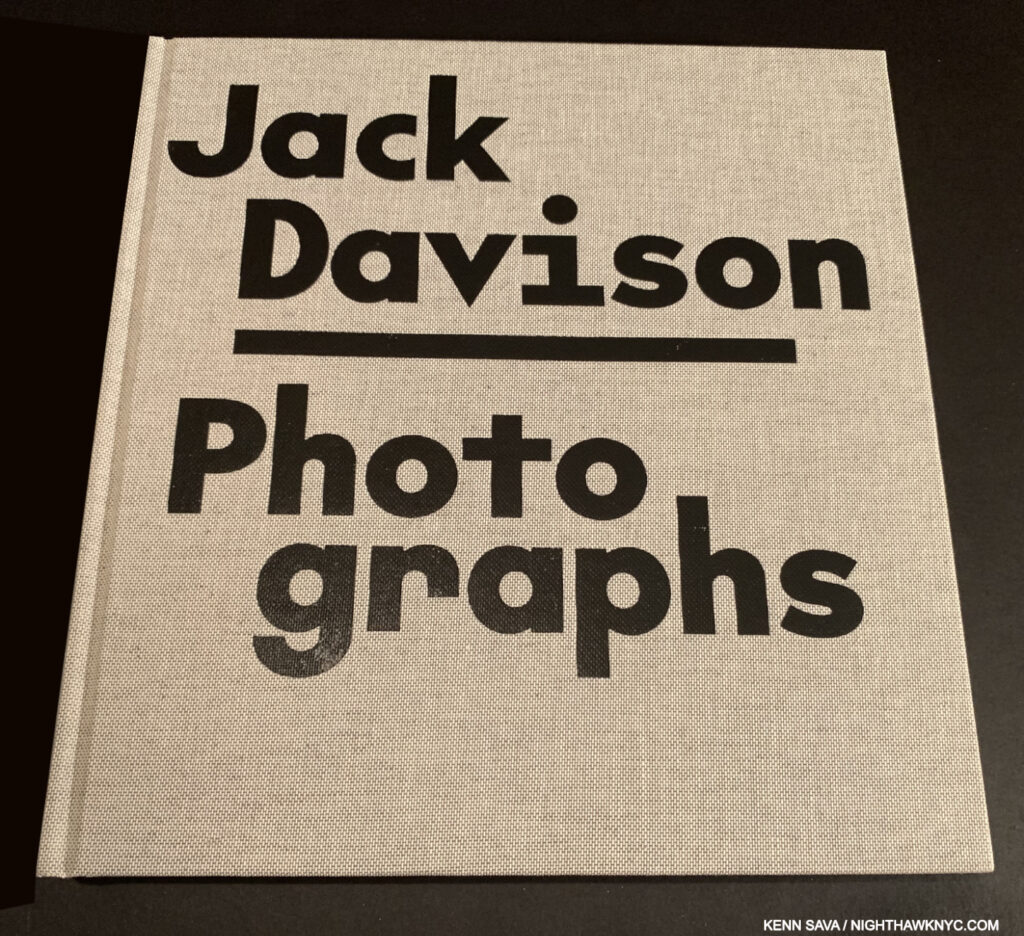
A masterpiece. Very hard to find now, it’s worth looking for.

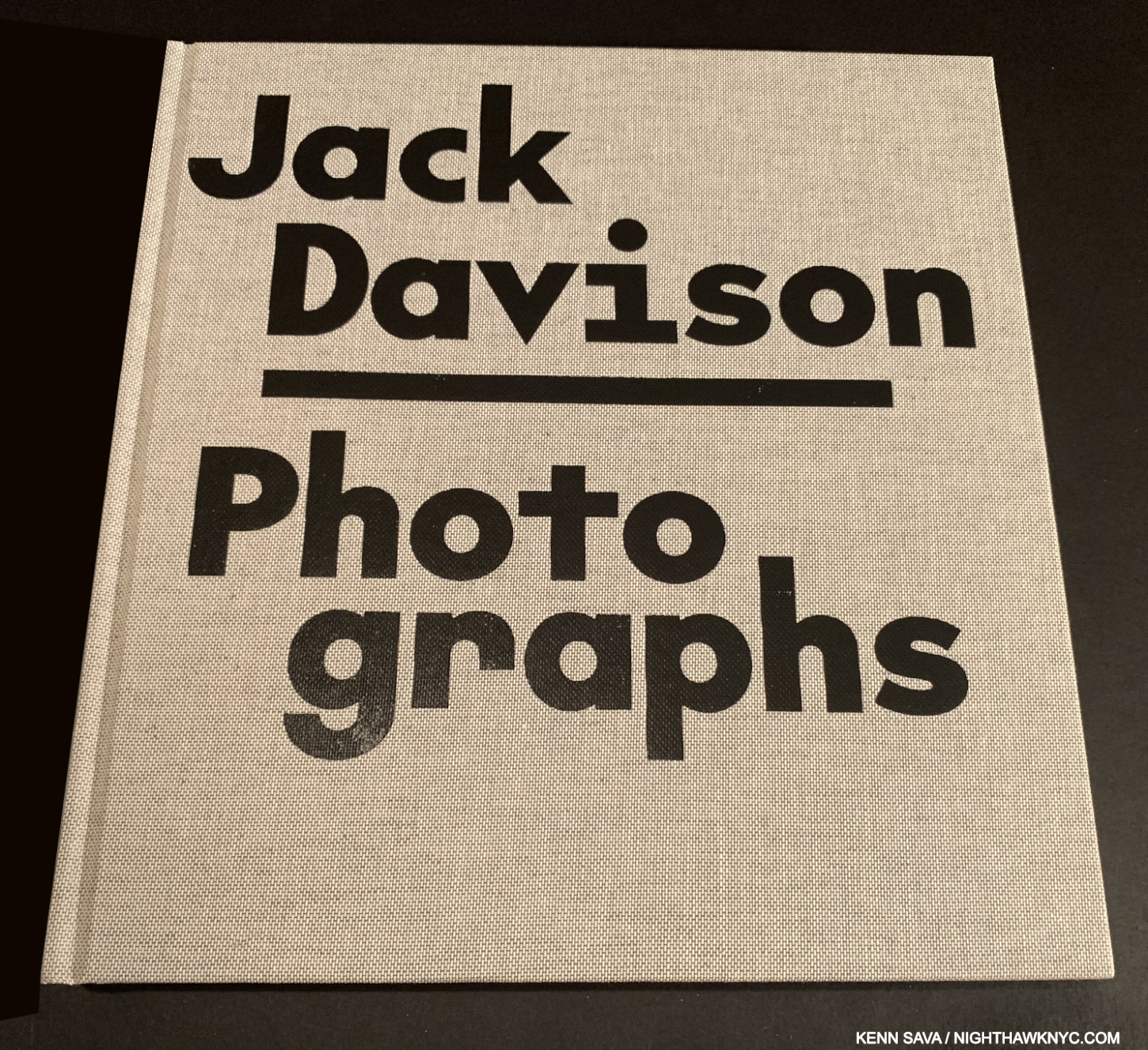
Jack Davison, Jack Davison: Photographs, Loose Joints, 2019
It’s dangerous to use superlatives, but it’s hard to not use them when speaking of Jack Davison: Photographs (one of my NoteWorhty PhotoBooks of 2019). The one book that keeps going to mind when I think of it is (gasp) Saul Leiter: Early Color, a book I have endless respect for.  Both books are concise, extremely well selected and arranged and marked by design that knows enough to just stay out of the way. Mr Davison is, perhaps, most familiar from his numerous Portraits in the New York Times Magazine, so I, and countless others, owe a debt of gratitude to the Magazine’s stellar Photo Editor, Kathy Ryan, for introducing us to him (and many others). His book shows his range, and the depth of it. Every subject he turns his eye and his lends to appears to be something you’ve never seen before- even if it’s the most common of everyday objects. His skill is the stuff that computers, AI and LIDAR might be jealous of, but it always reminds me of just what a camera can do in the hands of an Artist.
Long out of print, it’s a seller’s market for VG to NF copies.
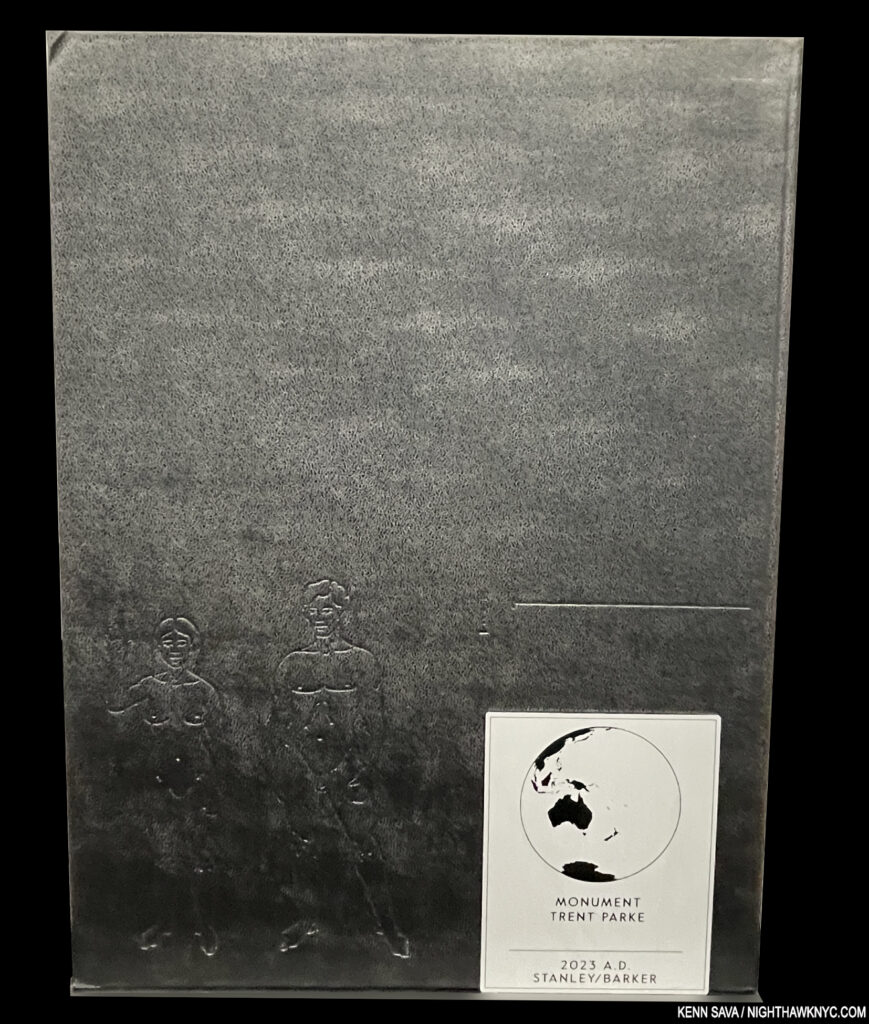
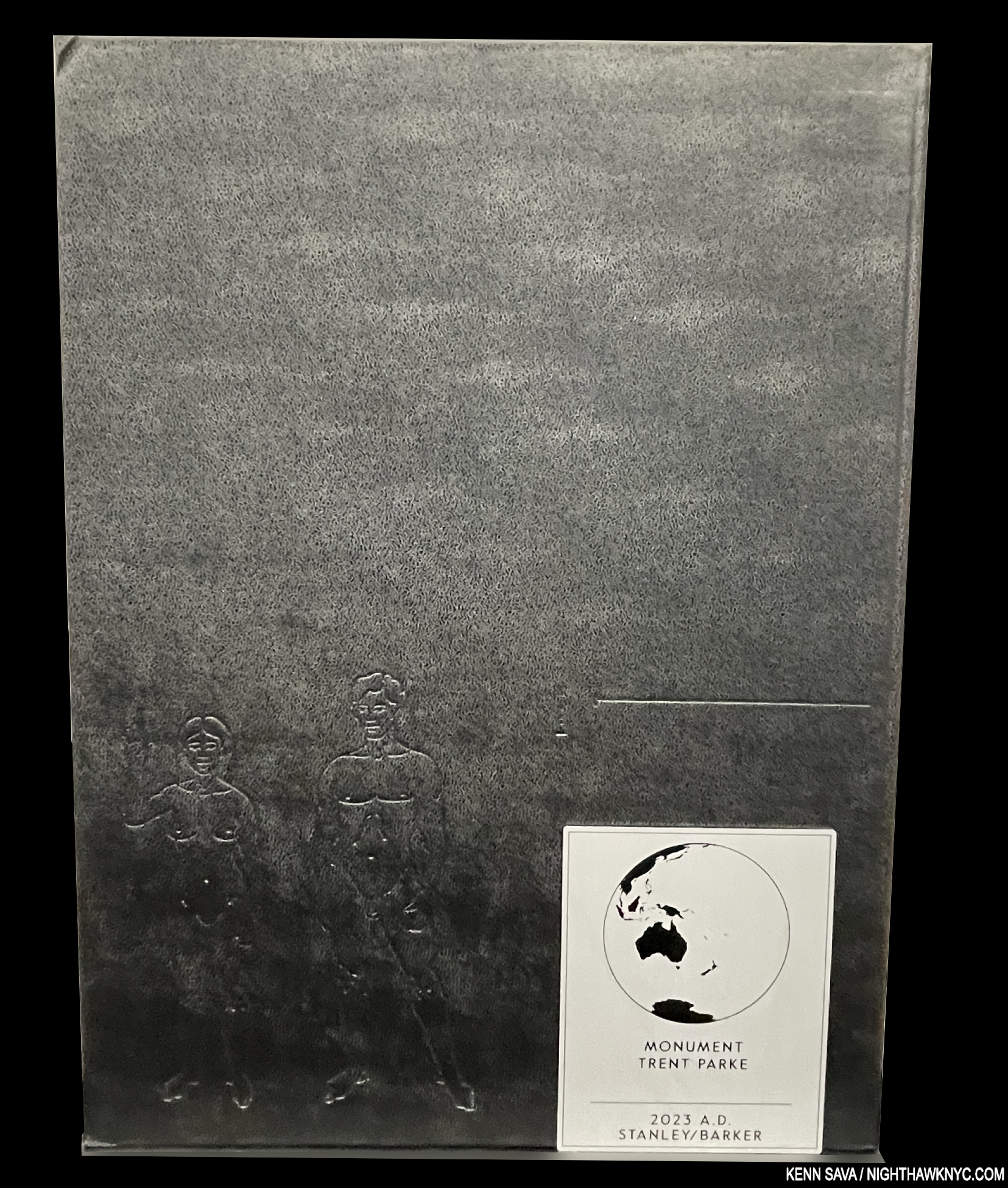
Trent Parke, Monument, Stanley Barker, 2023
There are no words for me to express to you how amazing this book is, and that’s fitting because Trent Parke chose to include no words in the book! Hang on to that unattached metal name plate that comes with it, or you might not remember what book it is. So, leave it to the publisher to chime in, “Trent Parke’s landmark publication Monument is a portal through which we bear witness to the disintegration of the universe over 294 expertly printed pages.” “Expertly printed pages,” indeed. The printing and paper are GORGEOUS. Black & white may look as good elsewhere (as in Dave Heath’s or Roy DeCarava’s work), but it’s never looked better. Everyone involved seems to know they were in on something very special, and that’s what the end result is. Aptly titled, it’s a monument to Mr. Parke’s creative vision, long-exposure wizardry, and life in this century. 3 printings have sold out, so beg, borrow or, umm… ask nicely, to see it.
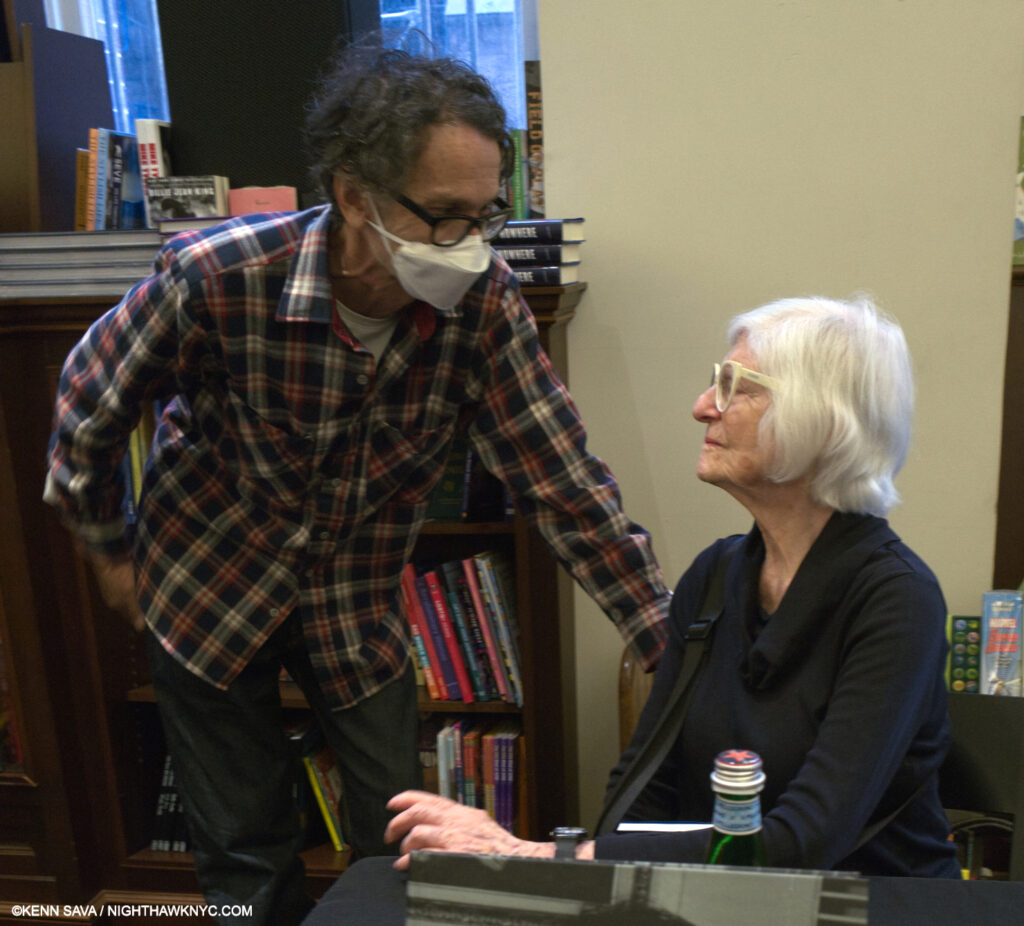
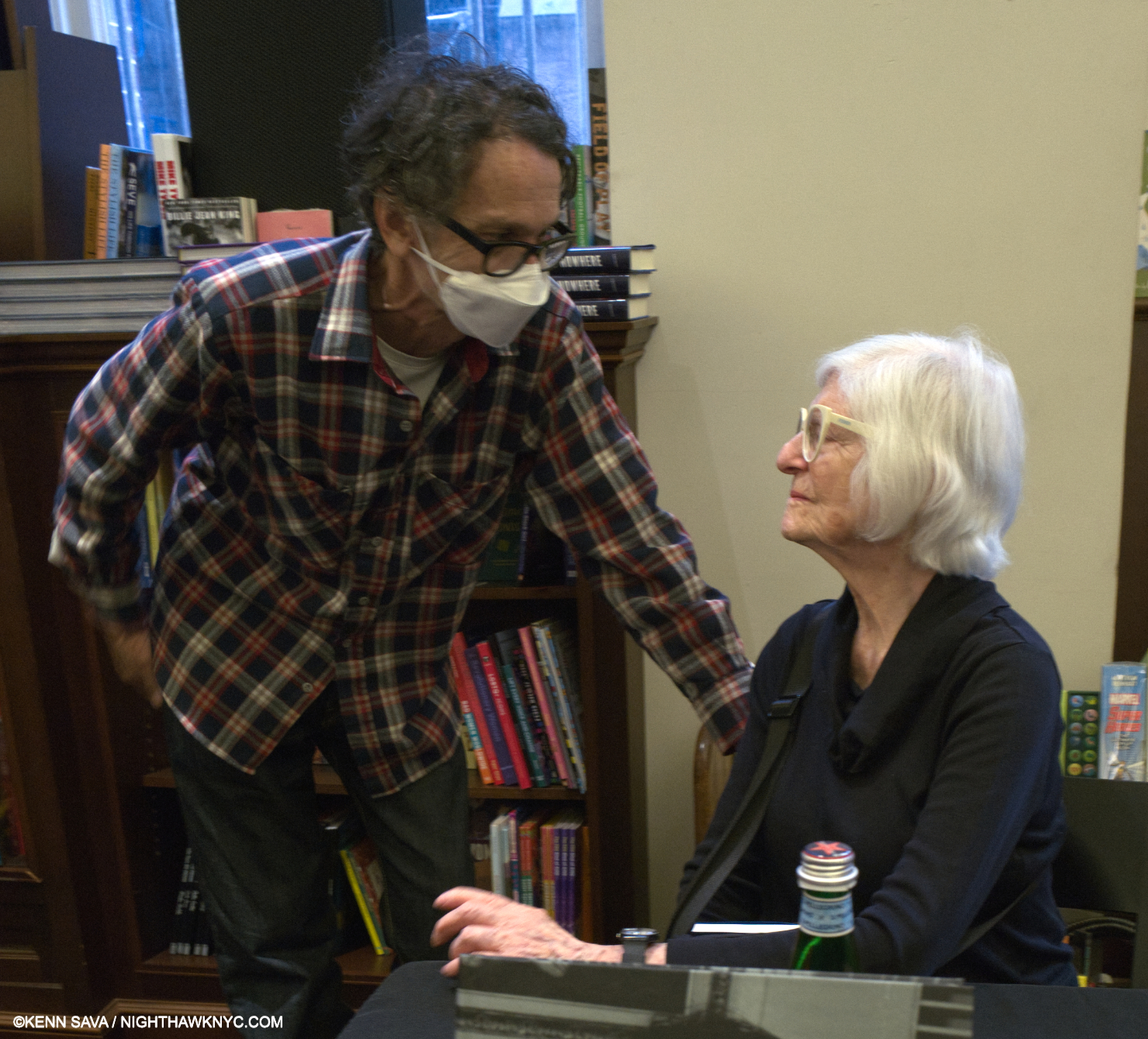
Rosalind Fox Solomon, seated, with Paul Graham at a Mack Books event, May 13, 2023.

Rosalind Fox Solomon, Liberty Theater, Mack Books, 2018
I stand by what I wrote about Liberty Theater when I named it a NoteWorthy PhotoBook of 2018, here– “Something of a marvel, Liberty Theater is a book that consists of a body of work decades in the making, this one is special. Culled from 400 Photographs taken in the 1970s, 80s and 90s, across the south, these 77 show a wide range of glimpses into the complex issues of race and racism, class and gender divisions that could be pivotal moments from 77 films that each stand on their own while provoking a world of feelings and reactions. Except comfort. The title speaks to a performance, and her website says the images are “poised between act and reenactment…” Now 88 (about 95 in 2025), Rosalind Fox Solomon, who like Diane Arbus, studied with Lisette Model in the 1970s, shares something of Ms. Arbus’ mystery and power in images that demand repeat viewing, here, in a tightly edited volume that quietly stuns as often as it shocks, aided by yet another powerful essay by Stanley Wolukau-Wanambwa, who’s first PhotoBook also appears on this list.”
Rosalind Fox Solomon remains an Artist who is somewhat overlooked in spite of a steady stream of fine books published by Mack. This one remains my favorite.
Out of print, VG copies begin at $150.
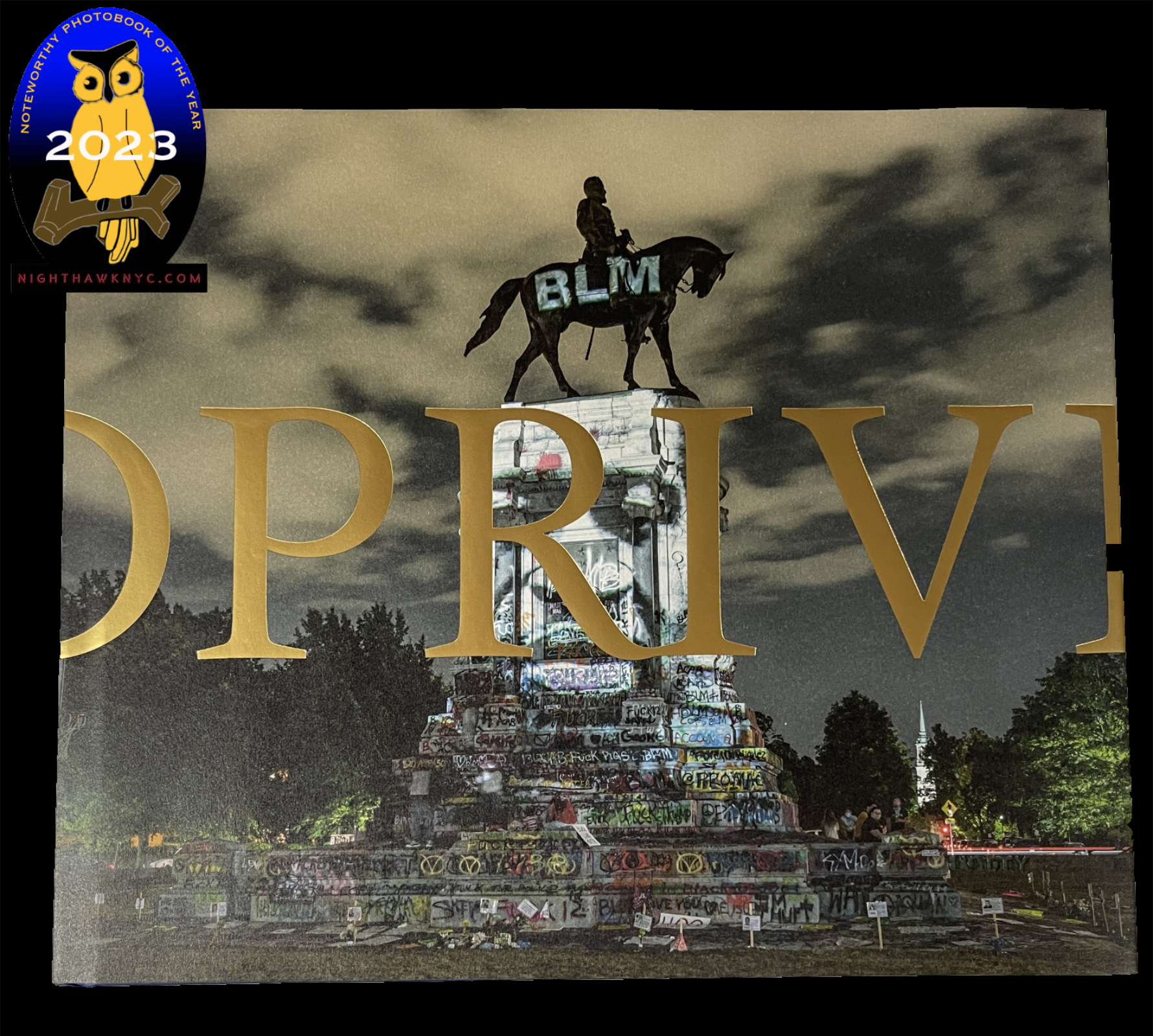
Privileged Mediocrity with its NoteWorthy PhotoBook of 2023 designation.

Kris Graves, Privileged Mediocrity, Kris Graves Projects & Hatje Cantz, 2023
Driving around endlessly visiting innumerable poignant sites and Photographing during the worst world-wide pandemic in 100 years, in the middle of more unrest than we’ve seen since the 1960s? Neither stopped Kris Graves from producing a book that is a masterpiece, in my view. Wonderfully designed by Caleb Cain Marcus, it’s a book that covers so much ground- literally and figuratively, it’s hard to sum up. Emotionally it ranges from powerful to raw to contemplative, while including some of the most defining images of the time. In fact, National Geographic chose one as it Photos of the Year cover image. Robert Frank’s The Americans started the Modern & Contemporary Photography era, to my mind. I can’t help wonder if Privileged Mediocrity is a cap on it.
My piece naming this a NoteWorthy PhotoBook of 2023 is here. My other pieces on Kris Graves are here. 
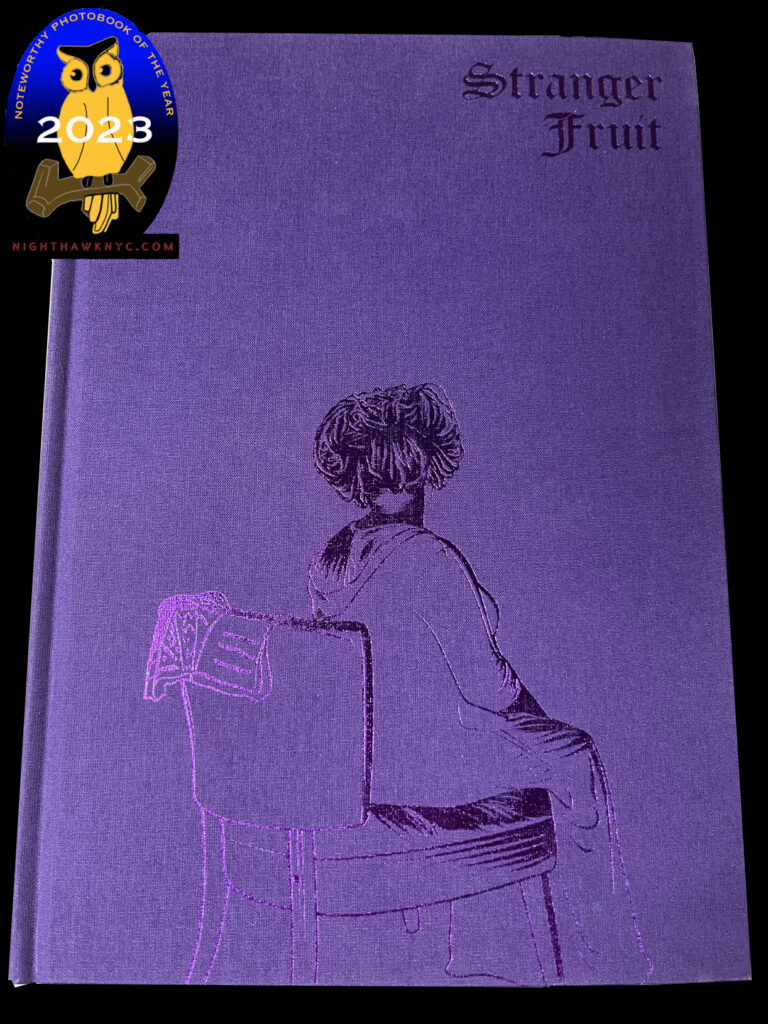
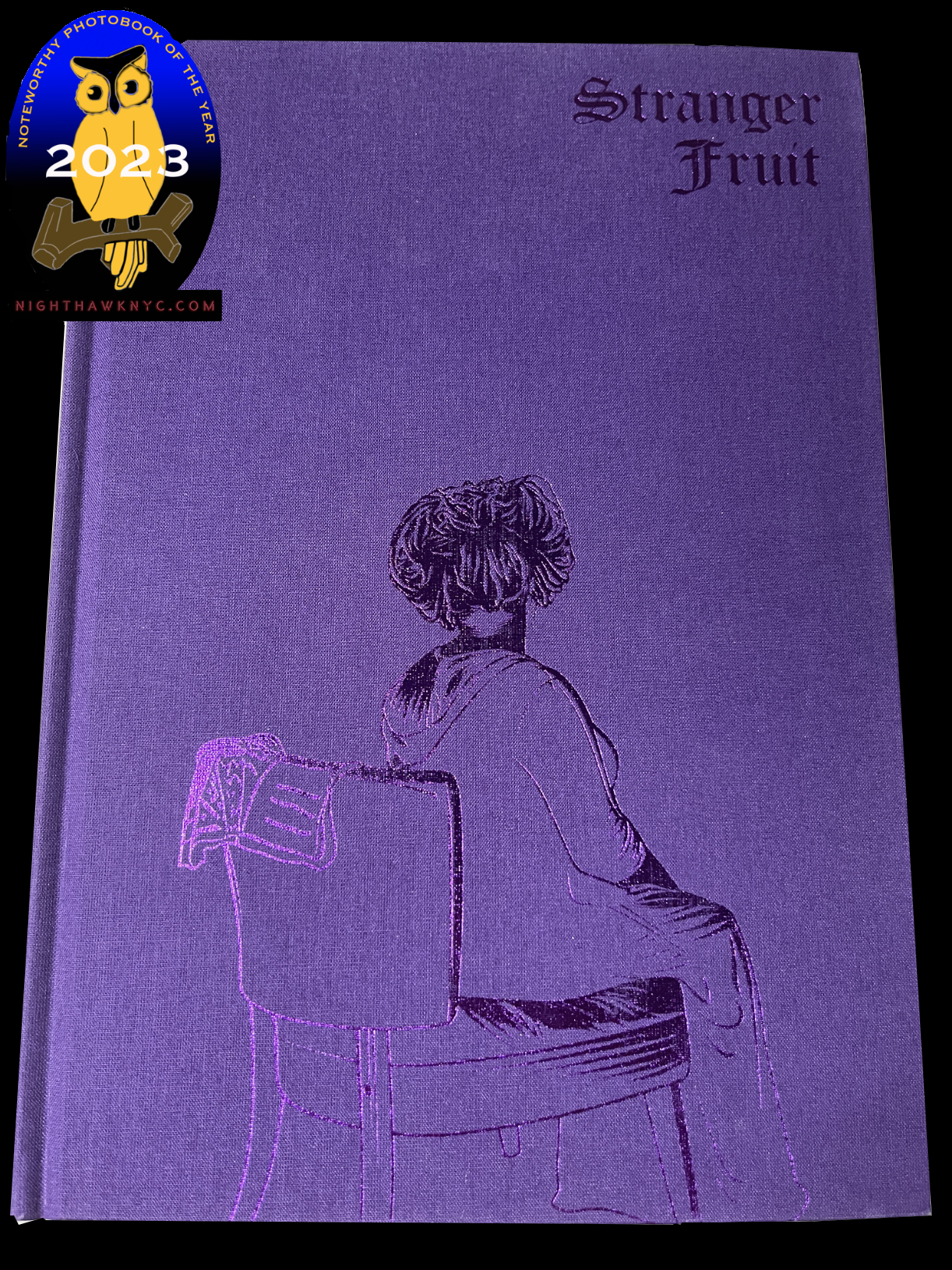
Stranger Fruit with its NoteWorthy PhotoBook of 2023 designation.

Jon Henry, Stranger Fruit, Kris Graves Projects, 2023
A book whose power is just overwhelming. During my first viewing of Stranger Fruit, I felt the echo of Michelangelo’s Pieta and a number of pieces by Caravaggio. I can’t say either have come to my mind previously when I’ve perused a PhotoBook.  After some years without one, Stranger Fruit was the second PhotoBook released in 2023 I consider a masterpiece. Both were published by Kris Graves Projects. ‘Nuff said.
My piece naming Stranger Fruit a NoteWorthy PhotoBook of 2024 is here. Note- Both Privileged Mediocrity and Stranger Fruit feature NoteWorthy design by Caleb Cain Marcus of Luminosity Lab.
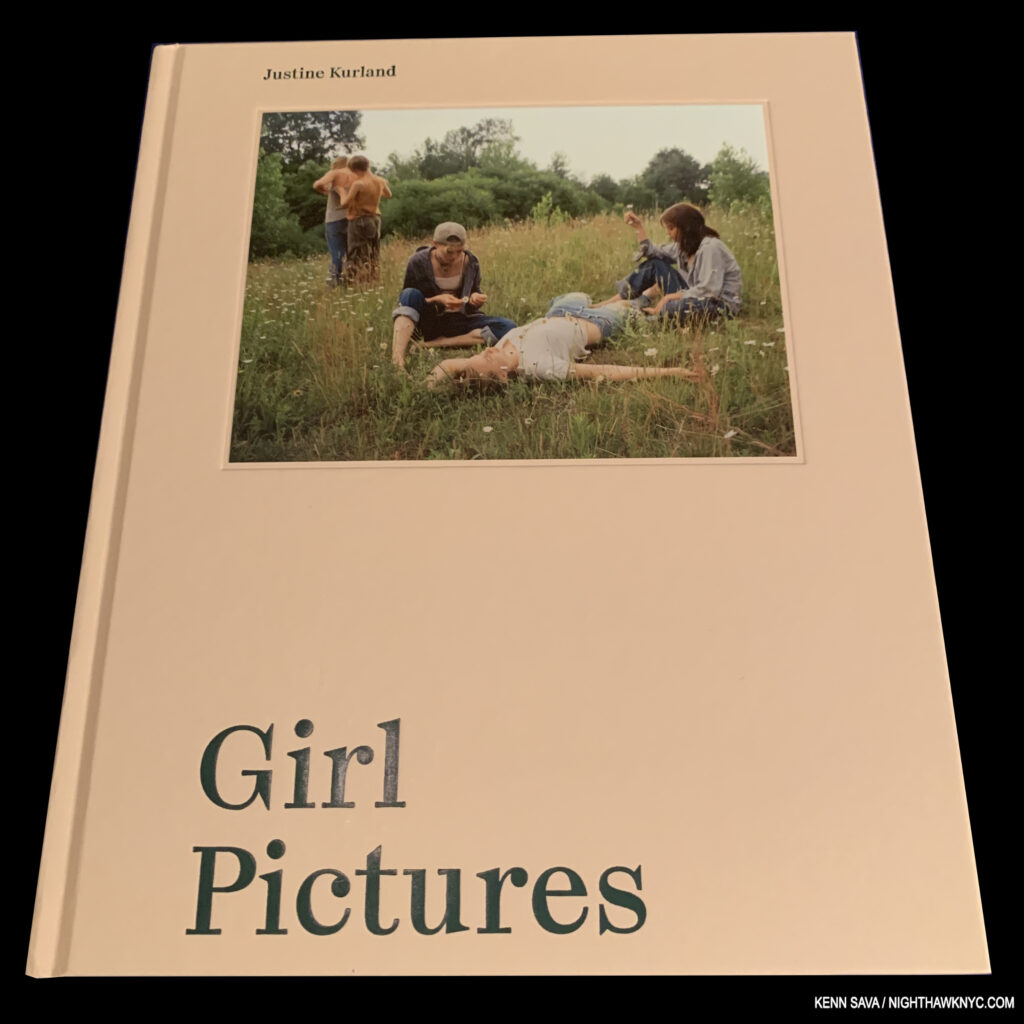
Justine Kurland, Girl Pictures, Aperture, 2020
Countless others have lauded this book, and I added my 1 cent to that chorus naming it a NoteWorthy PhotoBook of 2020. Since the dark days of the peak of the pandemic, it’s a book that’s stayed in the mind, and something of a benchmark for any number of books that have come since, seemingingly under its influence to a lesser or greater extent.
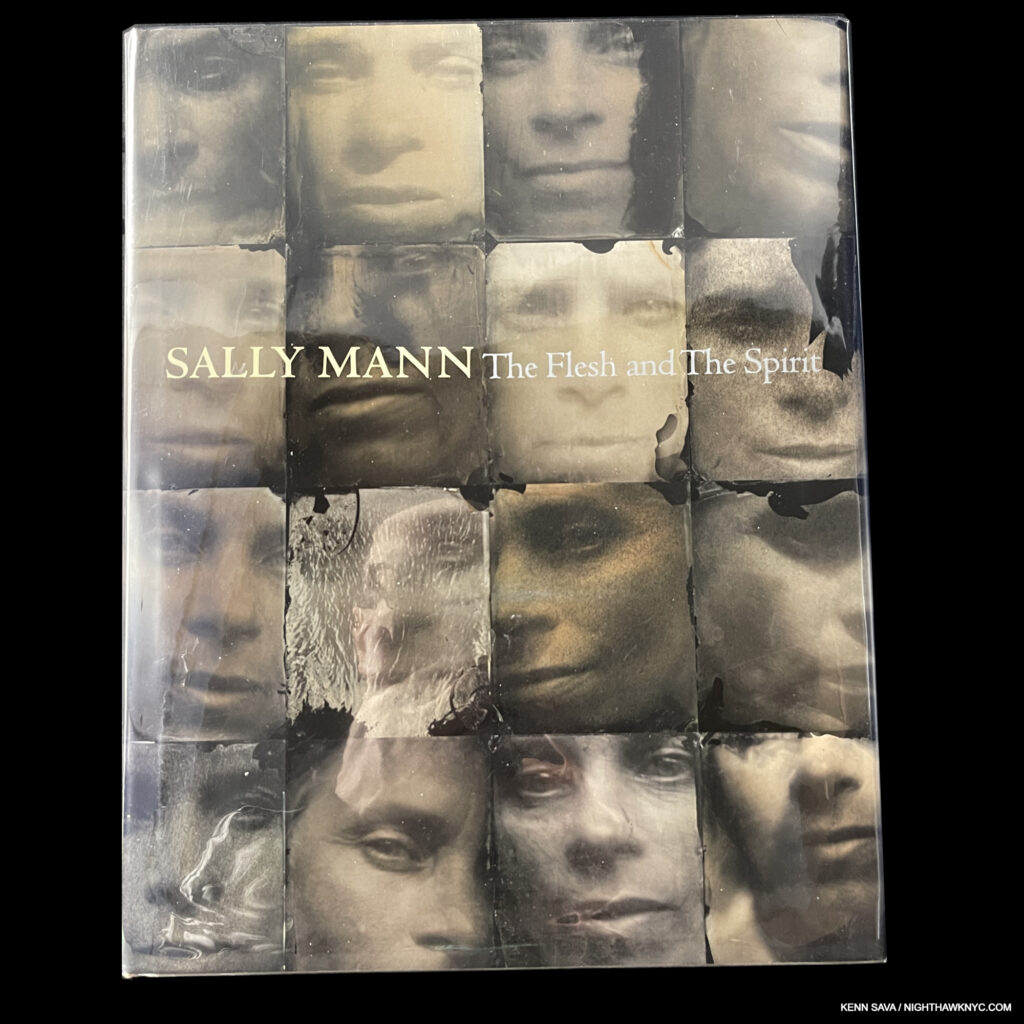
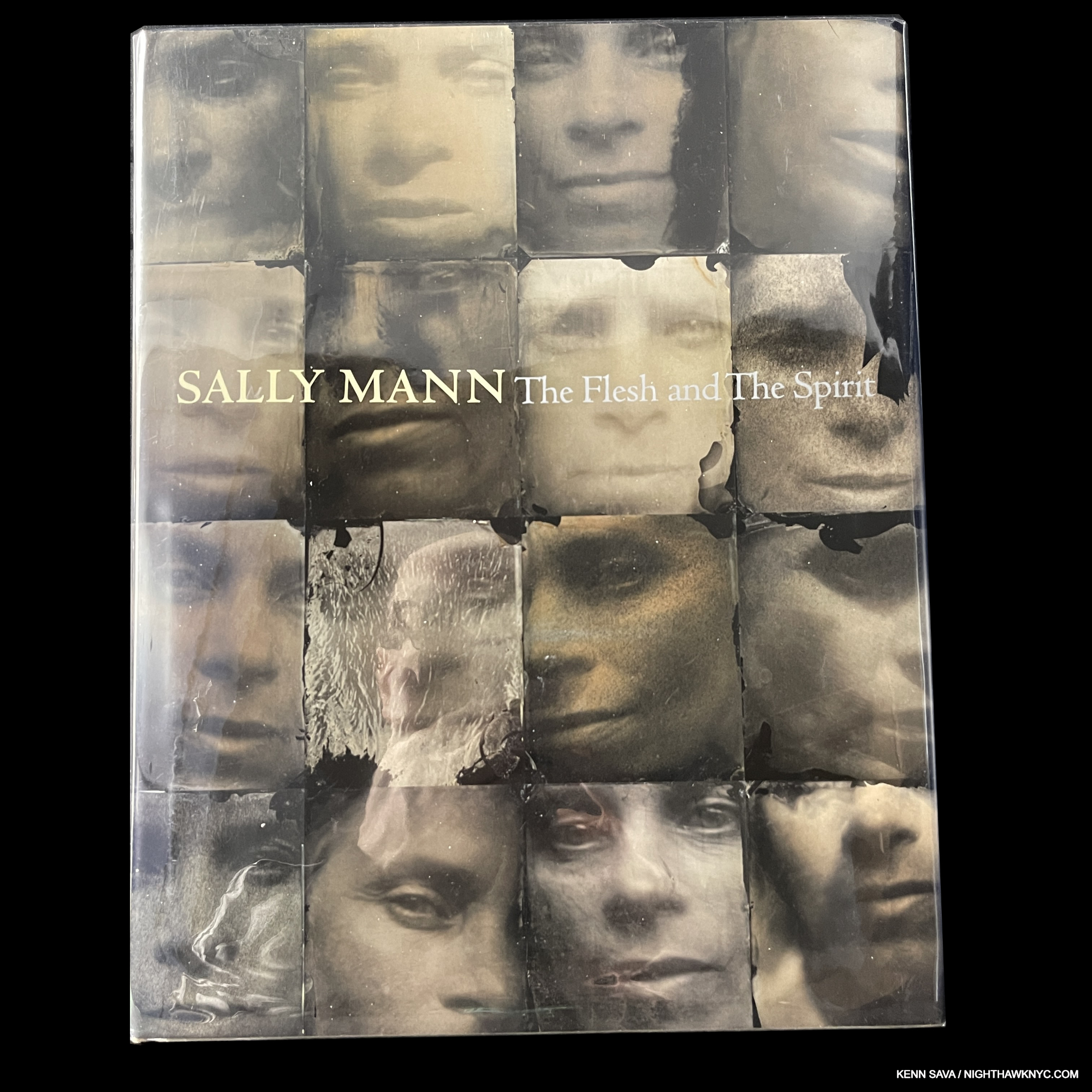
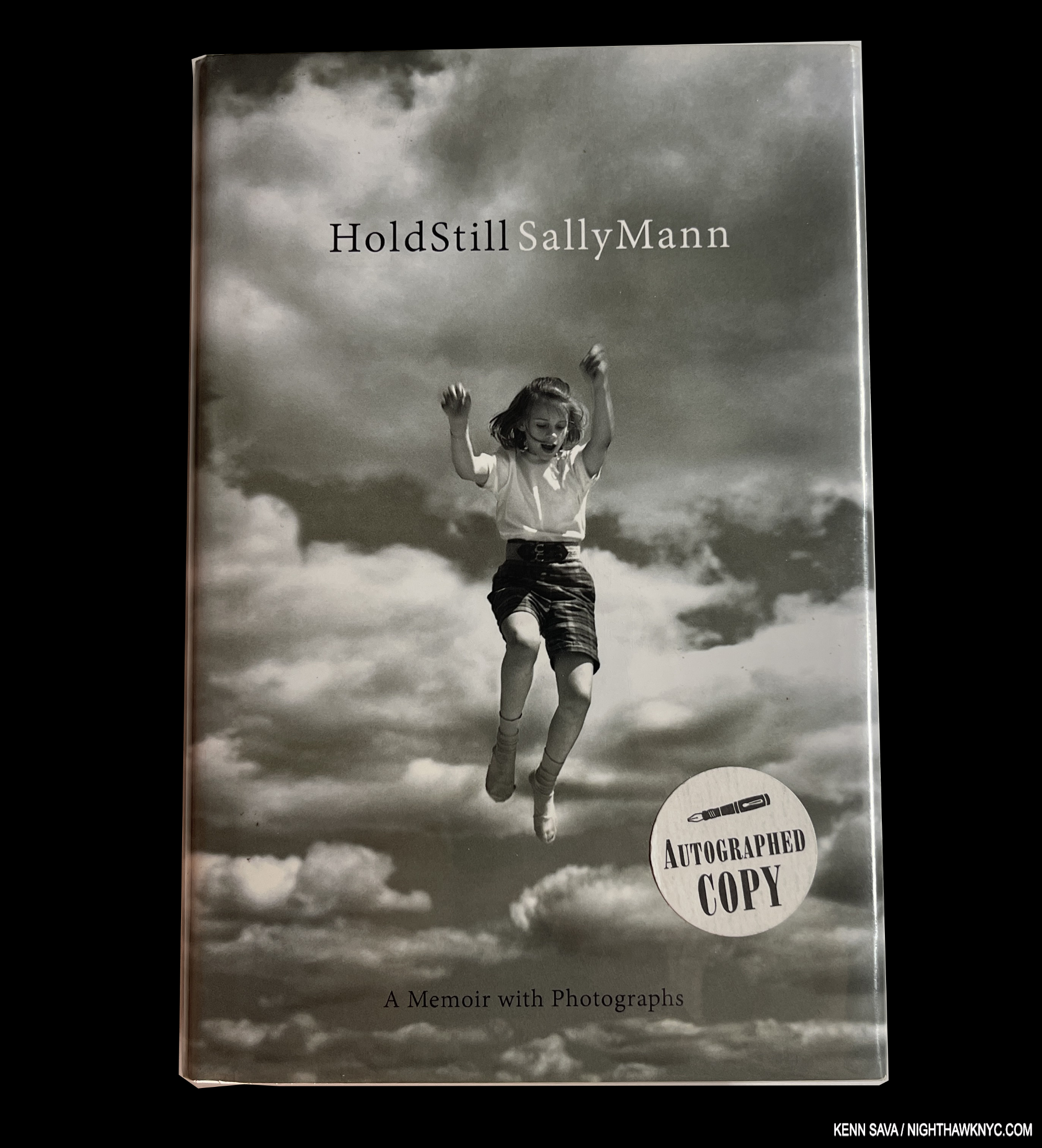
Sally Mann, Sally Mann: The Spirit and The Flesh, Aperture/Virginia Museum of the Arts, 2010 and
Hold Still, Little, Brown, 2015
An absolutely gorgeous book, the first Retrospective of the work of Sally Mann covers all the many bases of her career. Even if you have some of her other books, you’ll see work here you probably haven’t seen before. The effect of her work borders on “Painterly” for me as the Artist deftly blends a unique “classic” look that her Cibrachromes and collodion wet-plate process provide with contemporary, and cutting-edge, sensibility. An essential contemporary PhotoBook.
Though out of print, very good copies are still to be found reasonably.
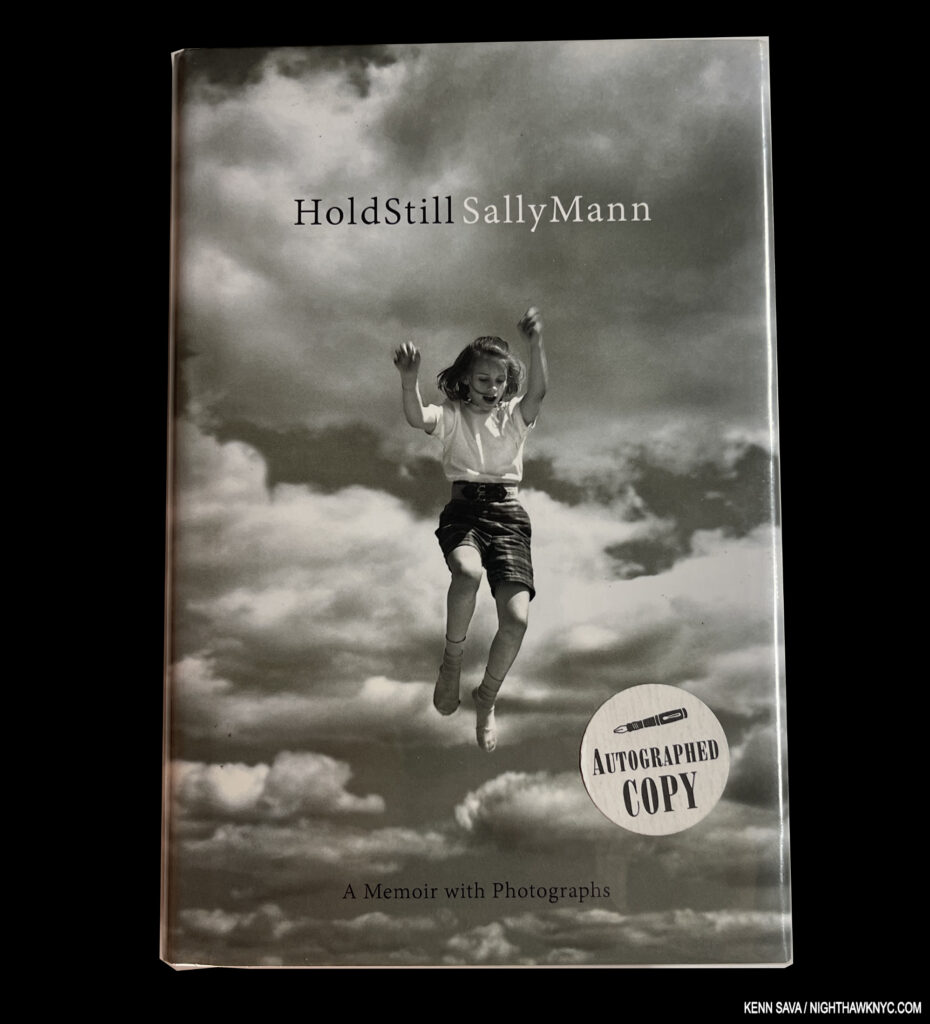
Sally’s Autobiography, Hold Still, is one of the most compelling autobiographies written by an Artist this century. A finalist for the National Book Award, it’s full of life-lessons that are particularly relevant for up and coming Artists, particularly women. “Standing on the shoulders of giants,” is a phrase I hear appiied to great Artists of the past. Here, you get to stand on those of a living legend.
By the way, I have a Signed first edition copies of each of these books currently available. Contact me for info.
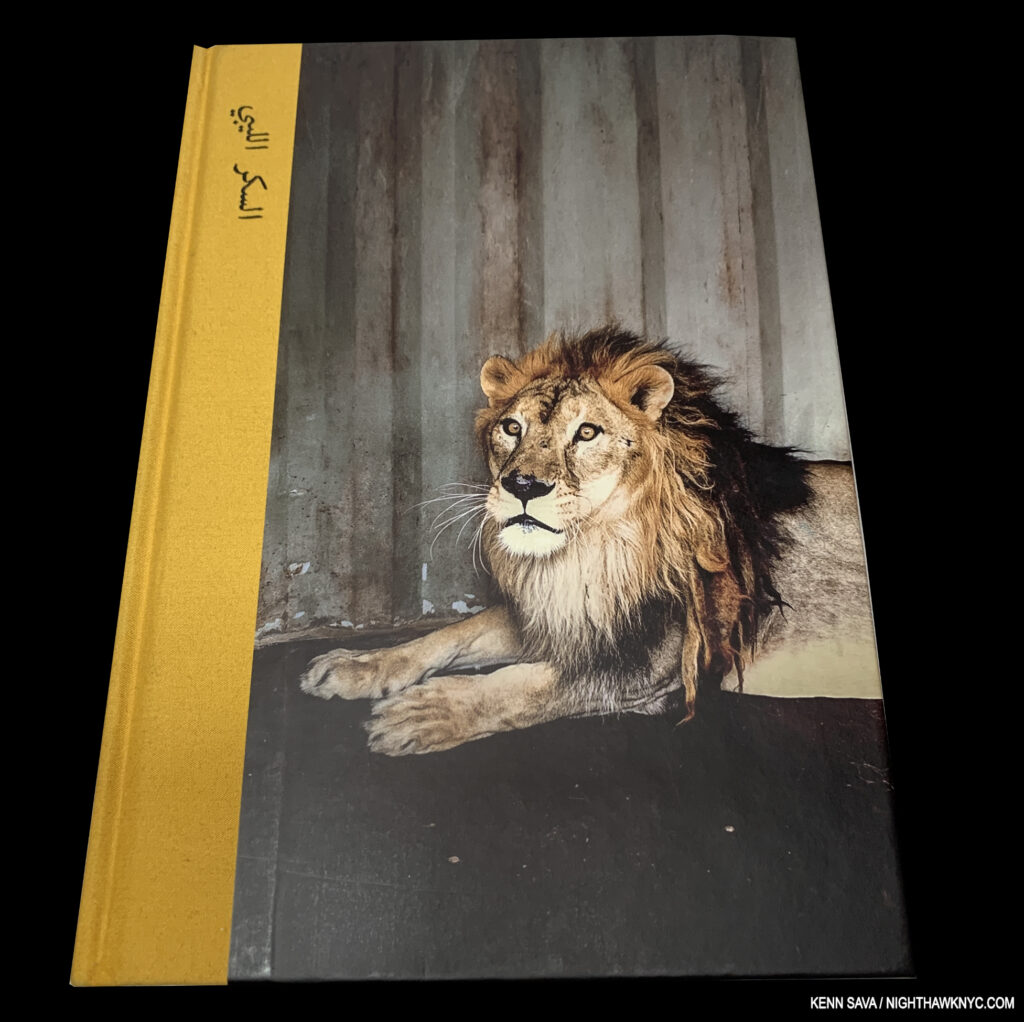
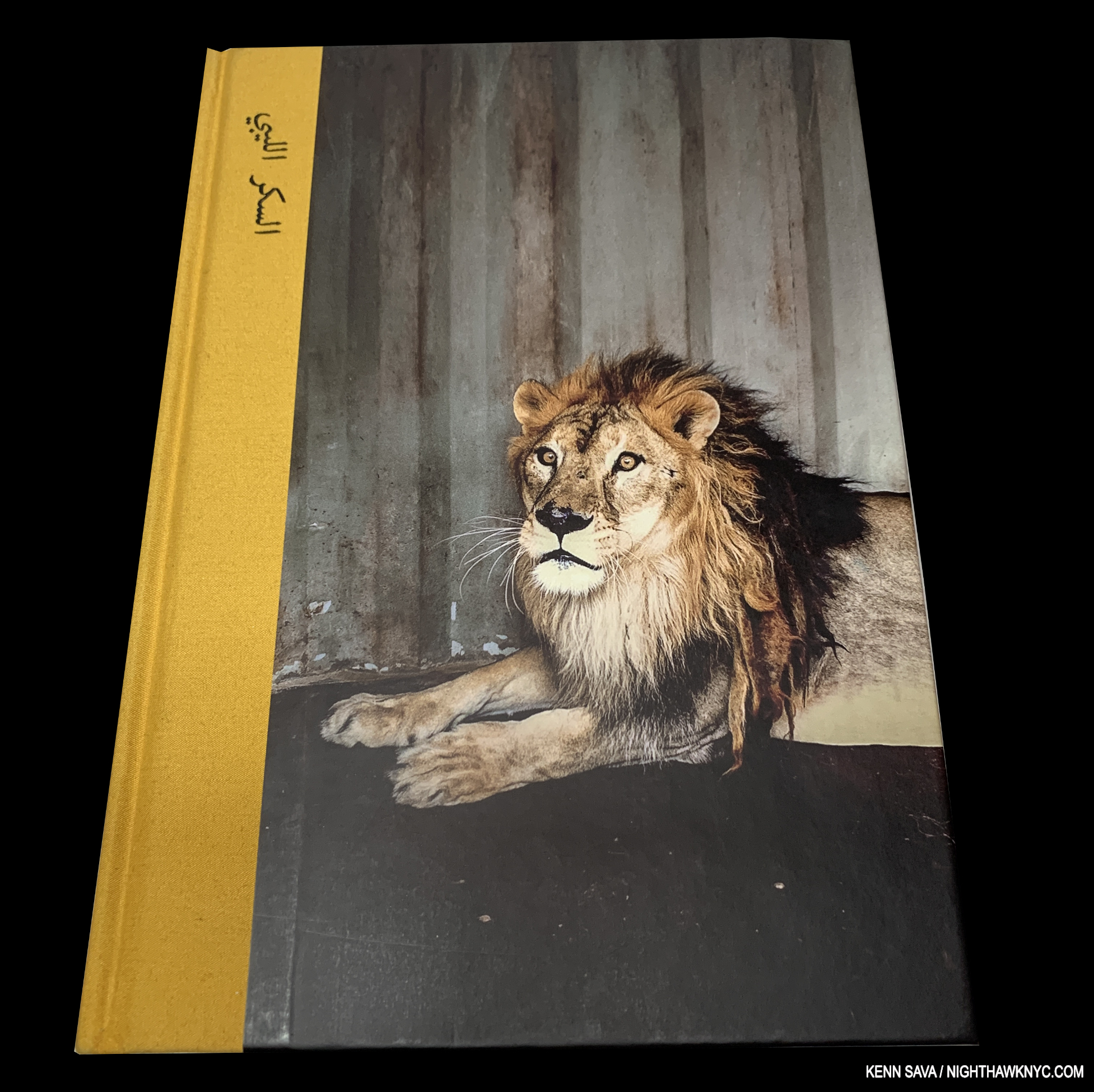
Michael Christopher Brown, Libyan Sugar, Twin Palms, 2016
I still shake my head over the fact that Mr. Brown shot this entire book on his cellphone at a time when cellphone cameras were not all that advanced. Though the only “negative” side effect of this is that the Photos are reproduced at a smaller size because of their small file size, the results don’t look like cellphone Photos at all. Instead, we get a crystal-clear picture of just what was going on in the 2011 Libyan Revolution as we witness Mr. Brown “go to war” for the first time. The Photos are accompanied by a running series of texts, emails, social media posts that turn Libyan Sugar into a diary of sorts. This framework, along with excellent image selection & sequencing, makes Libyan Sugar a powerful whole. Still available at reasonable prices, get it while you can.
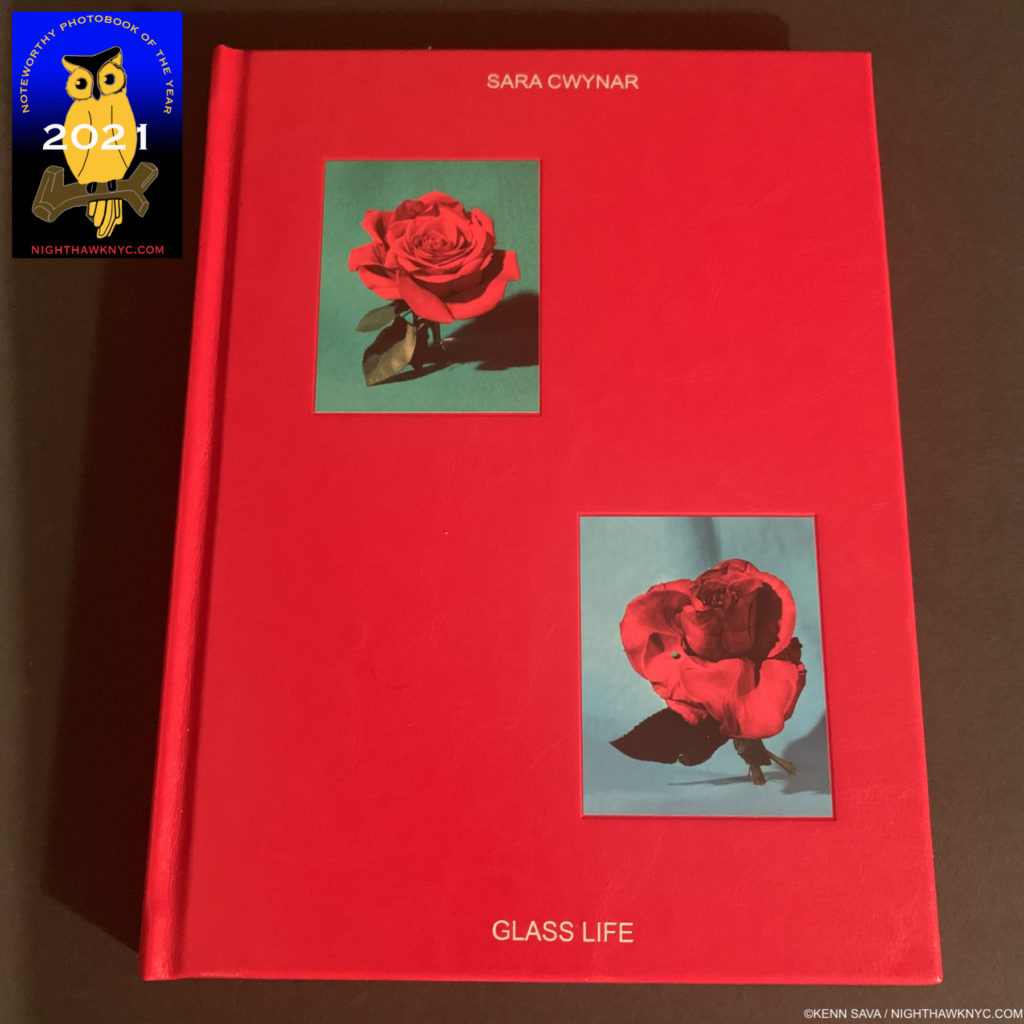
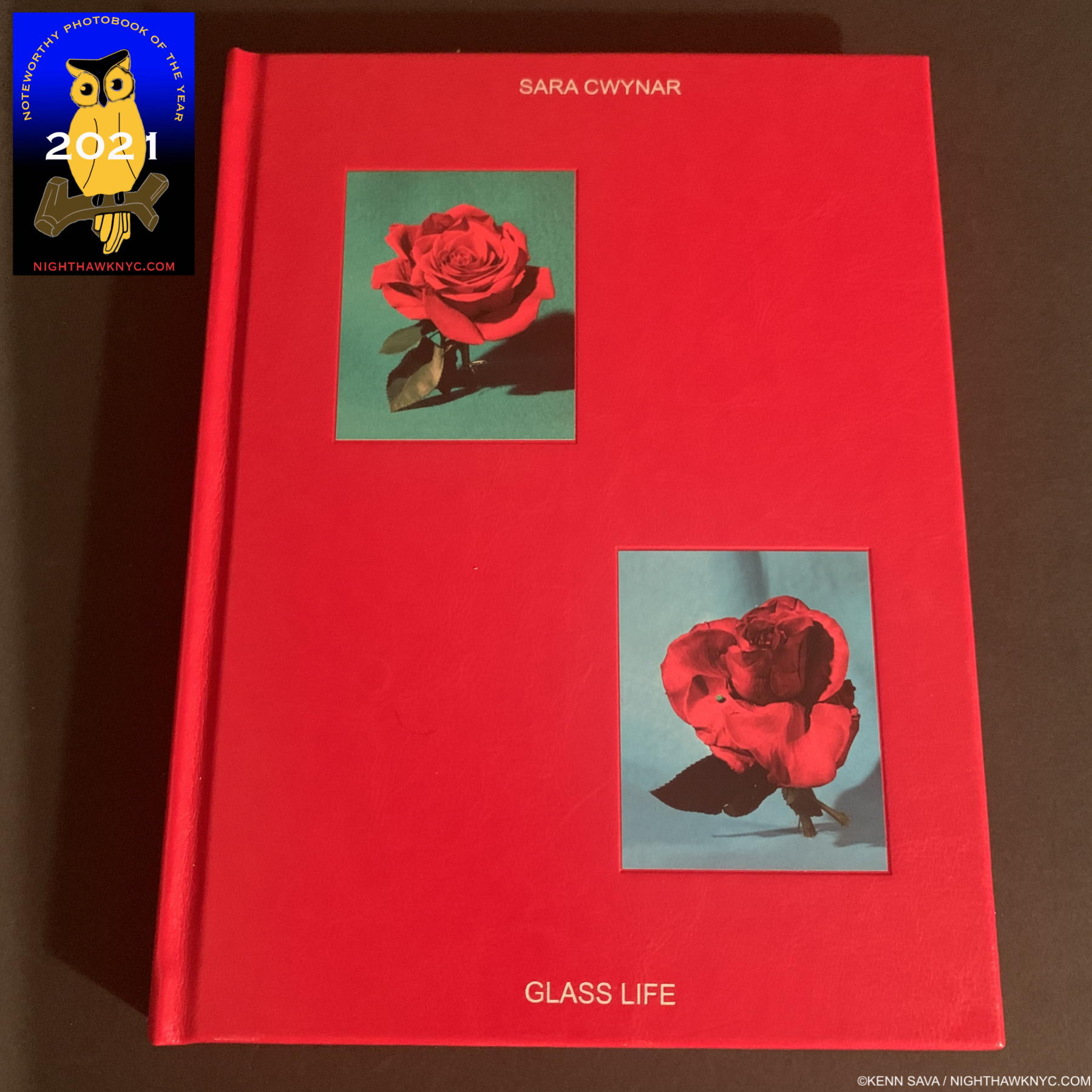
Sara Cwynar, Glass Life, Aperture, 2021
Two PhotoBooks and an exhibition catalog into it, Sara Cwynar is on her way to creating one of the most unique bodies of PhotoBooks I’ve seen. While only a few saw Sara’s Kitch Encyclopedia: A Survey of Unusual Knowledge, Glass Life has received wide distribution thanks to it being published by Aperture. Its riotous color may seduce the eye on first glance, it’s the depth of its content occupies the mind as it lingers, where color masks the seductive power at work in consumer culture. One of the most well-designed books on this list, like Kitch Encyclopedia, it’s an extremely well thought-out and realized book. Still in print, it’s not to be missed.
My piece naming Glass Life a NoteWorthy PhotoBook of 2021 is here.
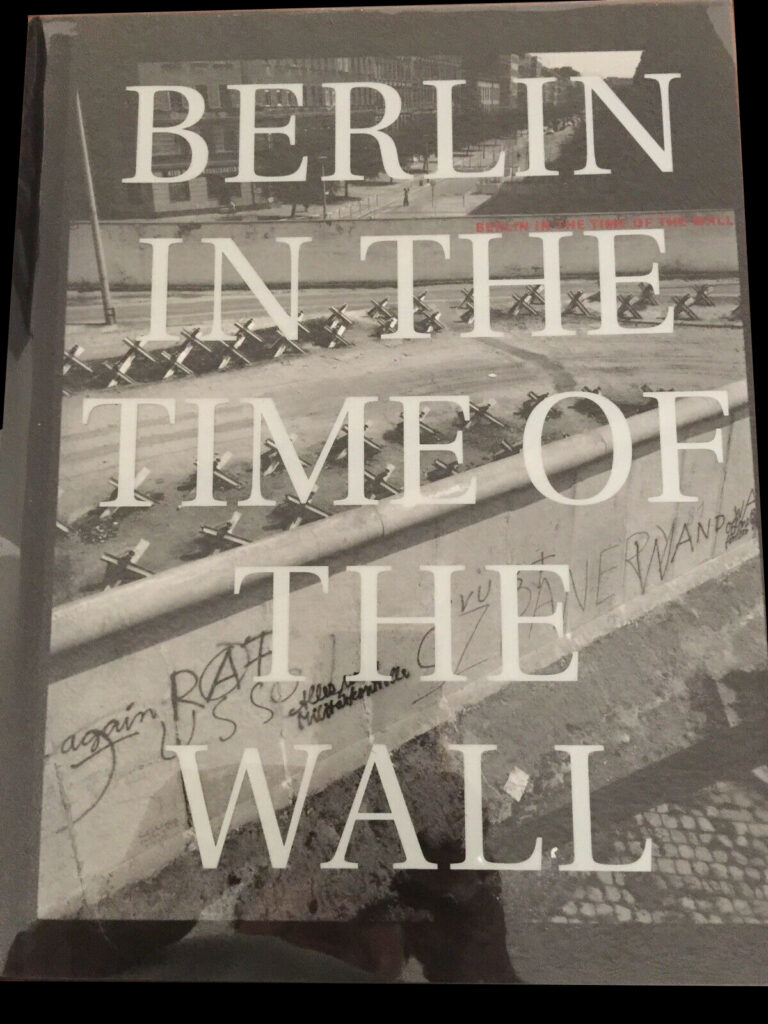
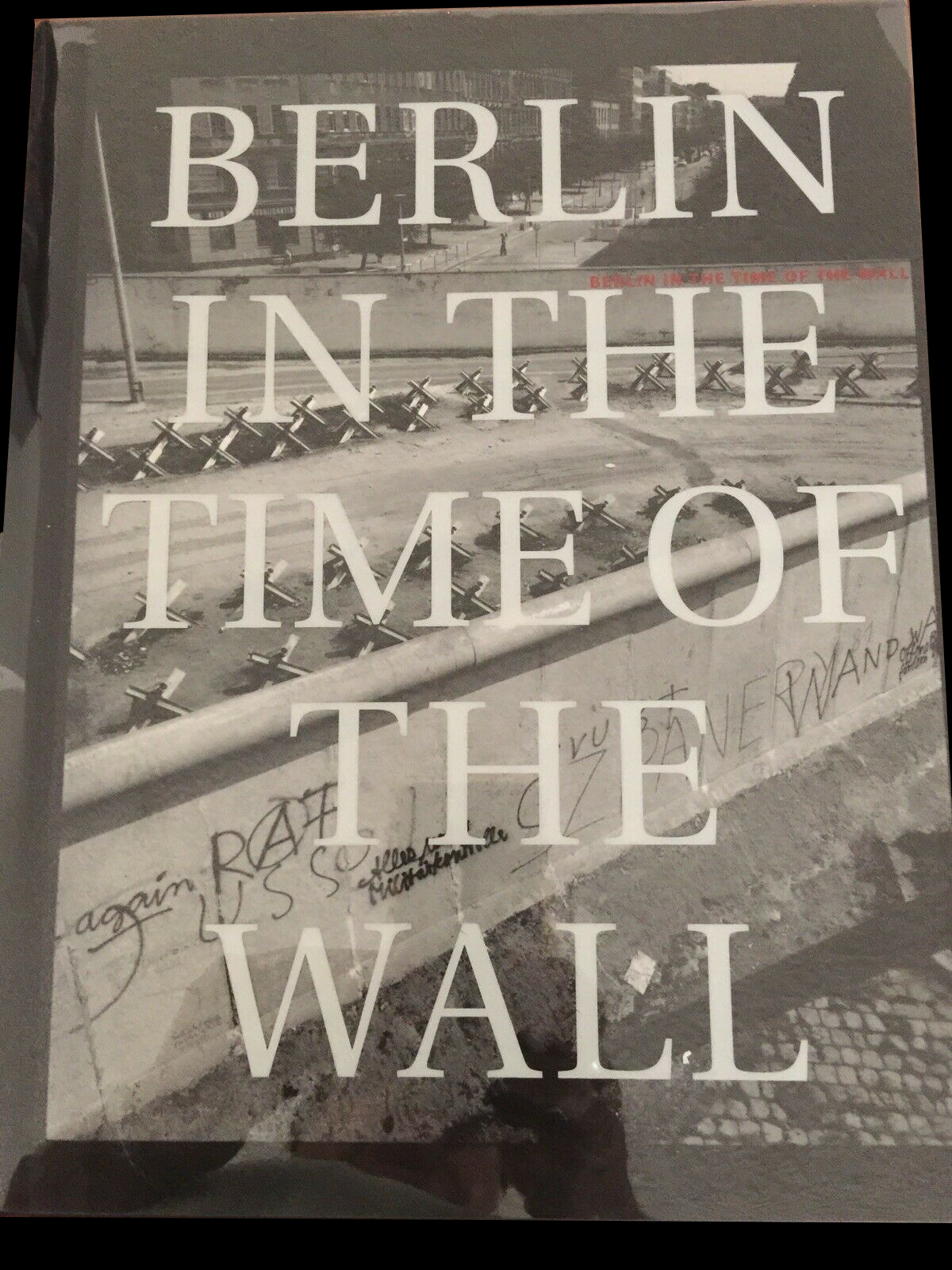
John Gossage, Berlin in the Time of the Wall, Stephen Daiter Contemporary, 2004 and its companion book, Putting Back the Wall, Loosefire Editions, 2007
It seems to me that not that many people know about these books, particularly Berlin in the Time of the Wall, and some who do have expressed disappointment in it. Perhaps, they wanted to see crowds of people tearing down the Wall? I don’t know. Well, there are no crowds here (besides, others have done that). What we have here is a masterful meditation on just what the title says- Berlin at the time. When I first saw Berlin, I was immediately taken by the Art of it, and that drew me back to look again and again at everything else these Photographs reveal, and hide. First seeing it in 2020, I couldn’t help but think about how much of the feeling Mr. Gossage’s book gave me was echoed right then around me in the deserted Manhattan during lockdown (which I documented here), of course with major differences.  Mr. Gossage has released a string of very fine books published by Steidl over the past decade. Berlin in the Time of the Wall (and its companion, Putting Back the Wall), remain my favorites, and the two I most highly recommend.
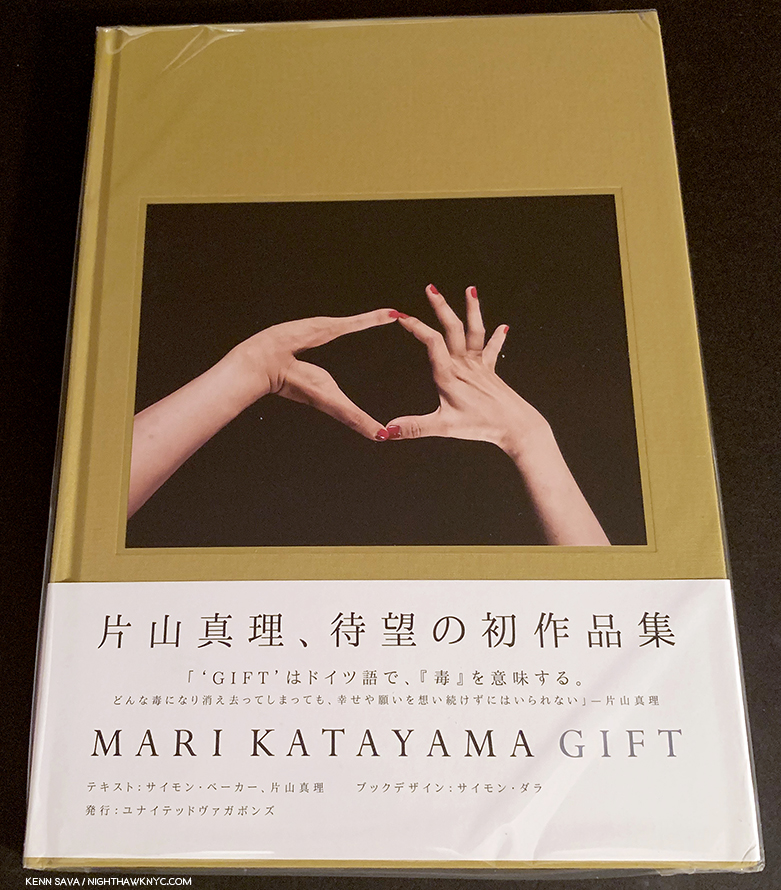
Mari Katayama, Gift, United Vagabonds, 2019
I’m embarrassed to say that, as far as I know, Mari Katayam is the only disabled Artist on this list. Maybe I haven’t looked hard enough? Maybe there’s not enough disabled Artists & Photographers who get the chance to made a book? Maybe the answer lies in the middle.
Her site says- “Suffering from congenital tibial hemimelia, Katayama had both legs amputated at age of 9. Since then, she has created numerous self-portrait photography together with embroidered objects and decorated prosthesis, using her own body as a living sculpture. Her belief is that tracing herself connects with other people and her everyday life can be also connected with the society and the world, just like the patchwork made with threads and a needle by stitching borders.” Including Gift as one of my NoteWorthy PhotoBooks of 2019, I wrote– “While we live in a time that’s supposedly about inclusion, particularly in the Arts, why do so few disabled Artists reach the larger public?” SIX YEARS later, not much has changed!
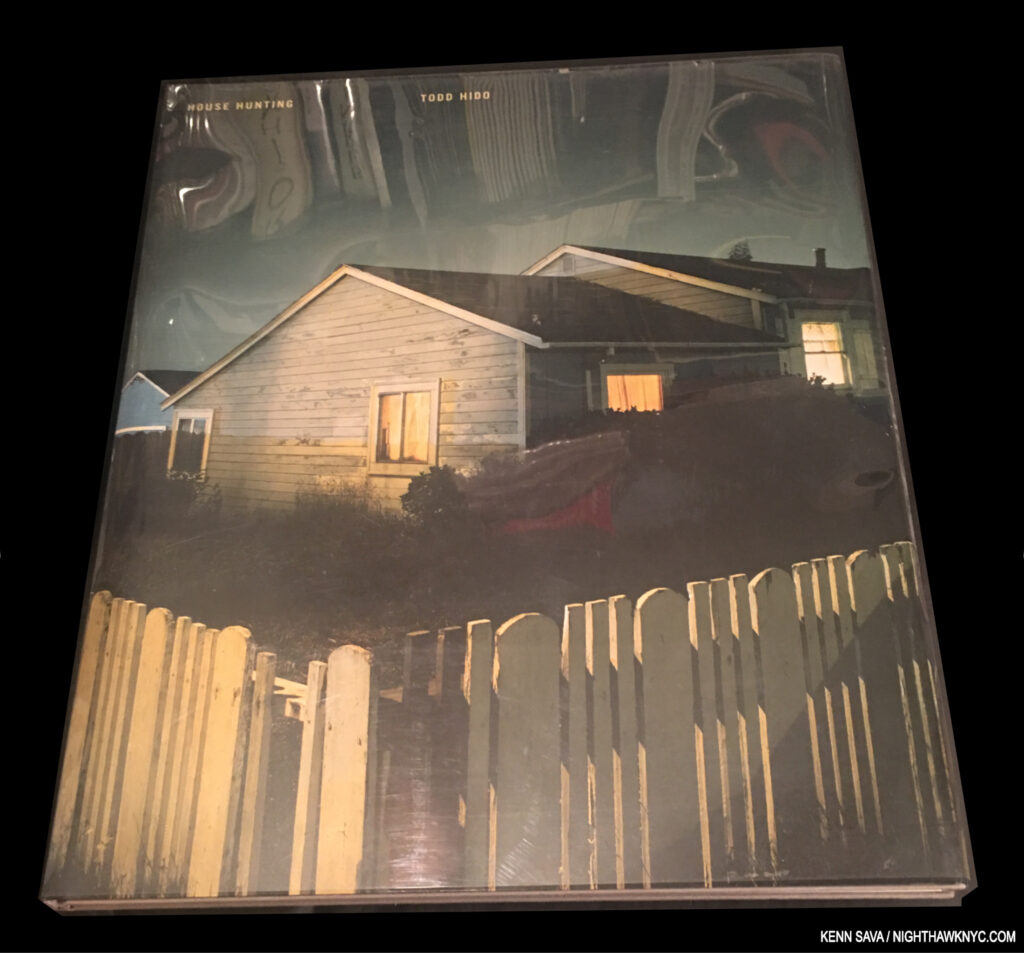
A rare first edition copy.

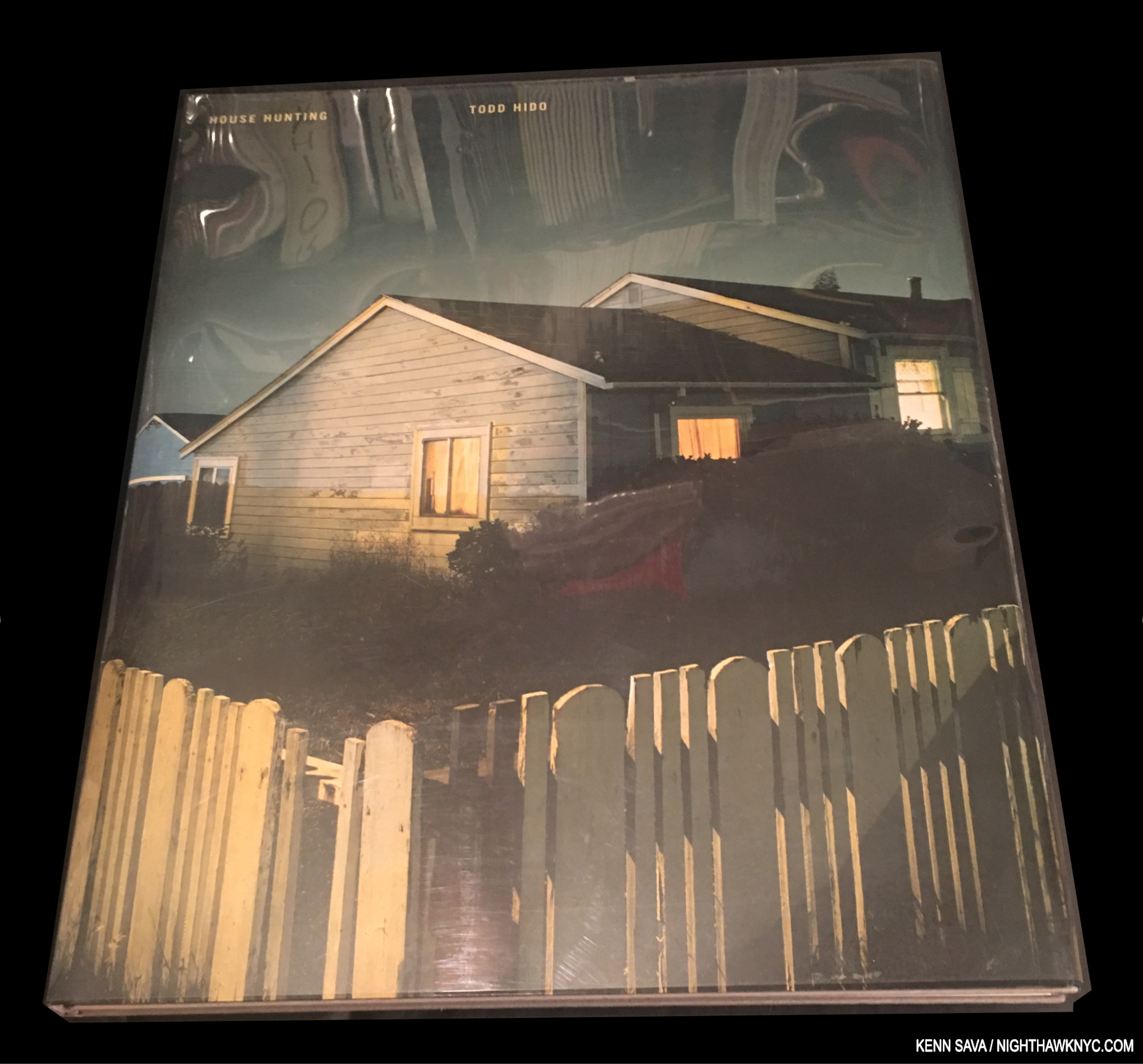
Todd Hido, House Hunting, Nazraeli Press, 2001
Perhaps in the tradition of Robert Adams’ Summer Nights, Walking, House Hunting struck a nerve with both viewers and Photographers. Its popularity has continued unabated for virtually the entire century thus far, seeing the book go out of print, then reprinted to popular acclaim. As a night owl, it was a de-facto purchase for yours truly and a book I continue to relate to, even though there are no “houses” anywhere near me here in Manhattan.
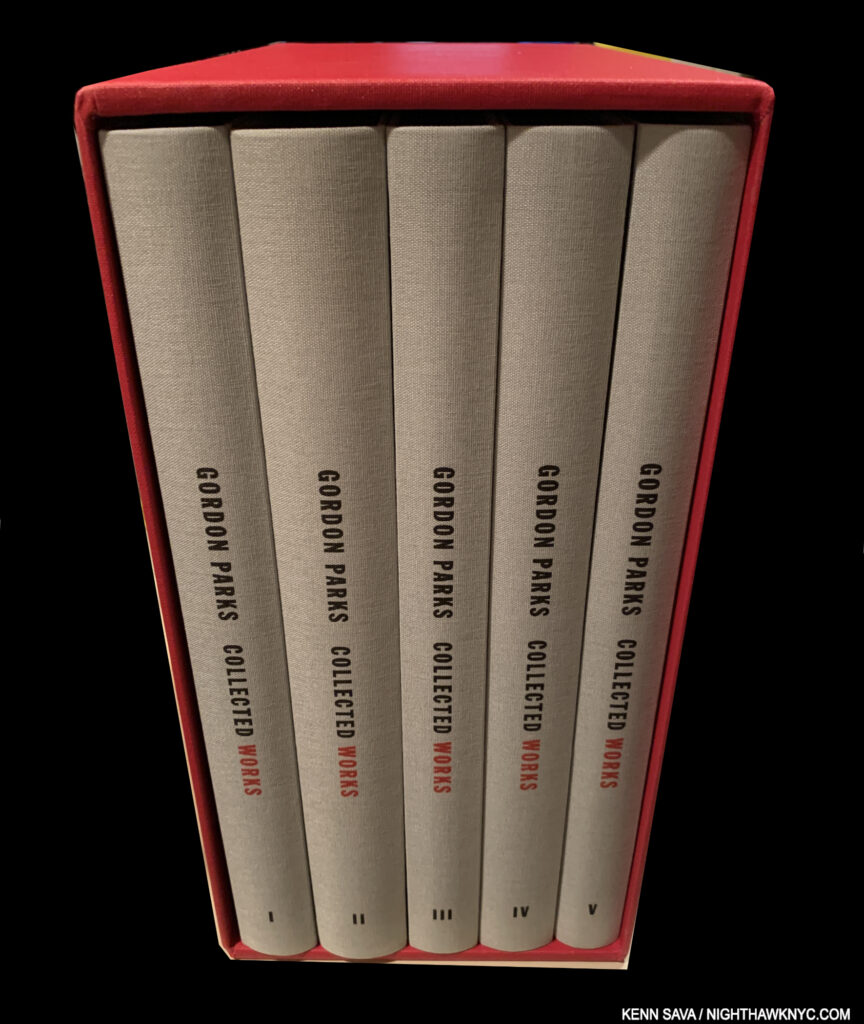
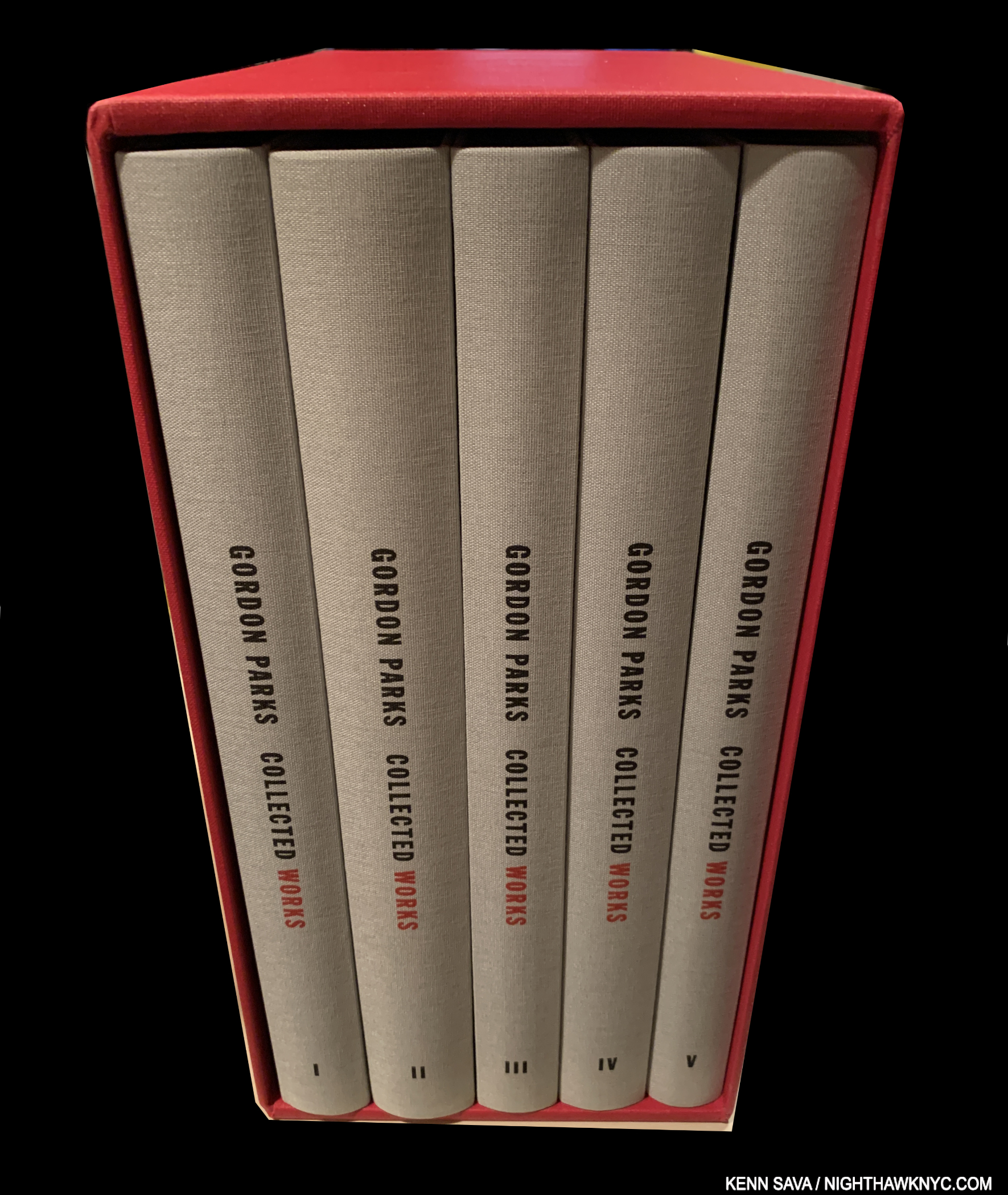
Gordon Parks, Collected Works, Steidl
The key publication among the excellent series of books on Gordon Parks’ work published by his Foundation and Stedil this century. You can make a very good case for a number of the other individual books being on this list.

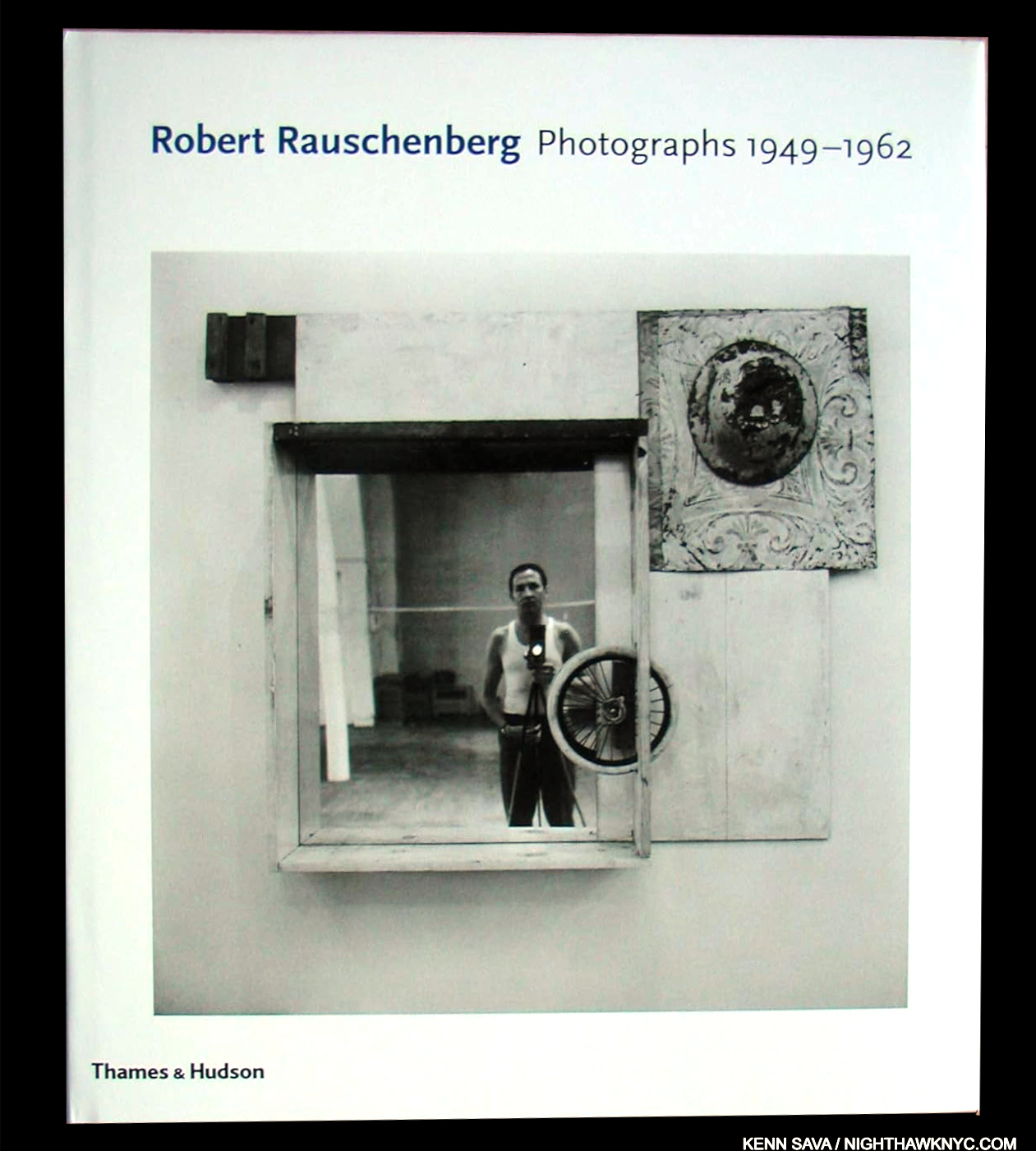
Robert Rauschenberg, Robert Rauschenberg: Photographs, 1949-62, Thames & Hudson, 2011
A long-time admirer of the work of the creative dynamo, I’ve long felt his Photography (like that of any number of other Painters who were, or are, also Photographers) has remained the most overlooked aspected of his work. FINALLY,  a book devoted to just that begins to show just how important his Photography was. The only downside about this book for me is that it “only” goes up to 1962! Robert Rauschenberg would continue to work, and take Photographs, for another 46 years1! I live in hope that additional volumes will set that right, but in the meantime, this is a great place to start.
My look at the”Summer of Rauschenberg,”as I called the NTC summer of 2017 is here.
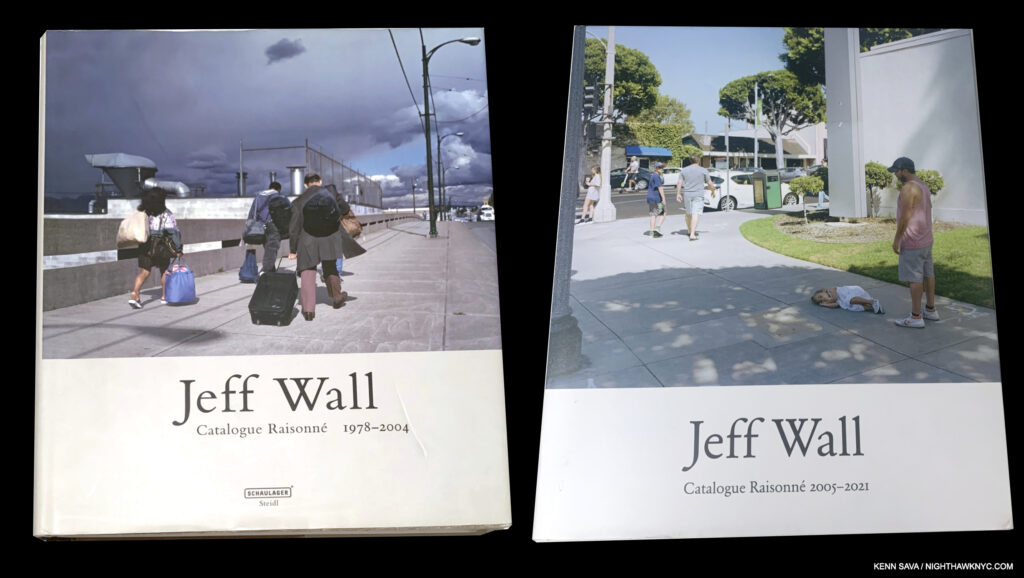
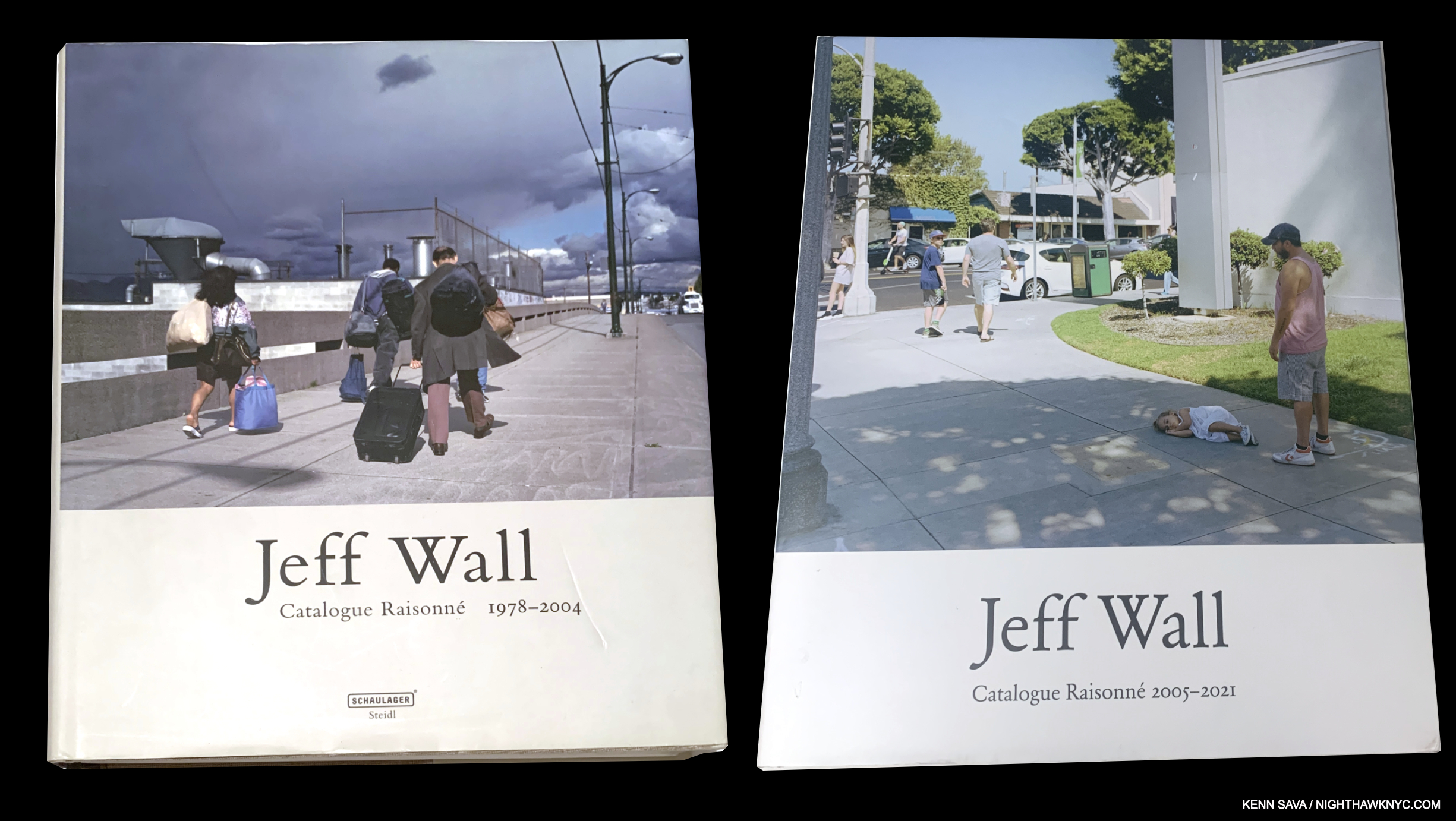
Jeff Wall, Jeff Wall: Catalogue Raisonne, 1978-2004, published in 2005,  and
Jeff Wall: Catalogue Raisonne, 2005-21, published in 2022, both Steidl
I admit I was slow to warm to Jeff Wall’s work, until I saw the first volume of his Catalogue Raisonne, which revealed a mystery more often seen in Painting. I’ve been interested since. When I met him in 2019, Mr. Wall told me Volume 2 would be coming. It has, and it’s equally full of mystery, and equally stunning in, largely, the same design, which elegantly and unobtrusively presents the work in excellent fashion. A first-rate Photography Cat Rai, as one would expect from Steidl, comparable to their Ed Ruscha Cat Rai series of 7 volumes, included on my NoteWorthy Art Book list. When I met him, again, in 2024, I saw no signs of his slowing down, and while I didn’t ask him if there would be a Volume 3, I’d bet on it, and I look forward to it.
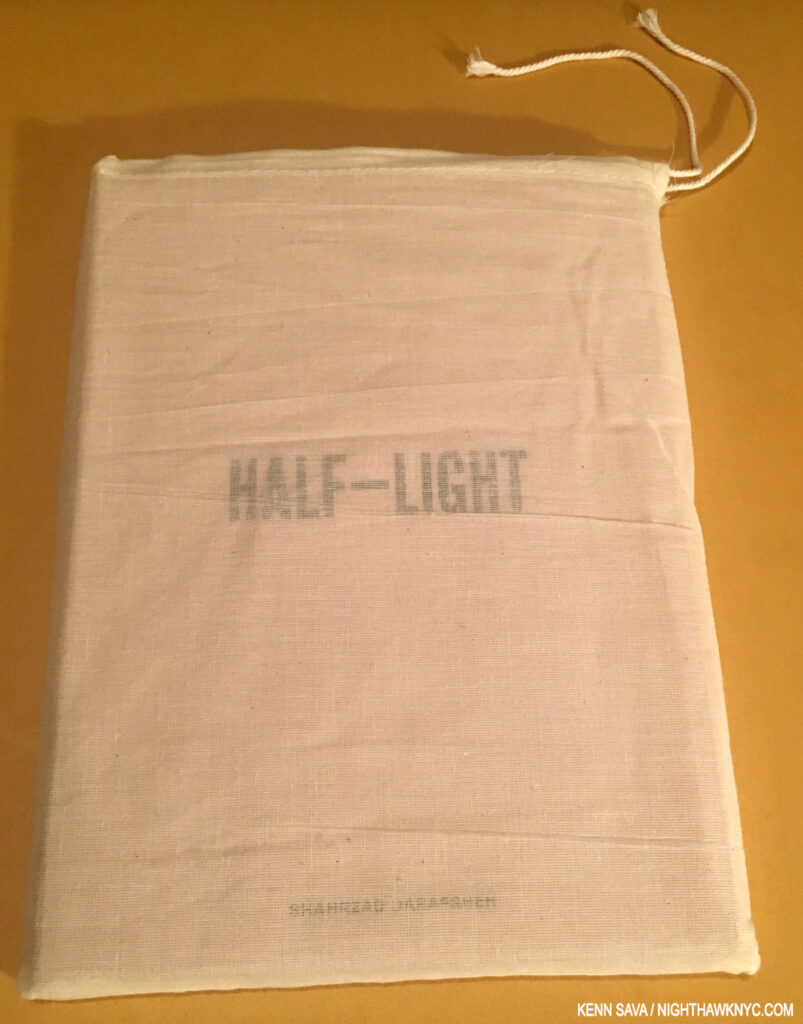
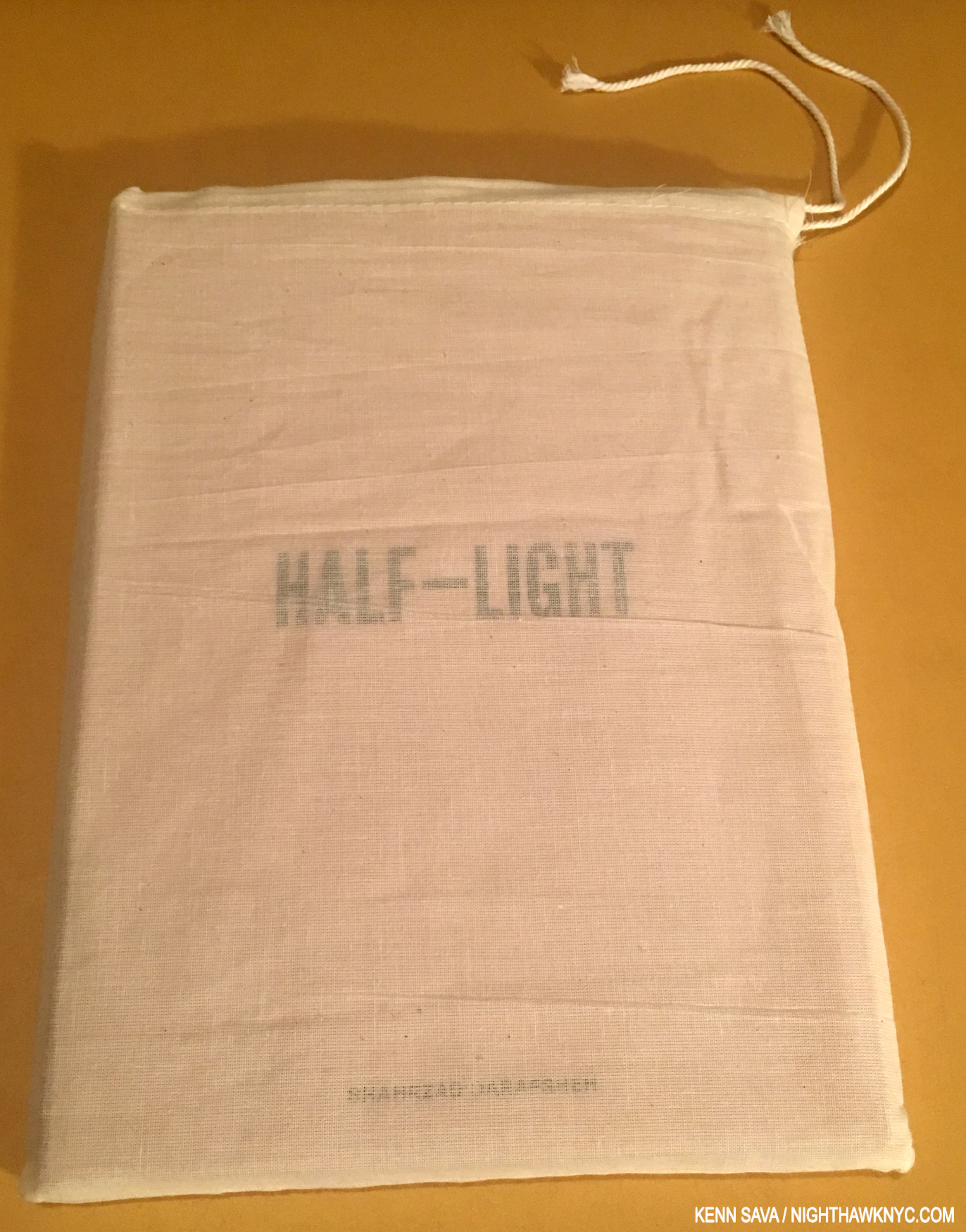
Seen in its bag, which sets the stage for the design inside which includes opaque materials between pages, creating different opacities, while adding to the multiple ways the viewer can “read” the book.

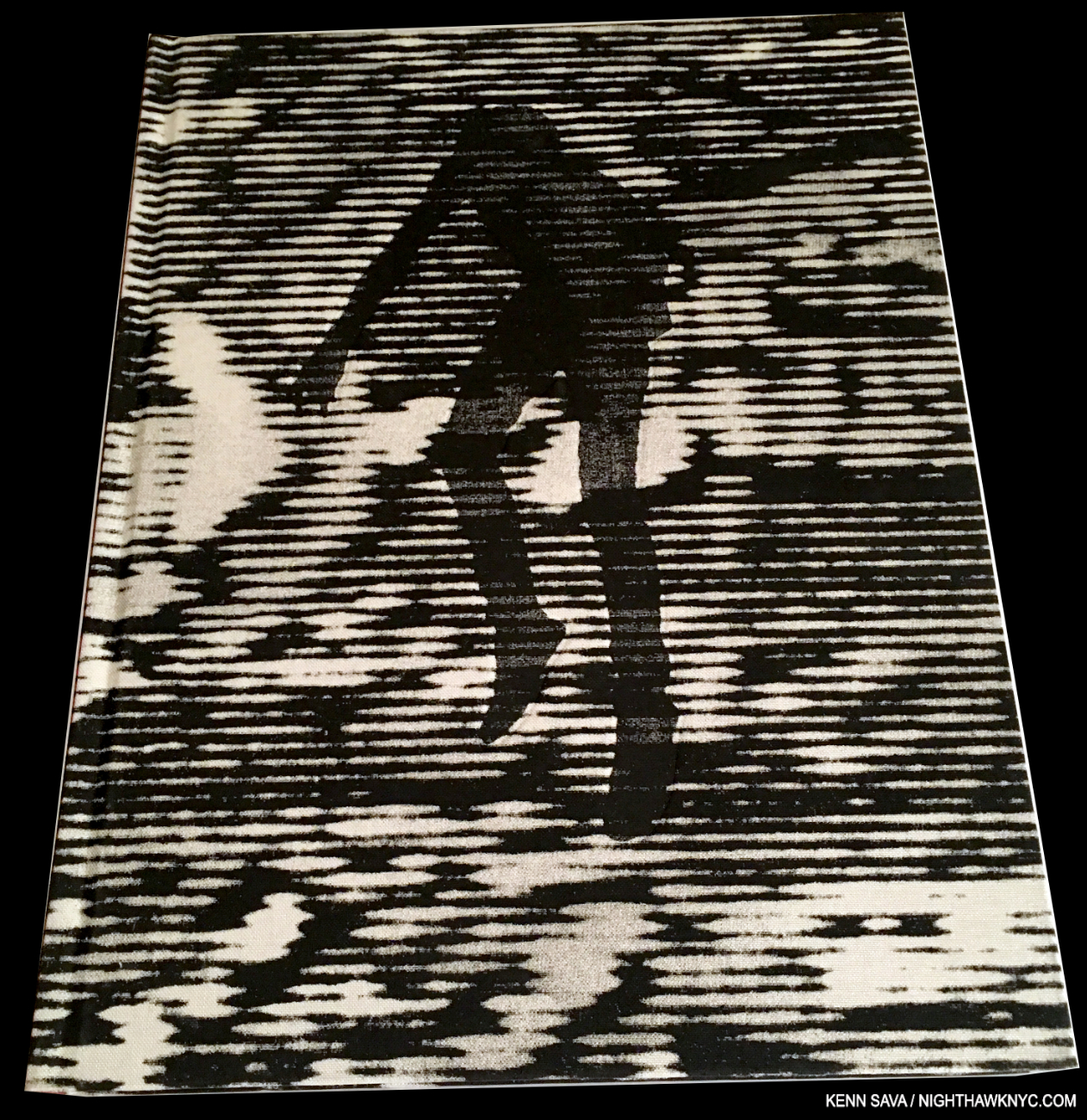
Shahrzad Darafsheh, Half-Light, Gnomic Book, 2018
Not to take one thing away from Shahrzhad Darafsheh’s work, Half-Light strikes me as a veritible miracle of collaboration, the kind of book only an Artist-run PhotoBook publisher could achieve. Remarkably, Gnomic founder and chief, Jason Koxvold (who released his own fine Kinvces in 2017), discovered Shahrzhad’s work online. Being based in Iran made person-to-person collaboarion nearly impossible. Dealing with a devastating cancer diagnosis in her early 30s, the basis for this body of work, made things exponentially more difficult all around.
Mr. Koxvold brought in Photographer/Filmmaker/Educator Shane Rocheleau (who’s equally fine Gnomic book, known as YAMOTFABAATA, was a NoteWorthy PhotoBook of 2018), as a collaborator, completing the team. Along with its Photos that move between poignant and poetic, Half-Light is a model of a brilliantly edited and sequenced PhotoBook, a book that lives in that space where each moment hangs in the air, pregnant with the fear, and hope, for what the next moment might bring. Yet, through it all, there’s a serenity in her work that, in the end, remains the most compelling part for me.
MUCH better than getting a book on my list is that 7 years later, I’m very happy to say, Shahrzad has left cancer behind her! She continues to work and grow as an Artist, and enjoy life with her family. 
My Q&A with Shahrzad Darafsheh is here. My piece naming Half-Light a NoteWorthy First PhotoBook of 2018 is here. My Q&A with Shane Rocheleau is here.
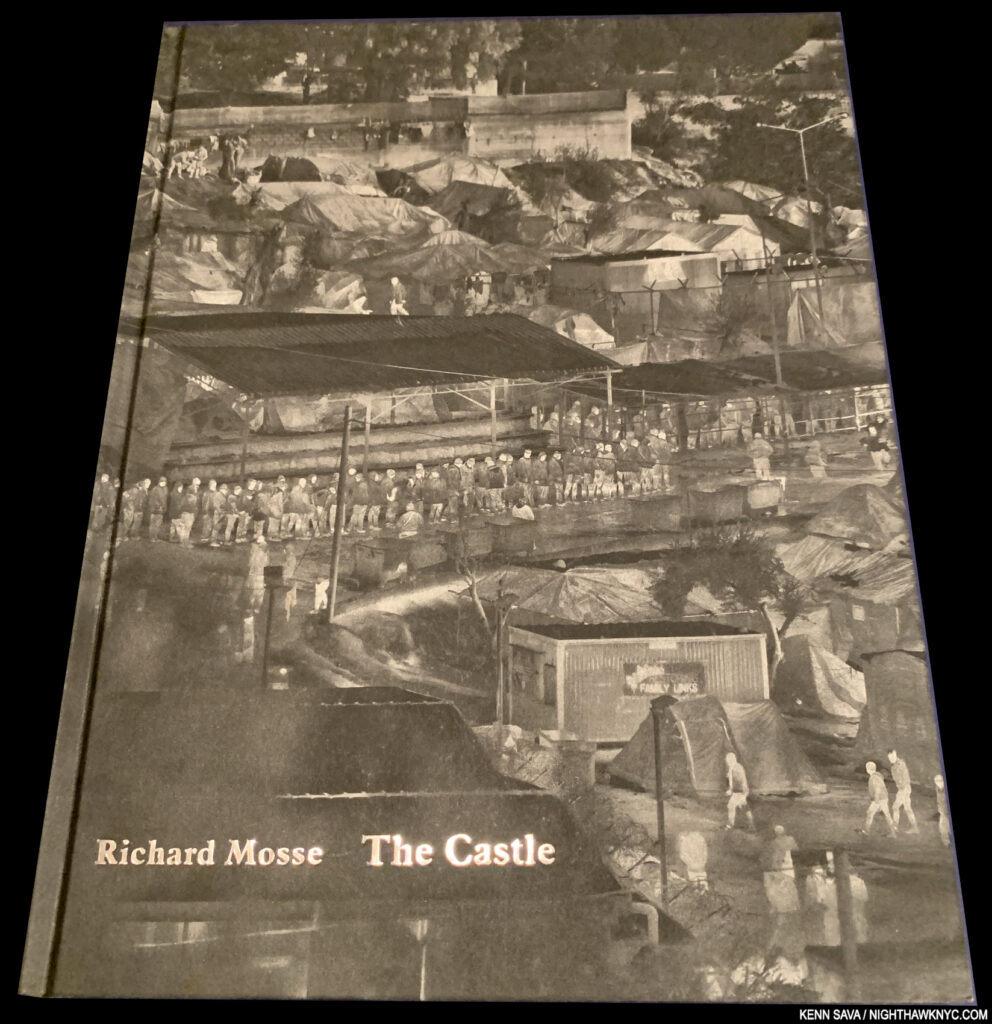
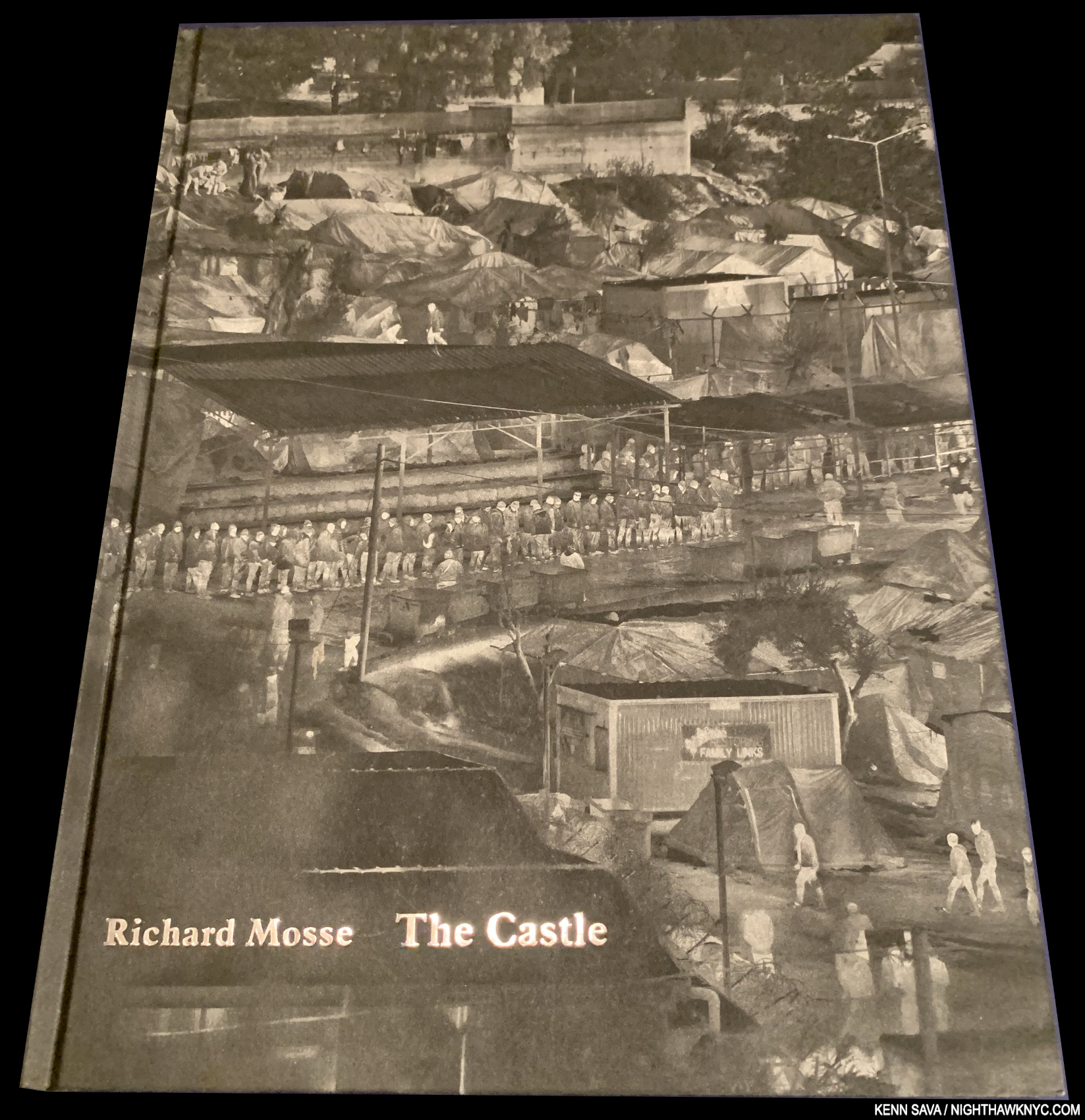
A book that held me so spellbound that I bought a copy of both printings of it so I could compare how the tonal adjustments they made for the 2nd printing differed from the 1st.Richard Mosse, The Castle, Mack 2019
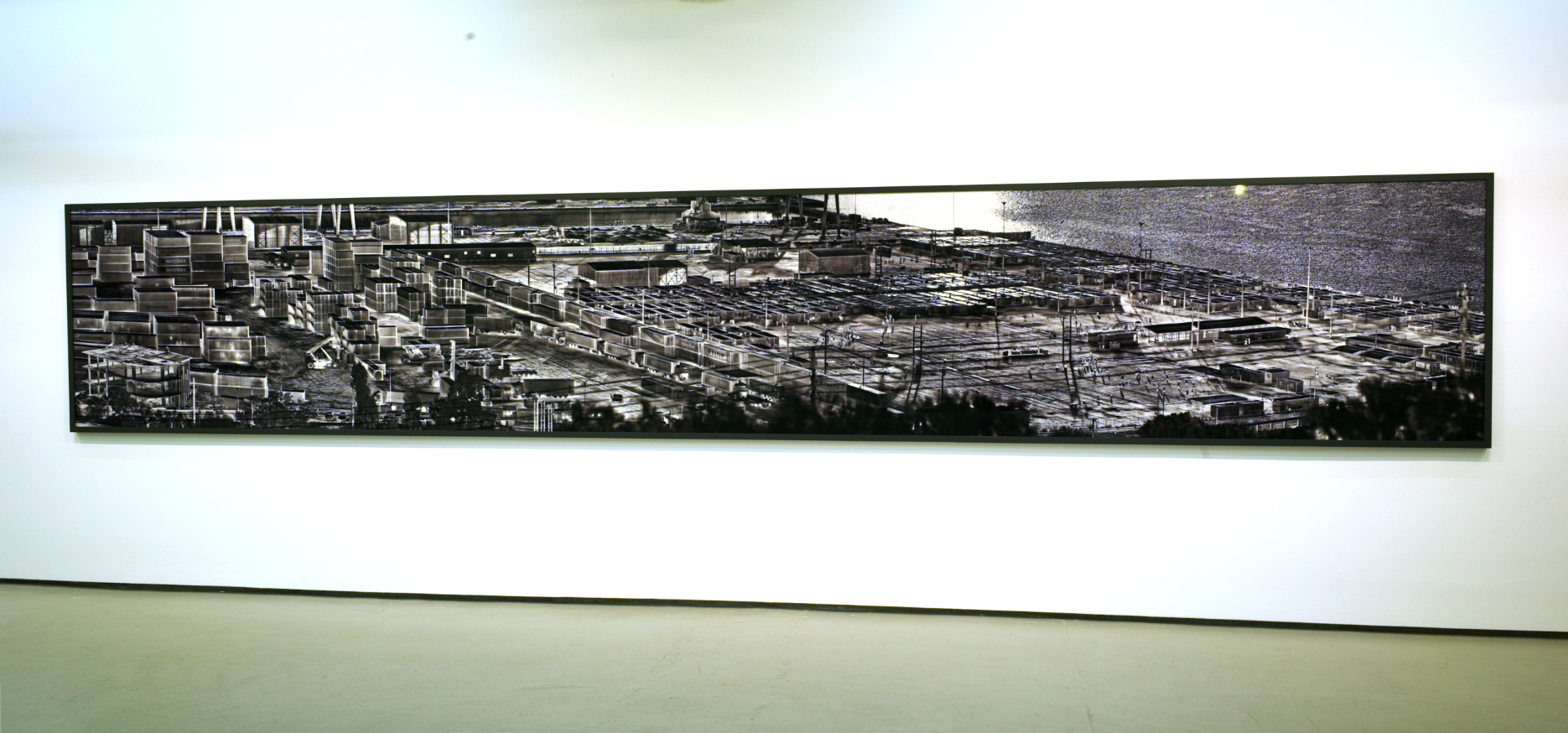
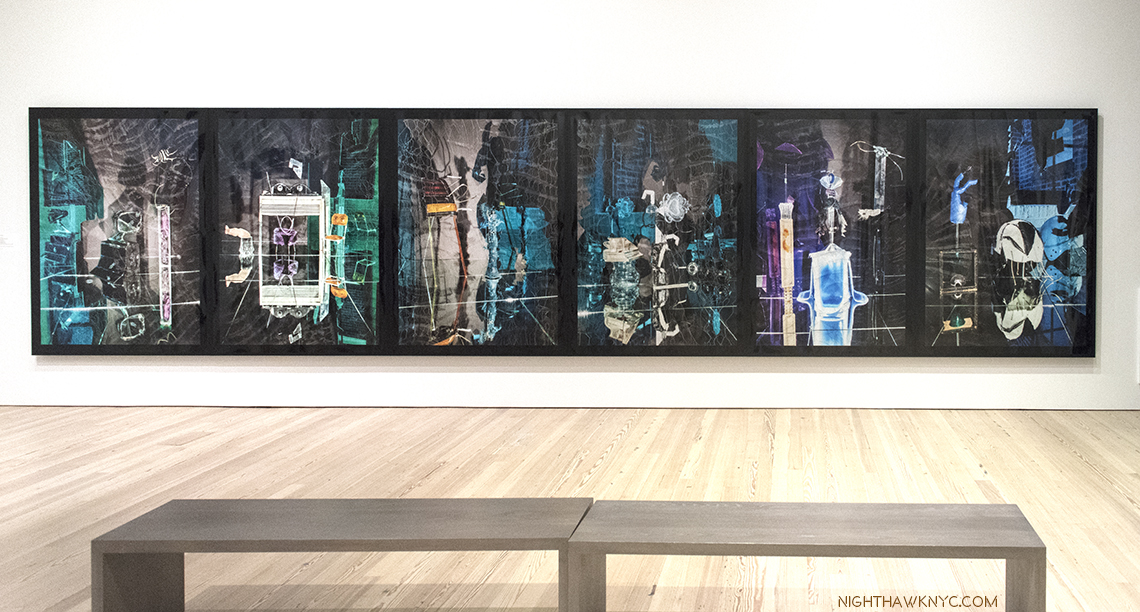
Perhaps, the most remarkable among Richard Mosse’s remarkable PhotoBooks, The Castle is a unique visual experience. According to the publisher, “Using a thermal video camera intended for long-range border enforcement, Mosse films the camps (i.e. European Refugee Camps in Greece, Italy and Germany) from high elevations to draw attention to the ways in which each interrelates with, or is divorced from, adjacent citizen infrastructure. His source footage is then broken down into hundreds of individual frames, which are digitally overlapped in a grid formation to create composite heat maps.” Released in two printings (the second having its black point adjusted), it’s a book that retains the searing power of seeing these huge Photographs in real-life, which I did when they were shown in 2017. Equally compelling either way, it’s hard to imagine the book being more well-realized, through the work of Mr. Mosse, Mack and their designer, Morgan Crowcroft-Brown.
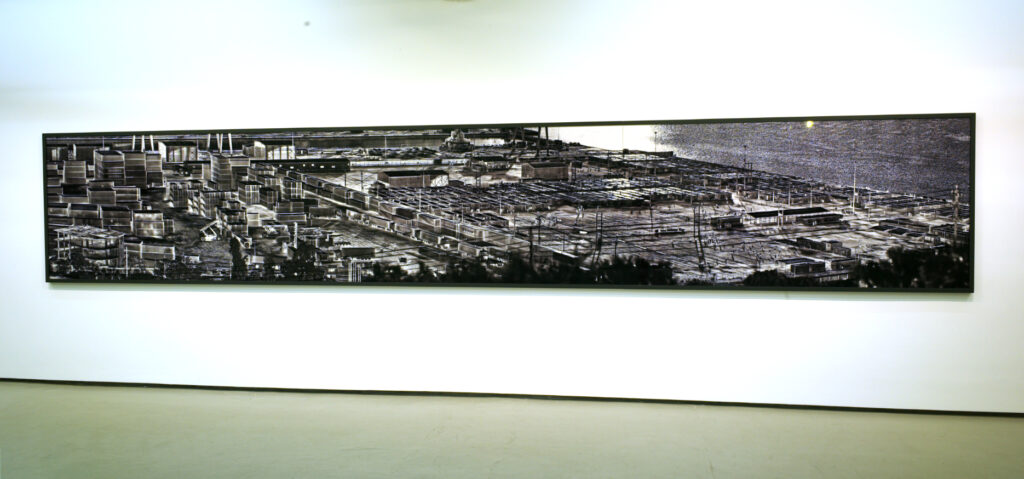
Skaramaghas Camp, Athens, Greece, 2016. At 288 x 50x 2 inches(!), it’s one of the largest Landscape Photographs I’ve ever seen. The Refugee Camp is in the lower right quadrant, surrounded by water on one side and an industrial area on the other three. Seen at Richard Mosse: Heat Maps, at Sikkema Jenkins, March, 2017. To replicate these very large images, The Castle contains 28 double gatefolds!

My piece naming The Castle a NoteWorthy PhotoBook of 2019 is here.
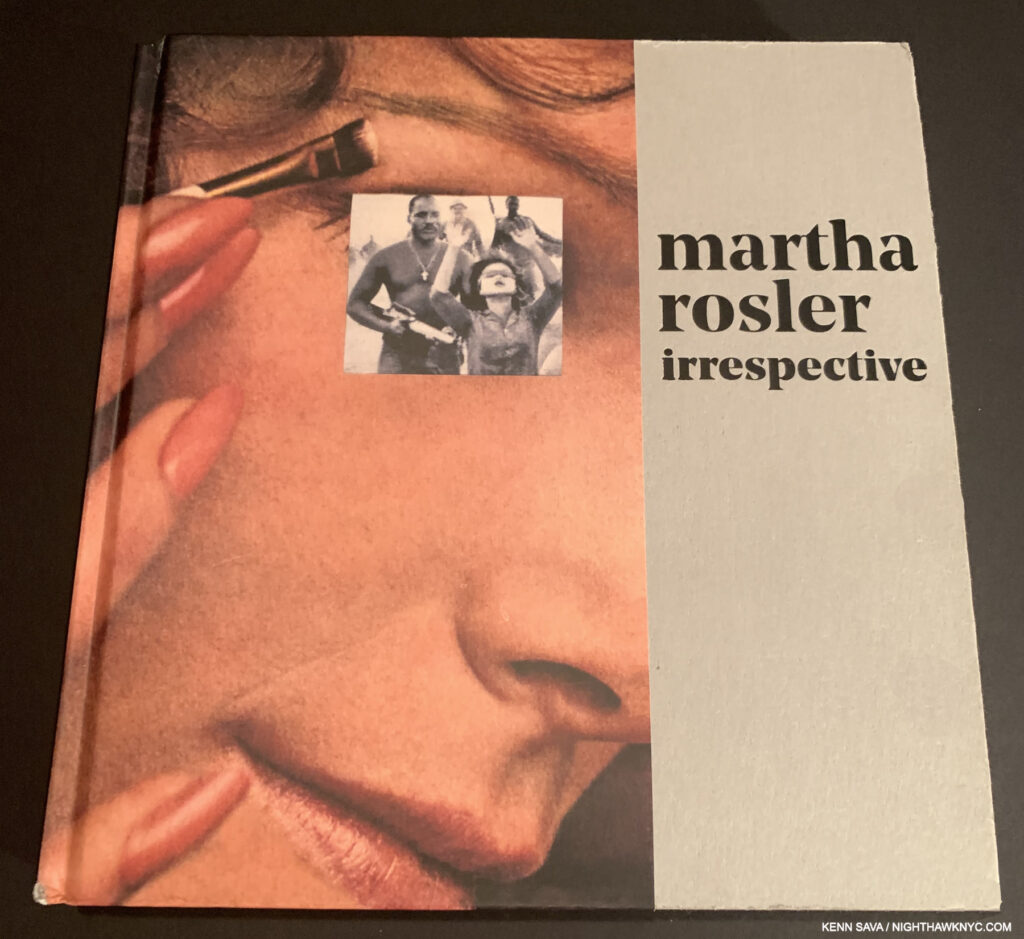
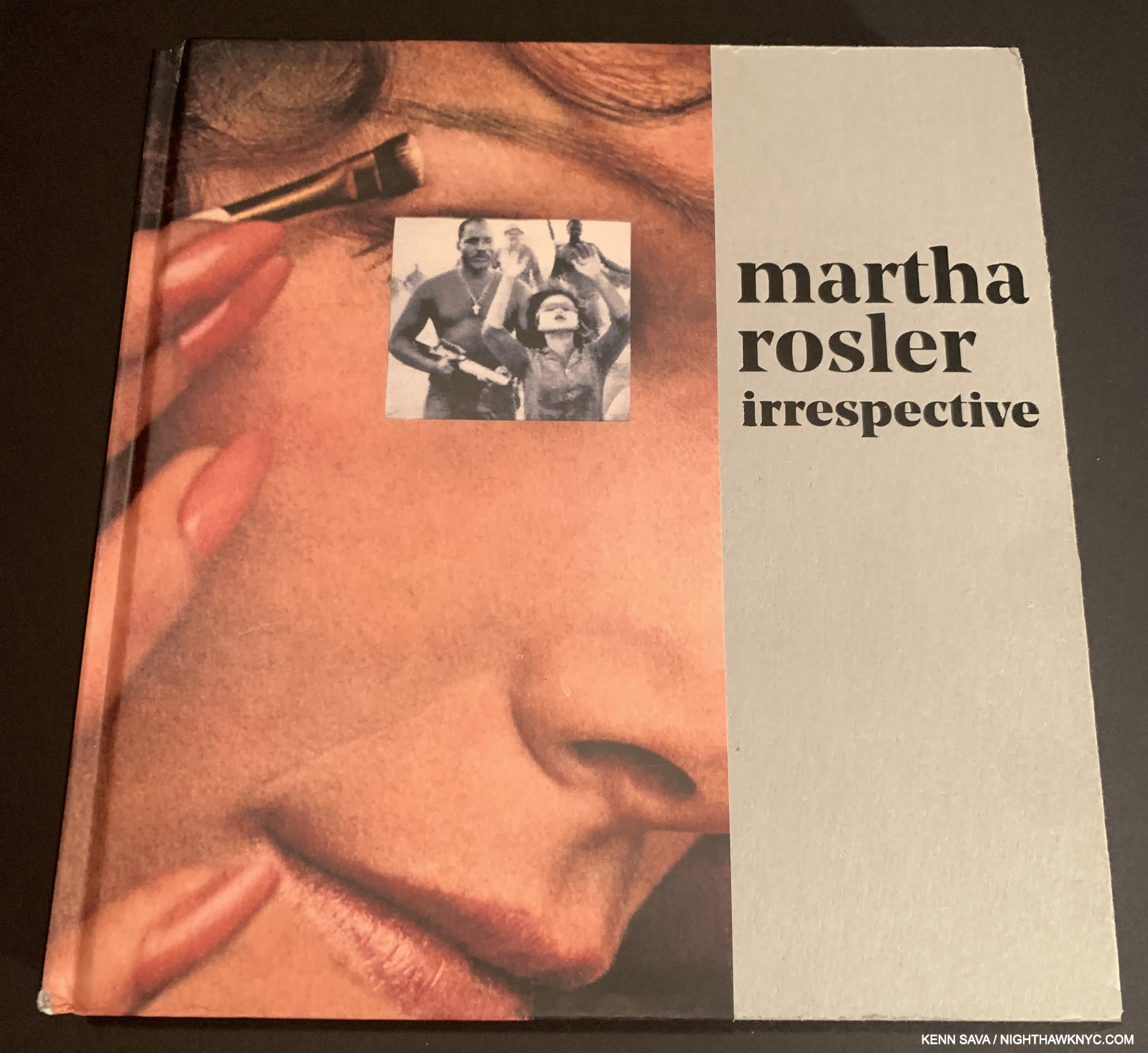
Martha Rosler, Martha Rosler: Irrespective, Yale University Press/Jewish Museum, 2018
Irrespective  is, according to the publisher, “…the only survey of the artist’s vital and enduring work, examining it across media,” making it all the more important for an Artist who is not as well-known as Barbara Kruger or Jenny Holzer, but who has been working hard on important issues in her own way for just as long.
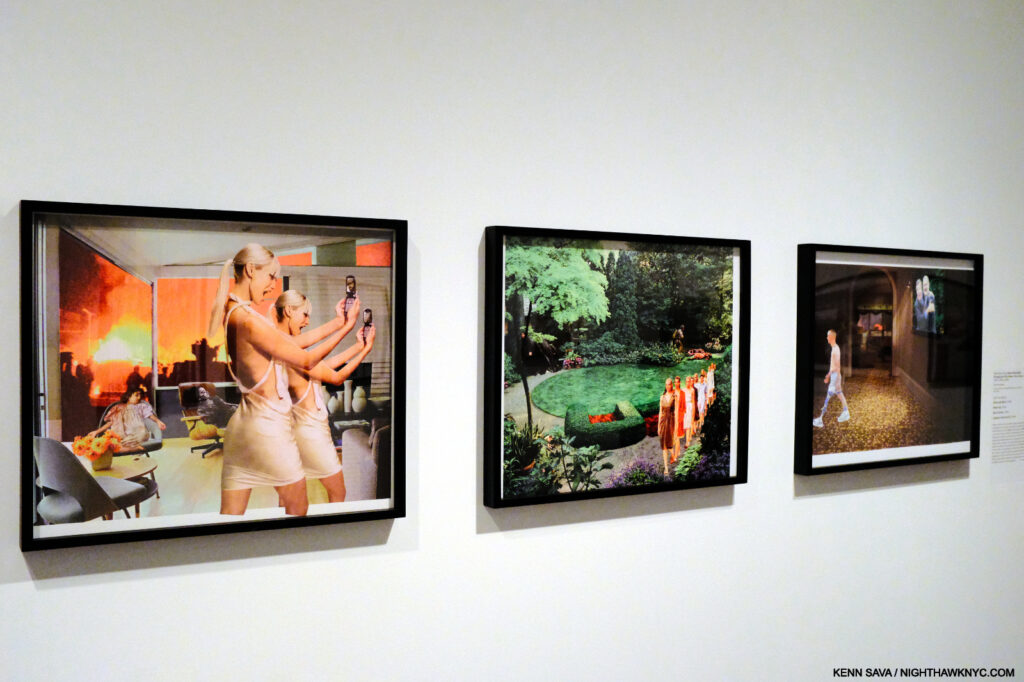
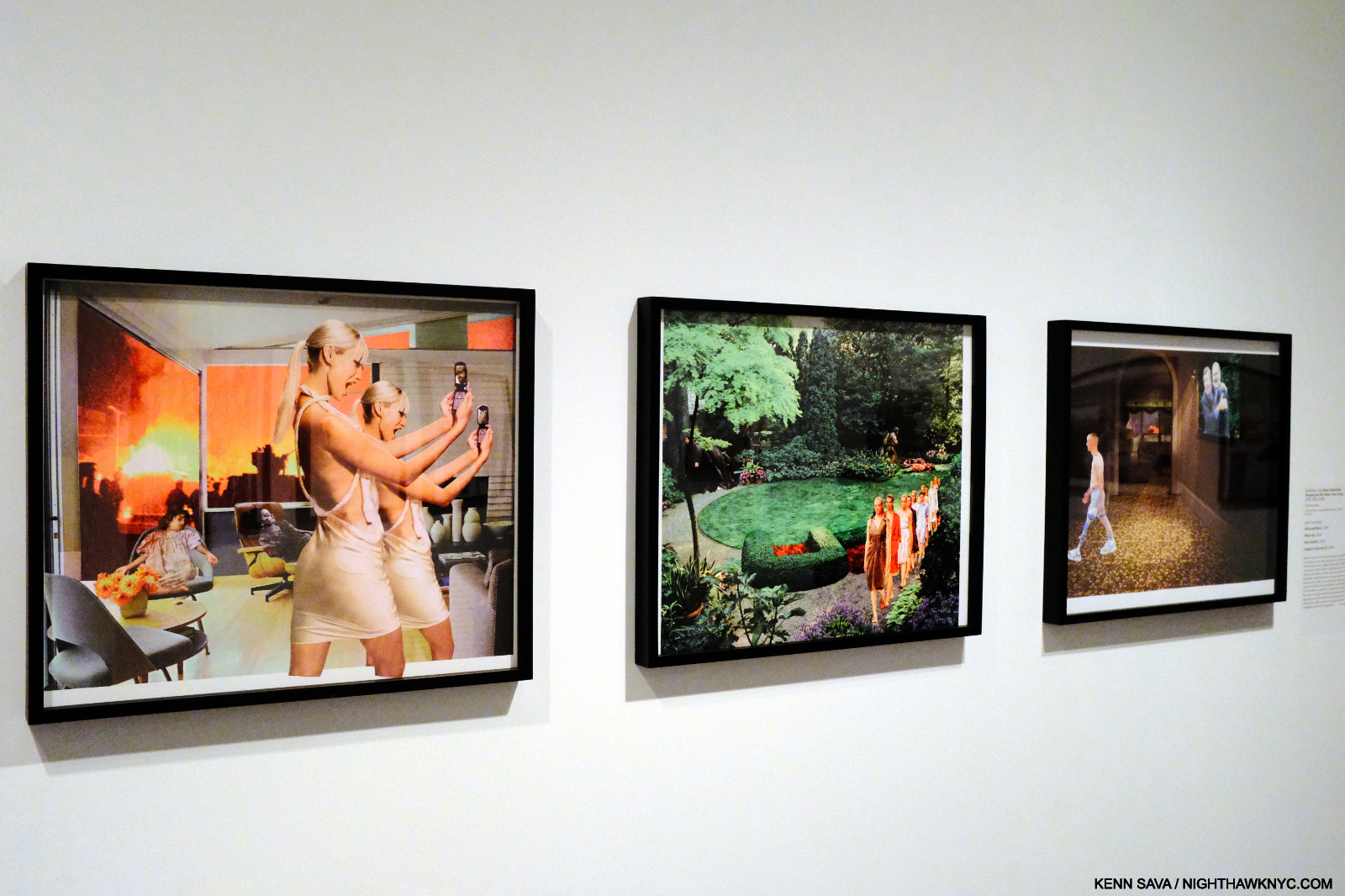
From House Beautiful, Bringing the War Home, New Series, 2003,2004,2008, Photomontages. Seen at Irrespective at the Jewish Museum, Christmas Day, 2018, the show the book accompanied. Yes, I spent Christmas, 2018, at a show.

Though she works in multiple media, Irrespective features her Photo-based works to stunning effect. An Artist who deserves much wider attention.
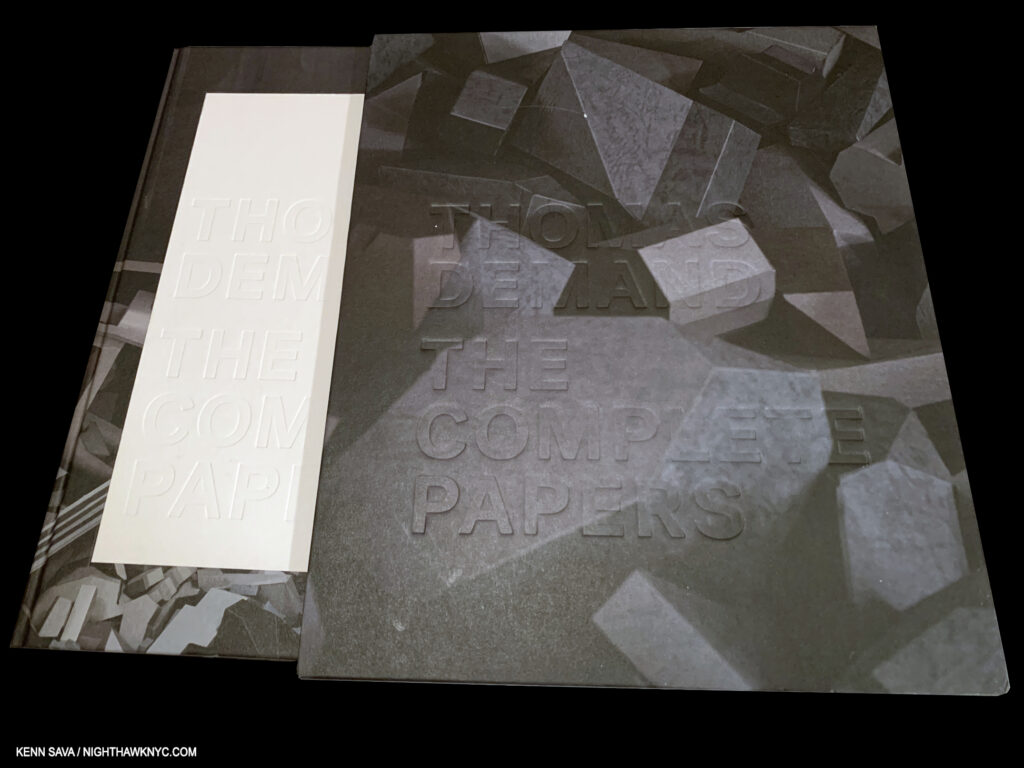
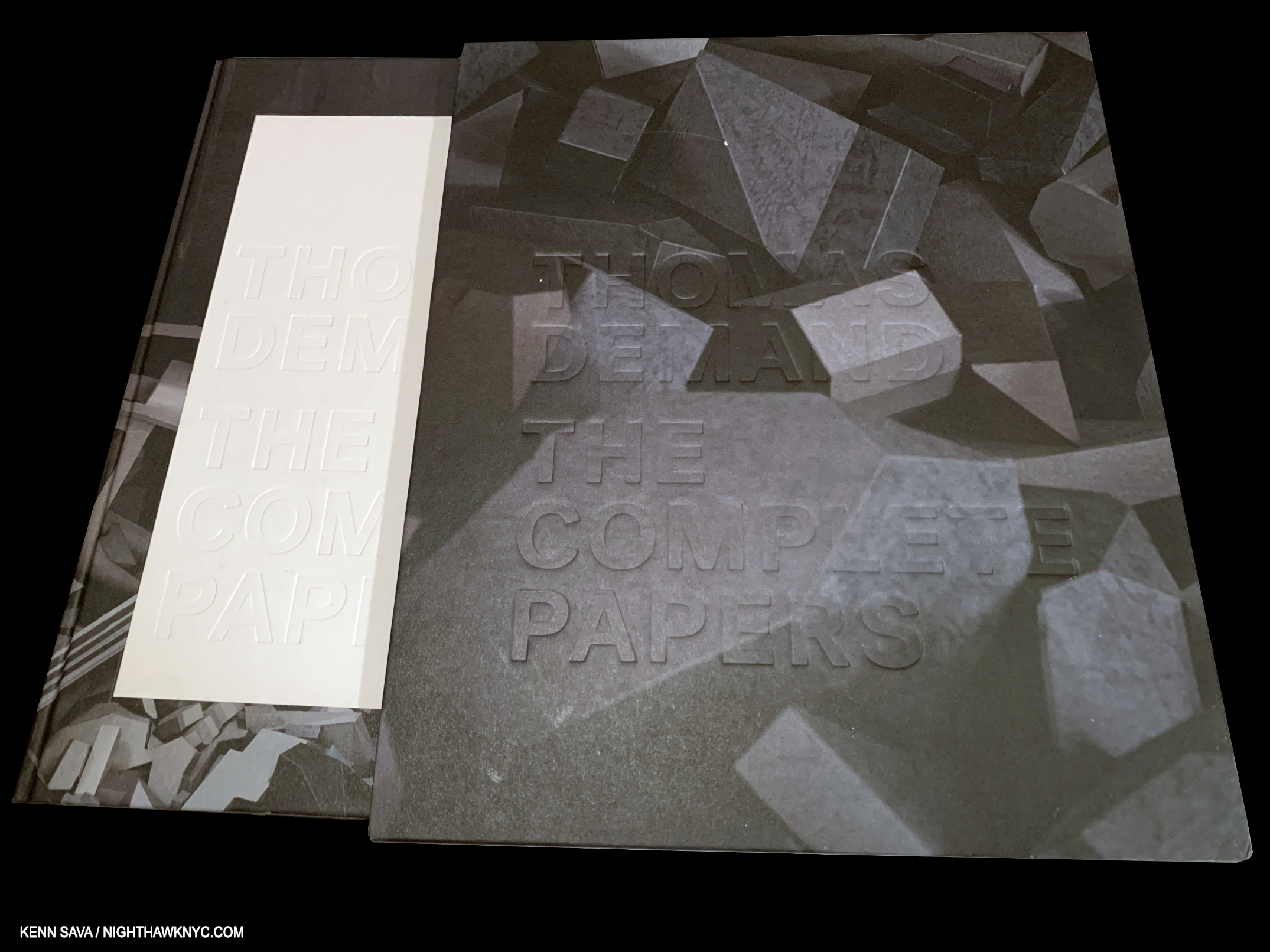
Thomas Demand: The Complete Papers, Mack Books, 2020
Thomas Demand creates, and recreates, scenes that were either well-known, or not as well-known, stunningly realistically in paper! Then, he Photographs them, and the Photographs are his work. What I said in naming this a NoteWorthy PhotoBook of 2019 still holds- “Thomas Demand, The Complete Papers, MACK Books A remarkable book documenting a remarkable body of work that’s equal parts Sculpture and Photography. No. It’s more Sculpture, given how much work goes into creating each of his works- in paper! Beautifully rendered and realized in a majestic book that is only going to be more and more sought after as this unique Artist becomes better known in the USA.” He’s still not as well known here as I think he should be.
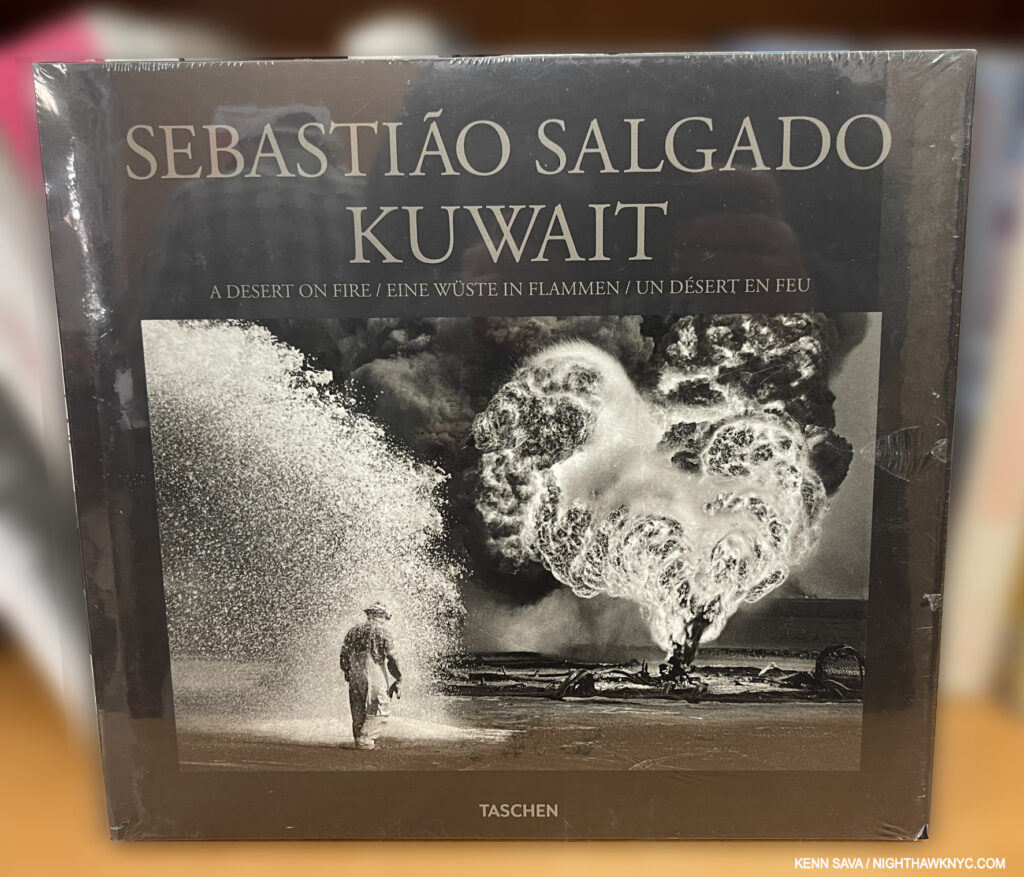
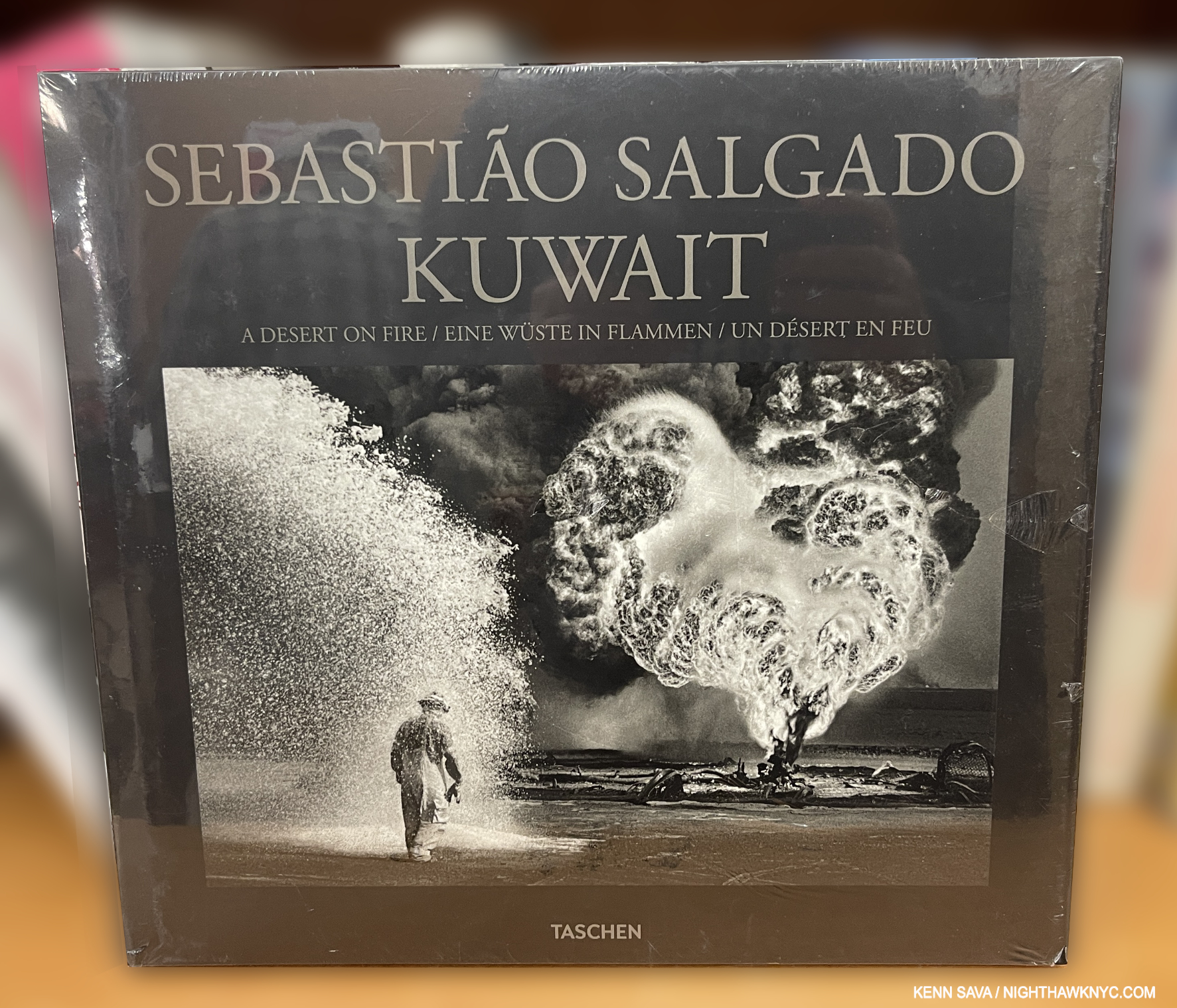
Sebastião Salgado, Kuwait: A World on Fire, Taschen, 2016
Just one of the monumental books Sebastião Salgado released this century (and before) dealing with social issues, the natural environment and those struggling to survive in our world. I could have chosen Genesis, 2013, “My love letter to the planet,” Mr. Salgado called it,  or Gold, 2019, or Africa, 2007,  Taschen sets the stage for Kuwait– “In January and February 1991, as the United States-led coalition drove Iraqi forces out of Kuwait, Saddam Hussein’s troops retaliated with an inferno. At some 700 oil wells and an unspecified number of oil-filled low-lying areas they ignited vast, raging fires, creating one of the worst environmental disasters in living memory.” Another manmade disaster continues an ongoing, long-time, theme in the Photographer’s work. Another Photographer was killed while Mr. Salgado was shooting this work, and one of his own lenses melted. Needless to say, the results are intense, which makes Kuwait a bit different from his other books, its monumental fires incredibly vivd- even in black & white! Epic in scope with some of the most incredibly powerful moments of man against nature, and inhumanity published this past decade.
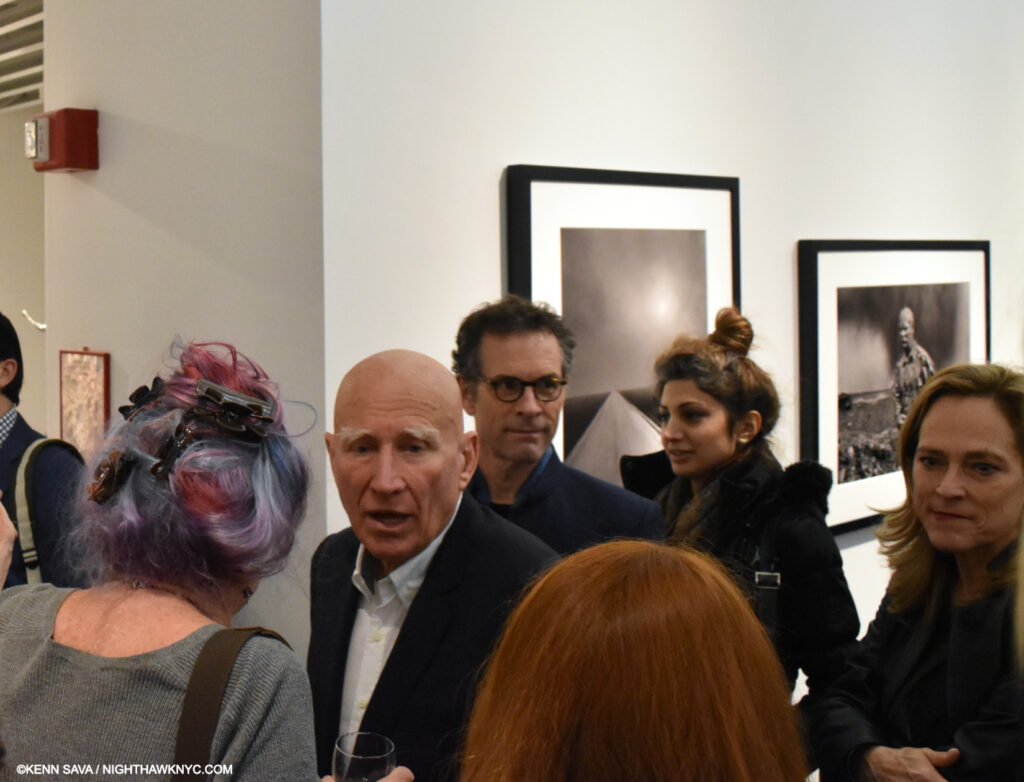
Sebastião Salgado at the opening of his Kuwait series, March, 2017. The world will sorely miss him.

I was saddened by the news that Mr. Salgado had passed away in late May of complications from Malaria he contracted while working over a decade before. I was lucky enough to be in his presence once, at the opening for Kuwait in 2017. The world is lucky his work has been so widely, and so beautifully, published, largely, by Taschen, my NoteWorthy Art Book Publisher of the 21st Century. 
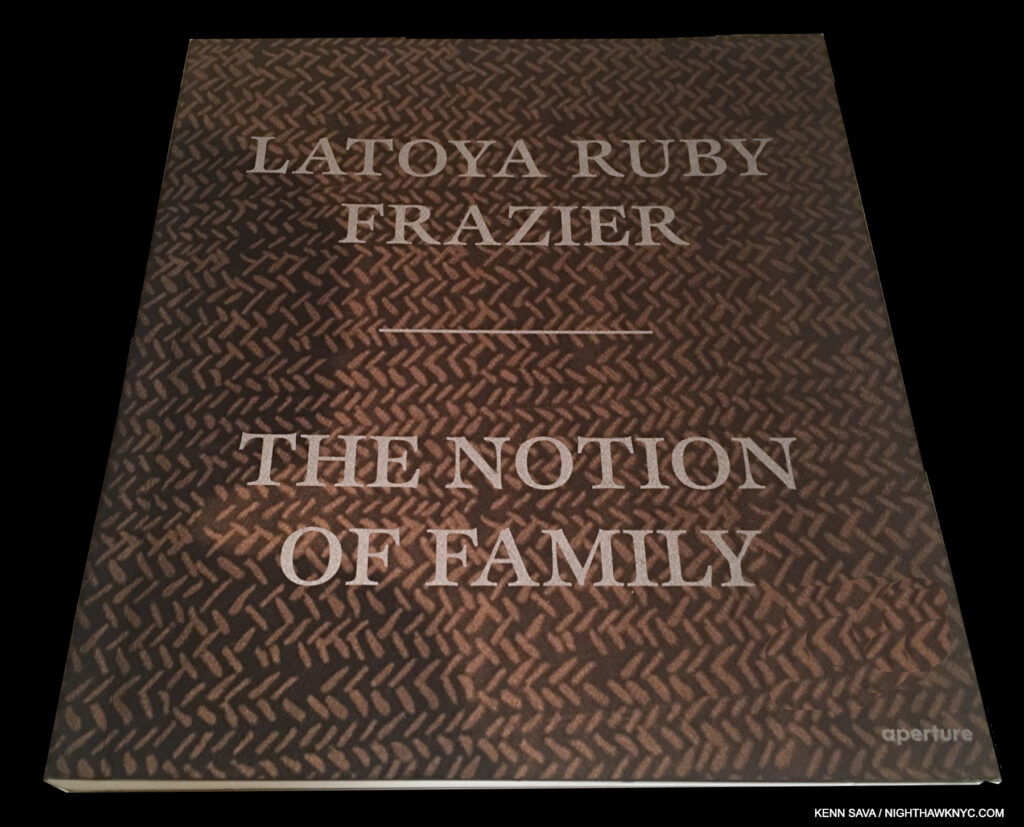
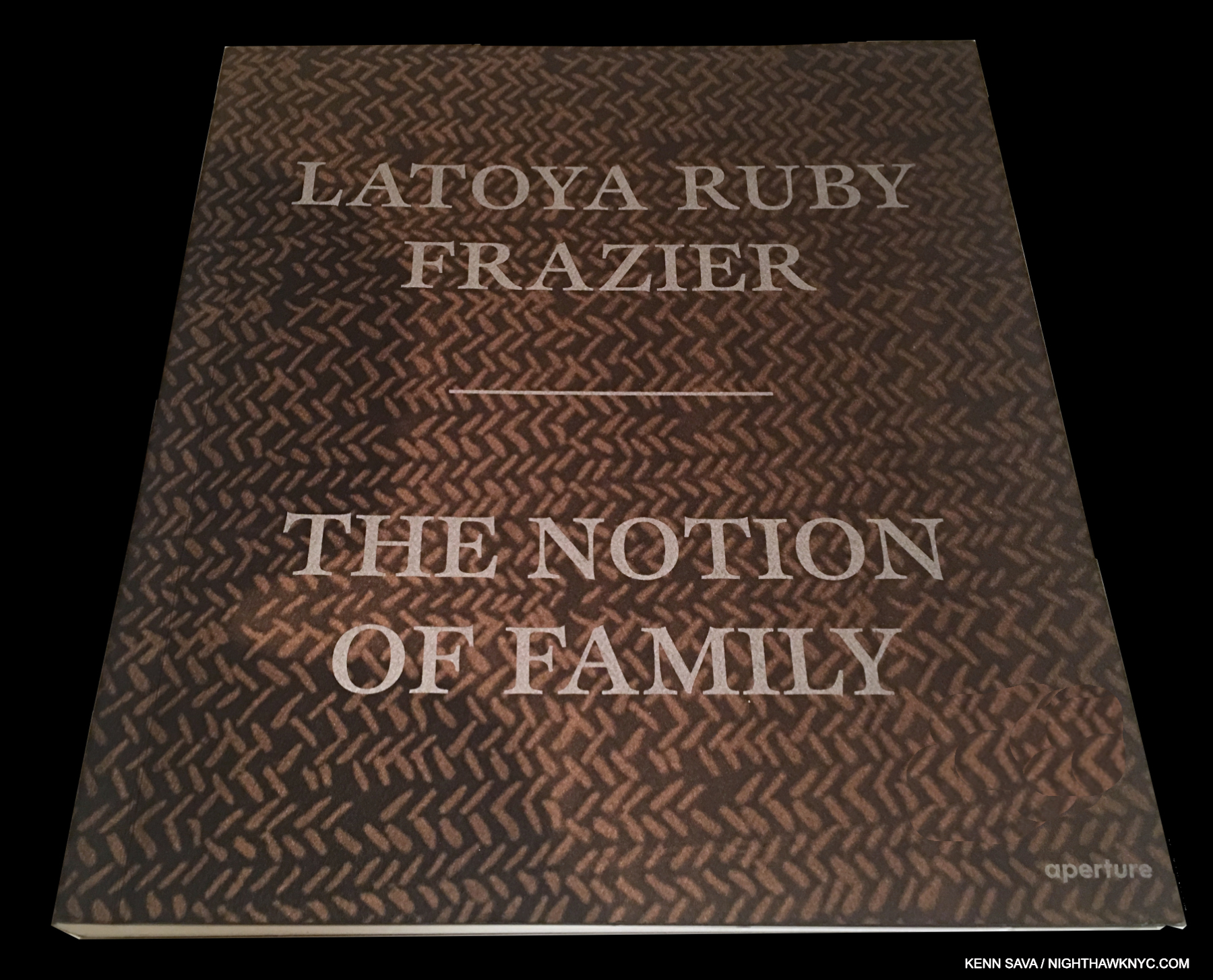
A paperback copy. It was also issued in hardcover.

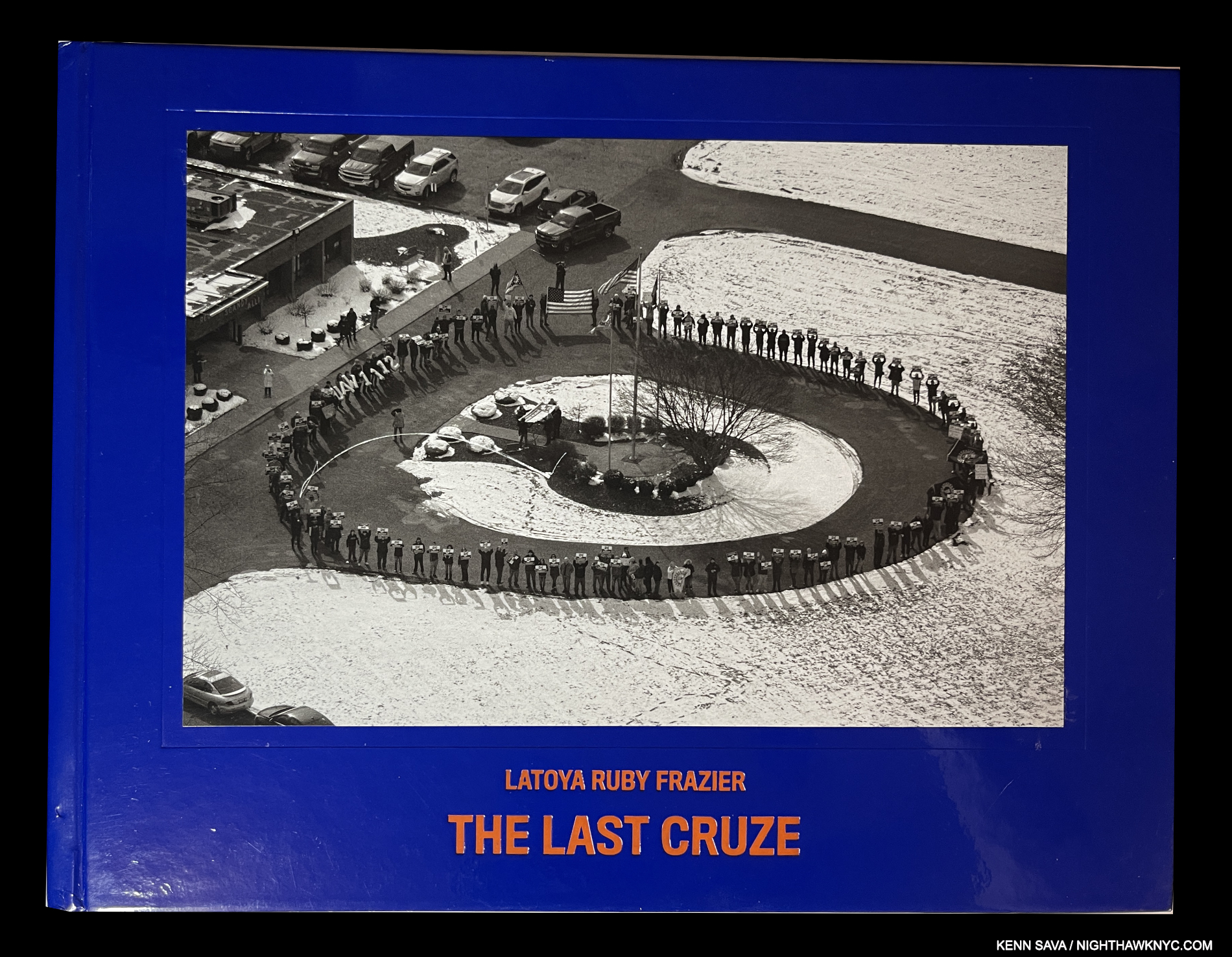
LaToya Ruby Frazier, LaToya Ruby Frazier: The Notion of Family, Aperture, 2016, and
The Last Cruze, Renaissance Society, 2019,
“Family” has played a central role in LaToya Ruby Frazier’s work since its beginning in published form, 2016’s The Notion of Family, focused on her own immediate family and their life in Braddock, PA, where LaToya grew up. That has continued, in my view, ever since in the sense that her subsequent projects often focus on small groups that she looks at big issues with (literally) and through their experiences. The Notion of Family, then, is the touchstone of all that’s come after for one of the world’s most dedicated advocates. Throughout, though, it’s an extremely personal book. The Artist speaks of her love for and devotion to her grandmother, Ruby, as well as that for her mother, both of who endured extreme hardships. We watch as the former passes away amid the crisis of the town’s hospital being closed and then demolished. One of the most extraordinary first PhotoBooks so far this century, it contains both, some of her earliest work, and also introduces the theme of family facing extreme hardship in the world, which has continued in her subsequent books.
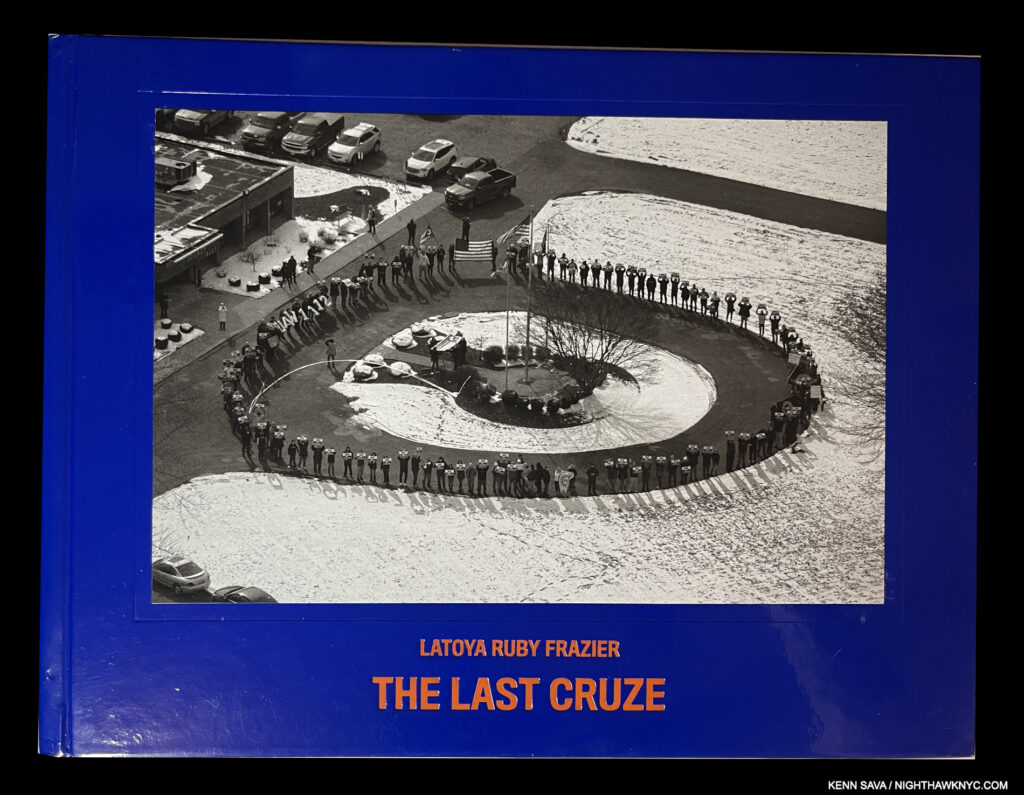
Both are powerfully on display in her monumental, 340-page,  The Last Cruze, her look at the closing of the General Motors plant in Lordstown, Ohio, throwing all its workers out of work. As is what appears to be her standard working method, she brings her subjects into the book beyond their Portraits in the text, making The Last Cruze, at once, that much more personal, and multi-dimensional, and bringing another kind of “family” to the book.
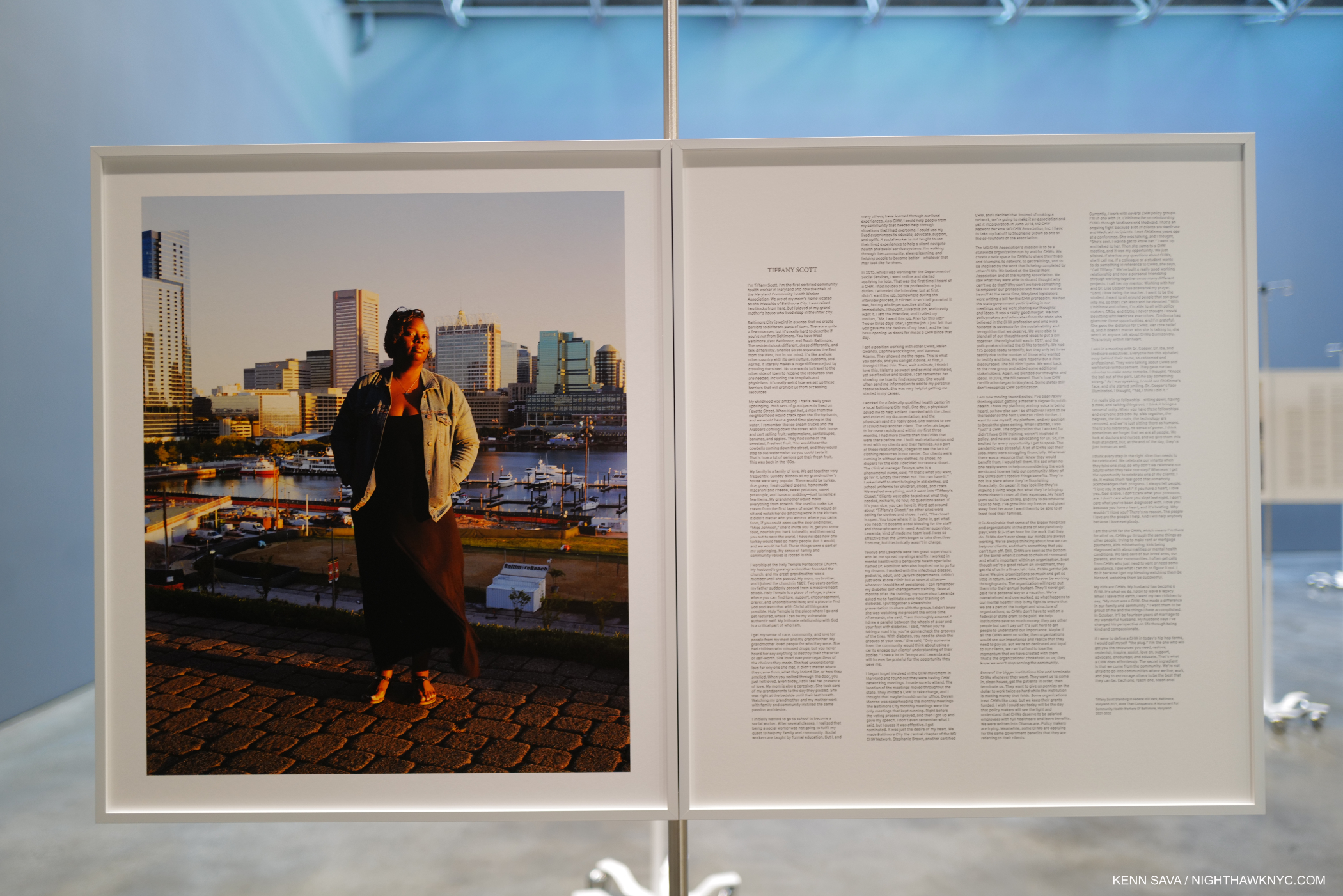
As if these aren’t enough, my piece naming her 2024 early mid-career Retrospective, Monuments of Solidarity, my NoteWorthy PhotoBook of 2024 is here. My look at her spring, 2023 Gladstone Gallery show, featuring her work on the Baltimore Health Community, is here.
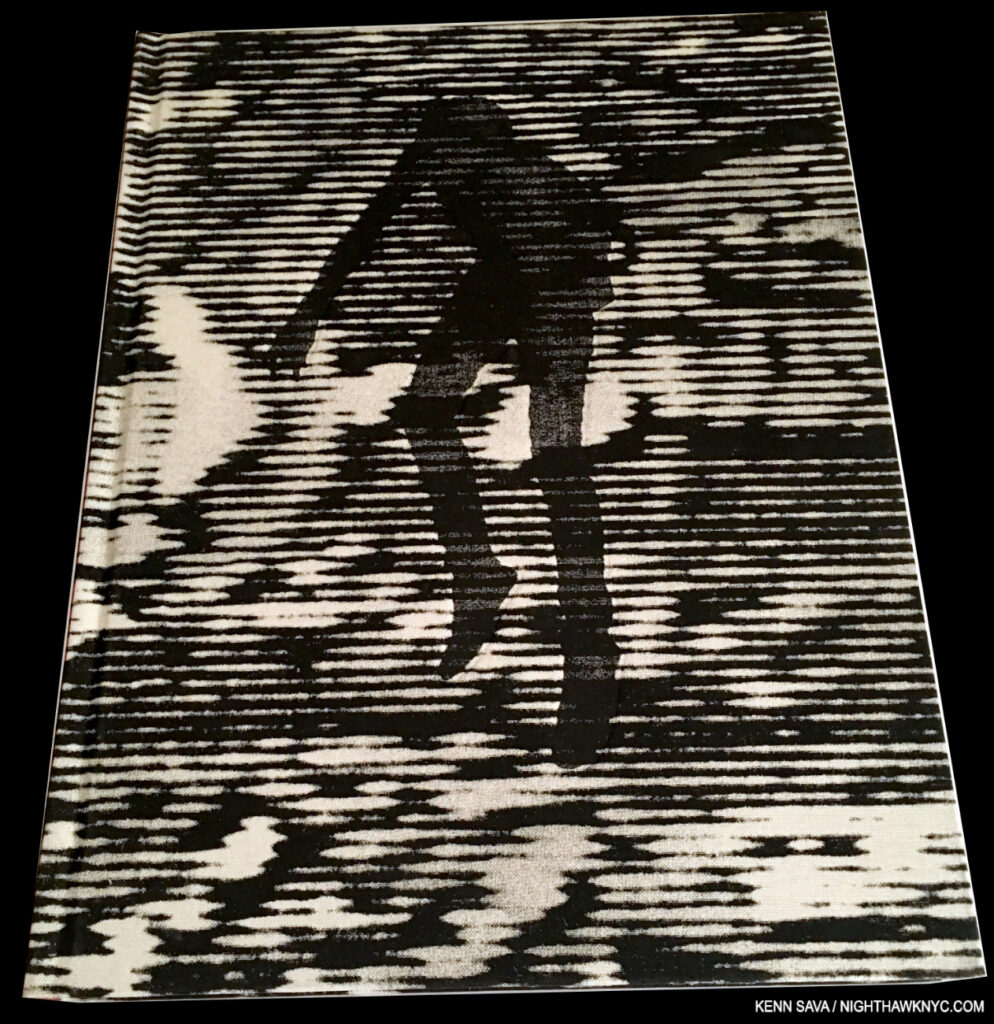
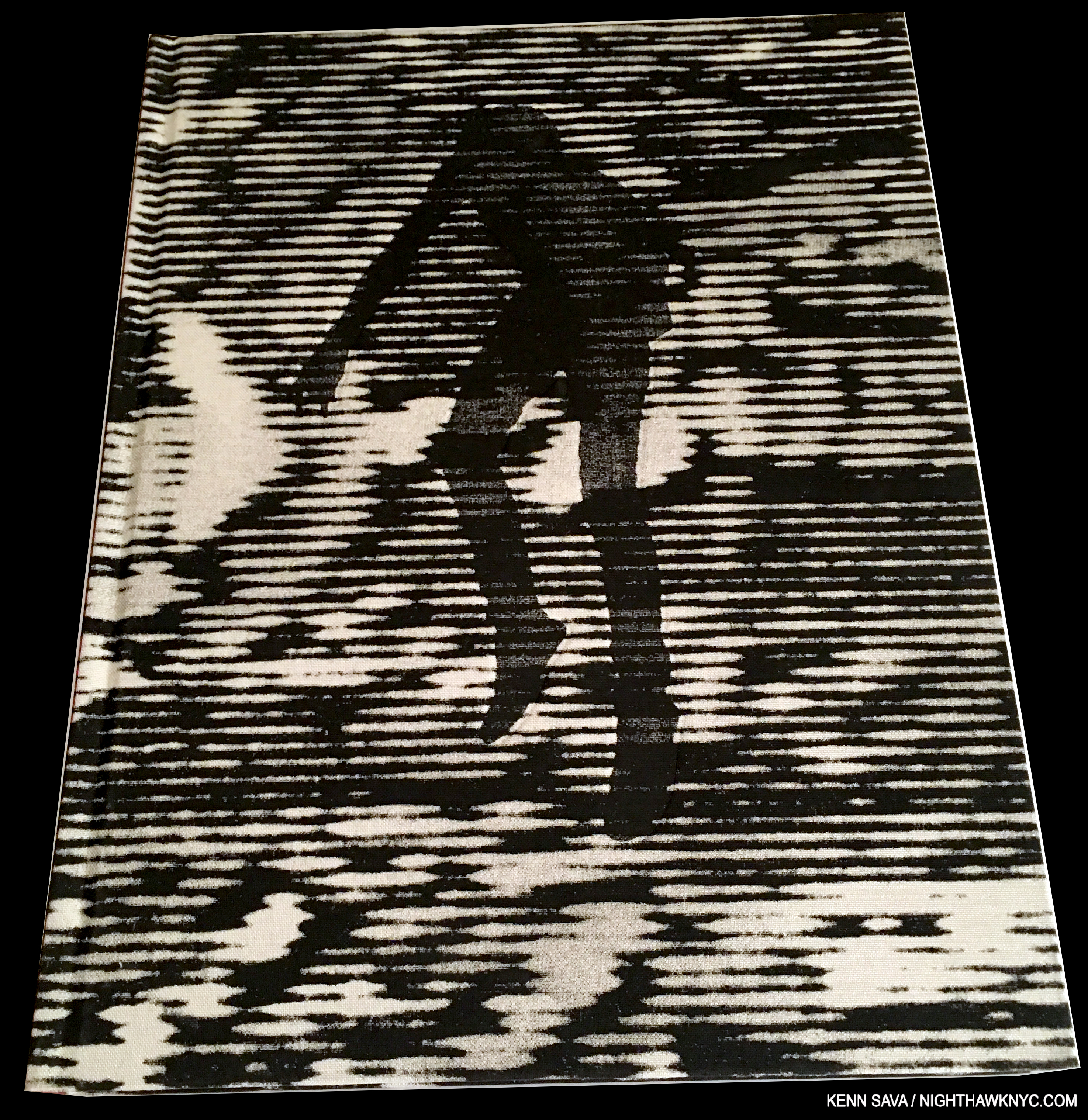
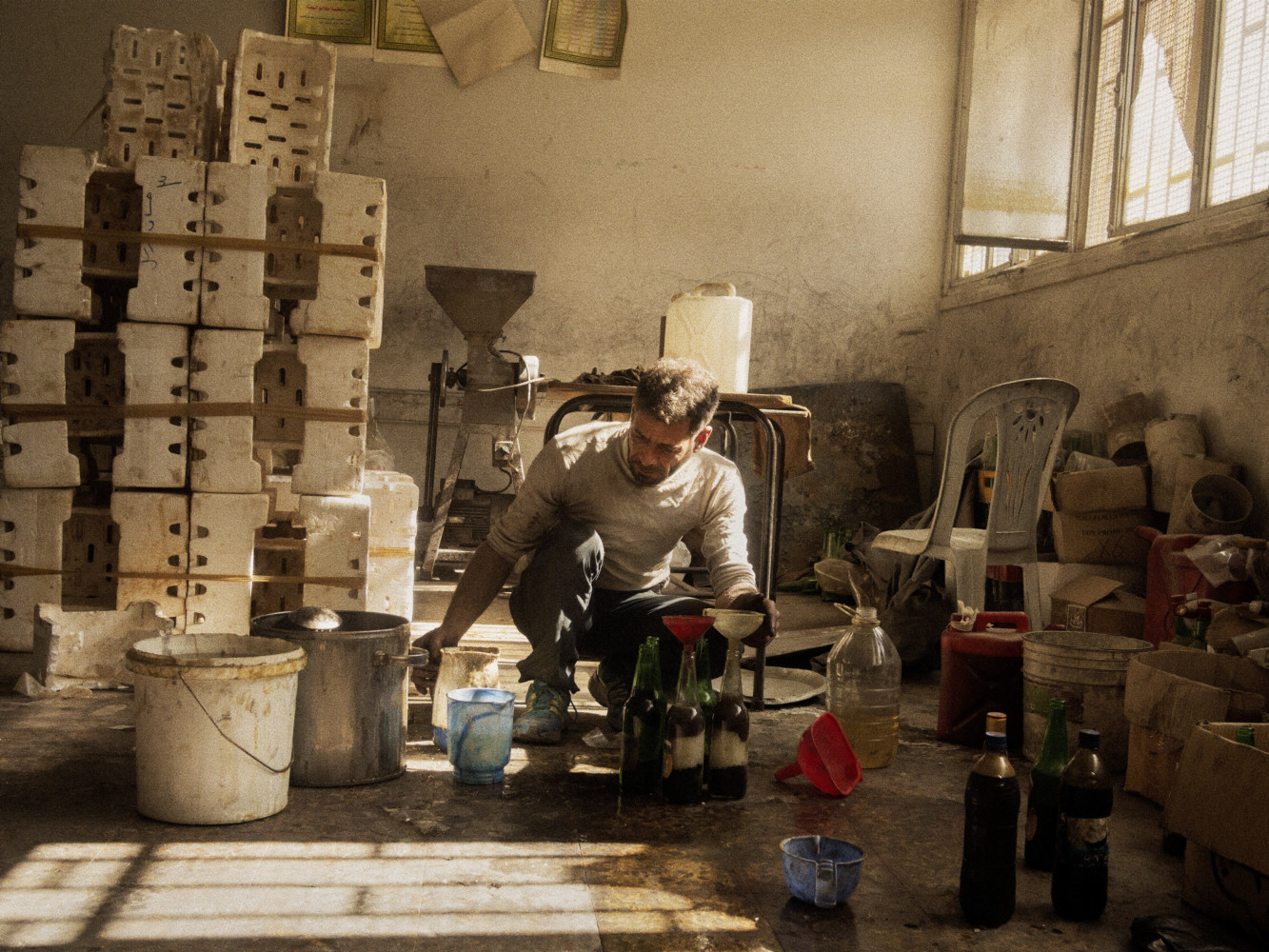
Moises Saman, Discordia, Grafiche Antiga, 2016
A stunning document of the Revolution in Iraq and the Arab Spring, Discordia is now a classic. A book that puts the letter to “first-person account,” to the point of downplaying Mr. Saman’s injury when a helicopter he was in crashed. The most chilling image for me is the 2-page spread of a bomb maker AT WORK! Now, if someone said to you, “Hey, want to come with me and watch while I build a bomb?,” are you down? Mr. Saman was.
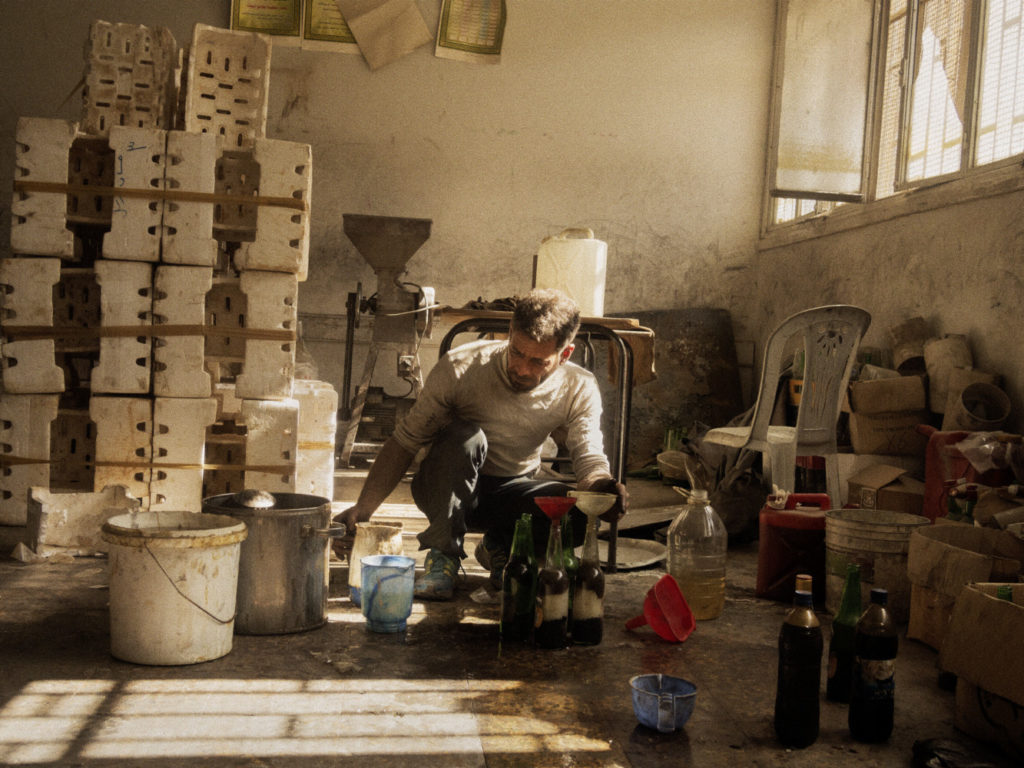
Moises Saman,  A bombmaker working for the rebels mixes chemicals in a makeshift bomb factory in a rebel-held district, Aleppo, Syria, 2013.

He not only survived, thankfully, he got a heart-stopping Photo from it. When I met, Moises, after communicating with him by email while buying a copy of Discordia, I was impressed by how down-to-earth, and considered, he is. He’s not some hellion itching to risk life and limb to get a daring shot. Instead, his Photo reflects this consideration, from its composition and lighting to what’s included. It’s taken from a low level- the same as the bomb-maker’s, who’s squatting over his chemicals- the camera is not looking down on him, which might be judgemental or give a sense of being ready to flee. I come away feeling that Mr. Saman was in for an ounce, and in for a pound.
It’s no surprise that he has earned a lot of respect from his peers, as I’ve found in numerous conversations when his name came up without prompting. Discordia is now out of print, and, unfortunately, it’s a seller’s market for any copy that becomes available.
My look at Discordia is here.
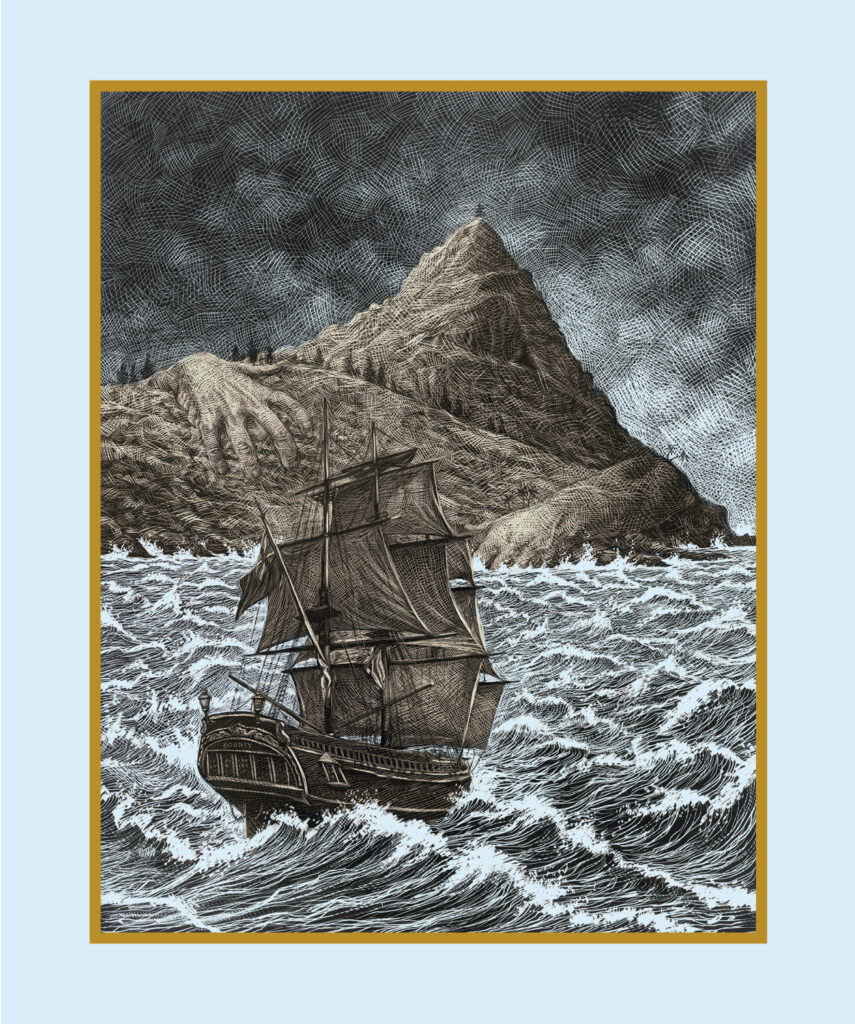
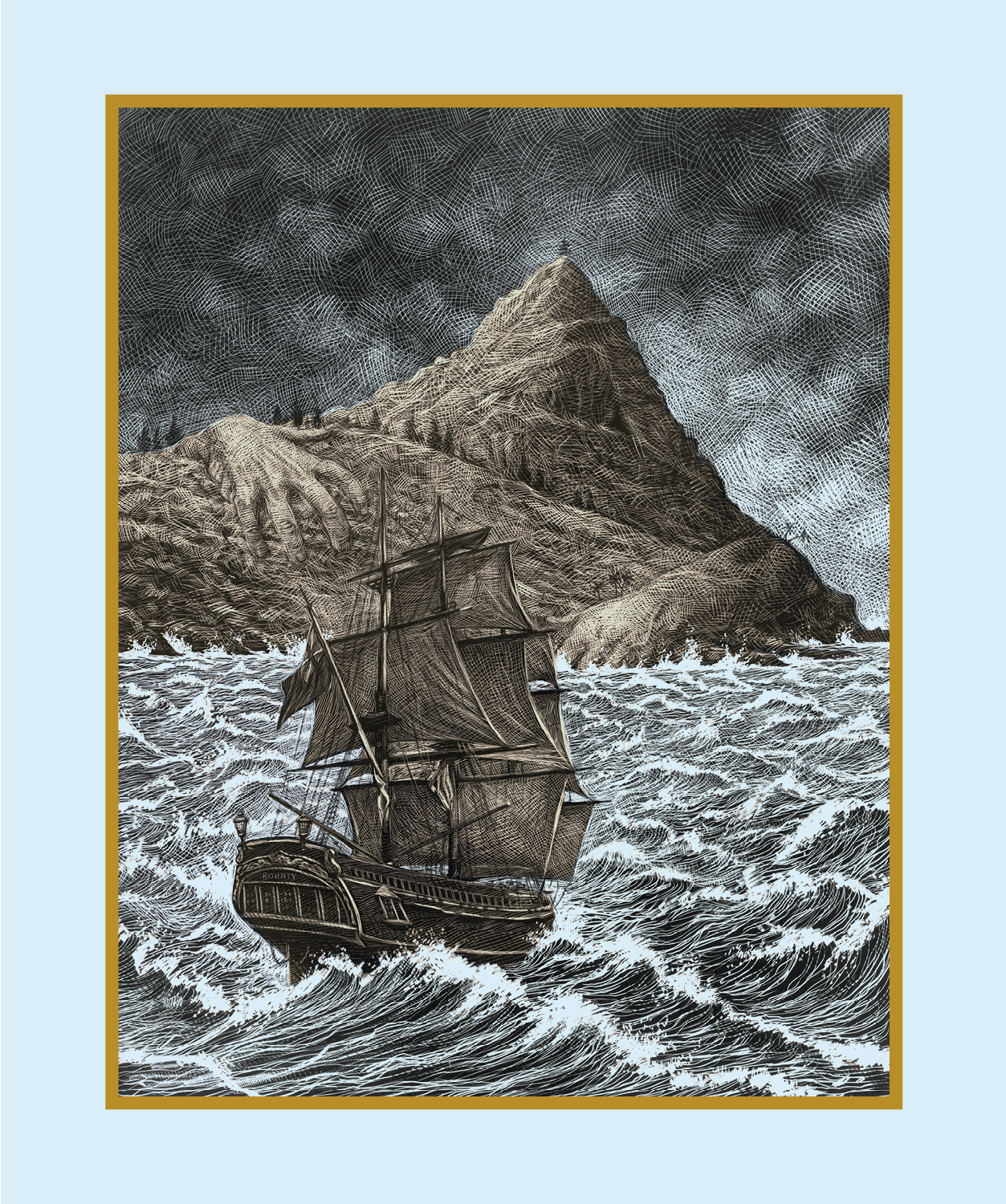
Big Fence/Pitcairn Island cover Drawing by Ricardo Martinez Ortega. Does this look like the kind of place you’d want to be trapped on for 96 days with a number of convicted sex offenders and no way out? Rhiannon Adam was. *-Rhiannon Adam Photo

Rhiannon Adam, Big Fence/Pitcairn Island, BLOW UP PRESS, 2022
I don’t know what’s more remarkable about this book- the extreme risk the Photographer took realizing this project or the resulting Photographs she made. Pitcairn Island is one of the most isolated places on Earth that is not snow-bound. A British Colony located in the South Pacific founded by Fletcher Christian and the other mutineers of the legendary “Mutiny of the Bounty,” it measures a scant 2 miles by 1 mile! It’s home to about 50. While the setting might seem idyllic to some, bringing fantasies of white beach and swaying palm trees, Rhiannon’s Photos reveal an island made of volcanic rock that suddenly juts out of the sea. “In 2004, this façade slipped, when a series of child sexual abuse allegations emerged. The British investigation, Operation Unique, uncovered decades of abuse. Abuse that had been festering in plain sight. The Pitcairn trials led to the convictions of eight Pitcairn men, including several former island officials and the then-mayor Steve Christian, whose home, ‘Big Fence’, forms the title of this project. In 2015, Rhiannon Adam, inspired by a childhood gift of The Mutiny on The Bounty and a desire to capture the island’s fragility on expiring analogue film, made the long journey to Pitcairn Island. Due to the quarterly shipping schedule, she remained trapped on the island for 96 nights. Naturally suspicious of ‘journalists’, Pitcairners were, on the whole, reluctant to be involved in Adam’s project. Throughout the book, subjects mostly appear alone, photographed in solitude and away from prying eyes,” per the publisher. Ms. Adam used their reluctance to focus on other evocative sites, which opened up new possibilities for the end product, and the book’s design was born. Including all sorts of related materials from her archive that conspire to create a book that is close to being as impenetrable as its subject yet stunningly beautiful.
Rhiannon has been a renowned Polaroid authority since the publication of her book, Polaroid: The Missing Manual, The Complete Creative Guide, 2022. Here, she shows  the viewer just what the instant format can do in the hands of a visionary Artist complemented by a very innovative design by Aneta Kowalczyk and the Artist. In case you’re worried, Rhiannon made it out safely. When I met and spoke with her last spring, she had moved on to another very compelling project, after a trip to the moon she had been selected for(!) fell through, in yet another faraway land. Stay tuned!
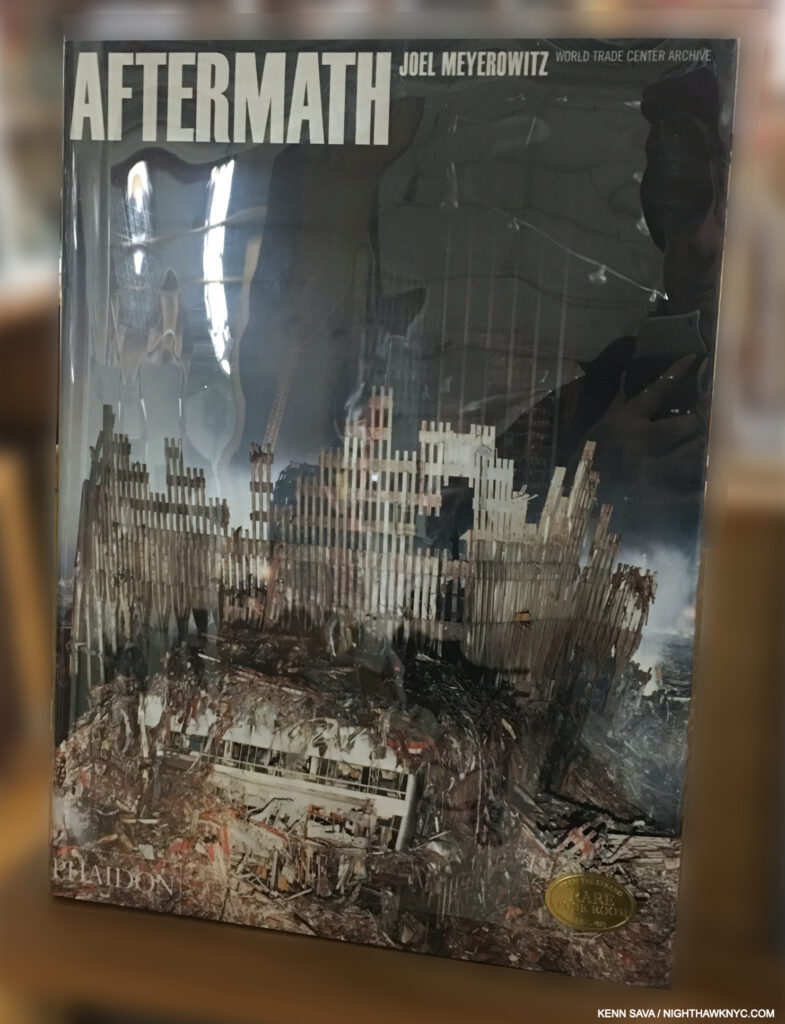
A huge 15 by 11 inches.

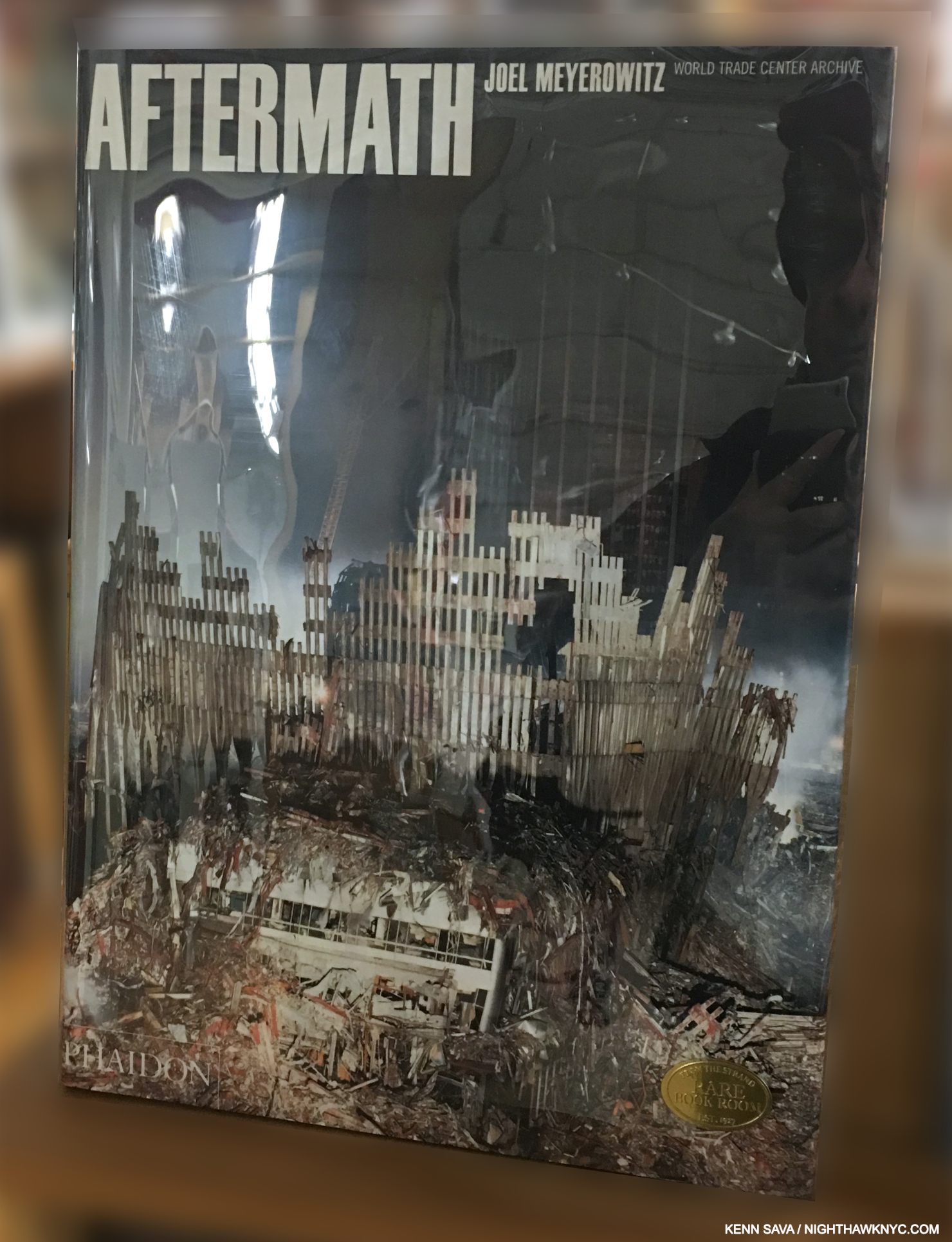
Joel Meyerowitz, Aftermath, Phaidon, 2006
HOW I could have lived here during 9/11, watched it going on with my own eyes from the street, and experienced all that came later (as I wrote about here) and not include this book? The only Photographer permitted complete access to Ground Zero, Mr. Meyerowitz has given us the essential Photographic record of just what the title says- the aftermath of the indescribably  horrific attacks. Looking at the destruction, which only those working on the site could see close-up, is still hard, like looking through Robert Pillodori’s After the Flood, on the aftermath of Hurricane Katrina. In those Photos, the houses are largely still standing. Here, there is total destruction, which is STILL hard for me to wrap my brain around, having spent time in the buildings experiencing HOW massive each of them was. I think it’s impossible for anyone who was never inside the World Trade Center to get how MASSIVE each was. Each floor was an acre! An acre! Times 110. Times two. As time goes on, and the events drift further and further into the past (it’s hard to believe it’s 23 1/2 years ago already), Aftermath will remain the definitive record of this part of the tragedy.
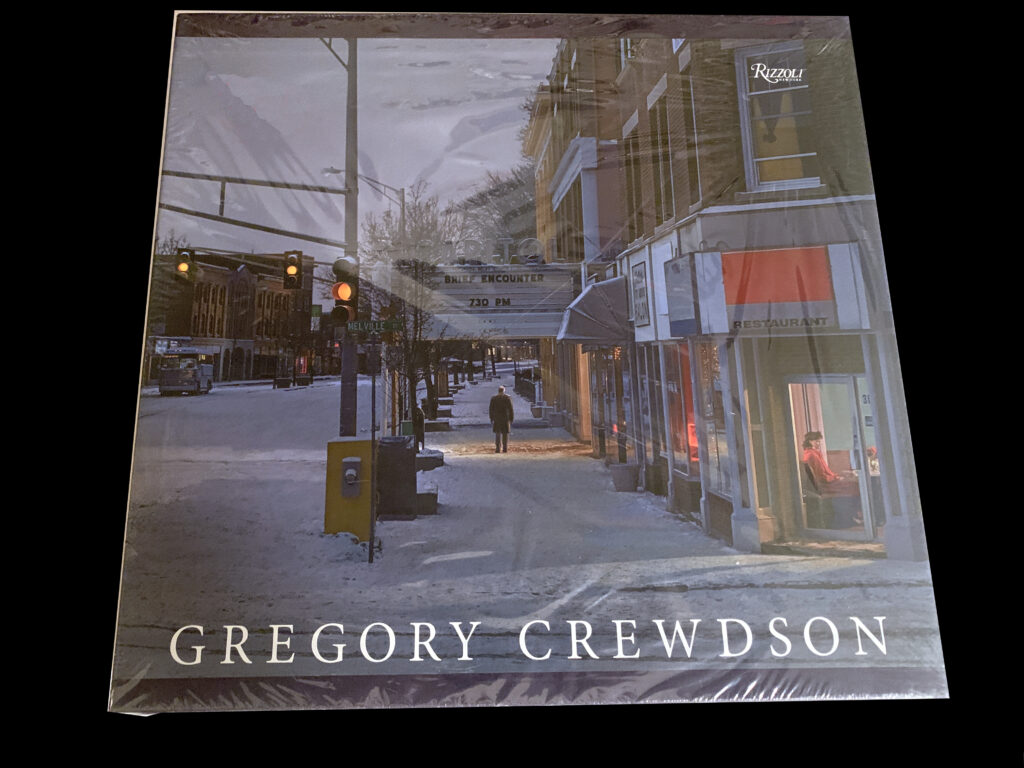
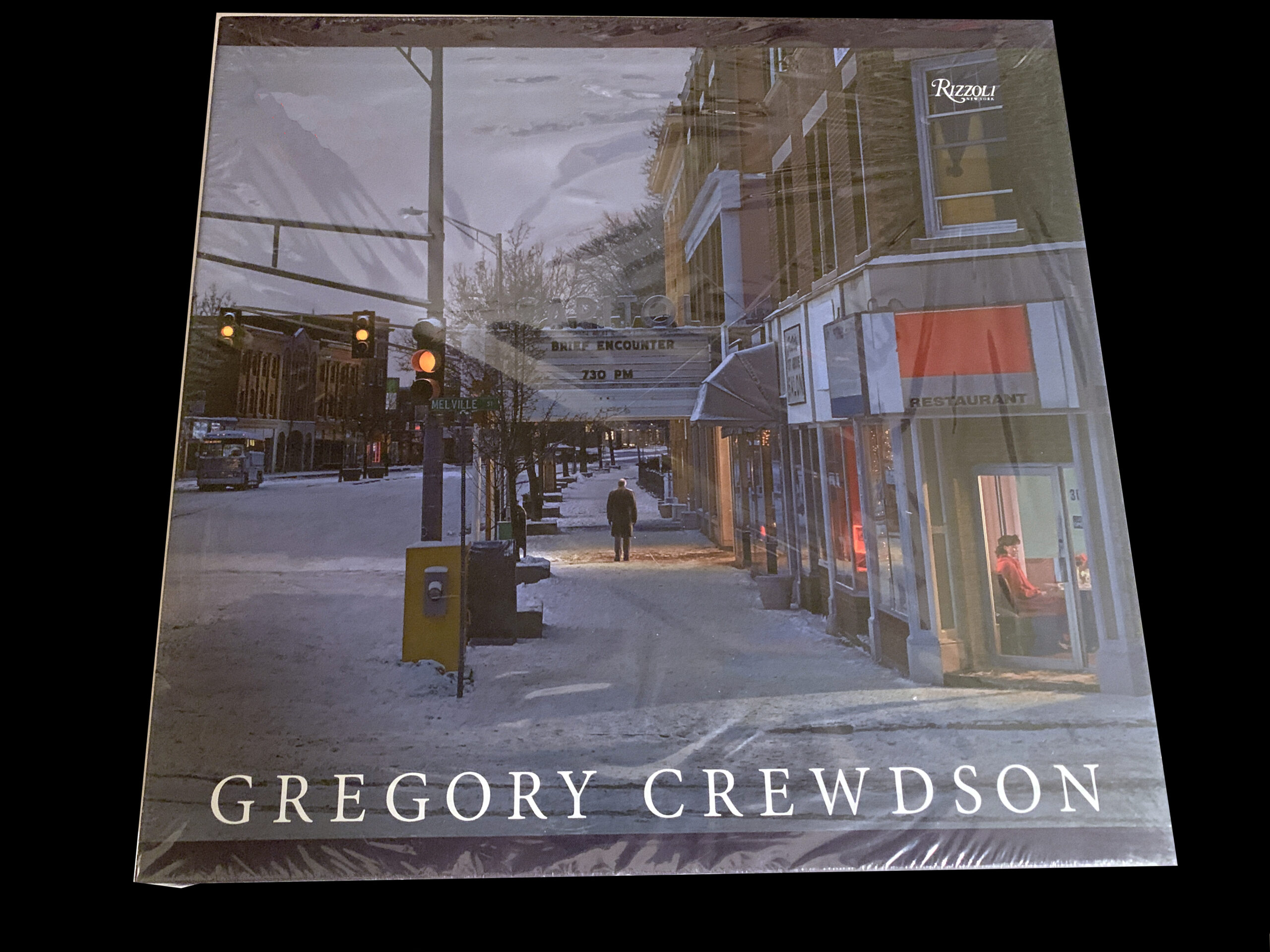
A rare shrink wrapped copy of the book in its slipcase.

Gregory Crewdson, Gregory Crewdson, Rizzoli, 2013
A model mid-career Retrospective, the attention to detail in Rizzoli’s Gregory Crewdson is matched only by that Mr. Crewdson and his teams put into making the work.
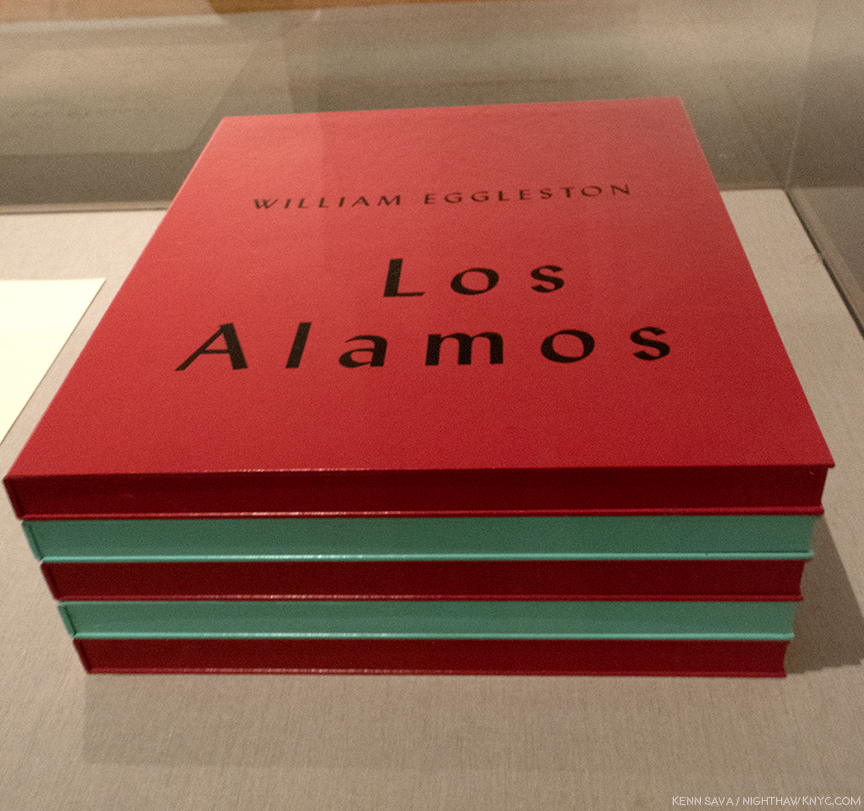
This is NOT the set listed! This is the set it was created from. With only seven sets produced (and 3 Artist’s proofs), I’m including this instead of the set I’ve listed because you’ll likely never see it again. Each of the boxes contain 15 Dye=transfer prints. This set, in pristine condition, is a promised gift to The Metropolitan Museum, who showed the 75 Dye-transfer prints it contains, complete, for the first time ever,  in 2018.

William Eggleston, Los Alamos Revisited, Steidl, 2012
When I interviewed him in 2018, the renowned Photographer Harry Gruyaert said he felt the number of books Steidl has printed on William Egglieston was excessive (my paraphrase). Love them, or not, this 3-volume set is the best of the sizable bunch, in my opinion, a fact the show of the same name at The Metropolitan Museum in 2018, which I wrote about here, reinforced. Out of print now, I fully expect Steidl will reprint it one day as they did Chromes after a long absence. The absence of Chromes seems to have made many hearts grow fonder, but Los Alamos Revisited is the more important set, in my view, and a terrific place to experience the beauty of Eggleston’s legendary dye-transfer prints.
My look at William Eggleston: The Democratic Forest, show at Zwirner in 2016, the show that launched my “deep dive” into M&C Photography 8 1/2 years ago is here.
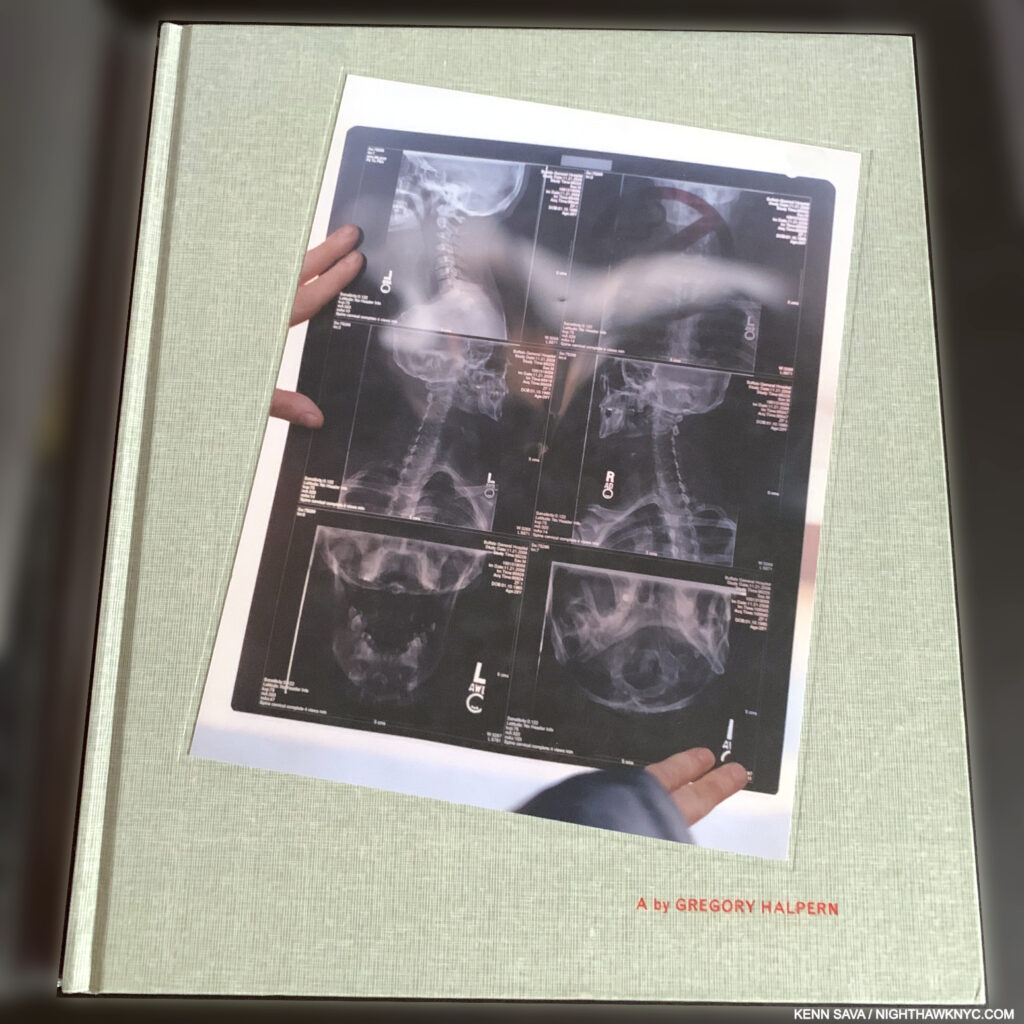
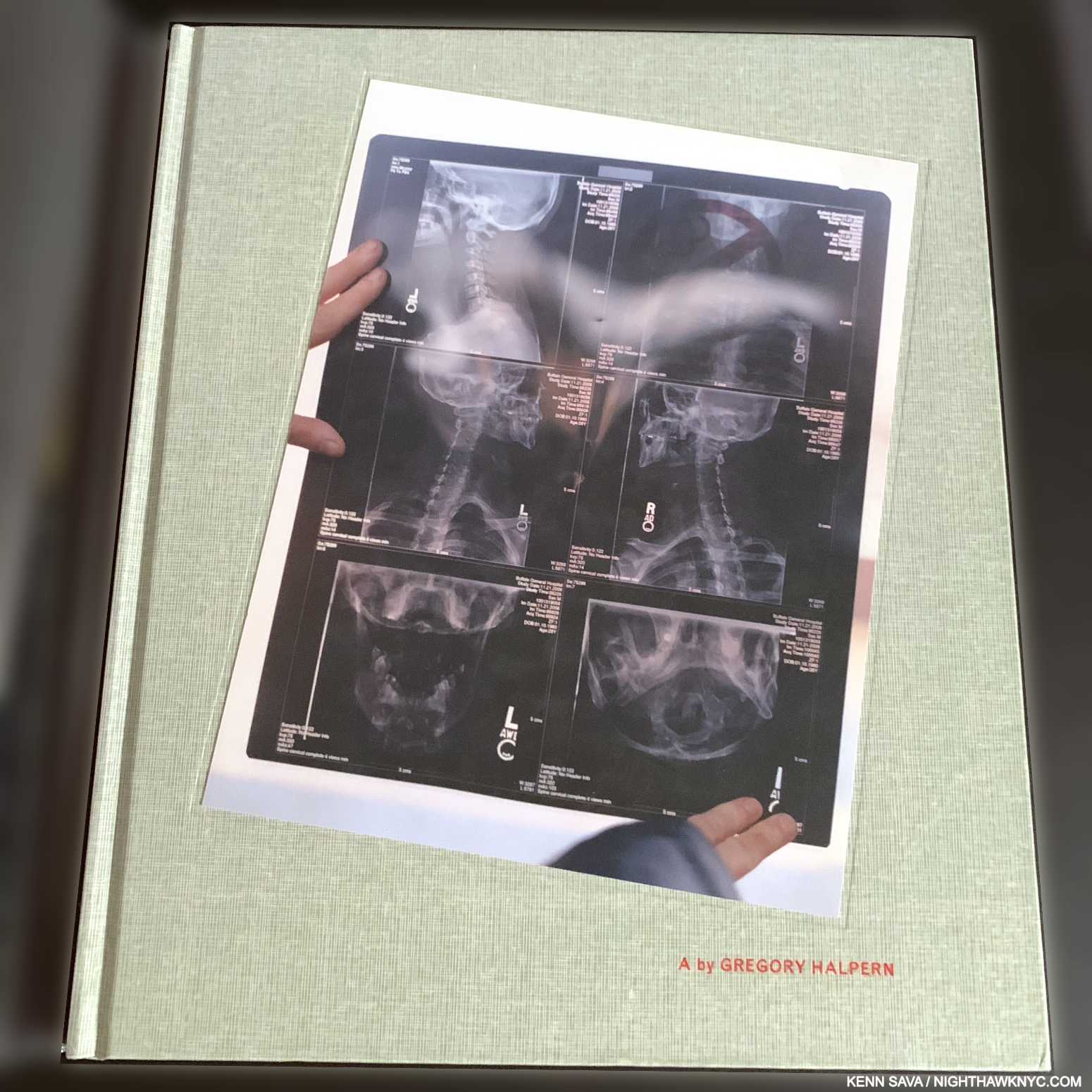
A by Gregory Halpern, 2011, may not be as familiar as his two other books on this list.

Gregory Halpern, A, J&L Books, 2011, and
ZZYZX, 2016, and
Omaha Sketchbook 2019 (reissued and expanded in 2025), the latter two both Mack Books
A’s edition size of 1,000 left many of the fans Gregory Halpern gained after ZZYZX struck a nerve and became a sensation five years later unable to see it. That’s a shame because it’s equally remarkable and full of strong images that linger in the mind after the cover’s been closed. There are Photographers who are “book Artists,” and those who are “wall Artists.” I don’t know which camp Mr. Halpern feels he’s in (my bet would be a book Artist), but I’d hate to have to live on the difference; his work succeeds remarkably well in both camps. Taken as a book, A has a “freshness” to it, a feeling of something new (which it was being his first full-length PhotoBook), and the “edge” ZZYZX has.
Mr. Halpern’s strength as a book Artist can be seen in one small way- each of his books beginning with ZZYZX has been on my NoteWorthy PhotoBook lists. The only other Photographer who shares such a long-running string on my lists is Rosalind Fox Solomon.
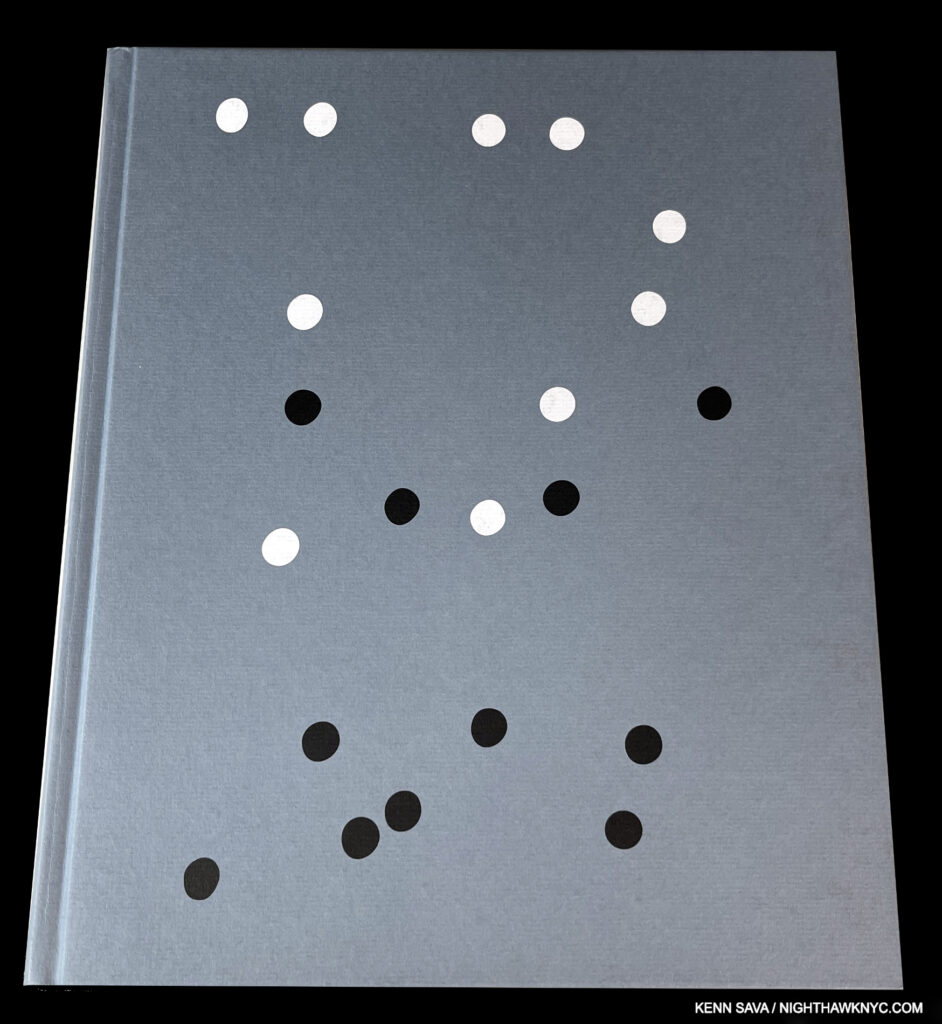
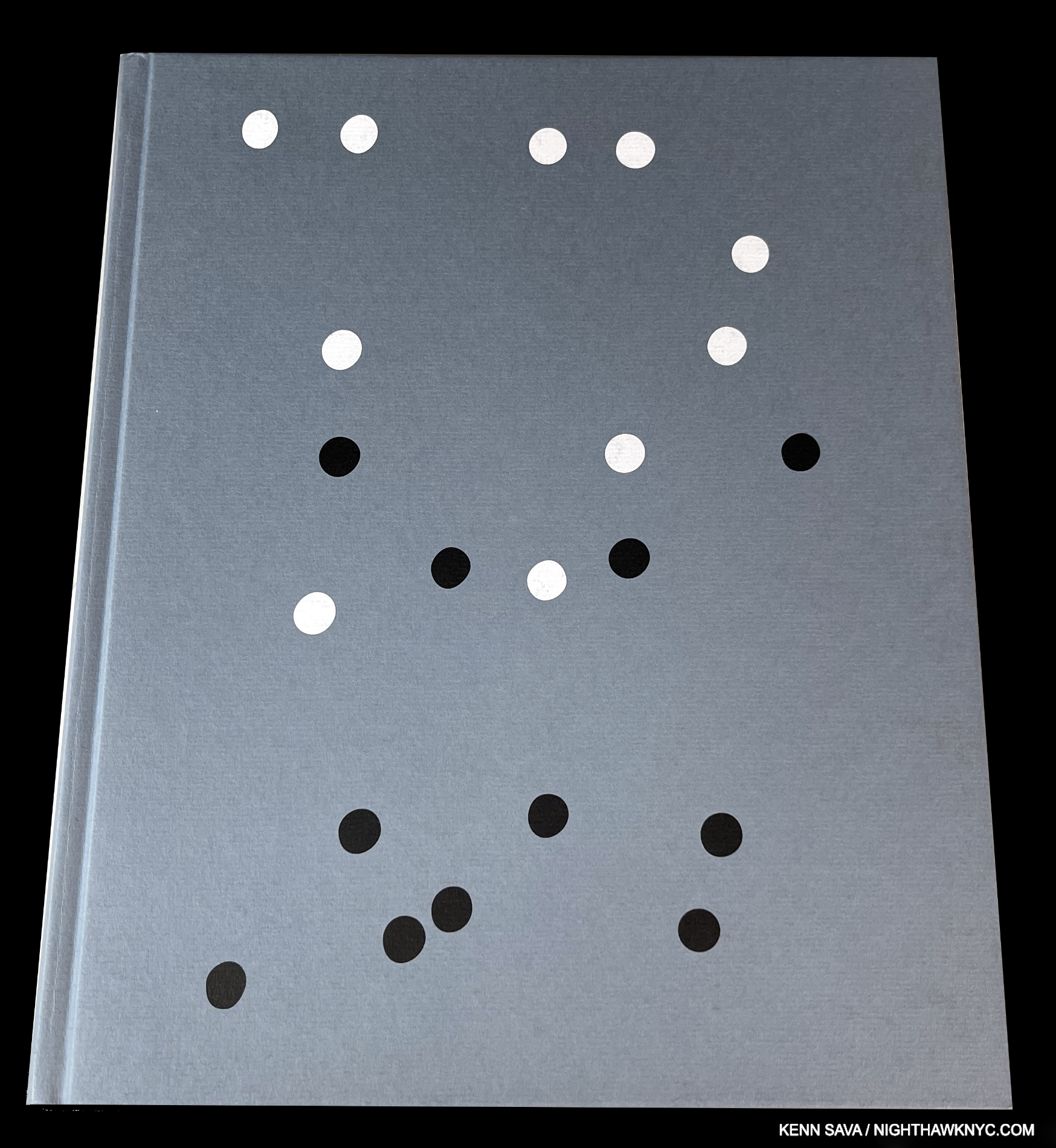
ZZYZX

Of all the books I’ve seen since, more of them have been seemingly influenced by ZZYZX than any other book besides The Americans. That’s just one reason ZZYZX is THE PhotoBook of the 2010s, in my view, and an instant classic. Omaha Sketchbook had been originally published in 2009 in an edition of 35 copies. Mr. Halpern graciously showed me his copy of it at the NYC book release for the 2019 Mack edition and it was absolutely riveting to see both of them.
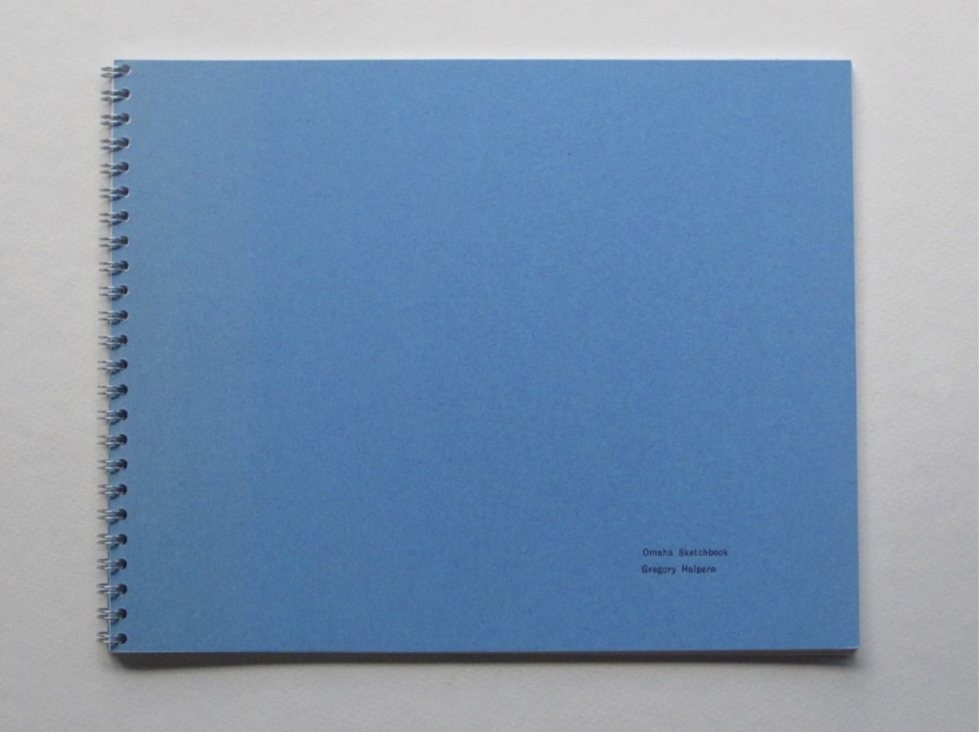
The first iteration of Omaha Sketchbook, published in 2009 by J&L Books in an edition of 35 copies. Photo from @Gregoryhalpern

A succinct look at a large place turned more expansive, yet more nuanced. It, too, struck a nerve with a lot of folks since it sold out quickly. I received quite a bit of mail regarding Omaha Sketchbook after I named it a NoteWorthy PhotoBook of 2019. Some reader/Photographers wanted to see larger images, some complained about the book being a paperback. Personally, I love the unique “sketchbook” concept, with images reproduced from medium format contact sheets, however, I will say that in my experience the paperback didn’t wear well. I saw copies in stores that looked like used phone books. Buckle up! The 2025 edition, with 35 additional images, will be a paperback. Don’t let that stop you from experiencing a PhotoBook that is truly ground-breaking in many ways, especially being a look at a place unlike any I’ve seen. Along the way, it reveals Mr. Halpern’s excellence as a Portraitist, something he still doesn’t get enough credit for, it seems to me.
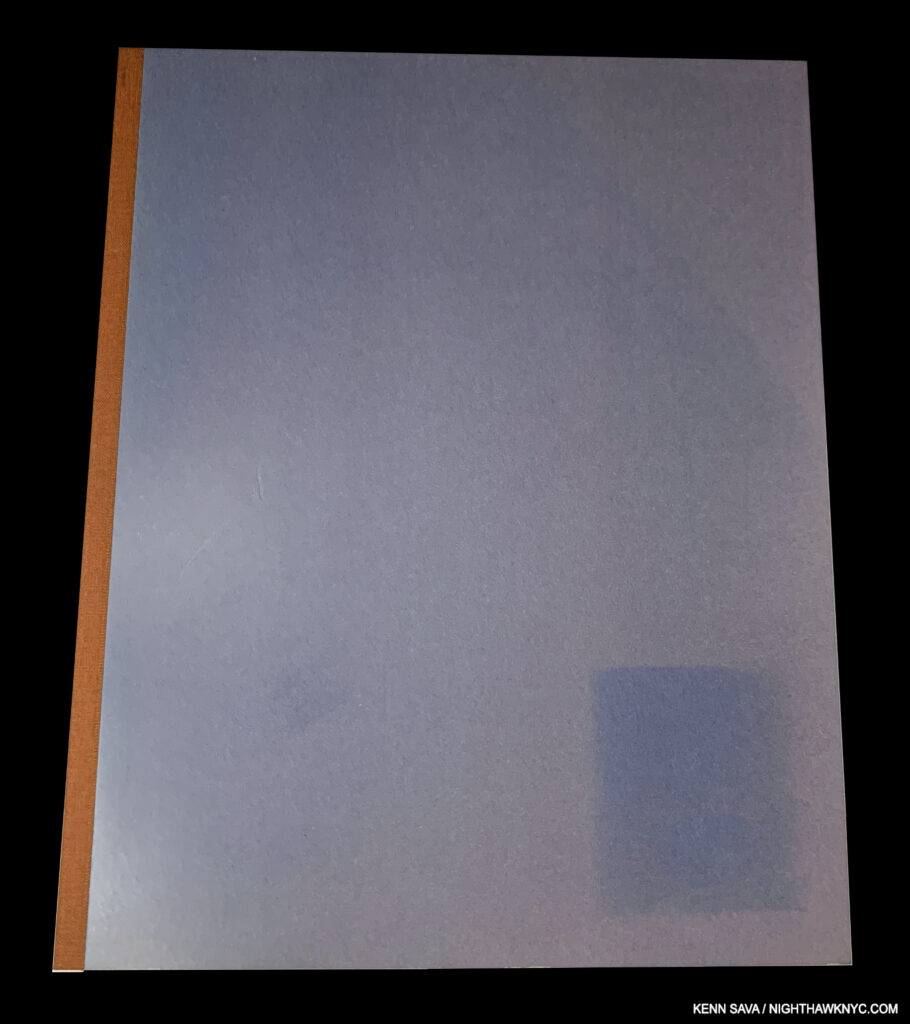
Omaha Sketchbook, first Mack edition. When I went to the NYC book release in 2019, rushing from Henry Taylor’s opening, I passed a couple on the stairs. One turned to the other and said, “Hey, I want to check out the Omaha Steakbook event.” I just kept going before he took my seat!

My overview of the PhotoBooks of Gregory Halpern, “Gregory Halpern’s America,” is here. My piece naming Omaha Sketchbook a NoteWorthy PhotoBook of 2019 is here. My Halpern’s other recent PhotoBooks (Confederate Moon and Let The Sun Beheaded Be have each been a NoteWorthy PhotoBook of the Year- in 2018 and in 2020, respectively. I didn’t do a list before 2018.

NoteWorthy Photography Exhibition Catalogs  of the 21st Century-
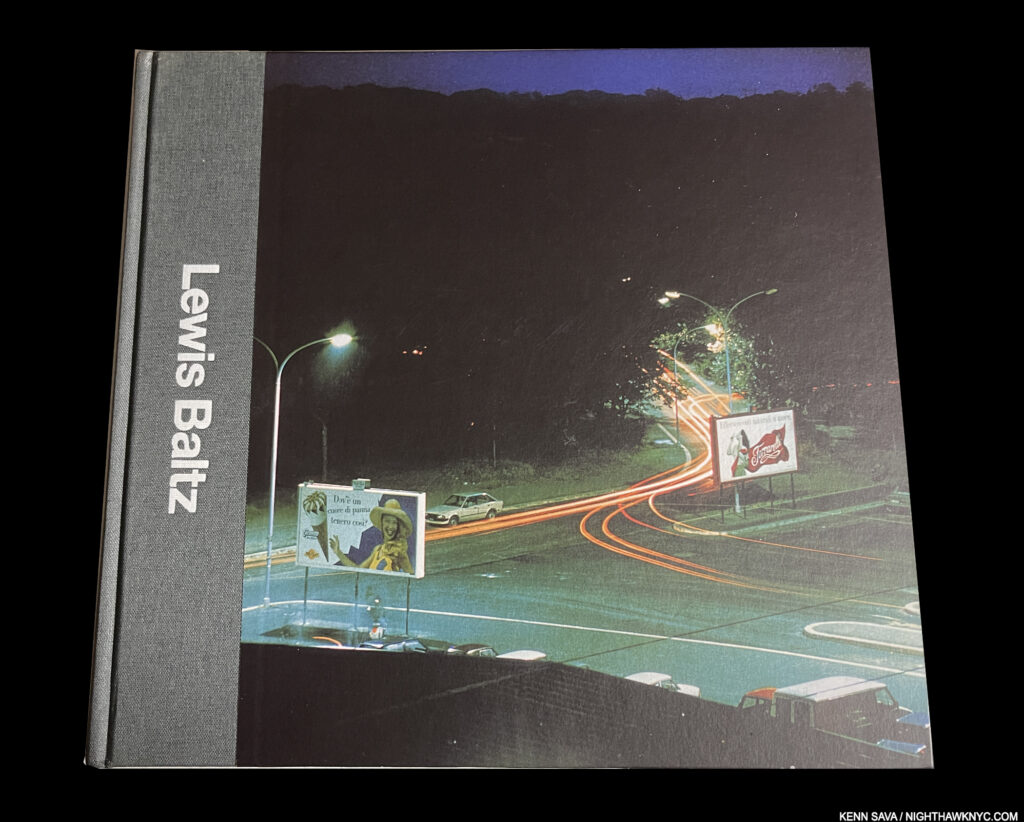
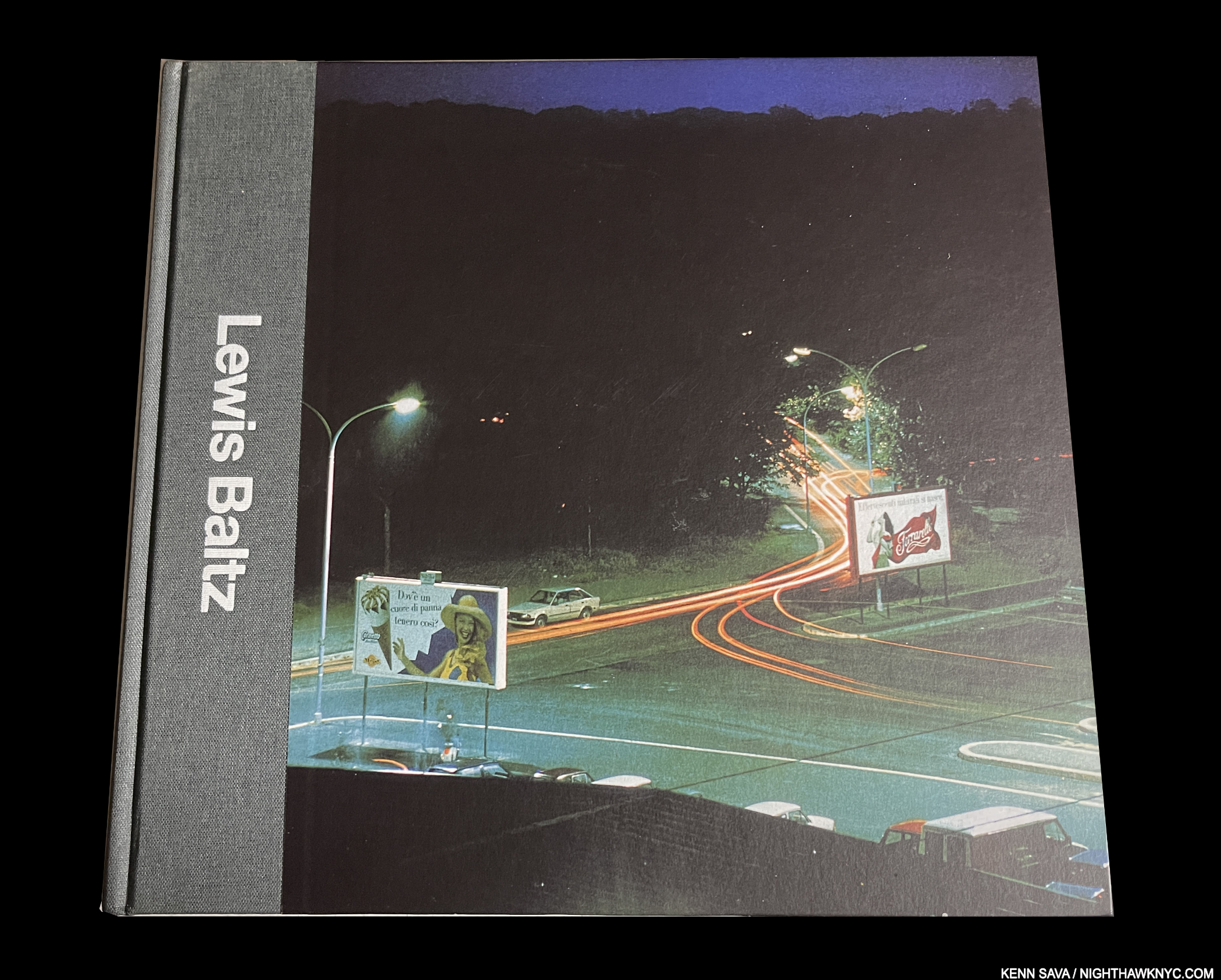
Lewis Baltz, Lewis Baltz, Steidl, 2017
Lewis Baltz seems to have fallen into eclipse since his passing, which is beyond a shame. A good many of his terrific Steidl books and the collected set, titled Works, are out of print. So is this excellent Retrospective, published in 2017 by Steidl and MAPFRE, Madrid, to accompany the first large Retrospective of his work following his passing. I don’t know why it didn’t come to U.S., but that’s another shame. WHERE is his U.S. Retrospective? Thank goodness for this excellent catalog. 330 pages and over 600 images reveal that Lewis Baltz has much to teach us and say to us in 2025. Of course I’d recommend Works, which Mr. Baltz personally oversaw, as the definitive resource on his singular, hugely influential work. If you have the funds? That’s the way to go, but being composed of reissues, it’s ineligible for this list. Short of them, this one-volume overview is the best resource and most essential, in my view. Reasonably priced copies are still around-at least at the moment.
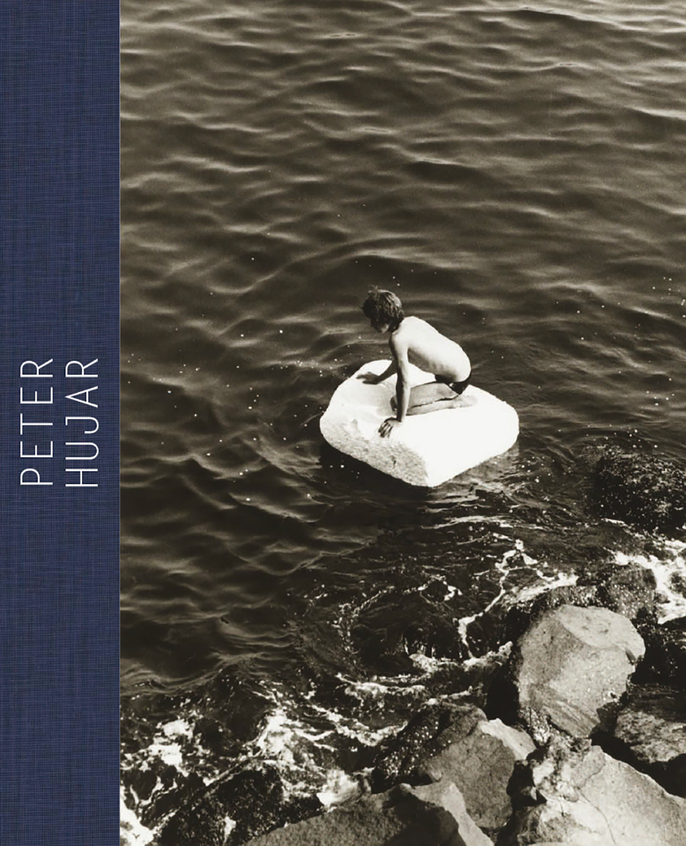
*- Fundación MAPFRE Photo

Peter Hujar, Peter Hujar: Speed of Life, Aperture/Fundación MAPFRE/Morgan Library, 2017
It’s fascinating to me how ahead of his time, yet of our time, Peter Hujar’s work looks to me, and apparently a good many others. The crowds that saw this excellent show in its Morgan Library incarnation certainly felt it, and I imagine those did in the show’s three other stops over 2017 and 2018. Why his work fell into eclipse so long and so deeply is a shame, but since Speed of Life, a few excellent Peter Hujar books have appeared. In my opinion, this is a great place to start. 50 pages of essays are followed by a 160 plate section of work from all through his career. Mr. Hujar worked in a wide range of realms, though he may be most highly regarded for his Portraits. All of his work features his trademark high contrast mastery of 256 shades of grey, and his gifts for composition. Looking at his Portraits, I’m reminded of the quote I included in my listing of Euan Uglow: The Complete Paintings in NoteWorthy Art Books of the 21st Century– “Nobody has ever looked at you as intensively as I have,” Mr. Uglow told one of his models in 1988, while Mr. Hujar was hard at work 3,500 miles away. I don’t know if he felt that way, but his results reveal an uncanny insight. Among Photographers, his Portraits have a similar effect on me as the great Dave Heath’s do.
While Robert Mapplethorpe went on to Art superstardom, it’s hard to look through Speed of Life and wonder why Peter Hujar hasn’t. Slowly, but surely, his work is rising in attention and stature, though it still has a ways to go, in my view, to reach the level of acceptance it deserves.
Currently out of print, I have it on authority that it is being reprinted, so wait for the next printing before buying.
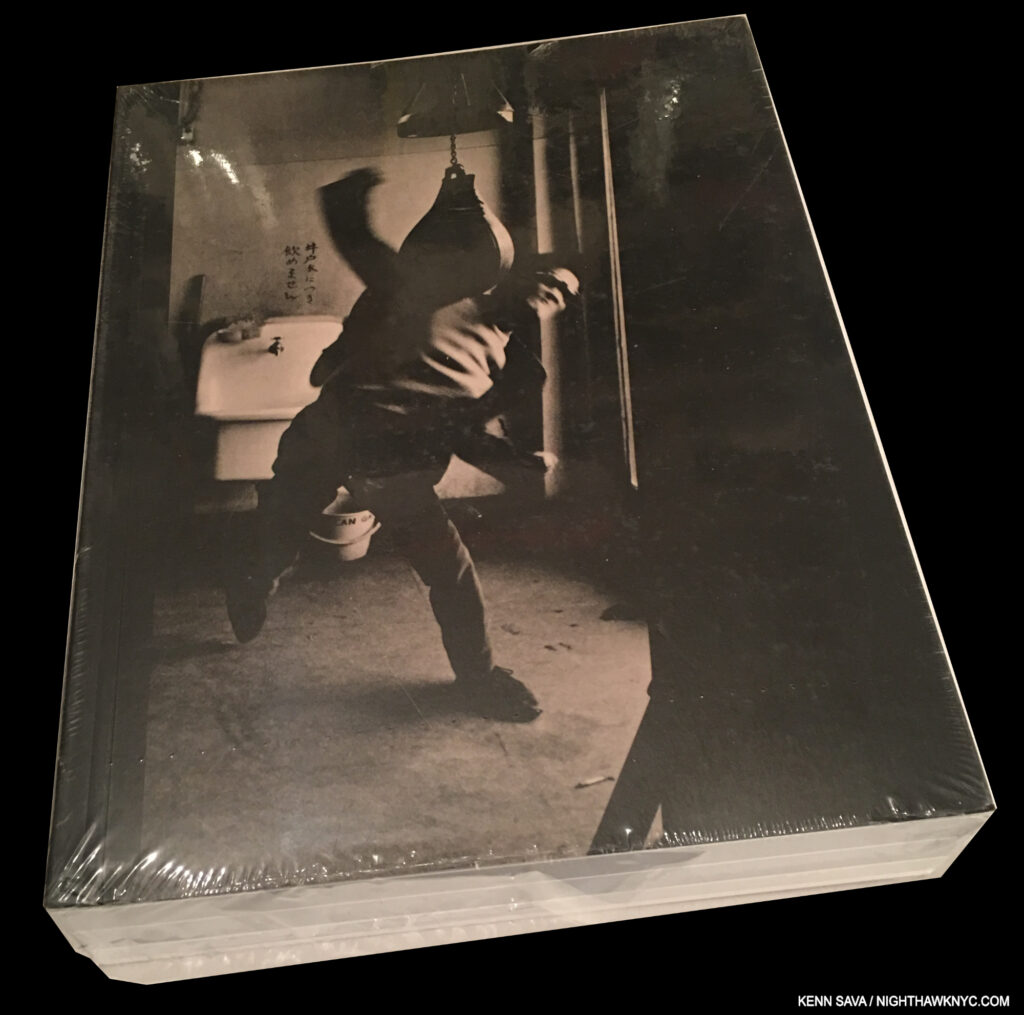
Takuma Nakahire, Yutaka Takanashi, Takahiko Okada, Daido Moriyama, and Kôji Taki, collectively known as PROVOKE, PROVOKE: Between Protest and Performance: Photography Japan 1960-75, Steidl, 2016
The late William Klein was a huge influence on much of the earlier Modern & Contemporary Japanese Photography I saw, until PROVOKE. Published from November, 1968 to August, 1969, as a magazine that totaled 3 issues by critic & publisher Kôji Taki, it’s very likely been the most influential Japanese PhotoBook ever, and the beginning of the incredible wave of talent and creativity that has emerged from Japan since. Now 85, Mr. Moriyama is still going strong. Inspired by a wave of protests in Japan in the 1960s, Takuma Nakahire, Yutaka Takanashi, Takahiko Okada, and Daido Moriyama (who joined them in volumes 2 & 3) brought an edgy, avant style that captured the energy and the feeling of the time, in aesthetics that were mocked when they were released, a bit like Ed Ruscha’s first PhotoBooks in the U.S. were. In 2017, the Art Institute of Chicago was the U.S. stop for a traveling, in-depth, show on PROVOKE that was accompanied by this amazing 680-page book, itself perhaps, the most important show on Japanese Photography & PhotoBooks in the U.S. to date.
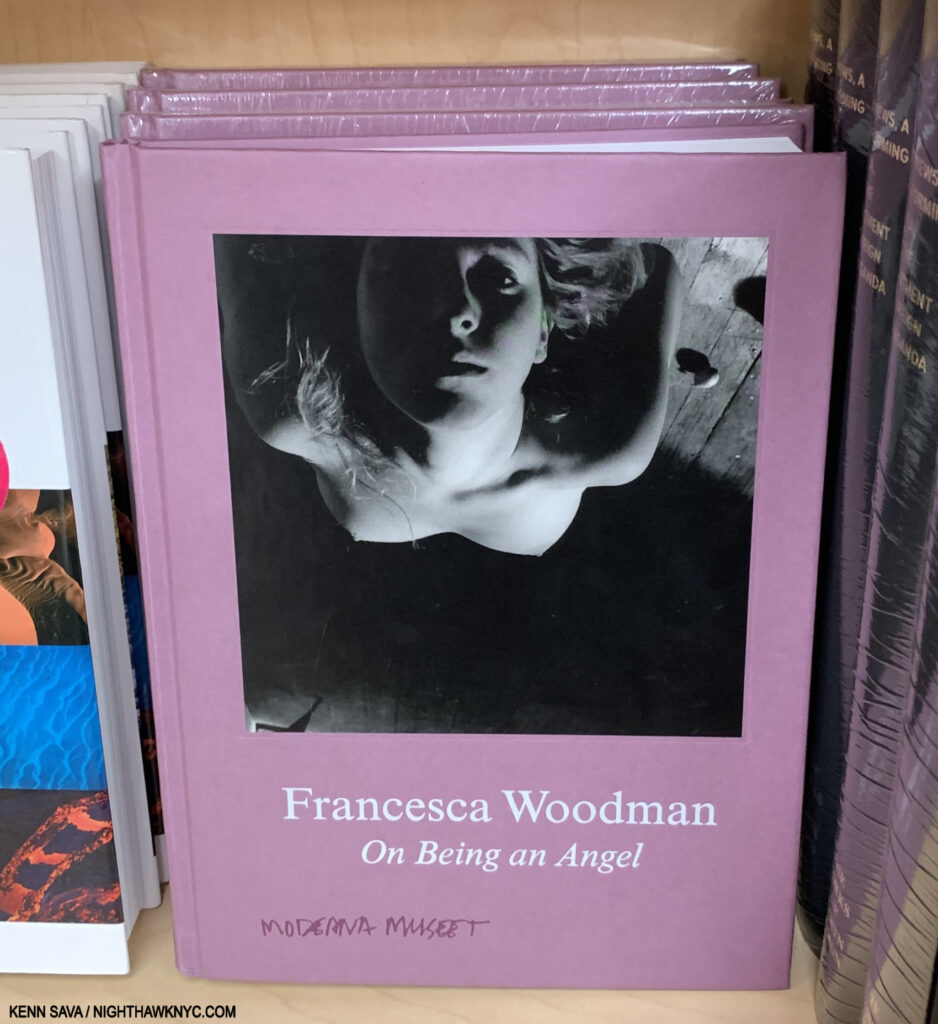
The rare exhibition catalog that has seen multiple printings. Seen here is a first edition copy. Later editions have a different color cover.

Francesca Woodman, Francesca Woodman: On Being an Angel, Moderna Museet, 2016
My favorite title for ANY Art or PhotoBook- ever. The tears I mentioned I had every time I looked at the work of Francesca Woodman in 2018 have (mostly) subsided, but OMG, what a gorgeous, smaller, book this remains. Published to accompany the show of the same name at the Moderna Museet in 2016-17, it remains a great place to begin exploring the work of this Artist who even now, 44 years after her tragic death at just 21, remains ahead of her time AND extremely influential. An Artist who made innovation meaningful. WHAT a talent! What a vision.
My piece naming this one of my NoteWorthy PhotoBooks of 2019, through the tears, is here.
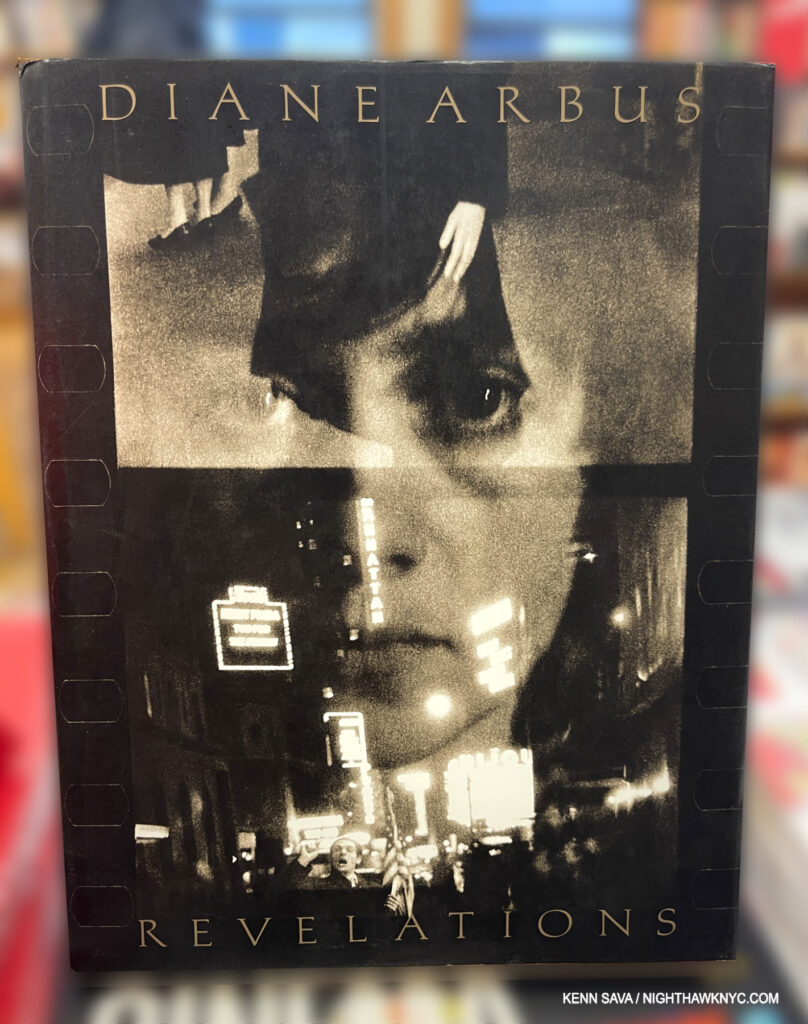
A sealed copy of the Random House first edition.

Diane Arbus, Diane Arbus: Revelations, Random House, 2003
A book that pre-dates my “deep-dive” into Modern & Contemporary Photography (which began in December, 2016), that didn’t stop me from seeing Revelations at The Met in 2005- one of the great Photography shows I’ve seen. Its catalog remains to my mind the most important book on her work, including the Aperture Monograph (which Ms. Arbus did not live to work on). The title of this book fits, it’s full of revelations, and contains more of the brilliant late Artist’s work than any other book published on her to date. 180 pieces were in the show, making it a serious contender for the Photography show of the Century thus far. The first edition is long sold out (though I’ve seen copies around at less than list price.) Aperture reissued it in a very similar edition in 2022. The Chronology published herein was subsequently excerpted and issued as a stand-alone book.
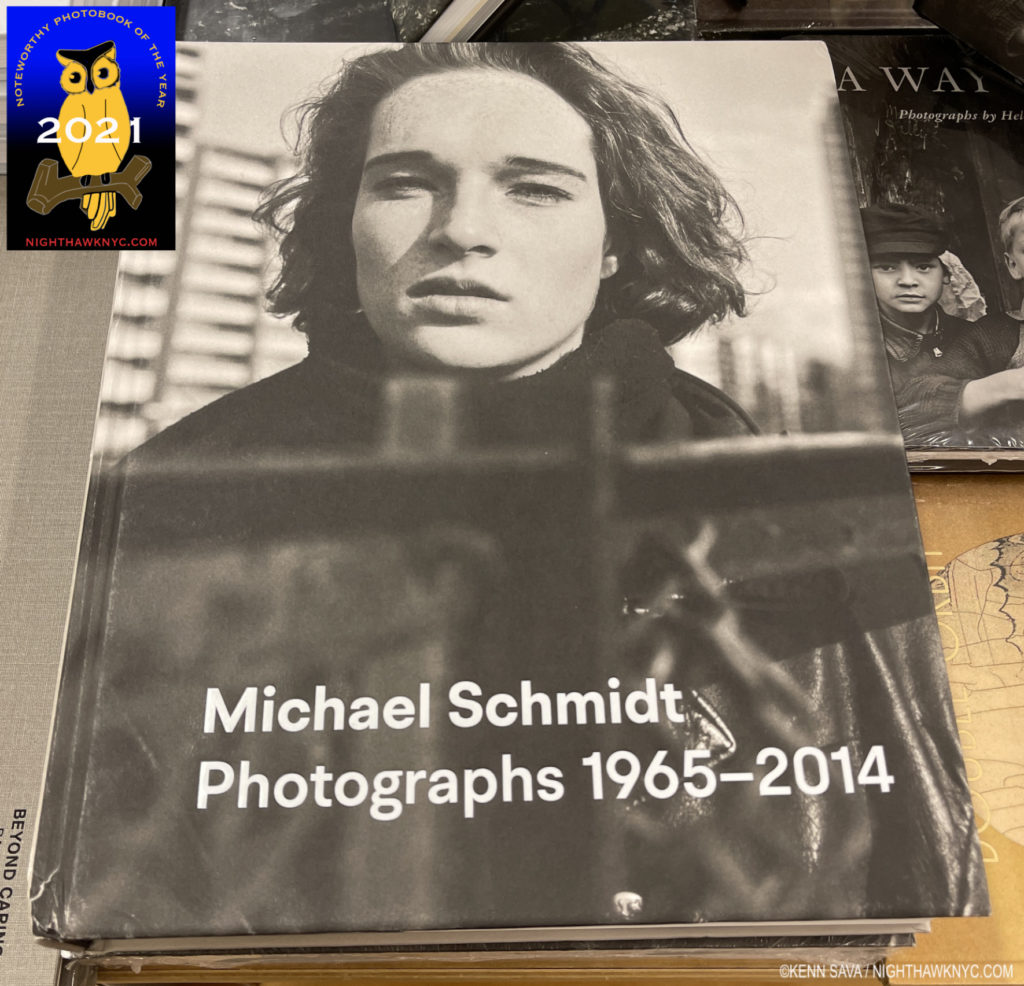
With its NoteWorthy PhotoBook of 2021 designation.

Michael Schmidt, Michael Schmidt: Photographs, 1965-2014, Walther Konig, 2020
My words when I named it a NoteWorthy PhotoBook of 2021 still hold, and the ending was prophetic- “The late German (1945-2014) is another of the many excellent Photographers who are not nearly as well known in the USA as they are in Europe. Michael Schmidt had a show, Michael Schmidt: U-NI-TY (EIN-HEIT), in 1996 at MoMA. It featured one of his most important bodies of work, created in response to the fall of the Berlin Wall and the reunification of the two Germanys. It’s not the only excellent book Michael Schmidt produced. Waffenruhe (Ceasefire) is widely recognized as a 20th century classic. The fine softcover reprint is gradually disappearing, so be forewarned to get it soon. Michael Schmidt: Photographs 1965-2014 provides a very well done look at all of his books and his entire career, much of which will be new to PhotoBook aficionados in the USA. Check it out and don’t wait long if you want it. It will be very expensive after it goes out of print.” In 2025, it IS out of print with VG copies going for under $200..
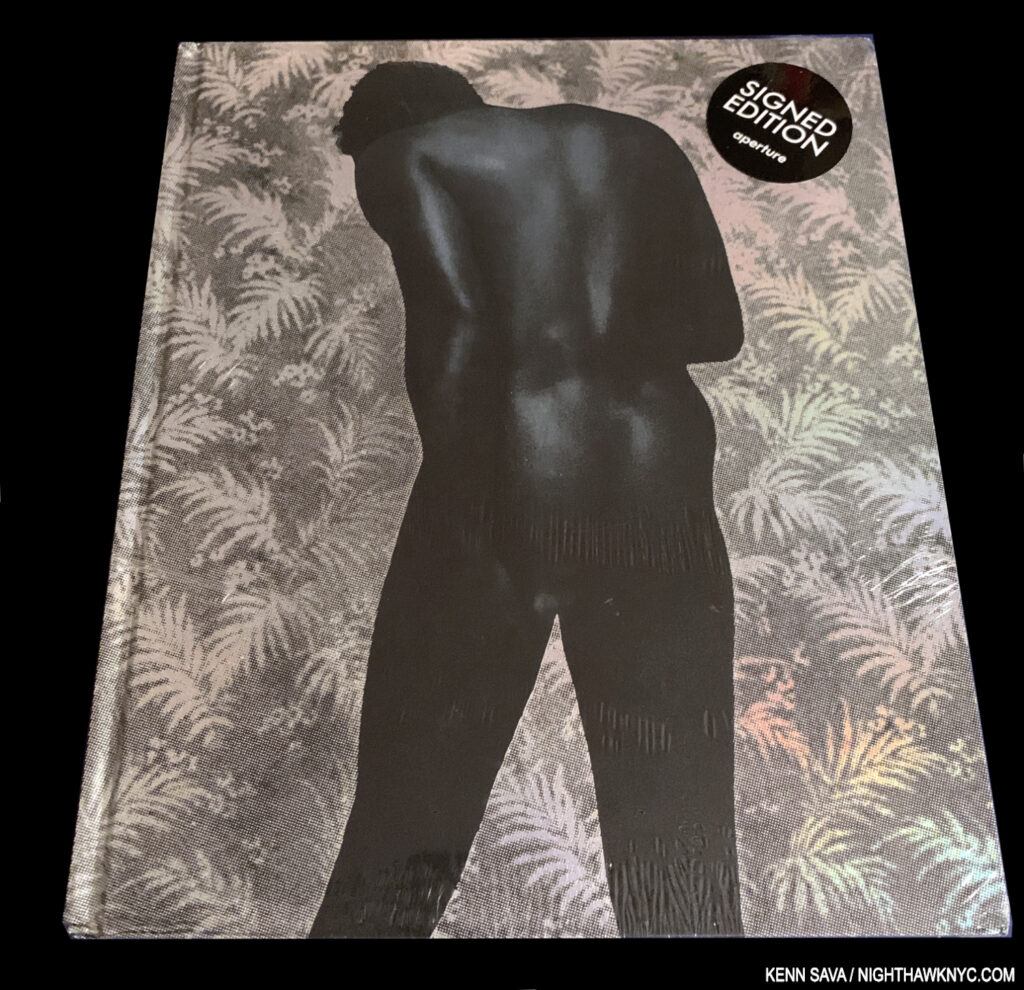
Ming Smith, Ming Smith: An Aperture Monograph, Aperture, 2020.
I was no stranger to the work of Ming Smith when Aperture published the first monograph of her work in 2020, having first encountered her on the cover of Jazz Musician David Murray’s now classic album Ming in 1980, where a lovely Portrait of her (by Trevor Brown) graced the front, while her Portraits of the Musicians graced the back.
David Murray Octet, Ming, Black Saint, 1980. My introduction to Ming Smith was when the vinyl LP of Ming was released in 1980, with a Portrait of her on the front and her Portraits of the Musicians on the back cover. Seen here on the CD version.

She became a fixture as the Photographer on the succeeding dozen of his albums, and in his life as his wife at the time. Other Musicians then enlisted her for their albums. Though she was one of the overlooked Artists who documented the NYC creative scene,  Music is just one aspect of her range, and her beautiful Aperture Monograph wonderfully covers all of them. No matter how innovative her work gets, humanity is almost always her focus. One of the most creative Photographers working today, her work is full of surprises as she refuses to be confined to one style.
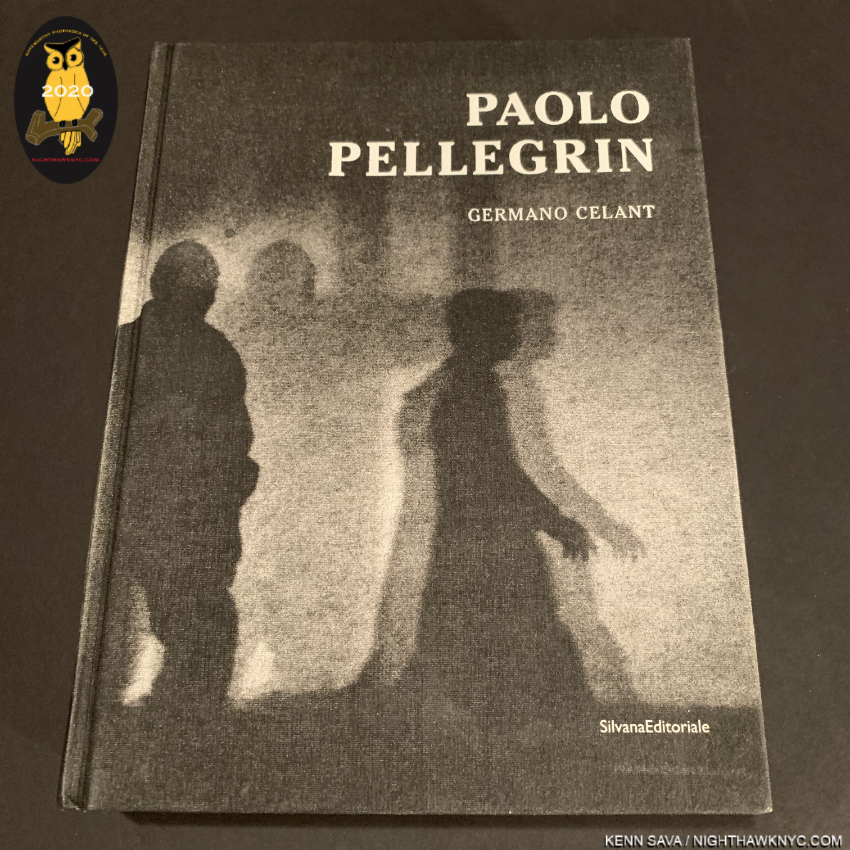
With its NoteWorthy PhotoBook of 2020 designation.

Paolo Pellegrin, Un’Antologia, Silvana Editoriale, 2019 (Also called simply Paolo Pellegrin)
A book that feels like a full life’s Retrospective until you realize Mr. Pellegrin is only in mid-career! Stunningly designed by Yolanda Cuomo, who masterfully weaves its 1,000 images(!) into a very informative design, it’s a model Retrospective in my opinion. Mr. Pellegrin has a way of bringing poetry to the most heart-rending scenes, and everything else he points his camera at. Published to accompany the show of the same name in Italy, another show that unfortunately didn’t make it here. Still, this beautiful catalog serves to supply a comprehensive look at Mr. Pellegrin’s accomplishment.
Out of print at this point, VG copies are trading for around $180.00.
My piece naming this book a NoteWorthy PhotoBook of 2020 is here.
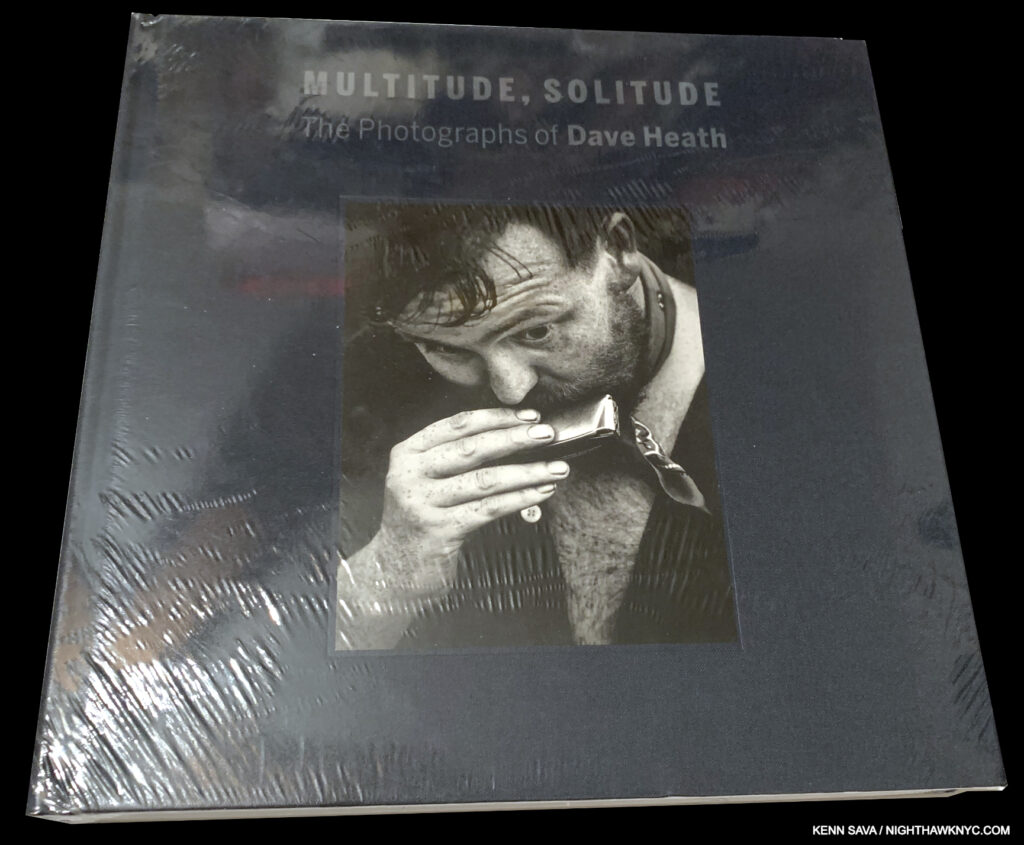
Dave Heath, Solitude, Multitude- The Photographs of Dave Heath, Nelson Atkins Museum, 2015
Masters of Photography don’t come much more overlooked than Dave Heath, and this is the best place to see the most of his work. The best of a whole series of terrific books Keith F. Davis did on overlooked Photographers (including Ralston Crawford, overlooked, in my view as a Painter, first, and a Photographer), its beautiful, high-quality production will hold up, which is vitally important given how few books there are on Dave Heath. Mr. Heath may not be well-known to the general public, but among is fellow Photographers the respect he was held in can be seen by the fact that when Robert Frank was asked to mount a show at the Art Institute of Chicago after the success of The Americans, he got Dave Heath to make the prints. ‘Nuff said.
My piece that includes Dave Heath is here.
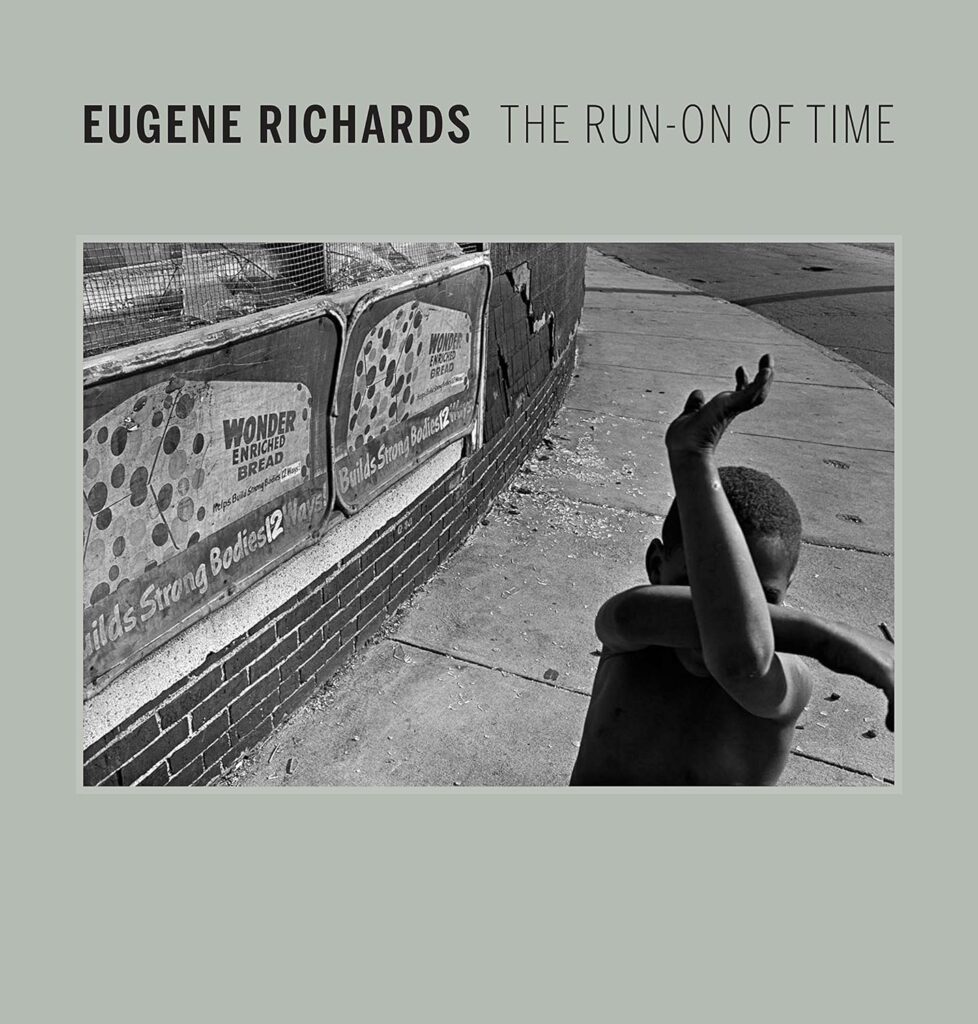
*Nelson-Atkins Photo

Eugene Richards, Eugene Richards: The Run-on of Time, Nelson Atkins Museum, 2017
Keith Davis’s second book on this list (he also has one mentioned on my NoteWorthy Art Books of the 21st Century list), and with good reason. His books are universally excellent (also check out his excellent book on the very overlooked Ray K. Metzker, which I wrote about here). The Nelson Atkins publications feature beautifully uncluttered design, in handsome covers and solid bindings that should last for years. Mine have. Very few Photographers more richly deserve the lasting book treatment than Mr. Richards does. His work mines areas seen in the work of Bruce Davidson, Gordon Parks,  Jim Goldberg, Dorothea Lange and Jerome Sessini, but it feels even more immersive (if that’s possible) here. A life’s time of witnessing with a poet’s eye, this collection is a powerful distillation, though it doesn’t take the place of Mr. Richard’s own fine books.

C0-NoteWorthy PhotoBook Publishers of the 21st Century-
Aperture Foundation, New York
No American publisher has continuously released as many important PhotoBooks, by legendary or new Photographers than Aperture has. Having done so going back to their Diane Arbus Aperture Monograph in 1972, they ramped up their efforts this century under the editorship of Leslie A. Martin to a fairly remarkable extent. One of my pet peeves about the PhotoBook world is that new books come out so often I wonder if the buying public has a chance to see and digest them before the books are pushed aside by the next wave. Nonetheless, in spite of the worldwide pandemic, nothing has slowed Aperture from continuing to release high quality PhotoBooks, including a number that have been on my NoteWorthy PhotoBook lists, including Gregory Halpern’s, Let the Sun Beheaded Be, Sara Cwynar’s Glass Life, Ming Smith, and An Aperture Monograph, among them.

The offices of Steidl, the legendary PhotoBook publisher, whose books appear TEN times on this list (and once on NW Art Books)- more than that of any other PhotoBook publisher. Dustere Strasse 4, Gottingen, Germany. *- Photo from Steidl.de.

Steidl
Twas ever thus. The more things change, the more they stay the same. Though there are now thousands of PhotoBook publishers no one matches Steidl’s quality, still, in virtually every aspect of publishing a book. I can quibble with some of the books they release, some of their designs, but when they nail it (Early Color, Los Alamos, the 7-volume Ed Ruscha: Catalogue Raisonne of the Paintings- each a NoteWorthy Art or Photo Book of his century), the results are timeless. If you won’t take my word for it, look closely at the colophon on some PhotoBooks you like. You may see one publishing company’s name as the publisher, but the fine print might well say, “Printed by Steidl in Gottingen.” Steidl has FIFTEEN books on this list (and one on my NoteWorthy Art Book list, counting the Robert Franks & Jeff Wall books individually since they have separate publishing dates). Three times as many as any other publisher.

NoteWorthy Artist-Owned PhotoBook Publisher of the 21st Century-
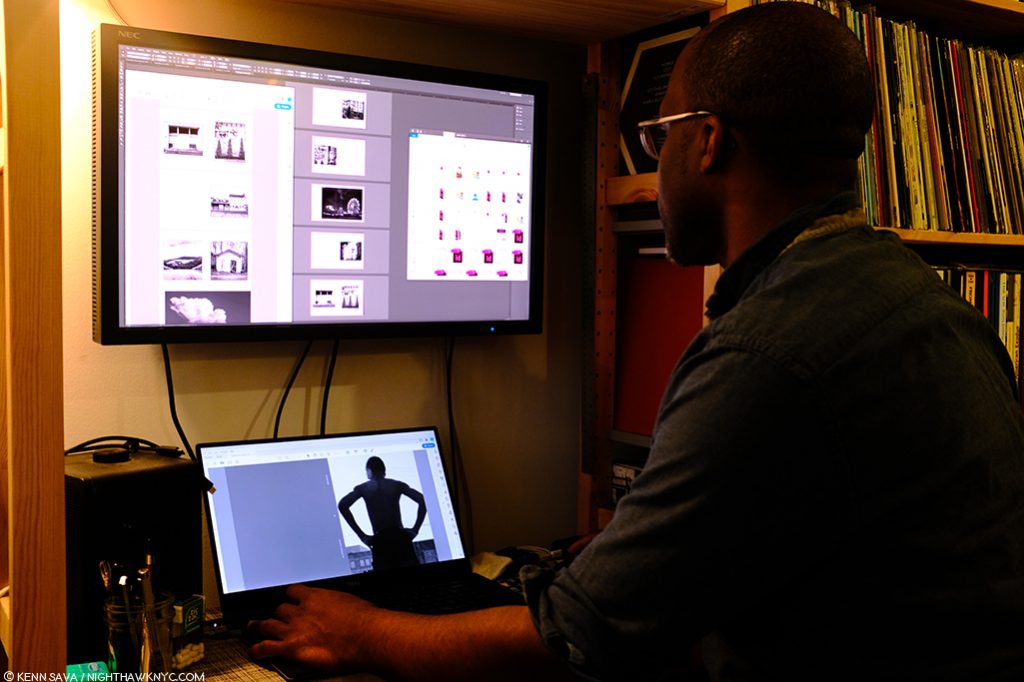
Kris Graves hard at work while talking (and selecting tasty vinyl from his impressive collection, right), finishing up the 20-volume(!) LOST II set he published before sending it off to be printed in Spain on February 13, 2019. Once he finished it, my piece on the set called it “monumental.”

Kris Graves Projects
The rise in popularity of PhotoBooks this century has led to a number of Photographers starting their own imprints, as I said earlier. Jason Koxvold’s Gnomic Book, Paul Schiek’s TBW Books, Nelson Chan & Tim Carpenter’s TIS Books, Cristina de Middel’s This Book Is True, are among Artist-led houses creating excellent books for themselves and others, each of who has had a book on my NoteWorthy PhotoBook lists. Over the 9 years I’ve been doing the lists, no one has had more Artist-published books on my lists than Kris Graves Projects (leaving aside the collective Magnum Photos). It’s hard enough to survive creating, let alone running a publishing house, and raising a family to boot. Oh! And if that’s not enough, look above. In addition to being just that- a creator, a head of a publishing company (with two divisions- KGP and Monolith), a husband and father, Mr. Graves has a book OF HIS WORK on this list. How remarkable is that? (Hmmm…WHAT did I do today?)
In addition to his book and Jon Henry’s Stranger Fruit listed above, KGP’s other NoteWorthy publications this century include the remarkable 20-volume Lost II, and Electronic Landscapes, by Isaac Diggs and Edward Hillel. While KGP and his new imprint, Monolith, boast an impressive roster of Artists, including many discoveries, the best part may be that they publish books at very reasonable prices, proving that Yes! PhotoBooks can be affordable! It also means most of those books they’ve published since 2011 are long sold out. The man has a lot of fans from collectors, to other Artists, to the museums & libraries of note who collect his books. Add my name to that list: Kris Graves Projects books have been on my NoteWorthy PhotoBook lists in 2018, 2019, 2020 (when Kris Graves Projects was the NoteWorthy PhotoBook Publisher of the Year), 2021 and 2023, and again here! In recognition of these achievements up to 2024, I presented him with the very first NoteWorthy PhotoBook Golden Oof Statuette last year.

NoteWorthy Sleeper PhotoBook of the 21st Century (& NoteWorthy Kenn Sava PhotoBook Buying Experience of this century)
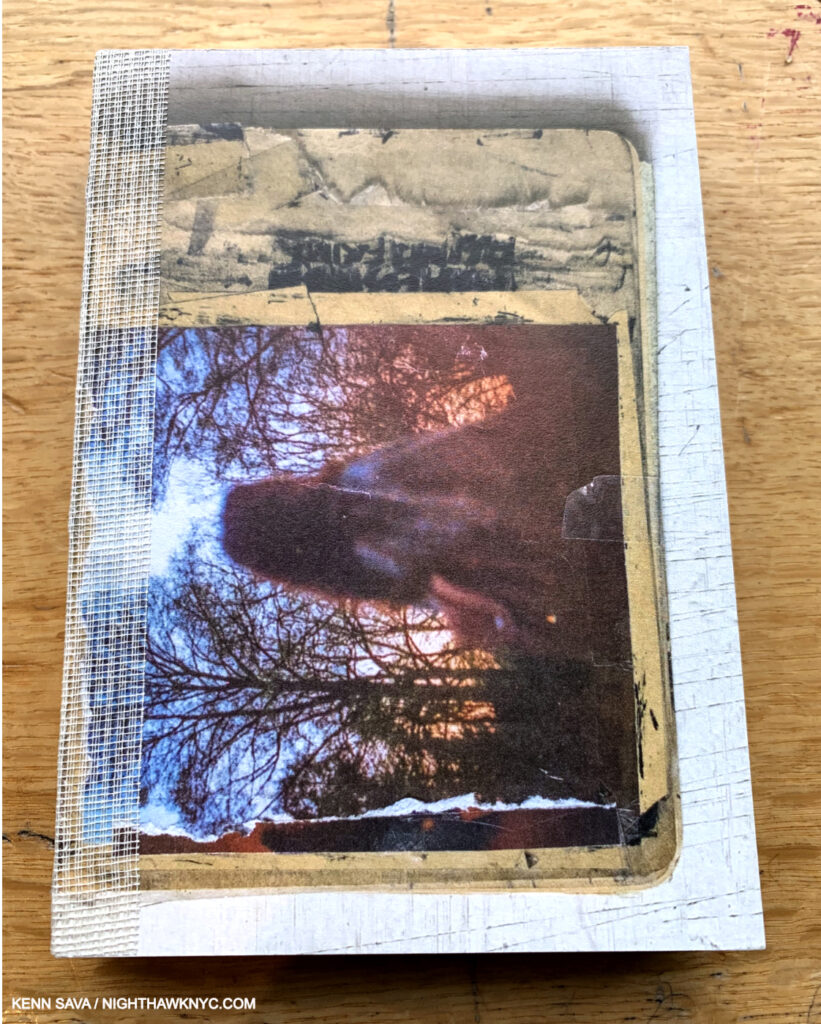
Josh Kern, Fuck me, 2018, about 4 by 6 inches.

Josh Kern, Fuck me, Dienacht, 2018
I believe I was the first person in the U.S. to discover Josh Kern and his first PhotoBook, Fuck me, in early 2019. At the time, Josh was a German college student(!), studying with the renowned Photographer, PhotoJournalist, and author of War Porn, Christoph Bangert. When I reached him there by email, Josh kindly agreed to do a Q&A with me, which remains one of my more popular pieces. I also took the unprecedented gamble of buying 25 copies of Fuck me(!), the first, and only time, I’ve bought a quantity of a book. Such was my level of belief in this first book by a complete unknown, which was unavailable in the U.S..
Not being a book retailer, I offered the book to the two biggest PhotoBook specialist resellers in the U.S.. Both (WHO ONLY SELL PHOTOBOOKS) rejected it outright. Two staff members at the first seller told me it was an almost laughable product. The other seller just kept turning it over and over in their hand between talking to other people on the phone. They finally opened it, looked through it, and said, “No, thanks.” The following month, word came that all 1,200 copies of Fuck me had sold out in Europe- an unbelievable number for a first PhotoBook by a college student! I wasn’t surprised. The book struck the same nerve with viewers it had struck with me. I was suddenly left with the only copies in the world, and no retailer in the U.S. wanted them! Thankfully, Josh’s many fans who couldn’t get them in Europe emailed me after seeing my article desperately trying to find it. Suffice it to say it worked out much better than if those two resellers had bought them from me!
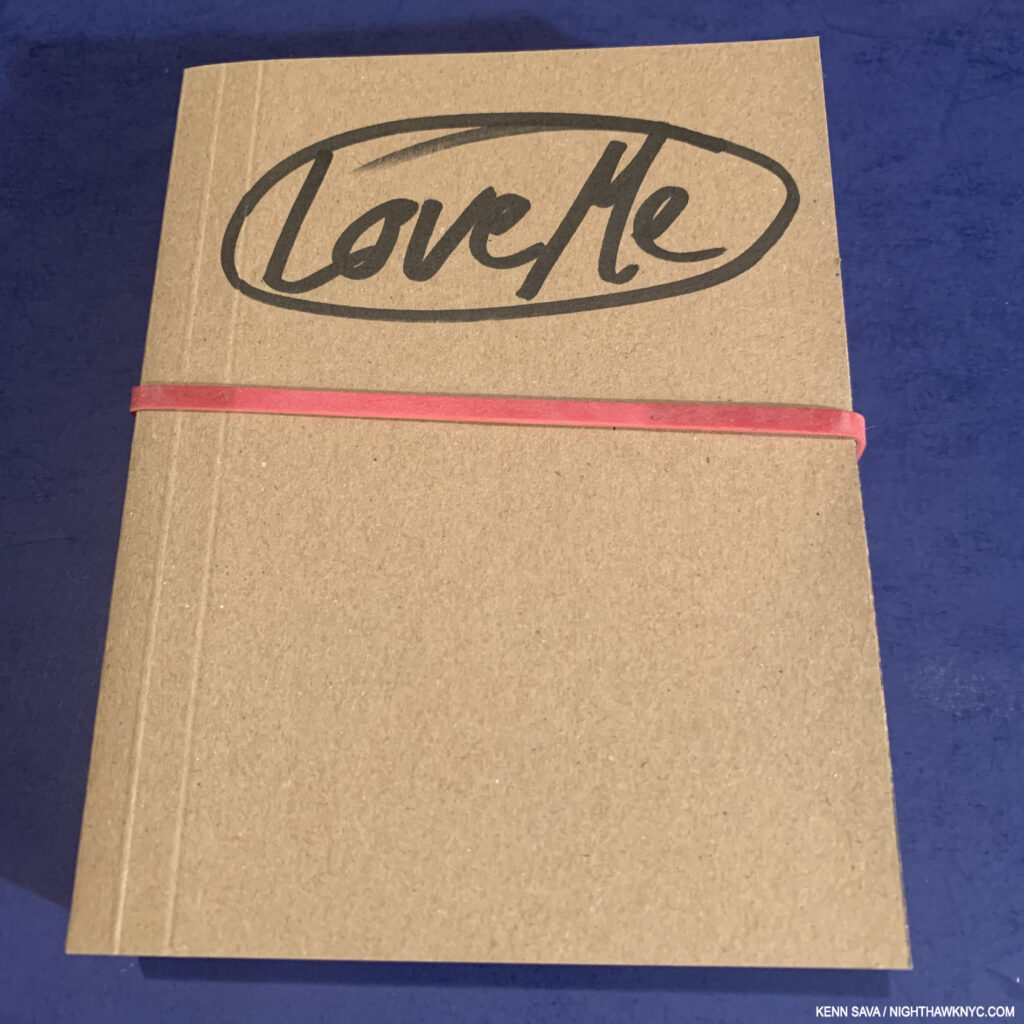
Josh’s 2nd book, Love Me, 2020, with its rubber band.

And oh yeah- BOTH of those U.S. booksellers carried Josh’s 2nd book, Love Me!!! I guess they came to terms with Josh’s innovative book design! HA! “He who laughs last…” Even unintenionally!

The Moral

The “moral” is that this experience mirrors a bit of what I imagine every Photographer who publishes a book of their Photos goes through (and what I went through as an independent Jazz record producer in the late 1990s): After creating a body of work that they passionately believe in, they then invest the time, money and resources into getting a book made- a sizable and laudable feat in itself. Then they have to deal with the world’s acceptance of their work. Or not. The lucky ones wind up with a hit on their hands. The rest wind up with a stock of books. And, as we’ve seen, that “hit” can come from anyone, at any time. Josh Kern’s Fuck me is one of my NoteWorthy PhotoBooks of the 21st Century (thus far).
My Q&A with Josh Kern, “Shy No More! Josh Kern Breaks Through” is here

63 books are on my list. Slightly more than 2 per year over these 25 years.

“NoteWorthy Art Books of the 21st Century” is here. Both are BookMarks Specials.

*- Soundtrack for this piece is “Otherside” by The Red Hot Chili Peppers from their classic Californication, 1999. “I heard your voice through a photograph, I thought it up and brought up the past. Once you know, you can never go back. I gotta take it on the otherside.”
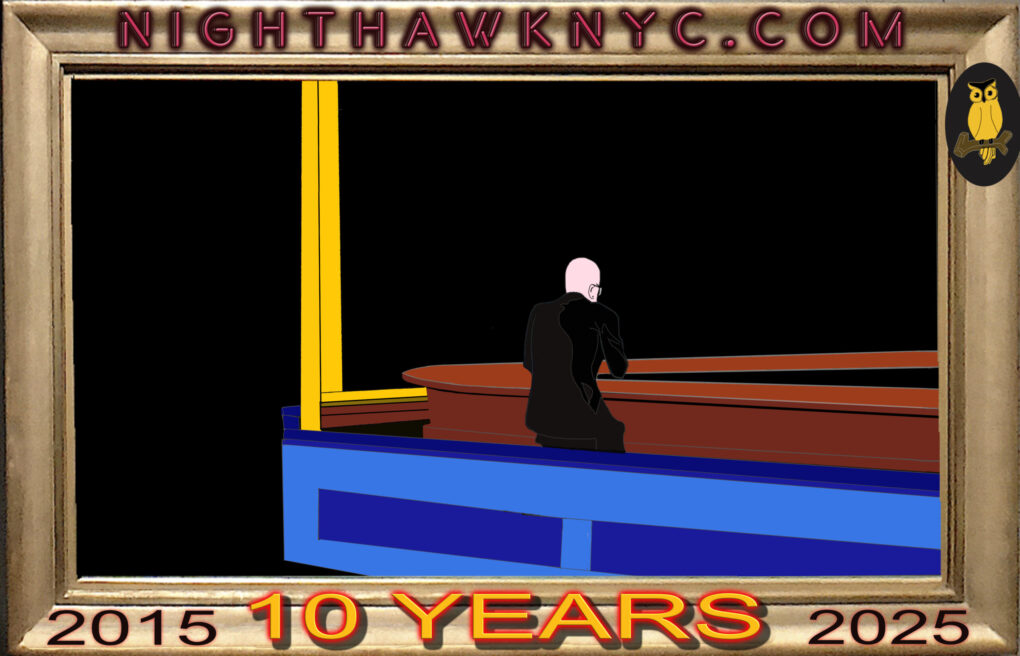
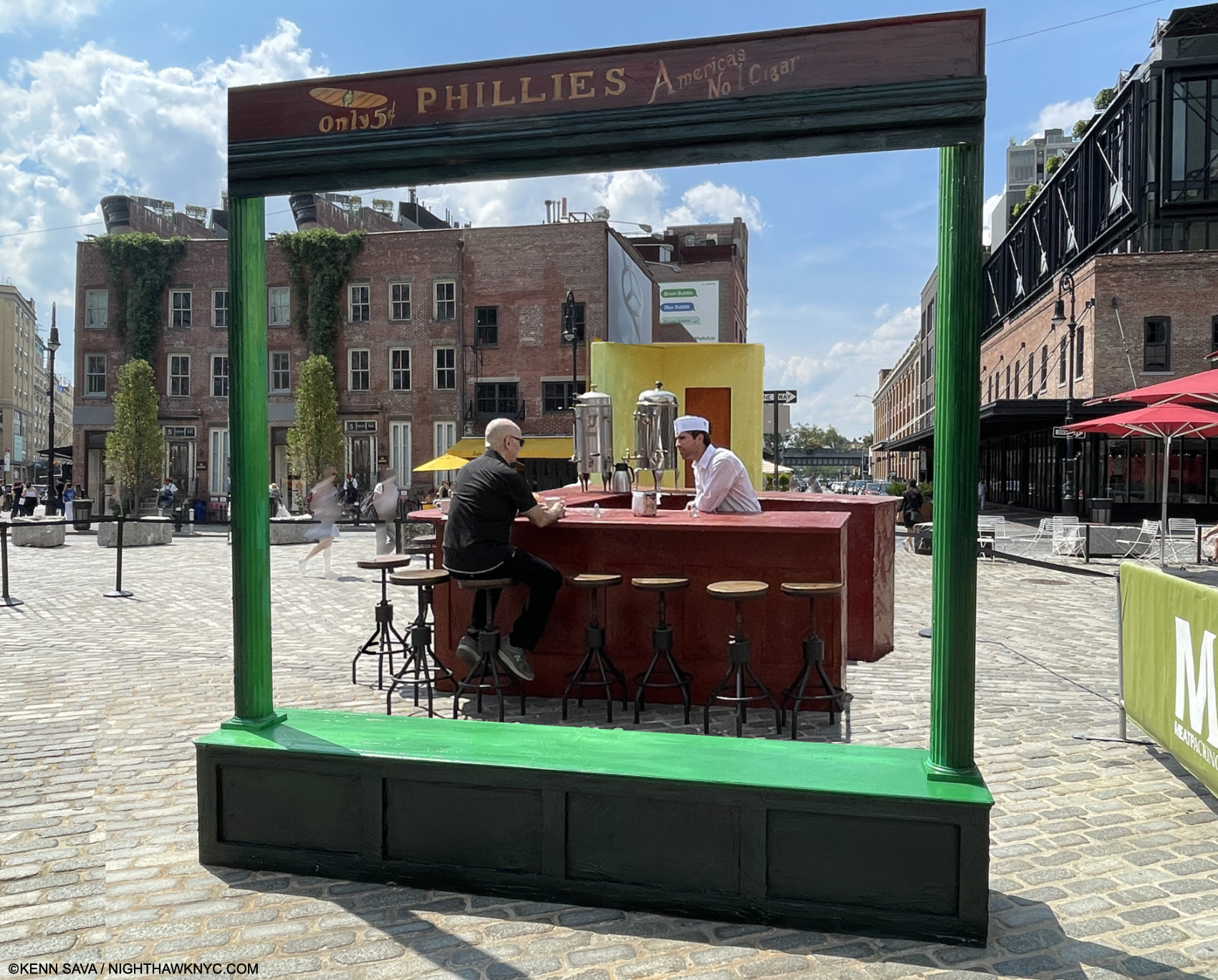
 

  1. Though at the end, he was forced to give the camera to others to take the Photos for him due to failing health.

So, You Want To Work At An Art Gallery…

This site is Free & Ad-Free! If you find this piece worthwhile, please donate via PayPal to support it & independent Art writing. You can also support it by buying Art & books! Details at the end. Thank you.

Written & Photographed by Kenn Sava (*- unless otherwise credited).

Summer in the City is a time for Fresh Air Kids, scrambling to stay cool, making sure to put on that sunscreen and water, water, water. 

Notice that none of those are particularly Art-related. 

That’s because most of the galleries are on short schedules, closed on Saturdays, or maybe the entire month of August, and the museums are gearing up for their new fall seasons. As a result, it was easy to miss a sleeper show up at David Zwirner’s 19th Street location- After Hours, mounted just east of the construction going on in their western gallery, which they apparently figured summer was a good time to get done. I’m glad I didn’t sleep on it. It’s a show of Art by the staff of David Zwirner’s galleries around the world. Very handsomely installed, it’s easy on the eyes and a number of pieces linger in the mind. “Easy” and “linger”…two words that go nicely with summer. 

T. Dylan Moore, Self-Portrait, 2024, Casein on paper. Jasper Johns, has used this seemingly difficult medium to work with medium extensively, making me sit up and take notice of its possibilities- as T. Dylan Moore’s Self-Portrait does here (shot at an angle to minimize glare). Seen in After Hours, July 17, 2024. Pictures in this piece are thumbnails. Click any for full size.

I can hear some readers saying, “Man, it must be slow in NYC if he’s writing about a show by gallery staff members.” In reply I would remind readers that I first met Caslon Bevington in 2017 while she was working at David Zwirner. I have subsequently written about two of her solo shows.

Chase Barnes, Stateless Revision 1, Machine Vision, 2023, Multi-channel video installation on dual NEC monitors. Seen in  After Hours, July 18, 2024.

The big takeaway from After Hours for me is that there are A LOT of talented folks working for David Zwirner. This is not the first rodeo for any number of them. Chase Barnes, for example, already has a PhotoBook published by Jason Koxvold’s renowned Gnomic Book. It shows me the track to working at a major gallery is F A S T. Being an Artist looks good on a resume for a gallery gig, and having shown or been published travels well by repute. It’s also got to be a real asset for said Art dealer to have such people on their staff in innumerable ways. 

Lauren Ferrara, Absence, 2020, Found wood, recycled fabric, recycled paper, and recycled plastic bags, seen at After Hours, July 17, 2024.

In my experience, most people don’t give a second thought to staff members they encounter at an Art gallery. To work in a New York Gallery is an achievement in itself. A lot of people are drawn by the beauty and glamour of working with Art & Artists. That means there’s a lot of competition for these jobs. It serves to reason that an Artist seeking such employment would have an edge all other things being equal. And maybe that’s why the quality in After Hours was so high.

I was impressed with After Hours to the point that I saw it 4 times.The last two visits were because of  Oji Haynes. 

Kris Graves, the mastermind behind LOST IV taking a group portrait of 7 of the 10 Artist/Authors included in the set. From left, Oji Haynes, Richard Renaldi, Melody Melamed, Peter Baker, Tracy Dong, Melissa Alcena and Yoav Horesh. Seen at the LOST IV Book Release, Printed Matter, July 11, 2024.

I met Mr. Haynes at the Kris Graves Project’s 10-volume  LOST IV book release at Printed Matter. So taken with his PhotoBook, Anthem, was I that I took the bold step (for me) of walking over and telling him. We proceeded to have a remarkable conversation during which we discovered a shared passion for Art book collecting, with any number of overlapping Artists, from Robert Rauschenberg to Gordon Parks and Jeff Wall. He also revealed it was his first PhotoBook, consisting of an overview of his Photography to date,  and he had been reluctant to do it. Luckily, Kris Graves managed to convince him that now was indeed the time and the results are one of the strongest books (in my view) in the set. No mean feat in fast company. 

A spread from Anthem. Mr. Haynes told me he had originally envisioned the right-hand Photo as the cover. *- Kris Graves Projects Photo.

Then, he told me he had moved on in his practice and was now creating Sculptural pieces, and one of them was included in After Hours! Ahhh…he, too, is a David Zwirner staffer. I went back to the show on a mission.

Oji Haynes, Scriptures, 2024, String lights, cement, inkjet photo, diamond dust, and mixed media on fabric couch. Seen in  After Hours, July 17, 2024.

Tucked nicely into a corner at the far end of a large gallery, his piece, Scriptures, 2024, couldn’t be more different, yet similar, to his Photography. His book consists of intimate moments, most, but not all, including people- singly, in paris or small groups. Scriptures is intimate, as well, in a different way. Though I continue to ponder it, I had a few initial reactions. 

Left side showing the text, “LISTEN TO WHAT”

Right side showing the text, “GOD HAS TO SAY.”

First, it struck me as a collection of things people might find buried if they took apart a couch they’d had for a long time. Things that might fall out if you lifted it up from one end. Second, it gave me a feeling somewhat reminiscent to looking at Kerry James Marshall’s Souvenir II, a work that memorializes memories.

Kerry James Marshall, Souvenir II, 1997, Acrylic, collage, and glitter on unstreteched canvas banner. *-Renaissance Society Photo.

Then, I thought I’d love to see it hung between Mr. Marshall’s piece and Robert Rauschenberg’s revolutionary Bed. Rauschenberg mounted a bed on a wall. Mr. Haynes has mounted a couch on the two walls of a corner.

Robert Rauschenberg, Bed, 1955, Oil and pencil on pillow, quilt, and sheet on wood supports. The first work to take a piece of everyday household furniture and reenvision it. Of this work, Sarah Sze said, “That kind of intimacy is very specific to Rauschenberg. A willingness to be tender, to be intimate, to share a kind of a very interior urgency. An urgency to share a kind of interior self publicly1.” Her words resonated with me while seeing Scriptures. Seen at MoMA during Robert Rauschenberg Among Friends, August 5, 2017.

Or, next to them in chronological sequence. While Mr. Marshall’s piece may be seen as primarily a memorial to MLK, JFK and RFK and slain Civil Rights workers, the intimacy is heightened by the fact that it, and Mr. Marshall’s similar Souvenirs Series, take place in living rooms, where (no doubt) carefully chosen items abound, including couches. It’s that feeling and those items I thought of when seeing Mr. Haynes’s Scriptures. All three works are filled with the touchstones of a life, or the lives of an immediate few. In Oji Haynes’s case, the “meaning” is up to the viewer. I see a number of dreams in a self-enclosed space, though your results may differ. 

Oji Haynes holding a copy of his first PhotoBook, Anthem, at the LOST IV Book Release, Printed Matter, July 11.2024.

The definitions of “scriptures’ in the American Heritage Dictionary are- “1. A sacred writing or book. 2- A passage from such a writing or book. 3- The writings collected as the Bible.” Taking those as a point of context, tilts things to the “sacred,” and what’s sacred for whosever items these are. In one sense, it’s a time capsule of hopes, dreams, achievements, memories, simultaneously revealing the passage of time. Auspicious, indeed. Mr. Haynes was not on hand when I went back to After Hours. He told me he had to go install work in a show in San Francisco.

With work like Scriptures hot on the heels of a just-released auspicious first PhotoBook Anthem, Oji Haynes has already reached another new plateau. I’ll be among those watching with interest where he, and his Art, goes next. 

So, Beware: That Art gallery staff member you see or speak to on your next visit may well be an Artist whose work you’ll be going to see one day soon. It’s happened to me. More than once.

*- Soundtrack for this piece is “Summer in the City” by John Sebastian and Lovin’ Spoonful from 1966. This vintage video could have been shot here this week-

NighthawkNYC.com has been entirely self-funded & ad-free for 9 years, during which 330 full-length pieces have been published! If you’ve found it worthwhile, PLEASE donate by PayPal below to allow me to continue. Thank you, Kenn.

You can also support it by buying Art, Art & Photography books, and Music from my collection! Art & Books may be found here. Music here and here.

Written & photographed by Kenn Sava for nighthawknyc.com unless otherwise credited. To send comments, thoughts, feedback or propositions click here. Click the white box on the upper right for the archives or to search them. Subscribe to be notified of new Posts below. Your information will be used for no other purpose.

For “short takes,” my ongoing “Visual Diary” series, and outtakes from my pieces, be sure to follow @nighthawk_nyc on Instagram!

NoteWorthy Art Book, 2024- Es Devlin…Lady Gaga, Kiss & Me

This site is Free & Ad-Free! If you find this piece worthwhile, please donate via PayPal to support it & independent Art writing. You can also support it by buying Art & books! Details at the end. Thank you.

Written & Photographed by Kenn Sava (*-unless otherwise credited)

Though I just teased some big names, I begin with the least known. There I was, in year 2 of my 5 on the road with a band, refugees from the disco mania which was sweeping all live Music and Musicians aside, all the way down in the Cutler Ridge section of Miami, FL. We pulled into the parking lot outside of this good sized venue, the Esquire Club, went it, met Al the owner, and began bringing in our gear. As we set up for what would be an extended stay, the assistant club manager came up, saw our stage clothes and my platform boots (Handmade by Jumpin’ Jack Flash, NYC, who had made Kiss’s legendary boots. Mine were a half-size too small, leading to permanent foot damage, an ever-increasing problem. Another Rock n’ Roll suicide.). Realizing that we were something different from what they had been presenting, he chatted me up about our “stage show.” Then, he suggested we add “flash pots” to our presentation.

Flash pots? 

He went away and came back with 3 pieces of wood, each about a foot and a half long by about 3 inches wide and 2 inches deep, some electrical cord and a few plugs. First, a rectangular cup about 3 or 4 inches long by a little less than 2 inches wide was cut into the top center of the wood. Next, he attached the the wire so the stripped bare end was in the hole. Then, he had me cut one side of the wire and install an on/off switch. Electricity, with a bare wire on a dark stage? Hmmmm… Then he showed me a grey, cylindrical container. Gunpowder. 

Gulp.

He scooped some of it and put it in the cutout. Plug in the wire and when I flip the switch? WHAM. Flash pot! The band covered by a cloud of smoke, and hopefully, only smoke! Ooohs and aahhs all around.

“Messiah,” Live at the Esquire Club, Miami, 1977. Left to right, T. Lavitz, keyboards, who would go on to fame after he joined The Dixie Dregs (aka The Dregs) the year after this was taken, before launching a successful solo career, Steve Smith, guitar, Bob Donzella, sax & vocals, Mark Smith, drums & vocals, and yours truly, Kenn Sava, bass & vocals. It’s about at this moment that I’d be tripping the flash pots. Gee, I wonder if that carpeting was fireproof… *-Photographer unknown. The pictures in this piece are thumbnails. Click any for full size.

We made three of them, each laid 1/3 of the way across the stage, all under my control, to be tripped at particularly “dramatic” moments during our set. Needless to say, never having done anything like this, especially while playing, it was a bit unnerving. Luckily, I managed to set them off a few times, without disastrous result. Phew! After a week or so, the regulars had gotten to know us, and everybody relaxed, so we dispensed with the “special effects,” or, they ran out of gunpowder, I forget. (The Esquire Club was destroyed by Hurricane Andrew in August, 1992.)

Yours truly, Kenn Sava, lve at the Esquire Club, Miami, FL. This is the first time I, or a former I, have appeared in the pages of  NighthawkNYC.com in its 8 1/2 years! *-Photographer unknown- a friend of Mark’s. I’ve grown quite fond of this picture as it shows me about as happy as I’ve ever been in my life, in spite of all we were dealing with at the time, including the poverty typical of bands like ours.

Such was “stage craft” in prehistoric times. Fast forward to January 20th, 2010.  

The Big Time. Radio City Music Hall, NYC, January 20, 2010. The night of Lady Gaga’s homecoming; her first NYC concert. Prior to this, she’d performed in clubs & bars, like I did.

There I am in the balcony for the NYC concert debut of an up and coming Artist who’s new hit singles, “Just Dance” and “Poker Face,” were all the rage, and her album, The Fame, was screaming up the charts. Intrigued, I managed to get a ticket for Lady Gaga’s New York homecoming show of her Monster Ball Tour at Radio City Music Hall, January 20, 2010, her first concert in her hometown1.

Down in front! Seated as far away as I was wasn’t ideal for picture-taking. Before it started, I took this because I was fascinated by the stage. Looking around the standees, you’ll notice a box-like frame and there’s a screen in front of it. Both things I hadn’t seen to that point. Something told me at that moment that this was going to be “different.”

As far as I know there hasn’t been an officially released video of what was the Monster Ball Tour, 1.0 that this show was a part of. I can only find pictures and videos shot by my fellow concert-goers, like this one of the opening. Poor quality, but it gives you a sense of it. ( Someone has posted a complete video of another stop on the tour. Again, it’s a far from ideal audience recording, but until something better appears, it’s the only record I know of of the complete show.)

The show began with a matrix-like grid on that screen shown earlier with a filmed Lady Gaga (LG) projected on it revolving while warping time and space, apparently free of gravity, along with a 1 minute countdown clock to the show’s beginning. As it ticked down, the crowd amped up by the second. 00:00:00:00, and there she was behind the matrix screen, live, alone on the big stage in her hometown, wearing an outfit with lights on it and performing her classic, “Dance in the Dark.” Quite a moment. “Find your Kubrick,” indeed. Stefani Germanotta had escaped the clubs & bars (including some I played in back in the day), and arrived in the big time, in full effect. 

“Just Dance.” LG performs with a Roland Shoulder Synth (I believe) on a riser extending to about 10 feet over the base of a rotating cube. The area around the black disc she’s standing on is open. Watch your step! Note the frame-like border.

“Dance in the Dark” segued into her mega-hit, “Just Dance,” without pause. The screens on the sides seen above covered the band, something I’d never seen before, leaving a large performing area. Looking back from 2024, it might be easy to look at this show and not see it as all that “revolutionary” given what’s come since. At the time, I’d seen nothing remotely like what I saw that night. It still remains a unique experience. Meanwhile, the irresistible “Just Dance” got the balcony moving up and down so wildly as hundreds of concert goers jumped in time that I was worried it might well come down! How do they test for that kind of stress? When the show ended without catastrophe, as I was walking to the subway to the sound of my fellow concert-goers bursting out in spontaneous chants of “Oh oh oh oh oh…Caught in a bad romance,” over and over and over from near and far…the one thought on my mind was “SOMEONE involved in staging that show has a DEEP knowledge of Art history!”

“Paparrazzi” with LG’s hair fastened to the overhead pole on both sides by rings while two dancers hold the ends of the pole.

Time and again, I felt the influence of numerous Artists and Paintings. First, and foremost, the great Joseph Cornell was channeled as the entire stage was framed creating a box-like setting for the performance, as I show in “Just Dance.” Mr. Cornell, a revolutionary in a number of Artforms, is, perhaps, best known for his “Boxes.” The Cornell references continued during “Paparazzi” where Gaga’s hair was fastened to a horizontal pole with rings(!) while the dancers holding the ends moved/danced in step with the slightly helpless LG as she sang, right out of numerous Cornells that include a horizontal pole with rings attached, like Lunar Level #1, and Sun Box, below, among others. Joseph Cornell at a Lady Gaga show? Dali, Giorgio de Chirico, Magritte and Leonardo da Vinci also came to mind as the show went on. Of course, being Lady Gaga’s show, first and foremost, the credit goes to her.

Sun Box, (1956) by the incomparable Joseph Cornell, 1903-1972. One of many Cornell Boxes that include a horizontal bar (or two) with rings attached. Lady Gaga’s entire show felt to me like it was taking place inside a box.

Then, I saw her,  again, in July, 2010, at her Monster Ball Tour 2.0 at Madison Square Garden (her first MSG show); another big deal. It was a completely different show! It was very nice, very effective, but minus all the Art references. I assume that having a stage in a huge indoor arena called for a completely different presentation. Still, I missed the show I saw at Radio City, and at that point it made me realize how special it was. I was determined to find out more about it.

“Eh, Eh (Nothing Else I Can Say),” at Radio City. LG in a quasi-“gyroscope.” All those bars were continually in motion around her. A bit like Leonardo’s Vitruvian Man?

I found out that Lady Gaga had worked on the Radio City show, and her Monster Ball 1.0 Tour it was a part of, with a stage designer named Es Devlin. 

Who?

It tuns out that Esmeralda (“Es”) Devlin, born in London in 1971, is nothing short of a polymath, who, apparently, never sleeps. While I had been sleeping on her, in the interim, her reputation grew, then exploded. Meanwhile, the press had upped the hype quotient to seemingly impossible levels-

“Modern Britain’s answer to Leonardo da Vinci,” The Sunday Times (of London).

Leonardo?? I can’t say that in all my years of looking at and studying Art and Art history I’ve ever heard that said of ANY Artist.

Perusing her website, I discovered the roster of world-famous Musicians, bands, opera companies, playwrights, and corporations who have entrusted her with their stages is about as “A List” as it gets, and extraordinarily long. Oh, and the Super Bowl Halftime and the Olympics are on it, too. As for those Artistic deep waters, she’s staged a number of Shakespeare’s plays, including Hamlet, and a few of Mozart’s operas, including Don Giovanni, perhaps his ultimate opera. Snippets of all of these and more can be seen on esdevlin.com. I also discovered that Ms. Devlin did not do the stage design for that 2010 Lady Gaga Monster Ball Tour 2.0 MSG show. Hmmm…

But, Leonardo? One of the supreme geniuses in Art and world history, and one of my personal “Ultimate Artists?”

Back into the fast forward machine to 2024, Es Devlin is now the subject of a mid-career Retrospective at NYC’s Cooper Hewitt, Smithsonian Museum of Design. To accompany it, she, Cooper Hewitt and Thames & Hudson have combined to use the show as an opportunity to publish her first book, An Atlas of Es Devlin. When I first spotted a copy on a shelf with only “ES DEVLIN” in silver on its 2 1/2 inch thick(!?) white spine, I felt a tingle of anticipation. Suffice it to say, given all I’ve seen- in person and via research, and the weight of that Leonardo reference, my expectations couldn’t have been higher.

What we have is, well… I’ll let the Thames & Hudson PR staff tell you-

An Atlas of Es Devlin is a unique, sculptural volume of over 900 pages, including foldouts, cut-outs, and a range of paper types, mirror and translucencies, with over 700 color images documenting over 120 projects spanning over 30 years, and a 50,000 word text featuring the artist’s personal commentaries on each art work as well as interviews with her collaborators including Hans Ulrich Obrist, Bono, Benedict Cumberbatch, Pharrell Williams, Carlo Rovelli, Brian Eno, Sam Mendes, Alice Rawsthorn, and Abel “The Weeknd” Tesfaye. Each book is boxed and includes a die-cut print from an edition of 5,0002.”

PHEW!

HERE was the moment of truth. Will her body of work hold up to the close scrutiny such a comprehensive book provides?

“The instinct to fill a void with art is, to me, fundamental.” Es Devlin, hand-written reproduction inside the cover.

Ever see a resume like this? Inside the cover, the list of Musicians she’s worked with, left, and Playwrights & Librettists, right, surrounding Es in the middle after more pages of credits and thank yous.

Holding a copy in my hand, it was immediately obvious that the book is a duality. At once it feels crafted with care at every turn, mirroring the personal feel of a very limited edition, yet it’s a mass-produced object published by a big publishing company. The cover, shown earlier, and the first 8 pages are die-cut to look like we’re peering into a camera lens. On each of these the opening is surrounded by credits, and there are many of them. They lead to a picture in the center (the aperture) of the Artist, herself, on the 9th page, standing obliquely between a white cityscape and white clouds, dressed in red; the “focus” of her own show, for once!

The Table of Contents opens up to the 4 page list of projects arranged chronologically- 1995 at the top, 2023 on the bottom. Those in the center in black are included in the book. Others, to the left in grey, are omitted. It’s shocking how many projects are listed. It took two pictures to get them all in.

Then we get the title page, the table of contents, which opens to a double gatefold listing her projects from 1993-2023. (Has she really been creating for THIRTY YEARS already?) Moving forward into the book proper, I quickly realized that the design was, yes, unique, and yes, stellar. Impressive for a first book, but, I’m here for more.

Each project typically gets 2 full pages delineating its genesis, though many have inserts that range between 2 and 40 additional pages.

Her innumerable projects get small chapters of their own (small because there are A LOT of them), and many feature a variety of half pages, fold outs, inserted booklets, and what have you, making them different and fresh from each other. Then, there is a large section of color Photos of the actual performances, followed by the texts mentioned by Thames & Hudson earlier.

One of the world’s most remarkable Artists. What srtikes me about this Photo of Es Devlin in her studio is that she’s virtually surrounded by hand-written notes & Drawings. *-Photo by Tibby762

I was shocked to see that reproductions of countless Drawings on paper are included, which showed me that even Artists who’s work involves cutting-edge and innovative technologies continue to rely on Drawing on paper (something I have long considered to be an essential life-skill for everyone- whether it be on paper or digitally. I’m serious.) Then, another reveal- she relies on handwritten notes, which also fascinates me. When Sheena Wagstaff, the former Chair of Modern & Contemporary Art at The Met sat down next to me during a Nareen Mohammedi Symposium, I couldn’t help but notice that she, too, was taking notes by hand. Both commit their important notes and sketches to paper- not to a digital medium. (This is not mentioned as a criticism in any way of either highly esteemed lady.)

That’s not all. In addition to her devotion to Drawing, another pillar of her craft is reading. Page after page of An Atlas references something she read inspiring that project in some way. Reading this, I was struck with one overriding question-

“The woman is so incredibly prolific, creating project after seemingly impossible project steeped in infinitely complex details (in addition to having a family and a life): WHERE DOES SHE FIND THE TIME TO READ, and read so much?”


In the projects section inserts of all kinds are the norm, as in a hand-made book. The numbers “306 345 412 418-9” reference pages in the color Photos section where the realized project is pictured in its live performance.

Deep into the concept section, titled “A Selection of Works, 2012-2022,” as my mind is melting over as each project passes in the form of sketches, models or in-progress images as I page turn, I begin to wonder- “Did she really get this made? What did this look like for real?” After the concepts, the large section of color photos shows each project as it was realized. Historic proof each existed. Oh! And get this- MOST of the Photographs included in this NINE HUNDRED page magnum opus are by, you guessed it: Es Devlin, herself.

Taking it all in, the thing that strikes me is that stage design is fleeting. It takes an immense amount of work to conceive, design, and create, but once the performance is over, it’s gone, probably for good, living on in the memory of those, like me, who witnessed one of her productions. There aren’t even that many videos circulating of them! In creating An Atlas, Es Devlin has struck back against this impermanence with a lasting record of her process in creating these works and their singular results.

Taken as a whole, An Atlas of Es Devlin is a staggering achievement- like many of her productions are. Es Devlin has burst forth onto the Art Book world with a debut monograph that will be hard to top: on many levels. It’s destined to find itself on the reference book shelves of Artists, Playwrights, Authors, Opera Directors, Stage Designers, Graphic Designers, Book Designers, as well as Art historians and her fans, for years to come.

“A New Renaissance Woman.” Donatien Grau of the Louvre, no less, is on to something, I think.

Of his almost innumerable areas of exploration and invention, stage design was not one of Leonardo’s skills (as far as I know. Far be it from me to put ANYthing past him!). So, I wonder what he would make of Ms. Devlin and the Sunday Times’s comparison. We’ll never know. But, I can make this comparison- Leonardo did leave us some of the most astounding books any human ever created: his Notebooks. Though unpublished in his time, and no doubt created for his own use, they have subsequently become eternally important, extraordinarily prophetic and endlessly influential. Es Devlin has now published her Atlas. While I would never compare Arists, or say one is “greater” than any one else (such comparisons are meaningless), it would be endlessly fascinating to have Leonardo’s Notebooks next to a copy of Es’s Atlas, so one could page through both. While you would certainly feel the passage of time going back and forth, I have a feeling that you might still find some commonalities between Leonardo’s “books” and Es’s book. Endless imagination, endless creativity, the fruits of handmade marks on paper, and endless beauty, to name four; each steeped in a study of the craft of Art making and an insatiable curiosity to know more, to explore what’s possible and to take that next step forward. For those reasons, instead of Leonardo, if I were to compare Es Devlin to any Artist, living or dead, it would be Robert Rauschenberg. Each of her creations is THAT unique, one work from the next (and from what anyone else has done), and also THAT endlessly creative and innovative.

So, how’s THAT for a first book?

Es Devlin in the midst of creating, left, and a sealed Die-cut Print seemingly based on it, or a similar work, included with the first edition, right.

And, oh? The Lady Gaga show I saw at Radio City 14 years ago that wowed me so barely gets 4 pages of coverage out of the 900 in the book. THAT’S how vast Es Devlin’s work and achievement is. And she’s only in her mid-career.

Watch out, Leo!

-My look at An Atlas of Es Devlin, the show at the Coooper-Hewitt is here.

-An Atlas of Es Devlin is a NighthawkNYC.com NoteWorthy Art Book of 2024. In 2025, I named it a NoteWorthy Art Book of the 21st Century.

NighthawkNYC.com has been entirely self-funded & ad-free for over 8 1/2 years, during which 320 full-length pieces have been published! If you’ve found it worthwhile, PLEASE donate by PayPal to allow me to continue below. Thank you, Kenn.

You can also support it by buying Art, Art & Photography books, and Music from my collection! Art & Books may be found here. Music here and here.

Written & photographed by Kenn Sava for nighthawknyc.com unless otherwise credited. To send comments, thoughts, feedback or propositions click here. Click the white box on the upper right for the archives or to search them. Subscribe to be notified of new Posts below. Your information will be used for no other purpose.

  1. Prior to this, her two 2009 shows at Terminal 5 were her largest NYC shows
  2. Apparently, two printings of it have now sold out, so the total edition size remains unknown to me. It’s also to be re-released in the USA in May so put those edition size numbers down in pencil.

Jaune Quick-to-See Smith’s Survival Map

This site is Free & Ad-Free! If you find this piece worthwhile, please donate via PayPal to support it & independent Art writing. You can also support it by buying Art & books! Details at the end. Thank you.

Written & Photographed by Kenn Sava

Show Seen: Jaune Quick-to-See Smith: Memory Map @ The Whitney Museum

Indian Madonna Enthroned, 1974, Mixed-media.

It took 83 years for Jaune Quick-to-See Smith to get her first NYC retrospective. As if that’s not notable enough, Jaune Quick-to-See Smith: Memory Map is also the “largest and most comprehensive show of her work to date,” the Whitney says of its installation of 130 of her Paintings, Drawings, Prints, and Sculptures covering almost 5 decades of her career on its 5th floor, where it follows Edward Hopper’s New York, and 3rd floors.

Self-Portrait, 1974, Pastel, graphite pencil and charcoal on paper. The Artist showing herself with 6 arms.

Born in 1940, a citizen of the Confederated Salish and Kootenai Nation, the show reveals Jaune Quick-to-See Smith to be an Artist of her time, one that is fluent with contemporary Art styles and techniques. An Artist, and a person, passionate about the well-being of her people and the world in which they, and we all, live. Yet, she’s also been ahead of her time in bringing many issues her people face to the Art world, which has only recently begun to be more open to Indigenous Artists.

Homeland, 2017, Oil and acrylic on canvas, radiates from the Confederated Salish and Kootenai Nation’s Flathead Reservation in Montana.

Indian Map, 1992, Oil, paper, newspaper and fabric on canvas.

Survival Map, 2021, Acrylic, ink, charcoal, fabric, and paper on canvas

As a result, it seems to me that her work has been on the line between being of its time and ahead of its time throughout her career, both in terms of style and content. She proves herself fluent in moulding the language developed by her peers to her purposes over her career while also creating as many of her own innovations.

Jasper Johns, Flag, 1954-55, Encaustic, oil, and collage on fabric mounted on plywood, three panels, seen at MoMA, 2017.

McFlag, 1996, Oil, paper and newspaper on canvas with speakers and electrical cord

Among the numerous Artists she references, including Magritte and Picasso, two names repeatedly came to mind, both at the forefront of the developments in American Contemporary Art of her time. Maps and Flags play a central role in the work on view, echoing Jasper Johns (B. May 15, 1930). Whereas Mr. Johns’s intentions for using the flag and maps remains, like most of his work, ambiguous, Ms. Quick-to-See Smith uses them to powerfully present the lives and issues faced by Indigenous People. 

Robert Rauschenberg, Gull (Jammer), 1976, Sewn silk, rattan poles, and twine, 1976, seen at MoMA in 2017.

Other works echo Robert Rauschenberg (Oct 22, 1925- May 12, 2008).

Ronan Robe #4, 1977, Oil, beeswax, charcoal and soot on canvas with lodgepole.

In 1985, the Artist got involved in efforts to save Petroglyph Park in New Mexico, creating what would become her Petroglyph Park Series, 1985-7, and marking the beginning of the appearance of current events in her Art.

Trade (Gifts for Trading Land with White People), 1992, Oil, paper, newspaper, and fabric on canvas with found objects on a chain. Perhaps a history of exploitation with “trinkets” being exchanged for land. A number of the sports teams whose ephemera hangs above the Painting, have subsequently changed their names, some have not. Other items shown remain in production, including children’s toys which cheaply knock-off Native American culture.

Historic events don’t escape her attention, either.

9 Monotypes from the Custer Series, 1993. The work next to the lower right is after Magritte. The text reads, “This is not a peace pipe.”

Wall card for the Custer Series.

The Confederated Salish and Kootenai Nation’s Flathead Reservation is located in Montana, site of the Little Bighorn. Canoes, often labelled “Trade Canoes” (except for the one above), are a recurring theme, each one rendered strikingly differently.

Trade Canoe: Making Medicine, 2018, Mixed media, foreground, Green Flag, n.d., on the back wall.

Detail.

Trade Canoe: Forty Days and Forty Nights, 2015, Oil, acrylic, oil crayon, paper and charcoal on canvas, introduces the show, and is seen to the left in the picture of the show’s lobby, seen further below.

In addition to having her eye on what’s going on around her, her Art also has a wonderful way of looking back to the rich history of her culture. Messages of protest are side by side with sage wisdom. Her Chief Seattle Series (or C.S. Series), 1989-91, does this wonderfully and adds a timeless element to her work. The Wall Card says-

The Garden (C.S. 1854), 1989, Oil, rubber hose, crushed tin and aluminum cans, and nails on canvas. C.S. is Chief Seattle and The Garden is part of Chief Seattle Series from 1989-91. It reads, “WE are part of the EARTH and it is PART of US, C.S., 1854.”

Jaune Quick-to-See Smith has created an important, innovative and powerful body of work that somehow all manages to remain of the moment no matter when she created it. On the one hand, that’s a sign the country hasn’t evolved faster and how much remains to be done. 

Memory Map shares the 5th floor with Josh Kline: Project for a New American Century, which is compelling in its own right. The shows overlap as both express concern over climate change and the impact of social, economic and technological change on the labor force.

On the other hand, it’s a testament to the Artist’s range, humanity, and perhaps above all, her perseverance. 

Celebrate 40,000 Years of American Art, 1995, Collagraph. A reminder that the ancient, original Art of our land has yet to be fully appreciated.

In some ways, the case of Jaune Quick-to-See Smith reminds me of Alice Neel, who didn’t see her first full-length monograph published until she was 83, the year before she died. Shows of, and books on, her work have increased ever since. I expect Ms. Quick-to-See Smith to also receive increasing attention as time goes on, and hopefully, she will still be around to see, and enjoy, it. Memory Map proves she deserves every bit of it. 

*- Soundtrack for this piece is “Now That the Buffalo’s Gone” by Buffy Sainte-Marie, who was born on the Piapot 75 Reserve in Saskatchewan, Canada. She announced her retirement from live performance earlier this month after 60 years of performing.

NighthawkNYC.com has been entirely self-funded & ad-free for over 8 years, during which 300 full-length pieces have been published! If you’ve found it worthwhile, PLEASE donate to allow me to continue below. Thank you, Kenn.

You can also support it by buying Art, Art & Photography books, and Music from my collection! Art & Books may be found here. Music here and here.

Written & photographed by Kenn Sava for nighthawknyc.com unless otherwise credited. To send comments, thoughts, feedback or propositions click here. Click the white box on the upper right for the archives or to search them. Subscribe to be notified of new Posts below. Your information will be used for no other purpose.

NoteWorthy Art Shows: Spring, 2023

This site is Free & Ad-Free! If you find this piece worthwhile, please donate via PayPal to support it & independent Art writing. You can also support it by buying Art & books! Details at the end. Thank you.

Written & Photographed by Kenn Sava.

As I celebrate the 8th Anniversary of NighthawkNYC.com on July 15th, my thoughts turn to some excellent shows I saw but didn’t get a chance to write about! I’ll take a brief look at a few I call NoteWorthy here…

Robert Rauschenberg: Spreads and Scales @ Gladstone Gallery-

Robert Rauschenberg has been one of my favorite Artists since I discovered his work in the 1980s. In 2017, I wrote an extensive series on the plethora of shows going on around town then during what I termed “The Summer of Rauschenberg.” Spreads and Scales was a concise but very interesting show of work I’ve never seen before reinforcing my belief that no matter how much of his work you’ve seen, even 15 years after his passing in 2008, there’s work of his that you more than likely still haven’t seen.

William Christenberry & RaMell Ross: Desire Paths @ Pace-

RaMell Ross, Sleepy Church, 2014, left,  and William Christenberry, Church, Sprott, Alabama, 1981, both Pigment print mounted on dibond.

An interesting, unexpected paring of the work of the late Photographer, William Christenberry, perhaps best known for his association with William Eggleston, and the Academy Award Nominated Filmmaker & Artist, RaMell Ross, who I last saw in a solo show at Aperture Foundation in June, 2018. Interesting became compelling in its final gallery.

RaMell Ross, Return to Origin, 2021. From the upper left- the Artist working away while in transit, sealed in the box; two video stills- the truck after unloading the box, simultaneous shot of RaMell inside; one of the panels showing the Artist’s inscriptions during transit; the box labelled “DRY GOOD.”

There, sitting on the floor was a very large box cryptically labelled “DRY GOODS” in a large stencil on the exterior, I looked at it, noticed there was writing all around the inside and then when I was about to move on I saw the accompanying video. It turns out RaMell Ross created & used the box to reenact Henry Brown’s legendarily daring act of mailing himself out of slavery to freedom in 1849! Mr. Ross shipped himself, sealed in this box, from Rhode Island to Hale County, Alabama. The trip took 59 hours, all the while the contents were unknown to the contracted truck driver whose gooseneck rig was carrying the crate. The journey, captured on the video, was being shown on that nearby monitor. In addition to reminding today’s viewers of Mr. Brown’s incredible feat (in a smaller box), it also reminds me of the preciousness of freedom. Something not fully appreciated, until it’s gone.

Uta Barth @ Tanya Bonakdar-

Frozen poetry. …and to draw a bright white line with light (Untitled 11.10), 2011, Inkjet Prints.

Compositions 5, 12 & 7, left to right, each Inkjet Prints from 2011, seen next to a street-facing picture window. Uta Barth’s work has had me deeply under its spell for the past three years.

Sundial (07.6), 2007, Mounted color Photographs.

In my opinion, Uta Barth is one of the most under-appreciated Photographers working today. I came across a copy of her retrospective The Long Now a few days before the pandemic shutdown and its poetry captivated me. With empty streets and empty rooms everywhere for the following months on end, I saw “Uta Barths” everywhere. Her spell has continued ever since. Artists who change the way I see the world are few and far between.

Installationv view of one section of ...from dusk to dawn, 2022, Mounted color Photographs with single-channel video monitor, includes an embedded video on one of these pieces that changes frames so subtly you may not see it change.

Finally having a chance to see her work in person @ Tanya Bonakdar Gallery, Uta Barth presented one, large, new piece, …from dusk to dawn, 2022, in multiple sections that nearly wrapped around the entirety of the downstairs main gallery and a curated selection of “classic” Uta everywhere else in the gallery. The new piece showed one location of Richard Meier’s Getty Center, L.A., over the course of a year, as it changed with time. Being in California, we don’t see the variety of weather we might in some other place, but with Uta Barth it’s always about the light. 

Tauba Auerbach: Free Will @ Paula Cooper Gallery-

One of the rising stars of the Art world, Tauba Auerbach’s latest, her first NYC show since her acclaimed early mid-career retrospective S v Z @ SF MoMA, 2021, didn’t disappoint while offering the usual surprise.

Foam, 2023, Acrylic on dibond. One of a series of Paintings(!) of foam as seen through a microscope.

“The exhibition is an expression of curiosity about spontaneously emergent structure, tendency and habit, and their intersection with the notion of free will. The work brings together historical rendering techniques like pointillism and midtone drawing with microscopy, algorithmic image processing, off-loom weaving, spraying techniques and mathematical surface modeling,” per the Press Release.

Org, 2023, Glass, nylon coated steel cord, 2 x 80 1/2 x 41 3/8 in.

New were incredibly detailed “pointillistic” (her term) Paintings accompanied by tables of intricate objects and a number of equally interesting sculptural works in the adjoining gallery. Both the objects in the main gallery and these “sculptures” reminded me that Tauba Auerbach has her own publishing company, Diagonal Press, which produces fascinating and intricate books and multiples.

Spontaneous Lace, 2023, Kiln-formed glass in aluminum

It might be premature for me to say this, but Tauba Auerbach reminds me a bit of Frank Lloyd Wright, to me one of the great Artistic geniuses of all time. Ms. Auerbach is not an Architect, as far as I know, but her work reminds me of the brilliance of Wright’s “ancillary” designs for his buildings: his fabric designs, dishwear, furniture and rugs. Frank Lloyd Wright continually pursued “building the way nature built,” i.e. “organically,” as he called it. Much of Tauba Auerbach’s work is inspired by nature and carries forward some of its techniques, as seen here in Free Will. Barely in her 4th decade, the high esteem attached to her name is well-deserved in my view, and she is definitely an Artist to keep a close eye on.

LaToya Ruby Frazier @ Gladstone Gallery-

Steadily, LaToya Ruby Frazier has been building a remarkable oeuvre, equal parts documentary and Art, in her own, unique, way. Her latest show, LaToya Ruby Frazier at Gladstone consisted of one major work– More Than Conquerors: A Monument for Community Health Workers of Baltimore, Maryland 2021-22, 2022 made up of 66 archival inkjet prints mounted on 18 stainless steel I.V. poles, which amounted to stations.

At each stop her Photographs were accompanied by personal statements from the subject that were every bit as riveting as Ms. Frazier’s work- no small feat. The show was a wonderful table-setter for Ms. Frazier’s mid-career retrospective set to open shortly at MoMA. An Artist & Activist who has focused so much of her work on groups and communities deserving wider attention it’s my hope the show will do just that for her work and career.

Nicole Eisenman Prince @ Print Center New York-

Beer Garden, 2012-7, Etching, acquatint, and drypoint with chine colle, A stunning 44 3/8 by 51 3/4 inches!

A fascinating and insightful retrospective of yet another side of her work: her seldom-seen prints. A wonderful presentation of 40 works, including new and rare works. A plethora of unique styles and compositions kept the show fresh and exciting, and I imagine would prove new even to those who know her Painting and Sculpture, which were seen to terrific effect in her New Museum survey in 2016, for which this show offered a marvelous, if delayed, addendum.

Machine Learning Kiss, 2018 Collagraph, 19 3⁄4 × 20 inches. *-unknown Photographer.

NighthawkNYC.com has been entirely self-funded & ad-free for over 8 years, during which 300 full length pieces have been published! If you’ve found it worthwhile, PLEASE donate to allow me to continue below. Thank you, Kenn.

You can also support it by buying Art, Art & Photography books, and Music from my collection! Art & Books may be found here. Music here and here.

Written & photographed by Kenn Sava for nighthawknyc.com unless otherwise credited. To send comments, thoughts, feedback or propositions click here. Click the white box on the upper right for the archives or to search them. Subscribe to be notified of new Posts below. Your information will be used for no other purpose.

John Chamberlain’s Twisted Dreams

Written & Photographed by Kenn Sava

After seeing innumerable shows of Art that doesn’t speak to me, seemingly from out of the blue, comes a John Chamberlain show that feels like a pipe cleaner going from ear to ear, right through my brain. It’s happened three times thus far, actually. First, in 2012, when John Chamberlain: Choices rocked me at the Guggenheim. Then, in 2019, John Chamberlain: Baby Tycoons, which I wrote about, was a breath of fresh air at Hauser & Wirth uptown, and now with John Chamberlain: Stance, Rhythm, and Tilt, at Gagosian, West 21st. The effect of each was similar, though the work was different- Baby Tycoons featured Mr. Chamberlain’s rarely seen smaller works, which proved every bit as wonderful as his familiar larger pieces, Choices was a Retrospective, and Stance, Rhythm, and Tilt, a selection ranging from 1957 to 2010, by Susan Davidson, the same curator who brought us Choices. 

I’m not sure what this says about the plethora of shows I’ve seen these past 9 years (I haven’t written about) that silently built up this numbness in me that it took wildly bent steel with factory, or added, paint mostly from junk cars to wash away, but it’s now been three times his work has served to cleanse my system. 

Each time, it has also looked fresh to me, even shockingly so, regardless of the date the work was created. A byproduct of living in the big city? Perhaps. Wrecked or damaged cars are here to be seen on the streets fairly often, where a close look reveals the incredible force they suffered was extreme. Too often, horrific. There is violence, too, in the work of John Chamberlain. The metal in his work has been bent, 3, perhaps 4, times. Once to create the original vehicle, once, possibly if it was damaged or destroyed in an accident, once if was compressed it when it was junked, and finally, when it was reshaped by the Artist, to which he adds the key differences between mayhem and Art- finesse and vision. It is these latter that I choose to focus on when I see them, and not their possible history. This, and the poetry Mr. Chamberlain permeates them with along the way.


Though he works in steel, his work often reminds me of Painting. For that matter, so do the Photographs of Aaron Siskind, a Chamberlain contemporary, particularly those of found walls that have seen a variety of forces work on them, which were somehow branded “abstract expressionist” by some (not by me). Though Mr. Chamberlain’s pieces are round, squarish, somewhat rectangular, or hung on a wall (coming as close to two-dimensional as his work gets), his compositions work in the same way that the best Abstract Paintings do- Kandinsky, Rothko, Pollack, De Kooning, whoever you’d care to put on the list, though in 3 dimensions. Throughout, they defiantly speak their own language. A language that John Chamberlain, with acknowledgements to Picasso and Surrealism, owns. Wait. How many Artists, particularly Contemporary Artists, “own” a visual language? Mondrian…Basquiat…Keith Haring? John Chamberlain, 1927-2011, outlived both of the latter. I am sure there are others, but not many. 

Seeing his work now, I wonder…Is Mr. Chamberlain “commenting” on the disposability of cars or other vehicles? The violence in modern life? The disposability of so much of our “stuff?” (or, the unintended permanence of it). That there is beauty in destruction? Or, is he just after new ways of creating and expressing himself? I haven’t wanted to stop my imaginings long enough to read the texts in the books I have on him- John Chamberlain: Choices, the catalog from that Guggenheim Retrospective by curator Susan Davidson, and John Chamberlain: A Catalogue Raisonne of the Sculpture 1954-85. Frankly, I’m just enjoying having those jaded metallic edges scrape the insides of my brain clean as I ponder new shapes, jarring combinations and tastefully wild color combinations. I’m still lost just looking at his work to have spent any time reading what the Artist has said about it or what he wants us to know about it. I’ll get there. 

These works in found metal by Robert Rauschenberg, from his late Gluts series, were on view at the same moment 4 blocks away at Pace.

I’ve wondered if that other titan of his time, along with Picasso, Robert Rauschenberg, himself a master of the found object, was influenced by John Chamberlain with his late, metallic, Gluts, series, examples from which were coincidentally on view 4 blocks away simultaneously.

One thing that struck me looking at  John Chamberlain: Stance, Rhythm, and Tilt was that I’ve also become jaded in other ways. As time has gone on, it’s become increasingly hard for me to find Art I REALLY want to hang on my walls (whether or not I could actually afford to do so- I always assume I can’t). I need Art that will continue to speak to me, or say something different to me each time I look at it. I so rarely get that feeling making the rounds of shows, increasingly these past 10 years, that it suddenly hit me that John Chamberlain is one such Artist. Of course, I can’t afford to own a John Chamberlain, nor do I have anything close to the space it deserves, but it was nice to see something and say, “I could live with that.” 

Mostly, I’ve come to think that the reason John Chamberlain’s work hits me as it does is because it’s unexpected and it’s freshness speaks to more possibilities- no matter the medium, or no medium- everywhere. Reminiscent of what John Cage said, who was also associated with Black Mountain College, like Mr. Chamberlain- there is Music everywhere. Art can be made out of anything, if one has the vision and the skill to realize it. Just when you, or I in this case, think you’ve seen it all, and everything has already been done, John Chamberlain reminds me that there’s still a universe of “stuff” out there with untapped, even infinite, possibilities.

Thanks, John. 

NighthawkNYC.com has been entirely self-funded & ad-free for over 7 years, during which over 275 full length pieces have been published! If you’ve found it worthwhile, PLEASE donate to allow me to continue below. Thank you, Kenn.

You can also support it by buying Art, Art & Photography books, and Music from my collection! Books may be found here. Music here and here

Written & photographed by Kenn Sava for nighthawknyc.com unless otherwise credited. To send comments, thoughts, feedback or propositions click here. Click the white box on the upper right for the archives or to search them. Subscribe to be notified of new Posts below. Your information will be used for no other purpose.

A Conversation With Photographer Harry Gruyaert

Written by Kenn Sava. Photographs by Harry Gruyaert.

Harry Gruyaert is a mystery to me.

I wonder…HOW does he get such miraculous, beautifully atmospheric Photographs, over and over, again? It doesn’t matter what time of day,

Los Angeles, California, USA, 1981. Photo by Harry Gruyaert/Magnum Photos. I came across a print of this work in June and realized that I hadn’t done a deep dive into Harry Gruyaert’s work. Well? It’s summer. Into the pool!  Three months later, I’m still immersed in the sheer joy of looking. Click any Photo for full size.

or night it is.

Launderette. Town of Antwerp, Flanders Region, Belgium 1988. Photo by Harry Gruyaert/Magnum Photos.

What the weather is,

Ostende, Belgium, 1988. Photo by Harry Gruyaert/Magnum Photos.

or even what’s going on.

Commemoration of the Battle of Waterloo, 1981, Village in the Province of Brabant, Belgium. Photo By Harry Gruyaert/Magnum Photos.

And, he’s been doing it for going on 50 years now.

His Photographs will make you stop and wonder- What’s going on here?

Rue Royale, 1981. Brussels, Belgium. Photo by Harry Gruyaert/Magnum Photos.

Or, marvel at the almost magical combination of elements coming together in a split second of time,

Parade, 1988.Flanders region, Province of Brabant, Belgium. Photo by Harry Gruyaert/Magnum Photos.

any time,

Galway, Ireland, 1988. Photo by Harry Gruyaert/Magnum Photos.

any where.

National Communist party congress, Trivandrum, India, 1989. Photo by Harry Gruyaert/Magnum Photos.

But, the biggest mystery of all, for me, is WHY is he still so relatively little known in the USA?

His name is heard nowhere nearly as often as his fellow contemporary Masters of color Photography- William Eggleston, Saul Leiter, Stephen Shore, and the rest. As I write this, there are only TWO books of his work in print here (see BookMarks at the end). Yet, I find, his work has a richness and subtlety, those gorgeous colors he’s legendary for, all in the service of a mystery, like an untitled still from a movie (sorry, Cindy), that brings me back to have another look, again and again. His work can stand right alongside that of his peers, and it will hold its own alongside any of them. Even beyond contemporary Photography, Harry Gruyaert’s work, also, speaks to the lover of Painting in me. His is that rarest of work that touches some of the same nerves that Edward Hopper is, perhaps, most renowned for- the insular loneliness that defines modern life.

Covered market, Bairritz, France, 2000. Photo by Harry Gruyaert/Magnum Photos.

Born in Antwerp, Belgium in 1941, he joined Magnum Photos in 1981, as admittedly, and somewhat controversially, the first and only, non-PhotoJournalist in the legendary group. 37 years later, he’s still a member, and is it only a coincidence that the current roster may be the most diverse in its 71 year history? Still going strong, 2018 is turning out to be a big year for Harry. First, the Harry Gruyaert – Retrospective at FOMU Foto Museum in Antwerp, Belgium, from March 9th to June 9th, 2018, while the feature length documentary, Harry Gruyaert Photographer, premiered this summer. Meanwhile, this past Saturday, September 8th, saw the opening of his new show at Antwerp’s renowned Gallery Fifty One. The show is titled Roots, and features work Mr. Gruyaert created in his native Belgium, where his “roots” are.

I’m thrilled to say I had the privilege of speaking with Mr. Gruyaert in France after he just returned home from attending the opening of Roots, and in a far ranging interview, I was fortunate to ask him every question I could think of that I have yet to see asked of him thus far. What follows is not a blow by blow biography. It’s meant to fill in the gaps in what’s been written about Harry Gruyaert thus far. And so, it’s meant to intrigue, to inspire you to delve further into his long and rich career. I quickly discovered that he is not one to mince words. Hold on to your seats, and prepare to meet a living legend, who’s bursting with passion in his mid-70s. Ladies and gentlemen, my conversation with Harry Gruyaert on September 11th, 2018…

Before I could get a word out, he said…

Harry Gruyaert- I liked what you did on Saul Leiter, so…

Kenn Sava- Oh, you did? Thank you very much. It’s interesting…I notice there’s a couple of things you seem to have in common with Saul. Early on, his father, also, was adamantly against his becoming a Photographer, and eventually disinherited him. He was also really loved Pierre Bonnard, as I mentioned. I note that you are as well. Saul who was known for his color work, did most of his intimate work in black & white, as you have.

Pierre Bonnard, View of the Old Port, Saint-Tropez, 1911, oil on canvas, seen at The Met.

Pierre Bonnard is not somebody who comes up all that often, I’ve had him come up twice with such great Photographers recently. What is it about Bonnard that particularly speaks to you?

Pierre Bonnard, The House of Misia Sert, 1906, Oil on canvas.

HG- It’s extremely sensual, you know. It’s amazing. His cropping is really amazing. I really like so much the feeling he has towards his life, and his wife. It’s quite amazing.

Town of Jaisalmer, State of Rajasthan, India, 1976. Photo by Harry Gruyaert/Magnum Photos. I couldn’t resist pairing this with Bonnard’s House above, without any input from Mr. Gruyaert. The more I look at them, the more I find coincidentally in common. Down to the animals just inside each door.

A funny thing about Saul Leiter. When I arrived in Paris in April, 1962, I went to Elle Magazine, which is a fashion magazine, and I showed my work to the art director, Peter Knapp, and he said, “Oh, you are the little Saul Leiter. “ I had no idea who Saul Leiter was. It took me 40 years to realize who was Saul Leiter, and strangely enough in the last Paris Photo, my work was hanging next to his in the booth of Gallery Fifty One, run by Roger Szmulewicz, and  believe it or not, who walks by as I was standing in the booth ? Peter Knapp ! It’s amazing. So I asked him, “Why did you tell me that all those years ago?” He said, “It’s because of the way you work with color, obviously.” I really find it exciting  when things like that happen. 

KS- So, his work had no influence on you. You weren’t aware of it.

HG- No. No. I found out much later when his first Steidl book came out and when I saw his show at the Foundation Cartier-Bresson in Paris, which was only a couple of years ago.

KS- This has been a big year for you with the FOMU Retrospective, the Documentary Harry Gruyaert Photographer, and now the Gallery Fifty One show, Roots, I wanted to congratulate you on all of that.

Harry Gruyaert, in the red slacks facing the camera, at the opening for his new show, Harry Gruyaert: Roots, September 8th. Photo by Gallery Fifty One..

HG- Thank you. 

KS- I came across your work in the Magnum Square Print sale and realized I hadn’t done a deep dive into your career. Part of the reason is there aren’t a lot of books of your work in print here. The Retrospective, with the red cover, and East/West being two. It seems that you’re slowly reissuing your books, right?

HG- Sure. You know I accumulated so much work. And the good thing about making books now, is that you have much more control than before. The quality of printing is much better and my new books look better than the ones I published before.

Moscow, Russia, USSR, 1989. From East in the 2 volume set, East/West. Photo by Harry Gruyaert/Magnum Photos.

KS- East/West is a fascinating book in that regard. I’m interested in why you chose to group the two books together. I know you’ve said many times you’re not a journalist, but looking at this work now from so many years later, it almost has a journalistic feel to it- A commentary about the materialism in America and the fall of the USSR at the time you were taking the pictures. Was that any part of the intention in issuing them together now in a slipcase? 

Freemont Street. Las Vegas, Nevada, USA, 1982. From West in East/West. Photo by Harry Gruyaert/Magnum Photos.

HG- Yes, that was part of the idea of publishing these two series of pictures together. Don’t forget, I’m a documentary Photographer, and in that sense I feel quite close to somebody like Cartier Bresson whose work is always about a particular place at a particular time. We have both travelled a lot and taken pictures in many different countries and share that same openness to different world and different cultures. Though I am a great admirer of american photographers, I sometimes feel that the work they have done in the states is more interesting than their work in other countries. I don’t know why that is. 

KS- You were involved with Henri Cartier-Bresson and I read the story of him asking you to color his prints. For everyone who wasn’t able to know him, what would you like them to know about him? Is there any one thing that particularly stands out?

Henri Cartier-Bresson, Hyeres, France, 1932

HG- (Laughs)…Oh boy. I was very lucky to have known him. He was very provocative. He was full of energy. Very provocative, and at the same time, he wanted to be a zen buddhist. (Laughs) Very interesting person. Complex. It’s such a lesson that he gave up Photography and went back to his old passion, Painting and Drawing, when he felt he had nothing more to say through photography. It was not on the level of what he did before, but it’s such a lesson. Then, he’d come and ask you, “What do you think of my Painting or Drawing?” He started all over again, questionning himself instead of relying on his reputation.

Shaded streets of the medina (old district), Near “Jemma el Fna” square, Marrakech, Morocco, 1986. Photo by Harry Gruyaert/Magnum Photos.

KS- That’s quite a compliment to you that he’d ask you to Paint his prints. 

HG- It all started when he came to see my first show about Morocco at the Delpire Galerie in Paris. My C. prints were far from perfect and he started making comments. He took bits of paper or little objects and put them on my prints to explain to me what he meant.Amazing. Then he sent me his book about Andre Lhote, who was his teacher in Painting and  called me up two weeks later, and said «  I have a suggestion to make.I will send a couple of my prints and I will send you a big box of pastels and you can try and color them.” I said, “Henri, it’s nice to think about it, but I’m not a Painter. I can’t even make a drawing.”

He had a problem with color photography. He felt it was only used for commercial reasons and was not really interested. And I think he really didn’t like the fact that many Magnum Photographers moved to color because that’s what magazines were asking for when they were better doing black & white. But some became very good magazine photographers and were very successful. 

In 2017, 174 Harry Gruyaert Photographs were on view in 11 stations of the Paris Metro at the invitation of RATP, the Paris public transport operator. Seen here are two images from his beach series, “Rivages,” (shores, or “Edges” as it’s called here), images that speak of the insignificance of man in the scope of nature, the Artist has said, while at the same time, showing a sense of humor, particularly on the left. Seen here in a still from the Harry Gruyaert Photographer Documentary.

KS- Was there a single moment or an event that got you first interested in Photography?

HG-Different things…I wanted to travel. I went to an exhibition in ’58 at the World’s Fair in Brussels. I saw the different pavilions : America, Russia, Japan, India… I was looking at the globe which I had at home. And I thought, I want to go to all these places. And I was also interested in fashion. I loved  Fashion magazines which were much better at the time, like Harper’s Bazar and Vogue, and photographers like Avedon and Irving Penn. And there were all these beautiful girls…

KS- So, it came out of your desire to travel.

Still from Harry Gruyaert Photographer.

HG- To travel, to discover things…I was always interested in Paintings. I always went to Museums. 

I never even thought about doing anything else. I was Director of Photography for a couple of television Film. I had a big admiration for the directors of photography who worked with  Italians film directors like Antonioni, I through they were really fantastic. I could have made a profession out of that, but I wanted to do my own stuff, my own Films and it meant working with a large crew of people and you needed a lot of money. The good thing about photography is that you can work on your own. If the digital small cameras of the quality we have now had existed at the time, things might have been different.

KS- When I look at your work I see elements of both- they seem like stills from a movie but then when it comes to printing, it’s some of the same techniques that come to bear that Painters would use, so you’ve almost married the two. Do you see it that way at all?

HG- Yeah, sure. The funny thing is that the directors I know in Paris, I’m friendly with some of them, have told me they’ve been inspired by some of my photographs…So it’s wonderful that it works both ways. 

Edward Hopper, New York Movie, 1939, Oil on canvas.

KS- I’ve read a couple of your interviews over time talking about Edward Hopper. I think in one interview you said you didn’t really look at his work early on, but you can kind of see what people say when they talk about the similarities in the loneliness and isolation in your work. Since it didn’t come from Hopper, that sense that is in some of your work, where do you think that came from? Those isolated figures, that sense of loneliness and isolation that occurs in your work? 

Trans-Europe-Express, 1981. Belgium. Photo by Harry Gruyaert/Magnum Photos.

HG- I don’t really know. It’s not the person that interests me most. It’s the person in its environment. To me, all the elements are important. I don’t have any particular intention. It’s just what I see.

Bay of the Somme River in the town of Fort Mahon, Picardie, France, 1991. Photo by Harry Gruyaert/Magnum Photos.

I think humans have such a great idea about ourselves but nature is so much more powerful.

The Flemish House, by George Simenon. Cover Photo by Harry Gruyaert/Magnum Photos.

Talking about loneliness in the city…A funny thing that came up. Do you know (Georges) Simenon, the Belgian Writer of detective stories ? Inspector Maigret is the name of the detective. They translated them into english and they had trouble finding covers for them. Peter Galassi said to them, “Look at Harry’s work. I think you can find something there.” So, the guy from the publishing company sent me some lay-outs and I didn’t think it could work because the cover is vertical and 90% of my work is horizontal. But, the way he cropped it, it was really quite interesting and I asked him to print the full frame image on the back cover. 

The full frame source Photo for the cover. Bar, Antwerp, Belgium. Photo by Harry Gruyaert/Magnum Photos.

Then, Penguin Books in London picked it up. Believe it or not, we’ve done 65 covers.

KS- You’ve done 65 covers for them?

HG- Yes. Just from my archive. My archives are not only Magnum, only a small percentage is Magnum. So, she comes to Paris and looks through mainly my old work. When I did my show at FOMU at Antwerp, there was a big wall with all the covers of the books and small pictures of the full frame.

The strange thing is Simenon is Belgian. He’s from Liege. I’m from Antwerp. I met his son and he showed me some Photographs that Simenon did himself, and you find this kind of thing of a small figure in an urban landscape. With a certain lonelieness. Which you find often in my work. It’s really quite funny.

KS- You’ve spoken about a number of the places you’ve worked- Moscow, Belgium, California & the American West. How do you feel about New York?

It’s a small world. New York City. USA, 1996. The 23rd Street Subway station, across from the Met Life Building. It’s immediately recognizable to me because it’s in my neighborhood. Photo by Harry Gruyaert/Magnum Photos.

HG- Extremely exciting. I’ve done lots of work in New York. The first time I came to New York was in ’68. I was friends with people like Gordon Matta-Clark. All those Artists were important to me, in terms of the energy, in terms of what they were doing. 

National Road 1,near Mechelen, Antwerp Province, Belgium, 1988

Pop Art taught me to look at a certain banality with interest, a visual interest and a certain sense of humor.That changed the nature of the work I was doing in Belgium at the time.  In the beginning it was only in black & white. For two years, I didn’t see any color there. But Pop Art taught me to look at things in a different way and then I started to work in color.

So for two years there I only shot black & white.

Near Bruges, Belgium, 1975. Photo by Harry Gruyaert/Magnum Photos.

KS- I don’t really consider Robert Rauschenberg a Pop Artist but he was obviously very important at that time, and since. Has he had any influence on you at all?

Robert Rauschenberg, Black Market, 1961, seen at MoMA’s Robert Rauschenberg: Among Friends show, 2017.

HG- Oh, I love his work. I mean the personality… the openness, trying other things. There’s more sensuality in Rauschenberg. It’s more fun as well. 

KS- In looking at someone like Robert Rauschenberg, and there’s others, too, who were Painters, but also were Photographers, it seems to me that their Photography doesn’t get any attention at all. Have you seen Rauschenberg’s Photography, and if so, what do you think of it?

Robert Rauschenberg, Anchor, from Studies for Chinese Summerhall, China, 1983. Photo by Graphicstudio, USF.

HG- Oh, sure. It’s interesting. Sometimes it takes time to discover things. So many Photographers are being discovered…look at Saul Leiter.

Excerpts from T.V. Shots, Photos taken between 1969 and the early 1970s. From the publisher- “Gruyaert’s break from television wasn’t all peaceful, though: his first serious body of work contained photographs of distorted TV images. By following events such as the 1972 Munich Olympics from home, he created a distressed parody of the current-affairs photo-story. The work caused controversy, both for its disrespectful assault on the culture of television and for its radical challenge (both formally and in terms of content) to the conventions of press photography. Gruyaert views it as the closest thing to journalistic photography he has ever made.” Photos by Harry Gruyaert/Magnum Photos, as seen in the 2007 Steidl book of the same name.

Imitation is the sincerest form of flattery, someone said. This is NOT by Harry Gruyaert. NYC Subway ad for Maniac, September, 2018

KS- Speaking of that…another Photographer who is also a Painter, is William Eggleston. You were able to see the legendary 1976 show at MoMA, Photographs by William Eggleston, and you spoke about being impressed with his dye-transfer prints. I’m wondering- What did you think of his work when you first saw it?

HG- It was amazing to see that, especially the quality of the printing. The first book is one of his best and one of my favorites. 

KS- So you think William Eggleston’s Guide would be among his best work?

HG- Sure. Yes. Definitely. There are other good things too. But the problem now is that publishers want to publish too many books. Some are good, some are not so good. Banality can be interesting, but sometimes, it’s just banal!

KS- In the Gallery Fifty One show you have 41 works in black & white and 19 works in color, though they are large. I notice there seems to be more surrealism in the black & white works, where it’s more subtle in the color work. Does that seem to be the case for you?

Belgium, Hofstade, Carnival (Superimposition), 1975, is included in the Gallery Fifty One show. Photo by Harry Gruyaert/Magnum

HG- Black and white and color are two different approaches. I took pictures of my daughters in black & white because I felt I got closer to them. Shooting in black and white I feel less preoccupied by the way people dress, the background or things that could distract me. I concentrate on the human quality of the person. Color is more complex. With color, the color really has to be the main thing…the most important thing…

A normally very busy street deserted by citizens for the first meal of the day. During the Ramadan. Cairo. Egypt, 1987. Photo by Harry Gruyaert/Magnum Photos.

KS- It’s said that Roots was, at one point, basically a “farewell” to Beligum, after your difficulties with your father…

HG- That was not so much the problem as the lack of a cultural environment.

“Midi” train station district, Brussels, Belgium, 1981, is included in the Gallery Fifty One show. Photo by Harry Gruyaert/Magnum Photos.

KS- But, it seems that you’ve made peace with Belgium. Have you done work in Belgium since Roots? 

HG- I do all the time. At the show I gave Roger (Gallery Fifty One’s Director) about 15 prints I did very recently, to show whoever’s interested that things change. Nothing stays the same. The colors are different now. The mentality’s different. Belgium is more like the rest of Europe, I guess…the same clothing…the same advertisements. It’s actually much more colorful, but in a more capitalistic driven way. It’s more fashionable somehow, and It’s more alike. Before, in Holland and Belgium, which are very near to each other, things were very different in the color aspect and all that. And now, things have become much more the same, like in the States.

KS- So you were saying that some of the American Photographers influenced you more than the Europeans. Who were those American Photographers who influenced you?

HG- (Lee) Friedlander, definitely. (Irving) Penn, (Richard) Avedon. Helen Levitt is wonderful, sure, Bruce Davidson and others…

Stephen Shore, Merced River, Yosemite Park, CA, 1974, Seen at the Stephen Shore Retrospective at MoMA, 2018

When I look at Stephen Shore’s work, I have the feeling that I am traveling with him. It’s really important in Photography to get to the person and have the feeling of being with him. That’s really important. Stephen Shore, but other Photographers as well. It’s physical. It’s the experience they have that appeals to me. It’s a physical thing. That’s why I don’t care much for conceptual work. It comes from the brain. For me, it has to come more from the stomach. It’s physical. It’s experience, which someone has at a given time, and through the experience I get contact with the person who did it.

A visitor spends quality time with Rembrandt(s). At The Met, February, 2015.

To me, Art is…When I look at Rembrandt, I’m with Rembrandt. When I look at Bonnard, I’m with Bonnard. When I look at conceptual work, I’m with the brain of somebody. If they have to write a lot of stuff before we’re able to understand what it’s all about, I’m not interested in the exhibition. I have to first look at the work and it should mean something. It has to appeal to me visually. 

KS- Have there been any Directors or Painters that have spoken to you more recently?  Anyone that’s come along since Antonioni, Magritte? Anything that’s more contemporary? Anything that you’ve really been impressed with?

HG- Recently? I’m a movie fan. I go to movies all the time. In the past I went to the cinema every day. I learned more from movies than anywhere else…movies and paintings…

About Antonioni. What’s really interesting…In 2009, 10 Magnum Photographers had a show at the Cinematheque Francaise in Paris, exploring  the relationship between still Photography and Film. My part was to show how much I was inspired by Film, and mainly, by Antonioni. So, I did a projection, which lasts about 25 minutes, with extracts of his movies – l’Avventura, The Eclipse and the Red Desert –  and some of my Photographs next to them.

Province de Brabant, Belgium, 1981. One of my personal favorite Harry Gruyaert Photos reminds me of the scene in Antonioni’s La Notte when Jeanne Moreau sits in the car in the rain. Photo by Harry Gruyaert/Magnum Photos.

There are three Antonioni Films I was limited to1. So, I was able to use certain things. …. But, when they saw the thing produced, the review were very happy about it.

KS- I would love to see that. You have a new book, Rivages about to come out, (to be released in the USA as Edges later this year). I’ve read that you’ve been enjoying using today’s technology to make better prints. Are you also involved with the selecting of the images for the books and the way they are sequenced, or does somebody else do that?

HG- Completely. It’s team work. I’m the first person, obviously. I’ve been working with the same people the past 4 or 5 books. It’s like teamwork. 

The English edition of Rivages (Edges) is coming out at the end of September. The French edition is earlier. I’m very happy with them. The printing and everything. 

KS- So, you’re selecting the images for the books. 

HG- Sure. There’s some discussions, obviously…yeah, teamwork.

KS- Are you working on another version of Morocco?

HG- No plans for the moment, but everything is sold out. 

I want to do a book about street photography in the different cities I’ve been to. You know like New York, Brussels, or whatever And also a book on India and Egypt, a book about my industrial work, about airport, about my daughters… So many things… I also want to redo It’s not about cars, which was first published with  Roger Smulewicz of Gallery 512, but in a larger and more complete version. 

KS- Was Luigi Ghirri an influence?

HG- I discovered him later. I like some of his work…I think lots of his …He’s more of an intellectual. He has a real concept, I think. And I’m kind of… I think more in terms of color and I don’t think that’s his main interest. We have a very different approach

KS- There’s a couple of images that kind of remind me of yours. The shot of Versailles from the distance…

HG- Those are the ones I prefer. 

Still from the Harry Gruyaert Photographer Documentary showing the Artist on the corner of West 42nd Street and 7th Avenue.

KS- What did you think of the final documentary, Harry Gruyert Photographer? Did you have a chance to see it?

HG- Sure.

KS- What was your reaction? Were you pleased with it?

HG- I’m pleased with it. It’s not my Film. Well, it’s the Film of the director. It became very personal. You know, the thing is my father had about 25 hours of family films. The director knew that and he used a lot of that in the Film, comparing what my father did and what I did, and talking about my upbringing, so it became a very family kind of Film, which is fine, I think it’s a bit over done…it’s his Film.

Harry Gruyaert in action in Times Square, NYC. He has spoken about how taking Photos is like a “dance” for him, which is obvious, here, in this shot from the Harry Gruyaert Photographer Documentary website. While other Photographers bring full Hollywood movie making gear to bear in making their Photos look “cinematic.” Mr. Gruyaert does it the old fashioned way, as you can see.

KS- Are there any plans to release it in America? Are we going to get to see it over here?

HG- Who knows. It’s just the beginning. 

Gallery Fifty One, Antwerp, Belgium.

KS- You just returned form Gallery Fifty One and the opening of your show in Antwerp. How did you feel about the show? How did the installation look to you?

HG- We tried something I had never done before. We set two screens, one on top of the other, very close. On one we showed black and white photographs and on the other color photographs.

Installation view of Roots at Gallery Fifty One showing dual video monitors. Photo by Gallery Fifty One.

Sometimes the relationship between them worked, sometimes it did not. But it was an an interesting experience. There’s much more black and white stuff (included in the show) than I have ever showed. The color photographs are the ones published in the new edition of Roots.

The Gruyaert family at dinner in a peaceful moment. Harry’s father, left, worked for the AGFA Film Company. His feelings about his son becoming a Photographer have been written about elsewhere. Still from Harry Gruyaert Photographer.

KS- Did your father ever come to accept you being a Photographer? Did he come to appreciate your work at all?

HG- Oh yes. He became very proud. (laughs) Once I was vice-president of Magnum, that was it for him. I think it was more about my position at Magnum than about my work.. 

KS- No one’s ever mentioned that anywhere. They always talk about how adamant he was against your becoming a Photographer. They never mention that he did finally come to accept it. Unlike Saul Leiter, who’s father disinherited him. So, at least, that’s good to hear.

HG- No, no no. My father was very proud at the end. He was. Whenever he would tell others how great his son was, it was special for him.

Our conversation ended there. A few days later in an email, Harry added this-

“I am just a photographer. If people look at my work and think it’s art, I am happy about it. But it is not for me to decide.”
Count me in that group of “people.”
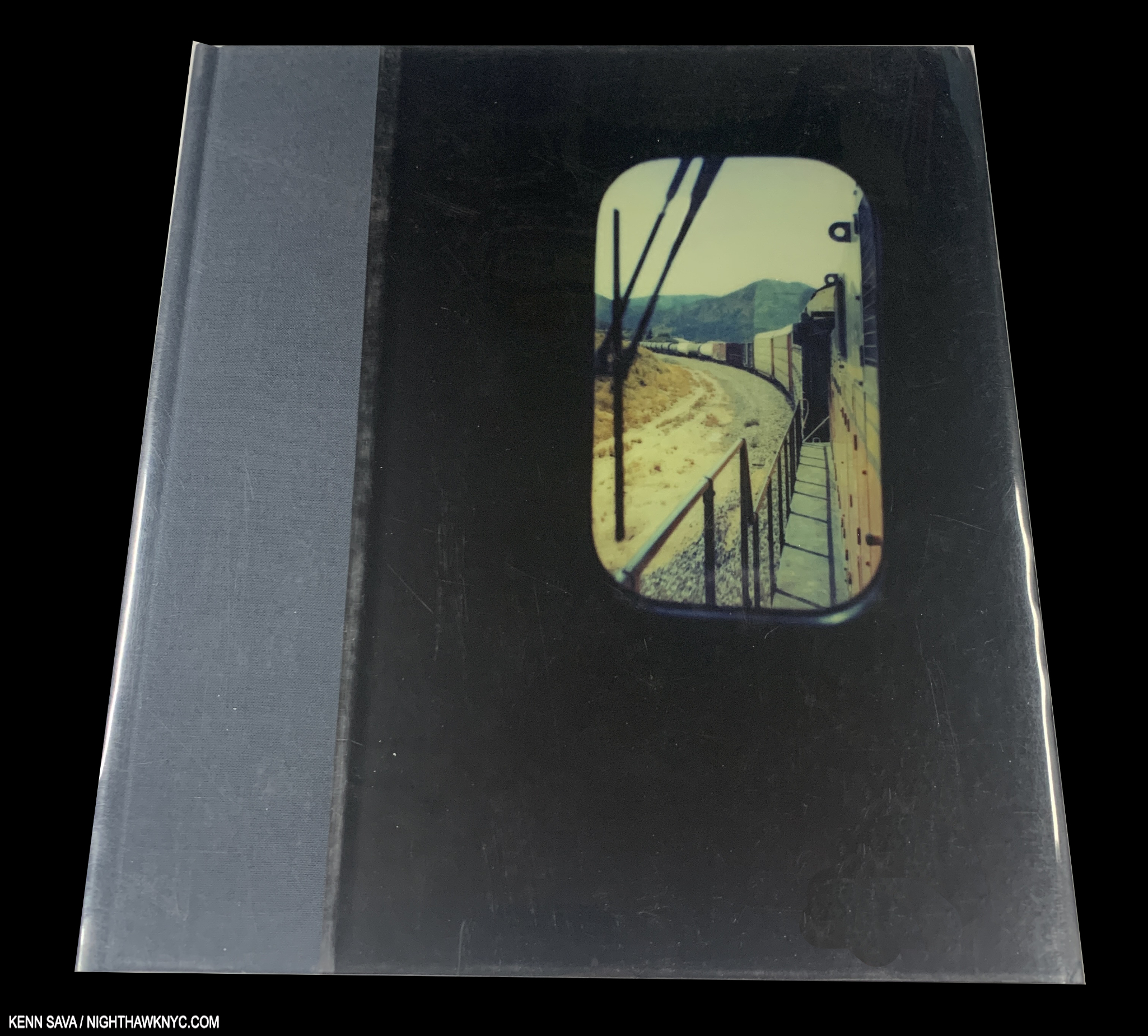
While the mystery in Harry Gruyaert’s work will enthrall me for years to come, I hope the mystery surrounding his lack of recognition here will be history in the near future. After all, I’d rather leave the mystery writing to Simenon.


BookMarksMorocco is Harry Gruyaert’s most renowned book, winning the 1975 Kodak Prize. As he said, it’s been out of print since the last French edition, Maroc, published by Textuel in 2013. At the moment, two books are in print in the USA, Harry Gruyaert, with a red cover, a retrospective, published by Thames & Hudson in 2015, is likely to remain the most comprehensive overview of his work for the foreseeable future, particularly because, as he said, it has the Artist’s direct involvement.

It’s gorgeous, in my view, and the place to start exploring Harry Gruyaert’s work and achievement among books currently in print in the USA.

Harry Gruyaert: East/West, a two volume set in a slipcase, contains East, Photos taken in Moscow near the very end of the USSR in 1989, and West, Photos taken in the American West (including Los Angeles and Las Vegas) in 1981, was published in 2017 by Thames & Hudson. It’s a fascinating look at both places decades ago, and intentionally, or not, provides a powerful visual contrast between capitalism and communism.

East/West

Equally compelling is how much Mr. Gruyaert’s color palette changes between the two bodies of work.

Just released by Editions Xavier Barral this past May (2018) is the new edition of Harry Gruyaert – Roots, a book “about” the Artist’s relationship with his native country, Belgium. It adds over 20 additional Photos to the 2012 edition, which quickly went out of print. As the Artist said in the conversation, he finds today’s printing far superior to what he was able to achieve in the past, making this the edition to get.

Coming soon will be Edges (or Rivages in French), another new edition of an out of print beautiful collection. In visual poetry, Mr. Gruyaert explores the relationship of man to nature, the land to the sea, and the earth to the sky in 144 pages. Soon to be published by Thames & Hudson.

While I recommend starting with the red Retrospective, all of these books are excellent and recommended.

Cover image cropped from an original by Harry Gruyaert/Magnum Photos.

And, for lovers of detective novels, Harry’s images appear as covers on 65 Simenon novels published by, and available in the USA through, Penguin Books.

*- Soundtrack for this Post is “I Should Watch T.V.” by David Byrne & St. Vincent from “Love This Giant.” Lyrics, here. Video, here-
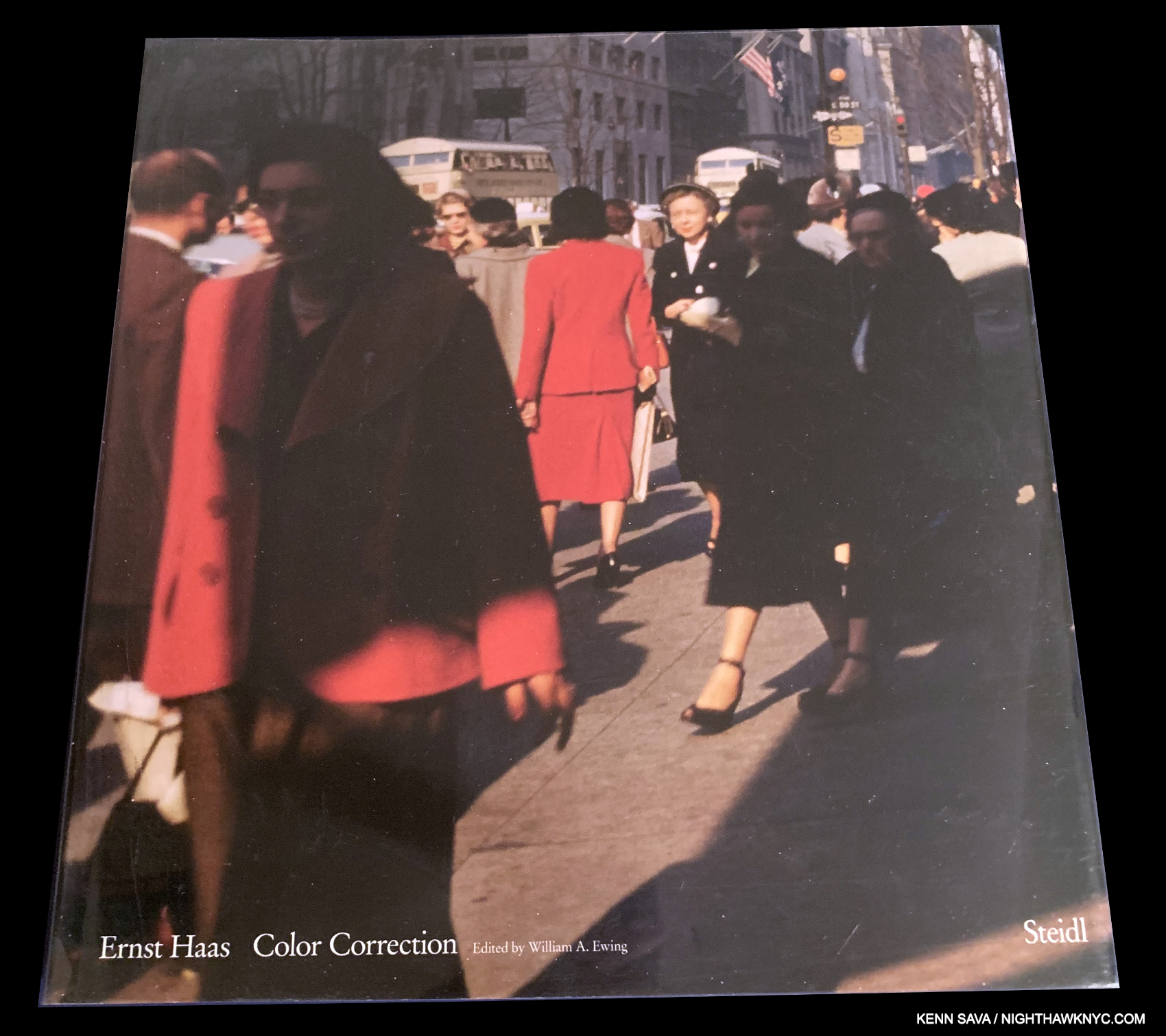
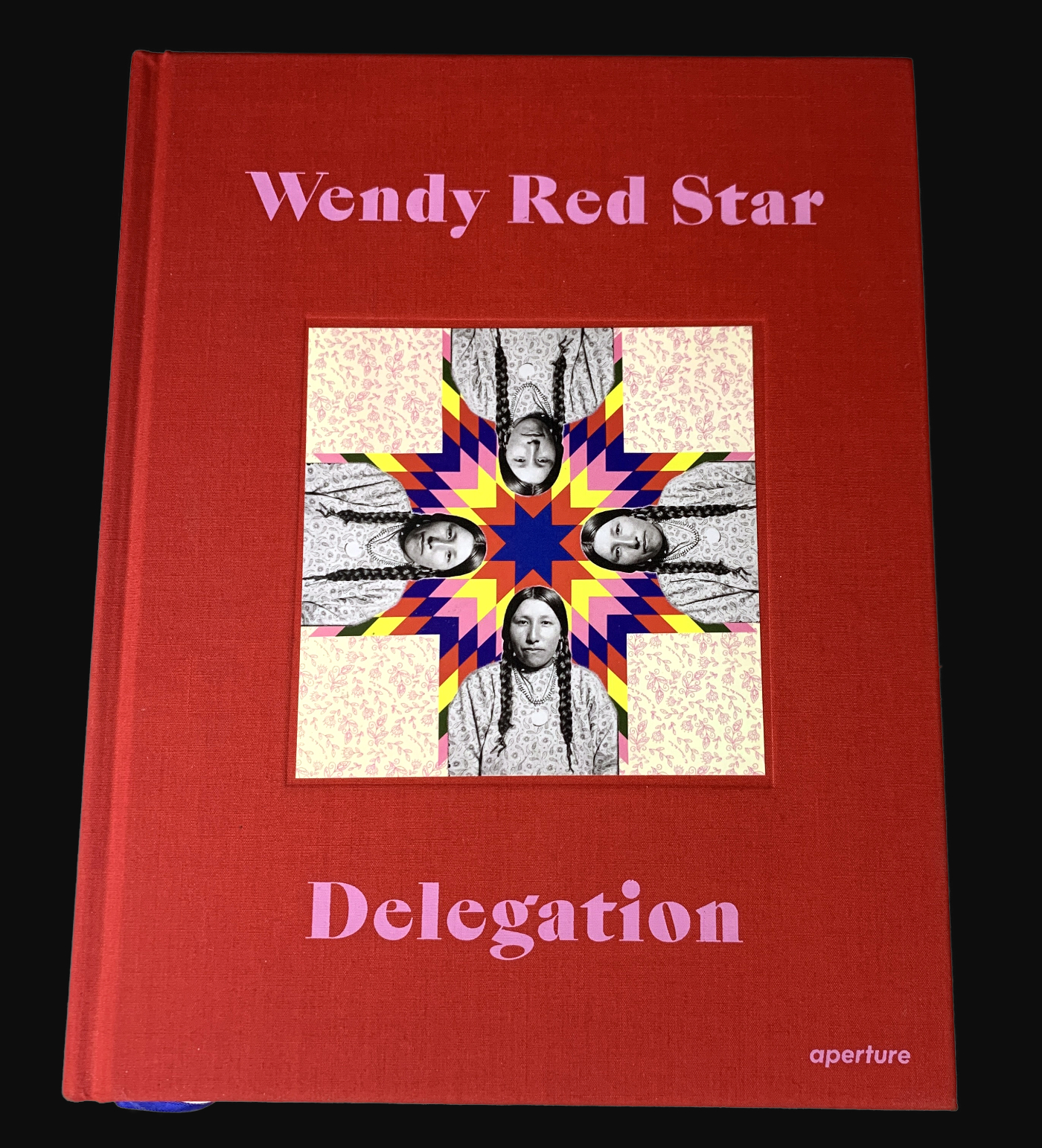
My thanks to Harry Gruyaert and Gallery Fifty One.

My prior Posts on Photography may be found here.

NighthawkNYC.com has been entirely self-funded and ad-free for over 6 years, during which over 250 full length pieces have been published. If you’ve found it worthwhile, you can donate to keep it going & ad-free below. Thank you!

Written & photographed by Kenn Sava for nighthawknyc.com unless otherwise credited.
To send comments, thoughts, feedback or propositions click here.
Click the white box on the upper right for the archives or to search them.
For “short takes” and additional pictures, follow @nighthawk_nyc on Instagram.

Subscribe to be notified of new Posts below. Your information will be used for no other purpose.


  1. In 2009 the Cinematheque Francaise presented Images to Come, an exhibition exploring Magnum photographer’s take on the relationship between cinema and photograhy. The works are displayed alongside still from L’Avventura, The Eclipse and the Red Desert.
  2. Harry Gruyaert: It’s Not About Cars, published by Gallery Fifty One in 2017.

Art In China Since 1989: O Brave New World

Talk about “digging a hole to China.” This one’s right through the Guggenheim’s ground floor! Wang Gongxin, “Sky of Beijing,” 2017, Color video installation with sound.

“MIRANDA:
O, wonder!
How many goodly creatures are there here!
How beauteous mankind is! O brave new world,
That has such people in’t!
PROSPERO:
‘Tis new to thee.”
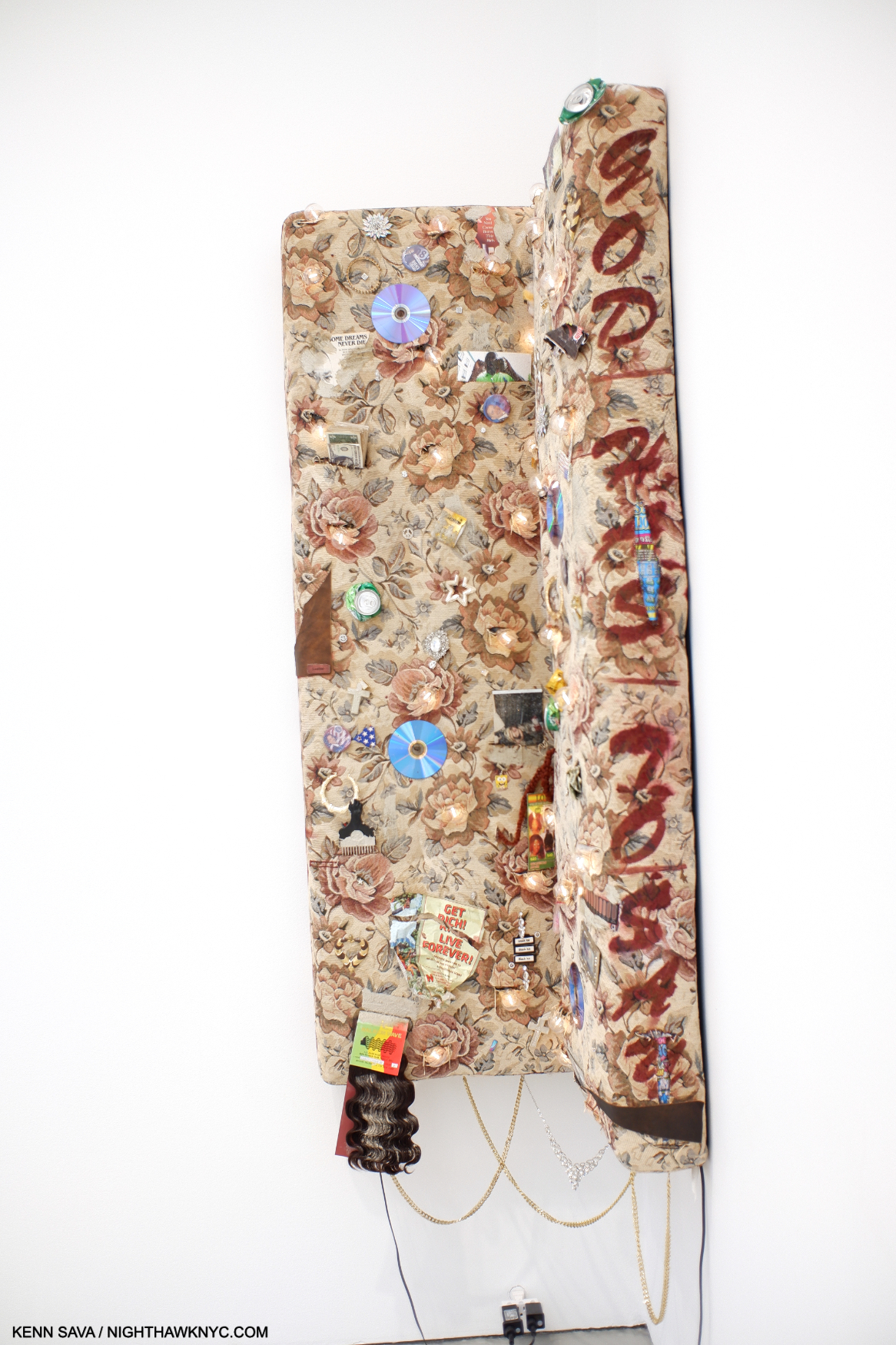
(Shakespeare, The Tempest, Act 5, Scene 1)

The International world of Chinese Art is a dichotomy, it seems to me. On the one hand you have record prices being paid for Chinese Art all over the planet (particularly in the tightly controlled domestic Chinese market1), to the point that China is now the largest, or second largest, Art market in the world, depending on who you read (as of the latest figures, 12/31/2016). Meanwhile, a large part of the Western world is sitting back with absolutely no idea what is going on, who these Artists, not-named Ai Weiwei, are, and what all the fuss is about. Some of this market explosion may be due to a slumping Chinese stock market, some due to limited investment options in China, and some is good ol’ interest in Art. (Of course, prices being paid for any Art, or anything, are no indication of quality or “importance.” Regarding buying Art, my thoughts are here.)
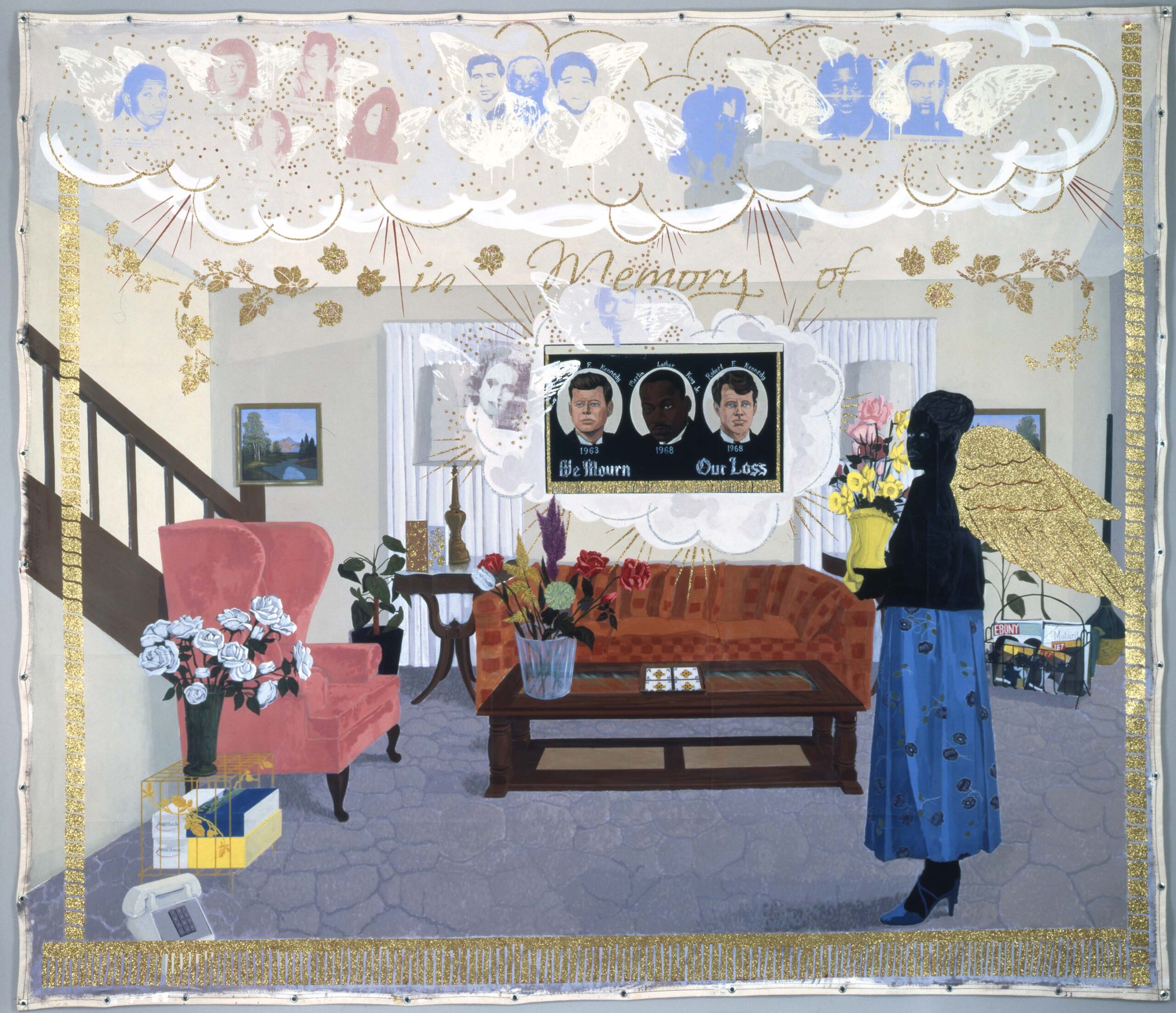
Chen Zhen, “Precipitous Parturation,” 1999, Rubber bicycle inner tubes, fragments of bicycles, toy cars, aluminum, silicone and paint. Though living in Paris, Chen returned to his native Shanghai in 1999, one year before he passed away, where he saw signs that read “By the year 2000, 100 million people will have their own cars.” In response, he created this huge snaking dragon, largely from bike parts, especially the countless rubber bike tires that form it’s body. It’s pregnant belly is opening to reveal a load of toy cars. One older mode of transportation giving birth to the next.
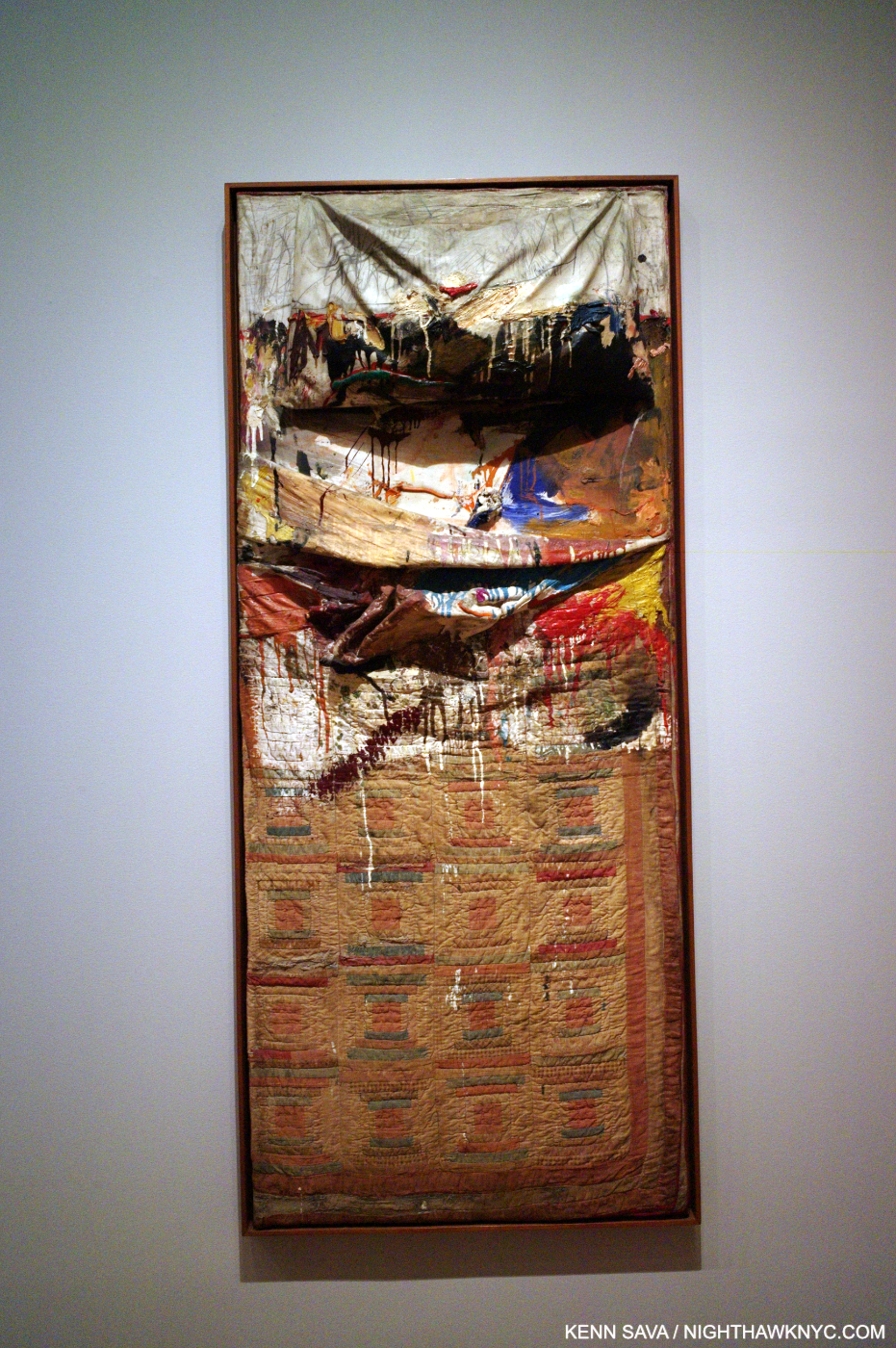
That crack in the iceberg of the lack of broad Western exposure you heard on October 6th was not another artifact of global warming. It was the opening of the Guggenheim Museum’s monumental, and already historically important, show “Art and China after 1989: Theater of the World,” the long-overdue comprehensive NYC Museum introduction to what’s been going on in the Art of China since that apocryphal year of 1989. It’s the biggest show of Contemporary Chinese Art yet in the U.S.A.

Detail of the “bursting belly” full of tiny toy cars. I can’t help but recall that both Marcel Duchamp and Robert Rauschenberg featured bicycles in their works. They are the two Western Artists I was reminded of the most in this show- whether or not they were influences on the Artists.
“Apocryphal” may be putting it mildly to characterize 1989…Empires fell (the communist’s in Eastern Europe). New ones were born (the first commercial internet service & the first written proposal for the world wide web), and other empires trembled- 1989 was the year of a protest involving 1 million Chinese calling for “government reforms and accountability2” that lasted 6 weeks and 6 days centered in Beijing’s Tiananmen Square, (which means “Gate of Heavenly Peace,” named after the Tiananmen to it’s north, separating the Square from the “Forbidden City”). The protests (Plural. They took place in many cities in China) culminated in the  “Tiananmen Square Massace” (or “June Fourth Incident,” locally), in which 10,000 people are said to have been killed, with many more injured.
“It crystallized the spirit of the revolt,” Stuart Franklin, says on the verso of this 2015 Print issued by Magnum of his 1989 Photo, “Protestor in Tiananmen Square,” which he signed on the front. “It was a movement for freedom of expression, for basic rights, and against the outrage of official corruption,” he added. From my collection.

The iconic “Tank Man” Photo was taken by Magnum’s Stuart Franklin on June 5th. A tragic end to the decade of the relaxed “Reform-era,” begun in 1978, 2 years after the death of Mao Zedong. Marked by the “lifting China’s long-closed borders on the world and allowing for socialism’s planned economy to adapt to limited free-market principles3,” it served to stimulate both experimental and avant-garde Artists as well as students to question the status quo and seek other possibilities. Smack dab in the middle of this period, Robert Rauschenberg arrived in China in 1982, his experience inspired him to return and mount the “ROCI CHINA” show (for Rauschenberg Overseas Cultural Initiative), in the country’s most prestigious venue, Beijing’s National Art Gallery, in 1985, which more than 300,000 people visited in the three weeks between November 15th and December 5th!

Robert Rauschenberg, Poster for “ROCI CHINA,” 1985, Offset lithograph, featuring Photos Rauschenberg took in China, as seen at “Robert Rauschenberg: Among Friends,” at MoMA, 2017 (apologies for the glare). The show moved to Lhasa, Tibet after Beijing.

The exhibition “confounded and inspired viewers, whose exposure to Western Art had been limited to reproductions within catalogs, and whose understanding of art had largely been confined to academic Painting, Sculpture, and Printmaking4.” For me, at least, it’s hard to not see that there may be at least some influence of that show here. At the very least, Robert Rauschenberg (Duchamp, etc.) may have inspired Artists with a broader range of possibilities, as he has countless other Artists in the West. At the same time, however, many Chinese Artists were rejecting the “New Wave,” and all outside influences, focusing on finding their own answers and their own way forward. After June 4th in Tiananmen Square, radical economic reform came in, experimental Art was no longer “sanctioned,” all backed by strong suppression of any mention of what had happened on June 4th in the press, media, online, or in history books, that continues to this day, as do the international sanctions that the rest of the world responded with.

The scene outside the National Art Gallery during “China/Avant Garde,” with it’s famous “No U-Turn” Sign. From this moment on, there would be “no turning back.”

Four months before that horrible end, another event took place that has had lasting impact-inside and outside of China. The “China/Avant-Garde” Art Show opening on February 5th, 1989, which is seen to be the “official” start of Contemporary Chinese Art in some quarters, and marks the beginning of the period covered by this show. “China/Avant-Garde” was “official,” in more ways than one. First, it was officially sanctioned, as hard as it may be for most Westerners to believe, as the “China Modern Art Exhibition,” on one condition- that there would be no performance Art, and second, it was held in the National Art Gallery, Beijing, where Rauschenberg’s show had been 4 years before.

The “Official sanction” didn’t last long. Two hours after it opened, Artist Xiao Lu fired a gun at her own work, “Dialogue,” and the police shut the show down for breaking the ban on performance Art. It opened and closed a few times (once for a bomb scare, which might have been a “performance”), before running it’s scheduled allotted length of time. By then it had made history- Artistically, culturally, historically, and influentially. While many Artists wound up leaving the country after the climate changed, a good deal of that experimental creative spirit and energy remains. Regardless of where the Artists may be now, the range of creativity on view at the Guggenheim was unceasing, eye-opening, and a good deal of it was operating on multiple levels simultaneously.

Xiao Lu fires a pistol at her work “Dialogue,” Custom-made telephone booth, Photograph, red telephone, glass, mirror, on February 5, 1989, 2 hours after “China/Avant-Garde” opened causing the immediate shutting down of the show. Photo from xiaoluart.com

With so many Artist options and so much time to cover (27 years), any number of alternate shows could’ve been mounted, but I think that what made it into Frank Loyd Wright’s rotunda and the two adjoining galleries, was, on the whole, exceedingly well chosen, with the caveats that, yes, that with 71 Artists included there should’ve been more than nine female artists included- a little under 8%, and, it felt to me that there was a plethora of video and installation Art, at the expense of other mediums, like Painting and Photography.

Lead curator Alexandra Munroe sums up the “post-Reform” environment- “Historical turbulence has given rise to an intelligentsia with a profound sense of skepticism towards governing ideologies and a predisposition to pragmatism in the absence of enduring meaning.” This extended to Artists working post-1989. “They produced works that questioned systems of truth and ideological formations…Eschewing Western humanist avant-garde ideals…experimental Artists approached ‘contemporary art’ as a new ‘other’ space outside the Western and Chinese Art words5.”

Ai Weiwei, “Dropping a Han Dynasty Urn,” 1995, 3 Gelatin silver prints and “Han Dynasty Urn with Coca-Cola Logo,” 1993, left, Paint on earthenware.

For me, a classic example of this is Ai Weiwei’s “Dropping a Han Dynasty Urn,” 3 Gelatin silver prints, from 1995, is a prime example of letting go (sorry) of the past, it’s influence, and the “baggage” the past brings with it for Artists to “live up to,” or to continue what has been done before.

Many are undoubtedly familiar with those Ai Weiwei works. Not being able to include everything else on view in this piece, I’m going to focus on what stood out to me in Painting, Drawing & Photography, along with a few other works in other mediums I just have to include. The works are not listed in any particular order.

Huang Yong Ping, “The History of Chinese Painting And A Concise History of Modern Painting Washed in a Washing Machine for Two Minutes,” 1987, reconstructed in 1993, Ink on wooden crate, paper pulp and glass. The original was a work displayed at “China/Avant-Garde,” in 1989.

Huang Yong Ping, “The History of Chinese Painting And A Concise History of Modern Painting Washed in a Washing Machine for Two Minutes,” 1997, Ink on wooden crate, paper pulp and glass, begins this show with a strong statement that the past is over. History, as written in these two Chinese Art History Books, needed to be cleansed. The result is illegible, and so stands as a metaphor. Here is an Artist struggling with the question of how to become “modern” without becoming Western. Will studying Art History lead to something truly new, or will it just be recycling what’s been done? On one hand, the pulp though having been washed, is dirty. But, the slate has, also, been wiped clean since the books are now illegible. As Joe Strummer said, “The future is unwritten.” After this work, (which was shown in the 1989 “China/Avant-Garde” show), it was. As such it stands as an ideal starting point for this show. Let’s see what was “written” after.

Wang Xingwei, “New Beijing,” 2001, Oil on canvas. In this work Wang Zingwei reimagines a well known Associated Press news photo by Liu Heung Shing, “Beijing- Rushing students to hospital,” 1989, taken on June 4th during the Tiananmen Square tragedy, where heroic bicyclists were shown rushing off with some of the wounded/injured, or deceased. Everything is as it is in the Photo, except Wang Xingwei has substituted 2 Emperor Penguins- animals not native to China, and therefore devoid of the political import Painting 2 wounded (or dead?) students would have had, while those helping are pulling together in ways that Chairman Mao espoused.

Wang Guangyi, “Mao Zedong, Red Grid No. 2,” 1988, Oil on canvas. Daring, and shocking, even 12 years after the death of Mao, given the omnipresence and power of his image in China. Unlike Andy Warhol’s “Mao as celebrity” series on the early 1970’s, Wang Guangyi has placed the former Chairman in a grid. It almost looks like he’s behind bars. It looks like it was done by (or influenced by) Chuck Close. The grid being one way Artists, including Close, have traditionally transferred images from one medium to another, but here it feels like there’s a different kind of transferring going on. Wang Guangyi painted this in 1988, 12 years after the subject’s passing, when it’s “meaning” is something else, something less fearful, something almost as neutral as the color he’s painted in, where it looks more like an old black and white Photo, and as such, it’s an image now locked in the past.

Liu Zheng, “The Chinese,” 1994-2002, 120 Gelatin silver prints. Among the Photography on display, these examples from the series of 120 stood out. Having worked on the state-run “Worker’s Daily” newspaper, his images go beyond the social realism they favored into a realm that isn’t quite “Street Photography,” and is significantly different from Robert Frank or Diane Arbus’ work, though the title is reminiscent of Frank’s “The Americans,” 1958. The rawness of the image is matched by the Photographer’s approach, which varies in each memorable shot.

Zhang Xiaogang, “New Year’s Eve, 1990,” Oil on canvas with collage of cloth and playing cards. After being hospitalized due to a bout with alchoholism, Zhang emerged from a dark period in his life in 1985 and joined the New Wave movement. This work has a haunting isolation to it. All we can really see are the figure’s left hand and his head/face. It’s as if he’s disembodied. In front of him lie 2 playing cards an unlit candle and a knife. Has the candle gone out? Is the knife for protection or self harm? This work was Painted after Tiananmen Square and refers to the beginning of the New Year. A black cloth hangs over the subject’s head, like a black cloud, with a red lining, possibly referring to additional raining of blood. The eyes stare straight out from the canvas, but not at the viewer. His glance doesn’t seem to make it out of his eyes.

Zhao Bandi, “Young Zhang,” 1992, Oil on canvas. One of the more popular Paintings in the show, judging by how many selfies I’ve seen taken in front of it online. It’s effect goes beyond it’s unorthodox off center hanging. Zhao shows us a young worker, living in a cramped space with few belongings beyond his embroidered comforter and a TV. Rising from sleep, he puts on his glasses and grabs a cigarette and stretches as he begins his day in his life in post-Reform China, where the economy is now booming, though the fruits of that may be slow to reach all levels of the workers.  This work was painted with a model in the Artist’s small room, on his bed. The title “Young Zhang” could really be “Young Everyman,” with Zhang being one of the most popular surnames in China.

Lin Yilin, “Safely Maneuvering Across Linhe Road,” 1995, Still from Performance video, CITIC Plaza, June 3, 1995

Lin Yilin, “Safely Maneuvering Across Linhe Road,” 1995, Color video with sound 36 minutes 45 seconds. Living in Manhattan, where pedestrian safety is an ever-increasing concern, there was no way I could leave this work out.

].”

Here, the Artist constructs a wall of cinder blocks on a road, then moves it block by block, column by column, across all 4 lanes until he reaches the other side, safely.  At the show, all 36 minutes of it were looped. While I immediately related to the issue of trying to cross any street safely, Katherine Grube, who spoke with the Artist, said “Mr. Lin’s objective was to create a ‘movable wall,’ animated by his own efforts that would interrupt the steady flow of traffic…and call attention to the unnatural, inhuman pace of urbanization and the human dislocations necessary to, and inseparable from such monumental environmental change6.”

Ai Weiwei, “June, 1994,” Gelatin silver print

Ai Weiwei, “June, 1994,” Gelatin silver print- A while back in these pages I called Ai Weiwei the “Artist of the Decade,” even though there were three years left to run in it. I still feel good about my choice. He was named the #1 “Most Influential Photographer in the World,” among 50 selected in 2013, and by now he is, or will soon be, the most Photographed Artist in Art history. Still, it’s now obvious that he’s not the only important Chinese Artist of the past, let’s call it 3 decades. While his works, “Fairytale,” 2007, and “Citizen’s Investigation,” 2009-10, both “multi-media,” for lack of a better term, were also included, I picked this one because Ai Weiwei was in New York in June, 1989, when Tiananmen Square happened. He took this in Tiananmen Square on the 5th anniversary. It features his future wife, Lu Qing, center, while two soldiers walk casually behind her, another woman has her back to her right behind her, and, at the moment Ai shot this, a pensioner driving a powered cart, with his or her crutches visible, drives into the frame. Mao overlooks the whole scene. in the distance. What I haven’t seen mentioned, either on the wall card, or in the show’s catalog is that beginning the next year, 1995, Ai Weiwei began his famous “Study of Perspective” Photograph series, that lasted until 2003, where he flipped off important monuments around the world, including Tiananmen Square. Perhaps, learning from his experience with “June, 1994,” he opted to create a similar “affront” to “power” through means that required less “production,” and therefore, allowed him more control over the final result. Yes, it can be said he, therefore, stripped it down, even further than here, to it’s bare essentials.

Liu Dan’s “Splendour of Heaven and Earth,” 1994-95, Ink on paper. 196 by 75 inches. Photo- Liu Dan, Guggenheim Museum.

Liu Dan, “Splendour of Heaven and Earth,” 1994-95, Ink on paper. Besides Ai Weiwei, Liu Dan is the other Contemporary Chinese Artist that has captivated me since I discovered him at The Met’s “Ink Art: Past as Present in Contemporary China” show in 2013. A close look at the incredible detail in his (often) huge works, reveals the man is a magician. I have since tracked down every book of his work I can find. Each of his larger works have the look and feel of being part of a giant scroll, with no “beginning” and no “end.” They seem to be influenced by ancient Chinese landscape Painting and the study of “Gongshi,” or “scholar’s rocks,” which have the abstract qualities of fantastic 20th Century sculpture. Still, I have absolutely no idea how he creates such incredible Paintings/Drawings, this one is almost 16 1/2 FEET long! Now living in the USA, he is gradually receiving the attention he richly deserves (witness “Ink Unbound: Paintings by Liu Dan,” where he reimagines classics of Western Art, which closes on January 29th at the Minneapolis Institute of Art). It might be too late for latecomers, though. His work already fetches large sums at auction, making it hard for it to find it’s way into public collections.

Liu Xiaodong, Two works from “Battlefield Realism: The Eighteen Arhats,” 2004, Oil on canvas.

Liu Xiaodong, “Battlefield Realism: The Eighteen Arhats,” 2004, Oil on canvas, 18 panels. Liu Xiaodong created a series of 9 diptychs of portraits of soldiers stationed on islands that are contested by China and Taiwan, Painting one soldier in each army in a pair. After Painting each portrait, he asked the subject to Paint their name, age and birthplace on the work. The result makes it hard for outsiders to know which army each soldier represents, and brings home the fact that though the soldier on the left, above, is 20, they all look very young, and the series quickly becomes a powerful meditation on…well, that’s up to you. For me, the two sides look indistinguishable. I can’t tell which side is which. About all that’s obvious is that these are young people with their whole lives ahead of them…unless war cuts them short.

Gu Dexin, 2009-05-02, 2009, Mounted on the top of the surrounding walls, Paint on 72 wood panels, Yang Jiechang, Lifelines I, 1999, On center pillar (and below), Ink and acrylic on paper mounted on canvas, as seen at the Guggenheim.

Gu Dexin, “2009-05-02,” 2009, Paint on wood, (Originally consisting of ) 74 panels, concrete and red lacquer, color video installation. Its’ fitting the show ends with Gu Dexin’s work, “2009-05-02,” At the Guggenheim, it consisted of a frieze surrounding the space who’s panels contain 11 sentences, unbroken, unpunctuated and repeated, which read, “We have killed people we have killed men we have killed women we have killed old people we have killed children we have eaten people we have eaten hearts we have eaten human brains we have beaten people we have beaten people blind we have beaten open people’s faces.” These sentences are said to evoke the revolutionary writer Lu Xun’s “A Madman’s Diary,” from 1918. The work bears the same title as the show at which it debuted, as seen below, where it consisted of three components- a video of white clouds in a blue sky looped on video screens mounted over the gallery’s windows, above the 74 Painted panels. At the center of the gallery’s floor was a concrete plinth bearing a single sentence: “We Can Ascend To Heaven.” The show was up during the 20th Anniversary of the June 4th Incident in Tiananmen Square.

Gu Dexin, “2009-05-02,” installed at it’s premiere, Galleria Continua, Beijing, May, 2002, with the concrete plinth with red lacquer, below, and the video screens, above, from the show’s catalog.

During the run of the “2009-05-02” show, “Gu Dexin declared that ‘2009-05-02’ would be his last Artwork. He then proceeded to retreat entirely from Art and the Art world, which he understands as having become complicit in a political, cultural, and moral system which he refuses to accept. This refusal, more than any single object or image, may be his most enduring work of Art…He is, in singular ways, the conscience of his generation7.”

Yang Jiechang, “Lifelines 1,” 1999, Ink and acrylic on paper mounted on canvas. 236 x 91 inches.

At the Guggenheim, Gu Dexin’s “2009-05-02” panels were installed surrounding Yang Jiechang’s “Lifelines 1,” 1999, in the final gallery at the top of the 6th floor. Of “Lifelines 1,” which Yang Jiechang created for the 10th Anniversary of Tinananmen Square, Alexandra Munroe says, “”It recalls the pathways volunteers made in Tiananmen Square during the demonstrations to ferry hunger-striking students to the hospital8.”

I’ve never been to China so I have to see this show through Western eyes. Overall, I find Chinese Contemporary Art to be one of the most interesting and fresh realms of Contemporary Art anywhere9. I’m not sure exactly why, but it seemed to me that even the most “avant-garde” works were not as obtuse as much of what I see around NYC, and most of what I’ve seen in my lifetime. While I’m not big on Art that meeds to be “explained,” given the differences in language and culture, I took a different approach here in an effort to “meet the work halfway.” Almost every time I did, I found the work not only made sense, I became aware of different levels the Artist was working on. Of course, it should be said that though Shakespeare’s “Tis new to thee” applied to me, with the two noted exceptions, most of these Artists have been long established both in China and Internationally. As I said, however, it would have been possible to mount any number of alternate shows given the universe of Artists to choose from. As a result, the only possible way to look at this show is that it represents “the tip of the iceberg” of Contemporary Chinese Art.

Therefore, trying to sum up this show is as pointless as trying to  sum up China itself. The strength of the show lies in the diversity of its vision, that so many unique, strong voices are at work creating impressive, and interesting, work right now is what counts. At those times when I wonder where the next big breakthrough will come from I see I need to cast a much wider net. It’s out there. And it’s probably going on right now out of the gaze of most of us.

“It’s new to thee,” indeed.

If this work can come out of/be born of repression? There may be more hope for the world than I feared.

“Art and China after 1989: Theater of the World” is my NoteWorthy show for December. 

My previous Posts on Ai Weiwei, covering his NYC shows in Brooklyn in 2014 and four Manhattan shows in 2016 may be found here.
My look at Cai Dongdong’s recent show at Klein Sun Gallery may be found here

*- Soundtrack for this Post is “Brave New World” by Iron Maiden, released in 2000 on the album of the same name, which was inspired by Aldous Huxley’s novel.

NighthawkNYC.com has been entirely self-funded & ad-free for over 7 years, during which over 275 full length pieces have been published!
I can no longer fund it myself. More on why here.
If you’ve found it worthwhile, PLEASE donate to keep it online & ad-free below.
Thank you, Kenn.

Written & photographed by Kenn Sava for nighthawknyc.com unless otherwise credited.
To send comments, thoughts, feedback or propositions click here.
Click the white box on the upper right for the archives or to search them.
Subscribe to be notified of new Posts below. Your information will be used for no other purpose.

  1. diplomat.com “China’s Art Market Is Booming…”
  2. time.com Tiananmen Protester Wang Dan
  3. “Art and China after 1989: Theater of the World,” Exhibition catalog, p. 23. The show’s exceptional catalog is one of the best I’ve seen, for any show, in many years. It’s much more than a guide to this show. It also includes extensive documentation on the history of Contemporary Art in China, including an in-depth look at all previous larger shows of Chinese Contemporary Art, internationally, biographies of Chinese Artists & Artist Groups, and a guide to reference texts on the subject by year, all of which will make it a standard reference on the subject in the USA for the foreseeable future.
  4. UCCA, “Rauschenberg in China,” 2016
  5. Exhibition Catalog P.25
  6. Exhibition catalog, P. 157
  7. Alexandra Munroe, Philip Tinari, Exhibition catalog for this show, P. 286.
  8. Exhibition catalog, P.35
  9. While keeping an eye on Africa.

On The Frontiers of Photography: Trevor Paglen, Willa Nasatir, Caslon Bevington

Written & Photographed by Kenn Sava (*-unless otherwise credited)

While I’ve spent much of this year exploring the world of Photography, my focus has largely been on the period beginning with Robert Frank’s universally revered book The Americans, 1958. Most of those I’ve encountered work in fairly “traditional” realms- “Find a subject and shoot it.” Ah…the good old days. Of course, the world isn’t going to stand still for me while I look back, thank goodness, a point brought home by 3 concurrent shows this fall.

Unprecedented times call for extlraordinary means. Trevor Paglen at work on a prior project using equipment originally designed to see distant galaxies. Photo from his website.

Trevor Paglen (B. 1974), who holds both an MFA from the Art Institute of Chicago’s School and a PhD in geography from Berkley is, perhaps, best known for his Photos of “black sites”- classified defense department/CIA/NSA installations. Those pictures are usually murky, because of the haze from the extreme distances he has to work from because of security, and legal, restrictions to shoot many of these places. He prefers them that way, usually foregoing clearer images because, as he told the New Yorker in 2012, his “aim is not to expose and edify so much as to confound and interest1.” In the same piece, he said that a clearer image would say “a little less, really,” adding “that blurriness serves both an aesthetic and an ‘allegorical’ function2.” “It makes his images more arresting while providing a metaphor for the difficulty of uncovering the truth in an era when so much government activity is covert,” writer Jonah Weiner concluded3. As a result, some of his more “atmospheric” work have been compared to Painters, including J.M.W. Turner and Gerhard Richter, by some.

So, I was somewhat surprised when I walked into his new show, A Study of Invisible Images, at Metro Pictures. Robert Longo’s The Destroyer Cycle had recently been up on these walls, featuring huge charcoal drawings deep with socio-political imagery. I was expecting more of the same from Mr. Paglen given his books of “black site” Photos.

That’s not quite what we get.

Installation view, with a still from his video, Behold These Glorious Times, 2017. Click any image for full size.

It’s about something different, though not entirely unrelated. It turns out that Mr. Paglen has, also, been deeply involved in studying computer learning, specifically, how computers see the world. As he explains in the “Artist’s Notes” for the show-

 “Over the past decade or so, something dramatic has happened to the world of images: they have become detached from human eyes. Our machines have learned to see. Without us.”

He goes on to talk about how smart airports, smart homes, even smart cities are becoming ubiquitous, with self-driving cars possibly on the way, before adding, “Most images these days are made by machines for other machines, with humans rarely in the loop. I call this world of machine-machine image making ‘invisible images,’ because it’s a form of vision that’s inherently inaccessible to human eyes. This exhibition is a study of various kinds of these invisible images.” They break down to three groups- “machine readable landscapes (landscape images overlaid with marks that show how they’re being interpreted by machines), training images (made by humans for machine eyes), and things that we might call ‘ghosts.'”

It Began as a Military Experiment, 2017, ten pigment prints

While the new iPhone X uses facial recognition technology instead of passwords or fingerprints, this technology is nothing new. The military wanted it developed back in the mid-1990’s, so the Defense Advanced Research Projects Agency (DARPA) began funding research. They quickly realized they needed to create a gigantic database of facial images and these folks, above, mostly military employees, were among the first of tens of thousands of photos it took and compiled into what was called the FERET database. Mr. Paglen then combed this database to arrive at this selection of faces. He then ran them through an algorithm to locate the key features of their faces. “One of the ways I think about these portraits is as a kind of super-structuralism in the sense that they are images not made for human eyes. They are meant for machine eyes. What’s more, these photos represent the original faces of human facial recognition- the ‘Adam and Eves’ that nearly all subsequent facial recognition research has been built upon,” he says in the “Artist’s Notes.”

Closeup of the fifth Portrait, shows the key points on his face.

Recognizing one face out of this gigantic database first requires a “faceprint,” made out of all of the faces of a particular subject, aligned so their eyes and mouths are in the same place. Once you “average” them, you subtract the average image of all the other people in the database from the average of your subject. You’ll end up with a faceprint of your subject showing what distinguishes him form everyone else in the group. This portrait translates the faceprint of philosopher Frantz Fanon into an image that looks like a face to human eyes.

We’ve gone from the images seen just above- images that humans would recognize as people and faces, to this, an image constructed from computer to computer images so humans can recognize it as a face. Fanon”(Even the Dead Are Not Safe) Eigenface, 2017, Dye sublimation metal print. The Afro-Carribbean psychiatrist Frantz Fanon is the subject.

It gets stickier from there. The Artist’s Notes continue, “A.I.s (artificial intelligences) are taught how to recognize objects by giving them training sets….(which may) consist of thousands or even millions of images organized into pre-sorted classes that correspond to each of the kind of objects that the A.I. will eventually be able to distinguish. For example, if you want to train an A.I. to recognize all the objects in a kitchen, you might give it a thousand pictures of a fork, a spoon, a knife, a countertop, etc…Once that A.I. is trained, you can give it a picture of a fork it has never seen before and it should be able to recognize it as a fork. ” After mentioning that “every image posted to Facebook or other social media sites undergoes powerful artificial intelligence algorithms that can recognize the identities of people, the objects, the products, and even the place depicted in those images,” Mr. Paglen created his own “massive” training sets, “based on literature, philosophy, folk-wisdom, history, and other ‘irrational’ things, and taught the A.I. to recognize things from those ‘corpuses.'” The last half of the show consists of the results of these experiments, which are much more ethereal and evocative than literal, at least to this human’s eyes.

A Man (Corpus: The Humans) Adversarially Evolved Hallucinations, 2017, Dye sublimation print.

Mr. Paglen has groups this part under the broad heading of Hallucinations, or Adversarilly Evolved Hallucinations. These further break down into the subcategories, or Corpuses, which includes-
Corpus: Eye Machines (Fittingly)
Corpus: American Predators (The Artist’s notes include Mark Zuckerberg, who he lists as a “predatory machine,” reminding viewers that computers mine every image loaded to his site and are capable of reading a tremendous amount of information from them.)
Corpus: The Humans (As seen in the image above. Porn was included in the training sets, and another image depicts it as seen by a computer…or so the title says.)
Corpus: Omens and Portents
Corpus: Interpretations of Dreams (Examples of both are seen below.)

Rainbow (Corpus: Omens and Portents), left, False Teeth (Corpus: Interpretation of Dreams) both from Adversarially Evolved Hallucinations, 2017, Dye sublimation prints.

Trevor Paglen seems to like to push the boundaries of our perception while avoiding the sharp detail most Photographers live by, which, indeed, ventures into the domain of Painting. Now, he has gone beyond what humans can perceive, and into the realm of what is only “seen” by computers to create Art for humans. I wonder how long it will be before computers get around to doing that for us on their own.

Installation view, with another still from his video, Behold These Glorious Times, 2017.

These images are haunting, nightmarish, and beautiful, at the same time. In his Art Basel Conversation with Jenny Holzer, Mr. Paglen said the basis of his work can be summed up as- “How do you see the historical moment that you live in?” This show certainly provides answers to part of that question, though it raises others. Mr. Paglen’s new work is no less unsettling than his “black sites” and drone Photos. Perhaps most unsettling is not what’s in these images. It’s what they portend for the future.

Willa Nasatir,R.V., The Green Room, Bird, Blue Girl, Sunbather, Conductor, 2017, Chromongenic print mounted on wood, from left to right. Installation view, Whitney Museum.

Unlike the other Artists featured in this piece, Willa  Nasatir (B. 1990) doesn’t use digital techniques to create her Photographs. That might be hard to believe after seeing her work. Her analog process involves creating props, often from found objects, shooting them, and then reshooting the resulting Photographs, which has sometimes been modified by fire, water, and any number of other things. The results, as seen in her revelatory Whitney Museum show, “Willa Nasatir,”achieve something of a 3D effect in a 2D work. Fresh from a show at the Knox-Albright Art Gallery, Buffalo, who owns one of her most stunning images, Ms. Nasatir shows herself to be at once a throwback, and a visionary.

The Red Room, 2017, Chromongenic print mounted on wood. The-Albright-Knox Art Gallery owns this one. They chose well.

Ms. Nasatir created the 6-part work, shown first in this section, especially for the Whitney’s long gallery wall, the unifying feature of which seems to be the color grey with green or blue. All of the works on view are dated 2017 and show a remarkably consistent unity of style and vision, and a somewhat daring use of color.  As for what’s going on in these, or any of her work? You’re on your own. The Whitney’s introduction to the show says, in part, “The resulting works are hand-manipulated images that become psychologically charged and difficult to discern; the viewer is left to parse out unresolved narratives that the image only implies.”

The Green Room, 2017. When I look at this, with it’s mirror reflection, even some of it’s props, I can’t help but recall Samara Golden’s work in this year’s Whitney Biennial.

Hmmm…Where have I heard that recently? Her style shares some similar props and some of the effect of Samara Golden’s work, particularly The Meat Grinder’s Iron Clothes, 2017, which I felt was the show-stopper of this year’s Whitney Biennial. Ms. Golden’s work can look like “sets” that Willa Nasatir might base one of her Photographs on. Whereas I called Ms Golden’s astounding work in this year’s Whitney Biennial “unphotographable,” (as a whole), Ms. Nasatir’s Photographs are often impossible to locate in the real world. Both Artist’s works features elements of the “known world,” but place them in contexts which are unknown, mysterious, ominous.

Samara Golden’s The Meat Grinder’s Iron Clothes, (detail), 2017, at the Whitney Biennial earlier this year.

In thinking about precedents for Ms. Nasatir’s work, Man Ray once again comes to mind. Ray, of course, didn’t use digital techniques, either. He pre-dated them. The Dadaists, Marcel Duchamp, the German Expressionist filmmakers also come to mind, as do Robert Rauschenberg’s found objects. But, as with Samara Golden, it’s what these image stir in the mind, and the mind’s eye, that overcomes any attempt at reference- in the real world, or the historical one.

Willa Nasatir, Street Sweeper, right, Half Heart, Bus Depot, both 2017, Gelatin silver prints.

It all fades away as you ponder “What happened here?” Or, “What is about to happen?,” and then feel resonances in your mind and life. Oh, and by the way, there’s the beauty of her work, which I say as almost an afterthought, though it’s not, to their main impact- mystery.

Butterfly, 2017, Chromongenic print mounted on wood.

With two museums shows to her name by her mid-20’s, Willa Nasatir is an Artist who’s stock is rising pretty quickly. It will be interesting to see how her work evolves from here.

Caslon Bevington (B. 1992) is an up and coming NYC Artist I met during the run of the Raymond Pettibon show at David Zwirner. Her reaction to that show struck me, so I became interested in seeing her work. To this point, I had only seen what’s on view on her gallery’s, Apostrophe NYC’s, website.

One of the earlier pieces by Csalon Bevington I saw on Apostrophe NYC’s site. When I saw it in person, I guesstimated it at 12 feet tall. Photo courtesy of the Artist & Apostrophe NYC

My shock was palpable when I walked into her show, A Home for Formless Creatures: The Charisma of Fragmentation, at Apostrophe NYC’s studio & gallery space at Mana Contemporary in Jersey City, NJ. (Yes…I went to N.J.) to find she had spent the summer creating a new body of work that, at first look seemed quite different from what had come before. When I looked at the show of new work one word summed up the experience.

Qucksilver…

Installation view of Caslon Bevington’s show A Home for Formless Creatures: The Charisma of Fragmentation, shows her new, Translation, series, 2017. Photo by Roman Dean, courtesy of the Artist and ApostropheNYC

As fast as lightning, her work had altogether changed and, low and behold, there was an entire show of new work that was largely unlike any of her work I’d seen thus far. The show centered on a series of 10 works in which the Artist takes found and original images and processes them using more software programs than she could list for me, including some involving sound waves. The results were outputted to paper and then mounted on wood blocks with resin to create a series of black and white works titled “Translation” that are quite mezmerizing.

Caslon Bevington, Translation #8,, 2017. Photo by Roman Dean, courtesy of the Artist and Apostrophe NYC

They have the glossy surface of gelatin prints, but the images are mounted on blocks that extend 2 and a half inches out from the wall, jutting into the viewer’s space. Their rectangular shape and size (7 x 11 inches) is different from the usual sizes of Photographs, making them feel like something else. In them, images are juxtaposed- sometimes recognizable images (like fire escapes), with unrecognizable images, or repeating lines or waves, or abstract patterns or circles, leaving the viewer somewhere between reality and…?

Translation #10, 2017. Photo by Roman Dean, courtesy of the Artist and Apostrophe NYC.

They have a presence as a group, like a visit to another world that exists in multiple visual dimensions. Images explode out of some, interrupt others, or dialogue with each other, or mirror each other, while sharing not quite half of the work. There’s an elegance, an other-worldliness, and a haunting presence to these new works, especially, when seen in a group of them.

As for Quicksilver…What are the processes in an Artist’s mind that leads to such radical changes in their direction? Changes that seem “quick” to outsiders?

The Artist’s statement in the lovely catalog she produced, in conjunction with Apostrophe NYC, for the show.

Later, she gave me a tour of her studio, and we looked at, and discussed, her earlier work. I was very surprised at the journey her work has taken. Having studied at the Art Student’s League and Parsons, the drawings she showed me were by no means academic. They explored geometric possibilities of color in abstraction. Later works all around were often complex weaves (literally) of painted cut strips of fabrics and canvas, in a square or rectangular grid. She then explored the possibilities of rope in patterns that freed the composition from the grid, and made the picture plane transparent, including one fascinating and intricate rope work of many layers on a large rectangular frame that looked to me to be about 12 feet tall (shown earlier). Ms. Bevington has also worked in metals bending strips of them onto a frame, delicately weaving each piece, and in fashion, creating a very cool T Shirt for the show.

Flying Saucer Archive, 2017, Photo Transfer on Linen. Photo by Roman Dean, courtesy of the Artist and Apostrophe NYC.

Along with these works, were some works, that also involved Photographs, on woven grids, that seem to bridge the woven grids seen in some of her prior work. One features found images of UFO’s, or what might be UFO’s. Two others featured images of sunsets shot from moving vehicles.

Photos of Sunsets Taken From Moving Cars #1 & 2, 2017, left to right. Photo by Roman Dean, courtesy of the Artist and Apostrophe NYC.

Whereas earlier she took abstract painted canvas cut into strips and imposed “order” on them by subjecting them to being woven into a rectangular or square grid, now she does the same thing using images. Along with these, also on view was an Artist’s Book she created from found images using all kinds of search algorithms- closeups of fabrics, rugs, and she only knows what else. Caslon tried to explain the process of finding and selecting it’s images to me, but I was lost looking at the pages go by as she turned them. Besides, knowing too much often steals some of the mystery. This beautiful object was produced in an edition of 9, while the other works shown were unique.

Yes, there was Painting, too. Static Painting, 2017, Oil on Wood. Photo by Roman Dean, courtesy of the Artist and Apostrophe NYC.

The Translation pieces struck me, among other things,  as creating successful, new, compositions out of the juxtaposition of existing images. Thinking about her new and earlier work, while she makes something “else” out of unexpected combinations (of materials or images), for this viewer, they share the common thread of having a “new order” brought to them.

Caslon Bevington seen with Translations #10, 11, 12, 13 and 14, 2017, left to right, at Apostrophe NYC’s gallery at Mana Contemporary, Jersey City.

Caslon Bevington is part of “Base 12,” “an experimental project…(that) groups together 12 emerging artists in a quasi-collective,” represented by Apostrophe NYC, which is run by the brothers Sei and Ki Smith, and has been in residency at Mana Contemporary. Given how rapidly Caslon’s work is evolving, seemingly like quicksilver, she’s an Artist who will be fascinating to watch. It will be interesting to see what she does next, and if she continues to explore this new realm of her work, or moves to another new frontier.

Bonus Show- Lucas Samaras (B. 1936) may be as familiar to many Art lovers as a subject for Chuck Close (like this one) as he is for his own work. At his new show, New York City, No-Name, Re-Do, Seductions, at Pace, 510 West 25th Street, all the works on view were digitally modified Photographs. The show  concluded with a large gallery of what he calls Kastorian Inveiglements, works that began as Photographs that depict “every day objects” subsequently manipulated in Photoshop into symmetrical abstractions.

Lucas Samaras, NO NAME (Kastorian Inveiglements), 2017, Pure pigment on paper mounted on Dibond

Detail of lower left quadrant.

Having seen other Artists experiment with these, though not to this level of complexity or accomplishment, I decided to try one myself to gain an understanding of the process. Here is my first experiment-

Kenn Sava, Symmetrical Abstraction 1, 2017, based on one of my Photos.

It shows that I’ve got a ways to go to match Mr. Samaras, as I do in getting up to speed on the frontiers of Photography, and Photo-based Art. Before it moves, again.

“Willa Nasatir” is my NoteWorthy show for October, though it ended on October 1.
*- Sundtrack for this Post is “X-Ray Visions,” by Clutch, from the appropriately titled album Psychic Warfare.

NighthawkNYC.com has been entirely self-funded & ad-free for over 7 years, during which over 275 full length pieces have been published!
I can no longer fund it myself. More on why here.
If you’ve found it worthwhile, PLEASE donate to keep it online & ad-free below.
Thank you, Kenn.

Written & photographed by Kenn Sava for nighthawknyc.com unless otherwise credited.
To send comments, thoughts, feedback or propositions click here.
Click the white box on the upper right for the archives or to search them.
Subscribe to be notified of new Posts below. Your information will be used for no other purpose.

  1. New Yorker, October 22, 2012, P.56
  2. ibid P.57
  3. ibid P.56-57