NoteWorthy Shows- November, 2016

This site is Free & Ad-Free! If you find this piece worthwhile, please donate via PayPal to support it & independent Art writing. You can also support it by buying Art & books! Details at the end. Thank you.

Written & Photographed by Kenn Sava (*- unless otherwise credited)

Things are reaching a fever pitch in the Galleries as the year end approaches, with nary a Black Friday Gallery sale in sight, allowing me to sleep in this year. Still, there was plenty to see and be Thankful for, along with the usual smattering of turkeys, but let’s get right to dessert, shall we? As in October, here’s my list, in no particular order, of what I found NoteWorthy in November. Once again, each one of these deserves a longer, in depth piece that I’m not going to have time to do, but I would be remiss in not mentioning them at all. November, also, marked the end of the world as we know it, so…
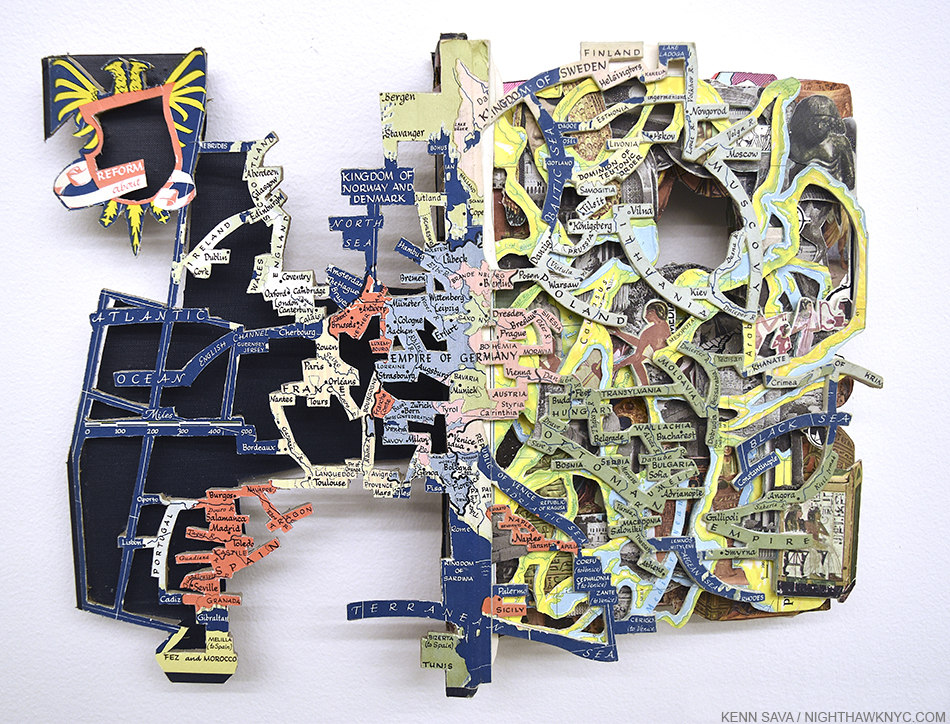
The world looks different…Brian Dettmer’s Western Civilizations 3, 2016. A “Book Sculpture.” More below.

Faberge from the Matilda Geddings Gray Foundation Collection @ The Met- Will the artist in modern history who is a greater craftsman than Carl Faberge please stand up and make yourself known to me? Thank you. While I’m waiting on that, this is the first show of the work of Faberge in New York since 2004. As small as one of the details on his timeless (and priceless) masterpieces, this show in a hallway at The Met is easy to miss (countless thousands do just that as they wait in line for the elevator to the roof, right in front of this very show). Ms Gray began collecting Faberge in 1933, when prices for his work were cheaper than they will ever be again. Money aside, Faberge combines the equally rare gifts of ingenuity, vision, craftsmanship and delight in works that are a century old but have lost none of their grace, beauty or charm. Scheduled to end on November 27, this show has been extended until 2021, giving you plenty of time to see it.
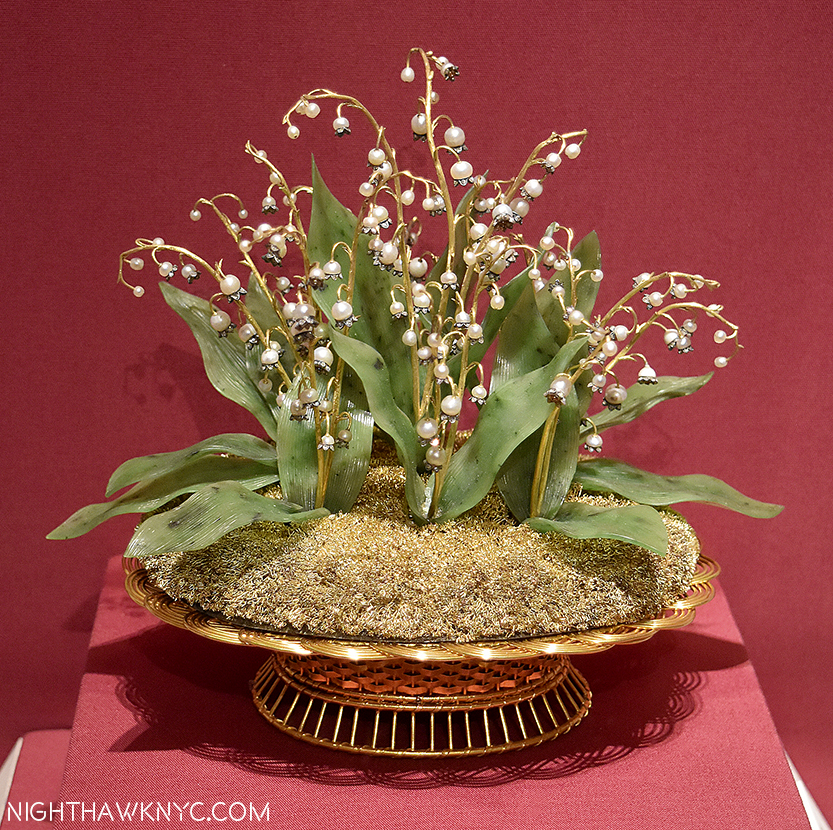
Imperial Lillies of the Fields Basket, 1896, Yellow & green gold, silver, nephrite, pearl, rose-cut diamond. This is considered THE most important Faberge piece in the USA. It was presented to the wife of Czar Nicholas at her visit to the Pan-Russian Exposition in 1896. This is only 7 1/2  x 8 1/2 inches!
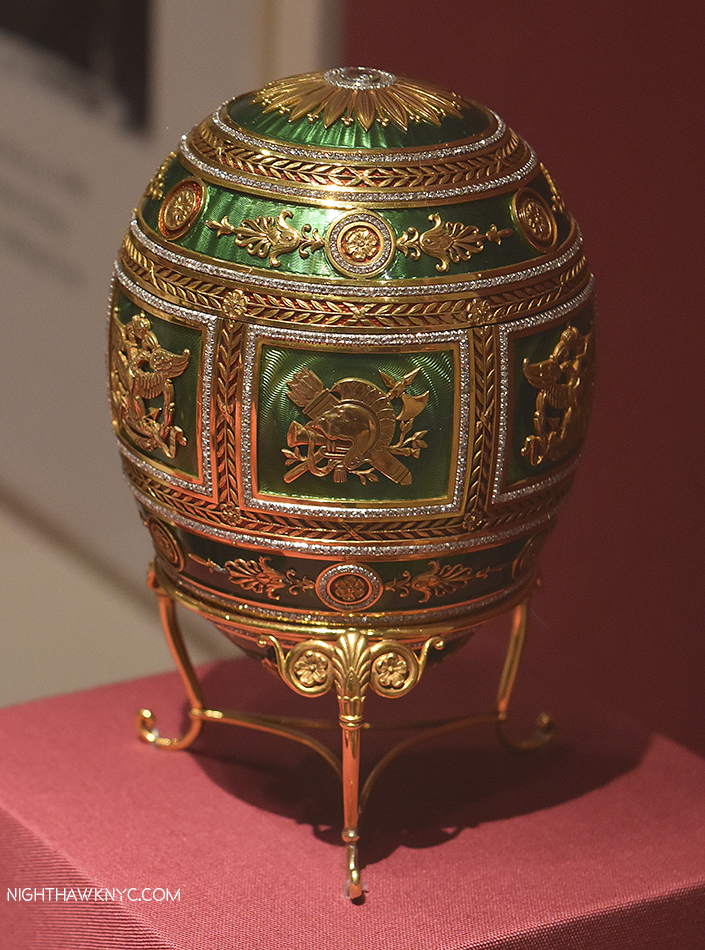
Imperial Napoleonic Egg, 1912, gold, enamel, rose-cut diamond, platinum, ivory, gouache, velvet, silk. One of the infamous “Faberge Eggs,” this was presented by the Czar to his wife for Easter, 1912. Designed to commemorate the 100th Anniv of victory over Napoleon. This is 4 5/8 inches tall! The inside is solid gold, and holds…
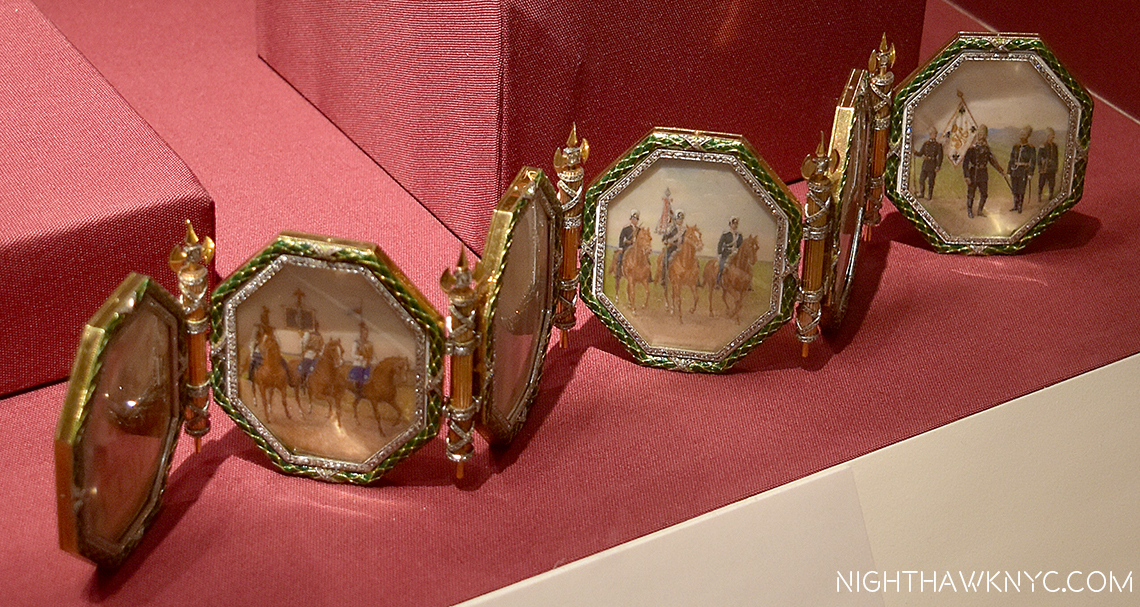
a six-panel screen depicting paintings of six regiments she was an honorary colonel in.
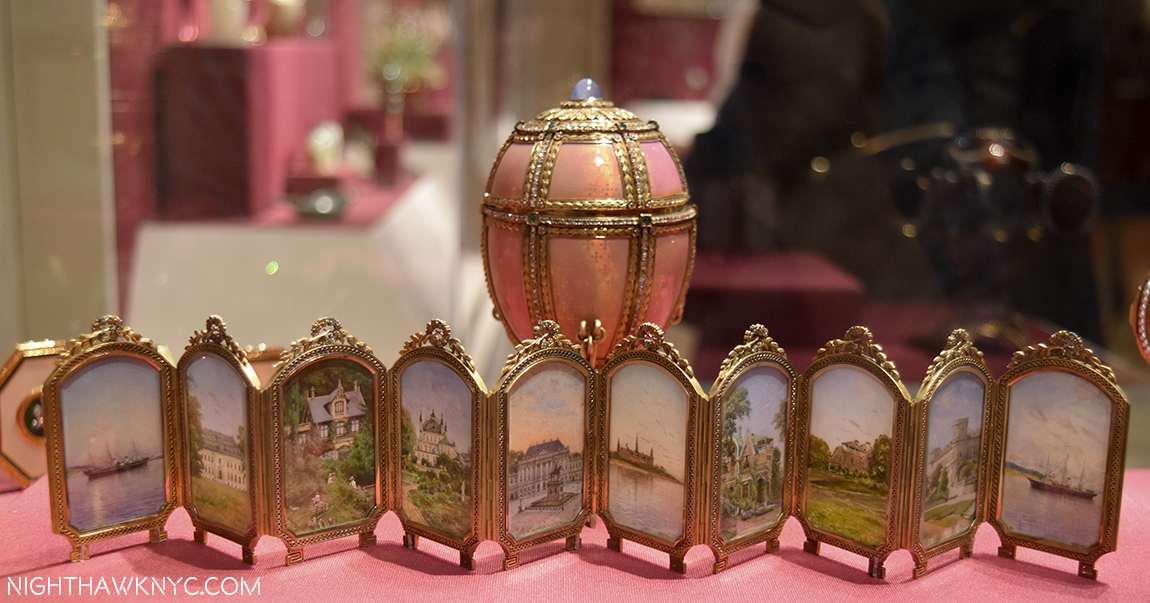
Description in next photo. Click any photo in this Blog to see it larger.
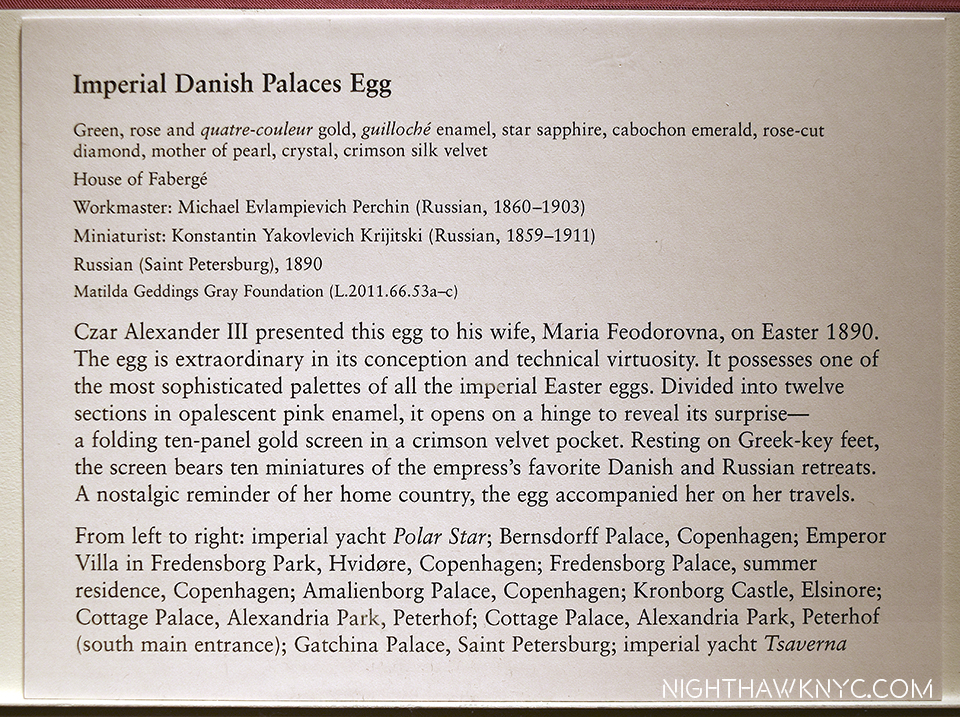
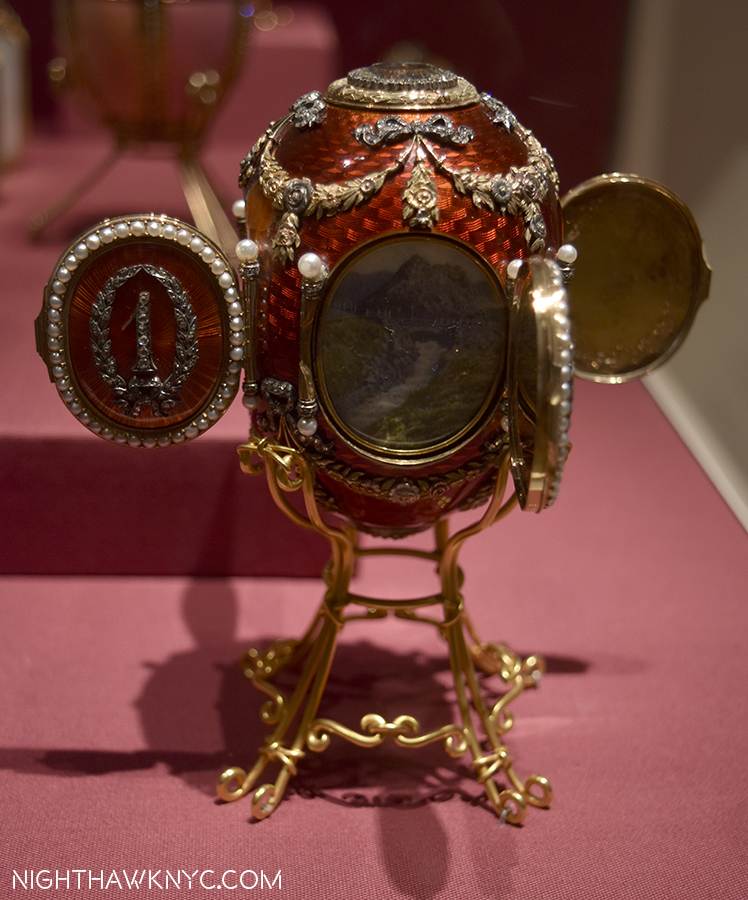
Imperial Caucasus Egg, for Easter, 1893. This is 3 1/2 inches high!
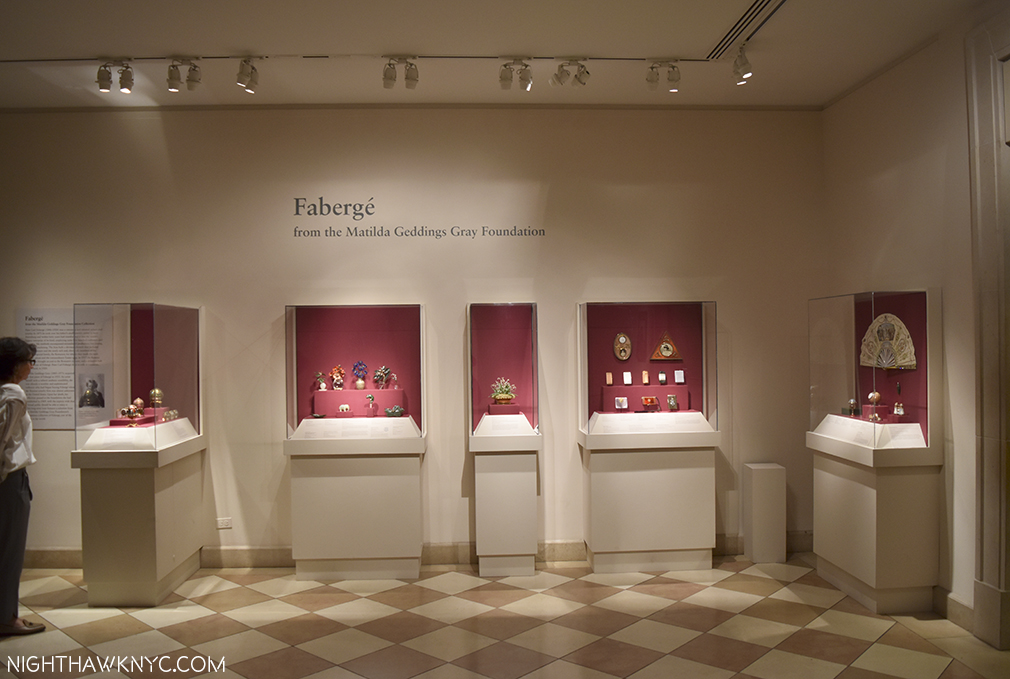
Easy to miss, this is the whole show!

Joan Mitchell: Drawing Into Painting @ Cheim Read- Yet another good sized show of an Abstract Expressionist, “second generation” this time, and the most renowned female (Lee Krasner may be gaining on her) AbEx painter, right down the street from the blockbuster Mark Rothko: Dark Passage Show, it makes the perfect before or after bookend to it. I owned a Joan Mitchell print until a few years ago, so I lived with the energy and lyricism her work is known for. Looking around, her work is in most major museums, though it’s been 12 years since an American museum gave her a show. So, it’s been left to Cheim & Read to fill the gaps, and they’ve mounted Joan Mitchell shows every two years, or so, going back to the late 1990’s. This one does make for fascinating pairing with the Rothko show- they couldn’t be more different, while sharing what the scholars call Abstract Expressionism, I’ve heard some of the Artists, including Philip Guston, say they prefer the term “New York School.”
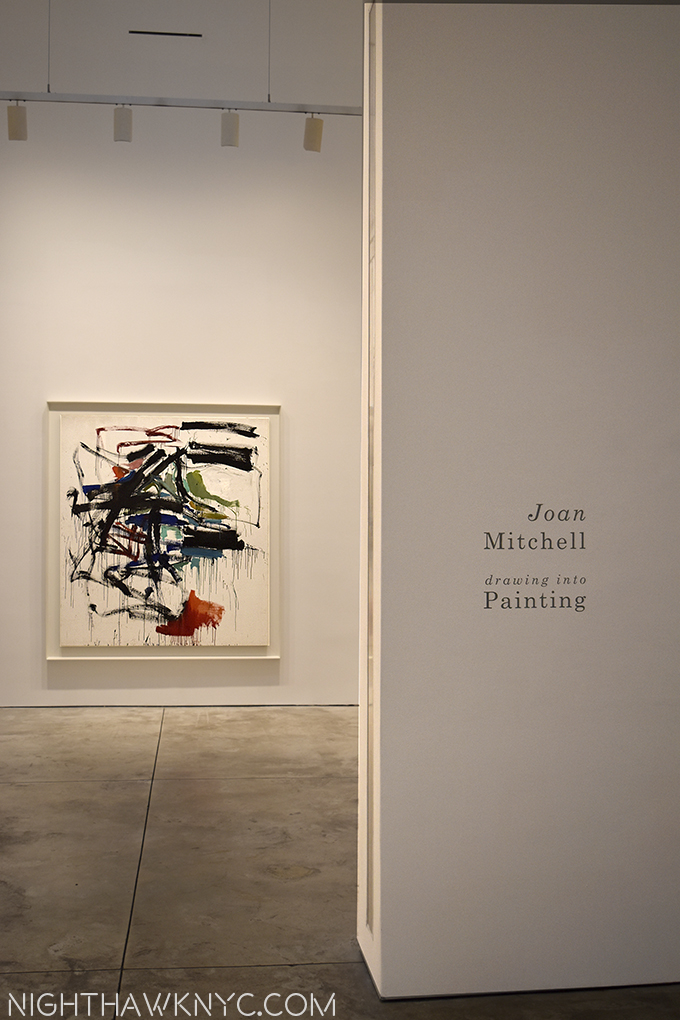
UNTITLED, 1958, oil on canvas
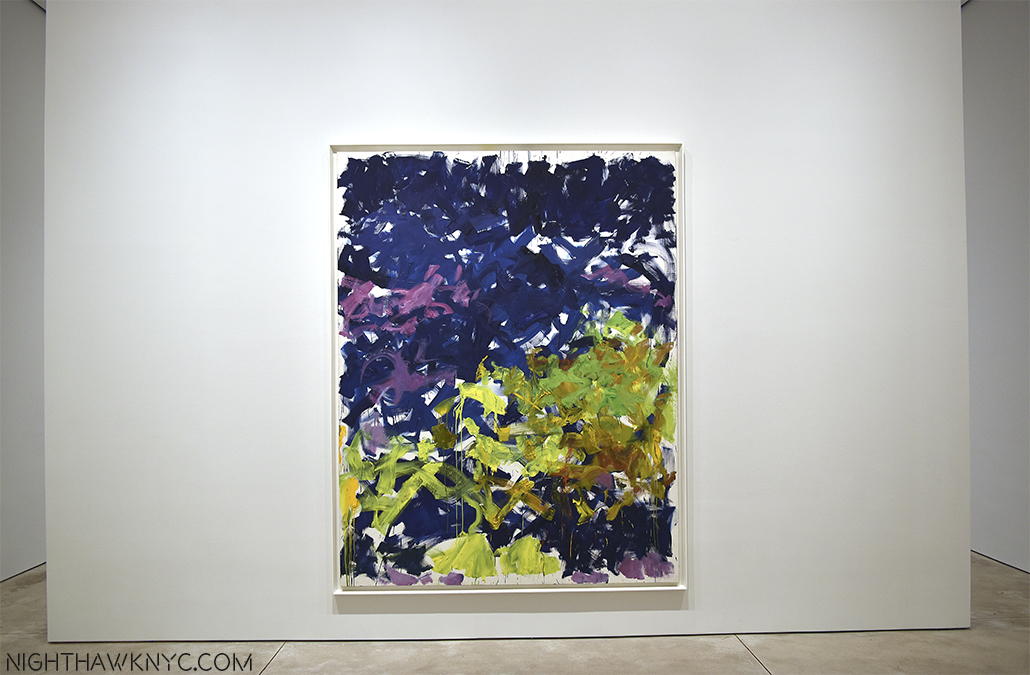
LA GRANDE VALLEE XVI POUR IVA, 1983, oil on canvas
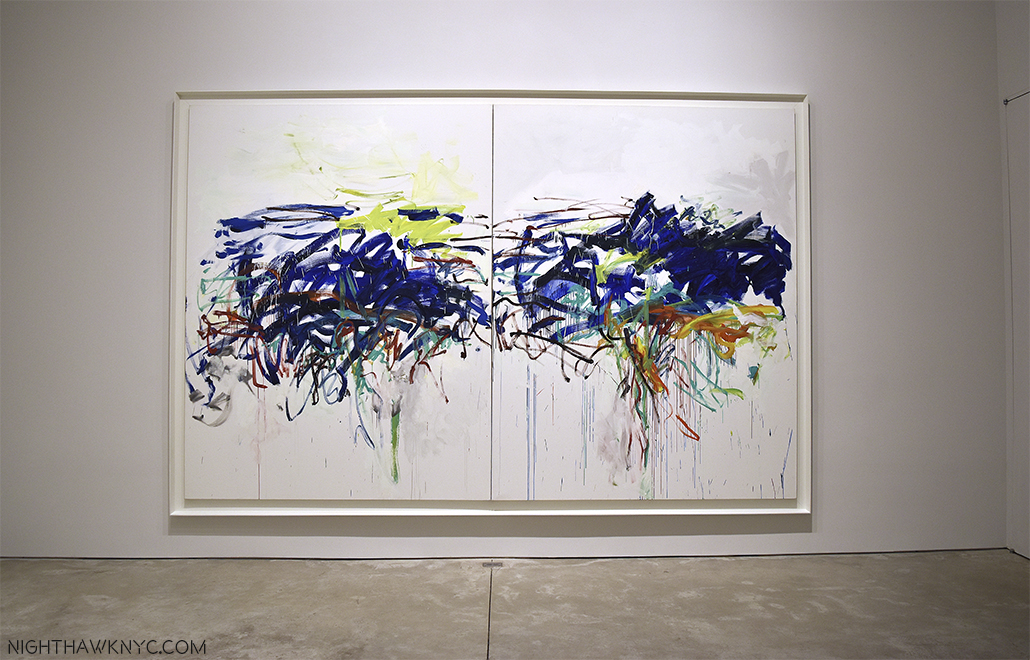
UNTITLED, 1982. oil on canvas

Man Ray: Continued and Noticed @ Francis Naumann- It’s been too long between Man Ray shows. Readers already know my fondness for Man Ray. Francis Naumann Gallery opened 15 years ago with a Man Ray show, so they revisited him for this anniversary show and they did it in style. Man Ray was so prolific, and so prolifically diverse he can be hard to “sum up” in a gallery show, but this one was an out and out winner, a must see, especially for anyone who thinks of Ray as “only” a ground breaking photographer. While featuring a wonderful selection of his photos, portraits and “Ray-o-grams,” it also included his drawing, painting, sculpture, writing, and even no less than 2 Ray designed chess sets.
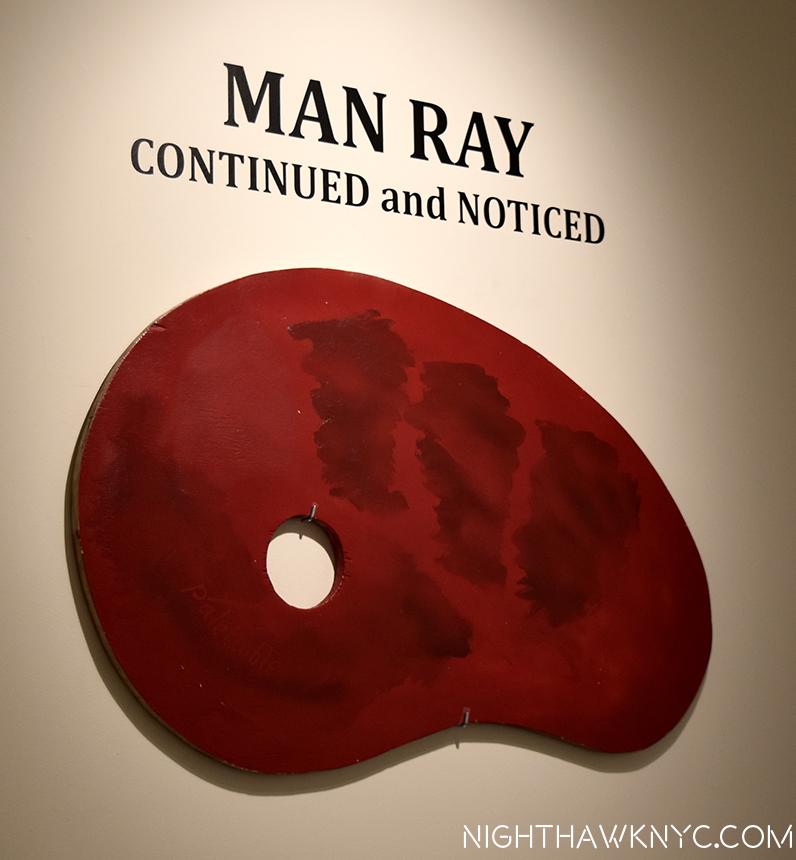
Paletteable, 1969
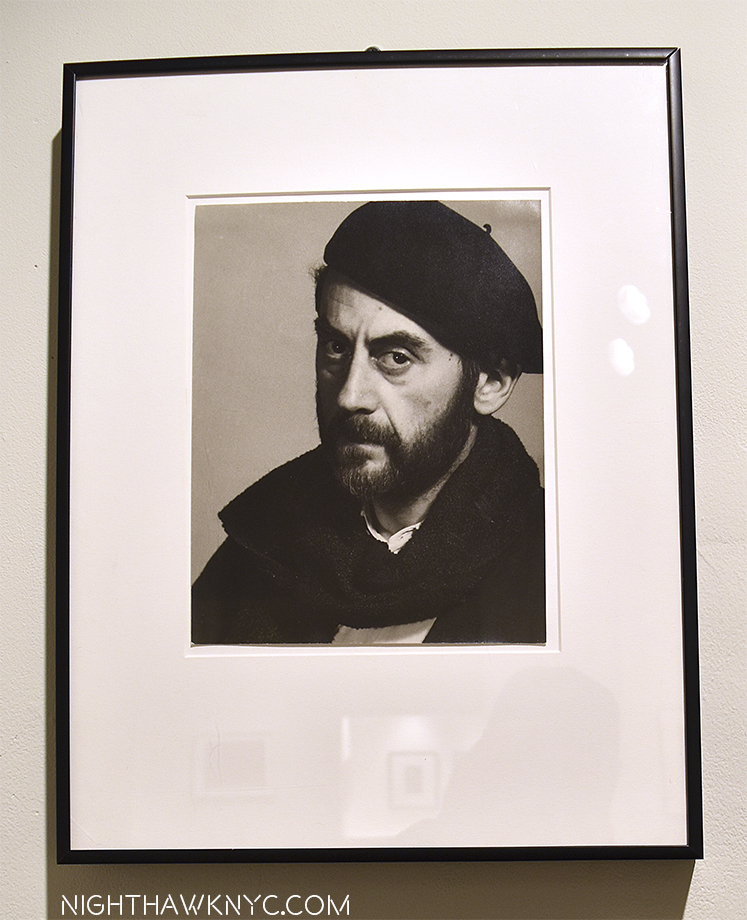
The great Man (Ray). Self-Portrait, 1948. A card under speaks of his concerns in his early work- “1) a defiance of artistic convention replaced by steadfast commitment to absolute freedom in the arts.” That says it all.
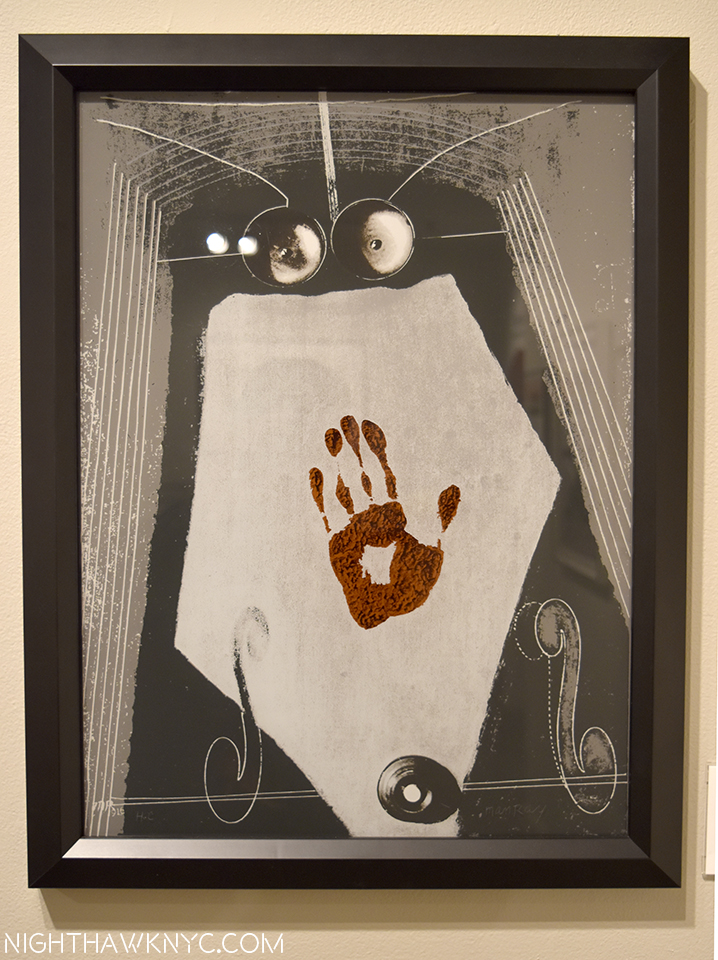
…and seen again. Autoportrait, 1917/70, Screen print on plexiglass. Really? Hmmm…
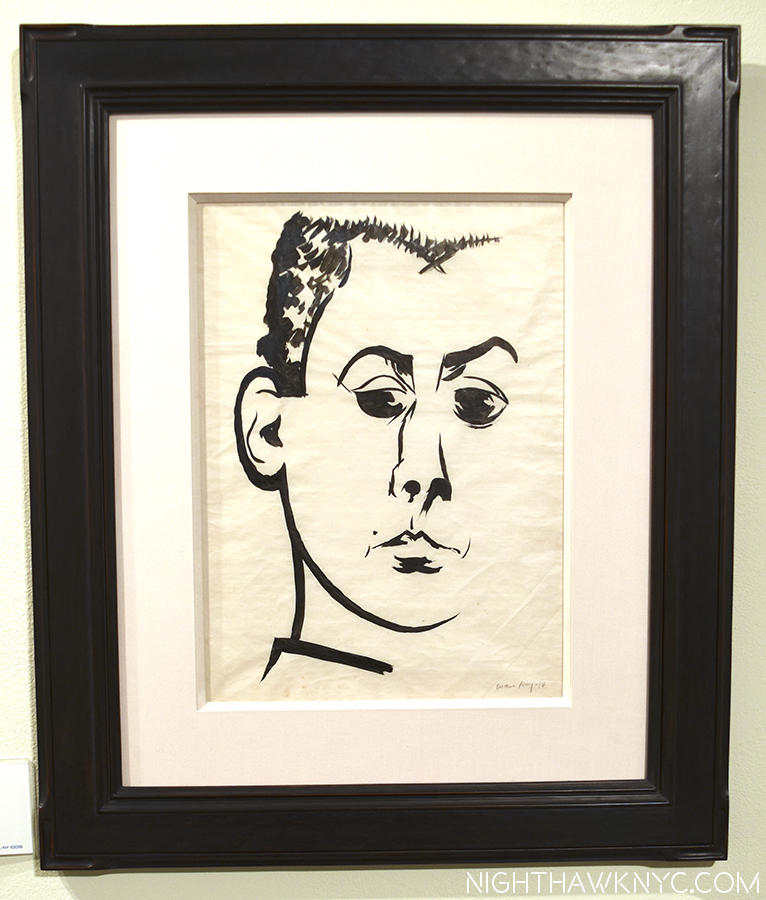
…and again. Self Portrait, 1914
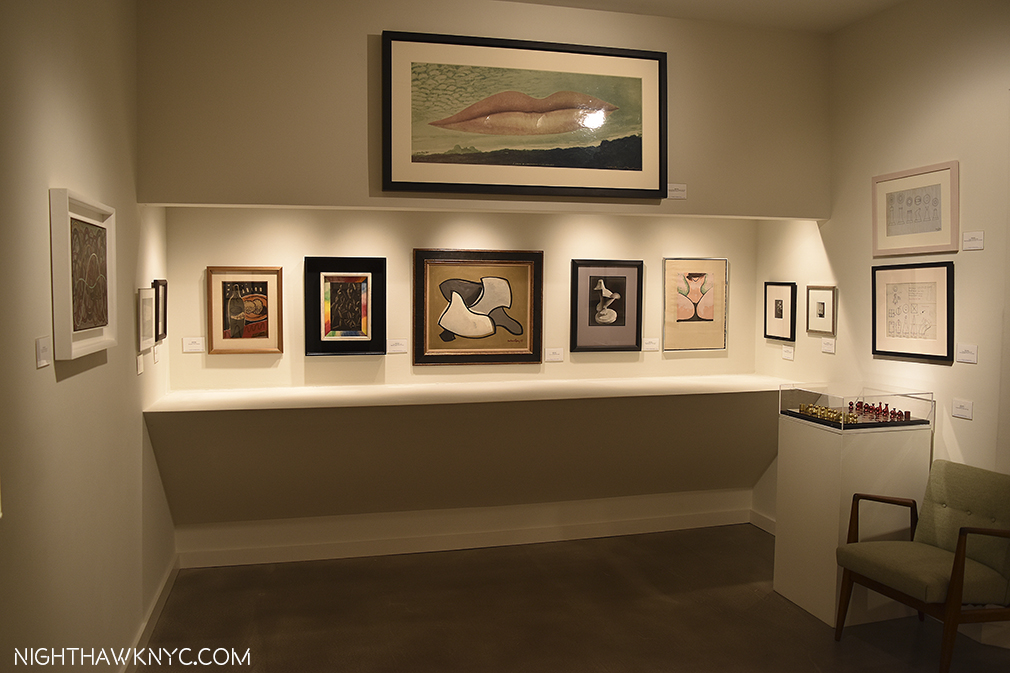
Yes, that’s one of the chess sets Man Ray designed to the left of the chair.
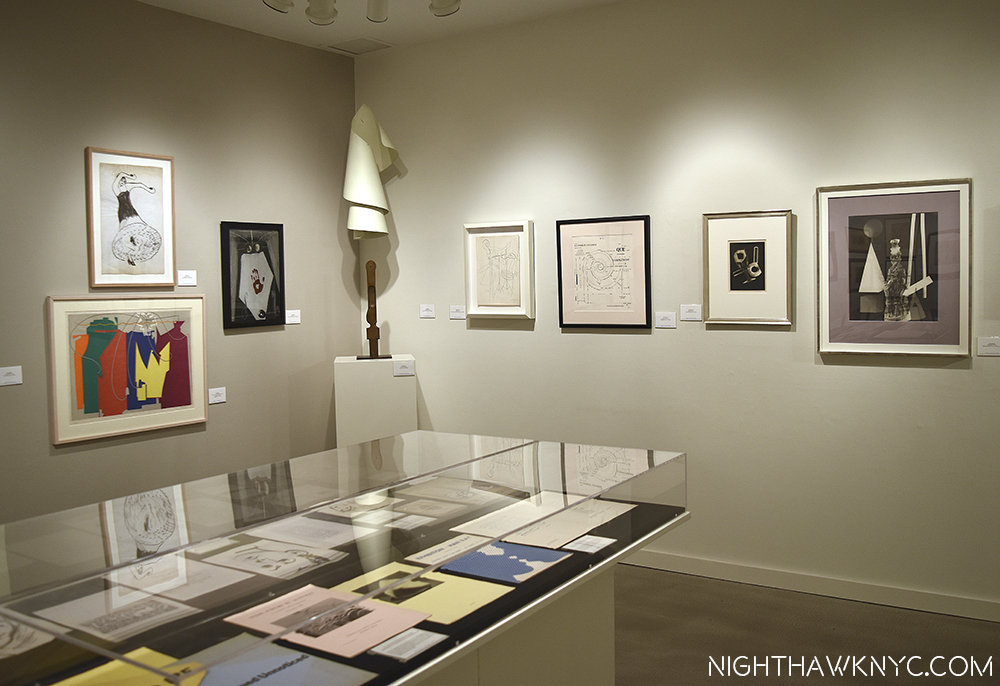
Lampshade, center, surrounded by an astounding range of creativity.

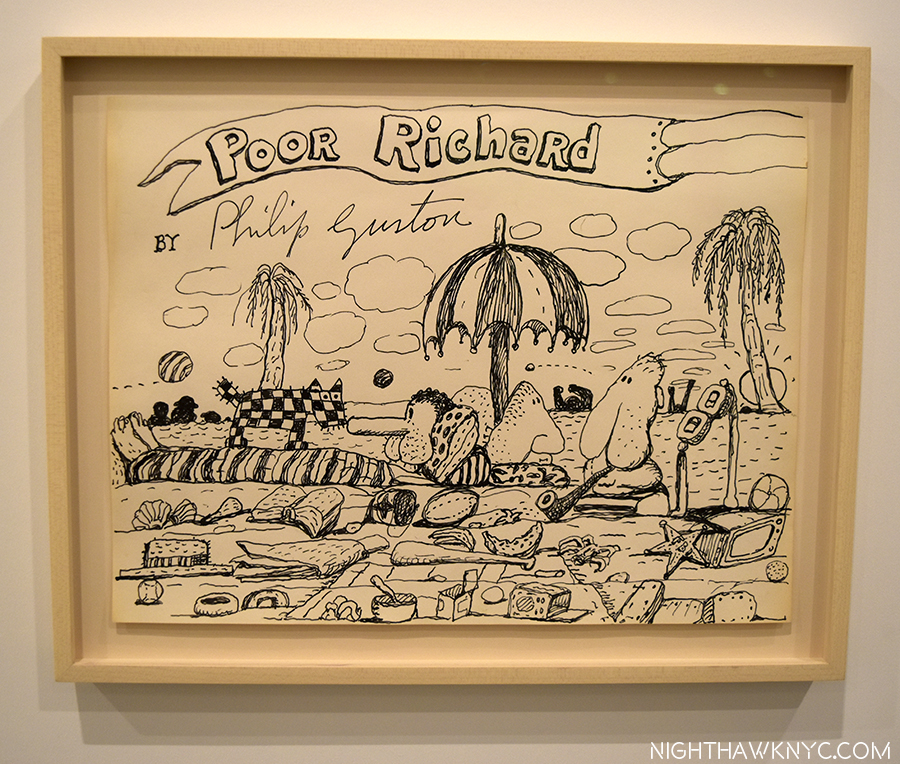
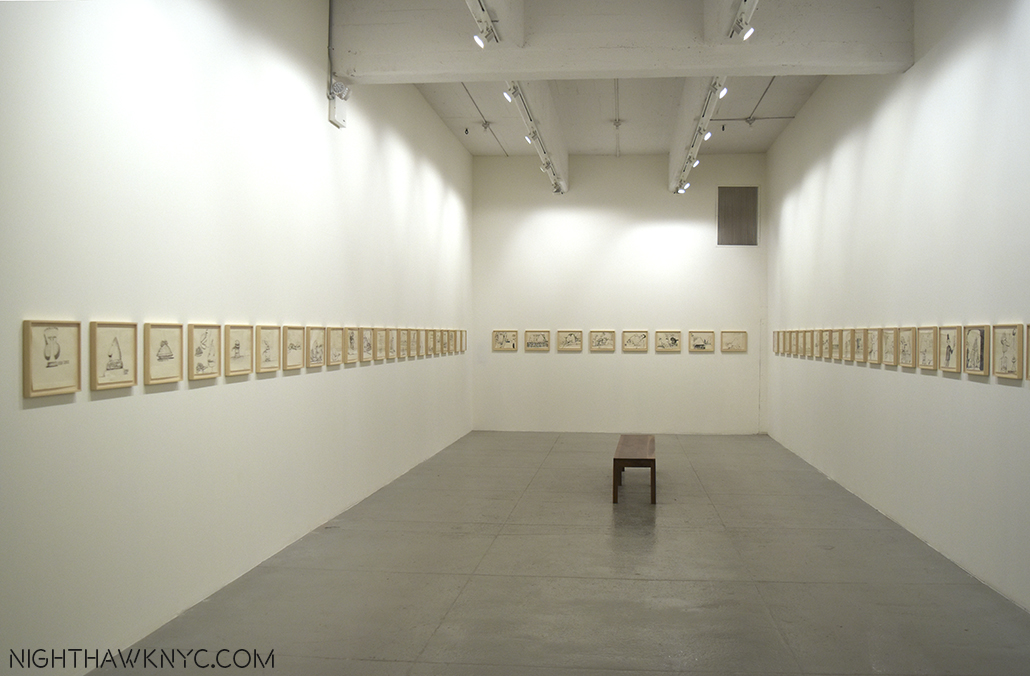
Philip Guston: Laughter in the Dark, Drawings from 1971  & 1975 @ Hauser & Wirth- There was no more auspiciously timed show than this one which not only brings us the 73 drawings Philip Guston selected for his Poor Richard series but 100 additional drawings that didn’t make the cut and 3 wonderful paintings that are related or have relevance to them. Opening exactly 4 months after Hauser’s last Guston show, it would be very very hard to find work more different than those in seen in Philip Guston Painter, 1957-67, which I wrote about here, perhaps the “darkest” of his career, in many ways. Though the show’s title refers to the presence of “laughter” here, make no mistake it is more than tinged with darkness, especially because viewing them now, we know how things turned out for Nixon. These were dark times for the country, and many of these drawings were Guston’s “at the moment” reaction to unfolding events. Even before Watergate, the Nixon Presidency was not without a sizable opposition, for more reasons than the seemingly endless war in Vietnam. Everything about Nixon rubbed many people the wrong way, and provided a brilliant Artist ample fodder for “political satire” of the highest order. Most interestingly, for me, these are works in which Guston turns his focus outwards for, perhaps, the only time in his post 1940’s career. Poor Richard was published in 2001 and is still in print. You can see it here.
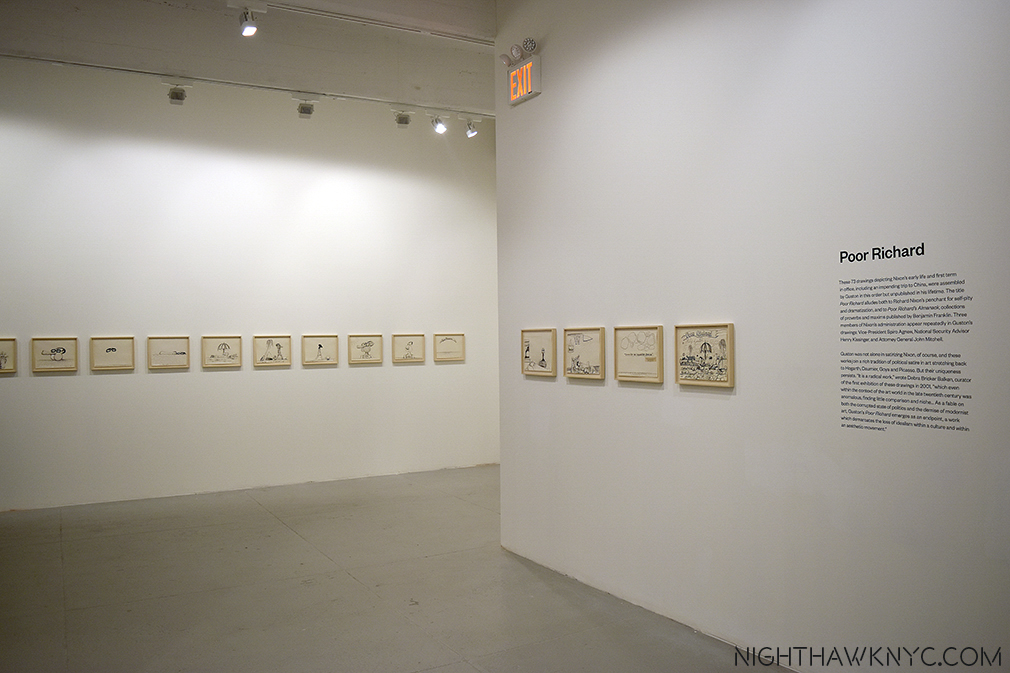
The 73 drawings that Guston selected for Poor Richard are shown, here (and below), together.
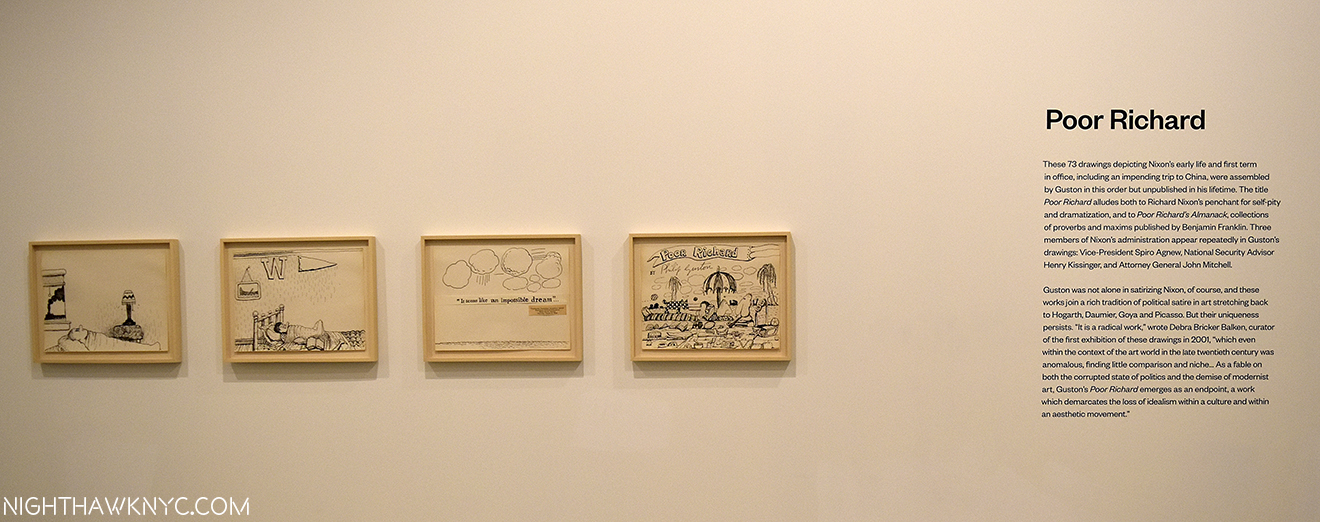
Title Page. Guston Depicts Nixon with VP Spiro Agnew (triangular skull), Attorney General John Mitchell (with his pipe) and Advisor Henry Kissenger (as glasses) as the cast of characters
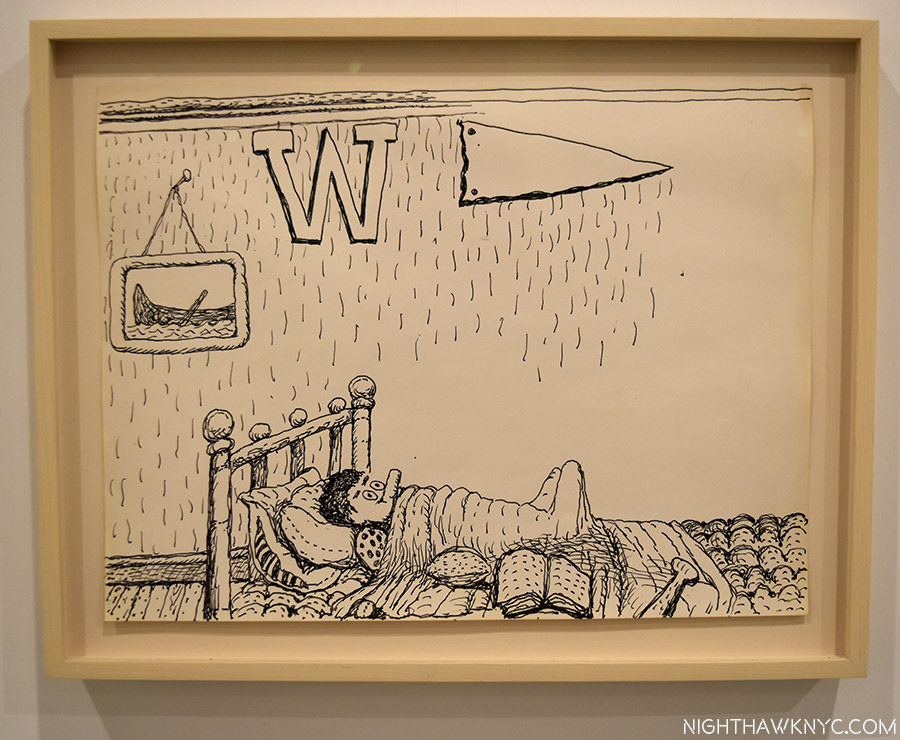
Guston’s series begins with young Richard Nixon.

Jeff Elrod: This Brutal World @ Luhring Augustine- Chelsea & Brooklyn Galleries. It pains me not to write a longer piece on this. Jeff Elrod has been at the cusp of reinventing painting by combining digital drawing and computers with the end result of that stage outputted to canvas.where it may, or may not be combined with analog, old fashioned painting (at least those on display here). Dealing with blurriness from my recent eye treatment, my initial reaction was, “Hmmmm…If I close my right eye, my good eye, this is how the world looks to me these days.” But, I was drawn back repeatedly, even compelled to make the (unheard of for me) trip to Brooklyn to see the Bushwick segment of this show. In both locations, the effect was the same- I couldn’t get them out of my mind. They’re like something you see when you’re not really looking, or when you’re not fully awake after dreaming, or about to fall asleep…My initial reaction was “This looks easy to do on a computer. Take a photo, blur the heck out of part of it in Photoshop. Add a layer of a frenzied drawing and output to canvas. Then, I remember people say the same thing about Pollock and Rothko, yet no one else has done them. Some works remind me of passages of Monet, some of Yves Tanguay. But not really. They weren’t created like those were and so they don’t look like anything else. Mr. Elrod’s work commands some fancy prices. Ah well…They’re much too big for my place, anyways. If there’s a “cutting edge” in painting in 2016, Jeff Elrod’s work is the closest I’ve seen to being on it. I’m very much looking forward to seeing where this is going.
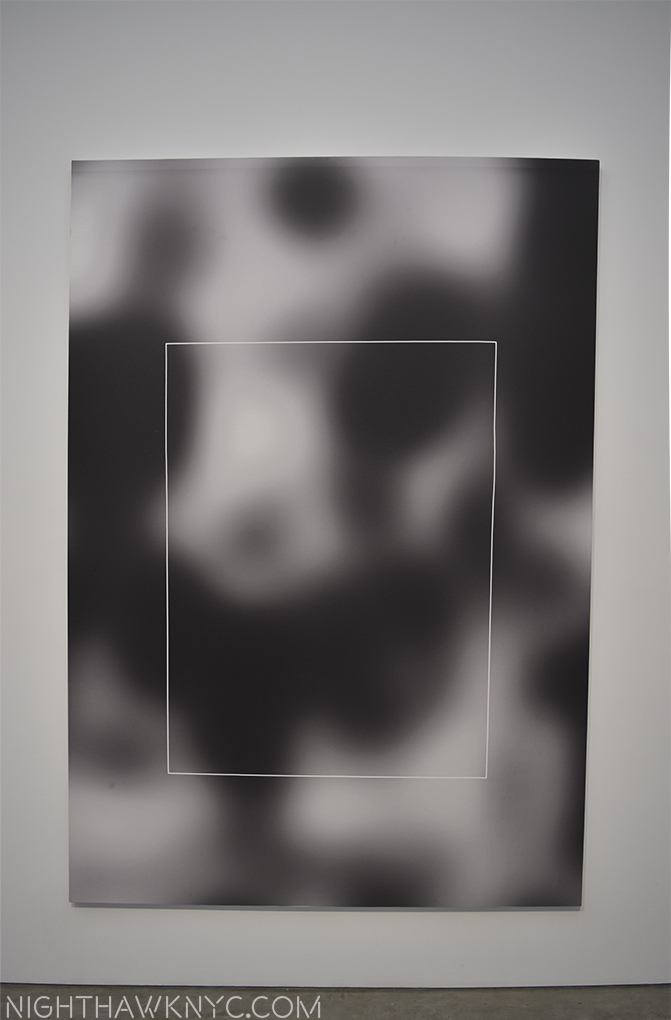
Auto-Focus, 2016 UV Ink on Canvas 9064 inches. Mystifyingly alluring.
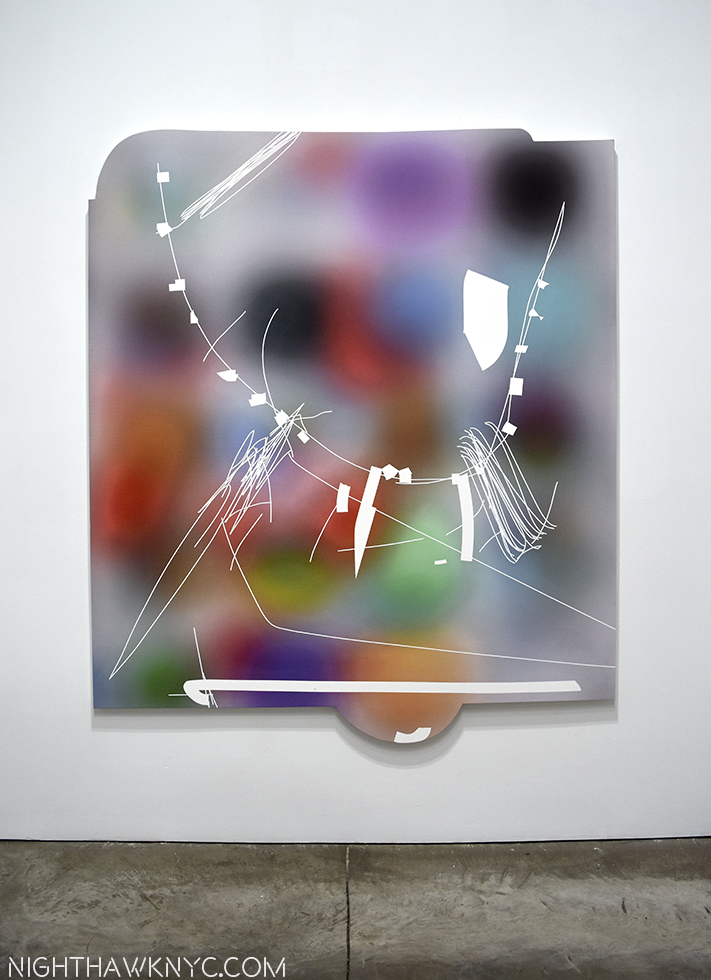
Rubber-Miro, 2015 Acrylic and UV Ink on canvas. His uniquely shaped canvases give the work a different feel from most square/rectangular paintings.
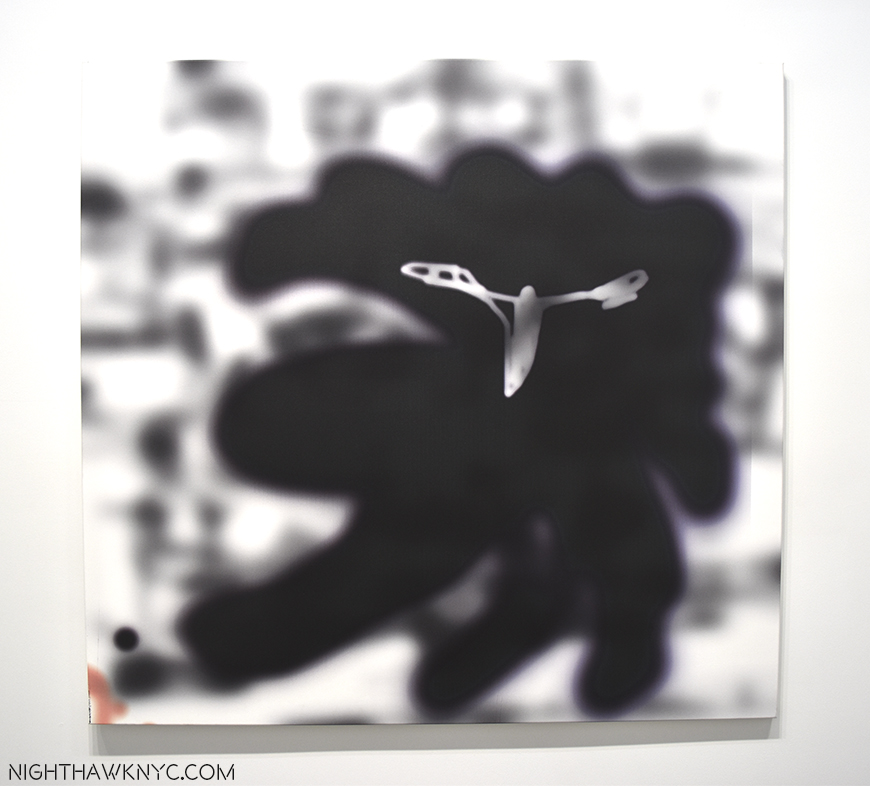
Rake-Adaptable, 2016 UV Ink on FIscher canvas. The ghost of Robert Motherwell? “Haunting” is a word his work brings to my mind most often.
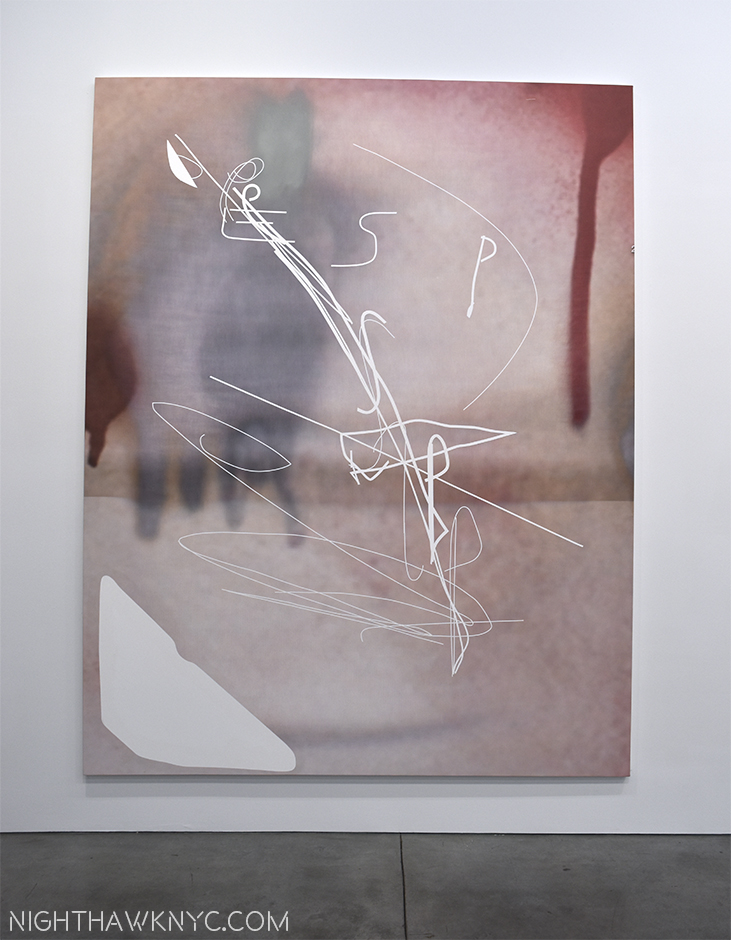
Under The Skin, 2016 UV Ink on canvas, 108 x 84 inches.
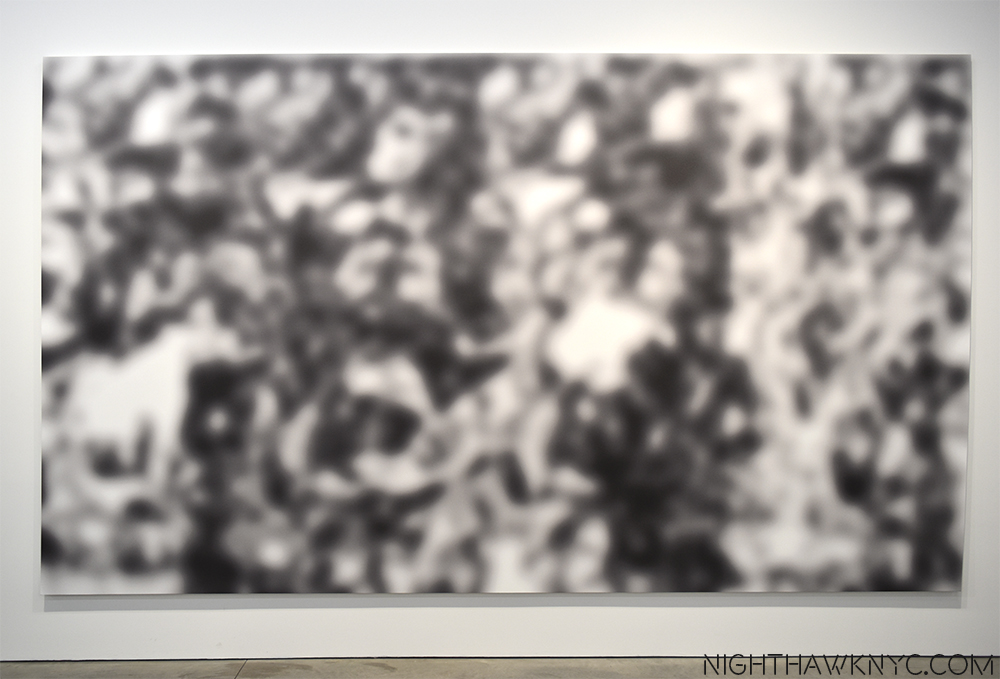
Plume, 2016 as seen in Bushwick, Brooklyn. 16 1/4 feet long by 9 1/2 feet tall.

After countless visits, I began to “see” “Jeff Elrods” everywhere I went. Like here-
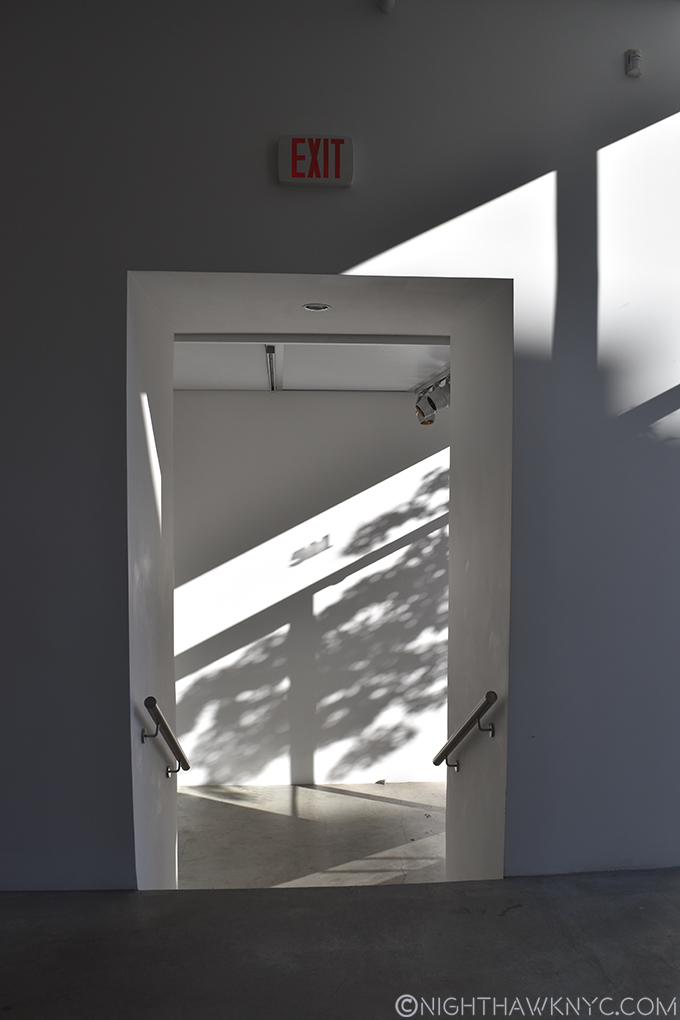
Life Mirrors Art.

Brian Dettmer: Dodo Data Dada @ P.P.O.W. Mr. Dettmer creates “Book Sculptures,” something new to me. As far as I can tell, he takes a scalpel to a book, or books, and carves away all but what he wants to remain. I’ve never seen anything quite like it.
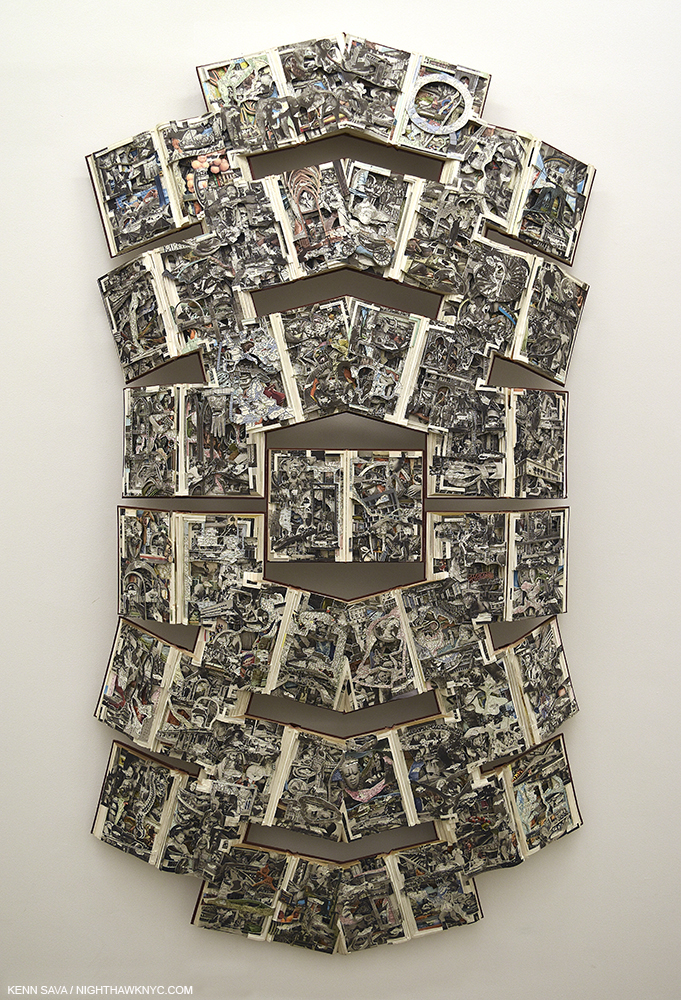
Funk and Wag, 2016. As in, the whole encyclopedia.
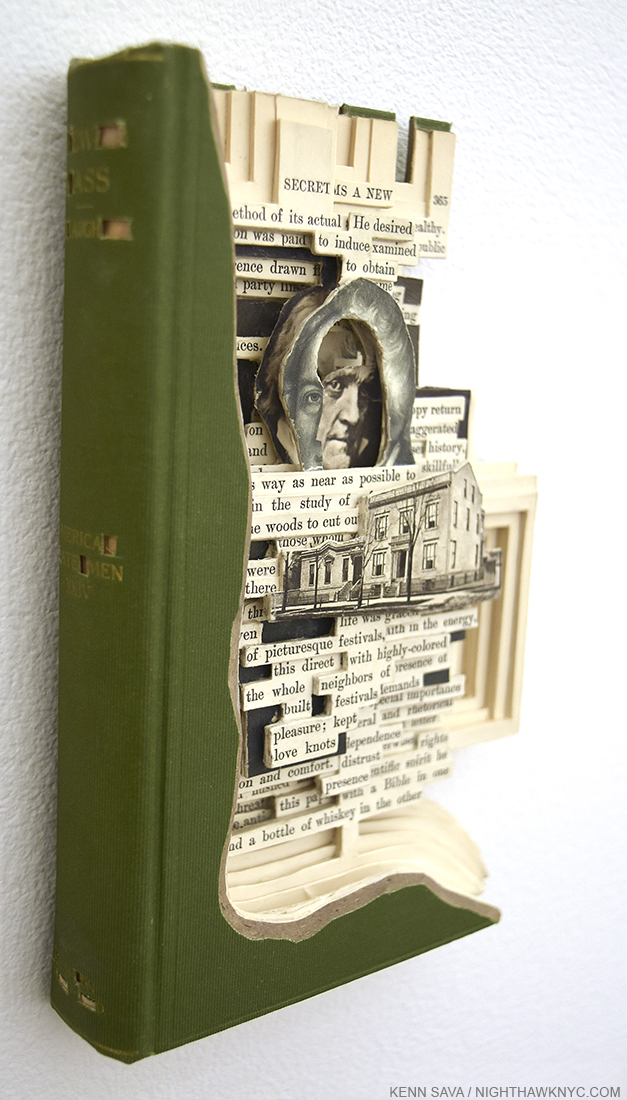
Ew Ass, 2016

PostScript.- And meanwhile, over at Gagosian, Richard Serra’s MASSIVE Every Which Way, 2015, all 16 slabs of it was coming down, making way for the next show there…
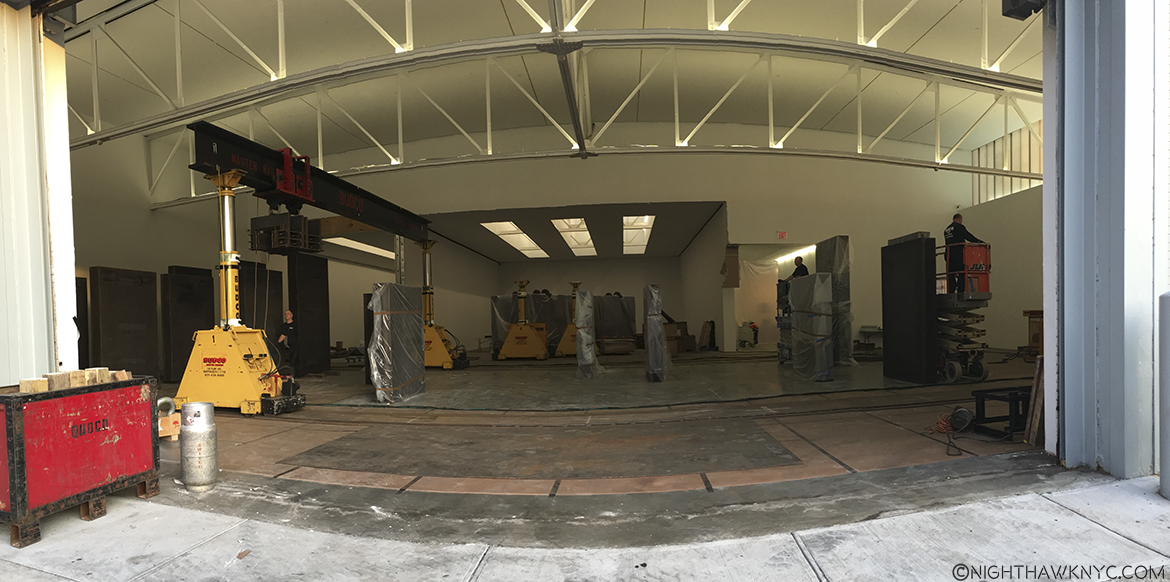
Richard Serra, Every Which Way, 2015 @ Gagosian

*-Soundtrack for this Post is “It’s The End Of The World (As We Know It)” by Michael Stipe, Mike Mills, Peter Buck and Bill Berry of R.E.M. and published by Warner/Chappell Music, Inc and Universal Music Publishing Group, from their 1987 album “Document.”

NighthawkNYC.com has been entirely self-funded & ad-free for over 8 years, during which 300 full length pieces have been published! If you’ve found it worthwhile, PLEASE donate to allow me to continue below. Thank you, Kenn.

You can also support it by buying Art, Art & Photography books, and Music from my collection! Art & Books may be found here. Music here and here

Written & photographed by Kenn Sava for nighthawknyc.com unless otherwise credited. To send comments, thoughts, feedback or propositions click here. Click the white box on the upper right for the archives or to search them. Subscribe to be notified of new Posts below. Your information will be used for no other purpose.
NoteWorthy Shows-October, 2016

As a counterpoint to my longer pieces on big shows, here’s something else-  shorter looks at some especially Noteworthy Shows that I’m not going to have the time to do the full pieces on that they each deserve, but that I want to bring to your attention.

Post-Labor Day has seen things quiet down on the NYC Museum show scene, after an insanely busy summer. The action has turned to the galleries. Here are some shows I saw recently that I was especially impressed with, in no particular order-

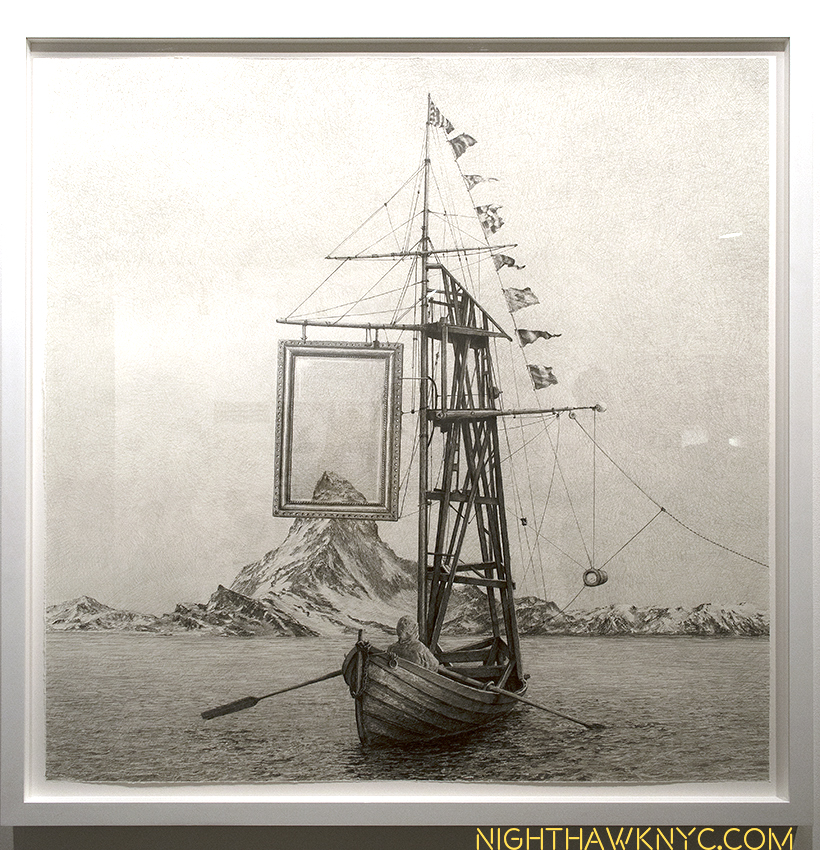
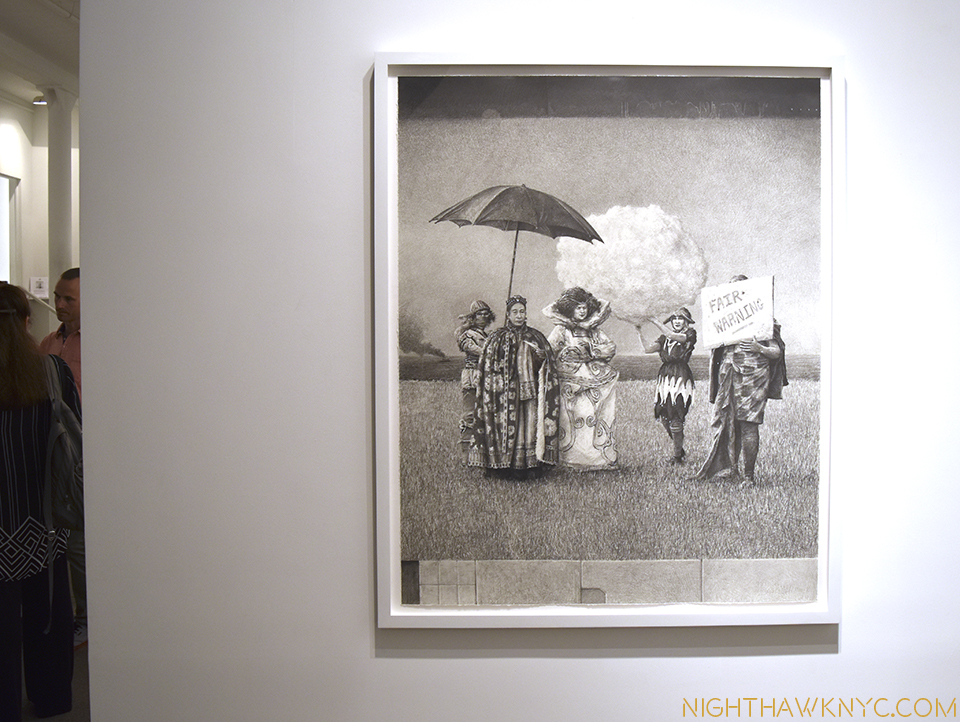
Ethan Murrow: Water Almanac” @Winston Wachter. A show of very large drawings(!) about the folly of man trying to control nature, many featuring water, shown in a space that was partially submerged almost 3 years ago after Hurricane Sandy, destroying some of Mr. Murrow’s work. When I pointed out the irony of it to him, he responded, “At least they weren’t people,” he said referring to his lost work. When I asked him why he draws instead of paints he spoke of the minimal amount of materials necessary. His work has wonderful elements of the Surrealism of Max Ernst and Bruce Conner that he makes seem everyday real world.

"Deluge Estimator," 2016, graphite on paper

Ready for the next Sandy? Hmmm… “Deluge Estimator,” 2016, graphite on paper

Ethan Murrow (in orange shirt) at his opening.

Ethan Murrow (just to the left in orange shirt) at his opening.”Hail Cannon Rainmaker,” 2016, graphite on paper, 60 x 48 inches, right.

"To Redirect the Tempest," 2016, graphite on paper

“To Redirect the Tempest,” 2016, graphite on paper, 52 x 72 inches

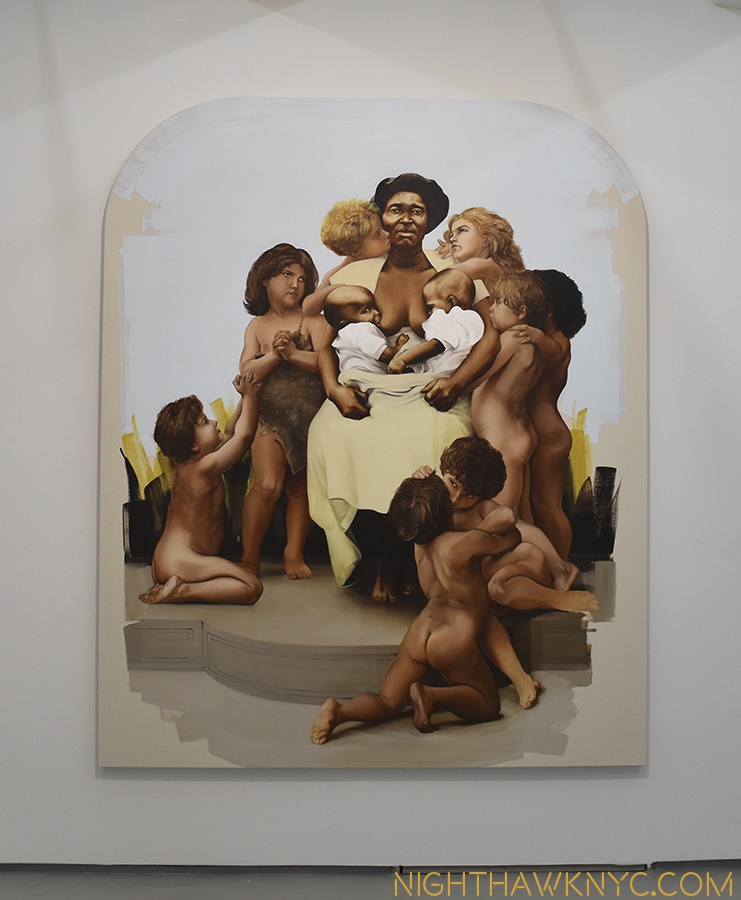
Meleko Mokgosi: Democratic Intuition” @ Jack Shainman Gallery. I’d write something about this, if I could ever finish looking at it and thinking about it.

img_6684pnh4

“Democratic Intuition- Comrades II,” a very large work

And seen at the show's 2nd location.

And as seen at the show’s 2nd location.

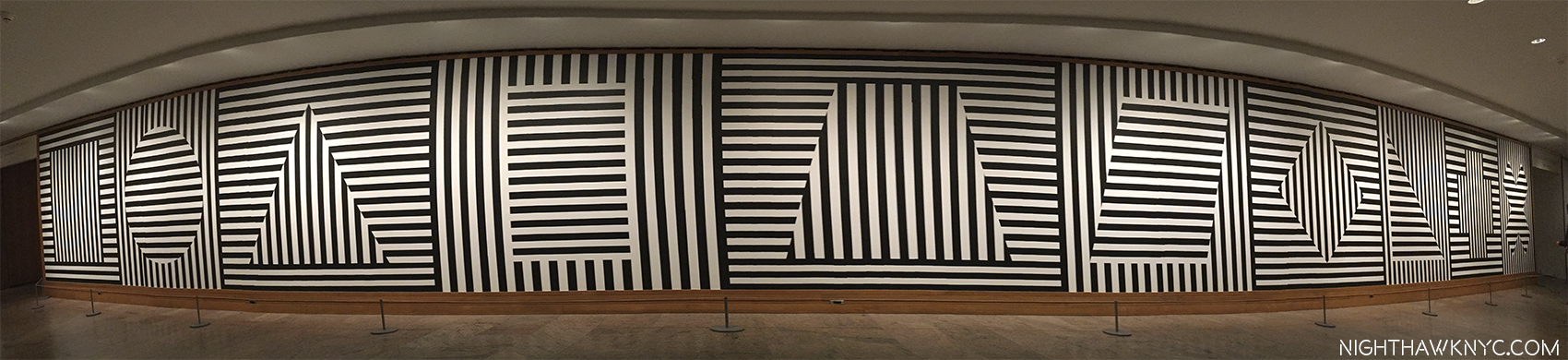
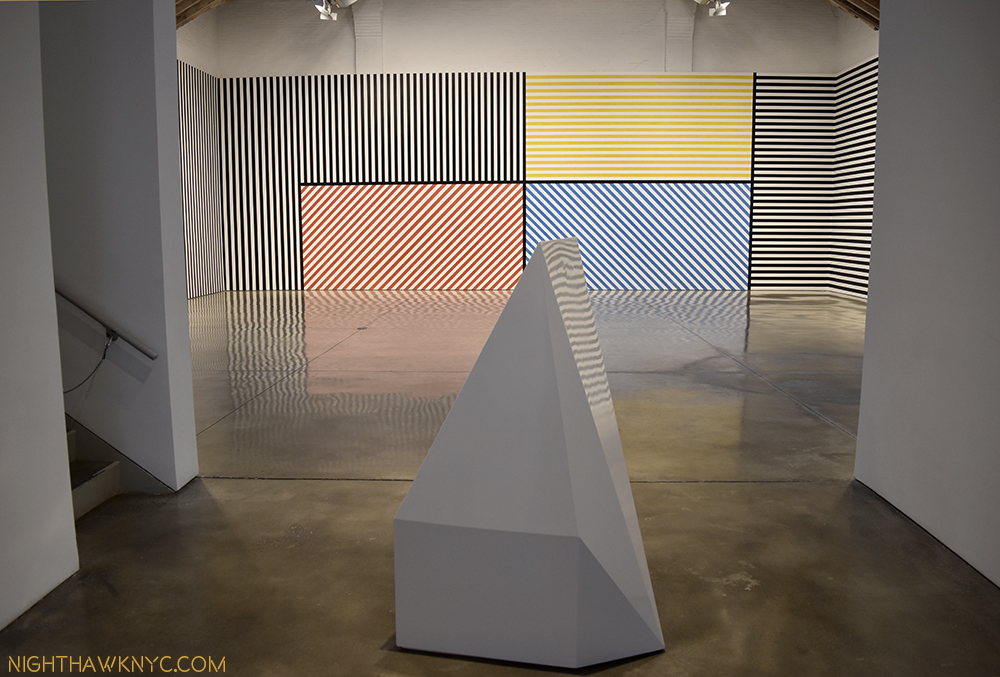
Sol LeWitt” at 3 Paul Cooper Gallery Locations, Pace Prints, and The Met. Yes, no less than 5 simultaneous shows featuring Lewitt’s drawings, scultpture, photography, collages, prints and, suddenly ubiquitous wall drawings (not to mention the permanent one on view in the NYC Subway at 57th Street & Columbus Circle!).

"Complex Form #65," 1989, painted wood, 59 x 38 x 40 inches, in front of "Wall Drawing #368" @ Paula Cooper.

“Complex Form #65,” 1989, painted wood, 59 x 38 x 40 inches, in front of “Wall Drawing #368” @ Paula Cooper.

Detail

Detail

"Wall Drawing #370" as seen at The Met

“Wall Drawing #370” as seen at The Met

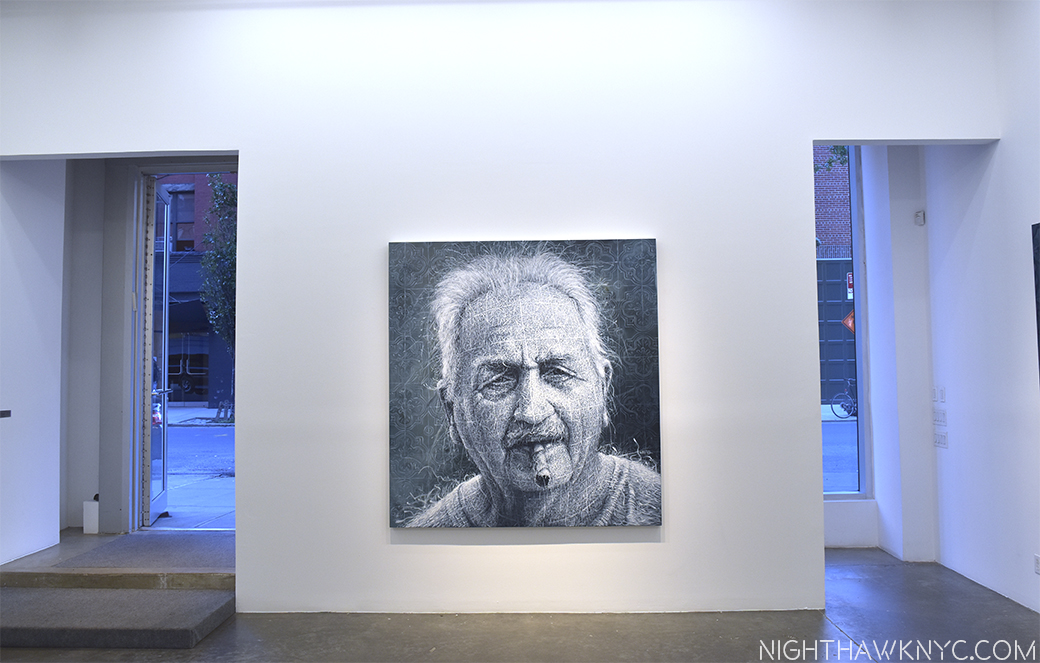
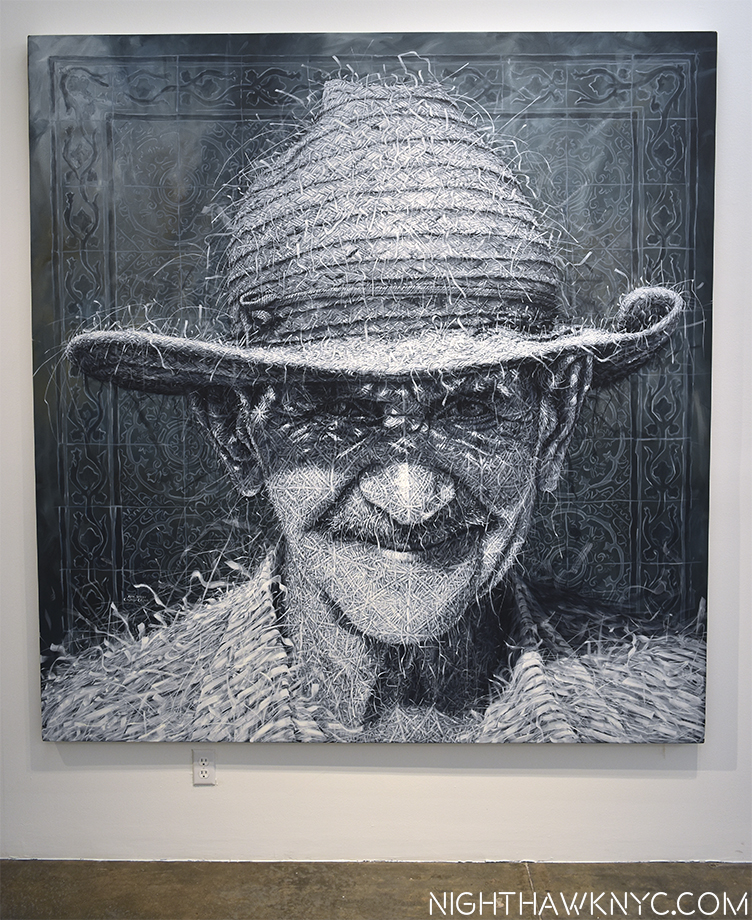
“Alexi Torres: Sun Light” @ UNIX Gallery. No mere photo-realistic interpretations of source photos here. Visions- exquisitely executed.

"Sun Light-Ernesto," 2016, oil on canvas

“Sun Light-Ernesto,” 2016, oil on canvas, 72 x 68 inches

"Sun Light-Miguel," 2016, 84 x 80 inches, oil on canvas

“Sun Light-Miguel,” 2016, , oil on canvas, 84 x 80 inches

dsc_8734pnh

Detail

Miguel- Source Photo

Miguel- Source Photo

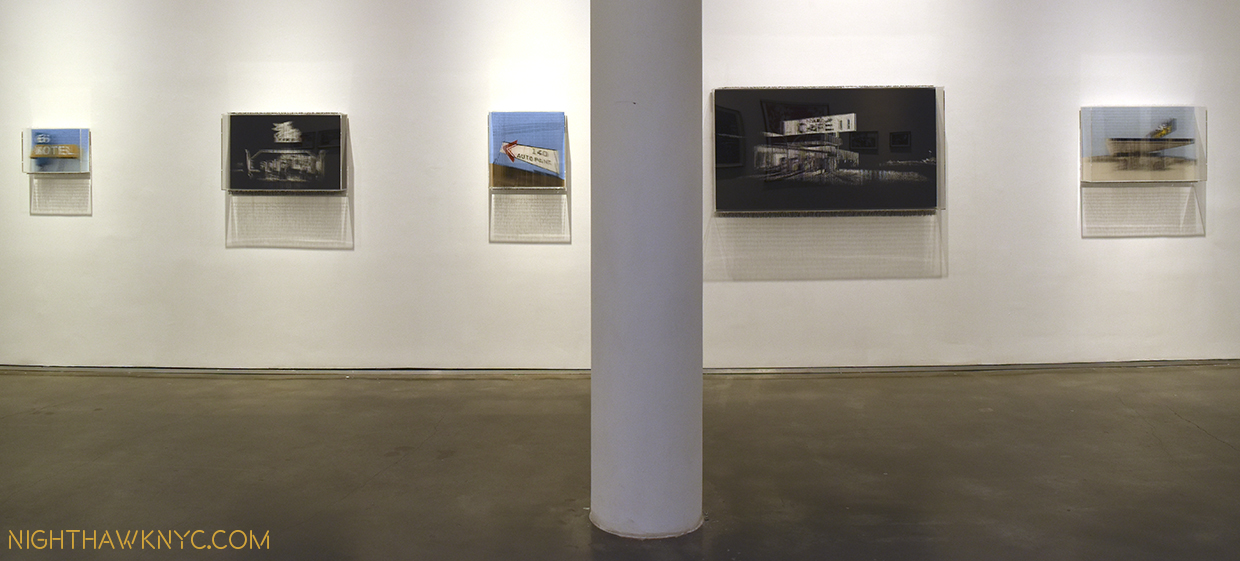
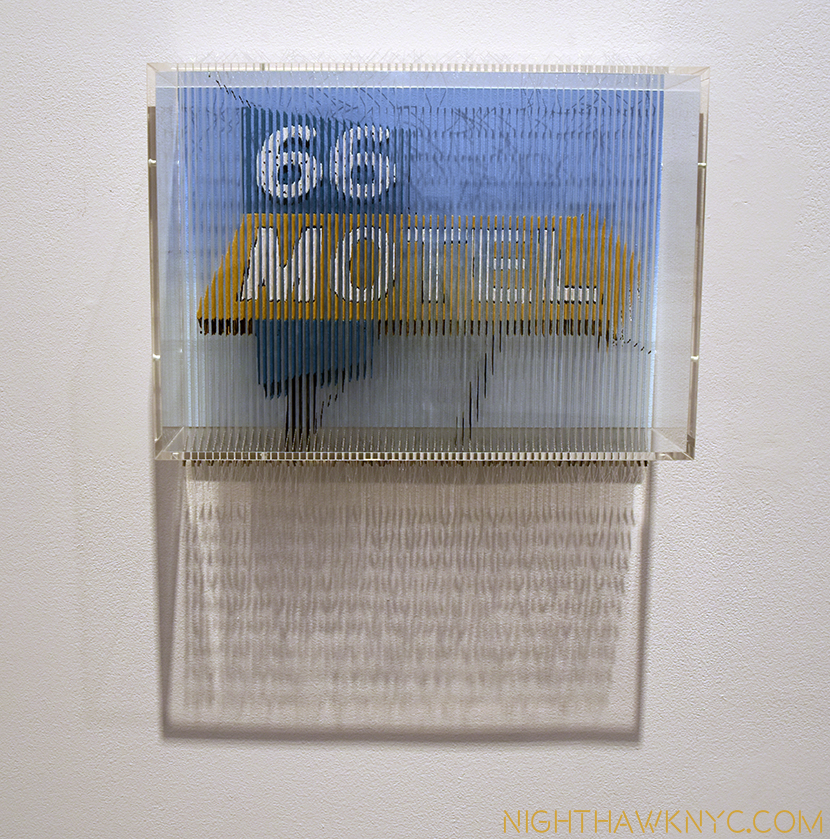
Robert Currie in “Mind Storm” @ Bryce Wolkowitz. A name new to me. As close as I can gather, Robert Currie applies paint to monofilament thread in rows, which can be seen from the side, or in their reflections, below the works. The image can only really be seen from directly in front. Somehow, they still manage to evoke the sense of the place as well as the sense of a bygone era.

Installation View

Installation View

"17,820cm of nylon monofilament and acrylic," 2016. That's 590 feet.

Entitled- “17,820cm of nylon monofilament and acrylic,” 2016. That’s 590 feet of it in a work that’s 12 x 16 x 5 inches.

dsc_8790pnh

Side view

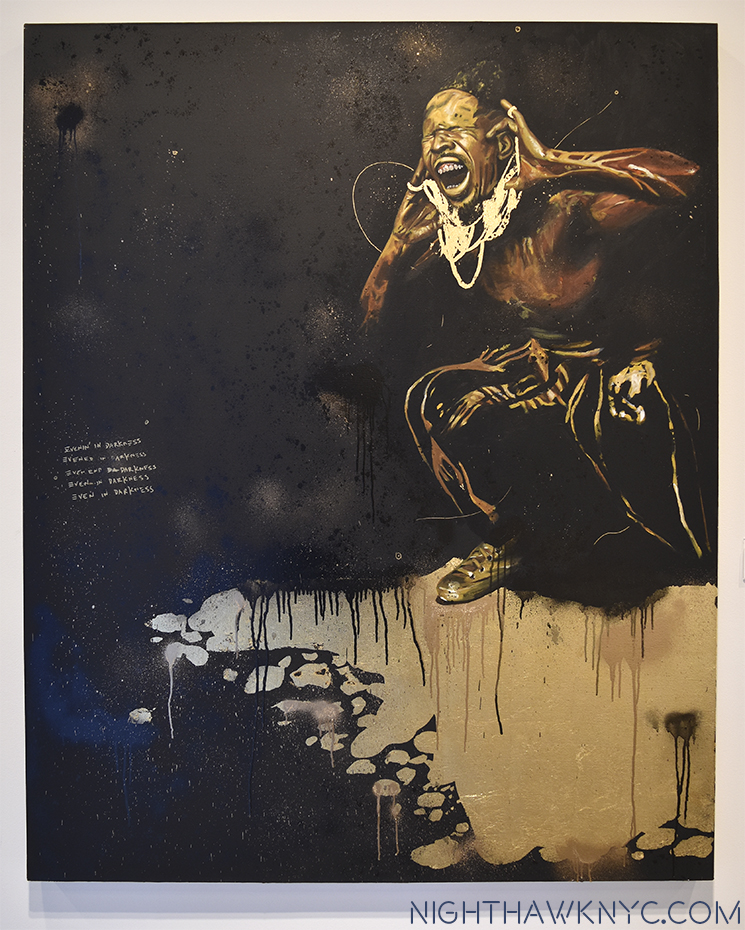
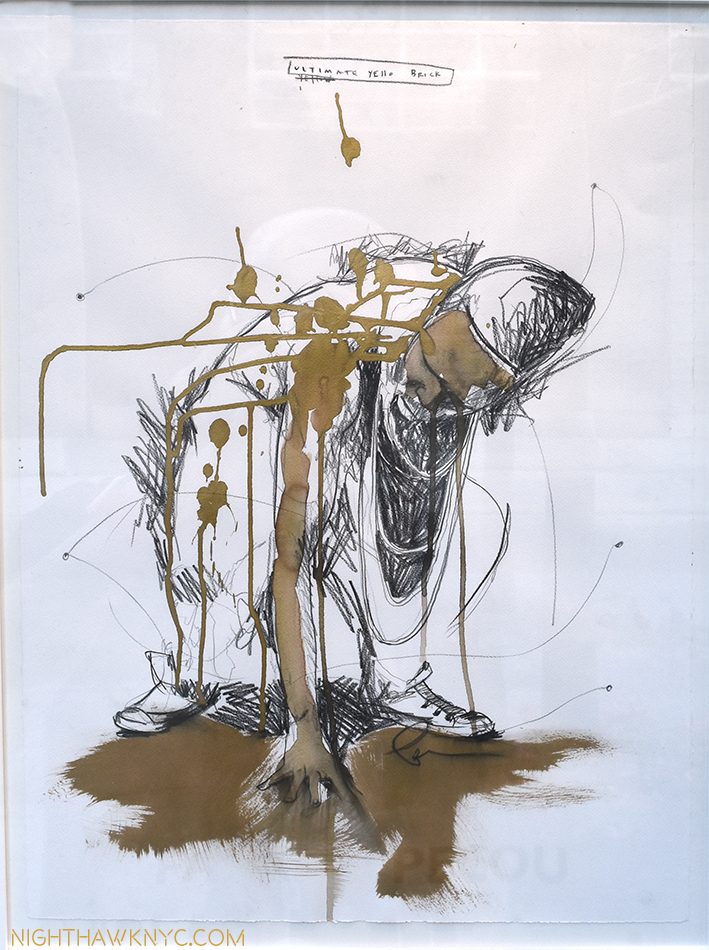
Fahamu Pecou: #BlackMatterLives” @Lyons Wier Gallery. Prolific and multi-talented, this could be a breakthrough show for him. Powerful. Gorgeous rawness. Present tense.

dsc_9124pnh

“Even In Darkness,” 2016, acrylic, spray paint, gold leaf on canvas, 60 x 48 inches

"Ultimate Yello Brick," drawing

“Ultimate Yello Brick,” 2016, graphite and iridescent ink on paper

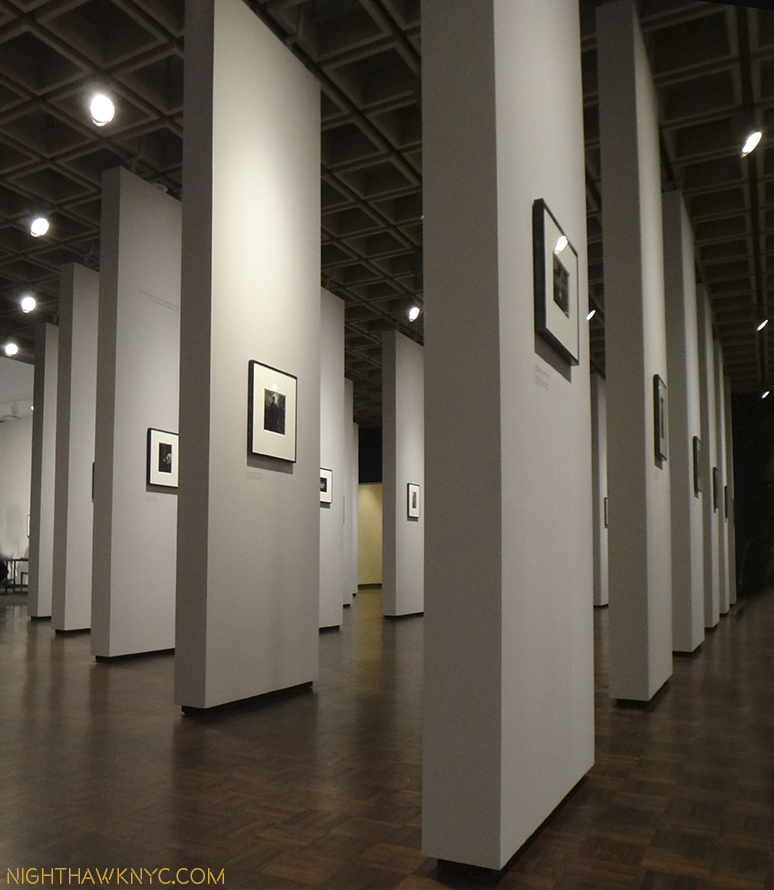
And- “diane arbus: in the beginning” @ The Met Breuer. Memorable as much for the show’s content as for it’s innovative display, Ms. Arbus’ beginnings show the Artist’s eye fully formed. Each of the 100 plus images on view is given it’s own wall- a side of a “mini-pillar” that allows the viewer to move through the show any which way they want to. Ingenious and ground-breaking, it’s more a case of The Met showing off it’s construction capabilities and resources more than “why didn’t anyone else think of this before?”

There is no "recommended" way to see this show.

There is no “recommended” way to see this show.

Especially noteworthy for me was a photo of my late friend, the legendary Stormé DeLarverie,, titled Miss Stormé DeLarverie,The Lady Who Appears to be a Gentleman, NYC, 1961. I knew Storme during the final decade of her life, and she had told me that Diane Arbus had photographed her, though I had not previously seen it. I took it with a grain of salt, given to tall tales as she was on occasion (will we ever know if she really was the “cause of,” or started, the Stonewall Uprising, not “Riot”, which I heard her claim she was?). But, there she is, sitting elegantly on a park bench in 1961, immortalized for all time, in the permanent collection of the Metropolitan Museum of Art, and on view as part of this very good show at The Met Breuer. Diane Arbus had one of the greatest eyes in photography.

Storme, in full effect in 1961. 45 years before I would meet her.

Stormé, in full effect in 1961. 45 years before I would meet her.

Some of these shows are still up, some have just closed. And somewhere the singer is saying…

“’cause no one knows about a good thing
Until a good thing is gone.”

R.I.P- Stormé DeLarverie,. Get home safe, my friend.
*- Soundtrack for this Post is “No One Knows About A Good Thing” by Curtis Mayfield and Daryl Simmons, from Mayfield’s album “New World Order,” and published by Warner- Tamerlane Publishing Corp.

NighthawkNYC.com has been entirely self-funded & ad-free for over 7 years, during which over 275 full length pieces have been published!
I can no longer fund it myself. More on why here.
If you’ve found it worthwhile, PLEASE donate to keep it online & ad-free below.
Thank you, Kenn.

Written & photographed by Kenn Sava for nighthawknyc.com unless otherwise credited.
To send comments, thoughts, feedback or propositions click here.
Click the white box on the upper right for the archives or to search them.
Subscribe to be notified of new Posts below. Your information will be used for no other purpose.
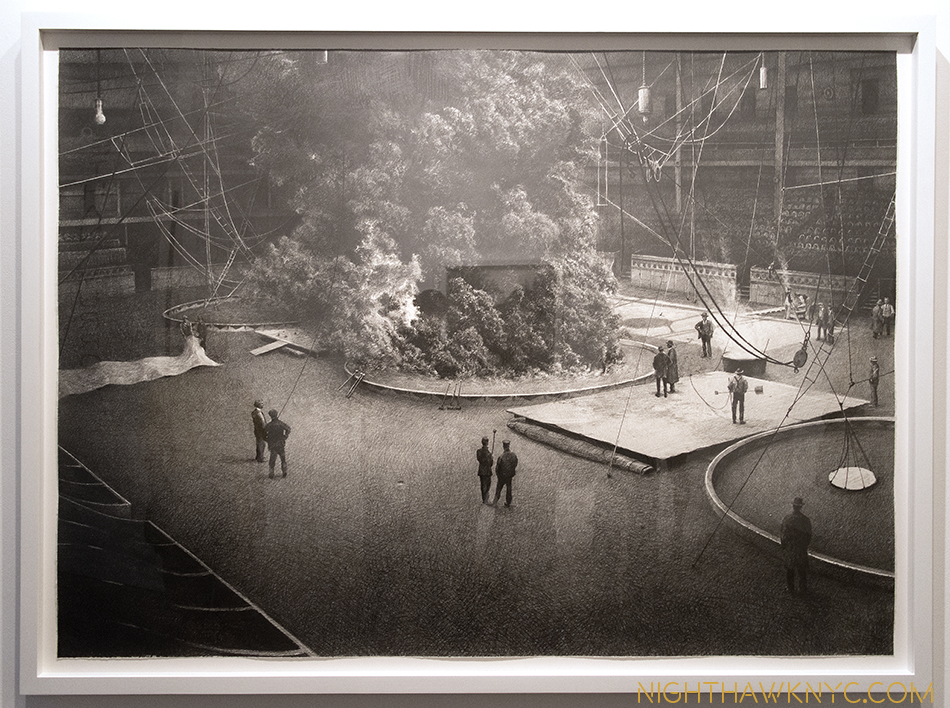
Table For One – Patti Smith’s “18 Stations”

Written & Photographed by Kenn Sava

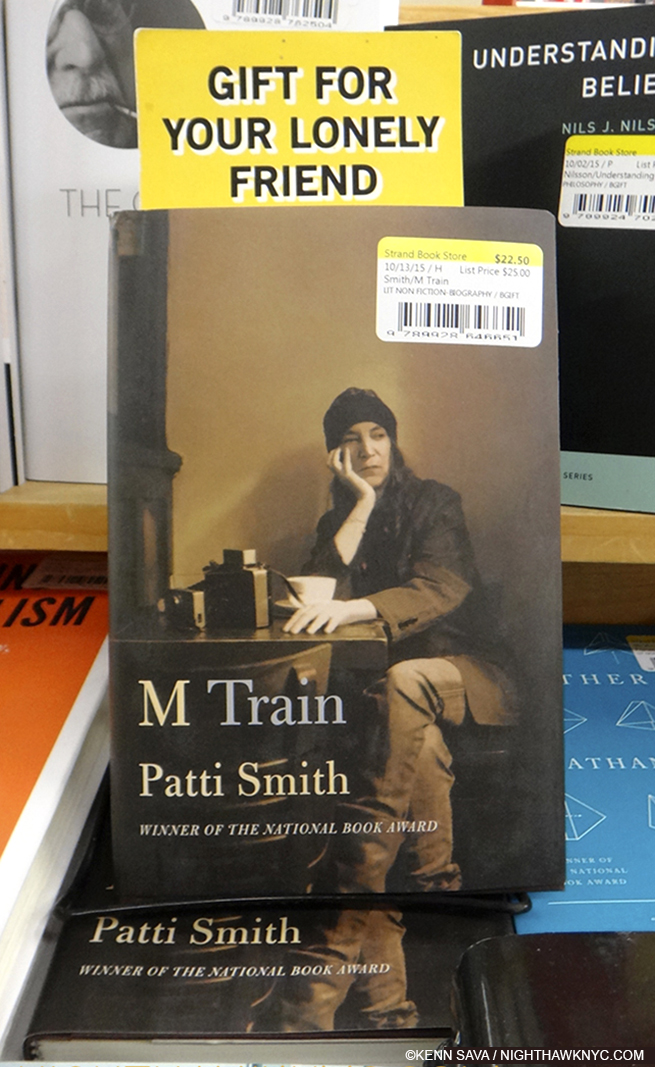
One of the small pleasures of going to The Strand Bookstore are the quirky, usually ironically humorous yellow signs one of the staff places in random books. This one was sticking out of a just released book one day last October- Patti Smith’s “M Train,” featuring its author looking incognito sitting at a corner table by herself lost in thought…

October 30, 2015. I bought one.

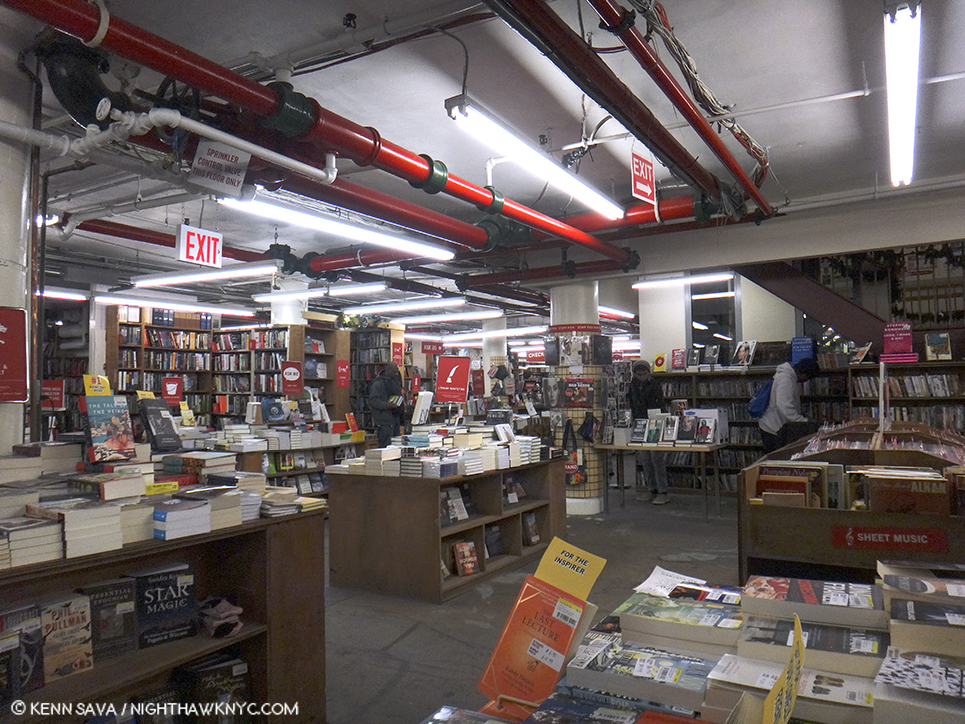
Patti Smith, who many years ago briefly worked one floor down in The Strand’s basement, is a living legend now, but, she’s not stopping there.

From here to… The Strand’s basement. Not one of the 18 Stations. The “Patti Smith section” is now down here.

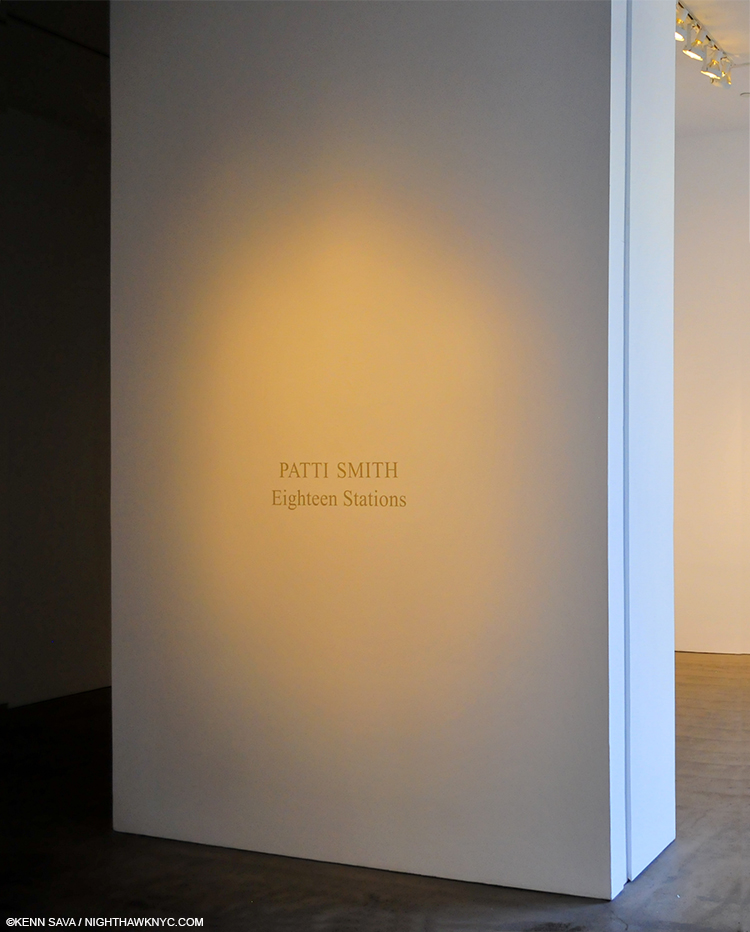
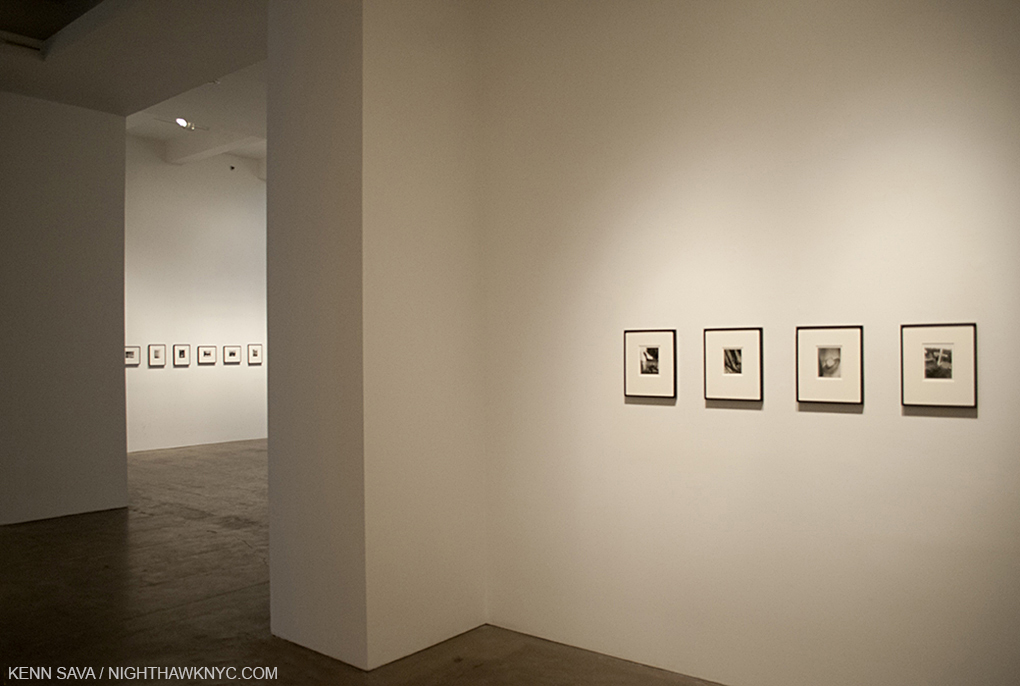
Beyond her groundbreaking music career, she’s had a second career as an award winning writer of prose, which seems to grow in stature all the time. “M Train,” which she calls “a roadmap to my life,” is both similar, and different, to her previous book, the instant classic “Just Kids.” While also a memoir, like “Just Kids” was centered on her relationship with Robert Mapplethorpe, this time, it’s about her life before, during and after her late husband, Fred “Sonic” Smith, guitarist of the MC5. It differs, too, as her Polaroid photography is a central part of this book. While, she’s been doing photography for years, and books of them have been published, she seems liberated here by not having a brilliant photographer as the co-subject, one she felt a responsibility to, and who’s pictures of her are now classics. Her photos enhance the story and go hand in hand with her imaginative telling of it, which almost feels improvised (she mentions listening to John Coltrane’s 1964 album “Live at Birdland” at one point and that is how her writing here feels to me). The book serves to pique interest in this aspect of her creativity. Now, many of those photos, and others, are on view in her show, “18 Stations,” at Robert Miller Gallery on West 26th Street, through April 16.


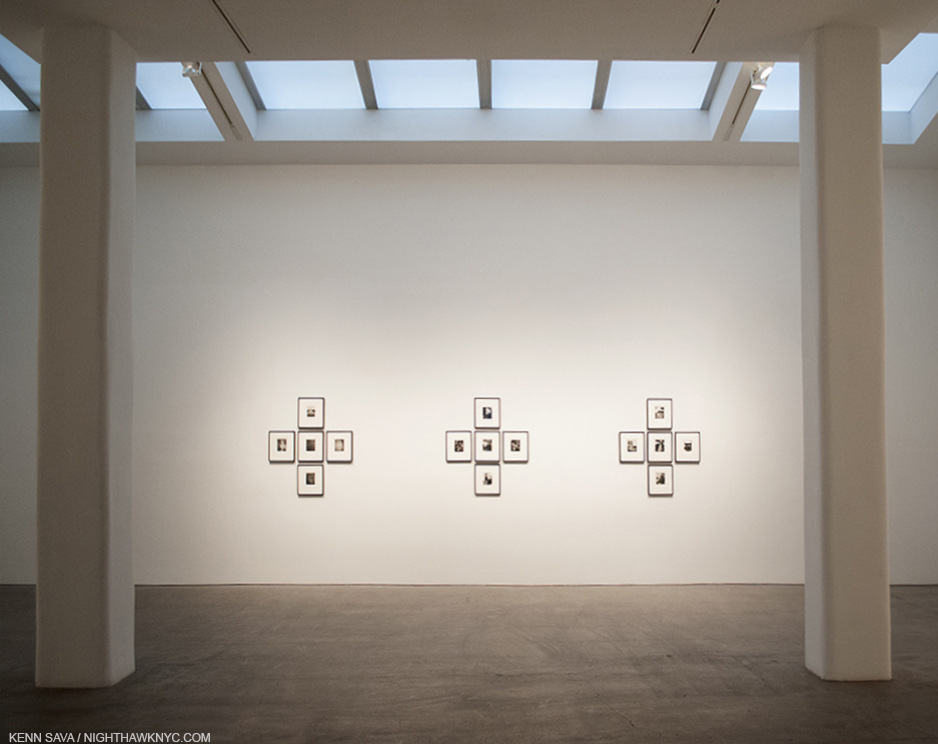
3 of the “18 Stations.”

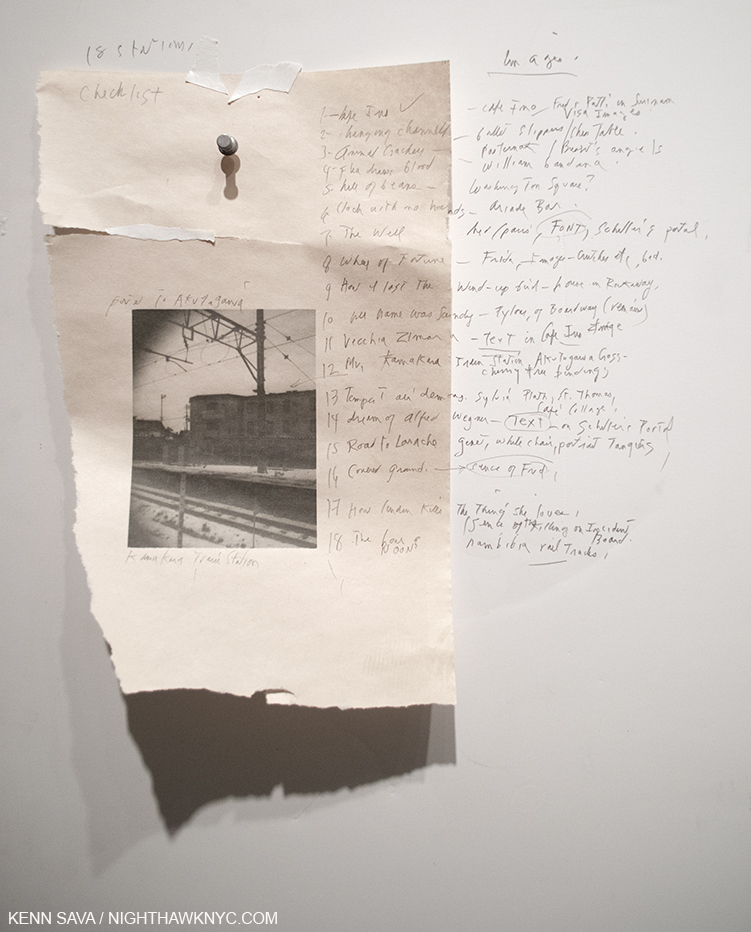
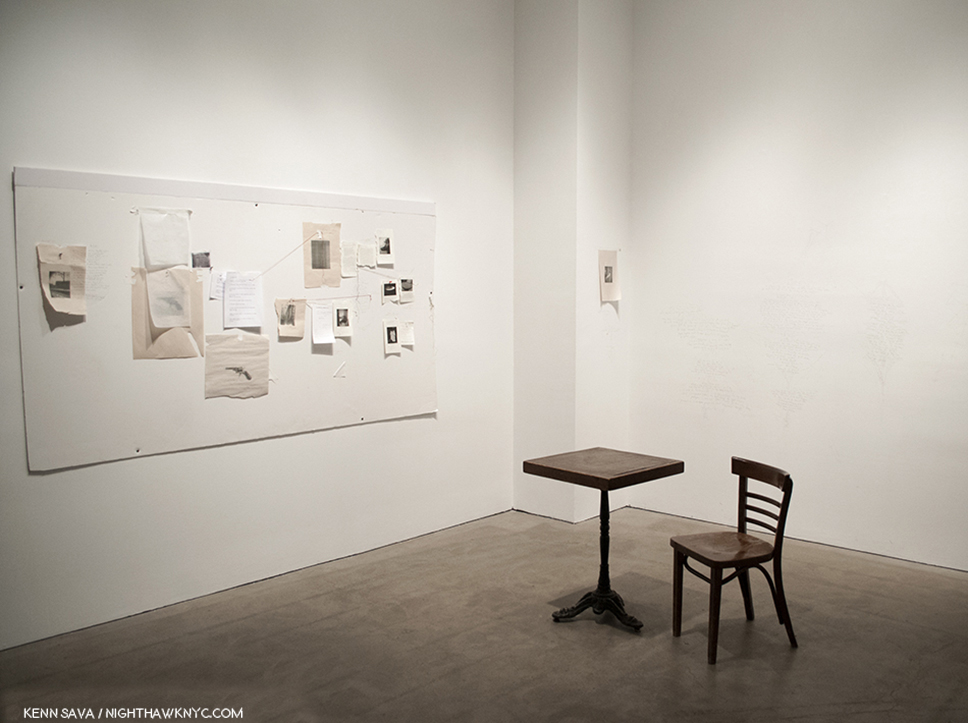
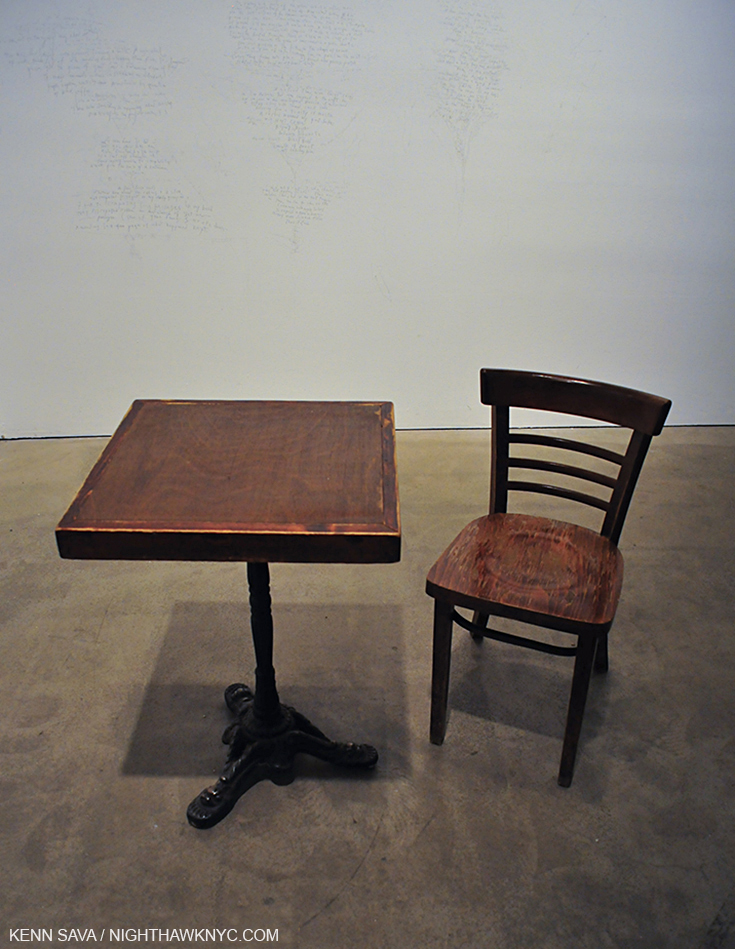
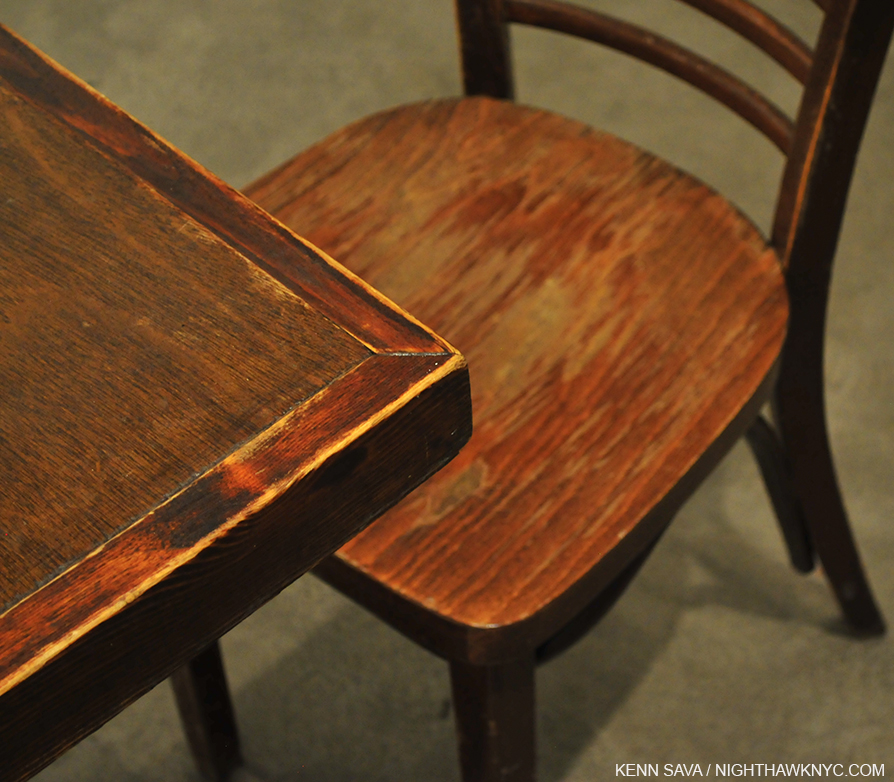
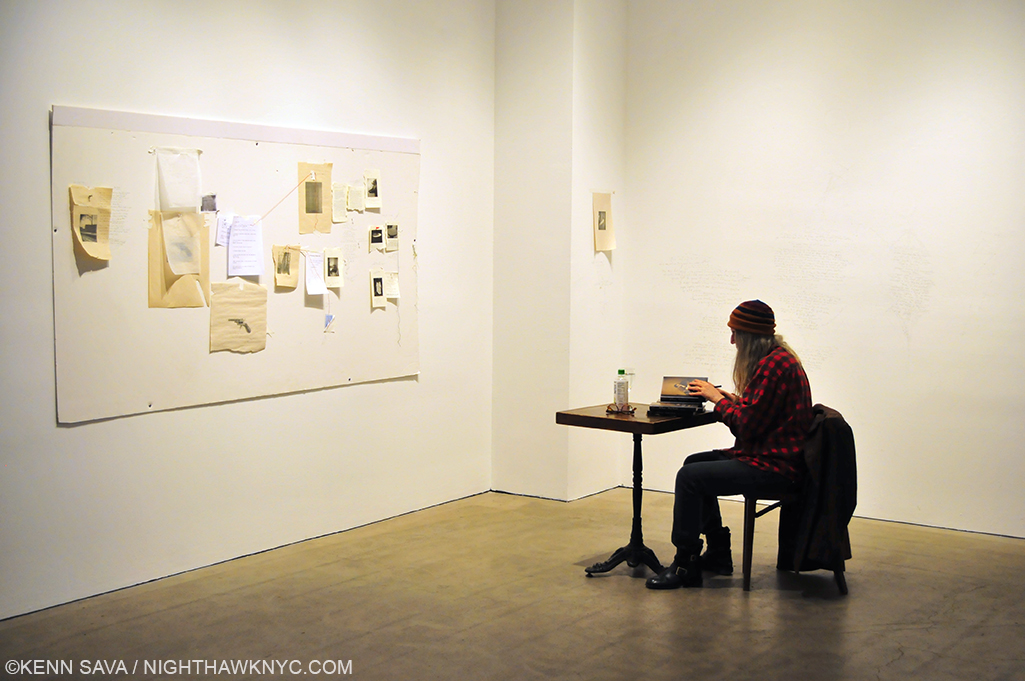
While rock stardom is rare, something few can relate to, along the way, she’s also become something many more can relate to- single, and on her own. The show arranges images from her seemingly never-ending travels from, and returns to her NYC homes, and her beloved Cafe ‘Ino, at 21 Bedford Street in the Village, (spoiler alert), which closes for good near the end of the book. At the figurative and literal “heart” of the show, half way back in the Gallery, in the first “Station,” is an installation of her real table and chair from Cafe ‘Ino (“My portal to where.”) flanked by a bulletin board containing what appears to be the genesis of this show on one wall, and pencilled notes hand written right on the adjacent wall, making me wonder if the show originated during her time there.

Table For One. The wall on the right is covered with her writing in pencil.

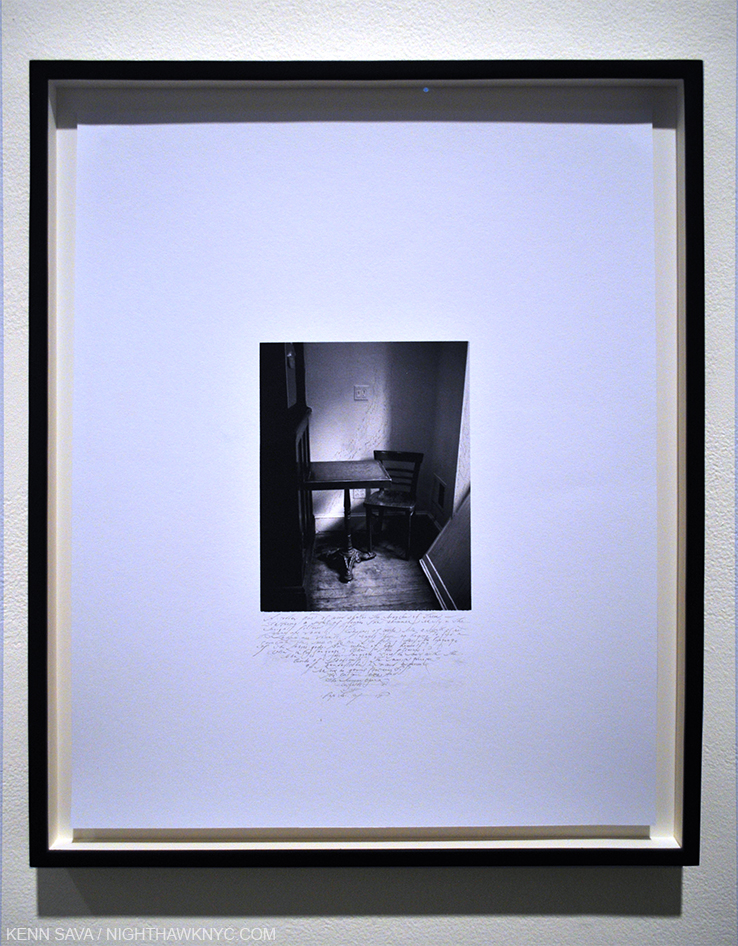
“It occurred to me I could preserve the history of ‘Ino…like an engraver etching the 23rd Psalm on the head of a pin.” The iconic first picture in M Train in a unique version with Patti’s pencil inscription in her caligraphic script.

“We seek to stay present, even as the ghosts attempt to draw us away.”

It’s as if the thoughts she was having while sitting there are now real before us, though she is absent.  The other 17 “Stations” tell the story of her journeys, partially with her late husband, “M Train” dedicatee, Fred “Sonic” Smith, but mostly alone.

2 more Stations.

Reading the book, one discovers quite a bit about the “real” Patti Smith- her unquenchable thirst for (good) coffee, her obsession with detective TV shows….which, of course, reminds me of a song. You know…”She’s filing her nails while they’re dragging the lake…”

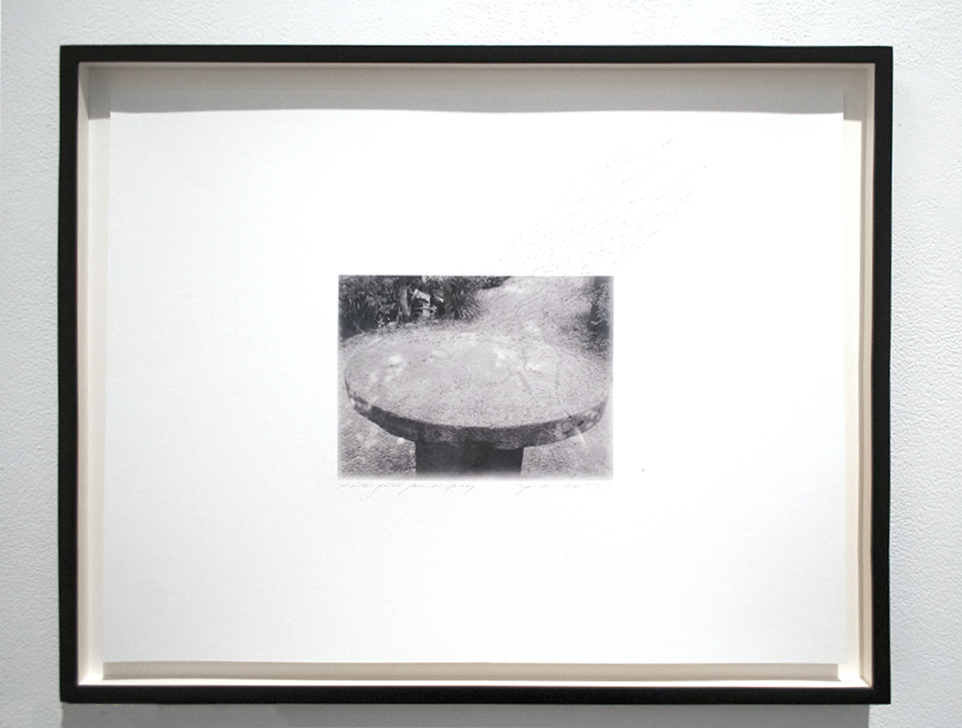
…her amazing connectedness to her influences to the point of traveling to their homes, gravesites or other memorable places in their lives- like visiting the chess table Bobby Fischer played Boris Spassky for the World Championship in 1972 in Iceland (she then had a late night meeting with Mr. Fishcher, and subsequently visited his grave after he passed the following year). She remembers so many of her dreams! I don’t. She also has a love of birthdates and anniversaries. Along the way, we meet Tolstoy’s Bear, Herman Hesse’s typewriter, Frida Kahlo’s medicine bottles and Schiller’s portal. I mean oval table.

Schiller’s Table. This inscribed version is labelled Schiller’s Portal

If you’re curious about how she works, or how she goes about her daily life, this is the book for you. For the rest of us, its a book about honing in on what really matters to you, about persevering and continuing to do you work and hone your craft. We’re lucky to have it. I found myself wishing we had something similar by Da Vinci, to go along with his Notebooks, or Michelangelo, who left us about 500 letters and possibly ghost wrote a biography of himself, that is frustrating for many reasons, where Patti’s paints a vivid picture. The amount of detail she recalls is staggering (and perhaps a bit too much). Well? I can’t have it both ways, so I’ll opt for too much rather than not enough. It’s interesting to contrast this intense detailing in the prose with her photographs. Some are a bit blurry, some off center or kilter (see below) providing (purposely) less detail than you may want.

“Speak to me, speak to me heart
I feel a needing to bridge the clouds, softly go
A way I wish to know, to know
A way I wish to know, to know”*

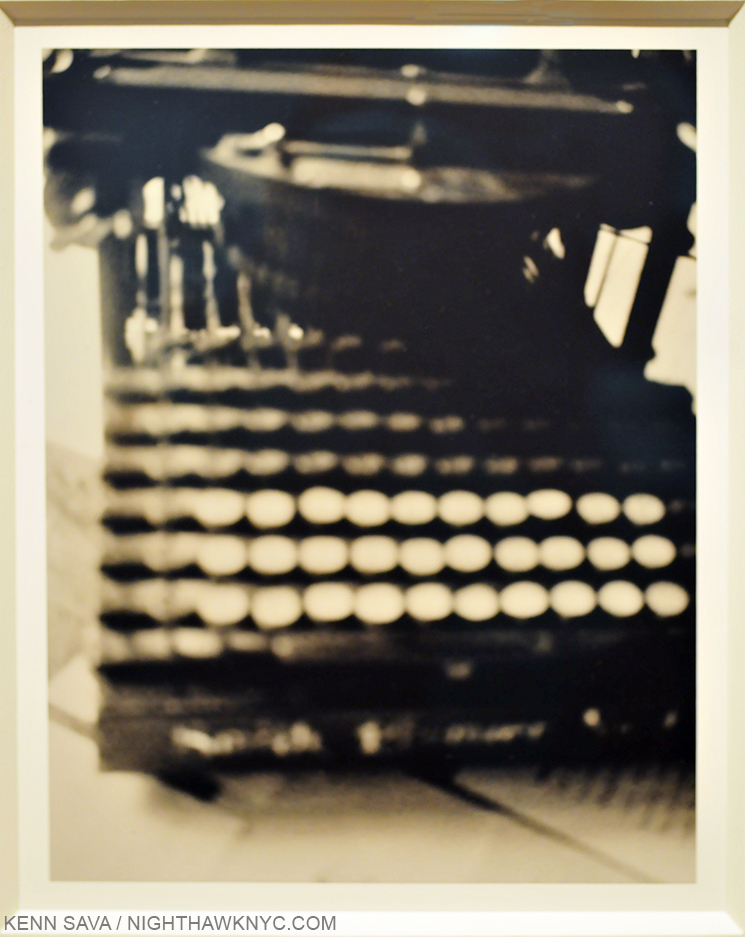
While most of these Polaroids are silver gelatin limited edition prints of 10, a few of these remarkable and beautiful images are graced with her equally beautiful handwritten inscriptions creating one of a kind works, they all, consciously, have an old feel to them, belying the fact that some were taken barely 3 years ago, which gives them a dream-like, seen in a vision quality, which Ms. Smith says she likes about early photography. The effect strikes me as not unlike that achieved by the great graphic artists, like Rembrandt, Goya and Whistler.

Herman Hesse’s Typewriter. I would have guessed it was William Burrough’s.

It’s also interesting to ponder what isn’t- here, or in M Train. There is no Robert Mapplethorpe. There are no shots of the Hotel Chelsea, West 23rd Street or Chelsea. No CBGB’s (How many of you remember that Patti Smith was also the last Artist to perform there?). There are only a few (as far as I can tell) of Manhattan. The two shots of Cafe Imo, of course, a shot of the West 4th St Subway Station, a shot of her house, among them. In that sense, for someone who, (for me and perhaps quite a few others) is associated so strongly with New York City, this is a show (like the book) that is largely about the world “outside” of it. ‘Ino being the “portal” to it. Memories of people and places outside of Manhattan (even in the case of Ginsberg and Burroughs who spent so much time here).

“Speak to me, speak to me shadow
I spin from the wheel, nothing at all
Save the need, the need to weave
A silk of souls, that whisper, whisper
A silk of souls, that whispers to me”*

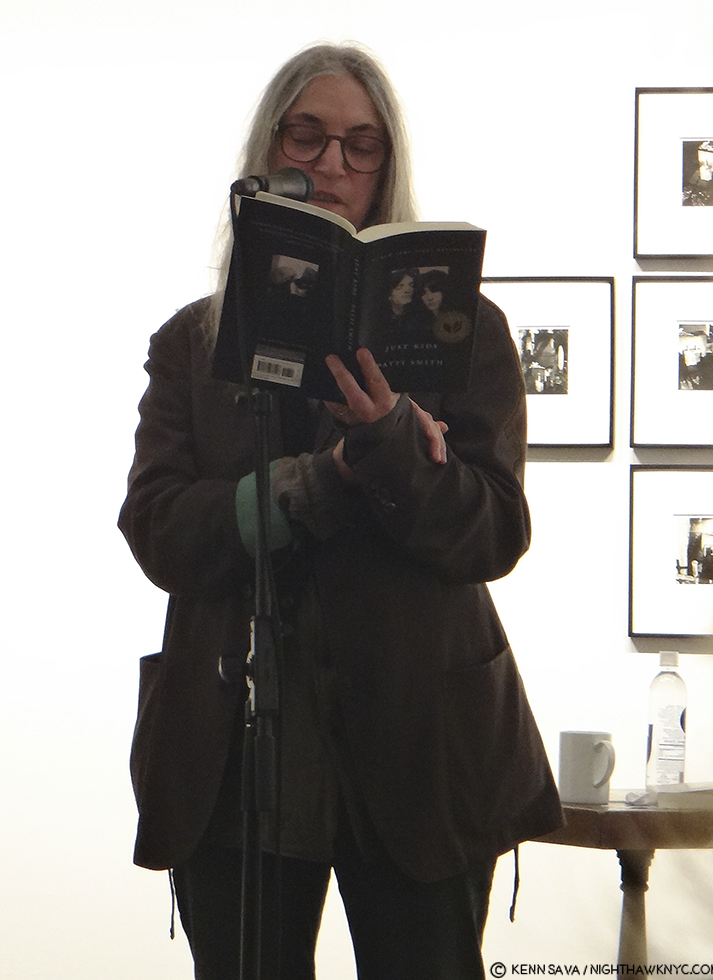
Among my dozen visits was one on April Fool’s when a few hundred of us were blessed to have our paths cross with hers at a reading here that served to highlight for me, at least, the conversational nature of both her recent books, then hearing her tell stories about them, and her life, in ways no “audio guide” ever could. I’ve heard a lot of Artists, and Musicians for that matter, speak about their work. Rarely have I felt like they were speaking of their children the way these stories felt. The memories behind each shot is so personally present, it lies as close to her skin as the image lies on the surface of the paper. Quite a few of the stories are told in the books, and hearing her read them changed the way I will re-read them. (I have not heard the audio books she’s done of them.).

I missed hearing Joyce read Ulysees, Kerouac read On The Road, Ginsberg read Howl, but…

I didn’t expect to hear her read from Just Kids, expecting this to be about M Train, but she did. I don’t know Patti, and didn’t know Robert Mapplethorpe, but I know well know the area much of the book inhabits, as well as some of the venues it takes place in, so the book lives in me, as few I’ve read do. Hearing her read it brought it alive, pulling it from the realm of “living history,” to something that, yes…really did happen. I pass by some of those places a few times a week.

Every single time I do I think about what happened there.

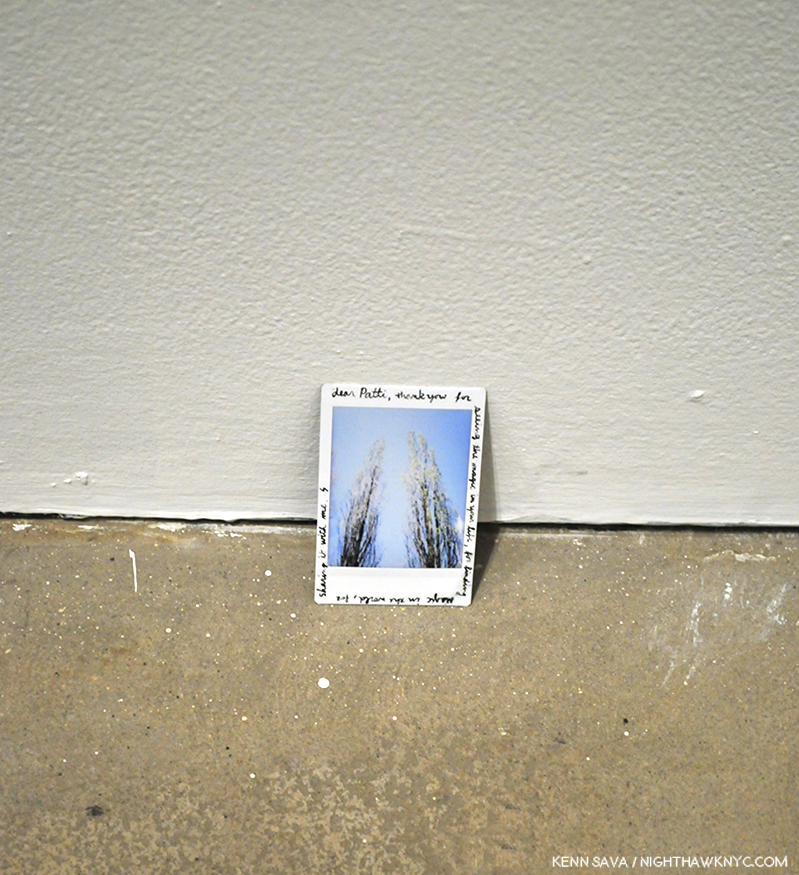
A fan’s tribute left leaning against the wall. April 15.

This is one of the most personal shows I’ve seen, certainly recently. I found myself returning to it over and over, like she did to Cafe ‘Imo. It’s like being able to walk around in someone’s memories, rather to get on a train and stop at each Station along her journey. Along the way, we encounter influences, living, passed and once living among you and now passed, objects that speak to a large meaning or significance, memories, hardship, distant places went to, seen and conquered. We see life being lived and places where it famously was lived. We see that life goes on, all the time, around us- everywhere, while weather happens, dirt gathers on graves, dandelions grow and stuffed bears eternally await calling cards.

M Train sweeps the dirt that accumulates on the many graves it visits, without need for tenders in traditional wear and using a literary broom to do so- the kind those buried within would possibly prefer. It’s a Testament to Life- surviving on your own, through deaths, Holidays without others, long trips, your birthday, sudden illness, blackouts, meeting legends, unexpected connections that prove life changing, and most of all, change. In the end, you can’t even go home any more.

___

Postscript, April 16-

Each of the dozen times I went to this show, I especially looked forward to seeing her table and chair from Cafe ‘Ino, which I show in the 6th photo above, and below.

Walking over there today for the last time, I asked myself – Why? Why do they “mean” so much to me?

I was never even in Cafe ‘Ino. I had to look it up on Apple Maps to even see where it was. I’d never met Patti Smith. I didn’t follow her music career very closely. I wasn’t aware of the extent of her work in photography.

?

I don’t get it.

I read Just Kids and loved it for many reasons, including those I mention above. One of those was the sense of the Manhattan that is now gone- both people and places lost, it so beautifully captures. Patti stands for that lost Manhattan for me for that reason and also because her music was a vital part of it. When I started reading M Train, all I knew about it was that it was about writing alone in a cafe. I could relate. I spent 10 years drawing alone in bars. Inside the book, the very first picture is of her table & chair in situ at Cafe ‘Ino. We’ve all lost a lot in our lives- it’s an inevitable part of living. Patti is no different. Neither am I. Neither are you.

When I reached the Gallery today, I walked down the hall and rounded the corner to visit their installation. When I looked in, I was stopped in my tracks completely in shock. The table and chair were taken.

Patti Smith was sitting there, alone, signing books.

At that moment, it hit me. What they say to me is that they speak for what’s been lost in her life. They, in ways even her pictures aren’t, are physical representatives of what’s been lost. They are still here. They are continuing with their “lives.” Like we all must- like Patti is.

For me? I feel so very lucky…so blessed. Getting to see her sitting in her chair at her table…NOTHING could have been a more fitting culmination to her show. Though, this was close…

Patti walks down memory lane one last time before her show ends. April 16.

“Speak to me heart
All things renew
Hearts will mend
‘Round the bend

Paths that cross
Cross again
Paths that cross
Will cross again”*

It is the ultimate “P.S.” to it.

As if the universe was saying to me- “P.S.- Life goes on.”

Hopefully.

*Soundtrack for this Post is “Paths That Cross” by Patti Smith, from her ablum, Land (1975-2002), written by Patricia Smith and Fred “Sonic” Smith, published by Druse Music. All other quotes in the text are from M Train by Patti Smith and published by Alfred A. Knopf.

January, 2019- This Post is dedicated to all the Patti Smith fans from around the world who’ve written to me about it. 

NighthawkNYC.com has been entirely self-funded & ad-free for over 8 years, during which over 300 full length pieces have been published!
If you’ve found it worthwhile, PLEASE donate to allow me to continue below.
Thank you, Kenn.

Written & photographed by Kenn Sava for nighthawknyc.com unless otherwise credited.
To send comments, thoughts, feedback or propositions click here.
Click the white box on the upper right for the archives or to search them.
Subscribe to be notified of new Posts below. Your information will be used for no other purpose.

Art Shows, 2015 – Who Keeps Your Flame?

“But when you’re gone,
Who remembers your name?
Who keeps your flame?”*

IMG_7838PNH

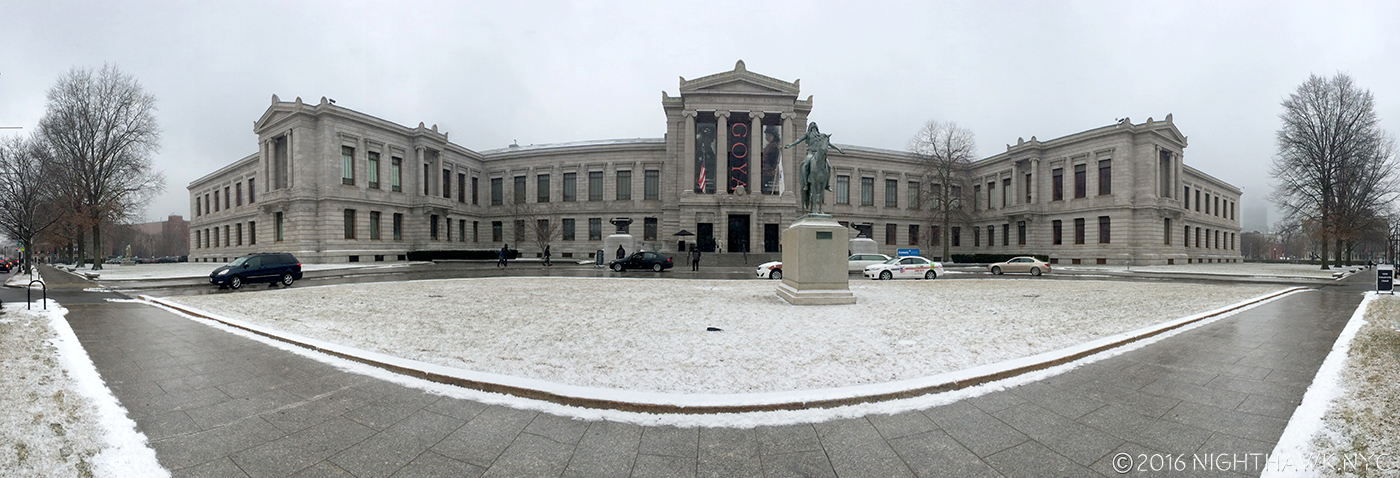
January, 2015. Goya: Order and Disorder @The Museum of Fine Arts, Boston. Neither snow, nor 5 hours on a train kept the Nighthawk from the Front Door of Great Art.

Since I don’t believe in comparing creative work or creative people, AND I believe that “awards” for “Best” whatever among the Arts (and Sports) are absurd 1, I thought I’d do a “List In No Particular Order” of 2015 Art Shows I saw (some opened in 2014) that may or may not have closed for good, but still continue to open doors in my mind, and that’s more important than any award I could bestow.

“Oh can I show you what I’m proudest of?”*

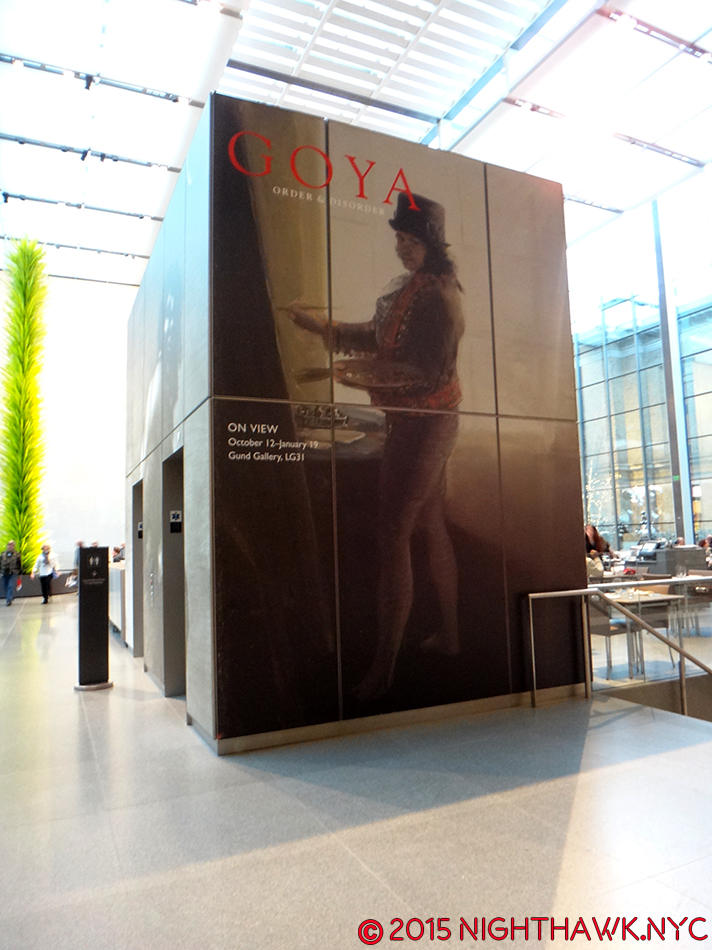
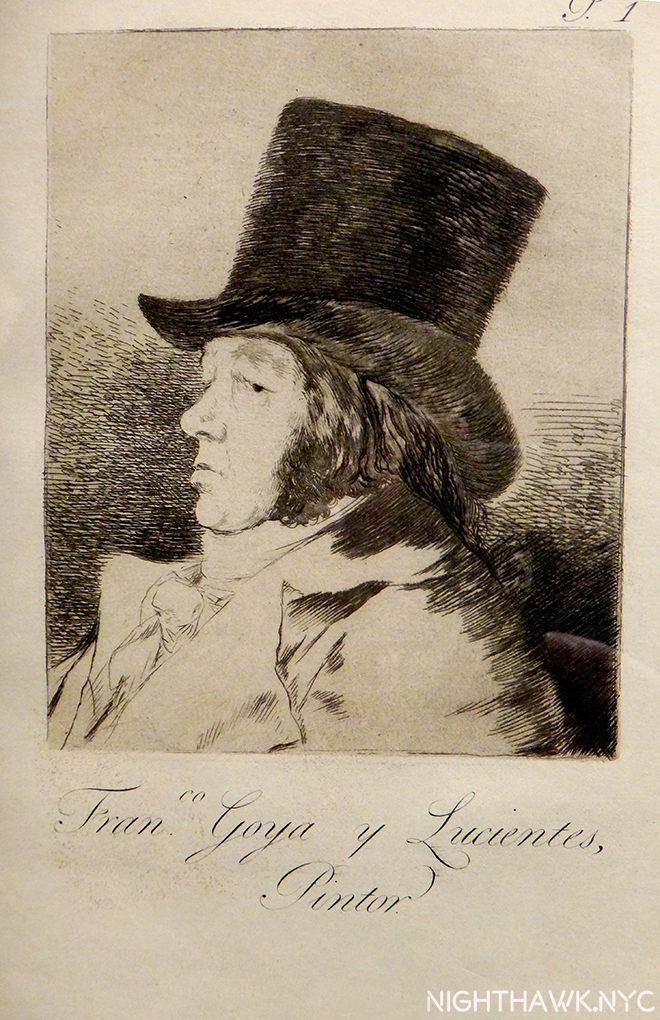
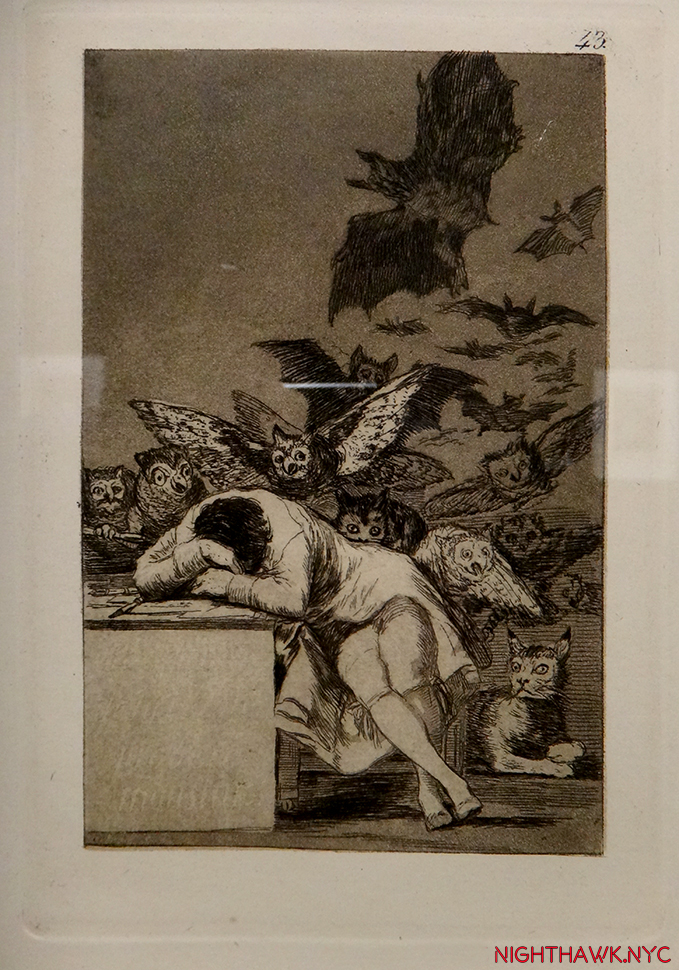
Goya: Order and Disorder (Museum of Fine Arts, Boston, MA. No photos permitted.) AND Goya:Los Caprichos (National Arts Club, Gramercy Park, NYC)- Two concurrent, excellent shows, 250 miles apart, one huge, the other “small” showing two views of  Goya- one all encompassing, filling the whole lower level of the MFA, one narrowly focused on a rare, complete set of his landmark 80 print, Los Caprichos,(once owned by Robert Henri, who reappears below) combined to show the enduring power, importance, relevance and eternal influence of the Spanish Master. Many saw the former, far fewer saw the latter, tucked away in a dining? lecture? room on the second floor of the NAC (Behind hundreds of chairs on one of my visits!). An artist of nightmares, both surreal and all-too-real, the likes of which perhaps only Bosch can equal, who can then turn around and paint with the utmost lyricism, Goya was all about what it is to be human. Take your pick- portraits, historical pieces, landscapes, the otherworldly or the underworldly, children, tapestries, or his graphic works that hold their own with dare-I-say-Rembrandt, he’ll blow your mind.

DSC07316PNH

Goya/MFA on the show’s elevator entrance, overlooking Dale Chihuly’s Tree.

Remember My Name. Goya’s Self Portrait casts his all-seeing eye on us 215 years later.

The Sleep of Reason Produces Monsters from The Caprichos” So? Stay up!

DSC07711PNH

Neither blizzard, nor the furniture(!), kept the Nighthawk from seeing all of Goya’s incredible Los Caprichos at the National Arts Club, but I think they tried to.

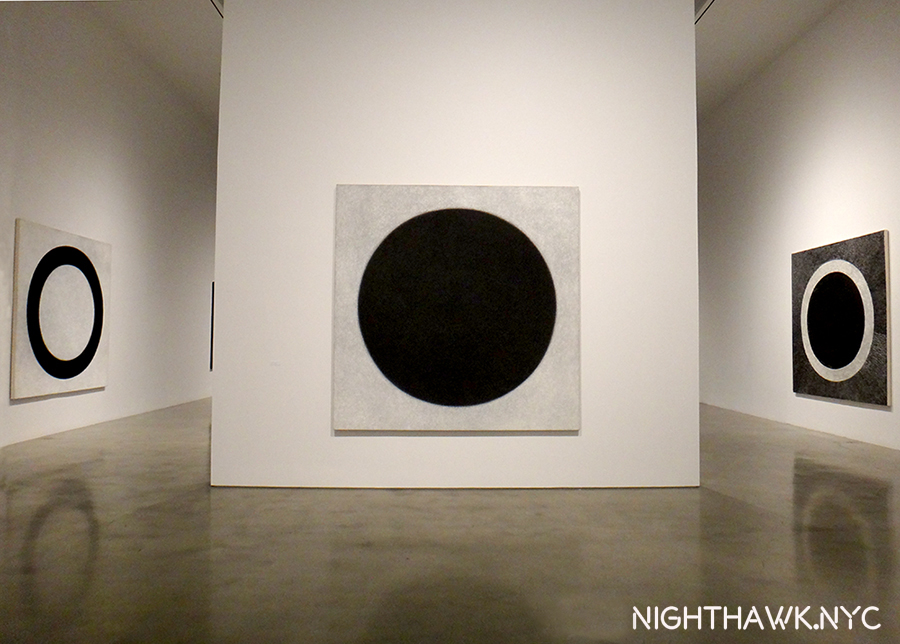
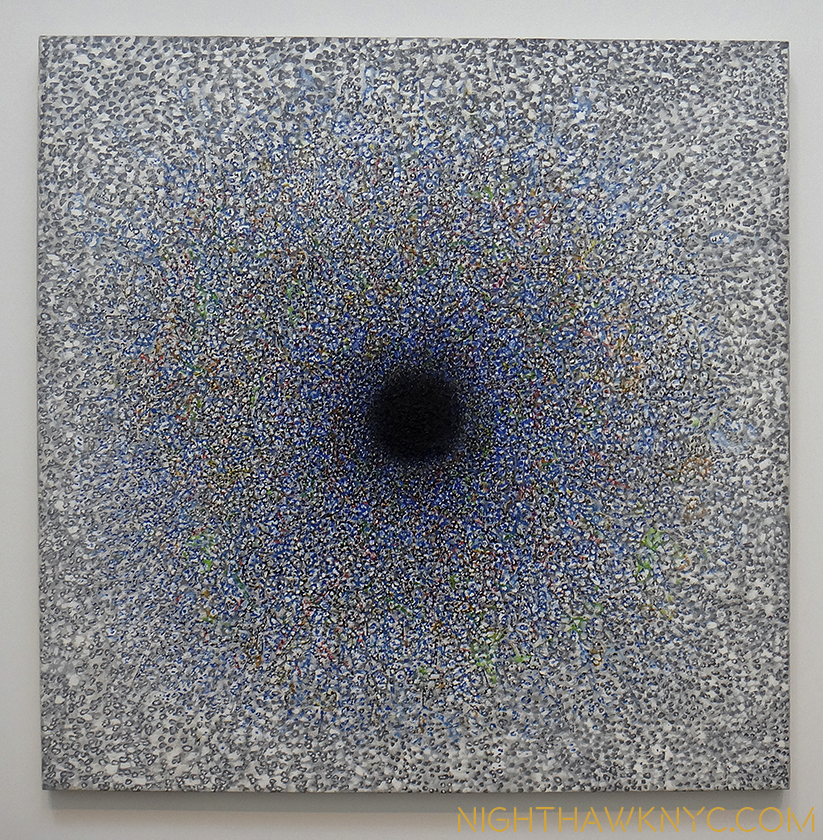
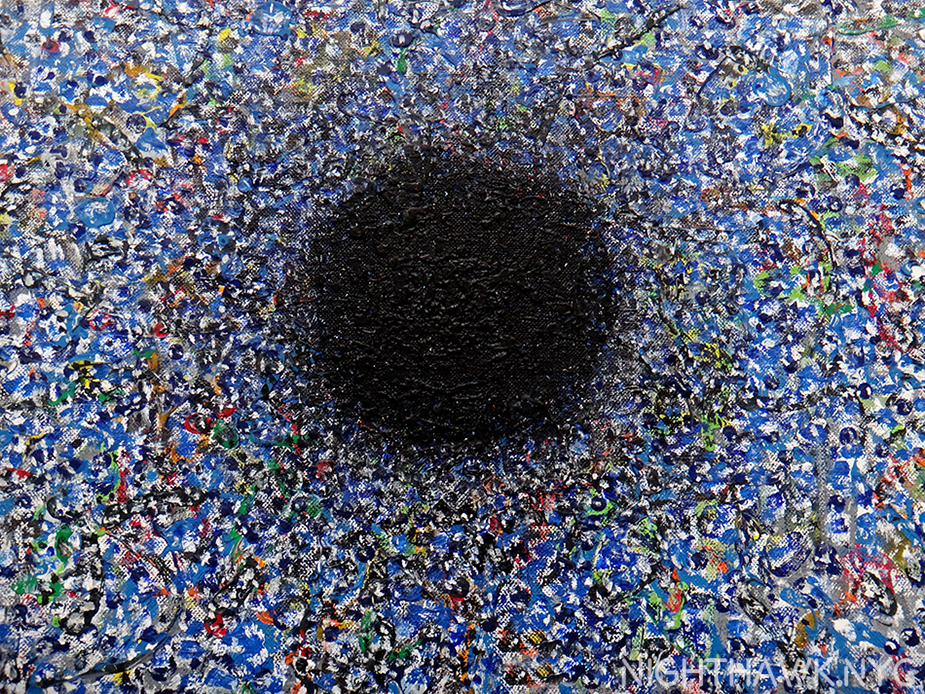
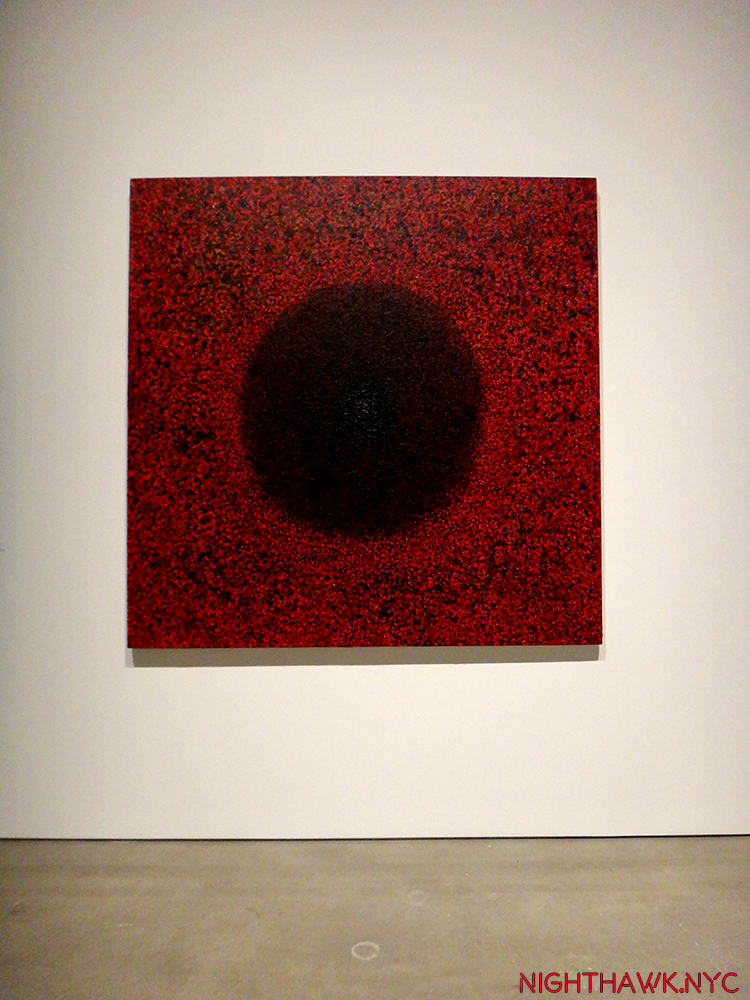
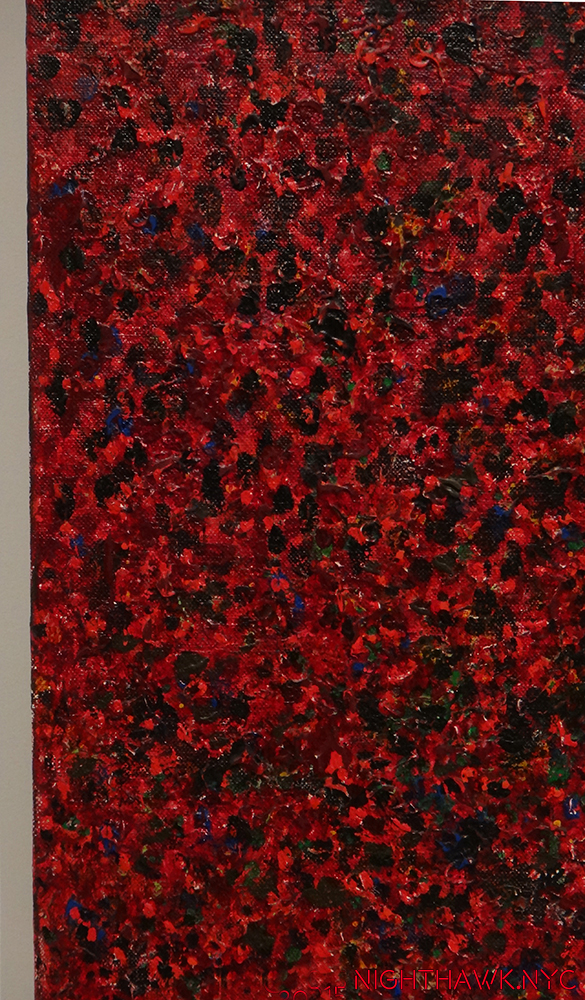
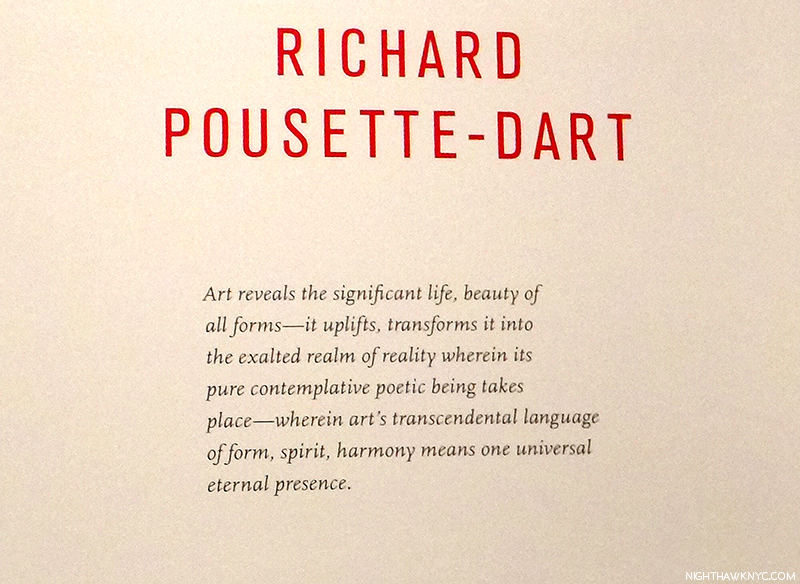
Richard Pousette-Dart (Pace 510 West 25th, Chelsea)- I walked in and was completely captivated by “abstract” Art the way I haven’t been since the Mark Rothko Show at the “Old” Whitney in 1998, which was one of the greatest shows I’ve ever seen. (That’s not comparing.) Don’t be fooled by the apparent geometric simplicity, there is an astounding subtlety to these works that at once feel microscopically considered, often freely rendered, yet globally cohesive. Pousette-Dart had a number of styles, and this show represented one, geometric style, from the 1970’s in both large oils and smaller drawings. For any of those who think that Abstract Expressionism is “easy” to do, go ahead and try creating one of these, the largest is almost 8 foot square, and then see if it has the “Presence” of Dart’s. The amount of work that went into each piece belies their seemingly “simple” composition, is matched by an extraordinary primacy of order, and second only to their transcendent impact. Here, we see Richard Pousette-Dart as the great, “under known” abstract artist. While Pollock & Rothko have grown larger in stature, Pousette -Dart’s name deserves to be right there with theirs. There is only one word to describe this show’s effect- Magical.

Then? There’s never a chair around when you want one. Pousette-Dart @Pace- Presence, Circle of Night, 1975-6, center, Black Circle Time, 1980, left and White Circle Time, 1980, 90″ square each.

Imploding Black, 1975, six feet square. Transcendent,

Detail.

Cerchio di Dante, 1986, six foot square

Detail of the left side.

“Let me tell you what I wish I’d known
When I was young and dreamed of glory
You have no control
Who lives
Who dies
Who tells your story?”*

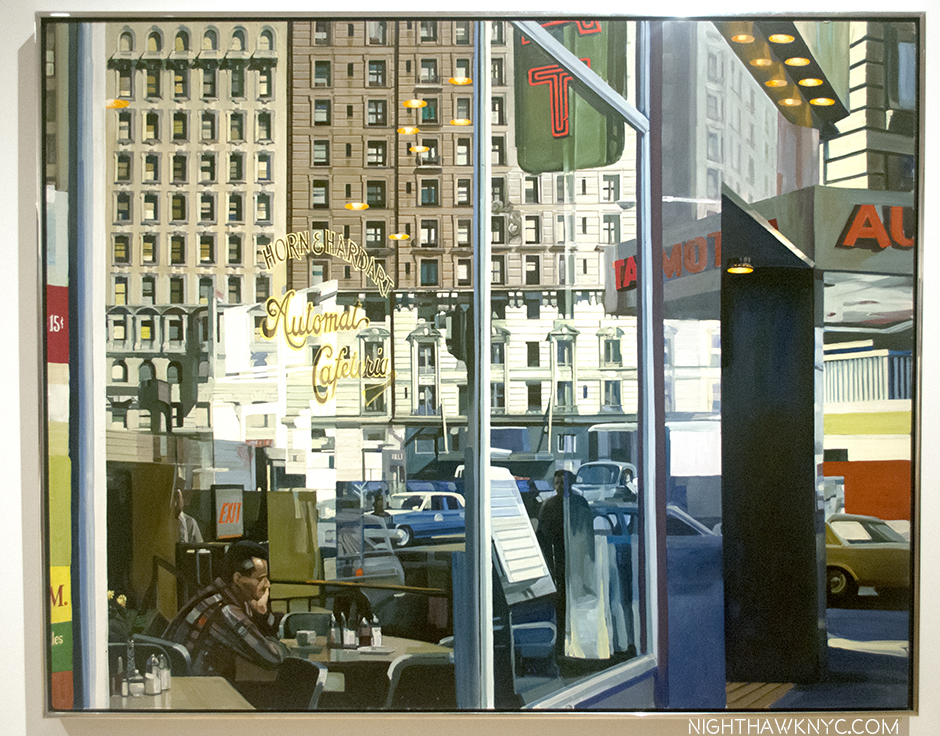
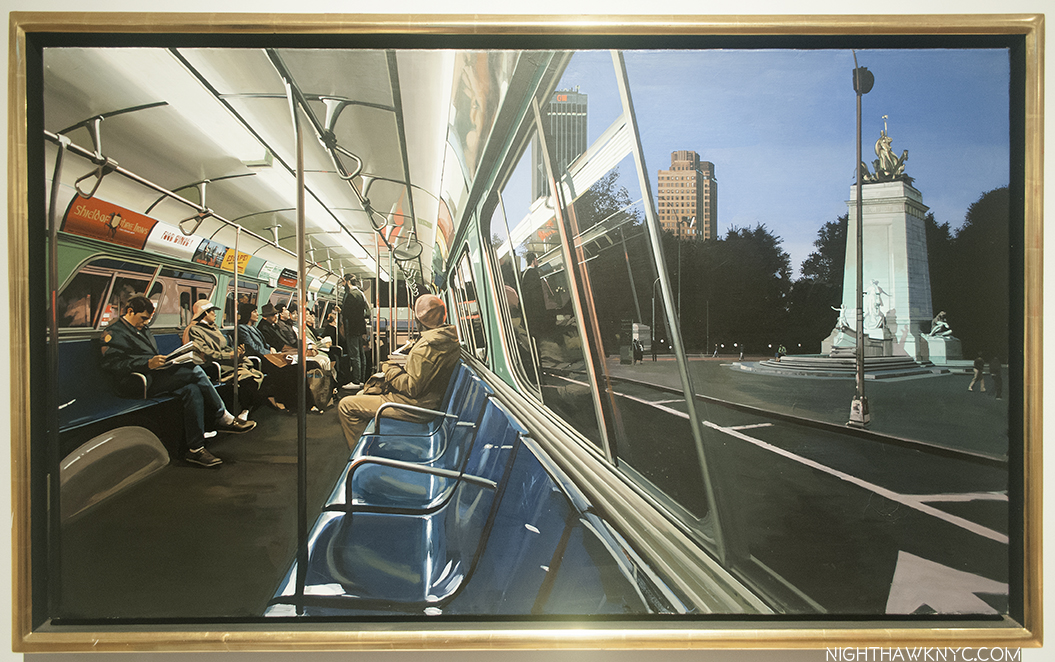
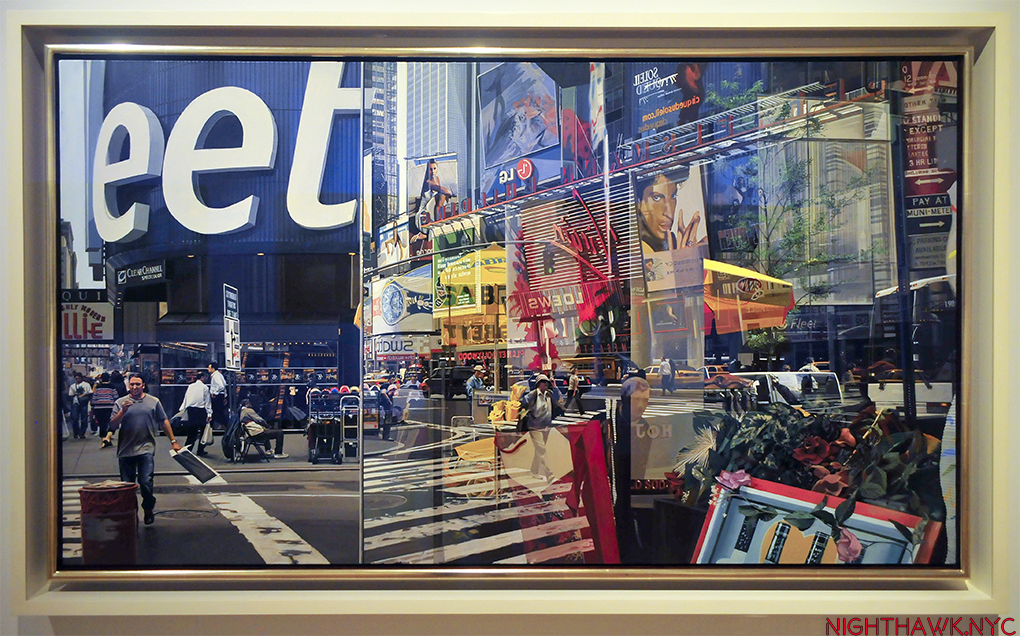
Richard Estes: Painting New York City (Museum of Art & Design, NYC)- My favorite contemporary artist, and one of the greatest living realists, FINALLY gets an NYC Museum show, and it was worth the wait. A virtual time capsule of NYC from the mid 1960’s to 2015’s astounding Corner Cafe, showing the 83 year old Master is still at the height of his considerable power. Oh…Do NOT call him a “photorealist” in my presence! Estes shows us the world we live in as we do not see it, (more on this soon) and so follows in the footsteps of Edward Hopper and Charles Sheeler in advancing American realism while, perhaps, being the first to include the abstraction that is also a part of the real world. A misunderstood painter, in my eyes, who is only just beginning to be really seen, finally.

Horn & Hardart Automat, 1967. Not since Hopper has a work spoken to me of life in the City like this does.

Columbus Circle, Maine Monument, 1989. 500 years ago, or 100, they came by ship. Now? They come by bus. Frozen in time, side by side.

Times Square, 2004. Nothing captures the experience of the place better than this, though Robert Rauschenberg is capable of giving me a similar feeling (See below).

“I try to make sense of your thousands of pages of writings
You really do write like you’re running out of time.”*

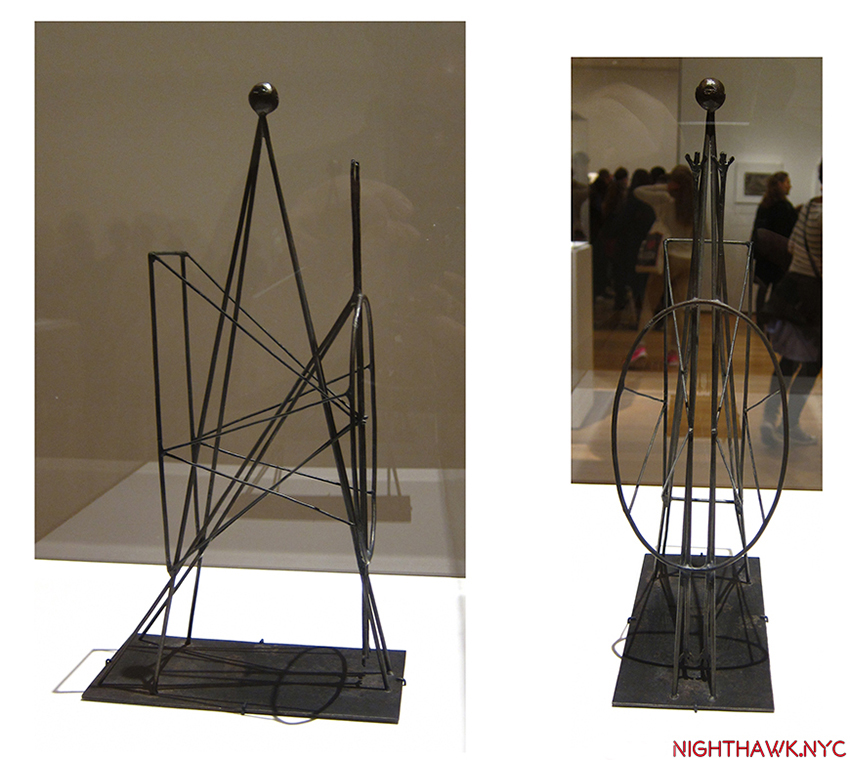
Picasso: Sculpture (MoMA)- If he had never done anything besides paint, Picasso would be considered among the all time Masters. But, noooooooooooo… Picasso was, perhaps, the most unique genius in (known) art history in that his genius was among the most restless. He almost never stopped creating, and he never stopped seeking new outlets for his creative vision. Consider- PICASSO HAD NO TRAINING AS A SCULPTOR! NONE. Yet, that didn’t stop him from becoming, perhaps, THE most revolutionary sculptor up to his time. There is so much great work to see in this show, I don’t even know where to start talking about it. “Picasso: Sculpture” shows us the naked face of endlessly creative genius the like the world has never seen. I’ll sum it up by saying virtually all of it is wonderfully selected, though some of the Cubist works here don’t stand up to his paintings, in my opinion, and wonder- When will we see his like, again? The “other” takeaway, for me, is- Oh…MoMA. I miss you. About as much as I miss your “old” building.

Standing Figure in Wire, 1928. Unprecedented. Astounding.

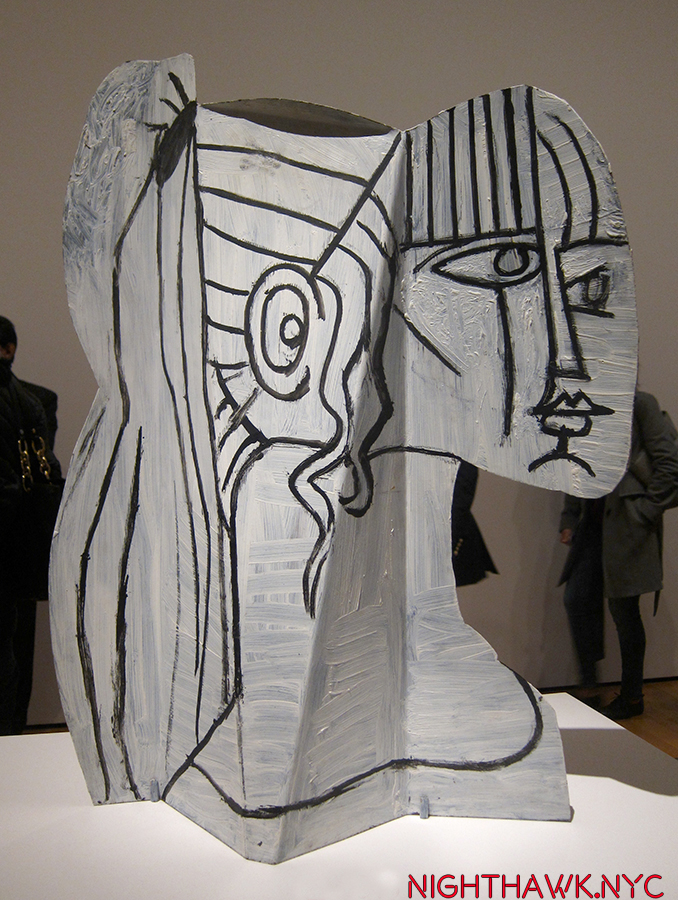
Sylvette, 1954. “I see you slightly folded…in steel, my dear.” Picasso must have said.

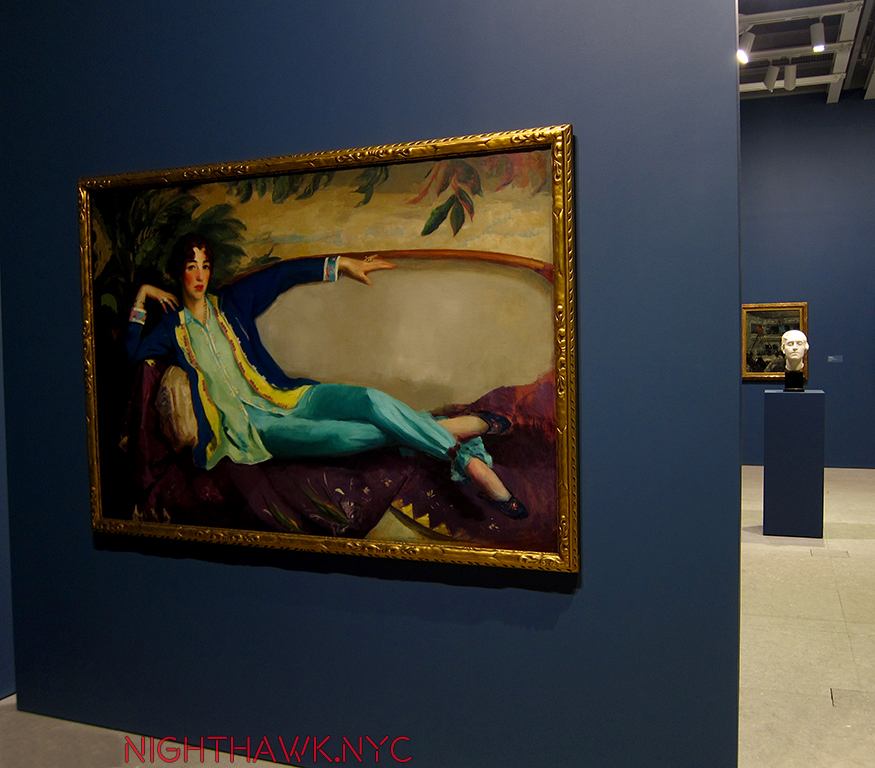
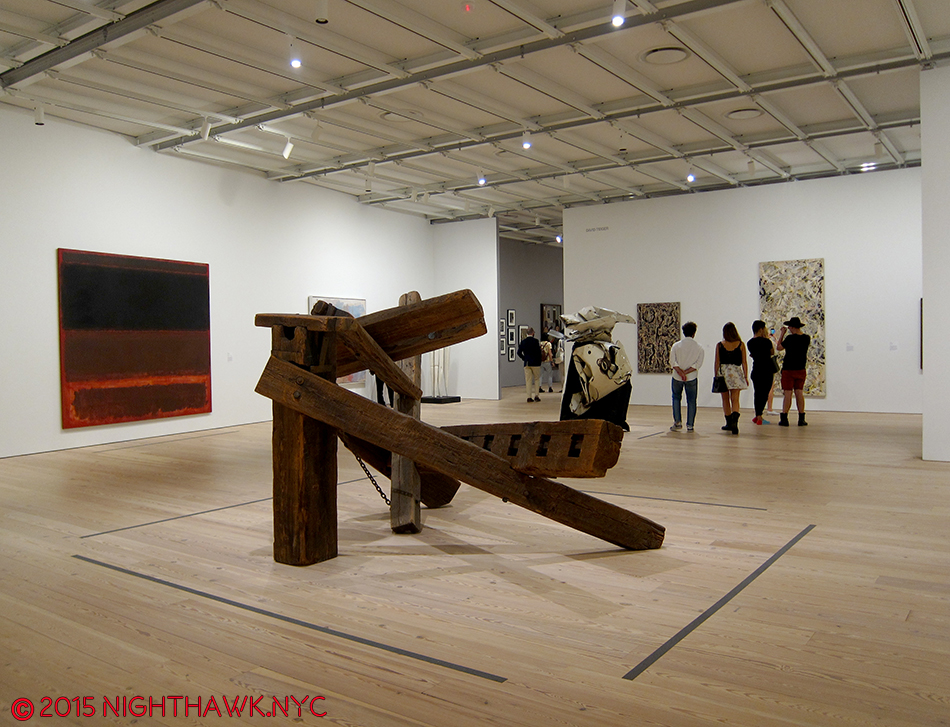
America Is Hard To See (Whitney Museum)- I’m saving my thoughts on the “New Whitney” Building (UPDATE- They may be seen here.), but the opening show in the new place was a wonderful “Welcome Back” to one of the first 3 of NYC”s Big Four Museums and a reminder of its world class (and first anywhere) collection of American Art. My personal highlight? The first floor gallery featuring a selection of Hopper Drawings done at the Whitney Studio which predated the Museum, and the absolutely mesmerizing portrait of Museum founder, the indomitable Mrs. Gertrude V. Whitney (also an overlooked sculptor) that looked out at Gansevoort Street, and for my money? SHOULD HAVE BEEN LEFT RIGHT THERE- PERMANENTLY! It wasn’t.

IMG_0992PNH

Frozen in time. Mrs Gertrude Vanderbilt Whitney looks out on the new home of the collection she started.

Mrs. Gertrude Vanderbilt Whitney by Robert Henri, 1917, with her Study for the Head of her Titanic Memorial from 1922, right. Yes. She was a sculptor, too.

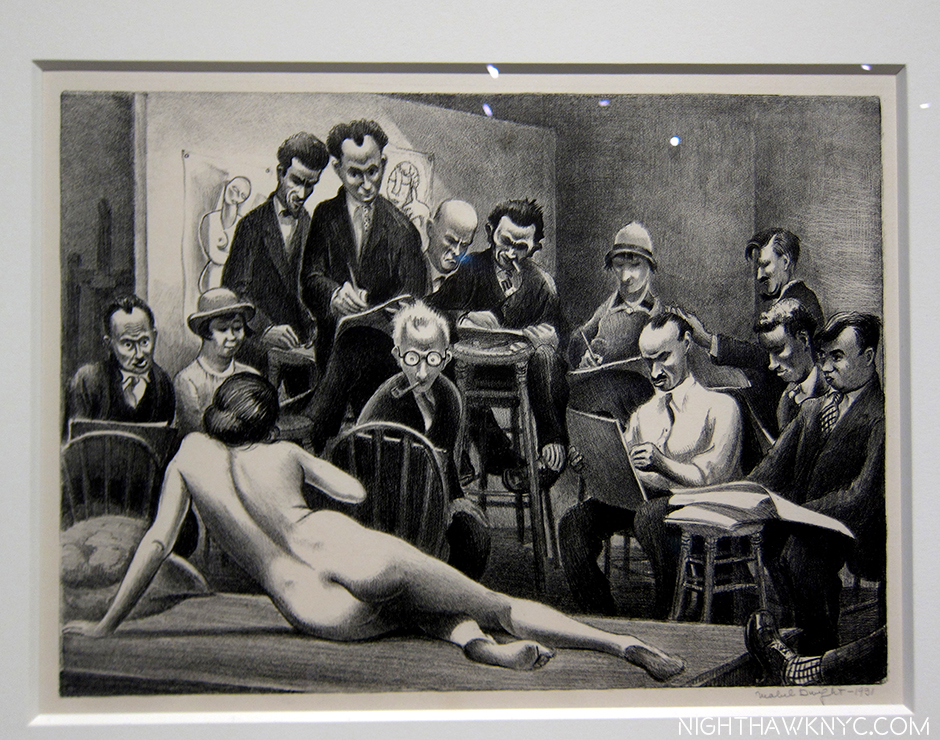
Before the First Whitney Museum opened in 1931, there was the Whitney Studio Club, where artists came to draw from the model. See that guy to the left of center rear with the light shining on his bald head? That’s Edward Hopper, a regular. That’s why his estate was left to The Whitney. Litho by Mabel Dwight, 1931.

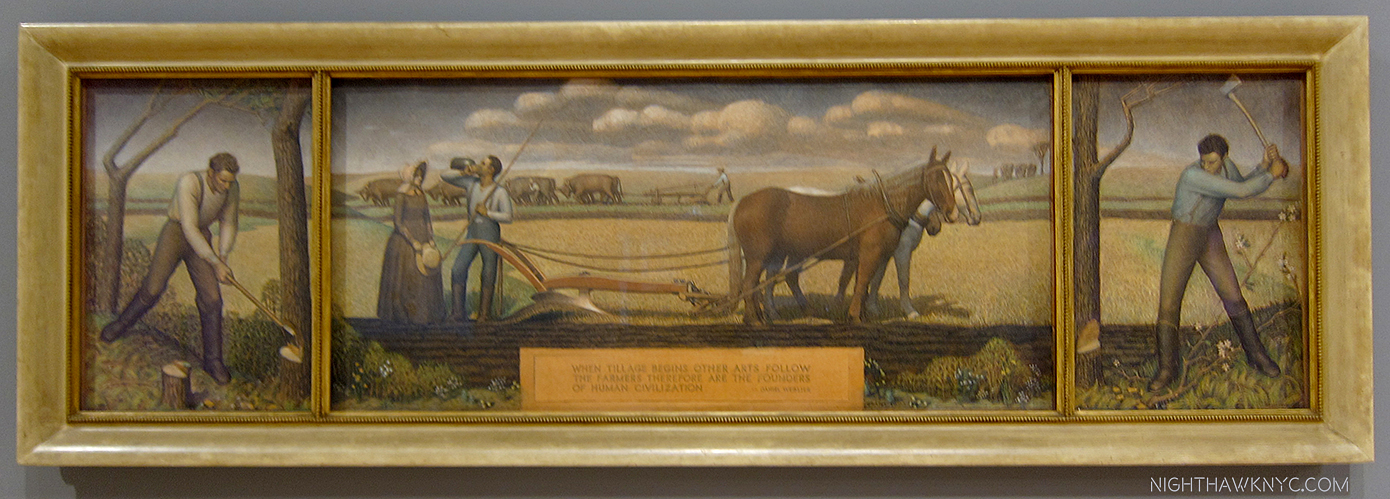
America is hard to change. Excellent, rarely seen, works by Grant Wood, Study for Breaking the Prairie, 1939,…

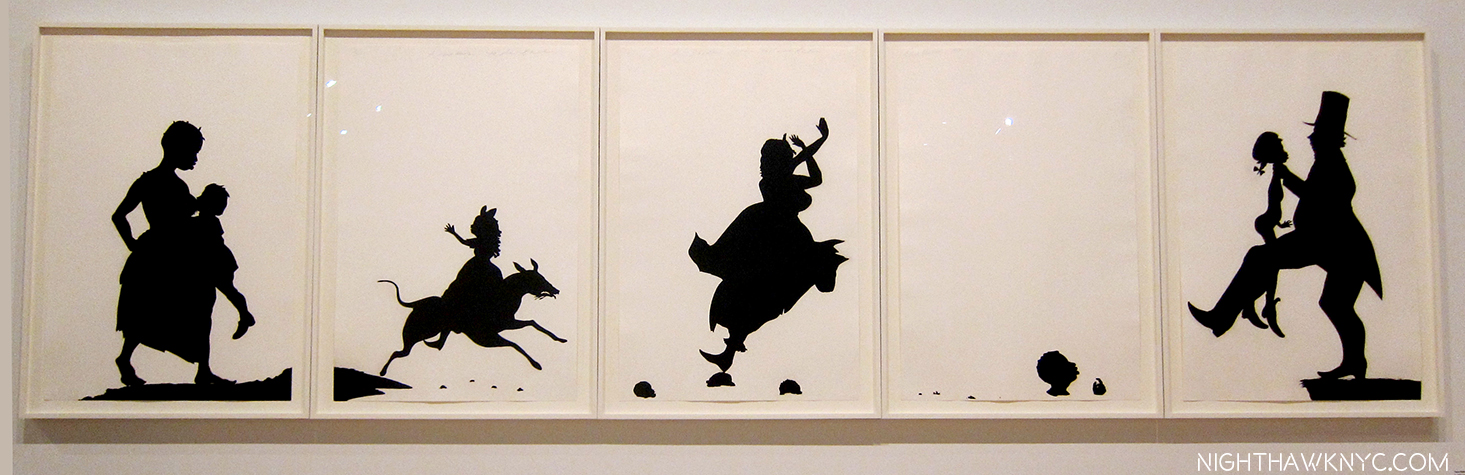
…And Kara Walker, A Means To An End, 1995, struck me as serendipitous.

IMG_0967PNH

America: Seen everywhere. Inside- Rothko’s Four Darks in Red, 1958, Pollock’s Number 27, 1950, Chamberlain, Jim, 1962 & Guston’s Dial, 1956…

IMG_0940PNH

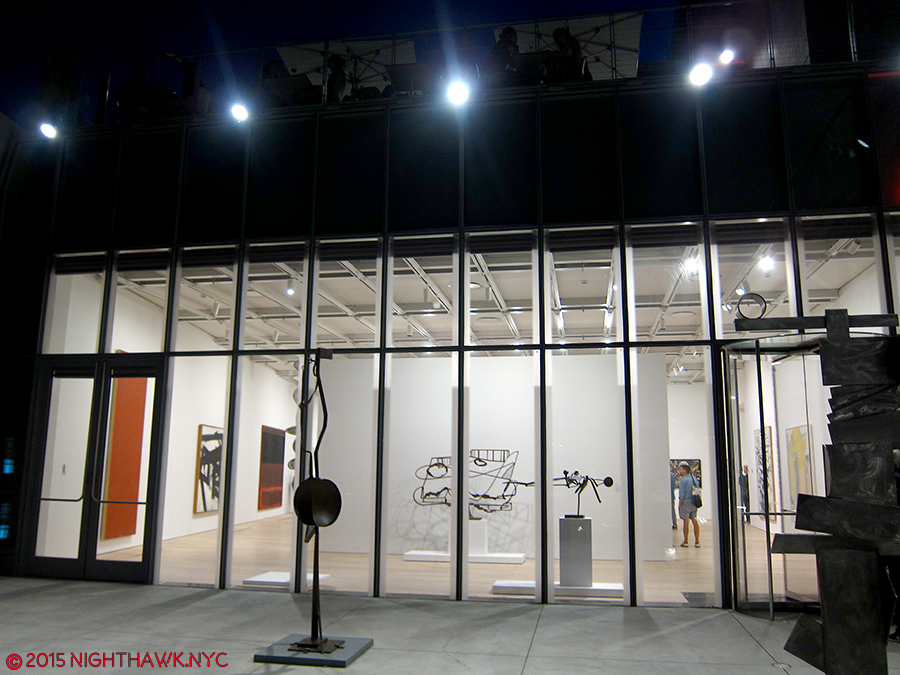
…And, Outside- sculpture from one of the countless roof decks.

“And I’m still not trough I ask myself,
what would you do if you had more time
The Lord, in his kindness
He gives me what you always wanted
He gives me more time.”*

I end this section honoring two endlessly creative American “painters,” featured in very very good shows. Like Richard Estes, these two artists also put that “more” time of a long life to superb use. Yes, despite evidence to the contrary, they both consider themselves to be painters. To me, the “lessons” of their lives, how they were able to survive following their star in this country for so long, may prove to be as important as their considerable artistic legacies.

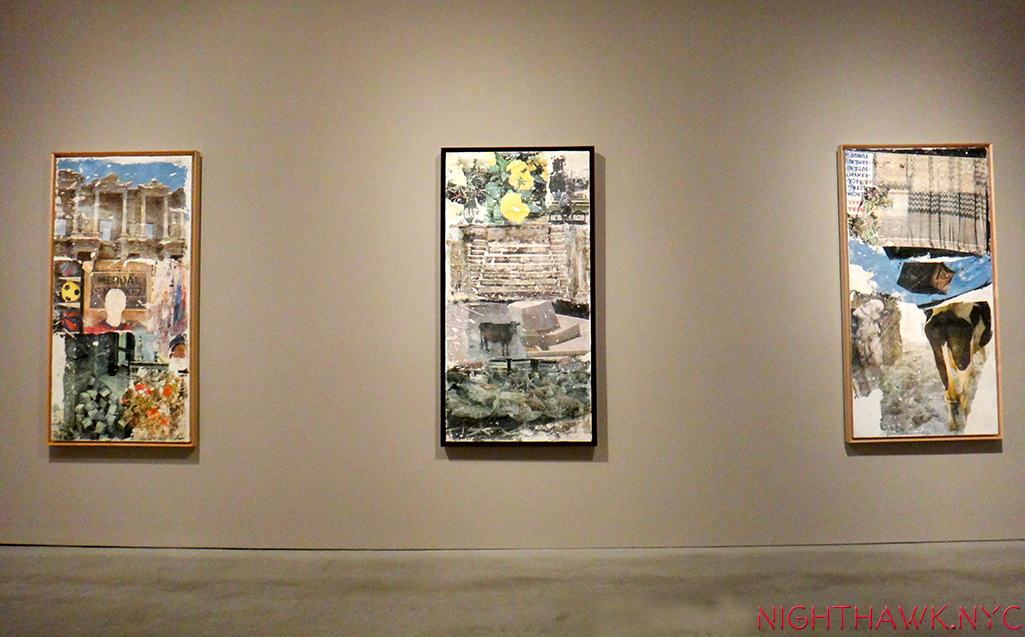
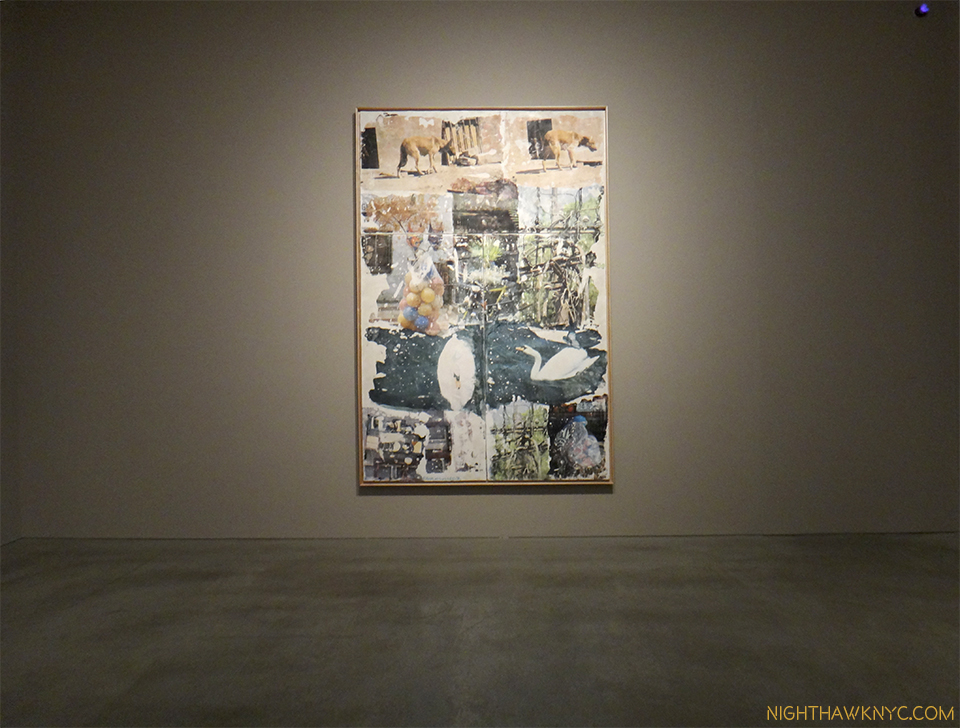
Robert Rauschenberg- Anagrams, Arcadian Retreats, Anagrams:A Pun (Pace 534 West 25th, Chelsea)- Presaging Photoshop, the late, great Mr. Rauchenberg continues to speak to our times though he, unfortunately, left us almost 7 years ago. Light years ahead of his times, throughout his life,  Anagrams…, a show of Mr. Rauschenberg’s final development, shows that once again, his work will look “contemporary” for years to come, and more amazingly, I think it will be as relevant as what anyone else is doing at the moment! As I just said, he represents something of an American miracle- an artist who was able to spend virtually his entire life creating EXACTLY what he wanted to, answering to no one but himself. That sure must seem miraculous to today’s American artists. Interestingly, like Mr. Estes, the works here are based on Mr. Rauschenberg’s own photography, to very different results. Unlike Mr. Estes, Mr. Rauschenberg’s are directly transferred to the piece, though with such skill and subtlety they have the effect of melting into the others they’re surrounded by. A surprisingly fresh, visually rich, often beautiful show who’s spell will call me a few more times before it ends on January 16. And then, I will miss it, but it will have changed the way I see the world, like Richard Estes has.

Rauschenberg @ PACE. I just loved this show.

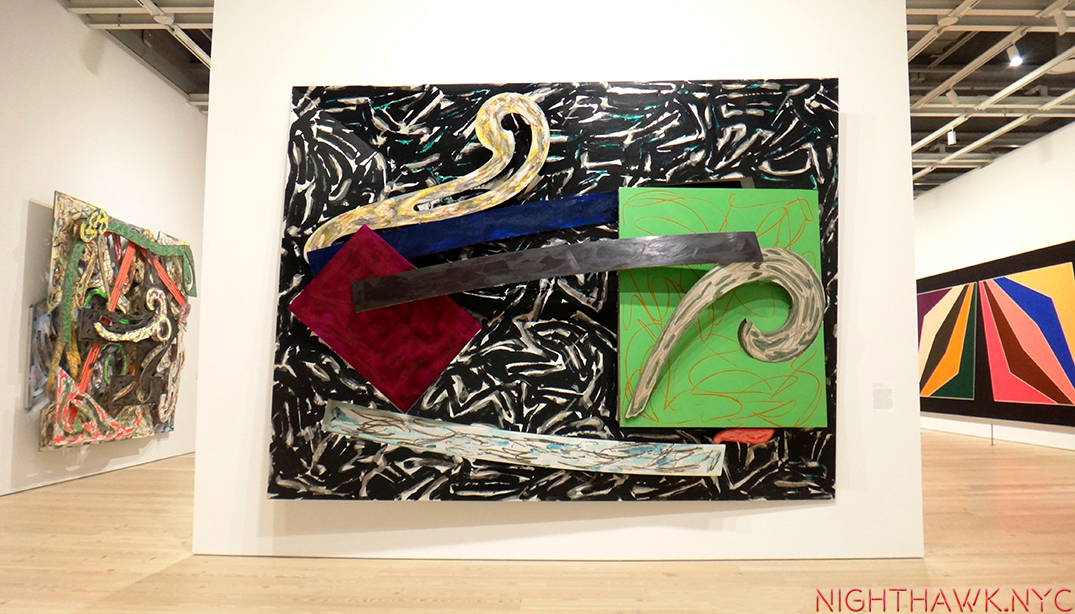
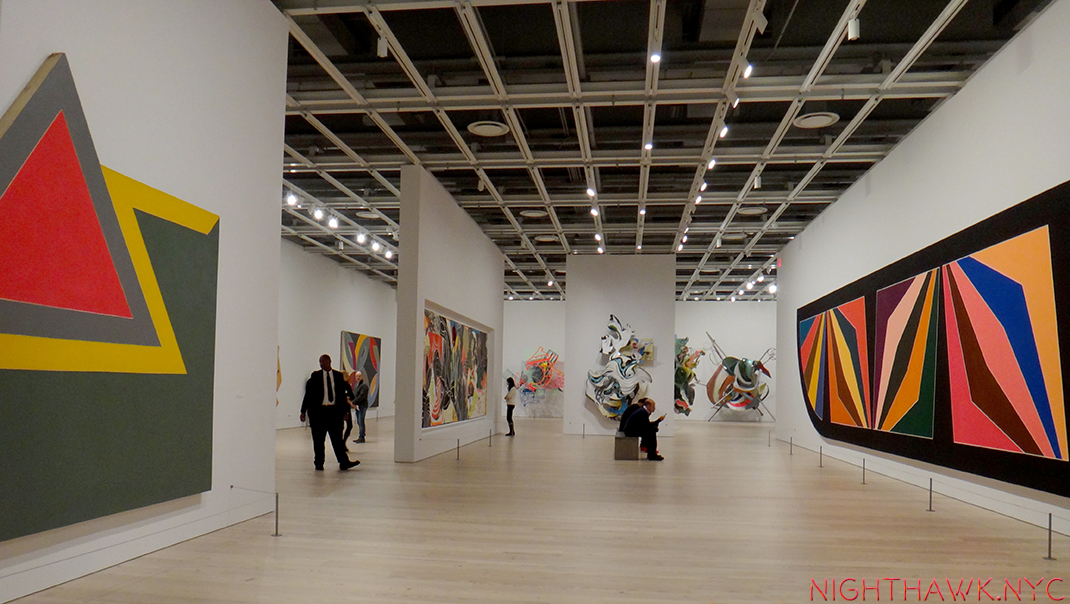
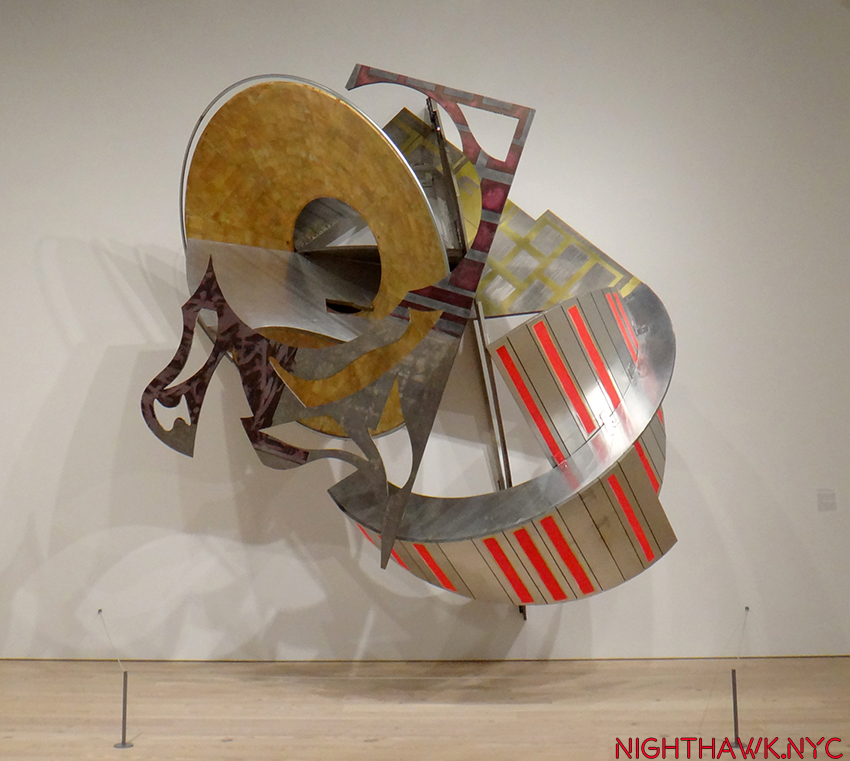
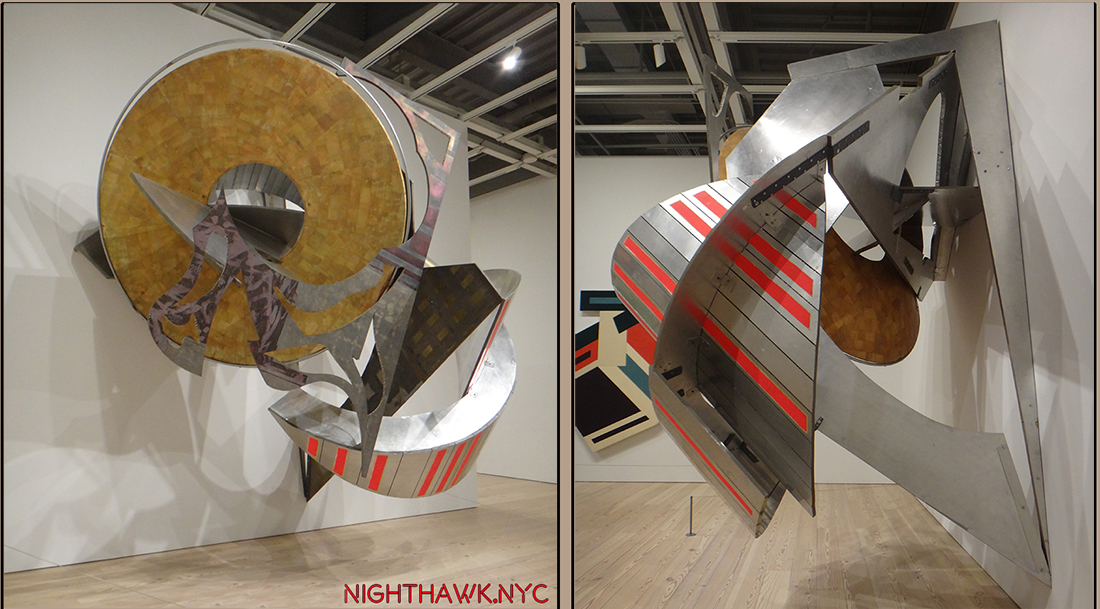
Frank Stella (Whitney)- An art mover’s nightmare of a show, the Artist’s helpful hand notated directional markings seen on some of the pieces notwithstanding, it must have been hard for Mr Stella, himself, to narrow his 50-some year career down to one floor at the New Whitney, handsomely displayed in the still-new space. With only one Moby Dick piece in sight, the take away for me is that here is a Triumphant overview of another rare American artist who continues to explore and evolve, fickle times and the “harpoons” of even more fickle critics & collectors be damned. Mr. Stella has devoted his career to the eternal pursuit of finding new possibilities, “new spacial complexities” 2, for the Art Form of painting. Some of these sure look like sculpture, but I’ll bow to what he says on one of the show’s signs- “Q- You still call these paintings? A- Yes. They are, in fact, paintings.” Remarkably, as he closes in on 80 this May 12, Mr. Stella continues to “start over,” as Richard Meier says on the audio guide, eternally following his muse, breaking painting out of 2 dimensions, to lord-only-knows-where-next. In this show’s case? The Journey IS The Destination. Mr. Stella strikes me as a master conceptualist with an endless font of making the unlikely, and especially the unthought-of, real. Forget this show’s afterthought of a catalog, for me, his value, “message” and influence lie in the sheer physical experience of his work- they simply must be seen, and often, walked around like sculpture to be fully appreciated. Who else “paints” like this? If you go, and you should, check out the great quotes from Mr. Stella on the wall signage- “What you see is what you see.” And then some. What I saw was a show to fire your creativity, and inspire you to see new possibilities in anything, if there ever was one. You still have a few days left to see it before it closes after February 7. Then, the art movers get to pack it up and move it out. I would pay to watch that.

50+ years of “starting over.”

“Toto, We’re Not On Canvas, Anymore.” Stella Busts Painting Out.

“Um..A Little Higher On The Right?”

And lest I forget…

Cubism (The Met No photos permitted.)- TM is on a mission to shore up its Modern & Contemporary Art holdings, as we will soon see at The Met, Breuer, but this show featuring works of a promised gift goes a very long way to solidifying TM’s Cubists holdings, and then some. So many strong works by the Masters of Cubism, Picasso, Braque, the underrated Juan Gris, and Leger abound, they made me wonder where TM is going to install them all when they finally get them!

Madame Cezanne (TM No photos permitted.)- Portraits are not the first thing most think of when they think of Cezanne. Many think of his groundbreaking landscapes and genius with color, but this show of his, no doubt long-suffering wife, says as much about this under known muse as it does about Cezanne. The hours she spent posing for him reminds me of “The Man in The Blue Shirt,” by Martin Gayford about sitting for Lucian Freud. The show is a striking look at another side of this master of impressionism, and gives us rare opportunities to see 4 versions of a painting reunited, and Cezanne’s actual sketchbooks. A rare treat for the lover of Impressionism, portraiture and great Art.

China Through The Looking Glass (TM)- Except for Picasso: Sculpture and Goya’s Los Caprichos, the above shows are painting shows, my true love, but CTTLG is in a category all its own. ANY show that can get TM to stay open till Midnight has to make the Nighthawk’s list. After setting the bar high with “Alexander McQueen: Savage Beauty,” TM’s Costume Institute topped themselves with a spectacle that the 800,000 who saw it will remember almost as long, and which will prove quite a challenge for 2016’s “manus x machina,” or MxM, as I’m calling it to equal, let alone top. I predicted 1 Million will attend it, so GO EARLY (or don’t say I didn’t warn you) & Stay tuned!

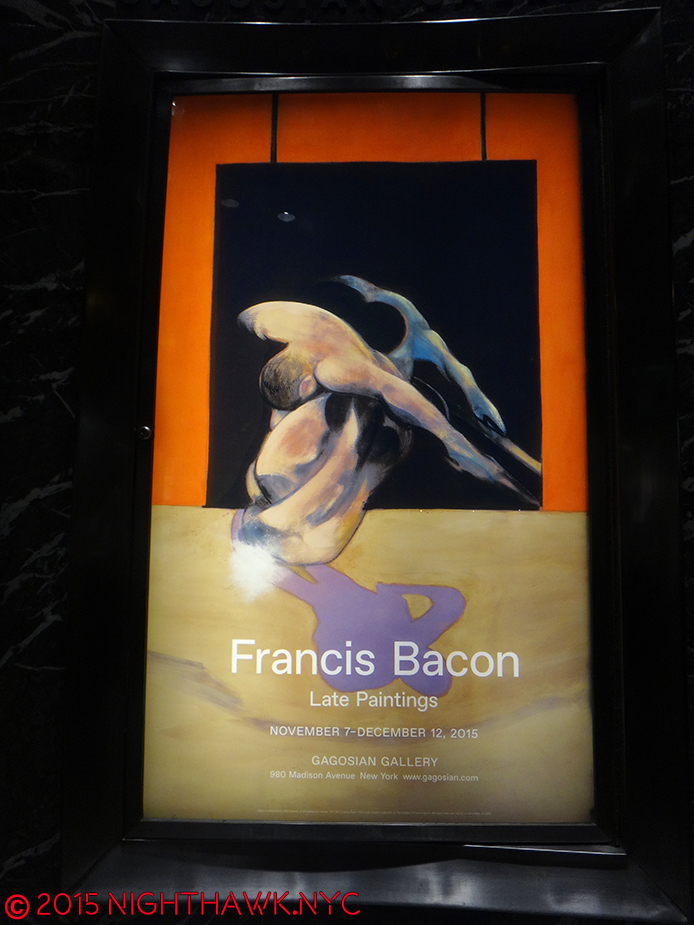
Francis Bacon- Late Paintings – (Gagosian No photos permitted.) – with one work, a triptych selling for 142 million, I can’t fathom how much 28 are worth, but here was a chance to see that many in one show, focused on the seemingly contemplative, other-worldly “late” Bacon,

DSC07520PNH

especially after seeing the following (Rembrandt show) on the same day, which brought to mind subtle, fascinating convergences- self-portraits, multiple views, or states, for Rembrandt, diptychs & triptychs for Bacon, among them.

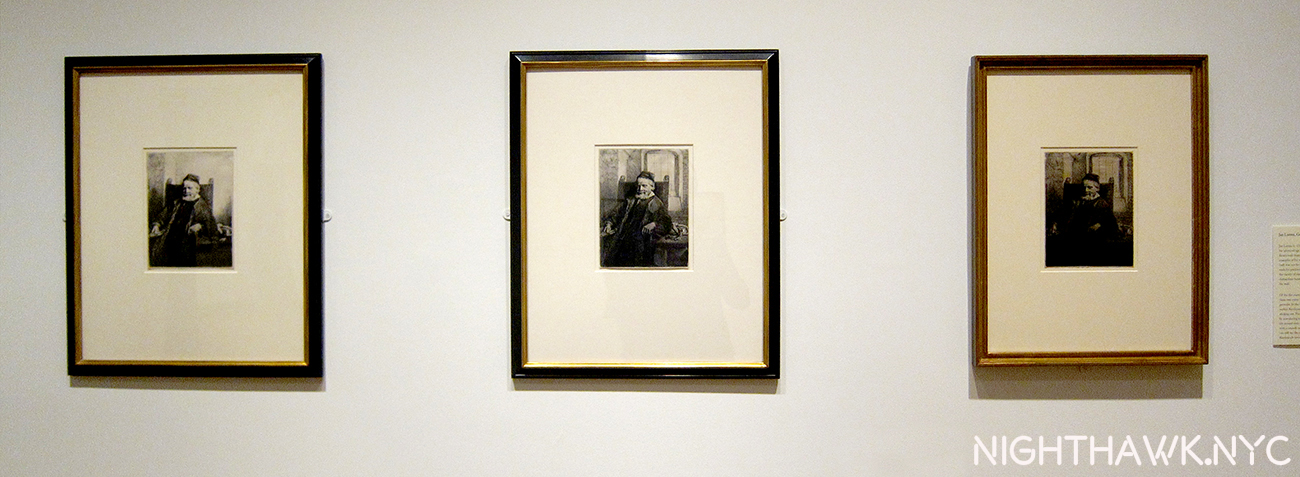
Rembrandt’s Changing Impressions (Columbia U.)- In lieu of the “big one” I missed (see below), this was a closer-to-home chance to see 50 or so prints by the Master and a rare chance to see various “states” (versions) of works side by side. A bit light on the most well known of Rembrandt’s etchings, but very worth 4 visits none the less.

Not a triptych. Rembrandt creates 3 masterpieces from one composition.

Chuck Close Recent Paintings (Pace 534, Chelsea)- I met Mr. Close, briefly, but in spite of the fact that he is one of the greatest portraitists of the 2nd half of the 20th Century+, I know he won’t remember my face. He has Prosopagnosia. He’s ALSO paralyzed and in a wheel chair. I never cease to be absolutely astounded at what he achieves and what new ground he breaks. Already a Master before his brain aneurysm, which would have stopped 99.5% of anyone not named Chuck Close, he’s gone on to create ever new works that continue his life long exploration of his famous “grid technique.” These works add even new elements- new palettes, a new approach to focus and depth of field, and more.

Linda & Mary McCartney (Gagosian Books)- If they had taken down all the title cards, removed the iconic shots among Linda’s, and you walked in without knowing which work was by who- Linda McCartney, or her and Paul’s daughter, Mary, you’d never know. That’s how amazingly symbiotic the eyes of the two photographers are. They see as one. Walking out, and I say this with nothing but respect, it really felt like Linda had never passed away. That her work continues. I’ve never seen anything quite like it.

DSC07609PNH

The daughter reflects well on her famous mother.

George Caleb Bingham (TM)- The year’s “sleeper” pick. I don’t know if he ever met Mark Twain, but if Mr. T. ever wanted an artist to illustrate “Huck” or “Tom Sawyer?” G.C.B. would get my vote. His work captured what it was to live on the River the way only Twain, himself, has, and makes a contribution to laying the ground work towards defining a truly “American” style of painting, and by the Mid-Nineteenth Century? It was about time! TM’s show reveals him to be something of a predecessor for that other great American 19th C. portraitist, Thomas Eakins, but with a style and a power of his own that still holds up.

Araki (Anton Kern, NYC)- He lost his wife…he gets prostate cancer…he says he no longer has sex…Nothing stops the indefatigable, legendary Araki. Don’t let the “casual” taping of the photos to the wall fool you- I found this show striking, poignant, meditative and moving. The images flowed one to the next, sometimes in harmony, sometimes in dissonance, but all of them speak with that sense that only Araki has. Some will say he’s a misogynist. I’m not a woman but I disagree. I see beauty and poetry in his shots of women. Reading some of the press materials on hand, I was struck by his comment that he had sex with most of his models. I couldn’t help wonder- Does that include Bjork? Live long, and much health, Araki.

Also lingering in my mind, tormenting me with what I missed, are the ones that got away-

Late Rembrandt (Rikjsmuseum, Amsterdam)- I agonized about going. For months. Like I agonize about Frank Gehry at LACMA right now! (Hello, Sponsorship?)

Bjork (Moma)- Sold out when I went. Bad reviews be damned, I love Bjork.

Overall, it was a good, but not great year. Still, these 17 shows had real staying power and lasting influence. I’m grateful that in NYC, we still have so much to see. As I said a few posts back, I live in mortal fear of missing a great show- Like all those I missed this year because I never knew about them, and still don’t.

As I look back on 2015, the Idea of great Art is what lingers in the mind, inspires, even instructs. The experience, talent and creativity of a great Artist speaks to the highest & best of mankind, in ways the rest of us can, perhaps, relate to, learn from, and even aspire to. As Mr. Pousette-Dart cosmically said-


In these times of so much senseless hatred, violence and the worst of human kind on display, we need this more than ever.

*Soundtrack for this post is “Who Lives, Who Dies, Who Tells  Your Story?” from the 2015 album I listened to the most, “Hamilton– Original Broadway Cast Recording, by Lin-Manuel Miranda.

NighthawkNYC.com has been entirely self-funded and ad-free for over 7 years, during which over 275 full length pieces have been published. As I face high expenses to keep it going, if you’ve found it worthwhile, please donate to keep it up & ad-free below. Thank you!

Written & photographed by Kenn Sava for nighthawknyc.com unless otherwise credited.
To send comments, thoughts, feedback or propositions click here.
Click the white box on the upper right for the archives or to search them.
For “short takes” and additional pictures, follow @nighthawk_nyc on Instagram.

Subscribe to be notified of new Posts below. Your information will be used for no other purpose.
  1. Remember- Charlie Chaplin, Hitchcock, Fellini, Orson Welles, Akira Kurosawa, Ingmar Bergman or Stanley Kubrick, among others, never won an Oscar for Best Director! I rest my case.
  2. as is said on the audio tour, #508

13 Years At The Metropolitan Museum – Part Two – The Light

This site is Free & Ad-Free! If you find this piece worthwhile, please donate via PayPal to support it & independent Art writing. You can also support it by buying Art & books! Details at the end. Thank you.

Written & Photographed by Kenn Sava

This is Part Two of my ongoing series, “Thirteen Years At The Metropolitan Museum.” Part One is here.

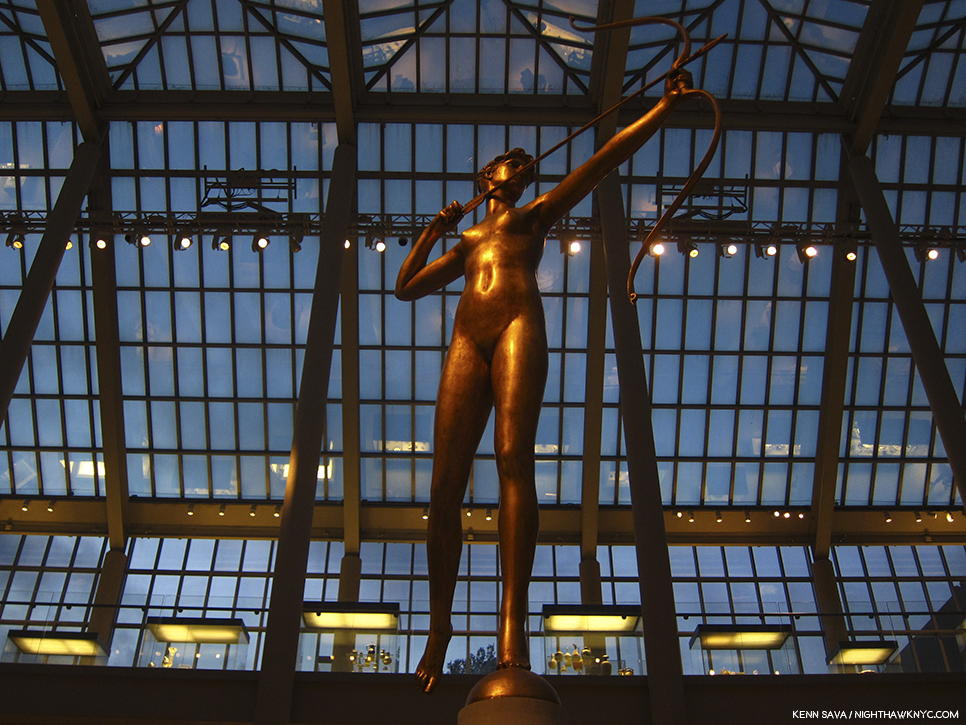
Her Aim Is True. With an arrow to my heart, Saint-Gaudens’ Diana points the way to the undiscovered land.

It happens more than I’d like.

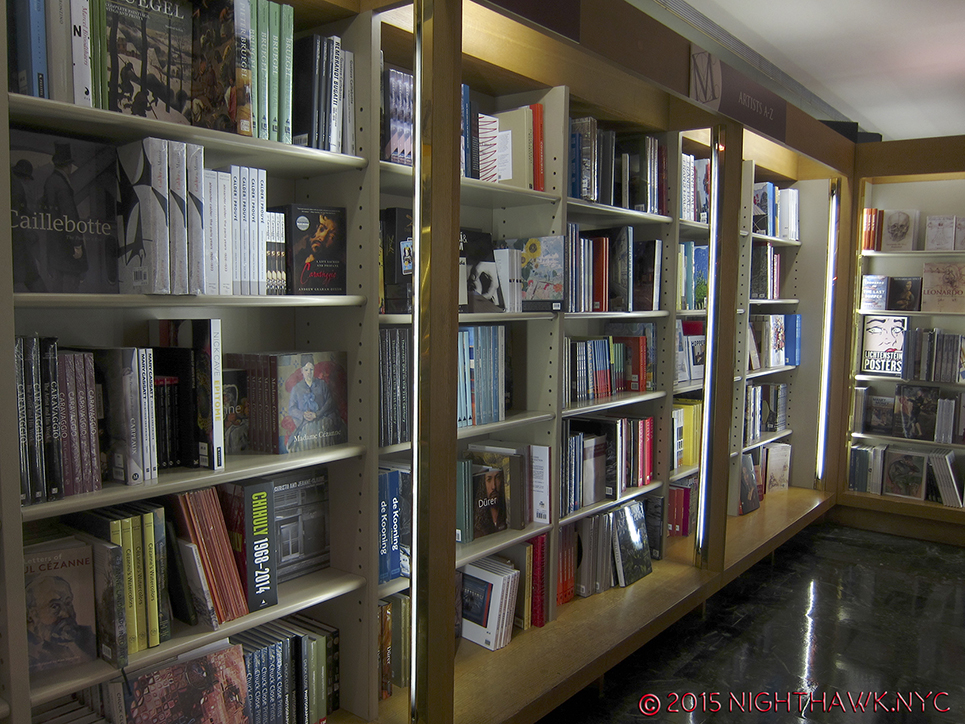
I stop into the bookshop every time I go to The Met (TM), either on my way in, or out. As these 13 years have gone on, unfortunately, it’s become one of the few decent art book stores left. They have a good stock of current and new art books and, of course, a very good supply of Met Museum Publications. Nothing old or out of print, still, I always find something of interest, either about whatever artist I’m currently fixated on (there’s always at least one), or someone I’m only discovering through a show, or right there on their shelves.

My apartment. Almost. No, it’s The Met’s Bookstore.

Then, it happened.

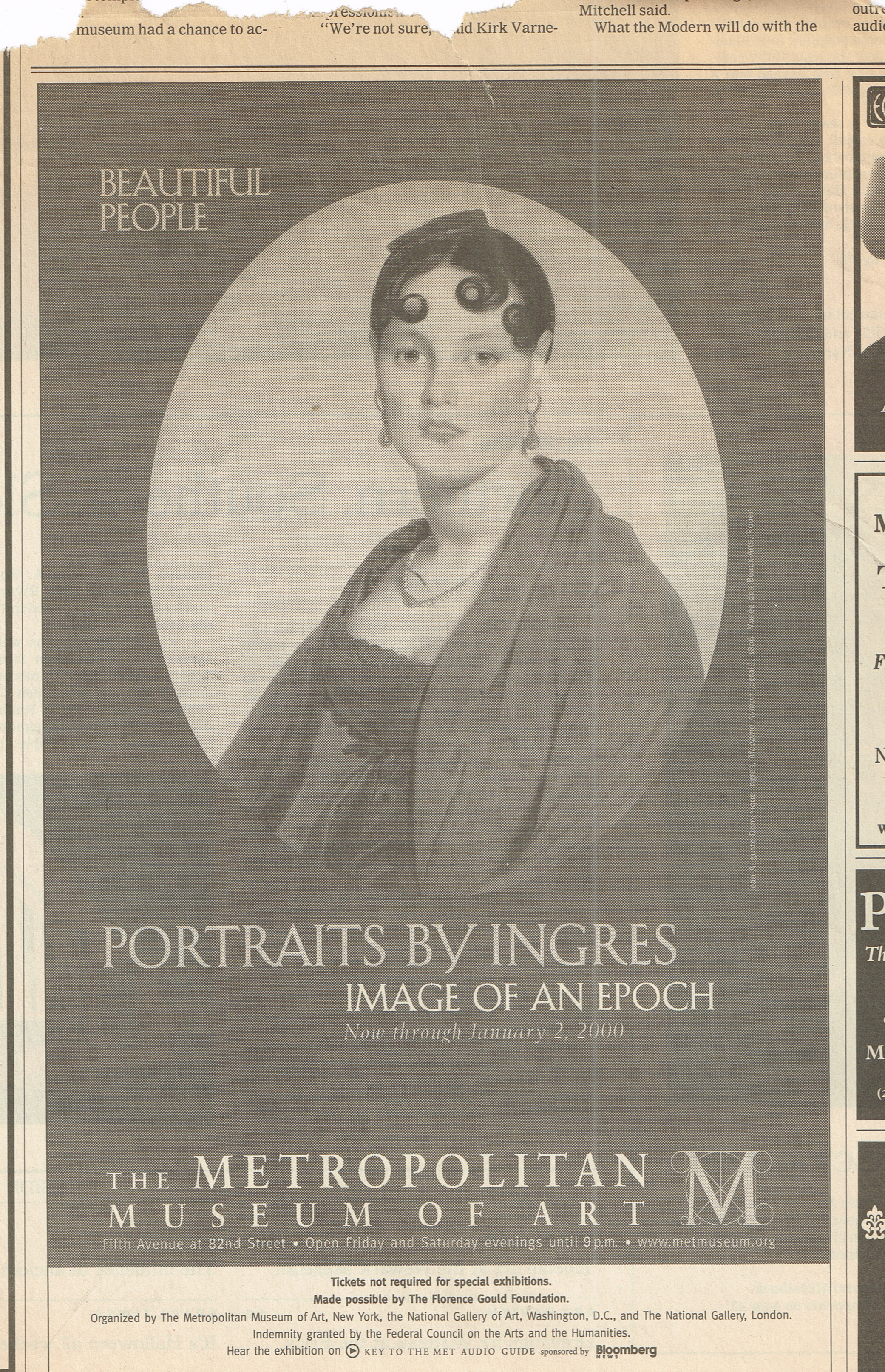
I picked up this heavy hardcover called Portraits By Ingres. Ingres. Yes. There are a few of his portraits upstairs in the European Paintings Gallery and an amazing one, which has become my very favorite painting in The Museum, in the Robert Lehman Collection Galleries. I start looking through the book. There, on page after page after page are THE most incredible drawings I may have ever seen! What? I’m amazed. Astounded. The line! The delicacy. He knows exactly what to leave out and still, somehow, capture the essence of his subject’s face, like in Chinese or Japanese painting, but more so. He’s using graphite. No washes, no ink, no nothing. The most amazingly beautiful lines I’ve ever seen on paper.

How did I not know about this?

Since the book is old, it’s on sale. How old is it? I look at the publishing data. “Published on the occasion of Portraits by Ingres at the Metropolitan Museum October 5, 1999 through January 2, 2000” (You can actually download it now, direct from TM(!), here, for free.)

UGGGGGHHHHHHHHHHHHH! You mean, this was A SHOW?

AND? I MISSED IT?????

Oh my god… ….. ………….

And, that’s how I discovered THE WORST feeling I ever get when I to go TM. While Portraits By Ingres is the “big one that got away,” unfortunately, it’s happened more than once. And that’s only in the recent past.

Portraits By Ingres NYT 1999P

And? Look what I found recently on the back of an article I saved in the NY Times from 1999. History tugged my sleeve…and now mocks me.

Since then, I live with a terrible fear of missing a great show. Why? When a show is over? It’s gone…forever. It “lives on”, but to a much lesser extent in exhibition catalogs (thank goodness!) and through websites, online videos, maybe an app or two, but that’s it. The catalogs may or may not have all the works that were in the show and almost certainly won’t have them in their original sizes (maybe, one day, e-catalogs will, but the resolution of art e-books today is nowhere near there). Almost never are shows documented with a film or documentary, the way Leonardo: da Vinci: Painter At The Court Of Milan was.

In fact, I only discovered “the show of the Century,” Leonardo da Vinci: Painter @ CoM 3 days before it ended at the National Gallery, London. (It was put together by Luke Tyson, who I wrote about in Part One of this series, who is now working at TM.) I jumped on an over night flight and went straight to the National Gallery, without a ticket for the sold-out show, minutes before doors opened on its very last day. I got in (a story unto itself. The NY Giants won the Super Bowl that same night. Something crazy to watch in London). It’s the first and last time 9 of Leonard’s incomparable 17 (or so) paintings were being shown in one place. And, possibly, the first time ever both version of the “Virgin of the Rocks” were being shown together- in the same room (I had to take a step aside and pinch myself in utter amazement when I walked in to that gallery), and so much more as you can see on the checklist, here, including, astonishingly, a full size copy of The Last Supper done in 1520, shortly after the original had been painted! To think…If I hadn’t happened to accidentally stumble on that documentary at 3am on PBS, I would have missed it!

So, impelled by this fear, I have since designed each visit to TM around their exhibition calendar- I go and see whatever’s closing soonest, if I haven’t seen it already.

This has paid off, for me, in uncountable and undreamt of ways.

I have discovered countless artists I never knew about, who have enriched my life and my knowledge of art history in so many ways I can’t even count including Sanford Gifford (besides being a brilliant underknown member of the Hudson River School, he was also a Met Museum Founder in 1880), Henrick Goltzius (who overcame a fall into a fire that disfigured his drawing hand but turned that to his advantage becoming a graphic artist, perhaps, only equalled in the north by Durer), Thomas Eakins, Alexander McQueen, Christo & Jeanne-Claude (who I got to meet right before The Gates), Philip Guston, Bernini, Louis Comfort Tiffany, Chasseriau, Ellsworth Kelly, Girodet, Sean Kelly, Degas, Thomas Hart Benton, Jean-Baptiste Carpeaux, Cezanne, Antonio Canova, Liu Dan in the revelatory Ink Art in China show, Faberge, William Kentridge, Balthus, Paul Klee, Neo Rauch, among individual artists I “discovered” at Special Exhibitions at TM since 2002! Some I had heard of or knew a little about but I “discovered” them here.

As someone obsessed with Art History who draws a little bit, these artists had/have a huge and ongoing influence on me. I learned so much from all of them. They have helped me refine my focus. Before 1999 I was solely interested in modern and contemporary art. After seeing the Mark Rothko Show at the Whitney in 1998, I started to draw. Then, I realized I needed to go back through the entire history of art and learn from the masters who could draw. That led me to TM. TM led me to “the Light.”

This is not to mention artists I’ve discovered by wandering the galleries, like Ingres, Stuart Davis, Tiepolo, Remington, Caravaggio, Goya, Yves Tanguay and Juan Gris among them.

I’ve seen the light.

Even now, today, September 18, 2015, I returned from TM after spending a large part of last weekend there for the last few days of China, with a fresh revelation- George Caleb Bingham. Bingham. Hmm… I know of him though the one intriguing painting that’s been continually on display in the American Wing. It’s a work you walk by and always draws you closer. You ponder it and are left thinking. “It’s interesting…different…powerful and real. Bingham, huh? I don’t know him.” There’s no other by him work on view to reinforce the feeling that “I really need to look into him.” Well, maybe he was a one hit wonder.

23 year old Bingham’s Self Portrait beckons us in to “discover” his unique light.

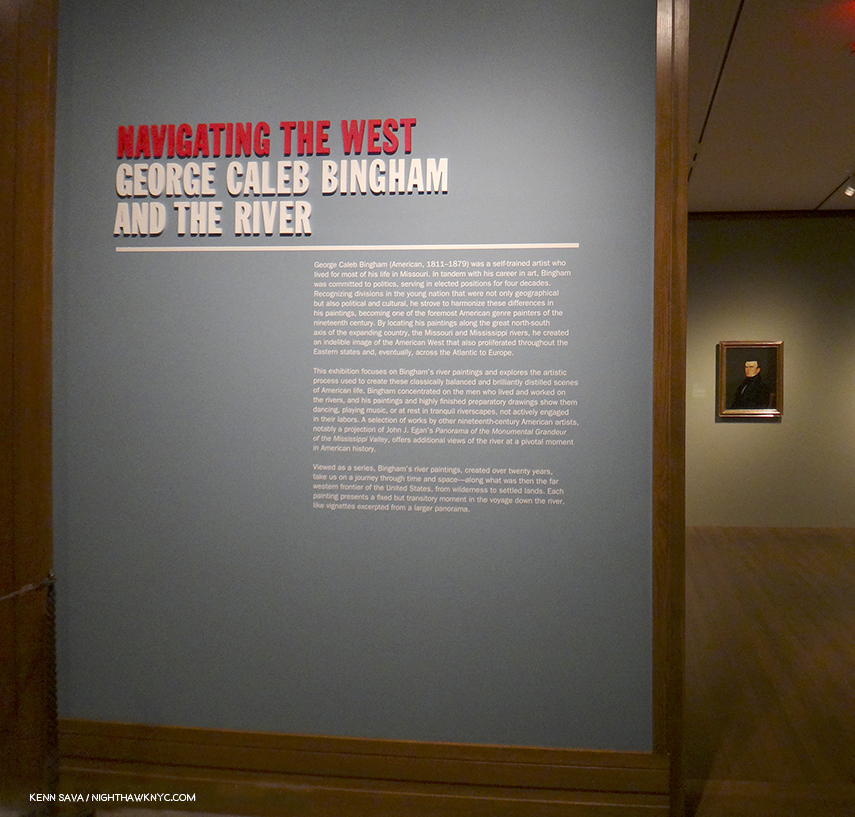
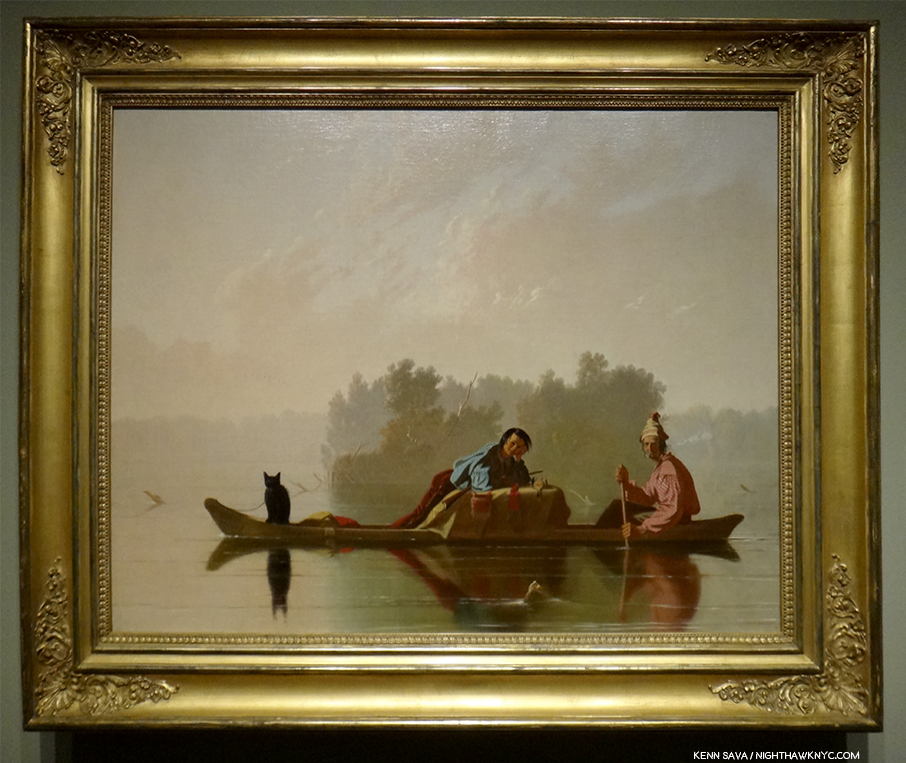
It turns out, he was far from it. After seeing his about to close show, Navigating the West featuring his River paintings and drawings, I came away struck by an artist that seems to be something of a missing link. Someone who fills in a gap before Thomas Eakins. He’s a master of the natural pose,while making that pose always seem uniquely American, a powerful draughtsman, with a real gift for setting the stage in his compositions, which often feature beautifully out of focus backgrounds years before cameras showed such things, and in ways I haven’t seen many other artists do this well. Ever since Leonardo artists have put in very realistic backgrounds, often consisting of modern towns or locations regardless of the time period being depicted (which no doubt charmed contemporaries, but always struck me as being weird and bizarrely out of place in the story). Bingham’s rarely depict a recognizable location (according to the catalog), but they add to the air of authenticity that he is trying to present more convincingly than some of his Renaissance predecessors. Interestingly, Bingham was influenced by the Hudson River School after his first trip east, and his early landscapes show their trademarked lush and thickly detailed flora and fauna. As time went on, he paid more and more attention to the focus of his work- his characters. Carefully working and reworking them in masterful preparatory drawings, he was able to simply transfer them to his canvas and then make sure that everything else supported them, or they got left out. He became an editor as much as he was a draughtsman. The Met has prepared a fascinating short analysis of the process Bingham used in creating his masterpiece, “Fur Traders Descending The Missouri,” The Met’s painting that first caught my eye. He was downright ruthless in his editing, down to the smallest detail, creating a work of sublime economy that I wonder if it in turn influenced another masterpiece of American River art, Thomas Eakins’  Max Schmitt In A Single Scull, which happens to call TM its home, too.

His light runs the full range from soft to hard, and is never more masterful than in Fur Traders. The foreground water, in particular. Then there is a pair of masterful, yet entirely different, self portraits, one, early, of the artist in his 20’s, the other done 2 years before his passing. They speak volumes about his growth and the evolution of his technique and style. The early one is a marvel of seamlessly smooth skin coloring and belies a style of its own. It actually reminds me of early Ingres in this regard. The face just pops from the canvas 180 years later, and I found myself marveling at how few colors he accomplished this with. Ah, but then a closer look reveals his mastery of economical blending. The overall effect is both brilliant and unforgettable. All we see is his torso. No arms. No hands. Its all in back, except for the collar of his white shirt, and his face. He looks out at us with an expression that says “Yes, I may be young, but I’m already THIS good, and I’m taking no prisoners from here on.” And? he didn’t. The late self portrait was done by an entirely different artist, one who had learned nuance, who’s craft had vastly deepened and who wasn’t afraid of truth or age. Interestingly, he paints himself in the act of drawing. After seeing the many drawings on view, it’s a tribute well earned. His drawings hold every bit of their own even when viewed right next to the paintings they preceded, including his masterpieces, like TM’s own “Fur Traders Descending The Missouri” from about 1845, the work I had seen before in the American Wing-

Bingham’s Fur Traders Descending The Missouri. The work that drew me to his light.

Everything about Bingham’s river paintings (and the drawings/studies that led to their creation) says “American,” in exactly the same way as Mark Twain’s writing does. From the attire to the attitude, all done with masterful attention to detail and shadow, THIS is American art for the people. The show is devoid of portraits of the well-to-do, the famous, or the powerful and is, instead, populated by the people who were trying to survive in a new land while helping their new country survive in the process. Is it any wonder that the school children of Missouri took up a state wide collection to help the State buy (and thereby preserve) a collection of Bingham’s masterful, iconic drawings? While being an act they all can be eternally proud of, it shows those kids had better taste in art than some of the dealers in Chelsea do today.

While not a big show, it’s a very deep show, and since its doors are closing for good on Sunday at 5:15pm, I’m going to be scrambling to see it one or two more times before it does.

Afterall? I well know what happens then.

These wonderful work will go back to where they belong, possibly never to be seen together again.

The light will go off in those galleries Sunday night.

But, it will remain “on” inside me for the rest of my life.

The second best thing I’ve gotten out of going to The Met so often for 13 years is Discovery.

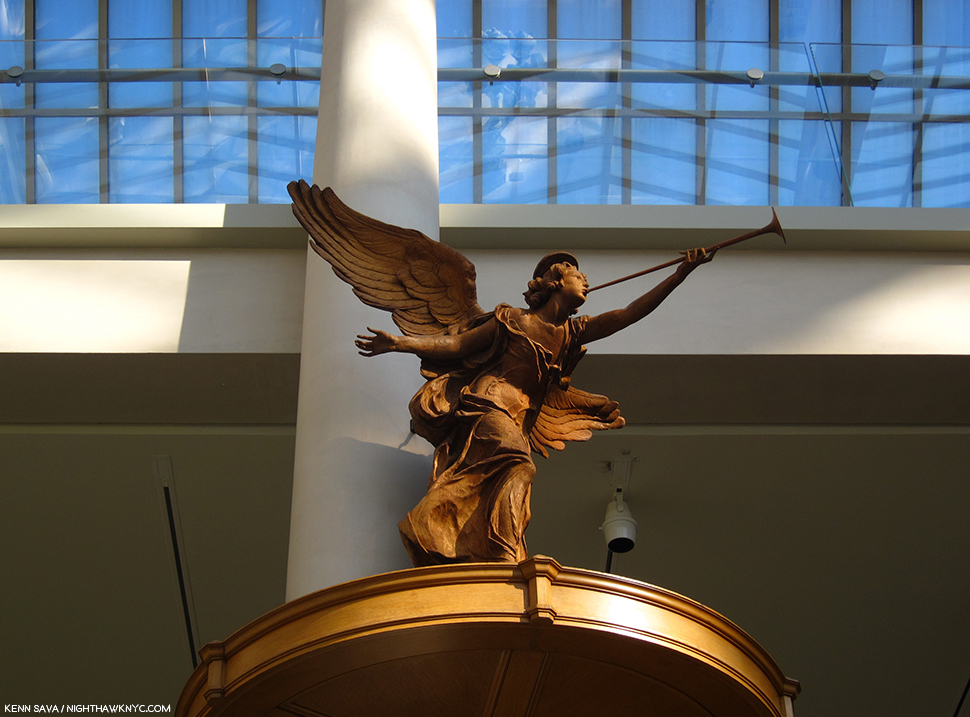
Hark! A Met Angel Beckons me to the Light. To not hear her call is my loss.

*-Soundtrack for this post is “The Shape Of Jazz To Come” by Ornette Coleman, 1959. I chose this to honor Ornette, who led us into many new frontiers of music, like TM has with Art, since he recently passed. He was exceedingly nice to me, a complete stranger to him, the one time I had the privilege of meeting him.

NighthawkNYC.com has been entirely self-funded & ad-free for over 8 years, during which 300 full-length pieces have been published! If you’ve found it worthwhile, PLEASE donate to allow me to continue below. Thank you, Kenn.

You can also support it by buying Art, Art & Photography books, and Music from my collection! Art & Books may be found here. Music here and here.

Written & photographed by Kenn Sava for nighthawknyc.com unless otherwise credited. To send comments, thoughts, feedback or propositions click here. Click the white box on the upper right for the archives or to search them. Subscribe to be notified of new Posts below. Your information will be used for no other purpose.
Robert Rauschenberg: Anagrams (A Pun)- But No Joke

This site is Free & Ad-Free! If you find this piece worthwhile, please donate via PayPal to support it & independent Art writing. You can also support it by buying Art & books! Details at the end. Thank you.

Written & Photographed by Kenn Sava

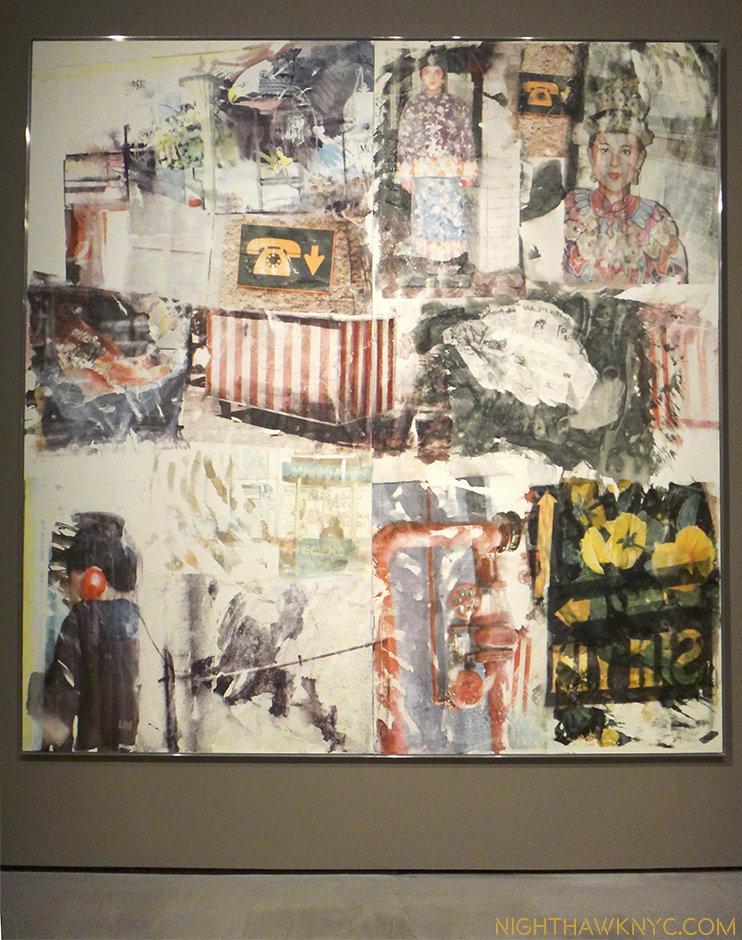
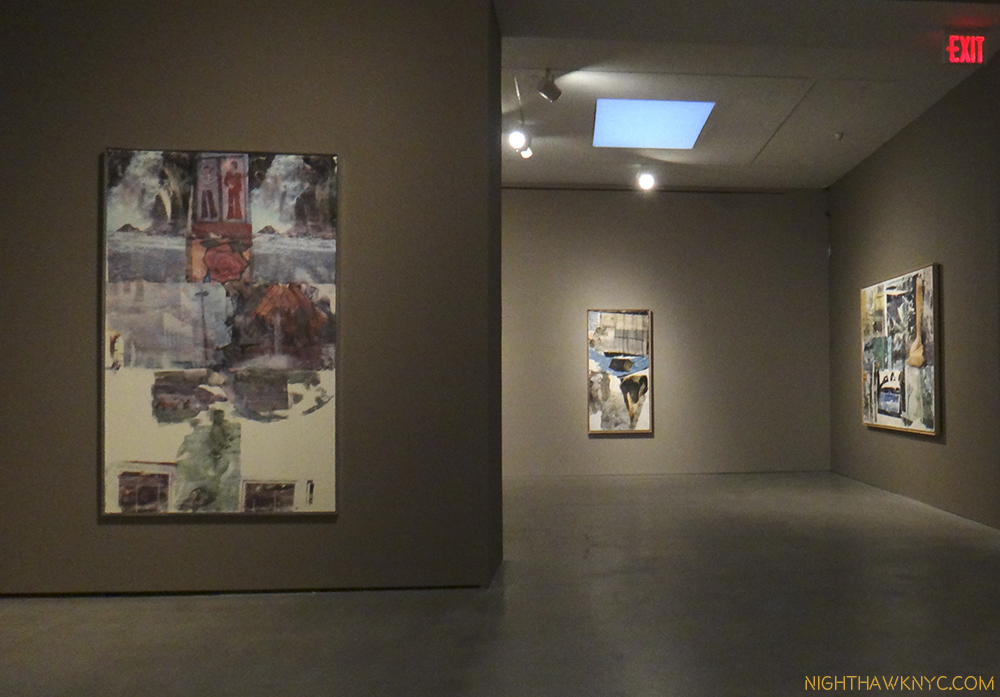
11 days after being here for the final day of the Chuck Close: Recent Works, I returned to Pace’s 534 West 25th Street Gallery to see Robert Rauschenberg: Anagrams, Arcadian Retreats, Anagrams (A Pun), on view until January 16, 2016. Up a few steps to the back office area where the show continues, a short video of Rauschenberg at work in on view. As the camera looks down from slightly above, I noticed that surrounding him all over his studio were numerous works consisting of seemingly chaotic collages of images. I couldn’t help wondering about the effect on a visitor’s brain of spending 8 hours in that studio, and what it would  feel like to then walk outside. I wondered what they said about the images playing inside of Rauschenberg’s mind all the time. Day in. Day out, for the 82 years he lived. It might be why there’s so much to see in even one of his works. This new show makes clear that it may be a long time yet until everything that brain, and he, created in his professional life from the 1950’s until he passed in 2008 is seen, fully appreciated and assimilated.

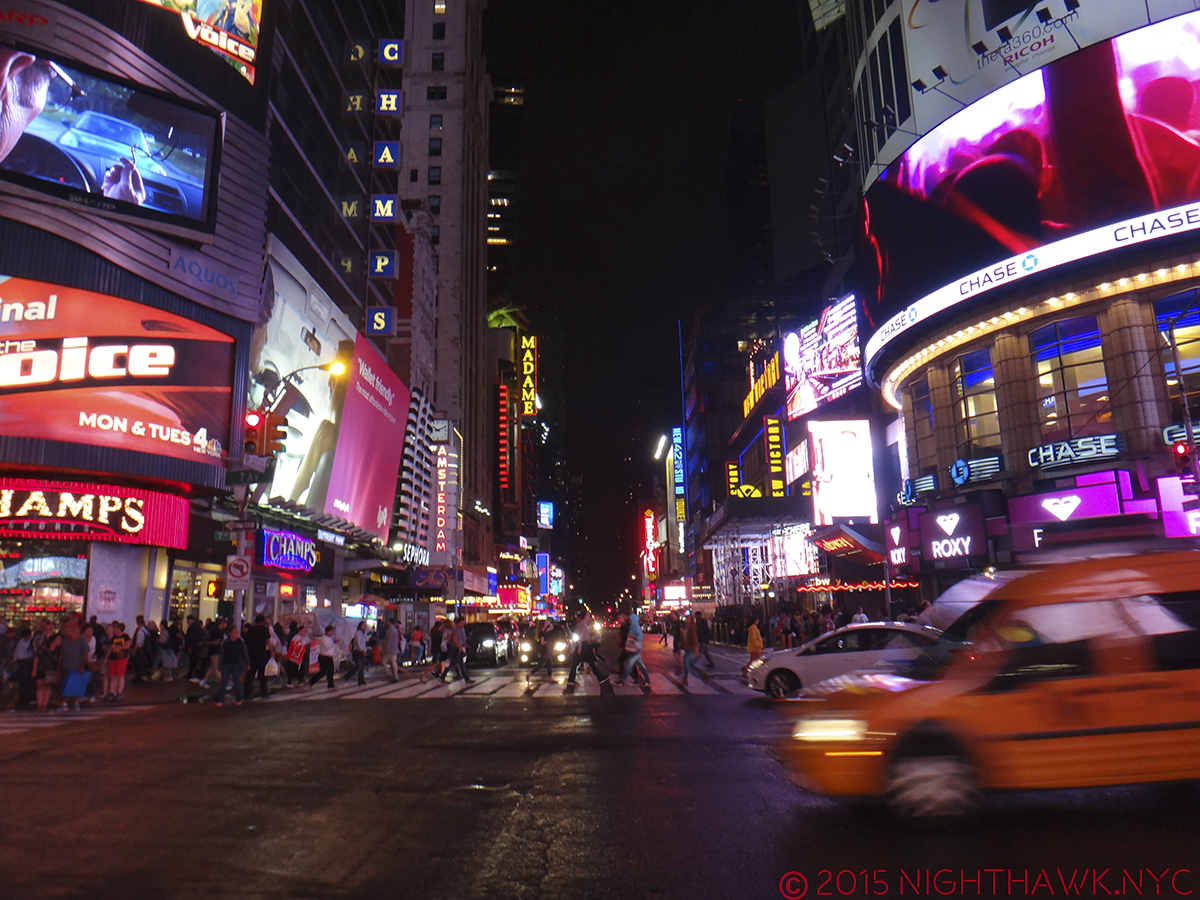
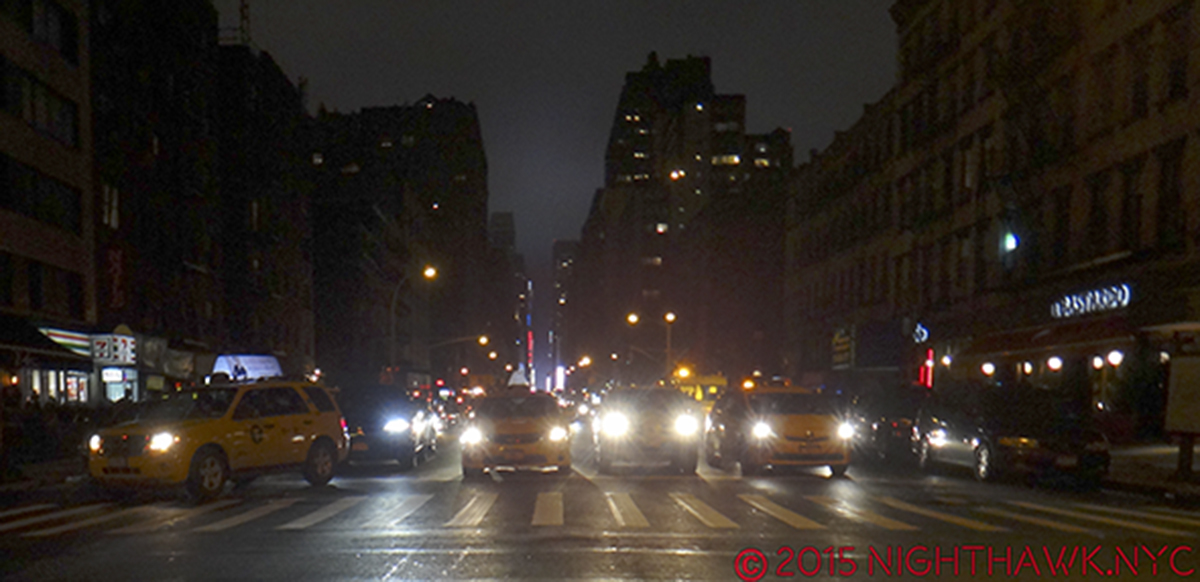
These works are dated 1996 and 97. Visually, his work presaged the visual chaos of the internet age, and the graphic print style of David Carson and others. Seen in 2015 it fits right in with the everyday chaos of NYC, both on the physical level, where pedestrians have to face a never ending life, death or injury battle with bikes, cars, buses, trucks and lord knows whatever else, simply to get from point A to point B, while being bombarded with every square inch plastered with ads, images or graffiti on the visual level.

The modern world makes me try to make sense out of its visual chaos- like Rauschenberg did so masterfully.

Visual chaos, 2015. Without the “Art.” By the way? Times Square was better before

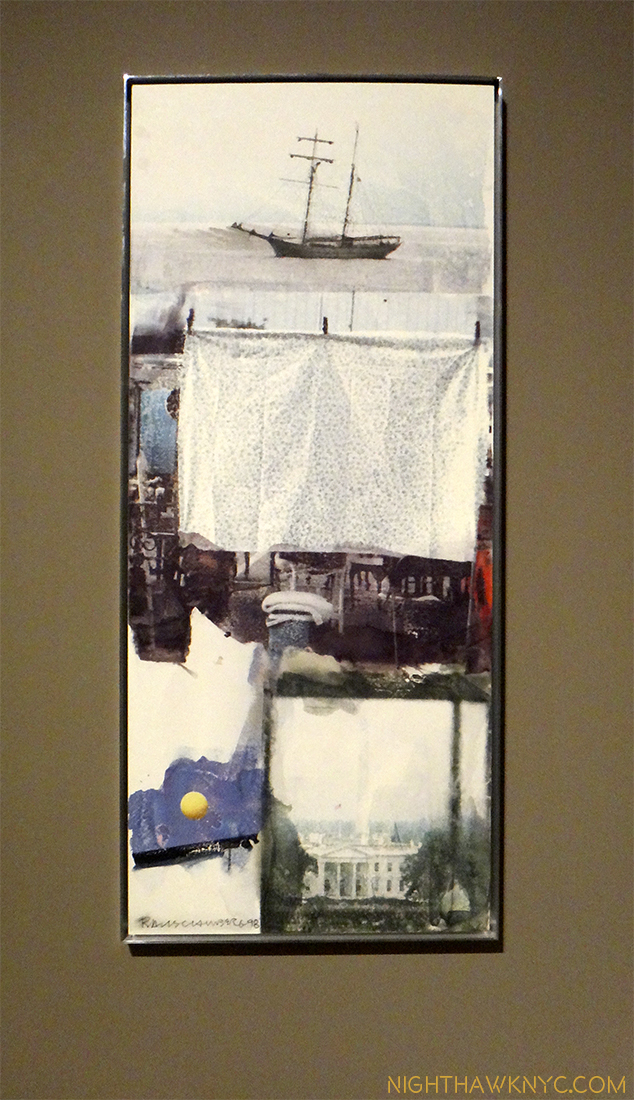
Anagrams, Arcadian Retreats, Anagrams (A Pun) is a bit different from any Rauschenberg show I’ve yet seen. It’s concise yet catholic, coherent and sharply focused on these three series of works, which share working methods, making it very hard to tell which work is from which series. As such, it’s a rare opportunity to see a selection of late works. Pace’s release states the images are from Rauschenberg’s own photos, which continues a trend in recent shows of artists using, or basing their work on their own photographs (Richard Estes, Chuck Close). Rauschenberg appears to have been at the forefront of image manipulation, made possible by software like Photoshop, while adding “painterly elements.” Regarding exactly what these pieces are and how they were made, Pace’s press release says- to create these works, “he developed and perfected a powerful new technique combing dye transfer with novel supports including plaster, large-scale paper and polylaminate panels…The process produced an aqueous and fluid appearance, blurring the crisp edges of his photographs…The inkjet dye process also liberated Rauschenberg from the mechanical production of printing screens, allowing him to produce sheets exclusively from his own photography on an in-studio printer. In addition to a more painterly effect, these works reflect a more nimble and freer approach to image-making than earlier works which were bound by the limitations of the mechanical process.”


It’s tempting to “read into” the resulting images, some of which are repeated verbatim in other works, and take them as a visual language, to be deciphered for “messages,” even hidden meanings. That will take a lot of looking to compile. Though “anagram” is a word about words, I don’t think I’ll be taking it that literally. I prefer to let the images speak, and this show is an orgy for the eye.

The works range from very large to large and a few of medium size. Two, including the largest, (one, I felt to be the most impactful piece in the show), are owned by the Whitney. Most of the others are not titled, detailed or described. Many feature images from different cultures around the world from the Sphinx and the Pyramids to traditional costumes, apparently from trips he had taken shortly before, which are juxtaposed with images from the western world, like construction equipment, firefighters, store fronts, junked cars, bicycles and soda bottles. Despite being combined, layered, even processed, the results don’t look like images produced in Photoshop. They look more like paintings, which I find somewhat remarkable, probably because I am so used to seeing Photoshopped Photographs. While he anticipated digital image processing and manipulation in works gong back to the late 1950’s, he continued doing things entirely his own way, and only selectively using technology when it suited his aims.

I previously saw some works from these series in the 1977 Guggenheim Rauschenberg Retrospective, but these were new to me. Seeing only works from these series brought home how wonderful they are. They’re different from what he had done earlier in his career, yet they have that undeniable “Rauschenberg” feel. In spite of being Photo based, they retain a “painterly” look, which I think is remarkable, and one of the things that sets his work apart from all those doing these types of works today. For me, Rauschenberg is kind of an American Picasso of the 2nd half of the 20th Century- his creativity and inventiveness knew no bounds. Like Picasso, he never stopped innovating and trying new things and techniques. Even 7 years after his passing, we continue to discover new facets of this work, which seems as fresh and contemporary as anything else around today. That will, no doubt, continue at the first full scale retrospective of his work since the Guggenheim’s 1997 blockbuster to be held next year at the Tate Modern, London.

These are wonderful works that reward repeated looks from a period of the Artist’s career that strikes me as being under appreciated. They seem so of the moment, it’s hard to think they’re going on 20 years old. In that sense, like their creator, they are ahead of their time, even now. I’m continuing to try and get the modern world to look like a Rauschenberg to me, to make that kind of sense, possibly even find the “Art” in it…that is when I’m not dodging bikes, cars, and the rest to actually feel safe enough in it to look around. That danger is what’s missing in these Rauschenbergs. Probably because he seems to be focused on the bigger picture, the dangers of the modern world to ancient cultures and ancient creatures. Including man.

On a bigger scale, like that bike I don’t see coming the wrong way on a one way street, the modern world is obliterating all that came before.

DSC02584PNH

*-Soundtrack for this post is “Crosstown Traffic,” by Jimi Hendrix.

NighthawkNYC.com has been entirely self-funded & ad-free for over 8 years, during which 300 full-length pieces have been published! If you’ve found it worthwhile, PLEASE donate to allow me to continue below. Thank you, Kenn.

You can also support it by buying Art, Art & Photography books, and Music from my collection! Art & Books may be found here. Music here and here.

Written & photographed by Kenn Sava for nighthawknyc.com unless otherwise credited. To send comments, thoughts, feedback or propositions click here. Click the white box on the upper right for the archives or to search them. Subscribe to be notified of new Posts below. Your information will be used for no other purpose.

Hold The Flowers- Ai Weiwei Gets His Passport Back…FINALLY! Then Uses It.

Written & Photographed by Kenn Sava

Each day for the past 600+ days flowers have been left in the basket of the bicycle outside of No. 258 Coachangdi, Beijing, China, the address of Ai Weiwei’s studio, by his fans and followers in solidarity with the great Chinese Artist & Activist until his passport, which was confiscated during his April 3, 2011 arrest on charges of “tax evasion,” is returned to him. Ai spent the next 81 days in prison (more on that coming up) until finally being released on bail on June 22, 2011, after he agreed not to leave Beijing for a year. Year up, he continued to be forbidden to travel to other countries…until…

Late last month Ai posted a pic on Instagram announcing the return of his passport, a great shot too long in coming, it can be seen, along with more details here.
At last…He doesn’t look particularly happy, though he looks well. I’d say he looks hopeful. Ai then quickly took a trip to Germany to rejoin his family, sparking rumors of his accepting a university post there.
Still, it’s Wonderful news that’s also a sad reminder that during the past 4(!) years Ai missed the many shows of his work held outside of China, the 2014 Brooklyn Museum Show Ai Weiwei: According to What? among them. Would what we experienced have been changed, modified or altered simply by his larger than life presence? We’ll never know, and we are all undoubtedly poorer for the lack of him. For me, though, it was still a rare chance to explore the many sides of Ai’s boundless creative spirit. Here are some pics I took of the show, in case you, like Ai, missed it.

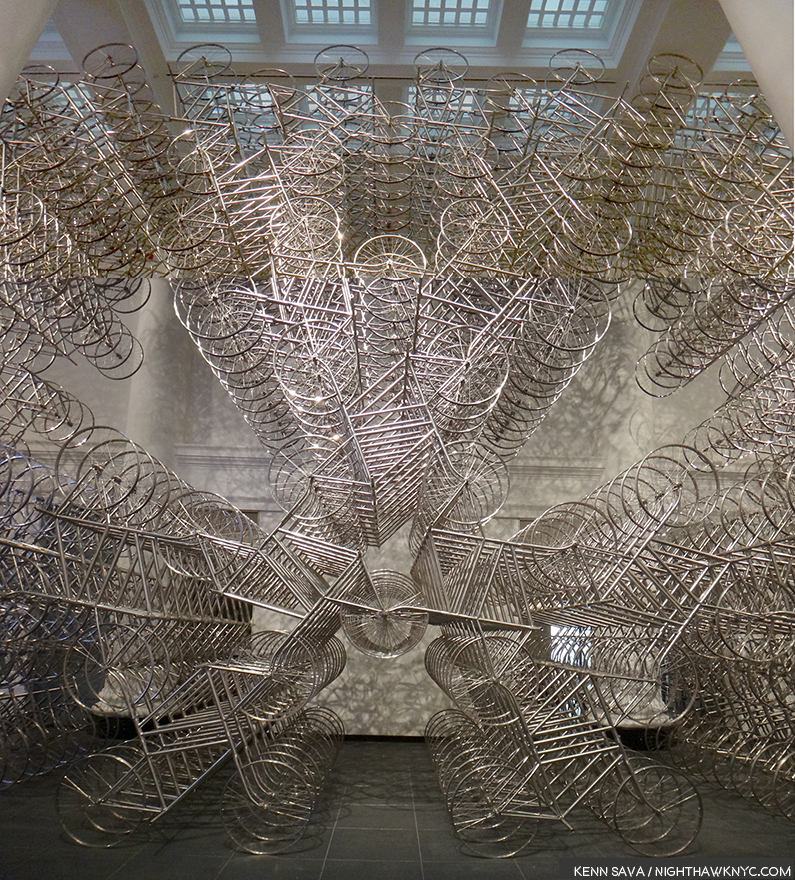
Stacked 2014. The card refers to the minimalist approach to the bike- no handlebars or seat, suggests “that in China the individual is often undervalued and seen only as part of the whole.”

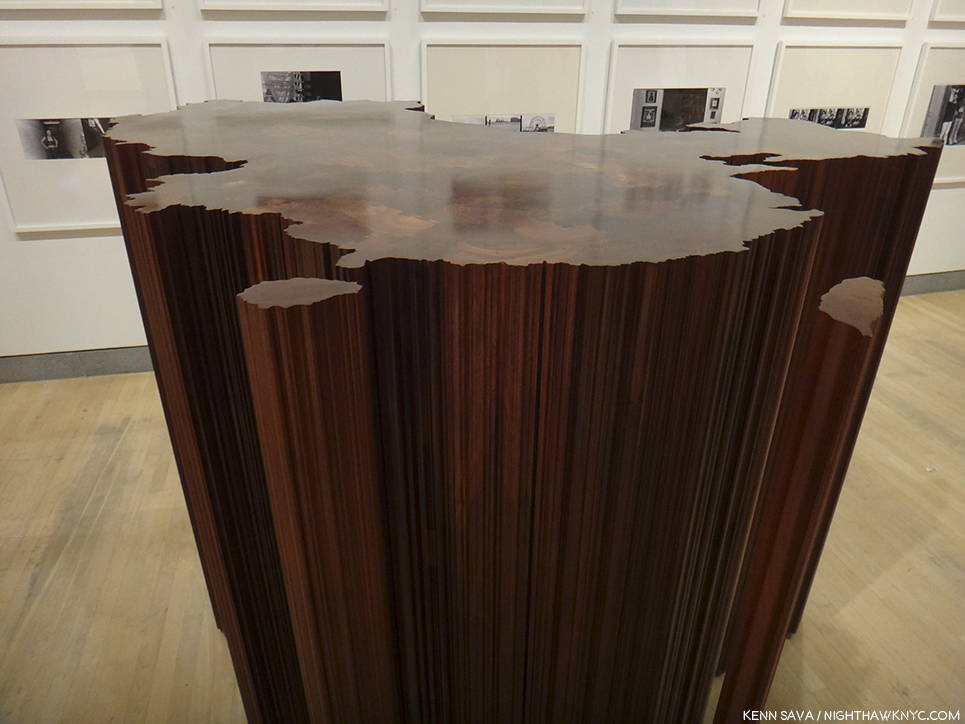
Map of China

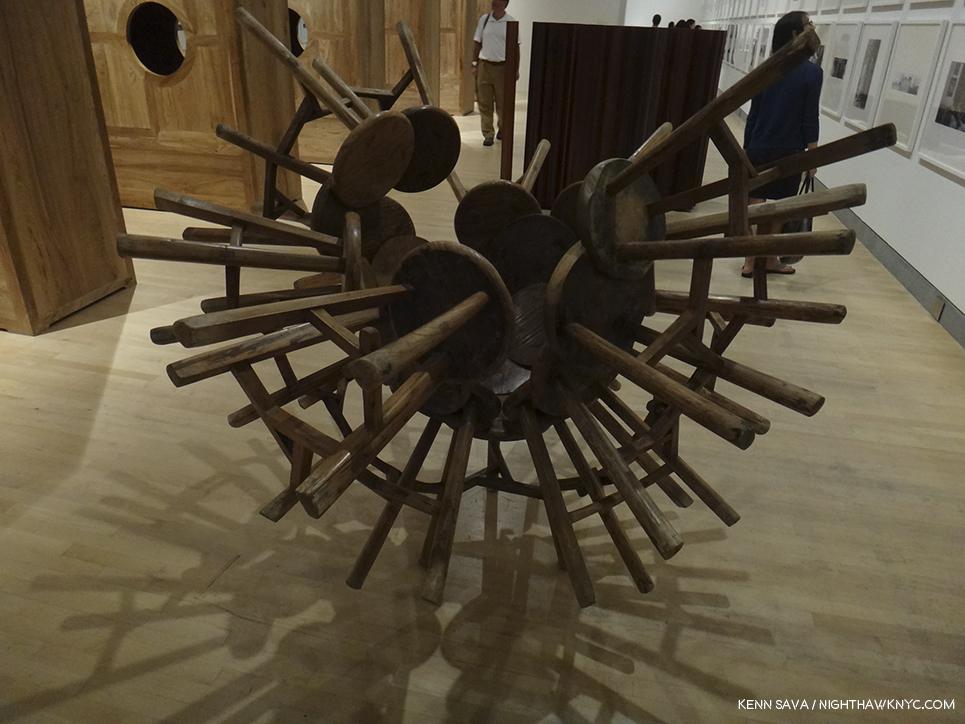
I’ve been to bars that look like this at 3:45am. Grapes, Qing Dynasty Stools

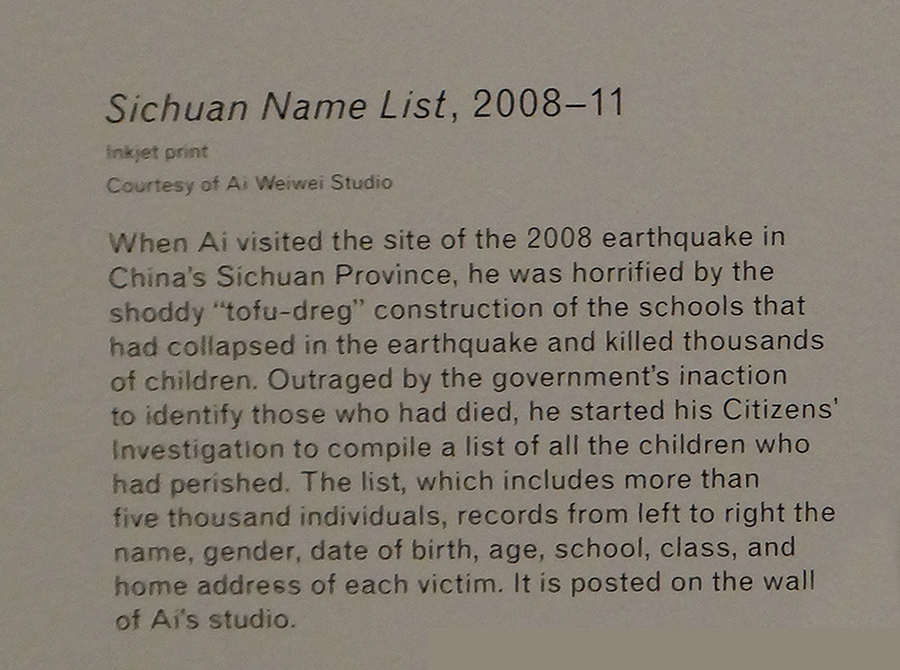
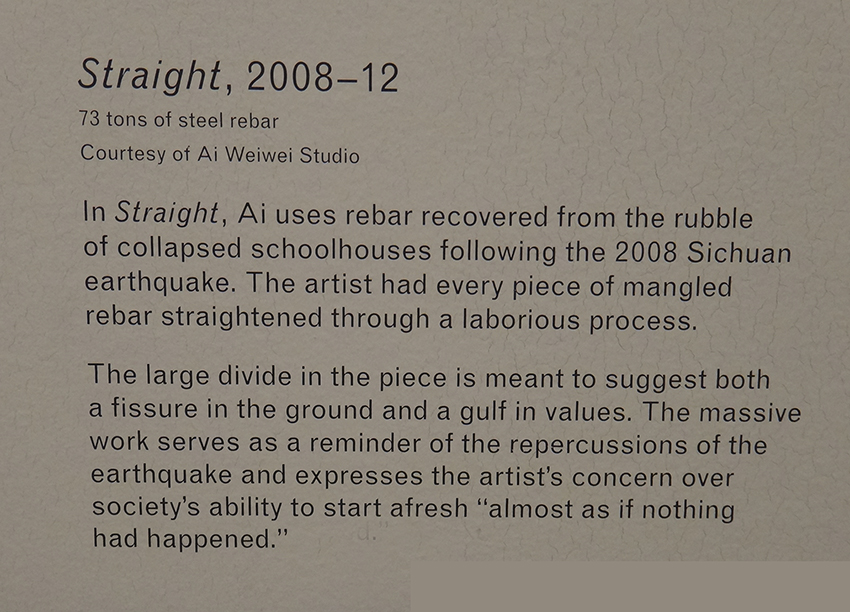
It featured a selection of his work from the past 20 years, above, and a central gallery that included 2 monumental works, the 73 ton Straight, and Sichuan Name List Ai created in the aftermath of the 2008 Sichuan earthquake which killed over 69,000 and left another 18,000 missing 1.

Ai’s Straight (on the floor) and Sichuan Name List (on the wall, left) are works about the 2008 Sichuan Earthquake that may have killed 90,000.

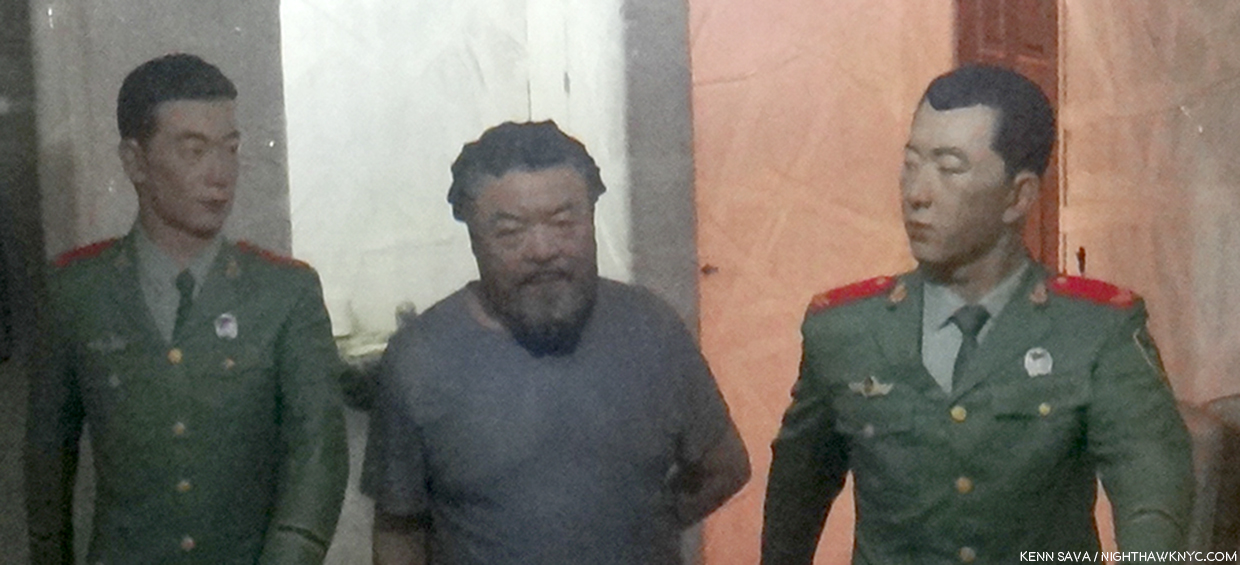
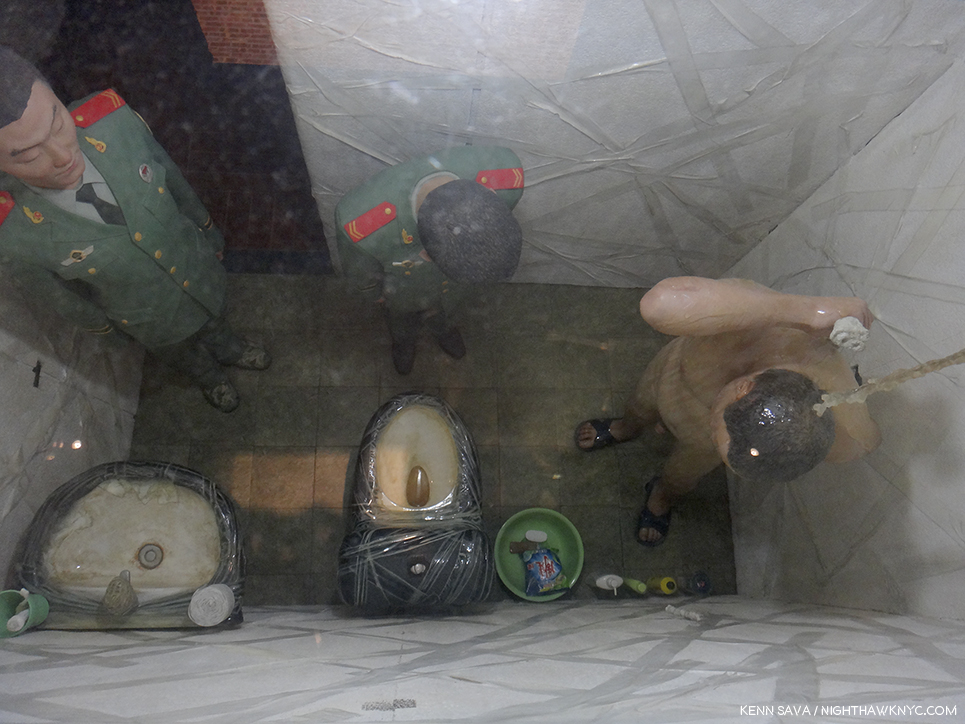
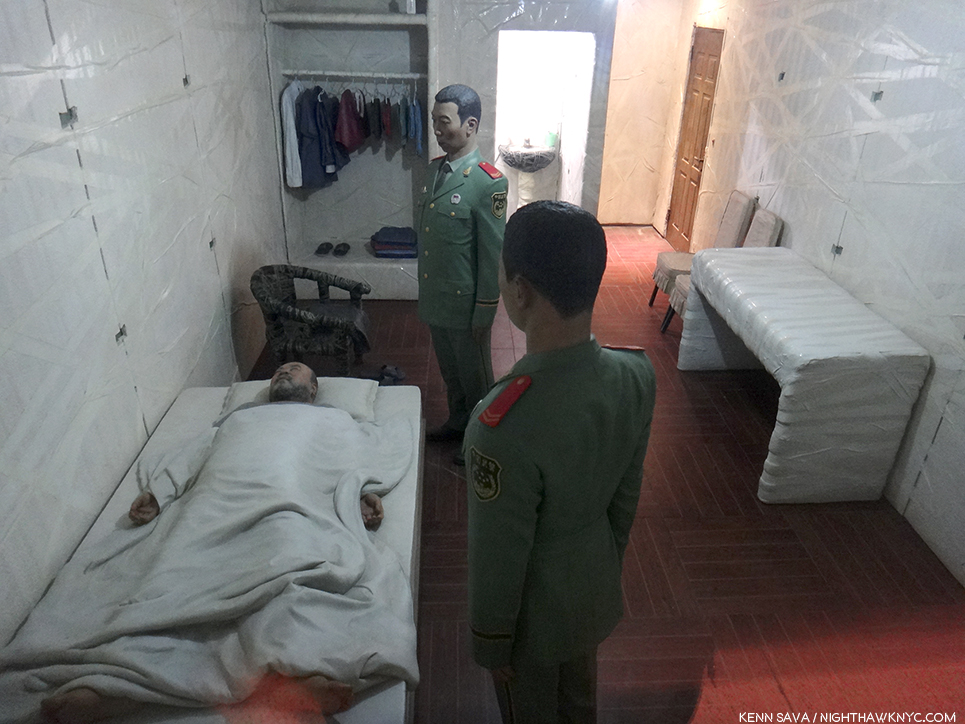
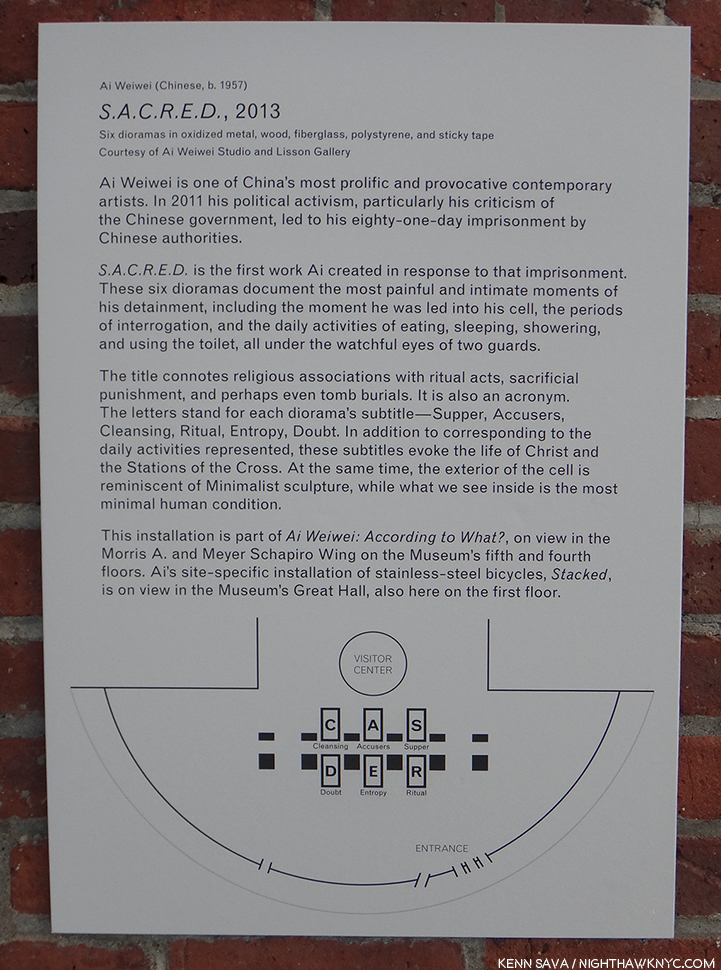
For me, the “showstopper” was the 2013 work S.A.C.R.E.D. (S-supper, A-accusers, C-cleaning, R-ritual, E-entropy, and D-doubt) which consists of six 2 and a half ton iron boxes, each one shoulder height and measuring 5 feet wide and 12 feet long, one for each of the title’s letters. As you approach one, you notice a door near one exterior corner, then you notice slits in the iron that allow a glimpse of what’s inside. Yes, each box contains a diorama of a scene from his life during his 81 day incarceration after that 2011 arrest, while he was awaiting trial(!). Inside, we see TWO guards watching him sleep in one, eat in another, shower in another, and do his business in yet another(!)(not pictured)…It’s a chilling, unforgettable and shocking experience that gives the rest of us a little insight into the risks Ai takes every day, with every new work, and in just “being Ai.” It also reminds that many, many people, some of them Artists, take incalculable risks every day in the name of freedom, and Artistic freedom, or in just living their lives. Many admire athletes, and other so-called “role models.” I admire Ai Weiwei, and those like him.

Thinking about it on the F Train home, I couldn’t recall a more powerful recent work on this topic. My mind seeking an Art historical reference, of which there are, unfortunately, too many, kept turning to Goya. First, for the absurdity depicted in his Caprichos, and then of the power and oppression of the state shown in his The Third of May. In the end, the lesson may be that, in spite of hundreds of millions of deaths in the intervening almost exactly 200 years, tragically, not much has changed in the world .

For more info on and other’s pics of  S.A.C.R.E.D. go here and here. An interview with Ai about it is here.

I consider Ai a New Yorker since he lived here for 10 years. Here’s hoping he comes and visits us, again, soon…and often!


For Ai’s story, I highly recommend the 2012 documentary Never Sorry, which has appeared on PBS.

*-Soundtrack for this post- “Freedom” by Paul McCartney published by Sony/ATV Music Publishing, LLC, Universal Music Publishing Group

“I will fight, for the right
To live in freedom.”*

NighthawkNYC.com has been entirely self-funded and ad-free for over 7 years, during which over 275 full length pieces have been published. If you’ve found it worthwhile, PLEASE donate to keep it up & ad-free below. Thank you!

Or-
I’M PLEASED TO ANNOUNCE I’M CURATING A SELECTION OF ART, ARTBOOKS & PHOTOBOOKS FOR SALE! All items are from my collection or specially selected in my travels through the Art world for my readers. The initial selection of over 400 items is here. Either way, all proceed go to support the site. With my thanks.

Written & photographed by Kenn Sava for nighthawknyc.com unless otherwise credited.
To send comments, thoughts, feedback or propositions click here.
Click the white box on the upper right for the archives or to search them.
For “short takes” and additional pictures, follow @nighthawk_nyc on Instagram.

Subscribe to be notified of new Posts below. Your information will be used for no other purpose.