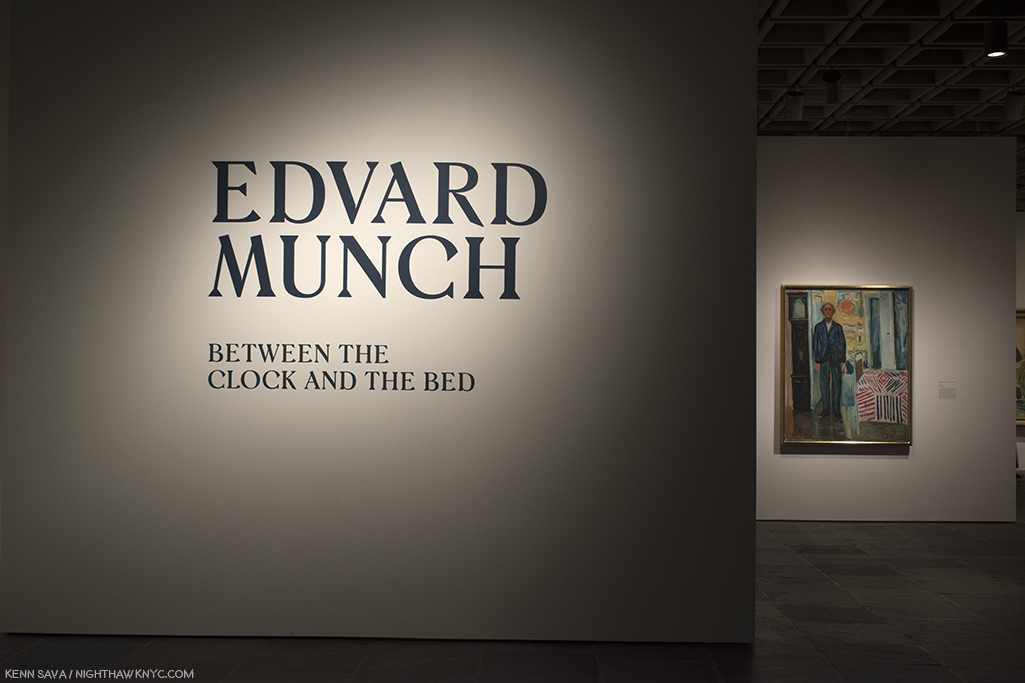
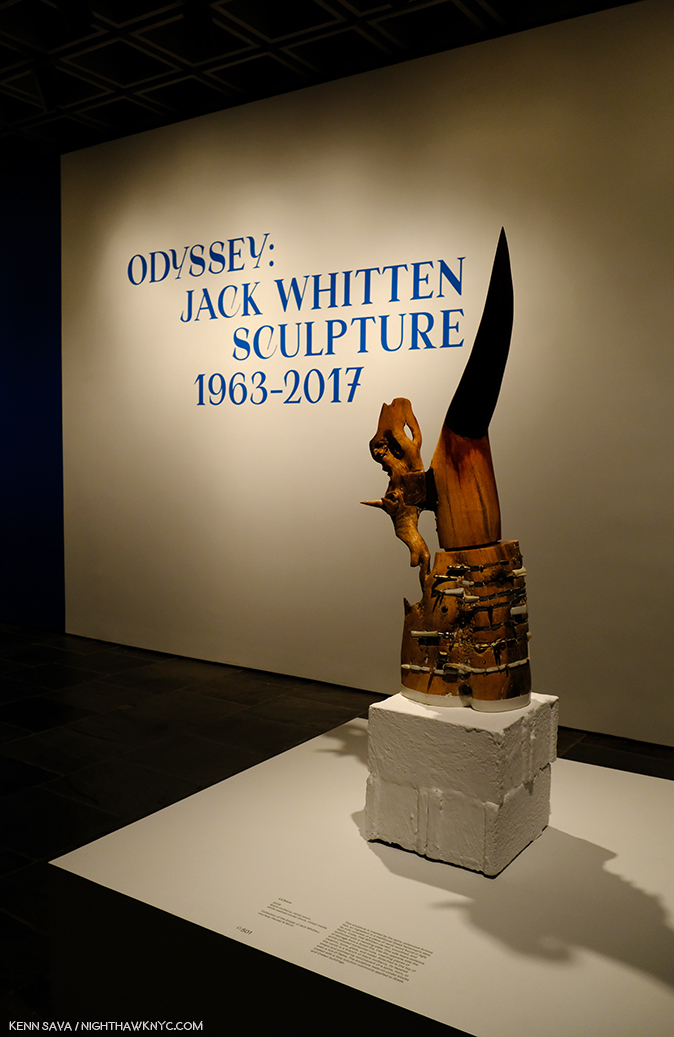
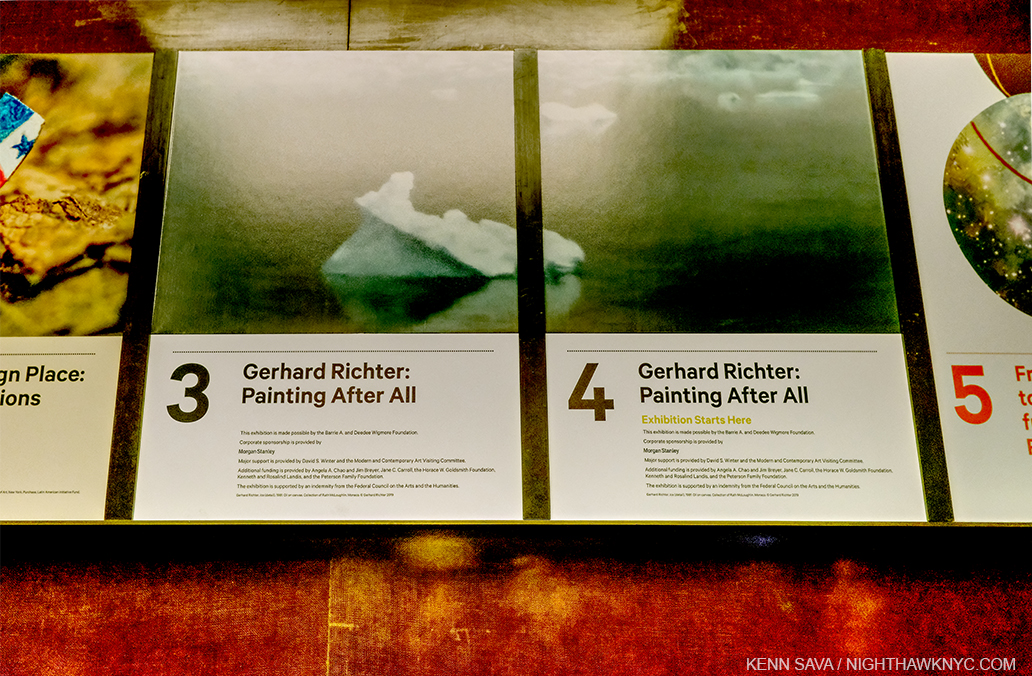
Celebrating Ten Years of NighthawkNYC.com!

Written & Photographed by Kenn Sava.

I started NighthawkNYC.com on July 15, 2015. During almost all of these past 10 years, the thought of reaching the Milestone of Ten Years was something that seemed as far away as Mars. Long-term isolation, sudden fainting spells that hospitalized me, heart problems, hearing damage, foot problems, the specter of going broke, and oh yeah, that little thing called the pandemic, the 2020s have been hard for me, as they have been for many of you, I’m sure.

So, as I sit here at 6:30 am on July 15, 2025, I’m partially here to see & celebrate this day I didn’t think I’d actually get this site to arrive. As the improbable started to become a real possibility it dawned on me that I HAD to write something to honor getting to this point, and ALL the work that has gone into getting it here, even though I’m supposed to be taking a break (which didn’t stop me from writing the two biggest pieces I’ve ever written!). My one-time neighbor, Joni Mitchell, from decades before my time here, says it best about being here this morning in her circa-1969 song “Chelsea Morning.” (We’ll keep it between us that I haven’t been to bed yet!)

“Woke up, it was a Chelsea morning
And the first thing that I heard
Was a song outside my window
And the traffic wrote the words”-*

Since Joni hasn’t shared how to get the traffic to write my words, I decided to use this occasion to reflect on where I’ve been, where I am, and to try and look a bit ahead.

Part 1-
A)- Where I’ve Been
Some Highlights, in my opinion anyway, from the past 10 Years…

“Oh, won’t you stay
We’ll put on the day
And we’ll wear it ’till the night comes.”-*

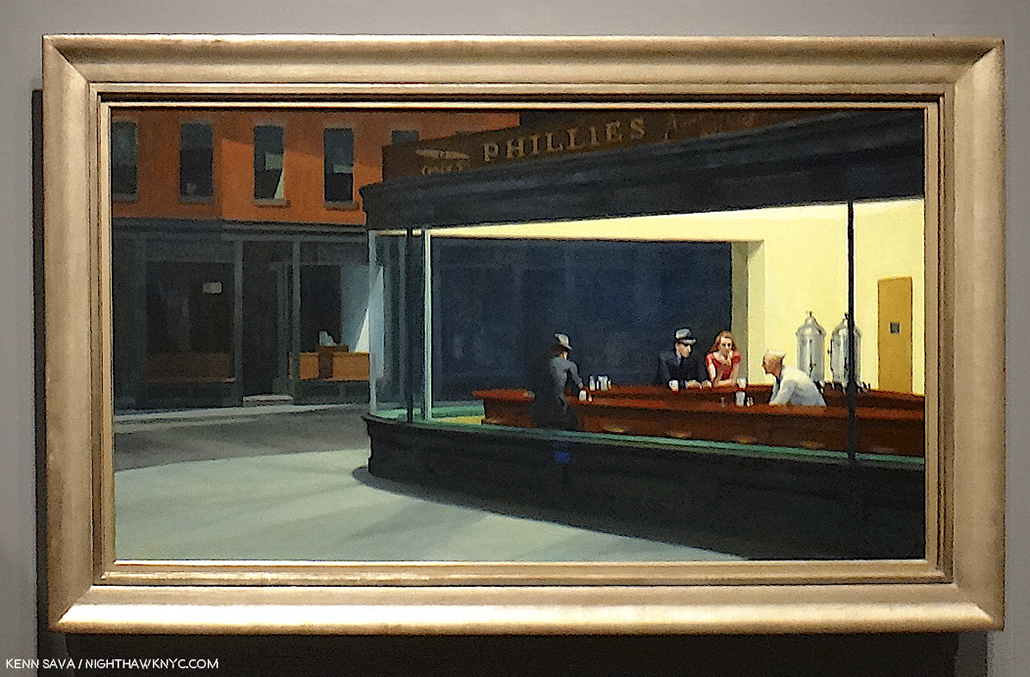
1)- “My Search For Edward Hopper’s Nighthawks Diner,” published July 29, 2019.  Decades in the making, it’s hands-down my most read, most discussed piece.

Update- On July 21, 2024, I finally found it! Meatpacking District, NYC. Kenn Sava, left, reenacting his Painted alter-ego, Logan, right. Photo by Nilo for NighthawkNYC.com. Continual Thanks to all involved & Kevin Callahan. Click any image for full size.

2)- “Vincent van Gogh: Home at Last,” published October 8, 2018. Preparing this piece on the reinstalled Van Gogh Masterpieces in the Permanent Collection of The Met suddenly took on an unexpected life of its own.

HOW great is it to be able to walk into a room and see THIS? For me, it’s one of the great joys of life in NYC. One part of the newly reinstalled Gallery 825 showing 9 of the 10 Van Goghs in this room. #10 is on the other side of the Self-Portrait with Straw Hat in the vitrine. This shot was available for literally one second over 3 visits and 3 hours I spent here. In the piece, you’ll see why.

3)- “Van Gogh’s Cypresses: Art From Hell,” published November 10, 2023. With all due respect to The Met’s great curators, I saw their blockbuster Van Gogh’s Cypresses completely differently than they did, apparently.

Welcome to The Met! In all my years of going to The Museum, as I call it currently 1,900+ visits since 2002, I’ve never seen TWO banners (left & right) up devoted to the same show. And, as I was soon to find out, it’s not like there weren’t other terrific shows going on! Seen on June 2, 2023.

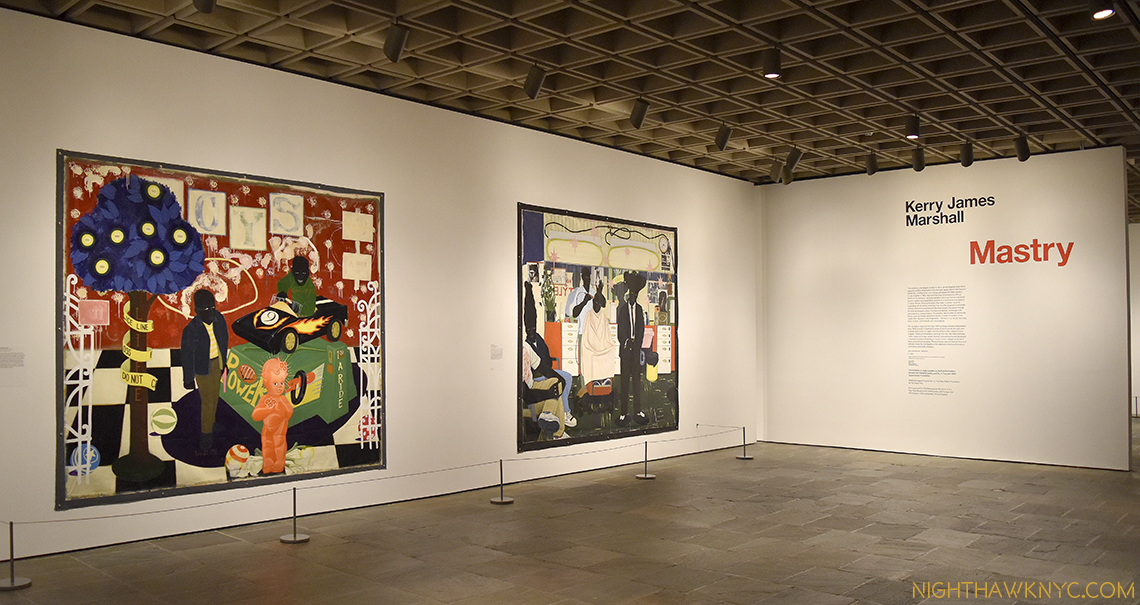
4)- “Kerry James Marshall: The Revolution Was NOT Televised,” published March 1, 2017. THE most everything Painting show I saw in NYC in the 2010s. Along with Hima af Klint: Paintings for the Future, the two most important Painting shows mounted here in the prior decade.

The finest moment, among many fine moments, in the all-too-short life of The Met Breuer. Installation view of Kerry James Marshall: Mastry. “De Style,” 1993, KJM’s barbershop, right, drips of life, fun, culture, individuality and style. On the left, his “The Lost Boys,” from the same year, a title borrowed from Peter Pan, is an homage to two children lost to gun violence, and all the boys who were “lost” to a variety of causes.

5)- “A Conversation with Photographer Harry Gruyaert,” Published September 22, 2018. Consistently among my most popular pieces, the renowned Belgian Photographer, and long-time Magnum Photos Member, discovered me through my “Saul Leiter: In My Room” piece and let his gallerist know he would be interested in speaking with me. A fan of his work, we spoke extensively via transatlantic phone. I discovered later how few interviews he has given.

Subsequently, I met Harry Gruyaert, far right, in 2020 at the opening of his first American show since 1990!

6)- “Rod Penner’s America: Small Town Nation,” published August 22, 2023. This piece, based on his most recent NYC show which continued to solidify Mr. Penner as one of the foremost Painters of small-town America working today, continued my coverage of the Texas-based Artist’s NYC shows, with my prior pieces linked at the bottom of it. At one point, I had written more about Rod Penner than anyone else had. Maybe I still have. Rod was also kind enough to do a Q&A with me in 2017.

HOW does he do it? Rod Penner discussing one the very, very fine points of his Yellow Light/Brenham, TX, 2004-5, 15 x 25 inches, at his opening, March 18, 2023.

7)- “Henry Taylor: The Art of Empathy,” published March 8, 2024. Born of my unforgettable encounter with Mr. Taylor at the opening of his 2019 solo show.

Installation view, an hour and a half before Henry Taylor: B Side closed for the last time, Whitney Museum, January 28, 2024.

7)- “Gregory Halpern’s America,” published November 8, 2019. Perhaps my biggest discovery during my 8 3/4-year “deep dive” into Modern & Contemporary Photography, my look at all of Mr. Halpern’s books through Omaha Sketchbook (2019), includes a look at its NYC book release in 2019, later the same night of my encounter with Henry Taylor!

The very first work I saw by Gregory Halpern, “Untitled,” from his Buffalo series, seen at Aperture’s Booth at AIPAD: The Photography Show, April, 2017, I liked so much it’s been hanging on my wall since.

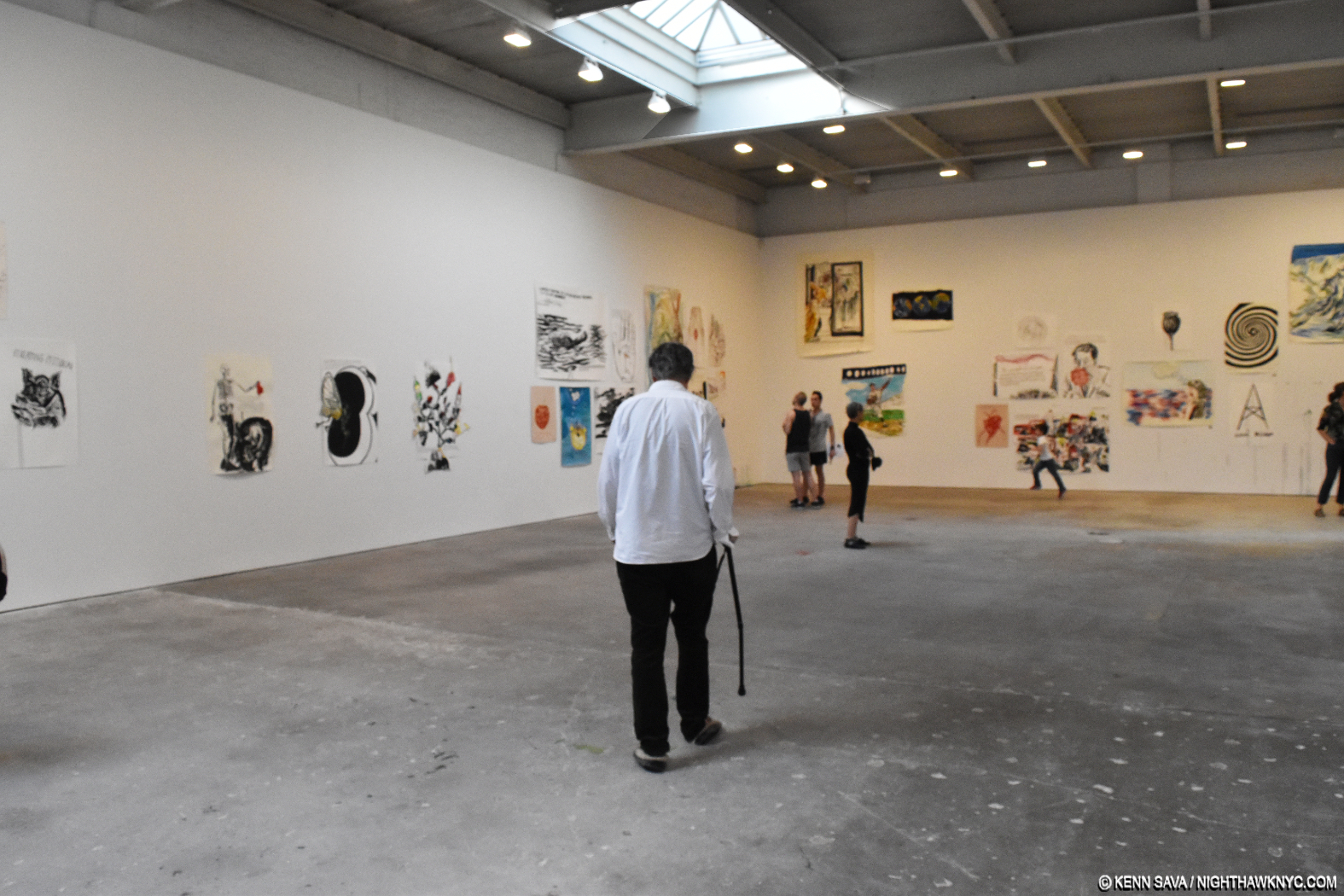
8)- “Raymond Pettibon: Artist Americanus,” published July 20, 2017. I was very fortunate to meet Mr. Pettibon and have him give me a tour of his Zwirner show, which I was thrilled about but also felt bad about because he was suffering from a quite damaged foot that caused him to sit the entire rest of the time he was at his opening. The show was also memorable as during its run I met Artist Caslon Bevington, whose work I’ve subsequently written about twice.

Playin’ hurt. The great Raymond Pettibon enters his show at the opening, April 29, 2017, with a cane. That small figure running in the distance is his son, Bo. Zwrner lent Raymond this space which he used to created the work you see on display. Quite a few paint splotches were to be found on the floor, leading me to think it must have been something to watch him creating these pieces.

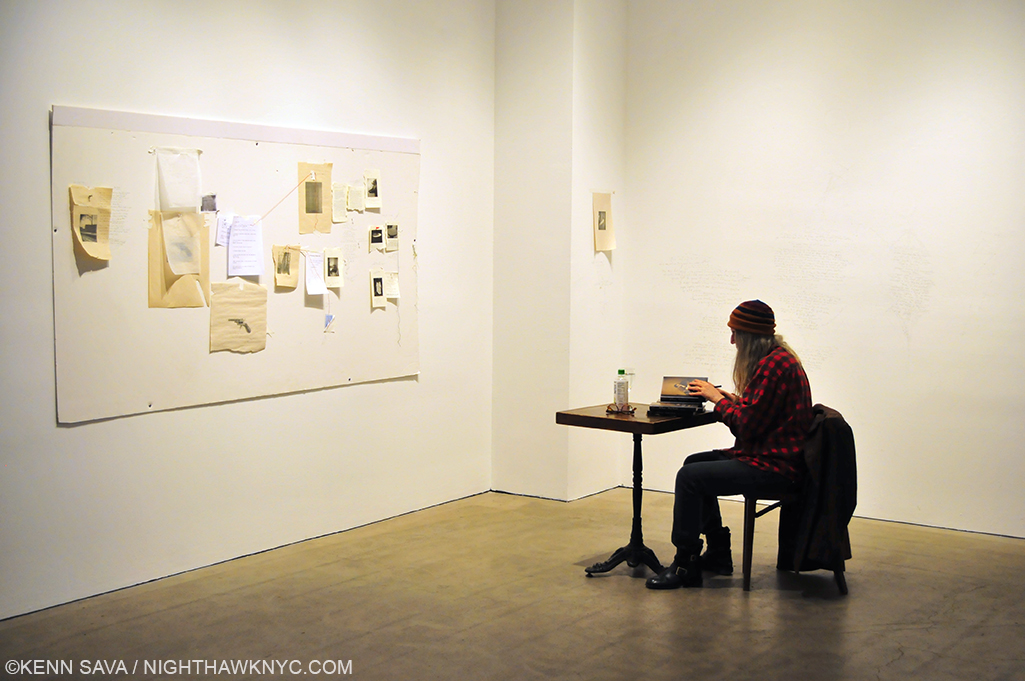
9)- “Table for One: Patti Smith’s 18 Stations,” published April 17, 2016. I made about a dozen trips to Patti’s extraordinary Photography show and was shocked to walk in on the show’s last day to find the legend, herself, seated at the famous table she sits at on the cover of M Train signing books alone. She looked up, and realizing I was about to take her picture, cooperated. I then spoke with her, and wound up meeting her daughter as well. As the show closed, I found myself in the gallery with her as she walked through it one last time, trying to imagne what was going through her mind at each stop. I eternally regret not buying one of her Photographs. One of the Top 5 most-read and most-discussed pieces I’ve written.

What becomes a Legend most? The one and only Patti Smith sits at her famous table.

B)- “Community Service”
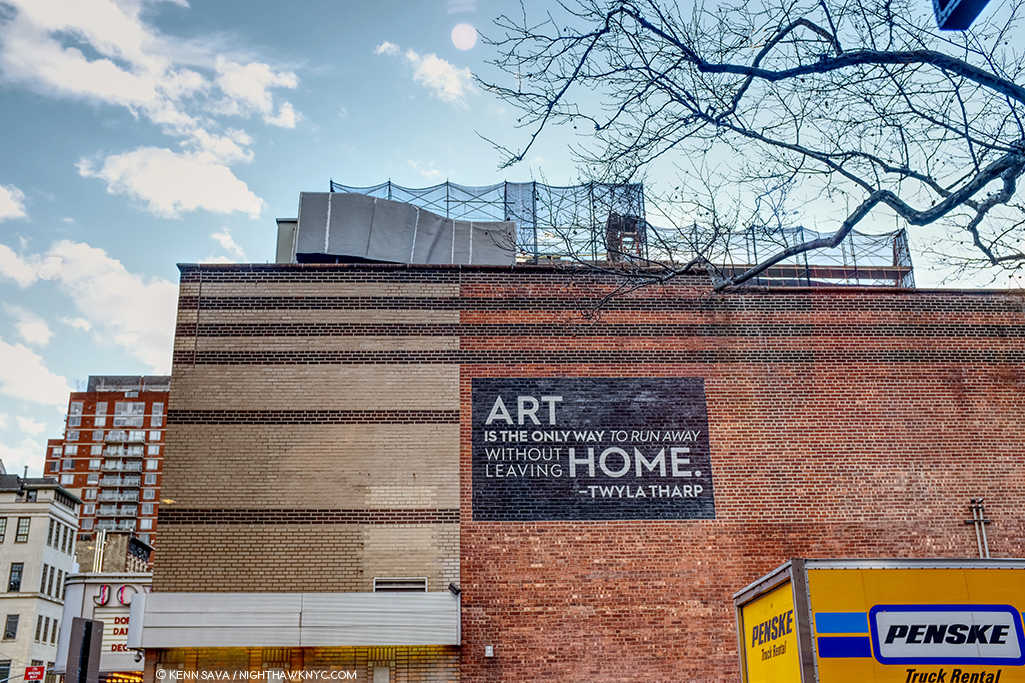
1)- “Art” With a Capital “A,” published February 26, 2020. I should have written it sooner.

Thanks, Twyla! I couldn’t have said it better. And so, this scene has appeared in my Banner, sans moving truck, a number of times over the years. A look at ALL 41 of my banners this past decade is here. The Joyce Theater, December, 2019, as seen continually staring me in the face from my favorite seat in my beloved Starbucks on West 19th Street, the best SB in NYC. Another loss during the pandemic.

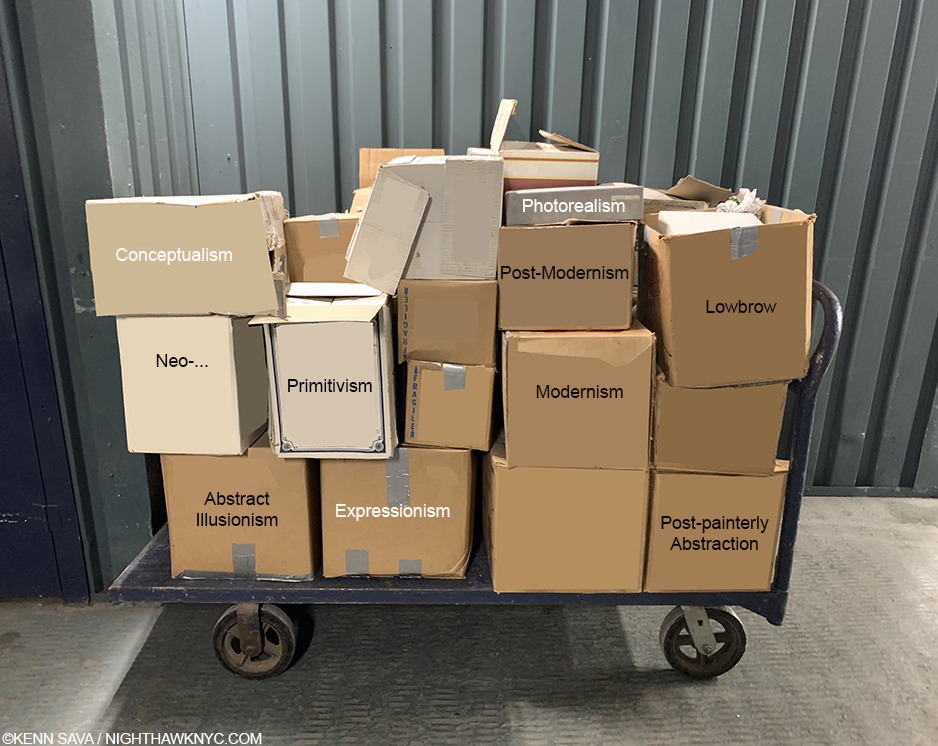
2)- “Death to Boxes!,” published on April 7, 2020. Another I should have written sooner. The problem has only gotten worse.

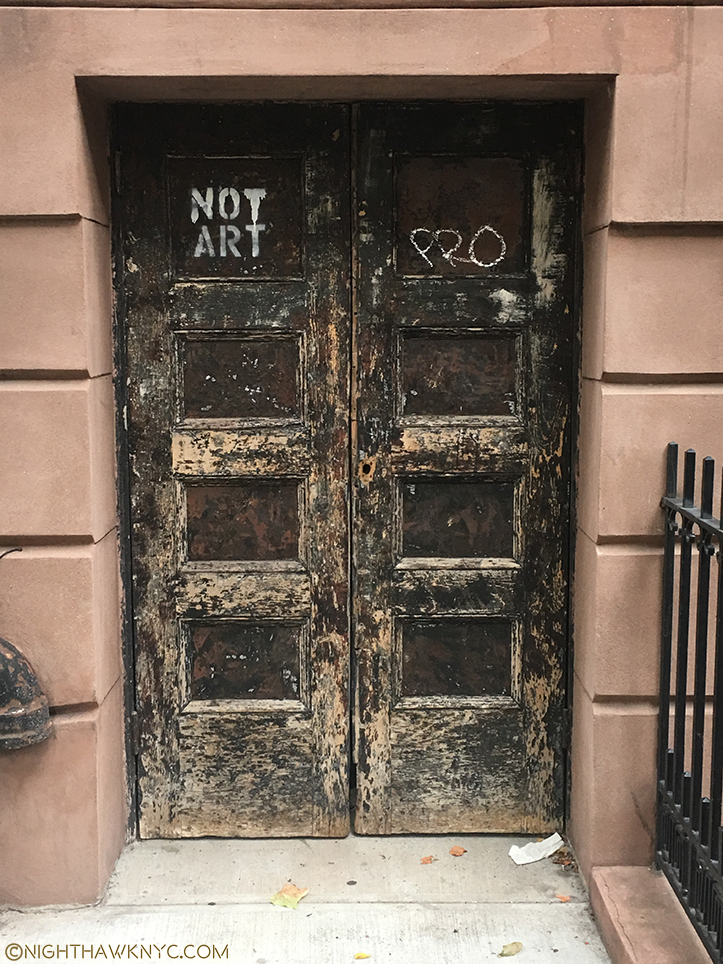
3)- “On Buying Art,” published on July 11, 2017. One I did write early on.

Knowing what not to buy is rarely THIS obvious.

C)- Milestones

“Oh, won’t you stay
We’ll put on the day
There’s a sun show every second”-*

1)- “Welcome to the Night,” published July 15, 2015. My very first piece!

The last time I stood in front of Nighthawks, with my Painted alter-ego, dead center. August 28, 2013, at Hopper Drawing at the old Whitney Museum. Fun fact– I “borrowed” its frame for the frame you see in my banner! Shhhh…Don’t tell anyone.

2)- “Cancer Saved My Life,” published February 7, 2017, on the 10th Anniversary of my cancer treatment. My passion to share what I’ve seen & learned in the Art world comes from surviving with a 20% chance of making it through Year 1 post-treatment without needing more treatment. I’m happy to say 8 Anniversaries have followed- 18 in all! Miraculous.

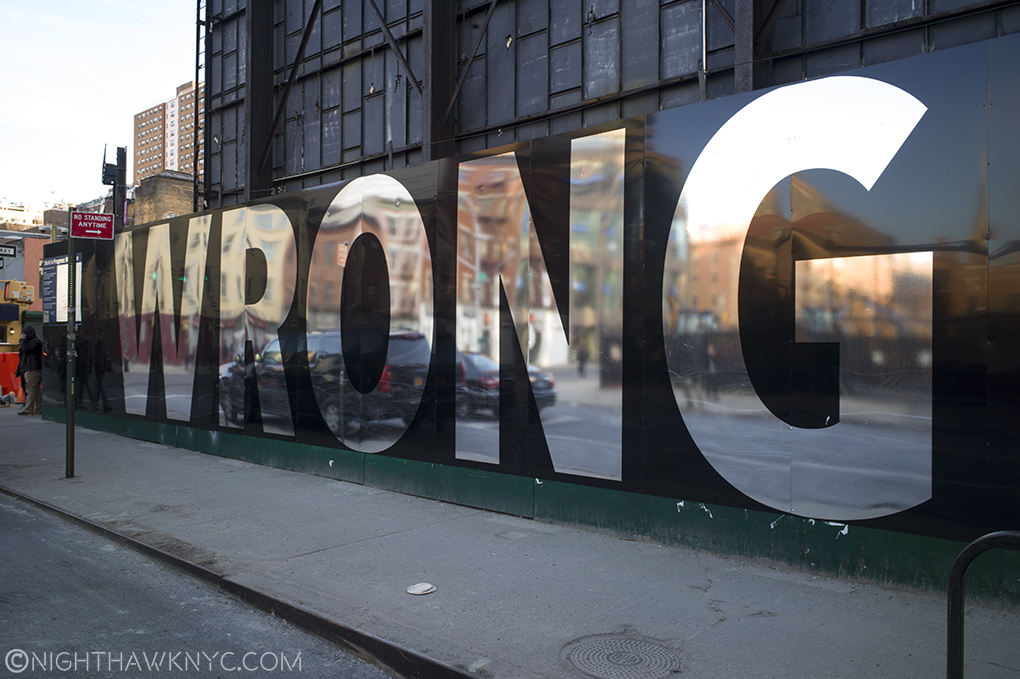
Every cancer patient’s worst nightmare. During my search for cancer treatment, after much research and agonizing, I settled on a treatment. My life was saved by a Doctor who patiently explained why it was the wrong choice for me moments before I was to begin it. Unfortunately, there wasn’t a sign this big to guide me.

3)- “Kenn Sava Named a Finalist…,” published November 25, 2023. I was, and am, honored to be named a Finalist for the 2023 Andy Warhol Foundation Arts Writers Award out of the 500 writers they said they considered.

D)- Journeys
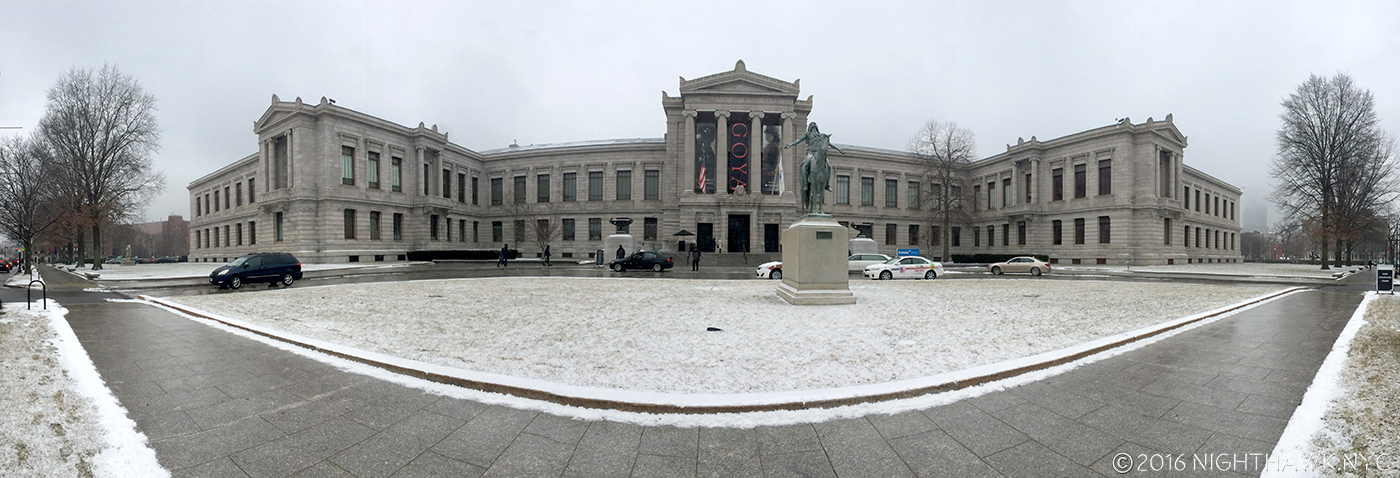
1)- Goya: In Boston & NYC, published January 20, 2016. In January, 2015, I made a day trip to the Museum of Fine Arts, Boston to see their exceptional Goya: Order and Disorder show. A few months later, I saw a show of his complete Los Caprichos at the National Arts Club, here.

The Museum of Fine Arts, Boston in January, 2015, the last time I went out of town to see an Art show. Of course, I was back in my own bed that night.

2)- “13 Year At The Metropolitan Museum,” a 2-part series, the first part published on July 26, 2015. Though I’m in Manhattan, The Met is not exactly nearby. Nonetheless, I’ve managed to get there over 1,900 times since August 1, 2002. Some thoughts on it from 2015.

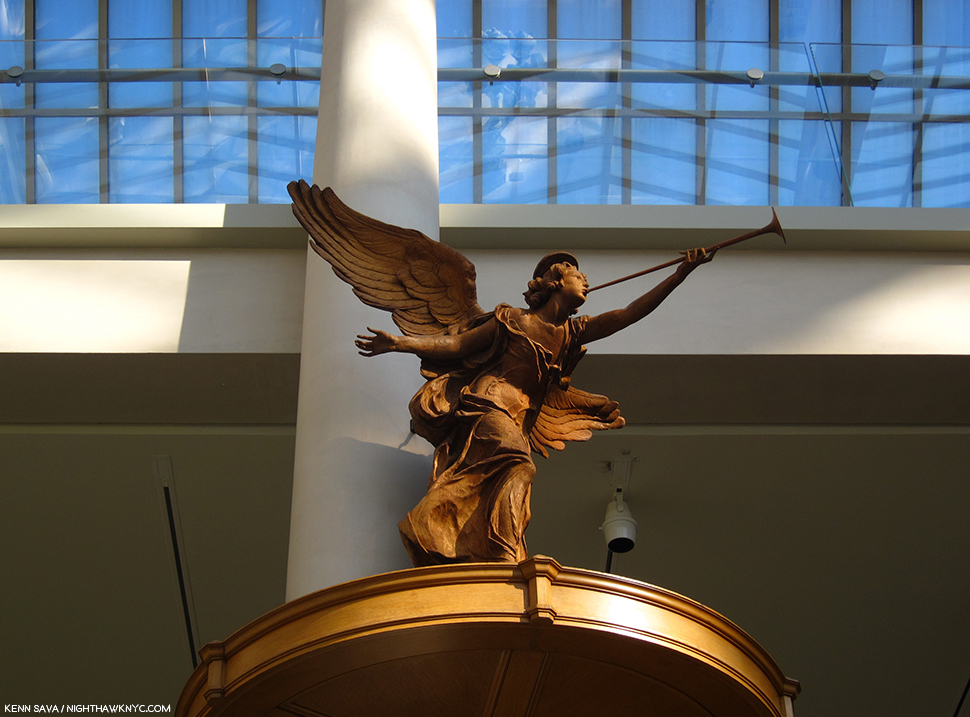
Hark! A Met Angel Beckons me to the Light. To not hear her call is my loss.

3)- “The Met Breuer: Hail, and Farewell,” published on August 1, 2020. I was there on March 8, 2016,  the first Member’s Preview Day, and I was there the moment it closed for the final time on March 12, 2020. In between, I saw more great shows there than anywhere else, largely due to The Met’s terrific Contemporary Chairperson, Sheena Wagstaff, who I’ve also written about at length more than once.

March 12, 2020. I’m about to enter The Met Breuer for what I didn’t know would turn out to be the last time, on what would turn out to be its last day ever.

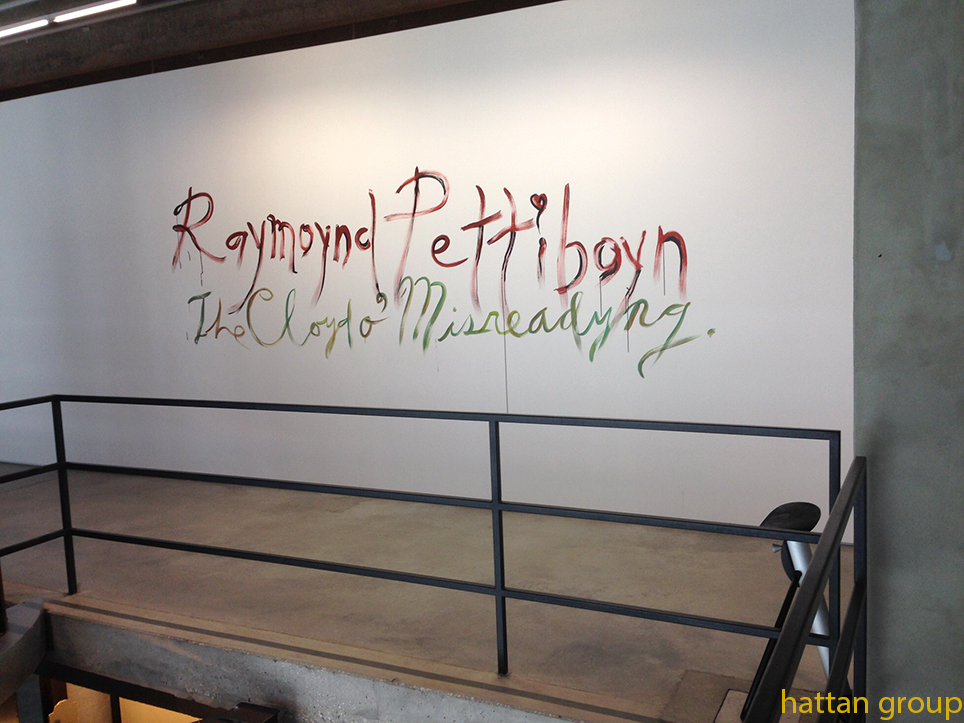
4)- “Exclusive! A Visit to Raymond Pettibon’s Moscow Show!,” published November 20, 2017. Lana Hattan was able to get an associate to go The Garage and shoot Raymond Pettibon’s 400-piece Moscow Retrospective, Raymond Pettiboyn: The Cloyd o’ Misreadyng,” for me! Though this was before the cessation of relations between the U.S. and Russia, I was unable to make it. Raymond Pettibon made it, though, and created another of his classic Hand-Painted Murals for the show. Given there have been very few large Raymond Pettibon shows since, I’m very thankful to the Hattan Group, who did a terrific job as you can see, for  doing this for me, and enabling me to write about the show for NighthawkNYC readers! It’s the only show I’ve written about without actually seeing in person! It’s something you can’t see anywhere else.

Live, from Moscow’s Garage! The show’s entrance features one of Raymond Pettibon’s famous hand-painted murals, around the corner from this sign. I hope the Russians are up on their “Pettibon English!” Photo by The Hattan Group for NighthawkNYC.com.

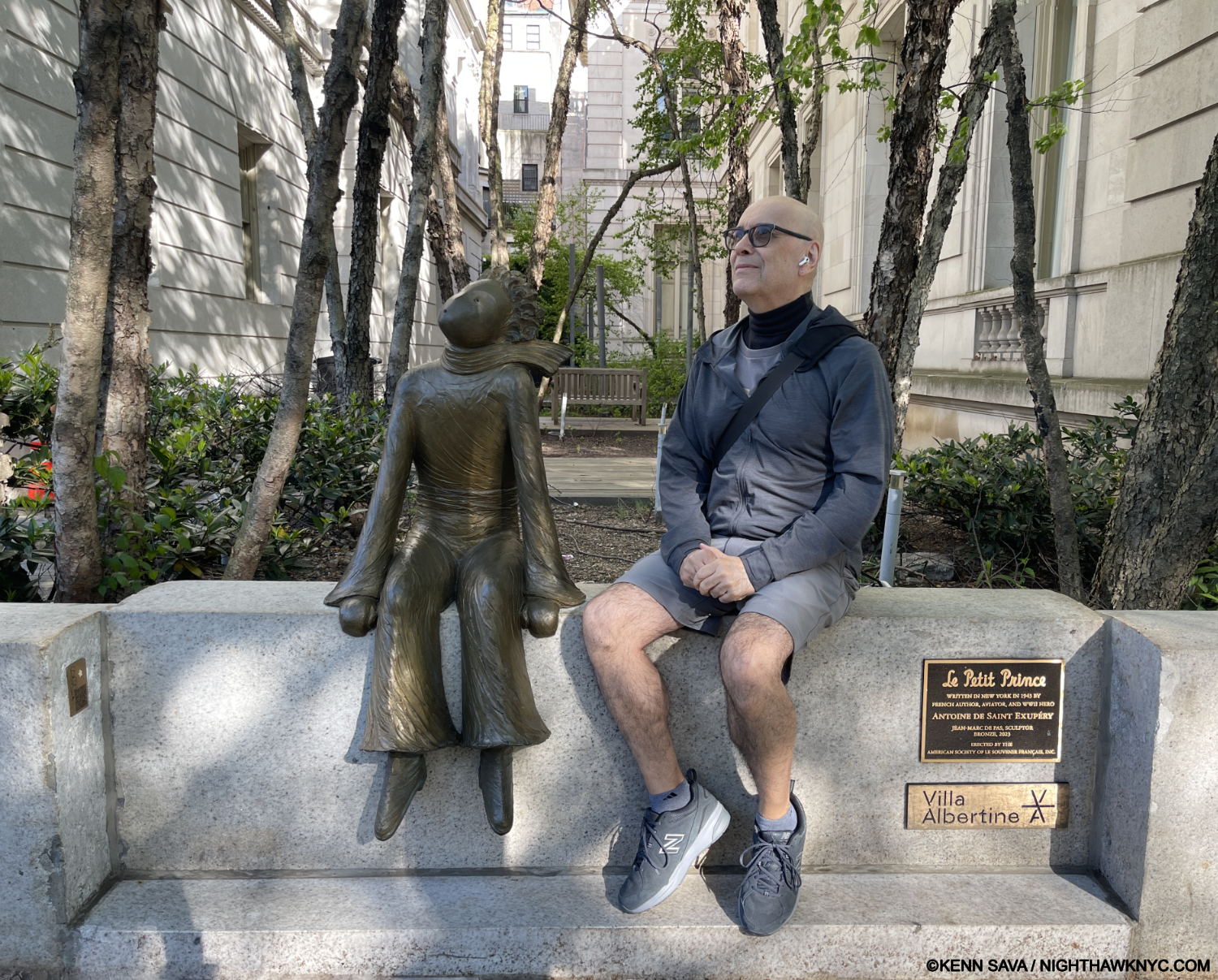
4)- “Antoine de Saint-Exupéry: Artist,” published on March 21, 2023. I’m self-taught at everything besides reading/writing and basic math thanks to a terrible school system and not being permitted to go college. As a result, I had never read The Little Prince, as hard as that is to believe, until Lana, whose favorite book it is, insisted I do. Of course, I immediately got hooked, like hundreds of millions of others have. We were lucky enough to attend the wonderful show of his work at the Morgan Library, and I returned there in 2023 for their show on the Art of Saint-Exupéry. The piece took on a life of its own after the French Ambassador to the U.S saw it and invited me to Washington, D.C. for a dinner he was hosting in honor of the 80th Anniversary of the publication of the book.

I join Saint-Ex’s most beloved creation in waiting for the return of his Asteroid. Hurry up, already! May 10, 2025. My thanks to the kind lady who took this.

E)- Epics
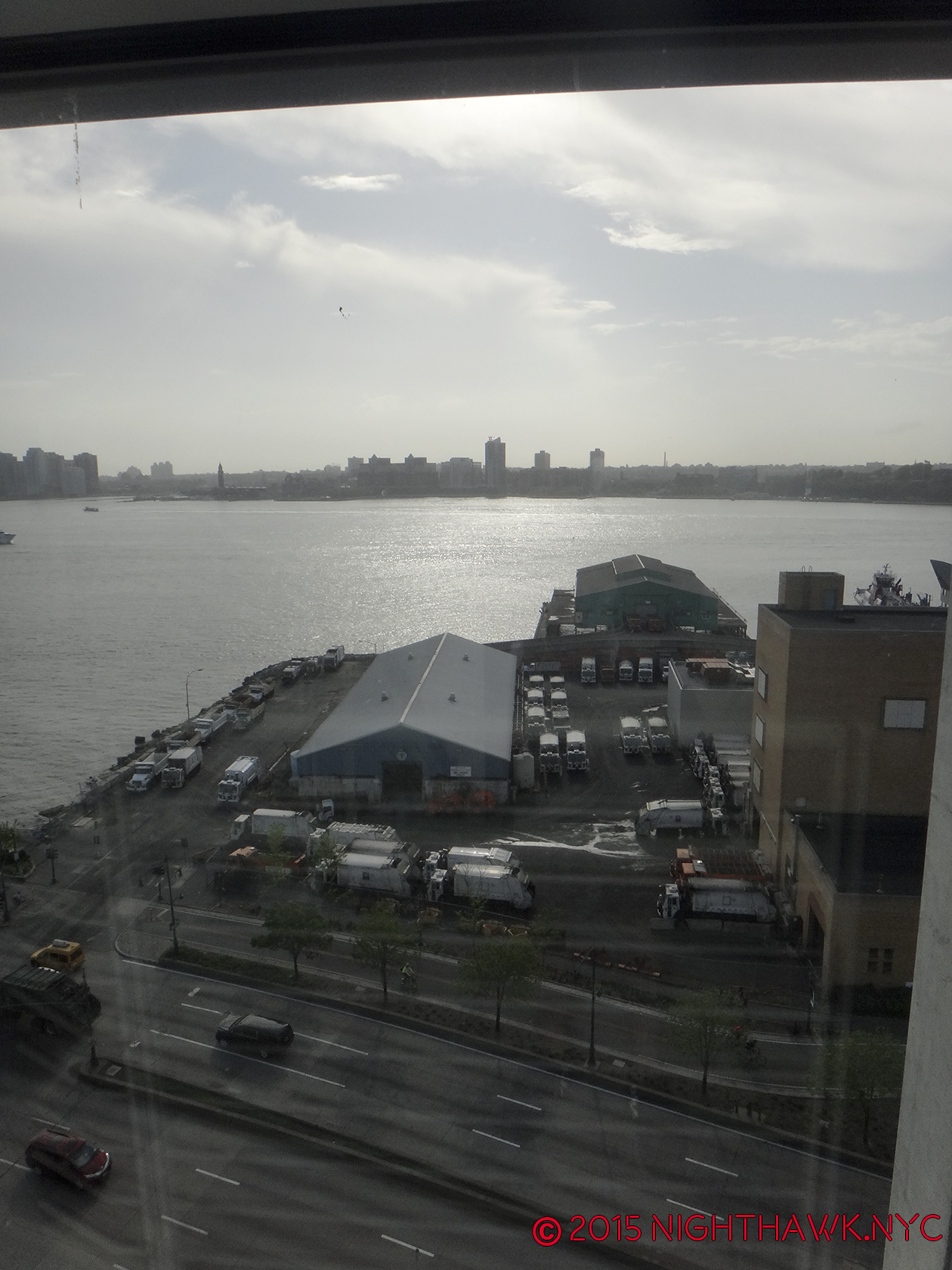
1)- “The New Whitney Museum: The Roofdeck of American Art,”  published August 1, 2016. I worked on my look at the “new” Whitney Museum for over a year after having been a voice against the expansion of the old building. Now that it’s 10 years old, nothing has changed anything I said about it.

Nothing has changed except the Department of Sanitation complex in front of the museum, seen here in 2015, has been replaced with a park.

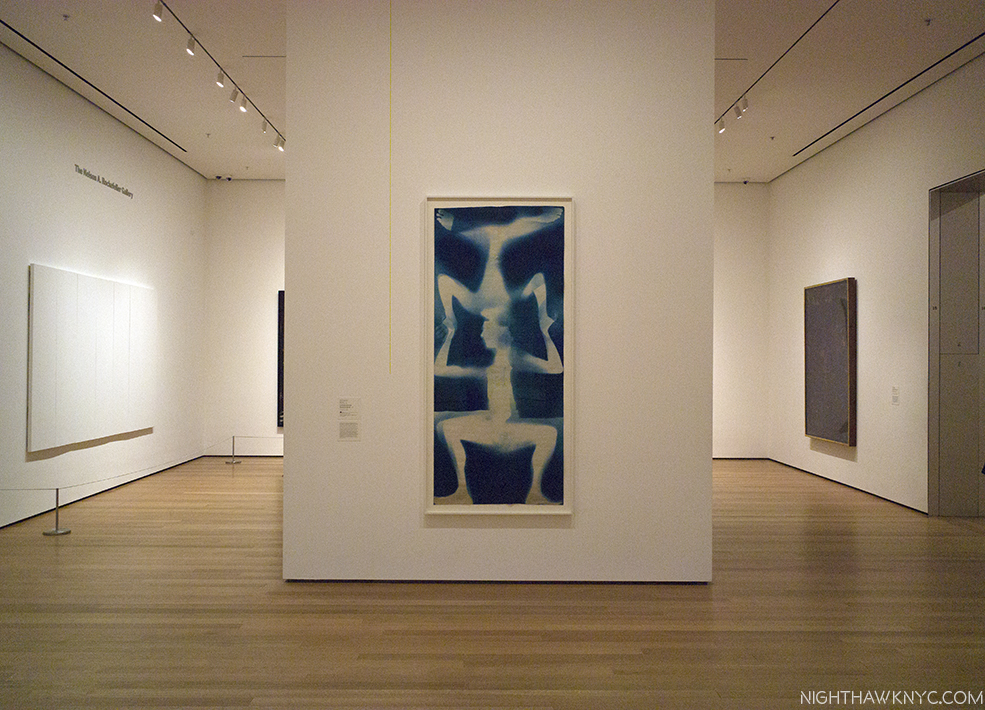
2)- “This Summer In ‘The Era of Rauschenberg,'” published September 19, 2017. I spent my summer going to MoMA’s Robert Rauschenberg: Among Friends (24 times) and the 4 Rauschenberg satellite shows going on around town. The Rauschenberg Foundation was impressed to the point that they invited me down for a private tour of their entire facility, his former studio, which was beyond an amazing experience for this long-time fan.

One nice note- The Rauschenberg Foundation informed Sue Weill, Aritst (and collaborator with him on Untitled (Double Rauschenberg), c.1950, Monoprint; Exposed blueprint paper, center)  & former Rauschenberg girlfriend, about my inclusion of her in this piece and others, and told me she was pleased to hear it. Partial installation view of the first gallery of Robert Rauschenberg: Among Friends. 

3)- “Richard Estes: Painter. With No Prefixes,” published May 22, 2022. I was surprised to see nothing else printed on the occasion of Richard Estes’s 90th Birthday, which I take as another reminder that the Art associated with  “photorealism” is still not of interest to almost all of the world’s museums. I agree with them on most of it. Yet, (see my piece on boxes, above), some Artists have been stuck in this box, or other boxes, without their consent. I don’t quite see Richard Estes work the way many others seem to. My 3-part series, built on decades of looking at his work, addresses just this.

Kenn Sava, Homage to Richard Estes, NYC, May 27, 2020. Richard Estes was one of the first Artists to influence how I see the world. i.e. he helped open my eyes to the world around me everywhere!

4)- “Jean-Michel Basquiat at the Brant Foundation,” published October 6, 2019. Basquiat has been THE most popular Contemporary Artist for the entire existence of NighthawkNYC, yet, I didn’t know much about his work going in. When my friend, Kitty, told me about the Brant Foundation show, I decided to go, try and get up to speed on his work, and see what it said to me. As I sit here now, I’ve written more about Basquiat than any other Artist! And, I’ve seen more Basquiat shows since 2012 than I have by any other Artist. Both of those facts shock me. They just happened, primarily out of my desire to give his work as in-depth a look as I could. Along the way, I saw virtually every book ever published on his Art, and met and spoke with both of his sisters. The Brant piece is the first piece I wrote on his work. All the others may be seen doing an Archive search for Jean-Michel Basquiat.

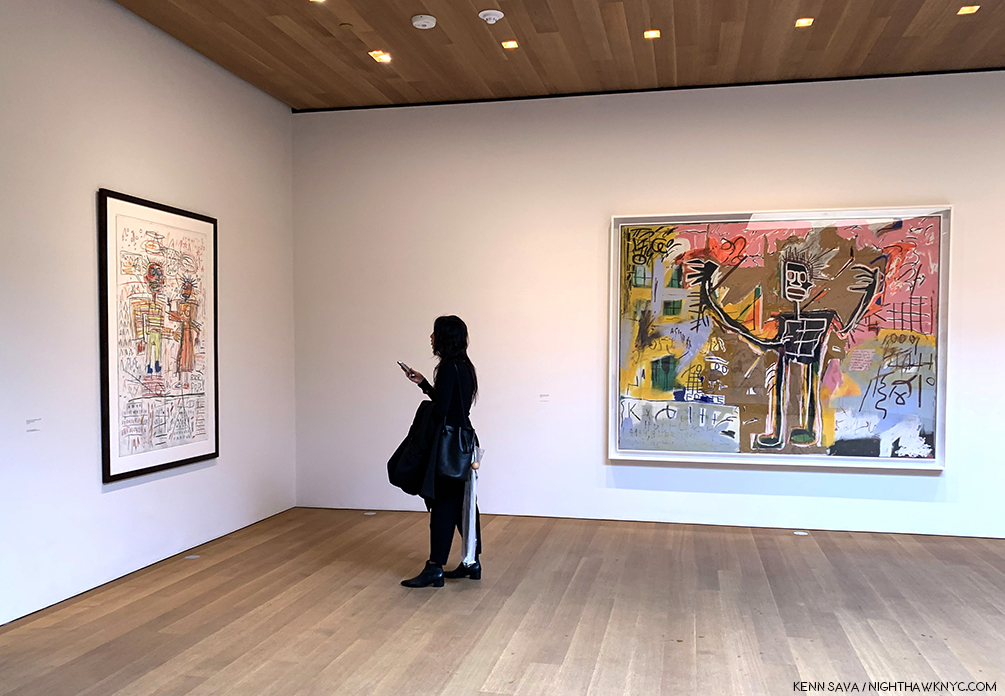
Lisa at the Brant Foundation Basquiat show studying Self-Portrait with Suzanne, 1982. There I was, standing outside in the rain for a solid hour, without my umbrella which had gotten left in the cab, without a ticket on the show’s last day, having failed to get a press pass. A staff member who had tried to help me circled back around and told me a visitor, Lisa, had an extra ticket, which she was kind enough to give to this total stranger. Thank you, Lisa. You set in motion what would become an epic journey of Artistic discovery. And oh, by the way, I subsequently paid $45 to get into Basquiat: King Pleasure, the show mounted by his sisters, even though I was going to write about it for free. Did The New York Times pay to get in, too?

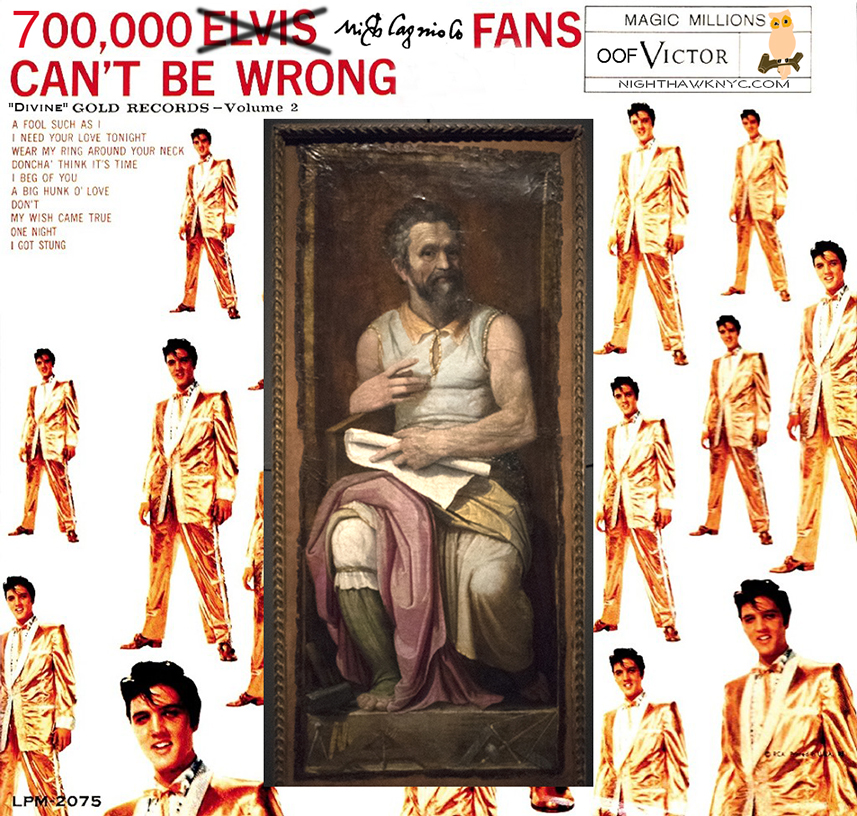
5)- “700.000 Michelangelo Fans Can’t Be Wrong“, published March 4, 2018. A labor of love born out of a dozen visits to The Met’s once-in-a-lifetime blockbuster that 700,000 saw. More an effort of trying to remember as much as possible of what I saw because I knew I’d never see it again.

Take that, Elvis, who’s 1959 album title, and cover, I just borrowed. Michelangelo was the “King” of a different kind of rock. Old school rock.

6)- “A Year Without Art,” published May 7, 2021. Never in my wildest dreams did I ever think I’d go an entire year without being able to see Art! Well? In 2020-1, it happened.

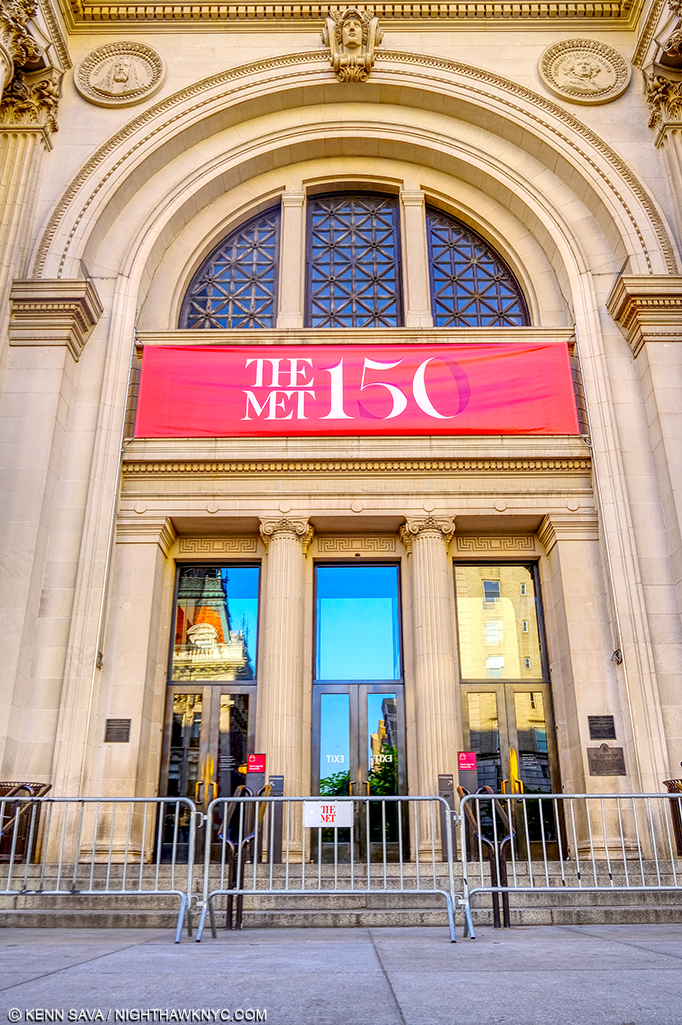
The Met’s famous main entrance, gated, during the 5 months it was closed, on May 21, 2020, unprecedented in my lifetime. Probably not the way they drew up celebrating their 150th Anniversary.

7)- The Photography Show, 2018, published April 23, 2018. I look back in disbelief at how much work I did around AIPAD, The Photography Show in 2018 and 2019. 4 part series on each…countless meetings with Photographers…endless looking all followed by months of work on the pieces. I didn’t make a dime doing it. I hope they appreciated it!

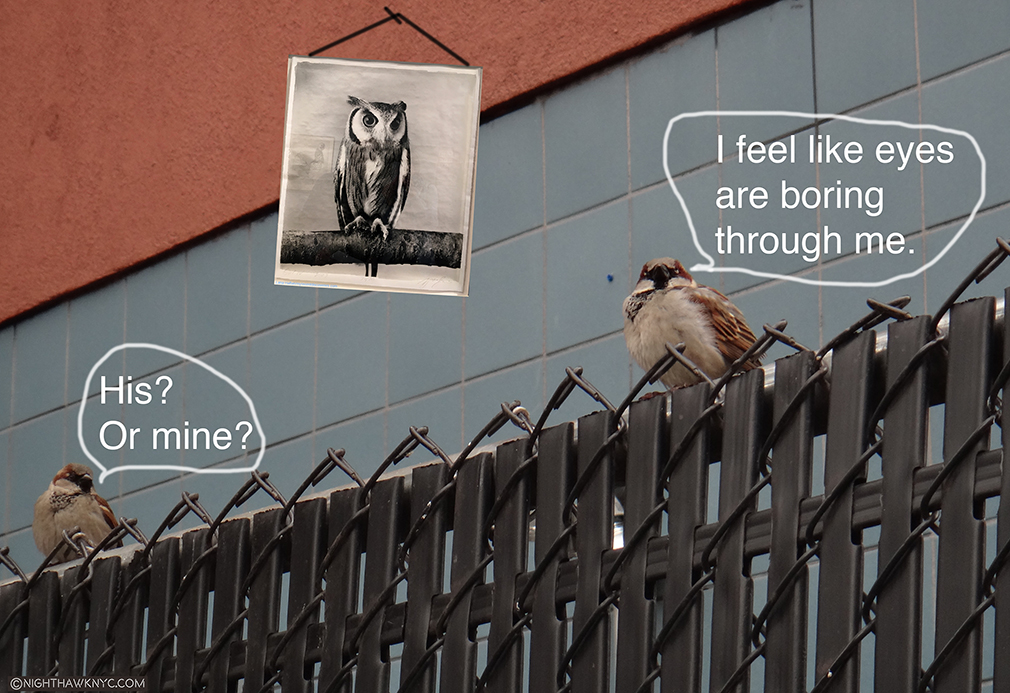
“On The Fence, # “The Wall Has Eyes” Edition. The Birdies, my fine feathered friends from their West 24th Street perch, that ran in my popular occasional featurette, “On The Fence,” for over a year. This one was included in my 2018 Photography Show series. I never replied to the reader who suggested I give up Art writing for “photo funnies”  as he called them- until now. I’m still thinking about it…All installments of “On The Fence” are here.

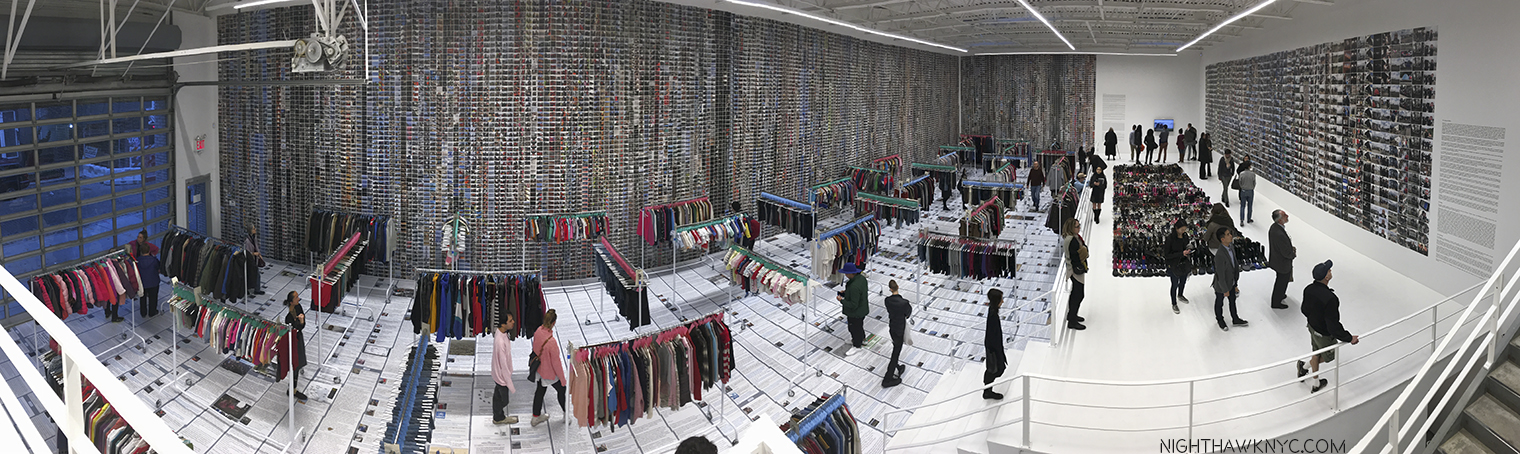
8)- “Ai Weiwei & The Value of One Refugee“, published January 7, 2017. The centerpiece of a group of 4 2016 Ai Weiwei shows, Ai Weiwei: Laundromat was a show unlike any other I saw this past decade, Ai & his team collected clothes, shoes and other artifacts left behind by refugees in the various camps he visited during the European Refugee Crisis and arranged them to compelling effect achieved in concert with countless Photos on the walls he took documenting what he saw and reproductions from media and social media accounts under foot. I wrote about all 4 of the shows, but Laundromat has lingered long in my memory. It was hard to visit the show and not think of Ai’s own experiences, which made him an almost ideal witness.

Birdseye view of almost the whole show.

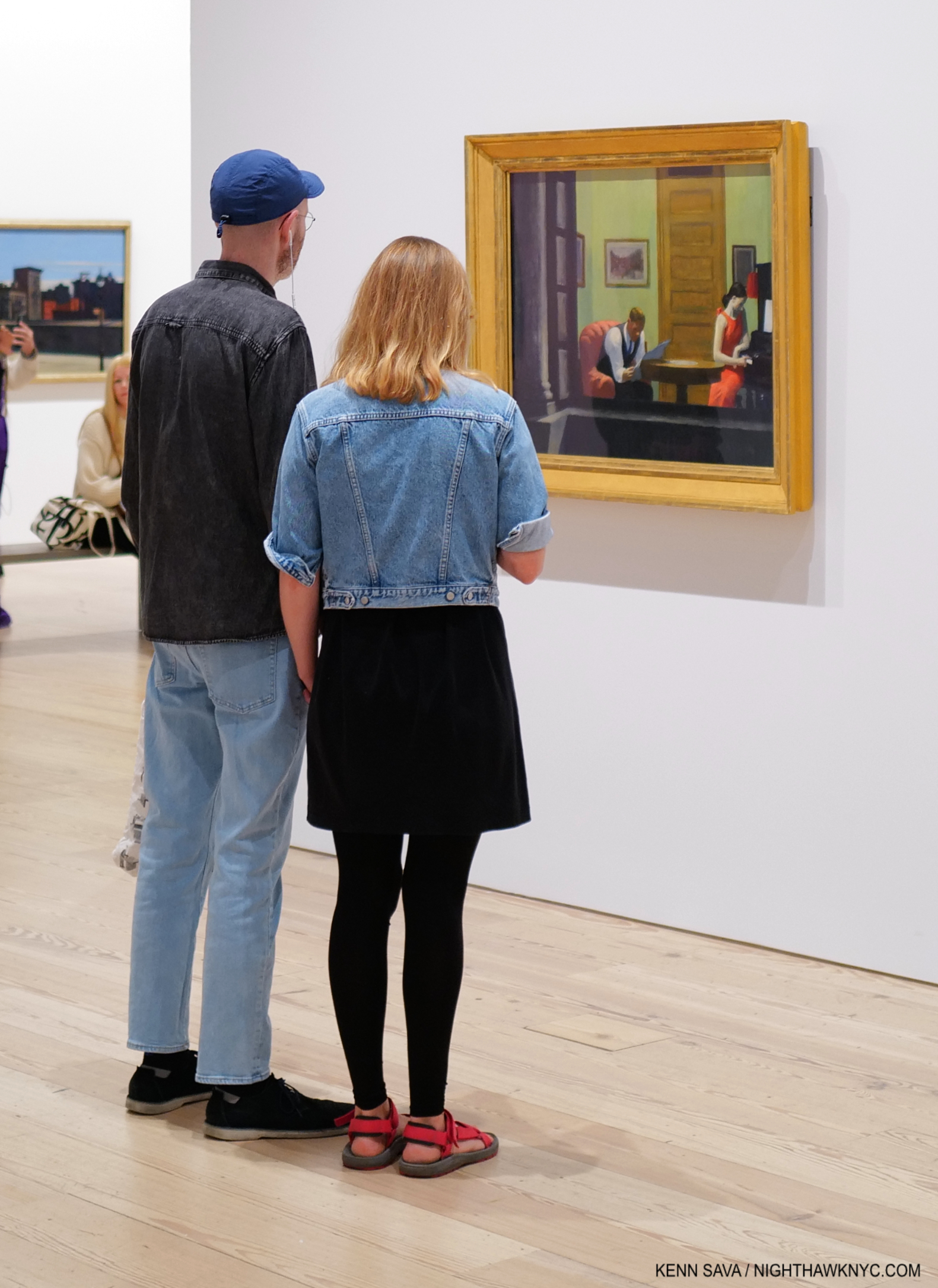
9)- “Edward Hopper’s Impressions of New York,” the first of 3 pieces on the show published May 5, 2023. Wait. Who else has written multiple pieces that look at different aspects of one show? Maybe someone else has. I haven’t seen it. That’s exactly what I did for the blockbuster Edward Hopper’s New York at the Whitney, AND for MoMA’s Ed Ruscha/Now Then.

Edward Hopper’s New York, October 27, 2022.

10)- “NoteWorthy Art Books of the 21st Century,” published June 10, 2025. This, and NW PhotoBooks, the two biggest pieces I’ve ever written, represent my sharing what I’ve seen and learned over the past 50 years I’ve spent looking at Art books, and almost a decade of intensively looking at PhotoBooks. Having begun them last September, right before I announced I was taking a break, they kept gnawing at me in a “You HAVE to finish these!” way. The Epics of Epics on this site, an immense amount of looking and consideration went into both pieces. Usually, I worked on up to 4 pieces at a time. I can’t imagine working on anything else in the 10 months it took to write these.
That makes me wonder- Has anyone else (any other single person) written a list of recommended 21st Century Art Books AND a list of 21st Century PhotoBooks?
The Introduction to both pieces is here.

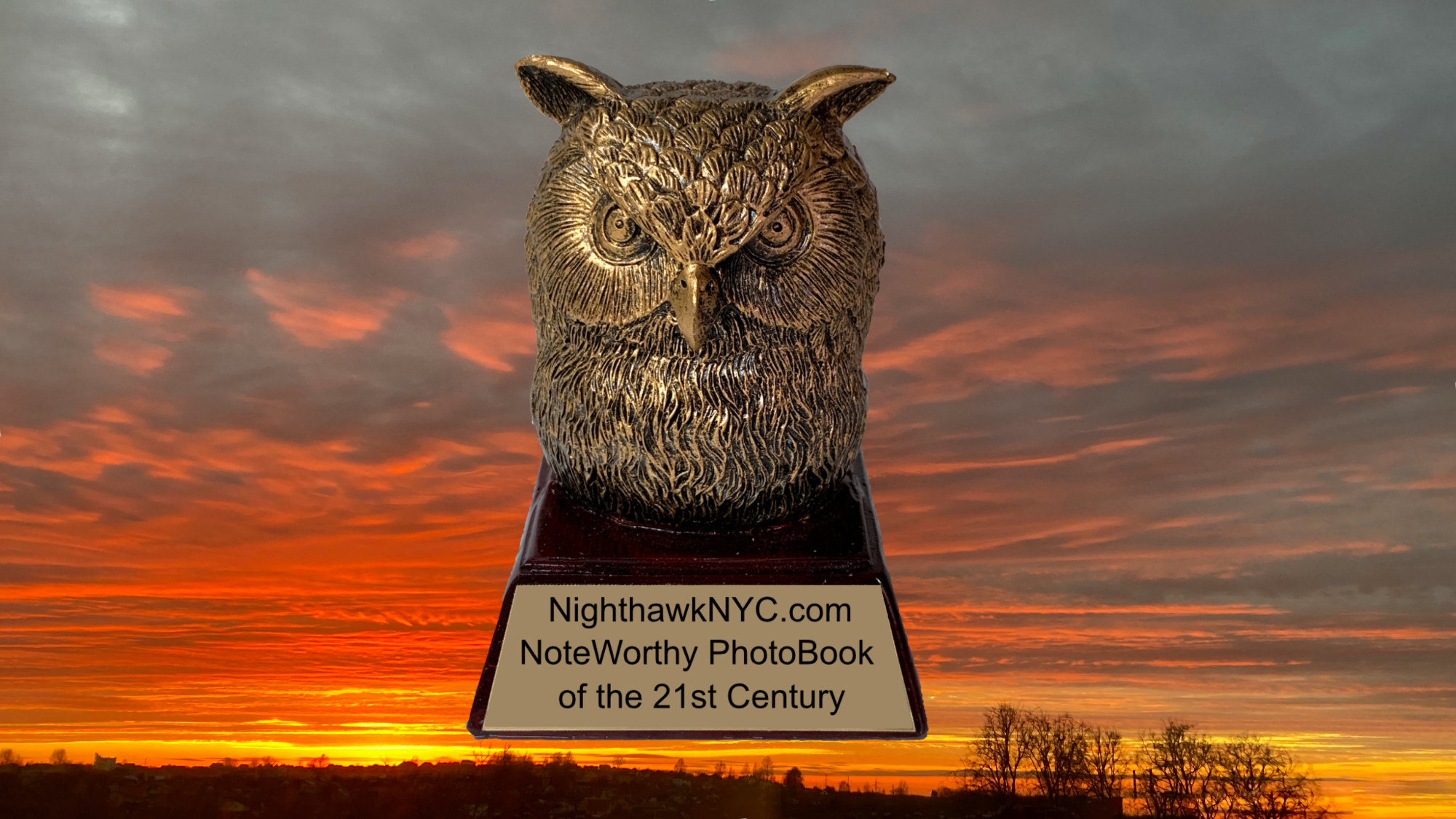
The “Golden Oof,” named for my Avatar.

11)- “NoteWorthy PhotoBooks of the 21st Century,” published June 25, 2025. Marks the end of my “deep dive” into Modern & Contemporary Photography that I began in December, 2016- There I just said it.
[A moment of silence.]
What did I learn from all of that? I stand by what I said here in 2019.
This “Painting guy” is going back to focusing on Painting. You heard it first.

NoteWorthy Sunset Photo by Lana Hattan.

Part 2- Where I’m Going

“Oh, won’t you stay
We’ll put on the day
And we’ll talk in present tenses”-*

1)- NighthawkNYC/Kenn Sava’s Art writing
I’m sorry to say that nothing has changed since I announced I was taking a break in September, 2024. There remains no means of support for independent Art writing. Surviving remains my #1 to #10 priority. I continue to work on the site remaining up. If something changes? I’ll let you know. 

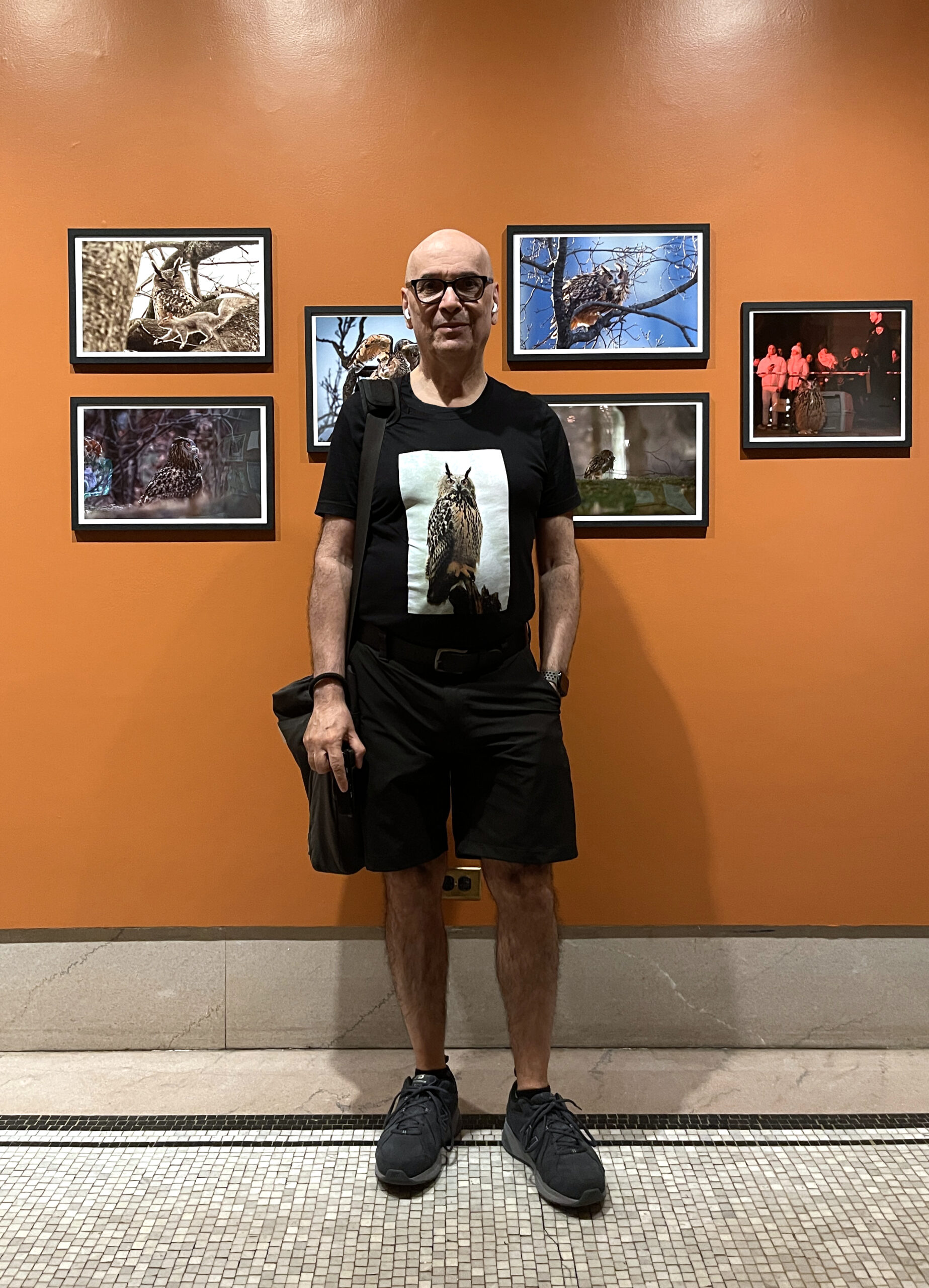
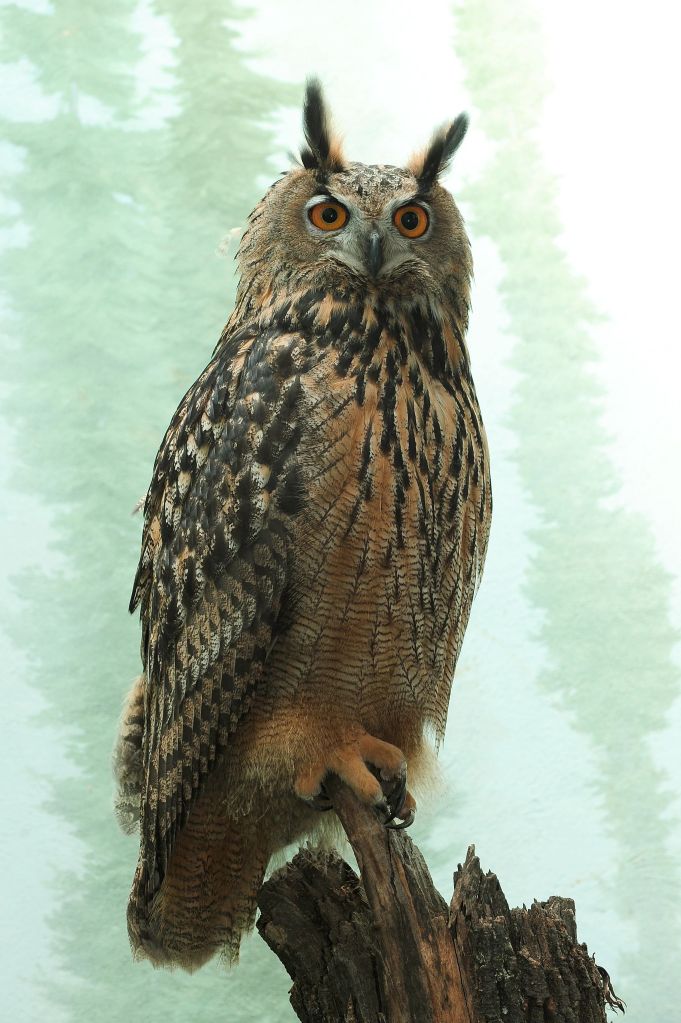
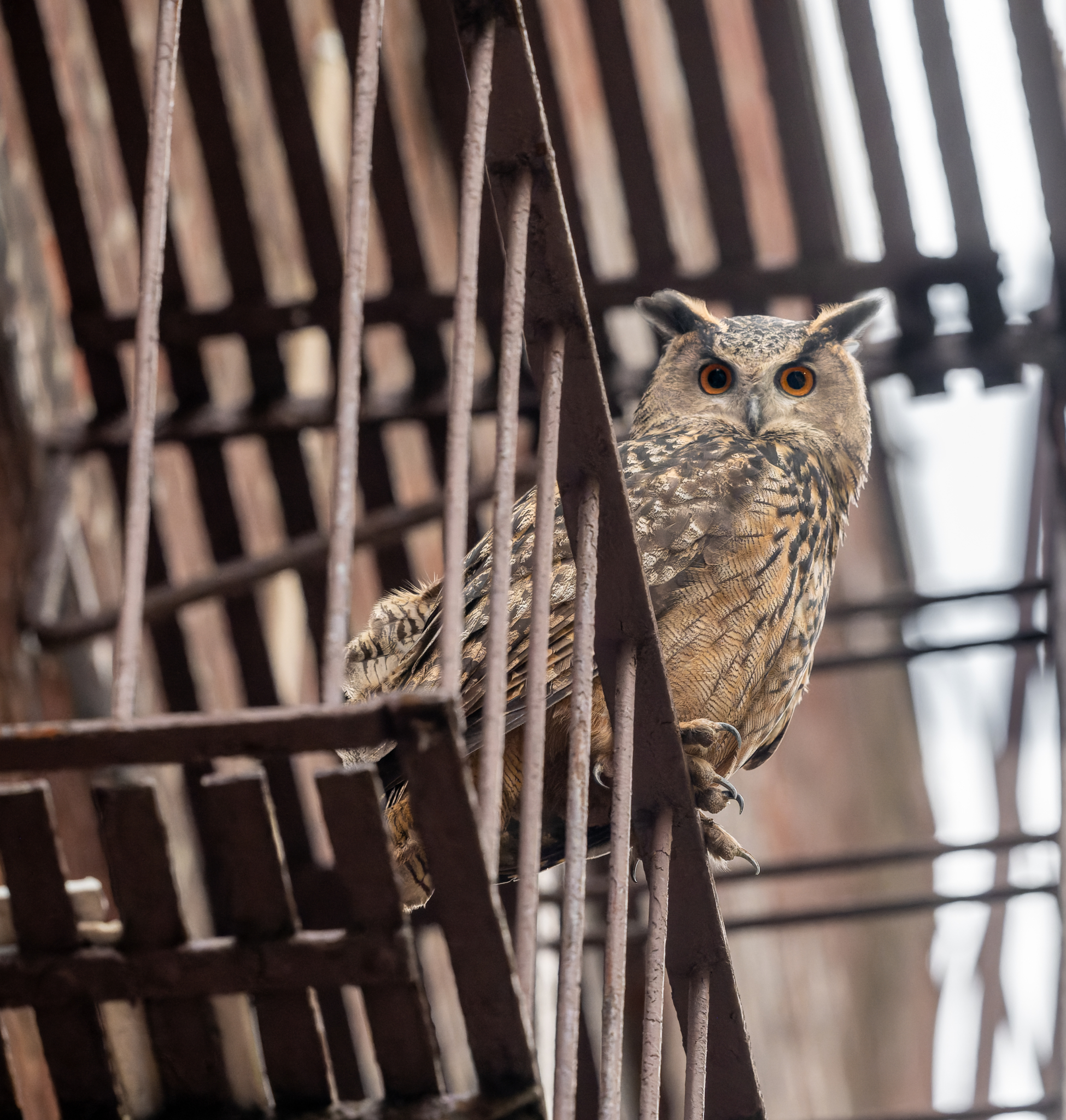
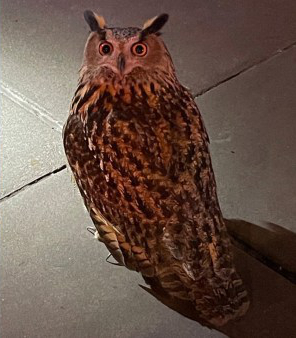
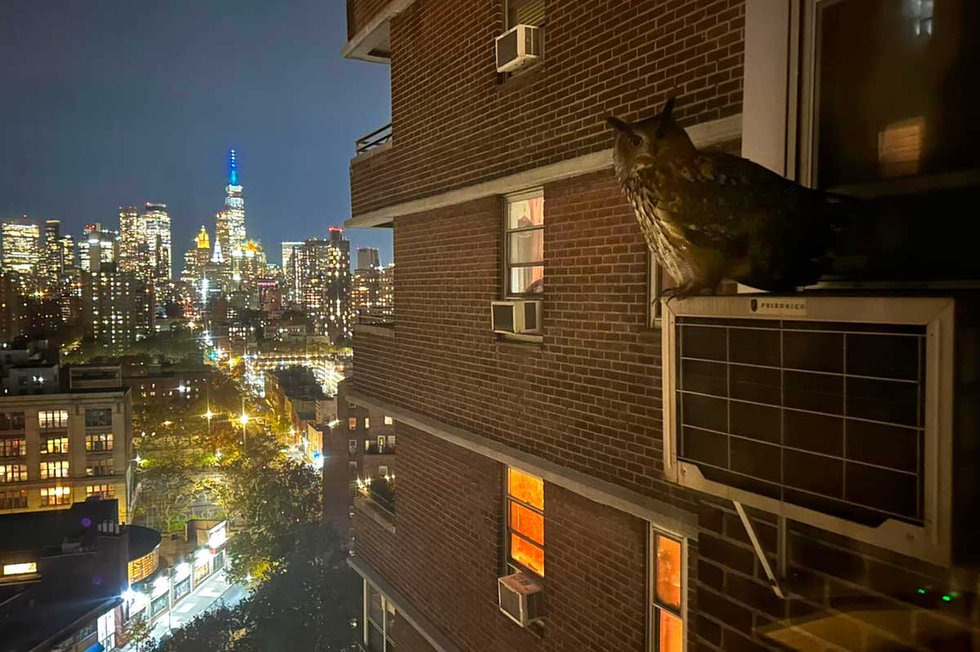
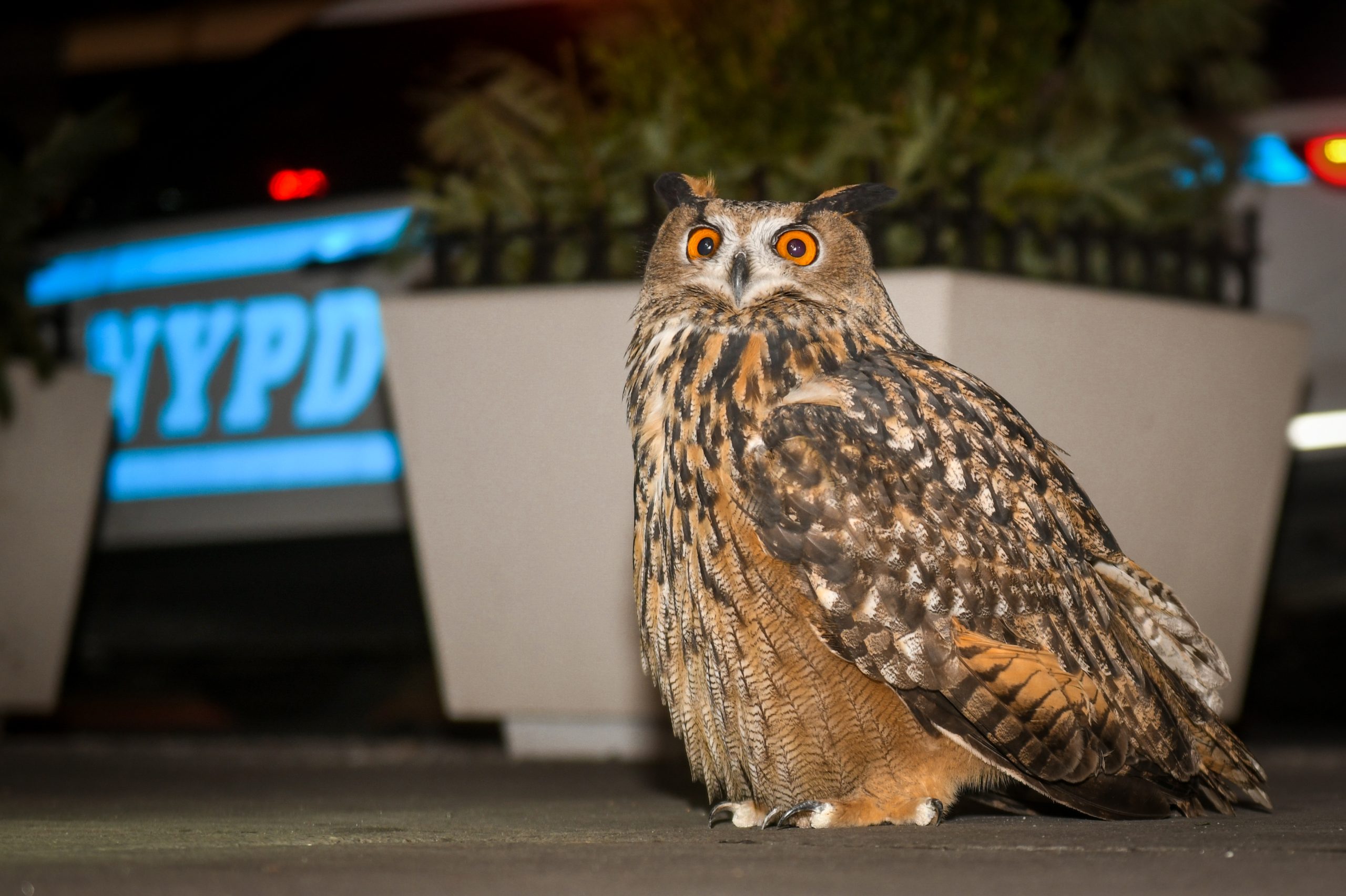
Flaco Lives! Kenn Sava at The Year of Flaco exhibition (in a Flaco T I had made last year), in front of a section of Photos of him early on in his freedom. The picture far right was taken right after he escaped from the Central Park Zoo. After never having been outside in his entire life, he suddenly found himself on Fifth Avenue & 60th Street! Maybe that’s why I’ve never seen a picture of him with his eyes so wide open. New York Historical, July 3, 2025. My piece on Flaco, written about a month and a half before his tragic demise, is here. My Thanks to Marybeth Ihle of the New York Historical.

2)- Kenn Sava, Producer
I’m hoping to re-release The Fuschia by Thomas Chapin, Peggy Stern, Drew Gress and Bobby Previte this year, and also finally release my solo album Strawberry Fields Forever.
Though I produced both projects, releasing and re-releasing them is not about me. Both were recorded in the mid-1990s, and, sadly, since then a number of the great Musicians who participated in them have passed away. I feel a sacred duty to them to get their work out there/back out there. Stay tuned. 

Coda- Before I “Go” Anywhere…
I started this site for one reason- To share what I’ve been lucky enough to see & experience in NYC and in Art & books with my fellow Art lovers around the world. I had a lot of passion, but no business plan.

While doing NighthawkNYC has been quite the financial hardship, I’m proud of the fact that readership has gone up each and every single year. Thank You to everyone who’s read one, or all, of my 350+ pieces here this past decade.

I especially want to Thank those of you who have made donations or bought pieces of my collections to help keep me going! For the rest of you, if you find, or have found, what I’ve done here since 2015 worthwhile, YOUR support is needed to keep this site up, and possibly, enable me to write more.

When the curtain closes
And the rainbow runs away
I will bring you incense
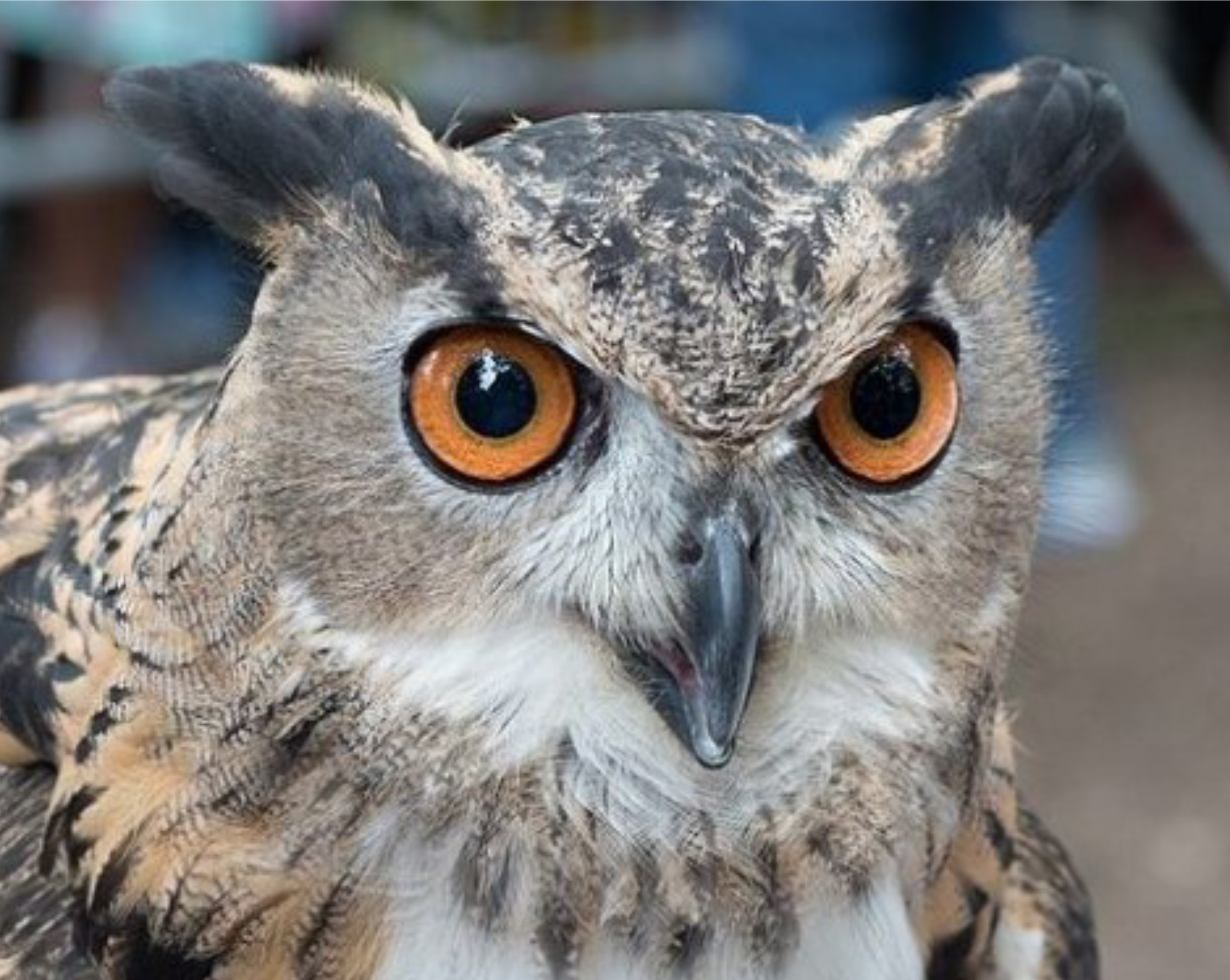
OWLS BY NIGHT (Caps mine ; ) )
By candlelight
By jewel-light
If only you will stay
Pretty baby, won’t you
Wake up, it’s a Chelsea morning”-*

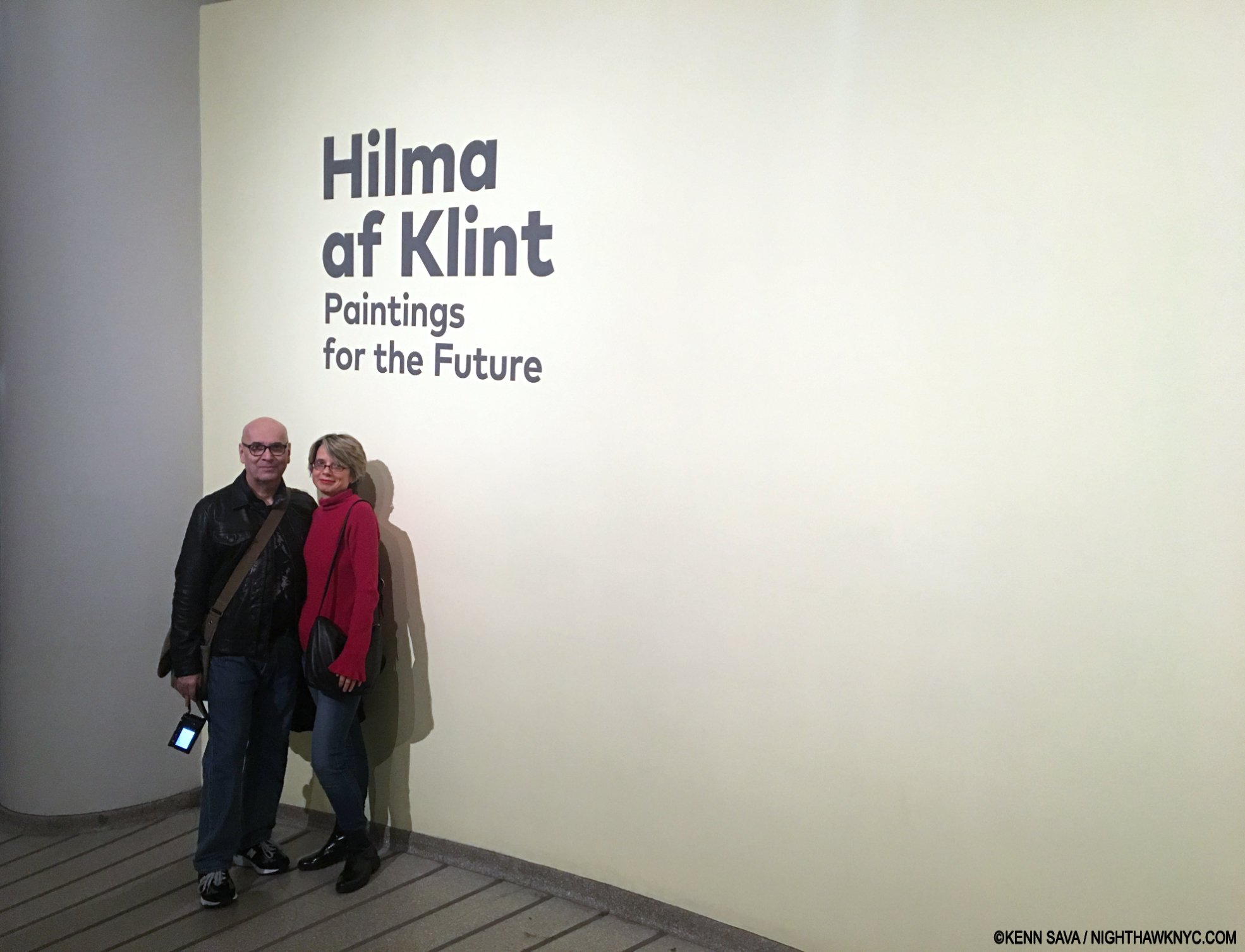
With Lana Hattan at Hilma af Klint: Paintings for the Future, the most recent show we’ve been able to see together at both of our favorite NYC building- The Guggenheim Museum. New Year’s Eve, December 31, 2018. My Undying Thanks to the woman who approached us and insisted she take our picture.

Finally, Thank You to Lana Hattan for pushing me to start writing about Art, and for your continual support through some thick and a lot of thin, every step of the way.
As I’ve said before, if you’ve found ANYTHING I’ve done here worthwhile, she’s the one who deserves your thanks.

As for me? I MADE IT TO 10 YEARS!
Kenn Sava.
July 15, 2025

P.S.- Feel free to drop me a line and let me know if I left out a piece you found particularly NoteWorthy.

For more- Check out my look back at “A Decade of NighthawkNYC.com Banners,” which have uncannily come full circle, here!

*- Soundtrack for this piece is “Chelsea Morning,” by Joni Mitchell, referencing her apartment 5 blocks from where I am writing this, and where I’ve written all of the 350+ pieces on NighthawkNYC. Joni moved here in 1967, before my time here, and proceeded to write a number of her early songs here. Just another of the Legends who’ve lived in my neighborhood, like Patti Smith. She performs it here in 1969-


NoteWorthy Art Books of the 21st Century by Kenn Sava

There are NO ADS or Affiliate Links in this piece!
If you find it worthwhile, PLEASE donate securely via PayPal so I can continue writing. You can also support me by buying Art & books from my collection. Details at the end.
Thank you.

BookMarks Special. The “Introduction to NoteWorthy Art Books & Photobooks of the 21st Century” is here.

Written & Photographed by Kenn Sava
(*- unless otherwise credited)

What’s a NoteWorthy Art or PhotoBook? As I’ve explained here, I don’t believe such a thing as “best” exists in the Arts, in comparing Artists, works of Art, or books. Whatever criteria you use is subjective. So, I’m using “NoteWorthy” to denote books I feel are important; books that more people should know about and consider adding to their libraries. Therefore, the following are my most highly recommended Art books among all those I know about published thus far this century.
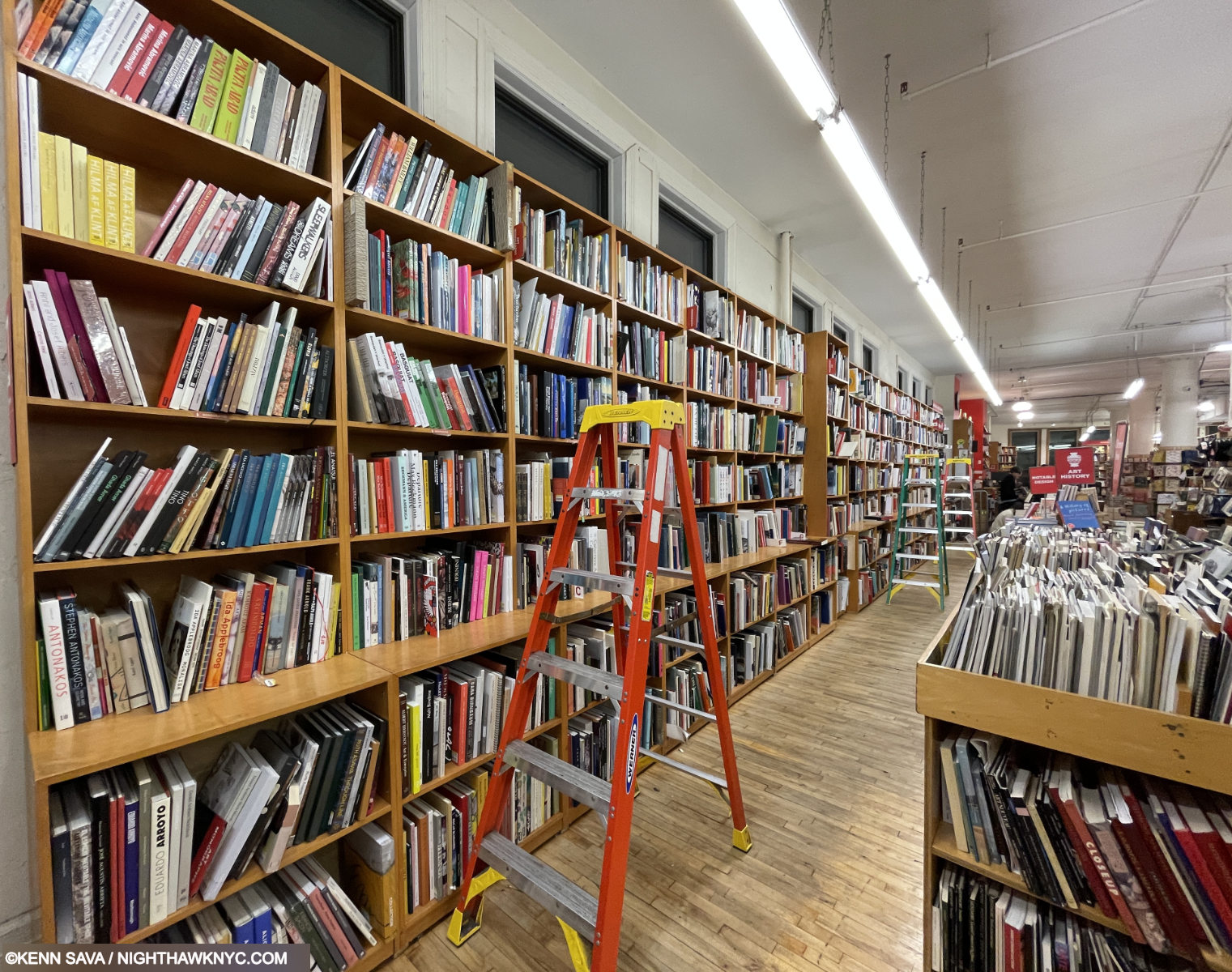
Welcome to my world. While I see shows as often as I can, I’m in bookstores much more often. Seen in January, 2025, The Strand Bookstore has an excellent selection of new & used Art books. Here, Art monographs are shelved along the wall to the left by Artist’s last name- “A,” left, to “O,” next to the third ladder (about 1/3 of an entire City block down). Your mission, should you decide to accept it- go through these and choose 50, or so, published this century as NoteWorthy- about two books a year. When you get to that third ladder, you’re half done! (In case you’re wondering, PhotoBooks are elsewhere.)

Though the research has been ongoing, unfortunately I no longer have the time to write the kind of pieces I have here for 9 1/2 years, so this piece took longer than it would have. Still, some books lack pictures, and there are no ISBN numbers- sorry. You should be able to locate the listed books by title, publisher and date of publication (i.e. of the first edition) included. The books are listed in no particular order. Note- If anyone else has done such a list, I haven’t seen it.
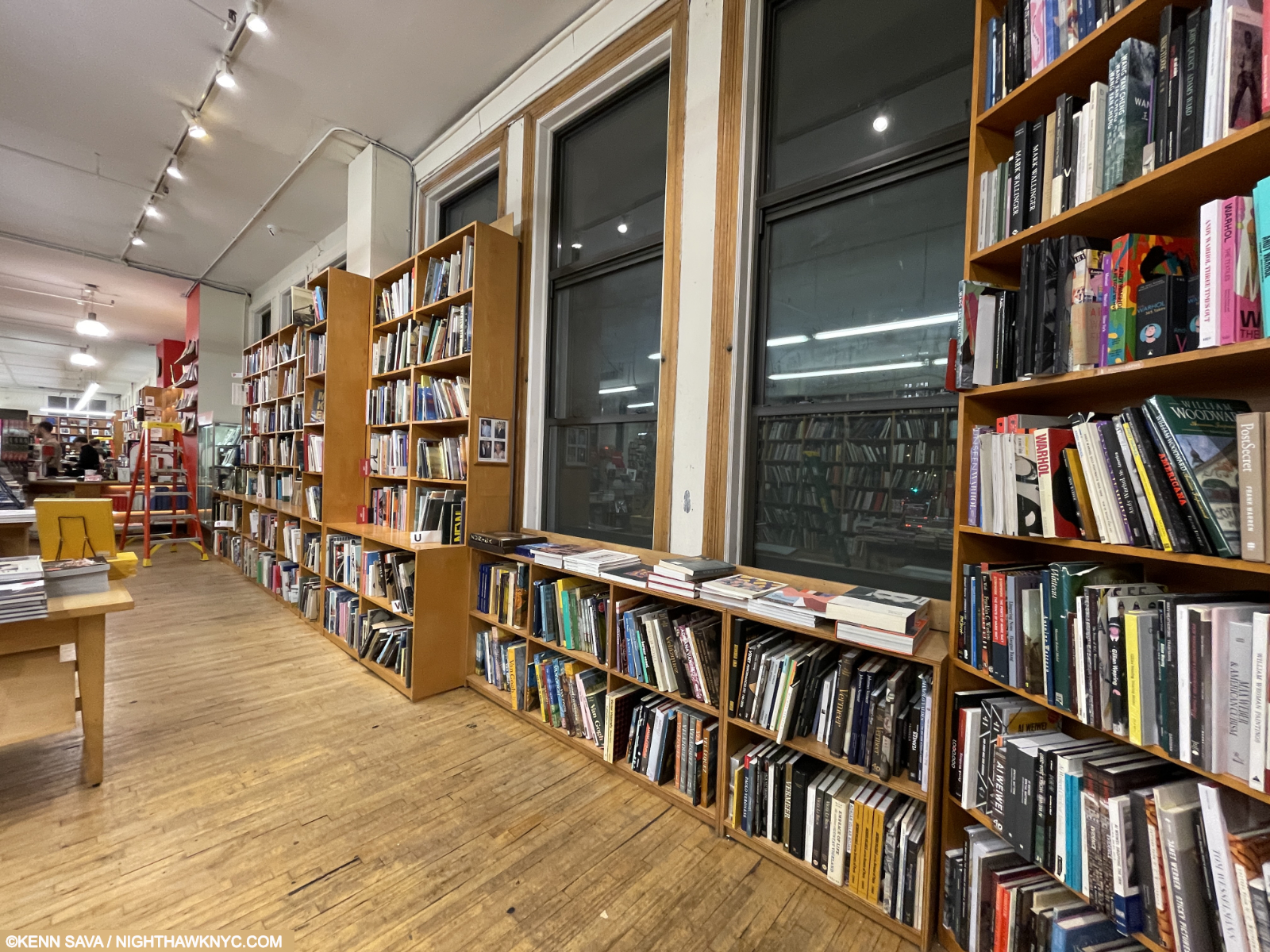
Further down the wall are Art monographs shelved by Artist’s last name- “P,” left by ladder, to “Z” immediate right. Take a break ’cause you’re not done. PhotoBooks await! My list of NoteWorthy PhotoBooks of the 21st Century follows this piece.

What am I looking for? Great Art, alone, isn’t enough to qualify. Why not? Over time (in my lifetime in particular), Art books have gotten better and better on all counts from the quality of the reproductions, to the paper (the proliferation of acid-free paper and the incredible range of paper now available), the materials used in bookmaking, to the entire process of printing. So, great work in a great book, sums up the books I’ve listed here. A “great book?” Insightful & informative- with, or without, essays. Design that doesn’t get in the way, and hopefully adds to the presentation. Excellent production (design & layout, paper, binding, covers, finish), and of course, high-quality reproductions in a useful size, or larger. Let’s face it, in the end, virtually all Art books are PhotoBooks since they contain Photographs of the Art. Price is a consideration for most (me, too!), but it’s not a consideration for a book making this list. Finally, in spite 25 years of looking this century at and living with Art books, and 6 months of work that has gone into this piece, I have no doubt I missed at least one.
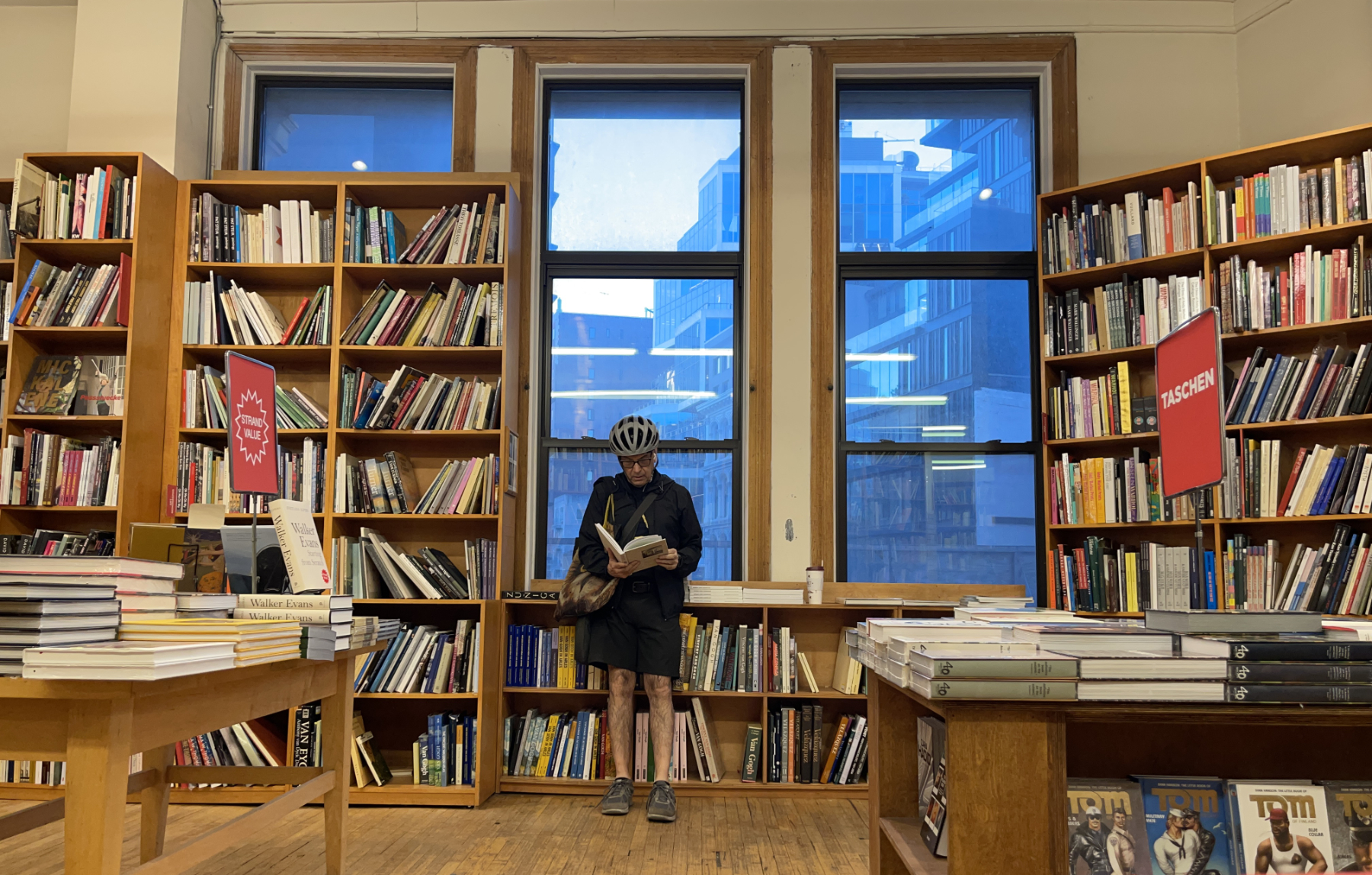
Hard at work. I started this piece in September, early fall. I finished it six months later in early spring. My thanks to a new friend I had a book discussion with only to get home and find this in my inbox. Strand Bookstore, April 15, 2025.  *-Photographer’s name withheld by request.

If you find this piece worthwhile, I NEED YOUR HELP! There are no ads or affiliate links in this piece! Imagine THAT in 2025! So please donate securely via the Paypal link above if you discover a book here, or you find this piece useful. Oh! And NO ONE has given me any of the books on this list!

NoteWorthy Art Books of the 21st Century-
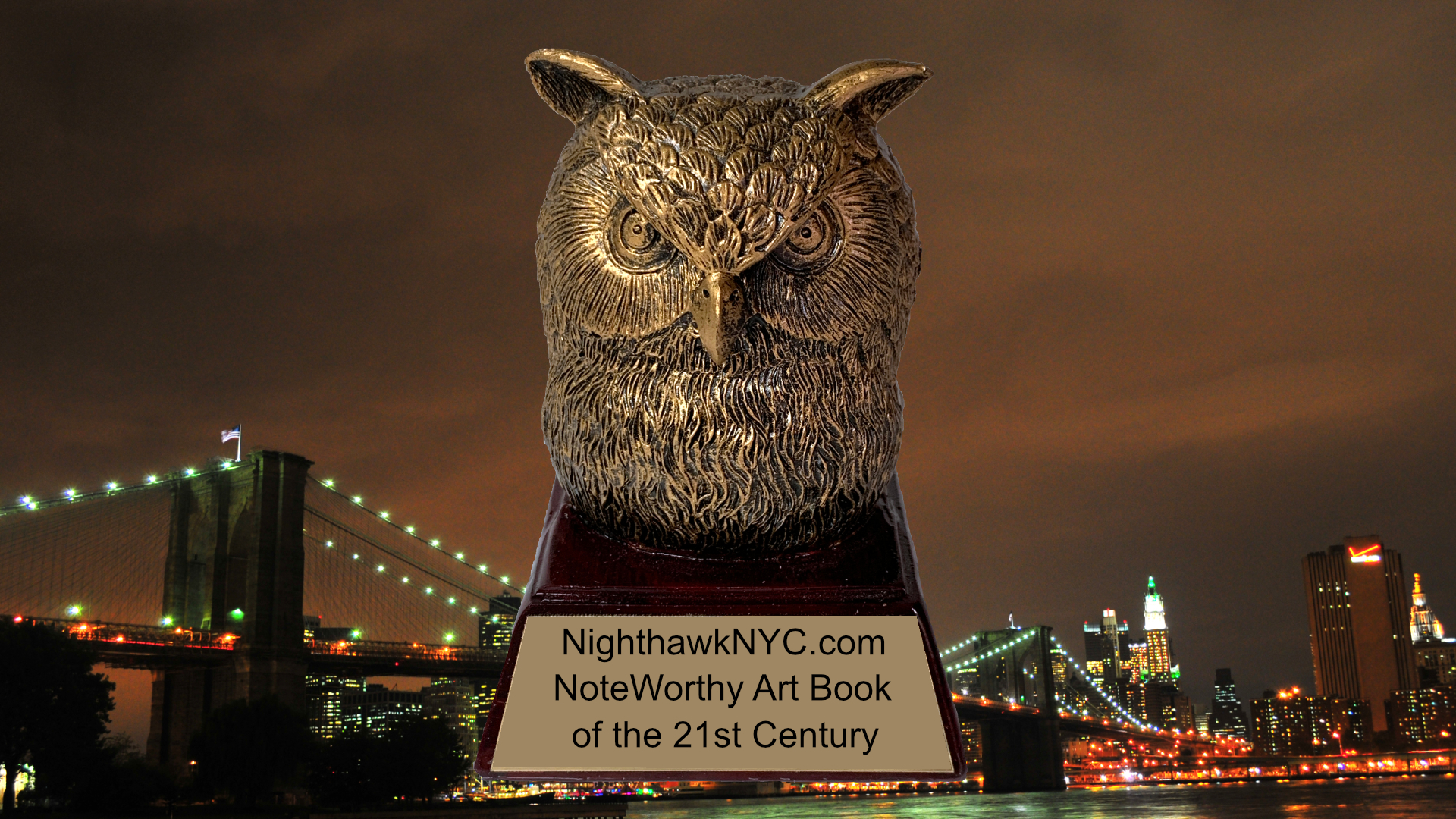
The “Golden Oof,” named for my Avatar perched in front of Brooklyn Bridge. Note- If you are listed below and would like a Golden Oof Statuette, please contact me via the link at the end for info.

Format= Artist, Title, Publisher, Date published- Kenn’s comment. (NoteWorthy books are also in bold type in the body of the piece to distinguish them from other books I mention.)
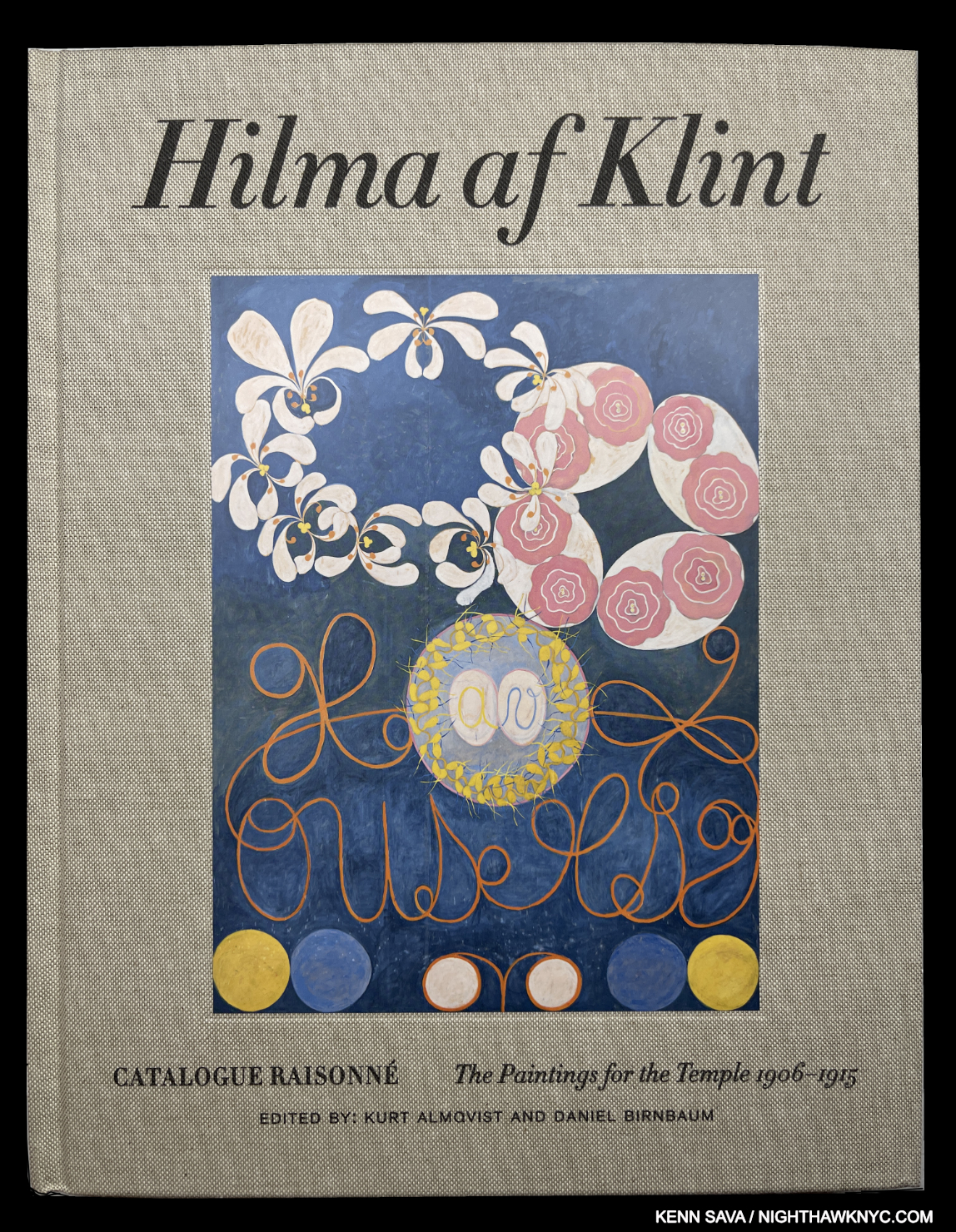
Hilma af Klint, Hilma af Klint Catalogue Raisonne, Volume II: Paintings for the Temple, Okförlaget Stolpe, 2023 and
Hilma af Klint: A Biography by Julia Voss, University of Chicago Press, 2022
A 100+ years in the making overnight sensation, after 500,000 people joined me in 2018 in seeing the unforgettable Hilma af Klint: Paintings for the Future in Frank Lloyd Wright’s Guggenheim Museum Rotunda, the most people ever to attend a show there(!) in what was a brilliant paring of two visionaries. This led to an explosion of Hilma books. Of these, the 7-volume Hilma af Klint Catalogue Raisonne, published by Okförlaget Stolpe in 2023, will remain definitive henceforth, but it’s overkill for most. So, from the set, since they’re all available individually, Volume II: Paintings for the Temple is my choice as a Noteworthy Art Book of the 21st Century (thus far). It contains all 190+ of her Paintings for the Temple series, which she felt were her “most important work.” There are no essays and only a 2-page overview; it’s beautifully produced with large illustrations, and can be had quite reasonably as I write.
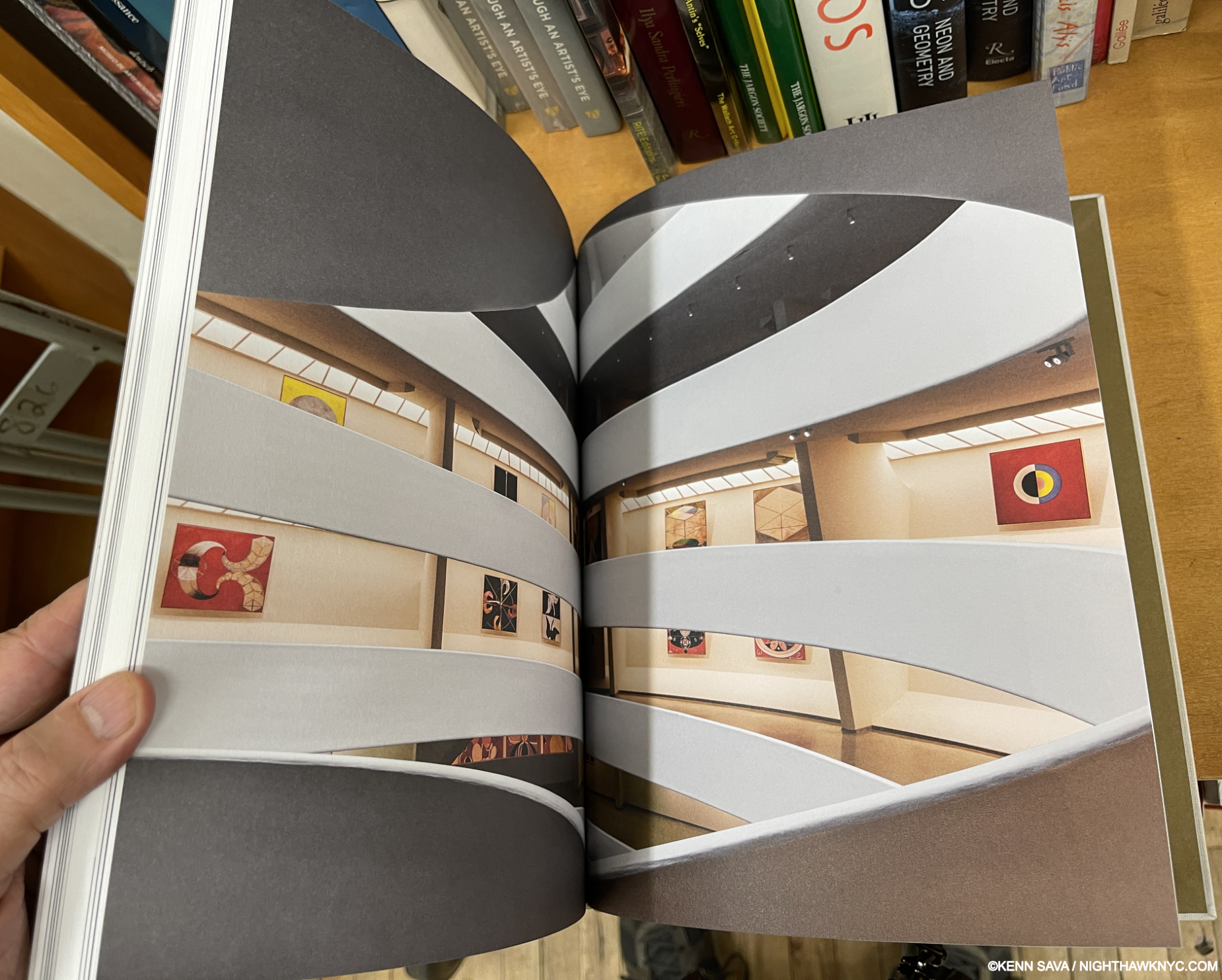
Installation view of the unforgettable blockbuster/landmark show, Hilma af Klint: Paintings for the Future,  2018, as seen in the Guggenheim’s catalog of the same name. When I stood on this spot at the show I felt that Wright’s Guggenheim was, perhaps, the perfect extant place to install her work.

While I’m on the subject of Hilma, among books on her work (though not included on this list), the best one-volume overview, in my view, is a toss-up between the Guggenheim’s Paintings for the Future catalog for that 2018 show, which reproduces everything that was in it, save 3 works by my count, and the more expansive Hilma af Klint- Artist, Researcher, Medium catalog published by Hatje Cantz in 2020 with 227 images (versus the Guggenheim’s 165, by my counts). I find the Guggenheim’s Paintings for the Future more concise and it gives those that missed the show, their bast chance to get a sense of it. The Hatje book is more comprehensive, with mostly smaller images, though I prefer its essays. Either one will provide a good introduction and leave a good deal to ponder well into her future.
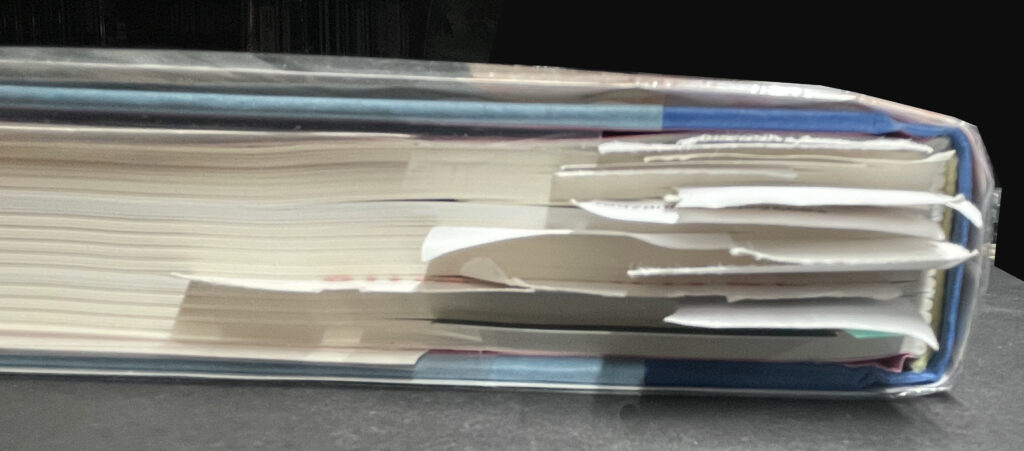
My copy of Julia Voss’s Hilma after Klint.

Julia Voss’s Hilma af Klint biography (the only one so far) is engrossing for someone new to Hilma, and riveting for anyone with a real interest in her,  Make that “a real interest in her work,” because though the Artist left 22,000 pages of writing, NONE of them are about her personal life! Her love life? We don’t know. What her daily life was like? Forget about it.. Yet Julia Voss has done a terrific job of following her trail and digging into her archives (with the cooperation of her foundation) to create a meticulously researched picture of Ms. af Klint’s life and time. Being the first biography on a great Artist brings with it a lot of pressure. Yet, Julia Voss’s book has already been accepted by every museum staff member who’s writing on Hilma af Klint has passed in front of me in the barely 3 years its been available, as their footnotes reveal. For the rest of us, she’s created an extremely accessible, down-to-earth book (aided by its wonderful English translation by Anne Posten), no mean feat considering the rarified air to be found in that realm where the spirit world meets ours (if it does) that many of Hima’s projects, and the Artist herself, inhabited. Essential.

Also Sprach Zarathustra, as heard in 2001, is playing somewhere…*- Estate of Francis Bacon Photo because I don’t own a set, though if someone would like to gift me one…

Francis Bacon, Francis Bacon Catalogue Raisonne, The Estate of Francis Bacon, 2016
Upon publishing this astounding set in 2016, the Bacon Estate said 8 words that sent a chill down my spine. “Once sold out, it will never be reprinted.” In 100 years, or whenever it’s sold out (which will, no doubt, come first) this set will be living in light, climate & humidity controlled cases among the most important Art books ever published. Still available as I write, at 35 pounds, find a VERY strong shelf for it, and TAKE CARE OF IT. (Support the spines and handle it with gloves on. Seriously.) Word. 
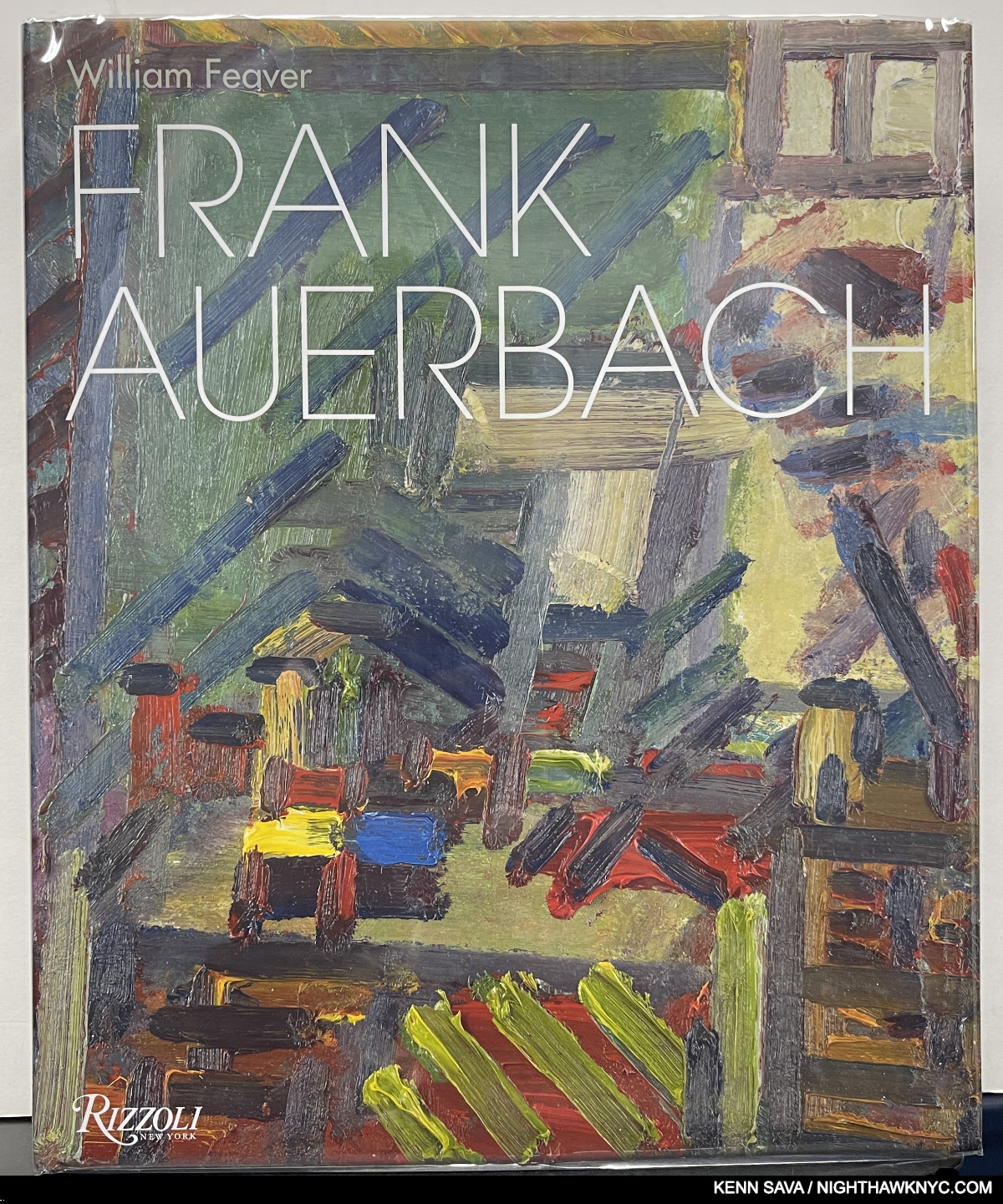
Forging a new path for Portraiture in the 21st century.

Frank Auerbach, Frank Auerbach: Revised and Expanded, Rizzoli, 2022
Francis Bacon’s contemporary and fellow Londoner, I shake my head in disbelief over HOW I didn’t see the Art of the late Frank Auerbach, who passed away at 93 in November, sooner than when I first saw this book. What was I doing? Obviously, I just didn’t get out enough as I missed two stunning and important recent Frank Auerbach shows at Lurhing Augustine here. As a result, Frank Auerbach: Revised and Expanded hit me like 432 thunderbolts, one for each of its pages. I just kept muttering “I can’t believe it….” as I went through it the first time until the customers around me at Pret A Manger were ready to call 911. I assured them I was just having one of those “moments of future regret” the infomericals incessantly warned me about. “CLAP ON!” Now, I know that Frank Auerbach was not only one of the major Artists of the 20th century, he’s one of the first major Artists of the 21st! Here you can see more of his work (in a whopping 1,200 images- 300 more than the 2009 original edition!) than you’re ever likely to see anywhere else. A desert island book.
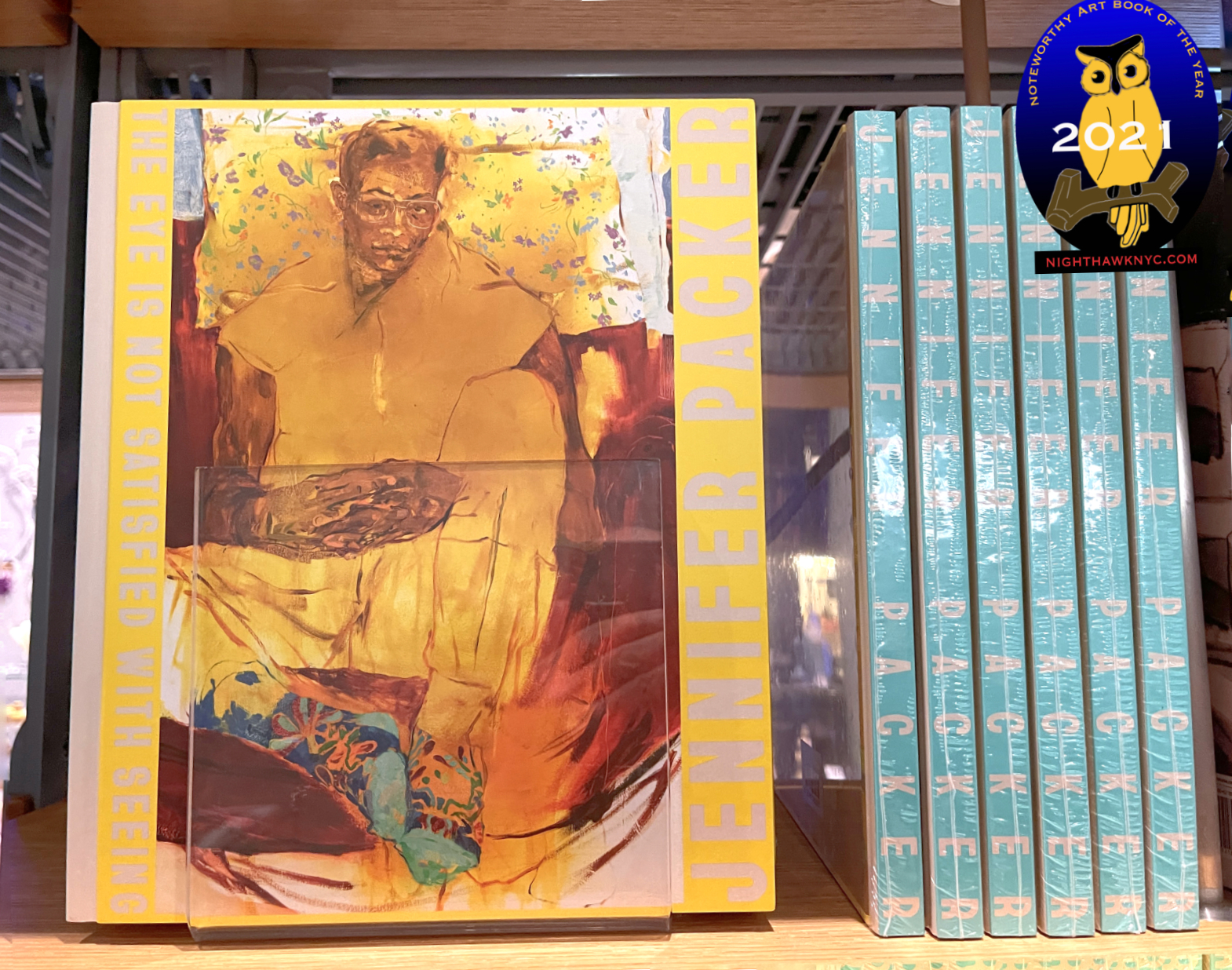
The incredibly rare Jennifer Packer- The Eye Is Not Satisfied With Seeing seen in the Whitney’s Bookstore on the show’s opening day. It’s highly unlikely you’ll ever see this many copies of this book in one place again. With my NoteWorthy Art Book, 2021 designation.

Jennifer Packer, Jennifer Packer- The Eye Is Not Satisfied With Seeing, Serpentine Gallery, 2021
Perhaps THE overnight sensation of the decade thus far (along with her friend, Jordan Casteel), rocked me as much as it did just about everyone else who saw her traveling show of the same name. My piece on the show documented the ever-increasing crowds as the show’s run here went on. I “got it” on a member’s preview and immediately bought the book. It disappeared as quickly as any Art book has this century and currently goes for $500 in Very Good (VG) condition. Beautifully done on all counts, it’s an instant classic. Nothing has been seen of Jennifer since. Will its promise lead to Ms. Packer securing a place as one of the world’s more important living Painters? The world waits, and watches…
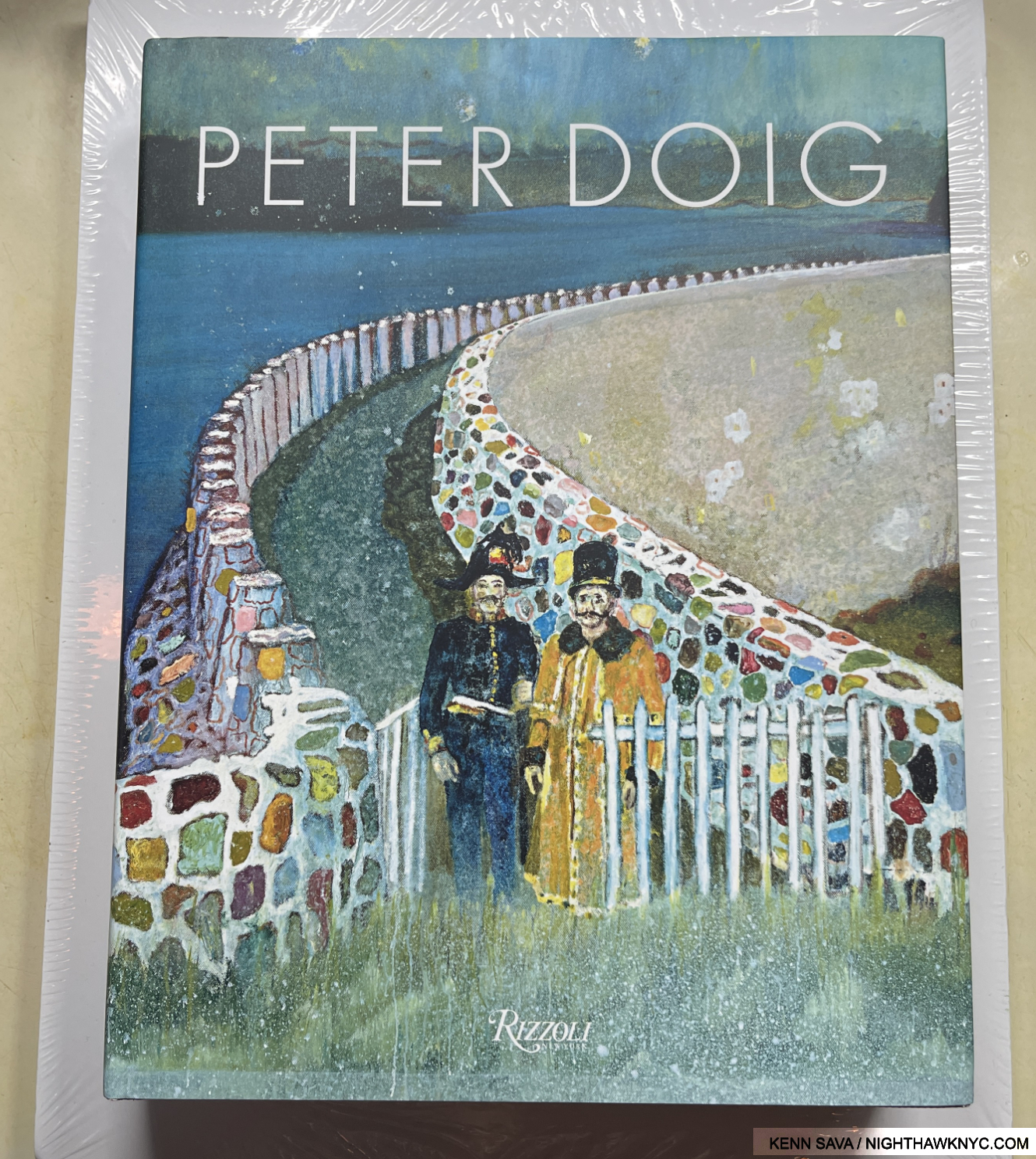
Peter Doig, Peter Doig, Rizzoli, 2017
The most comprehensive of the books published on the Scottish Painter who has made his mark working in other places, including Canada, to stunning effect. The first of three books on this list that are either authored by, or include an essay by (as this book does), curator & historian Catherine Lampert, the only non-Artist (as far as I know) who makes three appearances here. The second of six Rizzoli books on this list, this one features a “rule-breaking” design (unsurprisingly, in collaboration with the Artist). Most of the Art is pictured in landscape format to keep them from going over the gutter. This requires the reader to turn the book sideways! The customer reviews I’ve seen have been, surprisingly, uniformly approving of this.

As for the work itself, born of, and steeped in memory (a bit like Mohammed Sami’s work), I agree with Richard Shiff, who writes on page 357, “Doig’s art leaves memory caught between versions of itself: memory in formation, memory fading in and out. We will think that we remember whatever reality his pictures shows, but the picture itself- ‘through the materiality of pant and the activity of painting’- induces the sense of reality remembered, an abstraction of a memory already abstract.”

Eight years old, already, I’d guarantee an updated edition at some point, if I was a guaranteeing man. Still, with 432 pages in this one, there’s more than enough here to keep anyone busy for a while.
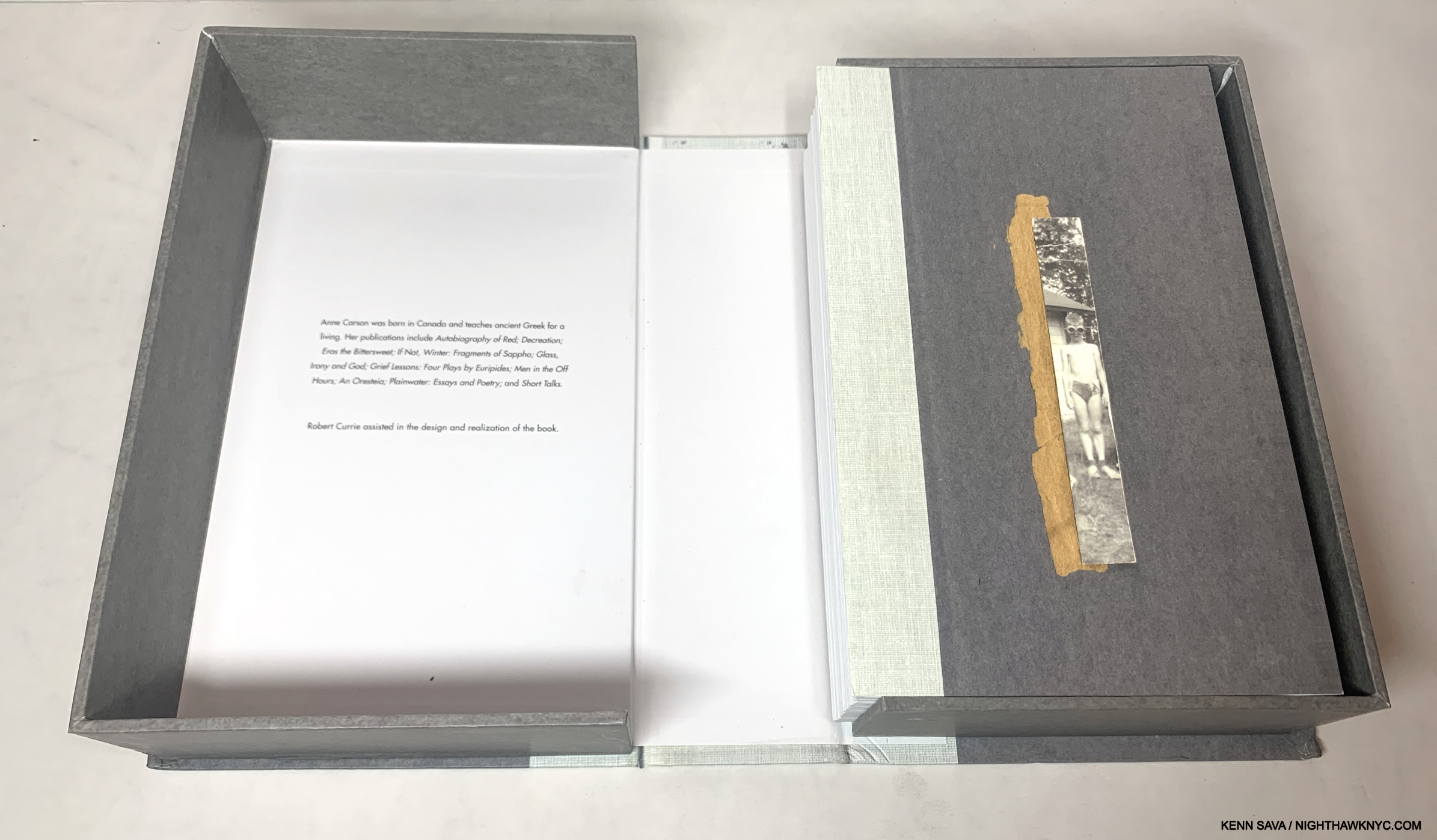
Nox, after opening the box it comes in. We should all be so lucky to have an epitaph like this.

Ann Carson, Nox, New Directions, 2010
The most unique book on this list didn’t start out as a book, or “Art book,” per se. Of it, the world-renowned Poet, Ms. Carson, says on the back cover- “When my brother died, I made an epitaph for him in the form of a book. This is a replica of it, as close as we could get.” Ms. Carson’s tribute is an accordion-fold-in-a-box multi-dimensional multimedia tribute that moves quickly beyond Poetry into the realm of Art, in my view. A personal tribute not conceived for the mass market, it’s the most personal and the closest book to a true “Artist’s book” on this list. While, for me, it helps shine a fond light on many aspects of loss, even for the rest of us who never met Nox, his book serves as a repository of memories, and through them, a powerful portrait of the man emerges, leaving him someone who will never die as long as copies of his book survive.
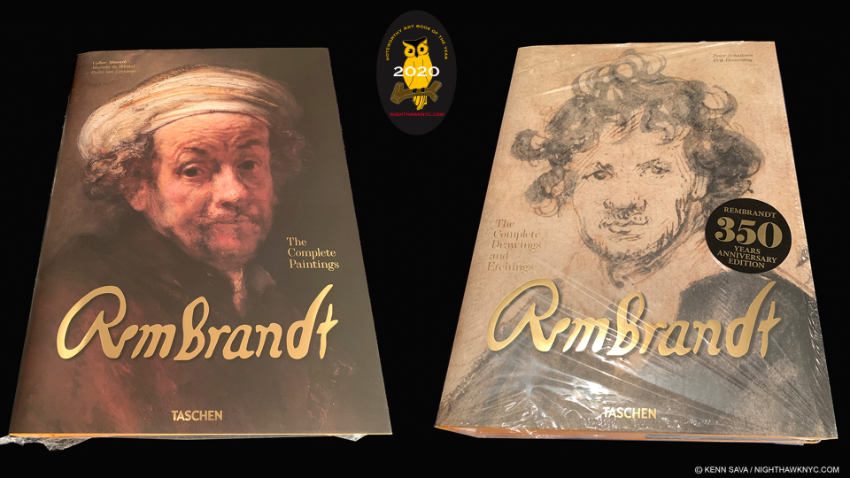
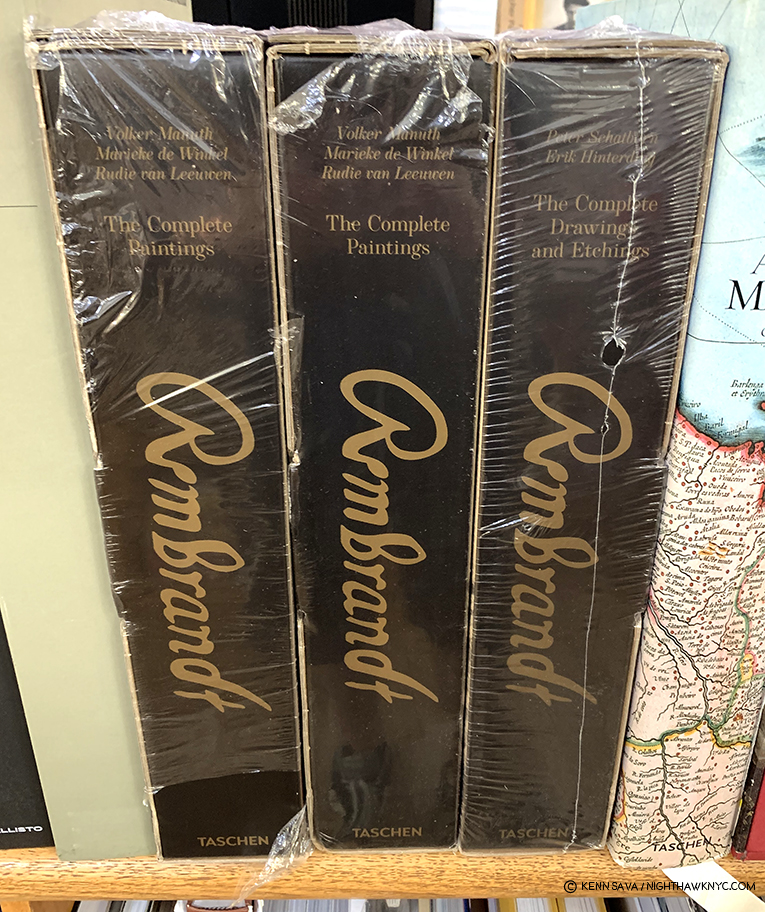
Rembrandt: The Complete Pantings XXL, left and The Complete Drawings and Etchings XXL, right. Fifteen pounts- each! With their NighthawkNYC NoteWorthy Art Books of 2020 designation.

Rembrandt, Rembrandt: The Complete Pantings XXL, 2019, and
Rembrandt: The Complete Drawings and Etchings XXL, 2019, and
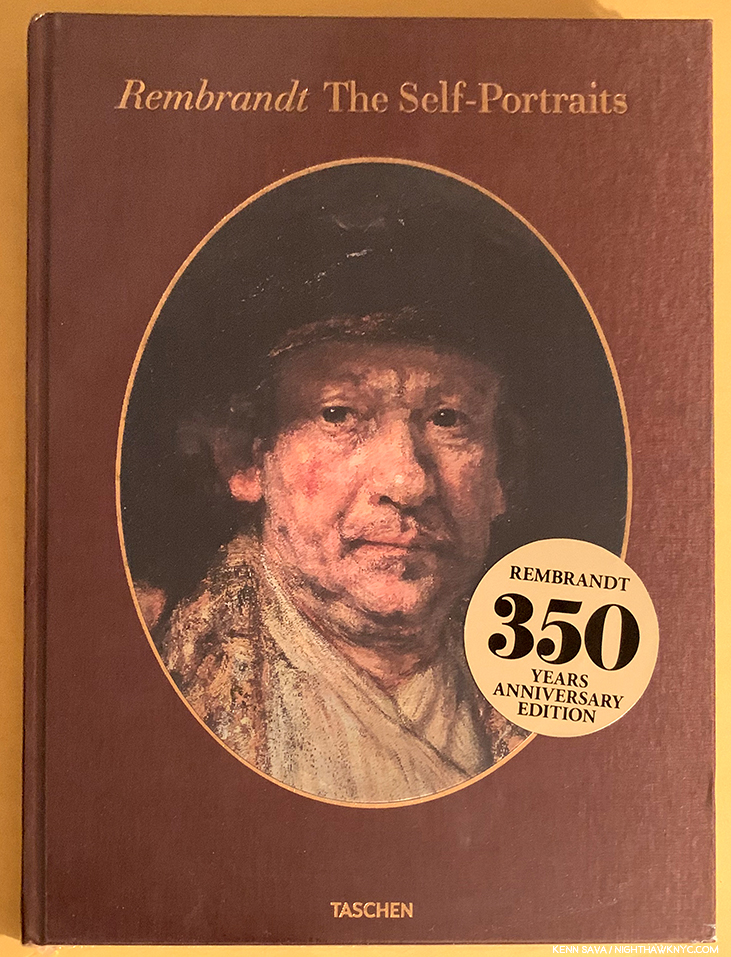
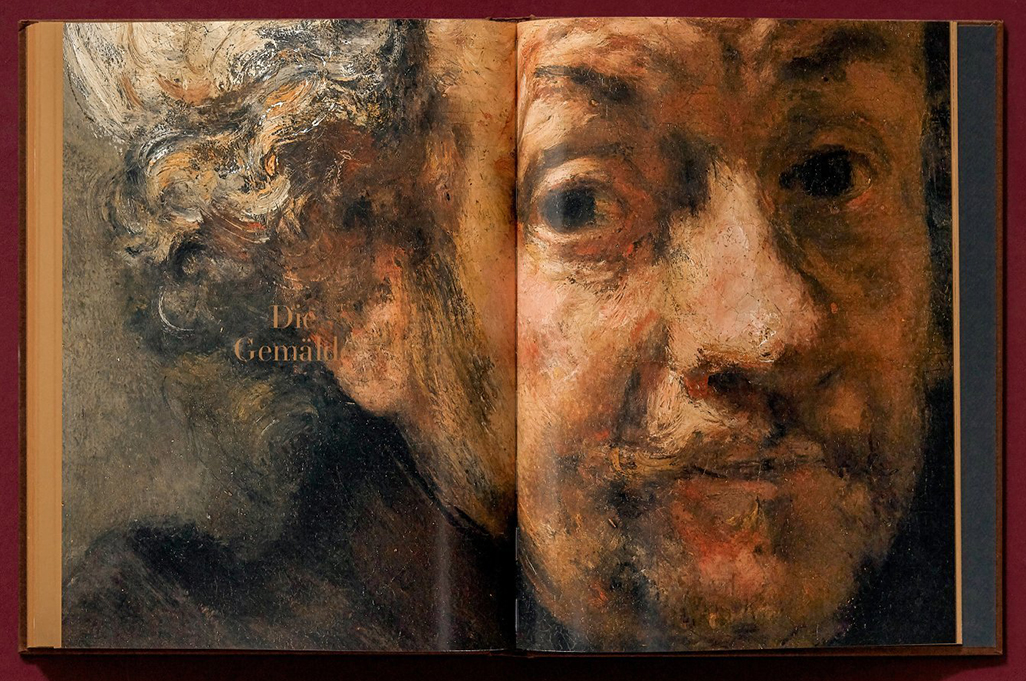
Rembrandt: The Self-Portraits XL, 2017, or “Mini Brick,” 2023, all Taschen, and
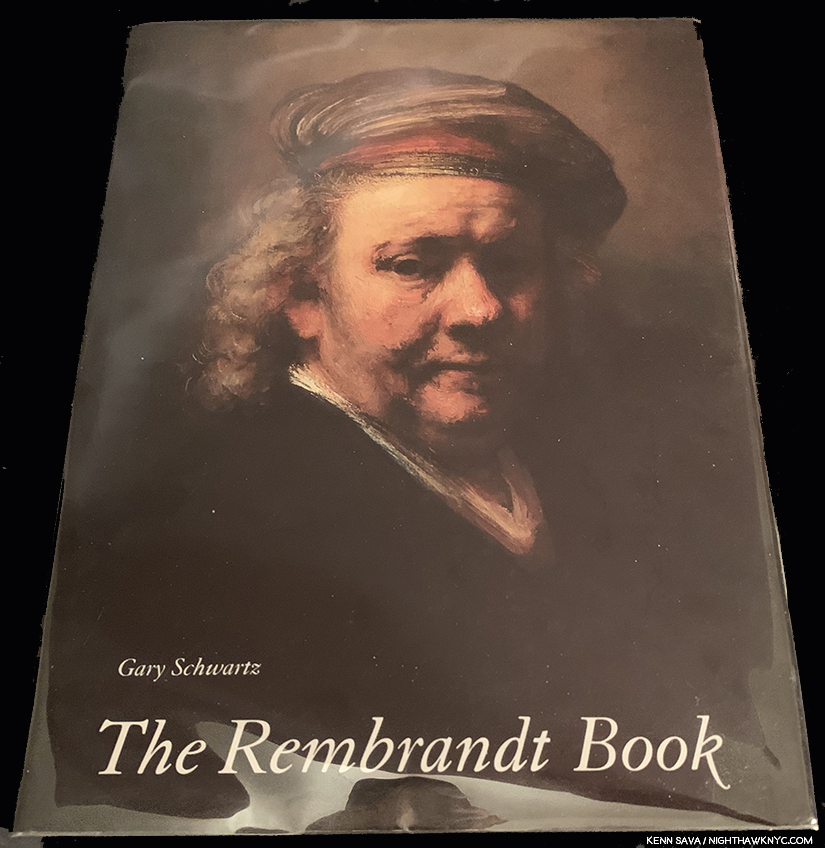
The Rembrandt Book, Gary Schwartz, Abrams, 2006
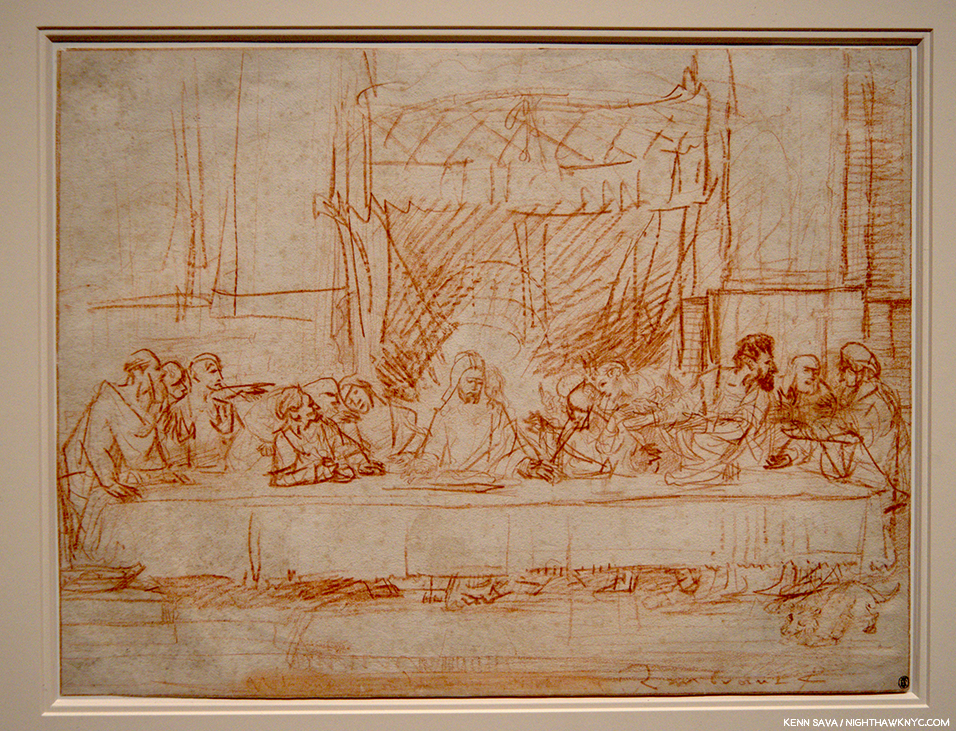
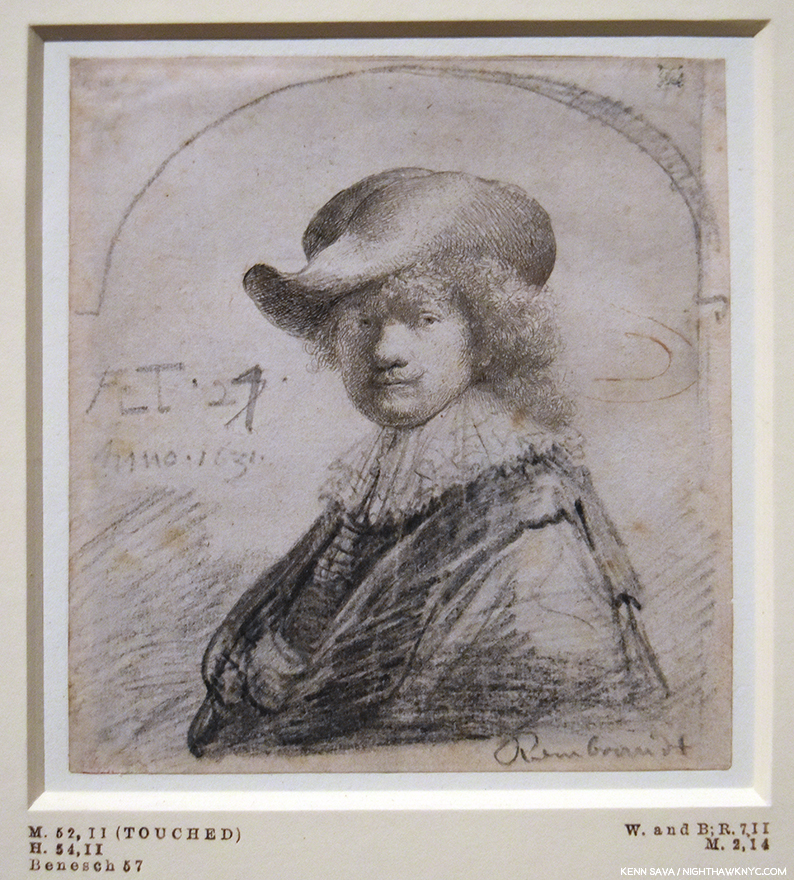
In the early 1970s, Bob Haak’s classic Rembrandt: His Life, His Work, His Time, with its tipped-in color plates, was the first Art book to show me the possibilities of a truly comprehensive Art book. All these years later, and leaving aside the fact these books “celebrate” the 350th Anniversary of the master’s horribly sad death, I was one of those waiting with bated breath for the release of Taschen’s Rembrandt: The Complete Pantings. And wow, what a book! While each work is beautifully pictured, exactly WHAT deserves to be included in The Complete Pantings (i.e. exactly which Paintings are from Rembrandt’s hand) will be the subject of heated debate until the next edition. Twas ever thus. Published on the heels of the Rembrandt Research Project’s findings into just that (published in their 6-volume Corpus of Rembrandt’s Paintings series in 2015), Taschen’s Art XXLs remain the best way for the passionate Art lover, or the serious researcher, to see the most work by the subject Artist in the largest size. They are as close as we have to the experience of seeing the Art close-up for yourself in person, until more Art becomes available like this. Don’t think so? Well, good luck seeing all of these Rembrandt Paintings this close-up in person! Forget about seeing most of his Drawings & Etchings- they’re too light sensitive to be on display often. In these books, the Photography is uniformly excellent, the binding, paper and attention to detail, first rate. The works are uniformly reproduced at a good size, in some cases, the Drawings & Etchings are larger than actual size. Though The Complete Paintings got the headlines, sleeping on The Complete Drawings and Etchings would be a huge mistake. Or was. It’s already out of print. It’s 755 pages of unspeakably incredible Art- literally cover to cover. Any number of Artists felt and feel Rembrandt was the greatest etcher ever. His Drawings are every bit as engrossing. What he was able to express with 3 or 4 lines, in some cases, is awe inspiring. Though I am parting with my beloved Art book library to fund my writing (details at the end), these two books will be among the very last I part with. ‘Nuff said.
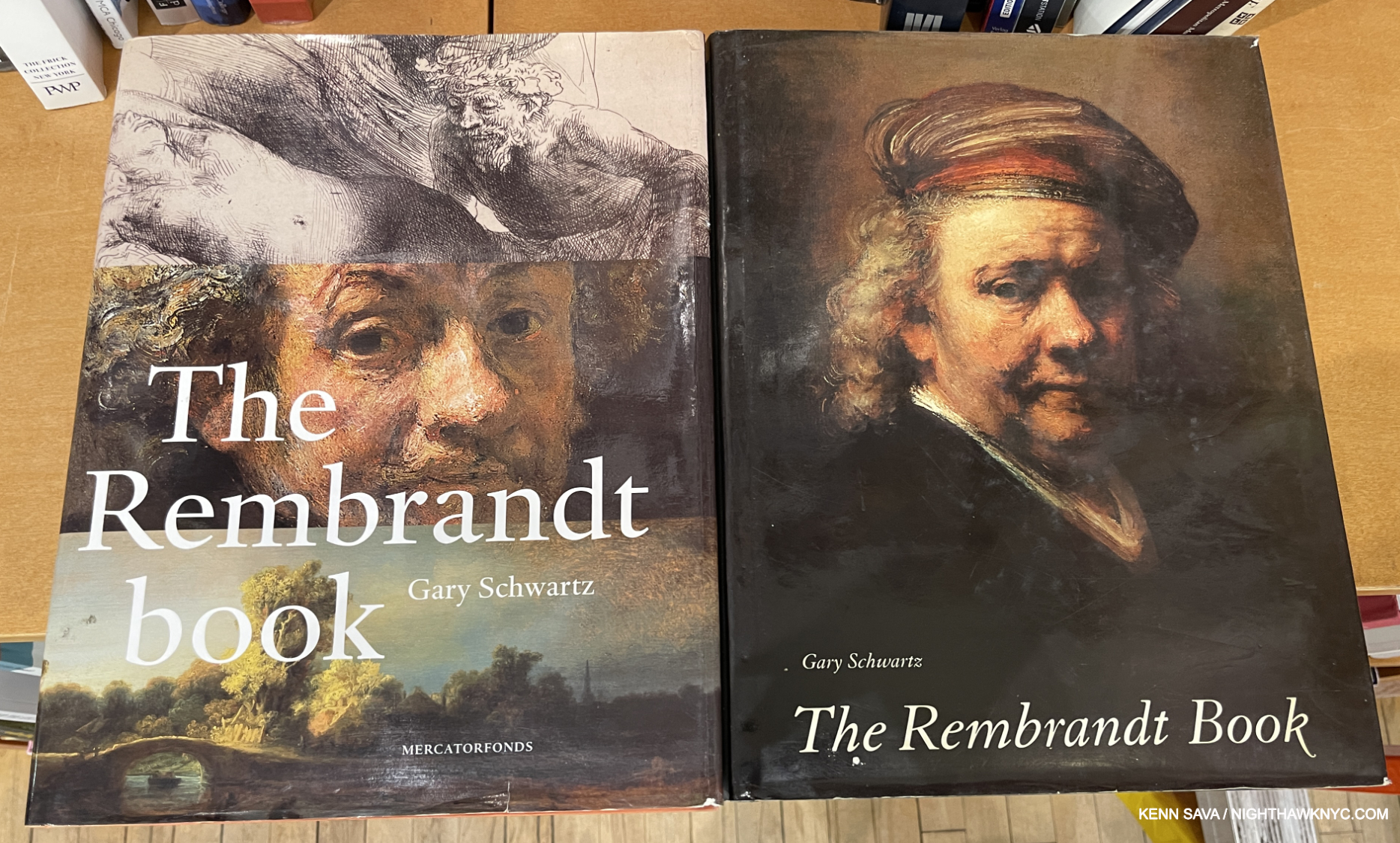
The European edition of The Rembrandt Book by Gary Schwartz, left, and the American edition, right. Choose one. Choose them both. Mine is the American.

With all due respect to the authors of the text in The Complete Paintings, it would be perfect, in my view, if it had a contribution from Gary Schwartz, for my money “THE” Rembrandt historian. Still, the authors can’t be too mad at me. Being named a Book of the Century (thus far) isn’t too shabby, right? To supplement TCP & TCD & E, I highly recommend Mr. Schwartz’s essential overview, The Rembrandt Book, which has been just that, with a capital “THE” for me since it came out (His earlier Rembrandt: His Life, His Paintings, from 1986, too early for this list, is every bit as good, and completely different! The Rembrandt Book was reissued in 2016 as  Rembrandt’s Universe in England.)

“If one wishes to discuss Rembrandt’s life and art as a whole, the first thing to do is close the rift between the documents and the works,” Gary Schwartz1.

For some reason, before Gary Schwartz published his prior monograph, Rembrandt: His Life, His Paintings, in 1986, no one had done it. Much of the material had been ignored and the resulting avalanche of books on Rembrandt are, primarily, work focused. Gary Schwartz brings Rembrandt to life with an Art historian’s eye in the person of an expert Art writer able to express himself succinctly to both Rembrandt newbies and scholars. Coincidentally, his life-based-in -the-documents is the approach the two other biographies on this list further on (on Shakespeare and Van Gogh), share!
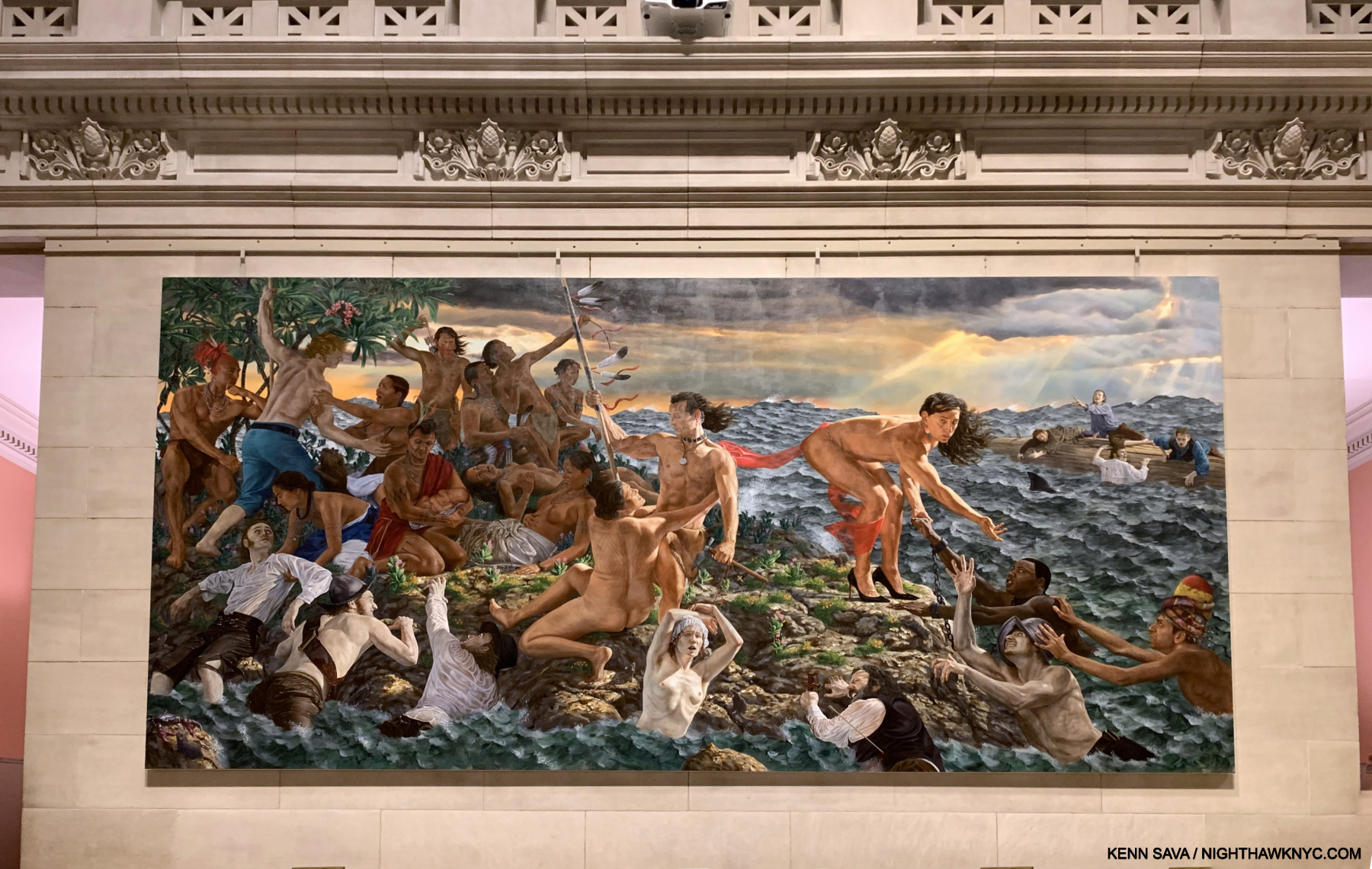
Kent Monkman, mistikôsiwak (Wooden Boat People): Welcoming the Newcomers, Both 2020, Acrylic on canvas, 11 x 22 feet. One part of a diptych seen in the Great Hall of The Met, January 17, 2020.

Kent Monkman, Revision and Resistance: mistikôsiwak (Wooden Boat People) at The Metropolitan Museum of Art, Art Canada Institute, 2020, and
The Memoirs of Miss Chief Eagle Testickle: A True and Exact Accounting of the History of Turtle Island, Volumes 1 & 2, with Giselle Gordon, both McClelland & Stewart, 2023 (Reissued as boxed set of paperbacks, 2025),
and Kent Monkman: History is Painted by the Victors, DelMonico, 2025

“Subversive, bold, unapologetic, and unforgiving, the work of Kent Monkman (b.1965) has left an unmistakable mark on contemporary Canadian art. Since the early 2000s, Monkman, accompanied by his time-travelling, shape-shifting, gender-fluid alter ego, Miss Chief Eagle Testickle, has redefined the Canadian cultural landscape. Riffing on techniques of the Old Masters, Monkman first found fame by recreating notable landscape paintings and populating them with Indigenous visions of resistance,” Shirley Madill, Kent Monkman: Life and Work.

I came very close to creating a stand-alone category titled NoteWorthy Extraordinary Accomplishment in Art Books in the 21st Century for an Artist I consider to be, perhaps, the most ground-breaking Artist of the century thus far- Interdisciplinary Cree visual Artist, Kent Monkman, a  member of Fisher River Cree Nation in Treaty 5 Territory (Manitoba, Canada). Singlehandedly reinventing the History Painting and using them, along with his work in other mediums, to begin to attempt to counter the historical narrative surrounding Indigenous Peoples in Art history, along with other Artists working to rewrite it. Shirley Madill, director of the Kitchener-Waterloo Art Gallery, says (with her caps), “KENT MONKMAN IS A VISUAL STORYTELLER. For more than two decades he has subverted art history’s established canon through the appropriation of works that tell stories of European domination and the obliteration of North American Indigenous cultures. Monkman challenges the accuracy of such representations by repopulating and correcting settler landscapes in a transgressive manner. He reimagines well-known paintings in order to provide a contemporary, critical point of view-and often his agent of disruption and change is one Miss Chief Eagle Testickle (a play on “mischief” and “egotistical”), or Miss Chief for short.” According to the just-released book (the most recent book on this list), Kent Monkman: History is Painted by the Victors, DelMonico, 2025, “Taking inspiration from Western artists such as George Catlin, as well as from the Old Masters, Monkman’s monumental history paintings feature white colonizers in violent conflict with Indigenous people. The depictions range from early colonial encounters to modern and contemporary clashes between Indigenous communities and uniformed police or clergy. In borrowing the visual language of his oppressors, Monkman reclaims the narrative written by Western art history about the brutalization and cultural genocide carried out against Indigenous North American communities,”
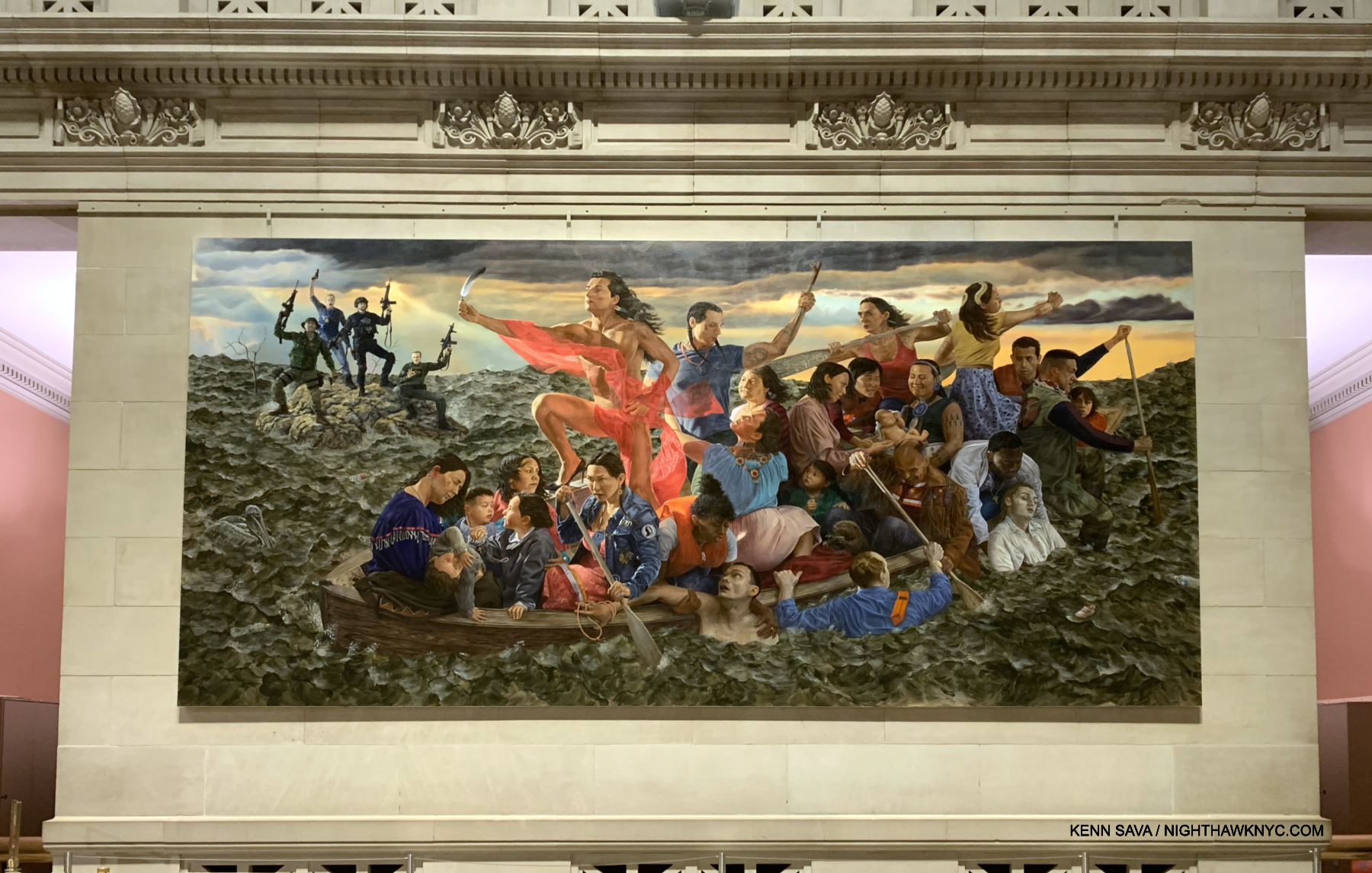
The other part of the mistikôsiwak (Wooden Boat People) diptych: Resurgence of the People seen in the Great Hall of The Met, January 17, 2020.

I discovered Mr. Monkman’s work on one of my 1,900 visits to The Metropolitan Museum in January, 2020, my last visit to The Museum before it was closed for months due to covid, when two monumental (11 x 22 feet, each) Paintings of his diptych, mistikôsiwak (Wooden Boat People) were mounted in the Great Hall, making them impossible to miss, and absolutely stunning in effect. They stopped me in my tracks and completely hijacked my visit. One of the few Contemporary works installed there to that time, they proved an ideal introduction to so much that characterizes Kent Monkman’s work, before and since. Aiding him in his mission (as outlined in the previous para) is Kent’s alter ego, Miss Chief Eagle Testickle (aka “mischief,” and “egotistical”), “who appears prominently in both paintings (in red), personifying Cree values and embodying the Indigenous Two Spirit tradition, which embraced a third gender and nonbinary sexuality,” per Art Canada Institute, who published the catalog for the show. Though The Met’s Max Hollein, Sheena Wagstaff and Randall Griffey were responsible for the commission, I’m left to wonder WHY The Met didn’t publish it. In any event, that gorgeous catalog, Revision and Resistance: mistikôsiwak (Wooden Boat People) at The Metropolitan Museum of Art is a lasting testament to the work, now in The Met’s Permanent Collection, in one of the most unforgettable installations I’ve seen this decade, which was, frankly, a two-Painting revolution.

The Memoirs of Miss Chief Eagle Testickle: A True and Exact Accounting of the History of Turtle Island, Volumes 1 & 2 in addition to being best-sellersare books that are hard to describe, but of course, the publisher tries to: “For decades, the singular and provocative paintings by Cree artist Kent Monkman have featured a recurring character—an alter ego of sorts, a shape-shifting, time-travelling elemental being named Miss Chief Eagle Testickle. Though we have glimpsed her across the years in films and on countless canvases, it is finally time to hear her story, in her own words. And, in doing so, to hear the whole history of Turtle Island (the traditional name for North America) anew. The Memoirs of Miss Chief Eagle Testickle: A True and Exact Accounting of the History of Turtle Island is a genre-demolishing work of genius, the imagined history of a legendary figure through which profound truths emerge—a deeply Cree and gloriously queer understanding of our shared world, its past, its present, and its possibilities.”  “Genius,” they said. I realize I’m gushing, but I’m not quite ready to go there- yet. The aforementioned Kent Monkman: History is Painted by the Victors, just published to accompany his first major U.S. solo exhibition (up at the Denver Art Museum as I write. The Met having shown only two works), seems to me they realized going in how high the Kent Monkman book bar has been set. Another beautiful, endlessly fascinating book. I have a strong feeling there are yet more Kent Monkman books I’d add here, but most of his other books were published in Canada, with virtually no U.S. distortion, making them harder to see.

In addition to his stunning Art, each of his books is marked by terrific design. Though I find it hard to believe the Artist did not play a hand in them,  the level of his involvement in these books is nowhere stated. Whatever it is, kudos are due Underline Studios of Toronto, who designed Revision and Resistance, and the excellent and beautiful Kent Monkman: Being Legendary, both published by Art Canada Institute.

Kent Monkman is already marketed as an “Art superstar,” even before his work has received wide exposure in the U.S. An exceptionally prolific Painter, who’s work is already in the Whitney and the Morgan Library, in addition to The Met, here in town, MoCA in Chicago, the Walker, the Denver Museum, and the National Museum of the American Indian, Smithsonian Institution. As History is Painted by the Victors is about to open, I fully expect that his work is going to continue to make inroads into the collections of the very institutions who’s narratives the Artist is helping to rewrite. Stay tuned.
While I’m at it, R.I.P to Juane Quick-to-See Smith, who passed away in January. My look at her terrific Whitney Museum Retrospective is here.
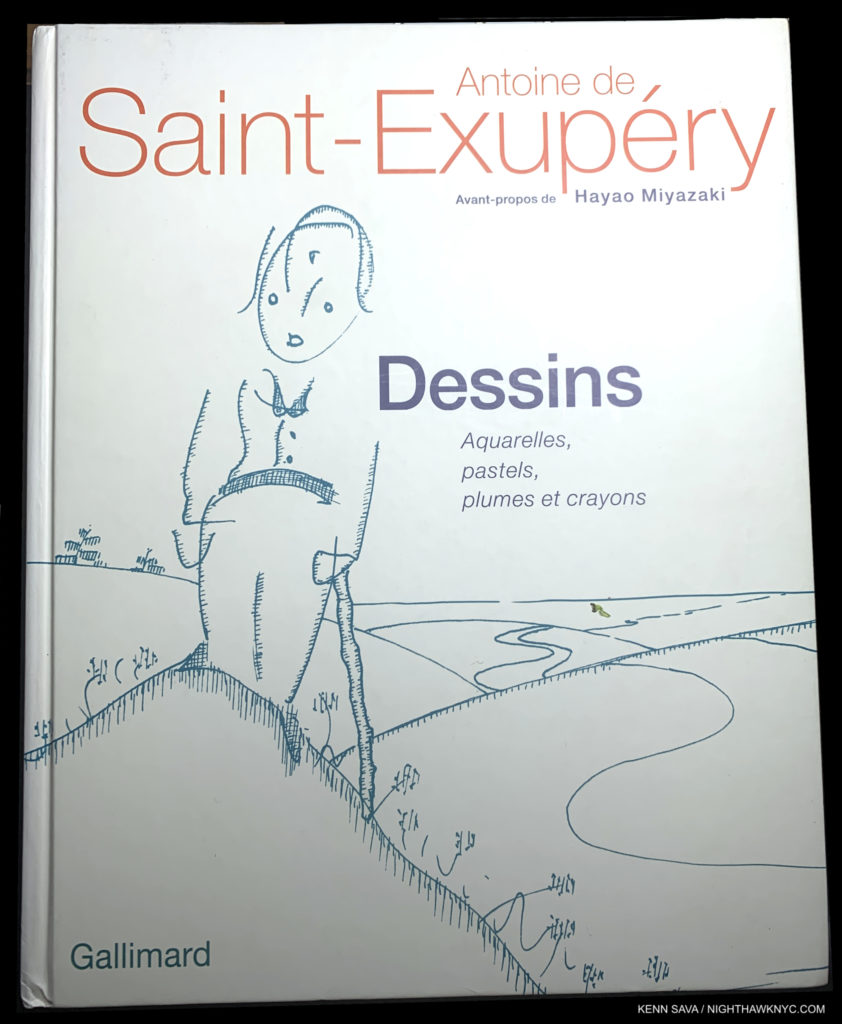
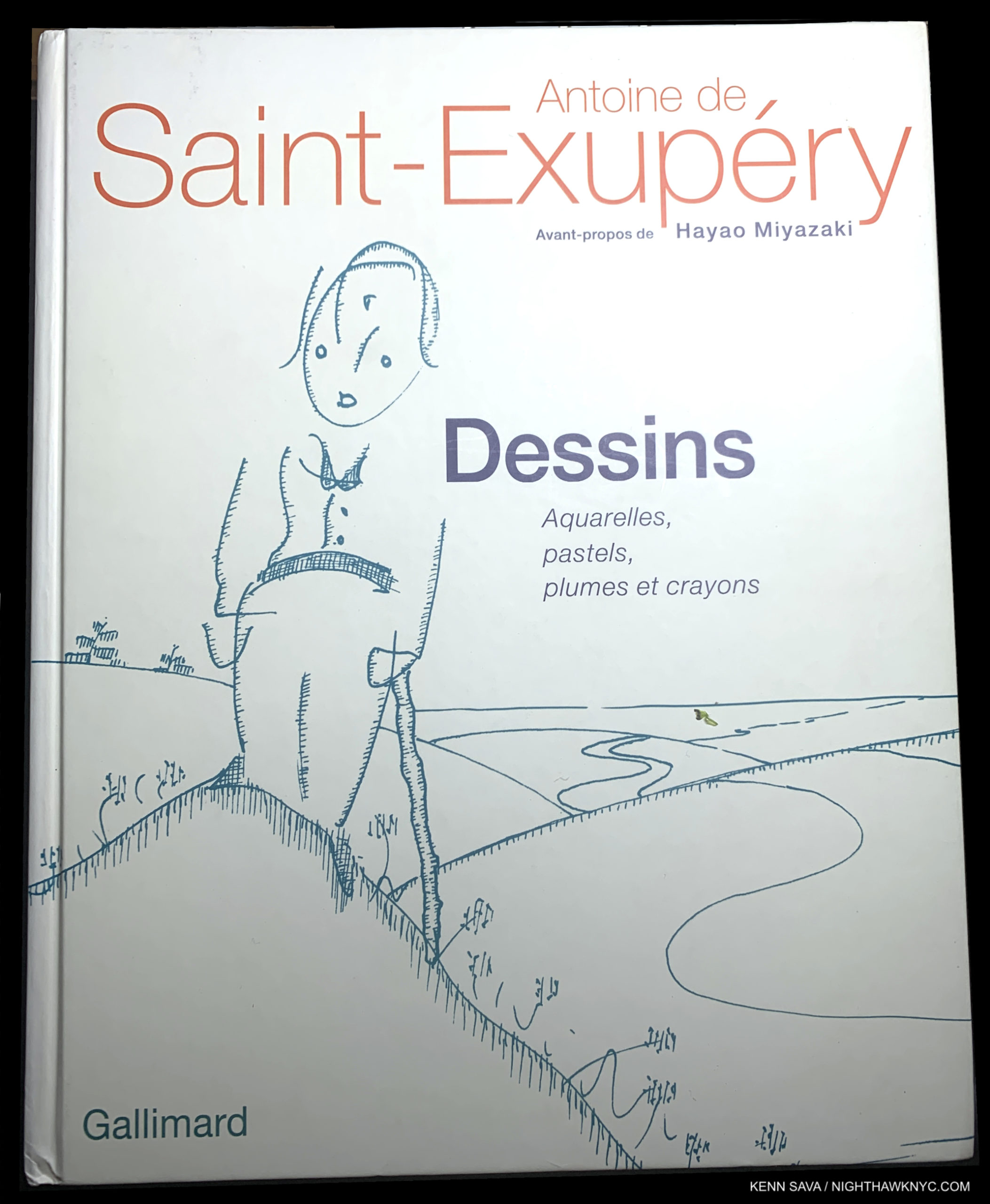
Antoine de Saint-Exupéry, Antoine de Saint-Exupéry:Dessins: Aquarelles, plumes, pastels et crayons, Gallimard, 2012
Hey, wait! Antoine de Saint-Exupéry on an Art book list? Yes! For me, his accomplishments as an Artist have been continuously overlooked. Yes, The Little Prince cries out for visual interpretation, and it has received countless treatments over the past 80 years (including the one, below). Still, for me? I always turn back to his originals. In my view, they are ABSOLUTELY ESSENTIAL to the book! With the COUNTLESS books written about The Little Prince these past 80 years since it was published, this is the ONLY ONE devoted to Antoine de Saint-Exupéry’s Art! It was wroth the wait.
As you remember, right on the very first page of The Little Prince, the Author speaks of his childhood passion for Drawing and how adults promptly discouraged it. Whether or not he received encouragement in real-life, it’s a passion that never left him as numerous friends and acquiantences recall. Here, we finally get to see all of his work in Watercolor, Pastels and Pencil & Ink, including many previously unpublished Drawings from sketches to finished Art work. Dessins seals his accomplishment as a Visual Artis. Do I need to say this book is a treasure for his millions of fans? Why has it taken so long for Saint-Exupéry to receive the credit he deserves as a Visual Artist? I think it might be because of the amazing economy of is designs. He says everything he needs to say in the barest minimum of lines and marks. It’s unassuming quality may disarm some viewers into forgetting their looking at Art. For me, his fresh style shows an awareness of Picasso. Also, as the Author and creator of his characters, only he knows their fine details, which he shows in his Art, and which are often not spelled out in the book. Even though it’s only available in French, if you’re a fan, you know that won’t stop you from digging in and enjoying this rarely seen aspect of his genius over 328 pages. In his hands Art truly is a Universal Language.
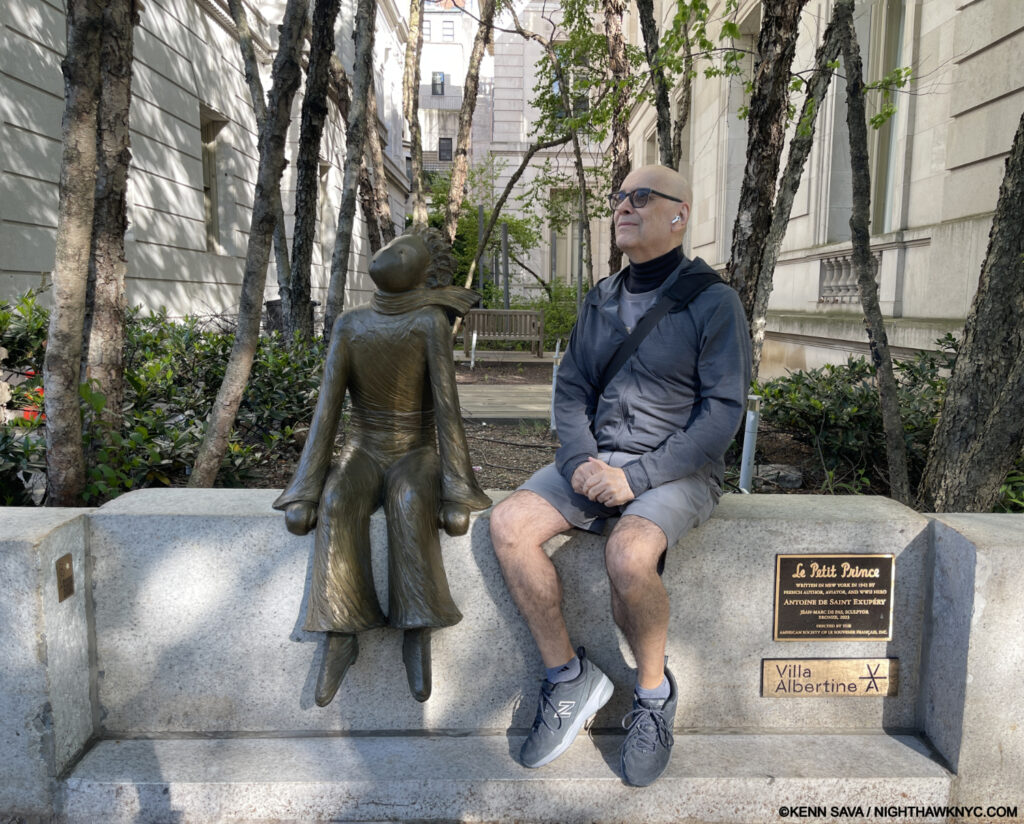
With Saint-Ex’s most famous creation, that he Wrote about, Drew, and Painted, waiting for the return of his Asteroid. This Sculpture is by Jean-Marc de Pas, May 10, 2025. My thanks to the kind lady who took this.

June 29, 2025 marks Antoine de Saint-Exupéry’s 125th Birthday. It’s about time this side of his talent receives more attention. My look at just this, “Antoine de Saint-Exupéry: Artist,” from 2023 is here. My thanks to Lana Hattan for introducing me to The Little Prince, and Saint-Exupéry, and reminding of his Birthday!
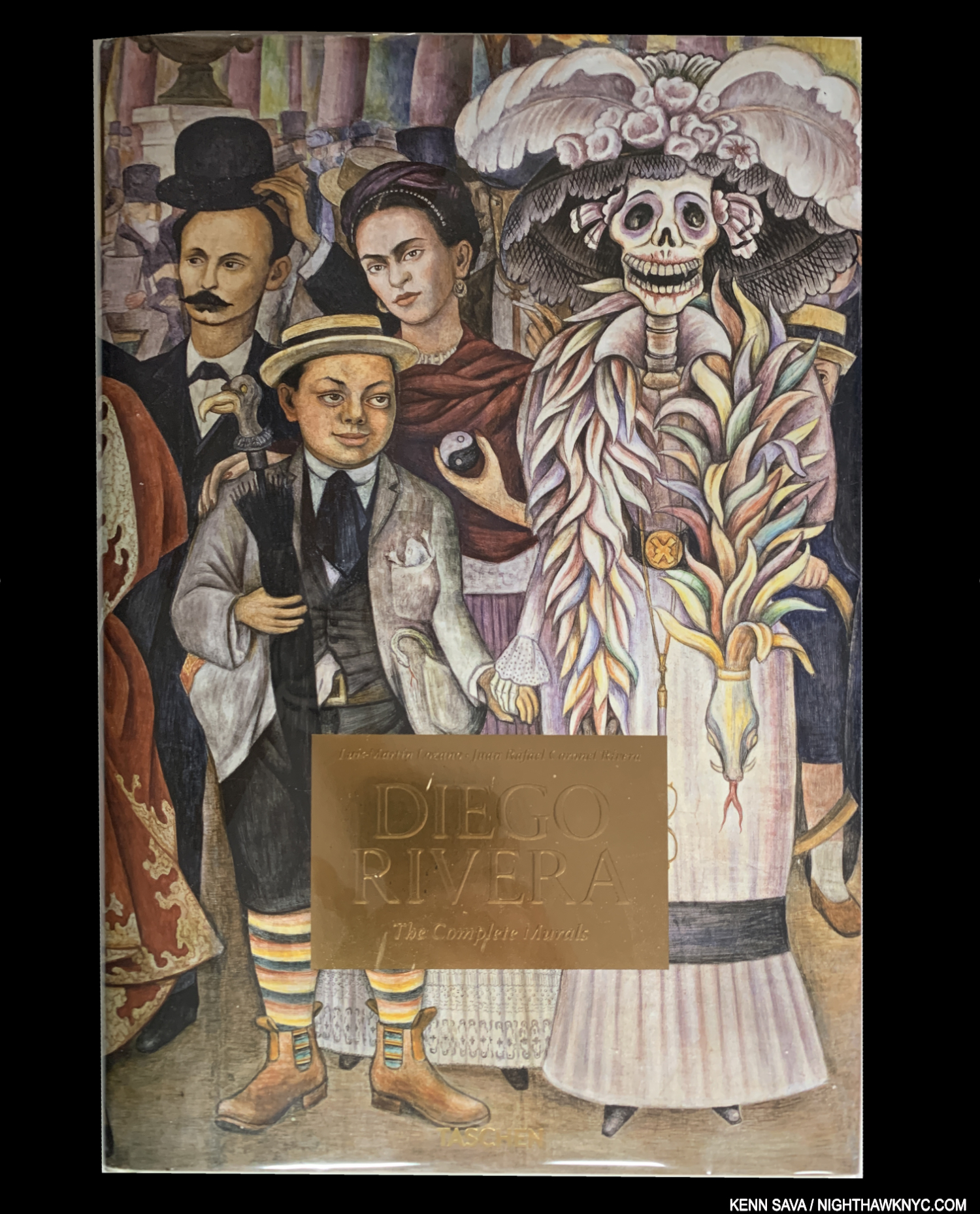
My copy of Diego Rivera: The Complete Murals shows the happy couple up front and left of center. Such is my respect for this book that I took it and had a custom Archival book jacket made for it. Alas, I wound up selling it over the holidays to fund my writing.

Diego Rivera, The Complete Murals XXL (Out of Print), 2007, or XL, 2018, Taschen, and Frida Kahlo: The Complete Paintings XXL, 2021, or Brick, 2023, both Taschen
The greatest love story in Modern Art (for better or worse), so, HOW could I name one, and not the other? Hell, HOW could I ever choose one of these books over the other? Diego’s book is one of the finest Art books Taschen has ever published in my opinion- and that’s saying something. First, somehow, they got access to all of his extant Murals and came away with superb images of each of them. Second, the incredible amount of detail in his work is wonderfully rendered in the generous XXL or XL size. The XXL is already out of print, so you may want to act quickly to find it. Taschen says the XL size is still in print. Getting ALL of that detail in to a Brick-sized edition one day might be possible, but you’ll need great eyesight to see it all!
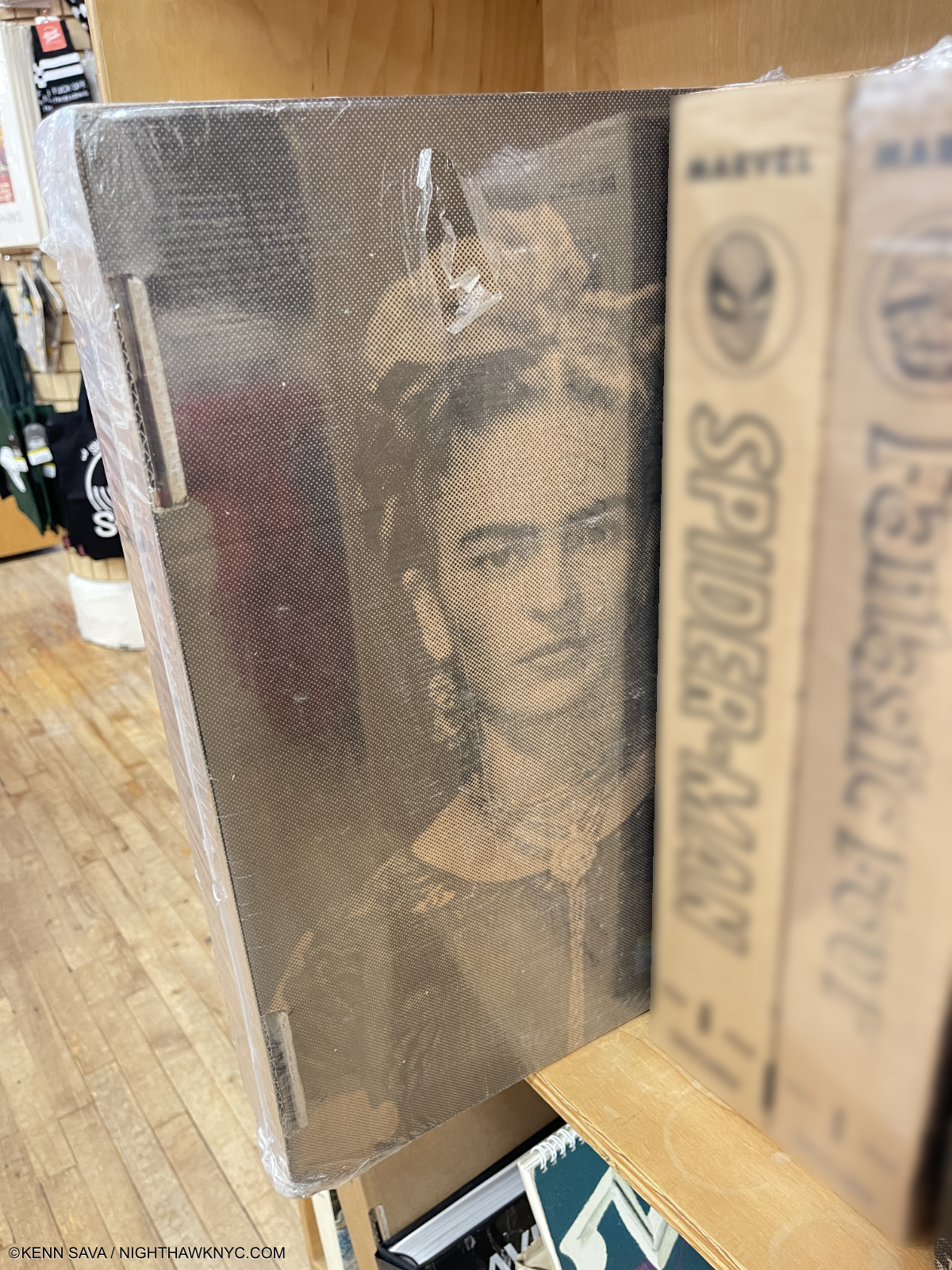
You’re looking at an heirloom. Frida Kahlo, The Complete Paintings XXL sealed in its shipping box. Quick quiz- Who was the first person to buy one of Frida’s Paintings? Answer below.

Excuse the repetition, but the point is that important- you’ll NEVER get the chance to see ALL of Frida’s immortal work as close up as you can see it in the Taschen XXL Complete Paintings– a good many of them are in private hands. Still, the Brick, which I have, is a VERY good option for those without the space for the full-strength XXL edition, or the (currently) $200.00 (versus $30 list for the Brick) asking price. Either or. IF I had the space and the funds, I’d immediately upgrade to the XXL before it goes out of print. Hear here.- To this point, XXL editions HAVE NOT been reprinted!  Quiz answer- the actor Edward G. Robinson bought 4 of her Paintings directly from her, which she credited with “showing her how to be free.”
My look at the Whitney’s Vida Americana, which included work by both Frida & Diego is here.
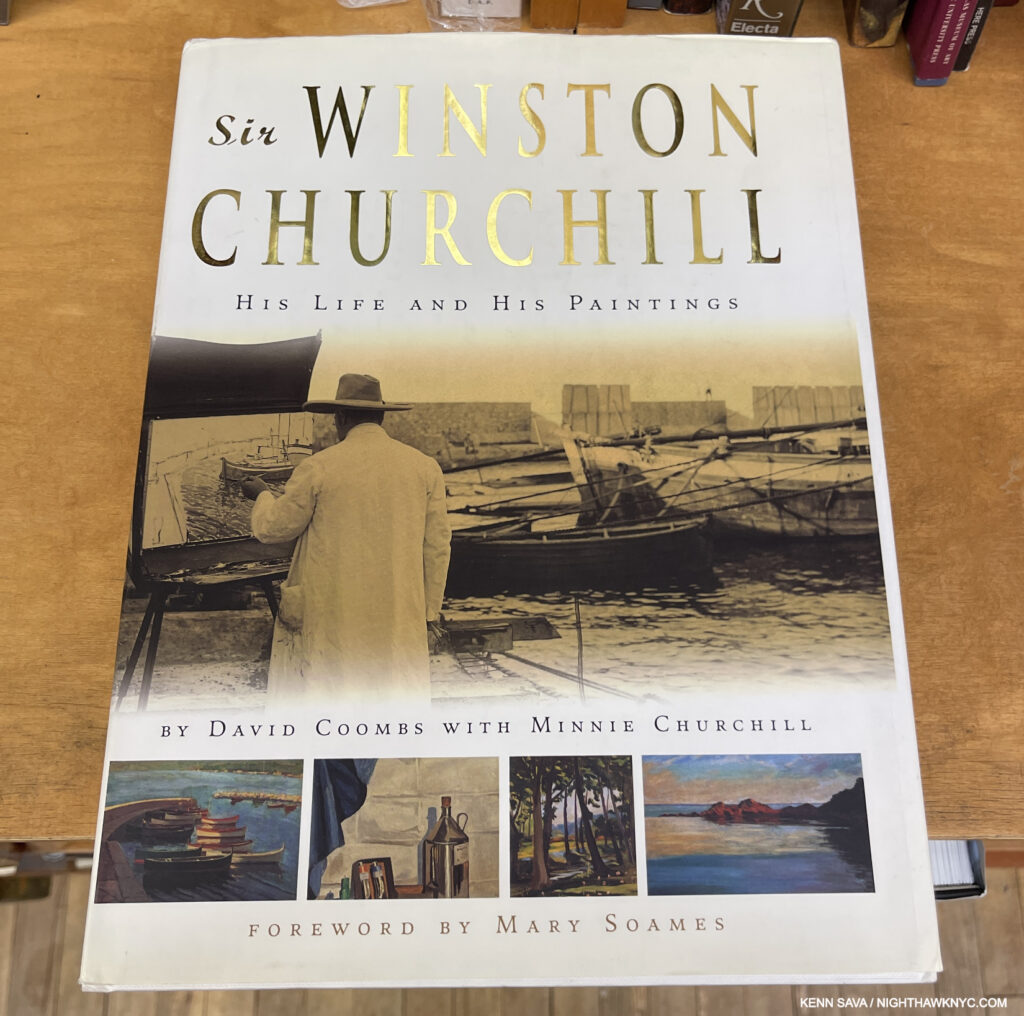
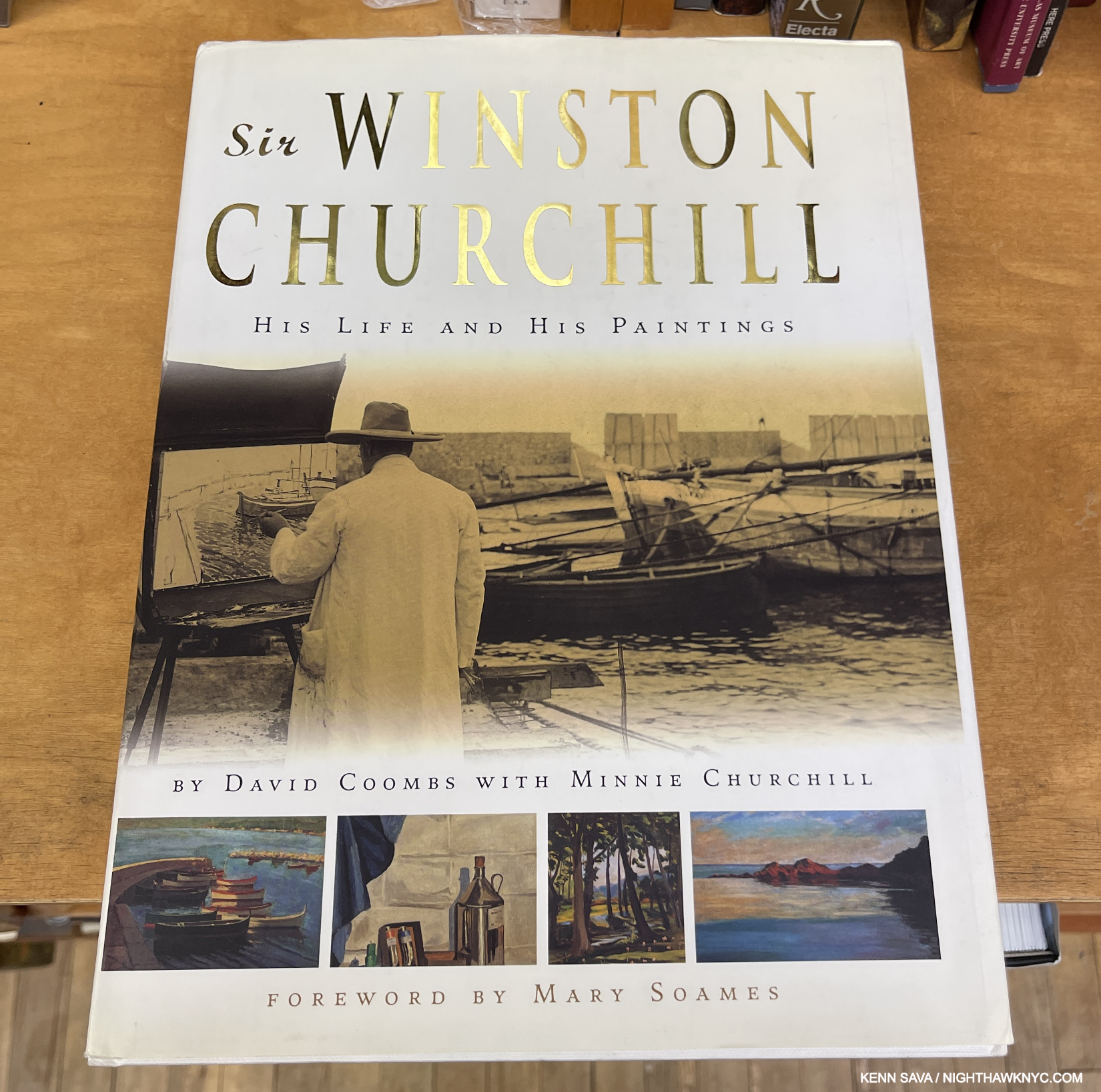
Winston S. Churchill, Winston S. Churchill: His Life & His Paintings, Running Press, 2005
I don’t believe in qualitatively comparing Artists or Artwork, so I’m not getting into a discussion about where Mr. Churchill “deserves” to be on this list, I’ll just say I think he does. I’m not alone- (from the publisher) “‘Had he signed his pictures ‘Jones,’ the critic would still find himself pausing in front of them,’ noted one Sunday Times of London art critic in 1949. Another opined that ‘At least a dozen of these pictures will stand against any of the best impressionists.'” Winston was a devoted Painter after he came to it at age 40(!) in 1915 while deeply depressed at being forced to resign from the WWI British government. He continued to Paint for the rest of his life. Considering that also included the 2nd World War, during which he was solely tasked with saving Western Civilization for a good deal of it, his Paintings will have permanent historic importance. I find they reward close study as Art, too. Whether you do, or not, they are unlikely to ever receive display in such a fine a book as this one, that includes most of his 500 Paintings, published with the full cooperation of Winston Churchill’s family. It’s a lasting testament to the personal power of Art, which is something unique in a world where every single piece of Art is valued only by its price tag.
Copies are currently trading very cheaply. I paid $1 for mine in VG condition.
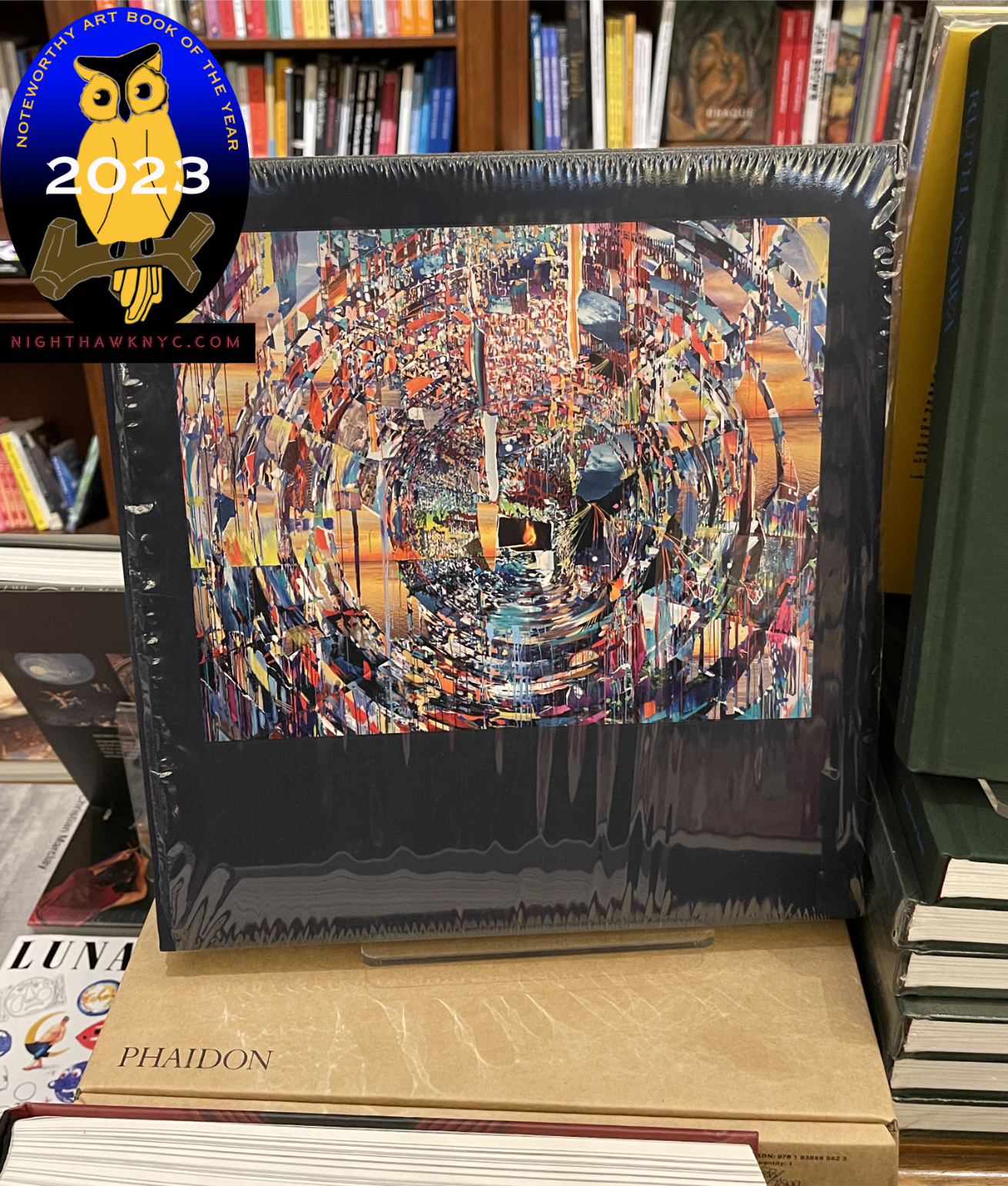
Sarah Sze Paintings sitting on top of its shipping box, as seen when I named it a NoteWorthy Art Book of 2023.

Sarah Sze- Paintings, Phaidon, 2023
A book that almost seemed to come from nowhere, Sarah Sze was already world-renowned as a Sculptor and Multi-media Installation Artist, who had begun to include Painting in her shows (as I showed in my piece on her stunning 2020 Bonakdar Gallery show, here). I don’t know which shocked me more- that her book of Paintings totaled 400-pages, or that their style was unprecedented. To my mind, they are every bit as memorable as anything else she’s done, and that is no small feat. As a sign of how important this book is to her, she’s signed every copy.
For more, see my piece naming it a NoteWorthy Art Book of 2023, here. My 2 pieces on Ms. Sze’s Guggenheim Museum show are here.
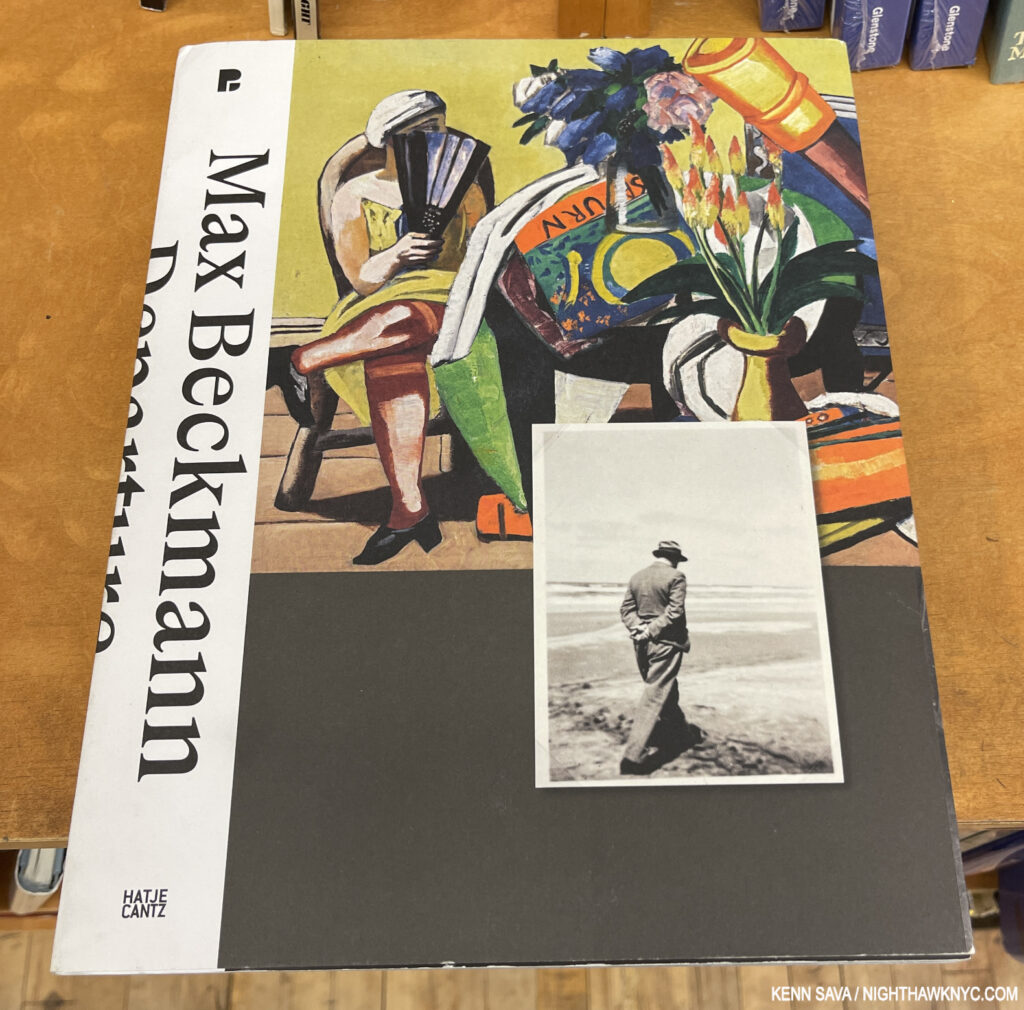
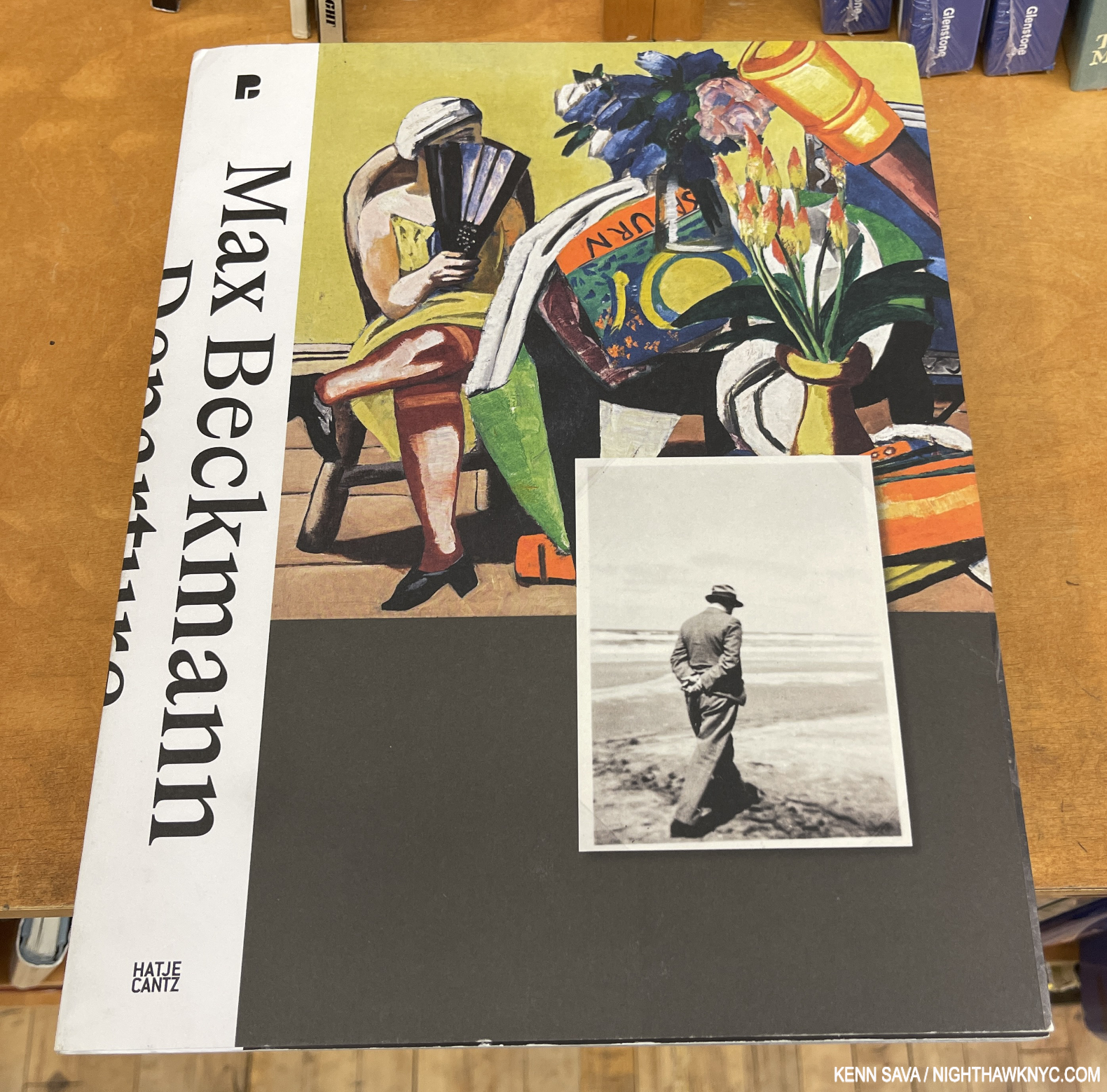
Max Beckmann, Max Beckmann: Departure, Hatje Cantz, 2023 
There are a number of books on Max Beckmann, including some relating to shows in the U.S. (ex- MoMA, 2003, The Met, 2016, Neue Gallery, 2023), yet it seems to me he’s still a bit overlooked here. Max Beckmann: Departure published for a 2022-3 show at Pinkothek de Moderne, Munich would seem to be the book to help change that. Wonderfully blending Art with a copious amount of material from the Beckmann Archive, Max Beckmann: Departure is the most personal look at this most expressive Artist’s work and life. With 350 pages, 200 exhibits that include over 90 Artworks, many shown in a large size, among its 393 pictures, it’s certainly a feast for the eye, aided by very nice design. It might not be as comprehensive in terms of the number of Art works included as I might wish, but the Archival material makes up for it, and adds much more depth than one generally gets in Art monographs. This starts with the cover, which shows the Artist strolling a shoreline lost in thought.
One thing I admire most about Mr. Beckmann’s Art is that he defied being boxed at a time when boxes were rampant. That, and that many of his major work, including his Triptychs, were created while he was in exile from the Nazis in Amsterdam  between 1937-47 (before coming to NYC).
The one caveat for me is the “Lay-Flat” binding does not hold up well to regular use, which is a shame because the spreads actually mininize the downside of going over the gutter while it holds up.
Max Beckmann: Departure seems to be a bit hard to find here for some reason. It’s not out of print, but few stores seem to have it. Perhaps being 2 years old has something to do with that, or, as I mentioned he’s not as popular here as he is in Europe. In any case, it’s a book to keep an eye on before it does go out of print.
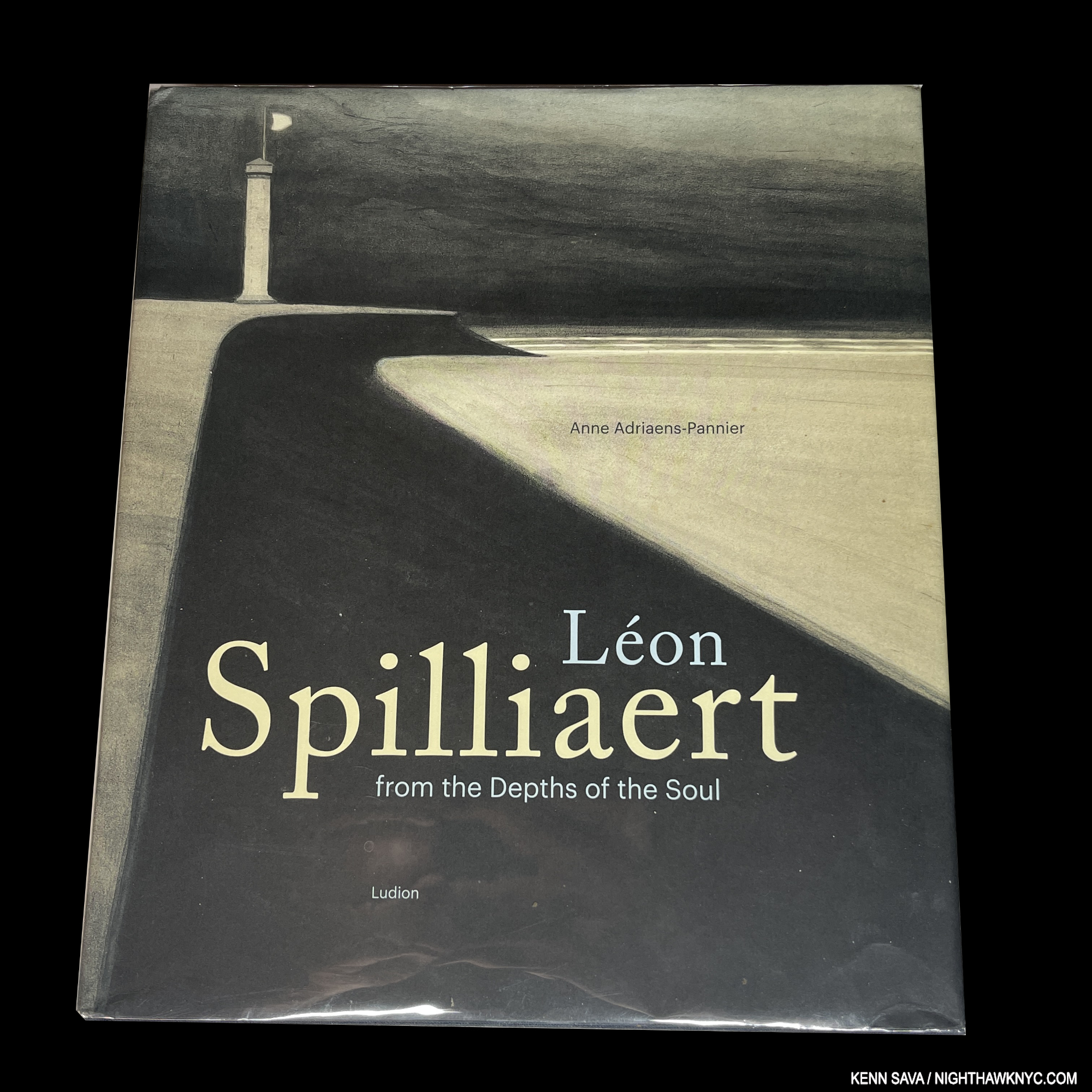
If any book on this list needs a black background, it’s this one. Almost none of his works take place in broad daylight.

Léon  Spilliaert, Léon Spilliaert: From the Depths of the Soul, Ludion, 2019
I know, I’m drawn to Artists who are or were loners. Michelangelo, Shakespeare, Rembrandt, Van Gogh, Hopper and on and on. Loners, even thought Hopper & Shakespeare were married, Hopper for 50 years. Léon Spilliaert was married, too. I discovered him in 2021, during that universal isolation known as the pandemic, when I was captivated by the cover of the 2020 Royal Academy, London, exhibition catalog for the first U.K. solo show of his work (a virtual tour of it is still on youtube). I would have been sorely tempted to go to London to see it save for the lockdown. However, the aptly titled From the Depths of the Soul is the one-stop book for anyone looking to explore, or further explore, the one-of-a-kind Belgian Artist’s work that I’m putting on this list. There are so many unique, and ground-breaking, aspects to his work (like very few pieces are oil on canvas- most of its on paper, much of it incorporates colored pencils, before light-fastness) and a good deal of his oeuvre seems to presage the work of much more well-known Artists, like Giorgio de Chirico and Magritte. Comparisons abound between Spilliaert, Munch, his countryman James Ensor, and others, but for me, with all due respect to all of them, he stands apart- like so many of his figures do, in a world of his own making. As always, with a book like this that has over 400 illustrations, some will quibble over this or that image size. I hear you. I’m sure any number of them would be larger if they weren’t accompanied by a seemingly all-knowing text by Anne Adriaens-Panner of the Royal Museum of Fine Arts, Brussels, who was requested by Spilliaert’s family to compile the Spilliaert Catalogue Raisonne. She maintains a virtual running commentary woven into a fascinating whole covering his entire life and career that makes me forgive the occasional image I wish was larger (for them I turn to that 2020 RA catalog). It’s a price I’m more than willing to pay, and speaking of price, From the Depths can still be found quite reasonably for what it is. 
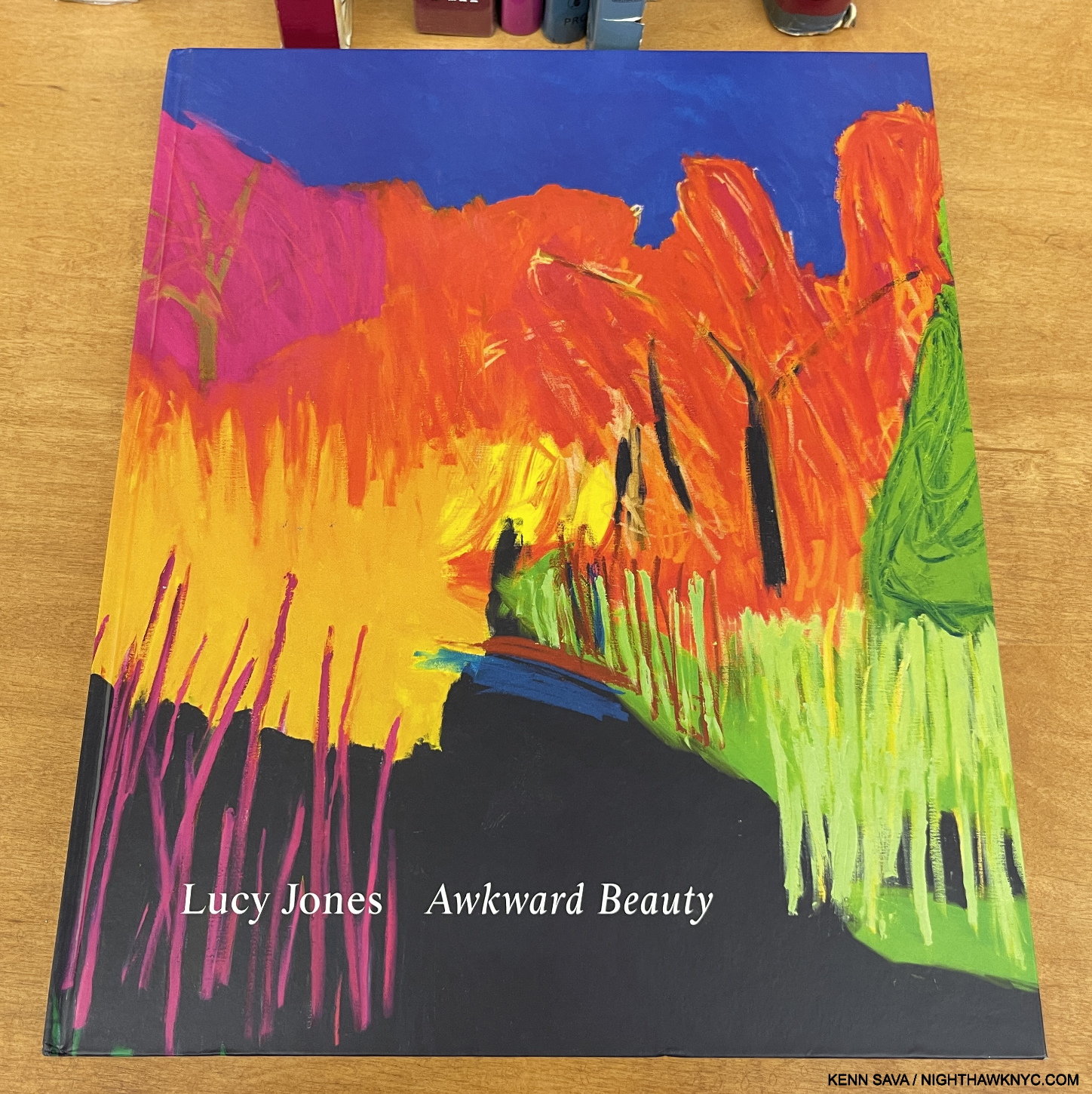
Lucy Jones, Awkward Beauty, Elephant/Flowers Gallery, 2019

“If people with disabilities were a formally recognized minority group, at 19% of the population, they would be the largest minority group in the United States,” (emphasis mine) the University of New Hampshire’s Institute on Disability 2011 report2. UPDATE- In 2024, 70 million, or 1 in 4 people in the U.S., reported having a disability according to the C.D.C. 

Since 1989, Art has become more and more inclusive. Yet, outside of a few big names who are and were disabled (like Frida Kahlo- listed above, Chuck Close, Yayoi Kusama- listed below), the disabled remain virtually invisible in the Art world! Why? If there were more books on disabled Artists, there would be more books to consider. But, there aren’t.
Lucy Jones is a British Painter who was born with cerebral palsy, yet she has gone on to create work that is in the collection of The Met (4 works) and the National Portrait Gallery, London. Her Portraits have the disarming directness and freshness reminiscent of Alice Neel though wholly hers, while her landscapes seem to take David Hockney’s as a jumping off point before exploding with color in ways I’ve never seen (as in the detail of one on the cover, above). Perhaps not surprising for an Artist who lists Rothko, Pollock and Matisse among her influences. Here, in Awkward Beauty, the first monograph devoted to her work, we get to experience the full range of her accomplishment over 25 years, along with excellent essays that reveal the Artist’s remarkable journey in getting to this point.
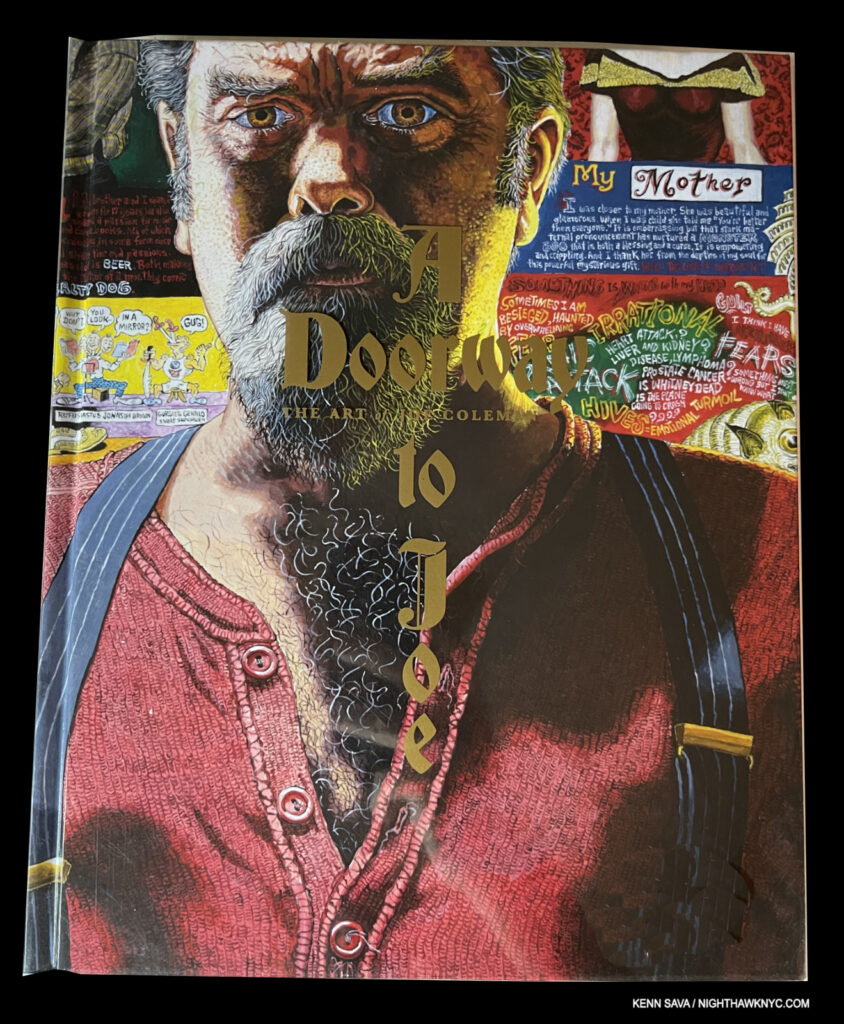
Joe Coleman, A Doorway to Joe, Fantagraphics, 2023
Joe Coleman has spent his life creating a unique body of Art that just can’t resist being “more.” “More” than Portraits, the Artist almost always adds text that reveals the backstory. In each one, the Artist’s passion for the subject comes through. There’s A LOT to look at in each of Mr. Coleman’s extremely intricate Paintings each executed with a stunning attention to detail in colors that stab the eye like a bolt of neon in the dead of night. A 450-page book of 150 Paintings (and an Introduction by Tom Waits, who not much has been heard from these past number of years) created over the past five decades is a powerful experience, on multiple levels by an Artist dubbed, “a walking ghost of old America.”
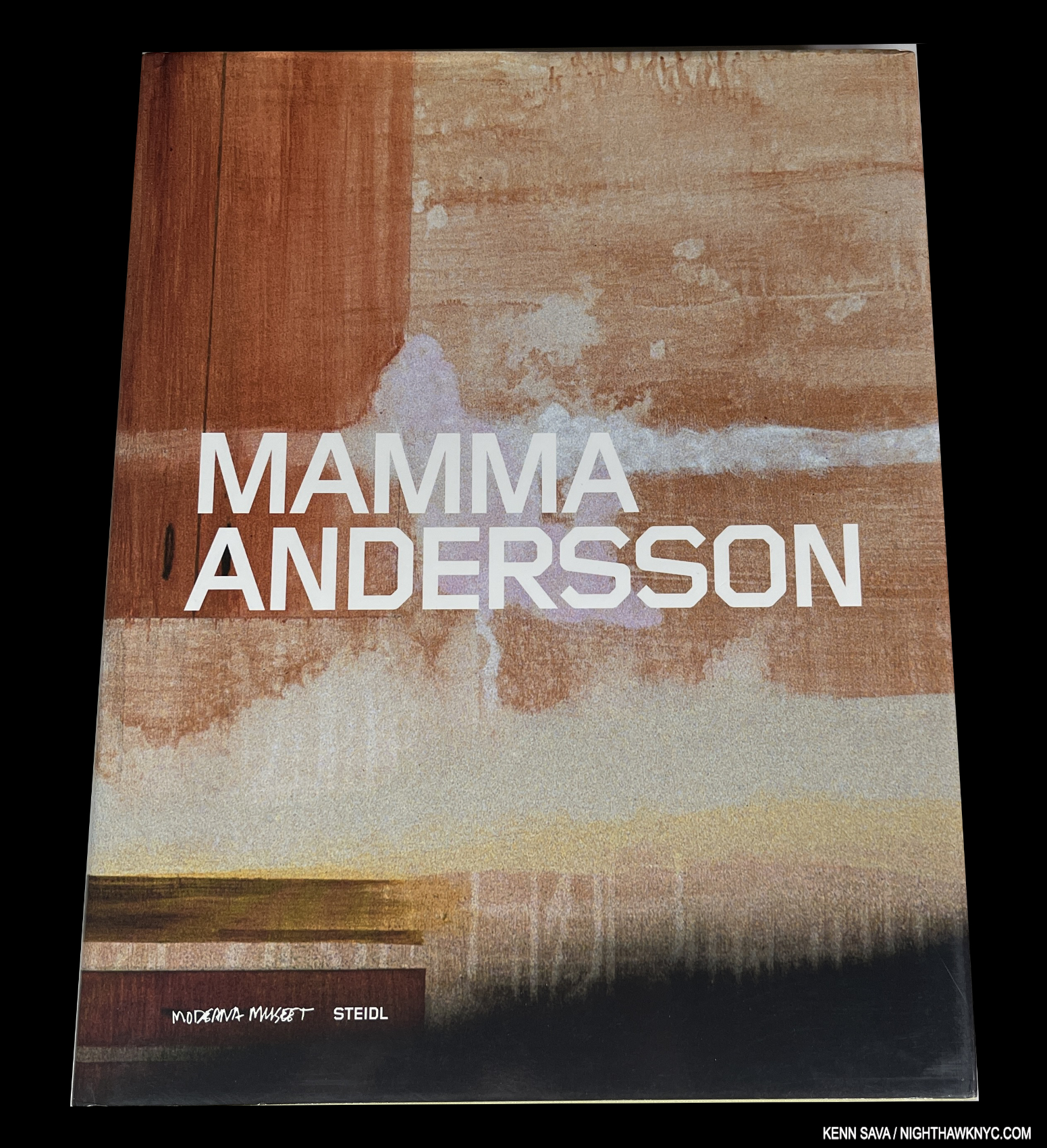
Mamma Andersson, Mamma Andersson, Steidl, 2005
A GORGEOUS book that’s on the shortlist for the most beautiful Art book of the century thus far. It seemed that Steiidl, and their designers, pulled out all the stops on this one. Innovative in ways that fit Mamma Andersson’s unique Art to a “t” in my view, it uses the Artist’s trademark mystery as a jumping-off point that only enhances it, and the overall effect of her work. I lost count of how many gatefolds are incorporated as a way of minimizing the dreaded “work over the gutter,” one of the biggest complaints I hear about Art books from my fellow Art book lovers. Out of print due to its popularity and now rare, VG copies begin around $175.
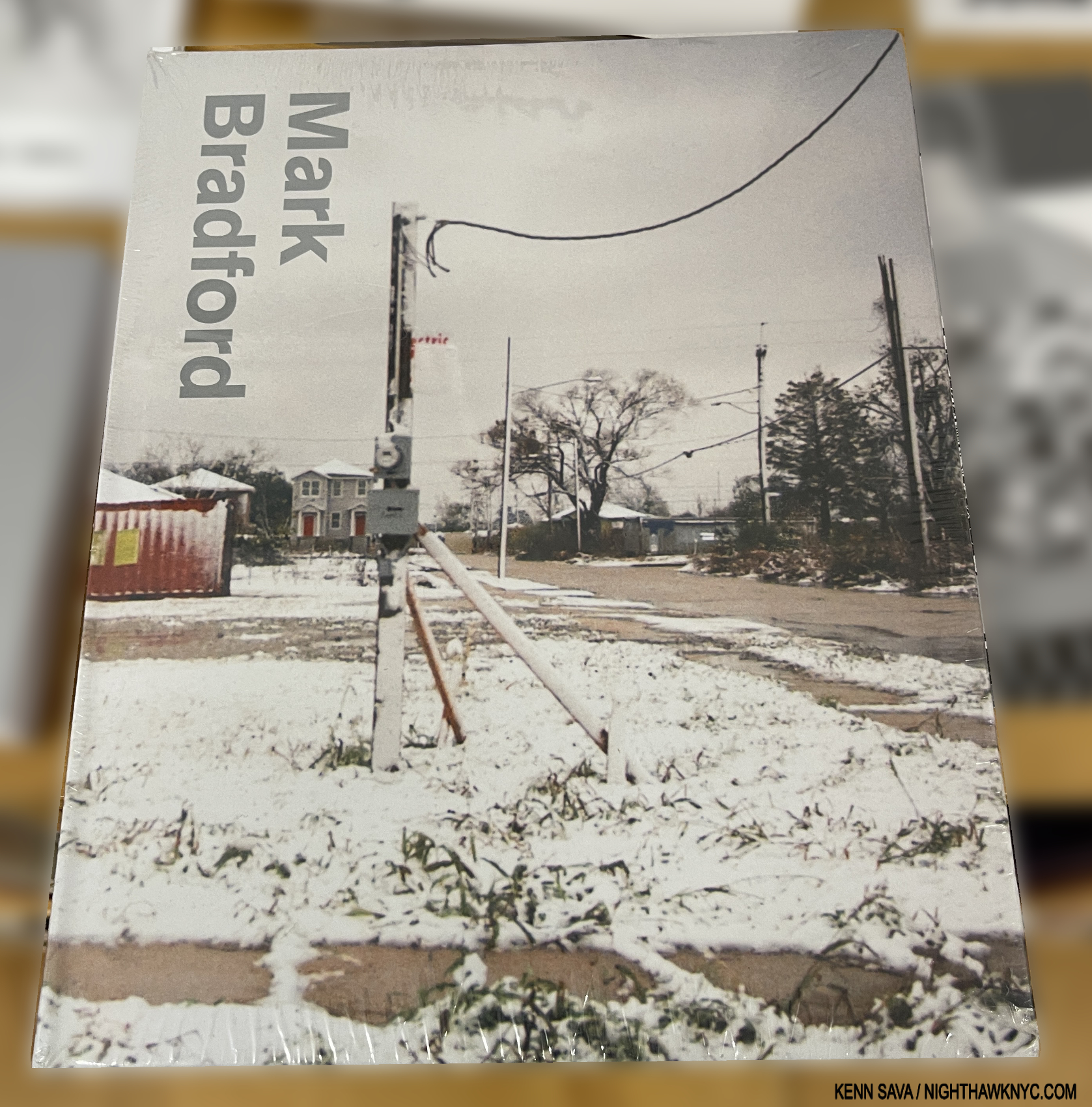
Mark Bradford, Mark Bradford, Yale University Press 2010
One of  THE breakthrough Artist of the century thus far, Mark Bradford exploded on the scene and has never looked. back. The exceptional curator, Christopher Bedford, currently Director of SFMoMA, was one of the key figures who brought Mark Bradford to national attention, and he authored the first major monograph on his work. Though a number of books have follwed, I still find it the best book on him, and the best introduction to his work. Currently out of print, reasonably priced copies are still to be had.
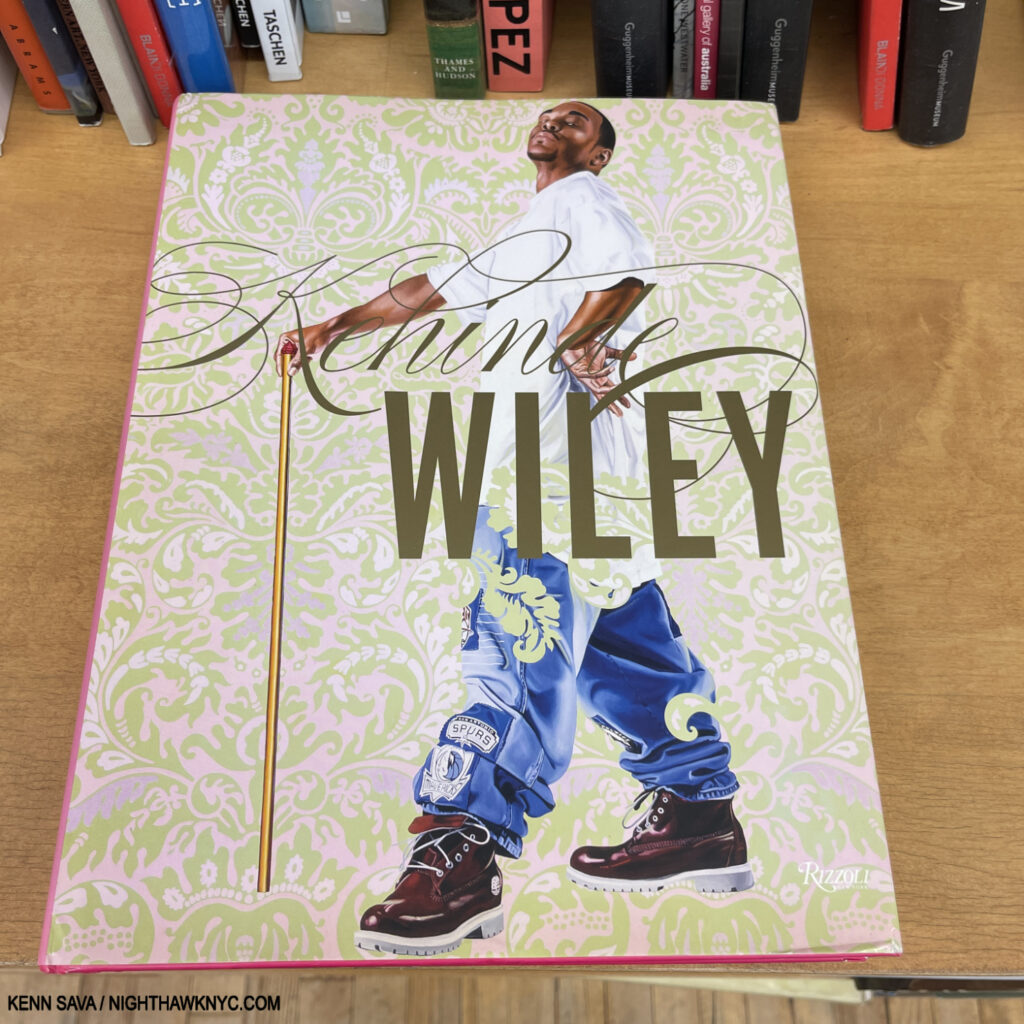
I think they found the right cover image.

Kehinde Wiley, Kehinde Wiley, Rizzoli, 2012
Believe the hype. Kehinde Wiley is here to stay, in my view. His monumental work is matched by this oversized beauty. Heck, his Art is beautiful, deftly combining elements of his influences with the here and now, so ALL his books are beautiful! This is the most comprehensive collection to date, but it could use an update. Given Rizzoli has updated & revised their overviews on Frank Auerbach, above, and Helen Frankenthaler (which didn’t qualify for this list), among others, with superb results, I bet a Revised & Expanded edition of Kehinde will be coming one of these days.
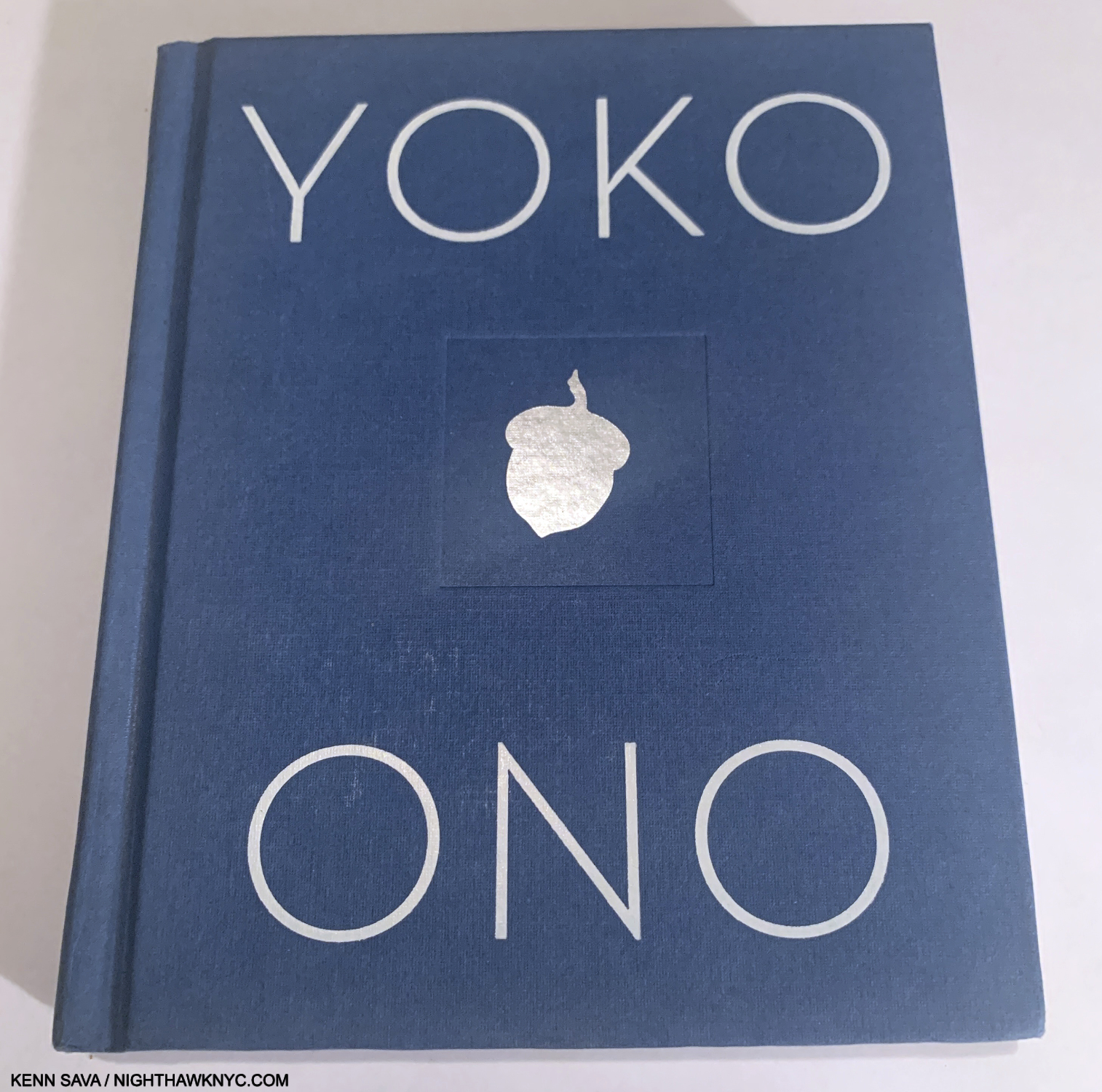
Plant the seed.

Yoko Ono, Acorn, Algonquin Books, 2013
My admiration, love and respect for Yoko Ono knows no bounds. Being one of the great PEACE activists of our time, the term ‘avant-garde” is frequently applied to her ground-breaking Art. Good luck with that! Acorn, it seems to me, throws a monkey wrench into those attempts to box this ethereal spirit. 100 incredible “Dot Drawings,” as she calls them, accompanied by texts that continue the “instructions” she gave us in her earlier classic book, Grapefruit (which Acorn is meant to follow, she says in it), and some are “meditations,” often taken from her life. At 5 1/4 by 6 1/4 inches (with 216 pages), Acorn is, also, one of the most effective smaller Art books I’ve ever seen. Hey, publishers- We don’t all live in 1,000+ square feet of space. Remember SMALL(ER) books?
A good number of the instructions in Grapefruit begin with “Imagine…,” which inspired the immortal song by John Lennon3, one of my personal anthems (me, and millions of others…). As a result, Yoko was belatedly given co-writer status. “Imagine” starts a few of these as well.
Acorn remains the book I’ve most given to others. A head’s up! It’s becoming harder to find. If you see it new for its $18.95 list price, grab it. PEACE!
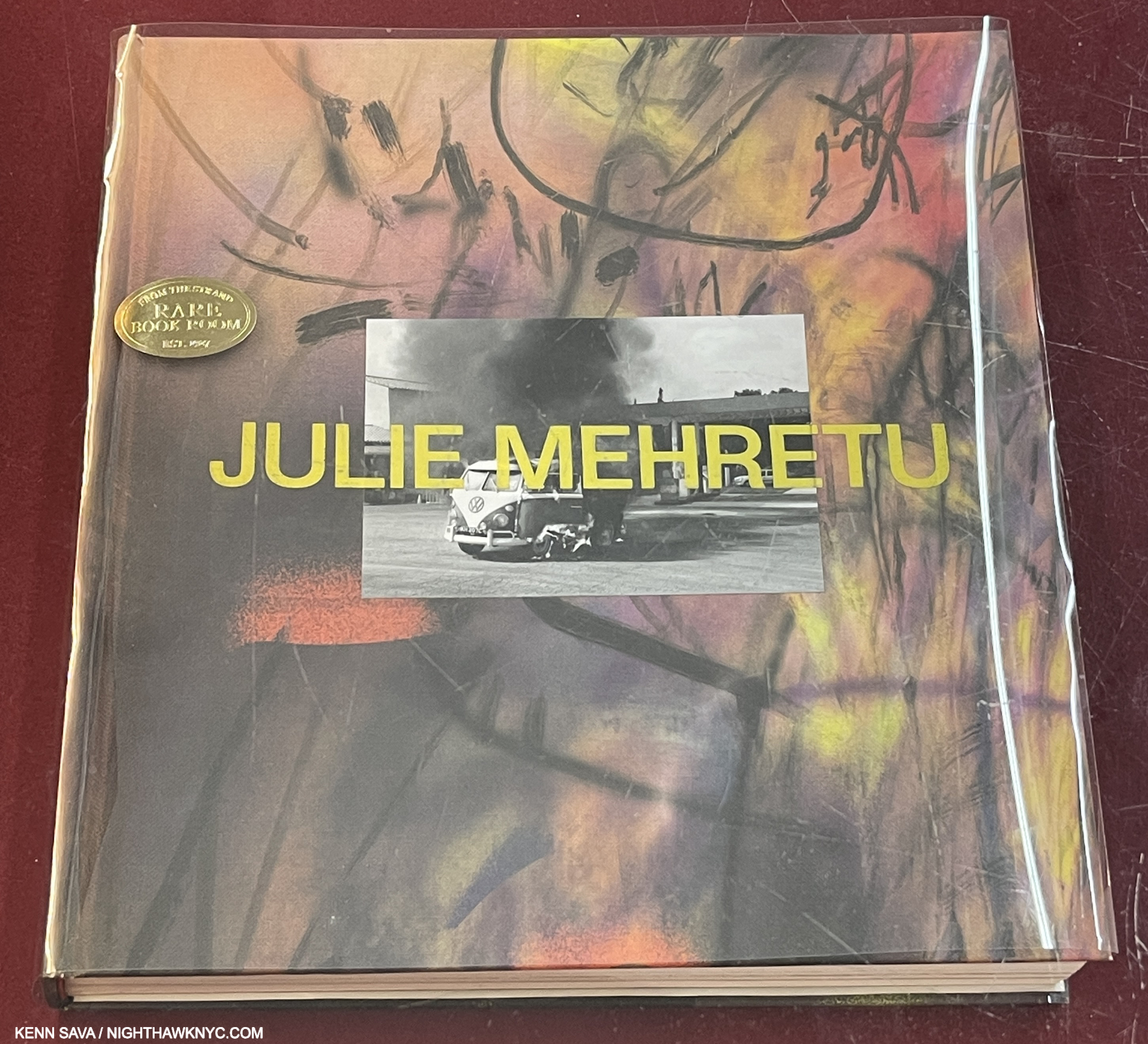
Julie Mehretu, Julie Mehretu, Prestel, 2019
If you blinked, you missed this ground-breaking book. Though far from the first book on her work (though the first full-length monograph), it’s like very few had seen the earlier books on her work given the lightning bolt effect the release of Julie Mehretu  had. Her style is unique and revolutionary. Part Architectural Drawing, part seemingly based in Abstract Expressionism, and part Photo re-envisioning, it’s unprecedented. Ms. Merehtu is now an Art “superstar,” with shows all over the world, but this book remains a great place to get up to speed (through 2018). While her work is already vastly influential, I’m not sure how many will be able to copy her incredibly intricate style. VG copies trade for $250-300, now.
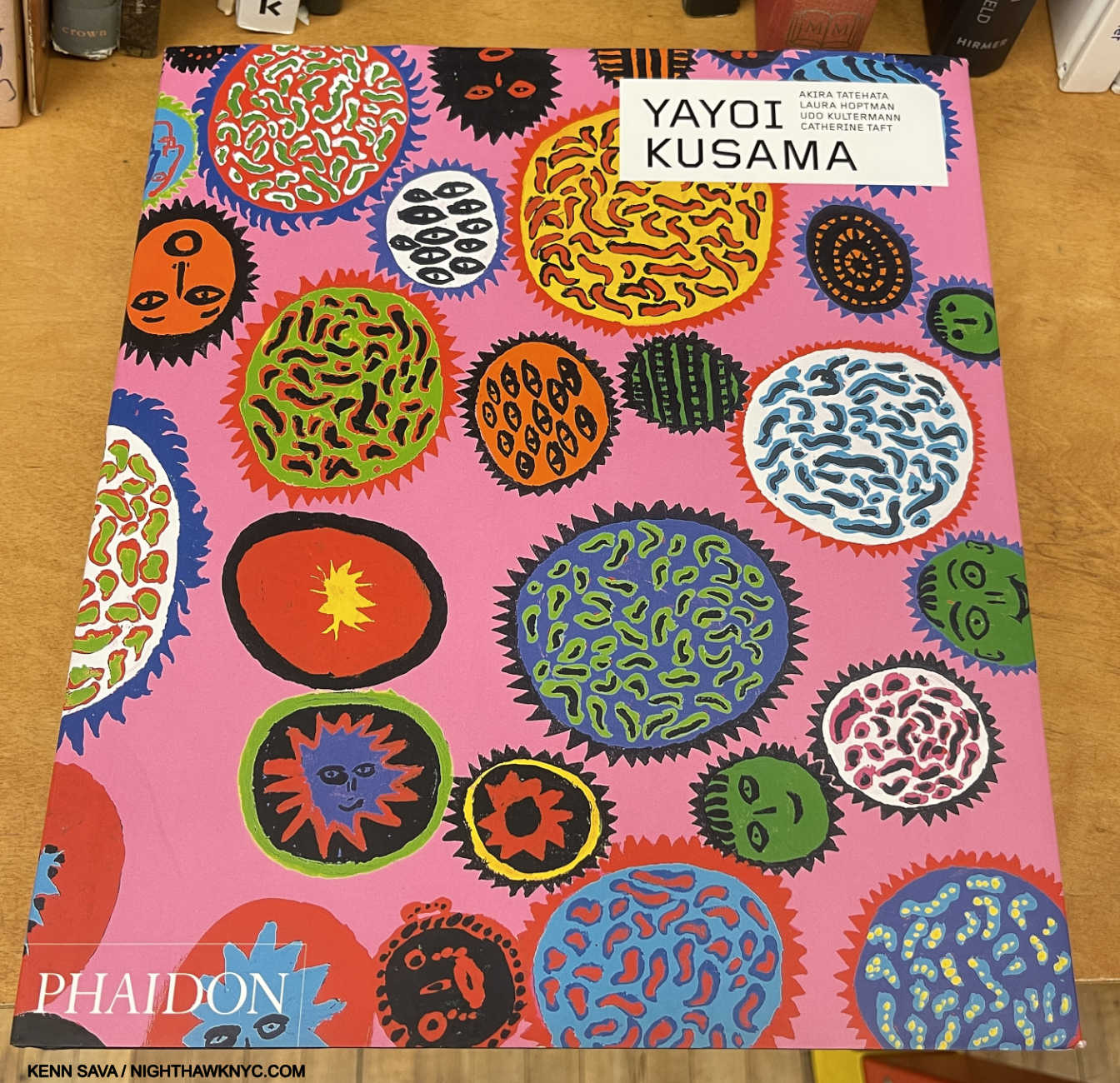
Yayoi Kusama, Yayoi Kusama, Phaidon Contemporary, 2017
Phaidon has released a steady stream of books on Contemporary Artists under their Phaidon Contemporary imprint, a most welcome thing. As time has gone on, however, I’ve been disappointed by some of these books, which pains me because in many cases their books are the most comprehensive on their subject Artist. Luckily, Yayoi Kusama is one of the best in the series, in my view, it’s, also, the best overview on her work published to date, no small thing considering the many books that have been published on one of the world’s most popular Artists. It includes a rare interview with Yayoi and a number of essays that look at her life and all she’s had to overcome along on remarkable journey that’s just at the beginning of its  96th year on March 22nd. Highly recommended for those new to her work, or for those looking to delve further into one of the most remarkable, and remarkably long, careers in 20th & now 21st century Art.

*- Capivara Editions Photo

Vik Muniz, Vik Muniz – Everything So Far, Catalogue Raisonne: 1987-2015, Capivara Editions, 2016
Quoting myself, in my piece on his 2022 show, it surprises me that Vik Muniz is not one of the world’s Art “superstars.” It seems to me that his Art has everything required to make him hugely popular with Art lovers worldwide (not that he’s not already quite successful & accomplished, here, and around the world). In the 2-volume set, Everything So Far, you get to see just that, well everything the Artist created over the first 28 years of his incredibly prolific career. TEN YEARS old already, I imagine Mr. Muniz has AT LEAST another volume of work to add to these two already.
Another reason this set is on this list- along with the high quality of the work and the beauty of the set’s production, is that as you look through it, and move from chapter to chapter, you become ever more impressed (if not amazed) that ALL of this creativity, in a seemingly endless range of styles and mediums, a good number of which he invented, comes from one Artist. Topping it off, though it seems to me that though Vik Muniz’s work has that element of mass accessibility, it doesn’t come at the expense of content.
My look at Vik’s 2022 NYC show is here.
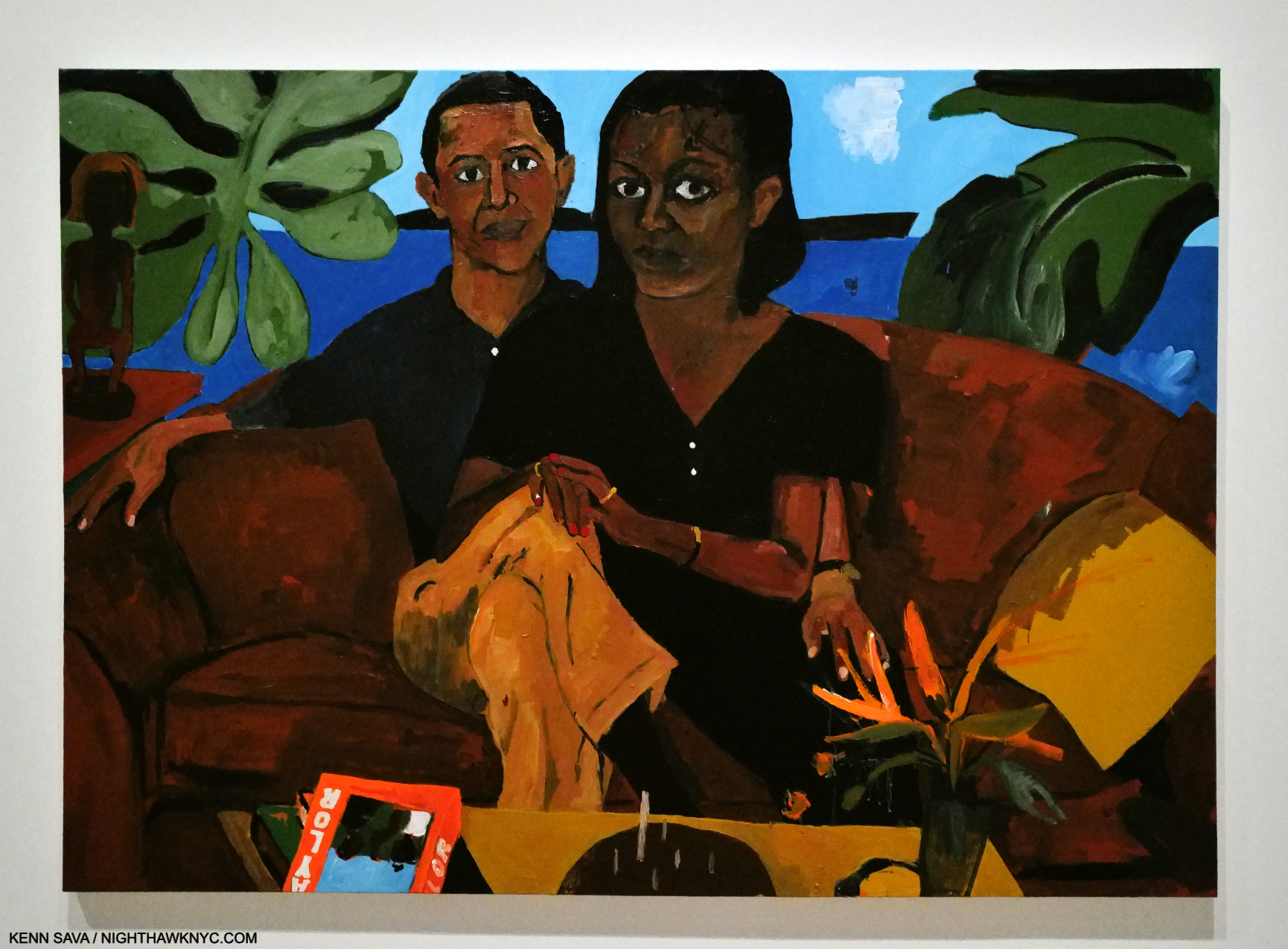
Henry Taylor, Untitled, 2020, Acrylic on canvas. The Obamas with a copy of Henry Taylor conspicuously displayed on their table. Artistic license? Or does the Artist know they have a copy. As seen in Henry Taylor: B Side at the Whitney Museum, January 26, 2024.

Henry Taylor, Henry Taylor, Rizzoli, 2018
Henry Taylor? Who? This book was a shock to those, like me, who were unfamiliar with the work of this California-based Artist when it was released, leading to it quickly selling out. Such are the joys of being a 30-years-in-the-making overnight success. Henry Taylor shows he was BUSY during all that time, and the fault is ours for sleeping on him. It’s is  a book that still looks fresh revealing that though his work has a charm to it that belies its depth it also, already, has staying power. His work is full of surprises, but his love of Painting shines through everything he applies his brush to, which is impossible for me to resist. Reprinted, it’s currently available.
My look at Henry Taylor in the 2019 Whitney Biennial, and elsewhere around town, is here. My look at Henry’s 2019 Blum & Poe Gallery show, during which he borrowed my Sharpie and amended works in the show as I watched, mouth agape, is here, and my look at Henry’s stunning mid-career Retrospective, Henry Taylor: B Side at the Whitney is here.
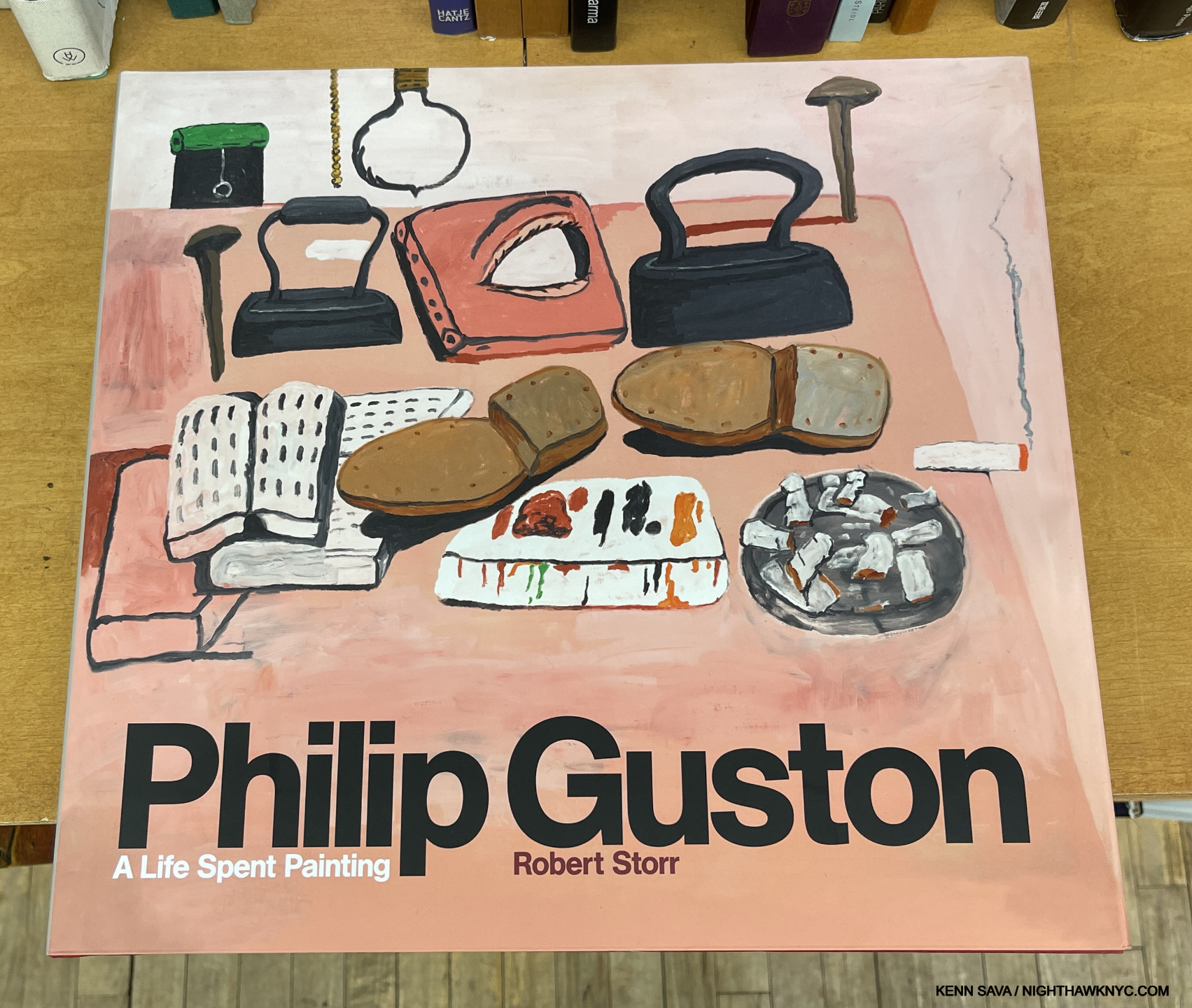
Philip Guston, Philip Guston: A Life Spent Painting, by Robert Storr, Laurence King, 2020
One of my NoteWorthy Art Books of 2020, A Life Spent Painting is a MASSIVE tome of 348, 12.6 by 14 inch, pages with more than 850 images, and weighing almost 8 pounds! I don’t know which is longer- How long Philip Guston’s work has been deserving of a book like this, or how long Robert Storr spent working on it (30+ years)!
Phitip Guston has proved to be every bit, if not more, influential since his passing in 1980 as he was in his life. Not surprising with a career that broke so much ground, there is much to appreciate. In spite of the controversy around some of his late work, which as I’ve said I believe is misunderstood, it’s good to see that long overlooked period of his Art get the attention it deserves. Also overlooked, in my view, is his 1940s work.
My look at a few NYC Philip Guston shows is here.
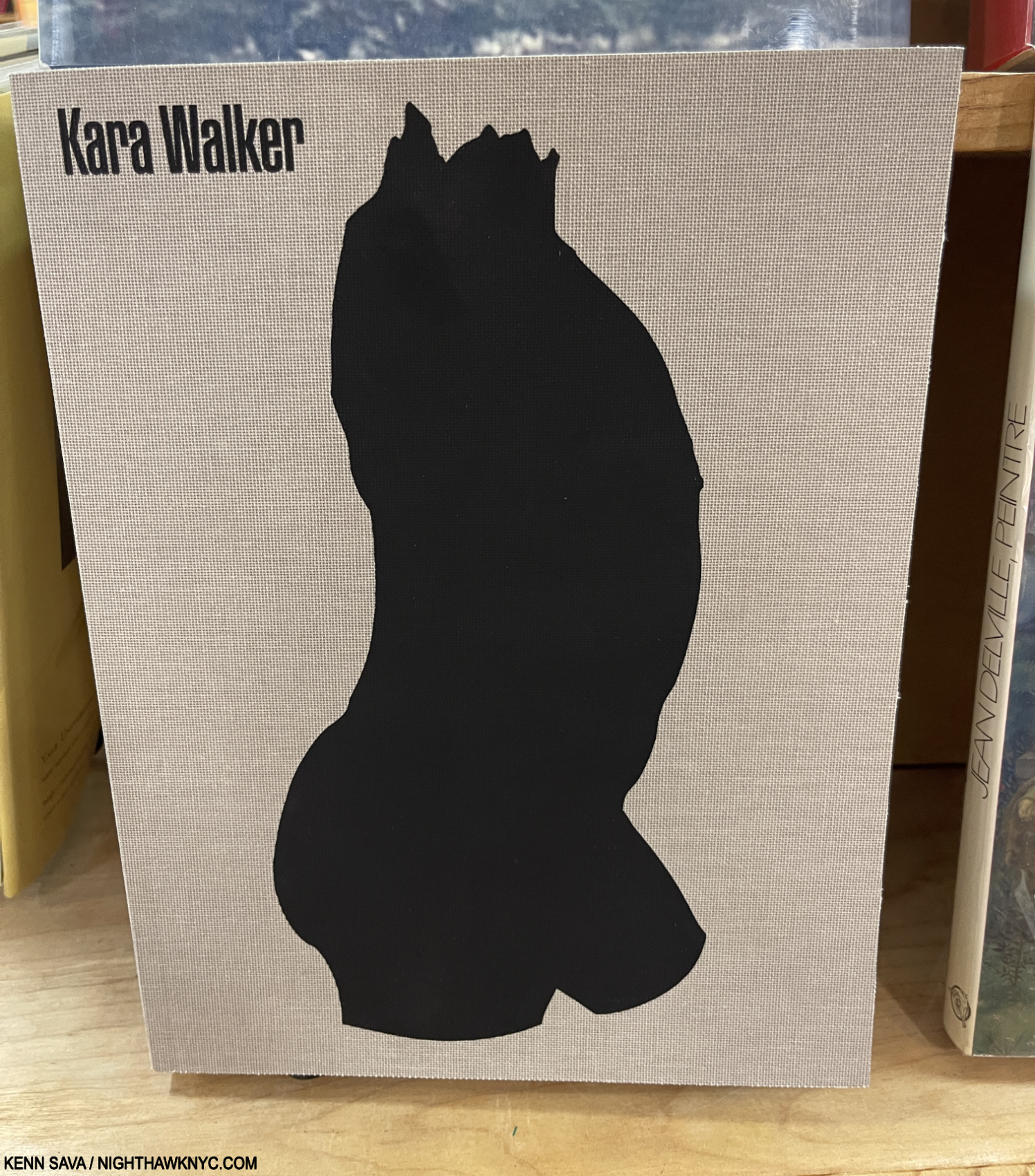
Kara Walker, A Black Hole Is Everything a Star Longs to Be, JRP Editions, 2021
This 600-page marvel firmly established Ms. Walker’s Drawings and works on paper as important as her already classic Silhouettes. 4 years old, I wouldn’t wait long to get a copy of A Black Hole, one of the Art books of the decade.
My piece naming this a NoteWorthy Art Book of 2021 is here. My look at her 2017 show is here.
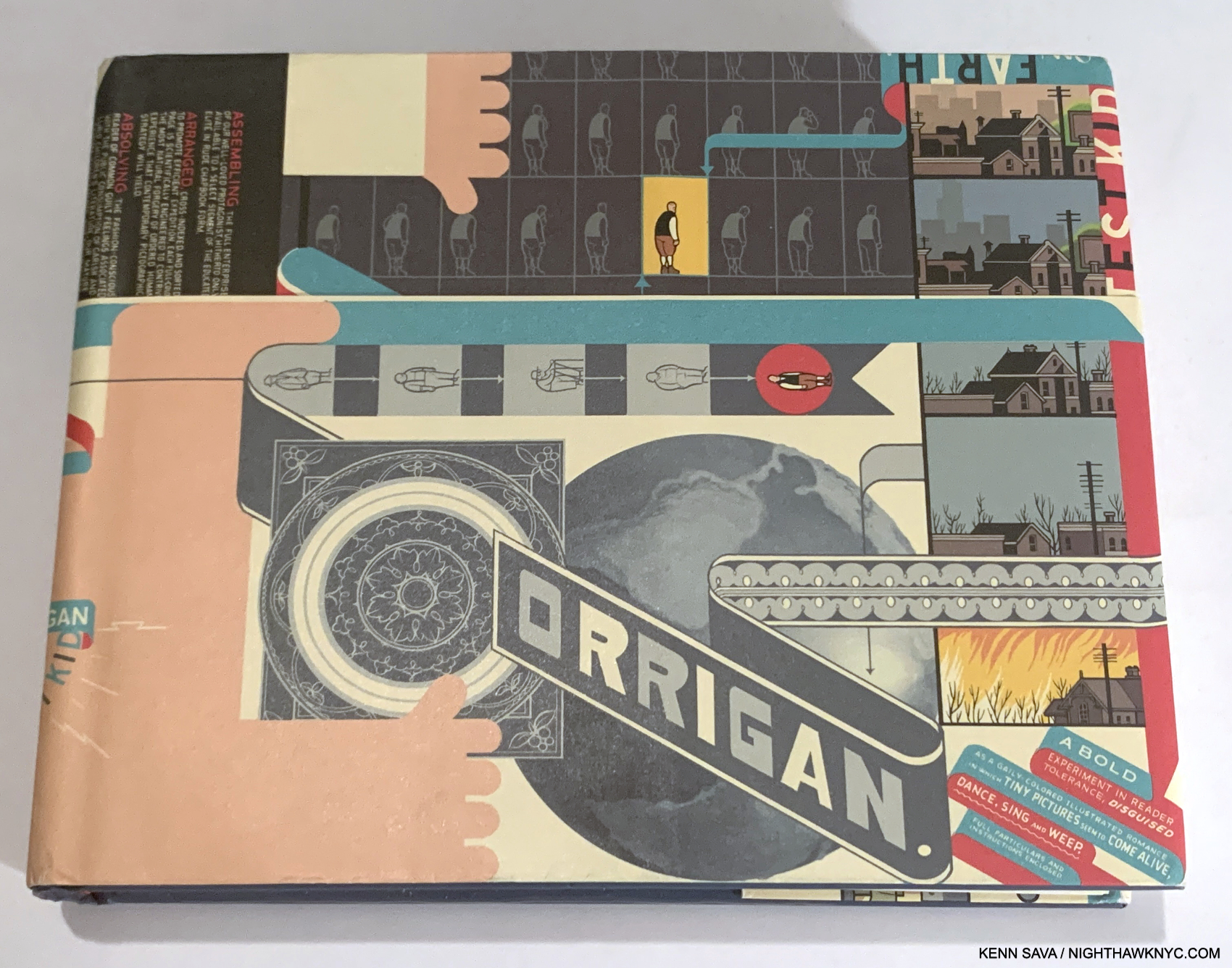
A First Edition copy of Chris Ware’s landmark Jimmy Corrigan: The Smartest Kid on Earth. Right from its amazingly intricate double-sided fold-out poster/cover, you know you’re in for something you’ve never seen before. “A bold experiment in reader tolerance…,” the lower right reads. That echoes what the incredibly self-effacing Artist told me when I bought Art from him in 2001- “It’s easily disposable.” Note- If ANYONE is throwing out Chris Ware Art, please contact me first!

Chris Ware, Jimmy Corrigan: The Smartest Kid on Earth, Pantheon Books, 2000
The ground-breaking classic that ushered in the current era of the Graphic Novel, and made a good many people sit up and take them seriously, including The Guardian, who gave it their 2001 First Book Award, the first time a Graphic Novel won it. Jimmy is a book born of Chris Ware’s own experience with his estranged father, shrouded in what has become to be known as his signature melancholy style turned into Fine Art in the hands of one of the most innovative and ground-breaking Artist/designers of our time.
My look at the debut show for the work from his now-classic 2nd book, Building Stories, is here.
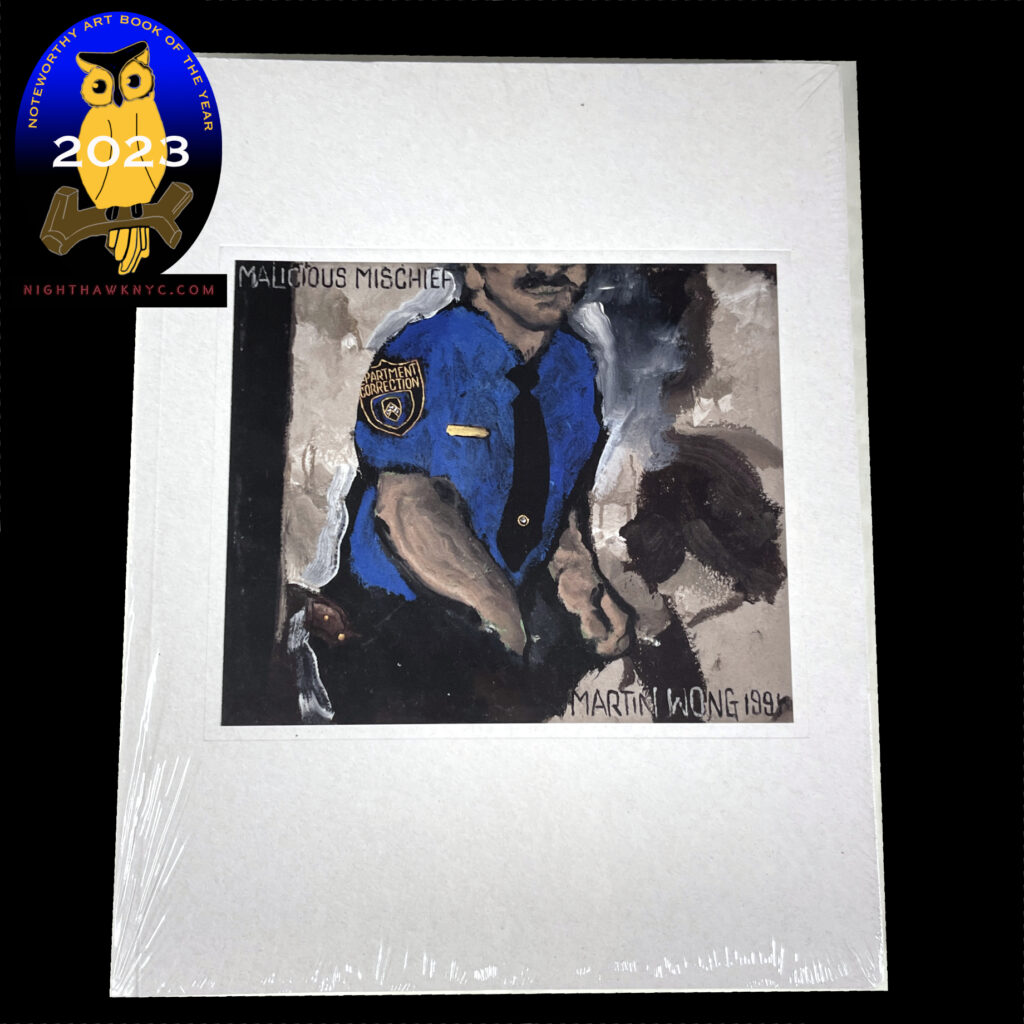
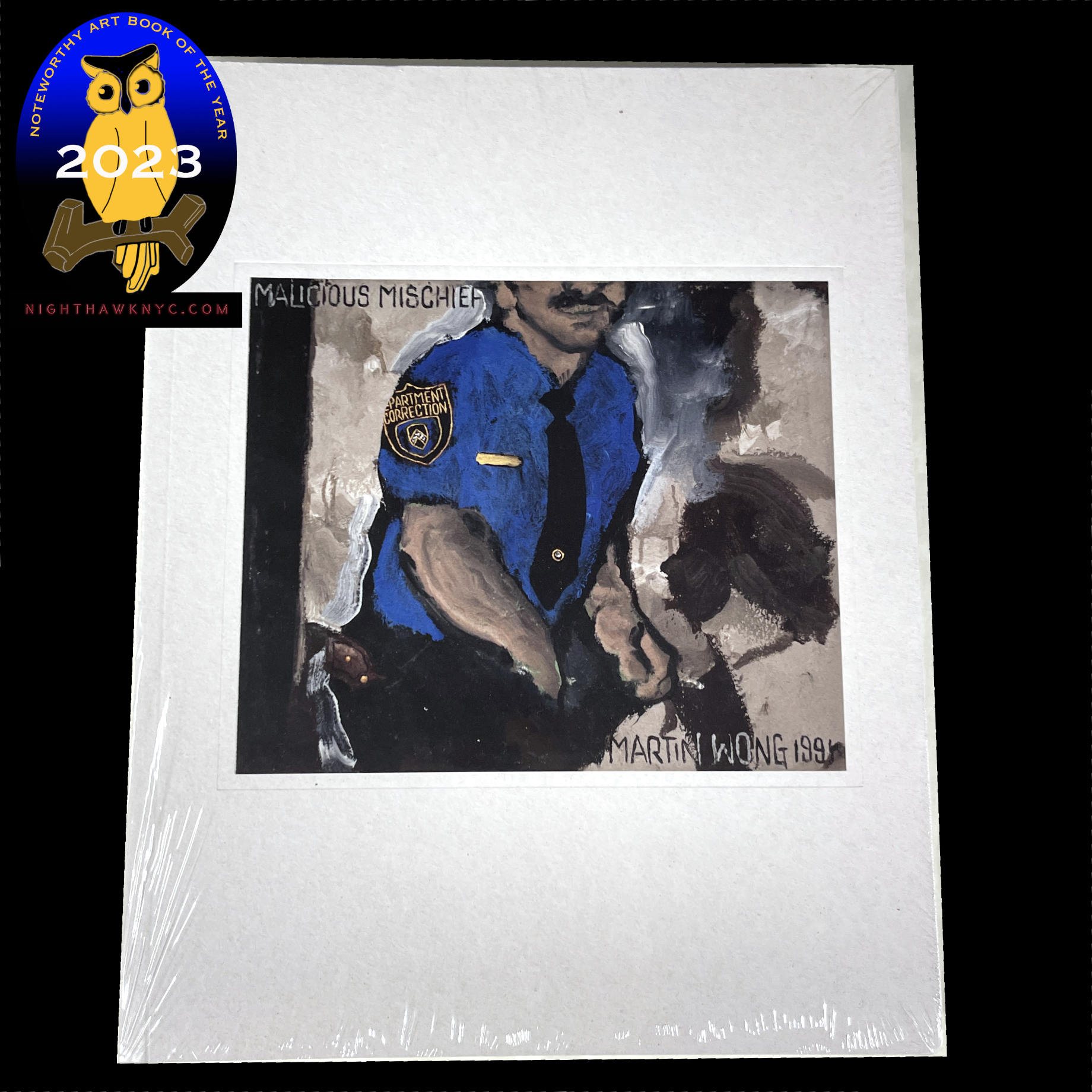
With its NoteWorthy Art Book of 2023 designation.

Martin Wong, Martin Wong: Malicious Mischief, 2022, Walther Konig
Little by little Martin Wong’s star has continued to rise this century, though the publication of Malicious Mischief coincided with what looks to have been a superb exhibition that made a number of stops in Europe, I’m calling this a monograph because it goes far beyond an exhibition catalog to be the most comprehensive book on this extremely talented Artist who died in 1999 at just 53. The Met, MoMA and the Whitney, among others in the U.S., own his work. So, WHERE is his American Retrospective? Until it happens, the beautifully designed (though I wish it was a hardcover) Malicious Mischief is THE place to see the most Martin Wong Art, in a nice size, to boot. Out of print, VG copies start around $195.00.
My piece naming it a NoteWorthy Art Book of 2023 is here.
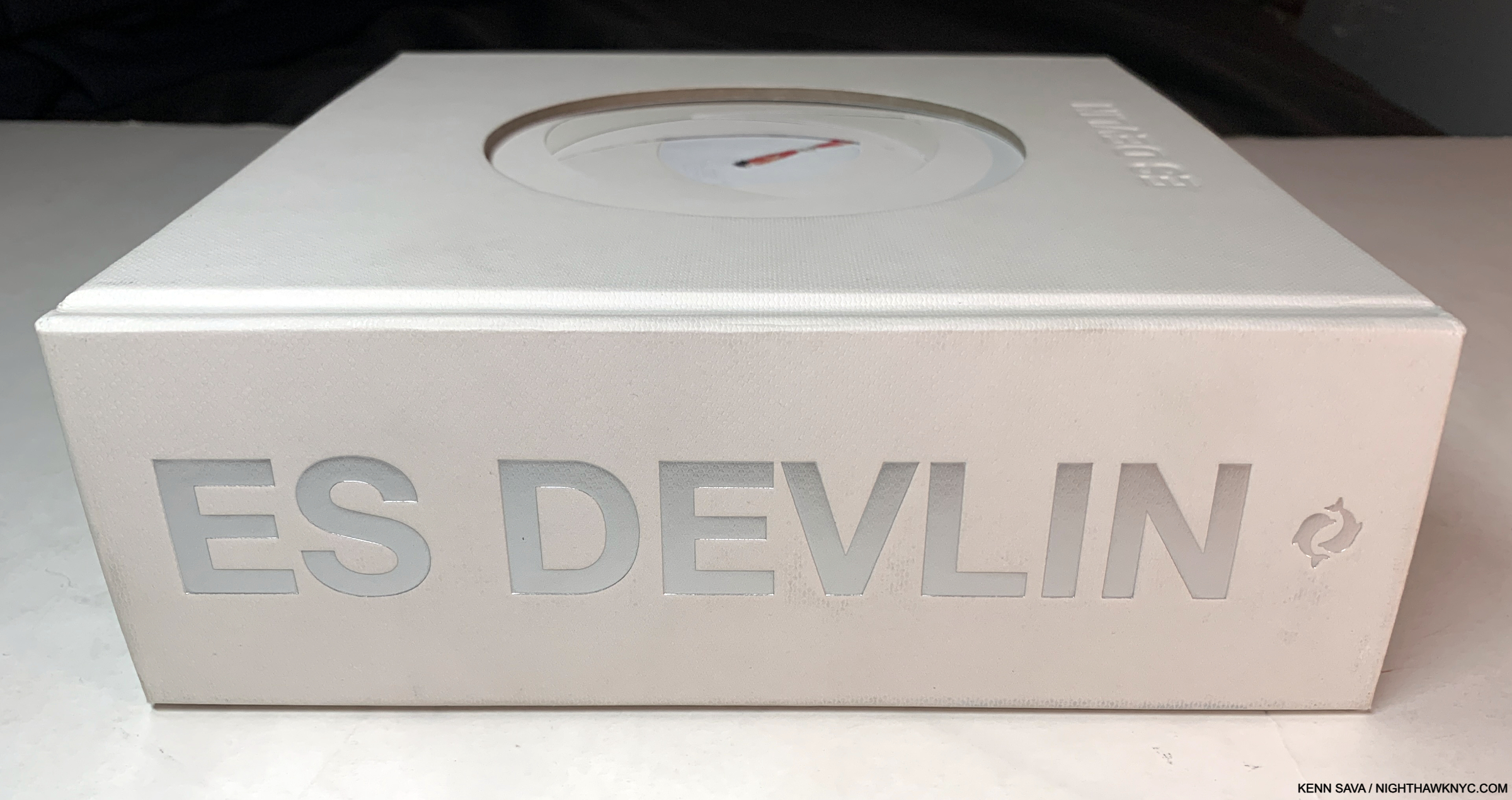
 

Es Devlin, An Atlas of Es Devlin, Thames & Hudson, 2022
Even if her Art wasn’t NoteWorthy (IT IS!) this book would still be on the shelves of countless designers for reinvisioning and expanding the possibilities of the Art book, and of Artists for Ms. Devlin’s seeming endless imagination. For me, it’s wonderful that such a cutting-edge creator still relies on “old-fashioned” pencil on paper, and Drawing! Remember Drawing?
My piece naming it a 2024 Noteworthy Art Book of the Year is here. My look at her Museum of Design show of the same name, which accompanied the publication of this book, is here.
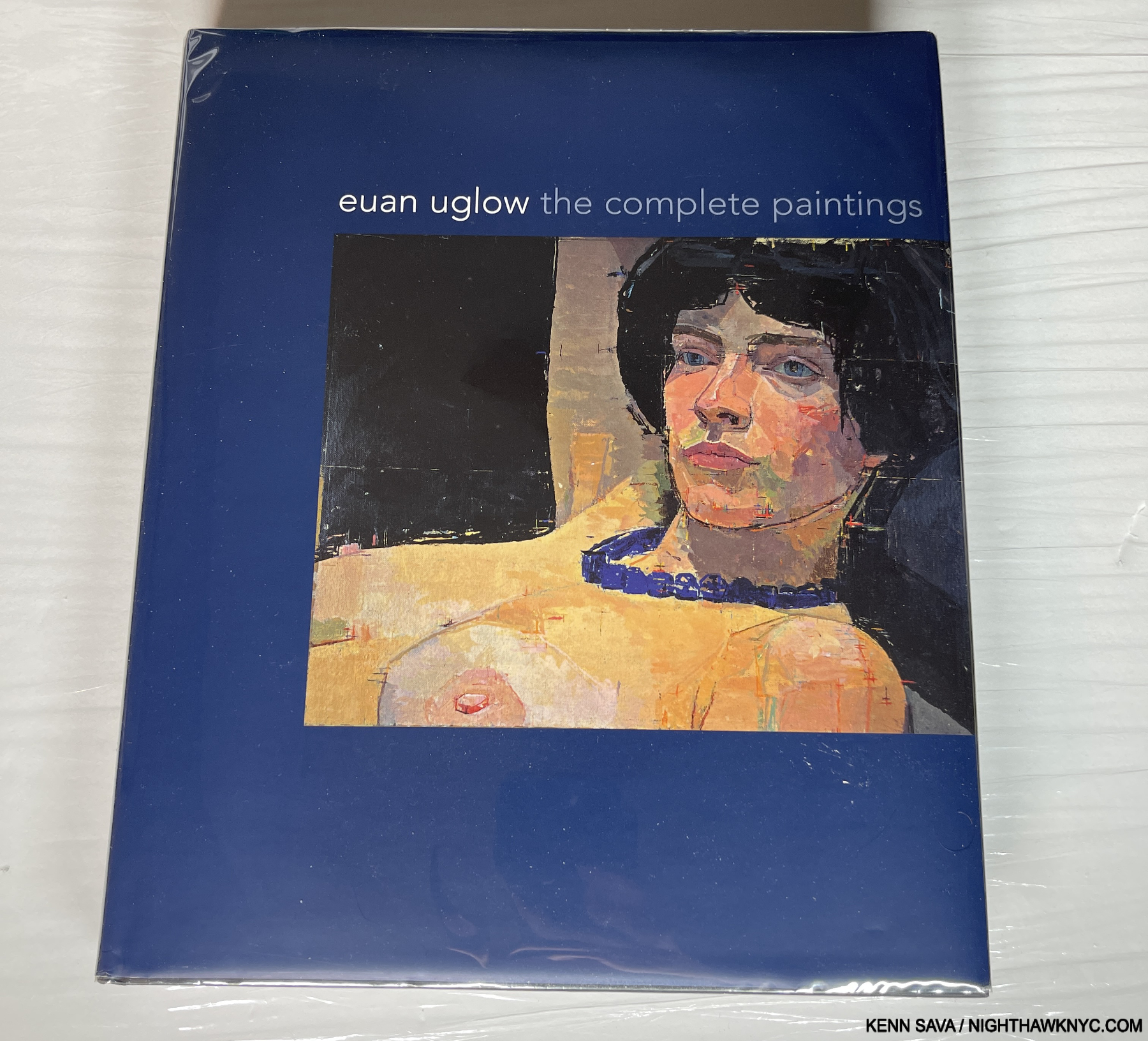
Euan Uglow: The Complete Paintings. Perhaps the sleeper book on this entire list, remarkably still in print, 18 years later. That says a lot about it lasting import.

Euan Uglow, Euan Uglow: The Complete Paintings, Yale University, 2007

“Nobody has ever looked at you as intensively as I have.” Euan Uglow to one of his models in 19984.

And it shows.
Euan Uglow: The Complete Paintings is a Painting book that melds Catalogue Raisonne (a book that shows all known work) with a monograph (something more common of late), and does it so well it’s a model for how the two can work together in one book. Traditionally, Catalogue Raisonnes were aimed at museums, dealers or collectors looking to buy or sell a work by an Artist (where they served as the definitive reference), and so they can be very dry affairs with small images (sometimes in black & white), which disappoint Art lovers looking to see more work by the subject Artist. Euan Uglow: The Complete Paintings is a book that will edify specialists, yet one that I think many Art lovers interested in knowing more about Mr. Uglow’s work will be quite happy with.
I was completely unaware of the late Mr. Uglow (1932-2000) until I began researching Art historian Catherine Lampert’s other books besides Frank Auerbach: Speaking and Painting (which is on this list further on), and discovered she authored this one. A somewhat legendary book, particualarly among figurative Painters, I was immediately mesmerized. Some have quibbled about the image size of some reproductions. Well, with 532 works pictured on 244, 10 by 12 inch pages, some compromises had to be made (Note- The publisher lists this book as 244 pages. Well, the Cat Rai totals 244 pages. There are an additional 79 pages of essays by Richard Kendall and Ms. Lamper twith roman numerals! 323 pages total). Catherine Lampert also contributes the Catalogue of all known Uglow works. The wonderful thing about this is that she annotates most of the entries with her special insights born of knowing the Artist for so long (she’s pictured with him in 1978, and she modeled for him, as she did for Frank Auerbach), as well as innumerable obscure quotes from the Artist, which forms a running narrative, something I’ve never seen before in a  Catalogue Raisonne, And so, she goes well beyond the standard info a C.R. usually provides (i.e. title/date/medium/dimensions/ownership history with maybe a published citation included alongside an image that might be a thumbnail or medium-sized). In my opinion, Euan Uglow: The Complete Paintings reinvents the Cat Rai.
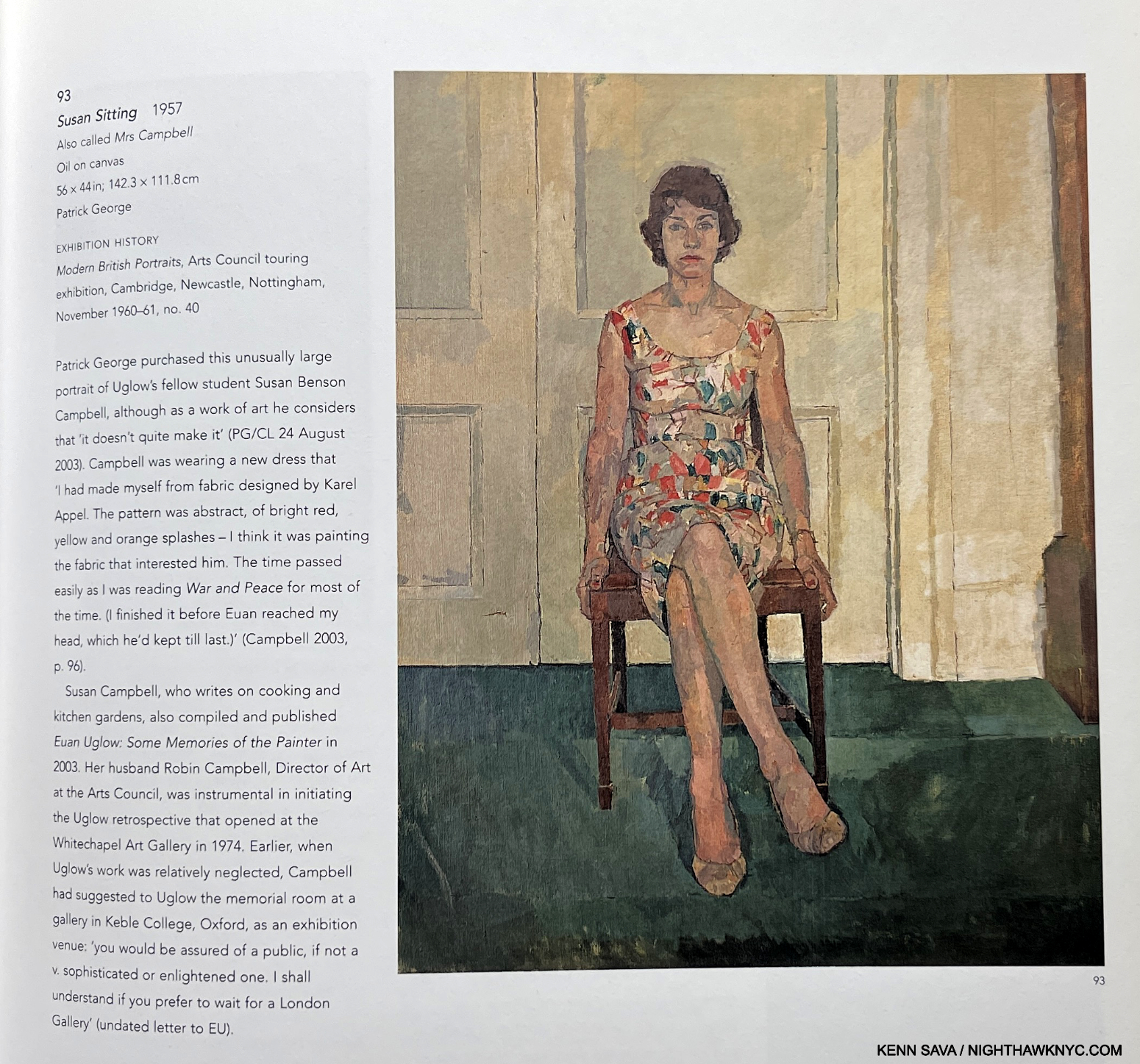
Here’s one example. Page 35. Click for full size.

Being able to see an Artist’s work from the beginning to the end has enthralled me since I was a kid, when I discovered Bob Haak’s Rembrandt, as I said earlier. It’s like a “different kind” of “autobiography” in a way. In Euan Uglow: The Complete Paintings you get to watch the Artist become just that by building on his early education with William Coldstream, and the influence of Cézanne, to developing something uniquely his. As his work becomes more and more popular and respected (both of which I expect to continue), this book will remain the essential volume on it. Though it lists for $120. new, the price has not stopped people from buying it, witnessed by the fact that, 18 years after its publication, it’s in its 8th printing! I agree with what one Artist reviewer said after saving up for it, “It’s worth every penny.”
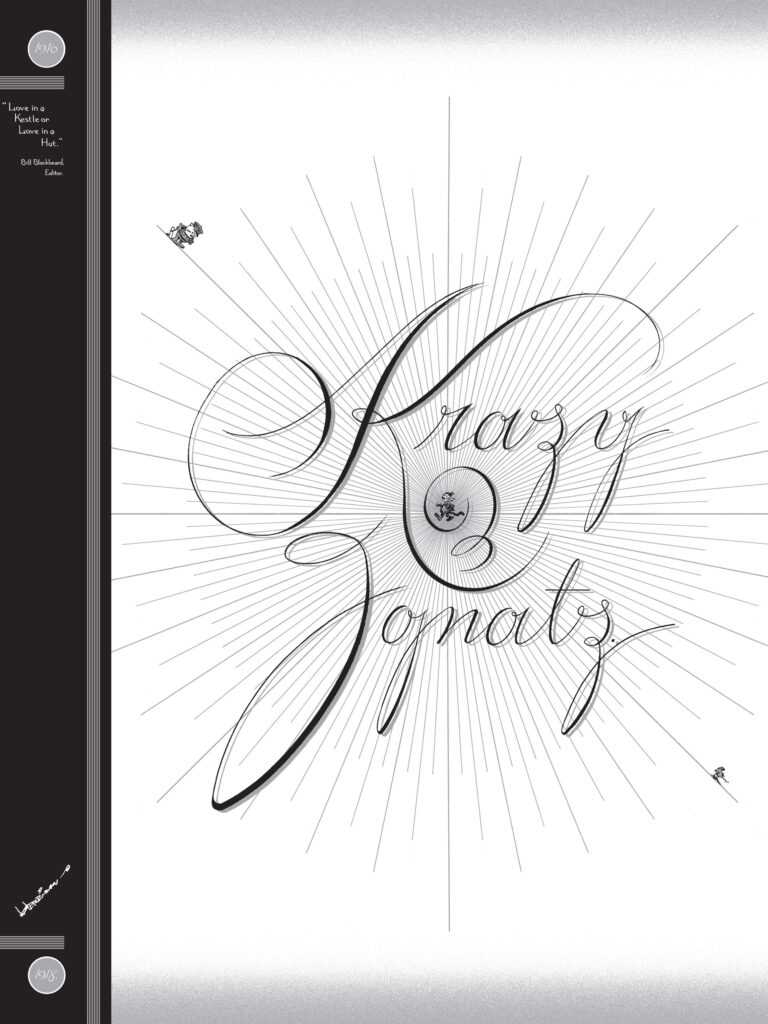
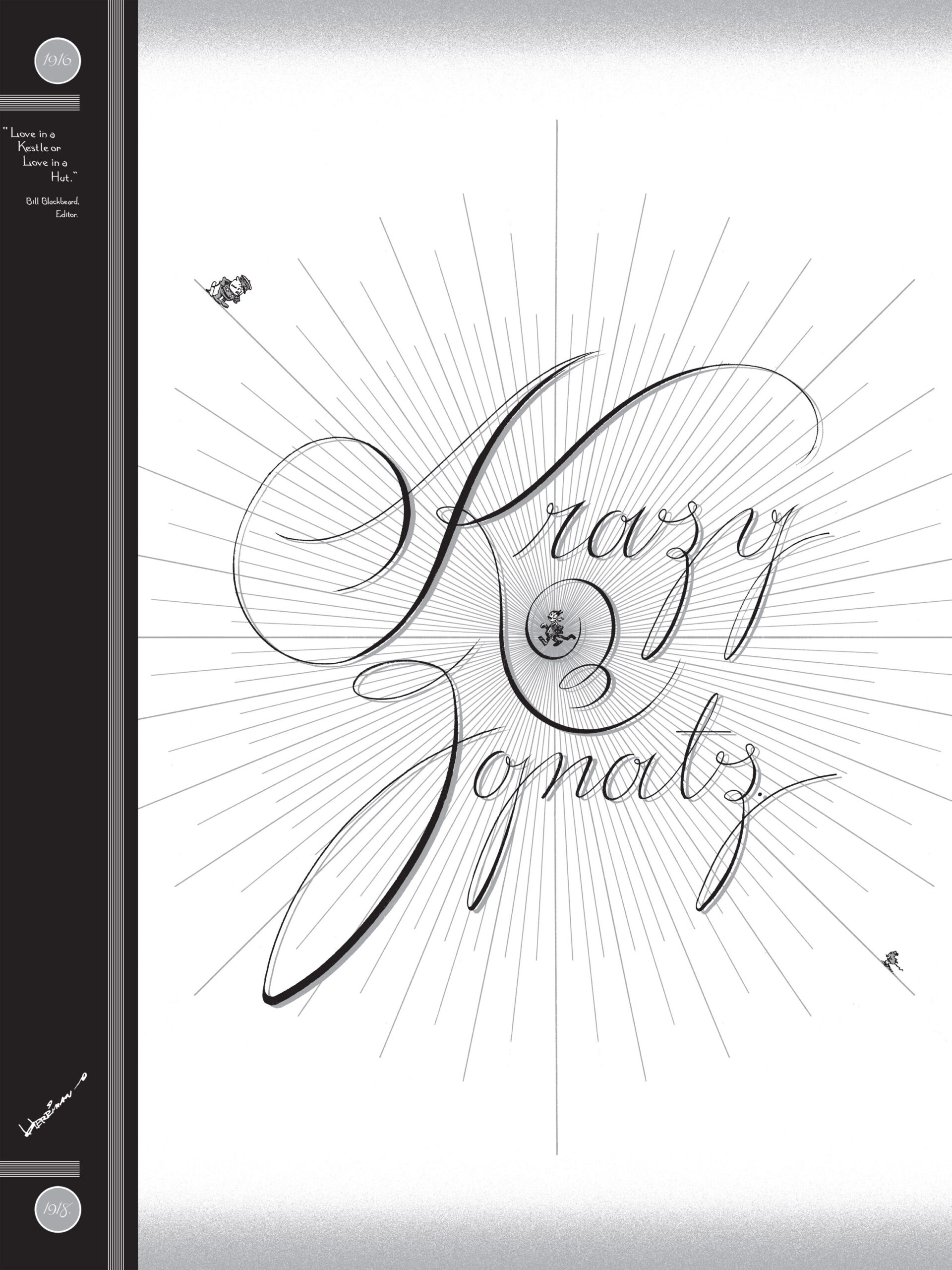
The cover of Volume 1. And here, an epic journey begins. One that would last for 28 years.

George Herriman, Krazy & Ignatz, 1916-44, Fantagraphics, 2002-2012, 13 Volumes
An astounding achievement, George Herriman’s Krazy Kat comics revolutionized comics, and showed countless Artists just what was possible in the medium. Among those influenced by Mr. Herriman is Chris Ware, cited elsewhere in this piece, who designed each and every volume of the series wonderfully melding his unique style, which has roots in that of his illustrious predecessor, with that of Mr. Herriman. Here we get it all, from his the beginning, right through his fascinating and beautiful color pieces (1935-44). Though the series has since been reissued in a large set of handsome hardcovers, this is the set I will keep returning to because of the justice Chris Ware, who has become a major contributor to the history of comics and the graphic novel himself, does to it. What’s it all about?-

“At the center of the strip is an inter-species love triangle: Krazy, the black cat, loves Ignatz, the white mouse. Ignatz (though they would swap colors from time to time!), however, hates Krazy and takes delight in boping him/her with a brick. Krazy, with a charming naiveté, interprets these bricks as symbols of love. Offisa Bull Pupp, the white police dog who is secretly in love with Krazy, has a clearer view of the matter and tries to jail Ignatz. Krazy of course is perfectly indifferent to Pupp but enjoys the way “like lil innisint childrens they[Ignatz and Puppl play togeda.5

Yes, Krazy Kat takes place in an “absurdist universe6,” yet it seems to me it can also be seen as a veiled saga of different species getting along and actually loving each other (a cat loves a mouse; a dog loves at cat) written at a time when racism in the U.S. was at its peak. But that’s just scratching the surface. I think it’s the fact that Mr. Herriman is an Artist on multiple levels that has kept Krazy Kat preeminent among comics for so long. You can focus on any aspect of it- from the black and white, bisexual characters, to the (hopeful) ironies mentioned earlier, to the ground-breaking graphic design and the Art present in every panel, to the tale of unrequited love that twists and turns seemingly endlessly, indefinitely. Over 100 years have now passed since he began Krazy, and he has gotten more and more well-deserved attention for creating a masterpiece that pulled no punches- visually or in its writing, characters or stories. It’s hard to say just how many boundaries Mr. Herriman broke with Krazy, and he did it with carte blanche from publisher William Randolph Hearst, himself, who was just one of his fans, along with the likes of Gertrude Stein, e.e. summings, F. Scott Fitzgerald, Pablo Picasso, James Joyce, US President Woodrow Wilson, Jackson Pollock, Charlie Chaplin, Frank Capra, P.G. Wodehouse, Willem de Kooning, to name but a few.
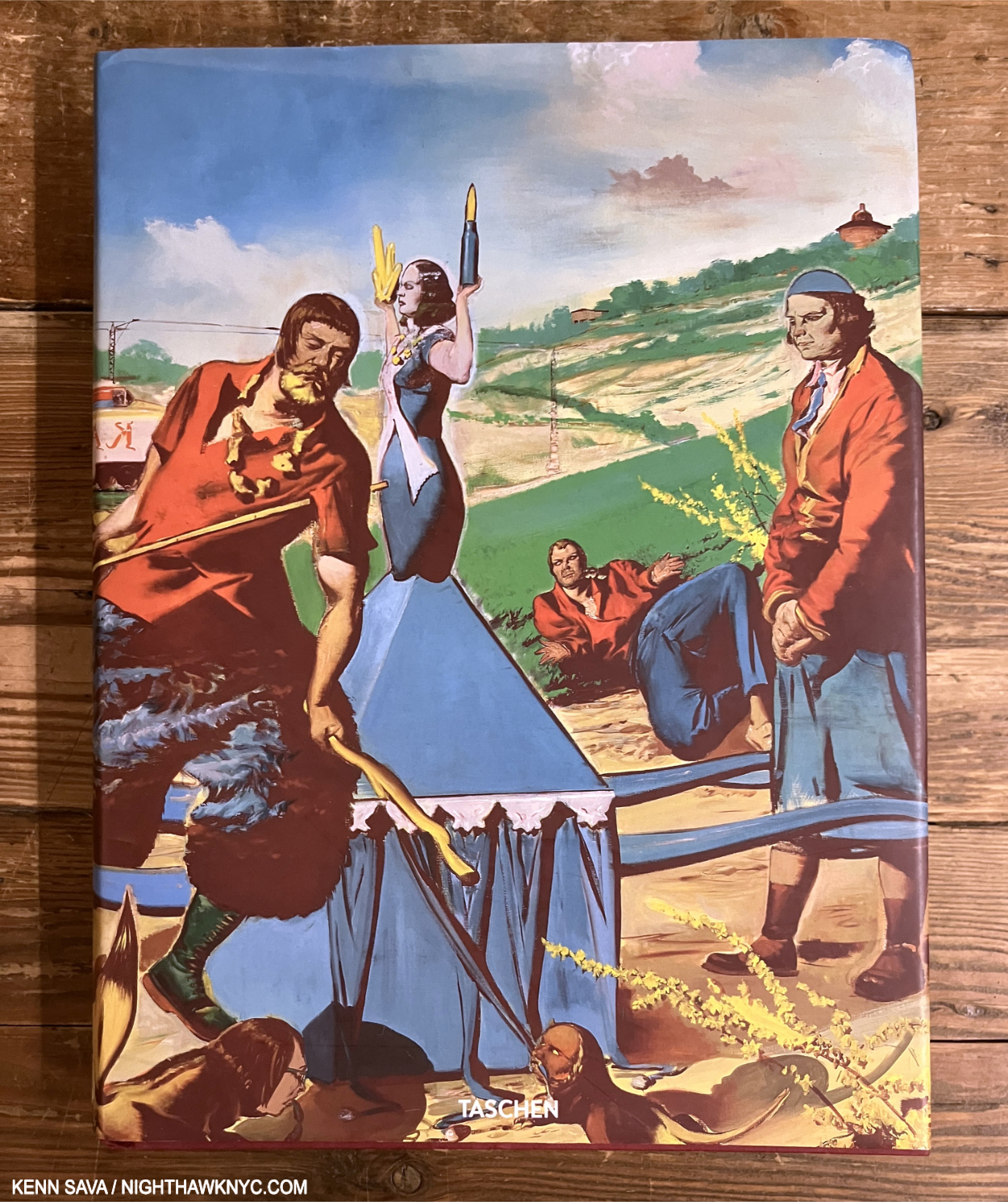
My worn copy of Taschen’s Neo Rauch is never far from where I can reach it.

Neo Rauch, Neo Rauch, Taschen, 2013
There are now many books on Neo Rauch, including some very good ones, and though I have, or have seen, almost all of them. I keep going back to this one, as I continue to wrestle with his eternally mysterious work, even though it’s now 12 years outdated. Its generous XL size suits his often huge works wonderfully, and so gives me the best fighting chance of getting there, aided by very insightful commentary. Among my very favorite Contemporary Art books, and long out of print, VG copies can be had for $200. I live in continual hope Taschen will update it and reissue it one day soon. When I asked Mr. Rauch about just that last year, he wistfully shook his head. Well, I can dream, can’t I?
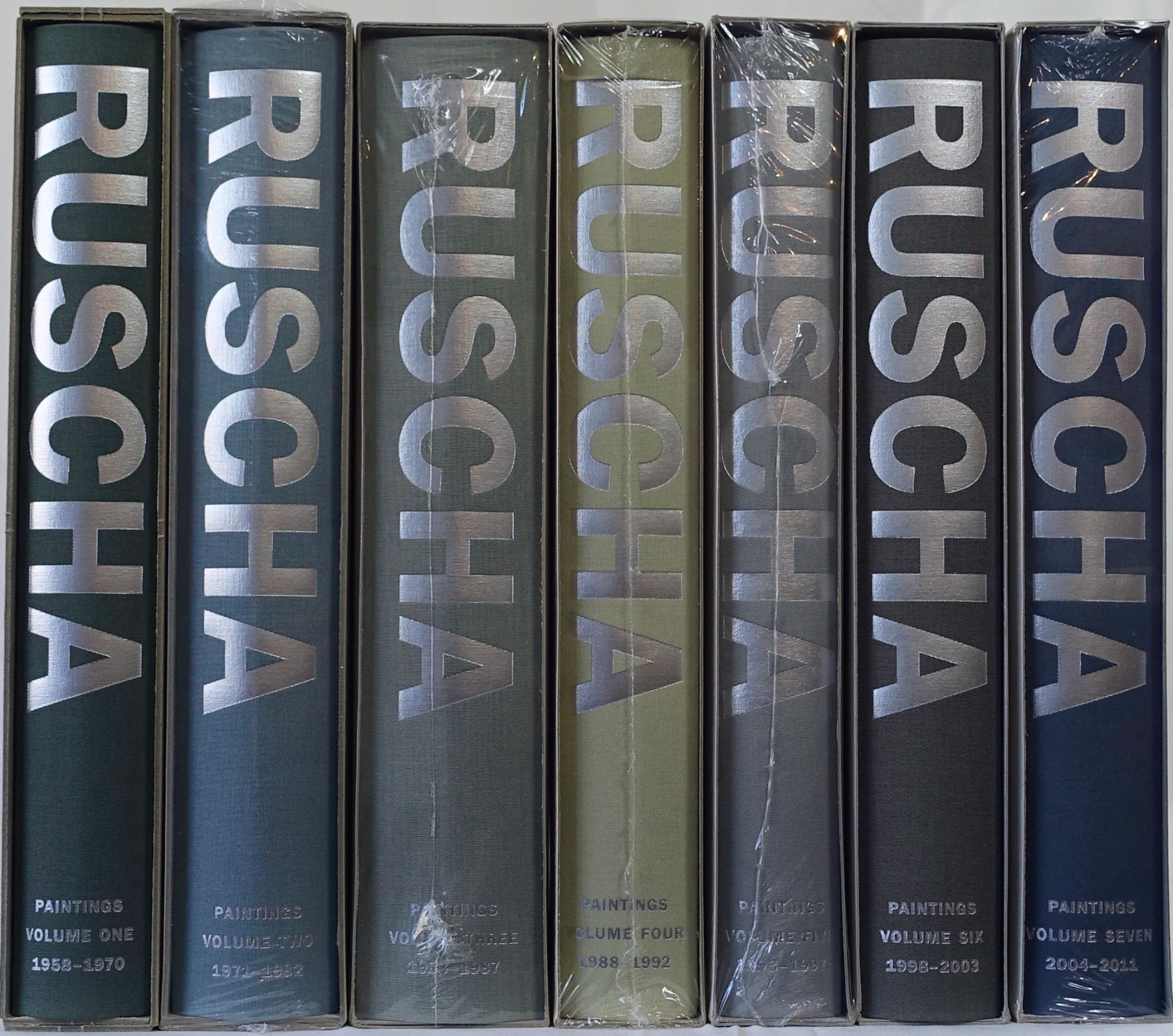
All seven of them. So far. Though handsome, I wonder why they chose these colors for the covers. It’s not like they’re so different as to make telling one from the other easy at a glance. And they each come in the same grey cardboard slipcase with no labelling on it

Ed Ruscha, Ed Ruscha: Catalogue Raisonne of the Paintings, Seven Volumes (so far), Steidl, Volume One published in 2004
Ed Ruscha’s Paintings are finally getting the Cat Rai treatment they’ve been crying for for most of the past SEVENTY YEARS(!) he’s been making them. By the time it’s completed it will be an unprecedented set for any Contemporary Artist. Beginning in 1958, when the Artist was still in school, Ed Ruscha has continued to fascinate, mystify, and bring a smile to the face of countless viewers ever since. If there’s one major revelation these seven large, handsome, books provide it’s that Mr. Ruscha NEVER sits still! Every subject he’s revisited over his long career he’s done so with a difference, and it takes such a voluminous set that delineates each and every “thing” (often literally- like blood, gunpowder, chocolate, and on and on and on…) he’s used in creating each work to appreciate all of them, and all the innovations that have gone into them. Good thing, too. Otherwise HOW would we know such  and such Standard Gas Station piece was made using a different one of his seemingly endless technical innovations than that other one was?! These discoveries add exponentially to the appreciate of Mr. Ruscha’s accomplishment. Volume One has been out of print for a few years, so expect some of the others to follow. My one caveat is the amount of repeated material in the back of each book. Shouldn’t this have been saved for the end of the final volume when it will be the most current info? Volume Seven, published in 2017, “only” goes up to 2011, so expect a few more as the Artist continues to work full speed ahead as he approaches his 88th birthday. Many more, Ed!
My 3-part series on Ed Ruscha/Now Then at MoMA is here.
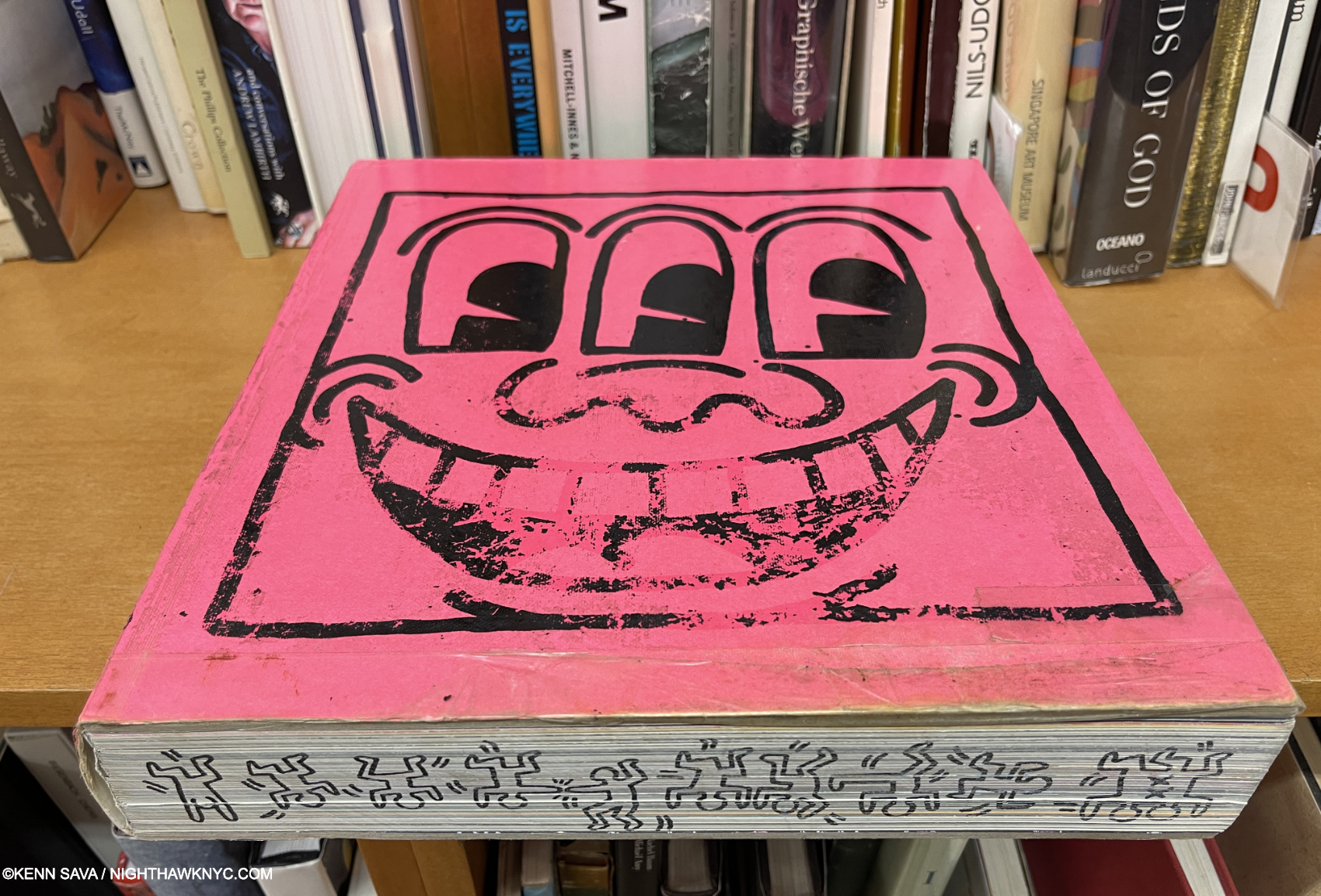
A copy of the larger first edition of Keith Haring showing it’s (quite rightly) been handled a fair amount. I imagine that had he lived to design it, Keith may well have created Art for the edges, and who knows what else.

Keith Haring, Keith Haring, Rizzoli, 2008
Jean-Michel Basquiat said he wasn’t a graffiti Artist, though it seems few have paid any attention to that, sadly. Out of everyone else who’s written on walls, buildings, and everything else, it seems to me that, so far, only Keith Haring among “graffiti Artists” has achieved a lasting place in the museums. There may be a lesson in that, but I’m not getting into that now. Meanwhile, this book is a knock-out, a glorious 528-page testament to Mr. Haring’s incessant ability to make a line dance that always surprises the eye, and his tireless dedication to causes that continue to be important. Page through this book, and when you’re done marveling at how much work Keith Haring did, shake your head at the fact that he tragically died of AIDS-related complications at just 31 in 1990. The original 2008 edition, pictured, was a beautiful 12-inch square providing lots of landscape for the Art. It’s been reprinted at smaller sizes since, still very nice, which can still be had quite reasonably.
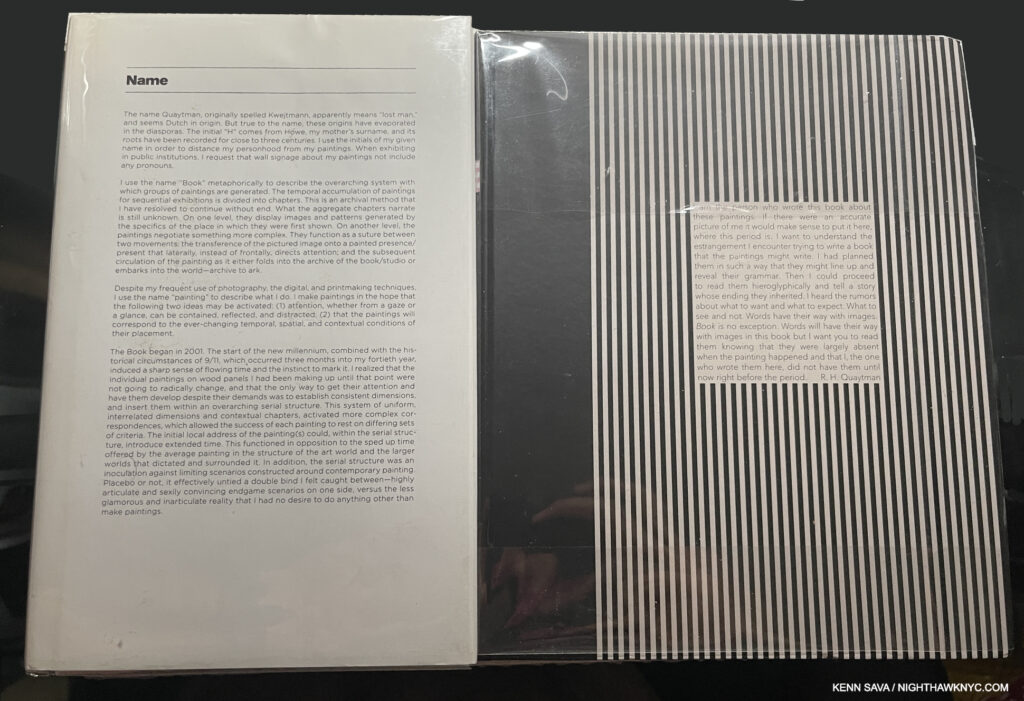
Spine, left, now quite rare, and the newly released Book, right two unique Catalogue Raisonnes covering

R.H. Quaytman, Spine, Sternberg Press, 2011 and
Book, Glenstone, 2025
Spine is nother Artist’s book on this list is, also, a Catalogue Raisonne of the Artist’s Paintings from 2001 to 2011 according to the Artist’s unique “system.” Ms. Quaytman is, perhaps, not as well known as a longtime admirer and supporter of Hilma after Klint (more on Hilma & R.H. Quaytman, here). She curated the very first NYC Hilma af Klint show at MoMA PS1 in 1989!- the only solo Hilma af Klint show in the U.S. until the Guggemheim’s blockbuster and a show of her work occupied the upper floor of Frank Lloyd Wright’s Guggenheim Rotunda during the run of Hilma af Klint: Painting for the Future (see above)! A very fitting pairing- in many ways. Her work has a toe in many realms and mediums, making her impossible to box (Yay!). Spine is a Catalogue Raisonne of R.H. Quaytman’s work since 2001, so a decade of her work is included. Since 2001, she has organized her Paintings into “Chapters,” beginning with “The Sun, Chapter 1,” to “Spine, Chapter 20,” which would seem to be a natural fit for a book. Conceived and written by the Artist, the results are still unique. As is the design. The Artist has continued to work in “Chapters,” and has stated she will until she dies.
Spine struck a chord with many readers when it came out and has gone on to achieve legendary status. Long out of print, VG copies currently begin at $160. 

Book, the newest book on this list, suddenly appeared in Fall, 2025, and carries right along from where Spine leaves off, and is its match in all regards, covering her work from 2010 through 2020 in her now familiar “Chapter” format.  Two essential books, in my view, for anyone interested in Contemporary Painting.  Grab Book before it becomes as scarce as Spine!
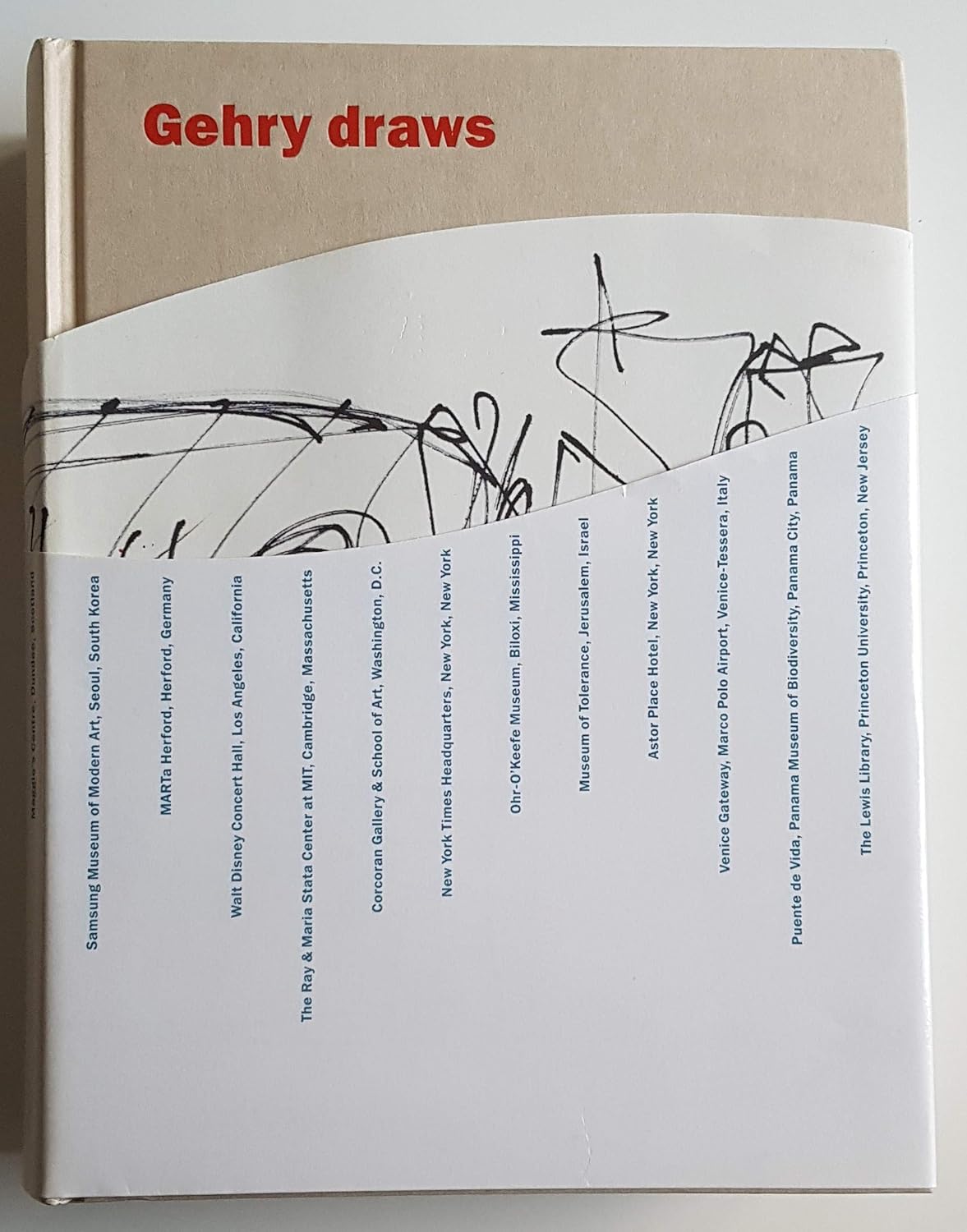
Frank Gehry, Gehry Draws, MIT Press, 2004
If 100 people who had never heard of Frank Gehry and were shown the Mr. Gehry’s Drawings in this book, I wonder how many of them would guess these were designs for buildings. On their own, they’re Art in my book, and the chance to see how a visionary Architect’s mind works, and how his structures begin is just extraordinary. With all the books published on the finished buildings, this is one of the few that speaks to their genesis, and containing the work of one of the great masters of Architecture of the 20th and now 21st centuries makes it even more important.
Out of print, copies remain reasonably priced. At least for now.
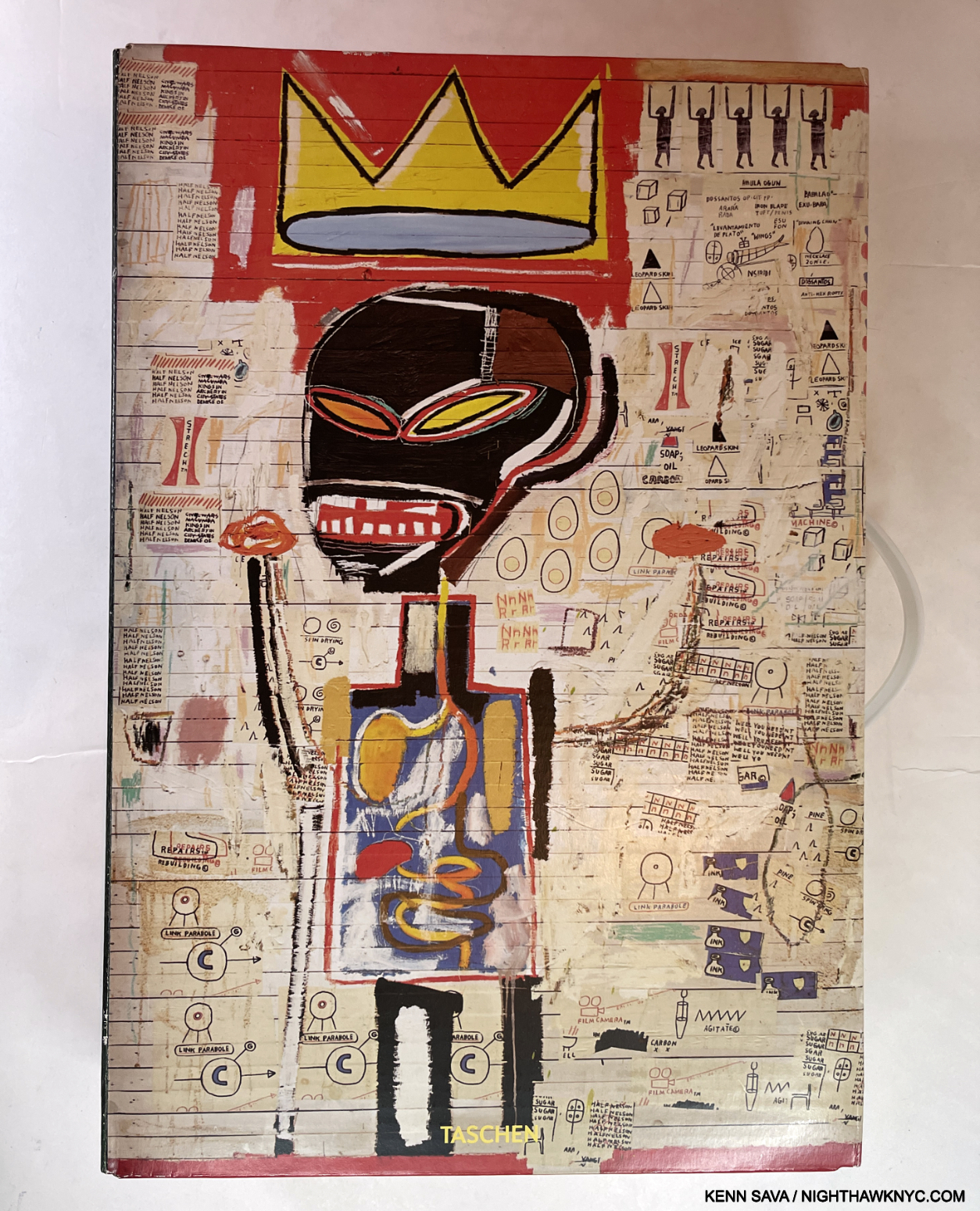
The first printing of the Basquiat XXL came in this pictorial shipping box. Subsequent printings came in a brown box with black type, and new copies I’ve seen in 2025 have NO shipping box at all. My copy shown, which I sold in my ongoing struggle to keep writing.

Jean-Michel Basquiat, Basquiat, Taschen XXL, 2018, or Brick, 2020
It surprised me when I realized that I’ve written about Jean-Michel more than any other Artist over the 9 1/2 years of NighthawkNYC. Well, he’s certainly been the world’s most popular Contemporary Artist over that time. As a result, in researching all the pieces I’ve done on him, I acquired a very large Basquiat library. To all those who’ve asked me which one book I’d recommend on him, I say this one. It’s got the most Art, and in the XXL size, in the largest reproductions anywhere. Most of his Art is in private hands. Meaning, your ONLY shot at seeing the most Basquiat for the foreseeable future is in Taschen’s Basquiat! If you want to see it in the largest size anywhere, choose the XXL. If you want to see his work and not spend the $200. list for the XXL, choose the Brick, which lists for $30. It’s almost identical in content, but smaller.
Though not on this list, my choice for the “sleeper” book on Basquiat is a toss-up between Richard Marshall’s excellent work in the catalog for the Whitney Retrospective mounted shortly after the Artist’s death, The Art of Jean-Michel Basquiat by Fred Hoffman, and Basquiat’s Notebooks, published to accompany the excellent show of the same name at the Brooklyn Museum.
My extensive coverage of all the Basquait shows in NYC since 2019 begins with the legendary Brant Foundation show here, includes gallery shows, and the popular King Pleasure show, mounted by his family, during the run of which, I met and spoke with both of his sisters.

NoteWorthy Exhibition Catalogs  of the 21st Century-
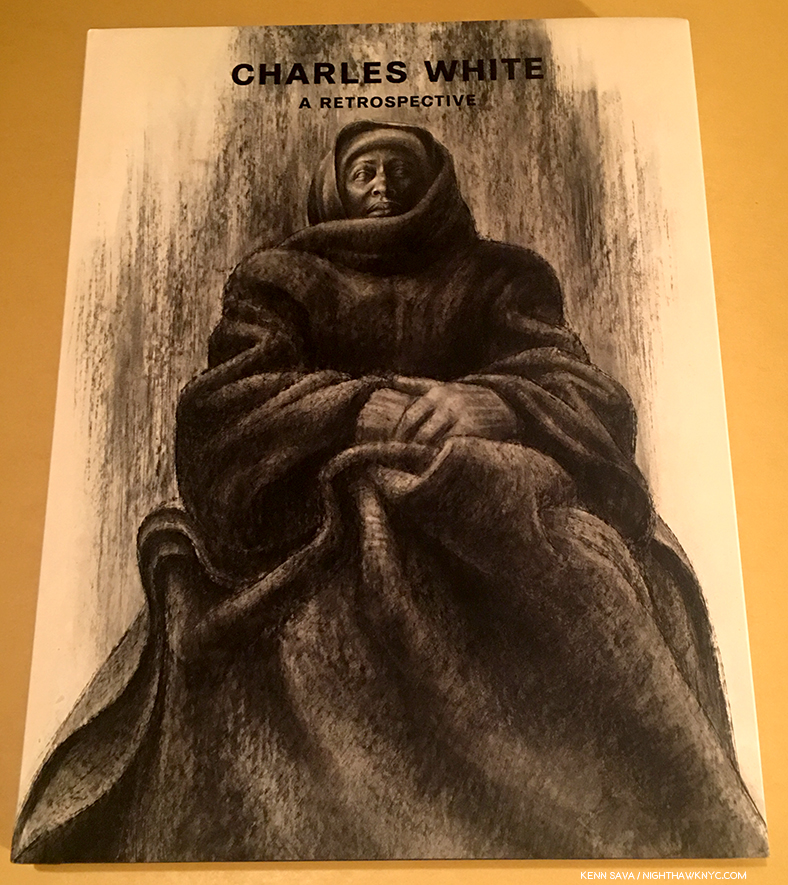
Charles White, A Retrospective, 2018

Charles White: A Retrospective, Museum of Modern Art, 2018
These 25 years have been characterized by Great Black Art finally beginning to get the attention and appreciation it deserves. Unfortunately, it happened too late for Charles White, who’s work was and is so good it should have inspired just that on its own (or, along with his equally worthy contemporaries Horace Pippin, Jacob Lawrence and Romare Bearden, among others.) But, he had to wait until 2018 for the Museum of Modern Art to mount the Retrospective he deserved. Others are still waiting…

My look at the show is here.
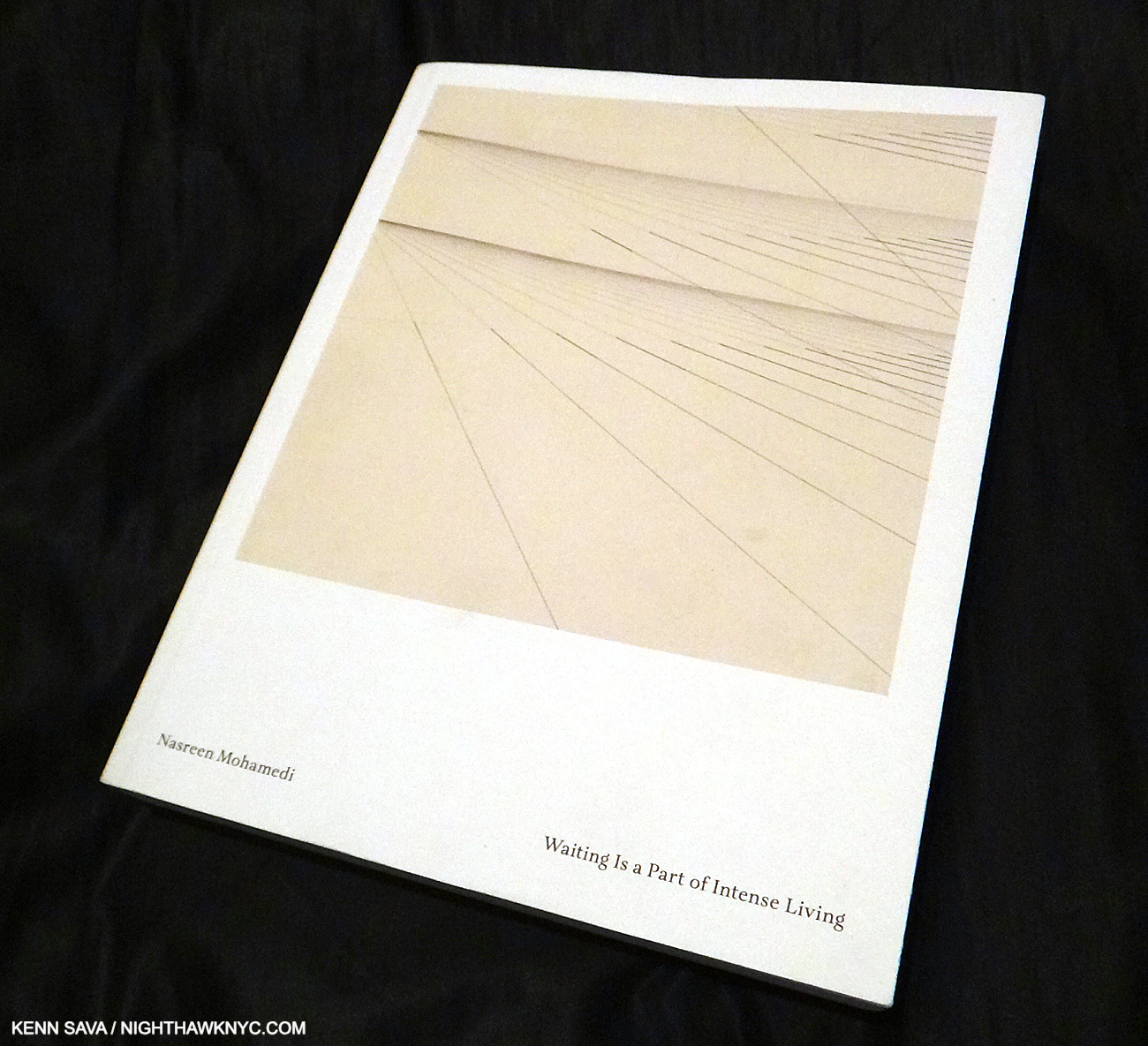
A very rare sealed copy.,

Nasreen Mohamedi, Nasreen Mohamedi: Waiting is a Part of Intense Living, Museo Nacional Centro de Arte Reina Sofía, 2015
I had never heard of Nasreen Mohamedi, when I walked into The Met Breuer for its opening day in 2015, where this show (titled Nasreem Mohamedi) and Unfinished: Thoughts Left Visible shared the building. I quickly fell under the spell of the Indian Artist who passed away in 1990 at about 52, and I wound up writing extensively about the show I saw about a dozen times, here. Waiting is a Part of Intense Living is by far the most comprehensive book on this fascinating Artist who remains under known in the U.S. and was published to accompany the show’s first stop in Spain.
Copies were available, here, during the run of The Met Breuer show, but have steadily dwindled since. It’s now extremely hard  to find, with used copies beginning at $200. in iffy condition, unfortunately. I hope someone will undertake an even more comprehensive look at Nasreen’s career. Her Art is not going away.
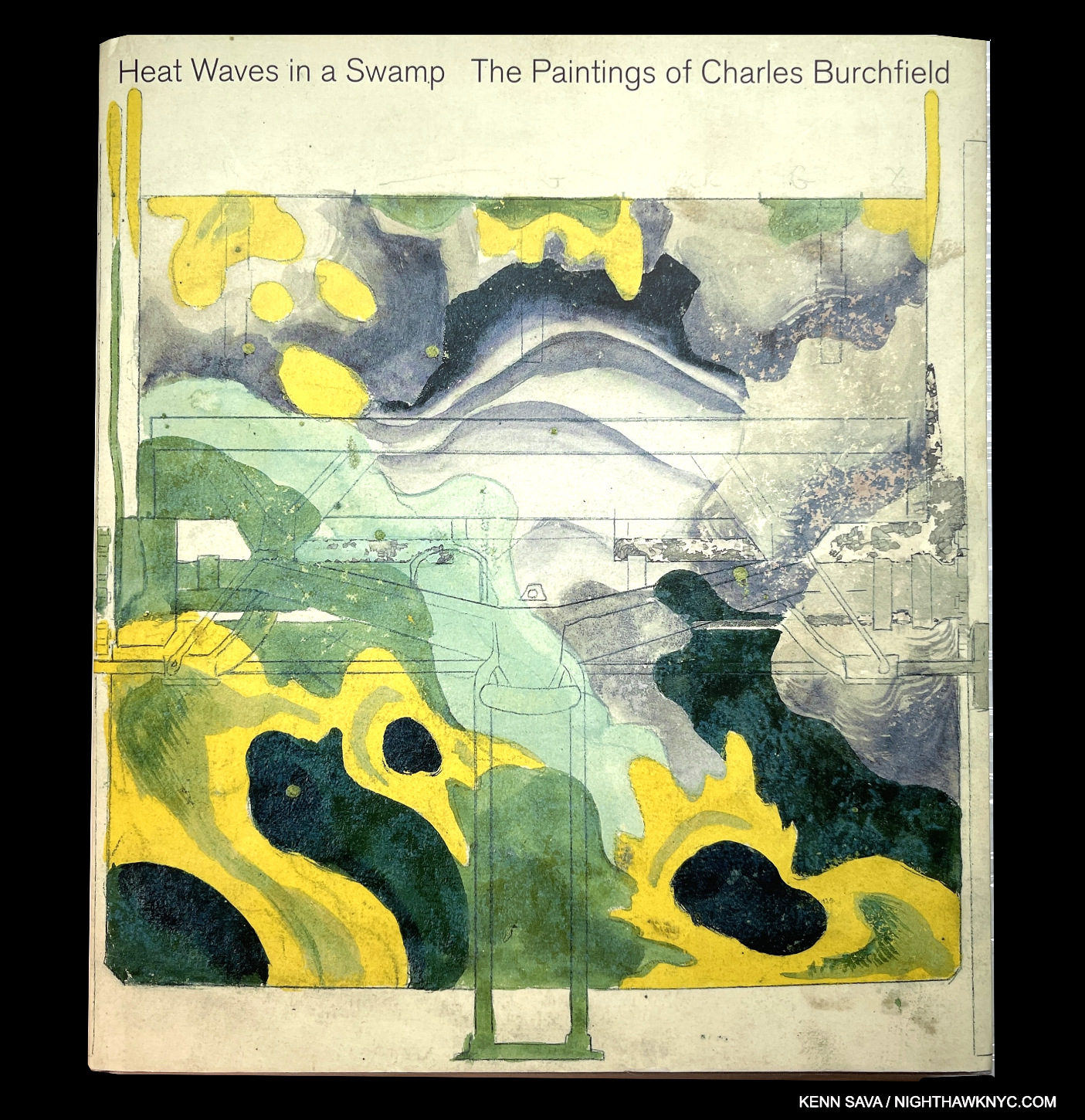
Charles Burchfield, Heat Waves in a Swamp: The Paintings of Charles Burchfield, Prestel, 2009
Edward Hopper’s favorite Painter needs more fans! I’ve heard Gregory Halpern is one, and before curating what looks to have been a revelatory traveling show that came to the Whitney in 2010, Artist Robert Gober became another in the process of doing a deep dive into “all things Burchfield,” as he says, before curating this show. What might seem to be an unusual choice for the curator of Heat Waves turns out to have been s stroke of brilliance by whoever chose him. The mystery that has made Mr. Gober a world-wide phenomenon is featured in Mr. Burchfield’s work allowing viewers to get real insights into the work of the Artist’s dual-nature. At once, his work’s feet are firmly planted in the ground (usually near his Buffalo, NY home), before suddenly being transported by marvelous visions seem to carry him to worlds unknown. At times his work (especially his Drawings) seems akin to the mysticism of Hilma af Klint. Added to all of this, Charles Burchfield chose to make Watercolors his medium of choice, and he remains one of the unsung masters of it in American Art. Here’s your chance to experience his brilliance in all its glory.
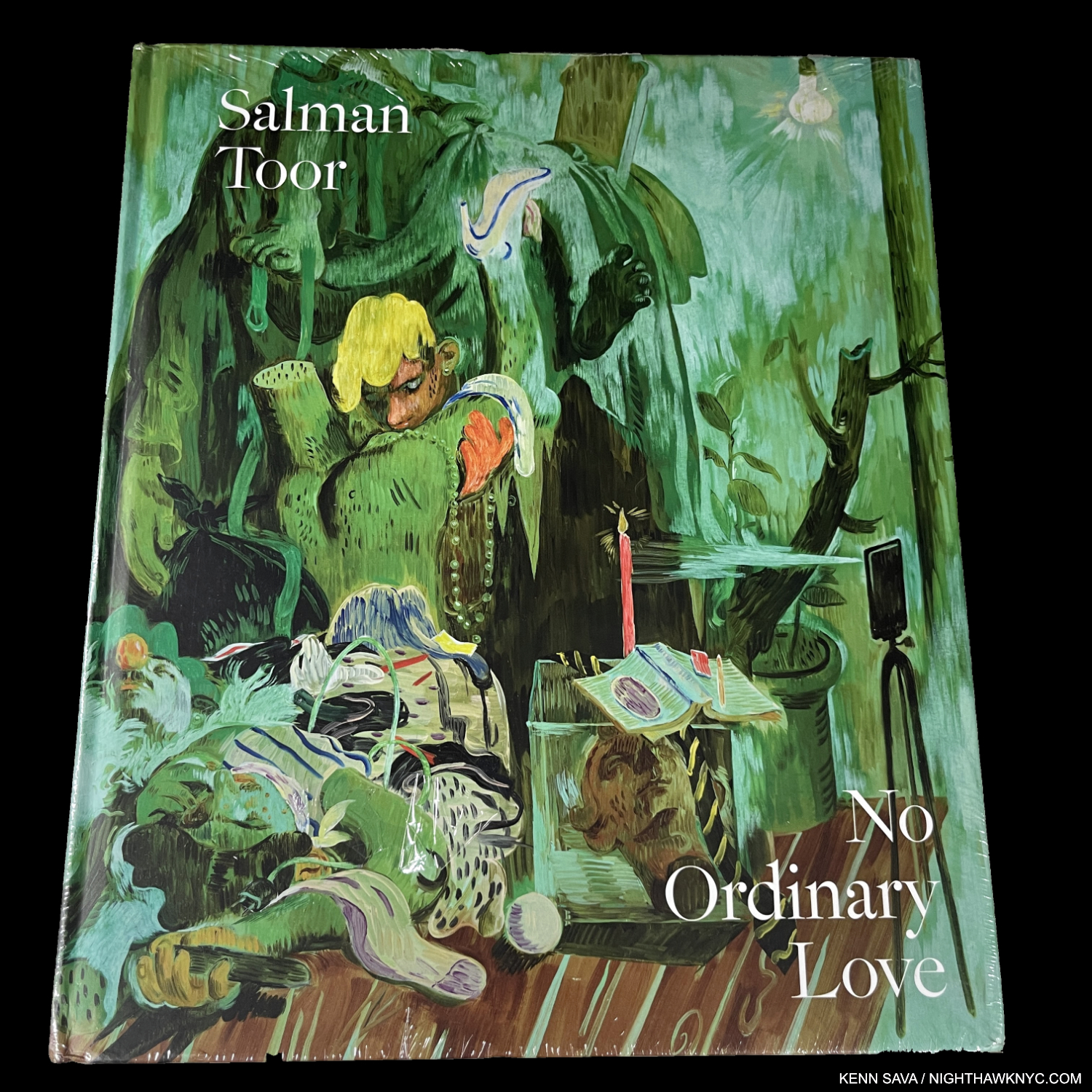
Salman Toor, Salman Toor: No Ordinary Love, Gregory R. Miller/Baltimore Museum of Art, 2022
A strong case can be made that No Ordinary Love is THE ground-breaking Art book of the 21st century thus far. It qualifies in so many ways, beginning with marking the first time a Contemporary Pakistani/American Painter has achieved U.S. museum recognition, with work in The Met, the Whitney and the Morgan Library collections, as well as the museums in Dallas, Baltimore (which mounted the show), the Walker and MoCA, Chicago in this country. I saw his first museum show at the Whitney in 2021, so it’s utterly remarkable how quickly Salman’s work has gained such wide acceptance. Remarkable. Not surprising. Why not? As the curator says in the introduction, Mr. Toor’s work mines “the complexities of being an immigrant, queer and human.”
It didn’t take long for No Ordinary Love to sell out. VG copies begin at $400.00.
My piece naming it a NoteWorthy Art Book of 2022 is here.
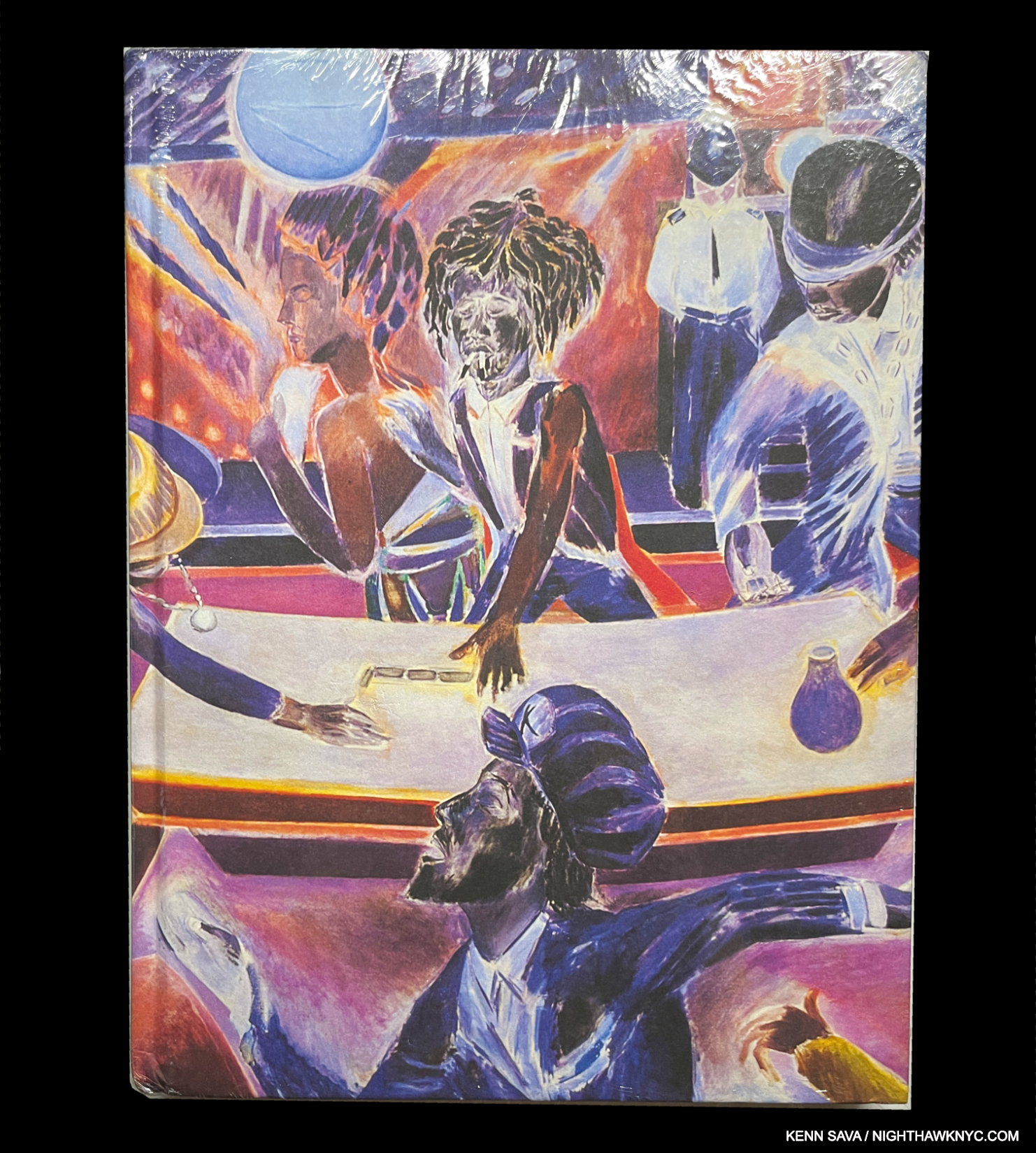
Denzil Forrester, Denzil Forrester: Duppy Conqueror/We Culture, Kemper Art Museum/Institute of Contemporary Art, Miami, 2024
One of the newest books on this list (chronologically), it took almost 40 years for Mr. Forrester to get the book his work deserves. His work is a riot of color (in the best possible way), emblematic of the passion and joy Music has brought out of him to an extent greater than that of any other Artist I’ve seen this side of the great Romare Bearden. Like Mr. Bearden, however, there’s much more to be seen and experienced in Denzil Forrester’s work. Life. No less than Peter Doig (listed earlier) and Sheena Wagstaff (who curated a recent NYC show of his) have championed Mr. Forrester’s work, and it seems that after years of toiling with a lack of attention the wheel has finally turned. Duppy Conqueror presents 45 years of his work.

Much more than an exhibition catalog, Duppy Conqueror (a 1973 song by Bob Marley), is a retrospective of 45 years of Denzil Forrester’s work, accompanied by fascinating essays that relate the history of post-war racism in Britain and how Mr. Forrester, along with Musicians and Poets worked to bring the injustices to wide attention in powerful fashion. At the height of the racism, Music and dance halls were one of the few escapes left. References to them continue in his work like a musical refrain. Duppy Conqueror strikes me as being everything a book on this list should be. It packs an incredible amount into a 408-page volume, and like the Jennifer Packer book, earlier, uses multiple papers to wonderful effect, beginning with its opening “blackout” pages (which perhaps mimic the Drawings the Artist did in those near-dark dance halls early on) which set the stage, to the wonderful design by Scott Vander Zee, to the essays, and Poems by the legendary dub Poet, Reggae Musician and activist, Linton Kwesi Johnson (one of those Musicians & Poets I mentioned who joined Mr. Forrester in the struggle), to the work, which a bit like Kent Monkman’s, serves to call attention to decades of pain, suffering and survival. Born in Grenada in 1956, Denzel moved to London at 10 or 11, and proceeded to receive a BA and MA in Fine Art. He was awarded an MBE in 2020. It took the Institute of Contemporary Art, Miami, and the Kemper Art Museum in Kansas City, in collaboration with the Mr. Forrester, to give this very important Artist his first U.S. Retrospective in 2024, and this, the most comprehensive book yet published on his Art.
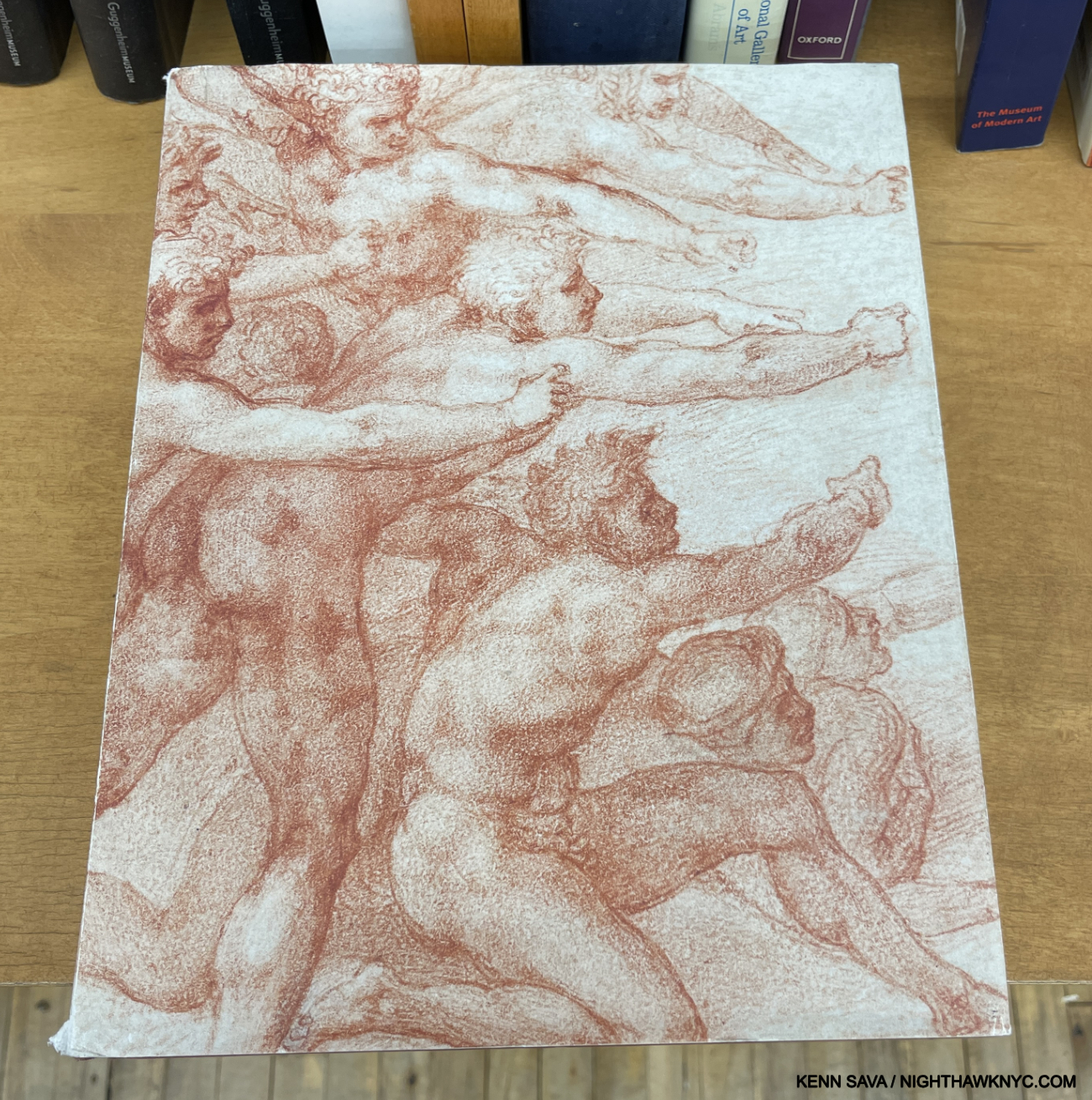
The catalog for The Met’s once-in-a-lifetime Michelangelo: Divine Draftsman and Designer, features a detail of his Drawing known as “The Archers.”

Michelangelo: Divine Draftsman and Designer, Carmen Bambach, Metropolitan Museum, 2017, and
Leonardo da Vinci Rediscovered, published by Yale University, 2019
Meanwhile, 30 blocks north, and not to be outdone…As if mounting and curating one of the greatest Art shows I’ve seen in 45 years of museum going wasn’t enough, Met Museum treasure Carmen Bambach has authored one of the finest books on Michelangelo I’ve seen to accompany it. Saying it’s a book every bit as worthy as her once-in-a-lifetime show I went to 10 times is the best compliment I can give it. It also singlehandedly led to my purging my Michelangelo book collection, as it rendered so many other books unnecessary or outdated.
Ms. Bambach is also responsible for the extraordinary Leonardo da Vinci: Master Draftsman, and Unfinished: Thoughts Left Visible Met Museum and Met Breuer shows respectively this century and their catalogs. As if ALL of that isn’t enough- Carmen Bambach has authored what looks to be an extraordinary book I haven’t seen-Leonardo da Vinci Rediscovered,published by Yale University, 2019. With 2,200 pages with 1,500 images over 3-volumes weighing 28 pounds, it’s rumored to include “numerous discoveries.” Such is my admiration and respect for the lady that is one of those who makes The Met one of the world’s greatest museums, I’m including it on this list, sight unseen!
My extensive look at Ms. Bambach’s unforgettable Michelangelo show, that 700,000 saw, is here. My look at her Unfinished: Thoughts Left Visible at the lost and lamented Met Breuer is here

Jack Whitten, Five Decades of Painting, MOCA, SD, 2015 and
 Jack Whitten: Odyssey: Sculpture 1963-2017, Gregory R. Miller, 2018
With the opening of his Retrospective at MoMA late last month, featuring six decades of his work, it’s very fair to wonder- What took so long? Since he passed in 2018, at 78, t’s terrible Mr. Witten didn’t live to see it. What a body of work he gave to the world! In my view, his status as a great Painter is still underappreciated. Though there have been a recent spate of publications on Mr. Whitten’s work, Five Decades of Paintings, published to accompany the 2015 show of the same name at the Museum of Contemporary Art, San Diego, remains the best overview I’ve seen. Out of print, and getting harder to find all the time.
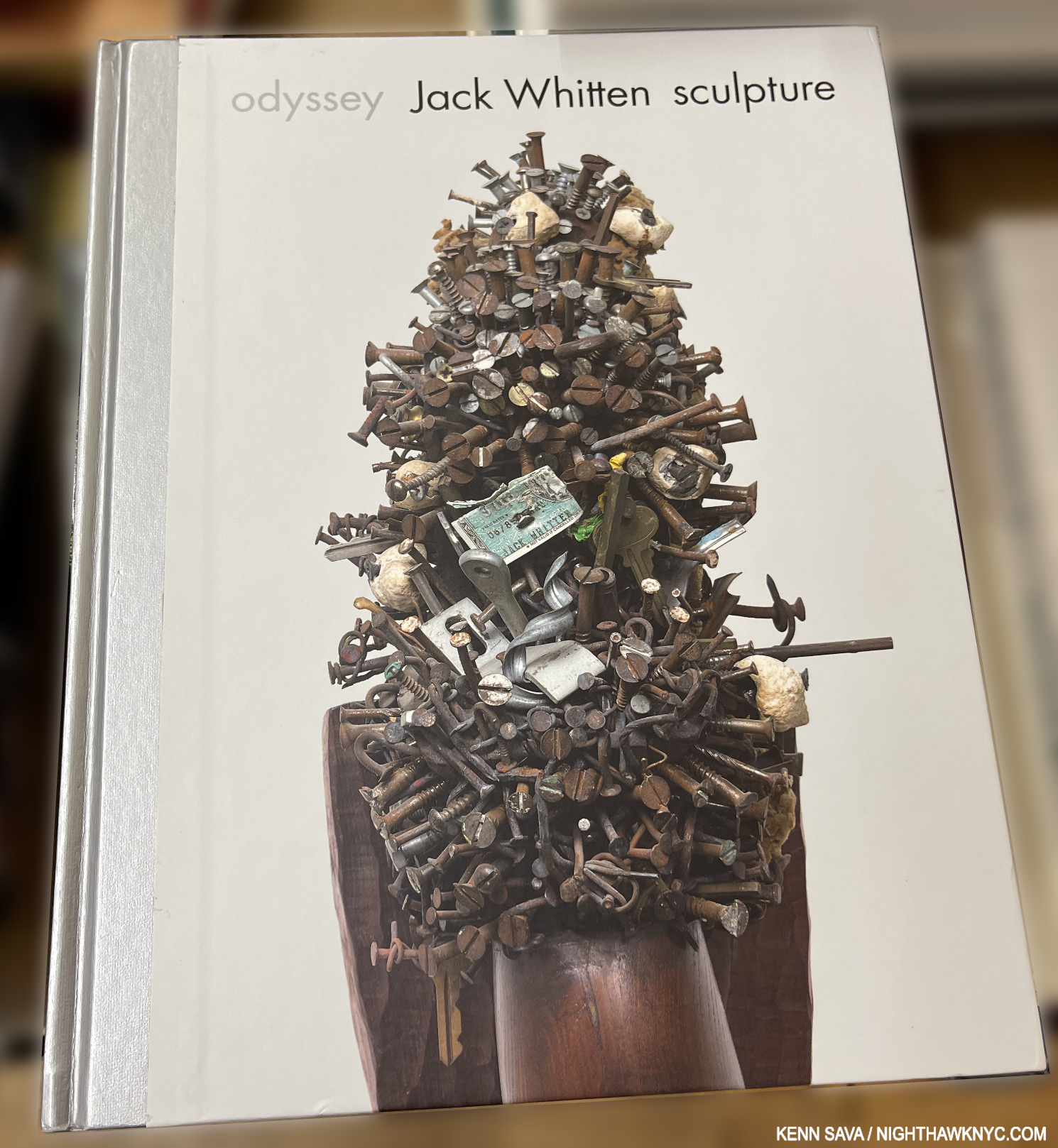
Very few people knew the great Painter Jack Whitten was also a great Sculptor during his lifetime, until the posthumous show, Jack Whitten: Odyssey opened at the Baltimore Museum before moving to NYC. I got a hint of it when I saw one Sculpture included in the last show of his work (in 2017)  before he passed, which I showed here. It failed to prepare me for the utter shock I experienced when I walked into Jack Whitten: Odyssey at The Met Breur in 2018 that this gorgeous book accompanied. A lifelong expert woodworker, it’s still a bit of a mystery to me why Mr. Whitten didn’t show this amazing and amazingly accomplished work earlier. Even Picasso didn’t envious a good deal of what is to be found in its pages, and that’s saying a lot. For me, it’s just one reason I fully expect Jack Whitten’s star to keep rising in the estimation of Art historians indefinitely. Odyssey is currently available reasonably.
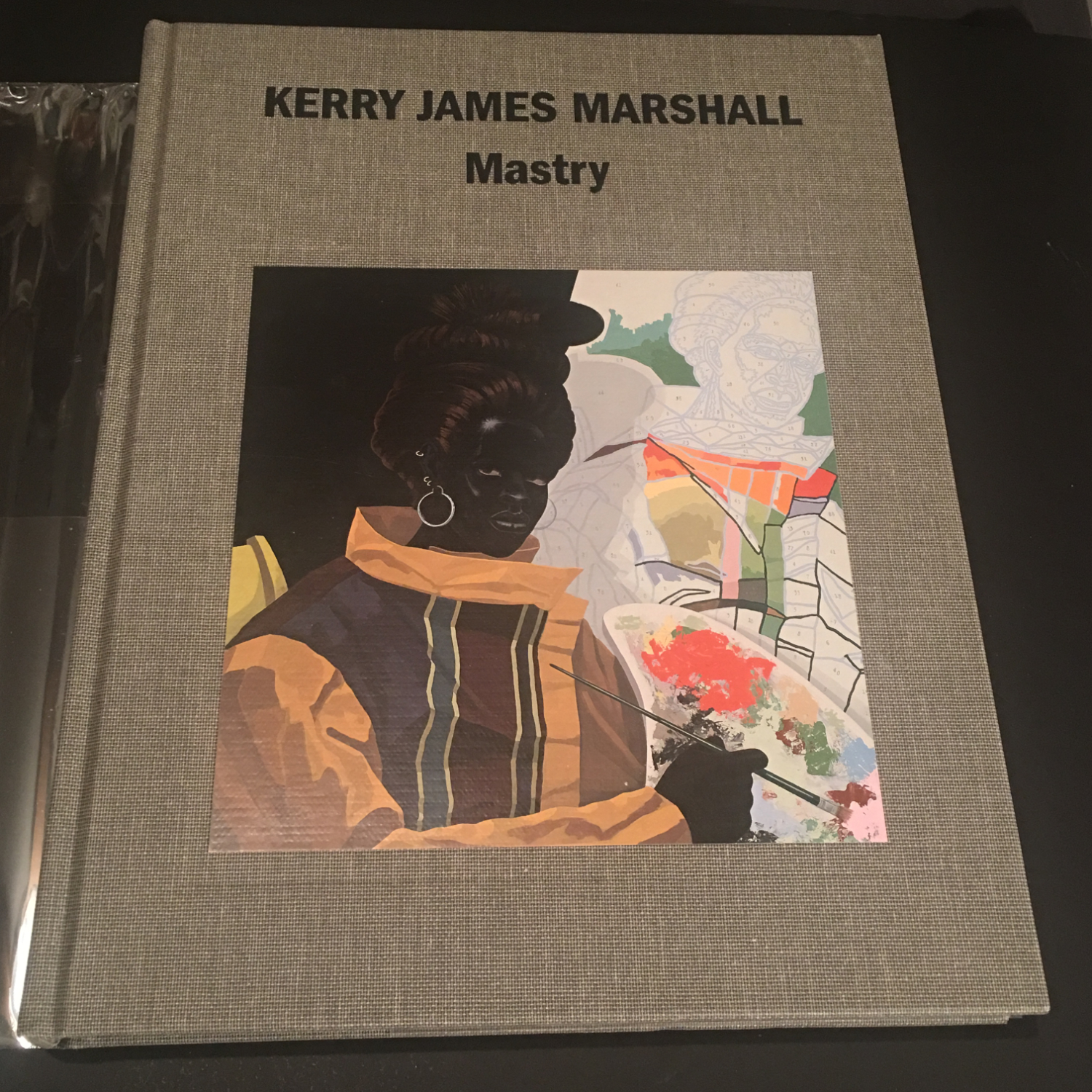
Kerry James Marshall, Kerry James Marshall: Mastry, Skira Rizzoli, 2016
Another 35-years in the making overnight sensation, Charles White’s student, Kerry James Marshall’s blockbuster, Mastry, at The Met Breuer was the most important Painting show I saw in the 2010s, and wrote about here (under what one reader told me what the best title I’ve come up with in almost 10 years). This book sold out immediately and has been reprinted a number of times since. A book worthy of Mr. Marshall’s great Art. Mastry remains THE place to start exploring his work, or to continue to. Approaching 10 years old, I’d grab it while it’s still in print. Copies in VG condition traded for $150. when it went out of print the first time. 
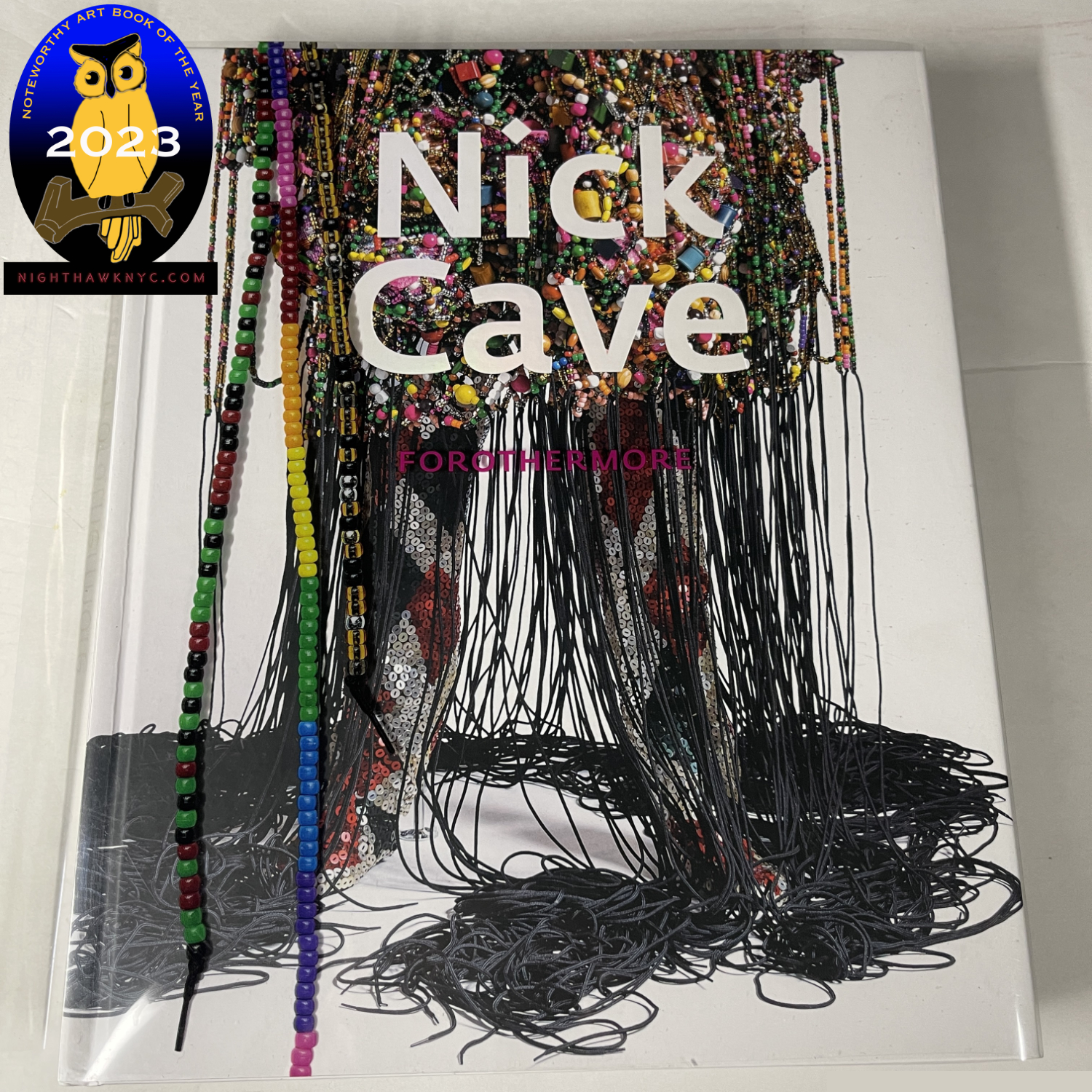
Nick Cave, Nick Cave: Forothermore, Del Monico Books, 2022
A number of Artists have done extremely elaborate, Artful outfits, yet it seems to me that Nick Cave’s Soundsuits are unprecedented. “Protection” from the outside world that didn’t accept the young Black Artist he was, they’ve now received acceptance virtually everywhere in the Art world, and even in the NYC Subway, as I showed here. Incredibly detailed, the amount of work that goes into one of these pieces boggles the mind, as does the variety of the designs. All of Nick Cave’s books are beautiful and beautifully done. Therefore, choosing one is very hard. I picked Forothermore for being the most recent, and published to accompany his stunning traveling mid-career Retrospective, the most comprehensive.
My look at Forothermore at the Guggenheim Museum is here.
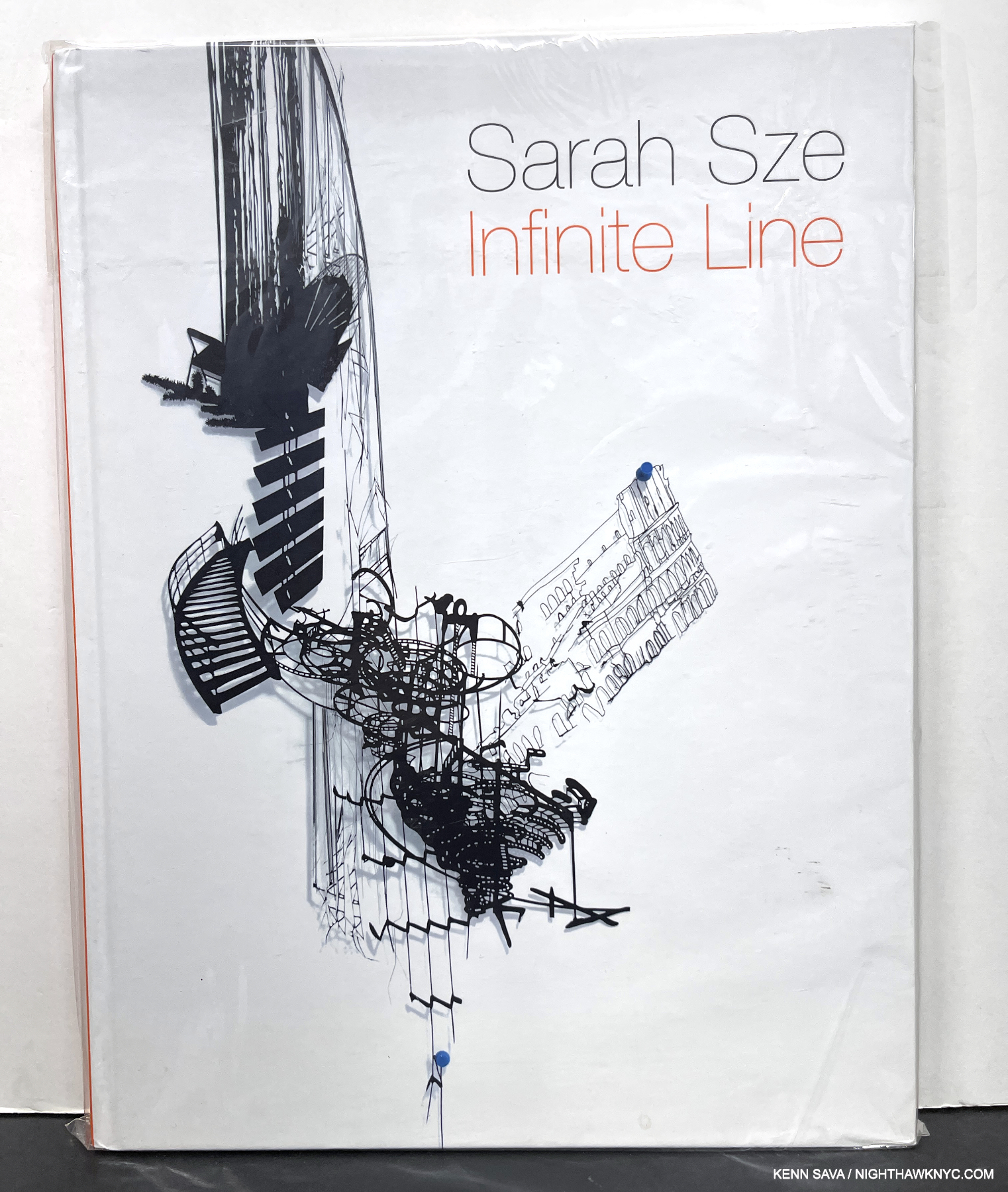
There are a number of exceedingly well-done books on Sarah Sze’s work and a number of fine exhibition catalogs. Infinite Line stands apart.

Sarah Sze, Sarah Sze: Infinite Line, Asia Society, 2011
A stunning overview of the Installation/Sculpture/Multi-media work of the Artist through 2010 remains my choice to see this aspect of her oeuvre even over more recent books. Published to accompany her show of the same name at the Aisa Society, NYC, it’s hard to find, but worth looking for. Sarah Sze joins Rembrandt and Kent Monkman as the three Artists, and Bob Dylan, among Musicians, with multiple books on this list.

Before moving on to the next section, I should mention that  I agonized about whether to include Matthew Barney’s incredible The Cremaster Cycle Exhibition Catalogue published by the Guggenheim Museum in 2003 on this list. Art books are nothing if not feats for the eyes, and very few surpass The Cremaster Cycle in that regard, or for its stellar design. I decided not to include it here because even though the show (which I saw, and which spellbound me) & the book included Drawings & Sculpture, The Cremaster Cycle  is a series of Films, which is beyond the scope of this piece.

NoteWorthy Art Autobiography & Biography of the 21st Century-

Autobiography-
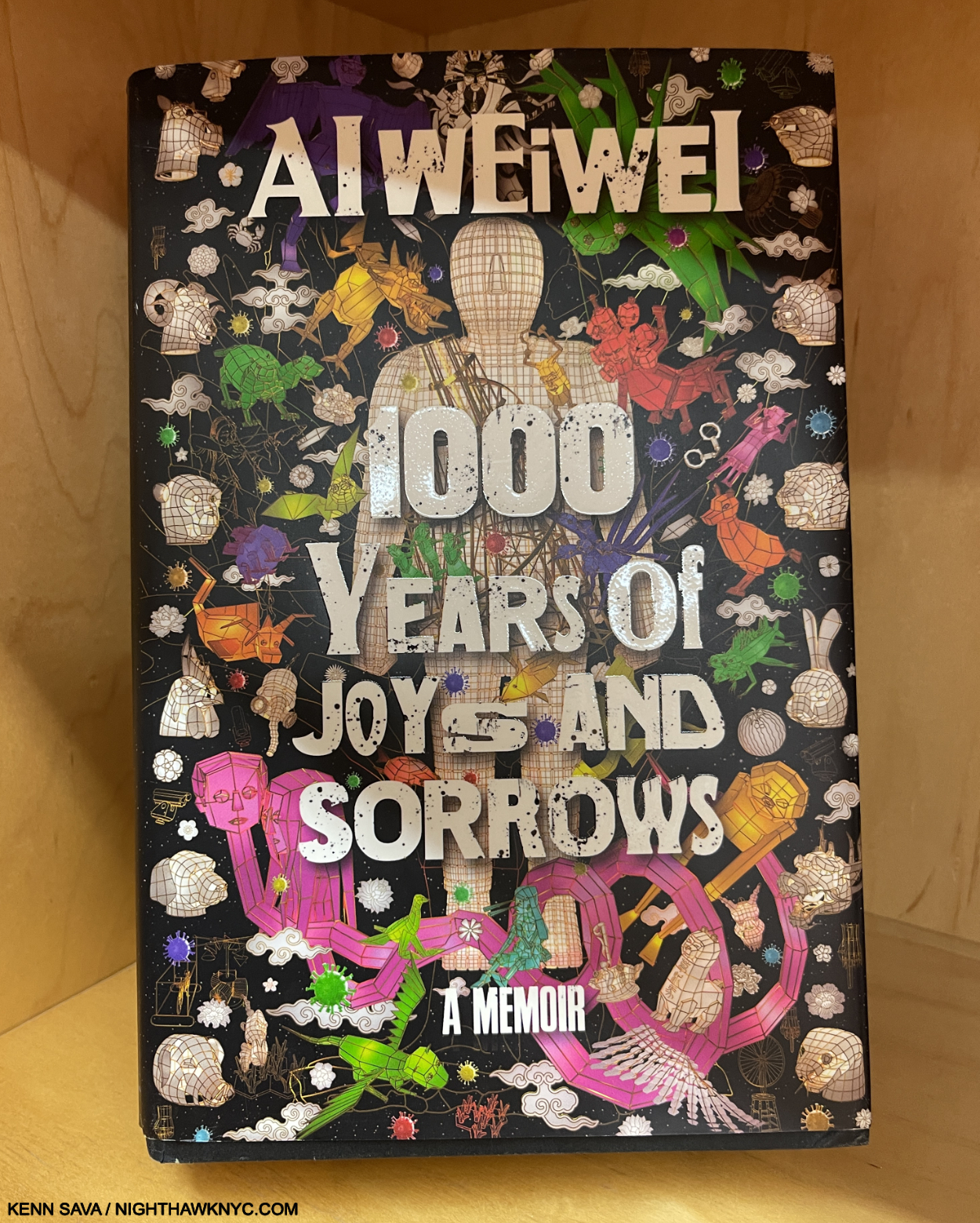

Ai Wei Wei, 1000 Years of Joys and Sorrows: A Memoir, Crown, 2021
Ai is a wonderful Writer with a talent for bringing the reader right into his stories that Agatha Christie might envy. Even better, signed copies can be had for a song. 
My look at Ai Wewei’s 2015 show at the Brooklyn Museum, one of my very first pieces, is here. My look at Ai Weiwei: Laundromat is here. My look at Ai Weiwei at Paula Cooper and Lisson Gallery is here.

Autobiography & Biography-

A copy with her beautiful signature.

Patti Smith, Just Kids, Ecco, 2010
Just read it.
My look at Patti’s most recent NYC Photography show, during the run of which I met her, Photographed her, and spoke with her, is here.

Biography

It rarely leaves my hand. My $4 (including shipping) used paperback copy with my bookmarks. The red one you can barely see is a Virgin Atlantic London to NYC Boarding Pass the previous owner left inside. I use scrap paper bookmarks because I leave them in at key points, and, unlike those of stiff materials, the book still flexes. But, that’s just me.

Shakespeare, Will in the World, by Stephen Greenblatt, Norton, 2004
You have Shakespeare questions? I finally have, too. Harvard Professor Stephen Greenblatt has the answers. And a hell of a lot more. 400+ years of distilled Shakespeare scholarship and a lifetime of research & learning have combined to give us the Shakespeare book many have been waiting for given how long it was on the NY Times Bestseller List. A former Pulitzer Prize and National Book Award Winner for Non-Fiction, he was also a finalist for both for this book. It puts so many questions surrounding the immortal Bard to bed, as far as I’m concerned (“Good night, sweet Prince,” indeed), and allows readers to be just that- readers of Shakespeare, most likely knowing quite a bit more then they did before. One of the most important for me is “Why does it matter who wrote Shakespeare?” Professor Greenblatt’s book is all about how much his life may be in his work. The “Will” in the title is a giveaway to the author’s approach to humanizing the Playwright & Poet credited with “inventing humanity” (per Harold Bloom). He puts us inside what he may have been thinking and feeling while he lived his daily life, and outlines just how “Will” may have brought an incredible amount of that scarcely documented existence into his immortal work, “proving” it to be his “other” source, along with all the works of his predecessors he “poached.” (He addresses the legendary “pouching” story, too.)
Will is a book I literally have to force myself to put down. I have a beat up, $4 used paperback, the eBook AND the audiobook versions! I can’t say that for any other book I’ve ever owned. With my notes from the book totaling over 170 pages, having multiple editions is essential for me to transcribe and annotate it (there are no page numbers in audiobooks when I re-listen on the go, and those in eBooks are not reliable, and THIS SITE USES FOOTNOTES! (As you can see in my recent piece on my road to Shakespeare, which features this book, here.) 
Full of “Oh my gosh” and “Wow” moments, and drama worthy of, well, Shakespeare, Will in the World is, possibly, the most well-done, impeccably edited, biography I’ve ever read (along with the book that follows on this list). Can you tell yet that I LOVE THIS BOOK. Will is a book I’ll take with me to that desert island- IF I can figure out which version to take!
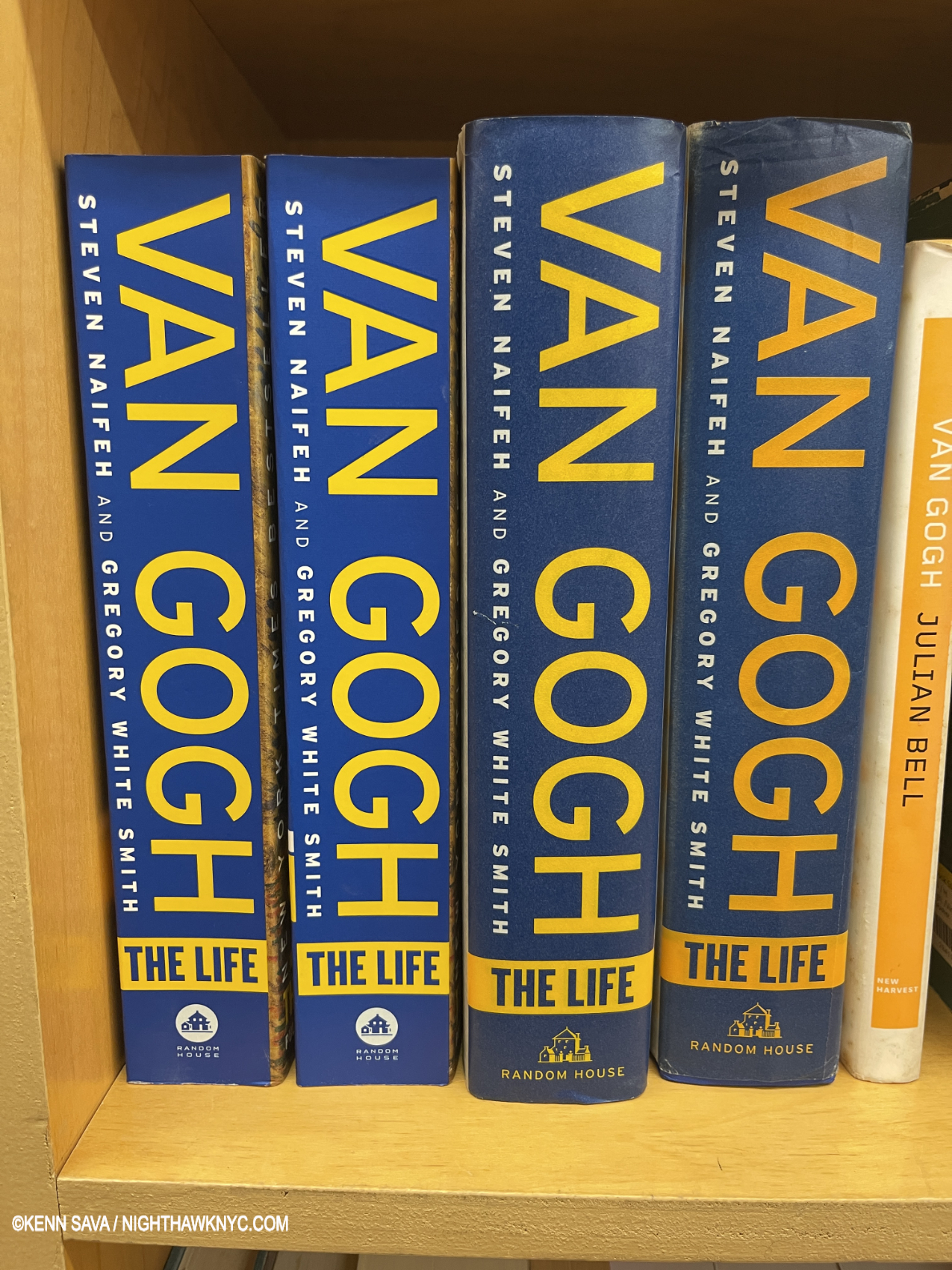
The hardcover (the two copies, right) is beautifully produced and feels wonderful in your hand, enhanced by a paper that’s just lovely to touch. To help make it that way, they offloaded the footnotes! The first edition has a very nice, somewhat haunting, translucent dust jacket, too. I have no experience with the paperback (the two copies, left), for two reasons- 1) this book is a keeper, and the hardcover is more durable, and 2) I’m always leery of very large books in paperback. This one has 976 pages! That’s a lot of stress to put on most paperback bindings, especially with repeated handling over time. Add to that, the covers on paperbacks don’t hold up well, in too many cases. This being said, of course paperbacks have their place.

Vincent van Gogh, Van Gogh: The Life, Steven Naifeh and Gregory White Smith, Random House, 2011
Having grown up with the Van Gogh fiction of Irving Stone’s Lust for Life, Van Gogh: the Life came to me like one of Vincent’s brilliant suns through a sky of clouds. Essential reading, in my opinion, for anyone who wants to know more about Vincent. Don’t we all? Though Messers Naifeh & Smith won the Pulitzer for their DeKooning biography, which I have not read, it’s hard to imagine a biography of an Artist who lived before 1900 being better than this one, and this one was sorely needed when it was published. Read it along with his immortal Letters, which it provides context for (the Taschen Van Gogh: The Complete Paintings remains my choice for the best book on his Art). As well researched (if not better) than any Vincent bio to date, the authors have a way of putting you inside his life, and particularly inside his decisions. A good many of them are hard (i.e. painful) to watch unfolding, but no matter what he gets himself into, the reader comes away with something Vincent has not always received- a better understanding. The authors also append their fascinating theory that Vincent DID NOT commit suicide- he may have been murdered! To top it off, the book is accompanied by its own website for the voluminous footnotes. All I can say is that I hope someone tops The Life in my lifetime, because we’ll always want to know more, but good luck trying to!
Those taken with The Life should take a look at Mr. Naifeh’s very nice follow-up book Van Gogh and the Artists He Loved in 2021.
My look at Vincent van Gogh in The Met’s Permanent collection is here. My piece on The Met’s Van Gogh’s Cypresses show, “Van Gogh’s Cypresses: Art From Hell,” is here.
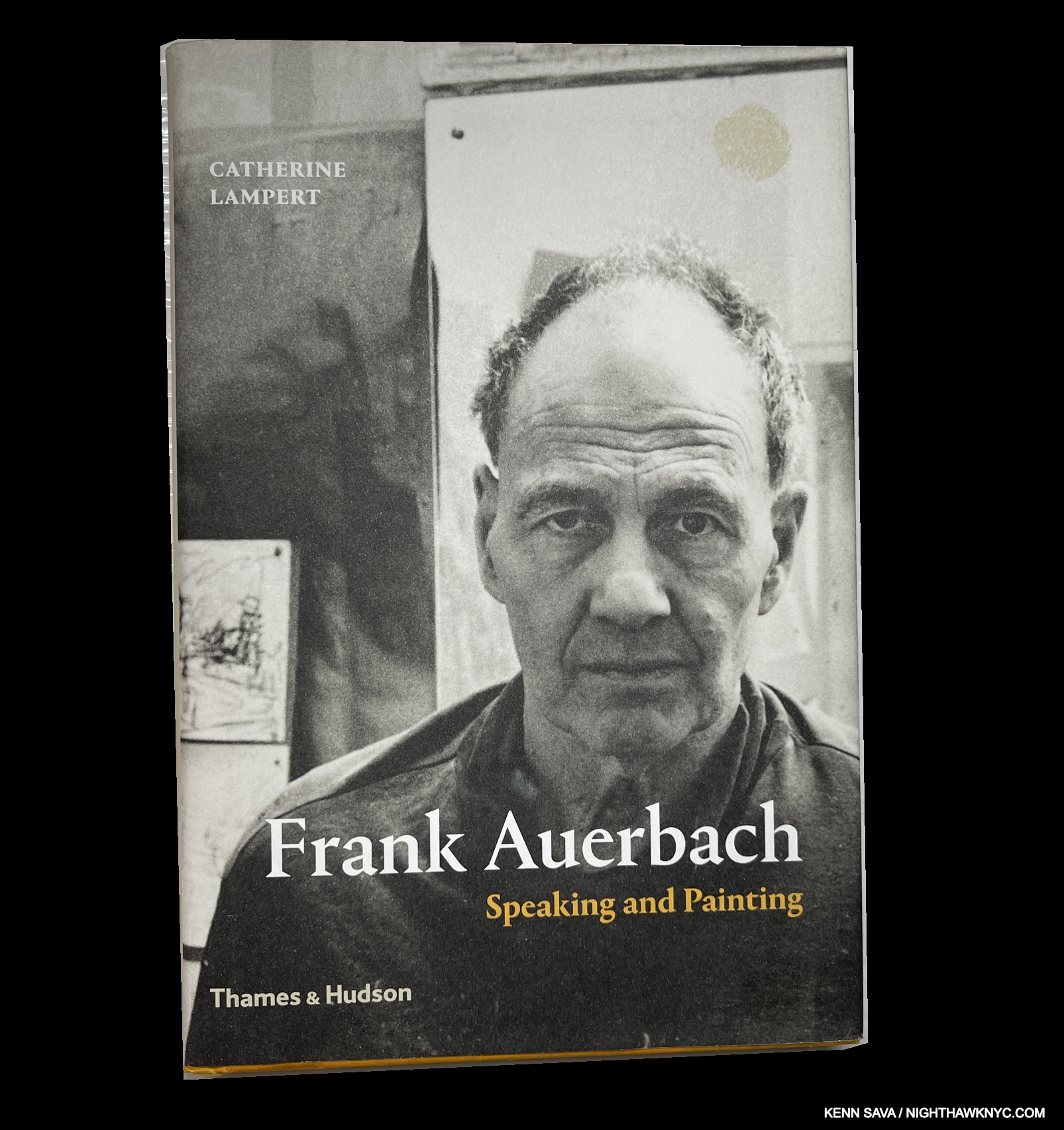
Frank Auerbach, Frank Auerbach: Speaking and Painting, Catherine Lampert, Thames & Hudson, 2015
I can’t say I’ve ever seen an Art book written by a long-term model of the Artist, who also happens to be a very accomplished Art historian and curator. Wow! What a unique book it yields! Catherine Lampert first sat for Mr. Auerbach in 1978! She curated the major Frank Auerbach Retrospective at Tate Britain in 2001 and has written extensively and authoritatively on the Artist (and other Artists) since (like her Euan Uglow: The Complete Paintings, listed earlier). If that’s not enough to intrigue you, it’s also superbly written, and so well done that Mr. Auerbach joined Ms. Lampert for dual booksignings, making it as close as we have to an “Artist approved” biography of Mr. Auerbach, unless and until Frank’s son, Jake, the Auerbach Documentarian, writes one.
Catherine Lampert is, then, one of two authors with more than one book on this list, joining The Met’s Carmen Bambach- both curators.

NoteWorthy Art History Book of the 21st Century-

A first edition copy. The book was later revised & expanded in a paperback edition.

David Hockney, Secret Knowledge, Viking Books, 2001
Love his work, or not, you have to grant that David Hockney is one of the most remarkable figures in Modern & Contemporary Art. Ceaselessly prolific for 65+ years, it seems to me he doesn’t get enough credit for his innovations, like his “Joiners” (his amazing Photo montages), or being the first major Artist to explore the creative possibilities of the iPhone and then the iPad. In addition to everything else he’s done, his 2001 book, Secret Knowledge, rattled a lot of windows and cages of Art historians when it came out, asking the question- Did the “old masters” use optics in creating their Paintings? It spawned a BBC TV 2-part documentary AND a BBC TV series. Aided by the double-gatefold filling “Great Wall” of postcards of great Paintings chronologically arranged from Jan van Eyck’s 1400 to the early 20th century, Mr. Hockney proceeds to make a most compelling case that they may well have. Over time, his theories have gained more acceptance (or is it less resistance), making this book something of a landmark in the ever-evolving road of Art history’s evolution. It also changed the way a lot of people look at Paintings. Which of those two is more important? You decide.

My look at his Met Museum Retrospective is here. Also: A personal favorite I am going to make a general recommendation for (though not including on this list)- David Hockney: The Arrival of Spring, Normandy, 2020 (Royal Academy of Arts, 2021), is a book that helped me get through the pandemic. Completely devoid of people, Mr. Hockney depicts (mostly with iPad Paintings, as he calls them), an almost day-by-day chronicle of spring arriving in his new Normandy home. Living in a place where signs of spring can be hard to find, it’s a book I look through often. Beautifully done. Available cheaply as I write.

NoteWorthy Overview Art Book of the 21st Century-

Jeffrey Gibson (ed), An Indigenous Present, DelMonico, 2023
Thank goodness this book exists, and who better to have edited it than the brilliantly talented Jeffrey Gibson, he of what looks to have been a spectacular installation at the Venice Biennale in 2024. Full of wonderful Artists I wasn’t familiar with, I have a feeling a lot of galleries bought copies and are scouring them relentlessly looking for talent to sign, and this is a great place for that, and the best book for getting up to speed on the wondrous world of Contemporary Indigenous Artists for the rest of us.
My look at the most recent Jeffrey Gibson NYC solo show is here.

NoteWorthy Art Education Book of the 21st Century-
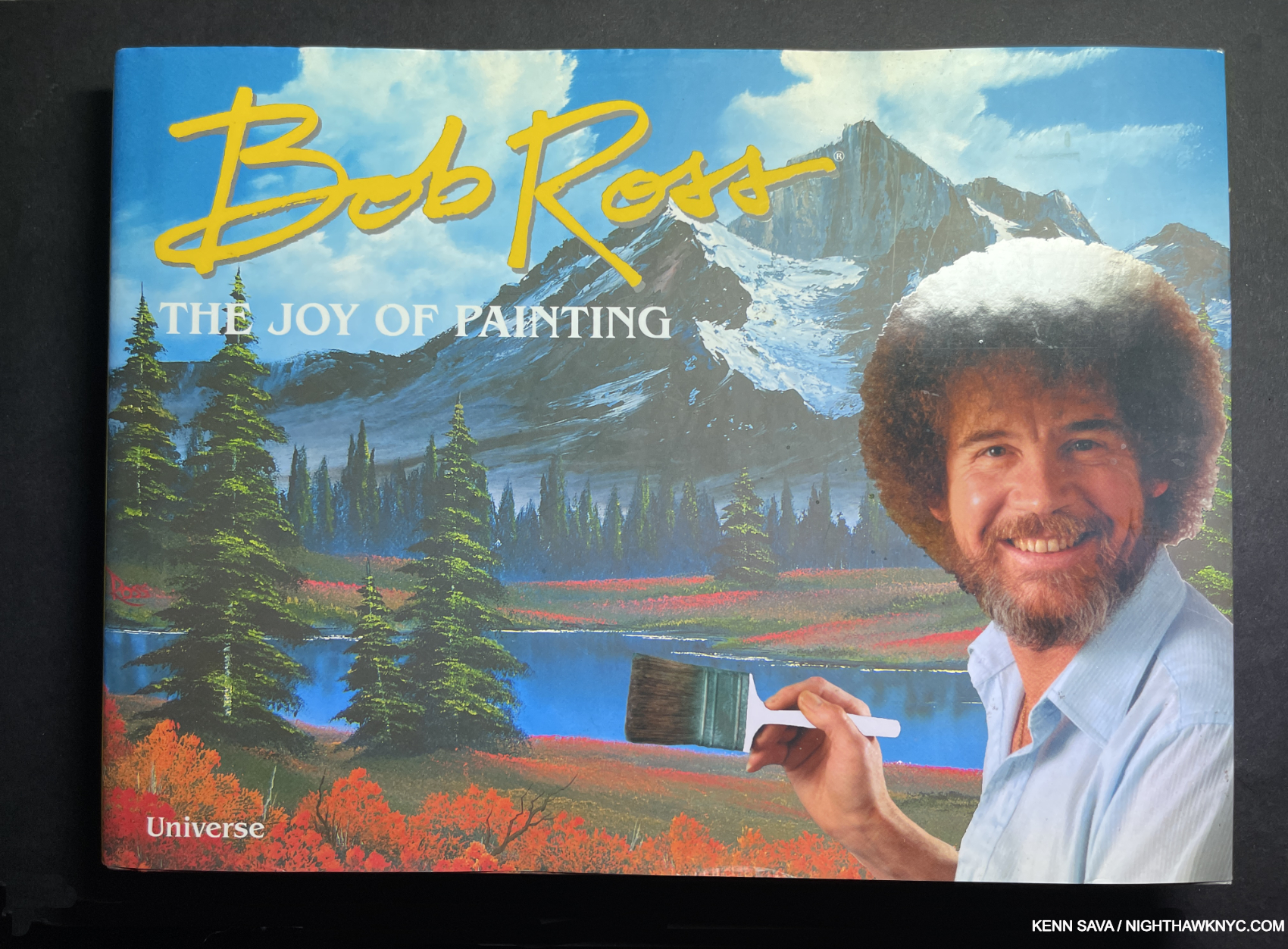
With his trademark large flat brush. Happy trees and happy clouds abound.

Bob Ross, Bob Ross: The Joy of Painting, Universe, 2017
Wait. What? Bob Ross on a NoteWorthy Art Book of the Century list? Say what you want about Bob Ross, love or hate his work, you HAVE to give him this- NO ONE in the history of the world has taught Painting to more people than Bob Ross has. And, he did it with joy! I’m sorry, as someone who considers himself first and foremost “a Painting guy,” it’s impossible for me to argue with that- or forget it. Ok, he taught oil Painting with a wet-on-wet technique, but much of what he taught can be adapted to acrylics. The point is to paint for enjoyment and/or the love of Painting. This book has an overview of his work, in Part 1, and then a number of step by step how-to’s in Part 2, which is great at a time when his show appears to be off the air (at least here). (Personally, I love watching him Paint clouds.) If that’s true everywhere right now, then this book is more important for keeping his message alive, out there, and inspiring even more people to paint. That message? Get some paint, some brushes, some canvas or paper and ENJOY yourself! Maybe you’ll create work that will be on this list when whoever does it in 2050. Maybe not. The Joy of Painting is the point. Bob Ross paid it forward.

NoteWorthy Music Books of the 21st Century-
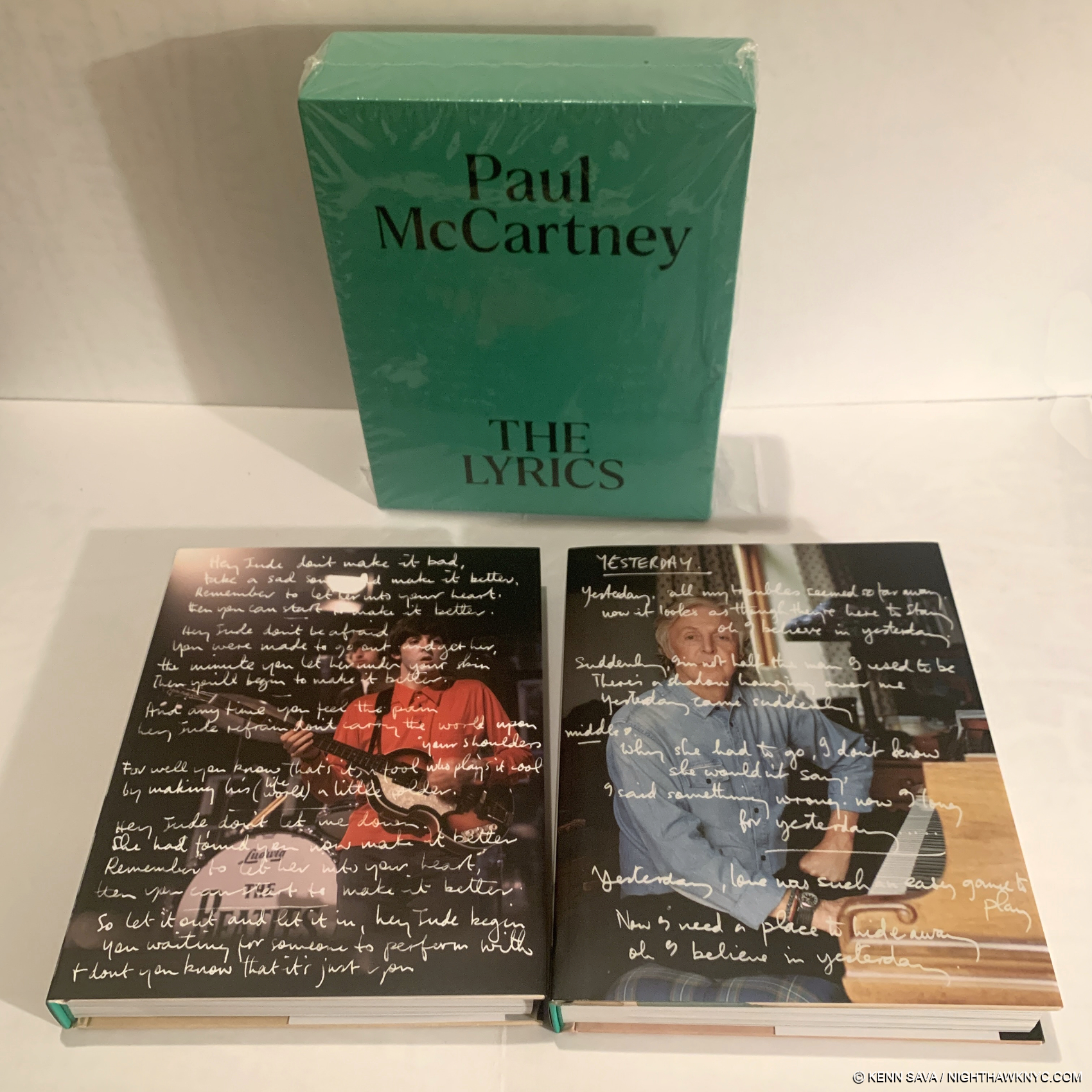
Paul McCartney, Paul McCartney: The Lyrics, Norton, 2021
A book for the ages, this one has been published in huge numbers and so is unlikely to be as rare as the Francis Bacon set will be. Perhaps the best compliment I can give it is that it’s full of so much great, new information, that it practially FORCES you re-listen to the songs! The slip-cased hardcovers are beautiful, and the absolutely preferred edition. The paperback, not so much. AT ALL COSTS, AVOID THE eBOOK VERSION!
My piece naming it the NoteWorthy Music Book of 2021 is here.

Bob Dylan, Chronicles, Volume 1, 2004, and
The Philosophy of Modern Song, 2022, both Simon & Schuster.
After countless biographies written by innumerable others, Chronicles, Volume 1, is, FINALLY, the first volume in what (I, and many others, hope) will be as many as it takes for Bob to tell his story as only he can. And, what a book it is! Beginning right at the beginning of Bob’s recording career, Bob’s prose style here is a marvel of total recall. Like Patti Smith’s immortal Just Kids, we’re instantly transported back in time, this time to the turn of the 1950s into the 1960s NYC, able to feel the biting cold of an NYC winter before global warming, down to the smallest details of rooms Mr. Dylan was in at the time. WHAT A BREATH OF FRESH AIR Chronicles V1 was when it came out after ALL the 2nd hand, unauthorized Dylan bios! It’s miraculous, in my view (a word that applies to Mr. Dylan’s other book on this list, The Philosophy of Modern Song). So much of what went on in the first part of Bob Dylan’s career is still impacting the world, the way The Beatles did. We FINALLY get to see and hear it from the inside, from behind those iconic dark glasses. Chronicles, Volume 1 left me with one overriding question- 21 years later, WHERE IS VOLUME 2????

It seems to me that Philosophy of  Modern Song is written in a completely different style! Whereas Chronicles, V 1 gives us Bob, the consummate storyteller, every sentence of Philosophy of bursts with passion, nuance and depth, belying how long Bob has lived with and thought about each and every one of the 60 songs he includes- each with its own essay. Passion, especially, flows from his pen like blood from a bullet wound. His first new book since said Chronicles, WHO better to write a book titled The Philosophy of Modern Song than Bobby D.? Hard at work crafting the greatest body of songs…maybe ever, since 1959, or so, songs with a depth that few (anyone?) can match. Filled with unexpected choices among the 60 songs he discusses, the choices are as unexpected as each accompanying essay is unpredictable. 12 years in the making, there’s a “freewheeling” (sorry!) spontaneity to his prose that packs so much information and linguistic gymnastics into each line as to leave the reader feeling like she or he has to cut back on the caffeine. Some of these songs I never gave a second listen to, or switched off when they came on. But here, in Mr. D’s hands, they get the due of their dreams.

Among all the surprises- in the choices and Bob’s essays, I was shocked to see “Pump it Up,” by Elvis Costello & The Attractions here(!), and even more shocked to read that what Mr. D. has to say about it sums up exactly how I felt about it at the time, but few who weren’t fans would listen. But, he takes it to another level only he can. This is how his look at it begins (CAPS his, for a change)-

“THIS SONG SPEAKS NEW SPEAK. It’s the song you sing when you’ve reached the boiling point. Tense and uneasy, comes with a discount—with a lot of give-a-way stuff. And you’re going to extend that stuff till it ruptures and splits into a million pieces. You never look back you look forward, you’ve had a classical education, and some on the job training. You’ve learned to look into every loathsome nauseating face and expect nothing.”

Philosophy of is a thrilling, one-of-a-kind ride into the world of songwriting, a world that seems to be getting lost today, and the fear of just that is what I sense may really be at the beating heart and soul of this book from one of the Art’s ultimate maters. (If you want to get an even fuller idea of Bob Dylan’s seemingly encyclopedic knowledge of modern song, look for his radio series, “Theme Time Radio Hour with Bob Dylan,” which ran for about 100 episodes over two seasons.)

And? Get this- Bob is on the road RIGHT NOW as I write this barely 2 months shy of his 84th Birthday! Just LOOK at that itinerary- FIFTY-SEVEN SHOWS between March 11 and September 19th!!! And, he also Paints and makes Prints and Sculpture. PHEW! I’d like to write about his Art, but….. The man is a world treasure. So is Sir Paul. Generations yet unborn will be lucky to have these books.

NoteWorthy Art Book Publisher of the 21st Century-
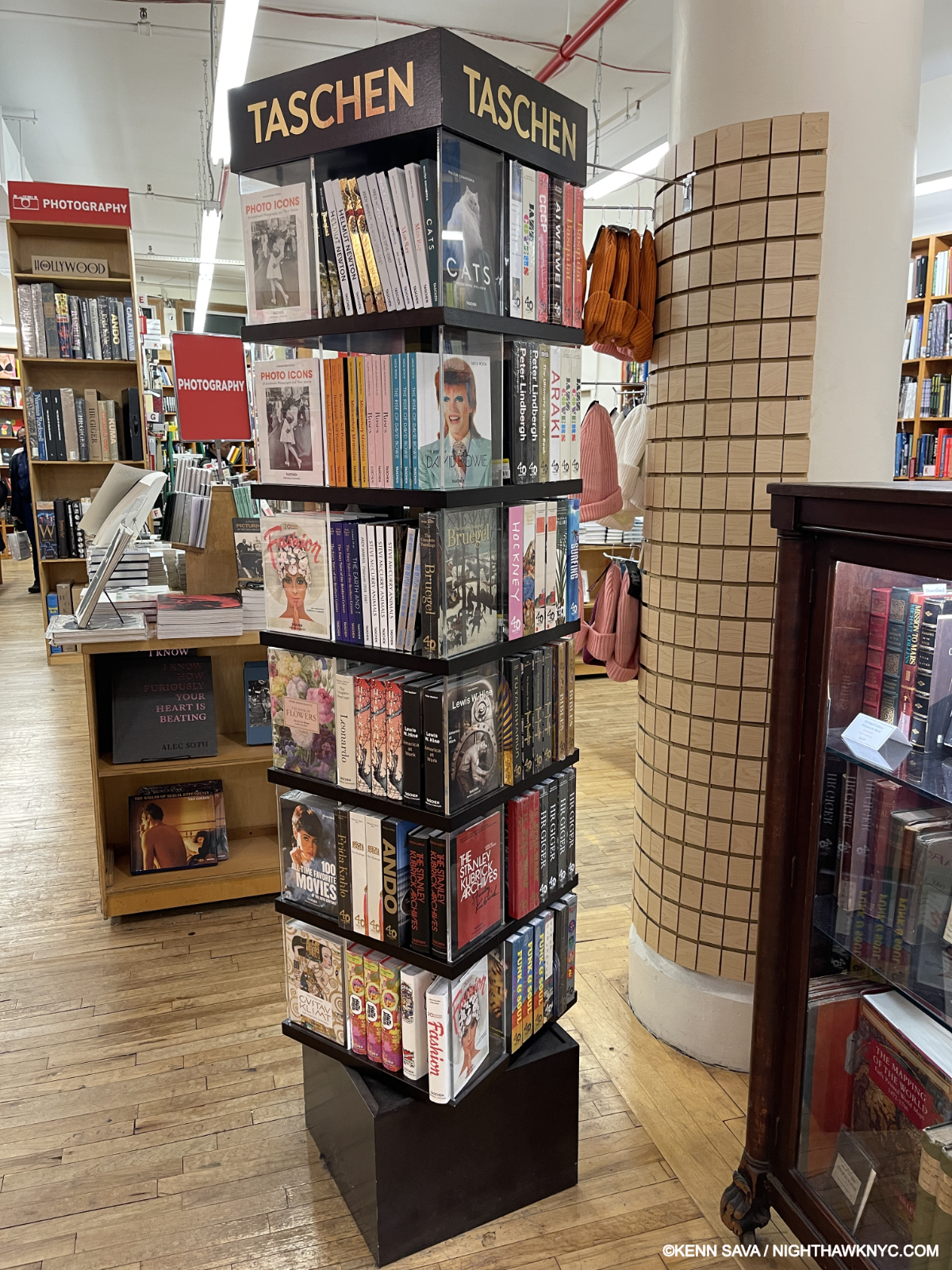
A tower of “Bricks.” Not leaning, yet, but that Fashion book on the bottom looks ready to bust out.

Taschen, Cologne, Germany
With SEVEN books on this list, more than any other publisher, HOW could I not give them the nod. Though some of their books leave me wanting (which I won’t go into now), their production values are consistently the highest and provide real value you can see and feel in the vast majority of their many publications. Originally, the Bricks, as I call their small books which are about the size of a brick, listed for $20.00(!), which earned them my NoteWorthy Art Book award in 2021. Then, someone got the idea of releasing them in a slightly larger size under a “40th Anniversary” moniker, for the equally larger price of $30. list (meanwhile, the smaller Bricks that remained in print were bumped to $25.). Taschen continues to find new ways to monetize almost exactly the same content. Nonetheless, I’ll say it  yet again- TASCHEN’S BRICKS ARE (still) THE BEST VALUE IN ART BOOKS TODAY! The “Bricks” remain essential books for me on virtually every Artist included in the series. With usually upwards of 500 pages with countless color illustrations, you still can’t go wrong with them. Taschen has been very busy, of course, publishing Art (& PhotoBooks) in other sizes, too. Most of their books that get reissued in other sizes are on Artists from before 1900. Their Contemporary Art books (except those on David Hockney and Jean-Michel Basquiat) seem to come out in their XL size, but once they go out of print, like their Christopher Wool and Neo Rauch books (Neo listed earlier), they are not reissued in another size. So, get them while you can (Note- One Brick I would pass on is their Hiroshige: One Hundred Famous Views of Edo. Look for Andreas Mark’s “definitive” edition, which has much better, and slightly larger, plates, at about the same price). 
My piece naming Taschen the Art book publisher of 2021, when their Bricks were TWENTY DOLLARS a copy, is here. Read it and don’t say I didn’t tell you.

Honorable Mention- The Museum of Modern Art, New York
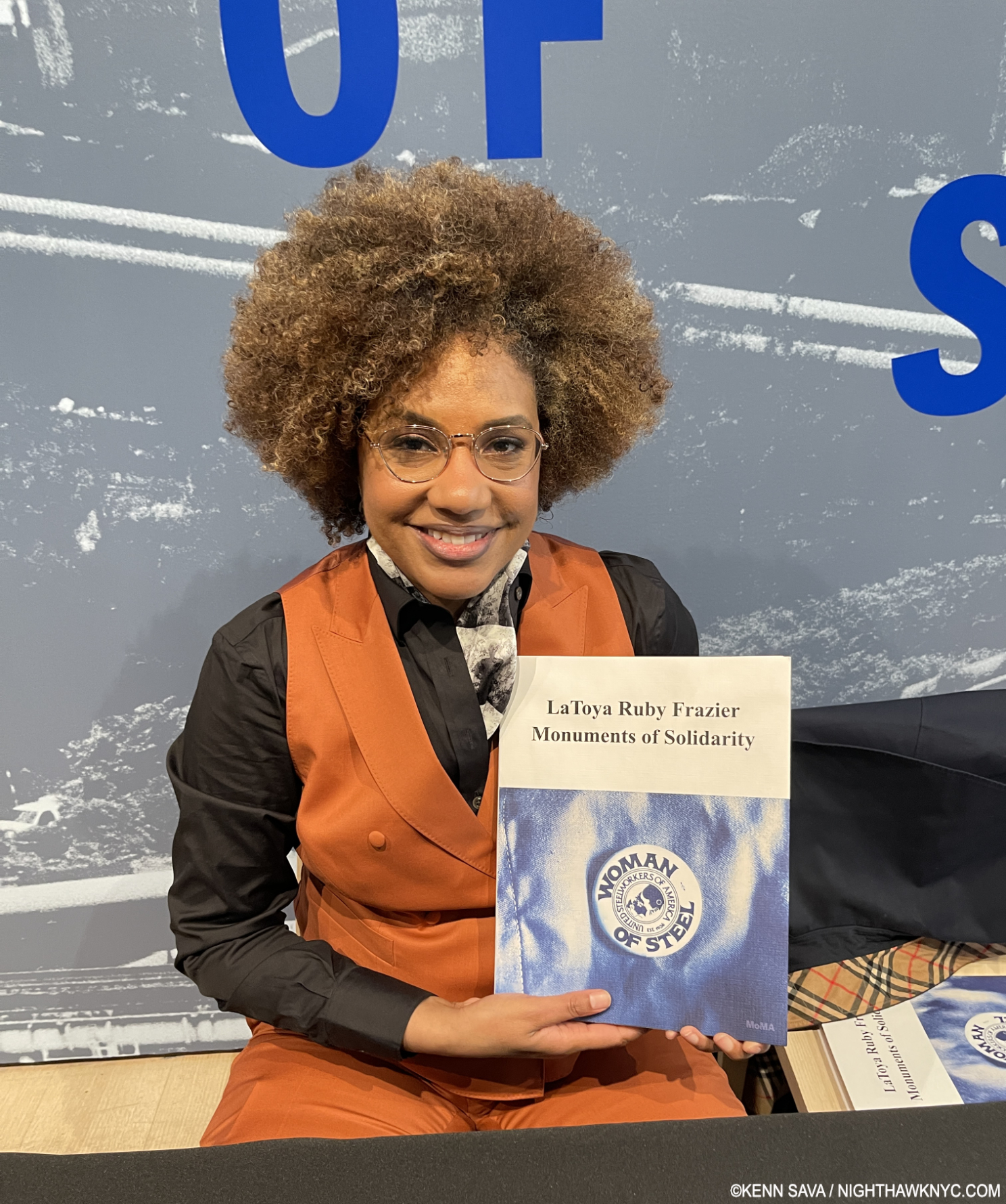
Some love for a Photographer in an Art book piece! And, not just any Photographer. The great LaToya Ruby Frazier graciously holds her NighthawkNYC NoteWorthy PhotoBook of the Year, 2024, for me at its release at her stunning show of the same name. MoMA, May 10, 2024.

The Museum of Modern Art  gets the NoteWorthy Art Book Publisher of the Century Honorable Mention for the steady stream of excellent exhibition catalogs they have published this century. There are actually too many to list; Charles White: A Retrospective is on this list, two others (Dorothea Lange: Words and Pictures, and Luigi Ghiri: Cardboard Landscapes)  have been on my NoteWorthy Art Book Lists, a few others (Adrian Piper: A Synthesis of Intuitions, 1965-2016, Ed Ruscha / Now Then, Robert Rauschenberg: Among Friends, Robert Gober: The Heart Is Not A Metaphor, Käthe Kollwitz: A Retrospective,) easily could have been. If that’s not enough, MoMA’s LaToya Ruby Frazier: Monuments of Solidarity was my NoteWorthy PhotoBook of 2024, AND Taryn Simon’s Expanded edition of The Innocents is on my NoteWorthy PhotoBooks of the 21st Century list! PHEW! These books join a long list of excellent MoMA publications from the 20th century (going back to their now classic catalog for the very first show I ever saw- Picasso: A Retrospective in 1980) that continues to make MoMA a first stop when researching any Modern & Contemporary Artist.

All told, 68 books are listed (counting the Ed Ruscha & George Herriman sets as one title).

This piece is dedicated to all my fellow Art book lovers, everywhere, and especially to those who’ve written to me about Art books since 2015.

*- Soundtrack for this piece is “This is Radio Clash,” by The Clash, since I’m, apparently, about as underground as it gets. “Please save us, not the whales,” (their words, not mine), are words I can relate to. Hey, save us both!

NighthawkNYC.com has been entirely self-funded & ad-free for 9 1/2 years, during which over 340 full-length pieces have been published! If you’ve found it worthwhile, PLEASE donate securely by PayPal below to allow me to continue. Thank you, Kenn.

You can also support it by buying Art, Art & Photography books, and Music from my collection! Art & Books may be found here. Music here and here.

Written & photographed by Kenn Sava for nighthawknyc.com unless otherwise credited. To send comments, thoughts, feedback or propositions click here. Click the white box on the upper right for the archives or to search them. Subscribe to be notified of new Posts below. Your information will be used for no other purpose.
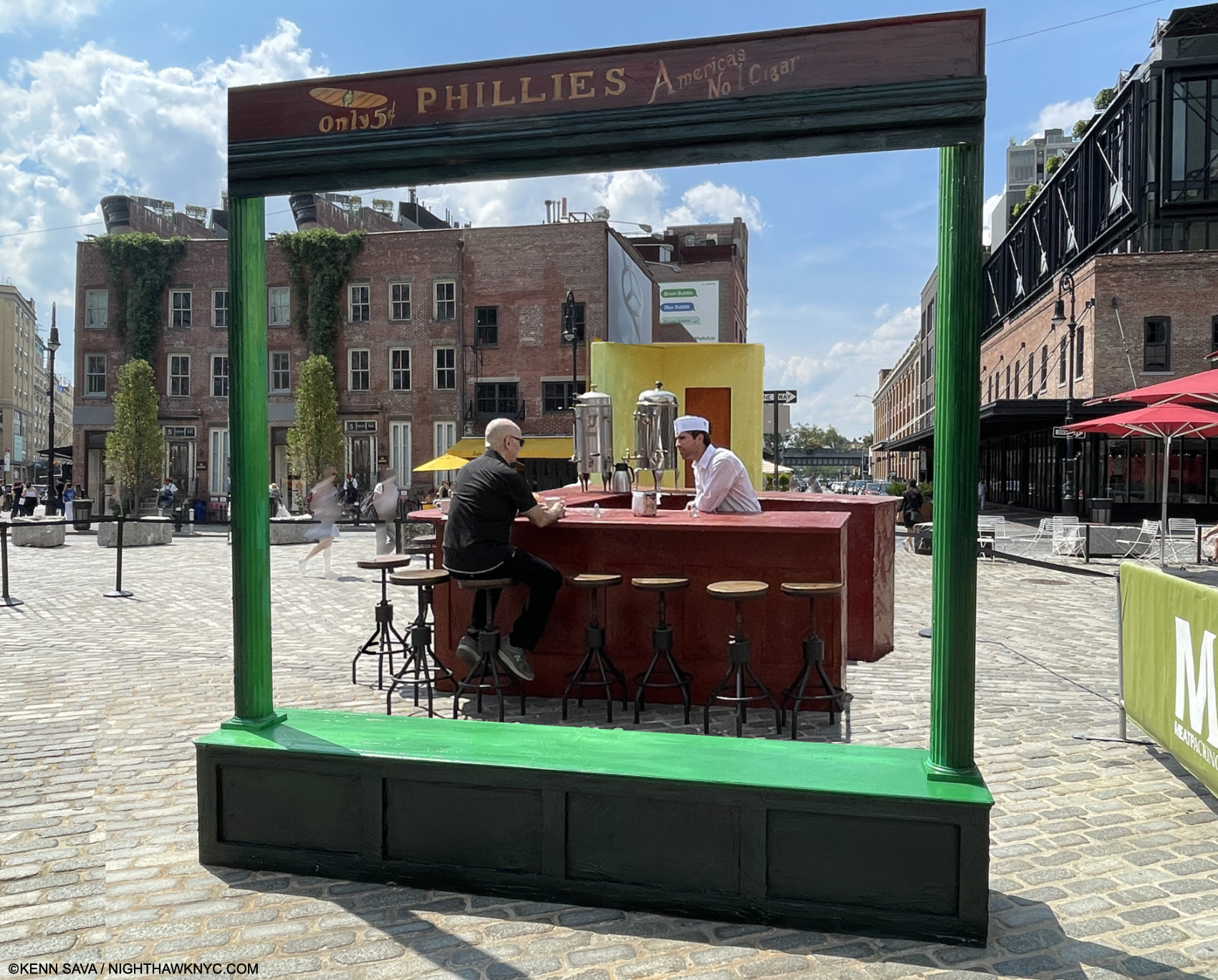
 

  1. Gary Schwartz, Rembrandt: His Life, His Paintings, Preface
  2. Health Disparities Chart Book on Disability and Racial and Ethnic Status in the United States.
  3. John is heard and seen relating this story in the Documentary John & Yoko: Above us only sky.”
  4. Richard Kendall, Uglow at work: the formative years in Euan Uglow: The Complete Paintings, P.ix
  5. Vol 9, P.11/
  6. ibid

On Flaco: New York City’s Owl

Written by Kenn Sava. (None of these Photos are mine. If they are yours, please contact me for credit.)

The throng hoping for a Flaco sighting in the Park in the early days after his escape last year. Photo- goodmorningamerica.com

If you live here, and possibly if you don’t, you might be glued to the latest news and social media updates for sightings of Flaco, the male Eurasian Eagle-Owl, who escaped from the Central Park Zoo after his habitat was vandalized in February, 2023. I am, too. In spite of EVERYTHING else going on in the world, it’s a story that seems to have captivated a lot of folks, probably for many reasons.

After early attempts to recapture him were abandoned due to the public outcry, Park Zoo officials opted to let him live as a free bird in the Park. He’s been on his own for 11 months now.

“Yes, I’m cashin’ in this ten-cent life
For another one”*

Shortly after his escape. Photo- goodmorningamerica.com

Of course, he drew immediate and large crowds (as shown up top), including countless Photographers. To date, I haven’t seen any clips of him in flight, where his 6-foot wingspan must be breathtaking to see. Nonetheless, the countless Photos I have seen reveal him to be extraordinarily beautiful, particularly his riveting orange eyes.

“Everywhere around me
I see jealousy and mayhem
Because no men have all their peace of mind
To carry them”*

Photo- newsbrig.com

Ok. I’m biased. My last name means “Owl.” Still, his is a story with wings! People seemed to love the idea of the “caged-bird set free.” I worried. But, as long as he stayed in the Park, he was relatively safe (though another Owl was hit and killed by a truck there) because they don’t feed the rats, a staple of his diet (another reason we love him) poison that could harm him. Then, Flaco suddenly began making trips out of the Park! While this led to more spectacular photo ops, it raised the worry, and the danger, quotient exponentially.

Why did he leave? The Park is as close to “nature” as we have, though it’s all man-made.

New York City’s other Owl. A sighting on the Upper West Side. Photographer unknown.

After living in the confines of the Zoo for 10 years, to suddenly be thrust out into the “wilds” of Manhattan has got to be like being dropped off on another planet would be for us. Like all New Yorkers, and he is certainly one, he’s on his own out here. Somehow, 11 months later, he’s survived on his wits, like many other New Yorkers- this one included.

I never through I’d see a 2 foot tall Owl walking the same streets I do at night, but I’m ready! Let’s hit the town! Photographer unknown.

As more information came to light, the poignancy of it all hit another level. Apparently, Flaco began going further afield searching for a mate.

What could be more human? More universal? Who couldn’t be moved by that?

Being a rare bird- 100,000 to 500,000, total, are believed to exist, and being THIS far from Eurasia, where most of them are, his chances of finding one are not good, to say the least.

Looking for love in the East Village. I’ve been there, man! *Photographer unknown.

When I saw this incredible Photo someone took in the East Village during his sojourn there, I found it heart-breaking. It speaks to me of the extremes he’s gone to. It also speaks to all he’s up against in his search.

“When the joker tried to tell me
I could cut it in this rube town
When he tried to hang that sign on me
I said ‘Take it down'”*

Pounding the pavement, watching out for “the man,” eyes on the prize. Photo- amsterdamnews.com

So, where to with this story?

My read is that the larger public would freak out if the Park tried to recapture Flaco. I wouldn’t. I’d be relieved and I think quite a few others would be, too. The possible bad outcome to this story is too tragic to think about. So, as a passionate Owl lover, myself, I can’t help wonder if an alternative might be for the experts to scour the world’s zoos, forests and jungles for a potential mate for this special Owl. It’s the least we can do for him!

Fatherhood might be the only outcome the larger public would accept.

Then, the lines to see him at The Zoo, would be longer than to see Van Gogh’s Cypresses.

From newyorker.com

And, instead of worrying about him, or listening for the sound of a large Owl landing on my window sill, I can sleep in peace.

“Well I don’t really care
If it’s wrong of if it’s right
But until my ship comes in
I’ll live night by night”*

*Photo by the Central Park Zoo

Happy New Year, brother New Yorker! Hoping you’re safe and wishing you LOVE and every happiness in the New Year!

*-Soundtrack for this piece is “Night By Night” by Steely Dan from their album, Pretzel Logic. The title of this piece is adapted from their song “Brooklyn (Owes the Charmer Under Me)” from Can’t Buy A Thrill. As in somewhere inside me lies a charmer…

NighthawkNYC.com has been entirely self-funded & ad-free for over 8 years, during which 300 full-length pieces have been published!

Written & photographed by Kenn Sava for nighthawknyc.com unless otherwise credited. To send comments, thoughts, feedback or propositions click here. Click the white box on the upper right for the archives or to search them. Subscribe to be notified of new Posts below. Your information will be used for no other purpose.
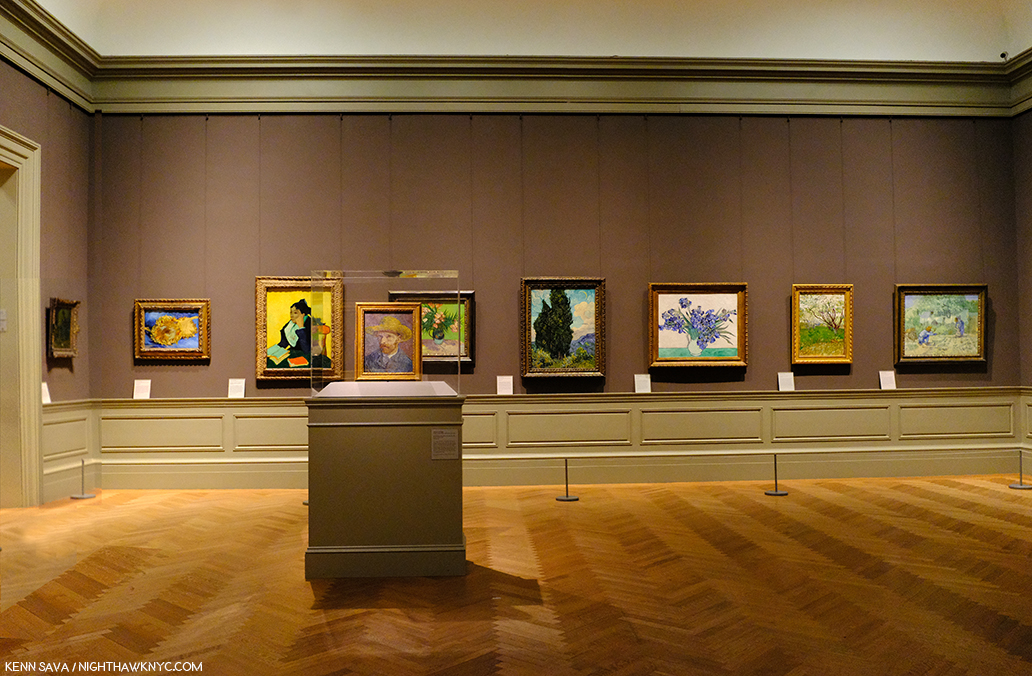
November 22nd- Sixty Years On

Written & Photographed by Kenn Sava (*- unless otherwise credited)

“Yes, I’ll sit with you and talk, let your eyes relive again
I know my vintage prayers would be very much the same”*-
“Sixty Years On,” by Elton John & Bernie Taupin

November 22nd, 1963. It’s a day that probably doesn’t mean much to many who weren’t born yet. But, if you were living on that day, I think it’s a day none of us have forgotten.

I remember it all, from a safe distance of 1,370, or so, miles away as the owl majestically flies from Dallas, TX to NYC. As it turned out, it wasn’t a safe distance at all. As horrific as all the events of the weekend of Friday November 22nd, through 24th, 1963 were. It included watching a man being killed for the first time in my life. John F. Kennedy being assassinated is an event that, 60 years ago today as I write, just hasn’t gone away. I’m not talking about the who-done-the horrible deed, the endless conspiracy theories, or the circus surrounding the events. I’m talking about something much, much bigger that rarely gets mentioned, lost in all the other talk that, frankly, just doesn’t matter any more. If Lee Harvey Oswald didn’t kill JFK, whoever did is most likely dead by now as is anyone he might have been involved with. 

He, or they, are no longer the point. What matters now is what’s happened to everyone else. 

Cornell Capa (Robert’s brother), JFK During a campaign event, NYC, USA, October 19, 1960. Click any photo for full size.

Set the way, way back machine to the beginning… I remember when JFK ran for President in 1960. He was so very well-spoken and it sure sounded like it came from the heart. Then there was his incredible feat of saving his crew after the PT boat he was commanding in the Pacific during World War II was hit and sunk. I came to admire him.

From Four Days by the UPI & American Heritage Magazine

Fast forward to Friday, November 22nd, 1963. There I was in the school nurse’s office, due to after-effects of a bad accident I suffered a few months before when I was hit in the head by a baseball bat. Accidentally, I hope. I was out cold before my face hit the concrete. No one came to help me for about 40 minutes as I lay unconscious. I finally got up and staggered home. I was out of school for a month, and still having problems with the cuts healing, etc. At 12:30pm, as I sat there waiting her attention, I heard the radio report coming over the speaker above me: JFK had been shot in his motorcade in Dallas.

There are other, more graphic shots of this, but this grainy still from a Film speaks to me much more. Jackie was the first one to feel our pain. Though none of us could imagine her’s. She would be an incredible model of class & strength from this moment on. *-UPI Newsfilm image from Four Days.

What???????

There really are just no words for the feeling I had. It was completely unfathomable. 

I can still hear that radio report…

Even for a little kid- everything stopped. People just looked at each other with their mouths open, unable to speak.

A short while later they announced he was dead.

The New York Times, November 23, 1963

To say it was beyond belief is cliche, but true. It was beyond anything anyone could imagine. I had never experienced anything like this. It was something I had never even considered- that a man in such a position could be killed, outside of war.

My copy of Four Days, the 1964 “historical record,” as it says, published by the UPI and American Heritage Magazine. Copies trade on eBay today for about $3.

I don’t remember getting home, but I do remember that everyone was glued to their TV when I did from then on, and continually, for the better part of four days: Friday through Monday, when JFK was buried. It became the title of the book American Heritage Magazine & the UPI published later as a, mostly, visual record. There he sits in the cover Photo taken mere minutes before the tragedy, in the prime of life, in a Photo that, unbeknownst to everyone at the time, marked the end of the world as we knew it. Meanwhile, back in the moment, everyone & everything in the country stopped to watch and to mourn. As the day wore on, nothing changed that initial feeling of utter disbelief.

SIXTY YEARS later (I shook my head in amazement as I typed that) it still feels unreal. 

From Four Days

I watched all the rest of it unfold live. Most memorably, Sunday, November 24th. 

From Four Days

After lying in state at the White House on Saturday, on Sunday, a long procession and ceremonies took his body to the Capitol in a strangely stark light, as the pictures above show. At least it appeared that way on black & white televisions and how it is burned into my memory. It was like an other-worldly and very powerful spotlight was being focused on the procession. Then, a little after 11am, as I was sitting in my living room, watching TV with my mom, who was in and out of the room, Lee Harvey Oswald, JFK’s accused assassin, was brought down to the basement garage under the police station by Dallas Police for transfer to a larger prison. All of a sudden, on live TV, a man lurched out from the right and shot him in the mid-section!!! A short time later, Oswald, too, was dead.

Oswald is shot by Ruby as I watched on live TV. *-UPI Newsfilm image from Four Days.

It was the first murder ever broadcast on live television.

As a little kid watching this happen in front of him, it was just one more thing on the pile of unbelievable things that had gone on the past 3 days. Somehow, it didn’t register as a separate event, as horrific as it was. I wonder about that now. My mom didn’t say a word. 

At that point, in late November, 1963, I was, already, no stranger to fear. A few years earlier, we were pushed to the brink of the unthinkable- nuclear war- during the Cuban Missile Crisis. Adults figured Washington D.C. and NYC would be the first targets of missiles fired from Cuba or submarine. People were glued to radios and TVs then to learn of the latest developments until tensions finally lessened after what felt like forever. It was, perhaps, the peak moment of terror in the entire Cold War which was raging in full effect during my childhood and beyond.

Students being taught to hide under their desks in the event of an atomic explosion nearby(!) *-Still from Duck & Cover.

In “response,” I was among the millions of kids being taught to “Duck and Cover” under our desks at school to “prepare” for a nuclear bomb going off in the vicinity- at any time! We were also taught where the Fallout Shelters were. There was no mention during either of these instructions about meeting up with our families. I didn’t think about that at the time I was under my desk, staring at the floor. Can you imagine what the “fallout” would be if this worthless nonsense was taught to little kids today?

A vintage Fallout Shelter sign. I had to shoot it with the flash because the sign is so old and rusted only the reflective paint has held up. I didn’t bother to ask if there was still a fallout shelter there. Hopefully, I won’t need to find out. West 18th Street, November 27, 2023.

All of a sudden, my quiet childhood had been turned upside down by the insanity of world politics. 

Out of everything that happened during those years, did JFK being murdered have the biggest effect on the country and the world?

His death effected my life in the way few presidents have either during their lives or after their deaths, in countless ways I couldn’t imagine as a little kid in November, 1963. (None of this is said politically. One of the casualties of November 22nd was my permanent loss of interest in politics.) For instance- Some years later, I was in the Vietnam Draft Lottery. Luckily, my birthdate came up too high and I wasn’t called. If I had been called, there is no doubt in my mind, with what I know now, that my name would be with the other casualties up on that wall  in Washington instead of writing about the following 60 years here.

It’s possible JFK might have gotten us out of it before my number came up, but, we’ll never know. Luckily, November 22nd, 1963 didn’t indirectly cost me my life as collateral fallout, but that fallout has covered the world in countless ways- if you look for it. It turns out there is no such thing as being a “safe distance” from the events of that day. I’ve often thought the country has never been the same since November 22nd, 1963. I’ve heard a number of others say that, too. But, that’s hard to quantify. It’s something no one who was born after can really understand. The world would have been different had John F. Kennedy lived, but we’ll never know how. We’ll also never know if “different” would have been “better.” 

JFK never got to grow old in his beloved rocking chair. I wonder what he would have made of the country & the world as he did. Bruce Catton writes, ironically, “The future sets us free. It is our escape hatch.” From Four Days.

On the 60th Anniversary of his death, that’s what I think about. Not the distracting noise about bullet theories. I think about the world those bullets fired sixty years ago today have given us, and how JFK’s death has effected me and everyone, whether we know how, or not. And, how it continues to.

If all of its ramifications could possibly be tallied, World War II is possibly the most significant event of the previous generation. If ALL of their ramifications could possibly be tallied, it feels to me that (through the year 2000) the JFK Assassination and the Moon Landing, which he committed the nation to achieving before the end of the 1960s, were the two most significant events of my generation.

*- Soundtrack for this piece is “Sixty Years On,” by Elton John & Bernie Taupin from Elton John, his classic 1970 debut album, performed above Live at the Royal Opera House in 2002.

Written & photographed by Kenn Sava for nighthawknyc.com unless otherwise credited. To send comments, thoughts, feedback or propositions click here. Click the white box on the upper right for the archives or to search them. Subscribe to be notified of new Posts below. Your information will be used for no other purpose.
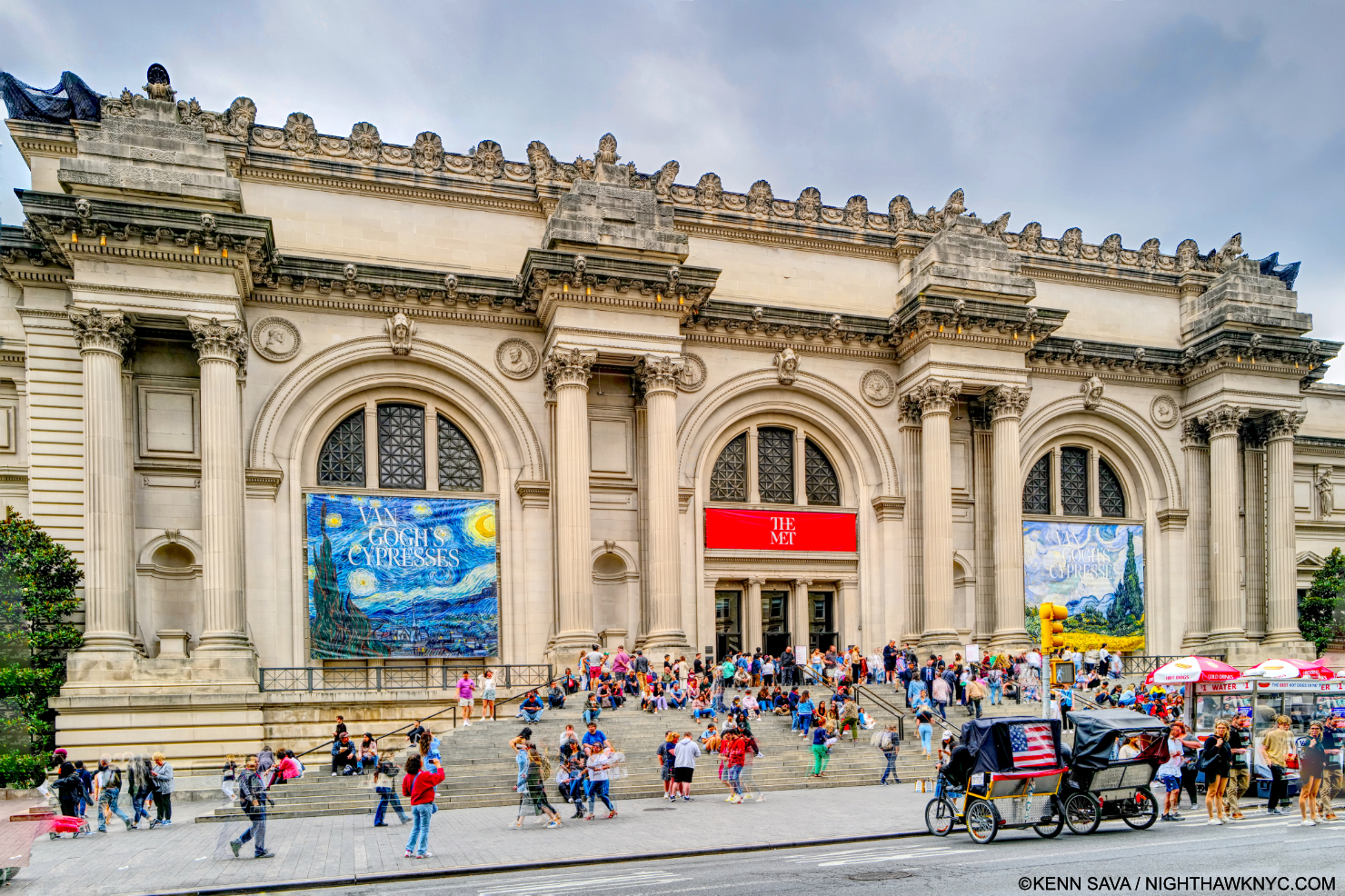
Roger Maris: Against All Odds

This site is Free & Ad-Free! If you find it worthwhile, please donate to support it & independent Art writing. Thank you. 

Written & Photographed by Kenn Sava

I was a Yankee fan as a kid. In 1961, I saw my first Yankees game in person. My father, who was absent my entire childhood, didn’t take me. A neighbor took me with his kid. My seat was right next to one of the infamous steel pillars in the original Yankee Stadium that were death if you sat behind one. You’d see little. Being next to it partially blocked my view! Still, I remember watching Whitey Ford warm up right down in front of me. In those days the pitcher warmed up along the side lines. Not an ideal seat, but I was seeing the Yankees and what turned out to be one of the greatest teams ever. 

“The Ghosts of Yankee Stadium” may be the title of this Mural across the street from both the original Yankee Stadium and the new Stadium. It shows the heads of Babe Ruth, Lou Gehrig, Joe DiMaggio and Roger Maris (5th from the left), among others hovering over the top of the original Yankee Stadium as seen from beneath the elevated subway on April 15, 2010. The pillars I referred to, shown on the left in the rendering of the upper deck, ran all the way down to the ground level. Looking at this photo now, the top half is quite similar to the view I had of the field that day, framed by 2 pillars, and the roof. The pillars were finally removed when the Stadium was remodeled in 1973. Directly behind me, the original Stadium stood half-demolished.

The team was stacked from top to bottom. They carried no less than three terrific catchers- Yogi Berra, Elston Howard, both all-time legends, and Johnny Blanchard, who as the 3rd stringer still managed to hit 21 home runs in 1961. An amazing feat, but far from the most amazing feat someone on that team accomplished.

Edward “Whitey” Ford on the mound of the original Yankee Stadium for the last time, September 21, 2008, before the final game played at the Stadium.

Edward “”Whitey” Ford was their ace pitcher. He was the epitome of smooth. A classy, unflappable, lefty with flaming white hair. Another Yankee legend having a great year. In 1961, he went 25 and 4 and won the Cy Young Award. He was one of EIGHT 1961 Yankee All-Stars, and 3 Hall of Famers.

Yogi Berra stands at home plate at the original Yankee Stadium, where he where he played for much of a legendary career, for the last time before the final game played there, September 21, 2008.

Elston Howard led the team with a .348 batting average, forcing the legendary catcher Yogi Berra to play left field.

Life, August 18, 1961. Photo by Philippe Halsman over a Babe Ruth Photo by William Greene. In the article inside, with 40+ games left in the season, Life said the odds were 4-1 against Roger Maris breaking the record. Mantle had a 50-50 chance.

At the core of the Yanks that year were Mickey Mantle and Roger Maris. The “M&M Boys” as they were known. Good friends, as the season went on and it became apparent both of them had a legitimate shot at Babe Ruth’s 1927 record of 60 home runs in a season, the media painted them as rivals for Babe’s crown.

Drafted by the Yankees and raised in their system, Mickey was hugely popular when I was a kid- The most popular athlete in NYC. Roger Maris came to the Yanks later in his career in a trade. This set him up as a usurper to native son Mantle as they were going neck and neck to lead the team in home runs as summer became early fall as both chased the immortal Bambino, Babe Ruth’s record of 60 homers. Mantle was the golden boy of the Yankees, Joe DiMaggio’s successor in center field. Roger Maris wasn’t even a home-grown Yankee, having come to the team from Kansas City a few years before.

“Mickey Mantle and Roger Maris were much alike on one level, both coming from the Midwest, raised in working class families, with similar high school athletic stardom, and both marrying their high school sweethearts. Yet, in terms of personality and lifestyle, they were quite different. Mantle was more outgoing and gregarious than Maris, and liked being in the limelight. Though he played it humbly, Mantle really loved the media attention and he wanted the adulation. Maris only wanted to play baseball; he didn’t want the celebrity that might come with breaking Ruth’s record, and he especially did not want the press attention that hounded him that summer1.”

The Mickey Mantle Monument in Monument Vallery, seen in the original Yankee Stadium before the final game played there, September 21, 2008.

The fans were intensely behind Mickey Mantle as their choice to break the Babe’s record. As the new-comer, Roger Maris felt their wrath, from booing to phone threats, as well the unconscionable intrusions and wrath of the press. Things were getting hot and heavy, something Roger Maris wanted no part of. David Halberstam wrote of what Roger endured in 1961 in his book, October, 1964

“…The more he [Maris] became the story, the warier he became. The Yankees, completely unprepared for the media circus, gave him no help, offered him no protection, and set no guidelines. They let him, stubborn, suspicious and without guile, hang out there alone, utterly ill prepared for this ordeal; they never gave him a press officer to serve as a buffer between him and the media, or even set certain times when he would deal with the reporters, so what it would not be a constant burden. They did not filter requests, or tell him who he might trust and whom he might not or which requests were legitimate and which were trivial. Under all this pressure, Maris grew more and more irritable. He found that he could go nowhere without a phalanx of journalists….”

And, there was the non-existent “feud” with his friend Mantle some of the media concocted that didn’t exist…

Mickey Mantle got an infection in his hip and wound up in the hospital on September 28th, missing the last week of the regular season. Mantle, who had won a Triple Crown in 1956 (highest batting average, most homers & rbi’s), wound up second on the team in batting average and homers with .317 and was stopped at 54 homers, the most he ever hit in one season. It was now Roger’s record to win or lose. The press continued to give him a very hard time as the scrutiny intensified. Maris’s hair fell out in patches. But, he stuck it out. His attitude was “I’ll show them.” Maris hit #60 to tie the Babe on September 26th. Then, in the final game of the year (talk about pressure!), on October 1st, he hit his 61st, as I watched on tv.

Roger Maris being pushed out of the dugout after hitting #61, October 1, 1961. You can also see the pillars behind him I was stuck next to earlier that year. *UPI Photo

Typically, after he hit it, his teammates had to push him out of the dugout to acknowledge the cheers of the crowd. He. barely made it to the top step before quickly going back down.

The original Yankee Stadium at 1:40pm on September 21, 2008, the afternoon of the final game ever to be played in “the House that Ruth Built” that evening.

Fast forward to September 21, 2008, when something unprecedented happened. The Yankees played their final game at the original Yankee Stadium before it would be torn down and they would move into a new Stadium across the street. I was there for both the final game at the original Stadium, (built in 1923, “the House that Ruth built,” the home to an incredible amount of baseball history), and the first game played across the street at the new Stadium in spring, 2009. 

Baseball heaven. Babe Ruth & Roger Maris once stood here. The view standing in right field looking towards home plate at the original Yankee Stadium before the final game, September 21, 2008.

Before the final game they actually allowed fans on the sacred field- unprecedented in modern times. The same field that Babe Ruth, Joe DiMaggio, Mickey Mantle, Lou Gehrig, Roger Maris and countless others had played on. As I walked slowly around the entire field, which I still can’t believe I actually did. I stopped in right field and stood there taking in the view. The same view Babe Ruth and Roger Maris, both right fielders, had. I was wearing my number 9 Roger Maris Yankee jersey. A newspaper photographer came up behind me and asked me to stand still. He shot me from behind looking at the huge stadium in front of me on its final day- showing #9 in its old right field stomping grounds. Then, I picked up my camera and took the picture above of the view I had looking in to home plate. If there’s such a thing as “baseball heaven,” this is it. 

The last game at the original Stadium is about to get underway as former Yankee greats from different periods stand at their former positions, September 21, 2008.

Being on the field was unforgettable. Then, later that night, the Yankees introduced an amazing array of former players, culminating with Yogi Berra and Whitey Ford, both making their final appearance on the field where so much of their legendary careers took place. Roger Maris, who passed away in 1985 at the age of 51, was not among them. Neither was Mickey Mantle, who died in 1995 at 63. 

All of this came back to me tonight, September 29, 2022, after current Yankee Aaron Judge hit his 61st home run of 2022, tying Roger Maris’s American League record. So far, Roger Maris’s record has stood for an ironic 61 years. Consider this- Babe Ruth’s record 60 home runs in 1927 stood for 34 years, until Roger Maris in 1961. Also ironically, Aaron Judge wears 99, Maris wore 9. 

I was struck by some strange feelings that really have nothing to do with Aaron Judge- an amazing player, beloved by teammates and fans. He stands a good chance of breaking the record. I hope he does and keeps going. Roger Maris’s wife and his son, Roger, Jr. were at the game. After the game Roger, Jr said that, in his opinion, if he hits #62, Aaron Judge should be recognized as the true all-time single season home run record holder- and not Barry Bonds, Mark McGwire and Sammy Sosa, who each hit more than 61 in a season, because each have been mentioned as possible drug users. Personally, I agree with Mr. Maris.

Watching the aftermath (I missed seeing Mr. Judge hit it live) tonight, and the interviews, my thoughts turned to Roger Maris. I’m not a believer in halls of fame. They’re too subjective. Someone worthy always gets left out. To this day, the powers that be have deemed Roger Maris not worthy of “enshrinement” in Cooperstown. Babe Ruth and Mickey Mantle are both enshrined there. Aaron Judge may be one day. 

“Against All Odds.” Roger Maris’s plaque in Monument Valley in the original Yankee Stadium, September 21, 2008. The plaque, installed a year before he died, a few hundred feet to the left of where his 61st home run landed, reads like a belated apology.

Still, nothing can take away what Roger Maris accomplished in 1961. Against all the odds, as his plaque in Monument Valley at Yankee Stadium says, he accomplished something extremely unlikely. I will never forget watching it all unfold, then seeing him do it on tv, making me a fan in the process. “I’ll show them,” was his attitude, and he did.

In a world given to unreasonable, personal attacks, bullying, and unbridled invasion of personal privacy for all of us, what a powerful example he set in overcoming all of it that continues to speak to me on so many levels.

Roger Maris 61 in ’61 US postage stamp issued September, 1999.

As I write this on September 29, 2022, Roger Maris is still the co-holder of the American League record, though it might be one of the last days that will be true. Though his “enshrinement” in baseball’s Hall of Fame seems unlikely now, Roger Maris’s accomplishment has long been, and eternally, enshrined in the Hall of Fame of Life, where great feats of intestinal fortitude and incredible perseverance live on to inspire others forever.

Written on my heart…My hand print created with Yankee Stadium dirt on the right field wall where it remained during the final game, September 21, 2008.

*- Soundtrack for this piece is “Home Run” by Joe Nichols from his 2022 album Good Day for Living.

Special thanks to Fluff.

NighthawkNYC.com has been entirely self-funded & ad-free for over 7 years, during which over 275 full length pieces have been published!
I can no longer fund it myself. More on why here.
If you’ve found it worthwhile, PLEASE donate to keep it online & ad-free below.
Thank you, Kenn.

Written & photographed by Kenn Sava for nighthawknyc.com unless otherwise credited.
To send comments, thoughts, feedback or propositions click here.
Click the white box on the upper right for the archives or to search them.
Subscribe to be notified of new Posts below. Your information will be used for no other purpose.
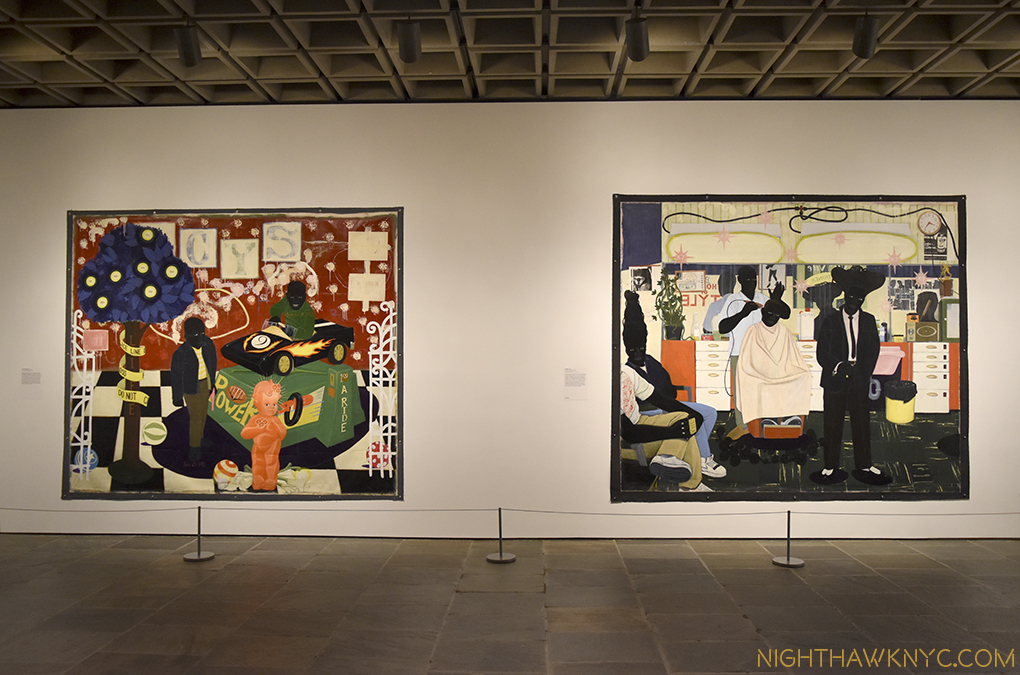


  1. https://pophistorydig.com/topics/tag/mickey-mantle-1961

The Met Breuer: Hail, and Farewell

Written & Photographed by Kenn Sava

Part Two of a series.

2,197 days.

I’m about to enter it for what I didn’t know would turn out to be the last time, on what would turn out to be its very last day. I’ll miss it.

That’s how long The Met Breuer (TMB) was open. March 8, 2016 (Member’s preview) through March 12, 2020, when it “temporarily closed” for the pandemic shutdown1. With the calendar turning to July, The Met’s time in the Breuer Building has ended, as I outlined in Part 1, making March 12th the final day it was open to the public. I was there on both its first and last day, and some in between. Though I regretfully missed some of TMB’s shows, I saw the major shows and a good many of the others. 

The Met Breuer, March 12, 2020.

My interest in The Met Breuer was born in curiosity. In May, 2011, they announced they would be taking over the Breuer building at 945 Madison Avenue.

“With this new space, we can expand the story that the Met tells, exploring modern and contemporary art in a global context that reflects the breadth of our encyclopedic collections. This will be an initiative that involves curators across the Museum, stressing historical connections between objects and looking at our holdings with a fresh eye and new perspective. This project does not mean that we are taking modern and contemporary art out of the Met’s main building, but it does open up the possibility of having space to exhibit these collections in the event that we decide to rebuild the Lila Acheson Wallace Wing where they are currently shown…” Met Director, Thomas P. Campbell, in The Met’s press release May 11, 2011. 

Going up. The elevator doors open onto Jack Whitten: Odyssey in October, 2018, one of the true blockbuster shows mounted at TMB.

After decades of being in denial about Modern & Contemporary Art’s worthiness of being in The Met, this marked a gigantic turn. Of course, it came 40 years too late to acquire most of the major works (or ANY of the major works) of some of the most important Artists of the past 40 years. Truth be told, I for one, was in agreement with The Museum about M&C Art from 1980 until about 2014, when I felt enough time had passed to begin to assess what had been done. A LOT of money had been invested in renovations to, and an 8 year lease on, the building Marcel Breuer had designed at 945 Madison Avenue at East 75th Street fo the Whitney Museum (see Part 1 for more on the history). The pressure was on. The Met, under then Director Thomas Campbell, had decided to make its mark in Modern & Contemporary Art, and brought Sheena Wagstaff on board from the Tate Modern, London, in January, 2012, as Chairman of the Department. What approach would Ms. Wagstaff (who’s shows at the Tate ranged from Edward Hopper to Jeff Wall), her staff and The Met take to M&C Art and how would it hold up against shows up at the Guggenheim, MoMA, The New Museum, The Whitney and the Brooklyn Museums?

Home is a Foreign Place, one of the 3 shows that closed TMB, drawn from recent additions to the Permanent Collection showed how far The Met’s collection of M&C has come.

Going into the opening, the press was all about how The Met was “hopelessly behind” NYC’s other Big Five museums, let alone those elsewhere in the country, in Contemporary Art. 2,197 days later, The Met Breuer has done the remarkable- It’s put The Met on that map. It did so by mounting a number of the most important shows of the past four years. From Nasreen Mohamedi and Unfinished: Thoughts Left Visible, which opened TMB, to Gerhard Richter: Painting After All, which closed it. In between, Kerry James Marshall: Mastry, will remain it’s peak moment in my mind, though there were others. And there were a surprising number of revelations along the way.

Sol LeWitt was an Artist I never paid much attention to until I saw this work, 13/3, 1981, Painted balsa wood, in the Breuer’s show, , in December, 2017. Ever since, his work continues to fascinate me

Originally scheduled to be open as TMB until July 5th, it still would have closed with the Gerhard Richter and Home Is A Foreign Place: Recent Acquisitions In Context and From Gericault To Rockburne: Selections From The Michael & Juliet Rubenstein Gift, the final three shows on its 2020 schedule. While the legacy is complete, in terms of the shows mounted, the influence was cut short as countless thousands more would have gotten to see these shows over the approximately four months longer they would have remained open. 

For now, I look back at some Highlights from The Met Breuer. The name of each show, listed in no particular order, is linked to the piece I wrote about it at the time-

Approaching this work, I thought “What is a piece of textile doing here?” “Untitled, 1970s, Graphite and ink on paper,” the wall card read. Wait. What? This is a DRAWING? Then, all of a sudden, a loud click when off in my mind, and Art was never the same for me again.

Nasreen Mohamedi Revelations. That might be the word that lingers with me with I think about TMB. They began on Day 1…The first show I saw that first day at TMB remains my personal favorite of all the shows I saw there. I had no idea who Nasreen Mohamedi was when I got off the elevator that day on 2. But Sheena Wagstaff sure did.

Incomparable is the word I now use to describe Nasreen Mohamedi, who lived in obscurity for 53 years and gave away her Art as gifts. Seen here in one of the handful of existing Photos of her, this one has lingered in my mind from the first moment I saw it, here in a slide show in the final gallery in March, 2016.

The show included Photos taken by Ms. Wagstaff of the area of Nasreen’s unmarked grave well off the beaten path in Kihim, Mumbai, India. THAT’S passion. THAT’S dedication. At that moment I saw them, I knew TMB would be one of NYCs most important cultural institutions. 

Unfinished, Member’s Preview. The first look at one of the most memorable shows to appear at The Met Breuer, March 8, 2016. Work by Titian, left.

Unfinished: Thoughts Left Visible. In the hundreds of years Art shows have been mounted, someone must have mounted one around this concept, right? I haven’t heard of it. If there was one, I doubt it was mounted as incredibly well and included rarely seen works by Michelangelo, Leonardo (the twin Kings of the unfinished work in the Renaisaance), Jan van Eyck, JMW Turner, and countless others. TMB’s first major blockbuster, and the other inaugural show in March, 2016, along with Nasreen Mohamedi. It belied The Met’s stated “mission” with TMB as “an outpost for Modern & Contemporary Art,” filling two floors, while the Nasreen got one. Given all the riches included, I have yet to hear anyone complain. Overall, over time, TMB was what The Museum said it would be.

Diane Arbus: In The Beginning was a revelation, as well, as much for the work as for the amazing way the show was installed- each of the over 100 pieces got its own wall- another thing I’ve never seen before. It also included a portrait of a departed friend of mine, Stormé DeLarverie, who told me more than once that it was she whose scuffle with police had incited the Stonewall uprising (she disagreed with the use of the term “riot.”), and that she had posed for Diane Arbus in 1961. At the time, I took both claims with grains of salt. Now, the world knows that both are facts, and in her gorgeous portrait by Ms. Arbus, which I snuck a shot of and show in my piece, Stormé will forever live on in The Met. In In The Beginning, she, fittingly, got a wall to herself.

The beginning of Kerry James Marshall: Mastry.

Kerry James Marshall: Mastry. As great a Painting show as I’ve seen in years. Maybe decades. 

Edvard Munch: Between the Clock and the Bed. A welcome reminder of the enduring accomplishment of this wonderful Artist who’s rarely seen in a show here. Between showed Mr. Munch is one of the very few Artists to successfully use techniques, styles and colors in realms that had only been used by Vincent van Gogh, who he was only 10 years younger than, and who he outlived by 54 years. 

Lichnos, 2008, at the entrance. 100 feet into this show my jaw was on the ground. It stayed there throughout.

Odyssey: Jack Whitten Sculpture, 1963-2017. Quick. Who’s the other Artist who is a Master of one medium, and who kept his mastery of another from public view his entire career? One stunning revelation after another that never let up. More remarkable for such a large show.

As I said in my piece on the show- “TWO whole museum floors of about 100 Paintings? My idea of heaven…” Having five floors at The Breuer added different dimensions to any number of shows, allowing a good number of shows to fill two whole floors- the kind of space that would be VERY hard to have at 1000 Fifth Avenue. The space between works at Gerhard Richter: Painting After All was one of its most memorable features and gave it an entirely different feel, allowing each work “space to breathe,” rare in big shows, and something I’ll miss very much.

Gerhard Richter: Painting After All. Exquisitely selected and hung, somehow managing to condense almost 6 decades of work into a selection that while not a “greatest hits” included enough of them, along with a good many surprises, and a chance to see the monumental Birkenau works. Unfortunately, it was open for all of NINE DAYS! It turns out that I saw it on its final day, at considerable risk. 

Along with other memorable shows-

Marsden Hartley’s Maine Marsden Hartley was unique and an Artist, though steeped in what the Europeans had and were doing, found his own ways. This was a show that served to open the mind, even in 2017, to the possibilities of Painting seen through a very free eye and mind in often daring fashion. A real breath of fresh air.

Marsden Hartley, Mont Sainte-Victoire, c.1927. Pretty daring to go to Aix-en-Provence and go toe-to-toe with the Master, Cezanne, in the land he made iconic. This work, in a show about Marsden Hartley’s work in Maine, this work set the stage for his bold brushwork and use of color in what would come.

Lygia Pape:A Multitude of Forms  No one medium could hold Lygia Pape’s vision, so the visitor to A Multitude of Forms was met with an ever-changing presentation that delighted the eye as much as it captured the mind.

Lygia Pape, Tetia 1, C, 1976-2004, Golden thread, nails, wood, lighting, a work that wonderfully characterized the ephemeral nature of Ms. Pape’s work in a show remembered for its endless variety and surprise. Seen at Lygia Pape: A Multitude of Forms, her first major show in a US museum in June, 2017.

Everything is Connected: Art and Conspiracy-

Rachel Harrison, Snake in the Grass, 1997. A work inspired by the Artist’s trip to Dealey Plaza, sight of JFK’s Assassination. While I was captivated by it, NHNYC Researcher Kitty said this work reminded her of being in her father’s garage.

And shows consisting of work from The Met’s Permanent Collection including-

Obsession: Nudes by Klimt, Schiele and Picasso From the Schofield Thayer Collection. With only 9 by Klimt and the majority by Shiele- no complaints here.

Provocations: Anselm Kiefer At The Met Breuer-

Anselm Kiefer, Iconoclastic Controversy, 1980, Gouache and ink on photograph, the wall card reads in part, “Rooted in the Second Commandment’s prohibition of graven images, the medieval debate involved the persecution of the artist-monks and the destruction of icons. Here he restaged the conflict in his studio with miniature versions of WWII tanks (one has destroyed a piece of clay in the shape of an artist’s palette)…The image links the iconoclastic battle to the Nazi’s attack on 
“degenerate art” in the late 1930s, which led to the destruction of hundreds of works of modern art.”

and Home Is A Foreign Place: Recent Acquisitions in Context. (Installation view of its lobby shown earlier)-

Mark Bradford, Crack Between the Floorboards, 2014. Can an Art writer have personal favorites? If he/she is a human being, it’s pretty hard not to. Mark Bradford is one of mine. So, I will long remember that this piece was the third to last work I saw on what turned out to be the closing day of The Met Breuer in the show Home Is A Foreign Place. The penultimate piece was Untitled, 1970, by Nasreen Mohamedi.

It’s fitting to end this piece with this show. Here, one could see just how far The Met’s Permanent Collection has come. Yes, there is a long way to go. Museums elsewhere in the US have built a lead in Contemporary Art that is, perhaps, insurmountable. But, The Met now has enough work in its own collection to mount fascinating shows like this. I was most impressed by the steps they’ve taken thus far as I looked at the acquisition dates on the items in Home Is A Foreign Place.

The very last work I saw at The Met Breuer is this piece from a series by Walid Raad, from 2014-5 in Home Is A Foreign Place. The wall card spoke about the Artist’s interest in the shadows these objects cast and how they enhance and expand the form. A bit like the shadow a museum visit casts…

And then, there were the shows I missed, like Vija Clemins. Phew…ALL of this in exactly 4 years! I think that’s a track record that can hang with what any of NYC’s other big museums- including The Met, 1000 Fifth Avenue.

Yes, there were a lot of very good, even great, shows at The Met Breuer during its four year run. You probably have your own list of favorites. Regardless of which show we’re talking about, the Breuer Building gave all of its shows the added dimension of space- often a whole floor, even two. There’s a lot to be said for that, and it will be very difficult to mount such shows at 1000 Fifth Avenue2. I’ll miss the place as The Met Breuer. I already cherish the days I got to spend there.

This is the Second part of my look back at The Met Breuer. Part 1 is here. Some thoughts on the “bigger picture” are coming.  

*- Soundtrack for this post is “Hail & Farewell” by Big Country. “Hail and farewell, Life begins again…”

You can now follow @nighthawk_nyc on Instagram.

NighthawkNYC.com has been entirely self-funded and ad-free for over 7 years, during which over 250 full length pieces have been published. If you’ve found it worthwhile, you can donate to keep it going & ad-free below. Thank you!

Written & photographed by Kenn Sava for nighthawknyc.com unless otherwise credited.
To send comments, thoughts, feedback or propositions click here.
Click the white box on the upper right for the archives or to search them.
For “short takes” and additional pictures, follow @nighthawk_nyc on Instagram.

Subscribe to be notified of new Posts below. Your information will be used for no other purpose.
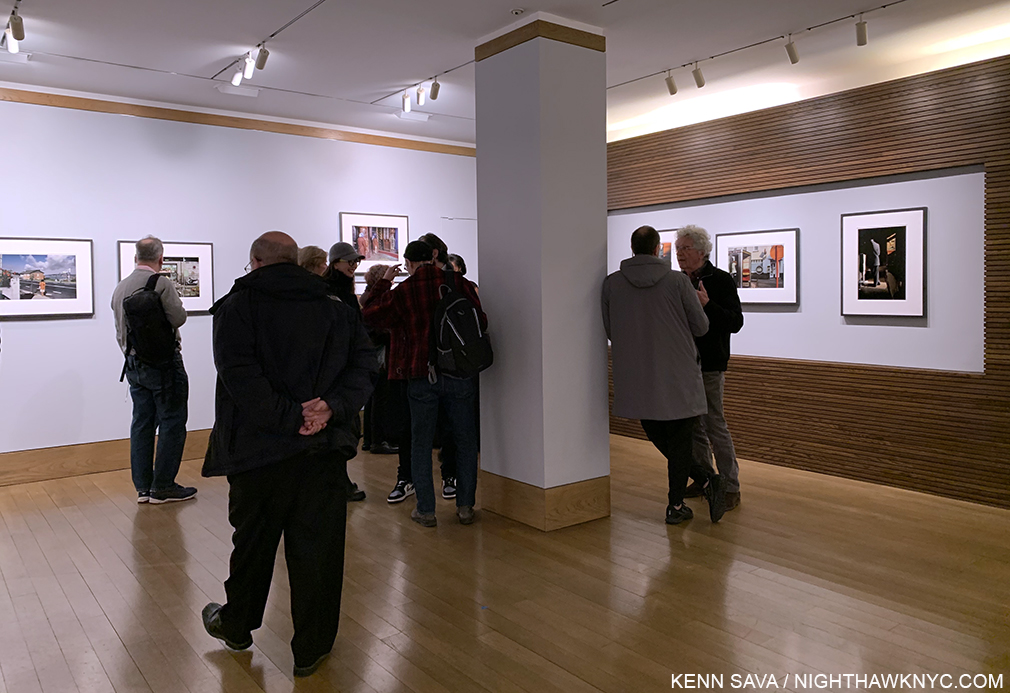
 

  1. By my count. Subtract 10 days if you want to count from its official opening on March 18th.
  2. The huge China: Through the Looking Glass Fashion show in 2015 was mounted in different parts of The Met, which probably remains the only way to do it.

On Painting & Photography

Written & Photographed by Kenn Sava (except *)

Note- Robert Frank has been mentioned in many of my pieces over the past 3 years of my “deep-dive” into Modern & Contemporary Photography, a realm that he had a seminal role in creating with the publication of  The Americans. When the sad news came that he had passed away at 94 on September 9th, I was finishing yet another piece that he is a part of- one that summarizes some of my thoughts on Painting & Photography these past three years, and also marks the 60th anniversary of the American publication of The Americans. Too far along to change, I’ve left it as it was, and added this as my “R.I.P.”  That Robert Frank was, and remains, one of the most influential figures in Art of our time was already testified to within.

Subtitle- “On Rembrandt’s 350th, and Robert Frank’s 60th”

Rembrandt, Self-Portrait, 1660. The Artist is seen here in the last decade of his life. Seen on March 26, 2015 in The Met’s former European Paintings galleries.

When I look at Art, sooner or later, my thoughts involve Rembrandt for any one of a myriad of reasons. I do my best, however, to keep my thoughts about his death to a minimum, so this is going to be purposely short. Rembrandt was pretty poor the last decade of his life. His prior fame had deserted him as if he were a fad, or a “mania,” like tulips were in 1637 when he was 30, and combined with an extravagant lifestyle1 that he could no longer maintain, he lived in housing for the poor at the end2. When he died, at just 63, he was buried in an unmarked pauper’s grave. 20 years later, his bones were destroyed, as was the custom with the remains of such unfortunates. The church, where his unmarked grave was, finally got around to erecting a plaque, inside, in 1909. It redeemed itself some 30 years later when a young Jewish girl who was in hiding nearby from the Nazis took solace in the sound of the church’s bells. Today, there’s a statue of Anne Frank outside the church. His Art largely fell into eclipse, except for a few artists he influenced, for about 100 years, as hard as that is for us to imagine today. October 4, 2019, happens to be the 350th anniversary of his death.

Seen in situ. One of the glories of New York. Five of The Met’s Rembrandts seen in the European Paintings Galleries on June 10, 2017, before the current skylight renovations caused their relocation to the Robert Lehman Collection galleries. When I think of “home,” this gallery comes to mind.

I’ve remained passionate about the work of Rembrandt van Rijn since I was in my early teens and he is one of very very few Artists I can say that about. Almost no where else have I found the humanity, and the depth and range of humanity, I find in Rembrandt. Because of this, I find his Self-Portraits particularly fascinating. In the end, they show me that the Artist, himself, was every bit as human as anyone he ever depicted.

Rembrandt after Leonardo da Vinci, The Last Supper, ca.1634-5, Red chalk, 14 x 18 inches, From The Met’s Lehman Collection. Seen in 2016.

Few other Artists I’ve seen have the power to say as much with just a few strokes as can be seen time and time again in his Drawings- like this one, in which Rembrandt manages to capture the entirety of Leonardo’s masterpiece (and add some additional elements that may have come from a print of the Painting he saw- Rembrandt never left Holland) in so few strokes, you can almost count them.

Self-Portrait in a Soft Hat, 1631, Etching completed with black chalk. The Artist was about 25 at this point at the beginning of his career. Seen at the Morgan Library in September, 2016.

Today, he’s honored as Holland’s favorite son. Public places have been renamed in his honor. (“Rembrandt Square,” etc., etc.). In 2015, the country paid a record price for 2 portraits by the Master, 180 million dollars, splitting the cost with France (for the Louvre and the Rijksmuseum), partially (largely?) because of their value to tourism, (i.e. so they can continue to cash in on him). Pretty ironic given how he was treated near and at the end of his life.

The most Rembrandt Self-Portraits in one place I’ve yet been in were these five etchings seen at Rembrandt’s First Masterpiece at the Morgan Library in September, 2016. I was shocked to see them when I walked in. I had no idea they were included.

So, to me, his end is one of the most unfortunate, and saddest, chapters in Art history. I’m not so sure it’s a cause for all that much celebrating. The world of Art seems to agree. There’s only one museum (as far as I know) anywhere in the world mounting a show of Rembrandt’s work that might be construed as honoring/memorializing it anytime close to that date, with that one actually opening on October 4th3.

Nonetheless, the chance to put a big round number on the front of a marketing campaign seems to be all that’s required for Taschen to leap into the breach with three new volumes in their XL (aka “HUGE!”) series of books. Well? In 87 years, for the 400th anniversary of his birth in 2106, actual physical paper books may be a thing of the past4 Whether they arrive as physical books, ebooks, or whatever form books will take in 87 years, I won’t be here to see them. As I write this, the first of Taschen’s “trilogy,” Rembrandt: The Self-Portraits (R:TSPs, henceforth) is out and in wide distribution. It’s a handsome volume, with a nifty cover image that displays one of 6 different Rembrandt Self-Portraits depending on the angle you look at it. I picked it up in a store and passed, even though nothing Rembrandt did has held me more spellbound for so long as his Self-Portraits have. So, why did I pass on this complete collection of them?  I was extremely disappointed that the great Rembrandt scholar Gary Schwartz wasn’t involved in it, and from what I understand isn’t involved in the other two volumes either. That statement will serve as my protest since I subsequently bought R:TSPs. With all due respect to the scholars chosen, no one will replace Gary Schwartz for me when it comes to Rembrandt- or any other Artist he turns his unique skillset to (Dear Mr. Schwartz, If you happen to see this? Jan van Eyck, Please?). Suffice it to say that the renowned Professor, Simon Schama, host of the PBS series, The Power of Art, dedicated his own Rembrandt biography, Rembrandt’s eyes, to Gary Schwartz.

“I regard Rembrandt’s self-portraits less as assertions of a strong personal identity than as a means to help the artist, like Saint Paul, become more like other people. Behind them lies a man who depended on his art to offset imbalances in his life and his relations with others.” Gary Schwartz.

Focusing on what we do get, the book itself is large, oversized as they say in the trade, a full 10 x 13.5 inches and weighs about 4 1/2 pounds, very light for a true Taschen XL which generally weigh in around 20 pounds. Its 176 pages contain a succinct essay and the rest of the book is Rembrandt, in my view, at his best. The reproductions are very good5, with many being reproduced in actual size.

A publicity shot by Taschen. Rest assured the copies sold in the USA are in English.*

Rembrandt was the first Artist to create a body of Self-Portraits. Yes, the cheap headline is “Rembrandt Invented The Selfie,” which, without looking, I’m sure has already been used to death. That’s not true. He was not the first to do a Self-Portrait, just to create a body of them among Artists known to us today. And what a body of work they are! We don’t have his diary, but, though it’s dangerous to read too much into the SPs (unless you want to), they are not really “pure” autobiography beyond the fact that yes, they do indeed depict the Artist, and we get to see his famous visage evolve as the years and decades go by. Exactly what is going on in each of them has been the subject of much conjecture, and I suspect will continue to be for as long as people look at them. He created them in oil, in ink, and with an etching needle (in Paintings, Drawings and Etchings). Though I love everything the man did, for me, they have been THE supreme body of Art since I saw my first one, shown up top, at The Met way back when. If I had to live the rest of my days only being allowed to look at one work of Art (oh jeez), it would be a Rembrandt Self-Portrait. But, please don’t ask me which one. Right now, I would select his Self-Portrait with Two Circles in England, but that choice is often a factor of which one I’ve looked at last. I’d take any of them- Painted, Drawn or Etched. And in R:TSPs, we get to see every one of them (they say).

Two pre-release copies of Rembrandt: The Complete Paintings, left, flank a copy of Rembrandt: The Complete Drawings & Etching, which complete Taschen’s “trilogy.” As close as I’ve gotten- so far.

While I am very much looking forward to seeing Rembrandt: The Complete Paintings (TCP, henceforth), it should be mentioned that though The Rembrandt Research Project issued its latest volume of what it calls the “Corpus” of the Master’s Paintings in 2016, the controversy around what that body “should” consist of shows no signs of ending, and so? Buyer beware! What’s agreed upon as his complete Paintings will, very possibly, change in the near future. So, even 350 years after his sad demise, this will most likely not be the “final word” on the subject.

Still, there’s so much of what RvR has accomplished in his other work that can be seen in his Self-Portraits. You can trace a good deal of his development as an Artist in this work. And then? There is the incredible Painting! No matter how much Painting I’ve seen in the 40 year (next year6 I’ve been going to shows, my mind always comes back, for a variety of reasons, to “how Rembrandt Painted it.”

Ok. So, you’re wondering- What does all of this have to do with Robert Frank?

Robert Frank: The Americans, my copy of Steidl’s 50th Anniversary edition, 2008.

Questionable timing aside, for me, the real value of RvR:TSPs coming out now has been the bath of the icy cold water of “reality” it’s thrown on my deep dive into Modern & Contemporary Photography, by which I mean post-Robert Frank’s The Americans, the most seminal PhotoBook of our time. 2019 marks the 60th Anniversary of American publication of The Americans (and there’s been almost no fanfare about that- as far as I’ve seen thus far)7. This fall/winter marks 3 years of my “deep dive” into this realm of M&C Photography that I consider The Americans the first bookmark in, a beginning of, in a sense. I started from the place of believing that Photography had not, as yet, earned its place with Painting, Drawing and Sculpture. Looking at R:TSPs? I realized that after everything I’ve seen, I can’t say my mind has been changed all that much. For one thing, though, it’s still a very young medium- particularly when compared to thousands of years of Painting. After all, they’re marketing the 350th anniversary of Rembrandt’s passing, and he’s thousands of years after Artists started Painting. Jan van Eyck was one of the first to use oil paint in the early 1400’s. Photography (with chemicals) has been around since Sir John F.W. Herschel coined the word in his paper “On the Art of Photography; or the Application of the Chemical Rays of Light to the Purpose of Pictorial Presentation,” on March 14, 18398– 180 years. But, the more I look at both, there’s one thing that strikes me as a major difference between Painting and Photographs-

Time.

It takes time to create a Painting. Even if the Artist does one quickly. In most Paintings, it takes longer to apply one brushstroke than it does to create most Photographs.

I think I can see that. And, I think it’s telling.

I’m not the only one.

David Hockney, Don & Christopher, Los Angeles, 1982, Polaroid collage “Joiner.” Seen at David Hockney, The Met, January, 2018.

Earlier this year, while I was formulating my thoughts on this subject, before I saw R:TSPs, I came across 2 books by David Hockney, Cameraworks, 1984, and Hockney on ‘Art,’ conversations with Paul Joyce, published in 1999. In both of them, Mr. Hockney 9, a man who has created both Paintings and Photographs (since 196710), and innovated in both realms, put into words much of what I was thinking- uncannily. “During the last several months I’ve come to realize that it has something to do with the amount of time that’s been put into the image. I mean, Rembrandt spent days, weeks, painting a portrait. You can go to a museum and look at a Rembrandt for hours and you’re not going to spend as much time looking as he spent panitng- observing, layering his observations, layering the time.” “My main argument was that a photograph could not be looked at for a long time. Have you noticed that?,” David Hockney, Cameraworks, P.9. There. He just said it for me.

Recently, in these very pages, without any question from me or the knowledge that I was working on this piece, the Photographer Fred Cray said– “One of the concerns I’ve always had with photography is the way it holds up on the wall with paintings and other media. Photography often seems thin and quick compared to painting.”

Anytime I see a Photographic portrait, my mind (at times, unconsciously) always turns to Rembrandt’s Self-Portraits (though, much of what I’m saying here could also be said for almost all of his portraits, as Mr. Hockney inferred). Not as a way of qualitatively comparing them. As a means of gauging the impact. They are the benchmark for me. Most of the time, the impact of the Photography in question isn’t the same. I wondered why for most of the first two years of this dive. Early in 2019, it hit me. Time. Time is a key element in Painting. In so many ways. From the time each stroke takes to apply, to how long it takes to complete the work to the rendering of time, itself, in the work. These are not questions most Photographers have to face. They deal with questions of light and setting before the fact, then they’re finished- unless they modify it later in printing, or digitally.

Unknown Artist seen Painting on 7th Avenue, NYC, September, 2019. Yes, he got a parking ticket. Many Street Photographers would have been done long before this gentleman got set up.

Of course, Painters have ways of dealing with this question to ensure whatever level of consistency in the lighting they want. They can work in their studio, or they can work from a live subject, a still life, a Photograph, a Drawing, or what have you. Even au plain air, as the Artist above, is doing. Time is effecting the result in other ways. My feeling is it’s this passing of time, in this multiplicity of ways, that it takes the Artist to create the work that is manifesting itself in the work in subtle ways, maybe some of them are so subtle as to be subconscious, but that are nonetheless part of what the viewer experiences. With each brush stroke, time is passing, and in a real way, time is being layered on to the canvas. Time is absolute in a Photograph- it’s the same time at the top as it is at the bottom, unless you’re shooting with a time lapse, like Stephen Wilkes.

All of this also serves to remind me, again, of possibly why great Contemporary Painters, like Richard Estes, John Salt, Rod Penner, and David Hockney as well, among many others, use their own Photographs as part of their working process, but the reason they are Painters and not Photographers is because of what they find lacking in Photography- what it can’t present of their vision that Painting can. They’re not alone. The list of great Painters who also took Photographs at some point is long- ranging from Thomas Eakins, Edgar Degas and Edvard Munch, through Ralston Crawford and Robert Rauschenberg, and even Picasso. I find it telling that not a single one of them identified himself as a “Photographer.” Only Charles Sheeler was dually identified and that might be because his Photography earned him money to support his Painting.

Then, in the midst of all of these thoughts, a terrific new book was released by Steidl, Dave Heath: Dialogues With Solitude, the catalog for a show at LE BAL, Paris in 2018. It gave me pause for thought.

My copy of Dave Heath: Dialogues With Solitude, Steidl, 2019.

WHO is Dave Heath?

From Dave Heath: Dialogues With Solitude, Steidl, 2019. *Photo courtesy of Steidl.

It turns out that Mr. Heath was, not is, unfortunately, but his work struck me every bit as hard as any I’ve seen in this 3 year deep dive. Particularly, his portraits, and specifically his portraits of one subject not looking at the camera.

Dave Heath’s earliest body of work are Photographs he took while serving in Korea in 1953-4, including this one. From Dave Heath: Dialogues With Solitude, Steidl, 2019. *Photo courtesy of Steidl.

It turns out that he was not only a master with a camera- a master of the Portrait, he was, also, a master printer. To the point that no less than the aforementioned, esteemed, Robert Frank paid Mr. Heath to print his work for what I believe was his first solo show at no less than the Art Institute of Chicago in April, 1961, a byproduct of The Americans’ release here two years earlier. That says it all.

My copy of Dave Heath’s A Dialogue With Solitude in the 2000 Lumiere Press edition. The books is on the right. The print is in the sleeve to the left.

Captivated by what I’d seen in the Steidl book, which is very well printed, in my opinion, though, unfortunately, Mr. Heath, who passed away in June, 2016, was not involved in it, I learned that Dave Heath’s “masterpiece” is the PhotoBook, A Dialogue With Solitude, 1965, a subject I am quite familiar with. I hunted down a “reasonably” priced copy of the 2000 Lumiere Press limited edition reprint with a signed & numbered print. The reprinted edition includes a letter from Robert Frank. The print in my set is “Washington Square, New York City, 1958.”

Washington Square, New York City, 1958. A Photograph that leaves me speechless, and turns my thoughts to Rembrandt.

It’s one of the very greatest accomplishments in PhotoBooks I’ve yet seen. Given what I said about his printing, the inclusion of a signed & numbered print in the Lumiere Press edition is a key. When I saw it for the first time I had a feeling that was closest of any Photograph I can think of to that I get while looking at a Rembrandt Portrait. Of course, as always, your results may differ.

For some reason that I can’t fathom, the word is that “Mr. Heath’s work went out of style.” Well? Rembrandt, too, “went out of style,” for well over a century, as hard as that might seem to believe to us now. Now, with Steidl’s Dave Heath: Dialogues With Solitude, it seems to me that a show or a book that returns a great, overlooked or forgotten Artist to the world has done that world a great cultural service. I can’t think of a higher purpose for either.

David Hockney, Perspective Is Tunnel Vision, Outside It Opens Up, 2017, Acrylic on two canvases. David Hockney shows how the camera sees in “tunnel vision,” single point perspective,” versus how humans see with what he calls “reverse perspective,” with infinite vanishing points, born of driving through a 10 mile long tunnel in Europe then suddenly coming into the great outdoors in 198511.

Reading David Hockney further, which I highly recommend to anyone interested in Photography, he speaks time and again that cameras, while being great at reproducing two dimensional objects12, do not see the way humans do. He has devoted much of his subsequent Painting career (as seen in his fascinating recent shows) to challenging traditional perspective and exploring the innovations of both Renaissance masters and the masters of Cubism.

David Hockney, Grand Canyon I, 2017, Acrylic on canvas, 48 x 96″ hexagonal, seen in April, 2018. Outside, it, indeeds, “opens up.” The Artist has also begun cutting the corners off his canvases to reinforce his ideas.

In 1999, Mr. Hockney asked, “How many truly memorable pictures are there? Considering the millions of photographs taken, there are few memorable images in this medium, which should tell us something. There have been far more images made this way than the sum of all previous images put together.” (Paul Joyce, Hockney on ‘Art’, P.43.) One thing that’s changed since Mr. Hockney said those words is that there are now more cameras in the world then there are people. It seems to me that that’s going to be a factor in this. The sheer number of Photographers versus Painters is, and is likely to remain indefinitely, skewed incredibly. Incalculably. It makes the odds of a “great” Photograph out of the billions being taken incrementally greater. “Quality only comes with quantity,” legendary Photographer Daido Moriyama said explaining why he takes so many Photos, in How I Take Photographs, page 7313.

I’ve noticed that the rise of Photography has coincided with a relatively ”quiet period” in Painting, in some ways. While this has lasted a few decades, more recently, I don’t have to look any further than my own 200+ piece Archive. I’ve said a number of times that one of the reasons I decided to focus on Photography the past three years was the lack of Painting shows that spoke to me sufficiently to undertake the work these pieces require. I wonder how much longer this will last- Is this an anomaly, or is this the beginning of the way things are going to be? Will we see the number of painters going forward that we’ve seen for the past 500 years? Of course, sheer numbers, or the lack of them, don’t guarantee masterpieces or geniuses. Greater numbers only serve to increase the odds.

At the three year mark, I’m still not convinced that Photography will come to be seen as Art in hundreds of years when that question is decided, IF anyone still cares about Art then. But? If they do, my bets are that Rembrandt’s will still be among the work most highly appreciated.

A work like Dave Heath’s Washington Square, New York City, 1958, gives me hope that Photography may still get there. Is it, as Mr. Hockney said, an image in a billion? Or is it an indication of what might be possible in the medium? I will continue to look…

Meanwhile, on October 4th? I’ll just light a candle. To go with the one in memory of Robert Frank. While I continue my dialogue with Davids Hockney and Heath…

*-Soundtrack for this Post is “Grace,” written by Jeff Buckley and Gary Lucas from Jeff’s immortal album, Grace. I worked with Mr. Lucas, and I booked Music into the now legendary NYC Music Club/Cafe, Sin-E in 1993, shortly after Jeff had played and recorded there. And then? He was suddenly…gone. I never met him or heard him perform in person. One of the great regrets of my life.

BookMarks

My copy of The Rembrandt Book, (THE Rembrandt Book, or TRB, as I call it), by Gary Schwartz. In my opinion, it’s a model of everything a truly great Art monograph should be.

In addition to the books I referred to above, if someone were to ask me to pick one book on Rembrandt? I would choose The Rembrandt Book, by the aforementioned Gary Schwartz. It’s a book designed for readers both new to Rembrandt or expert on the Dutch Master, and so, it’s a book for a lifetime of enjoyment and research. Published in 2006 by Harry N. Abrams, it’s the SECOND full length monograph on Rembrandt by Gary Schwartz, and they couldn’t be more different (In a world where ANYone else would be thrilled to write one magnificent book on Rembrandt? HOW incredible is that?) or compliment each other better. TRB is oversized at 10 x 13 and weighs 6 pounds, but it is my bible on Rembrandt, and if I can’t find what I’m looking for there? I go to his prior monograph, the equally highly regarded, Rembrandt: His Life, His Paintings, 380 pages and 3.6 pounds, published by Viking in 1985 (and I believe this book has been reissued at least once). Both books can be found very reasonably (for less than they were originally published for) in very good condition. Along with my Sister Wendy books, they are the foundations of my Art library.

Another book that’s very relevant to this discussion, and has been essential for me- one I don’t see recommended nearly often enough, is Believing Is Seeing (Observations on the Mysteries of Photography) by the renowned Errol Morris. 

My prior pieces on PhotoBooks are here

NighthawkNYC.com has been entirely self-funded and ad-free for over 6 years, during which over 250 full length pieces have been published. If you’ve found it worthwhile, you can donate to keep it going & ad-free below. Thank you!

Written & photographed by Kenn Sava for nighthawknyc.com unless otherwise credited.
To send comments, thoughts, feedback or propositions click here.
Click the white box on the upper right for the archives or to search them.
For “short takes” and additional pictures, follow @nighthawk_nyc on Instagram.

Subscribe to be notified of new Posts below. Your information will be used for no other purpose.
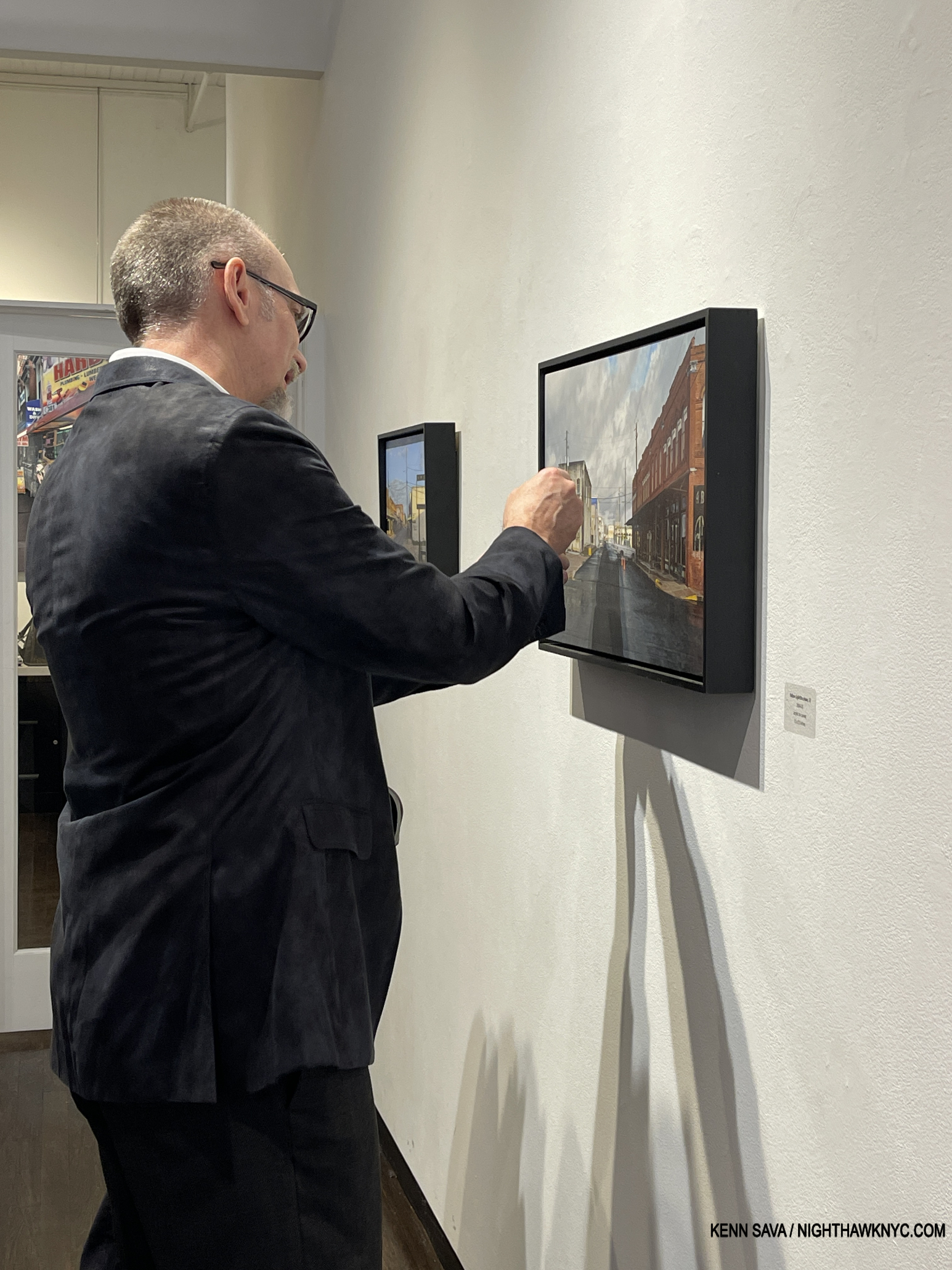
 

  1. You can still visit the beautiful, large, expensive house he bought at Jodenbreestraat 4, in Amsterdam.
  2. Excuse me for seeing a lesson for today’s Art world in this, but I do. If this could happen to one of the greatest Artists who ever lived? It can happen to anyone.
  3. The Wallfar-Richartz-Museum, Cologne, Germany is having a show of Rembrandt’s Graphic Work that opens on, yes, October 4, 2019. The Rijksmuseum, Amsterdam, is hosting a Rembrandt-Velazquez show that opens a week later.
  4. Gary Schwartz says there are some documents that raise the possibility that Rembrandt may have actually been born in 1605 or 1607  (Gary Schwartz, The Rembrandt Book, P.15). I don’t think a year on either side of 2106 is going to make a difference regarding my being around to see it.
  5. My one caveat being that they chose to reproduce only the detail of the early works in which RvR Painted himself as an onlooker in a crowd, denying the viewer the full context and setting.
  6. I consider the incomparable 1980 Picasso Retrospective at MoMA the real beginning of my “looking career” at shows. Looking at Art books predates that by about a decade.
  7. The Americans was first published in 1958 in France by Robert Delpire, and in 1959 by Grove Press in the USA.
  8. //iphf.org/inductees/sir-john-frederick-william-herschel/
  9. Who, in addition to being a world-famous Painter, has also authored two important books on Art & Art History- Secret Knowledge and A History of Pictures
  10. David Hockney, Something New Exhibition Catalog, 2018, P.6
  11. David Hockney, Something New Exhibition Catalog, 2018, P.5
  12. Afterall, what we have in Rembrandt: The Self-Portraits, and every other mass produced book of Paintings, are Photographs of Paintings.
  13. For much more on how Daido Moriyama feels about whether Photography is Art, see P.205-6 in the chapter titled “The Real Daido Moriyama,” in this same book, How I Take Photographs.

Charles White’s Final Mural

Written & Photographed by Kenn Sava (*unless otherwise credited)

Charles White at work on the mural, Mary McLeod Bethune, in 1978, the year before his passing. *Photo by Frank J. Thomas. Click any photo for full size.

A pendant to the Charles White Retrospective recently at MoMA, David Zwirner mounted Charles White: Monumental Practice and Charles White: Selected Works, both on the 2nd floor of 537 West 20th Street. The former featured studies for Charles White’s Mary McLeod Bethune Mural, the last mural and major work the Artist would complete in his lifetime, honoring a great teacher who believed in “uplifting people through learning1.” The Presentation Study, and 4 monumental ink and chalk Drawings that range between 87 and 96 inches (8 feet!) tall, each, were accompanied by other preparatory Drawings and ephemera. Together, they reveal the course of Charles White’s final major work, and add more pieces to the picture of Charles White’s extraordinary accomplishment.

The Presentation Study, 1977-8, without the text, squared up for transfer, shows a child with an open book.

Taking a closer look at his final major work offers a rare look at his working method. Each of the Studies is lined with a grid and diagonals to help transfer the composition to the mural. The Presentation Study offers a  rare chance to see Charles White’s late style in full color. (Most of the late works in the MoMA Retrospective were monochrome.)

Study for Mary McLeod Bethune’s portrait

The mural shares the same grid pattern background overlaid with text seen in Charles White’s Wanted Poster series from 1969 through the early 1970s, and a strong woman as the central figure. The text, in this case, being Mary McLeod Bethune’s Last Will and Testament.

Studies for Mary McLeod Bethune Mural (Guitar Player, Seated Child with Book, and Seated Woman), 1977, Ink on charcoal on paper in 3 parts. The Seated Child is particularly interesting as the figure is off-center. Perhaps the rest of the sheet wss lost, but when seen close up, it still contains the grid and the diagonals to allow it to be properly placed in the larger composition.

In fact these huge Drawings need to be seen close up. Only then can you get a full appreciation of, and marvel at,  Charles White’s mastery of Drawing and Draftsmanship, and the amount of work each of these contains.

Detail of Study for Mary McLeod Behune showing Charles White’s mastery of the age old technique of cross-hatching. Particularly noteworthy for me in this are the hands. Notoriously difficult to render, I always pay attention to how an Artist renders hands. Charles White’s hands changed dramatically over his career, as I pointed out in my Post on the Retrospective, before he settled on this realistic style. Her hands are rendered here with particular strength and beauty. They are a focal point for the entire mural.

The second gallery contains additional studies and ephemera including Photos of the work in progress and documents regarding the project reveling the road Charles White had to traverse to do this project.

Installation view of the second gallery with ephemera in the vitrines.

It concludes with this picture of the finished Mural installed in the Dr. Mary McLeod Bethune Regional Library, Exposition Park, Los Angeles. Charles White was paid just $3,000.00 for it2!

The mural which measures approximately 5 by 7 feet, installed in the Dr. Mary McLeod Bethune Regional Libray as it looks today.

In the third gallery, where Charles White: Selected Works was on view, showing a variety of works from the 1930s through the 1950s, two works stood out to me. First, is the fascinating Landscape, ca. 1957-9. It was hard for me to look at this and not be reminded of Cezanne’s planar style in the mountains, with a more flattened geometric landscape in the foreground, and a sky that has as many colors as some bodies of water. It’s a fascinating look at a rare landscape done while Charles White was exploring some of the many styles he had at his fingertips.

Landscape, c.1957-59, Oil on board, 36 x 24 inches.

Directly across from it is the powerfully haunting Homage to Attica, one of the few watercolors by Charles White I’ve seen. Unlike the mysterious figure in his masterpiece, Black Pope, who’s eyes are hidden by sunglaasses, here, we get to the shrouded subject’s eyes, and only his eyes.

Homage to Attica, 1972, Watercolor on paper, 11 x 54 inches.

While the Retrospective closed at MoMA on January 13th, and now moves to LACMA in Charles White’s last home town, L.A., where it will open on February 17th and run through June 9th, the David Zwirner shows are up until February 16th.

*- Soundtrack for this Post is “Ol’ Man River,” by Jerome Kern & Oscar Hammerstein from Showboat as sung by Paul Robeson, one of Charles White’s frequent subjects, in 1937-

NighthawkNYC.com has been entirely self-funded and ad-free for over 6 years, during which over 250 full length pieces have been published. If you’ve found it worthwhile, you can donate to keep it going & ad-free below. Thank you!

Written & photographed by Kenn Sava for nighthawknyc.com unless otherwise credited.
To send comments, thoughts, feedback or propositions click here.
Click the white box on the upper right for the archives or to search them.
For “short takes” and additional pictures, follow @nighthawk_nyc on Instagram.

Subscribe to be notified of new Posts below. Your information will be used for no other purpose.
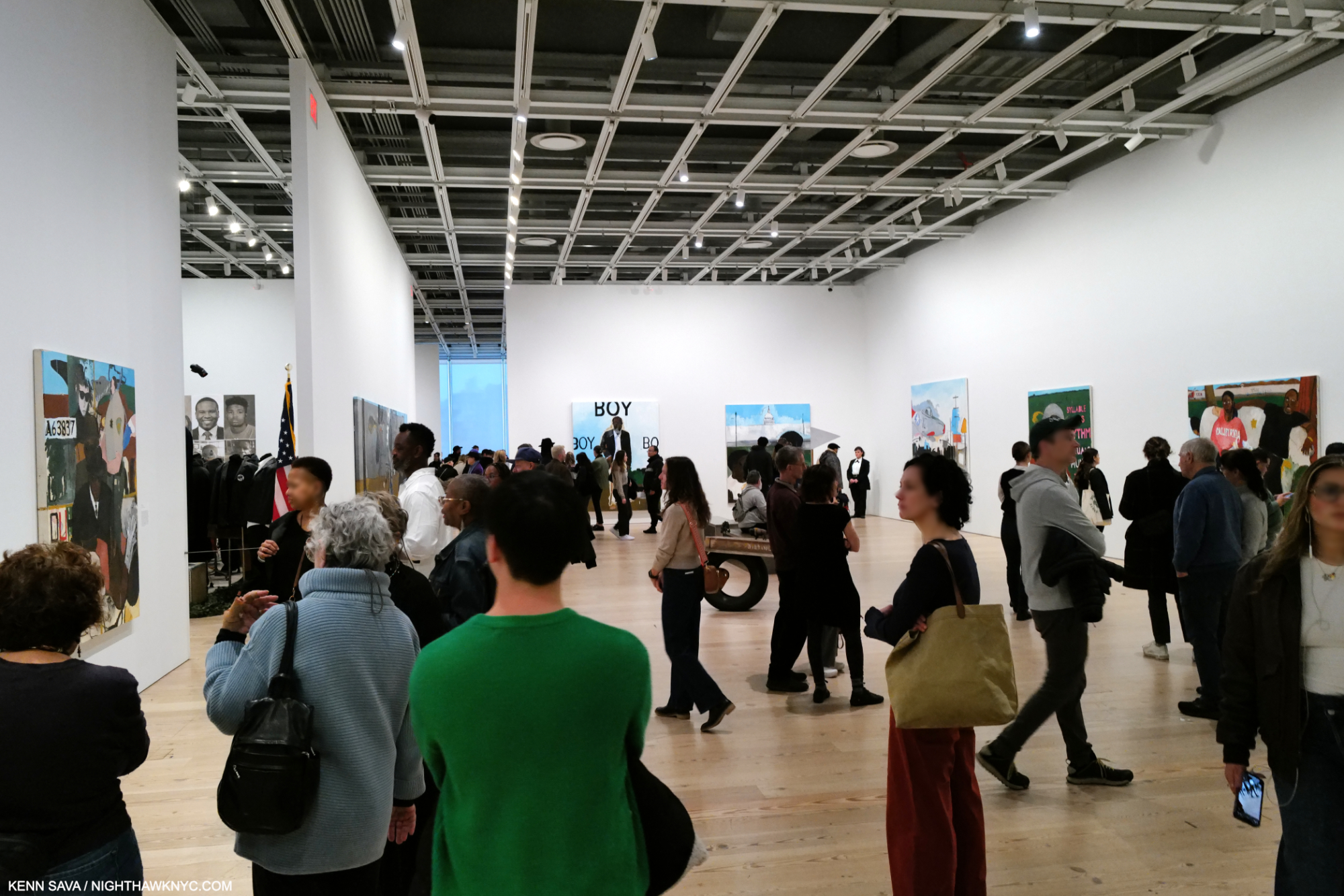
 

  1. Charles White: A Retrospective Exhibition Catalog, P.136
  2. http://www.publicartinla.com/LA_murals/USC/charles_white_mural.html

R.I.P. Sister Wendy

Written by Kenn Sava

Terribly sad news reached me that Sister Wendy Beckett passed away earlier today at 88. As one of the countless millions who watched her religiously on TV and video, I loved the new style of Art criticism she brought based on her surprisingly open-minded insights and decades of study. As one got to know a little about her, her life as a cloistered nun made it seem incongruent that she would be able to discuss earthly Art so openly. But, she did, and in the process enthralled countless viewers, and readers, with her insights and passion. She was so dedicated to living a life of denial she didn’t go to museums! She learned about Art through books.

Sister Wendy outside the trailer she lived in on the grounds of the Carmelite Monastery in East Haring, England. Photographer unknown.

To know the works only through books where even in the best ones you’ll see a given work from one, maybe two Photos, and then to finally SEE all of them in person?

Sister Wendy in New York harbor circa the late 1990’s with the World Trade Center in the background. The opening shot of PBS’ Sister Wendy’s American Collection- The Metropolitan Museum.

Think how incredible it must have been for her to finally go to The Met, for example, having suddenly become a most unexpected television star, first for the BBC and then for PBS, when she made the terrific documentary about it for Sister Wendy’s American Collection. It makes me feel a bit guilty for having been to The Met a thousand and a half or so times since 2002.

Sister Wendy seeing Rembrandt’s Aristotle with a  Bust of Homer, 1653,  in one of the European Paintings galleries on the 2nd floor from Sister Wendy’s American Collection- The Metropolitan Museum. Before it was moved, I stood there many times looking at it and thinking about what it was like for her to stand here and see it in person.

Isn’t it ironic, and strangely fitting, that for someone who discovered and learned so much about Art through books, so many others have discovered her and learned so much about Art through her books and videos?

It was a huge learning experience for her, too. I first discovered Sister Wendy through her articles in Modern Painters magazine. The name “Sister Wendy Beckett” at the top stopped me. Who? Her articles there are different than her books and magazine. They are text with few illustrations, but her “magic” shines through. Yet, as good as they are, these pieces were a drop in the bucket of Sister Wendy’s vast knowledge of Art and Art history, as we were to soon find out. Whoever chose her to be on television was brilliant. Becoming the host of video series on the BBC and PBS here in the US, she found herself having to explore Art in realms outside of her favorites. She said of this, “…one also has to remember that if I’m to do encyclopedic museums and give a fair idea of what’s in them, I have to move outside medieval art, Oriental art, ceramics, and the Old Masters. If I had stuck just to what I myself love best, every program would have been exactly the same, because each of these museums has superb holdings in my four favorite areas. But nobly, self-sacrificingly, thinking only of the good of others, I forced myself to investigate areas of art into which perhaps I had up to now taken little interest. As always happens with self-sacrifice, I was blissfully rewarded.” This is something I always keep in mind when I come across something new that doesn’t speak to me right away. I’ve learned to keep looking.

Sister Wendy, seen in the Egyptian Galleries at The Met around 1999, with Fragmentary Head of a Queen, 18th Dynasty, c1352 BC, a personal favorite of hers in all of The Met’s collection. I was astounded when I found that out- It’s such a small work, usually displayed in a small room, off the court leading to the famous Temple of Dundur that I’m sure most visitors to The Met miss it. Yet, Sister Wendy, somehow, found it, and spoke about the beauty and tragedy of this work and what it means in our time, 3300 years later, brilliantly. Just remarkable.

To this day, I can’t look at it without thinking about her. These two Photos are stills from Sister Wendy’s American Collection- The Metropolitan Museum.

As you watch, it’s hard to tell which areas are new to her and which aren’t, she speaks so passionately about all of them.

On the grounds of the Monastery. Photographer unknown.

After she completed the televisions series and wrote a number of books she retired from Art History and went back to the seclusion she lived in ever since. To her trailer, seeing or speaking with no one, save the nun who brings her meals and collects her laundry.

Though I’m not religious, Sister Wendy has been a huge influence on me, and I’m sure many, many others. She, and Lana Hattan, are the two reasons NighthawkNYC exists. While I begged her in these pages almost three years ago to come back to us, it was not to be. Now, I’m eternally grateful to her for creating the large body of videos and books she did, which is extraordinary given her beliefs and dedication to living a cloistered life.  It’s endlessly interesting to me that she chose to venture into the world this publicly for these few short years, but she gave the world a blessing that I hope will live on and inspire others for as long as Art does.

When you take it all into consideration? It’s remarkable we had her at all. Today, I give thanks that we did.

Her legacy will live on in the sheer joy of discovering Art that she inspired in others, and as a result, through all of those who’s lives she touched. Including countless people she never even met.

Sister Wendy gave a huge gift to all of us. 


BookMarks-

This is not a posed photo.

Without doubt, my favorite Sister Wendy book is Sister Wendy’s The Story of Painting. In my opinion it is the place to begin a Western Art History library. Book #1. The first one to get. Though out of print, copies are still to be found at reasonable prices. If you are getting it to be a cornerstone of your Art History library, get the hardcover version, since it will hold up much better than the paperback, which is too big for its binding in my experience. She covers the entire canon, through all it’s periods, in all its many styles. Right up to the fairly recent past. It’s surprisingly thorough for an overview. And? Her choices can be, well, eccentric, but almost no one can make a case for ANY work of Art like Sister Wendy. If a work spoke to her? She shows it. It doesn’t matter if the Artist is a household name, or not. That’s something that has been at the forefront of my mind ever since- Let the Art speak to you and pay attention to what does. All these years later? There’s no greater lesson to be learned in studying, or enjoying, Art than that. 

Sister Wendy’s 1000 Masterpieces  is every bit as good though it doesn’t follow the trail of time that Story of Painting does chronologically. Masterpieces is arranged alphabetically by Artist, so it moves all over time and periods as you turn the page. I recommend it for those who want to read her thoughts about works not included in Story of, which anyone taken by her will want to, and to those who can’t find Story of It’s done in almost exactly the same style as Story of Painting, but? If it ain’t broke…

Sister Wendy’s Story of Painting is also my favorite Sister Wendy video series. Luckily, it’s still available as part of Sister Wendy – The Complete Collection (Story of Painting / Grand Tour / Odyssey / Pains of Glass)For me as an Art lover? Sister Wendy’s Story of Painting is among the best things I’ve ever seen on television. It deserves to be as popular as Seinfeld. For a while there when it was originally on, it got to be about as close to it as might be possible for an Art History show. It’s still the best series of its kind there is. 

After that,Sister Wendy’s American Collection is an extraordinary chance to visit six of the greatest American museums with Sister Wendy. Virtually every moment of them is a wonder, the revelations are constant, thought-provoking and timeless. As I wrote three years ago, I was flabbergasted that she was able to visit “my Museum” and point out things that almost no one would know. She made it seem “new” to me and that’s something I found shocking from someone who had never been there, and I still do. 

I long felt that I would have given anything to have gone to a museum with her. This was as close as I got. Here’s your chance- to go to six of them with her. As with any Art she spoke or wrote about? You’ll learn something new- every single time. 

*- Soundtrack for this Post is “Grace,” written and performed by Jeff Buckley on Grace. About it, Jeff said, “It’s about not feeling so bad about your own mortality when you have true love.” I chose this because though she was a cloistered nun who lived as a hermit, Sister Wendy well knew of and felt deeply about the trouble, the “fire” in the world, which she said is “not what it should be. It’s an aggressive, unloving world,” in her comments about the Fragmentary Head of a Queen, 18th Dynasty, c1352 BC, seen earlier, which had been broken by forces or people unknown to us. And? Because she had true love…

NighthawkNYC.com has been entirely self-funded and ad-free for over 6 years, during which over 250 full length pieces have been published. If you’ve found it worthwhile, you can donate to keep it going & ad-free below. Thank you!

Written & photographed by Kenn Sava for nighthawknyc.com unless otherwise credited.
To send comments, thoughts, feedback or propositions click here.
Click the white box on the upper right for the archives or to search them.
For “short takes” and additional pictures, follow @nighthawk_nyc on Instagram.

Subscribe to be notified of new Posts below. Your information will be used for no other purpose.
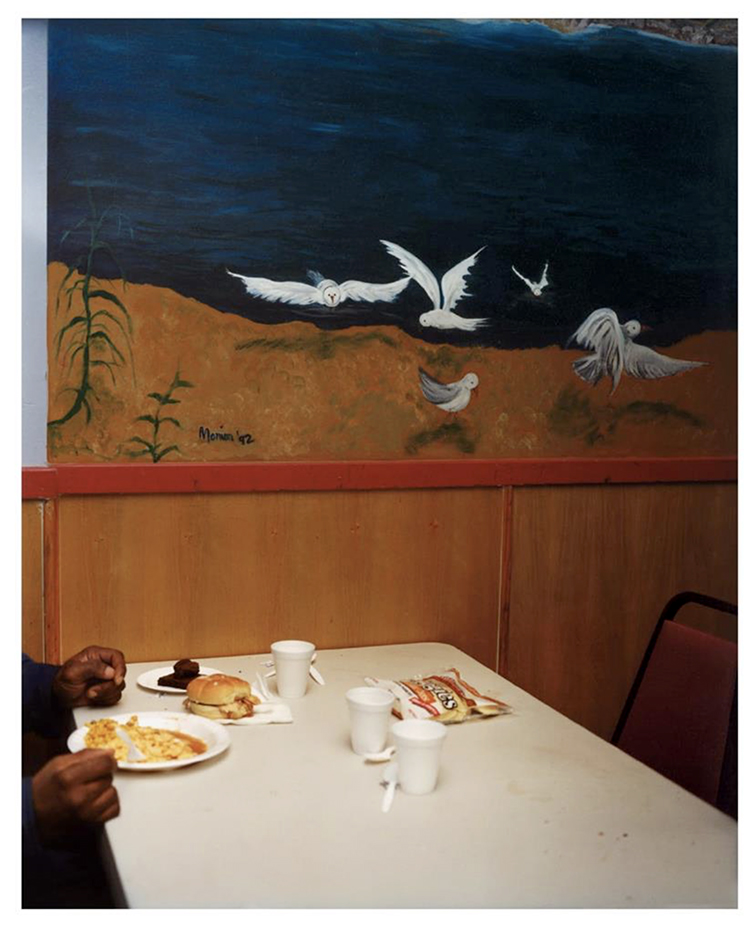
 

R.I.P Ricky Jay: Art Collector Extraordinaire

Written & Photographed by Kenn Sava

When I learned that Ricky Jay had passed on November 24th at 72, I found myself revisiting his remarkable show Wordplay: Matthias Buchinger’s Drawings from the Collection of Ricky Jay that appeared at The Met spring, 2016. I’ve never been into magic but I have to admit being completely under the spell of Ricky Jay when I’ve seen him on TV, video and even the movies he appeared in. Even being an outsider to his world, he struck me as being remarkable. As I watched, it seemed he was a throwback, someone who learned his craft like Musicians and Artists learn theirs, through direct experience with their predecessors and through long and careful study of them. I admired most the respect he had for those who had mastered his craft before him. I soon discovered there was much more to Ricky Jay. How to characterize him?
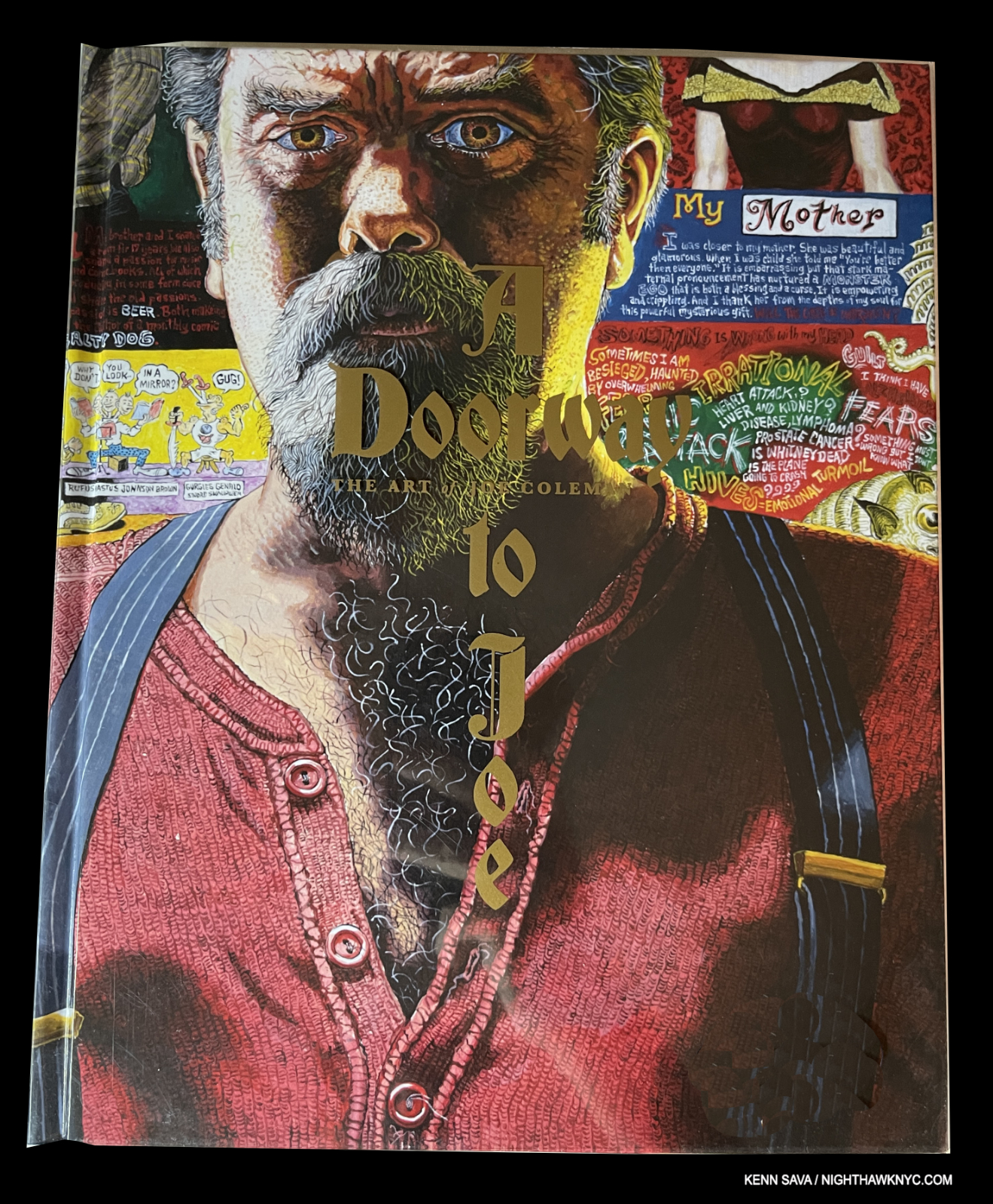
“Oh what a thrill
Fascinations galore
How you tease
How you leave me to burn”*

Well, the bio on his site says, “While Ricky Jay has long been considered one of the world’s great sleight-of-hand artists, his career is further distinguished by the remarkable variety of his accomplishments as an author, actor, historian and consultant.” Ricky Jay was a wonder in many, many ways. As it turns out, even that wide-ranging description leaves out his accomplishments as a collector. 

Installation view of Wordplay: Matthias Buchinger’s Drawings from the Collection of Ricky Jay at The Met, March 18, 2016.

Wordplay was a unique opportunity to take a look at part of the one-of-a-kind collection Ricky Jay amassed, and it also revealed how much he knew about the amazing Artists, and people, it included.

Elias Back, Portrait of Matthias Buchinger Surrounded by Thirteen Vignettes, 1710, when Mr. Buchinger would have been about 36, showing him surrounded by 13 scenes of him displaying some of his remarkable skills. The bottom part of the sheet was left blank, Mr. Jay surmises so the Artist could inscribe and dedicate it. This work is “a promised and partial gift by Ricky Jay to The Met” in 2015.

Chief among them was Matthias Buchinger, one of the most astounding figures in the history of Western Art. Born in 1674 in Ansbach, Germany, without hands or lower legs, he stood all of 29 INCHES tall. Nonetheless, he went on to master an incredible range of skills. Surrounding a 1710 portrait of Matthias Buchinger by Elias Back, when he would have been about 36, are vignettes depicting him displaying some of his remarkable skills including shaving himself, making a quill pen, performing cups and balls, drawing, threading a needle, playing musical instruments, playing cards, and a form of bowling.

Matthias Buchinger, Self-portrait, London, 1724, 7 1/2 x 11 5/8 inches. Collection of Ricky Jay. Photo by The Met.

In the realm of Art, Matthias Buchinger became a master draftsman, a master calligraphy.

Detail showing Mr. Buchinger’s amazing micrography, the miniature writing embedded in the hair. Photo by The Met.

This he also demonstrated (or showed off) through micrography, the art of writing in minute characters that he often embedded in his Drawings, even complete Psalms(!).

Matthias Buchinger, Ten Commandments, London, December 3, 1730, 14 1/2 x 21 inches, A “promised and partial gift of Ricky Jay” to The Met.

Being a long-time aficionado, and student of the Art of Drawing, I had never seen anything like it. And haven’t. To this day.

Detail of the lower panel bearing the Artist’s inscription and dating of the work.

Ricky Jay brought to wider attention one of the most remarkable figures in Western Art History (as it is known to me), while bringing that figure into the world of Fine Art in one of the world’s greatest museums, where his work stood alongside the most renowned Artists in history. Yet, the show was remarkable not only for showing Matthias Buchinger but for including other Artists who were born without limbs, all in works from Ricky Jay’s collection amassed over 30 years.

Unknown Artist, Portrait of Johanna Sophia Liebschern, 1780-90, states that “she has no arms but is able to use knife, fork, snd spoon with her left foot and feed herself, [and] is able to prettily write, sew, draw, cut a quill pen, load and shoot a pistol.” Collection of Ricky Jay.

So, in honor of the late Mr. Jay, I pay my respects by revisiting the piece I Posted on April 5, 2016 about this remarkable show, The Greatest German Reality Show Star, Circa 1700. I’ll be most interested to see what happens to Mr. Jay’s remarkable collection. Personally? Of course, I hope it goes to The Met, to whom he already generously partially donated some of the Artworks shown here.
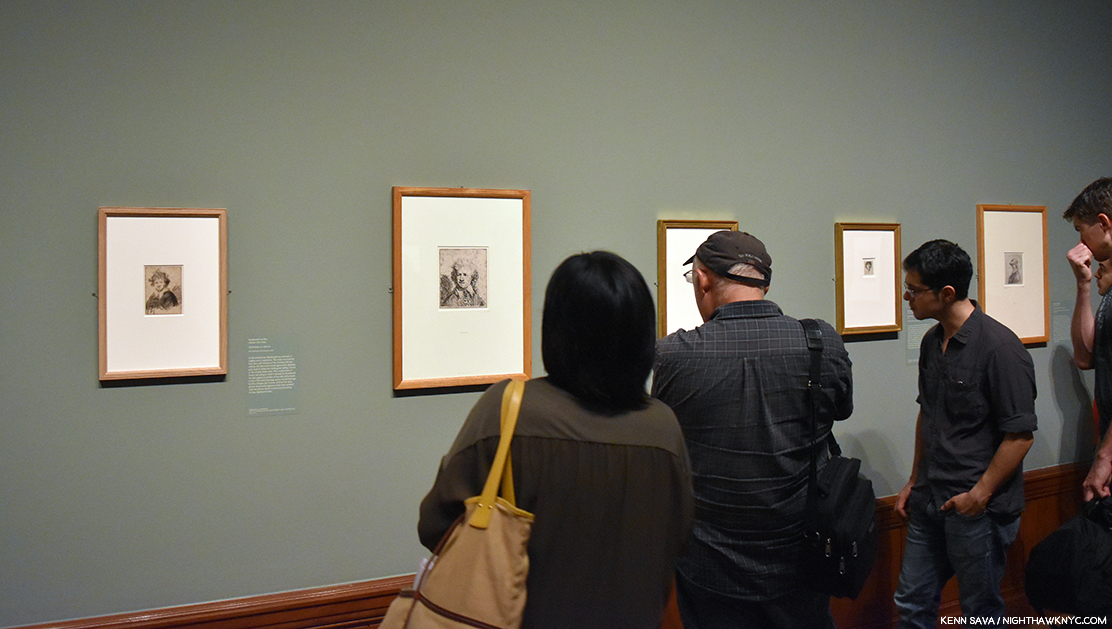
*- Soundtrack for this Post is Tomorrow Never Dies, by Sheryl Crow, the theme from the James Bond movie of the same name, one of the 39 or so films Ricky Jay appeared in.
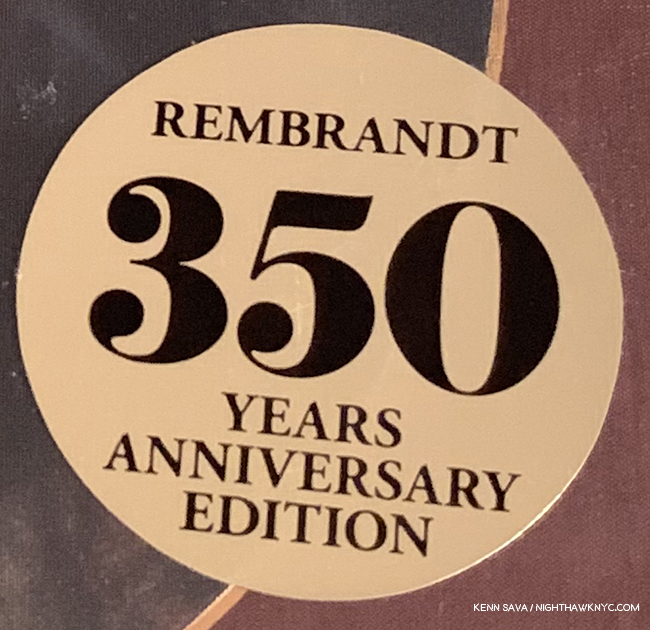
NighthawkNYC.com has been entirely self-funded and ad-free for over 6 years, during which over 250 full length pieces have been published. If you’ve found it worthwhile, you can donate to keep it going & ad-free below. Thank you!

Written & photographed by Kenn Sava for nighthawknyc.com unless otherwise credited.
To send comments, thoughts, feedback or propositions click here.
Click the white box on the upper right for the archives or to search them.
For “short takes” and additional pictures, follow @nighthawk_nyc on Instagram.

Subscribe to be notified of new Posts below. Your information will be used for no other purpose.