The New Whitney Museum- The Roofdeck of American Art

This site is Free & Ad-Free! If you find this piece worthwhile, please donate via PayPal to support it & independent Art writing. You can also support it by buying Art & books! Details at the end. Thank you.

Written & Photographed by Kenn Sava (*- unless otherwise credited)
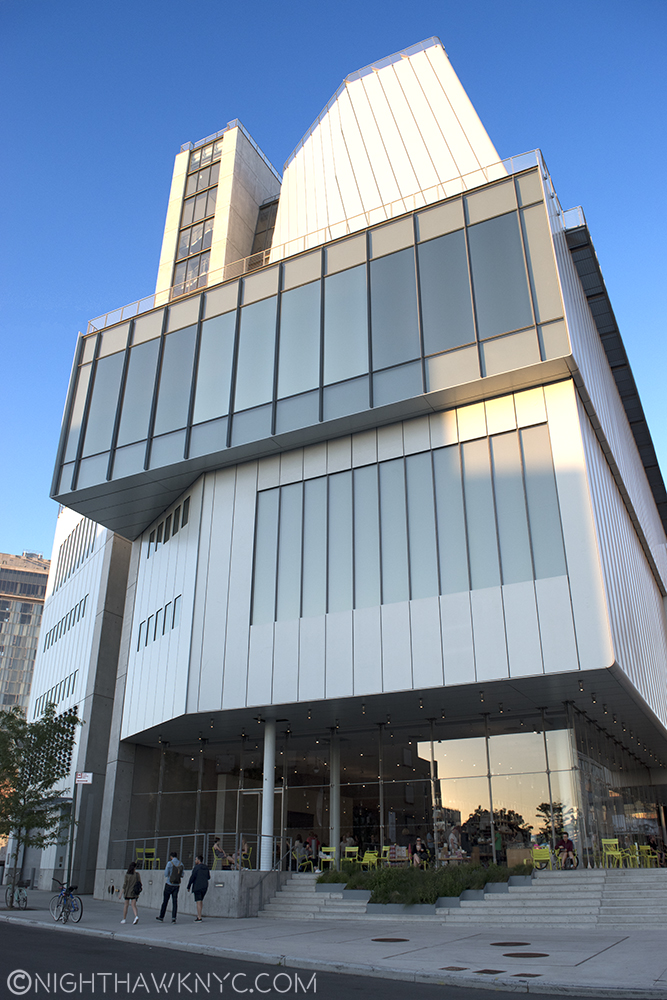
DSC_3074PNH

“American Tune”
“We come on the ship they call the Mayflower
We come on the ship that sailed the moon
We come in the age’s most uncertain hour
and sing an American tune”*
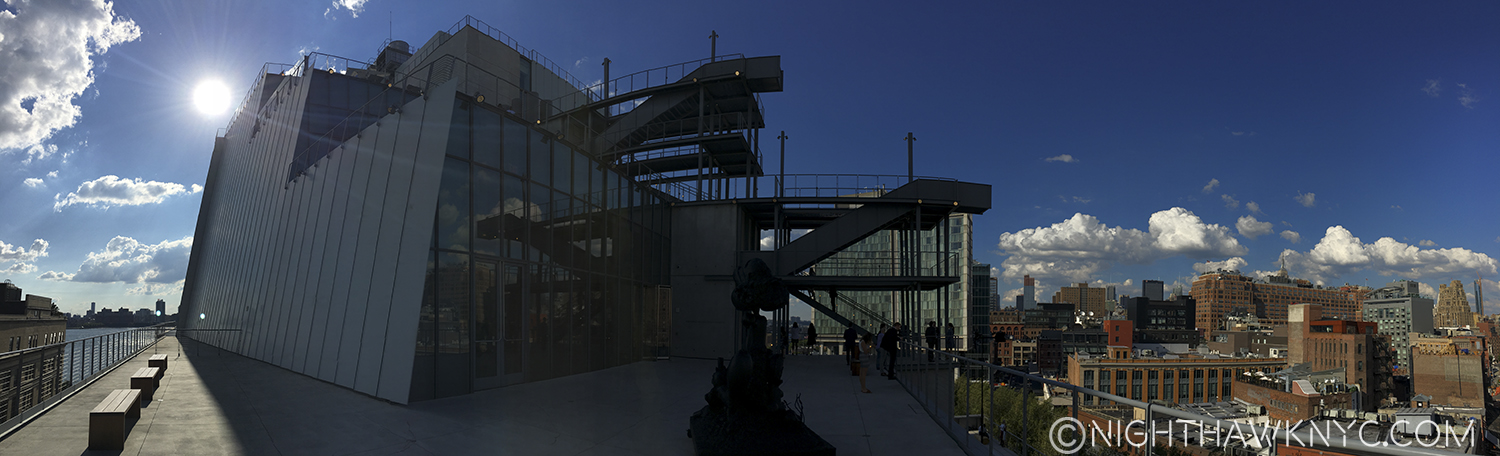
Looking west on the 6th Floor Roof deck, Spring, 2016.

Looking west on the 6th Floor Roof deck, Spring, 2016.

Part 1- The New Whitney Museum…And I

We actually go way back…

All the way back to June, 1987 when I had a letter published in the New York Times in opposition to the proposed expansion plans of the Guggenheim & Whitney Museums, after it was announced that both Museums wanted to modify & expand their existing buildings. I was outraged. How could you change these two singular masterworks without ruining them? I closed saying that “branch museums were the obvious answer” to modifying these Artworks of Architecture, in the Guggenheim’s case, Frank Lloyd Wright’s masterpiece was, perhaps, the greatest work of Art it owns. I went to the Community Board Meetings, but wasn’t directly involved beyond this letter. Mine was apparently chosen over the head of the opposition committee’s letter, much to his displeasure, I heard.
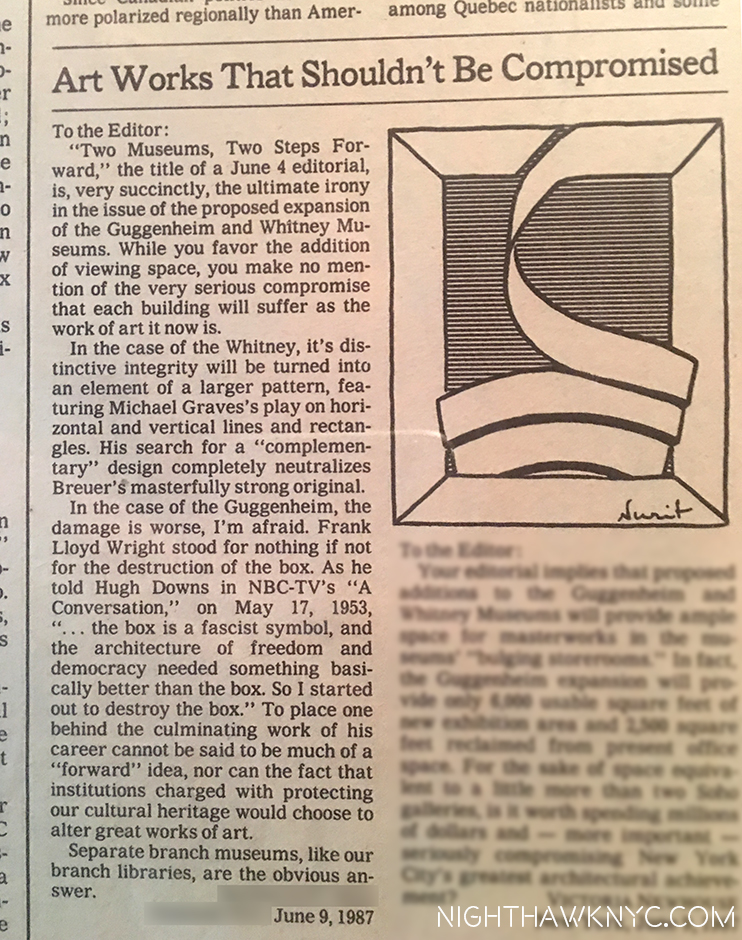
My letter in the NY Times Op-Ed page opposing the & Guggenheim & Whitney modifications, June, 1987. I love the very fitting drawing they added.

Almost 30 years later (wow…really?), how did “we” do?

Well, BOTH Museums took my “advice” and opened branch museums. The Whitney had a few around town, one across from Grand Central, another in Soho, while the Guggenheim opened what is, perhaps, the greatest Museum building since Wright’s enduring 5th Avenue masterpiece…by Frank Gehry in Bilbao, Spain of all places. It’s a “place” now, a true destination for culture vultures. They showed a model of another Gehry masterpiece they wanted to build downtown in the East River at the Guggenheim Gehry Retrospective in 2000. I bought a poster of it but, after 9/11, it was never mentioned again. ? They went ahead and remodeled Wright’s masterpiece, anyway, which I will never accept, AND continue to open branch Museums around the world as we speak. The Whitney, on the other hand, did not renovate Breuer’s unique original. Instead, we got something I never saw coming- They moved out and built an entirely new Museum.

Wow!

So? On my scorecard? I am one and a half out of 2.

The New Whitney opened in May, 2015 in the Meatpacking District, right at the southern end of the High Line. I’ve made frequent trips there so far studying the building from every angle I could, at night, and yes, even in day light. (Oh, the sacrifices I will make in the pursuit of Art.) The inaugural, and as I’ve said very good, show, in the new Renzo Piano building, “American Is Hard To See,” came and went. I also wrote about both the Frank Stella Retrospective and a show by filmmaker Laura Poitras that came and went, too, along with quite a few smaller shows. So, a few months after the 1 year Anniversary, I think I’ve finally had enough time and experience with the new place, over 45 visits, to have some thoughts coalesce. As always, I have not read any reviews of either the building or the shows mentioned.

Part 2- Renzo Piano’s Whitney Museum Building

U.S.S. Indianapolis. US Navy Photo

The U.S.S. Indianapolis, Why is this picture here? Stay tuned. (U.S. Navy Photo.)

It’s only a year or so old, but I don’t think many will fall in love with the exterior of the building. I must say that in all my trips there so far, I have yet to see anyone else take a picture of it. Maybe (more) time will tell. In this City where location isn’t everything, it’s the ONLY thing, the new Whitney sits on a rather unique lot. How many places in Manhattan can you think of that have BOTH a River view AND a Park view? Situated directly across the West Side Highway from the Hudson River, to the west, and the southern end of the High Line to the immediate east, the Museum hit on a very rare Daily Double. Unfortunately for long time Whitney architect Piano, who came on board during the Museum’s “expansion” days, this lot has 4 sides. To the north, the rest of the block is occupied by one of the few remaining Meat Packing businesses that actually pack meat in what really was The Meatpacking District.1 Yes, trucks of raw meat park within inches of the Museum’s north wall every weekday.
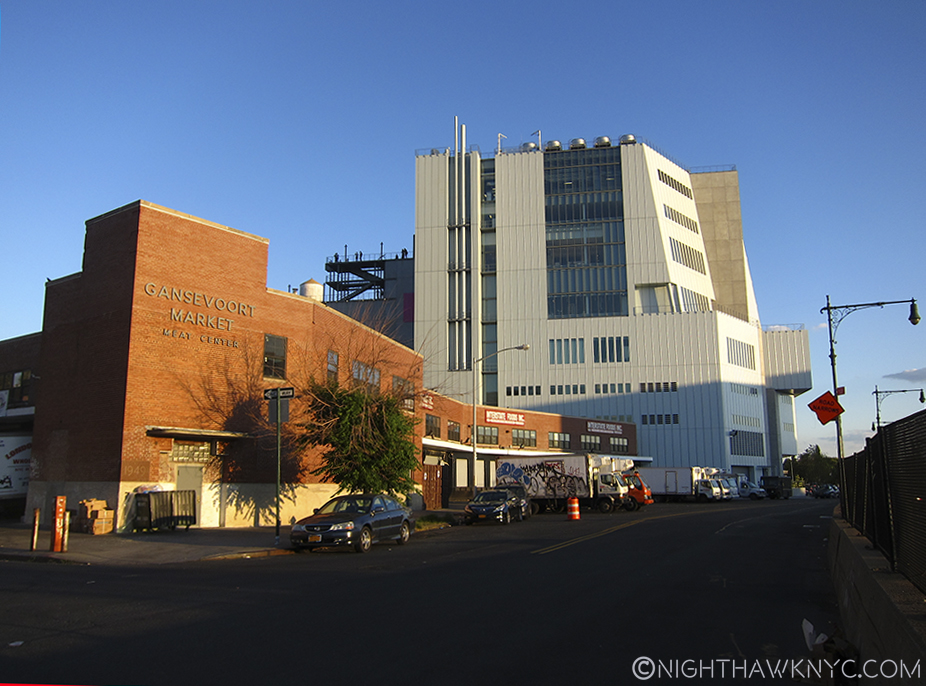
Yes, meat is still packed in the "Meatpacking District." Whitney's north side seen from West Street.

Yes, meat is still packed in the “Meatpacking District.” Whitney’s north side seen from West Street.
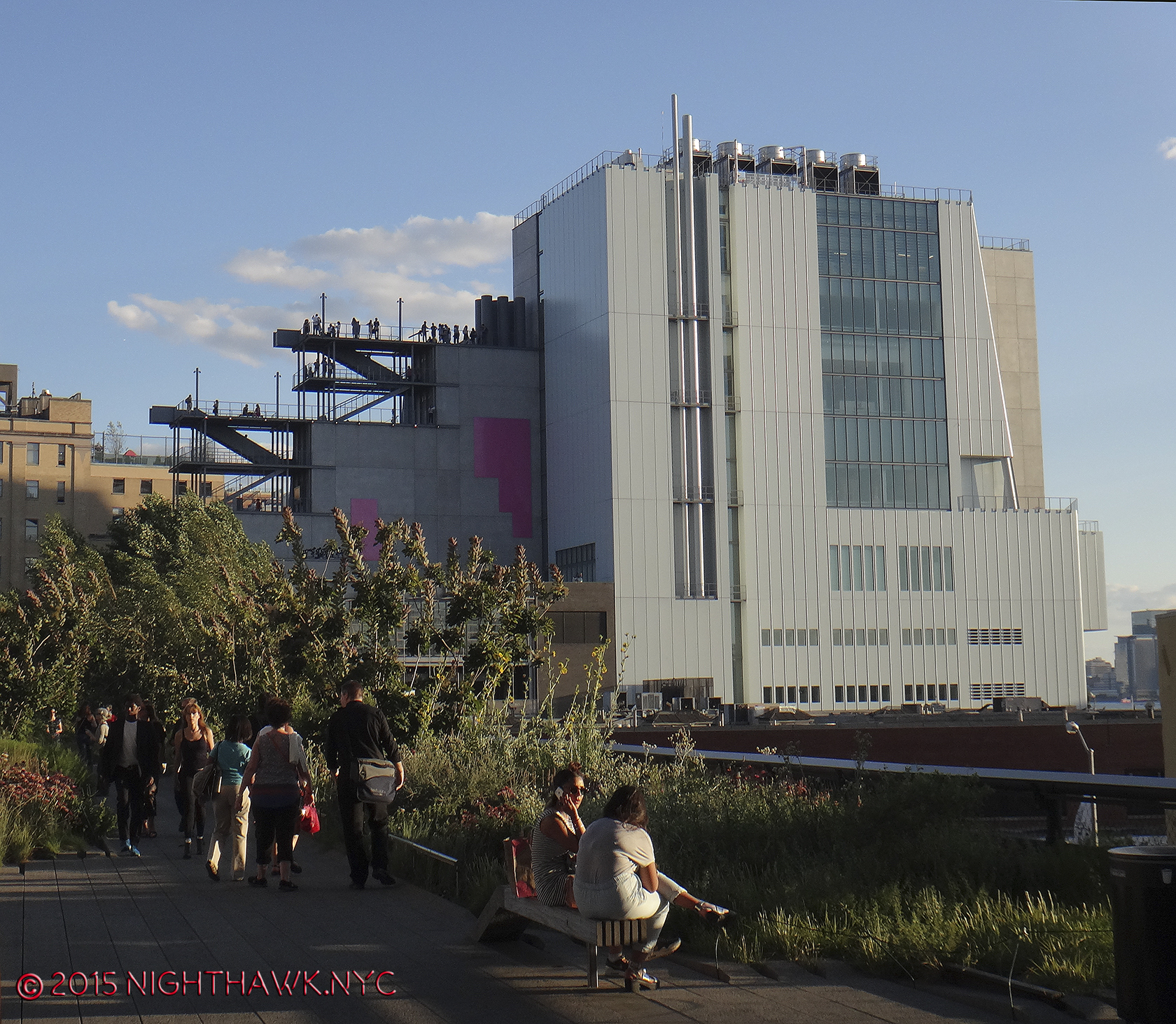
And, seen from the High Line.

And, seen from the High Line.

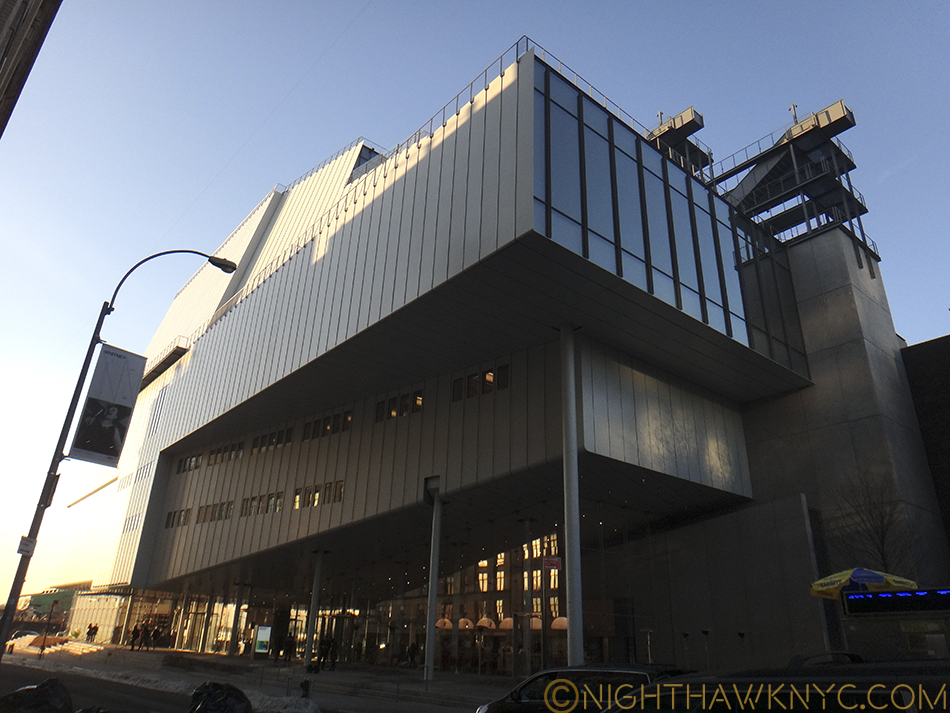
The two story meat complex provides a nearly unobstructed view of most of the north face of the Museum, from West Street or the High Line. I wonder what people who don’t know it’s the Museum think it is. I wonder how many of them will look at it and say, “Ah. A Museum.” My guess is not many. Maybe it’s an office building with not enough windows and a couple of long smoke stacks? A prison? It’s pretty non-descrip, making the stair cases that protrude from the rear of the building seem, well, odd. For myself, and probably countless others approaching the New Whit from the north, this is the first view they’ll get of it. The one defining feature of this side of the building is the exterior staircases. A cascade of them.
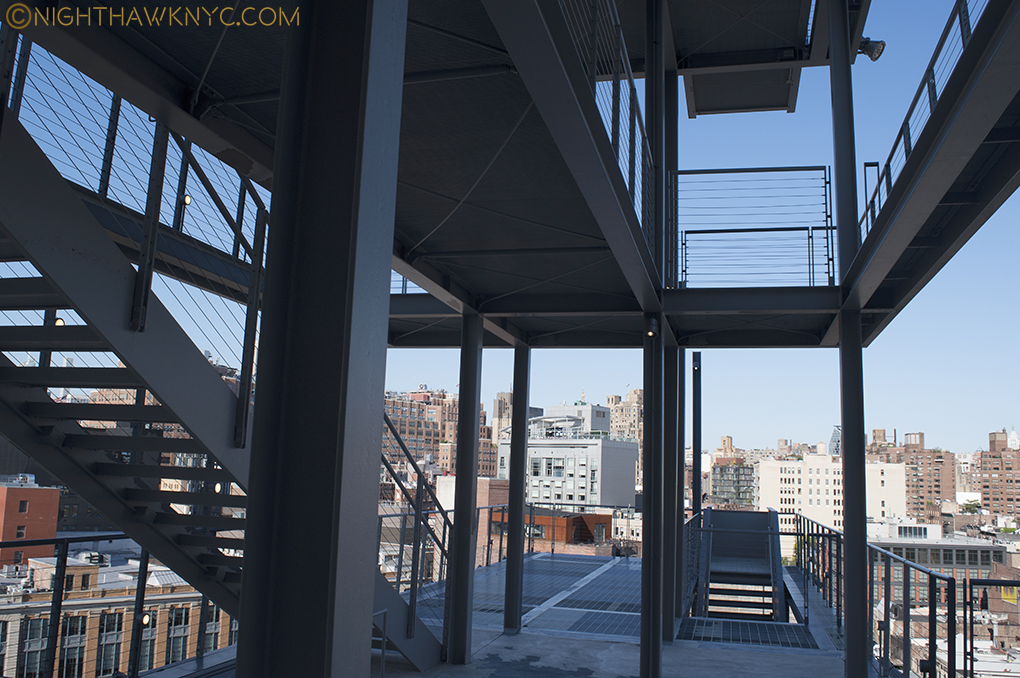
DSC_2948P2NH

Outdoor stairs as seen on the 7th Floor

To the south, across Gansevoort Street is a large, renovated apartment building, that also has Hudson River views on it’s western side. To put it mildly, this is a classic “high rent” district. Facing Gansevoort Street, the Museum presents visitors with an almost unbroken face of grey steel. Upon closer inspection, it also includes the Museum’s almost hidden entrance, which, until a sign was added recently, was only marked “Whitney Museum” on a glass window. Still, I can’t help wonder how the residents of that building across Gansevoort feel about paying those very high rents to look out their windows and see-
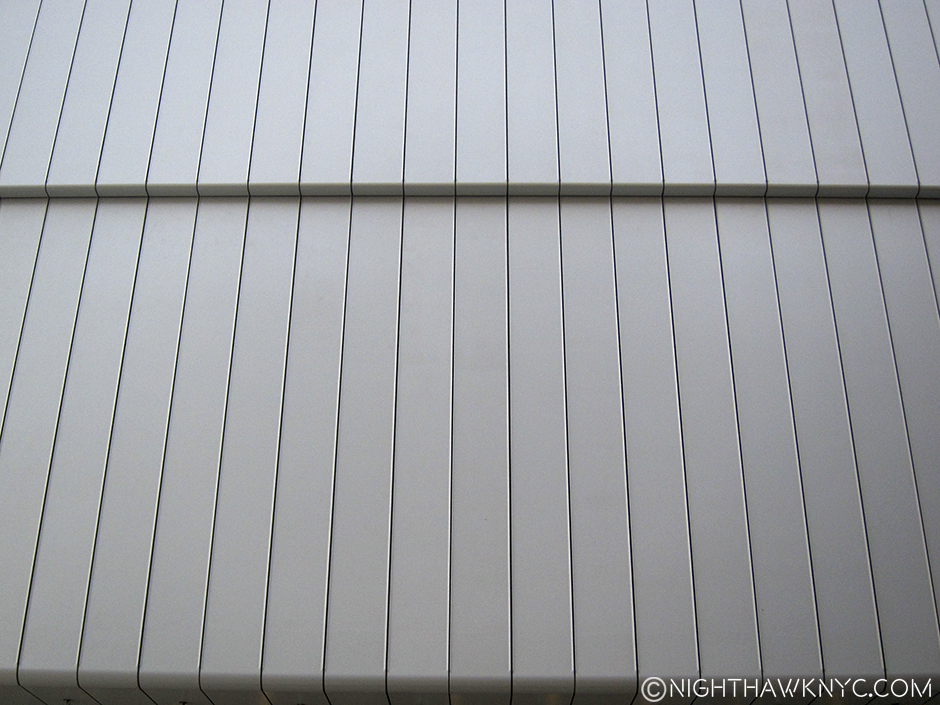
This, is their view.

This, is their view.

In fact, seen from the south, the building is so large that none of my cameras were able to get the whole thing in a shot from Gansevoort, including using an iPhone in Panorama mode. I had to go out into West Street to get one, which I don’t advise doing due to traffic coming randomly from 3 directions, not to mention my back being literally on the flimsy chain link fence bordering the West Side Highway with cars & trucks zipping around the bend at 60mph. Not a smart place to be standing with a camera. But this points out something interesting- there is no place where one can easily stand to get a good shot of the Museum- except, possibly, from a substantial distance. In fact, most of the shots of the building on the Whitney www site were taken from the rooftops of adjacent buildings. Maybe this is why no one takes pictures of it. Or? Maybe they don’t like it. ?
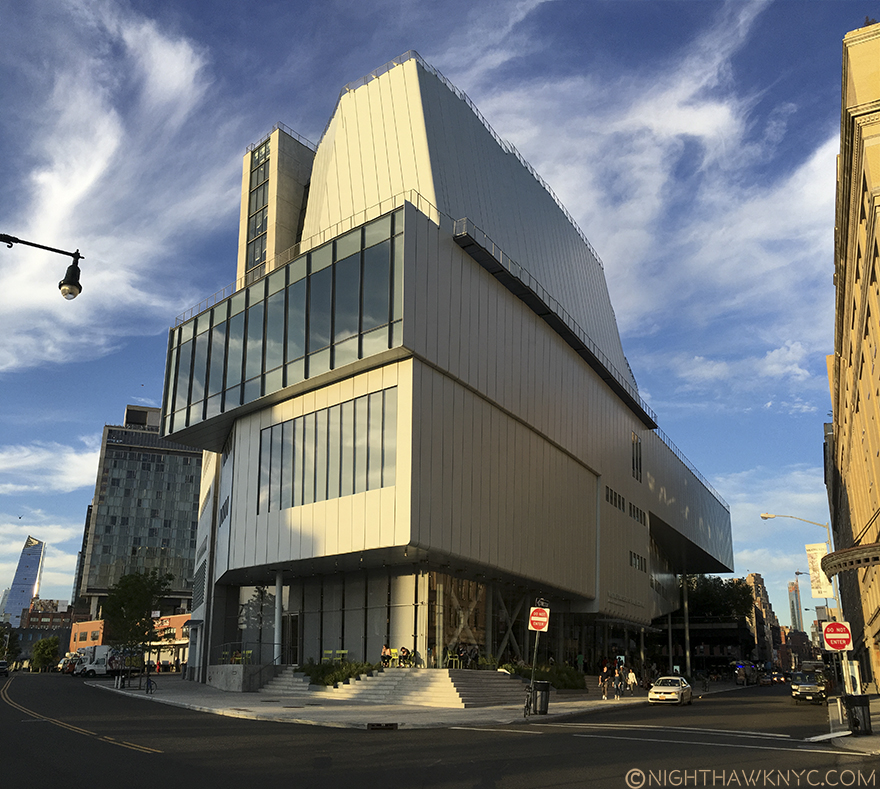
The closest I've come do death this year. The West Side Highway is inches behind me.

NOT to die for. I risked my life getting this shot. Southwest corner.

As we move to the western facade, with the large windows seen above (which reminds me of Zaha Hadid’s Library in Vienna), the upper one juts out at an angle seen from the north that vaguely reminds of the Breuer building’s Madison Avenue upper window.
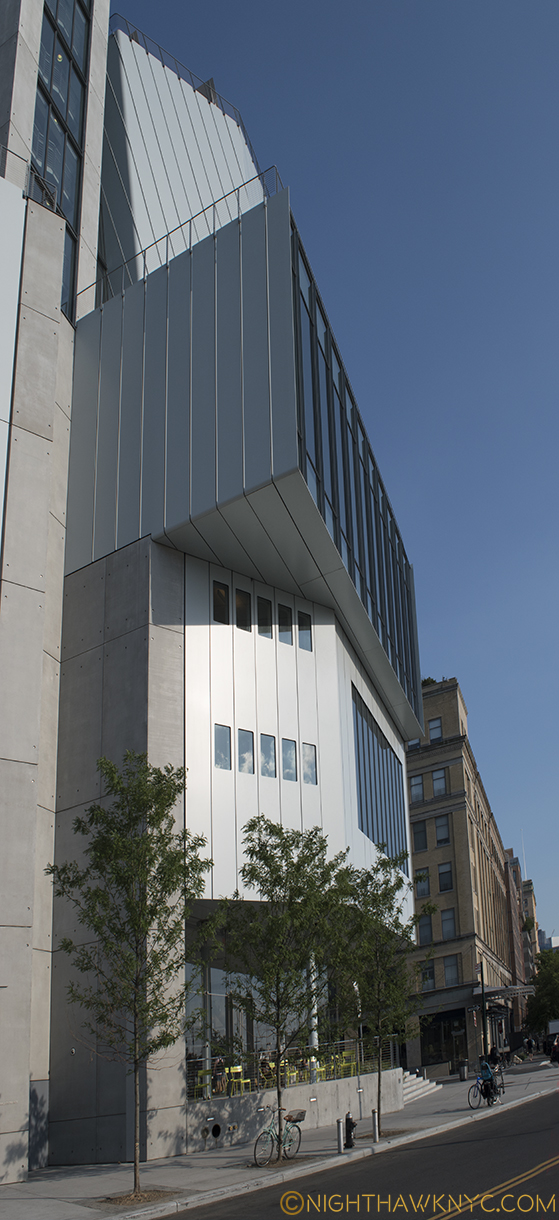
DSC_5300PNH

But more problematically, is a large Department of Sanitation complex smack dab right in front of it! “Holy Refuse Pile, Artman!” Garbage trucks coming and going all day and evening are not exactly what gives a “Riv View” it’s cache. (Feel free to insert your own wry joke about contemporary art here. I’ll wait…)
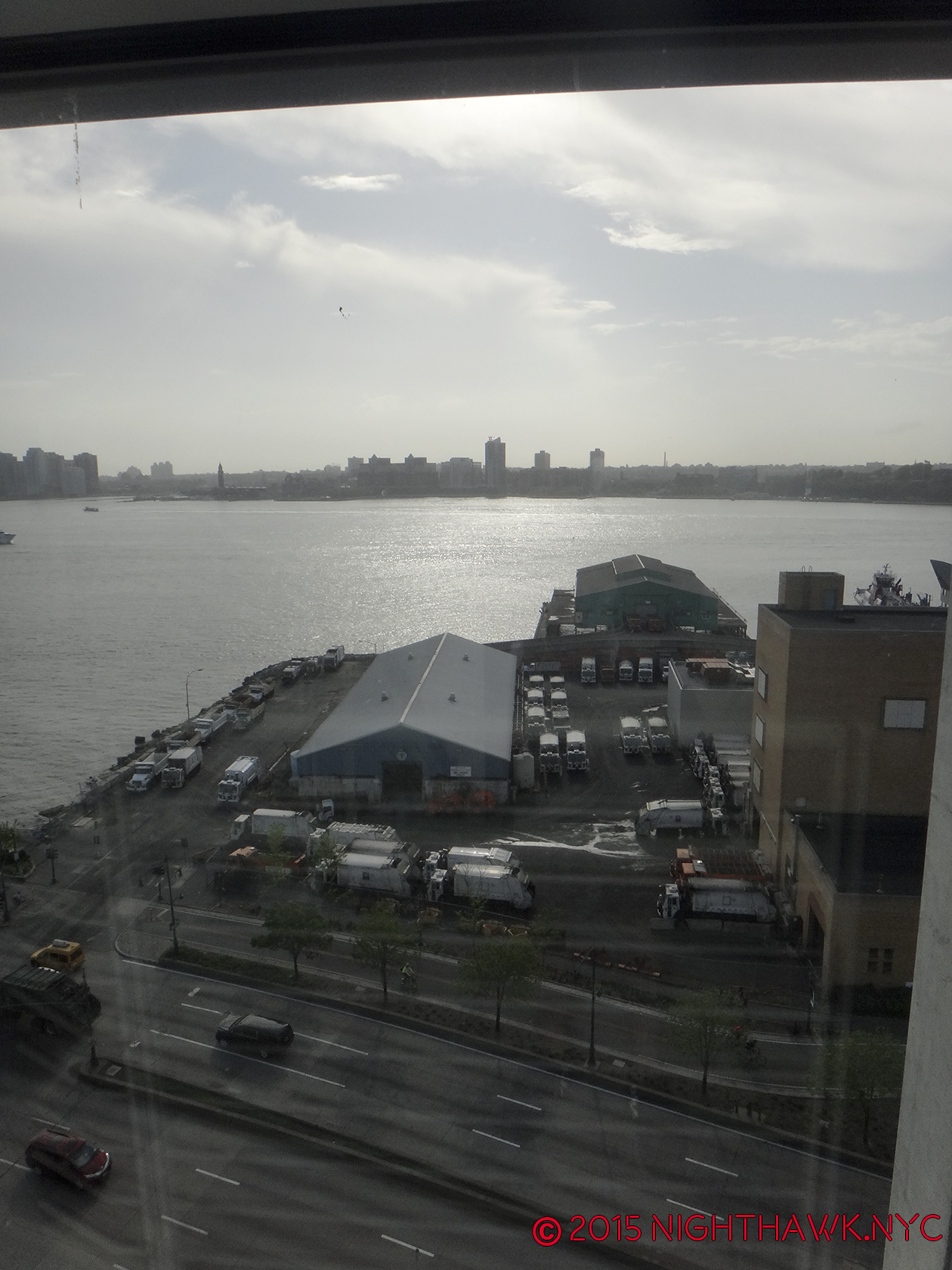
View of the Department of Sanitation from the 7th Floor stairs, 2015.

Riv View. Looking out at the Department of Sanitation from the 7th Floor stairs, 2015.

Mr. Piano has done his best to “minimize” the damage from the “offending” Department of Sanitation, and eternally busy West Side Highway, by opting to minimize the exposure of the western facade leaving a very narrow patio where, typically, only a few chairs usually are to be seen. It sits a few scant feet from the West Side Highway, after all, so it’s hard to imagine many people wanting to sit there for long. 3 trees have been planted along the curb in hope that one day they will provide some camouflage.
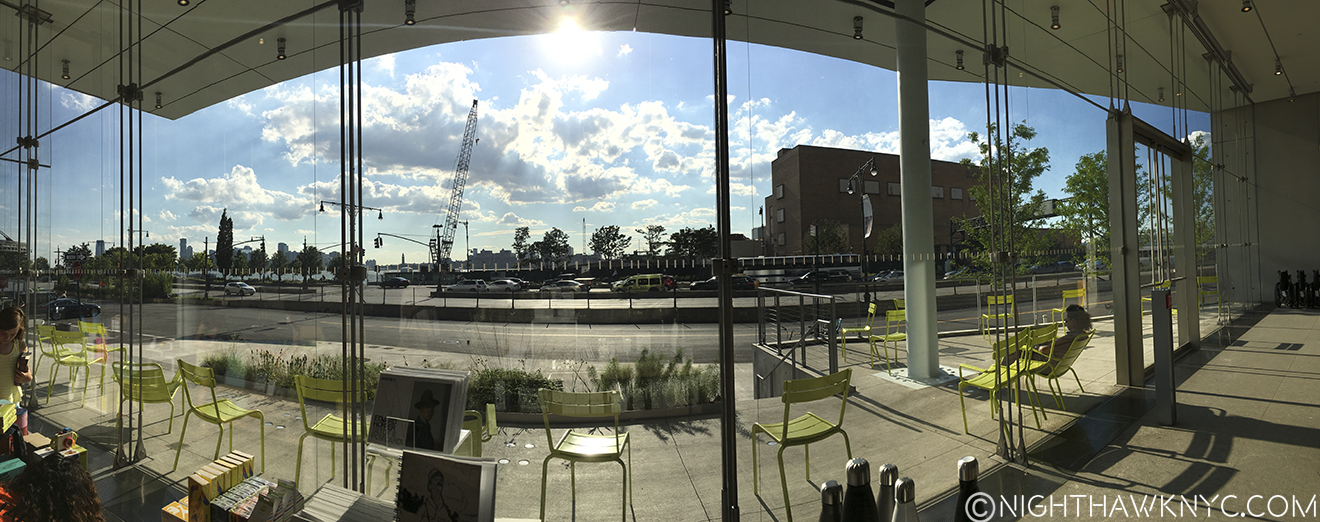
View from in front of the western facade, July, 2015, Being a tree in NYC is one helluva hard job.

View from in front of the western facade, July, 2016, Being a tree in NYC is one helluva hard job.

Regardless of the difficulties in seeing the building close up, it can be seen, for many blocks, both, to the north and south along the West Side Highway, and from across the Hudson River in New Jersey. Thanks(?) to the High Line there has been a boon in building in the area, with some very big name Starchitects (including, as I’ve written, the late Zaha Hadid’s only NYC Building going up at 520 West 28th Street, among many others) having new or recent projects in the area- some successful, some eyesores already. No less than Frank Gehry, the greatest architect of his time, in my book, himself, has a fairly new building about 6 blocks to the north of the New Whitney along the Highway, the gorgeous IAC Headquarters at 18th Street.
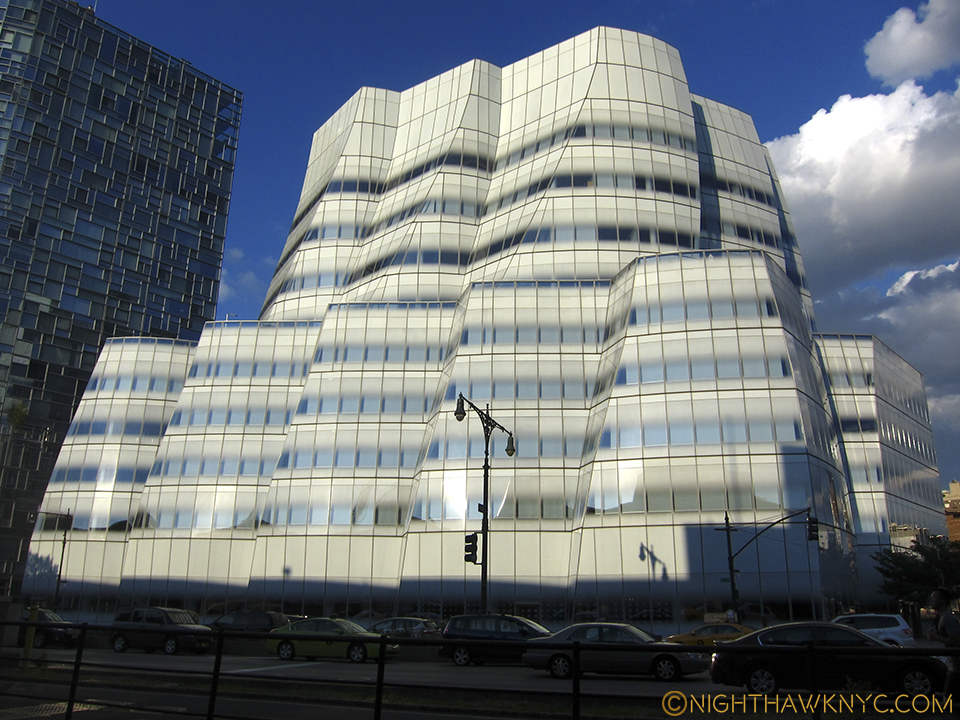
Like a sailboat on the Hudson, Frank Gehry's IAC Building is a gorgeous vision.

Like a sailboat on the Hudson it faces, Frank Gehry’s IAC Building is a shining example of the visionary architecture NYC needs more of, IMHO.

But, say what you want about this new Museum (don’t worry…I will), one thing that must be said is that the building isn’t obsessed with competing with it’s spectacular neighbor. Well? Not that spectacular neighbor, anyway. If anything, it sure feels to me like it’s competing with it’s OTHER “spectacular neighbor”- the High Line.
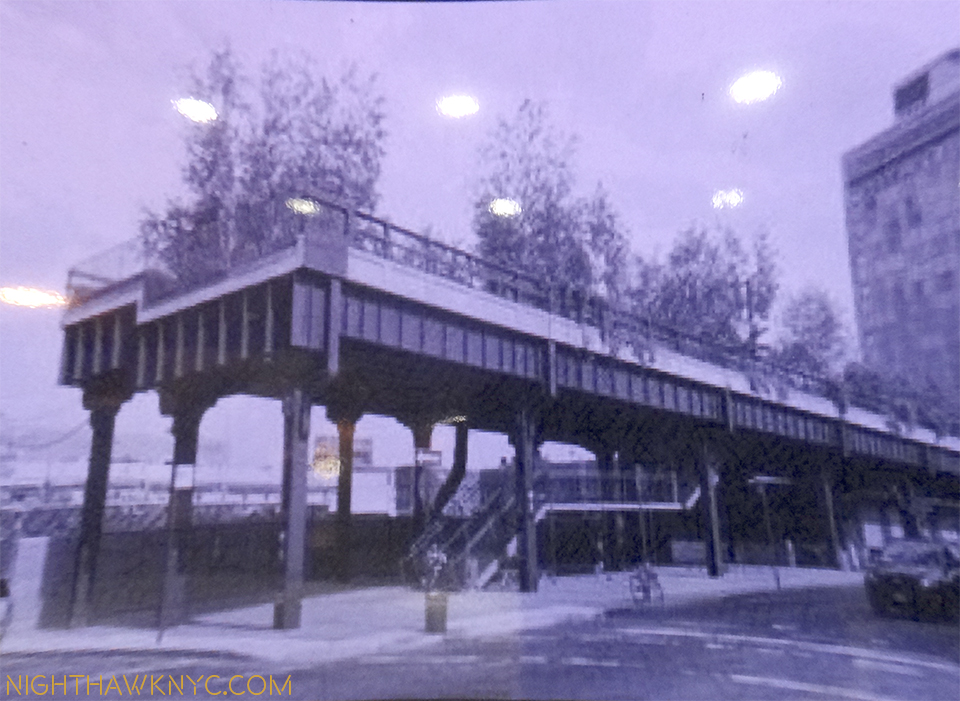
Southern terminus of the High Line, circa 2009. The new Whitney now occupies the space directly behind the left side.

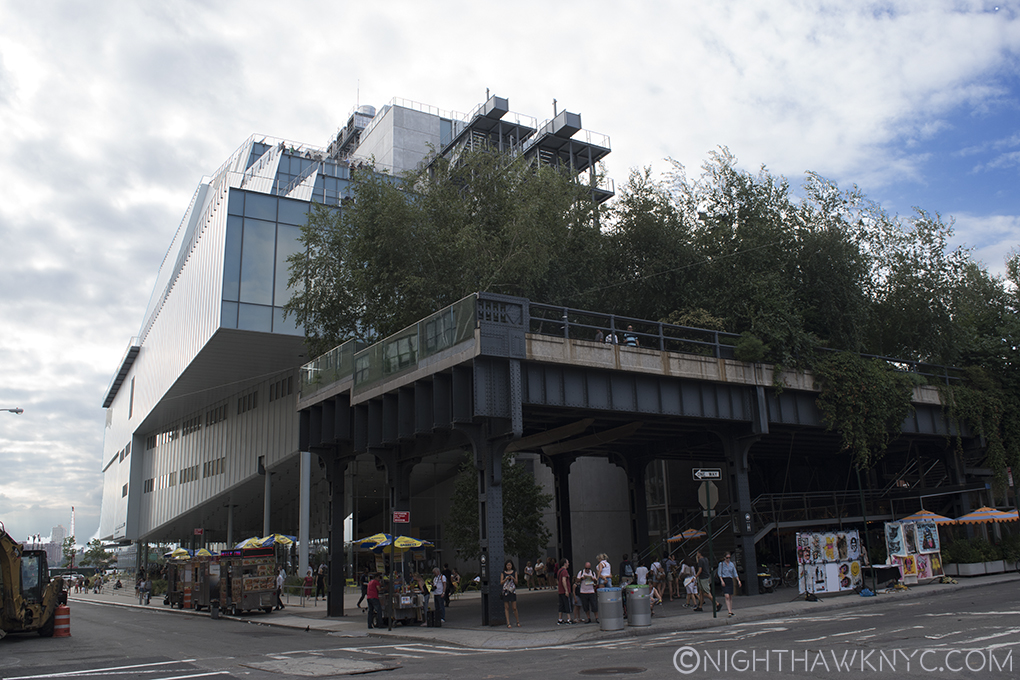
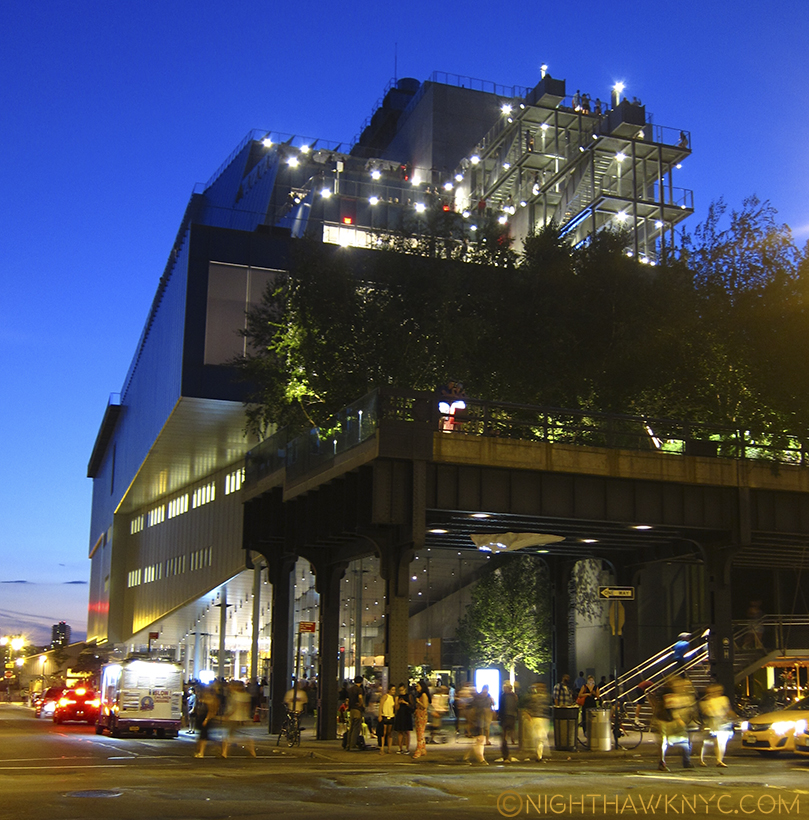
Southern terminus of the High Line, circa 2010, early in the construction of the new Whitney directly behind on the left side. And today, and tonite…
DSC_6042PNH


IMG_1130P2NH

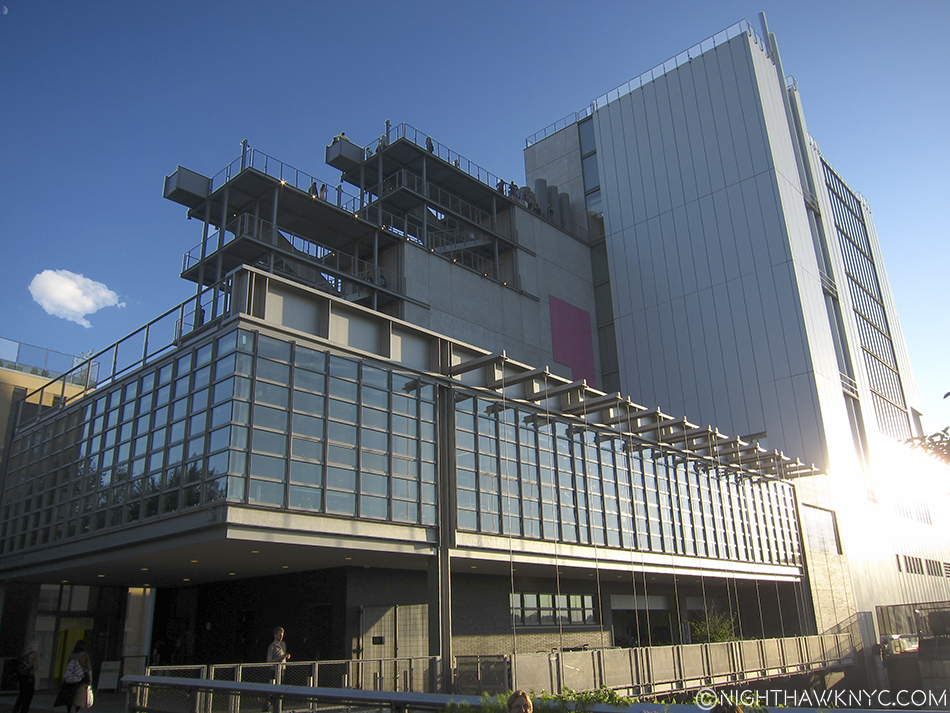
That brings us to the east side of the building, the side that abuts the High Line. Renzo Piano also designed the High Line Maintenance & Operations Building,
IMG_0782PNH

High Line Maintenance & Operations Building on the lot’s northeast corner.

which looks like it’s part of the Whitney, occupying the north eastern corner of the lot. Next to that are a rectangular bank of windows of the 5th Floor Galleries. The lowest rectangle is cleverly cantilevered over the lower floors in a way that vaguely reminds of Wright’s Fallingwater. Above it are more rectangular rows of windows on the other gallery floors, which are accompanied by roof decks and outdoor stairs between floors.
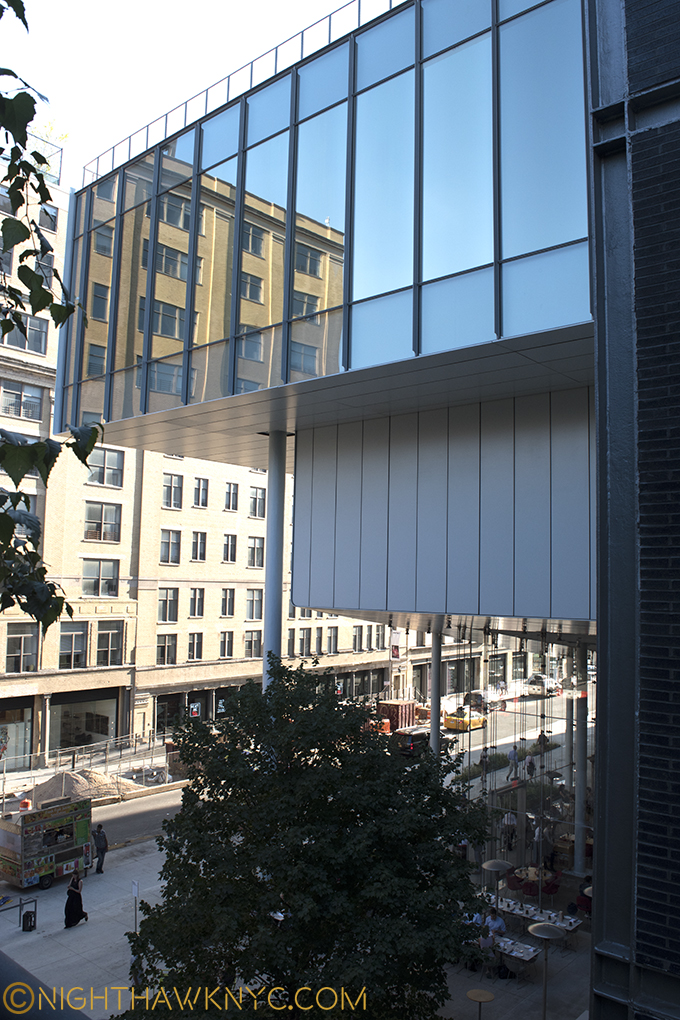
Eastern face with 1st floor restaurant seen from the High Line.

Cantilevered lower eastern face with 1st floor restaurant seen from the High Line.

And, these are what raise my suspicion about purpose. So much outdoor space, and outdoor stairs in a place with the climate of Manhattan could be seen as highly questionable design. They are going to be unusable a good part of the year, so why do them? Aesthetically, to my eyes, the stairs look uncannily similar to the High Line’s access stairs. I wondered- Is this a case of “art snobbery” by an expensive to build, expensive to enter Museum trying to “upstage” a free & public park- a poorly thought out game of oneupmanship? An attempt to “blend in” with the High Line? Or?
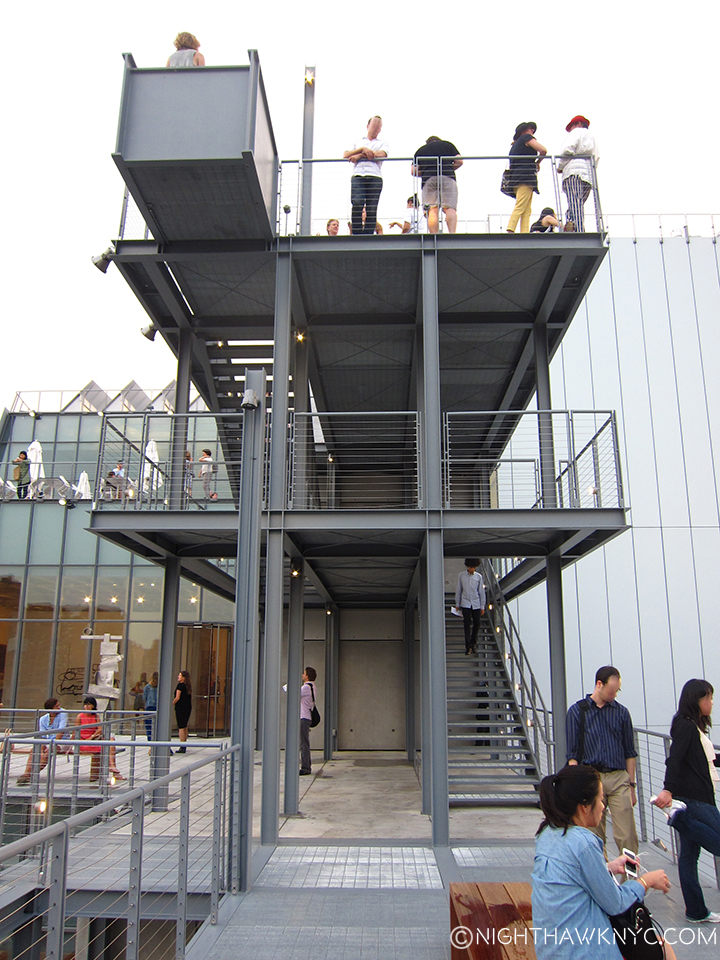
Whitney Museum Eastern Facade Exterior Stairs close up
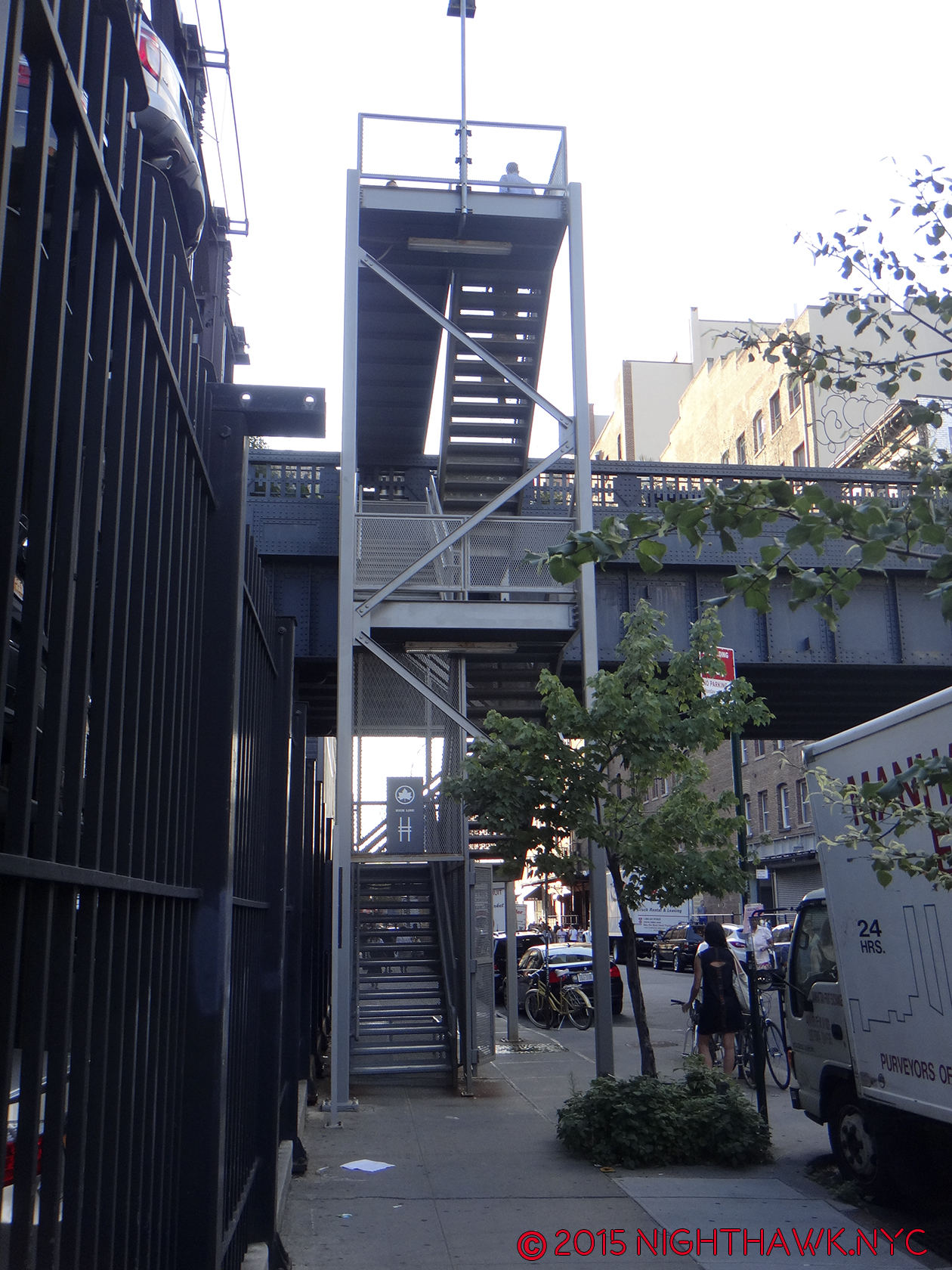
High Line Stairs at West 20th Street

High Line Stairs at West 20th Street

Other questions festered. Back along the south face. I spent a long time trying to think of what the shape of this building reminded me of. Hmmmm…Then one day, it hit me- From the south it looks like one of the US Navy’s newest ships- the USS Independence. From this side, it looks like it’s ready to go out to sea, well, out to the Hudson River. This feeling is hard to shake when you are looking at the few windows that look a bit like portholes, the “military—like” grey coloring, and the slightly sloping (i.e. “stealthy”) look of the upper floors. Add the rear decks and stairs to the Independence and the effect is so similar, it’s down right eerie.

Ok, flip the cantilever to the rear, and...? Eerily uncanny, no?

U.S.S. Indianapolis, again, with my highlighting. Ok, flip the cantilever to the rear, and…? Eerily uncanny, no?

Photo from Renzo Piano Building Workshop website.

Photo from Renzo Piano Building Workshop website. Note that all of the “neighbors” have been removed, except for the High Line.

Part 3- The Roofdeck of American Art
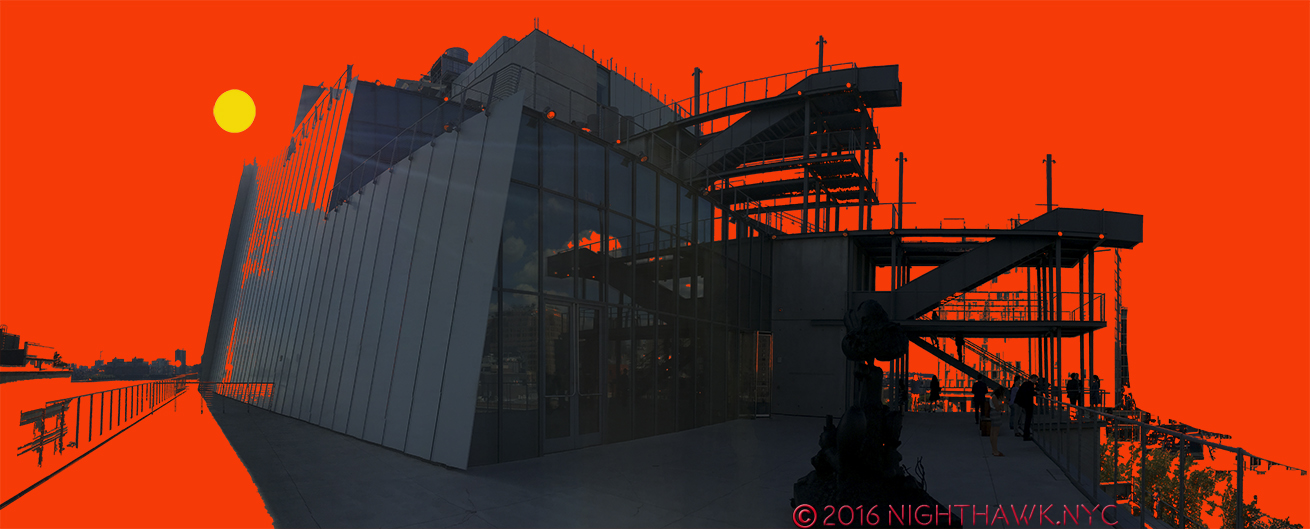
Bring sunscreen.

Want a tan with your art? 6th Floor deck, Spring, 2016.

Yes, that is what I’m calling the New Whitney- “The Roofdeck of American Art.” I think the decks are what people will remember most about the building. I only hope it’s not what they remember most about their visit. That will be up to the Museum’s curators and staff. But? As I will get to, I think other forces are at work, too.

With 4 roof decks, I bet some will come only to enjoy the view and get some sun. The Museum turns the face the vast majority of visitors will experience most to it’s “rear,” to it’s east side facing the High Line. Doing so gives Mr. Piano a very convenient out of his Sanitation Department dilemma, “Riv View” notwithstanding, and allows a wonderful panorama of Manhattan, from Chelsea Piers to the north, the Empire State in the center and the Statue of Liberty, distantly, to the south. The decks allow space for dining (8th floor), sculpture (5th floor and the others), seating, and that 21st Century phenomenon- selfie sticks.
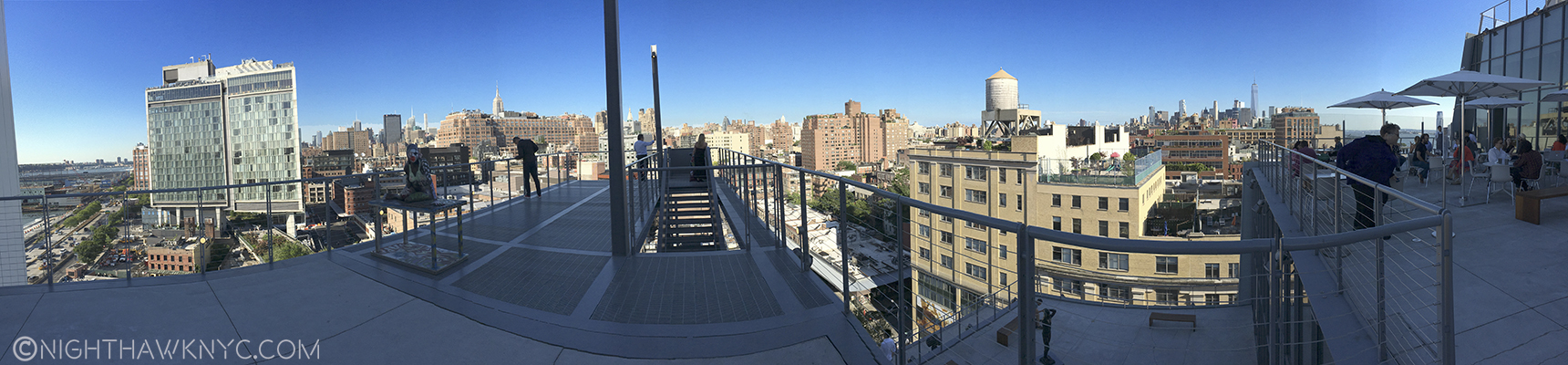
IMG_4907PNH

8th Floor Deck.

It’s very nice. You’ll like it. Bring sunscreen.
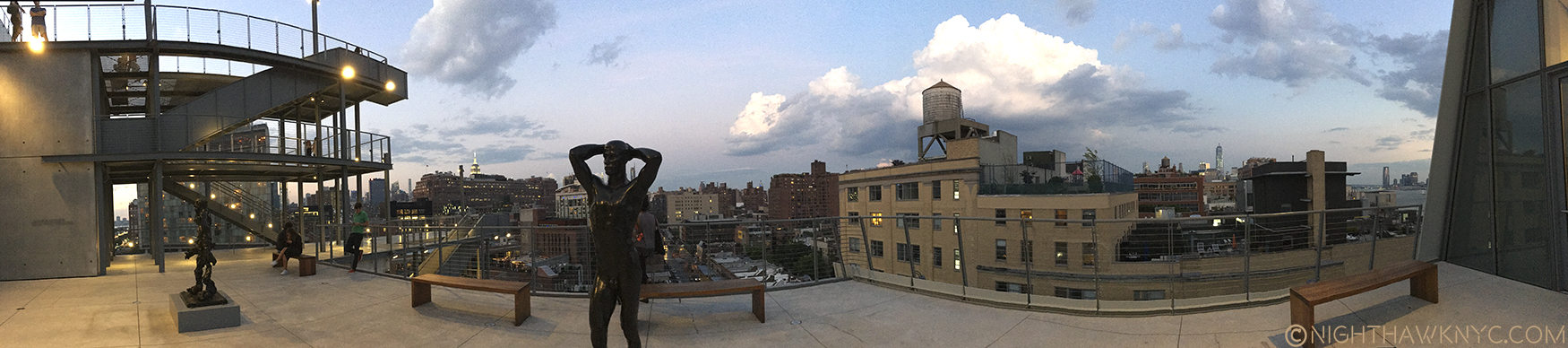
IMG_4848PNH

I promise that top ramp won’t be bent when you visit the 7th Floor Deck.

Part 4- Inside. “Hey look! They have art here…too!”

Inside, the first floor is the lobby, the most unsuccessful part of the entire interior- it’s an open space. The message here is “keep moving.” It’s about as unwelcoming a space as Moma’s lobby. (Actually, ALL of Moma, which for me stands for what it feels like- the “Mall of Modern Art,” feels unwelcoming!)
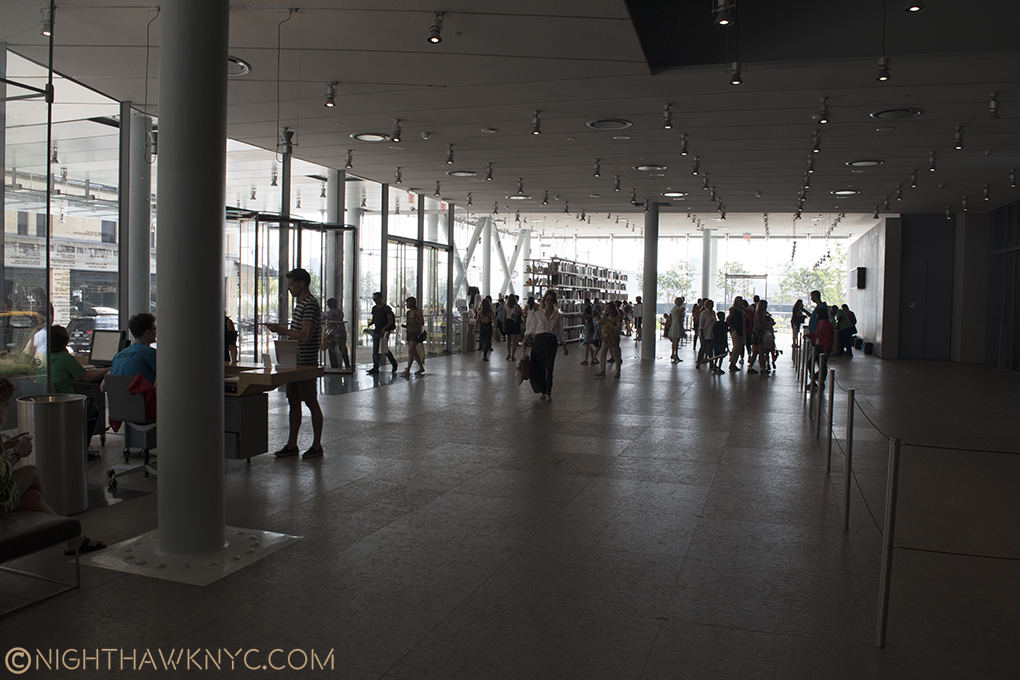
Welcome? No one will ever mistake the lobby for the Great Hall at The Met. Front door is opposite, where the black mat is.

Welcome? No one will ever mistake the lobby for the Great Hall at The Met. Front door is to the right of the nearest exposed column. Engineering made visible abounds. The free 1st floor gallery is to the immediate right, outside of the rope fence, which denotes you are in the Museum.

Once inside, here’s the routine I’ve settled upon, which probably sounds confusing- After entering as quickly as possible to minimize the time spent in the “lobby,” a short trip downstairs (don’t take the elevators- the wait is too long) brings you to the coatroom and the rest rooms (there are others restrooms on 3, 5, 7 and 8). The feeling here is 180 degrees from the lobby. This is completely designed. It makes you wonder what the hell happened upstairs. Take the stairs back to 1 and walk out past the rope line (keep your admission ticket handy) and visit the first floor gallery, which is free all the time. (Or, yes, you could visit the 1st floor gallery before paying to get in. I prefer to get my admission ticket first, which means I have to show it twice.) After that, show your ticket and get back in the Museum proper then take an elevator to the whatever floor you wish to see first- 3 (where the theater is for concerts, dance performances, etc), 5,6,7 or 8 (where the galleries are). Bear in mind there is no 2nd or 4th floor- they didn’t pay enough money to get those. No, at 422 million dollars, they did, but those floors are reserved for Museum staff and functions, so they’ve disappeared from the public elevator buttons.
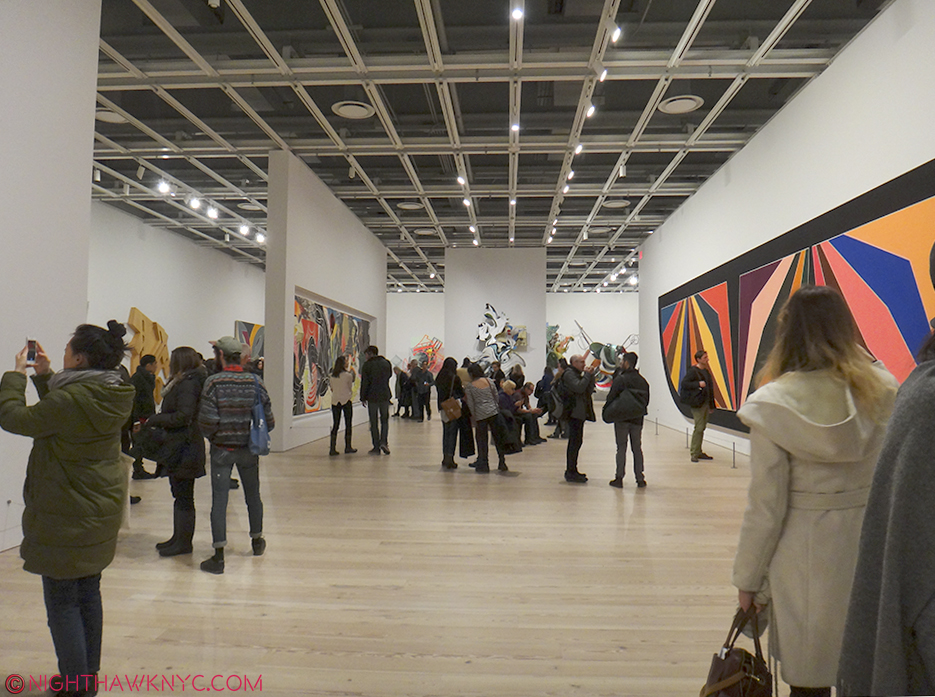
5th Floor seen during the Frank Stella Retrospective, Feb, 2016. The smaller walls can be moved to provide countless configuration possibilities.

5th Floor seen during the Frank Stella Retrospective, Feb, 2016. The smaller walls can be moved to provide countless configuration possibilities.

Inside, the building is very sharp, clean and neat with natural wood floors and new, white walls all around. As the rectangular shape belies, form mostly follows function, and 4 of the floors are given over to large, rectangular galleries. The open space allows for movable walls can be easily repositioned to allow an extremely wide range of configurations. Each floor is very well lit, (something that is continually a problem at The Met). With 3 sets of stair cases, there are plenty of stairs . None go all the way from 1-8, however. On the western wall, as seen below, stairs go from the 3rd floor to the 8th. To the east of the elevators, stairs run from 5 to the 1st floor. And, there are the exterior stairs on 6,7 and 8. The stairs are good to familiarize yourself with, since there is almost always a wait, the elevators are best used for going from 1 to 8 or from 5 to 1. The entire building, inside and out, is wheelchair accessible.
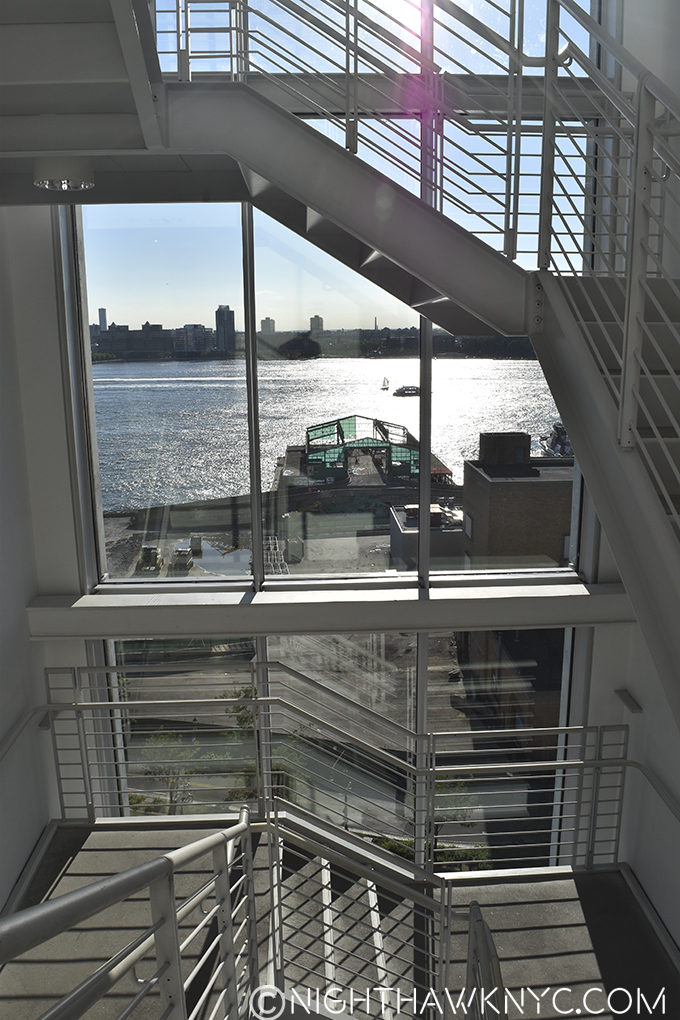
Western stairs, Spring, 2016. They seem to be dismantling the Sanitation complex. The Whit might be hoping a tower doesn’t go up in it’s stead.

Renzo Piano strikes me as a Master Engineer more than as a brilliant Architect. I got that feeling when I first saw the Pompidou Centre in Paris, with it’s engineering on the outside, and again with his New York Times Building (which he inherited from Gehry). Yes, he has done some beautiful buildings, but I repeatedly get the feeling of Piano, the Engineer, when I look at his work, and that shouldn’t be the primary feeling I’m left with. There is quite a bit of engineering being shown off, here too, much of it on the first floor, some in the exposed gallery ceilings, and some on the roof decks.
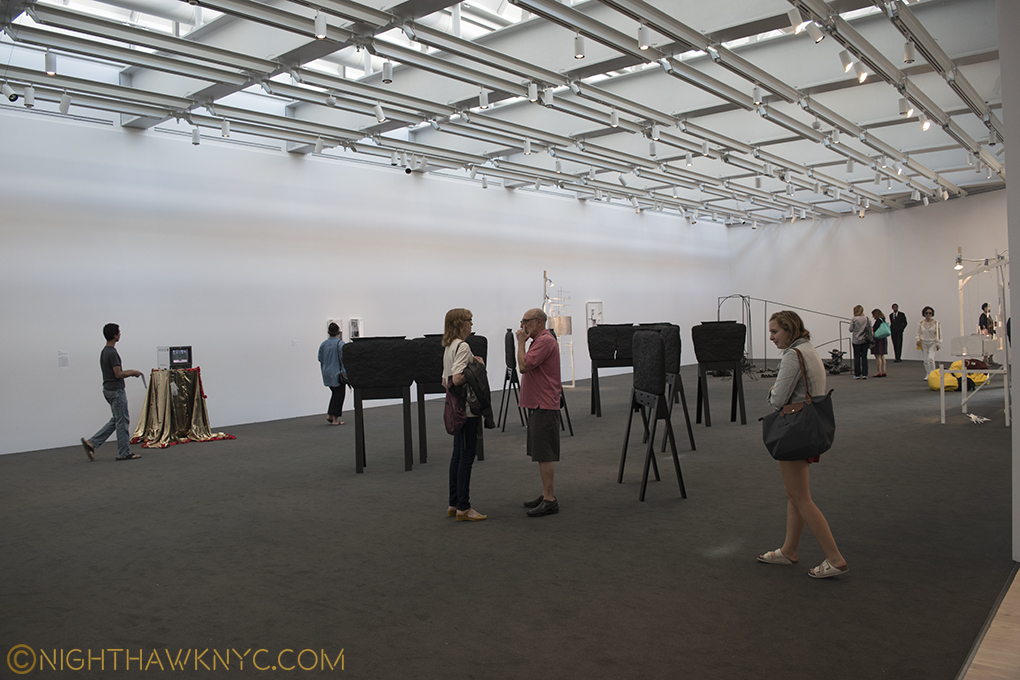
The 8th floor gallery lets in ambient sky light.

The 8th floor gallery lets in ambient sky light.

Now for the “nitty gritty.”

Given the luxury of having over a year to assess it, I’ve begun to wonder about the adequacy of the 50,000 square feet of indoor exhibition space, as nice as it is. “America Is Hard To See,” fit the whole Museum well, and showed it off to fine effect. Then, while the Frank Stella Retrospective was excellent, it only included 5 of his prints, and only 1 of his “Moby Dick” works. Was this because of hard decisions due to a prolific, 50+ year career, or due to a lack of space on the 5th floor? Currently, the otherwise excellent “Stuart Davis: In Full Swing” show feels unmistakably truncated. It shares the 5th floor with the “Danny Lyon: Message To The Future” show, (which may be overambitious). By comparison, The Met’s Stuart Davis show in 1991-92 had almost twice as many works, including over 30 that dated before the earliest work in the Whit’s show, like some from his “Van Gogh” period. While these have been going on indoors, I’ve been underwhelmed by what’s been installed thus far on the outdoor 5th Floor exhibition space. As time goes on, I’m starting to feel the 5th Floor may turn out to be a design mistake. Part of it is cut off to allow an entrance and exit corridor for the outdoor space, which is generally in shadow, and results in leaving a small indoor gallery on the other side of the outdoor gallery access corridor, which feels lost, and most importantly cuts down the size of the congruent 5th floor space. The other floors with outdoor decks run right up to the door leading outside with no corridor, etc.
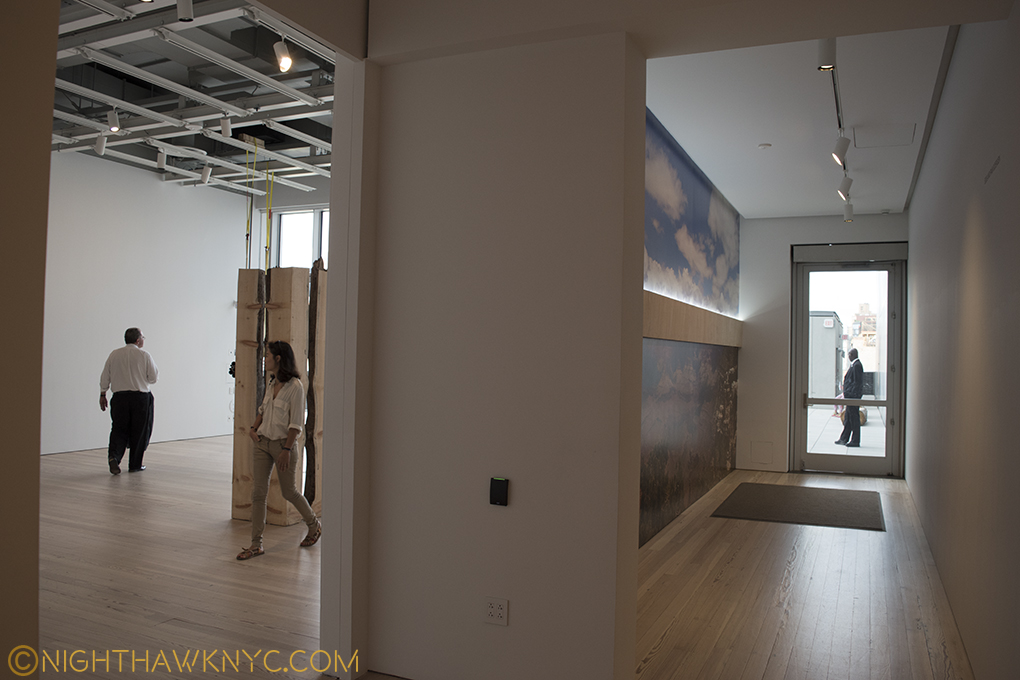
The 5th Floor is cut to allow this exit corridor to the Roof Deck Gallery, leaving a small gallery to the left that feels lost.

The eastern end of the 5th Floor gallery is cut to allow this exit corridor to the Roof Deck, which leaves the small gallery to the left that feels lost.

The Whitney says there is 13,000 square feet of outdoor space, over 25% of the amount of indoor space. I’m left to ask the age old question…”Did they create enough INDOOR space to display Art?,” the prime purpose of a Museum. Time will tell, BUT? If they didn’t? This will be a disaster reminiscent of Moma’s inexcusably horrible current/new building, where they somehow managed to create a massive multistory hole right in the middle of some of THE most expensive real estate on Earth, then claim they “need more space,” 10 years later!

You can’t make this stuff up!!!
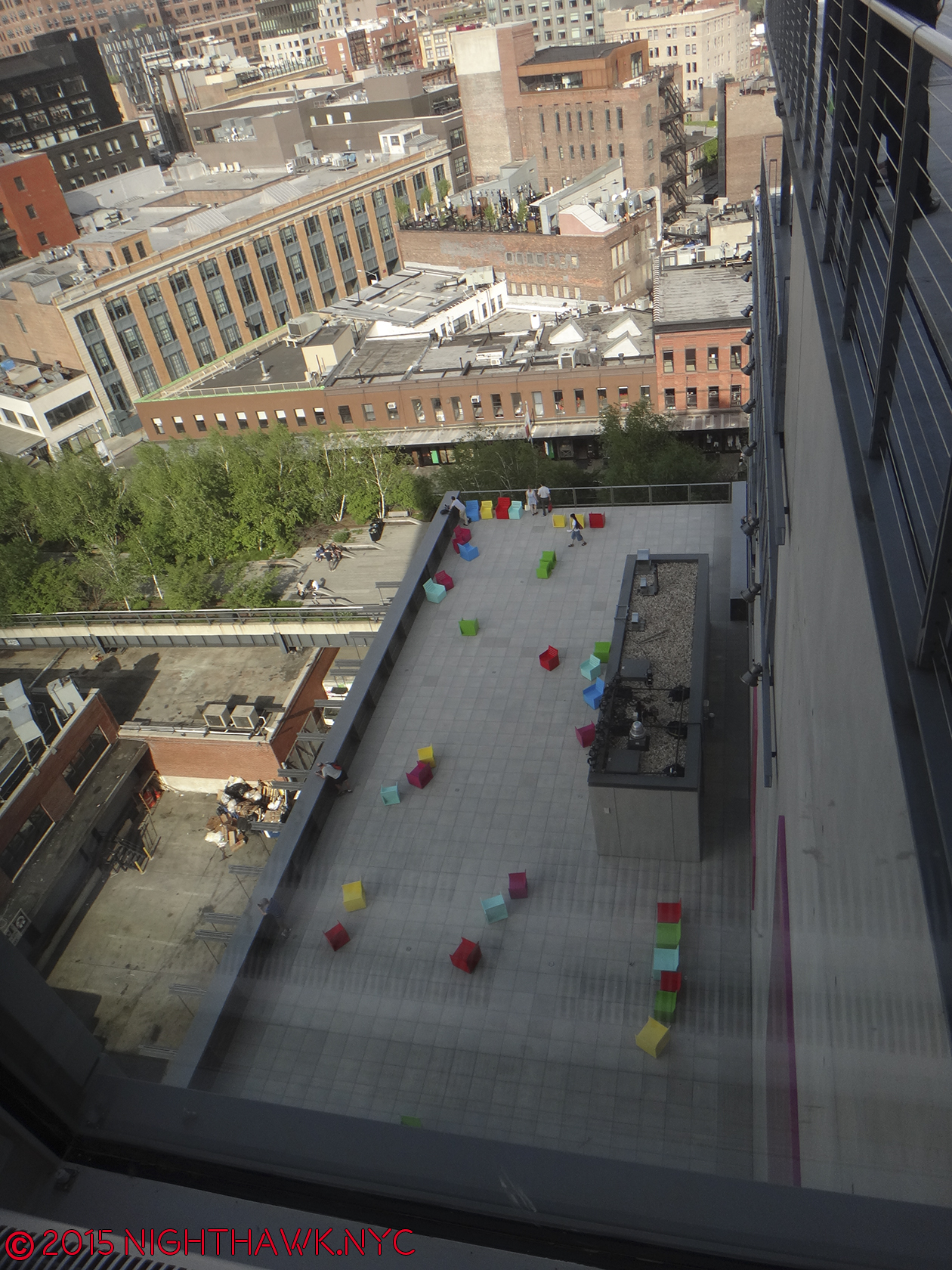
5th Floor Deck.

5th Floor Deck with installation. Yes, the colored seats are the Art work.

If the Whit needs more indoor space, well, the roof decks seem easy to enclose, and voila, 13,000 square feet more gallery space.

Or? PLEASE don’t tell me they’d have to expand this new building north, or up. I’m done writing letters. Besides, as much as I admire and respect Mrs. Gertrude V. Whitney and the collection built on hers, I have no attachment to this building.

And that brings me to this- Through it all, one thought stayed on my mind more than any other. I wonder what she would have thought of the place…

Part 5 – Gertrude Vanderbilt Whitney

“And I dreamed I was flying
And high up above my eyes could clearly see
The Statue of Liberty
Sailing away to sea
And I dreamed I was flying”*
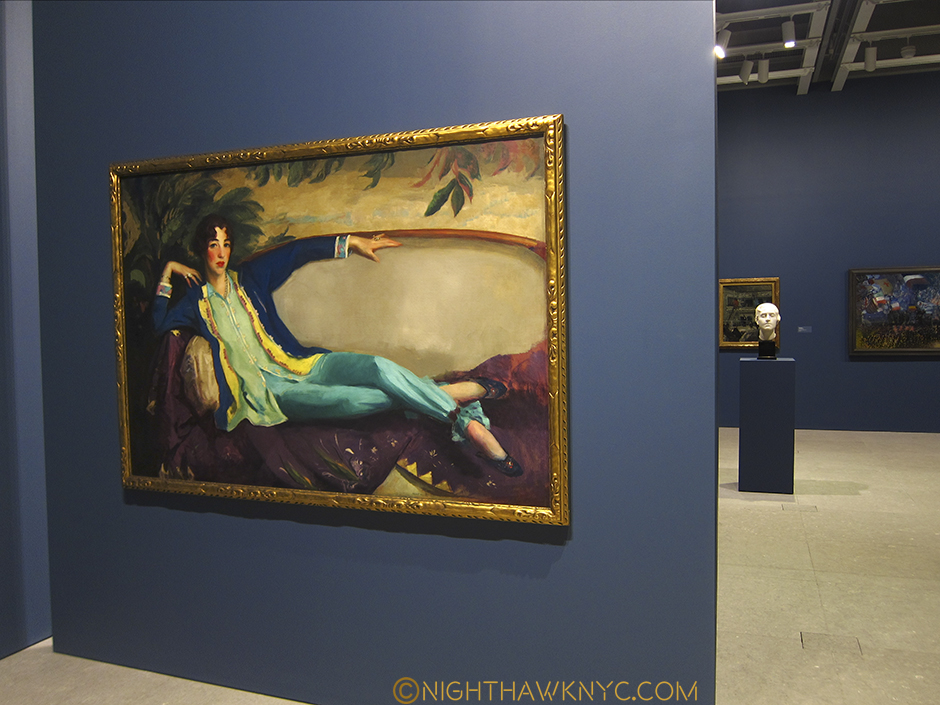
Portrait of Gertrude V. Whitney, 1917 by Robert Henri. Study for a Head for the Titanic Memorial by Mrs. Gertrude V. Whitney, in the background from "America Is Hard To See," 2015

Portrait of Gertrude V. Whitney, 1917 by Robert Henri. Study for a Head for the Titanic Memorial by Mrs. Gertrude V. Whitney, in the right background from “America Is Hard To See,” 2015

The founder of the Whitney Museum, as was beautifully demonstrated, remembered and honored in the first floor free to enter at all times gallery, where “America Is Hard To See” began was, also, a very accomplished sculptor2, in addition to being the greatest champion of American Art, perhaps ever. Immediately upon entering the first floor gallery, the first thing you saw was, fittingly, the wonderful portrait of her by Robert Henri that was perfectly placed facing the door, which also enabled it to be seen from outside the building, the only artwork that was. I wish it had been left right there. It wasn’t. As I write this, it’s upstairs as part of the “Human Interest: Portraits from the Whitney’s Collection” show. One of my pet peeves in Museum re-designs is how often they fail to answer this, seemingly basic, question- “Where are we going to put such and such major masterpiece?” Moma failed this miserably- How many times have they moved Monet’s “Waterlillies”, or Van Gogh’s “Starry Night”, in a vain attempt to find the right spot for each? This is unforgivable. While the Whitney has found a great spot for Calder’s Circus,
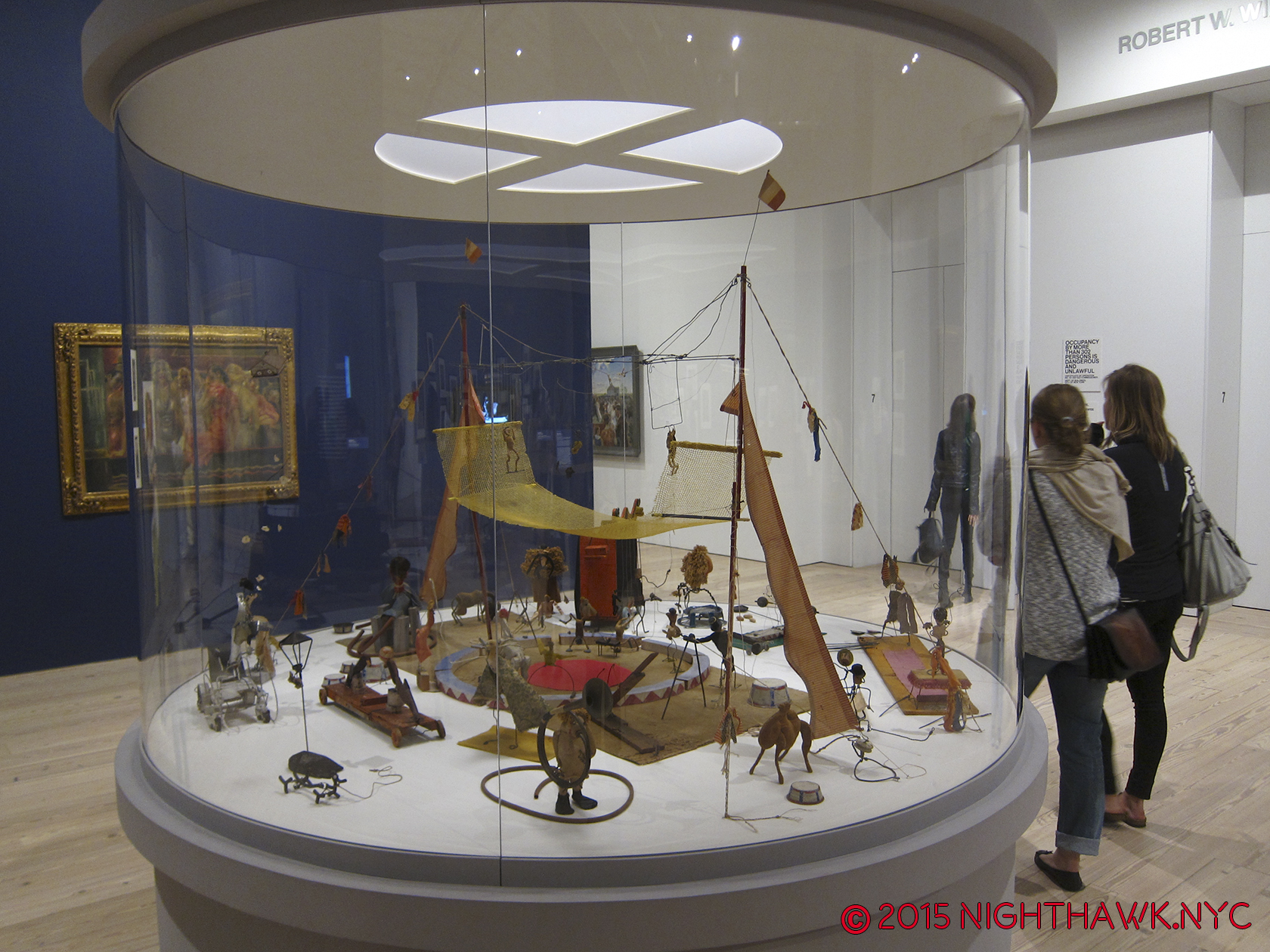
Calder's ingenious "Circus." When you go, be sure to see the accompanying video!

Home… at last. Calder’s ingenious “Circus.” When you go, be sure to see the accompanying video.

which was lost in the Breuer Building’s mezzanine, I’m left to wonder about Mrs. Whitney’s Portrait. Will it become their Waterlillies?
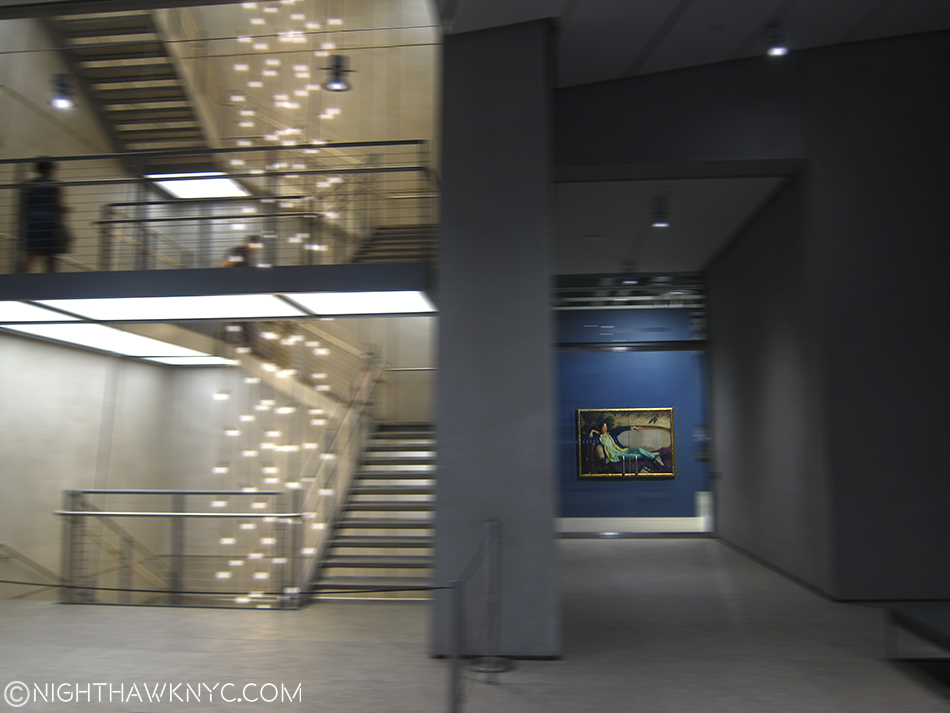
One of the very greatest figures in American Art History looks out on her domain, Portrait by Robert Henri, 1917. 1st Floor Gallery, seen from outside the building during "America is Hard to See," 2015. After? They should have left it right there.

One of the greatest figures in American Art History looks out on her domain. 1st Floor Gallery, during “America is Hard to See,” 2015. After? They should have left it right there.

Beyond her portrait’s place in the Museum, I wonder what she’d think of it. It’s still “her” Museum. They even, recently, put the name “Whitney Museum of American Art” on the southern facade. The new place is located a stone’s throw from the site of the first Whitney Museum that she opened in 1931 at 8 West 8th Street, and equally close to where Edward Hopper lived and worked on Washington Square. Edward & Josephine Hopper left their artistic estate to the Whitney, in honor of their long relationship with Mrs. Whitney. When the new Museum opened, there was a selection of Edward Hopper drawings from 1925 that he did at the Whitney Studio Club, which preceded the founding of the Museum, in the first floor gallery, adjacent to Henri’s Portrait of Mrs. Whitney, seen above. As time goes on, I think this gift will be seen as one of the greatest Art gifts of the 20th Century, even though it didn’t consist of many of Edward’s paintings. That’s when I try and forget the fact that the Whitney, tragically and unforgivably, discarded almost all of Josephine Hopper’s work that was included with it!

While we’ll never know what Mrs. Whitney would think of the new home of her collection, I know what I think.
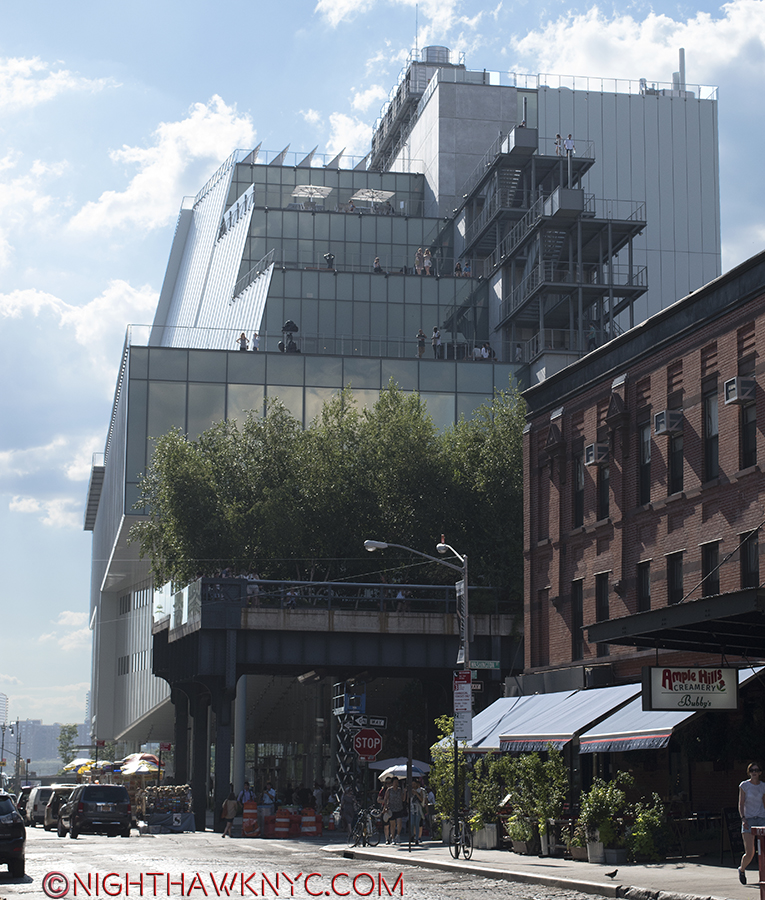
DSC_5259P2NH

Oneupsmanship? “Hey you down there on the High Line- You think you’re high up? Ha!”
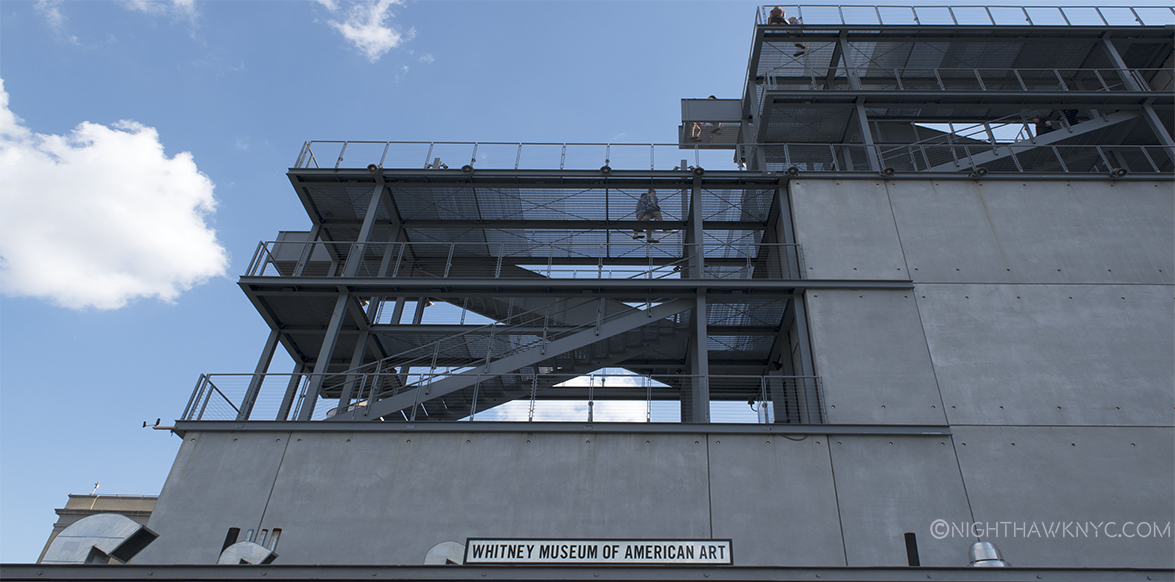
DSC_3674PNH

I’ve spent a year wondering- Why put 13,000 square feet of outdoor space in a building in a place with a climate like NYC?
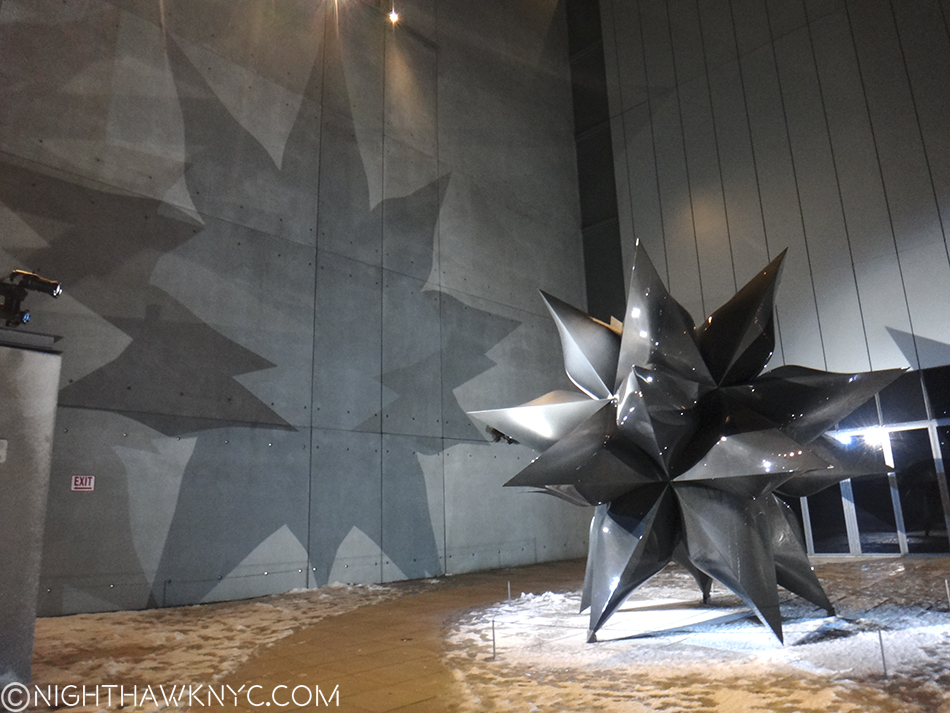
5th Floor roof deck with a Frank Stella Sculpture & reflection, Feb, 2016

5th Floor roof deck with a Frank Stella Sculpture & reflection, in the snow, Feb, 2016

Part 6- 5,000,000 Reasons

As I said, real estate in NYC is all about location. That applies to the Art world, too. The Met & The Guggenheim are in, or near, Central Park, and there is now talk of The Met creating a Central Park entrance as part of their Contemporary Art Galleries reconstruction3. Moma has the heart of midtown, and now the Whitney has the High Line. In my opinion, the location was selected, and the New Whitney is designed, to be a destination for High Line visitors- It’s roof decks are meant to beckon High Liners with an even better view since they are higher. That’s one explanation for the stair designs looking similar- imitation that’s designed to make High Liners feel the Museum is part of the High Line. And so? Location also pays off by providing a potential mass audience delivered right to your door. How much is that worth to a Museum? Given that the High Line currently draws over 5,000,000 visitors a year, it’s hard not to see this as a conscious decision designed to attract visitors for an even better view, and oh yeah, some Art. Once inside? I’ve already come to feel that the gallery size is limiting. As the collection grows (do Museum collections ever shrink?), I am left to wonder how quickly they’re going to wish they had some of that 13,000 square feet that’s sitting outside, inside.

But? If I’m correct about their motivation, the outdoors stairs & decks exist to beckon people from the High Line, which, is open year round, come rain, snow, or shine.
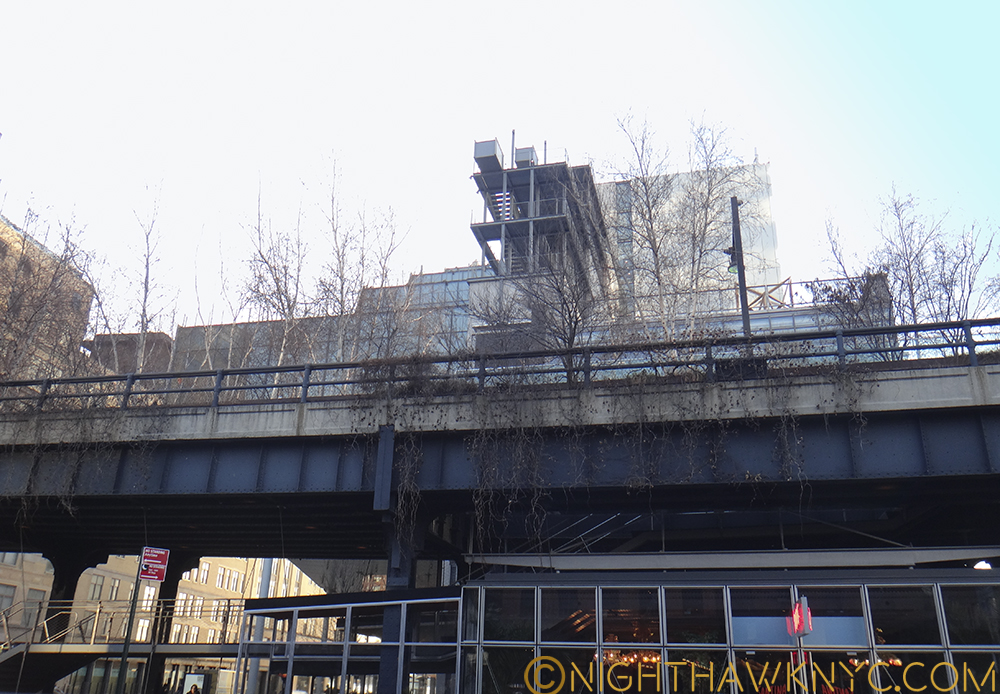
DSC09546PNH

“We come on the ship they call the Mayflower
We come on the ship that sailed the moon
We come in the age’s most uncertain hour
and sing an American tune
But it’s all right, it’s all right
You can’t be forever blessed”*

Overall? I’m displeased by the outward appearance of the new Whitney. Over a  year of trying to warm to it, of giving it yet another chance to speak to me later, I still find it downright strange. As an Art Museum, the inside is nice, with the above caveats. As far as the Art is concerned? I’m glad to have the Whitney’s pre-eminient collection of American Art back, and “America Is Hard To See” was a wonderful “Welcome Back” celebration of it’s return after the move Downtown. The Whitney is, also, to be congratulated for the guts they’e displayed in the choices of their early shows- giving Laura Poitras her first Museum show, featuring the great Cecil Taylor for a week, and having the retrospectives of modern master Frank Stella and the vastly underrated Stuart Davis (who Mrs. Whitney, herself, believed in and financially supported early on), among others, all have made the first year of the New Whitney Museum’s exhibitions quite memorable, and yes, very Artistically successful.

Yet? How long will the waters stay calm for the U.S.S. New Whitney Museum? The big question of long term success and long term viability remain to be answered.

Epilogue – The Whitney’s 422 Million Dollar Gamble
DSC09557PNH

The Whitney’s move downtown isn’t about moving nearer the “New” Art neighborhood of Chelsea or the “Older” Art neighborhood of Soho. It strikes me as being a a case of seeing an opportunity and taking it. They found a lot at one of the 2 ends of the High Line and saw their opportunity to move to a potential audience- the 5,000,000 current visitors to the High Line, and they took it. I believe that’s why their stairs look like the High Line’s, as I said.

For the Whitney, this is a $430,000,000.00 (the cost of the new building) gamble that the High Line is not a flash in the pan and it’s popularity is here to stay. If the High Line fails? Well? The City was about to tear it down anyway before it was turned into a Park.

But, if the High Line does fail (which seems unlikely at the moment), or visitors come in substantially lower numbers (much more likely), the Whitney may find themselves stranded, with an out of the way Museum that is not easily accessible by either bus or subway in a neighborhood that has a history of being “the wild west,” home to meat packing, prostitution, cutting edge music, and sex clubs (Madonna’s notorious book “Sex” was photographed almost 25 years ago at one 3 blocks away) not all that long ago, that has been remade with extra glitz and top of the market rents. And what about that neighborhood? What if the new glitz doesn’t stick? What if it all turns out to be wishful thinking on the part of landlords looking to make a killing after years of squalor? Walking around the past few months, the area seems to be having a bit of trouble supporting many of it’s ritzy new tenants at these prices. And? This is over a year after the Whitney added even more oomph to the now completed High Line being here.
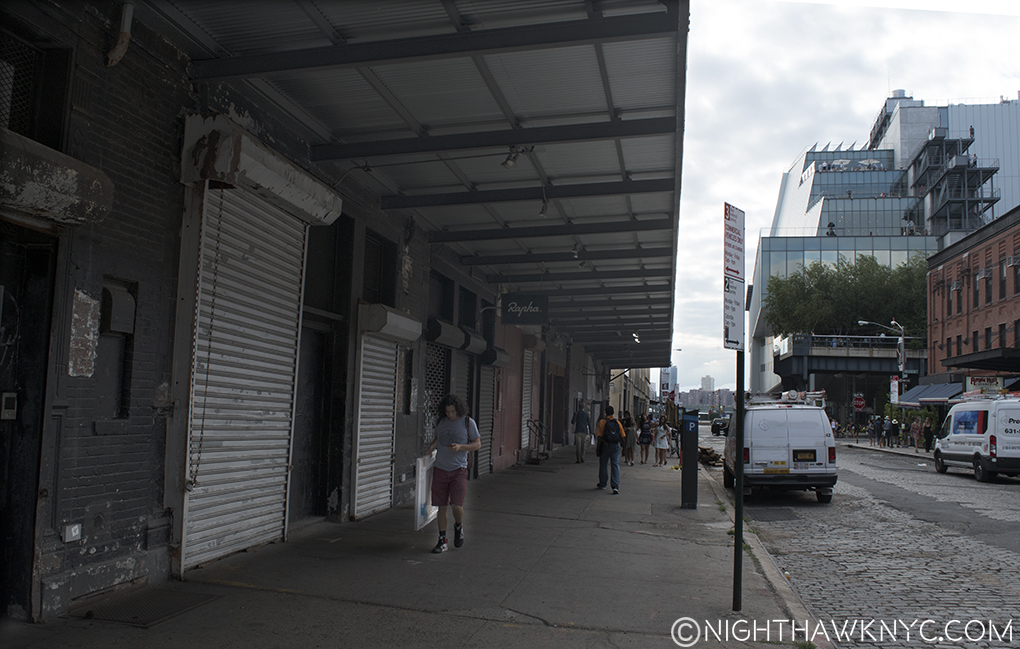
Empty storefronts on Gansevoort, one block east of the Whitney, August, 2016

Empty storefronts on Gansevoort fill 3/4 of the block, one block east of the Whitney, August, 2016

Is the “Meatpacking District” a fad destination that is about to fade? If so, what effect will this have on the new Whitney? Can it survive in a “not so fab” neighborhood?
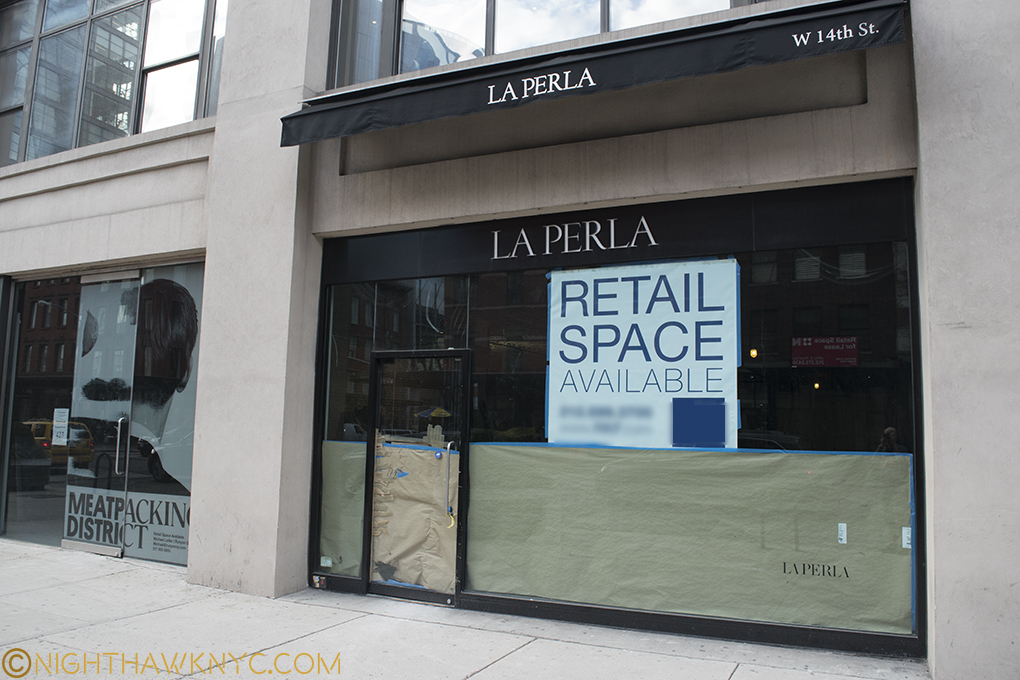
La Perla joins Alexander McQueen & Stella McCartney as former tenants of the Meatpacking District

Is the buzz over? La Perla joins Alexander McQueen & Stella McCartney as former tenants of the Meatpacking District who have moved elsewhere.

While collectors and investors throw unheard of sums at Contemporary Art these days (which strike me as “bets” given the largely unproven nature of the Art itself), here is a case of one of NYC’s “Big 4 Museums” placing an even bigger bet on a Park, that while it certainly is Contemporary Urban Art, hasn’t even been fully opened for TWO YEARS yet,. The Whitney placed their bet when the High Line was in it’s first of 3 phases. Phase 3, the final part, of the now completed High Line opened on September 20, 2014. This is not to mention that they bought in at the top of the market in a real estate market that (like the Art market) hasn’t seen a correction in over 25 years. Both will see corrections one of these days.

But when? This, is the 422 million dollar question.

“Still, tomorrow’s going to be another working day
And I’m trying to get some rest
That’s all I’m trying to get some rest”*
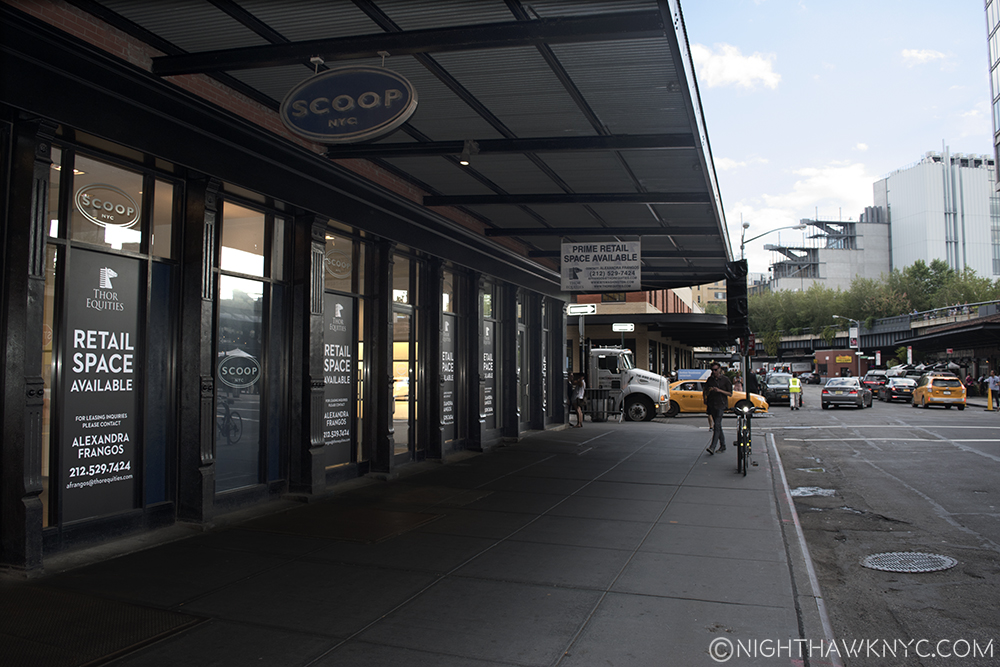
Around the corner on Washington Street, 4 now empty storefronts, one of which was the famous Hogs & Heifers Saloon (corner). August, 2016

In the Whitney’s shadow. Around the corner on Washington Street, 4 now empty storefronts in a row, one of which was the notorious Hogs & Heifers Saloon (where the white sign hangs). August, 2016

Well? If all of this goes south? They still stand a very good chance of being able to move back uptown in 8 years when The Met’s lease of the Breuer, their former home, is up. Given The Met’s own problems, it seems highly unlikely they’ll be extending that lease.

If the Whitney then wants to renovate it? It’ll be someone else’s problem.

*-Soundtrack for this Post is “American Tune” by Paul Simon. Published by Universal Music Publishing Group.

NighthawkNYC.com has been entirely self-funded & ad-free for over 8 years, during which 300 full-length pieces have been published! If you’ve found it worthwhile, PLEASE donate to allow me to continue below. Thank you, Kenn.

You can also support it by buying Art, Art & Photography books, and Music from my collection! Art & Books may be found here. Music here and here.

Written & photographed by Kenn Sava for nighthawknyc.com unless otherwise credited. To send comments, thoughts, feedback or propositions click here. Click the white box on the upper right for the archives or to search them. Subscribe to be notified of new Posts below. Your information will be used for no other purpose.
  1. In fact, the new Whit, itself, sits where one was.
  2. When will they have a show of HER work?
  3. Speaking of his vision in January, Met Director Thomas Campbell told the LA Times that “We are looking at an entrance, at terraces, at the roof garden.” Sounds like he’s visited the New Whitney.

Words To Live By From Man Ray #2

This site is Free & Ad-Free! If you find this piece worthwhile, please donate via PayPal to support it & independent Art writing. You can also support it by buying Art & books! Details at the end. Thank you.

Written & Photographed by Kenn Sava

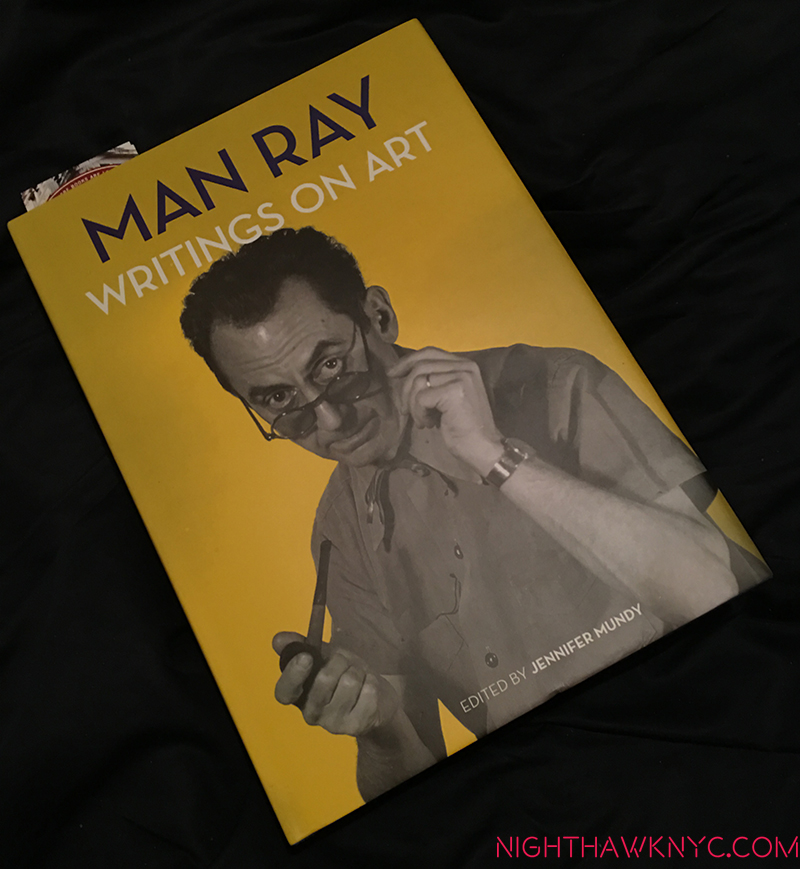
“Originality is not sought after but imposed on a clear thinking mind by the exigencies  of the message to be conveyed. When that message is startling and different, the means to convey it become original and daring for others, although he who conceived, is not necessarily conscious of any kind of iconoclasm, but feels as if he is performing quite a normal act.”

Man Ray, “No. 72. Class (In Time) from “Writings On Art”, P.177. Published by Getty Research Institute


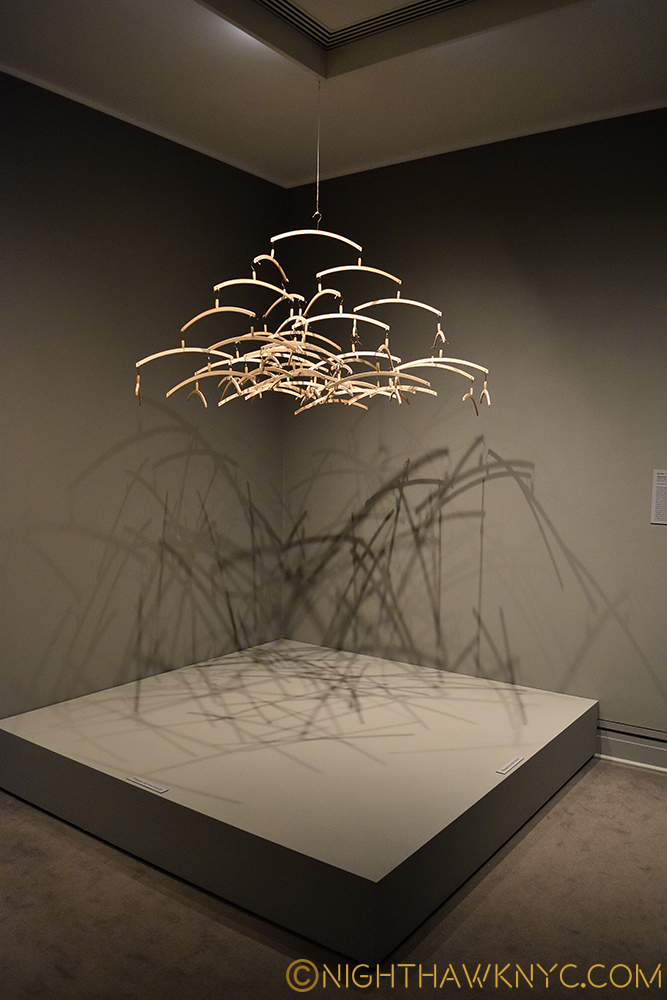
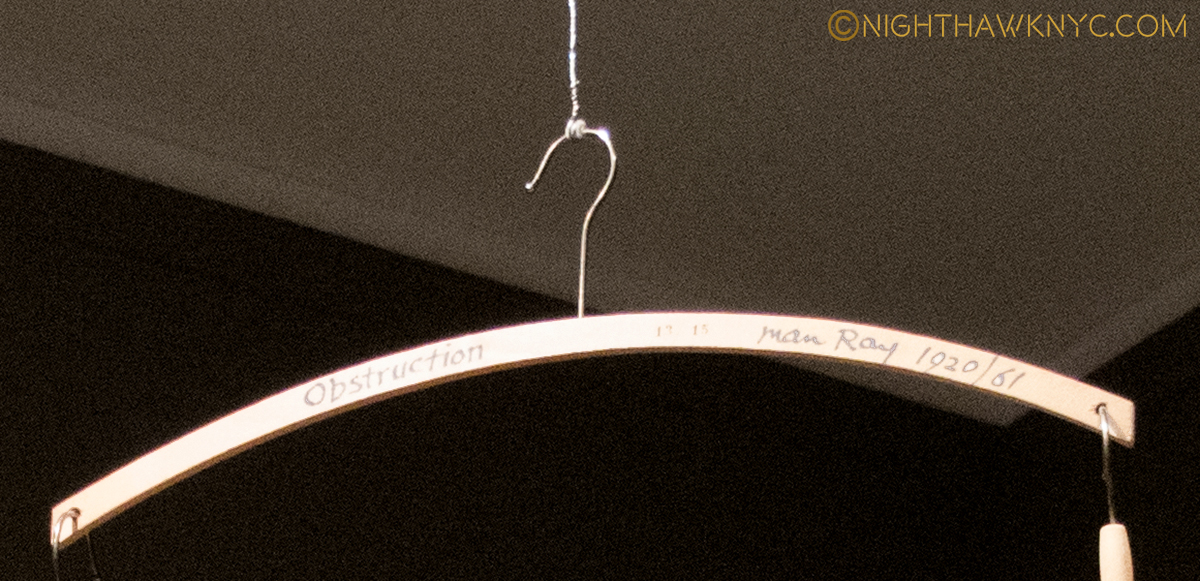
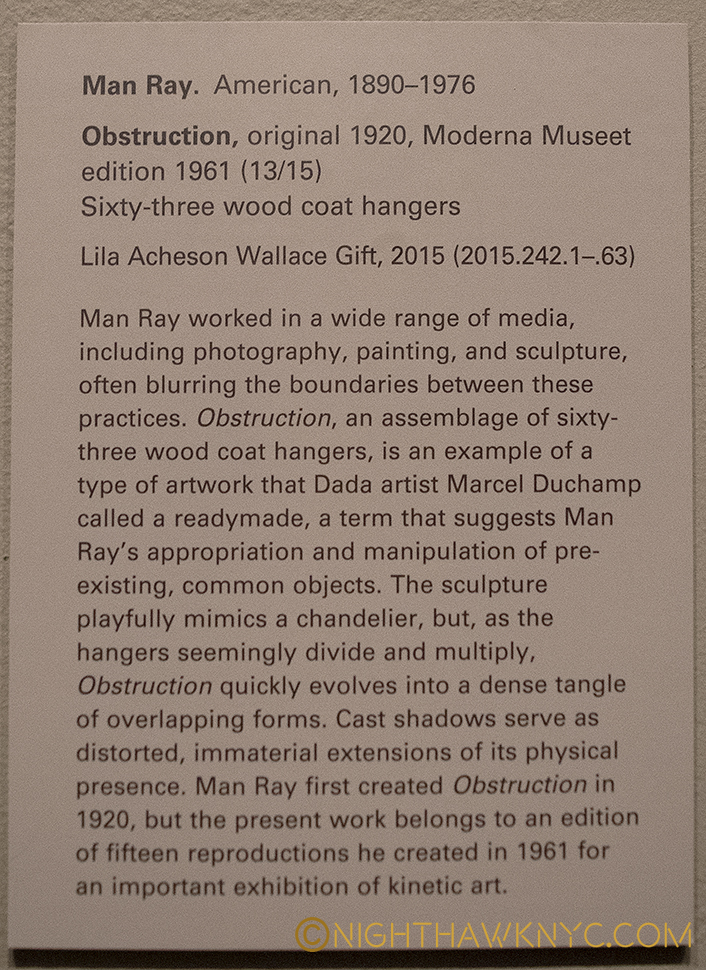
Man Ray, “Obstruction,” 1920/1961, Metropolitan Museum of Art-

DSC_5644PNH

DSC_5651NEFPNH

Close up on the top hangar.

DSC_5647PNH

One of the most unique Artists in history, Man Ray is one of those people who seems to continually appear…as one of the most revolutionary photographers ever, a painter (his first love), a sculptor, a graphic artist, and on and on…and also as a writer. He’s in all the major museums, but rarely gets a show of his own. I’ve always admired his work, and continually been surprised by it, and his accomplishment (as in “That’s a Man Ray, too?”) Having published a fascinating autobiography, perfectly titled “Self Portrait,” which drips with both insight and intrigue, now comes a collection of his writings about art. It’s a book that even rewards random reading- almost every page has a fascinating example of his one of a kind mind.

I think they make wonderful meditations…The first entry in this series appears here.

Soundtrack for this post is, what else? “Man Ray,” by the Futureheads from their 2004 self-titled album.

NighthawkNYC.com has been entirely self-funded & ad-free for over 8 years, during which 300 full-length pieces have been published! If you’ve found it worthwhile, PLEASE donate to allow me to continue below. Thank you, Kenn.

You can also support it by buying Art, Art & Photography books, and Music from my collection! Art & Books may be found here. Music here and here.

Written & photographed by Kenn Sava for nighthawknyc.com unless otherwise credited. To send comments, thoughts, feedback or propositions click here. Click the white box on the upper right for the archives or to search them. Subscribe to be notified of new Posts below. Your information will be used for no other purpose.
“Patti Smith For President”

This site is Free & Ad-Free! If you find this piece worthwhile, please donate via PayPal to support it & independent Art writing. You can also support it by buying Art & books! Details at the end. Thank you.

Written & Photographed by Kenn Sava

I’ve had the honor of meeting Ms. Smith, and wrote about it earlier this year, but I’ve never had the pleasure of hearing her perform live. (How is this possible??) The free concert she gave at Lincoln Center tonite, July 20th, presented a chance to rectify that at long last. It almost didn’t happen tonite either. I got there way early and got in fine. Then I went back out.

Don’t ask.

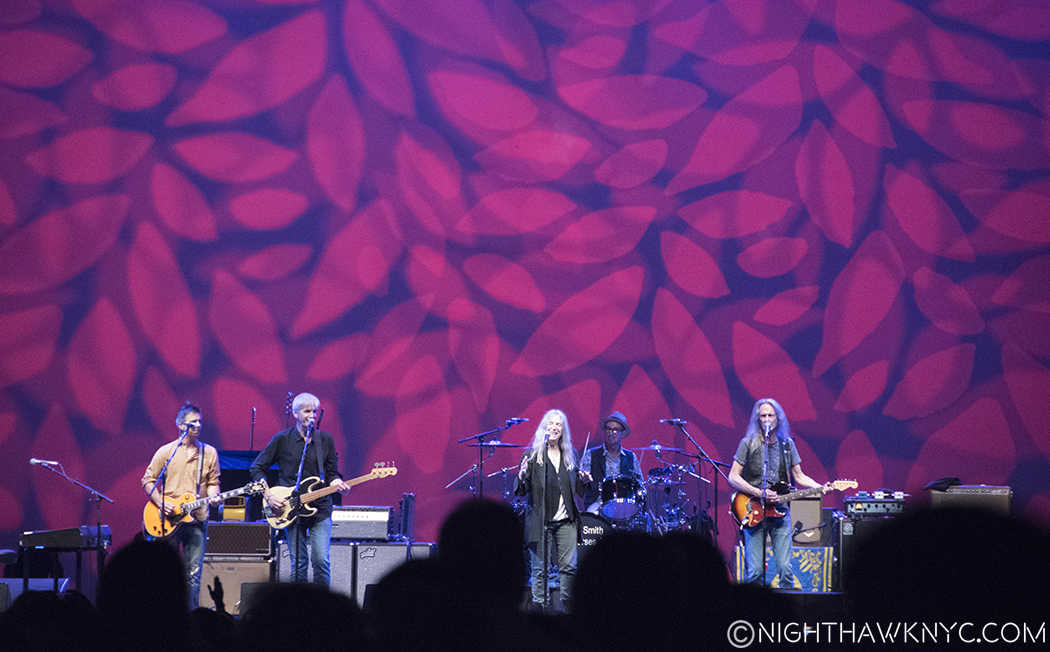
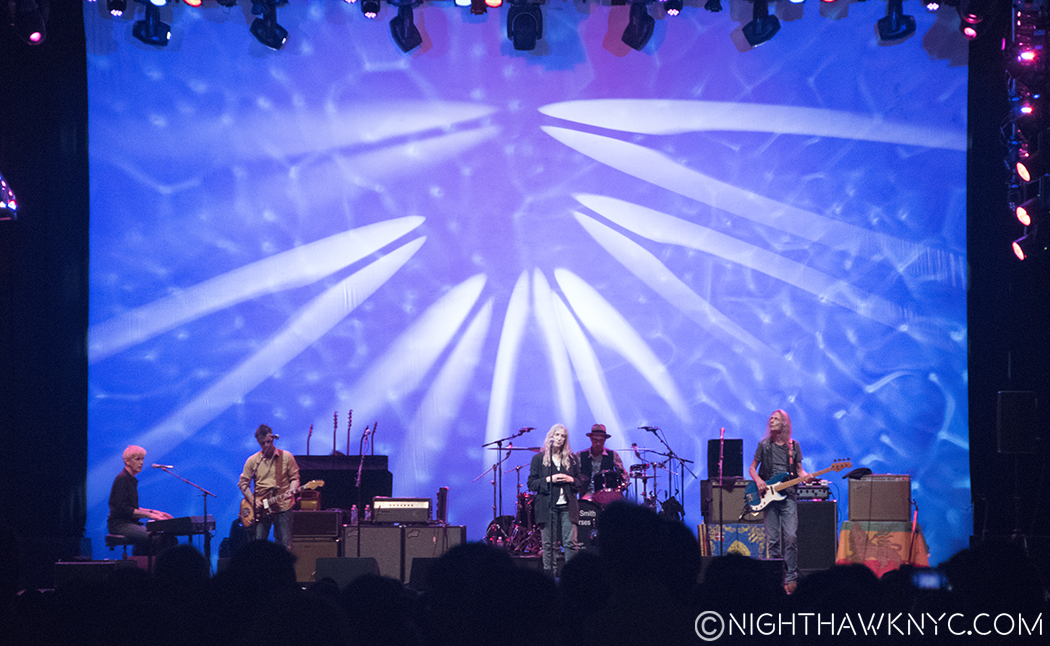
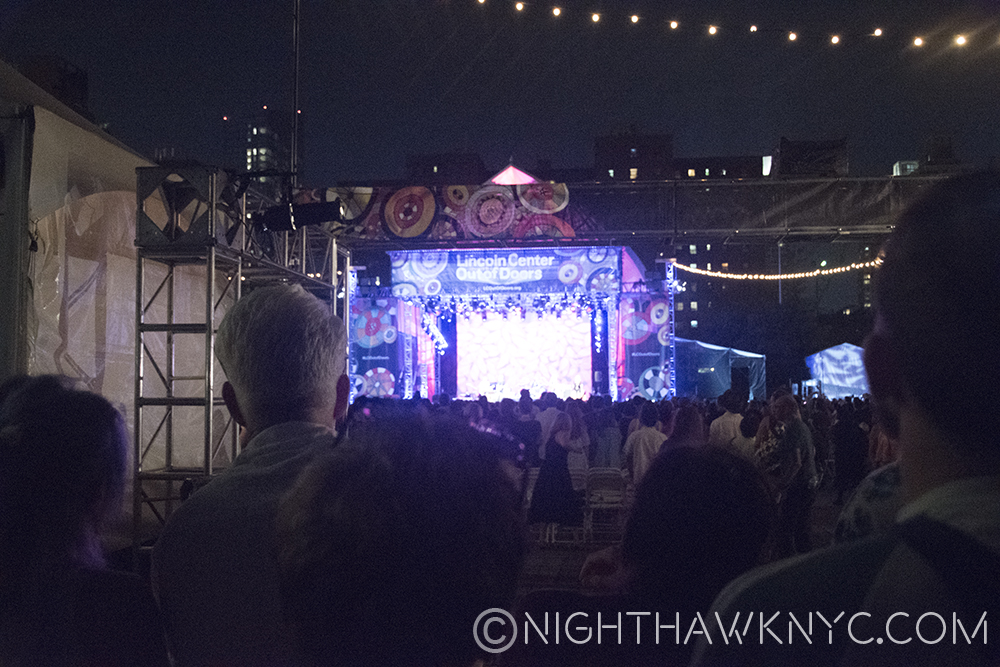
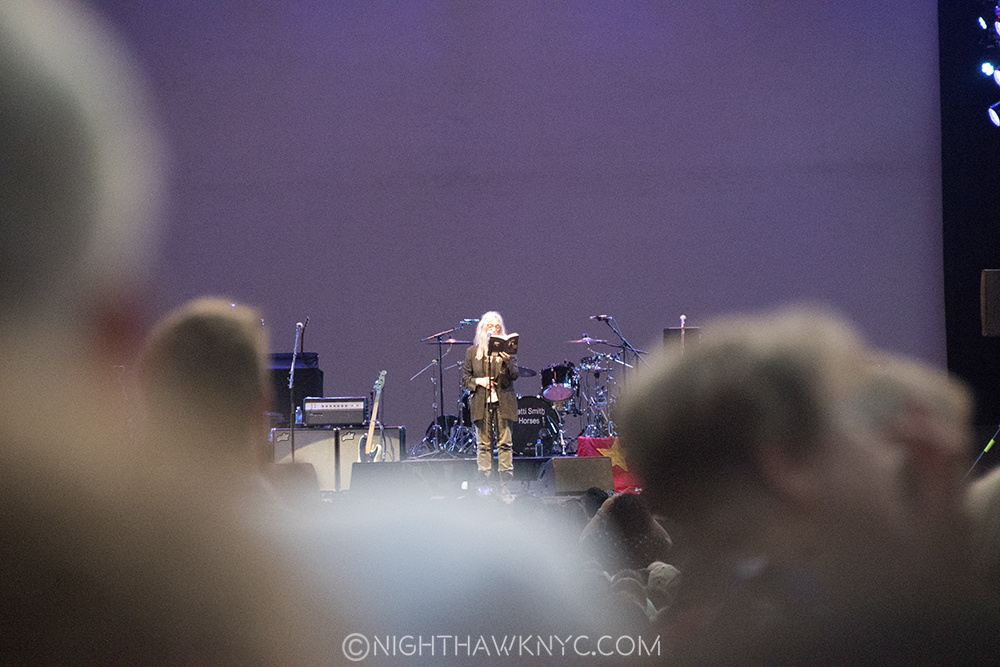
All of NYC had shown up in the meantime, so I had to wait on two ridiculously long lines to try and get back in. Luckily, I barely did but wound up about 350-400 feet away from the stage, as you can see below. Luckily, the sound system was excellent all the way to the back, so I could hear fine. Well, this is Lincoln Center for the Performing Arts, so that’s to be expected, right? Being that far away, though, if there is one tall person between you and the stage, you’re not getting a picture. There were 2- one on each side of me. So, I had to wait and wait and wait, finger on the shutter release, until I was finally able to get a few.

Ok, now! Before one of them moves!

Patti, blissfully oblivious to my travails, and her band, augmented by her daughter, Jesse, on piano early on, tore the roof off roof-less Damrosch Park, under one of the biggest full moons I’ve ever seen, in the shadow of the Metropolitan Opera’s south fascade, as much with their music as with Patti’s “state-of-the-union” rebuttle comments as the generous 90+ plus minute set progressed.

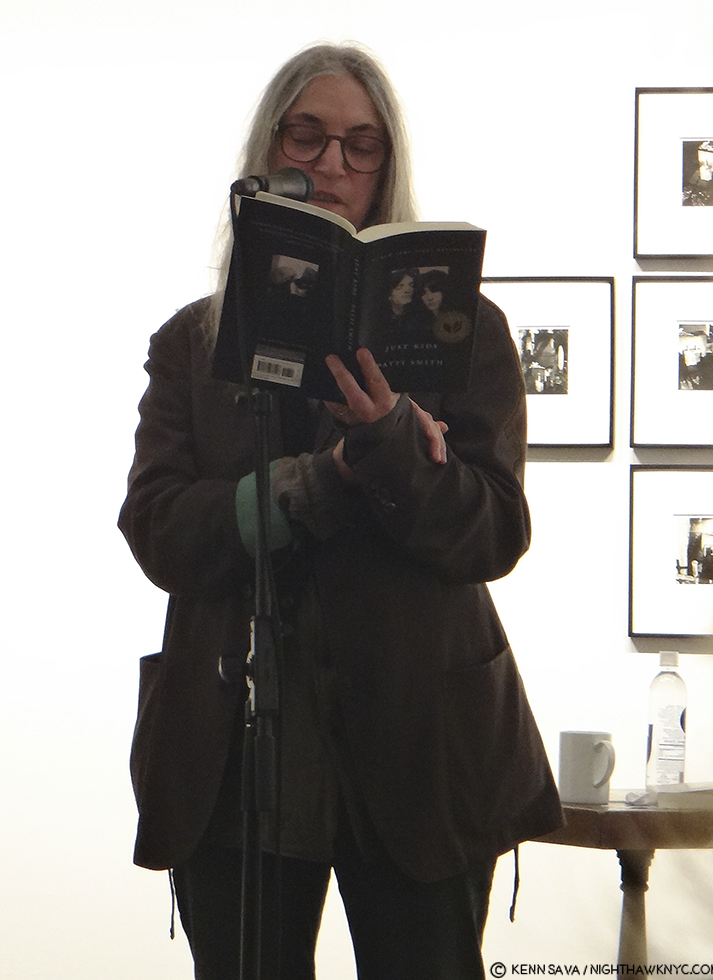
She opened with reading poignant passages from Just Kids, her instant classic memoir that is chock full of them. Yes, she opened by reading from a book to a sold-out house of a few thousand folks, who had just heard some mariachi band(?) futiley try to get them to dance or clap for 45 minutes. While she read, it was so quiet you could hear a safety pin fall out of an earlobe.

How many authors read before this many fans?

As she slowly, and beautifully, built the set from there, about half way through, she did a wonderful rendition of Prince’s “When Doves Cry.” adding her own lyrics(!) towards the end. Shortly after starting it, she stopped, to let an intrusive photographer have it, and when she resumed things promptly took off to another level, and stayed there the rest of the night. Setlist, here. (Per Kitty, my go to source for all things Patti, she compiled her own and confirms it’s correct. Thanks, Kitty!).

“When Doves Cry”

Between songs, she then spoke about the Republican Convention, the lack of media coverage about the remarks made therein calling for the execution of the other party’s nominee(!), “enemies” in politics, and where things are really at for “the people.” While she stayed away from saying who she was backing or voting for, she made it very clear how she felt about the state of the rhetoric that seems to get a pass in the media these days. She said that she doesn’t get scared easily, but she is scared now. Form then on, she spoke about what is at stake for us and our children, “the future, and the future is now,” she said.

I found it stirring, and her call to “use your voice,” struck me, since, well? I have a voice. Though my focus is Art & Music, my cards also list “Life” as the third realm of NighthawkNYC. Along with some other things I’ve Posted under “Life” thus far, is this, during Pope Francis’ visit to NYC, questioning the prison-like installations along 5th Avenue, around the corner from Moma.

I think Patti is right. Things seem to be going to hell in a hand basket. It’s getting harder and harder to find sanctuary in the worlds of Art & Music when every single new day seems to bring some new horror to light, be it mass shootings,  or verbal violence, espousal of racism, and an increase in the “us versus them” vitriol to never before seen heights. How long will this go one before it spills over into actual physical political violence? Haven’t we been through all of this before?


I don’t care what side of the political coin you’re on, or if you’re like me, you’re on a totally different coin, i.e.- my own. I think we can all agree that this is going too far, it’s dangerous, and, as Ms. Smith said tonite, it’s un-American.

While I wasn’t around for World War 2, it seems to me that we fought that war to fight fascism, anti-semitism and racism. Talking about barring this or that group of people sure doesn’t sound like anything I was taught this country was about. As we also see daily, there are too many guns in the wrong hands, and too many guns only the police or the military should have, for anyone to feel safe, and no matter the horror unleashed NOTHING changes. And, along with this there are, also, too many questionable deaths happening at the hands of the law (Morrissey seemed to “warn” us about this in his last NYC show).

Too many things are amiss in our society, our systems and our government. I don’t know where this is going to end, but I fear it’s going to get even worse before it gets any better.

I’ve said that the reason to live in NYC is for the Art. One of the other great things about living here is the diversity. People from all over the world live here. I, for one, am proud of this. They enrich the City and all of our lives in countless ways, including culturally. And? People from 115 different countries died here on 9/11. Take a ride on the Subway and you see what America is supposed to be, right there in front of you- the “great melting pot.” I believe it when people here say- “Hatred is not one of our values.”

I like to believe that most people in this country feel that way, and they will be heard. We live in a very difficult world in a very challenging time. Yet? We have a say in where this goes. One of Patti’s closing songs was “People Have The Power.”

“And the people have the power
To redeem the work of fools”*

For me, and perhaps many others, Patti Smith IS New York City. She represents the best of what New York is. She came from nothing and became a star here, while remaining true to her self, and retaining and exuding cool. She’s both street smart & wise. She’s creative, multi-talented and constantly evolving, like NYC is. She takes no shit from anyone, while remembering the best of everyone. She warns us of the difficult road life is, while exalting all of us to the beauty and joy possible in life- big and small. She lives in the moment but never forgets the past. That she is also a touchstone in the guise of a Poet for so much of this City’s recent & glorious past is no small part of her mythology, and a blessing for those of us now living, and yet unborn. And? She’s Rock and Roll! She will kick your ass on stage with her band, or off it if you intrude on it. As New Yorkers like to say, she is “the real deal.” My respect for her continues to grow. As I learned tonite, she is one of those rare people that when you are in their presence, be it one on one in a room together, or 400 feet away among thousands of others, you FEEL you are in the presence of someone special, someone who has the “sacred knowledge” she’s gained  from both revered mentors, and on her own. And, someone who has the power to relate it, to transmit it to you, naturally, effortlessly, and poetically, like a zen master. As she travels the world (so I don’t have to), and meets countless people in countless other Cities, I know my City is in the best of hands. It’s like saying, “Here’s New York for you. Show me what YOU got.” I know, I know…good thing I stay home.

At one point, between songs, someone actually yelled out that Patti run for President! She replied “I’d rather be the janitor in any public school,” than be President.

This fall, if you’re still at a loss for a candidate? I feel your pain. It could still finally be time to make a woman President.

In spite of what she said? Write “Patti Smith” in, anyway.

There are far worse people you could vote for. What scares me most is- They are actually running.

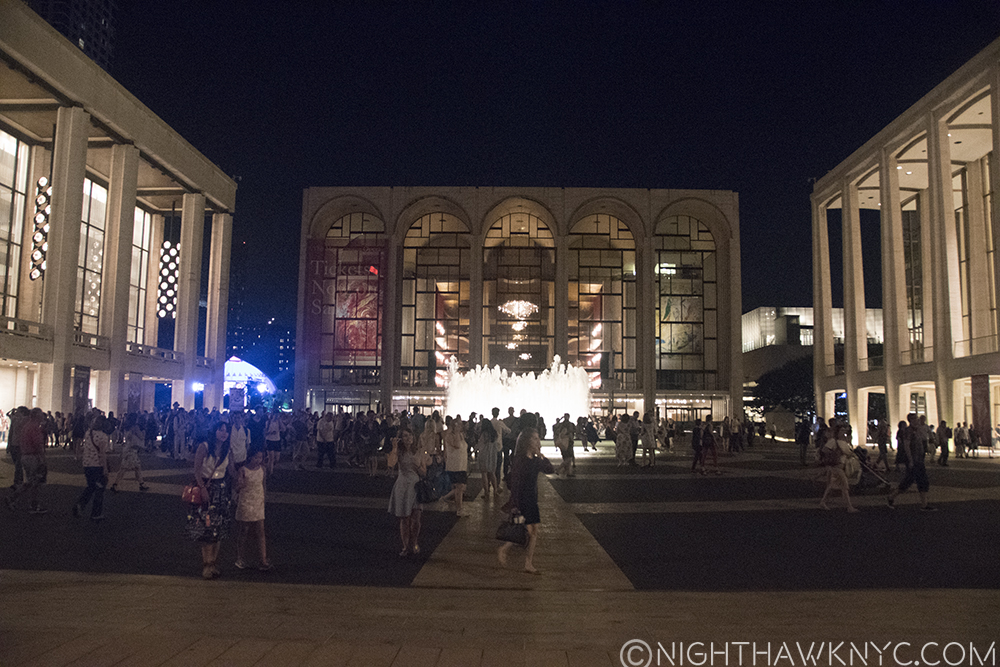
“Because the night” is over. The crowd spills out. Lincoln Center- Left to Right- City Ballet, Damrosch Pk (Blue Dome), Metropolitan Opera, Lincoln Ctr Library, Geffen (Philharmonic) Hall.

*Soundtrack for this Post is “People Have The Power” by Patti Smith and Fred “Sonic” Smith, published by Druse Music, Inc.

NighthawkNYC.com has been entirely self-funded & ad-free for over 8 years, during which 300 full-length pieces have been published! If you’ve found it worthwhile, PLEASE donate to allow me to continue below. Thank you, Kenn.

You can also support it by buying Art, Art & Photography books, and Music from my collection! Art & Books may be found here. Music here and here.

Written & photographed by Kenn Sava for nighthawknyc.com unless otherwise credited. To send comments, thoughts, feedback or propositions click here. Click the white box on the upper right for the archives or to search them. Subscribe to be notified of new Posts below. Your information will be used for no other purpose.
Happy Anniversary To Me- Looking Back On Year One of NighthawkNYC.com

This site is Free & Ad-Free! If you find this piece worthwhile, please donate via PayPal to support it & independent Art writing. You can also support it by buying Art & books! Details at the end. Thank you.

Written & Photographed by Kenn Sava

Today, July 15, is the first Anniversary of my first Post! It remains a good introduction to me, this site, and what has come after. Approximately 80 Posts have followed so far- about one and a half per week. One year is a good time to take a breath, look back and celebrate getting this far. So? Join me and raise a glass!

East River, NYC. July 4, 2016

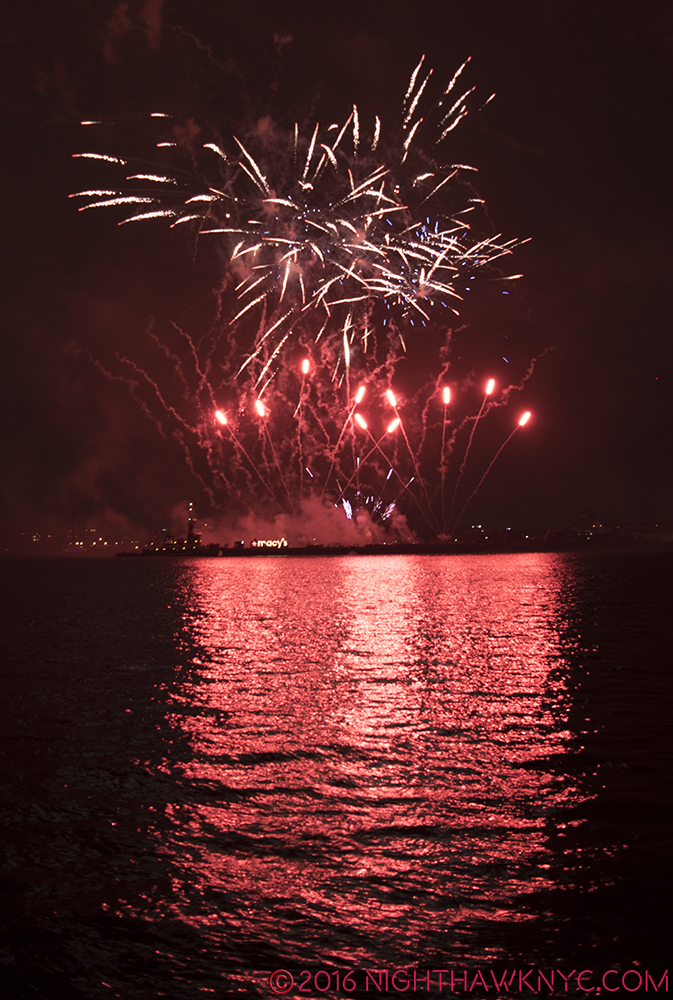
CHEERS! Fourth of July Fireworks, 2016, East River, NYC

First, and last, THANK YOU! one and all for taking the time to stop in and read what I’ve written this past year! Thank you, especially, to Lana, who pushed me and pushed me until I started this Blog. I hope you’re happy now! I appreciate all the comments, corrections, suggestions and emails I’ve received very much as well. After all? Without you? I’m talking to myself. And, frankly, I get tired of doing that.

Looking back, this Blog has been quite a bit more work than I anticipated (though Magda tried to warn me), which surprises me because I’ve done this before- This is my 4th Blog (the other 3 are past tense).

"That shape is my shade, there where I used to stand." Steely Dan, from "Deacon Blues" quoted in my first post. The Nighthawk- hard at work.

“That shape is my shade, there where I used to stand.” Steely Dan, from “Deacon Blues” quoted in my first post. Hard at Work at “Nasreen Mohamedi,” The Met Breuer.

One post required 100 versions before I was happy enough with it to put it up, and a few others have been revised over 80 times prior. Believe it or not, NighthawkNYC has become close to a full time pursuit at this point. That wasn’t part of my initial plan for it, so how did this happen?

“Woke up, fell out of bed
Dragged a comb across my head
Found my way downstairs and drank a cup
And looking up I noticed I was late
Found my coat and grabbed my hat
Made the bus in seconds flat
Somebody spoke and I went into a dream”*

While I’ve spent quite a bit of time looking at Art these past 15 years especially, I spent triple that time this past year. I should reiterate that while I usually do quite a bit of research on whatever topic or show I’m writing about,

This shot was not staged.

This shot was not staged. Don’t try this at home, lest your house looks like mine.

I don’t read what anyone else has said about the show, sometimes even after I’ve finished writing about it. I’m aware that many writers see a show once, maybe twice and write about it. Most of them have deadlines to meet. I’m lucky. I don’t. I can spend as long as I need until I feel happy with a piece (My Post on the New Whitney Museum has been over a year in the works. I just hope I finish it before they go and build a newer one!) As I’ve hinted, I have a habit of basically moving in at a show I’m taken with. I’ve hit a dozen visits a number of times and this is for a show that may run 8-12 weeks. My thanks to all the security guards and employees who were at first like, “Him? Again??”, of these shows I’ve haunted. I like to “live” with the work so to speak and this is the only way I’ll ever be able to do that. Also, most good sized shows contain 100 to 200 works. They take time to study on any than a more than cursory level. Let’s face it, Good Art doesn’t yield all of it’s secrets in one viewing. And I, for one, especially value Art that says something different to me, or that I see something else (or new) in it with each viewing. IMHO, THAT is the Art you want to hang on your wall! Be it an original, for which we should all be so lucky, especially at today’s record prices, or a reproduction.

DSC_4150NEFPNH

As far as your mail goes, my Music Posts consistently generate more of it than my Art Posts, something that caught me by surprise, especially given the record numbers of people going to see Art. My Post on Patti Smith’s show “18 Stations” garnered the most interest. (Meeting Patti Smith, The Met’s Sheena Wagstaff, Artist Richard Estes, and others, were unexpected personal highlights of this past year. Another reason to ALWAYS have a camera on you.) I also got suggestions of shows or topics. While I always appreciate suggestions, it’s harder to answer if I will or won’t write about them. A certain amount of what I write about is dependent on the reaction I have to it. Most of the shows I see, frankly, leave me cold, and so you will never see them here. So, a show, musician, etc. that hits me and really speaks to me is where I begin. Yes, there have been other things besides Art & Music, here, too. What I call “Life.” They will continue. Along with “Life,” unfortunately, there have been WAY too many R.I.P. Posts this year, something I hope we are finished with for a long time. Beyond all of this, yes, there is a lot of freedom in being able to address people and/or things that I’d like to be able to talk about that I feel strongly need to be heard or seen. Ahhhh…such are the joys of paying all the bills, and having total freedom, even down to, finally, being your own editor. Also, it seems there is ALWAYS something unexpected going on that pulls me in it’s direction. Well? This is why I live in NYC, after all, right? Still, I am going to make a conscious effort to address Artists & Musicians I’ve been lucky enough to know, as well as more overlooked Artists (when I say Artists, I mean The “Arts,” not only the visual Arts, that are within my interest and experience). We shall see if the world of NYC Culture allows me to do that, or not. (I say this knowing that Moma is planning a B I G 2017.)

It goes without saying to anyone at all familiar with NYC that NO ONE could ever hope to see, hear or experience EVERYTHING that goes on here, even after so many irreplaceable cultural venues (especially live music clubs) have been lost over the past 20 years. Still? Even today, if I did nothing else but constantly go from one thing to the next, slept on the subway and buses and ate on the go 24/7, and wrote and shot this on my iPhone, It would still be impossible. It’s literally going on here from 9am until 4am seven days a week, at points in all 5 Boroughs, and beyond. Even if I were only to focus on The Met, which now also includes The Met Breuer, as well as the Cloisters way uptown (which I could get to via mass transit if I needed to, but it’s really a half-day trip all told), and focused on all their shows (about 25-30 at any given time), their concerts, lectures, special events, and on and on…it would be close to impossible for me. So? I have to be selective and choose things that speak to me and that I think more people should know about, or already have an interest in, and that I have some connection with, if possible. All of that being said, I have no immediate plans to leave Manhattan. Crazy, right? (Yes, I will probably hit Brooklyn, again at some point to be determined.) But leave the City? I’ll never say never- I almost went to Amsterdam for “Late Rembrandt,” and had a thought of going to Holland for the Jheronimus Bosch 500th Anniversary Show. But, after all the thinking about it, I realized that I am not a fan of travel. My life’s dream was to live in Manhattan and even though I know the world is full of great Art and Music, I’m content staying right here. Heck, It bugs me more that I still miss great things going on right here every single year!

On the other hand? We shall see how long this goes before I run out of things to say, or things to photograph. Hopefully, that won’t happen soon.

DSC_4116PNEFPNH

July 4, 2016 Fireworks Photos taken at Kitty’s Party. Thanks, Kitty, for the Party & your support!

And now for some news for Year 2-

I have been photographing Musicians since the 1970’s, including quite a few all-time greats, and recently I have begun looking through those shots and finding out that some have survived, and some have not. I stored most of my early digital photos from 1998-2000 on removable media- remember Zip and Syquest Drives?- that have since became obsolete, and so the cartridges they were on wound up in recycling because I no longer had any way to read them! The lesson in that is that no computer file format is likely to last for long, so be careful how you store your files less this happens to you. Some of my photos taken on film have been found, so I’m hoping I can share some “vintage” photos as time goes on, in addition to digital shots taken recently. Beyond this, progress is being made towards the re-release of my music projects. I hope to have more news on this, too, soon.

In the meantime, please keep those comments, suggestions, feedback, and especically, those propositions coming! As those who have written to me know- you’ll hear back from me.

And, again, Thanks for reading this, or anything I’ve Posted here.

“I saw a film today oh boy
The English army had just won the war
A crowd of people turned away
But I just had to look
Having read the book
I’d love to turn you on”*

Have a great Night,
Kenn.

cropped-cropped-NH-Banner-V2.0-FullPFINAL-1.jpg

NighthawkNYC Version 2.0, with my alter ego, “Oof.”

*-Soundtrack for this Post is “A Day In The Life,” by John Lennon & Paul McCartney, from  The Beatles “Sgt. Pepper’s,” published by Sony/ATV Music Publishing, LLC, Universal Music Publishing Group.

NighthawkNYC.com has been entirely self-funded & ad-free for over 8 years, during which 300 full-length pieces have been published! If you’ve found it worthwhile, PLEASE donate to allow me to continue below. Thank you, Kenn.

You can also support it by buying Art, Art & Photography books, and Music from my collection! Art & Books may be found here. Music here and here.

Written & photographed by Kenn Sava for nighthawknyc.com unless otherwise credited. To send comments, thoughts, feedback or propositions click here. Click the white box on the upper right for the archives or to search them. Subscribe to be notified of new Posts below. Your information will be used for no other purpose.
Edgar Degas: Beauty & Anarchy

“I saw you standing there
I saw your long, saw your long hair
Opened up my eyes, baby
You made me realize all I want to do now
Is look at you”*

Edgar Degas (1834-1917) didn’t see the world as you or I do. Many of us can’t see beyond the phones in our face to really see most of what is right in front of us (watch out for that bike), and remember even less of it. Not Degas.

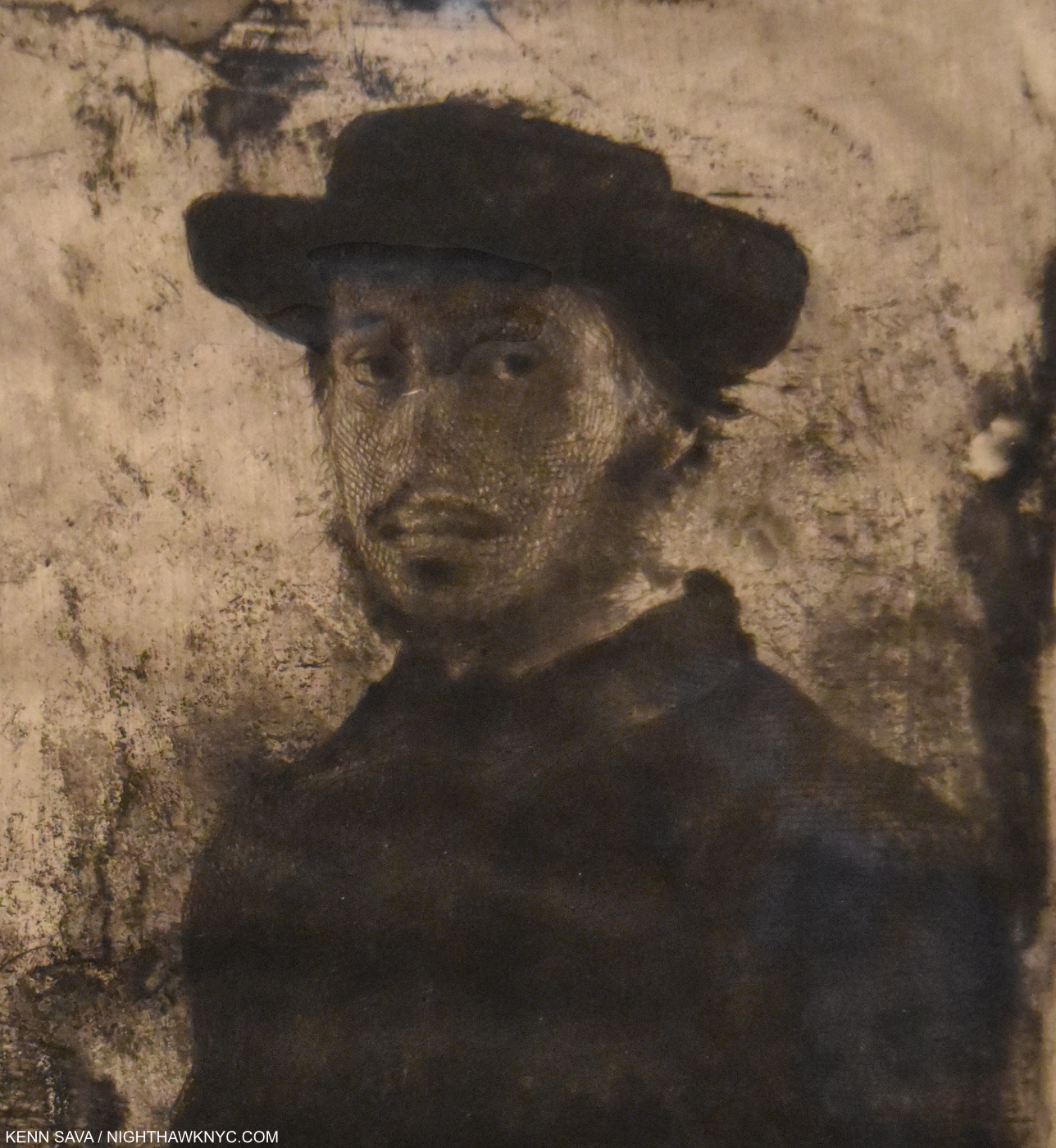
I see you. Self Portrait, Etching and drypoint, 1857, aged 23.

Edgar Degas, seemingly, saw everything. Especially when it came to women. He even saw things that I’m not sure were intended to be seen let alone depicted. For that reason, I’ve considered him the “king of the hidden moment.” Some of those moments he chose to remember, and immortalize, were scandalous when he first exhibited them. 125 year later, they may still give us pause. He was a voyeur in the original sense of the word. meaning “one who looks,” but I am sometimes left to wonder if he was in the contemporary sense, as well- a “peeping tom.” Yet, he does it in ways that we can’t take our own eyes off of, “blinding us with science”- his talent and genius.

I see you, too.

I see you, too. Perhaps, only Degas would think of immortalizing this awkward moment. But, why? (Pastels applied to a Monotype, the core medium of MoMA’s show.)

He, thereby, makes us complicit after the fact in his voyeurism. Before the fact, the question is there to be asked- Why this moment? While I choose to respect the privacy he long sought and stay away from looking into the reasons he felt “the artist must live alone” (which he was his whole life) for insights to his work, I have come to blame it on that eye that never closes, and that sees all. While we admire his work, rightly among the greats, there are times when I wonder if having that switch in his brain that said, “Um? No.” might have been a good thing- once in a while.

It’s too late now. No one who owns one of those “questionable subjects” Degas depicted is relegating it to the trash bin. Most of them are in museums, or most likely will be one day. At the moment, 120 of Degas’s works are on view in Degas: A Different Beauty, the summer blockbuster at MoMA though July 24, a show centered around his rarely seen Monotypes, which are usually tucked away because many are too light sensitive for permanent display. Still they are Degas, and the more Degas I see, regardless of the medium he’s using, the more I’m struck by the moments he chooses. Of course, beyond “why?” there’s the “what does the work mean” question.

But, let’s back up. First…what’s a Monotype?

It’s a medium that combines drawing and printmaking that results in a one-of-a-kind work, hence “mono.” It’s created either by adding ink to a copper plate with a brush, or almost anything else, which is called the “Light Field” kind of Monotype, or selectively removing ink from the plate covered with it, again using a brush, etc., which is called the “Dark Field” kind of Monotype. The plate is sandwiched with a sheet a paper and then run through a press resulting in a print. Degas, of course, did both kinds, but as the show wonderfully shows us, he didn’t stop there.

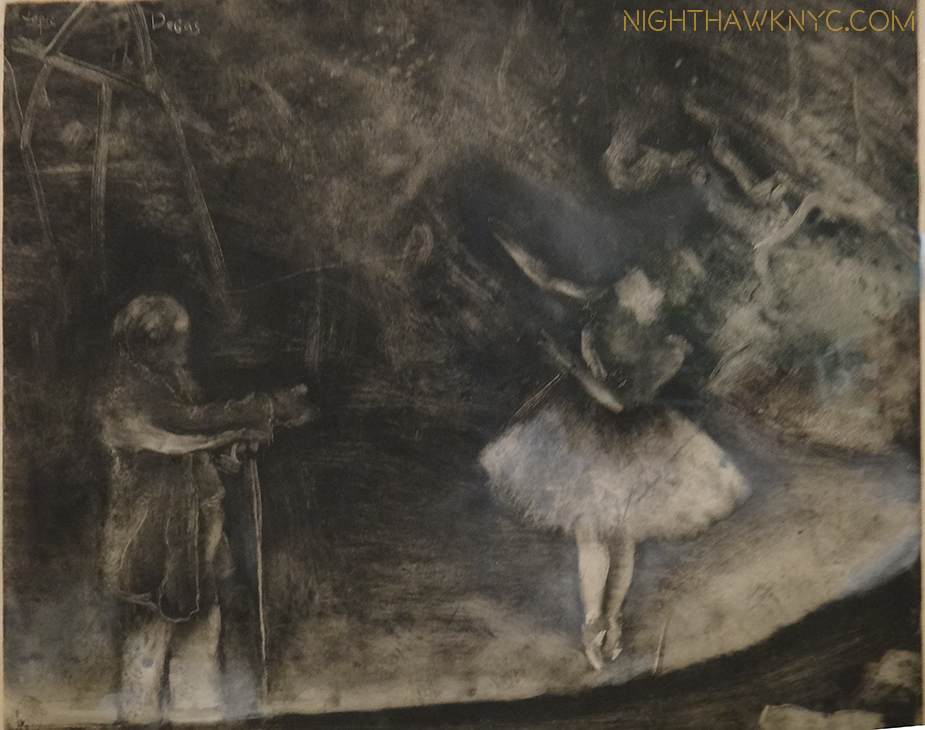
One of Degas' first Monotypes- Dark Field.

One of Degass’s first Monotypes- The Ballet Master, Dark Field Monotype, 1876.

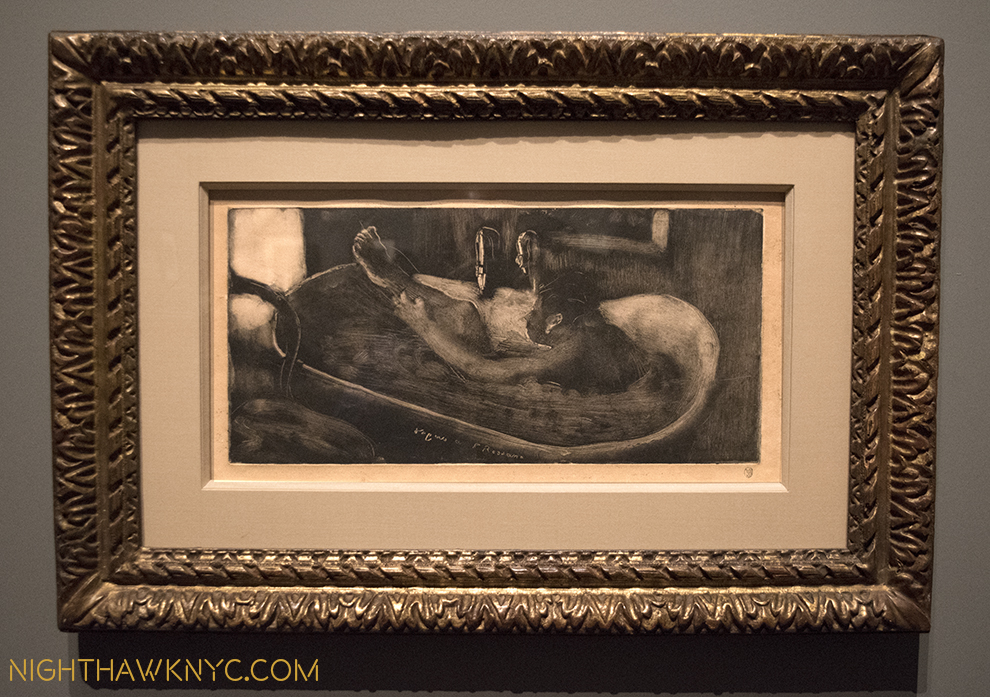
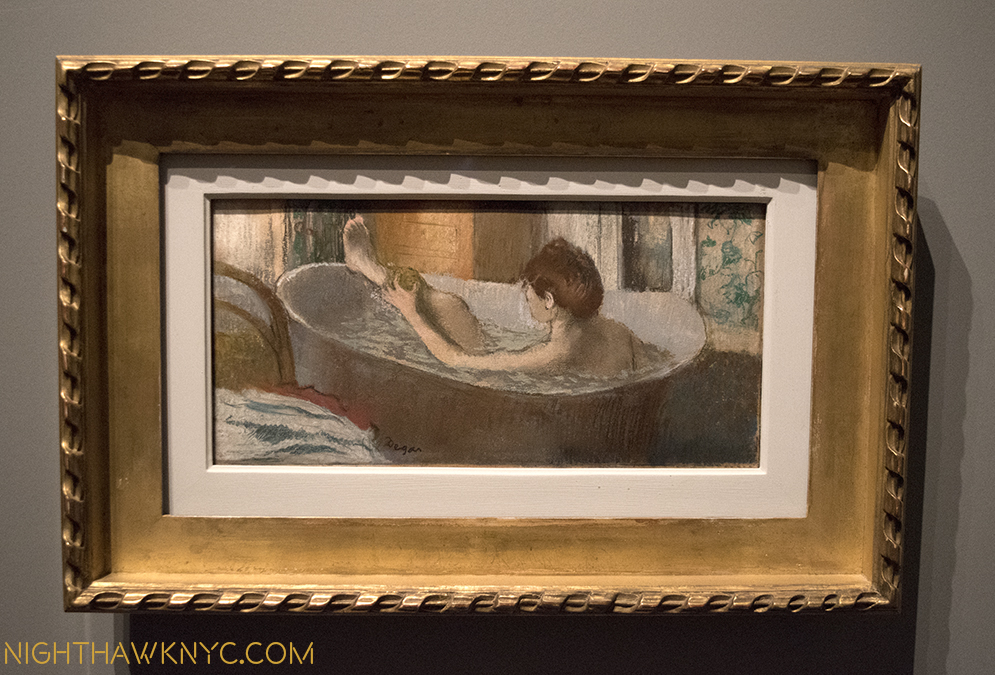
In addition to this  never closing eye, Degas had an incessantly exploratory nature and they combined in an eternally restless Artist, one who was, also, constantly searching for new outlets for his creativity. That led him to the Monotype, an infrequently seen medium in Art, at the suggestion of his friend, the Artist and Monotypist Ludovic Napoleon Lepic in the mid 1870’s. Later, it would lead him to Photography (1895). Degas threw himself into the Monotype with typical intensity. He learned the basics, and then pushed them. Soon, he was doing things like making a second print from the plate, which would naturally be faded as the image degrades after most of the ink had been spent on that first impression, to which he’d add Pastels on top of the black and white image creating shockingly “different” works from the two tone original. Some of these colored images are beautifully displayed side by side with the black & white first image, the pair are called “Cognates.”

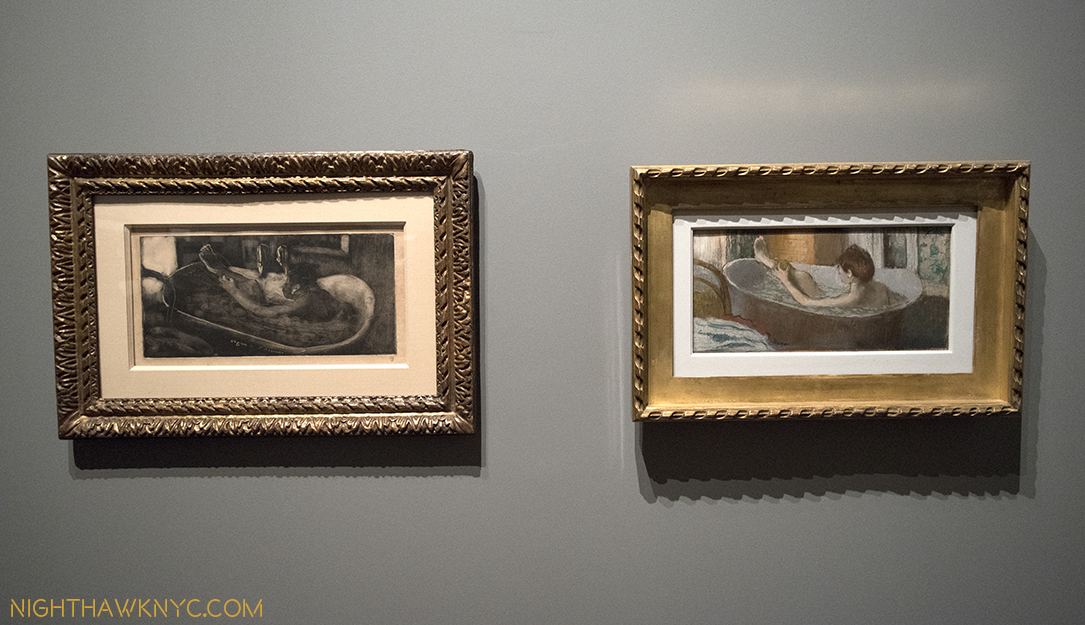
Cognates

Cognates. “Woman in a Bathtub Sponging Her Leg” 1880-85. Monotype, and with pastels (right).

But, be warned- this isn’t “Degas 101,” or “Degas’s Greatest Hits.” It’s not even “Degas’s B-Sides”. It’s borderline “The Unknown Degas” (for the casual Degas lover), but that certainly doesn’t mean it’s “bottom of the barrel” Degas (whatever that is. If it exists, I’ll take it!). It means there is so much great Degas that little known works like his Monotypes can hold their own front and center in a big show, even without support from the inclusion of some much more famous paintings 1 But let’s not let the medium be the message here. For me, at least, it’s “still” Degas. What one sees in his paintings, pastels, sculptures and etchings, is also to be seen in his Monotypes. All his “big themes” are here, showing they never were far from his mind, regardless of medium, and giving the casual Degas fan plenty to enjoy, while they see something new. They include-

Beauty. In ANY sense of the word.

Beauty. In ANY sense of the word. Pastel over Monotype.

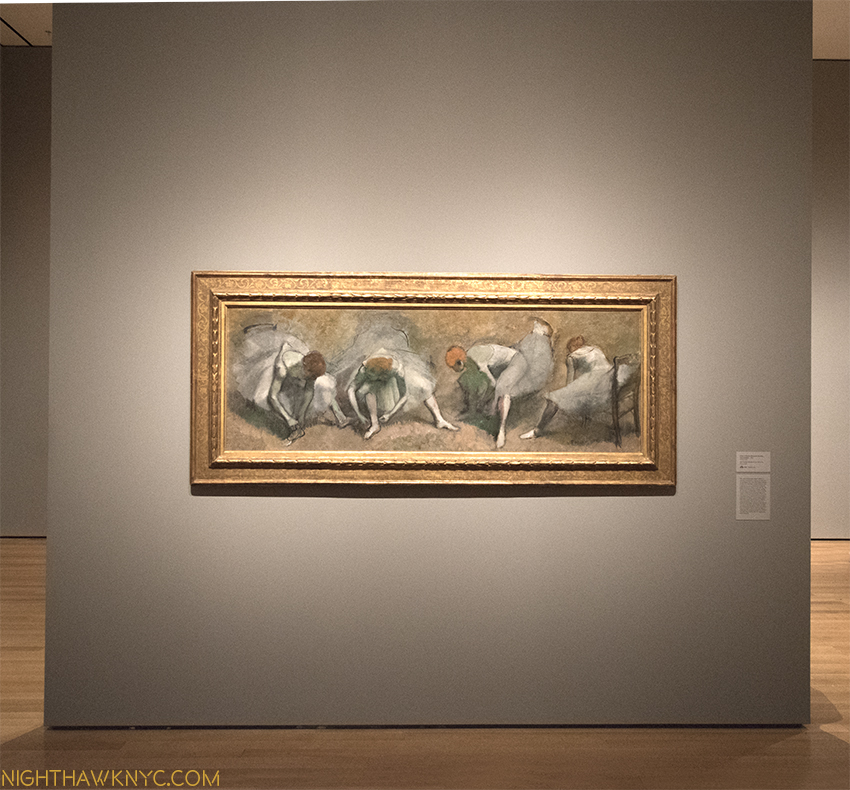
Ballet Dancers

Bathers

Portraits, and even a Self Portrait or two

Family life

Night Life and City Scenes

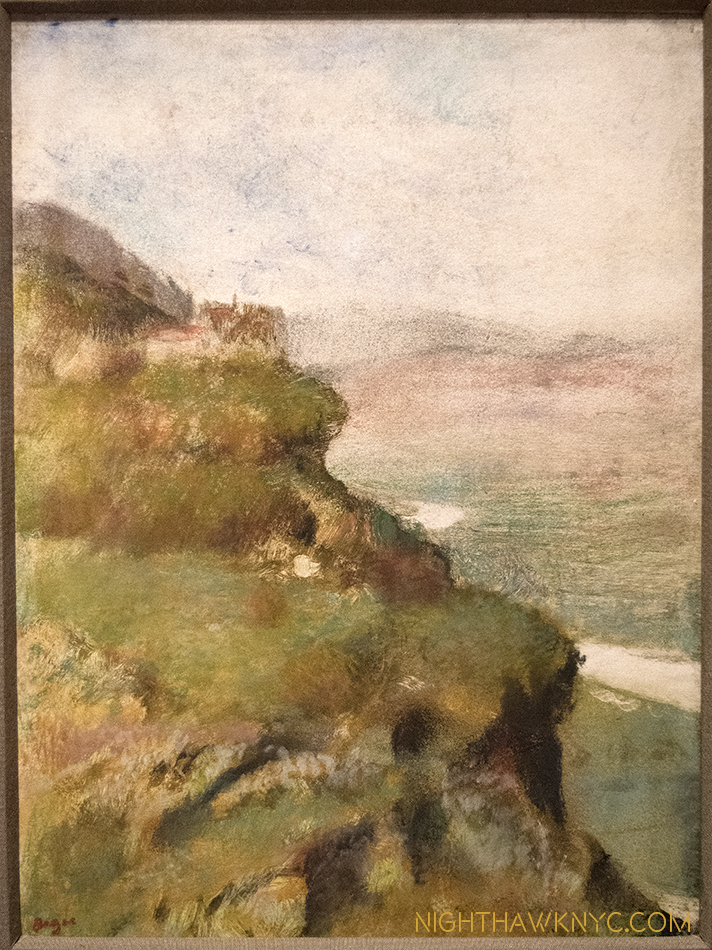
Yes. This is a Landscape by Degas, Pastel over Monotype in Oil, 1890

Yes. This is a Landscape by Degas. Pastel over Monotype in Oil, 1890

And? There are also landscapes, something that most Degasians may not be as familiar with2. A whole room of them that Degas called “imaginary landscapes,” inspired by a trip through Burgundy in 1890. They are shockingly different for Degas, who, much like me, preferred the City and found no end of inspiration therein, anticipating the edgy, quasi-abstract late work of Monet (i.e. the Waterlilies, etc) some 20 years later, and the Abstractionists over the rest of the 20th Century.

Oh.

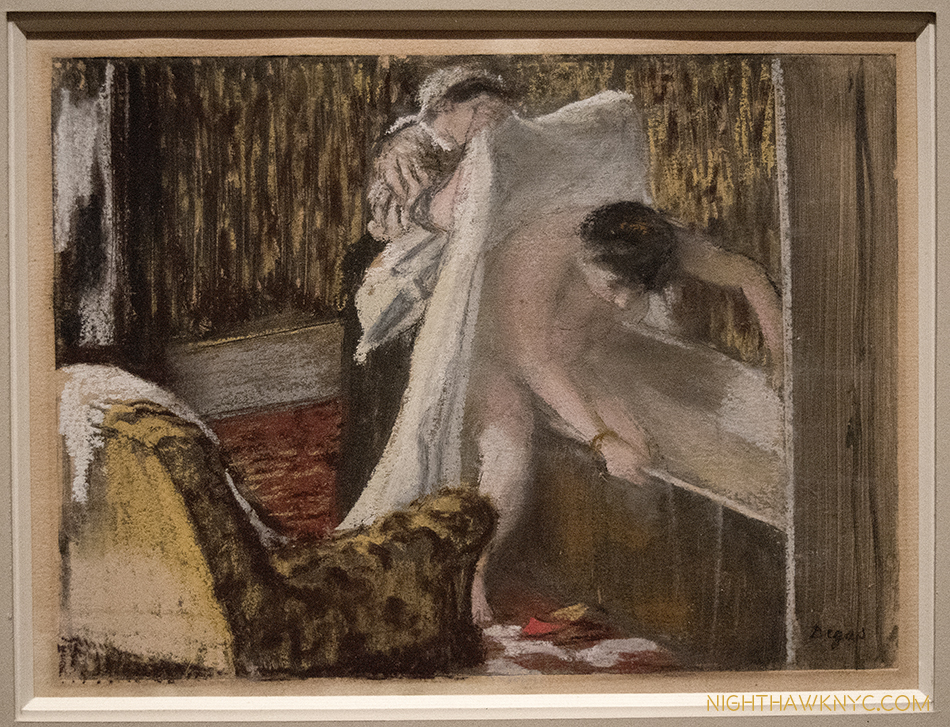
I left out the Brothel Scenes. Well? That’s what the section card says they are. They sure don’t look like scenes from any brothel I’ve ever heard about. (Sorry. I cant’ say I’ve actually been in one, so I’m speaking third-hand.) Of all of these, the Brothel Scenes strike me as being the most intimate, especially because the Bathers are almost uniformly very dark works, where much is hidden in shadow or under water. The Bather rising from her tub, above, is in the Brothel section, and is typical of how well lit these scenes are. Which is good because it also serves to highlight some of the questionable scenes in this section, like the image of a woman either about to use a bidet or rising from one. ?

Then again, it also means there are those priceless moments of ballet dancers and ballet students caught unawares in beautiful, unique poses. Families doing the most mundane of things line one wall, while “everyday scenes” of a different nature abut them in an adjoining wall of brothel scenes. The bathers get the privacy of a room to themselves, as do the landscapes, and the dancers are pretty much everywhere else. Along the way, we see two Self Portraits (one, above), a series of Rembrandtian etching “states” and a somewhat odd scene of smoke stacks, looking somewhat lost, on a wall by itself, heightening it’s “out of place here” feeling.

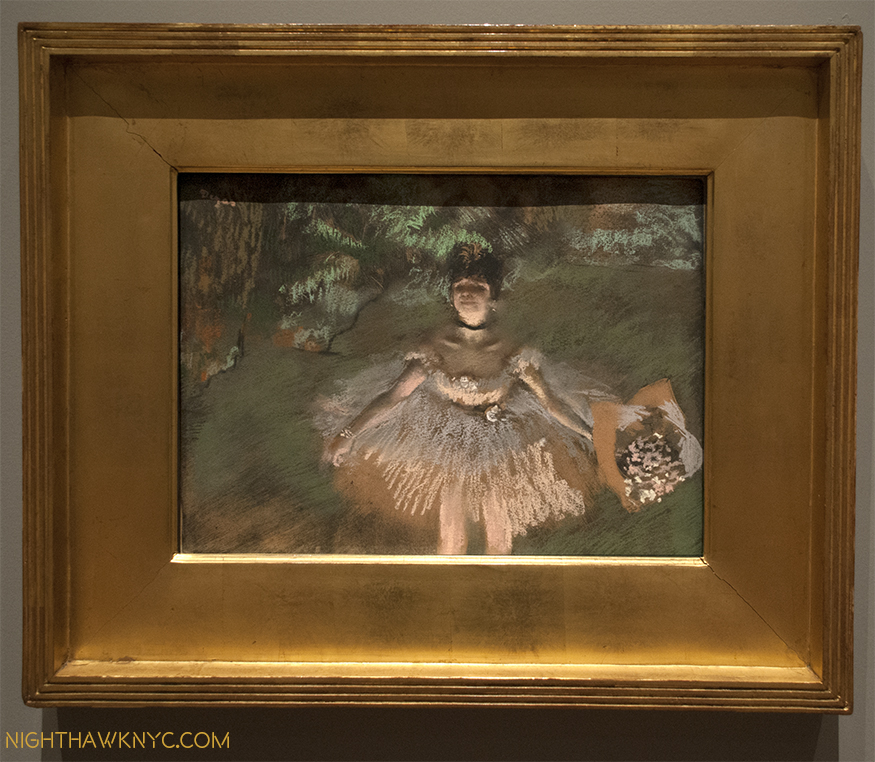
The “Greatest Hits” collection of Degas themes notwithstanding, there is much to see here, and much that requires close scrutiny. The gorgeous strokes of pastels that seem to have been applied at once both spontaneously and effortlessly, all the while, sublimely, particularly struck me. It’s also fascinating to see how he’ll take a black and white monotype and colorize it. Having the very rare opportunity to see both, side by side is, for me, one of the highlights of this show- The effect is not like seeing a colorized black and white movie. Degas makes it something completely else. As a result, I was quite surprised to see him quoted on a sign to the effect that if it were up to him, he’d work only in black and white, but the public wants color. I, for one, am thankful we have both. While I would never dare to argue his preferences, I also have to say- What a loss to the world it would have been had he never worked in color! I came away with a new appreciation of Degas, the colorist, both in how he applies color to a given composition, (which can be quite bold, like a lightning bolt, as in the dancer, above, but also for his palette. If you get to see this show, or the very good catalog for it, be sure to look for these instances where you can see the Cognates, so you can make up your own mind. Here is one-

Bather. Monotype. First impression.

Bather. Monotype. First impression. A closer view of the Cognates, above.

Bather. Pastel over Monotype. (Second impression)

Bather. Pastel over Monotype. (Second impression)

Then there’s the question of meaning…

“…what is fermenting in that head is frightening.” Rene Degas (his brother), in a letter, April, 1864.3

Degas does not surrender his secrets easily. Anyone who has seen his early masterpiece, Interior, 1868-9, can attest to the mystery his works hold. Some see a rape in it, others see the depiction of a scene in Zola’s then recently published Madeleine Ferat. Personally? Having seen it in Philadelphia first hand, I see different things in it each time I see it, even now in pictures. Beyond its “meaning,” more importantly, right now, I see it as a precursor of Edward Hopper. It’s a classic example of what Jean Sutherland Boggs, in the catalog for a much earlier show at The Met, succinctly says- “The longer one reflects on the work of Edgar Degas, the more elusive it seems.” She continues, however, throwing us a lifeline of insight “…some key to the work, if not necessarily to the man, may be found in his fascination with equilibrium[ 4. Degas 1834-1917, Metropolitan Museum, 1988,  p. 23].” And, yes, beyond the voyeurism, which may take some time to see past, we do see that in the bathing piece above. Though it’s not to be seen in the physical sense in all his work (though it may be on the psychologoclgical sense) it becomes fascinating to look for- The dancers on one foot or bent over, or at the barre, and on and on. Degas is fascinated by man’s relationship to the ground, the earth, and with equilibrium.

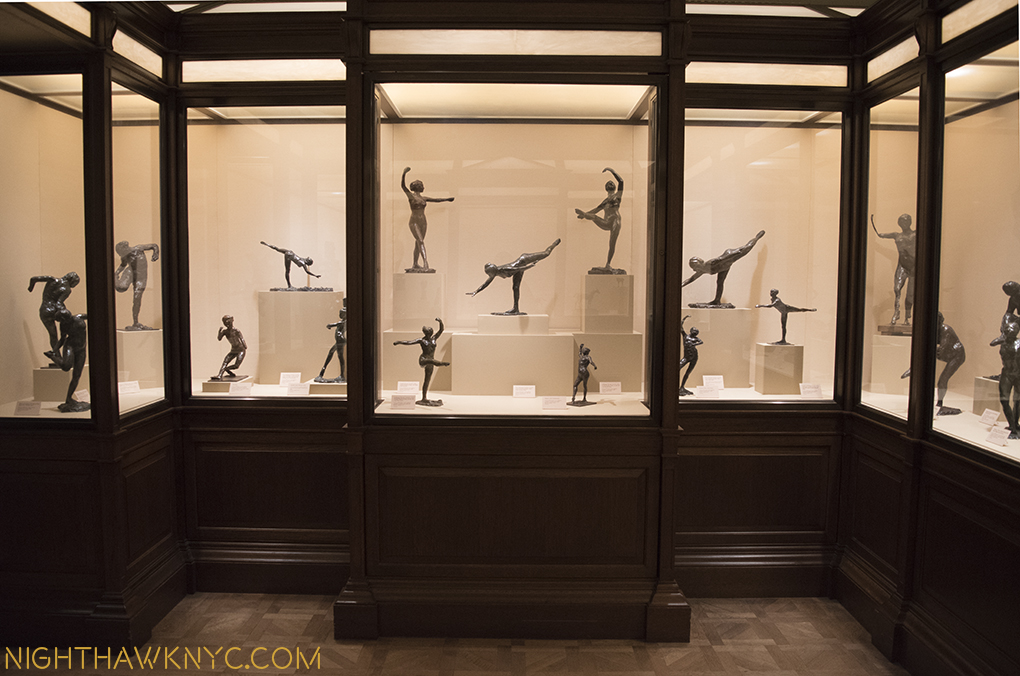
DSC_2564PNH

The Met's Degas Sculpture Room. Notice that every single work depicts balance & equilibrium.

To research this further, I went to The Met’s Degas Sculpture Room. Notice how every single work depicts balance & equilibrium.

“Degas is an anarchist. But, in Art.” Camille Pissarro (Artist/Anarchist/Friend of Degas), in a letter.

This show is risky. Degas was exploring in his monotypes. The “beauty” on hand is sometimes “different,” in the sense that it’s, at times, not the beauty Degas is most revered for and that the masses of Art lovers, myself included, associate him with.

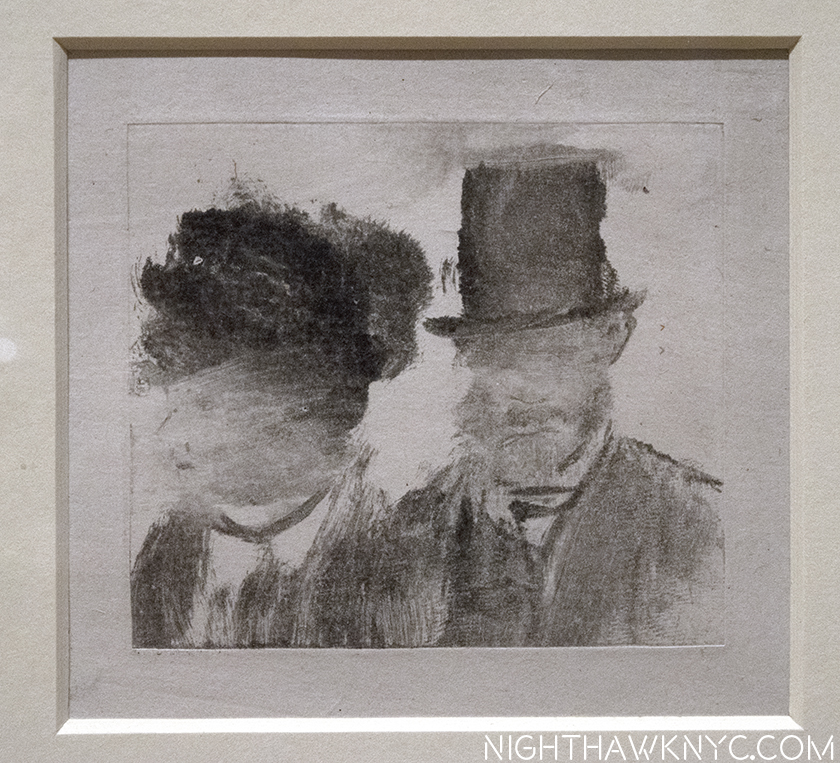
One of the most puzzling and "different" Degas I've yet seen. Monotype.

One of the most haunting, and “different,” Degas I’ve yet seen. Monotype.

It seems to me that when “looking for meaning” or trying to reconcile all of this, it pays to look back at Degas’s past. Degas didn’t start out a revolutionary. His early work showed “the classical beginnings, without any gesture of revolt4”  It was in the 1860’s that this would change. His anarchy lies in subverting the past/his past while he reinvents it, and seeks to add to or change his own working processes. Degas spent long hours copying in the Louvre and then in Italy for 3 years. Among the works he copied were an etching after a Michelangelo original of a man scrambling over a riverbank, i.e. climbing out of the water. Once you look for it, this image of a nude entering, or leaving, the water is one that reappears in his work- there’s a gorgeous pastel of one at The Met, here. Therefore, I think the image of the Bather Exiting the Bathtub, way up above, is, partially, another example of that interest, partially due to his interest in “equilibrium,” and partly sensual/erotic. It’s taking the classical idea of Michelangelo and turning it on its head, as an anarchist would be expected to do.

Anarchist Degas then shocked society in 1888 when he showed his nude drawings in an exhibition arranged by no less than Theo van Gogh, Vincent van Gogh’s brother. Vincent van Gogh was quite taken with Degas and was one of the few Artists around capable of understanding, and admiring, his isolation and celibacy. His comments on Degas & women in his Art are fascinating. Up until Degas, the nude was something drawn from models, who were aware of what was taking place and were party to it, even if they were depicted at their “toilette”, which goes back to the 1500’s in Art. With Degas you often have the feeling that neither of these “norms” were true, leaving us with that sense of looking through a door that has been cracked open. I haven’t been able to find out what the subjects thought of these works. Voyeur? Rule breaking visual anarchist? Though he, apparently, lived a sexless life, Degas created his fantasies in his Art (for what purpose I know not), and a number of them are on view here. He created them for himself, only showing the 9 he allowed Theo to exhibit in 1888 during his lifetime, and he kept them until he died. Why? I don’t know and I don’t think it matters. They subsequently came into Museums and private collections when his estate was sold after his death in 1918.

It speaks volume that he was so willing to continue to explore when he had discovered things, like the paintings of dancers, he could have continued to do forever and receive endless acclaim for. It takes a little bit of that same faith to follow him on his exploratory path to get to the gems that are not often seen due to their fragility. They are here, though the show includes works that are not. Some may be characterized as experiments, while others are byproducts of Degas’s refining his process. They are all Degas, though, and as such are precious, edifying and definitely worth seeing. MoMA is to be congratulated for taking the chance of going against the grain of what people know and expect from a Degas show, and for doing it without the “crutch” of including a number of their own very familiar paintings. Here we have Degas the artist who was restlessly exploring new mediums and new techniques, while adding his own steps to the processes he had been taught by others. In that sense, Degas: A Different Beauty is a fascinating insight into the mind of one of the greatest Artists of the past 150 years.

“When it happened
Something snapped inside
Made me want to hide
All alone on my own
All alone on my own”*

For me, this makes Degas a prototypical “Modern Artist” in every sense of the term, as much as anyone working today. Degas would be right at home in our time, with the expanded capabilities Artists have, pushing the possibilities of Photoshop, the iPad, video, or you name it, as he would have been at home, most likely, at ANY time in history. In that sense, like his great influence and forbearer, Rembrandt, and a great Artist he influenced, Picasso, Edgar Degas was an eternally “Modern Artist.”

*- Soundtrack for this Post is “Looking At You” by the MC5, written by Tom Robinson from their Lp Back In the USA. Published by Sony/ATV Music Publishing and Warner Chappell Music Inc. Degas’s brother lived “back in the USA” and Degas actually spent fruitful time in New Orleans in 1872.

NighthawkNYC.com has been entirely self-funded & ad-free for over 8 years, during which 300 full-length pieces have been published! If you’ve found it worthwhile, PLEASE donate to allow me to continue below. Thank you, Kenn.

You can also support it by buying Art, Art & Photography books, and Music from my collection! Art & Books may be found here. Music here and here.

Written & photographed by Kenn Sava for nighthawknyc.com unless otherwise credited. To send comments, thoughts, feedback or propositions click here. Click the white box on the upper right for the archives or to search them. Subscribe to be notified of new Posts below. Your information will be used for no other purpose.
  1. There are 7 Oil on canvas Paintings and 1 Oil on paper mounted on canvas, mostly in the show’s final room, but none are among his famous works.
  2. The Met had a show of Degas’s Landscapes in 1993.
  3. “Degas 1834-1917,” Metropolitan Museum, 1988, p.41
  4. Degas 1834-1917, Metropolitan Museum, 1988, p. 34

Jacob Collier- “I Don’t Want To Be A Saviour”

This site is Free & Ad-Free! If you find this piece worthwhile, please donate via PayPal to support it & independent Art writing. You can also support it by buying Art & books! Details at the end. Thank you.

Written & Photographed by Kenn Sava (*- unless otherwise credited)

There I was, this past Saturday, minding my own business, fresh from another visit to Degas at MoMA (here), braving the crowds at Summer Stage in Central Park on a gorgeous afternoon waiting to hear what would turn out to be an absolutely incendiary performance by Kamasi Washington & The Next Step, working my way ever so slowly towards the front of the throng, over 2 and a half hours, until I was 5 from the stage, when this kid came out to do the opening act.

By himself.

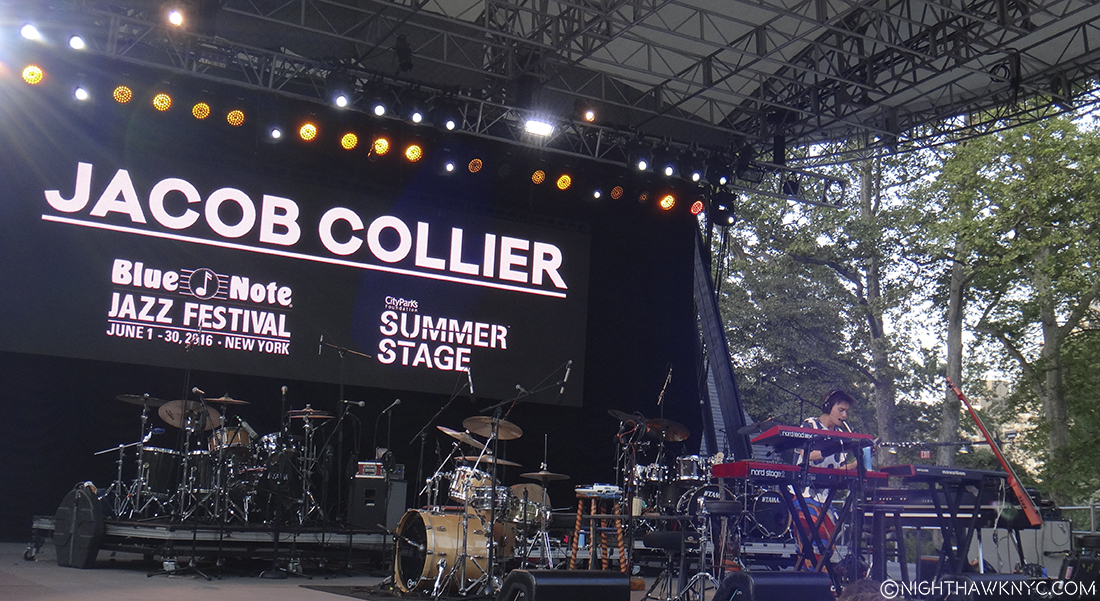
DSC_3296PNH

Uh oh.

I’d been thinking to myself that I felt sorry for anyone who got the opening gig slot ahead of Kamasi Washington, here in Central Park of all places. What it must feel like to be out there knowing that a mountain, this force of nature, this new movement of talent called the “West Coast Get Down” is about to fall on you, and probably obliterate every sign of you having been there. After all, when was the last time a group of very talented Musicians came out of the same place at the same time? “I just got off a plane from London,” he said, rocking “bedhead” hair. Oh, I know how taking that trip feels. My heart sank. Maybe I should turn around and watch for incoming bottles, like I had to do for the 6 hours of opening acts the crowd hated before The Clash at Bond’s Casino back in the day. I decided to settle in and give the kid some slack. What the heck. It was such a lovely early evening.

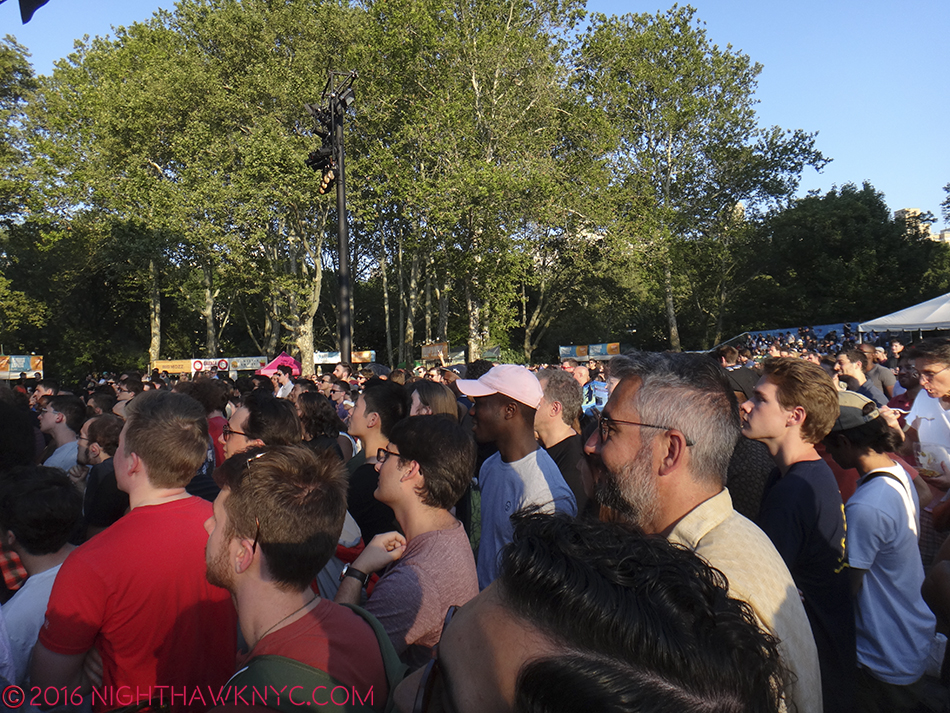
Hmmm....Crowd seems pretty peaceful...so far.

Hmmm….My fellow “Kamasi-ites” seem pretty peaceful…so far.

One hour later, this kid- Jacob Collier, left me thinking that he might very well be THE most talented young Musician on Earth.

“Hole on there, Nighthawk. Have you met EVERYONE on Earth, Mr. NightOwl?”

“Yes.”

“How is that possible when you never leave Manhattan?”

“Because sooner or later? They all come here.”

Jacob Collier is S I C K. And, not as in jet-lagged sick. Check this out-

On this new song, “Saviour,” he sings & plays everything. The video was filmed in ONE take, using 6 projectors.

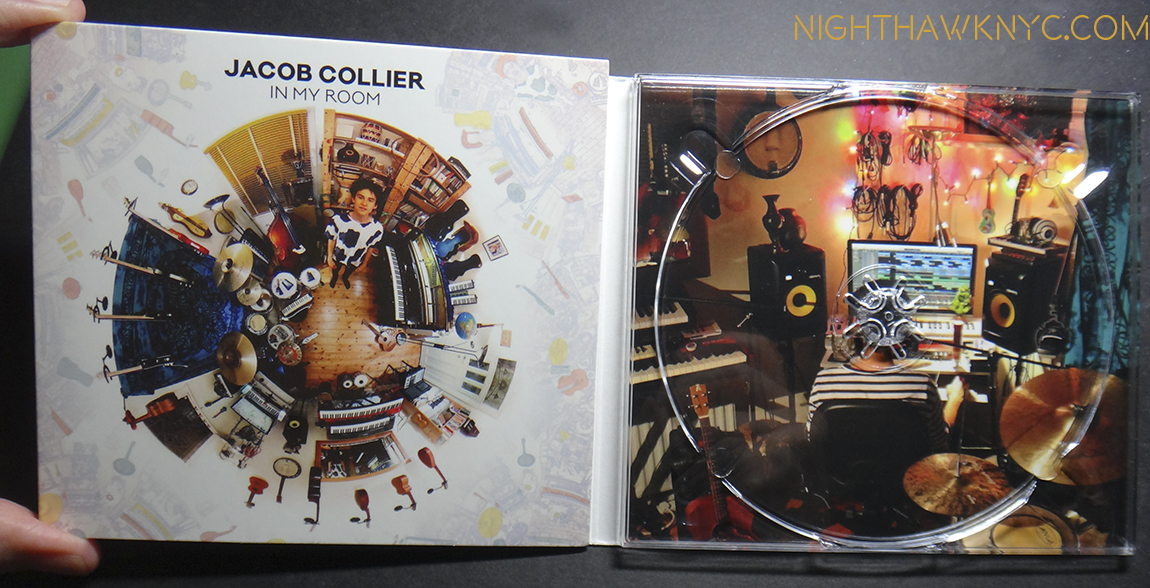
Ok. Let’s start at the beginning. He’s got this keyboard that’s not a keyboard like any you or I have ever heard- the “Novation” he’s playing in the photo, above. An invention from this guy, Ben Bloomberg, (who he introduced. He was there doing his sound in Central Park), at the MIT Media Lab in Boston. As far as I could discern, it harmonizes his voice into the chords that’s he’s playing on it.

And wow. What chords!

No Novation on this- just his actual voices. Not to mention SICK Melodica playing! Oh, and no use of Autotune.

Young Mr. Collier apparently has been studying the hell out of Jazz harmony from Jelly Roll Morton up through Herbie Hancock and Joe Zawinul. He’s got a bit of at the jazz classicist to him, his harmony is never “outside,” or atonal. Rather, he uses extended harmonies, chords that go further than your basic triads, adding tones further and further away from the tonic, or tonal center- hence extended harmony. Musicians have long known that there is “gold in them thar harmonic hills,” in the form of incredibly rich sounds. But, it’s always been something you just don’t hear on the radio outside of on Jazz stations. Maybe now? We will. And, he’s not shy about singing EIGHT part harmony, or more(!), all with only his voice. THAT is unheard of in Jazz, or just about any other kind of Music these days.

Still? I’ll be the last guy to put Mr. Collier in a box. Yes, his Music, and Musicianship, has a lot of Jazz elements to it. It also has R&B elements (Stevie Wonder appears to be a big influence on him judging by how many Stevie classics he’s covered), classical, folk and pop elements, among other things. Heck, being 21 now (18 when he was discovered by Quincy Jones, who signed him to his label and manages him now, on youtube) and covering both rock tunes and the “Flintstones” bring “pop” elements.

Ok, so we’ve got a guy with a keyboard who sings and harmonizes with himself. Then, he’s also a terrific bassist- upright or electric, to the point that he’d  be getting cred right now if that’s “all” he was. Im not comparing them as bassists, though I’ll go as far as saying he’s got a bit of Jaco Pastorius’s swagger, and, apparently, his long fingers. I think Jaco would have liked him, and yes, I met Jaco a number of times, and heard him in person at “The Birthday Concert” among many other times over 8 years. Jacob has the ability to take has vision and realize it on whatever instrument is needed and bring his personality to it at the same time, which no hired sideman could do. He’s a whiz on traditional keyboards from piano through synthesizer, with chops most keyboardists would kill for, a more than good enough drummer and percussionist, he plays some guitar, and lord knows what else. Apparently, Mr. Bloomberg has designed his stage setup, too, so that somehow there are sequencer triggers set up all over the stage so he can go from instrument to instrument, play a few bars on it, then have the sequence played back in a loop, which he then layers, live, all without , seemingly, pressing any buttons. Oh! And he’s one hell of a melodica player. I mean absolutely ridiculous, as you hear, above. There are youtube videos where Musicians are already transcribing his melodica solos so they can learn them.

Here he is live, which is the closest I’ve found to what I experienced in Central Park, shot on someone’s iPhone 6S-

But? As amazing as all of that is? That’s not the point.

Music is the point, and that, above all the rest is what matters. As you can hear above, he’s got a completely unique approach to Music. No matter how outlandish what he’s doing seems, it’s always done in service to the song- he’s really not just showing off.

A completely unique approach?

I think so. What else does that sound like? His vocals may sound like a one-man Take 6 at times, then he’ll surprise you and make a left turn at the drop of a dime. His arranging, which strikes me as one of his strongest suits, is a tiny bit like Quincy Jones (Michael Jackson-era), on steroids. At times he reminds me of Joe Zawinul of Weather Report in terms of the boundaries he pushes. At other times, like a 21st Century Swingle Singers. None of that encapsulates it, of course. He’s taking what’s come before and building on it. Ok, I’ll try this-

Jacob Collier is a phenomenon.

DSC04497PNH

He’s better without a band, IMHO.

Already. And? HIs first album doesn’t come out until July 1. He’s been racking up big numbers on youtube since he was 18, and it’s easy to see why. And if all of this wasn’t enough? He directs and edits some of his own videos (like the one below).

He announced during the show that he had 50 copies of his debut album with him. Of course, I scooped one up. It’s funny how a number of the tunes that got my attention, and that of quite a few others around me, aren’t even on it. Very unusual for an artist with 1 album almost out, and who is all of 21 to boot. I’ve seen many new acts that had to repeat a song if they had to do an encore cause they played everything they knew. (You can watch a live stream of its release, hosted by Quincy Jones, here.)

His about to be released debut. I bet he was born doing just what he's doing on the right.

His about to be released debut. I bet he was born sitting at his workstation, as he’s doing on the right.

I left with the sense that here is, either, an old soul, or the reincarnation of one who had already mastered all of this!

He sings & plays everything on this astounding Quincy Jones/M. Jackson cover, except for Quincy’s cameo, and also filmed & edited it.

Jacob Collier is, already, a state of the Art 21st Century performer, who is on the cutting edge of so much of what it is to be a 21st Century Musician. Scouring the web since Saturday, I’ve come to feel that he’s “better” alone. Yes, he can play with other Musicians, it’s not that. It’s just that his thing by himself is just so unique, so strong, and so amazingly well arranged and constructed, that THAT is the best way to experience him, IMHO. It’s like being in a band with your brothers- no one else has that chemistry he has with himself. Different Musicians have different minds. When he plays everything himself, he knows what he wants. I don’t know what the his career path will be. Whether this means he winds up being a producer, or he can continue to reinvent himself over time, who knows. It will be fascinating to watch. But, for now, this is something unprecedented in Jazz, at least- a one man band. Where he goes from here we all shall see. His album is just him, recorded in his room at home, as its title, “In My Room,” announces. Check it out.

The fact that he’s being associated with Jazz is something I welcome. As I recently said, I’ve been hoping for a bunch of Artists to throw their hat into the ring to be “the Next One.” But? Jacob Collier, as his song, “Saviour,” which I quoted in the title to this Post, says, doesn’t want “to be a saviour.1

“…unless you can tell me something to change my mind,” he adds later.

I’m working on it, Jacob. I’m working on it.

*-Soundtrack for this Post is “In My Room,” by Jacob Collier, from the album of the same name.

NighthawkNYC.com has been entirely self-funded & ad-free for over 8 years, during which 300 full-length pieces have been published! If you’ve found it worthwhile, PLEASE donate to allow me to continue below. Thank you, Kenn.

You can also support it by buying Art, Art & Photography books, and Music from my collection! Art & Books may be found here. Music here and here.

Written & photographed by Kenn Sava for nighthawknyc.com unless otherwise credited. To send comments, thoughts, feedback or propositions click here. Click the white box on the upper right for the archives or to search them. Subscribe to be notified of new Posts below. Your information will be used for no other purpose.
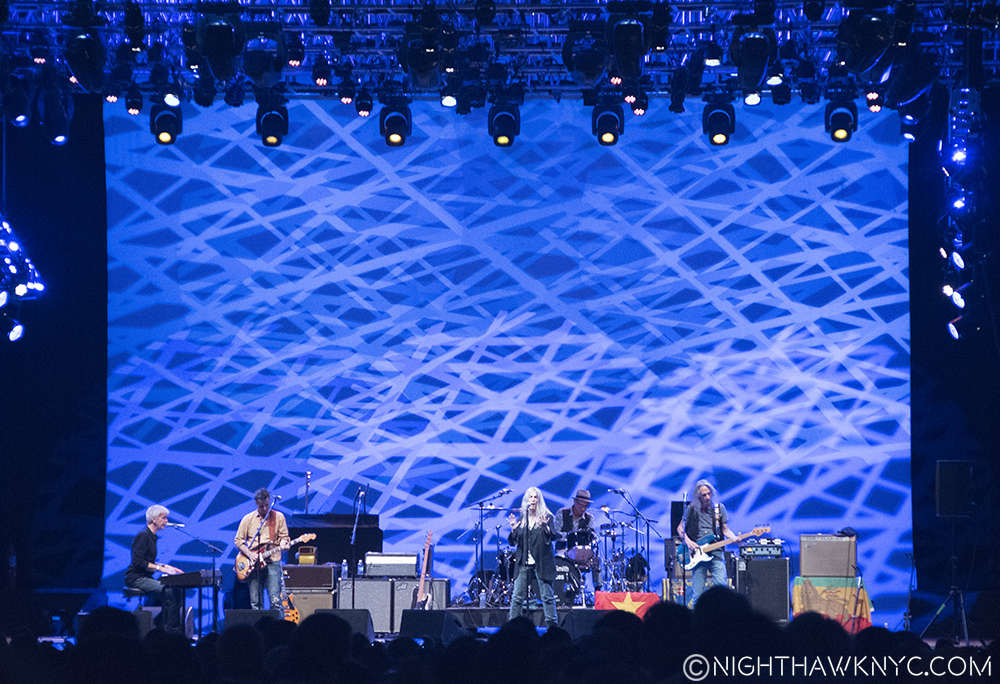
  1. He might be singing “your saviour.” I can’t tell and there are no published lyrics available. It doesn’t matter.

Table For One – Patti Smith’s “18 Stations”

Written & Photographed by Kenn Sava

One of the small pleasures of going to The Strand Bookstore are the quirky, usually ironically humorous yellow signs one of the staff places in random books. This one was sticking out of a just released book one day last October- Patti Smith’s “M Train,” featuring its author looking incognito sitting at a corner table by herself lost in thought…

October 30, 2015. I bought one.

Patti Smith, who many years ago briefly worked one floor down in The Strand’s basement, is a living legend now, but, she’s not stopping there.

From here to… The Strand’s basement. Not one of the 18 Stations. The “Patti Smith section” is now down here.

Beyond her groundbreaking music career, she’s had a second career as an award winning writer of prose, which seems to grow in stature all the time. “M Train,” which she calls “a roadmap to my life,” is both similar, and different, to her previous book, the instant classic “Just Kids.” While also a memoir, like “Just Kids” was centered on her relationship with Robert Mapplethorpe, this time, it’s about her life before, during and after her late husband, Fred “Sonic” Smith, guitarist of the MC5. It differs, too, as her Polaroid photography is a central part of this book. While, she’s been doing photography for years, and books of them have been published, she seems liberated here by not having a brilliant photographer as the co-subject, one she felt a responsibility to, and who’s pictures of her are now classics. Her photos enhance the story and go hand in hand with her imaginative telling of it, which almost feels improvised (she mentions listening to John Coltrane’s 1964 album “Live at Birdland” at one point and that is how her writing here feels to me). The book serves to pique interest in this aspect of her creativity. Now, many of those photos, and others, are on view in her show, “18 Stations,” at Robert Miller Gallery on West 26th Street, through April 16.


3 of the “18 Stations.”

While rock stardom is rare, something few can relate to, along the way, she’s also become something many more can relate to- single, and on her own. The show arranges images from her seemingly never-ending travels from, and returns to her NYC homes, and her beloved Cafe ‘Ino, at 21 Bedford Street in the Village, (spoiler alert), which closes for good near the end of the book. At the figurative and literal “heart” of the show, half way back in the Gallery, in the first “Station,” is an installation of her real table and chair from Cafe ‘Ino (“My portal to where.”) flanked by a bulletin board containing what appears to be the genesis of this show on one wall, and pencilled notes hand written right on the adjacent wall, making me wonder if the show originated during her time there.

Table For One. The wall on the right is covered with her writing in pencil.

“It occurred to me I could preserve the history of ‘Ino…like an engraver etching the 23rd Psalm on the head of a pin.” The iconic first picture in M Train in a unique version with Patti’s pencil inscription in her caligraphic script.

“We seek to stay present, even as the ghosts attempt to draw us away.”

It’s as if the thoughts she was having while sitting there are now real before us, though she is absent.  The other 17 “Stations” tell the story of her journeys, partially with her late husband, “M Train” dedicatee, Fred “Sonic” Smith, but mostly alone.

2 more Stations.

Reading the book, one discovers quite a bit about the “real” Patti Smith- her unquenchable thirst for (good) coffee, her obsession with detective TV shows….which, of course, reminds me of a song. You know…”She’s filing her nails while they’re dragging the lake…”

…her amazing connectedness to her influences to the point of traveling to their homes, gravesites or other memorable places in their lives- like visiting the chess table Bobby Fischer played Boris Spassky for the World Championship in 1972 in Iceland (she then had a late night meeting with Mr. Fishcher, and subsequently visited his grave after he passed the following year). She remembers so many of her dreams! I don’t. She also has a love of birthdates and anniversaries. Along the way, we meet Tolstoy’s Bear, Herman Hesse’s typewriter, Frida Kahlo’s medicine bottles and Schiller’s portal. I mean oval table.

Schiller’s Table. This inscribed version is labelled Schiller’s Portal

If you’re curious about how she works, or how she goes about her daily life, this is the book for you. For the rest of us, its a book about honing in on what really matters to you, about persevering and continuing to do you work and hone your craft. We’re lucky to have it. I found myself wishing we had something similar by Da Vinci, to go along with his Notebooks, or Michelangelo, who left us about 500 letters and possibly ghost wrote a biography of himself, that is frustrating for many reasons, where Patti’s paints a vivid picture. The amount of detail she recalls is staggering (and perhaps a bit too much). Well? I can’t have it both ways, so I’ll opt for too much rather than not enough. It’s interesting to contrast this intense detailing in the prose with her photographs. Some are a bit blurry, some off center or kilter (see below) providing (purposely) less detail than you may want.

“Speak to me, speak to me heart
I feel a needing to bridge the clouds, softly go
A way I wish to know, to know
A way I wish to know, to know”*

While most of these Polaroids are silver gelatin limited edition prints of 10, a few of these remarkable and beautiful images are graced with her equally beautiful handwritten inscriptions creating one of a kind works, they all, consciously, have an old feel to them, belying the fact that some were taken barely 3 years ago, which gives them a dream-like, seen in a vision quality, which Ms. Smith says she likes about early photography. The effect strikes me as not unlike that achieved by the great graphic artists, like Rembrandt, Goya and Whistler.

Herman Hesse’s Typewriter. I would have guessed it was William Burrough’s.

It’s also interesting to ponder what isn’t- here, or in M Train. There is no Robert Mapplethorpe. There are no shots of the Hotel Chelsea, West 23rd Street or Chelsea. No CBGB’s (How many of you remember that Patti Smith was also the last Artist to perform there?). There are only a few (as far as I can tell) of Manhattan. The two shots of Cafe Imo, of course, a shot of the West 4th St Subway Station, a shot of her house, among them. In that sense, for someone who, (for me and perhaps quite a few others) is associated so strongly with New York City, this is a show (like the book) that is largely about the world “outside” of it. ‘Ino being the “portal” to it. Memories of people and places outside of Manhattan (even in the case of Ginsberg and Burroughs who spent so much time here).

“Speak to me, speak to me shadow
I spin from the wheel, nothing at all
Save the need, the need to weave
A silk of souls, that whisper, whisper
A silk of souls, that whispers to me”*

Among my dozen visits was one on April Fool’s when a few hundred of us were blessed to have our paths cross with hers at a reading here that served to highlight for me, at least, the conversational nature of both her recent books, then hearing her tell stories about them, and her life, in ways no “audio guide” ever could. I’ve heard a lot of Artists, and Musicians for that matter, speak about their work. Rarely have I felt like they were speaking of their children the way these stories felt. The memories behind each shot is so personally present, it lies as close to her skin as the image lies on the surface of the paper. Quite a few of the stories are told in the books, and hearing her read them changed the way I will re-read them. (I have not heard the audio books she’s done of them.).

I missed hearing Joyce read Ulysees, Kerouac read On The Road, Ginsberg read Howl, but…

I didn’t expect to hear her read from Just Kids, expecting this to be about M Train, but she did. I don’t know Patti, and didn’t know Robert Mapplethorpe, but I know well know the area much of the book inhabits, as well as some of the venues it takes place in, so the book lives in me, as few I’ve read do. Hearing her read it brought it alive, pulling it from the realm of “living history,” to something that, yes…really did happen. I pass by some of those places a few times a week.

Every single time I do I think about what happened there.

A fan’s tribute left leaning against the wall. April 15.

This is one of the most personal shows I’ve seen, certainly recently. I found myself returning to it over and over, like she did to Cafe ‘Imo. It’s like being able to walk around in someone’s memories, rather to get on a train and stop at each Station along her journey. Along the way, we encounter influences, living, passed and once living among you and now passed, objects that speak to a large meaning or significance, memories, hardship, distant places went to, seen and conquered. We see life being lived and places where it famously was lived. We see that life goes on, all the time, around us- everywhere, while weather happens, dirt gathers on graves, dandelions grow and stuffed bears eternally await calling cards.

M Train sweeps the dirt that accumulates on the many graves it visits, without need for tenders in traditional wear and using a literary broom to do so- the kind those buried within would possibly prefer. It’s a Testament to Life- surviving on your own, through deaths, Holidays without others, long trips, your birthday, sudden illness, blackouts, meeting legends, unexpected connections that prove life changing, and most of all, change. In the end, you can’t even go home any more.

___

Postscript, April 16-

Each of the dozen times I went to this show, I especially looked forward to seeing her table and chair from Cafe ‘Ino, which I show in the 6th photo above, and below.

Walking over there today for the last time, I asked myself – Why? Why do they “mean” so much to me?

I was never even in Cafe ‘Ino. I had to look it up on Apple Maps to even see where it was. I’d never met Patti Smith. I didn’t follow her music career very closely. I wasn’t aware of the extent of her work in photography.

?

I don’t get it.

I read Just Kids and loved it for many reasons, including those I mention above. One of those was the sense of the Manhattan that is now gone- both people and places lost, it so beautifully captures. Patti stands for that lost Manhattan for me for that reason and also because her music was a vital part of it. When I started reading M Train, all I knew about it was that it was about writing alone in a cafe. I could relate. I spent 10 years drawing alone in bars. Inside the book, the very first picture is of her table & chair in situ at Cafe ‘Ino. We’ve all lost a lot in our lives- it’s an inevitable part of living. Patti is no different. Neither am I. Neither are you.

When I reached the Gallery today, I walked down the hall and rounded the corner to visit their installation. When I looked in, I was stopped in my tracks completely in shock. The table and chair were taken.

Patti Smith was sitting there, alone, signing books.

At that moment, it hit me. What they say to me is that they speak for what’s been lost in her life. They, in ways even her pictures aren’t, are physical representatives of what’s been lost. They are still here. They are continuing with their “lives.” Like we all must- like Patti is.

For me? I feel so very lucky…so blessed. Getting to see her sitting in her chair at her table…NOTHING could have been a more fitting culmination to her show. Though, this was close…

Patti walks down memory lane one last time before her show ends. April 16.

“Speak to me heart
All things renew
Hearts will mend
‘Round the bend

Paths that cross
Cross again
Paths that cross
Will cross again”*

It is the ultimate “P.S.” to it.

As if the universe was saying to me- “P.S.- Life goes on.”

Hopefully.

*Soundtrack for this Post is “Paths That Cross” by Patti Smith, from her ablum, Land (1975-2002), written by Patricia Smith and Fred “Sonic” Smith, published by Druse Music. All other quotes in the text are from M Train by Patti Smith and published by Alfred A. Knopf.

January, 2019- This Post is dedicated to all the Patti Smith fans from around the world who’ve written to me about it. 

NighthawkNYC.com has been entirely self-funded & ad-free for over 8 years, during which over 300 full length pieces have been published!
If you’ve found it worthwhile, PLEASE donate to allow me to continue below.
Thank you, Kenn.

Written & photographed by Kenn Sava for nighthawknyc.com unless otherwise credited.
To send comments, thoughts, feedback or propositions click here.
Click the white box on the upper right for the archives or to search them.
Subscribe to be notified of new Posts below. Your information will be used for no other purpose.
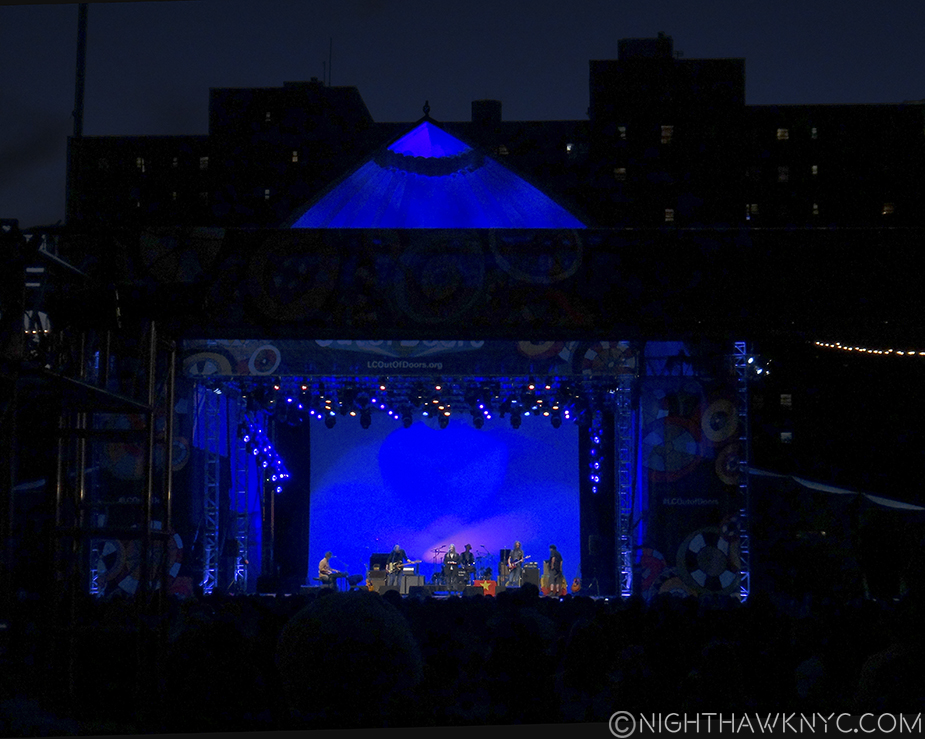
13 Years At The Metropolitan Museum – Part Two – The Light

This site is Free & Ad-Free! If you find this piece worthwhile, please donate via PayPal to support it & independent Art writing. You can also support it by buying Art & books! Details at the end. Thank you.

Written & Photographed by Kenn Sava

This is Part Two of my ongoing series, “Thirteen Years At The Metropolitan Museum.” Part One is here.

Her Aim Is True. With an arrow to my heart, Saint-Gaudens’ Diana points the way to the undiscovered land.

It happens more than I’d like.

I stop into the bookshop every time I go to The Met (TM), either on my way in, or out. As these 13 years have gone on, unfortunately, it’s become one of the few decent art book stores left. They have a good stock of current and new art books and, of course, a very good supply of Met Museum Publications. Nothing old or out of print, still, I always find something of interest, either about whatever artist I’m currently fixated on (there’s always at least one), or someone I’m only discovering through a show, or right there on their shelves.

My apartment. Almost. No, it’s The Met’s Bookstore.

Then, it happened.

I picked up this heavy hardcover called Portraits By Ingres. Ingres. Yes. There are a few of his portraits upstairs in the European Paintings Gallery and an amazing one, which has become my very favorite painting in The Museum, in the Robert Lehman Collection Galleries. I start looking through the book. There, on page after page after page are THE most incredible drawings I may have ever seen! What? I’m amazed. Astounded. The line! The delicacy. He knows exactly what to leave out and still, somehow, capture the essence of his subject’s face, like in Chinese or Japanese painting, but more so. He’s using graphite. No washes, no ink, no nothing. The most amazingly beautiful lines I’ve ever seen on paper.

How did I not know about this?

Since the book is old, it’s on sale. How old is it? I look at the publishing data. “Published on the occasion of Portraits by Ingres at the Metropolitan Museum October 5, 1999 through January 2, 2000” (You can actually download it now, direct from TM(!), here, for free.)

UGGGGGHHHHHHHHHHHHH! You mean, this was A SHOW?

AND? I MISSED IT?????

Oh my god… ….. ………….

And, that’s how I discovered THE WORST feeling I ever get when I to go TM. While Portraits By Ingres is the “big one that got away,” unfortunately, it’s happened more than once. And that’s only in the recent past.

Portraits By Ingres NYT 1999P

And? Look what I found recently on the back of an article I saved in the NY Times from 1999. History tugged my sleeve…and now mocks me.

Since then, I live with a terrible fear of missing a great show. Why? When a show is over? It’s gone…forever. It “lives on”, but to a much lesser extent in exhibition catalogs (thank goodness!) and through websites, online videos, maybe an app or two, but that’s it. The catalogs may or may not have all the works that were in the show and almost certainly won’t have them in their original sizes (maybe, one day, e-catalogs will, but the resolution of art e-books today is nowhere near there). Almost never are shows documented with a film or documentary, the way Leonardo: da Vinci: Painter At The Court Of Milan was.

In fact, I only discovered “the show of the Century,” Leonardo da Vinci: Painter @ CoM 3 days before it ended at the National Gallery, London. (It was put together by Luke Tyson, who I wrote about in Part One of this series, who is now working at TM.) I jumped on an over night flight and went straight to the National Gallery, without a ticket for the sold-out show, minutes before doors opened on its very last day. I got in (a story unto itself. The NY Giants won the Super Bowl that same night. Something crazy to watch in London). It’s the first and last time 9 of Leonard’s incomparable 17 (or so) paintings were being shown in one place. And, possibly, the first time ever both version of the “Virgin of the Rocks” were being shown together- in the same room (I had to take a step aside and pinch myself in utter amazement when I walked in to that gallery), and so much more as you can see on the checklist, here, including, astonishingly, a full size copy of The Last Supper done in 1520, shortly after the original had been painted! To think…If I hadn’t happened to accidentally stumble on that documentary at 3am on PBS, I would have missed it!

So, impelled by this fear, I have since designed each visit to TM around their exhibition calendar- I go and see whatever’s closing soonest, if I haven’t seen it already.

This has paid off, for me, in uncountable and undreamt of ways.

I have discovered countless artists I never knew about, who have enriched my life and my knowledge of art history in so many ways I can’t even count including Sanford Gifford (besides being a brilliant underknown member of the Hudson River School, he was also a Met Museum Founder in 1880), Henrick Goltzius (who overcame a fall into a fire that disfigured his drawing hand but turned that to his advantage becoming a graphic artist, perhaps, only equalled in the north by Durer), Thomas Eakins, Alexander McQueen, Christo & Jeanne-Claude (who I got to meet right before The Gates), Philip Guston, Bernini, Louis Comfort Tiffany, Chasseriau, Ellsworth Kelly, Girodet, Sean Kelly, Degas, Thomas Hart Benton, Jean-Baptiste Carpeaux, Cezanne, Antonio Canova, Liu Dan in the revelatory Ink Art in China show, Faberge, William Kentridge, Balthus, Paul Klee, Neo Rauch, among individual artists I “discovered” at Special Exhibitions at TM since 2002! Some I had heard of or knew a little about but I “discovered” them here.

As someone obsessed with Art History who draws a little bit, these artists had/have a huge and ongoing influence on me. I learned so much from all of them. They have helped me refine my focus. Before 1999 I was solely interested in modern and contemporary art. After seeing the Mark Rothko Show at the Whitney in 1998, I started to draw. Then, I realized I needed to go back through the entire history of art and learn from the masters who could draw. That led me to TM. TM led me to “the Light.”

This is not to mention artists I’ve discovered by wandering the galleries, like Ingres, Stuart Davis, Tiepolo, Remington, Caravaggio, Goya, Yves Tanguay and Juan Gris among them.

I’ve seen the light.

Even now, today, September 18, 2015, I returned from TM after spending a large part of last weekend there for the last few days of China, with a fresh revelation- George Caleb Bingham. Bingham. Hmm… I know of him though the one intriguing painting that’s been continually on display in the American Wing. It’s a work you walk by and always draws you closer. You ponder it and are left thinking. “It’s interesting…different…powerful and real. Bingham, huh? I don’t know him.” There’s no other by him work on view to reinforce the feeling that “I really need to look into him.” Well, maybe he was a one hit wonder.

23 year old Bingham’s Self Portrait beckons us in to “discover” his unique light.

It turns out, he was far from it. After seeing his about to close show, Navigating the West featuring his River paintings and drawings, I came away struck by an artist that seems to be something of a missing link. Someone who fills in a gap before Thomas Eakins. He’s a master of the natural pose,while making that pose always seem uniquely American, a powerful draughtsman, with a real gift for setting the stage in his compositions, which often feature beautifully out of focus backgrounds years before cameras showed such things, and in ways I haven’t seen many other artists do this well. Ever since Leonardo artists have put in very realistic backgrounds, often consisting of modern towns or locations regardless of the time period being depicted (which no doubt charmed contemporaries, but always struck me as being weird and bizarrely out of place in the story). Bingham’s rarely depict a recognizable location (according to the catalog), but they add to the air of authenticity that he is trying to present more convincingly than some of his Renaissance predecessors. Interestingly, Bingham was influenced by the Hudson River School after his first trip east, and his early landscapes show their trademarked lush and thickly detailed flora and fauna. As time went on, he paid more and more attention to the focus of his work- his characters. Carefully working and reworking them in masterful preparatory drawings, he was able to simply transfer them to his canvas and then make sure that everything else supported them, or they got left out. He became an editor as much as he was a draughtsman. The Met has prepared a fascinating short analysis of the process Bingham used in creating his masterpiece, “Fur Traders Descending The Missouri,” The Met’s painting that first caught my eye. He was downright ruthless in his editing, down to the smallest detail, creating a work of sublime economy that I wonder if it in turn influenced another masterpiece of American River art, Thomas Eakins’  Max Schmitt In A Single Scull, which happens to call TM its home, too.

His light runs the full range from soft to hard, and is never more masterful than in Fur Traders. The foreground water, in particular. Then there is a pair of masterful, yet entirely different, self portraits, one, early, of the artist in his 20’s, the other done 2 years before his passing. They speak volumes about his growth and the evolution of his technique and style. The early one is a marvel of seamlessly smooth skin coloring and belies a style of its own. It actually reminds me of early Ingres in this regard. The face just pops from the canvas 180 years later, and I found myself marveling at how few colors he accomplished this with. Ah, but then a closer look reveals his mastery of economical blending. The overall effect is both brilliant and unforgettable. All we see is his torso. No arms. No hands. Its all in back, except for the collar of his white shirt, and his face. He looks out at us with an expression that says “Yes, I may be young, but I’m already THIS good, and I’m taking no prisoners from here on.” And? he didn’t. The late self portrait was done by an entirely different artist, one who had learned nuance, who’s craft had vastly deepened and who wasn’t afraid of truth or age. Interestingly, he paints himself in the act of drawing. After seeing the many drawings on view, it’s a tribute well earned. His drawings hold every bit of their own even when viewed right next to the paintings they preceded, including his masterpieces, like TM’s own “Fur Traders Descending The Missouri” from about 1845, the work I had seen before in the American Wing-

Bingham’s Fur Traders Descending The Missouri. The work that drew me to his light.

Everything about Bingham’s river paintings (and the drawings/studies that led to their creation) says “American,” in exactly the same way as Mark Twain’s writing does. From the attire to the attitude, all done with masterful attention to detail and shadow, THIS is American art for the people. The show is devoid of portraits of the well-to-do, the famous, or the powerful and is, instead, populated by the people who were trying to survive in a new land while helping their new country survive in the process. Is it any wonder that the school children of Missouri took up a state wide collection to help the State buy (and thereby preserve) a collection of Bingham’s masterful, iconic drawings? While being an act they all can be eternally proud of, it shows those kids had better taste in art than some of the dealers in Chelsea do today.

While not a big show, it’s a very deep show, and since its doors are closing for good on Sunday at 5:15pm, I’m going to be scrambling to see it one or two more times before it does.

Afterall? I well know what happens then.

These wonderful work will go back to where they belong, possibly never to be seen together again.

The light will go off in those galleries Sunday night.

But, it will remain “on” inside me for the rest of my life.

The second best thing I’ve gotten out of going to The Met so often for 13 years is Discovery.

Hark! A Met Angel Beckons me to the Light. To not hear her call is my loss.

*-Soundtrack for this post is “The Shape Of Jazz To Come” by Ornette Coleman, 1959. I chose this to honor Ornette, who led us into many new frontiers of music, like TM has with Art, since he recently passed. He was exceedingly nice to me, a complete stranger to him, the one time I had the privilege of meeting him.

NighthawkNYC.com has been entirely self-funded & ad-free for over 8 years, during which 300 full-length pieces have been published! If you’ve found it worthwhile, PLEASE donate to allow me to continue below. Thank you, Kenn.

You can also support it by buying Art, Art & Photography books, and Music from my collection! Art & Books may be found here. Music here and here.

Written & photographed by Kenn Sava for nighthawknyc.com unless otherwise credited. To send comments, thoughts, feedback or propositions click here. Click the white box on the upper right for the archives or to search them. Subscribe to be notified of new Posts below. Your information will be used for no other purpose.
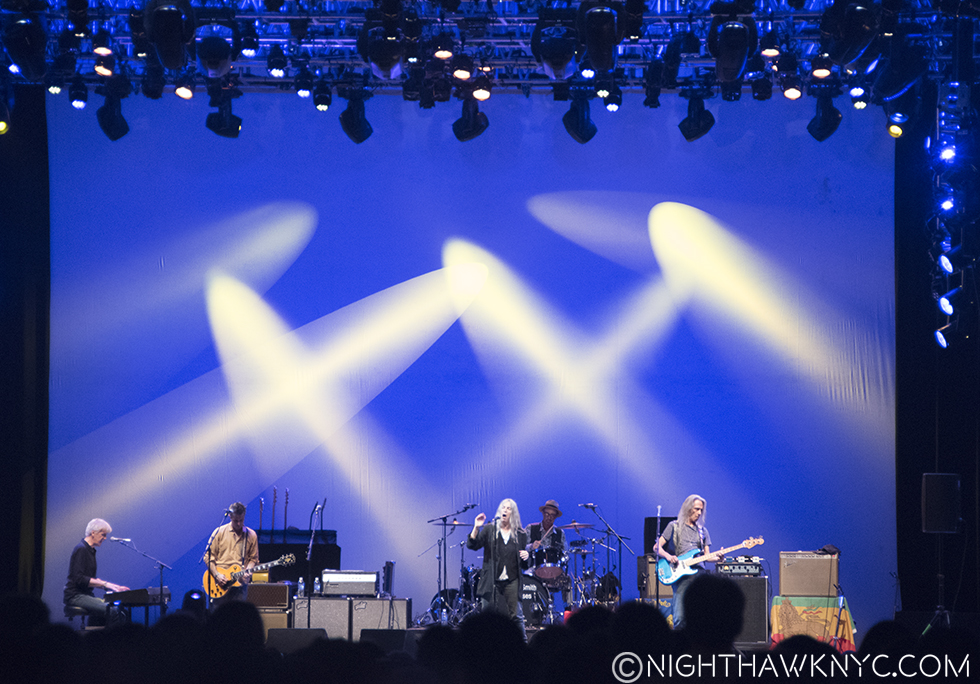
“Look around. Look at how lucky we are to be alive right now.”*

This site is Free & Ad-Free! If you find this piece worthwhile, please donate via PayPal to support it & independent Art writing. You can also support it by buying Art & books! Details at the end. Thank you.

Written  by Kenn Sava

“Hats off, Gentlemen…A Genius,” the composer Robert Schumann famously said after hearing Frederic Chopin for the first time.

A “Genius.”

In Chopin’s case? Schumann nailed it. More often? It’s a word that is savagely abused in most of the realms of life it’s used in. I HATE throwing that word around. Life has shown me that, unfortunately, there are very, very, VERY few geniuses. Personally, out of all the musicians I’ve known and worked with, all the artists and heck, the people I’ve known, only 3 were geniuses, I think, and one was my dad. Jaco Pastorius and Thomas Chapin were the other two. 1

Lin Manuel Miranda is someone I’ve never met, but I’ve had my ear on him since he stopped me cold when I first heard him perform at the White House Poetry Jam in 2009. I was tuned in to hear Esperanza Spalding, and then, out of the blue…WHAM!

WHO is Lin-Manuel Miranda??

Looking at his classic performance, again, I can see I wasn’t alone in being surprised and delighted. Over a million have watched it since. Accompanied only by a piano, it’s fresh, new, and brilliant on every level. In his introduction, Mr Miranda says that he “is working on a hip-hop album, a concept album about someone I think embodies hip-hop, Treasury Secretary Alexander Hamilton.”

Seriously? Alexander “Face-of-the-10-Dollar-Bill” Hamilton? The man who’s grave I’ve walked right past countless times Downtown at Trinity Church, and was right in the shadow of the World Trade Center? I’ve always respected him as much as any Founding Father, but, I admit, I didn’t know his whole story. Well? It turns out he lived Uptown- in Harlem. Who knew?

“Revolution’s happening in New York”*

Little did I suspect that 6 years later this “concept album” would be the phenomenon, Hamilton which is not only taking Broadway, (after opening at the Public Theater in February), by storm (It’s currently sold out for a year- if you hurry, you can get tickets for September 16, 2016, and take your chances Mr. Miranda will still be starring in it then), it has revolutionized music, theater and musical theater in the process. In spite of the fact that Mr. Miranda and his team had already won a Tony Award for Best Musical for “In The Heights,” I don’t think many saw this coming.

“History is happening in Manhattan
and we just happen to be
in the greatest city in the world.”*

True to history (being based on Ron Chernow’s biography of Hamilton), and full of fresh poetry that bursts with the cleverness of the finest hip-hop and wonderful songwriting, it’s both relatable and educational while bringing Hamilton’s story full force into the 21st Century. The shock of melding the life of a Founding Father from some 240 years ago with that most urban of contemporary music, hip-hop, is something that sounds like a recipe for disaster worthy of The Producers Bialystok & Bloom. That the results will win almost anyone over immediately is the secret of its charm, and belies one facet of Mr. Miranda’s talent- He’s a visionary who also happens to be one very talented writer, songwriter and performer. This vision has succeeded on Broadway, no less, and now? Hamilton is poised to be a cultural phenomenon the likes of which the theater hasn’t seen since “West Side Story.” It’s both a piece of American culture and American history, in more ways than one that results in an irresistible piece of Americana that I could see being produced all over the country, internationally, in schools, and eventually, on film. If you don’t know about it yet, you will. 60 Minutes just featured it. It’s the kind of work that not only pulls audiences out of their seats, it’s the kind that will inspire countless young people to act, sing, write, create, and maybe even get into politics. (Gulp.)

“Look at where you started
the fact that you’re alive is a miracle.”*

In September, Mr. Miranda was named a MacArthur Foundation fellow, receiving one of 24 “genius grants” for 2015. I’ve wondered about some of their choices in the past. I’ve wished they’d chosen up and coming talent who are in there fighting to survive and hold onto their integrity in the process. (I’ve been secretly voting for the brilliant pianist/composer Craig Taborn for the past 10 years. Check out his “Junk Magic.”) Mr. Miranda is 35, and he’s already “made it.” It’s terribly hard being an artist of any kind in this country, so far be it of me to have a problem with him getting some extra help. He’s “giving back”/donating part of his “genius grant” to Graham Windham, which helps children in need, and was founded by Hamilton’s wife, Elizabeth in 1806.

I’m not ready to call him a “genius” yet. If he keeps it up, he may prove himself to be one. But now? He’s got my full attention, and at the very least, I recommend you check out the Hamilton cast album, in lieu of paying a scalper $400. for the cheapest seats on Broadway.

Taking my own advice, but getting a cast signed copy. Well? It’s history, after all.

We could sure use someone to come along and be that “next one” after Sondheim to pick up the mantel and write great, creative musicals that take musical theater further, (with all due respect to Matt Stone & Trey Parker and Book of Mormon. It remains to be seen if that’s a one shot deal, or not). Maybe it will be Lin-Manuel Miranda. Right now, it’s important and groundbreaking that with Hamilton, he’s taking hip-hop somewhere it’s never been- into “legit” musical theater, and showing the world that it has arrived as a serious musical style in American (and world) culture, as well as broadening its possibilities.

“Who lives, who dies, who tells  your story”* (The closing words)

I can only imagine what Robert Schumann experienced when he heard Chopin, but he expressed it in words for the Ages. There can be no doubt that Alexander Hamilton could never have imagined it, but Mr. Miranda has now, finally, told his story for the Ages. For me, I rejoice in the fact that there are new artists making great work NOW- “geniuses,” or not, time will tell. This minute, as his song says, “How lucky we are to be alive right now.” In “The greatest City in the world.”*

That’s what matters.

*-Soundtrack for this post  “The Schuyler Sisters,” “That Would Be Enough”  and “Who Lives, Who Dies, Who Tells Your Story,” by Lin-Manuel Miranda from Hamilton.

This post is dedicated to Kitty, Jane, their Mom and Family.

NighthawkNYC.com has been entirely self-funded & ad-free for over 8 years, during which 300 full-length pieces have been published! If you’ve found it worthwhile, PLEASE donate to allow me to continue below. Thank you, Kenn.

You can also support it by buying Art, Art & Photography books, and Music from my collection! Art & Books may be found here. Music here and here.

Written & photographed by Kenn Sava for nighthawknyc.com unless otherwise credited. To send comments, thoughts, feedback or propositions click here. Click the white box on the upper right for the archives or to search them. Subscribe to be notified of new Posts below. Your information will be used for no other purpose.
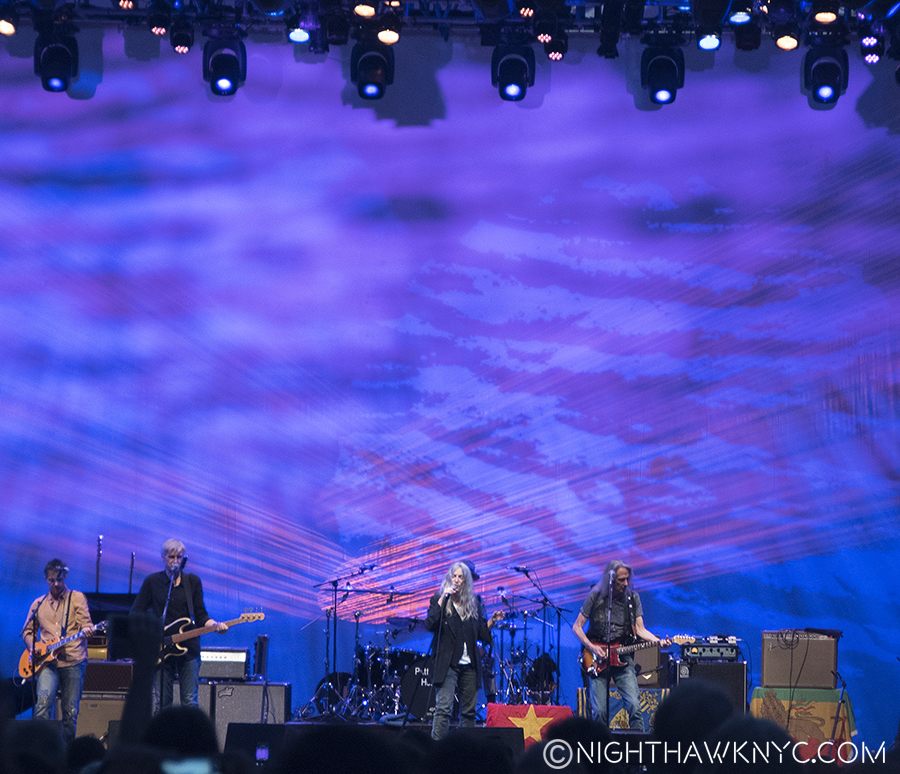
  1. I called Wayne Shorter one, here, but I’ve never had the privilege of knowing him.

Robert Rauschenberg: Anagrams (A Pun)- But No Joke

This site is Free & Ad-Free! If you find this piece worthwhile, please donate via PayPal to support it & independent Art writing. You can also support it by buying Art & books! Details at the end. Thank you.

Written & Photographed by Kenn Sava

11 days after being here for the final day of the Chuck Close: Recent Works, I returned to Pace’s 534 West 25th Street Gallery to see Robert Rauschenberg: Anagrams, Arcadian Retreats, Anagrams (A Pun), on view until January 16, 2016. Up a few steps to the back office area where the show continues, a short video of Rauschenberg at work in on view. As the camera looks down from slightly above, I noticed that surrounding him all over his studio were numerous works consisting of seemingly chaotic collages of images. I couldn’t help wondering about the effect on a visitor’s brain of spending 8 hours in that studio, and what it would  feel like to then walk outside. I wondered what they said about the images playing inside of Rauschenberg’s mind all the time. Day in. Day out, for the 82 years he lived. It might be why there’s so much to see in even one of his works. This new show makes clear that it may be a long time yet until everything that brain, and he, created in his professional life from the 1950’s until he passed in 2008 is seen, fully appreciated and assimilated.
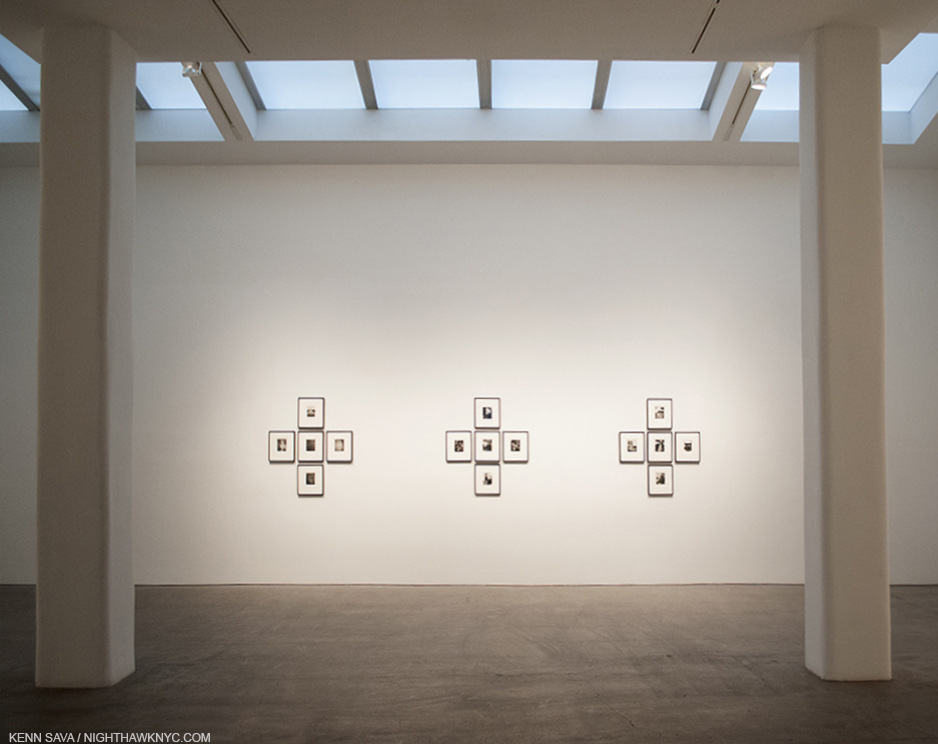
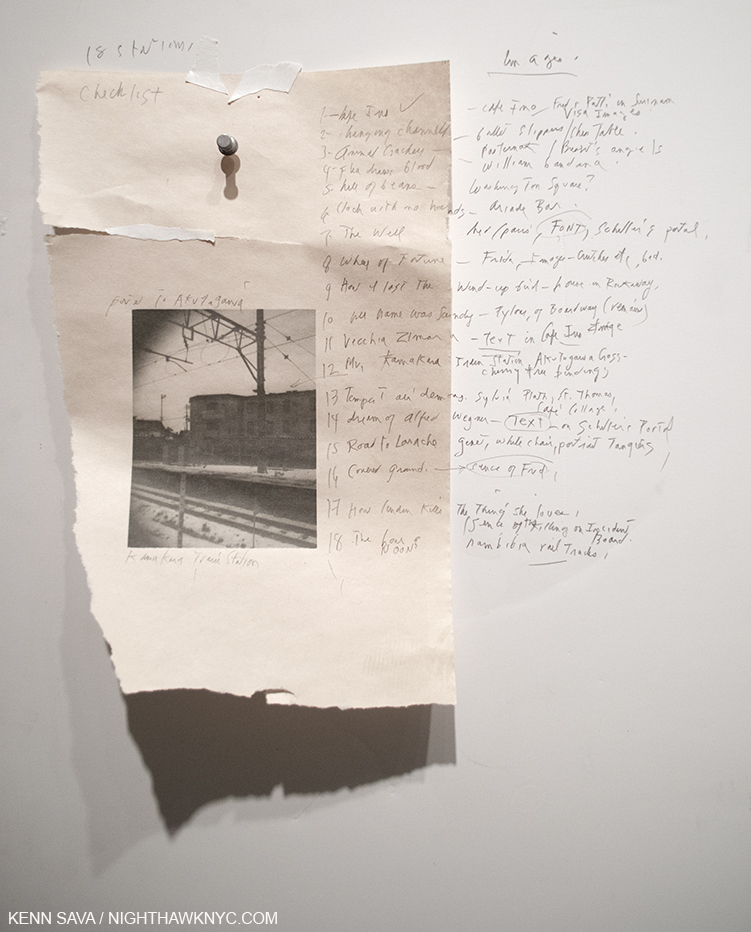
These works are dated 1996 and 97. Visually, his work presaged the visual chaos of the internet age, and the graphic print style of David Carson and others. Seen in 2015 it fits right in with the everyday chaos of NYC, both on the physical level, where pedestrians have to face a never ending life, death or injury battle with bikes, cars, buses, trucks and lord knows whatever else, simply to get from point A to point B, while being bombarded with every square inch plastered with ads, images or graffiti on the visual level.

The modern world makes me try to make sense out of its visual chaos- like Rauschenberg did so masterfully.

Visual chaos, 2015. Without the “Art.” By the way? Times Square was better before

Anagrams, Arcadian Retreats, Anagrams (A Pun) is a bit different from any Rauschenberg show I’ve yet seen. It’s concise yet catholic, coherent and sharply focused on these three series of works, which share working methods, making it very hard to tell which work is from which series. As such, it’s a rare opportunity to see a selection of late works. Pace’s release states the images are from Rauschenberg’s own photos, which continues a trend in recent shows of artists using, or basing their work on their own photographs (Richard Estes, Chuck Close). Rauschenberg appears to have been at the forefront of image manipulation, made possible by software like Photoshop, while adding “painterly elements.” Regarding exactly what these pieces are and how they were made, Pace’s press release says- to create these works, “he developed and perfected a powerful new technique combing dye transfer with novel supports including plaster, large-scale paper and polylaminate panels…The process produced an aqueous and fluid appearance, blurring the crisp edges of his photographs…The inkjet dye process also liberated Rauschenberg from the mechanical production of printing screens, allowing him to produce sheets exclusively from his own photography on an in-studio printer. In addition to a more painterly effect, these works reflect a more nimble and freer approach to image-making than earlier works which were bound by the limitations of the mechanical process.”


It’s tempting to “read into” the resulting images, some of which are repeated verbatim in other works, and take them as a visual language, to be deciphered for “messages,” even hidden meanings. That will take a lot of looking to compile. Though “anagram” is a word about words, I don’t think I’ll be taking it that literally. I prefer to let the images speak, and this show is an orgy for the eye.

The works range from very large to large and a few of medium size. Two, including the largest, (one, I felt to be the most impactful piece in the show), are owned by the Whitney. Most of the others are not titled, detailed or described. Many feature images from different cultures around the world from the Sphinx and the Pyramids to traditional costumes, apparently from trips he had taken shortly before, which are juxtaposed with images from the western world, like construction equipment, firefighters, store fronts, junked cars, bicycles and soda bottles. Despite being combined, layered, even processed, the results don’t look like images produced in Photoshop. They look more like paintings, which I find somewhat remarkable, probably because I am so used to seeing Photoshopped Photographs. While he anticipated digital image processing and manipulation in works gong back to the late 1950’s, he continued doing things entirely his own way, and only selectively using technology when it suited his aims.

I previously saw some works from these series in the 1977 Guggenheim Rauschenberg Retrospective, but these were new to me. Seeing only works from these series brought home how wonderful they are. They’re different from what he had done earlier in his career, yet they have that undeniable “Rauschenberg” feel. In spite of being Photo based, they retain a “painterly” look, which I think is remarkable, and one of the things that sets his work apart from all those doing these types of works today. For me, Rauschenberg is kind of an American Picasso of the 2nd half of the 20th Century- his creativity and inventiveness knew no bounds. Like Picasso, he never stopped innovating and trying new things and techniques. Even 7 years after his passing, we continue to discover new facets of this work, which seems as fresh and contemporary as anything else around today. That will, no doubt, continue at the first full scale retrospective of his work since the Guggenheim’s 1997 blockbuster to be held next year at the Tate Modern, London.

These are wonderful works that reward repeated looks from a period of the Artist’s career that strikes me as being under appreciated. They seem so of the moment, it’s hard to think they’re going on 20 years old. In that sense, like their creator, they are ahead of their time, even now. I’m continuing to try and get the modern world to look like a Rauschenberg to me, to make that kind of sense, possibly even find the “Art” in it…that is when I’m not dodging bikes, cars, and the rest to actually feel safe enough in it to look around. That danger is what’s missing in these Rauschenbergs. Probably because he seems to be focused on the bigger picture, the dangers of the modern world to ancient cultures and ancient creatures. Including man.

On a bigger scale, like that bike I don’t see coming the wrong way on a one way street, the modern world is obliterating all that came before.

DSC02584PNH

*-Soundtrack for this post is “Crosstown Traffic,” by Jimi Hendrix.

NighthawkNYC.com has been entirely self-funded & ad-free for over 8 years, during which 300 full-length pieces have been published! If you’ve found it worthwhile, PLEASE donate to allow me to continue below. Thank you, Kenn.

You can also support it by buying Art, Art & Photography books, and Music from my collection! Art & Books may be found here. Music here and here.

Written & photographed by Kenn Sava for nighthawknyc.com unless otherwise credited. To send comments, thoughts, feedback or propositions click here. Click the white box on the upper right for the archives or to search them. Subscribe to be notified of new Posts below. Your information will be used for no other purpose.