Celebrating Ten Years of NighthawkNYC.com!

Written & Photographed by Kenn Sava.

I started NighthawkNYC.com on July 15, 2015. During almost all of these past 10 years, the thought of reaching the Milestone of Ten Years was something that seemed as far away as Mars. Long-term isolation, sudden fainting spells that hospitalized me, heart problems, hearing damage, foot problems, the specter of going broke, and oh yeah, that little thing called the pandemic, the 2020s have been hard for me, as they have been for many of you, I’m sure.

So, as I sit here at 6:30 am on July 15, 2025, I’m partially here to see & celebrate this day I didn’t think I’d actually get this site to arrive. As the improbable started to become a real possibility it dawned on me that I HAD to write something to honor getting to this point, and ALL the work that has gone into getting it here, even though I’m supposed to be taking a break (which didn’t stop me from writing the two biggest pieces I’ve ever written!). My one-time neighbor, Joni Mitchell, from decades before my time here, says it best about being here this morning in her circa-1969 song “Chelsea Morning.” (We’ll keep it between us that I haven’t been to bed yet!)

“Woke up, it was a Chelsea morning
And the first thing that I heard
Was a song outside my window
And the traffic wrote the words”-*

Since Joni hasn’t shared how to get the traffic to write my words, I decided to use this occasion to reflect on where I’ve been, where I am, and to try and look a bit ahead.

Part 1-
A)- Where I’ve Been
Some Highlights, in my opinion anyway, from the past 10 Years…

“Oh, won’t you stay
We’ll put on the day
And we’ll wear it ’till the night comes.”-*

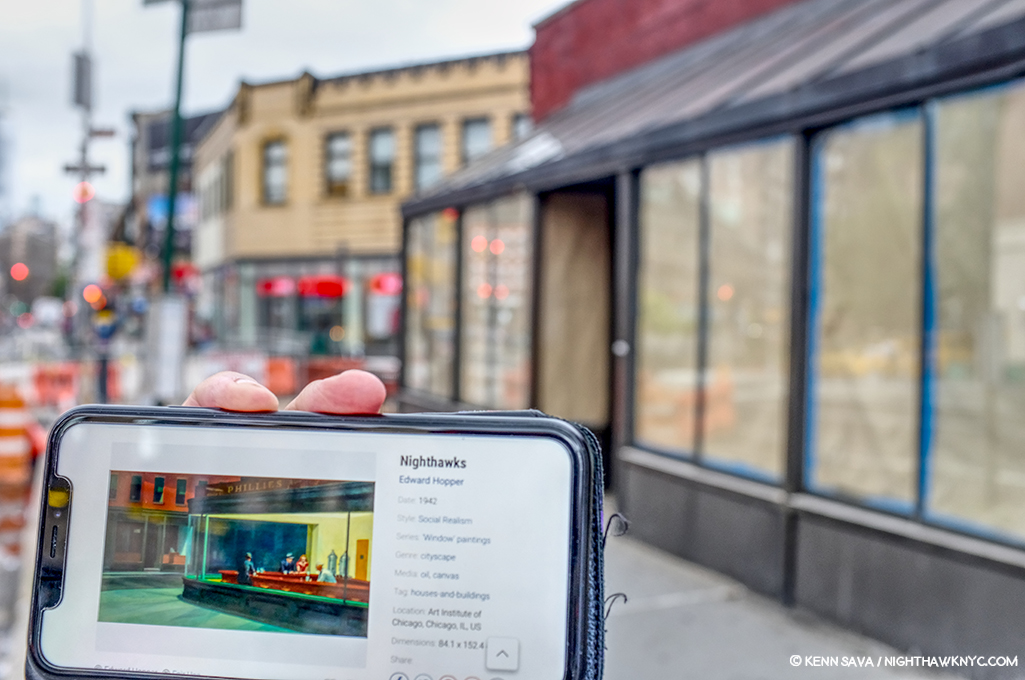
1)- “My Search For Edward Hopper’s Nighthawks Diner,” published July 29, 2019.  Decades in the making, it’s hands-down my most read, most discussed piece.
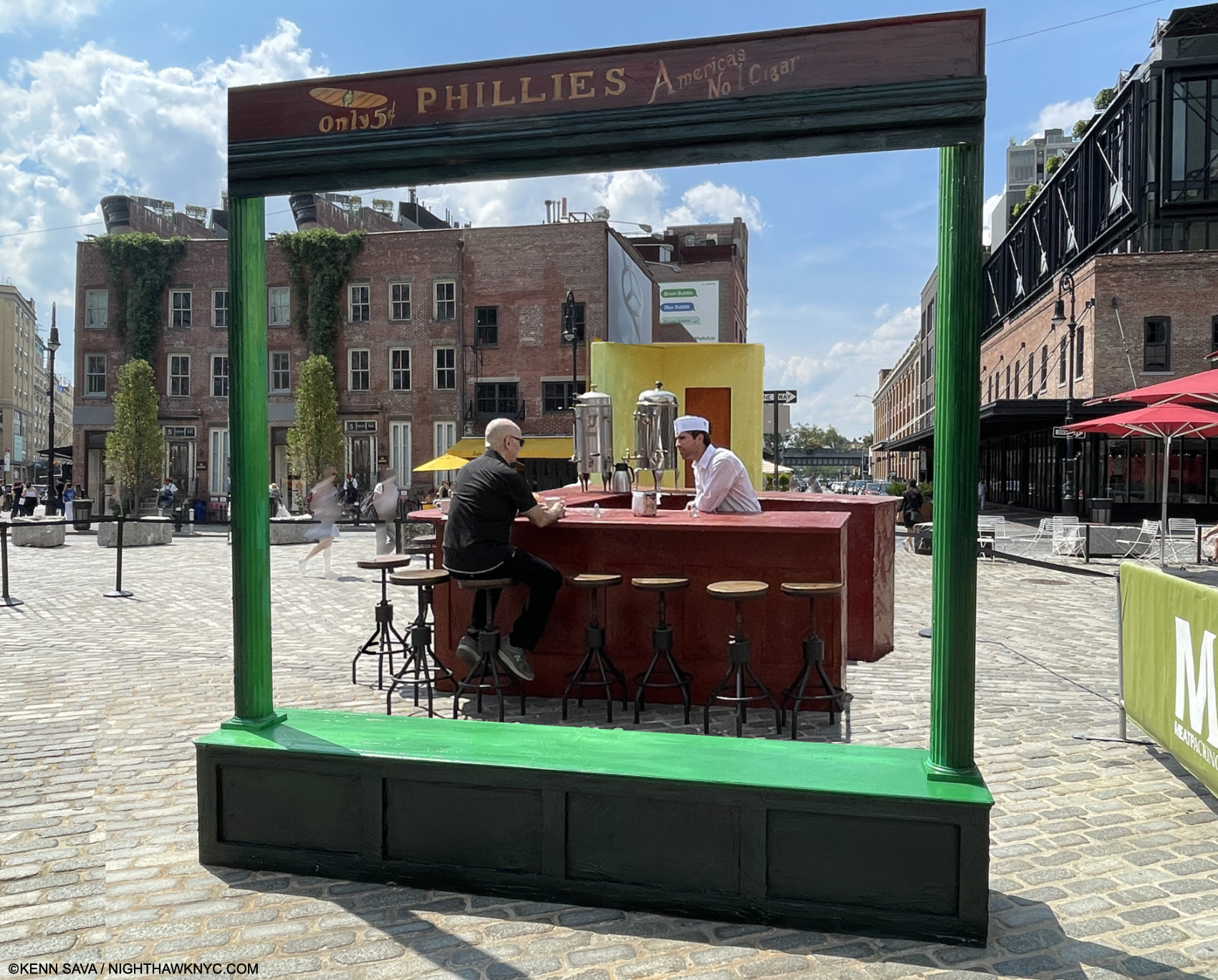
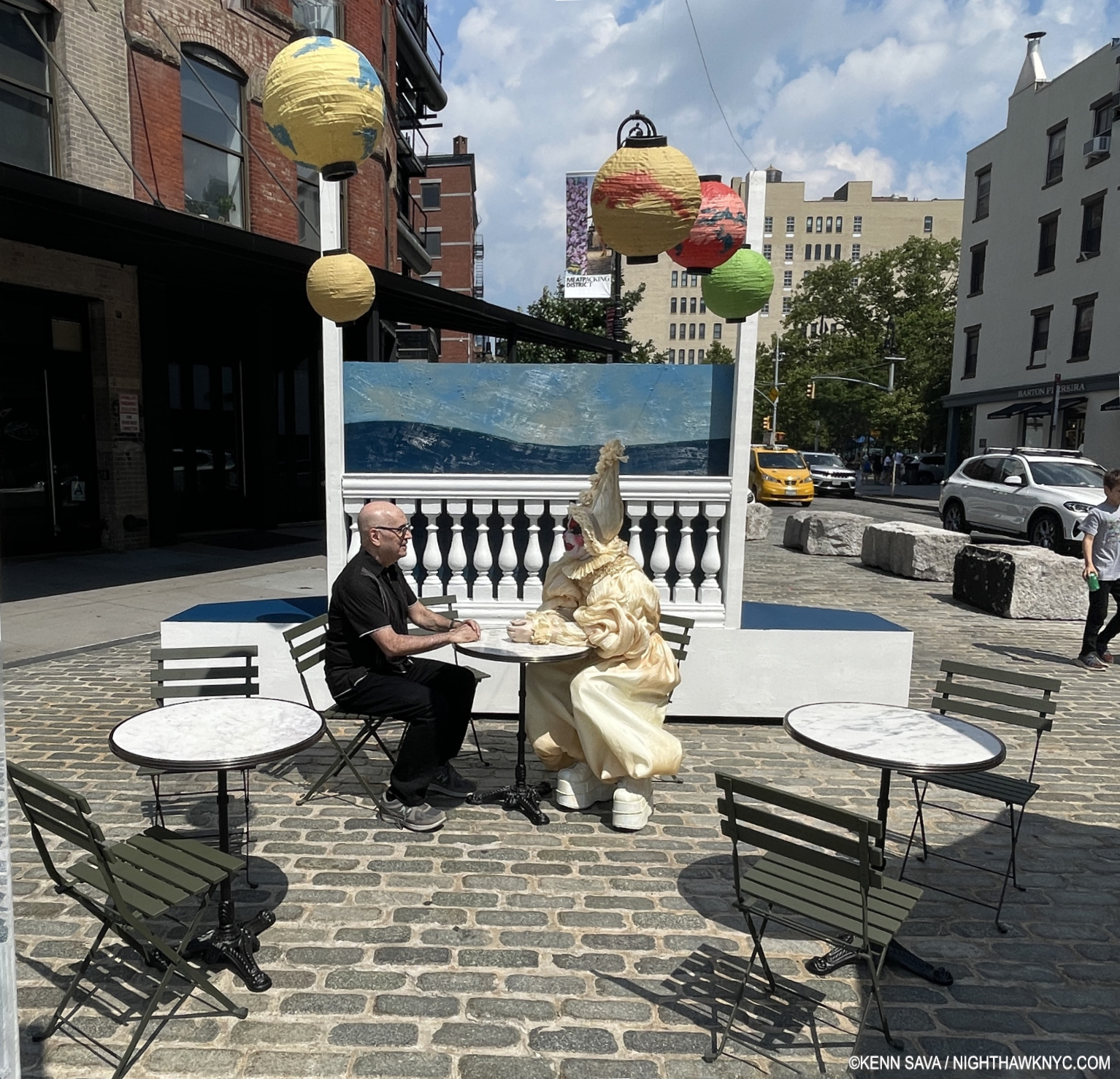
Update- On July 21, 2024, I finally found it! Meatpacking District, NYC. Kenn Sava, left, reenacting his Painted alter-ego, Logan, right. Photo by Nilo for NighthawkNYC.com. Continual Thanks to all involved & Kevin Callahan. Click any image for full size.

2)- “Vincent van Gogh: Home at Last,” published October 8, 2018. Preparing this piece on the reinstalled Van Gogh Masterpieces in the Permanent Collection of The Met suddenly took on an unexpected life of its own.
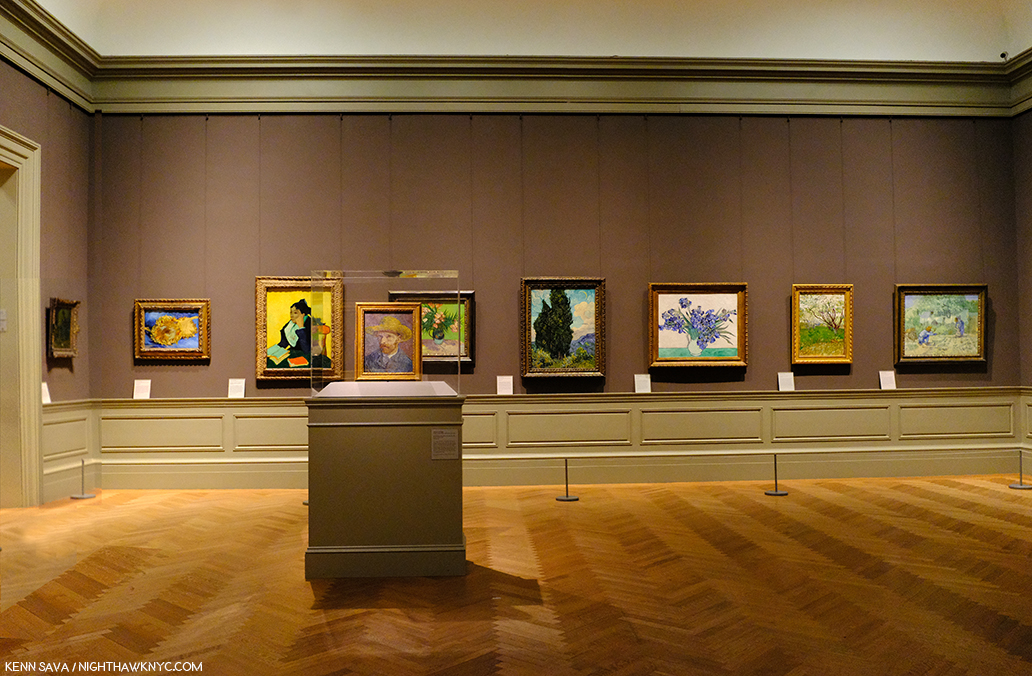
HOW great is it to be able to walk into a room and see THIS? For me, it’s one of the great joys of life in NYC. One part of the newly reinstalled Gallery 825 showing 9 of the 10 Van Goghs in this room. #10 is on the other side of the Self-Portrait with Straw Hat in the vitrine. This shot was available for literally one second over 3 visits and 3 hours I spent here. In the piece, you’ll see why.

3)- “Van Gogh’s Cypresses: Art From Hell,” published November 10, 2023. With all due respect to The Met’s great curators, I saw their blockbuster Van Gogh’s Cypresses completely differently than they did, apparently.
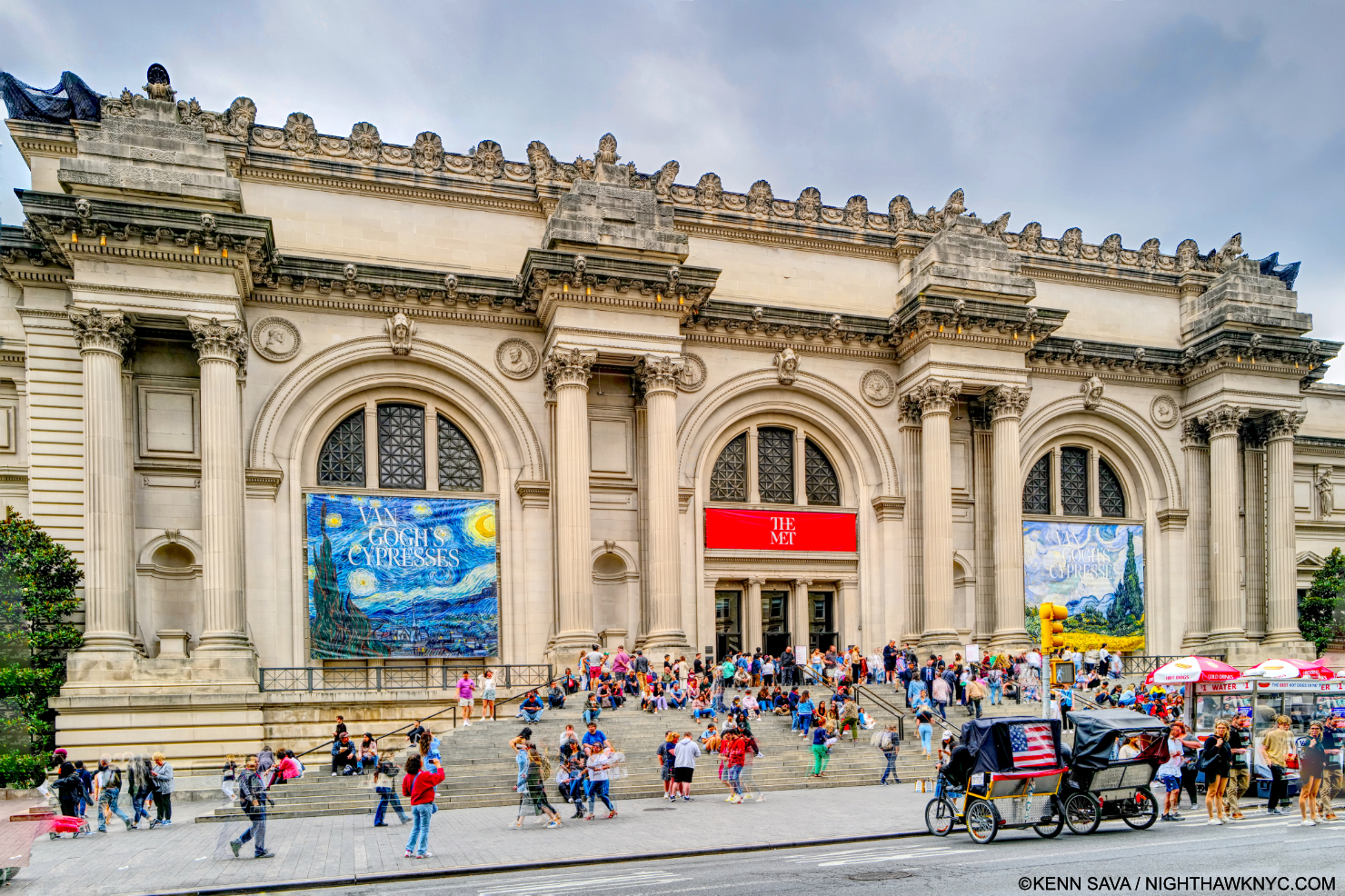
Welcome to The Met! In all my years of going to The Museum, as I call it currently 1,900+ visits since 2002, I’ve never seen TWO banners (left & right) up devoted to the same show. And, as I was soon to find out, it’s not like there weren’t other terrific shows going on! Seen on June 2, 2023.

4)- “Kerry James Marshall: The Revolution Was NOT Televised,” published March 1, 2017. THE most everything Painting show I saw in NYC in the 2010s. Along with Hima af Klint: Paintings for the Future, the two most important Painting shows mounted here in the prior decade.
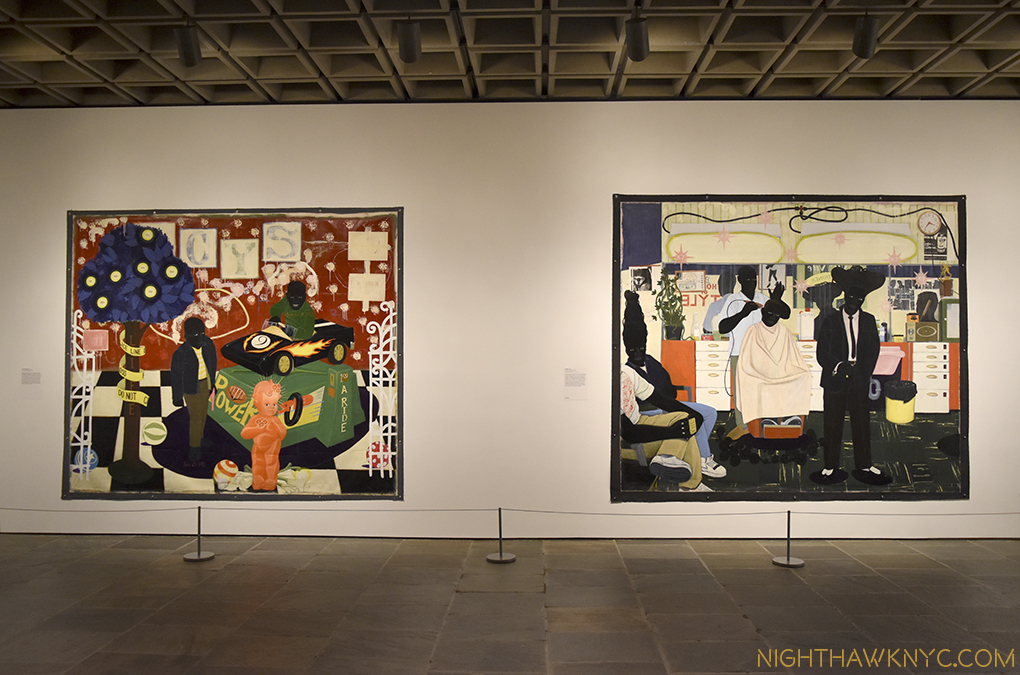
The finest moment, among many fine moments, in the all-too-short life of The Met Breuer. Installation view of Kerry James Marshall: Mastry. “De Style,” 1993, KJM’s barbershop, right, drips of life, fun, culture, individuality and style. On the left, his “The Lost Boys,” from the same year, a title borrowed from Peter Pan, is an homage to two children lost to gun violence, and all the boys who were “lost” to a variety of causes.

5)- “A Conversation with Photographer Harry Gruyaert,” Published September 22, 2018. Consistently among my most popular pieces, the renowned Belgian Photographer, and long-time Magnum Photos Member, discovered me through my “Saul Leiter: In My Room” piece and let his gallerist know he would be interested in speaking with me. A fan of his work, we spoke extensively via transatlantic phone. I discovered later how few interviews he has given.
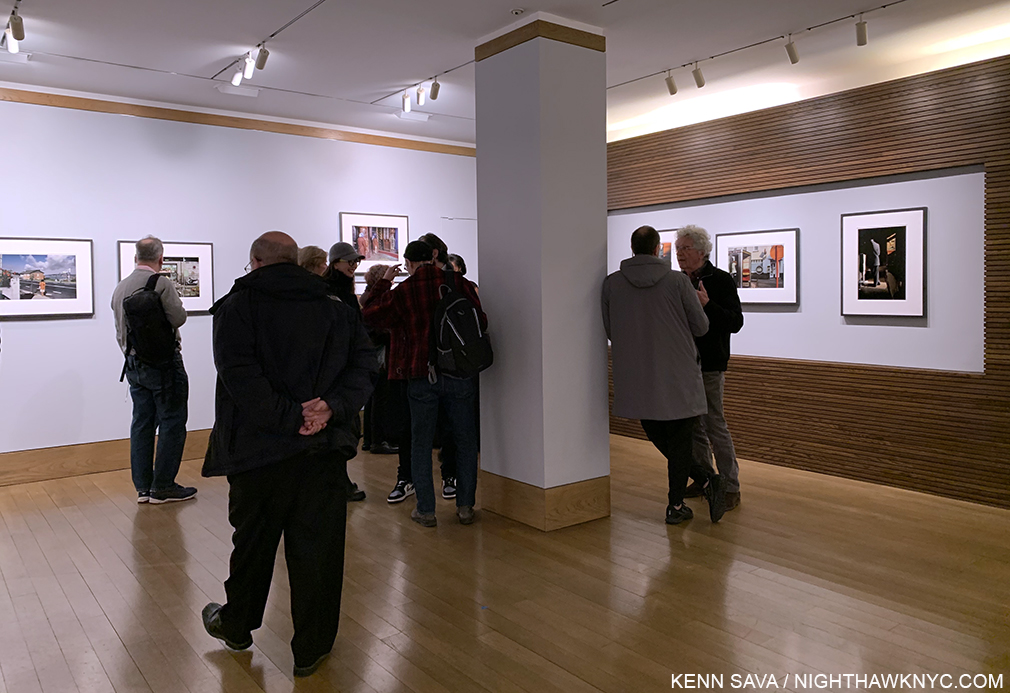
Subsequently, I met Harry Gruyaert, far right, in 2020 at the opening of his first American show since 1990!

6)- “Rod Penner’s America: Small Town Nation,” published August 22, 2023. This piece, based on his most recent NYC show which continued to solidify Mr. Penner as one of the foremost Painters of small-town America working today, continued my coverage of the Texas-based Artist’s NYC shows, with my prior pieces linked at the bottom of it. At one point, I had written more about Rod Penner than anyone else had. Maybe I still have. Rod was also kind enough to do a Q&A with me in 2017.
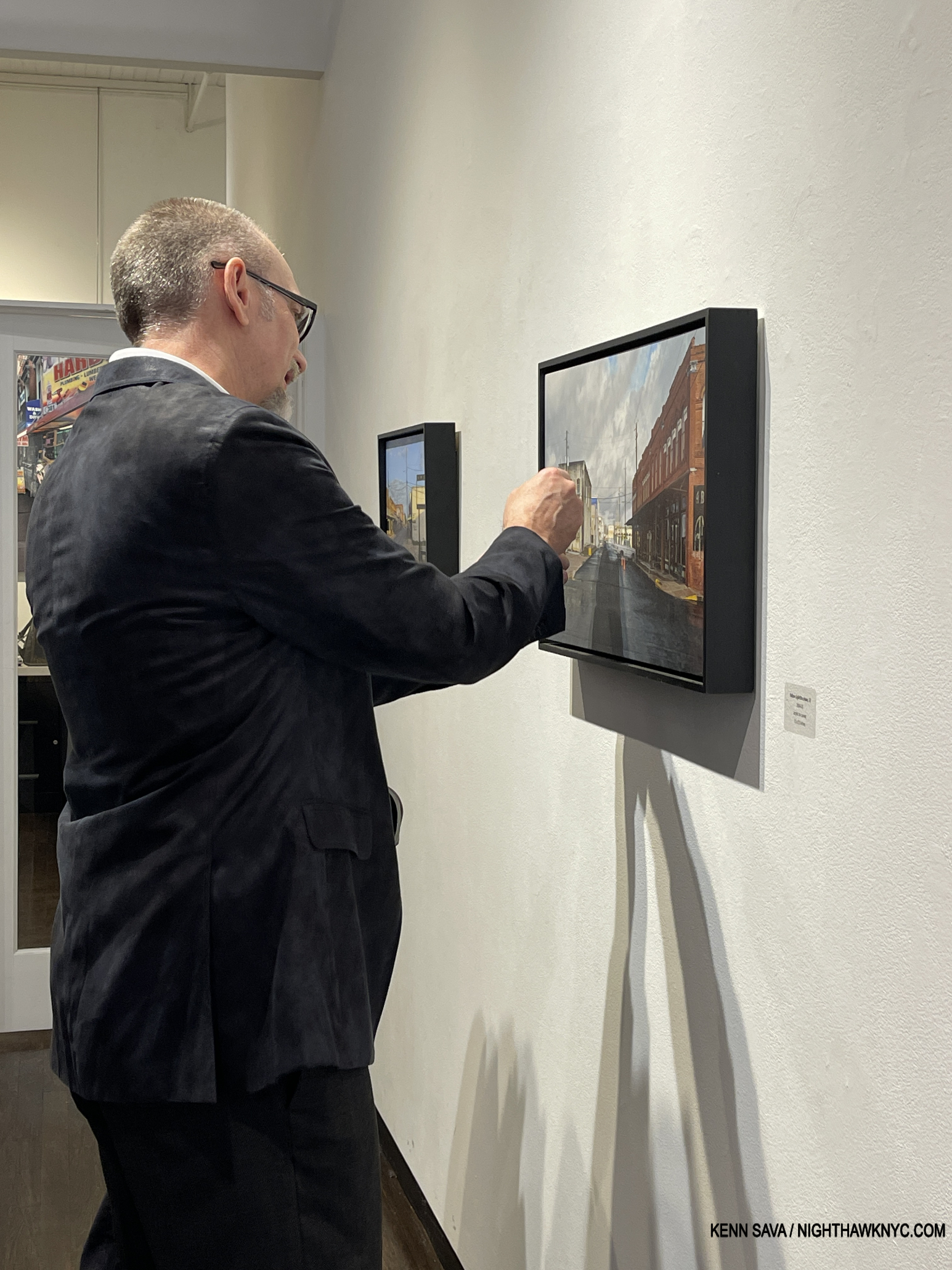
HOW does he do it? Rod Penner discussing one the very, very fine points of his Yellow Light/Brenham, TX, 2004-5, 15 x 25 inches, at his opening, March 18, 2023.

7)- “Henry Taylor: The Art of Empathy,” published March 8, 2024. Born of my unforgettable encounter with Mr. Taylor at the opening of his 2019 solo show.
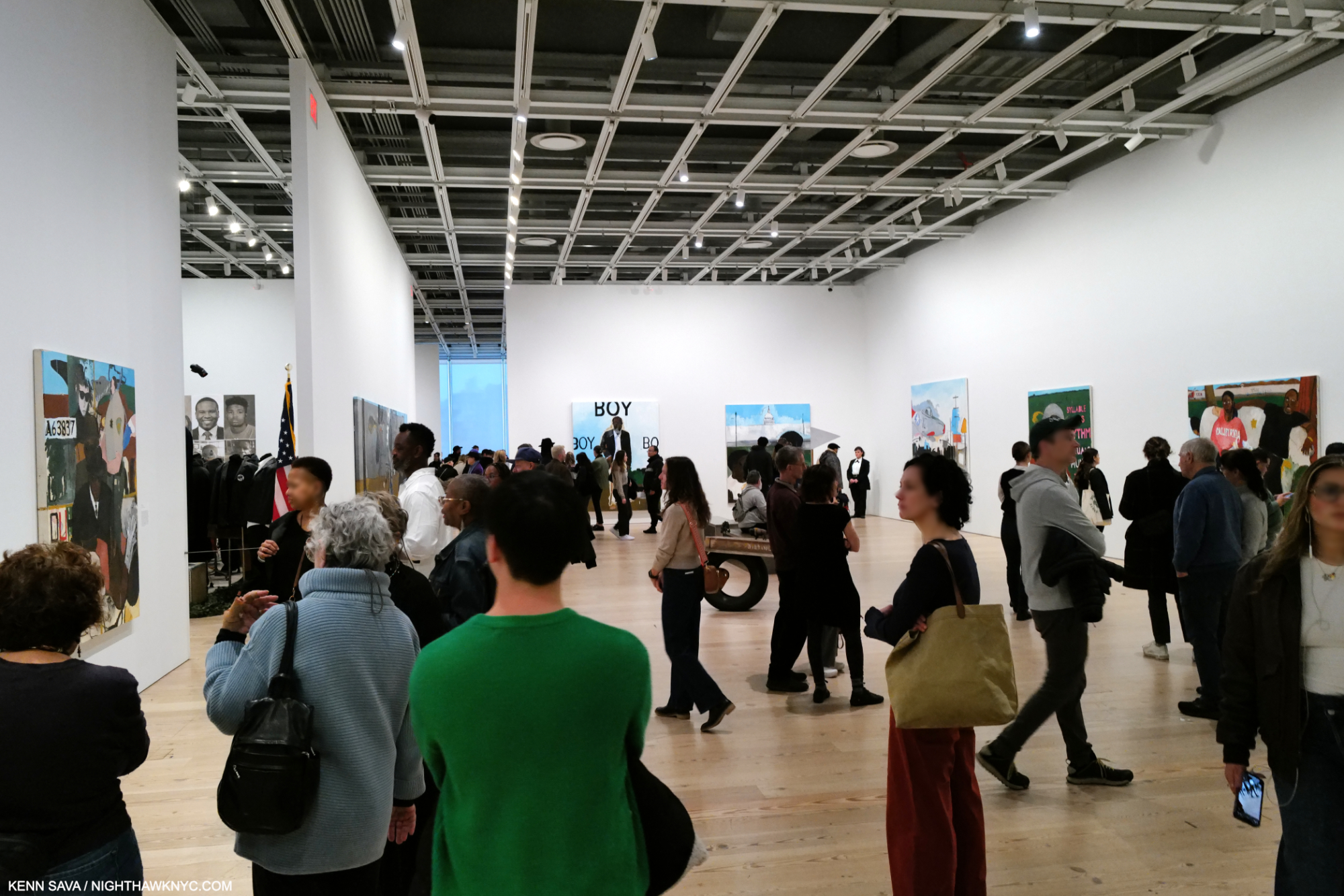
Installation view, an hour and a half before Henry Taylor: B Side closed for the last time, Whitney Museum, January 28, 2024.

7)- “Gregory Halpern’s America,” published November 8, 2019. Perhaps my biggest discovery during my 8 3/4-year “deep dive” into Modern & Contemporary Photography, my look at all of Mr. Halpern’s books through Omaha Sketchbook (2019), includes a look at its NYC book release in 2019, later the same night of my encounter with Henry Taylor!
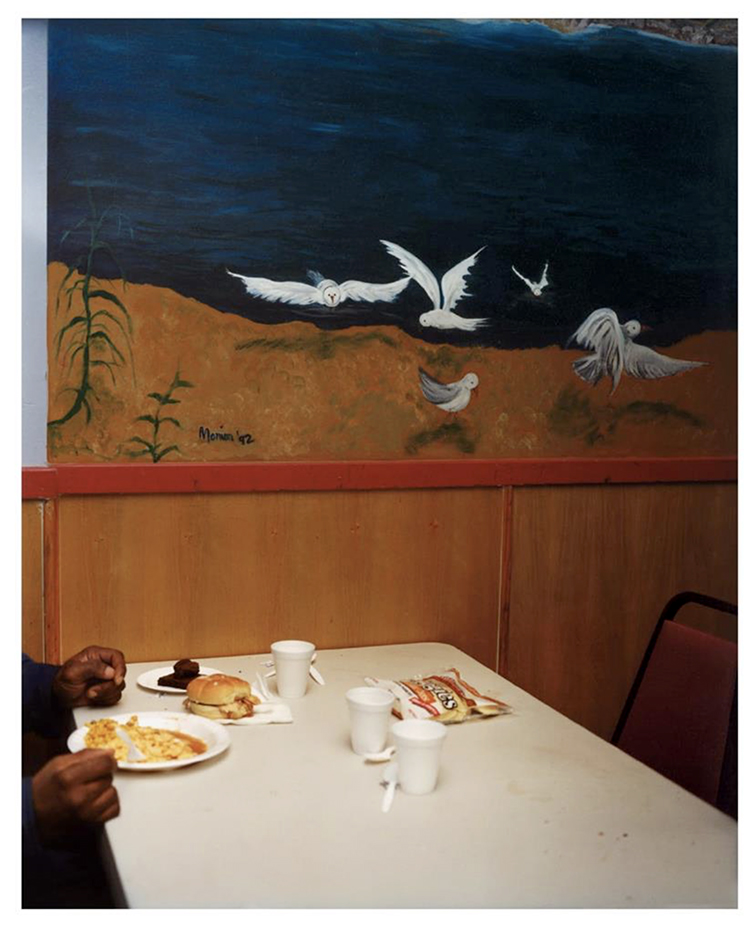
The very first work I saw by Gregory Halpern, “Untitled,” from his Buffalo series, seen at Aperture’s Booth at AIPAD: The Photography Show, April, 2017, I liked so much it’s been hanging on my wall since.

8)- “Raymond Pettibon: Artist Americanus,” published July 20, 2017. I was very fortunate to meet Mr. Pettibon and have him give me a tour of his Zwirner show, which I was thrilled about but also felt bad about because he was suffering from a quite damaged foot that caused him to sit the entire rest of the time he was at his opening. The show was also memorable as during its run I met Artist Caslon Bevington, whose work I’ve subsequently written about twice.
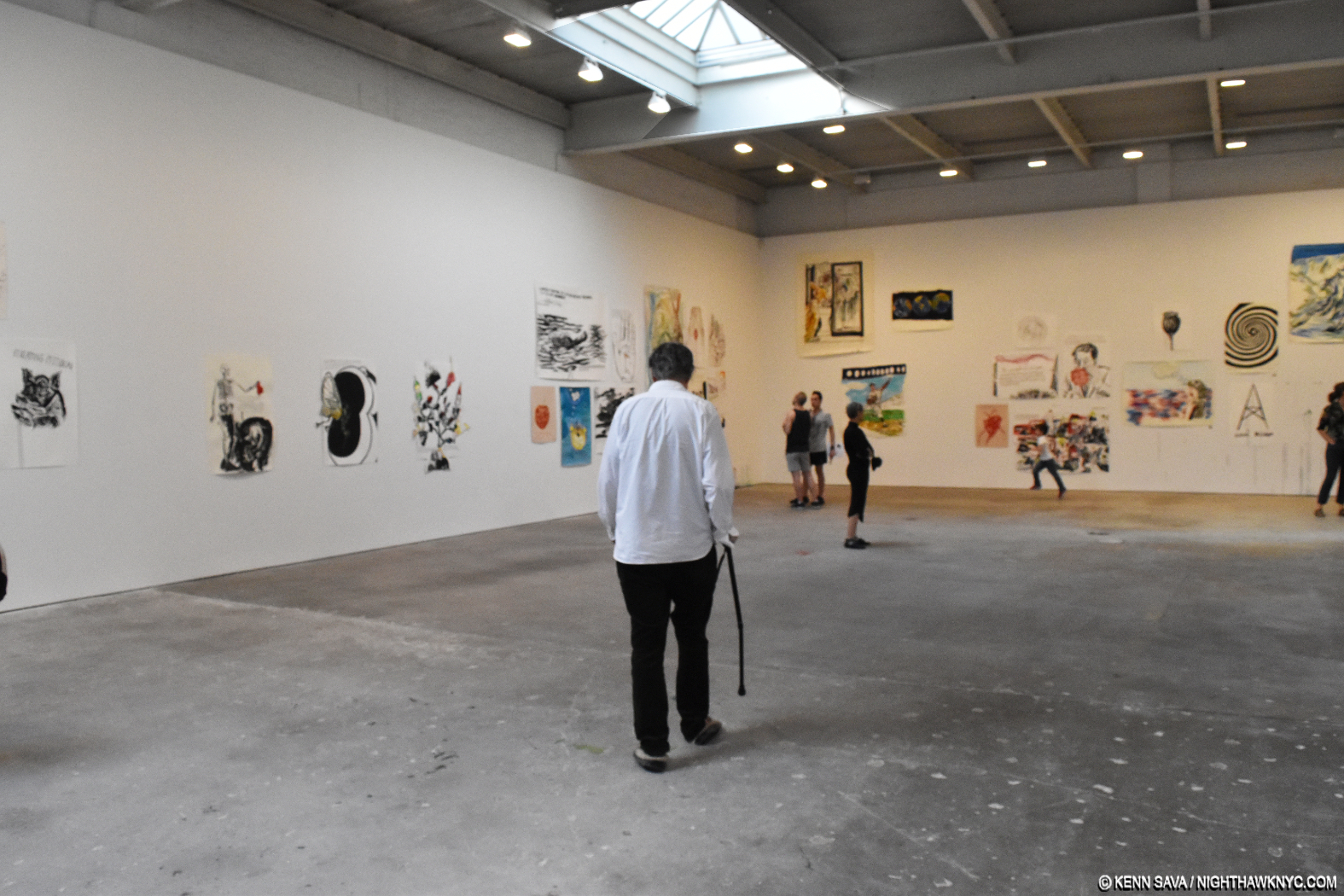
Playin’ hurt. The great Raymond Pettibon enters his show at the opening, April 29, 2017, with a cane. That small figure running in the distance is his son, Bo. Zwrner lent Raymond this space which he used to created the work you see on display. Quite a few paint splotches were to be found on the floor, leading me to think it must have been something to watch him creating these pieces.

9)- “Table for One: Patti Smith’s 18 Stations,” published April 17, 2016. I made about a dozen trips to Patti’s extraordinary Photography show and was shocked to walk in on the show’s last day to find the legend, herself, seated at the famous table she sits at on the cover of M Train signing books alone. She looked up, and realizing I was about to take her picture, cooperated. I then spoke with her, and wound up meeting her daughter as well. As the show closed, I found myself in the gallery with her as she walked through it one last time, trying to imagne what was going through her mind at each stop. I eternally regret not buying one of her Photographs. One of the Top 5 most-read and most-discussed pieces I’ve written.
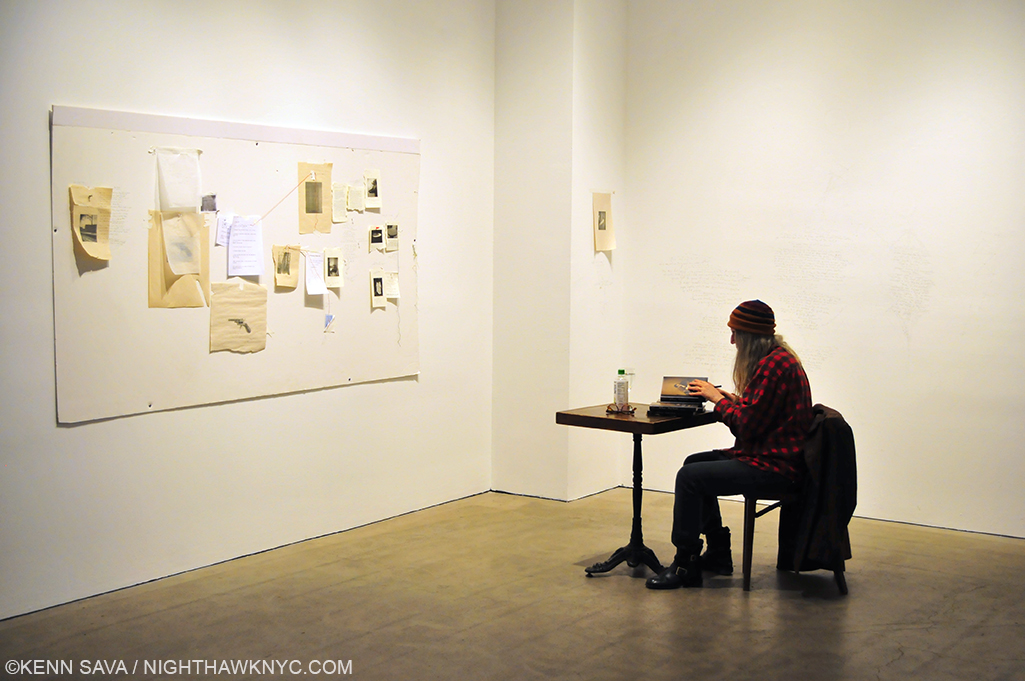
What becomes a Legend most? The one and only Patti Smith sits at her famous table.

B)- “Community Service”
1)- “Art” With a Capital “A,” published February 26, 2020. I should have written it sooner.
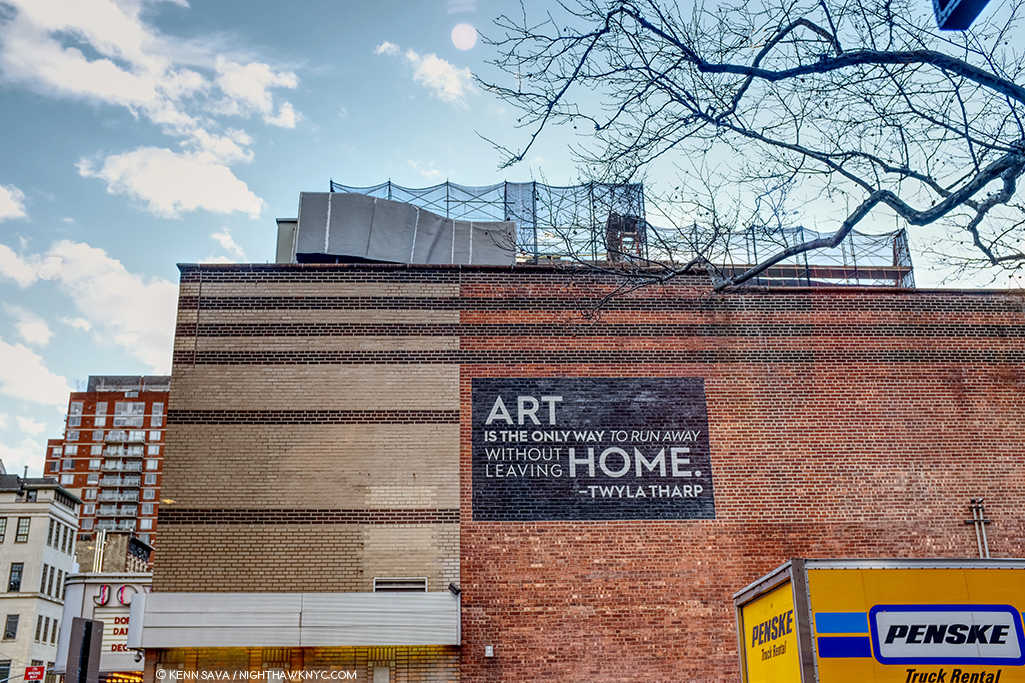
Thanks, Twyla! I couldn’t have said it better. And so, this scene has appeared in my Banner, sans moving truck, a number of times over the years. A look at ALL 41 of my banners this past decade is here. The Joyce Theater, December, 2019, as seen continually staring me in the face from my favorite seat in my beloved Starbucks on West 19th Street, the best SB in NYC. Another loss during the pandemic.

2)- “Death to Boxes!,” published on April 7, 2020. Another I should have written sooner. The problem has only gotten worse.
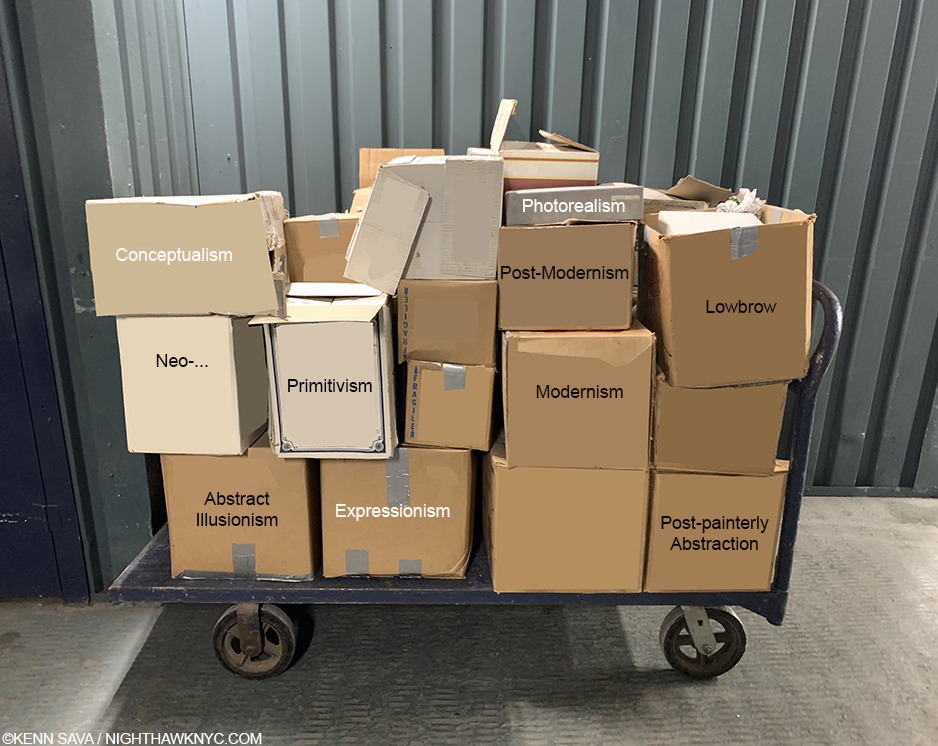
3)- “On Buying Art,” published on July 11, 2017. One I did write early on.
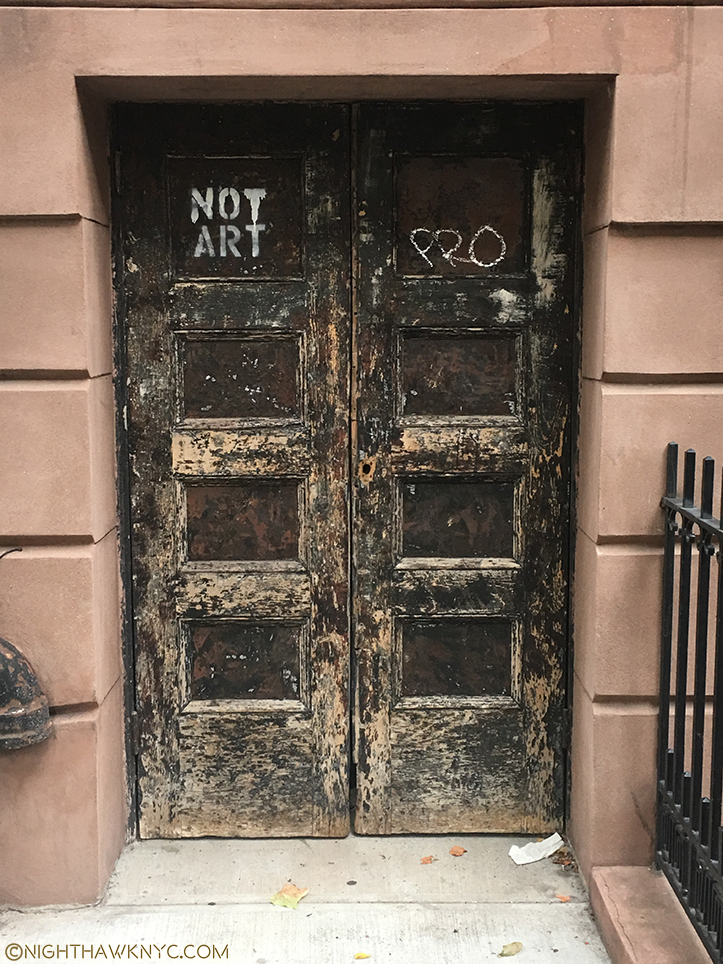
Knowing what not to buy is rarely THIS obvious.

C)- Milestones

“Oh, won’t you stay
We’ll put on the day
There’s a sun show every second”-*

1)- “Welcome to the Night,” published July 15, 2015. My very first piece!
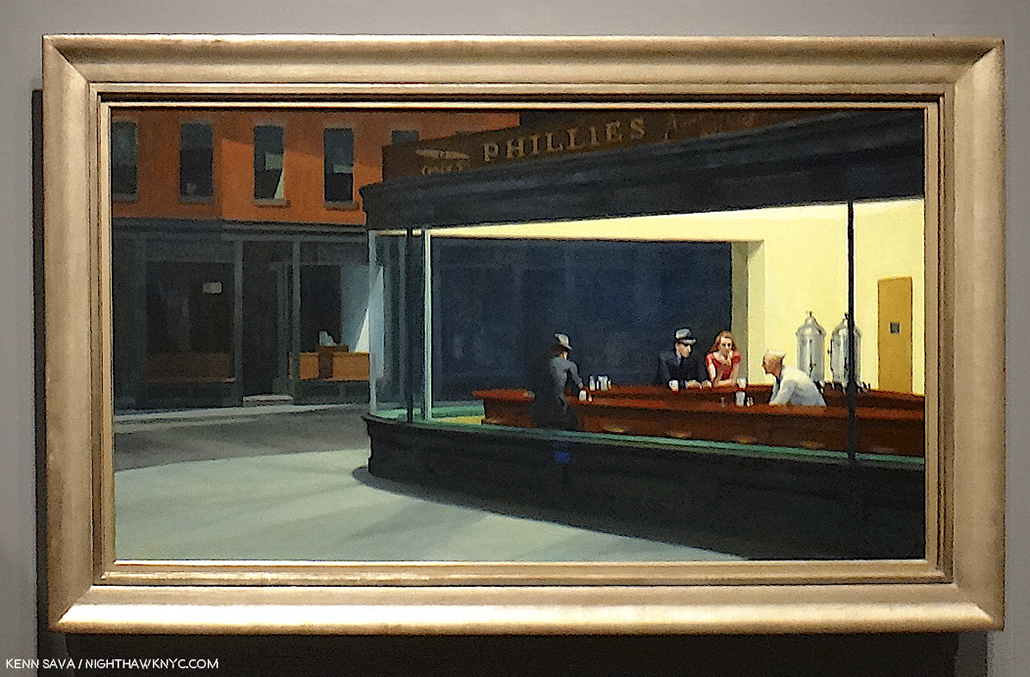
The last time I stood in front of Nighthawks, with my Painted alter-ego, dead center. August 28, 2013, at Hopper Drawing at the old Whitney Museum. Fun fact– I “borrowed” its frame for the frame you see in my banner! Shhhh…Don’t tell anyone.

2)- “Cancer Saved My Life,” published February 7, 2017, on the 10th Anniversary of my cancer treatment. My passion to share what I’ve seen & learned in the Art world comes from surviving with a 20% chance of making it through Year 1 post-treatment without needing more treatment. I’m happy to say 8 Anniversaries have followed- 18 in all! Miraculous.
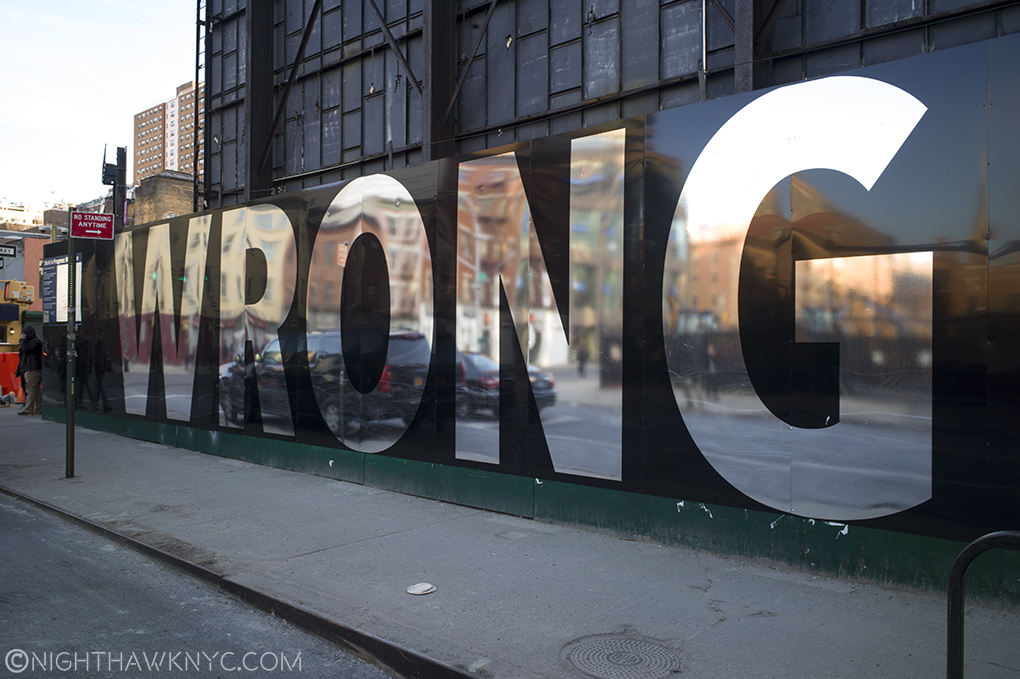
Every cancer patient’s worst nightmare. During my search for cancer treatment, after much research and agonizing, I settled on a treatment. My life was saved by a Doctor who patiently explained why it was the wrong choice for me moments before I was to begin it. Unfortunately, there wasn’t a sign this big to guide me.

3)- “Kenn Sava Named a Finalist…,” published November 25, 2023. I was, and am, honored to be named a Finalist for the 2023 Andy Warhol Foundation Arts Writers Award out of the 500 writers they said they considered.

D)- Journeys
1)- Goya: In Boston & NYC, published January 20, 2016. In January, 2015, I made a day trip to the Museum of Fine Arts, Boston to see their exceptional Goya: Order and Disorder show. A few months later, I saw a show of his complete Los Caprichos at the National Arts Club, here.
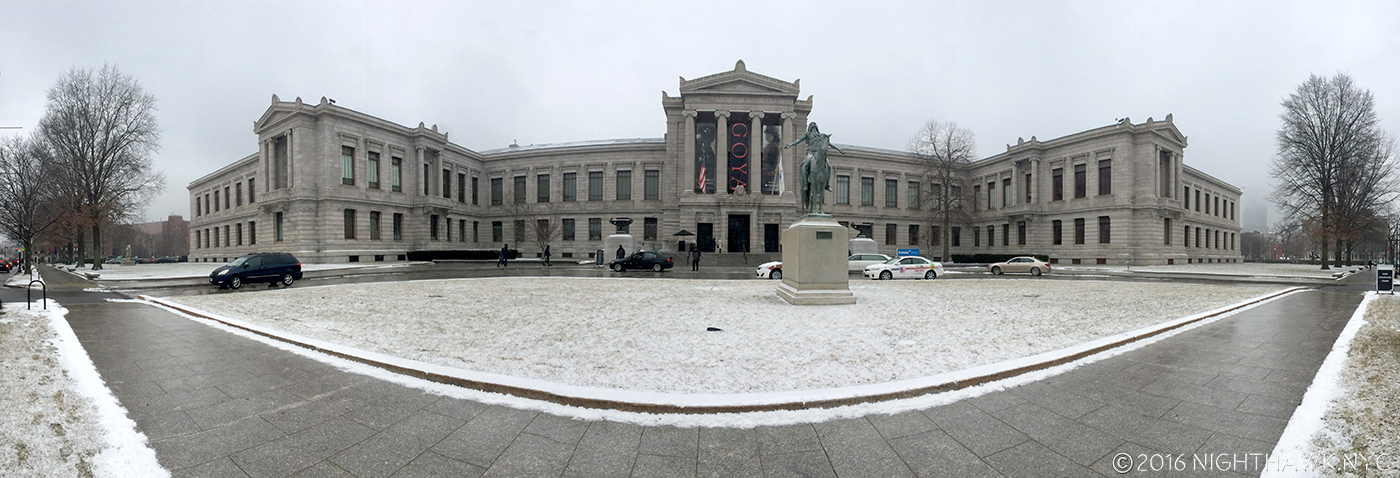
The Museum of Fine Arts, Boston in January, 2015, the last time I went out of town to see an Art show. Of course, I was back in my own bed that night.

2)- “13 Year At The Metropolitan Museum,” a 2-part series, the first part published on July 26, 2015. Though I’m in Manhattan, The Met is not exactly nearby. Nonetheless, I’ve managed to get there over 1,900 times since August 1, 2002. Some thoughts on it from 2015.
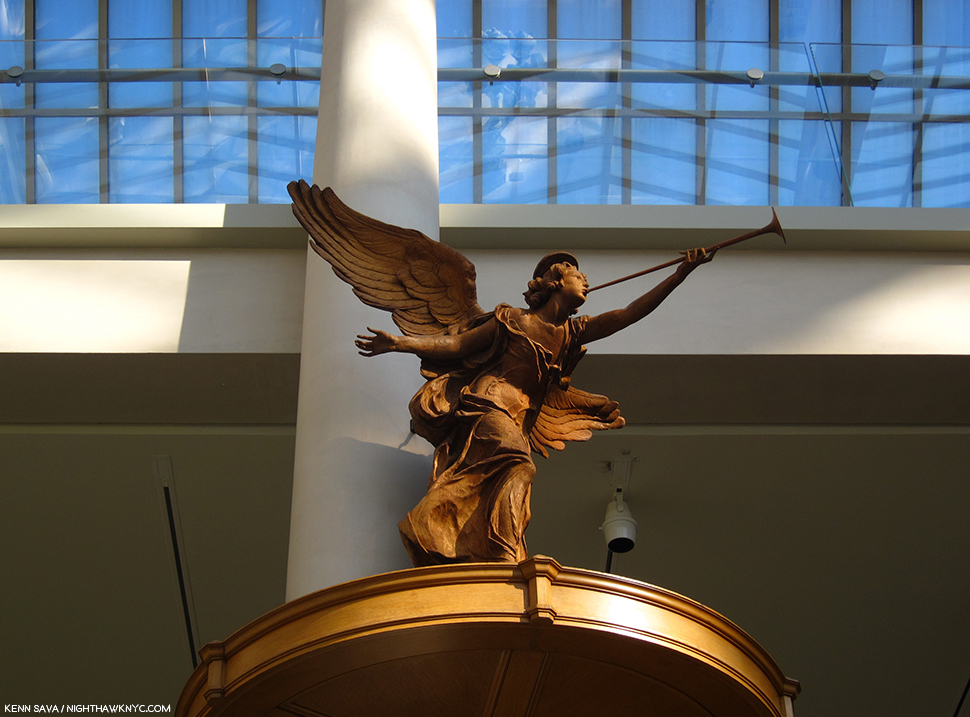
Hark! A Met Angel Beckons me to the Light. To not hear her call is my loss.

3)- “The Met Breuer: Hail, and Farewell,” published on August 1, 2020. I was there on March 8, 2016,  the first Member’s Preview Day, and I was there the moment it closed for the final time on March 12, 2020. In between, I saw more great shows there than anywhere else, largely due to The Met’s terrific Contemporary Chairperson, Sheena Wagstaff, who I’ve also written about at length more than once.
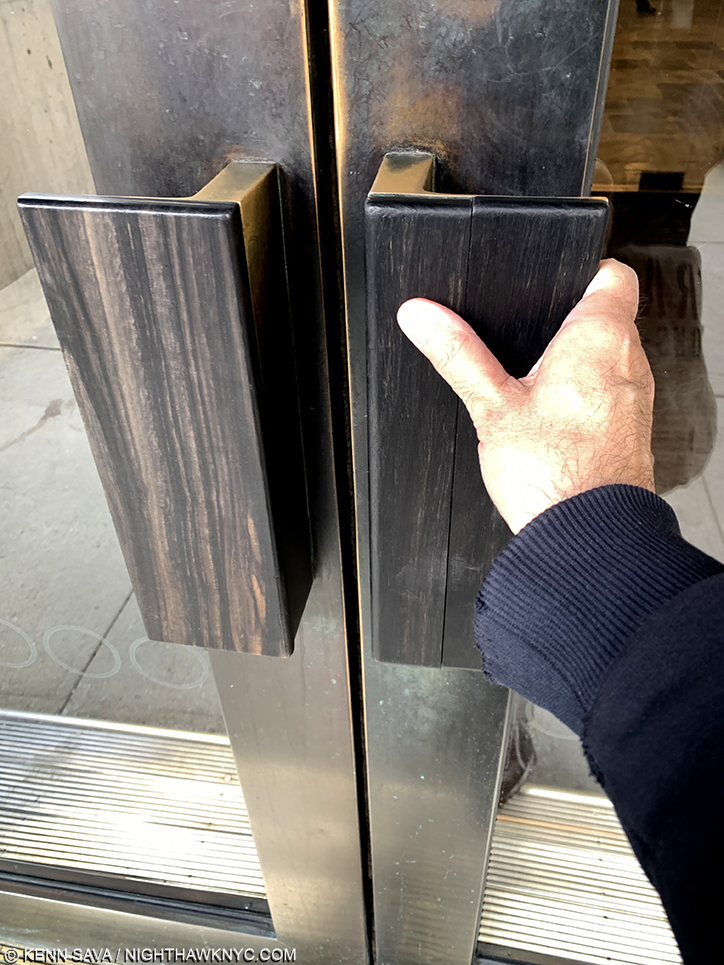
March 12, 2020. I’m about to enter The Met Breuer for what I didn’t know would turn out to be the last time, on what would turn out to be its last day ever.

4)- “Exclusive! A Visit to Raymond Pettibon’s Moscow Show!,” published November 20, 2017. Lana Hattan was able to get an associate to go The Garage and shoot Raymond Pettibon’s 400-piece Moscow Retrospective, Raymond Pettiboyn: The Cloyd o’ Misreadyng,” for me! Though this was before the cessation of relations between the U.S. and Russia, I was unable to make it. Raymond Pettibon made it, though, and created another of his classic Hand-Painted Murals for the show. Given there have been very few large Raymond Pettibon shows since, I’m very thankful to the Hattan Group, who did a terrific job as you can see, for  doing this for me, and enabling me to write about the show for NighthawkNYC readers! It’s the only show I’ve written about without actually seeing in person! It’s something you can’t see anywhere else.
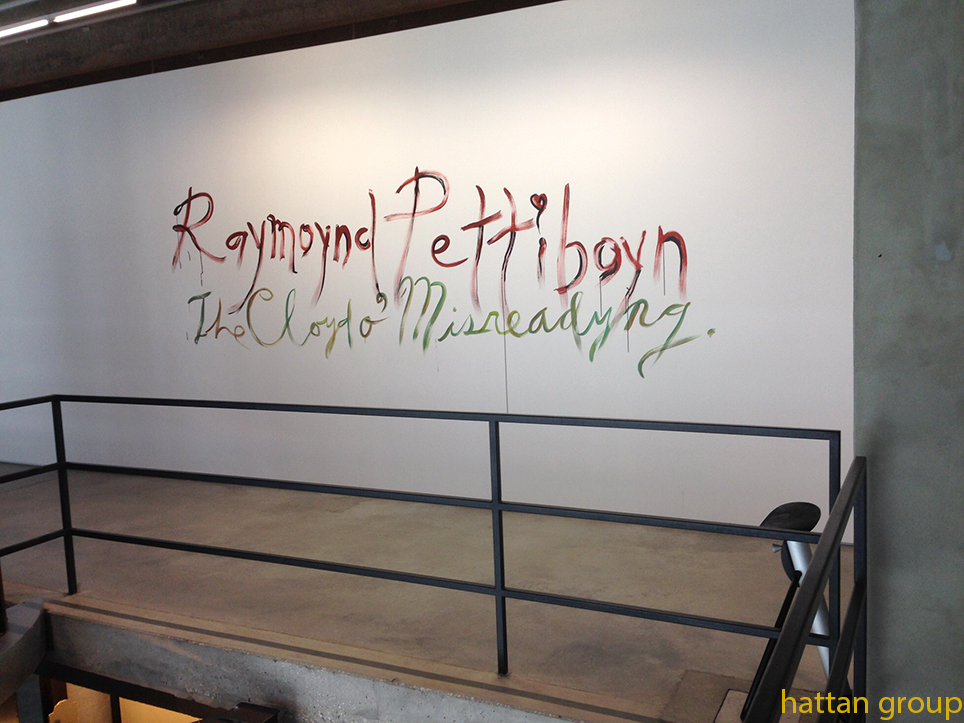
Live, from Moscow’s Garage! The show’s entrance features one of Raymond Pettibon’s famous hand-painted murals, around the corner from this sign. I hope the Russians are up on their “Pettibon English!” Photo by The Hattan Group for NighthawkNYC.com.

4)- “Antoine de Saint-Exupéry: Artist,” published on March 21, 2023. I’m self-taught at everything besides reading/writing and basic math thanks to a terrible school system and not being permitted to go college. As a result, I had never read The Little Prince, as hard as that is to believe, until Lana, whose favorite book it is, insisted I do. Of course, I immediately got hooked, like hundreds of millions of others have. We were lucky enough to attend the wonderful show of his work at the Morgan Library, and I returned there in 2023 for their show on the Art of Saint-Exupéry. The piece took on a life of its own after the French Ambassador to the U.S saw it and invited me to Washington, D.C. for a dinner he was hosting in honor of the 80th Anniversary of the publication of the book.
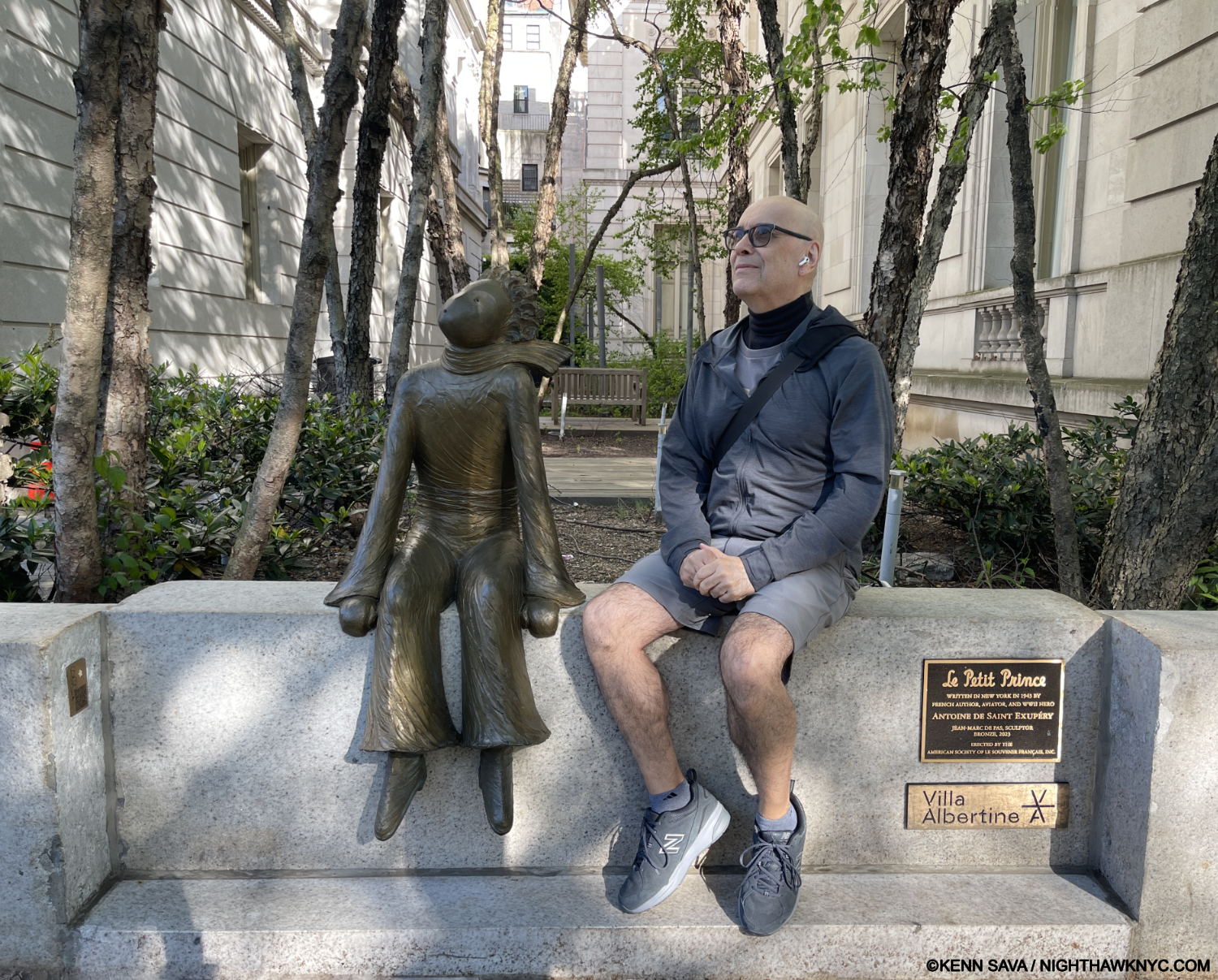
I join Saint-Ex’s most beloved creation in waiting for the return of his Asteroid. Hurry up, already! May 10, 2025. My thanks to the kind lady who took this.

E)- Epics
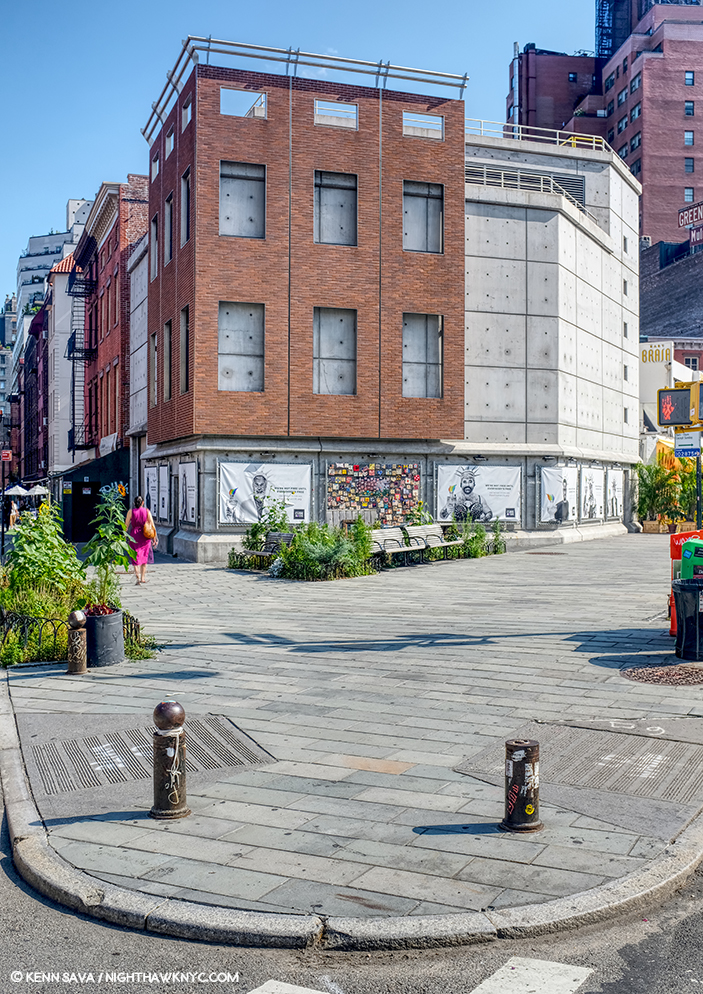
1)- “The New Whitney Museum: The Roofdeck of American Art,”  published August 1, 2016. I worked on my look at the “new” Whitney Museum for over a year after having been a voice against the expansion of the old building. Now that it’s 10 years old, nothing has changed anything I said about it.
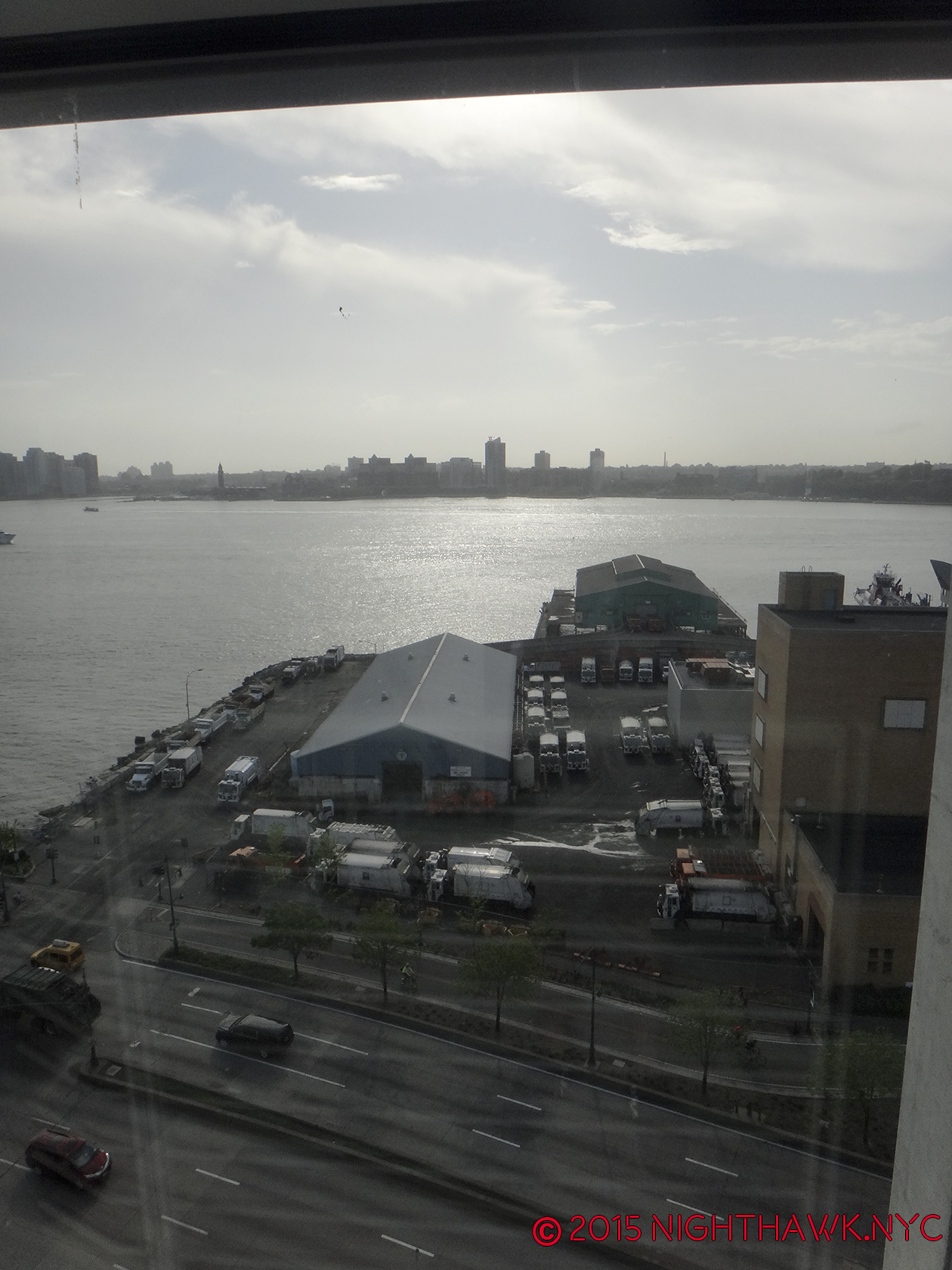
Nothing has changed except the Department of Sanitation complex in front of the museum, seen here in 2015, has been replaced with a park.

2)- “This Summer In ‘The Era of Rauschenberg,'” published September 19, 2017. I spent my summer going to MoMA’s Robert Rauschenberg: Among Friends (24 times) and the 4 Rauschenberg satellite shows going on around town. The Rauschenberg Foundation was impressed to the point that they invited me down for a private tour of their entire facility, his former studio, which was beyond an amazing experience for this long-time fan.
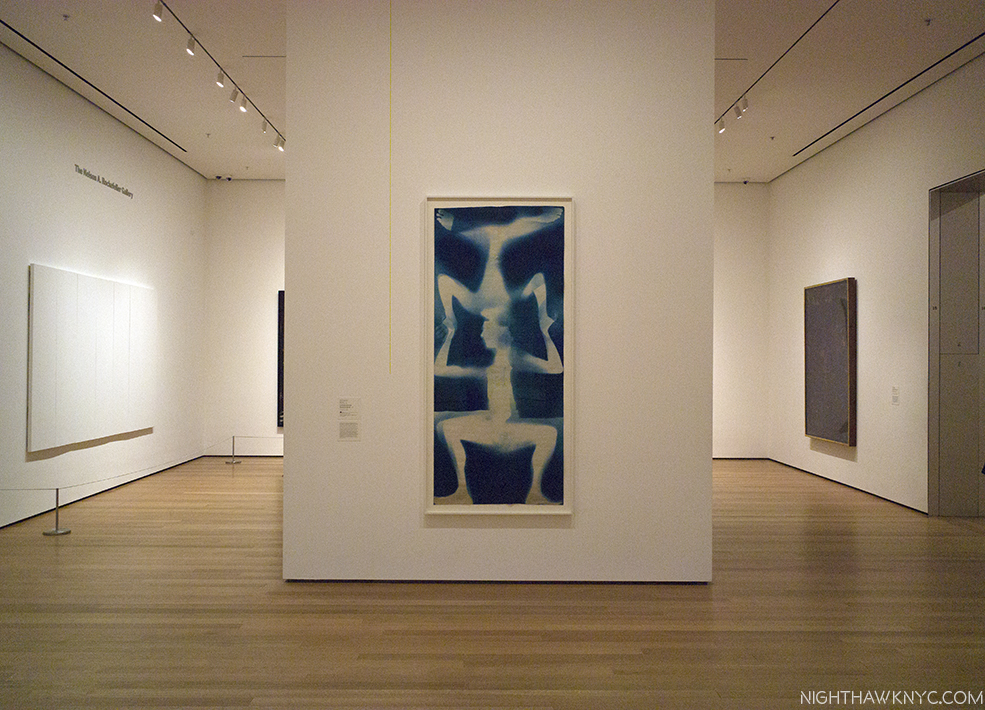
One nice note- The Rauschenberg Foundation informed Sue Weill, Aritst (and collaborator with him on Untitled (Double Rauschenberg), c.1950, Monoprint; Exposed blueprint paper, center)  & former Rauschenberg girlfriend, about my inclusion of her in this piece and others, and told me she was pleased to hear it. Partial installation view of the first gallery of Robert Rauschenberg: Among Friends. 

3)- “Richard Estes: Painter. With No Prefixes,” published May 22, 2022. I was surprised to see nothing else printed on the occasion of Richard Estes’s 90th Birthday, which I take as another reminder that the Art associated with  “photorealism” is still not of interest to almost all of the world’s museums. I agree with them on most of it. Yet, (see my piece on boxes, above), some Artists have been stuck in this box, or other boxes, without their consent. I don’t quite see Richard Estes work the way many others seem to. My 3-part series, built on decades of looking at his work, addresses just this.
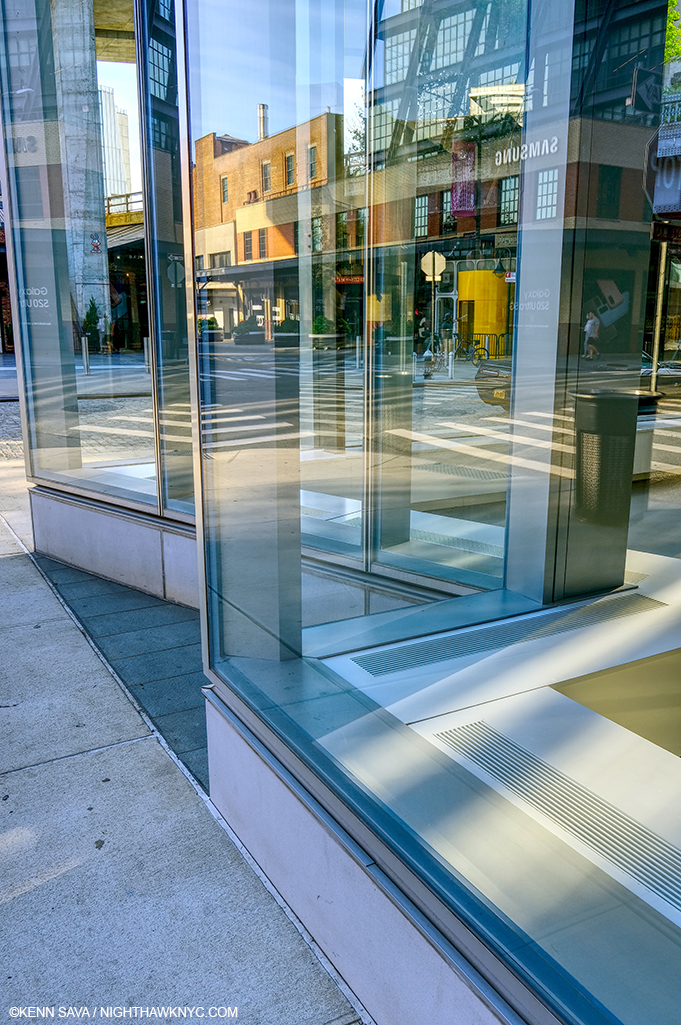
Kenn Sava, Homage to Richard Estes, NYC, May 27, 2020. Richard Estes was one of the first Artists to influence how I see the world. i.e. he helped open my eyes to the world around me everywhere!

4)- “Jean-Michel Basquiat at the Brant Foundation,” published October 6, 2019. Basquiat has been THE most popular Contemporary Artist for the entire existence of NighthawkNYC, yet, I didn’t know much about his work going in. When my friend, Kitty, told me about the Brant Foundation show, I decided to go, try and get up to speed on his work, and see what it said to me. As I sit here now, I’ve written more about Basquiat than any other Artist! And, I’ve seen more Basquiat shows since 2012 than I have by any other Artist. Both of those facts shock me. They just happened, primarily out of my desire to give his work as in-depth a look as I could. Along the way, I saw virtually every book ever published on his Art, and met and spoke with both of his sisters. The Brant piece is the first piece I wrote on his work. All the others may be seen doing an Archive search for Jean-Michel Basquiat.
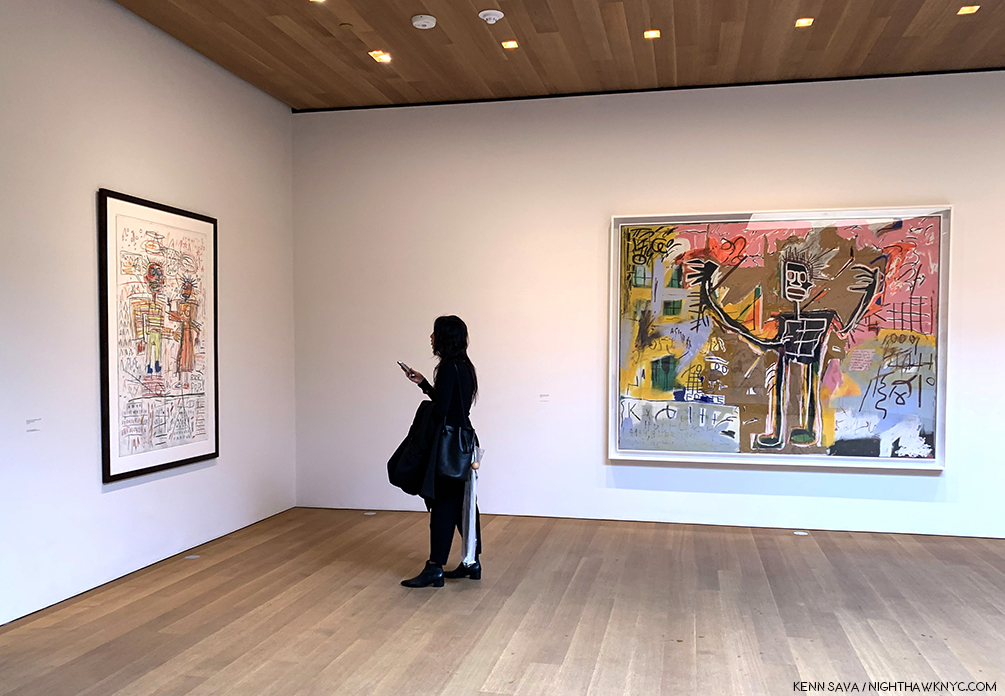
Lisa at the Brant Foundation Basquiat show studying Self-Portrait with Suzanne, 1982. There I was, standing outside in the rain for a solid hour, without my umbrella which had gotten left in the cab, without a ticket on the show’s last day, having failed to get a press pass. A staff member who had tried to help me circled back around and told me a visitor, Lisa, had an extra ticket, which she was kind enough to give to this total stranger. Thank you, Lisa. You set in motion what would become an epic journey of Artistic discovery. And oh, by the way, I subsequently paid $45 to get into Basquiat: King Pleasure, the show mounted by his sisters, even though I was going to write about it for free. Did The New York Times pay to get in, too?

5)- “700.000 Michelangelo Fans Can’t Be Wrong“, published March 4, 2018. A labor of love born out of a dozen visits to The Met’s once-in-a-lifetime blockbuster that 700,000 saw. More an effort of trying to remember as much as possible of what I saw because I knew I’d never see it again.
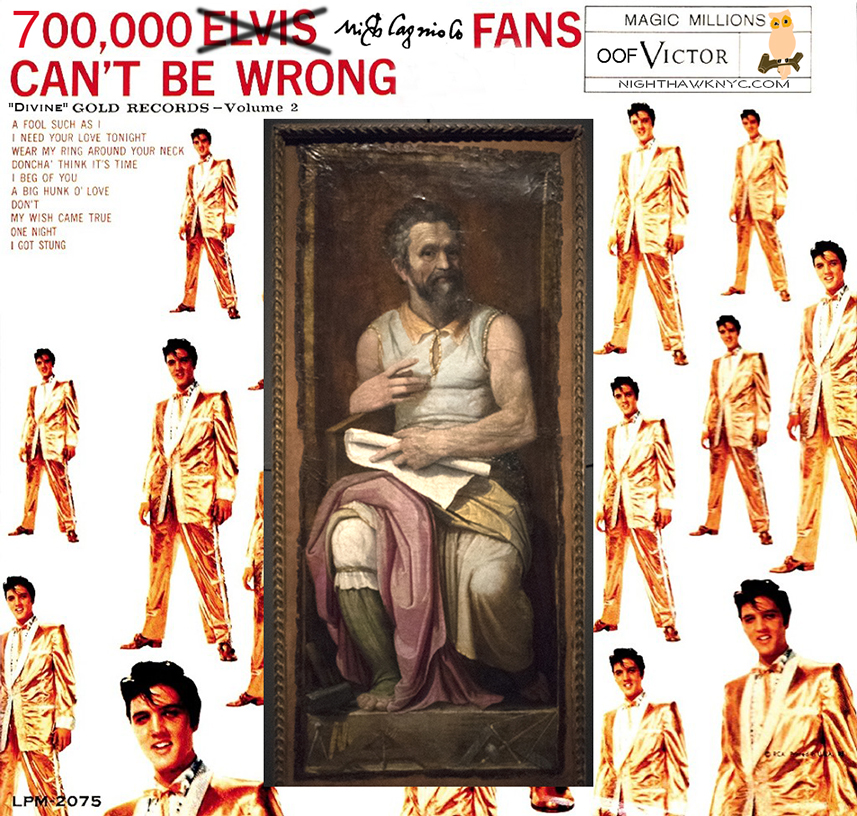
Take that, Elvis, who’s 1959 album title, and cover, I just borrowed. Michelangelo was the “King” of a different kind of rock. Old school rock.

6)- “A Year Without Art,” published May 7, 2021. Never in my wildest dreams did I ever think I’d go an entire year without being able to see Art! Well? In 2020-1, it happened.
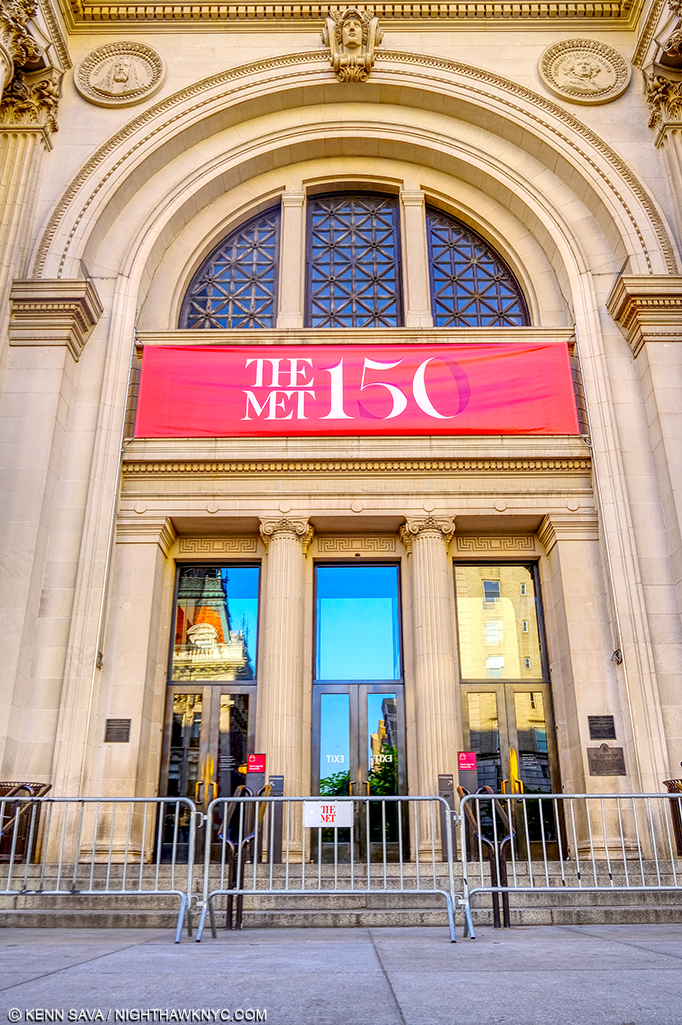
The Met’s famous main entrance, gated, during the 5 months it was closed, on May 21, 2020, unprecedented in my lifetime. Probably not the way they drew up celebrating their 150th Anniversary.

7)- The Photography Show, 2018, published April 23, 2018. I look back in disbelief at how much work I did around AIPAD, The Photography Show in 2018 and 2019. 4 part series on each…countless meetings with Photographers…endless looking all followed by months of work on the pieces. I didn’t make a dime doing it. I hope they appreciated it!
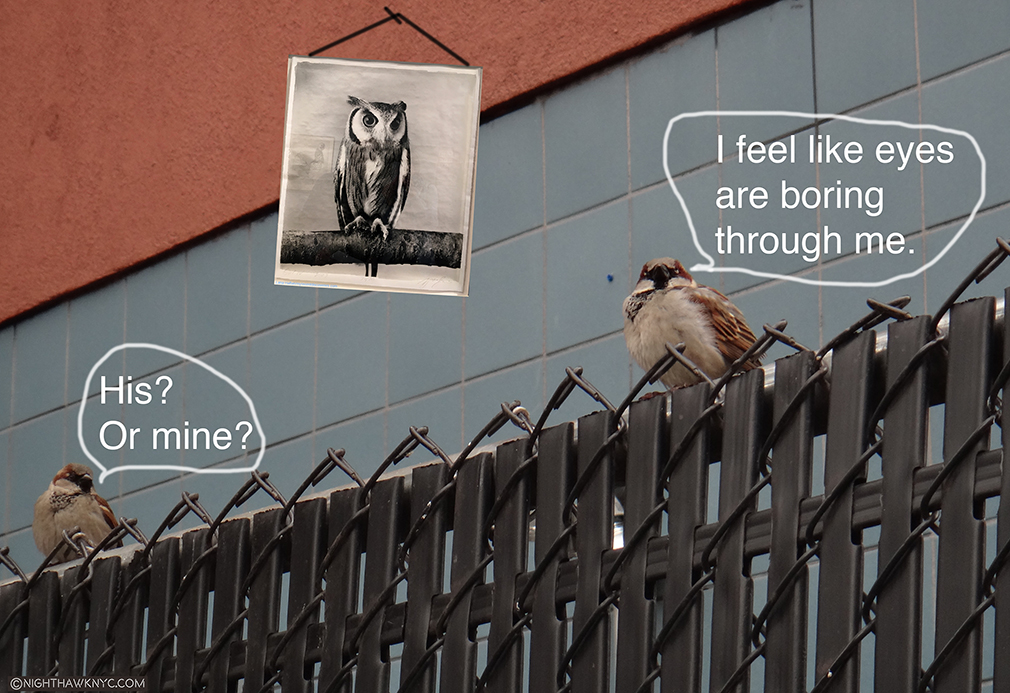
“On The Fence, # “The Wall Has Eyes” Edition. The Birdies, my fine feathered friends from their West 24th Street perch, that ran in my popular occasional featurette, “On The Fence,” for over a year. This one was included in my 2018 Photography Show series. I never replied to the reader who suggested I give up Art writing for “photo funnies”  as he called them- until now. I’m still thinking about it…All installments of “On The Fence” are here.

8)- “Ai Weiwei & The Value of One Refugee“, published January 7, 2017. The centerpiece of a group of 4 2016 Ai Weiwei shows, Ai Weiwei: Laundromat was a show unlike any other I saw this past decade, Ai & his team collected clothes, shoes and other artifacts left behind by refugees in the various camps he visited during the European Refugee Crisis and arranged them to compelling effect achieved in concert with countless Photos on the walls he took documenting what he saw and reproductions from media and social media accounts under foot. I wrote about all 4 of the shows, but Laundromat has lingered long in my memory. It was hard to visit the show and not think of Ai’s own experiences, which made him an almost ideal witness.
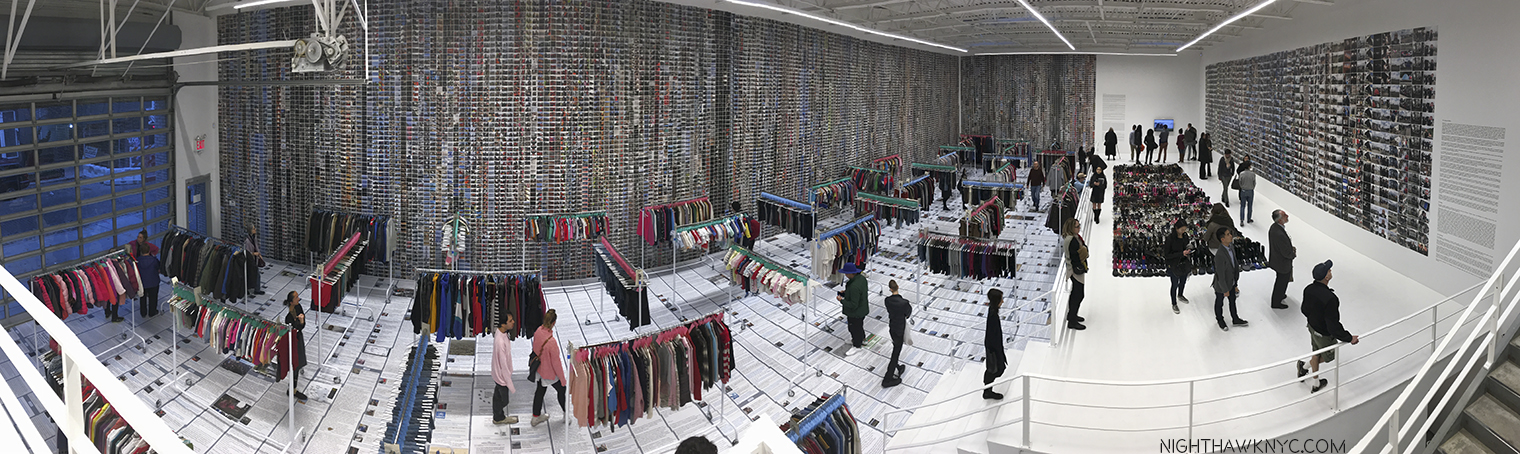
Birdseye view of almost the whole show.

9)- “Edward Hopper’s Impressions of New York,” the first of 3 pieces on the show published May 5, 2023. Wait. Who else has written multiple pieces that look at different aspects of one show? Maybe someone else has. I haven’t seen it. That’s exactly what I did for the blockbuster Edward Hopper’s New York at the Whitney, AND for MoMA’s Ed Ruscha/Now Then.
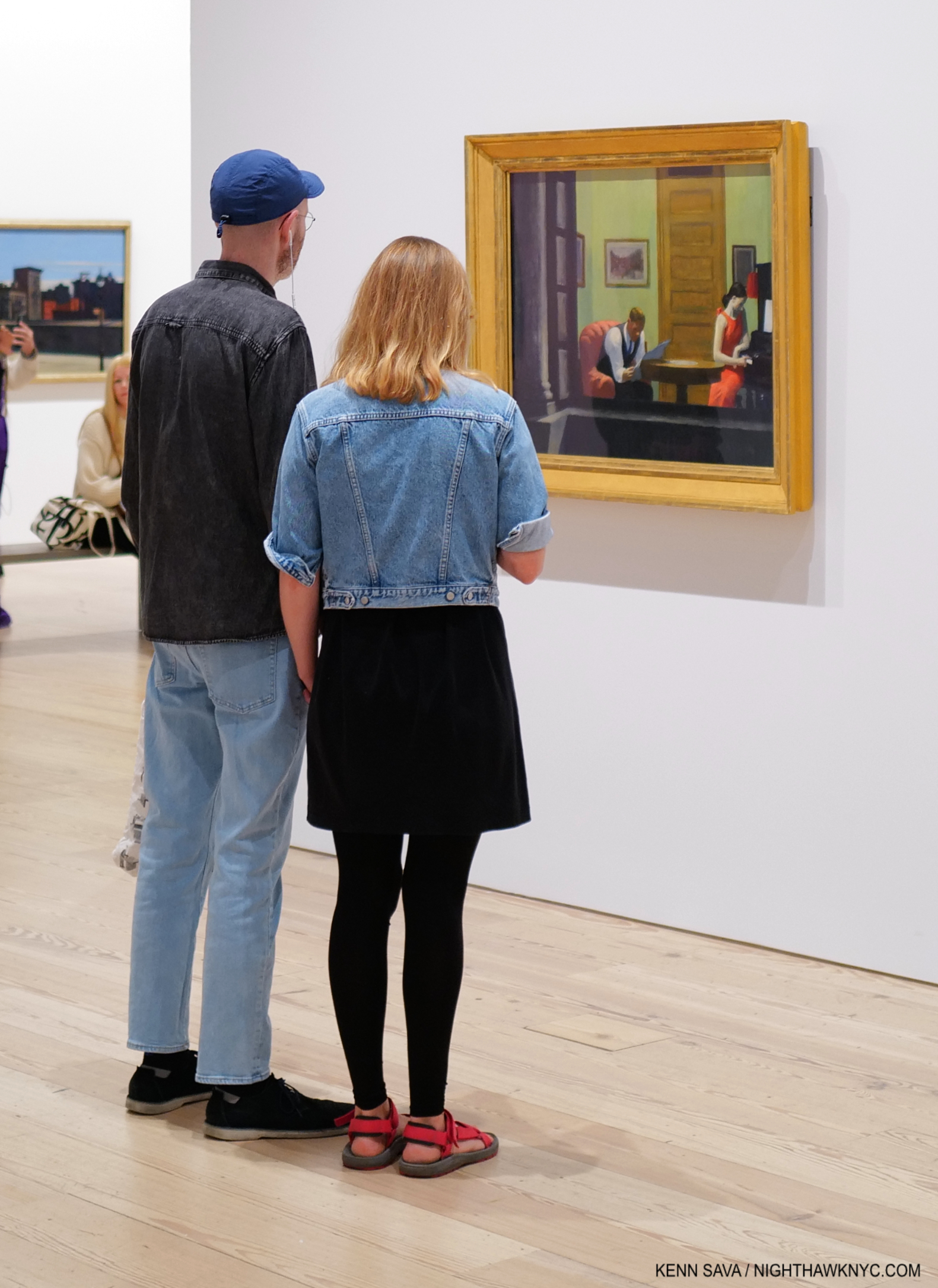
Edward Hopper’s New York, October 27, 2022.

10)- “NoteWorthy Art Books of the 21st Century,” published June 10, 2025. This, and NW PhotoBooks, the two biggest pieces I’ve ever written, represent my sharing what I’ve seen and learned over the past 50 years I’ve spent looking at Art books, and almost a decade of intensively looking at PhotoBooks. Having begun them last September, right before I announced I was taking a break, they kept gnawing at me in a “You HAVE to finish these!” way. The Epics of Epics on this site, an immense amount of looking and consideration went into both pieces. Usually, I worked on up to 4 pieces at a time. I can’t imagine working on anything else in the 10 months it took to write these.
That makes me wonder- Has anyone else (any other single person) written a list of recommended 21st Century Art Books AND a list of 21st Century PhotoBooks?
The Introduction to both pieces is here.
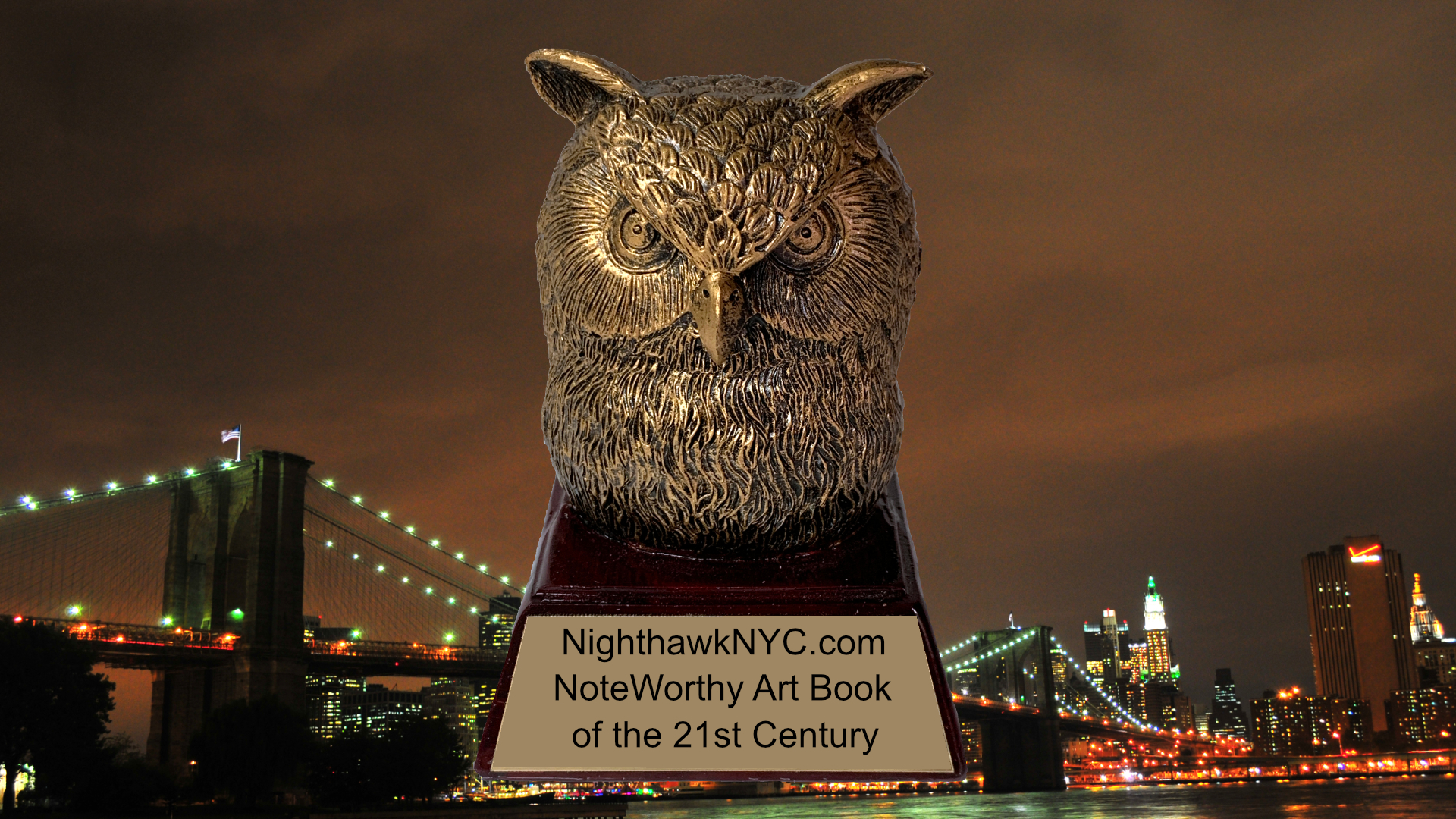
The “Golden Oof,” named for my Avatar.

11)- “NoteWorthy PhotoBooks of the 21st Century,” published June 25, 2025. Marks the end of my “deep dive” into Modern & Contemporary Photography that I began in December, 2016- There I just said it.
[A moment of silence.]
What did I learn from all of that? I stand by what I said here in 2019.
This “Painting guy” is going back to focusing on Painting. You heard it first.
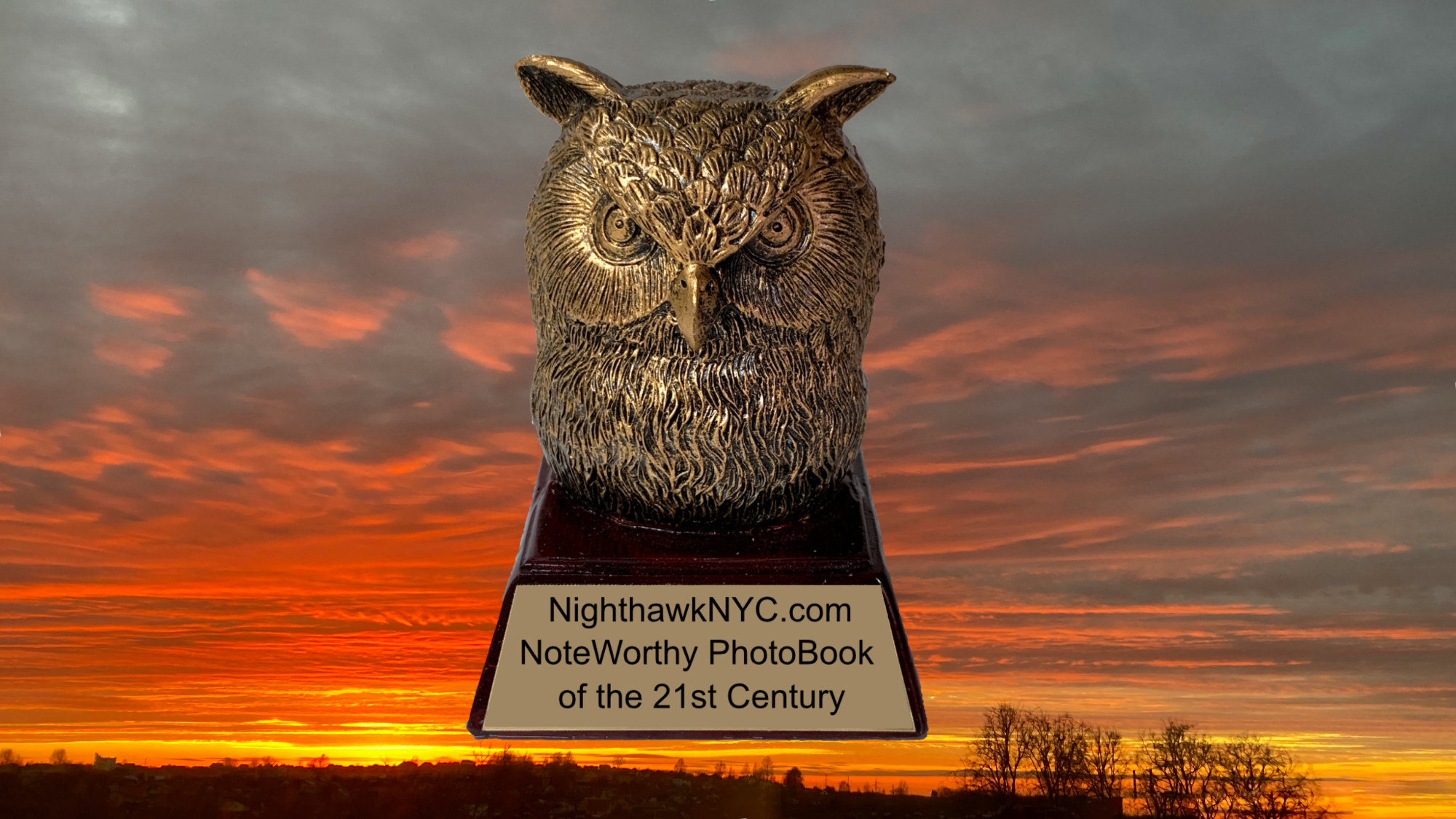
NoteWorthy Sunset Photo by Lana Hattan.

Part 2- Where I’m Going

“Oh, won’t you stay
We’ll put on the day
And we’ll talk in present tenses”-*

1)- NighthawkNYC/Kenn Sava’s Art writing
I’m sorry to say that nothing has changed since I announced I was taking a break in September, 2024. There remains no means of support for independent Art writing. Surviving remains my #1 to #10 priority. I continue to work on the site remaining up. If something changes? I’ll let you know. 
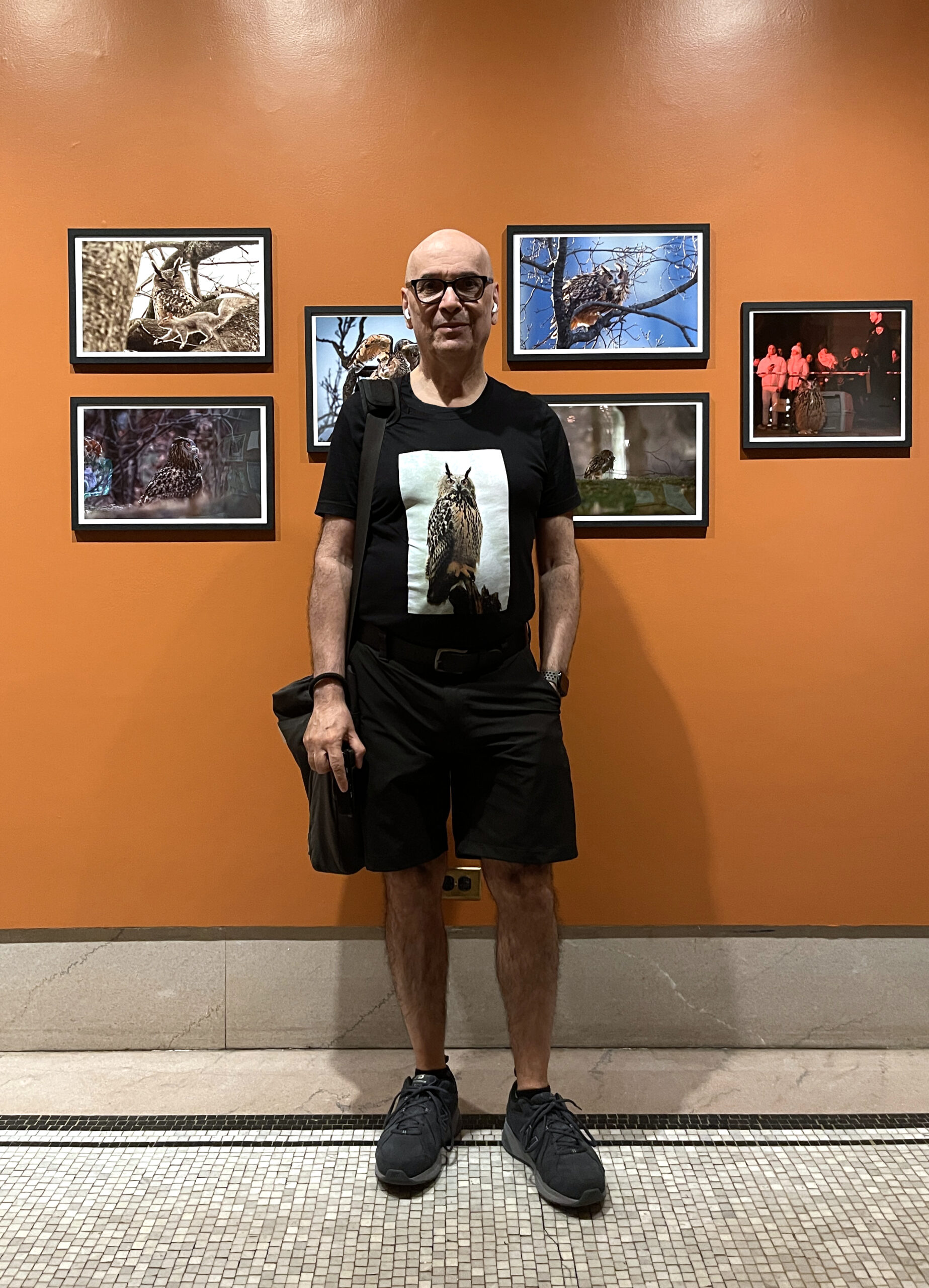
Flaco Lives! Kenn Sava at The Year of Flaco exhibition (in a Flaco T I had made last year), in front of a section of Photos of him early on in his freedom. The picture far right was taken right after he escaped from the Central Park Zoo. After never having been outside in his entire life, he suddenly found himself on Fifth Avenue & 60th Street! Maybe that’s why I’ve never seen a picture of him with his eyes so wide open. New York Historical, July 3, 2025. My piece on Flaco, written about a month and a half before his tragic demise, is here. My Thanks to Marybeth Ihle of the New York Historical.

2)- Kenn Sava, Producer
I’m hoping to re-release The Fuschia by Thomas Chapin, Peggy Stern, Drew Gress and Bobby Previte this year, and also finally release my solo album Strawberry Fields Forever.
Though I produced both projects, releasing and re-releasing them is not about me. Both were recorded in the mid-1990s, and, sadly, since then a number of the great Musicians who participated in them have passed away. I feel a sacred duty to them to get their work out there/back out there. Stay tuned. 

Coda- Before I “Go” Anywhere…
I started this site for one reason- To share what I’ve been lucky enough to see & experience in NYC and in Art & books with my fellow Art lovers around the world. I had a lot of passion, but no business plan.

While doing NighthawkNYC has been quite the financial hardship, I’m proud of the fact that readership has gone up each and every single year. Thank You to everyone who’s read one, or all, of my 350+ pieces here this past decade.

I especially want to Thank those of you who have made donations or bought pieces of my collections to help keep me going! For the rest of you, if you find, or have found, what I’ve done here since 2015 worthwhile, YOUR support is needed to keep this site up, and possibly, enable me to write more.

When the curtain closes
And the rainbow runs away
I will bring you incense
OWLS BY NIGHT (Caps mine ; ) )
By candlelight
By jewel-light
If only you will stay
Pretty baby, won’t you
Wake up, it’s a Chelsea morning”-*
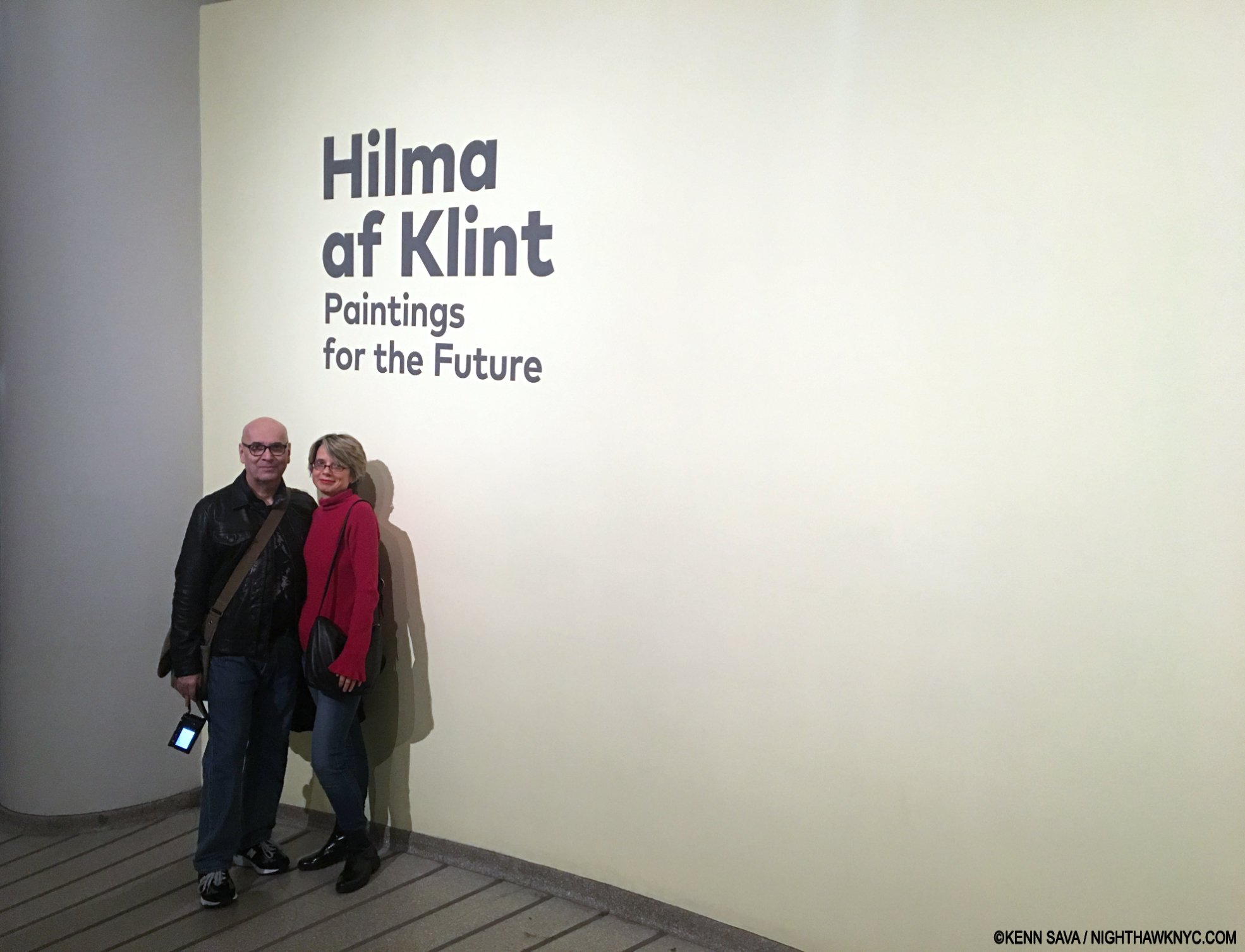
With Lana Hattan at Hilma af Klint: Paintings for the Future, the most recent show we’ve been able to see together at both of our favorite NYC building- The Guggenheim Museum. New Year’s Eve, December 31, 2018. My Undying Thanks to the woman who approached us and insisted she take our picture.

Finally, Thank You to Lana Hattan for pushing me to start writing about Art, and for your continual support through some thick and a lot of thin, every step of the way.
As I’ve said before, if you’ve found ANYTHING I’ve done here worthwhile, she’s the one who deserves your thanks.

As for me? I MADE IT TO 10 YEARS!
Kenn Sava.
July 15, 2025

P.S.- Feel free to drop me a line and let me know if I left out a piece you found particularly NoteWorthy.

For more- Check out my look back at “A Decade of NighthawkNYC.com Banners,” which have uncannily come full circle, here!

*- Soundtrack for this piece is “Chelsea Morning,” by Joni Mitchell, referencing her apartment 5 blocks from where I am writing this, and where I’ve written all of the 350+ pieces on NighthawkNYC. Joni moved here in 1967, before my time here, and proceeded to write a number of her early songs here. Just another of the Legends who’ve lived in my neighborhood, like Patti Smith. She performs it here in 1969-

 

Stepping Into “Edward Hopper’s Nighthawks”

This site is Free & Ad-Free! If you find this piece worthwhile, please donate via PayPal to support it & independent Art writing. You can also support it by buying Art & books! Details at the end. Thank you.

Written & Photographed by Kenn Sava.

The numeric convergence begins. August 28, 2013, eleven years ago next month- – The last time I stood in front of the real thing- Edward Hopper, Nighthawks, 1942, at Hopper Drawings at the old Whitney Museum. A moment later, a friend snapped a picture of me standing next to it. Would I ever get closer to it? Pictures in this piece are thumbnails. Click any for full size.

The Edward Hopper/NighthawkNYC Convergence, 1-

July 15, 2015, nine years ago this month, in my very first piece, “Welcome to the Night,” I mentioned I’ve always related to that figure sitting by himself with his back to the viewer in Edward Hopper’s Nighthawks, 1942. The one that no one ever talks about. Why is he even in the Painting?  Well, he’s really only half in it; his left side completely blends into the black background. So, what’s his deal? Did his date go bad? Is he worried about the recent outbreak of World War II? Is he waiting for the lady in red to lose her guy? (The couple are likely Edward & Jo Hopper stand-ins.1).  Well, he’s there and I’m glad he is. He’s also a witness to everything going on inside, close enough to the other subjects to hear their conversations. In Nighthawks, he has THE ideal seat to see and hear everything that’s really going on, that the rest of us can only imagine.

I’ve been that guy too many times to count, out on my own late at night in Hopper’s Greenwich Village neighborhood. I relate to that “witness” aspect of him, too. After all, isn’t that what I’m doing here; being a witness to the Art, Photography, Music  books I’ve experienced?. So, I named this site NighthawkNYC after him. Hopper’s Painting is titled “Nighthawks.”

But, what would it be like to be him?

Triple self-portrait, August 28, 2013. “That shape is my shade, there where I used to stand,” as I quoted Steely Dan’s “Deacon Blues” in my very first piece, “Welcome to the Night,” on July 15, 2015.

Convergence 2-

On July 29, 2019, five years ago this week, I published “My Search For Edward Hopper’s Nighthawks Diner,” chronicling my decades-long quest to find the iconic eatery/drinkery. It’s turned out to be my most popular piece thus far.

This past Sunday, July 21st, I finally found it!

It happened to be on a triangular corner- Check.
It happened to be in the West Village, not all that far from 3 Washington Square, where Edward & Jo Hopper lived for half a century- both key criteria the real deal has to fit- Check.
But, it was not where I’d looked for it as I wrote in the piece. It was out in the open! Without a roof!?

I let that slide. After all, in the Painting we really can’t see the ceiling, just the light coming down, and it’s a one-story building shown at night. Maybe there was no roof? Imagine that. “Maybe. Maybe not,” I hear you saying.

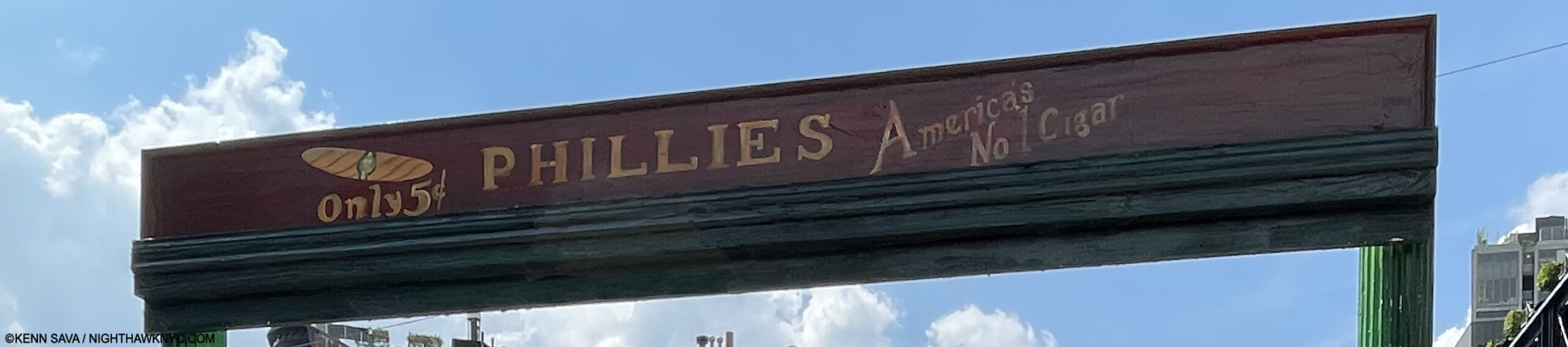
The famous “Only 5c Phillies America’s No. 1 Cigar” sign was up top- Check.
The outside was painted in that familiar green- Check.

Everything looked like it was supposed to. Am I dreaming? Then, a nice gent named Nilo beckoned me inside!

As I approached the counter, about to take “my”place- the only seat I was interested in taking,  all the details long engrained in my memory were right in front of me.

It was empty. Wow. Perfect! I could look around and drink it all in without feeling self-conscious. Wait!…AM I conscious? A coffee will wake me up. I’m in the right place.

Living a dream…Kenn Sava, left, Lucas, right. July 21, 2024, Meatpacking District, NYC. Photo by Nilo for NighthawkNYC.com.

I could take the seat of my alter ego in peace, without that pesky couple, she in the flame-red dress, with her male companion, who for the past 82 years have gotten all the attention, in the room. I was free to finally chat with the counterman. His name was Lucas and I told him how long I’ve been looking for the place- and even wrote about just that, the nice weather, what else was going on this weekend. You know, small talk; the kind of stuff strangers talk about when they’re suddenly thrust together. But, we weren’t total strangers in the classic sense. We both knew why we were here. As he went back and forth to his duties, I just kept looking around, drinking it all in. Wow. I’m sitting inside of Nighthawks!

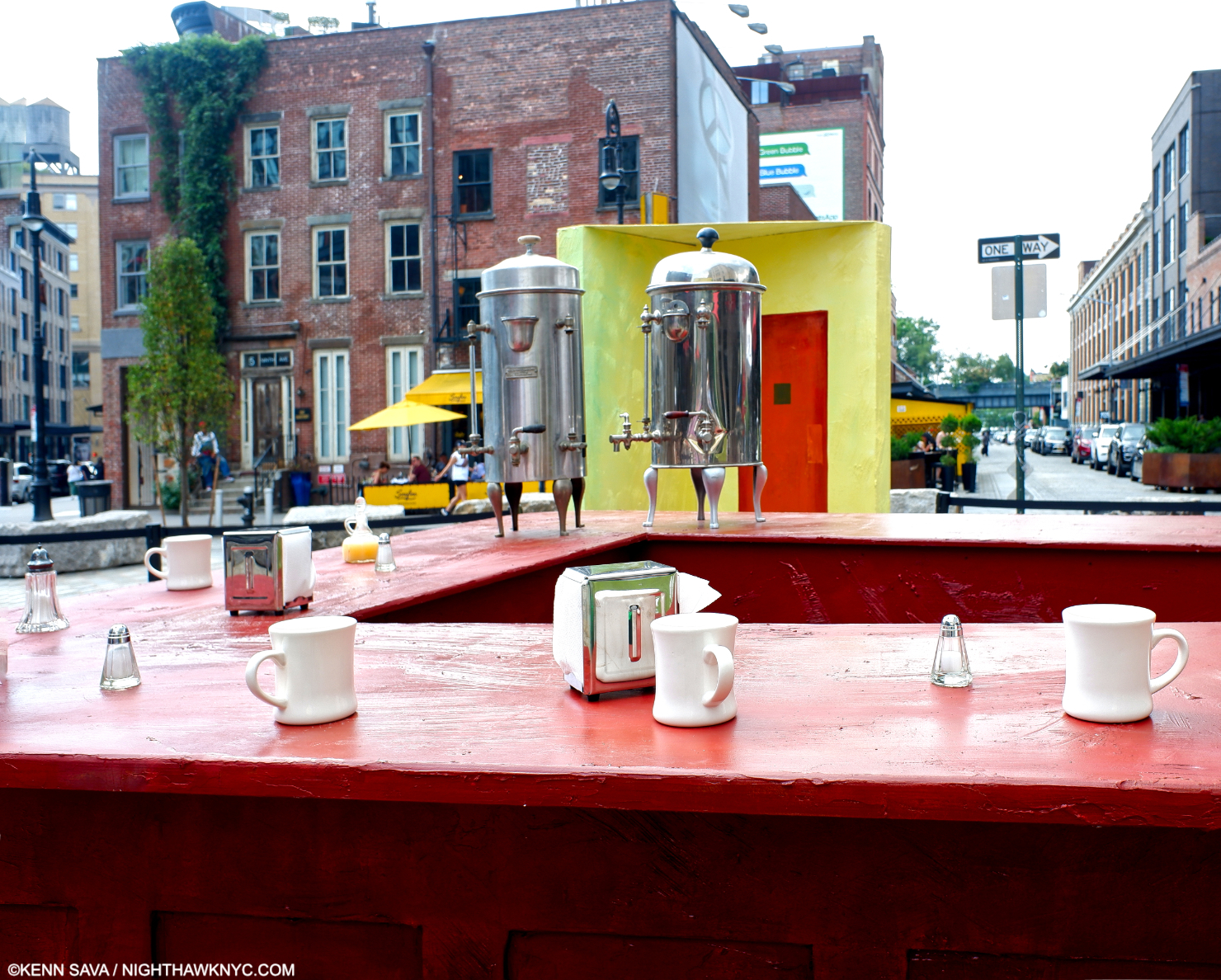
There’s the famous two large coffee urns.
There’s the yellow wall with that mysterious door.
The bar was the familiar brown.
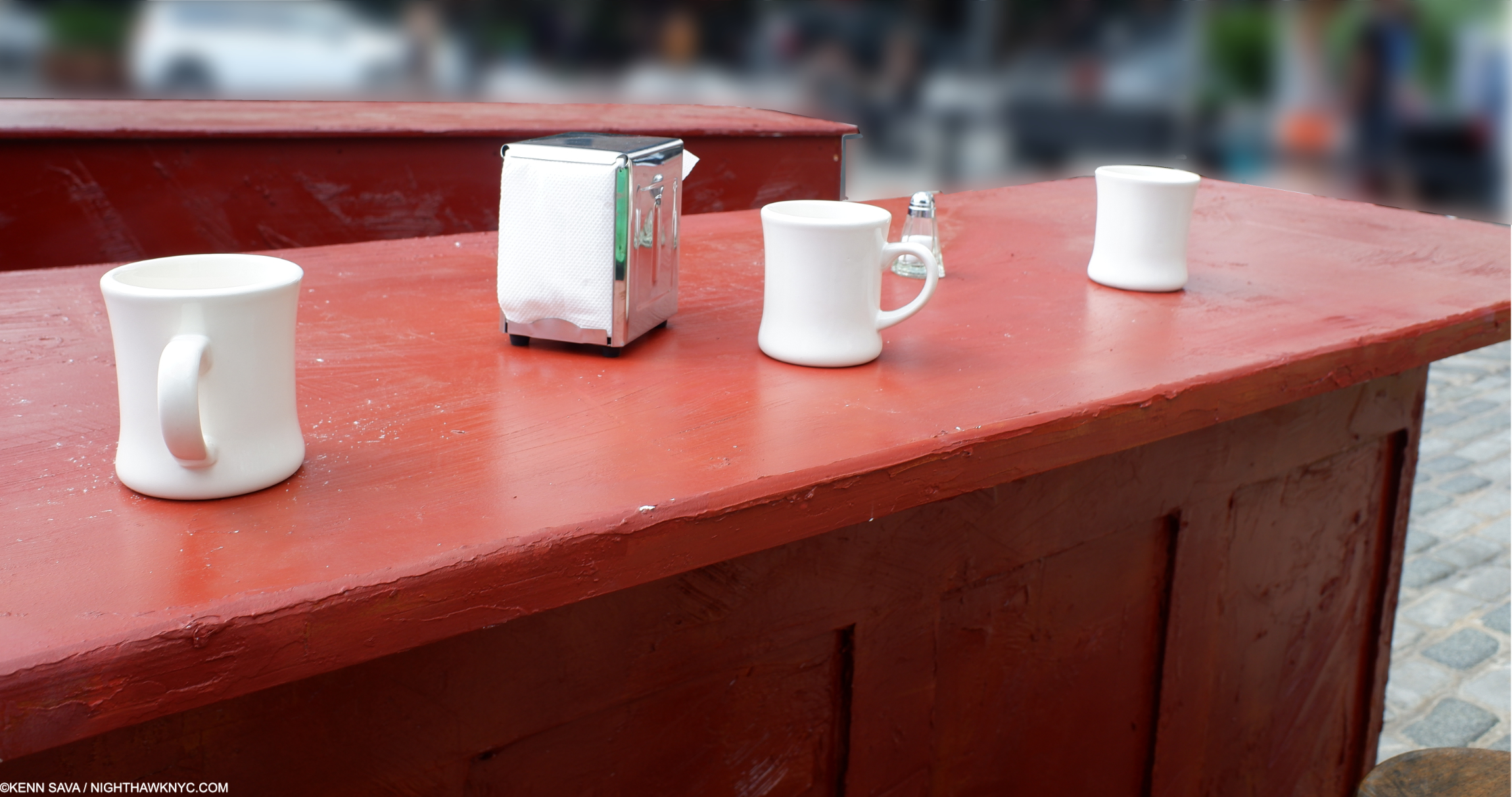
The classic white ceramic coffee cups, glass salt & peppers, and napkin dispensers were all around giving me a feeling of familiarity and “home.” I guess that’s what happens when you’ve been looking at them for so long in Painted form.

So real, you could reach out and touch them. Of course, I did…

And, I got to experience it from THE seat, to see what “he” saw and ponder him anew. Maybe “he” was me in a prior life. If so, how many people have gotten to relive a moment from a prior life?

This MUST be the place! FINALLY! I can’t wait to rush home and tell readers I found it! What a scoop!

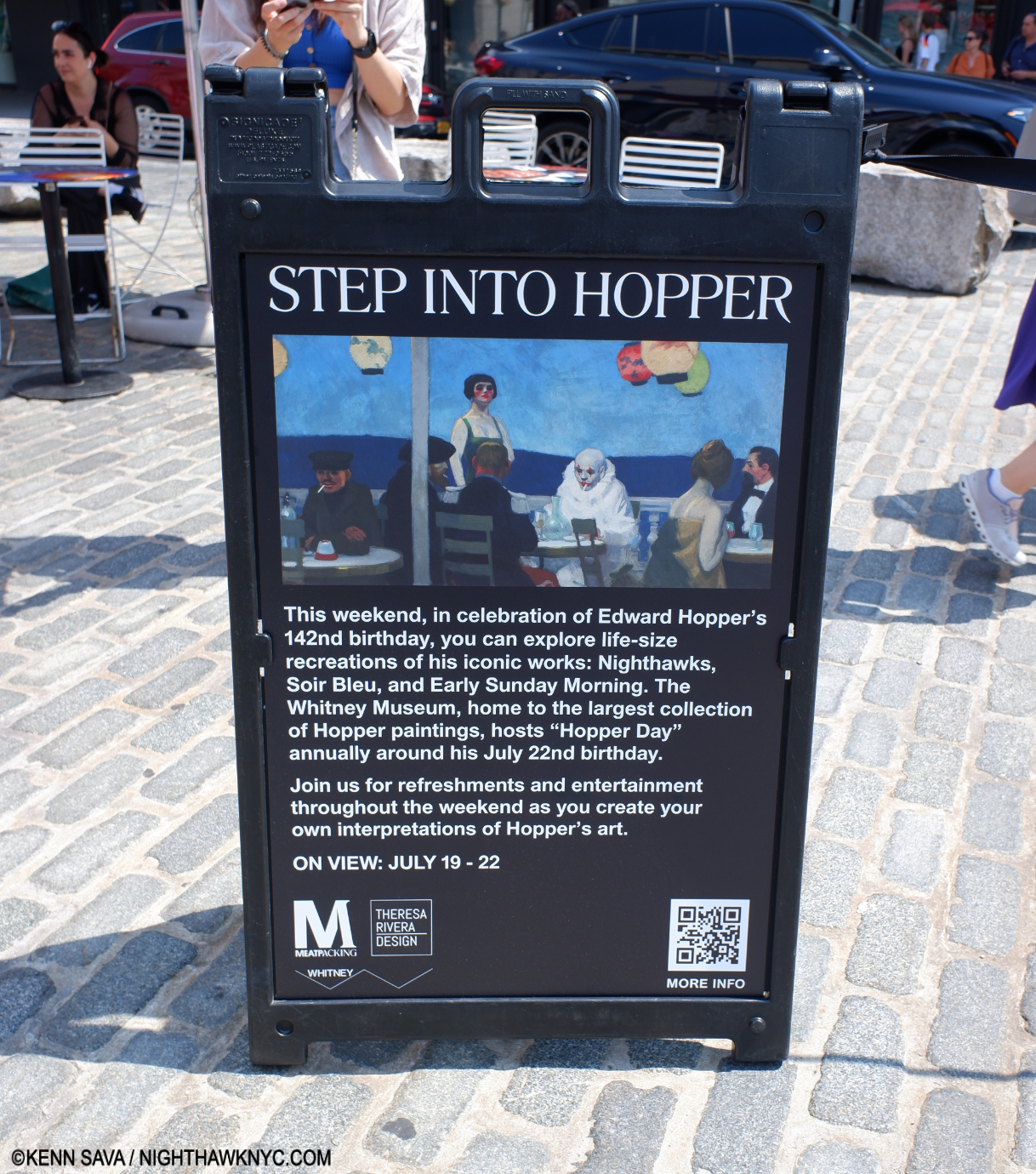
A close call with a bike running a Walk sign on the walk home snapped me out of it and back to reality. As I reviewed my pictures to make sure my phone was OK, it turns out I had come upon something called “Step Into Hopper. 

Convergence 3-

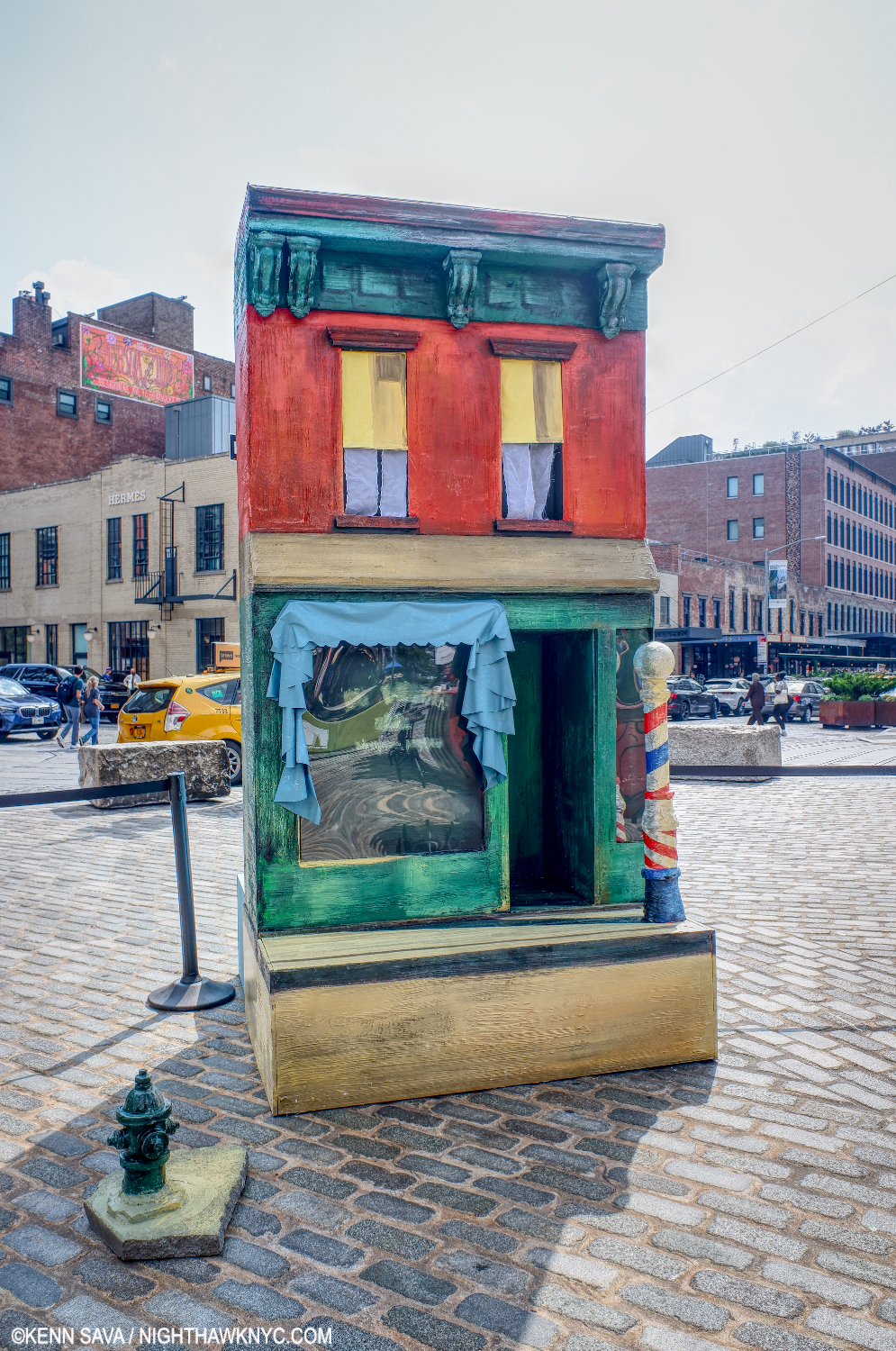
After nine years of “riffing” on Nighthawks in my Banner, it finally came to life! The Whitney Museum & the Meatpacking District got together to mount “Step Into Hopper,” along with fabrication by Theresa Rivera Design and an exceptional, welcoming, staff, to “recreate” Nighthawks, 1942, Early Sunday Morning, 1930, and his eternally mysterious Soir Bleu, 1914within one mile or so of the original sites of two of them2.

“Early Sunday Morning,” a take-off on Hopper’s 1930 timeless masterpiece of a street in my neighborhood, a few blocks away, on Seventh Avenue between West 15th & 16th Streets. Notice the shadow from the barber pole goes the “wrong way,” as it does in the Painting. People who live there know the sun never shines in that direction on 7th & 15/16th!

Convergence 4-

It truly was a moment frozen in time. Something out of a dream… I ended “My Search For Edward Hopper’s Nighthawks Diner”  with a quote from the song I chose as the Soundtrack for the piece, “I Saw You In A Dream” by Japanese House….

“I saw you in a dream
You had stayed the same
You were beckoning me
Said that I had changed”

How prescient.

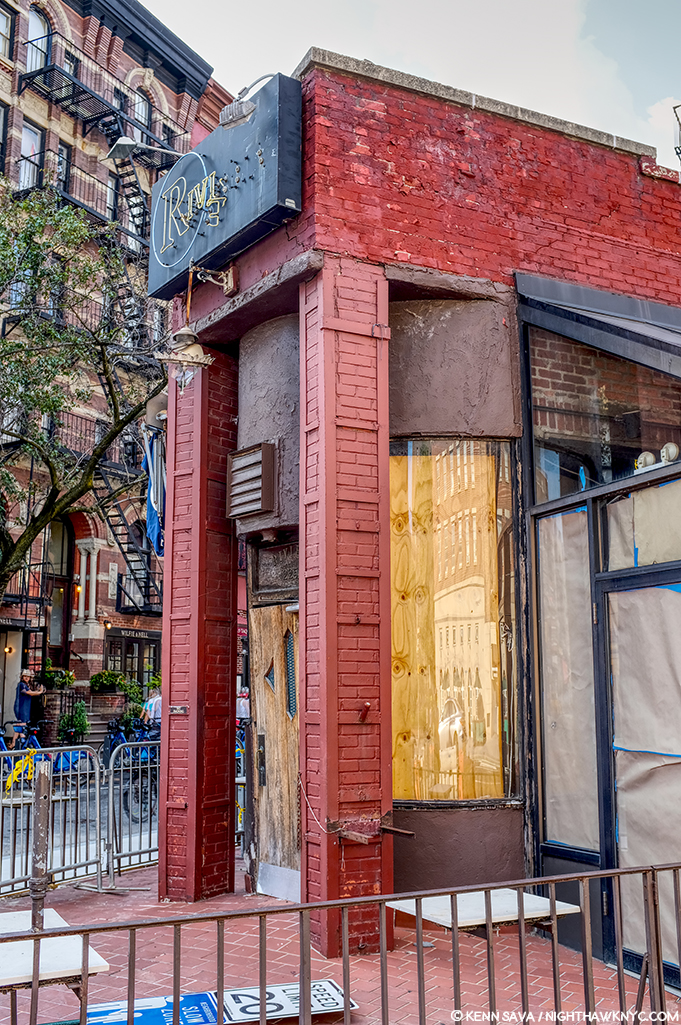
Before I “changed.” Take away the side addition, and the former Rivera Cafe on 7th Avenue was my “Oh my gosh!” moment, as I wrote in “My Search…” Seen on July 23, 2018- convegently, six years ago this week.

In reading the mail that continues to come in on the piece, it seems that many people share my dream of unexpectedly coming across the Nighthawks Diner and having an “Oh my gosh!” moment of discovery.

Kenn Sava “inside” “Soir Bleu” (the Painting seen on the sandwich sign above) with the wonderful Tillie the Clown proving every bit as mysterious and stunning as the figure in the 1914 Painting done in Paris. Photo by Gregory for NighthawkNYC.com

A lot of folks seem to want to step inside, sit down at the counter for a bit, and just live in the Painting; experience it from the inside  even for a few moments. As if that might help solve its mystery…On Sunday, I came as close as I’m likely going to to having my “Nighthawks” moment.

A few moments after the Photo of me and Lucas inside “Nighthawks” was taken, I looked around for him and couldn’t find him. Lucas disappeared.

Of course he did.

Convergence 142-

Today, as I write this on July 22nd is Edward Hopper’s 142nd Birthday. Happy Birthday, big guy (Hopper was 6’5″). Thanks for saving me a seat in Art heaven. A short visit is probably the best I can hope for.

*- As it was for “Welcome to the Night” 9 years ago, the Soundtrack for this piece is  “Deacon Blues,” by Steely Dan (my “Forgotten Songs I Will Love Forever #2″, which remains the Anthem of NighthawkNYC.com, from their immortal album Aja, 1977. (I have no idea why the guy who made tihis video shows their album Gaucho. Ignore that- it’s Track 3 on Aja.)

“Sharing the things we know and love
With those of my kind
Libations, sensations
That stagger the mind.”

If the Nighthawks Diner had a jukebox, I like to think “Deacon Blues” would be on it.

Undying thanks to Kevin Callahan for the tip, the iconic Lucas for the coffee & the convo, Tillie the Clown for the Tillie Experience, Milo, Wendy, Alisa and Gregory for the Photos, their consideration and kindness in creating an experience I’ll never forget. A tip of the Fedora to the Meatpacking District, the Whitney Museum & Theresa Rivera Design for mounting Step Into Hopper. Push by Lana Hattan (9 years of NighthawkNYC.com– it’s ALL her fault!)

Be sure to see my 3-part series on the 2022-23 blockbuster Edward Hopper’s New York which begins here.

NighthawkNYC.com has been entirely self-funded & ad-free for 9 years, during which 330 full-length pieces have been published! If you’ve found it worthwhile, PLEASE donate by PayPal below to allow me to continue. Thank you, Kenn.

You can also support it by buying Art, Art & Photography books, and Music from my collection! Art & Books may be found here. Music here and here.

Written & photographed by Kenn Sava for nighthawknyc.com unless otherwise credited. To send comments, thoughts, feedback or propositions click here. Click the white box on the upper right for the archives or to search them. Subscribe to be notified of new Posts below. Your information will be used for no other purpose.

For “short takes,” my ongoing “Visual Diary” series, and outtakes from my pieces, be sure to follow @nighthawk_nyc on Instagram!

  1. Cone to think of it, why are both guys wearing their Fedoras inside? Preparing for quick exits?
  2. The original site of Nighthawks remains up for discussion, as I wrote about, but most likely was inspired by locations in the nearby West Village.

My Search For Edward Hopper’s Nighthawks Diner

Written & Photographed by Kenn Sava (*unless otherwise credited).

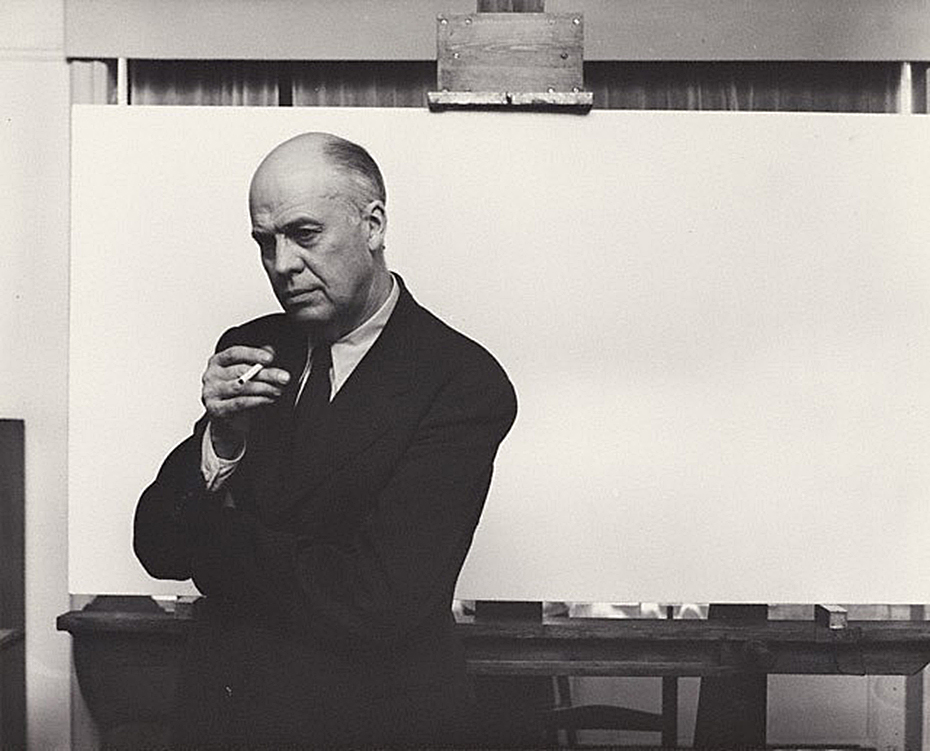
Arnold Newman, Edward Hopper in his New York studio, November 1, 1941, Gelatin silver print, *Arnold Newman Collection/Getty Images.

You’re looking at Art history.

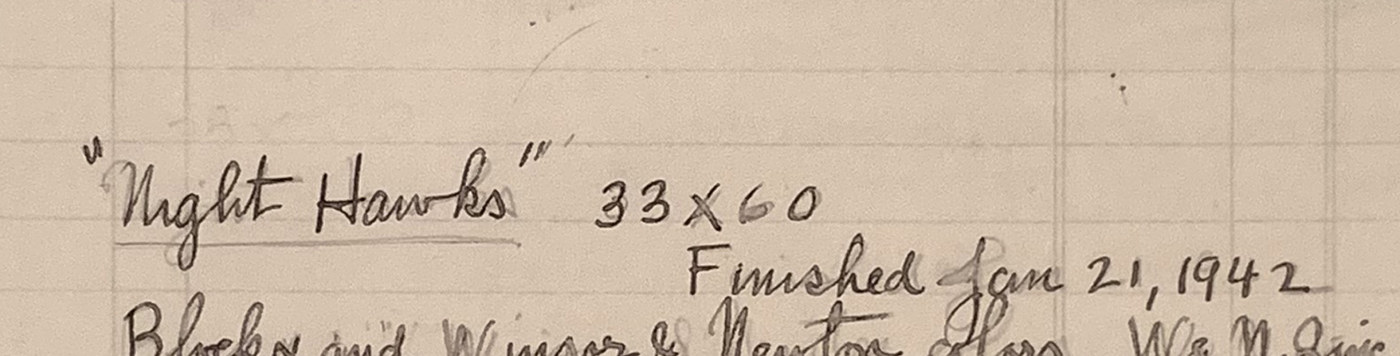
After the fact, this may be one of the most historic Photographs in American Art. I’m not only talking about it being a wonderful portrait of Edward Hopper. It’s much more. The date is November 1, 1941. On January 21, 1942, the Artist’s wife, Jo Hopper, would record the completion of the work her husband created on that blank canvas he is posing in front of in the Artist’s Ledger of his work.

A section of Edward Hopper’s Ledger page for Nighthawks, from the book, Edward Hopper: Paintings and Ledger Book Drawings. It wound up in the Art Institute of Chicago almost immediately. Its sale netted Edward Hopper about $1,700.00.
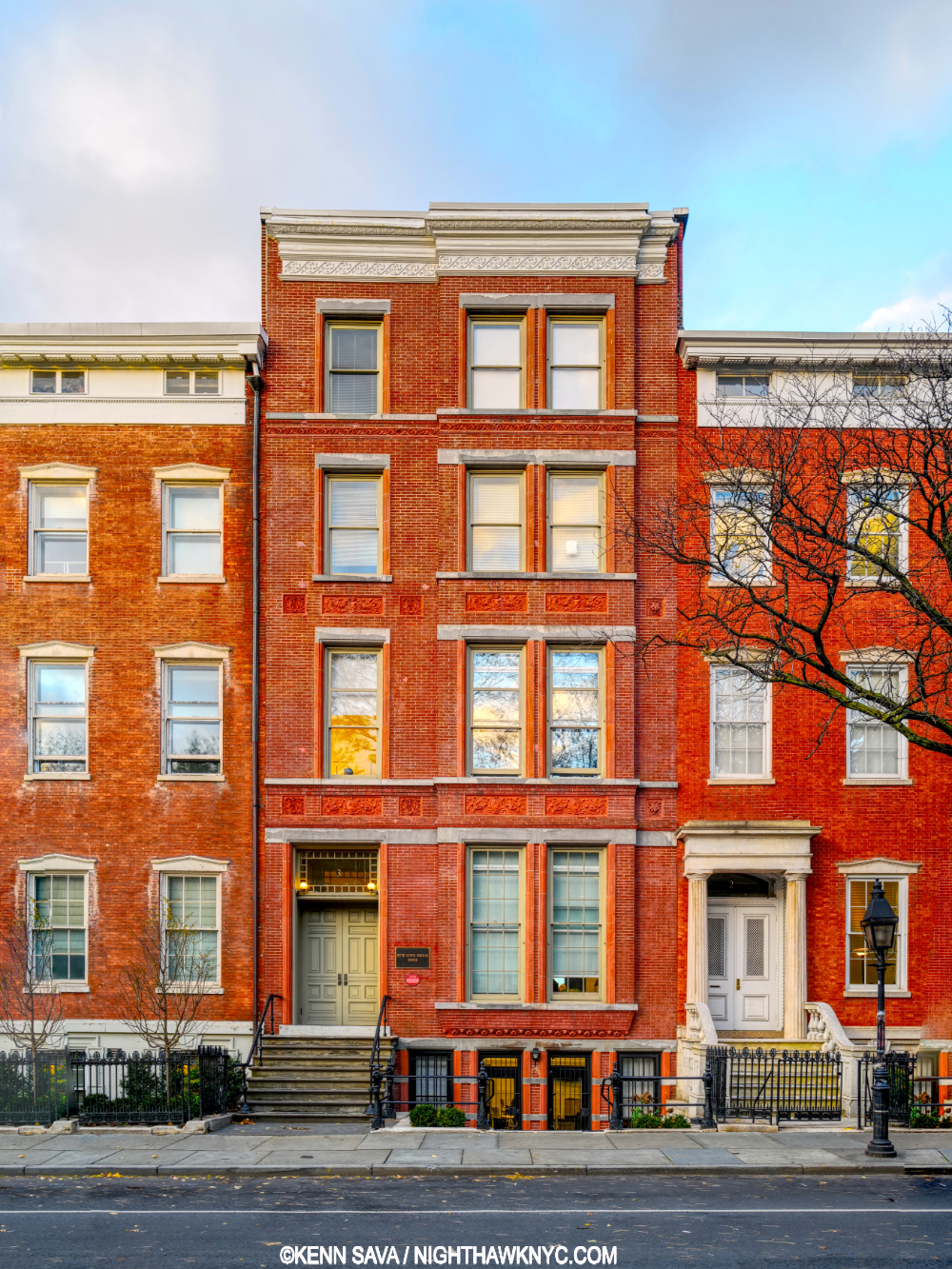
In the intervening 81 days, Edward Hopper Painted the incomparable Nighthawks on that very canvas. We don’t know if Arnold Newman had any clue as to what Edward Hopper’s intentions were for that canvas. But we know now. The odds are that he had finished his preliminary work- the inspiration, the sketches, the reference Drawings, the sizing calculations he usually did, and ordered the stretcher and canvas we see behind him on his famous easel. Most likely? At this very moment, this masterpiece was all in his mind, and possibly on it, as Arnold Newman pressed his shutter release.

Click.

For the following 77 1/2 years (exactly, as I write this), and counting, the world has been fascinated by Nighthawks like they have few other Paintings created in the 20th Century. Some of us, including myself, are borderline obsessed by it.

Written on my soul. The last time I stood in front of Nighthawks. August 28, 2013, at Hopper Drawing at the old Whitney Museum.

I’ve stood in front of it twice in my life. The first time at The Art Institute of Chicago in 2005, the second at the old Whitney Museum in 2013. In July, 2015, I named this site after it and wrote about why in the very first piece I Posted here, “Welcome To The Night,” To commemorate the 4th anniversary of NighthawkNYC.com, I present My Search for the Nighthawks Diner.

The beating heart of Edward Hopper’s world. Edward Hopper posed for Arnold Newman, and Painted Nighthawks here, on the top floor of 3 Washington Square North, just east of the Arch in Washington Square Park, in Greenwich Village, that it looks out on, where the Hoppers lived for over 50 years, from 1913 until the Artist’s death in 1967. This is a key point for a variety of reasons, and an intriguing one because Edward Hopper was the furthest thing from “bohemian” one could imagine. Yet, living here he, like most New Yorkers, walked regularly, probably daily, and so the areas he was able to walk to may have become the sites of, or the inspirations for, his Paintings. And so, for almost all of the past 77 years viewers have been asking the question-

“WHERE is the diner Edward Hopper Painted in Nighthawks?”

I’ve been trying to find it for the better part of my life. Having lived in the area for 28 years and having frequented it before I lived here, the Village is an area I’m as familiar with as I am any anywhere. During that time, as during the Hopper’s time here, change has been the only constant. Change has also been a constant enemy in the attempts to locate, for once and for all, the diner we see in Nighthawks. My search has been carried out using only a few tools. First, the extensive Hopper literature. Though very little of it is directly relevant to this search, much of it is indirectly relevant, providing a framework for how, when and where he created his extensive oeuvre of Paintings, Watercolors and Drawings. The books by Gail Levin, (the Hopper’s biographer and the author of numerous other books on the Artist and his work, including the 4 volume Catalog Raisonne), particularly her Hopper’s Places, Second edition and the catalog for the 2013 Whitney Hopper Drawing show have been the most referred to for this quest. Outside of this, I have relied on my own two feet, my cameras and, yes, my gut.
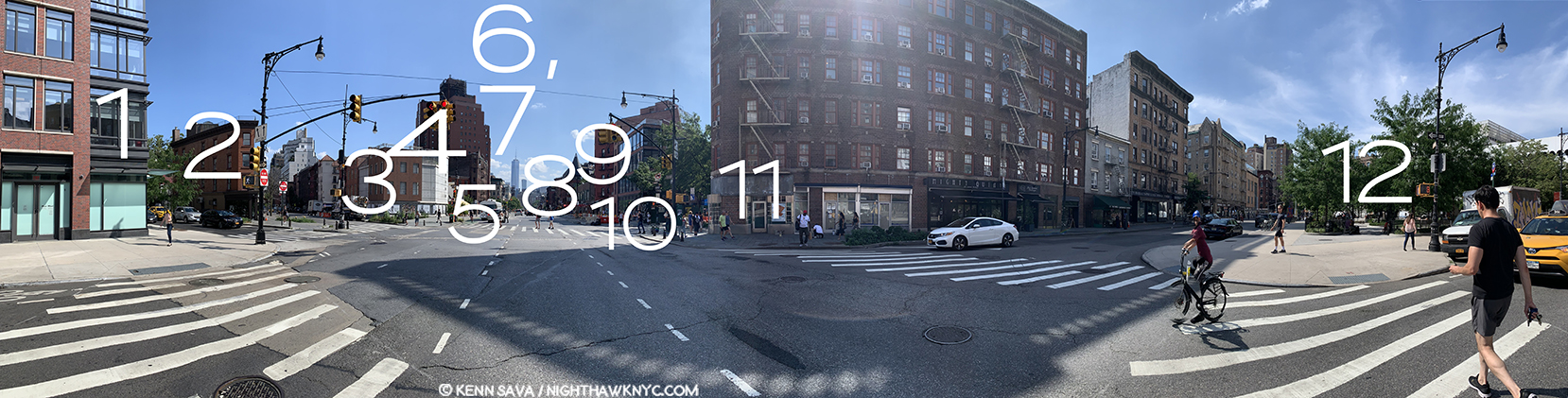
Once that “Could this be IT?” bell goes off, I research the possibility, beginning with “What did this place look like around 1940?” Is any of that here to be seen now (i.e. when I was standing there)? What does common sense tell me? In the case of Edward Hopper, “common sense” comes from studying his work. Hopper’s Places provides part of the basis for some of that “common sense.” In it, Ms. Levin shows us contemporary Photographs she, herself, has taken at various sites Edward Hopper Painted around the world- though not Nighthawks, “…to show how he both recorded and transformed” these places, she says in her “Preface to the Second Edition,” P.vii. On P. x, she adds, “Research for the biography also revealed that in his later years Hopper relied upon observing specific sites more often than anyone had previously realized.” Even though much has changed over time, I still get a bit of a sense of Hopper’s approaches to rendering actual places. Much is, also, to be learned by looking at and studying historic and contemporary pictures of places under consideration. In the case of Nighthawks, I used all of these tools in my search.

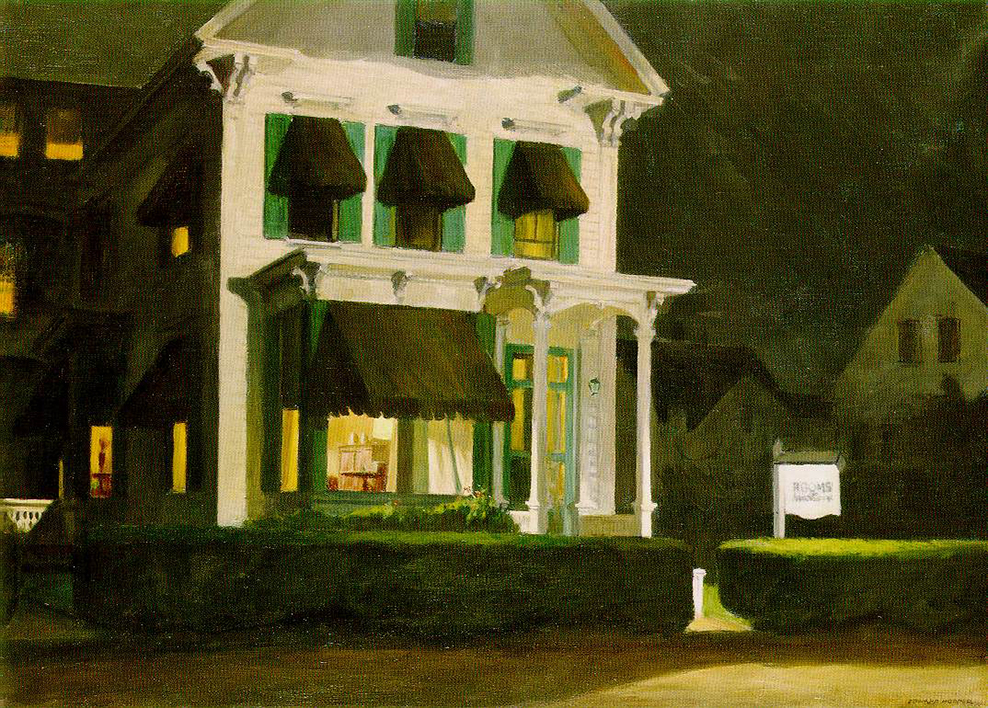
Rooms for Tourists, 1945. About 40 years later, I found this actual Rooming House this Painting is based on in Cape Cod, Mass., and stayed there. *Photographer unknown.

My gut has already helped me find one of “Hopper’s Places.” In the 1980s, I was traveling through Cape Cod and looking for a place to stay in Provincetown, Mass. I came upon a small Rooming House and instantly recognized it from the Hopper Painting, Rooms for Tourists, and so I just had to stay there. Part of my belief that Edward Hopper based Nighthawks on a real diner was finding that actual Rooming House in the 1980s when I visited Cape Cod.

I’ve spent most of my time searching in the West Village. For two primary reasons. First, this was the neighborhood Edward Hopper lived in and walked through regularly and most often. Second, as soon as one walks south of West 14th Street (the Village’s northern border) on 7th Avenue South, you’re faced with this-

Standing in 7th Avenue South at the intersection of Greenwich Avenue and West 11th Street, facing south, July, 2019. It HAS to be somewhere in this picture, right? No. There are countless triangular corners in the West Village, but this view is the most likely to contain it, I think. Click for full size.

As I stood in the middle of 7th Avenue South (NOT recommended), looking into the heart of what was Edward Hopper’s New York (turn left at #3 and it’s a mere one Avenue and 4 blocks from his home, shown above), there were no fewer than TWELVE triangular corners around me! Edward Hopper knew each and every one of them well. Those familiar with Manhattan know that almost all of it north of 14th Street is a grid made up almost exclusively of rectangles. Below 14th Street, “old Manhattan” streets wind seemingly with minds of their own, interrupted here and there with a semblance of uptown’s rectangular regularity. The triangular corners we see in Nighthawks are everywhere. WHERE to begin?

The former Two Boots Pizzeria, #11 in the picture above, is from the right period, but its building goes straight up, so I ruled it out quickly. Nothing feels “right” to me about it.

Mulry Square (in the foreground), #3 in the picture.

Perhaps no site has gotten more “hype” about it over time in regards to Nighthawks than Mulry Square, #3 in the picture. In spite of what many have said, I have seen nothing to indicate to me that this was the site of the Nighthawks Diner.

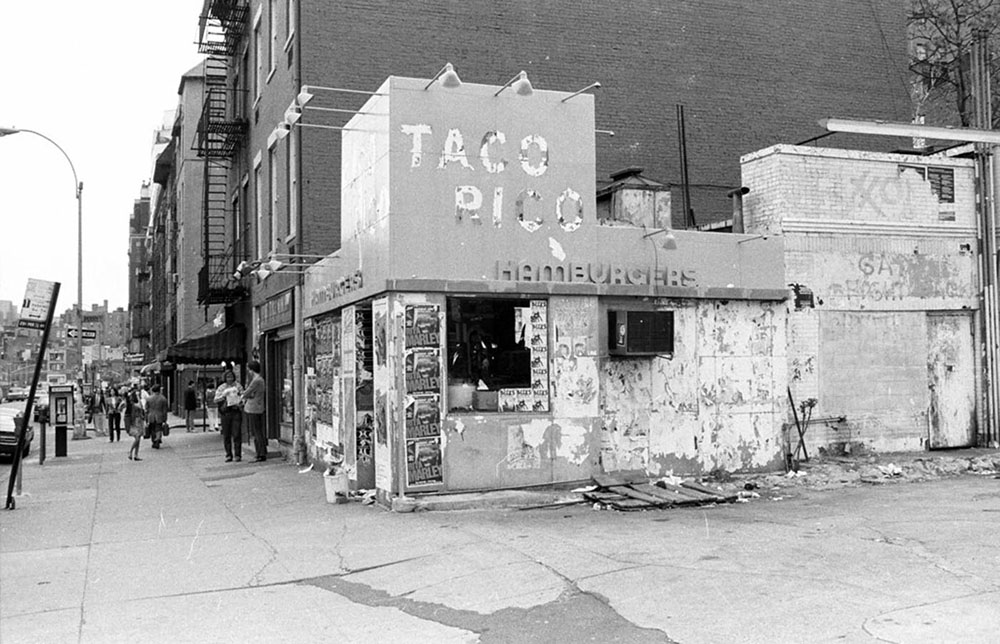
I would guess this would be  the early 1980s from the Rita Marley ads and Miles Davis ads, on the remnants of the hamburger place, which may be the remnants of the actual hamburger place that stood here in the 1940’s, which I show later on. Miles Davis came out of retirement in 1981. Is that a covered window along the left side? I haven’t been able to find out. *Photographer unknown.

The historical archives show a gas station with a small burger place at the time, but it looks more like a White Castle precursor to me than anything resembling the Painting’s diner. If anything, it may have been an inspiration for the “fishbowl effect”- where we are looking in through the glass at the customers. More on this later.

This is seen on the other end of Mulry Square, #4 in the picture, on another triangular corner, today. No viable candidates have been reported on this, also triangular, side of the Square, which is occupied by this too modern edifice today. I’ve also ruled it out.

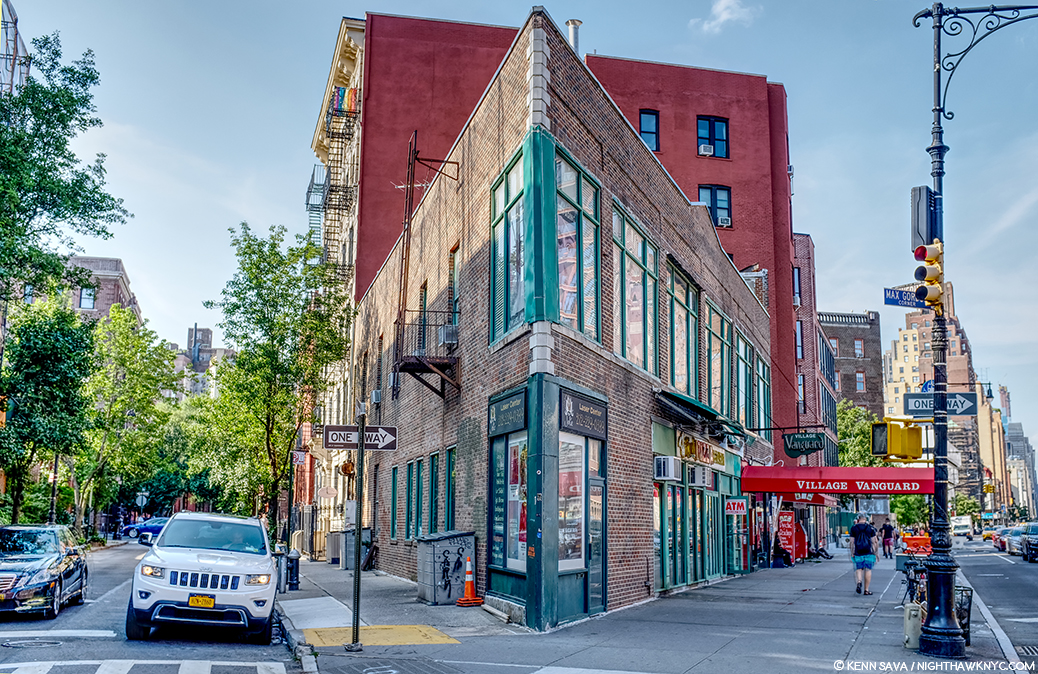
#9. Max Gordon Corner, named in honor of the long time owner of the Village Vanguard.

Directly across the street from #4 is this building, #9 in the picture, which has been home to the world’s greatest Music club, in my opinion, the Village Vanguard since 1927. There is a pizza place on the corner and the windows go through to the back street, but at 2 stories, I’ve long ago ruled it out. However, Art history will remember this spot because another great Painter, Richard Estes, wonderfully Painted it. (Which reminds me- In 2016, I visited the known site of one of Richard Estes’ latest Paintings in a piece I ironically called “Richard Estes’ Dayhawks At The Corner Cafe.”)

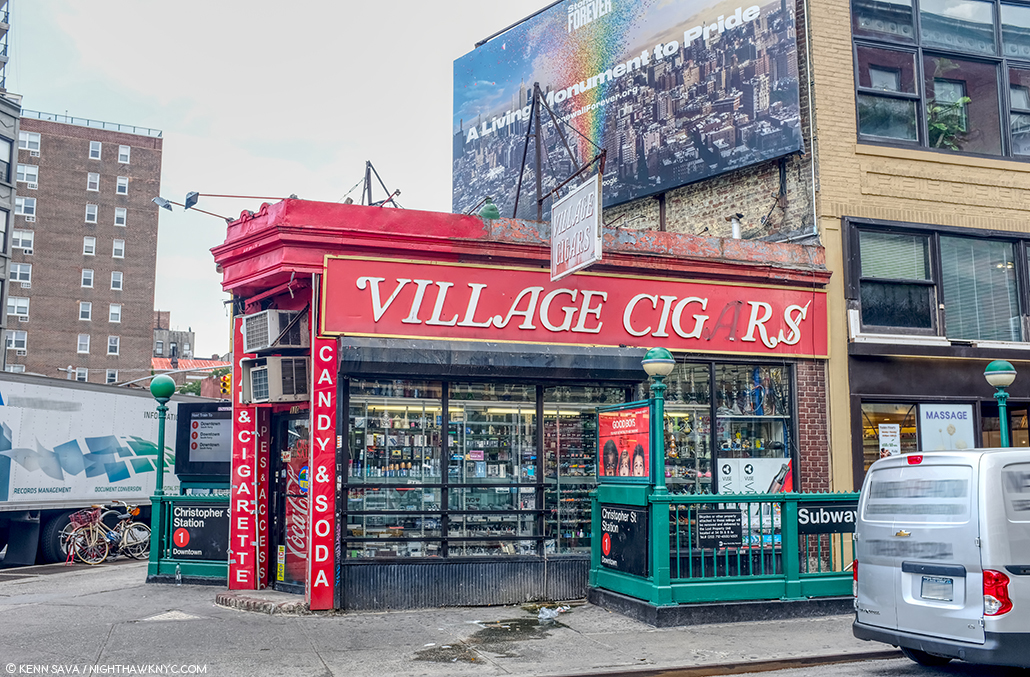
Village Cigars, 7th Avenue South and Christopher Street, Greenwich Village, NYC, June, 2019.

The site of Village Cigars is not numbered in the picture, being further down 7th Avenue on the right past #8. It’s garnered surprisingly little to no attention in the Nighthawks searches I’ve seen to this point. It has some things going for it- the shape and the cigar sign (Nighthawks has a Phillies cigar ad over the diner) but in speaking with the manager, I was told it’s been here for over 100 years, but it’s been a cigar store the whole time. Also, it doesn’t have the curved front window, those dual subway entrances were most likely also there in 1940 and are not in the Painting, and the buildings behind it are too far away. I’ve ruled it out. The Stonewall Inn is a few hundred feet to the left.

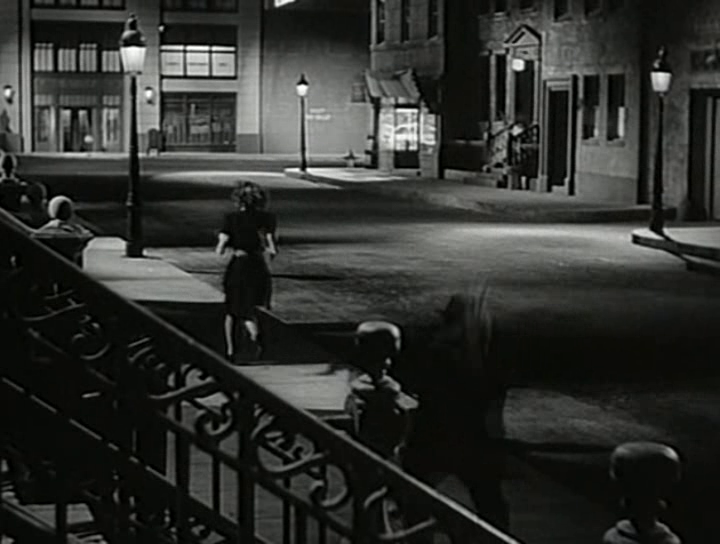
Some believe the inspiration lay in movies of the period, like this one, Stranger on the Third Floor, 1940. The suggested diner down the street on the right looks nothing like it, in my opinion. Possibly another “fishbowl effect” inspiration.

I remain completely unconvinced by any and all suggestions of movies I’ve seen. Yes, Edward Hopper was taken by a short story, “The Killers,” written by Ernest Hemingway in 1929, but I, for one, have not seen the evidence of that in the setting in the Painting. In the figures and the mood? Much more likely. “The Killers” was also made into a film, but, in 1946, too late to be considered. Maybe the Painting influenced it, as it has countless movies since.

That leaves the contenders. Speaking of movies, Edward Hopper reportedly frequented the Lowe’s Sheridan Movie Theater (which stood where #12 is in the picture earlier, and is seen further below), and based a Painting inside of it. His walk to and from it is interesting to me and it has been suggested that a few locations along this route are candidates for the Nighthawks diner. I looked closely at these.

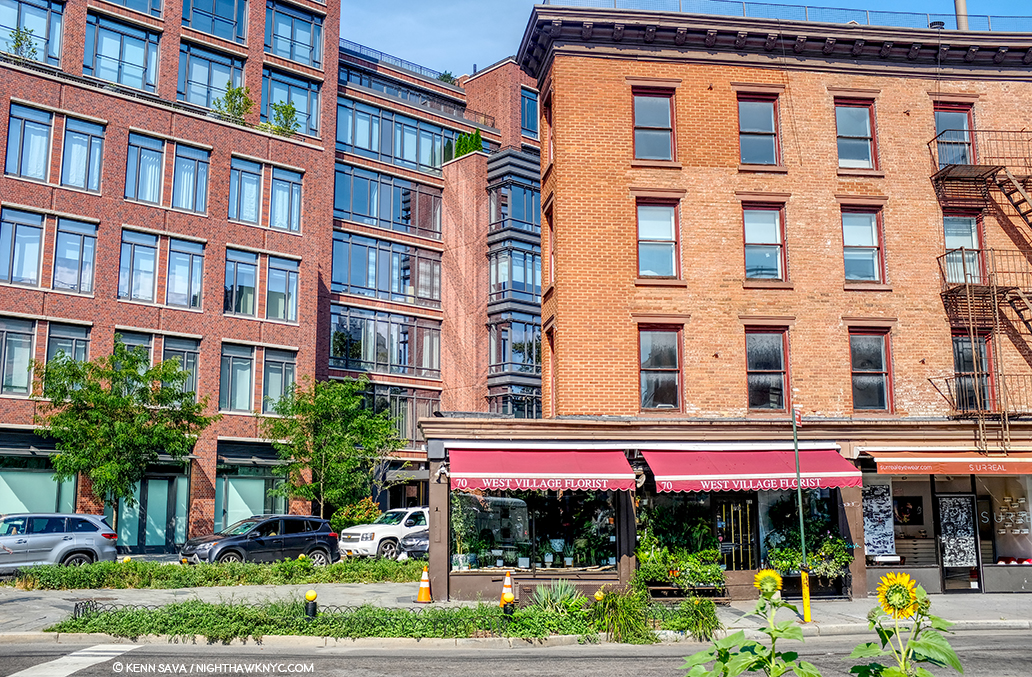
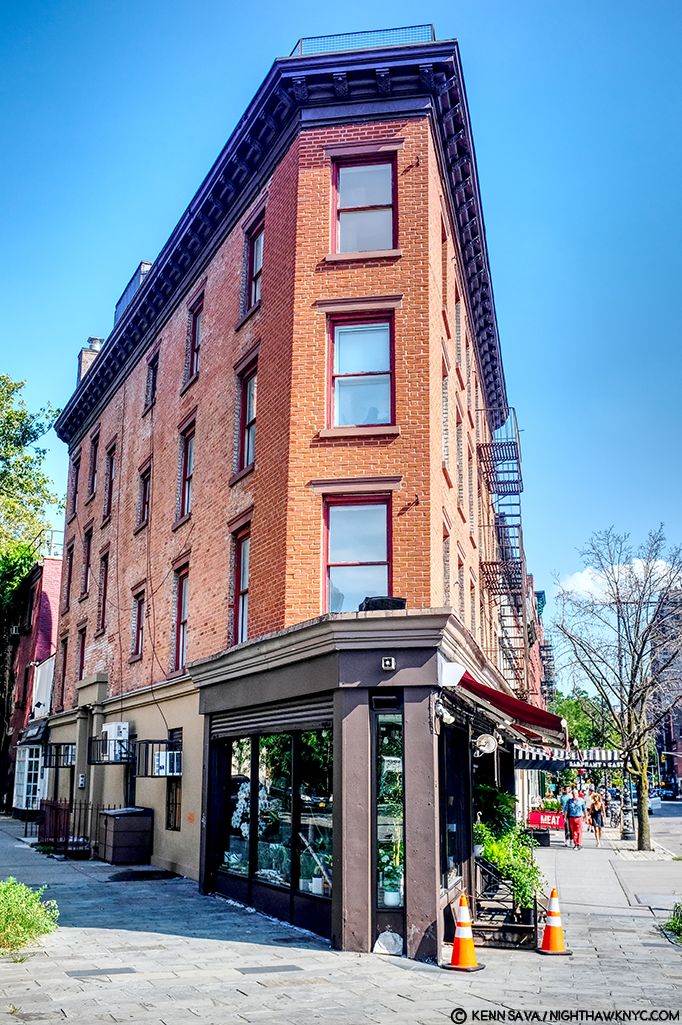
Yes, West Village Florist at 70 Greenwich Avenue is sort of triangular. The picture above was taken standing on the northern edge of Mulry Square, seen earlier. Yes, it was along one of Edward Hopper’s possible routes from his apartment to the Lowe’s Sheridan Theater, which was directly across 7th Avenue to the left of the picture.

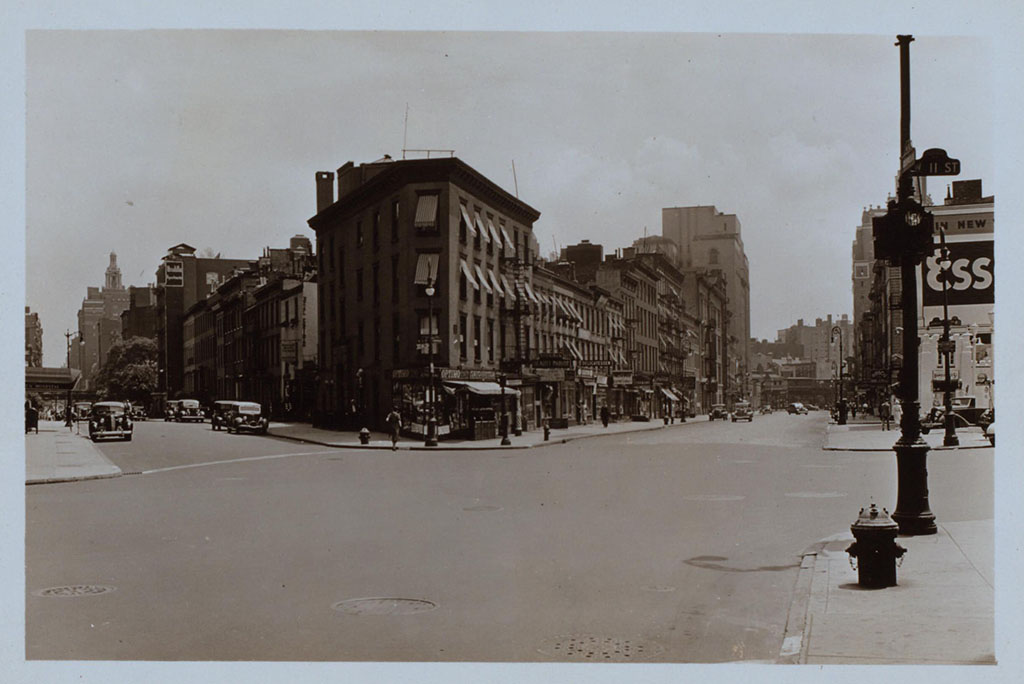
This picture came to me dated 1938 and that would appear correct. Looking toward Mulry Square on the right shows the side of the White Castle-ish hamburger place seen earlier under the Esso sign. The place on the triangular corner, center, at the intersection of 7th Avenue South, Greenwich Avenue and West 11th Street, is now West Village Florist, shown here when it was a cigar/cigarette store. Whoever told this picture is standing on the curb outside of what was Too Boots Pizza, #11 in the panorama posted earlier, with the Lowe’s Sheridan Movie Theater directly to his or her left. Photographer unknown to me.

Yes, it housed a deli 20 years ago before becoming a flower shop the manager told me, and my research added a cleaner/tailor shop circa 1914, and a cigar store in the period of Nighthawks as seen in historical pictures (including in 1938, above), but it’s too small inside, the prow is also too small, and the corner lot too big in my reading of the Painting. Nowhere have I seen reference to it being a diner or coffee shop at any point. The buildings in the background are wrong now, and were wrong then, according to historical pictures.

Inside West Village Florist, standing just inside the door. I had room to stretch my arms out, with maybe an extra foot on each side, but the space quickly narrows, as you can see. It’s just too small. Stop by and see what you think. They are very nice people who have a beautiful assortment of plants and flowers.

There is little doubt he saw it, but as I showed earlier, there are countless triangular corners in the area that could have been a partial inspiration. At best, that’s all this is, and I doubt it was a big influence. I’ve ruled it out.

West Village Florist’s building has this unique, strange, angled shape to it seen from head on, July, 2019.

The serious contenders.

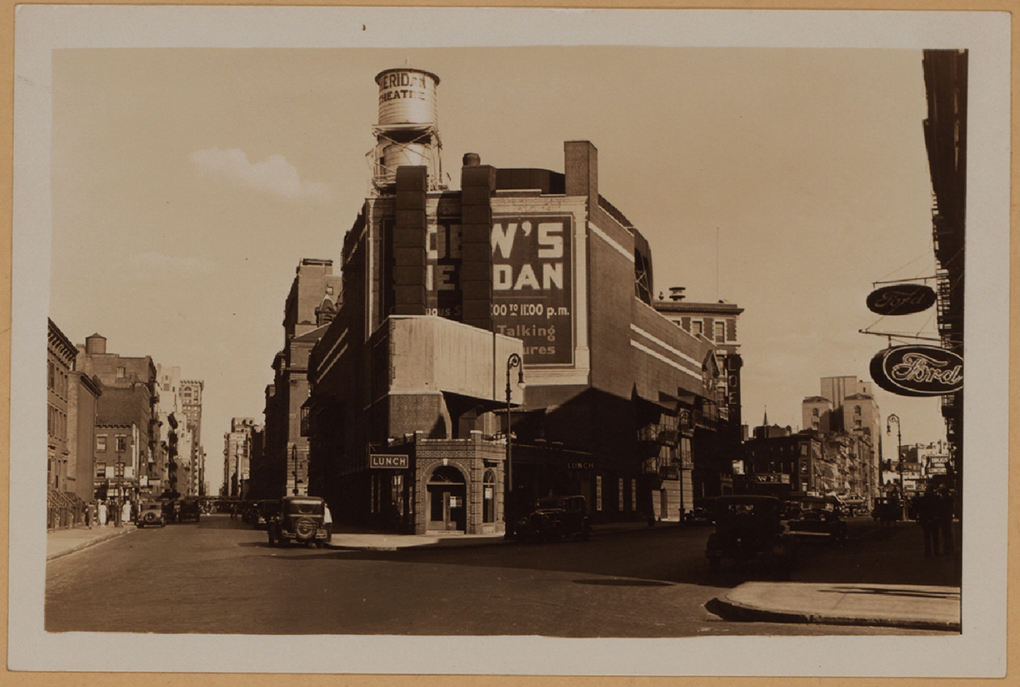
The intersections of Greenwich Avenue and West 12th Street with the Loew’s Sheridan Square Movie Theater, rear. Photograph by Percy Loomis Sperr (1890-1964), Manhattan: 12th Street – Greenwich Avenue, 1932, *NYPL Digital Archives.

In this 1932 picture of the intersection of Greenwich Avenue and West 12th Street, the low, triangular shaped building in front of the west side (the back) of the Lowe’s Sheridan Movie Theater is Crawford Lunch. There are historic pictures taken from Greenwich (on the right) that show customers in Crawford Lunch with West 12th Street seen behind them- which I reproduce further below. I think it is entirely plausible that Edward Hopper saw this, too, and this inspired his conception of a sort of “fishbowl” like setting. Here was an actual working diner/restaurant of the time. Today’s West Village Florist building is about 3/4 of the way down to the right of this picture.

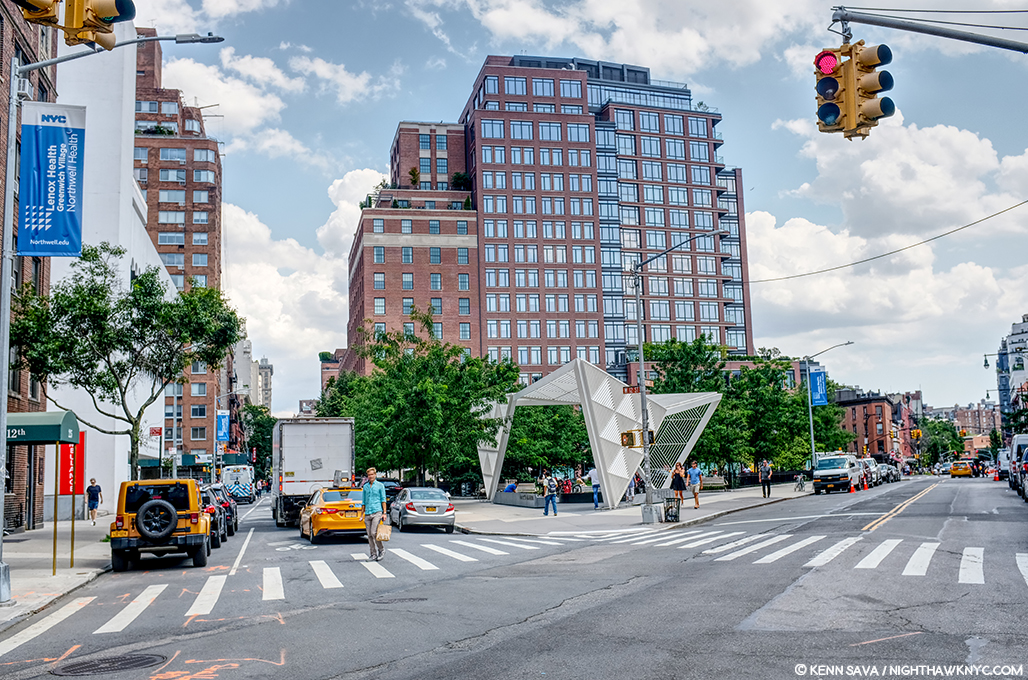
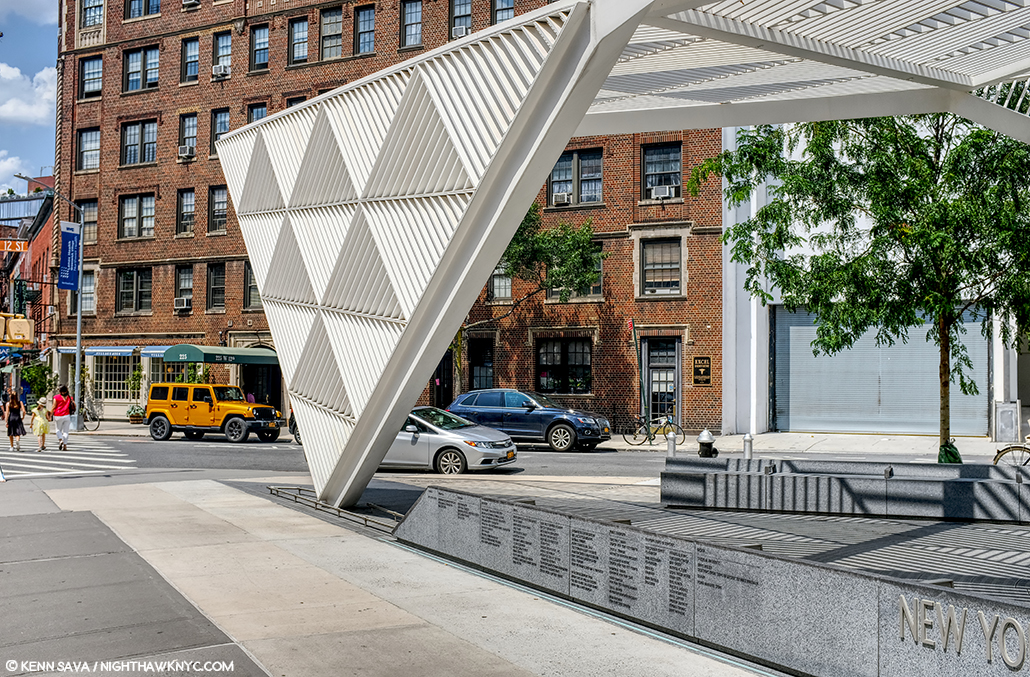
Change is the only constant in New York. The same scene, today! I stood as close as I could to the spot the 1932 picture above was taken to take this in July, 2019- 87 years later!

It’s so different, 87 years later, as to defy anyone to guess this site had anything to do with Nighthawks. Therein lies a good deal of the problem finding its sources. It’s now The NYC AIDS Memorial Park at St. Vincent’s Triangle. Note- the brown building on the very far left. It does not look like what’s in the background of the Painting. More on this follows. The Whitney’s Hopper Drawing catalog suggests that Edward Hopper may have looked through Crawford Lunch and seen the “fishbowl effect” we see in the Painting.

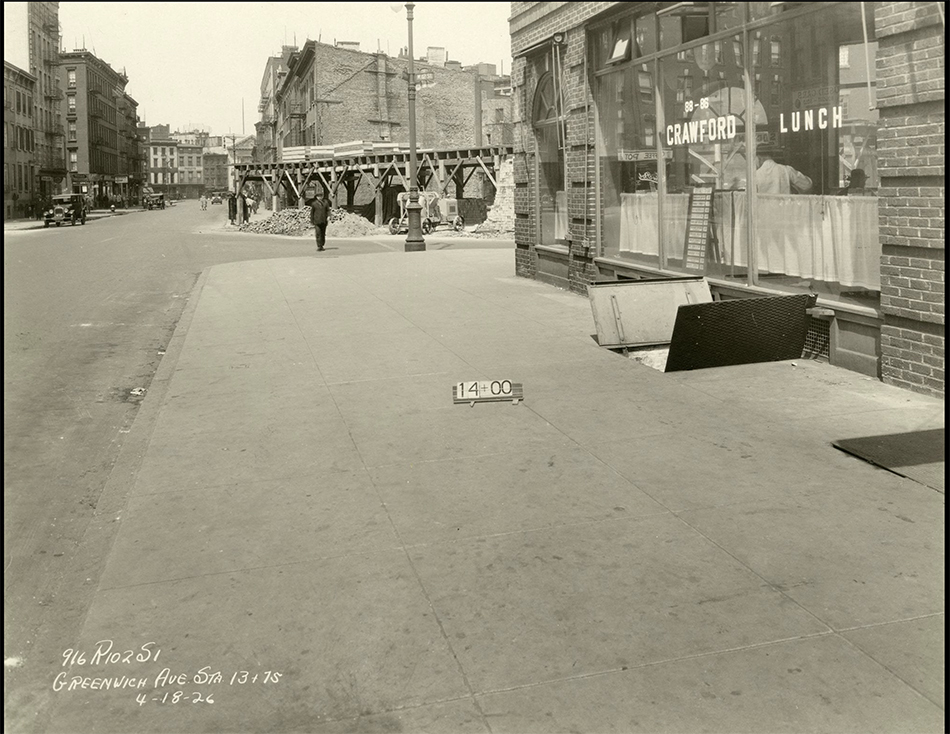
Subway construction photograph of 88-86 Greenwich Avenue and West 12th Street, New York City, April 18, 1926. Identifier- 86446d_GreenwichAve_SubConst958. *Collection of the New York Historical Society.

Here, we see a revealing example of this “fishbowl effect” seen at Crawford Lunch in a picture taken on April 18, 1926. Notice how you can see into and through the restaurant, on the right, to West 12th Street behind the man in the dark hat under the word LUNCH on the window. The brown apartment building seen in the far left in the prior picture is about to be built seen straight ahead just across the 12th Street past Crawford. Note, also, the word “LUNCH” on the window for later. I believe this is the possible source of the effect given how close it is to the Lowe’s Sheridan Theater (next door). However, it could have as easily been something he saw somewhere else on his walks, in a place they, or anyone else I’ve come across has not considered. But, unlike most of the locations suggested to date, Crawford Lunch was an actual restaurant at the right time and in the, possibly, right place.

The almost identical view in the previous picture today at the former site of Crawford Lunch also approximates the view seen in Nighthawks. That brown brick apartment building, seen early in its construction above, has been here since the late 1920s, and hence, at the time of Nighthawks, making it wrong for the Painting. Seen in July, 2019.

That Crawford Lunch was an influence would seem to be confirmed by this-

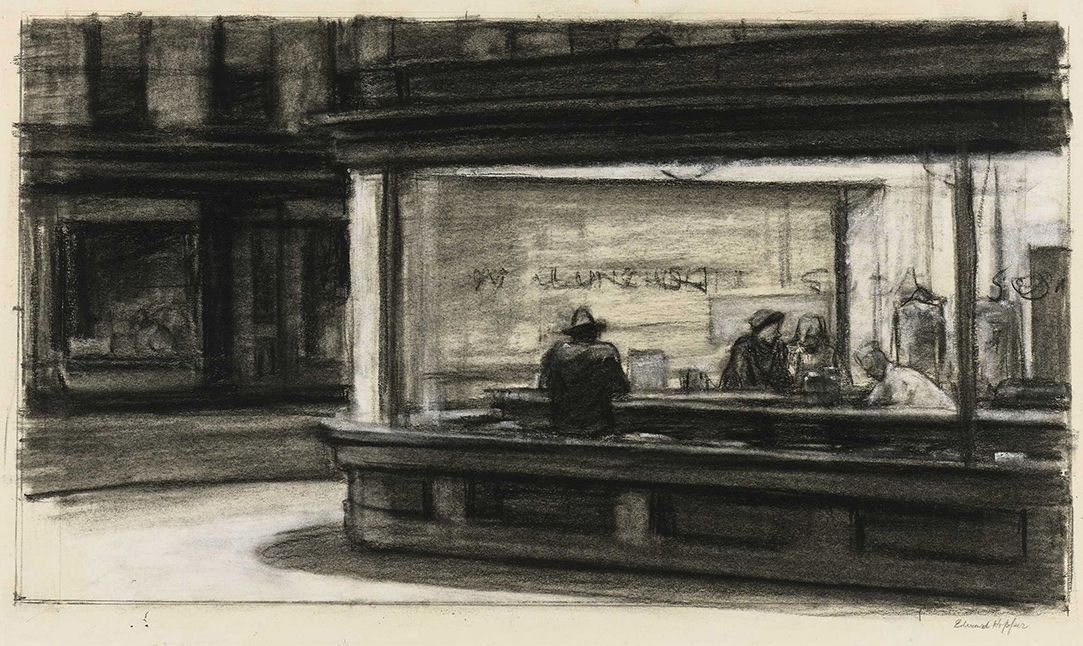
Study for Nighthawks, 1941 or 1942. Fabricated chalk and charcoal on paper; 11 1/8 × 15 in. Given he finished Nighthawks on January 21, 1942, I doubt this was done in 1942. It seems he was still finalizing his ideas when this was done. *Whitney Museum collection & photo.

I can barely make out the word “LUNCH” on the widow above the man with his back to us in this study for the Painting. As we know, Edward Hopper did not include this in the final Painting, among other changes he made to what we see in this incredible and endlessly fascinating Drawing. It sure reminds me of the Crawford Lunch window and may be a give away of its source and, possibly, the source, once and for all, of this “fishbowl effect.”

Edward Hopper said little about the inspiration for Nighthawks and, frankly, I don’t know what to make of what he is reported to have said. In Katherine Kuh’s The Artist’s Voice, P.134, he says, the Painting “was suggested by a restaurant on Greenwich Avenue where two streets meet.” He adds, “I simplified the scene a great deal, and made the restaurant bigger.” Um, Ed? Could you be a bit more obtuse? “Greenwich Avenue where two street meet,” is said to mean West 12th Street & 7th Avenue South by Gail Levin (Hopper’s Places). Couldn’t “two streets meet” mean Greenwich & West 12th Street, where Crawford Lunch was? If it means Greenwich and two other streets, it has to be the triangles where West Village Florist and Mulry Square are. In any event, “…suggested…” I believe means a scene he saw at one of these places, the “fishbowl effect,” which I think he saw at Crawford Lunch, a confirmed restaurant at the time. But, Crawford Lunch doesn’t look like the diner in the Painting- even if he “…made the restaurant bigger.” Neither does the hamburger place on Mulry Square or West Village Florist. And that comment doesn’t specify it’s the same restaurant he mentions on Greenwich Avenue. It could mean “the restaurant we see in the Painting.” Intensely frustrated by this, I finally decided to continue on my own path. This meant looking a little further afield from the Greenwich Avenue vicinity. It turns out I didn’t have far to look.

Further down 7th Avenue South, not as far as Village Cigars, and still well within Edward Hopper’s walking neighborhood, I came across this-

“Oh. My. Gosh.”

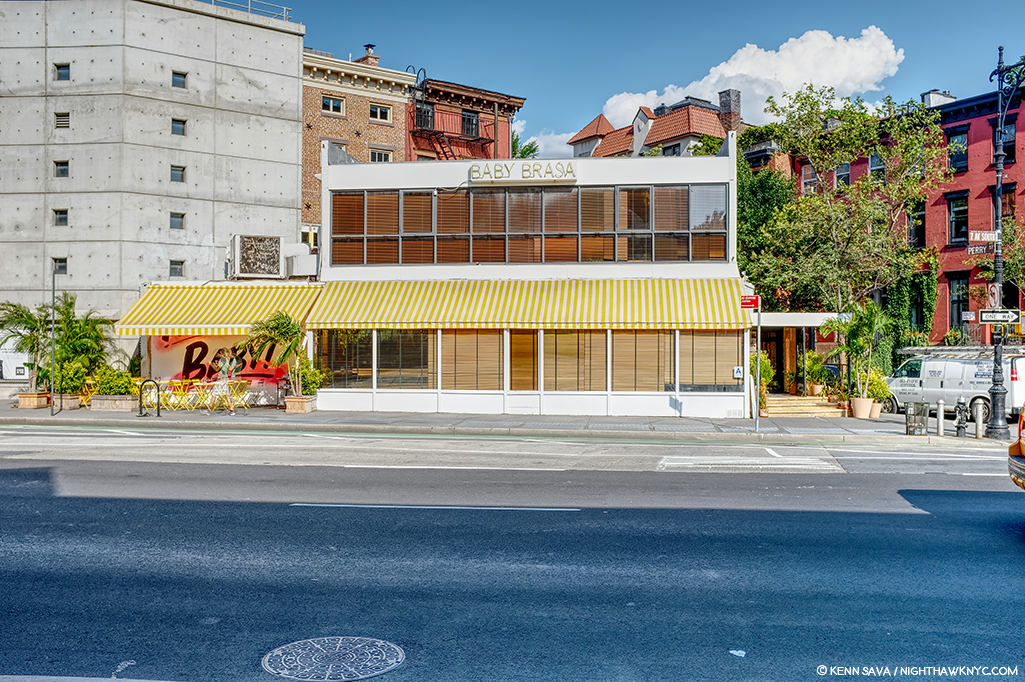
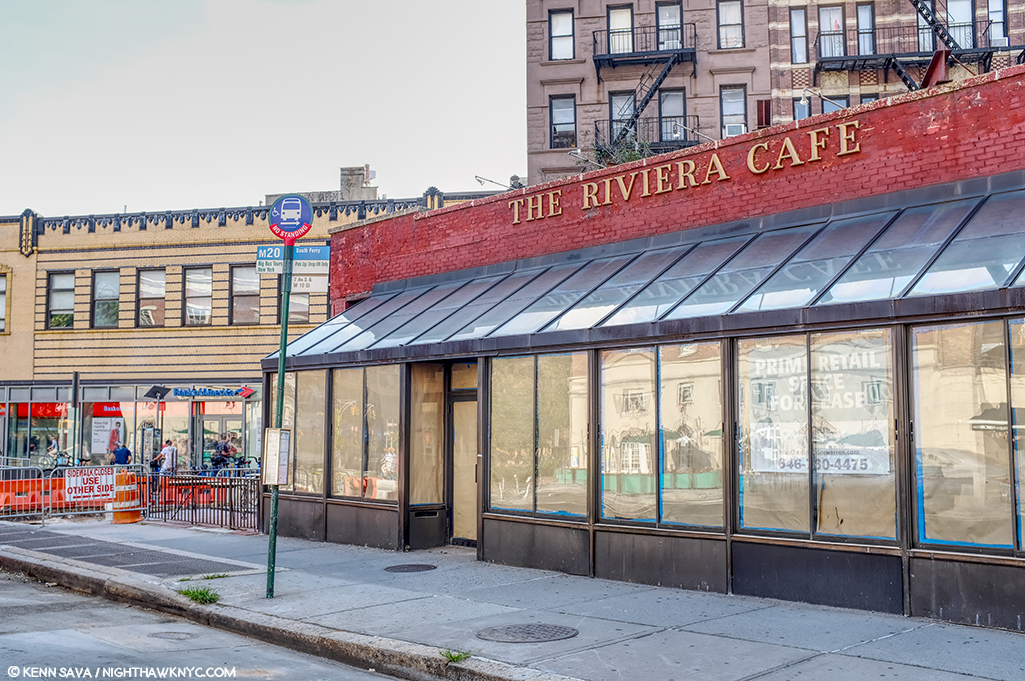
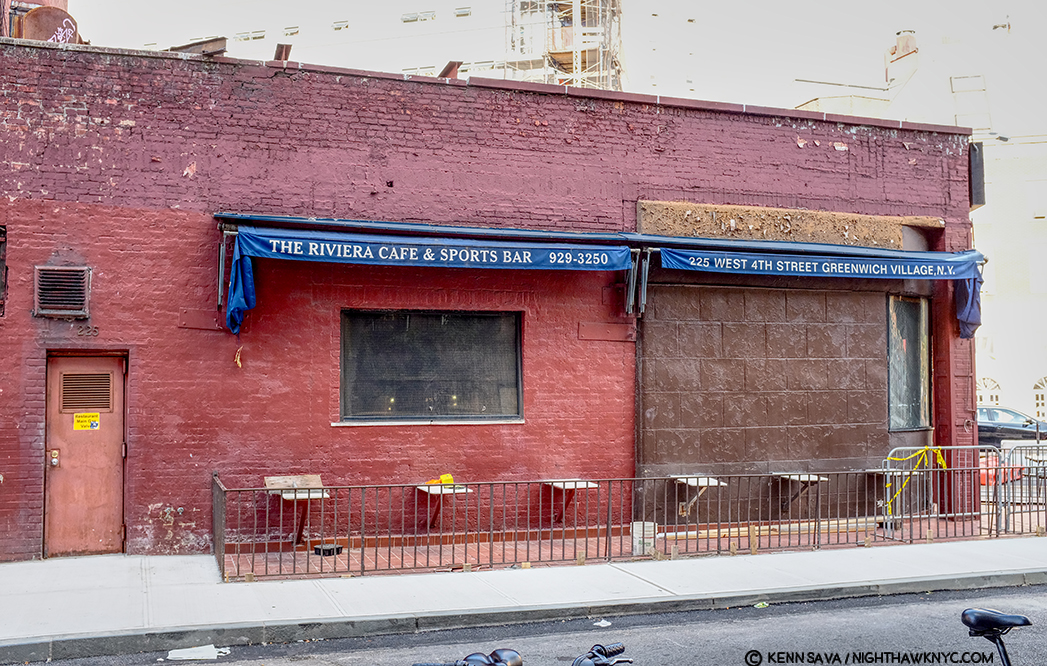
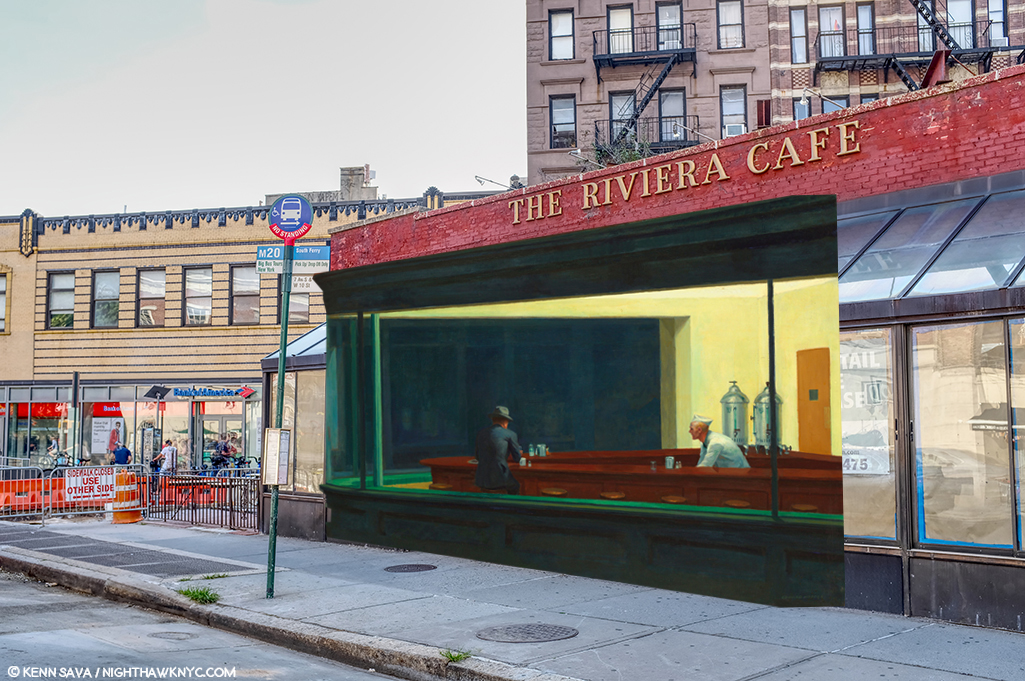
The site of the now sadly defunct Riviera Cafe, which was open here for 48 years, from 1969 until August 31, 2017.

The former Riviera Cafe at 225 West 4th Street at 7th Avenue South.

When I came across this site, I had an “Oh. My. Gosh.” moment. Picture it without the modern “greenhouse” addition and it becomes much more like the diner in Nighthawks. Back in the day, I spent a few nights in this place, as I’m sure many reading this have, too, since it was centrally located right at the heart of the West Village. The building behind it to the left, while not exactly what we see in the Painting (I believe they are the same buildings that were standing on this site in 1940), at two stories, which fits all we can see in the Painting (they may go higher in Nighthawks, or they may be cut at two- we can’t tell), and they’re the right distance, though at a slightly different angle, from what we see in the Painting. If this is the location Edward Hopper used, why didn’t he use the buildings we see in the background? I believe it was because of the color. That long building which takes up a good portion of the back is too brightly colored to fit the mood he wanted in Nighthawks. So, possibly, he replaced them. More on this in a minute. I measured the depth of the greenhouse at 90 inches- 7.5 feet. If it were not there, it would have allowed me to stand closer to the building taking this shot. Thinking back to my visits here, there was a bar along the back wall then, and I believe there were tables behind the seats/stools facing the bar, approximately under where that brick wall would come down with the greenhouse gone. Would a horseshoe counter have fit here?

As I looked closer, I discovered this-

The front of The Riviera Cafe facing West 4th Street and giving it its address, 225 West 4th Street.

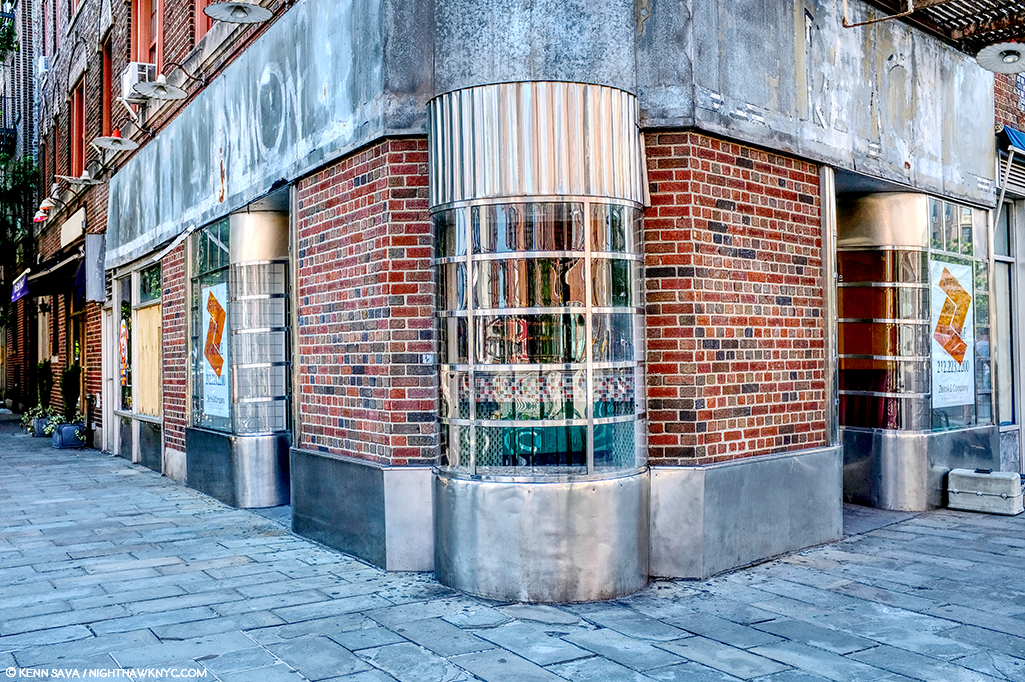
Lo and behold, there was something none of the other candidates I’ve discussed thus far have- a curved front window! And, it’s the same on both sides of that door! But, that door. Was it always there, or was the curve complete at one point, which would make The Riviera, minus the modern greenhouse addition, an almost perfect match for Nighthawks Diner?

The back of The Riviera Cafe on West 4th Street.

Stepping around to the back of The Riviera- more intrigue. What’s up with the right half of the wall, and what was there before they replaced it? A window? Also, that door to the left looks earily similar to the door in the Painting on the inside of the Nighthaks Diner. As I said, when I was here, I remember a long bar inside that wall and along it, meaning you’d probably be able to see the necks of liquor bottles in that rectangular window that’s still there, center. But, that’s now/more recently. What about in the past?

Intrigued, to say the least, searching further, I uncovered this-

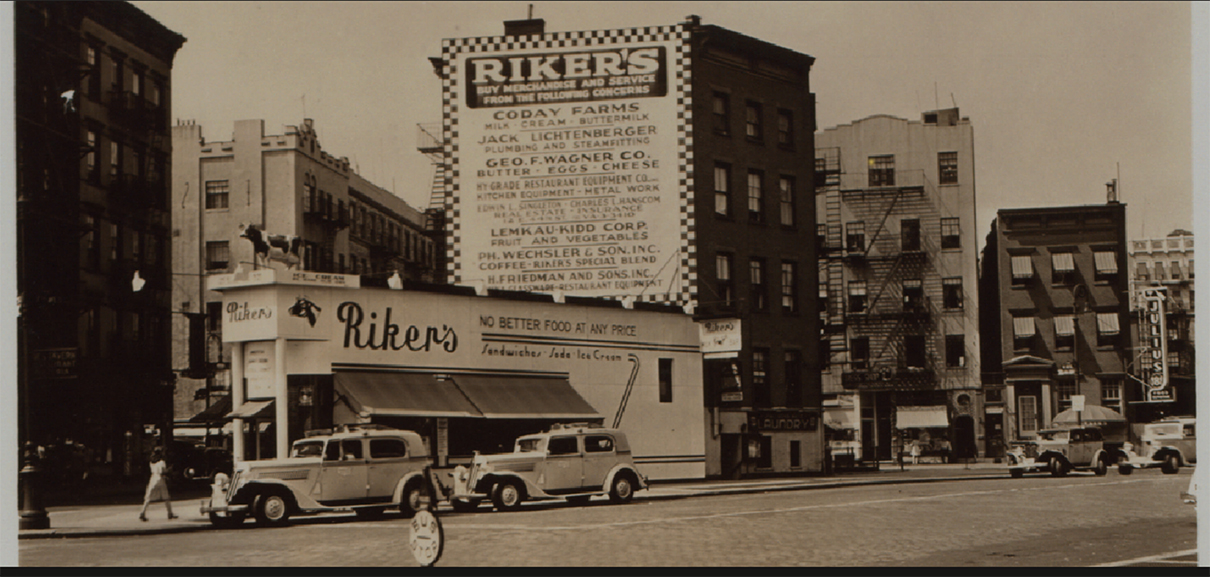
1941! The year Nighthawks was Painted. Percy Loomis Sperr (1890-1964), Manhattan: 7th Avenue South – 4th Street (West), 1941, *NYPL Digital Archives.

In 1941, The Riviera was called Riker’s and it was a restaurant! It looks pretty new and shiny, too. Some encouraging things in this picture- there are retractable awnings instead of the permanent greenhouse, for one, but that troublesome front door is still there to the left, and it looks to be the same structure, with the curved windows on either side of it.

The Riviera Cafe occupies the biggest triangular space in this part of the West Village. It’s very accessible to the Hopper’s apartment (a few blocks to the east). Why has it never been properly considered as a candidate?

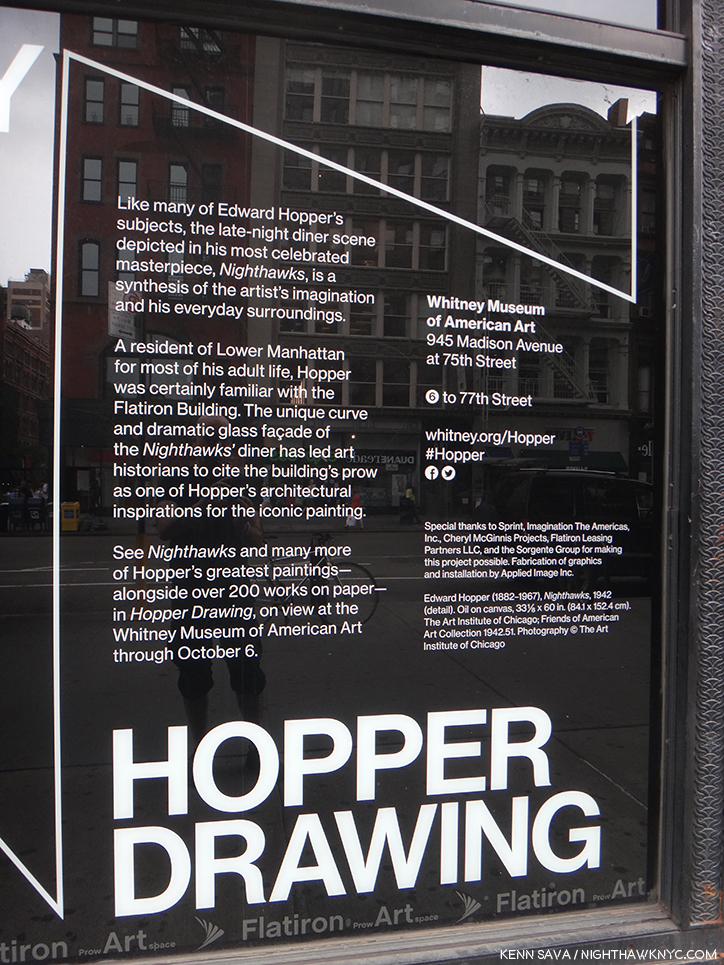
In 2013, during the Hopper Drawing show, the Whitney Museum came out and said the following-

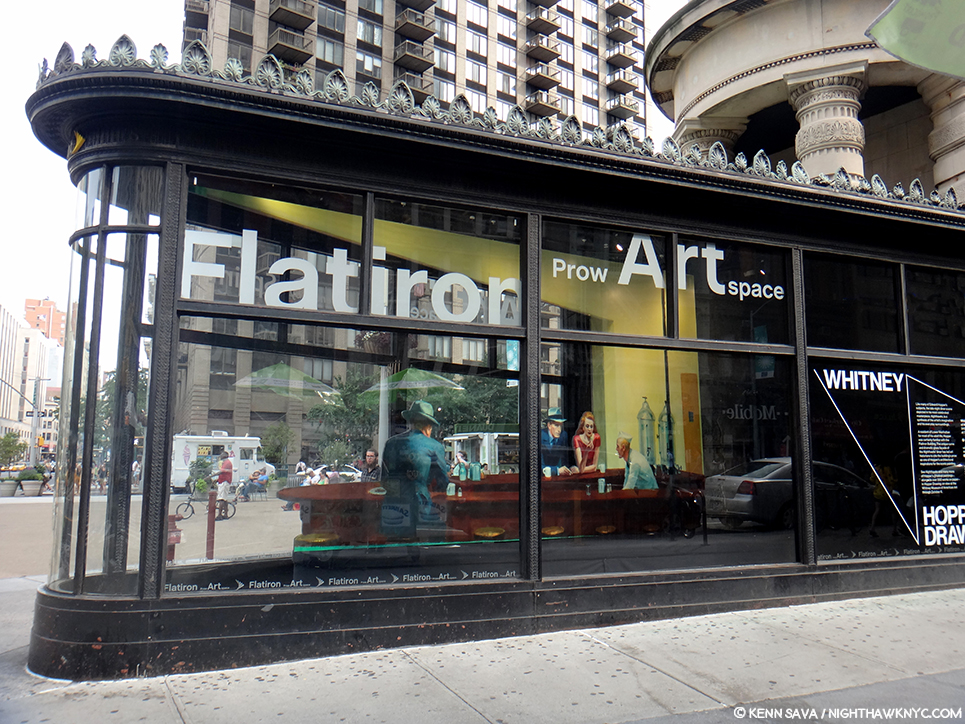
“…has led art historians to cite the building’s prow as one of the influences…” What are the others? Seen in 2013.

They’re talking about the Flatiron Building, which is on West 23rd Street at the intersections of Broadway and 5th Avenue- no where near Greenwich Avenue, where that quote has caused most to look, and it’s not even in Greenwich Village! So, the museum has taken the same approach I did in this sense. Also, in the Hopper Drawing catalog they fail to publish the Kuh Hopper quote (above), only footnoting the page in her book it’s on (P.118, footnote 2)! Perhaps, they, too, find it as frustrating as I do? (I realized this only this past week, after my quest had been completed.) They state the Flatiron was “one of the influences,” but fails to name any others!?? “One of” means “more than one.” Well? I’m naming names here.

An installation of “Nighthawks” in the prow of the Flatiron Building by the Whitney Museum in 2013. The installation is 2D and only a few inches deep, as I show below. I shot it at this angle to show the problematic lining up of the buildings in the back on Broadway, across the plaza, which is not at all like what we see in the Painting. Seen on September 1, 2013.

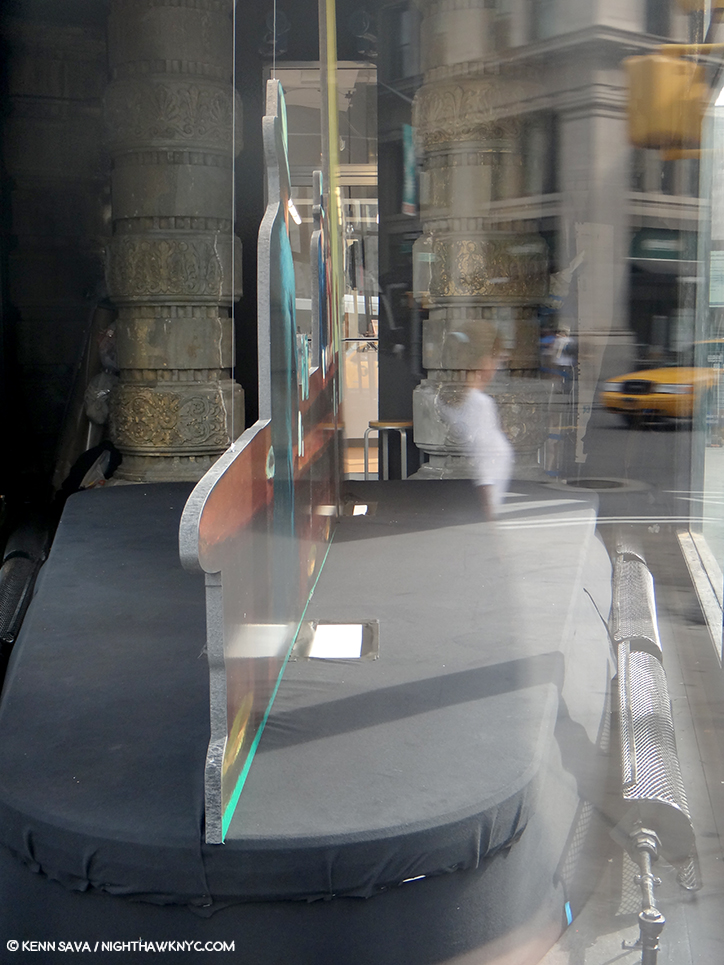
Assessing the Flatiron’s candidacy, I discovered that at one point it was a cigar store (again, the Painting has a Phillies cigar ad on the top of the diner), but I did not find evidence of it having been a diner. Looking closer at the interior space, I discovered it ostensibly measures 10 feet wide, at its widest, to the right in the picture above, by 30 feet long. I’m no restauranteur, but that seems pretty narrow to me to get a horseshoe shaped counter inside, room for seating around it, room to navigate around those seats and room for the counterperson to work. Glare notwithstanding, here’s what the space looks like pressed against the front curved window-

A look at the installation of “Nighthawks” in the prow of the Flatiron Building on September 1, 2013.

Notice the radiator on the right, and how far it is from the window. There’s another one on the left which is hard to see in this picture. Both, and the room around them they require for safety and comfort, considerably cut into the amount of usable space here. Also notice the large column to the left rear of the photo, which serve to partially support the gigantic mass of the building above them, which also has a counterpart that’s hard to see because of the glare on the right side (see the picture of the whole prow, above it). The opening between them appears to be tight. How are people supposed to come and go here?

Then, there’s the site itself. It doesn’t feel to me like what we see in the Painting.

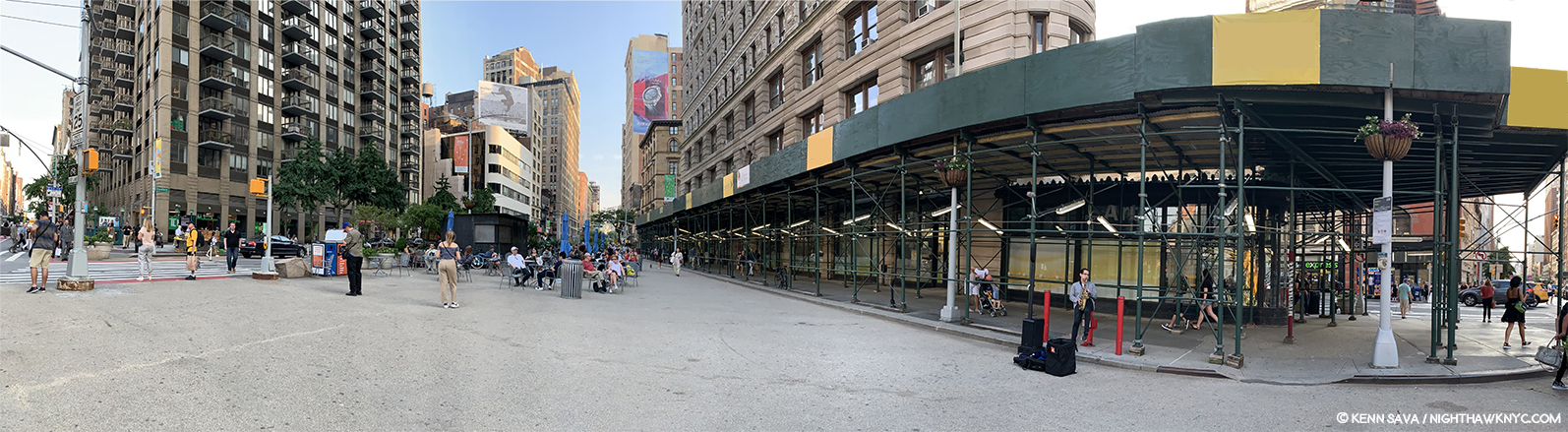
A panorama shows the distance between what would be the far side of the prow in the Painting and the buildings across the plaza and Broadway.

The buildings that would be in the background of the Painting are too far away and angled incorrectly- 23rd Street angles to the south east relative to the Flatiron at this point making the buildings begin too far back to be seen as they are in Nighthawks, in addition to being not at all like those seen in the Painting in the many existing historical pictures. Therefore, I believe the Flatiron’s prow isn’t what we see as the diner in the Painting, and this wasn’t the scene shown in the Painting. Of course, any Artist is completely free to do whatever they want, to make anything into anything else, whether it would fit in the “real” place, or not. (There is no such thing as “photorealism” in Painting, in my opinion, but that’s a battle for another day.) Edward Hopper, as per that quote, could have made West Village Florist or the Fatiron’s prow bigger, but their settings are still wrong, in my opinion, so I don’t believe he used either. However, like the Whitney, I believe the Flatiron’s prow was an influence.

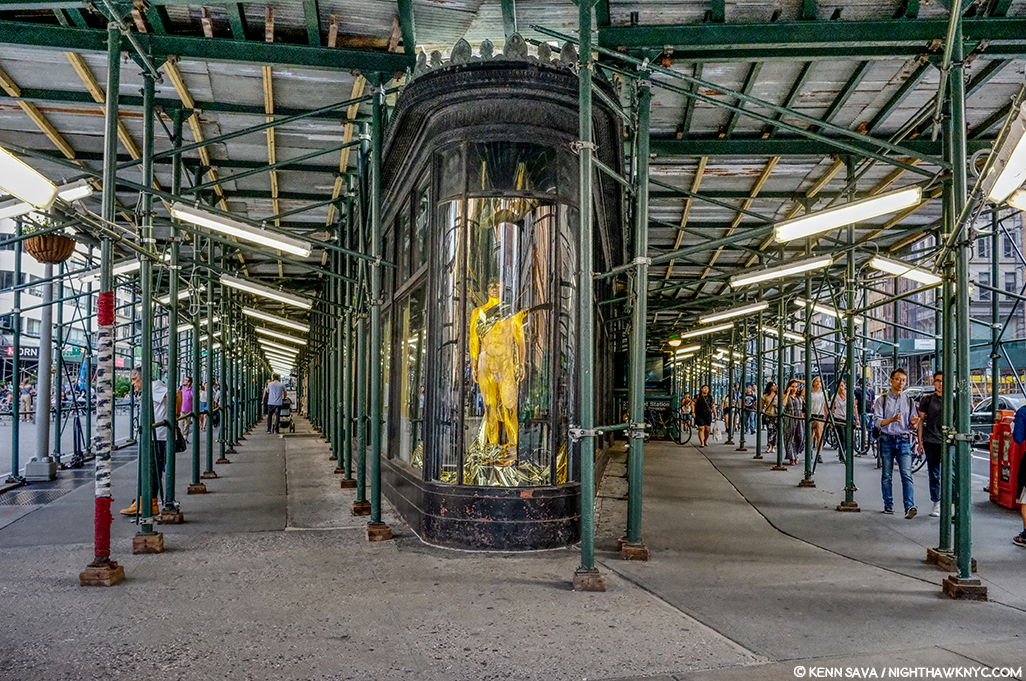
Currently under renovation? Cleaning? Diner installation? Maybe I should wait and see what emerges before reaching a conclusion. (Just kidding.) July, 2019.

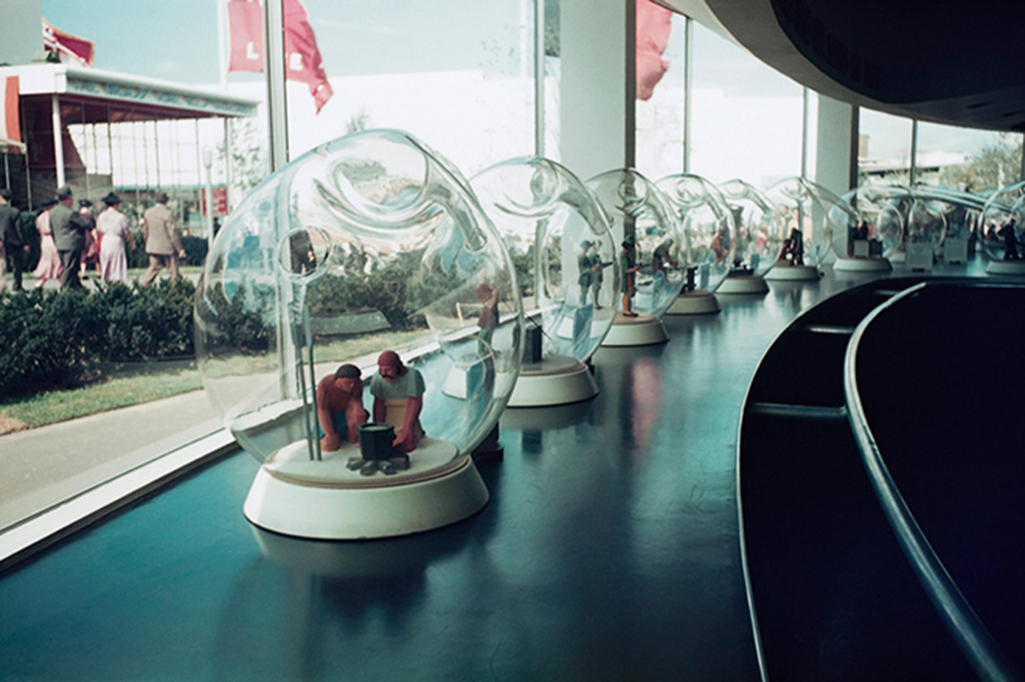
Looking at the Painting, one thing is undeniable- that curved window Edward Hopper includes. I’ve found it nowhere else besides on the Flatiron- either on existing buildings or in historical pictures. And, some of the ribs we see on the window in the Painting are present on the Flatiron’s prow today. In 1939, Edward Hopper exhibited at the World’s Fair1, and so he may have seen the Fair, but was certainly aware of it.

“Fishbowl effect” indeed. The history of glass making through the ages seen in glass bubbles at the Glass Incorporated Pavilion at 1939 World’s Fair, Queens, New York, New York, USA. Coincidence? Or influence? *Image by Peter Campbell/CORBIS

It was an Art Deco marvel. The Nighthawks diner has a decidedly Deco/Streamlined/Moderne feel to it. Though the Flatiron is a Beaux Arts building, the curved window of the prow has a decidedly Art Deco, streamlined, feel to it.

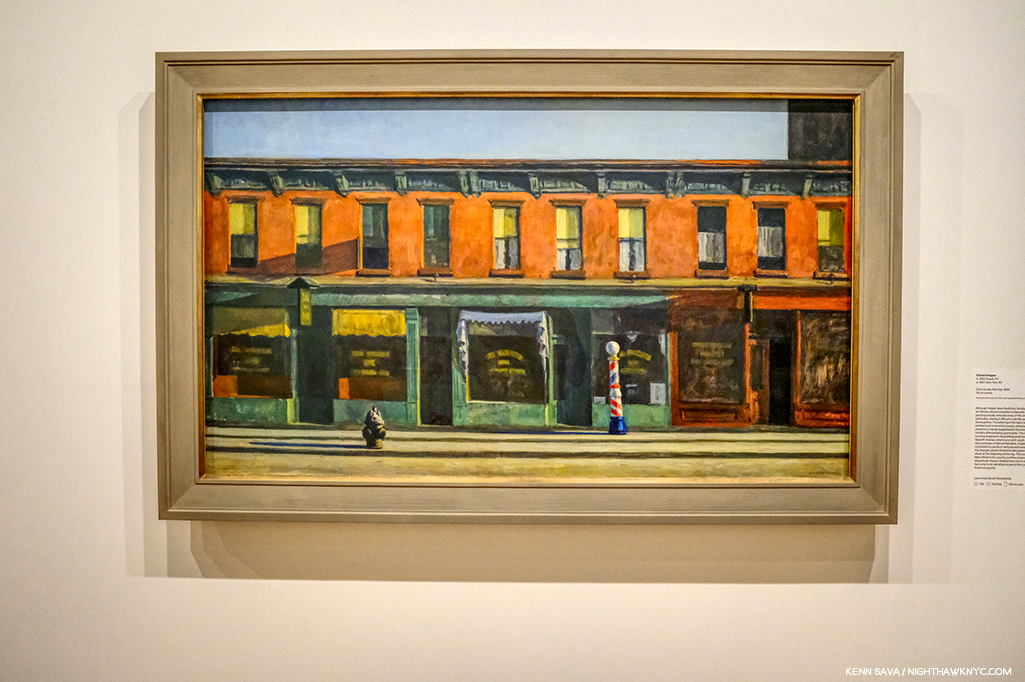
Early Sunday Morning, 1930, seen at the Whitney Museum, July, 2019. This looks uncannily similar to the background of Nighthawks to me.

Yet, what he depicts in the background of Nighthawks looks curiously not dissimilar to his Early Sunday Morning, 1930. It’s almost like he dropped those buildings into the background. But, 10 years after the earlier work a good many of those buildings were no doubt still everywhere around town, so they may as easily be generic. Whatever their origin, in this way he juxtaposes the old New York with the new world just seen in the 1939 World’s Fair, which showcased “modern” streamlining and the new flourescent lighting.

Early Sunday Morning is something of a “pendant” to Nighthawks as Carter E. Foster points out in the Hopper Drawing catalog (P.99). It’s the same size and shape and the two are bookends in some ways.

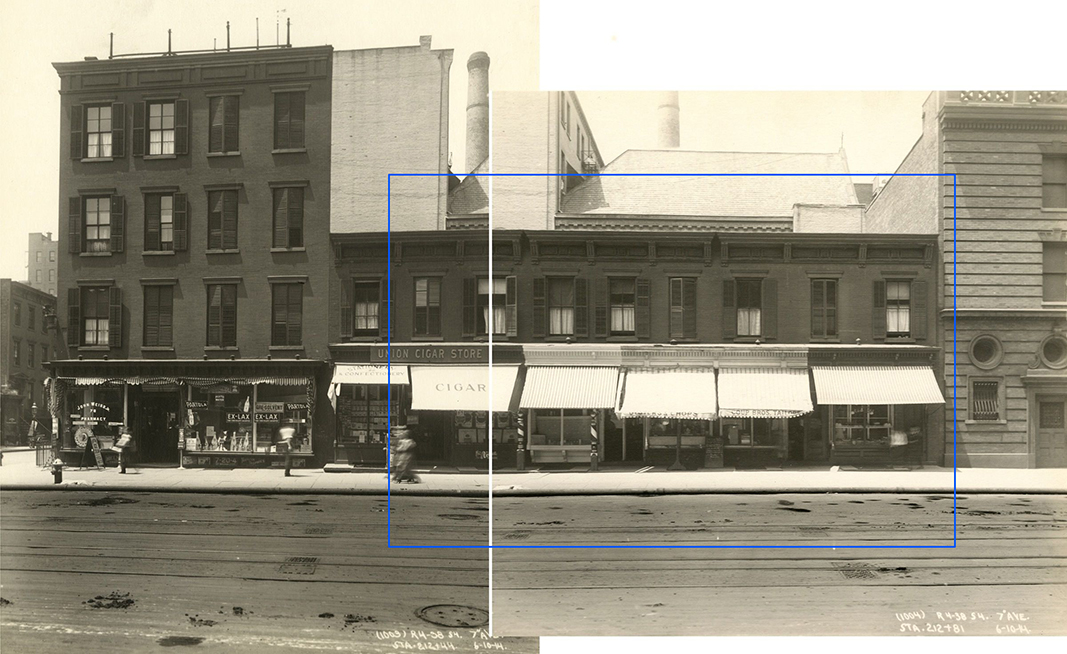
7th Avenue between Fifteenth and Sixteenth Streets, June 10, 1914. I’ve indicated the scene depicted in Early Sunday Morning, with a blue bounding line centering around 88 7th Avenue, seen in these two photos taken on June 10, 1914- 16 years before the Painting. The shutters on the windows are gone in 1930, so are the awnings, and there was only one barber pole. The hydrant was either to the left, or around the corner to the left. The center white line are the borders of the two photographs shown. All the buildings in these pictures have long ago been replaced. Subway Construction Photos modified from the Whitney Hopper Drawing website.

Interestingly, the inspiration for Early Sunday Morning were shops on 7th Avenue, but not in Greenwich Village. They have been located as being between 15th and 16th Streets in Chelsea, just north of the Village. Comparing the Painting to period pictures is fascinating. While it’s unlikely that Edward Hopper stood with a sketchbook and drew the scene, he did capture any number of correct details. But, he changed others- most notably the sunlight. The sun never shines on 7th Avenue at the angle he Paints it shining!

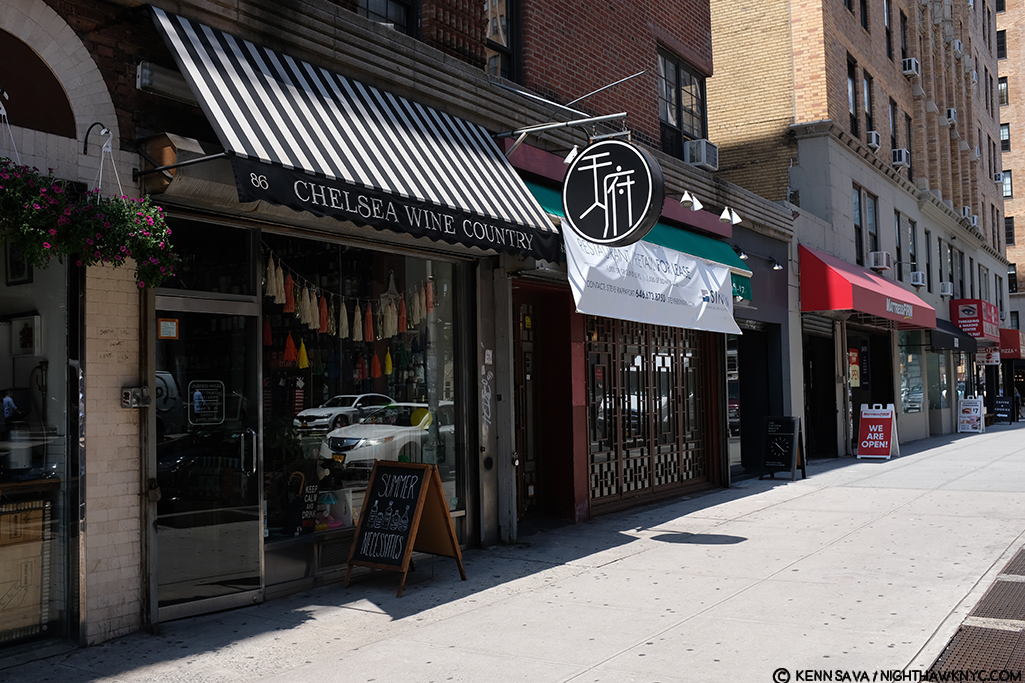
Mid-Sunday Afternoon. The site of Early Sunday Morning, seen in July, 2019. The original buildings have long ago been replaced. Notice how the shadows go in the opposite direction of those in the Painting.

7th Avenue runs North/South, not East/West, like the sun. In reality, the sun would be directly behind the viewer! So? Here’s a case of a found actual site and how Edward Hopper used creative license to mould it to his vision- even if that meant changing nature! What’s moving a curved window 20 blocks south compared to moving the sun?

My Conclusion-

I currently believe that Edward Hopper saw Riker’s about 1941 and those 2 curved windows in its front. I believe he, too, may have been frustrated by that front door and decided to “remodel” it. With a a paintbrush. So, he morphed the Flatiron’s prow’s curved window onto it and then created his own (though somewhat similar to the real) background on West 4th Street in the Painting.

Unless and until I find better candidates, THIS is what I believe Edward Hopper did.

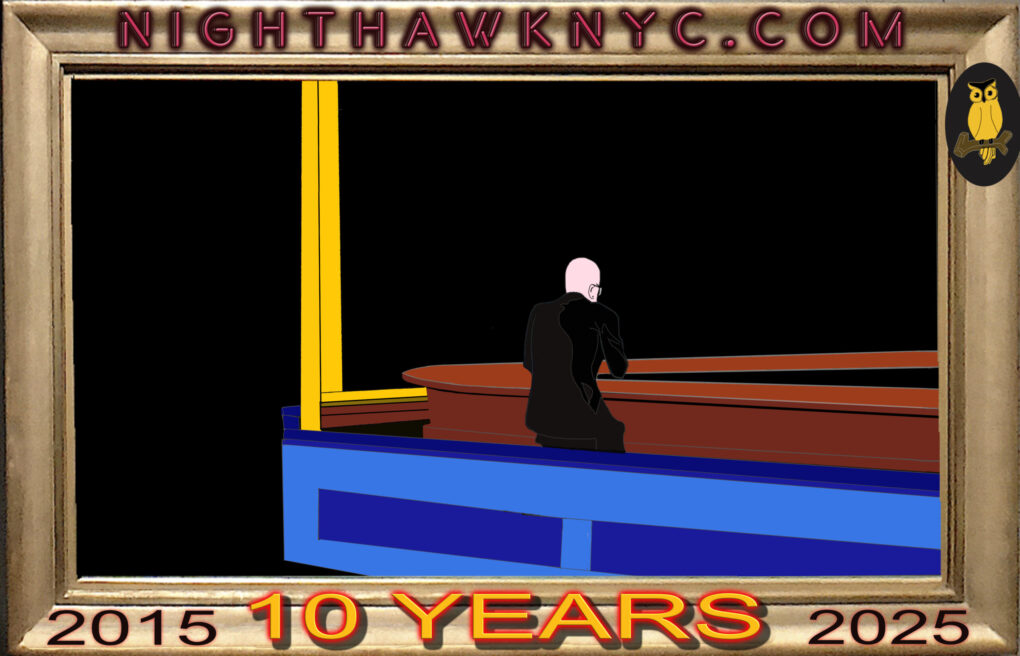
Yes, I’ve used the original, 2015, NighthawkNYC.com banner, which removed the famous couple, leaving that figure I relate to in honor of NHNYC’s 4th Anniversary. On the same page she dated Nighthawks on in the Hopper Ledger, Jo Hopper refers to him as “sinister.” I love her, anyway. Before she died the year following Edward, she bestowed one of the greatest American Artistic Estates to the Whitney Museum (who promptly “rewarded” her incredible generosity by throwing out virtually all of her work, thereby denying Art historians and Art lovers a chance to assess her work on its own- forever2). And I used the banner because, yes- I once sat at The Riviera Cafe’s bar by myself, too.

But, beyond ALL of this, for me? Nighthawks is the first truly modern American Painting. It marks the beginning of all that came after. It captures the essence, the FEELING of living in a City- here, in New York, or anywhere, but even more, it captures the feeling of modern life, which has become more and more about isolation, and fleeting moments of connection- or not, since January, 1942. I always try and remember that Nighthawks, like many of Edward Hopper’s other works, is a voyeuristic moment seen by a pedestrian, who more than likely kept moving on, past this fleeting moment and this scene, wherever it was, and didn’t pause to ponder it indefinitely, like so many have since.

Moments exist as flashes of time.

Click.

Here right now, gone forever. Unless, you’re one of the great geniuses in American Art history, who has the vision, the power and the talent to make it last, and speak to us, indefinitely.

But, for me, at least, Nighthawks isn’t about capturing a fleeting moment magically, though it does.

The other reality that common sense dictates be mentioned is that 78 years later, a better explanation than mine, or a better real life candidate for the Nighthawks Diner may never be found. It may have existed only in his imagination, with a few pieces of real life thrown in- like the Flatiron prow’s window. And that, too, may be part of his point. Nighthawks, in one reading, may not be about place as much as it is the psychological, the inter-personal, and? 

Loneliness.  

Have two people in Art ever been closer together, yet further apart?

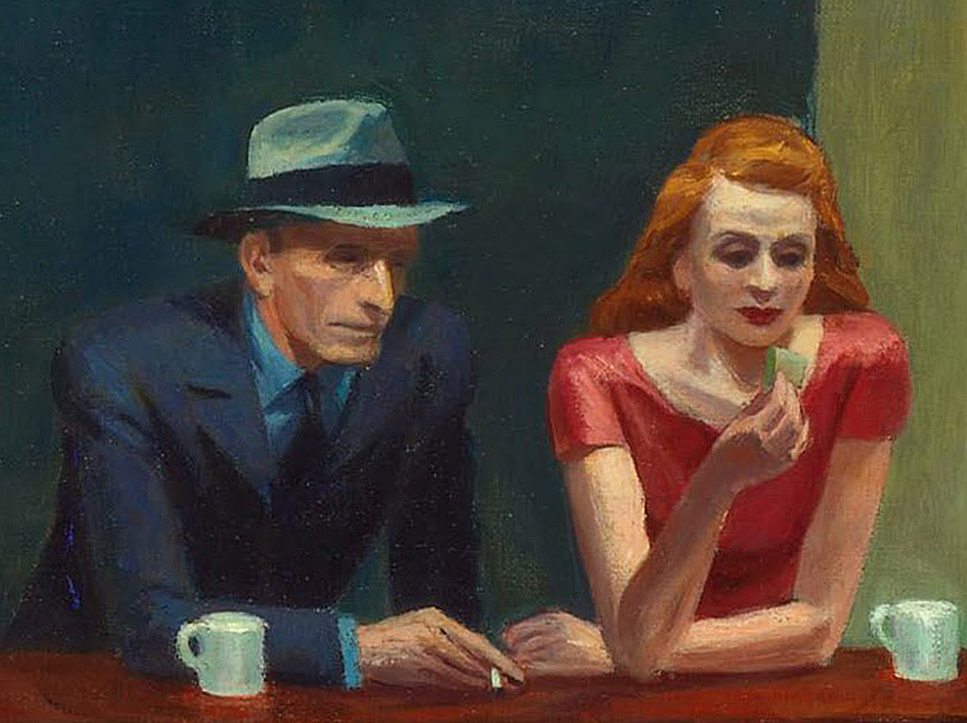
The woman in red is all dressed up to go HERE?, I can hear her mentally screaming. Her “companion” sits physically next to her, close to her, but, in my reading of it, their hands don’t quite seem to touch. Maybe you see it differently. For me? I can’t look at this and not think of God and Adam in Michelangelo’s Sistine Chapel Ceiling. There is no life giving, or love giving touch here. He has a cigarette in his hand- not her (left) hand, which remains empty. There is a distance that belies how close together they sit. All of this is, somewhat humorously, mimicked by the twin silver coffee urns to the right of them, that are, also, immobilized and frozen in time. At least they’re together for a common purpose! The same can’t be said of the immortal duo sitting at the counter. 

The gent, who’s nose Jo Hopper called a “Night Hawk” after the beak of the bird seems to be in a conversation with the counterman. About what? Here, he has this lady dressed to kill next to him and he’s ignoring her? Every time I’ve seen this happen in a bar or nightclub, instantly my antennae went up. Something’s not right here. If she’s not getting attention? Something’s wrong. But this is December, 1941. Pearl Harbor happened right in the middle of work on this Painting! 36 days after Arnold Newman took that Photo of Edward Hopper up top. It’s very hard not to think about that when looking at it, though it’s probably easier for many now that World War II was over 75 years ago. Are they discussing the War? Being drafted? Enlisting? A friend who has already been killed? Possibly another denizen of the diner? There are all those empty stools at the counter, after all. “Where is he?” “Oh. You haven’t heard?…” 

The War brought many things. It also brought separation, life without love, life without women, for men, and without men for women, or partners for the LGBT communities. 

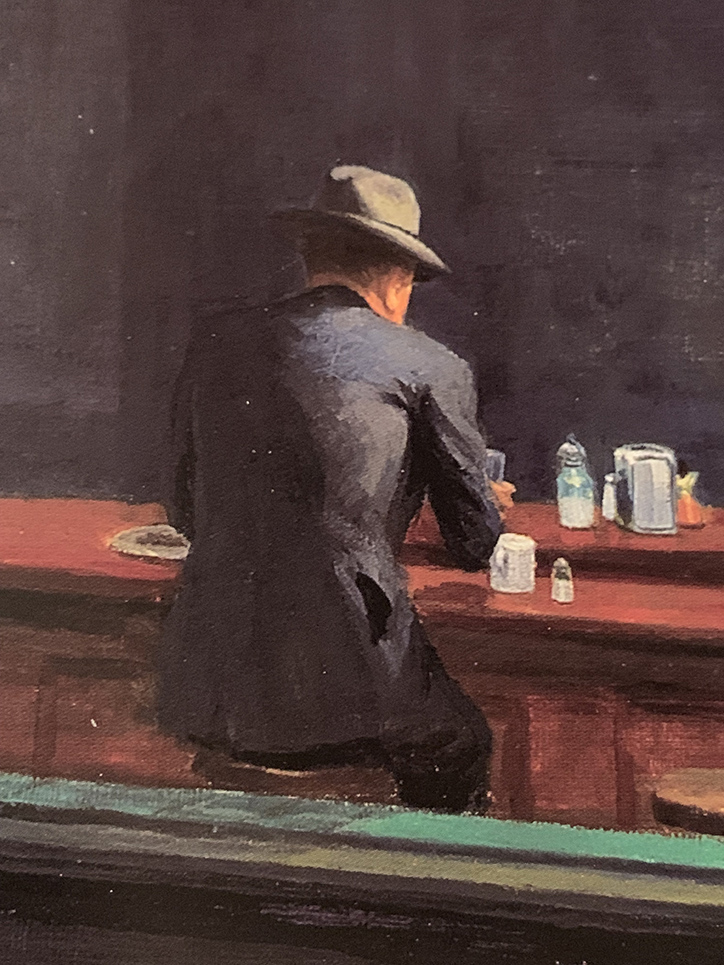
Then? There’s my alter-ego. Frozen in paint. Immobilized. Alone forever. Perhaps the most isolated figure in Western Art. What appears to be a rolled up newspaper is under his left elbow. No doubt he knows the score. At least he’s possibly not leaving anyone behind. 

But, for a moment? Let’s forget World War II is getting off to a raging start around the world at this very moment, if we can. Edward Hopper probably conceived this work before Pearl Harbor. What’s striking to me is that of all the loneliness I’ve just mentioned, there’s still more of it I haven’t. 

Let me ask you this- Who is more lonely in the scene in this Painting? 

Any of those 4 people in the diner?
Or?
The person viewing this scene from outside the diner?

For me? Nighthawks remains the ultimate parable of loneliness.  

Maybe then, I shouldn’t be on such a mission to find the “real” place it depicts. Maybe then, it doesn’t need a real place to inhabit. It exists as a permanent condition of being alive inside each one of us, as it did inside of Edward Hopper. Maybe I look for it in the hope of finding the end of it.

*- Soundtrack for this Post is “I Saw You In A Dream” by Japanese House….

“I saw you in a dream
You had stayed the same
You were beckoning me
Said that I had changed”

NighthawkNYC.com has been entirely self-funded & ad-free for 10 years, during which more than 350 full-length pieces have been published! If you’ve found it worthwhile, PLEASE donate by PayPal below to allow me to continue. Thank you, Kenn.

You can also support it by buying Art, Art & Photography books, and Music from my collection! Art & Books may be found here. Music here and here.

Written & photographed by Kenn Sava for nighthawknyc.com unless otherwise credited. To send comments, thoughts, feedback or propositions click here. Click the white box on the upper right for the archives or to search them. Subscribe to be notified of new Posts below. Your information will be used for no other purpose.

For “short takes,” my ongoing “Visual Diary” series, and outtakes from my pieces, be sure to follow @nighthawk_nyc on Instagram!

  1. Hopper Drawing footnote 33, P.119
  2. Gail Levin, Edward Hopper: An Intimate Biography, P. xv-xvii